
CHAPTER 8
NURTURING COMMUNICATION SKILLS
OUTLINE
I. The Subskills of Language
A. Content, Use, and Form
B. Semantics
II. Contribution of Social Interaction Theories to Understanding Early Communication Development
III. Stages of Development of Communication Skills in Young Children
A. Prelinguistic Communication
B. The Onset of Language
C. Combining Words
IV. Necessary Conditions for the Development of Communication Skills
A. Characteristics that Can Interfere with Language Development
B. Characteristics that Can Interfere with the Production of Speech
V. Nurturing Speech, Language, and Conceptual Skills
A. The Important Role of the Caregiver-Child Interaction
VI. General Classroom Strategies that Encourage and Support Communication
A. Beginning Where the Child Is
B. Conversing with the Child
VII. Communication Interventions for Young Children with Intensive Needs
A. Communicating with Children Who Have Complex or Multiple Disabilities
B. Techniques for Teaching Expressive Communicative Behaviors: Output Strategies
VIII. Augmentative and Alternative Communication Systems
A. Developing a Low-Tech AAC System

A. Use of Applied Behavior Analysis Approaches with ASD
XII. Supporting Communication in Children with Severe Motor Disabilities
XIII. Supporting Communication in Children with Language Differences
A. Learning a New Language
B. Stages of Second-Language Learning
C. Dual-Language Learning and Home-Language Maintenance
D. A Note on Cultural Dialects
ESSENTIAL CONCEPTS AND VOCABULARY
Augmentative and alternative communication system
Cochlear implant
Echolalic speech
Illocutionary behaviors
Interactive model
Grammatical morphemes
High-preference items and events
Joint attention
Language content
Pragmatics
Preference inventory
Prelinguistic communication
Profound hearing loss
Progressive matching

DISCUSSION TOPICS AND ACTIVITIES
1. Using a good-quality recorder, record conversations of mothers and young children. Look for mothers who
have more than one preschool age child. Record the verbal interactions with each child alone. How are they
similar? How do the conversations differ?
2. Analyze the children’s responses to the mother’s speaking pattern. Consider length, grammar, and syntax,
using tapes made for activity 1.
3. Record your own conversations with children 1 year, and 2, 2½, 3, and 4 years of age. Attempt to interact
4. Bring the tapes to class. Listen to them and critique the appropriateness of the adult’s utterances with the
5. Record a 15-minute conversation with one 4-year old and an adult as they make cookies or do something
similar. Play the tape for the class. What new concepts were introduced?
7. Write two dialogues: one to demonstrate appropriate conversation communicative interaction with a 2–
year-old without disabilities and one demonstrating a conversation with a 4-year-old without disabilities.
8. Select a child who has severe or multiple disabilities. Conduct interviews with the child’s teacher and
parents to identify three high-preference activities or objects. Systematically present each to the child and
9. Visit http://cehs.unl.edu/documents/secd/aac/YAACK.pdf. where practical and easy-to-understand
10. Individually or in small groups, students can prepare a communication board that can be shared with
classmates and utilized later as an early interventionist.
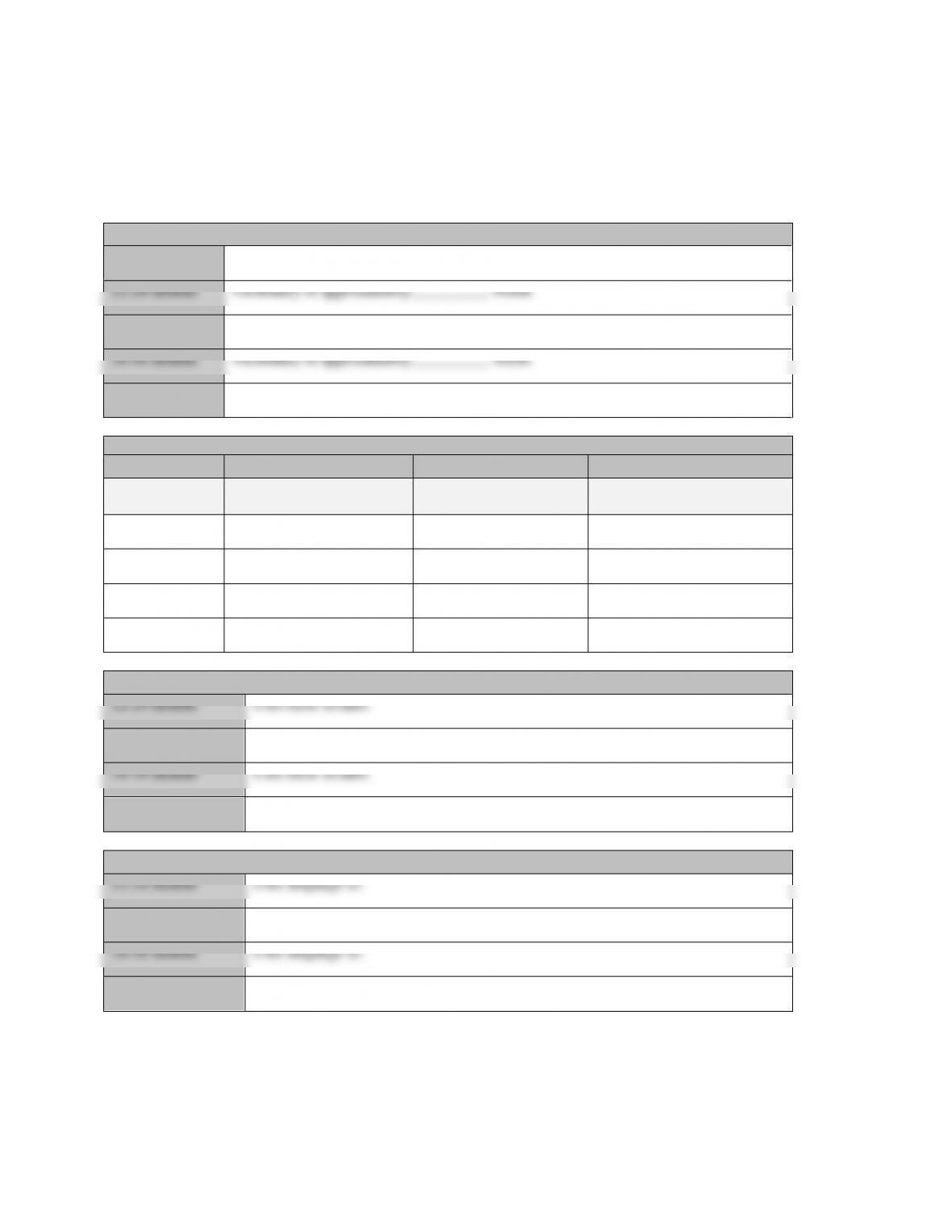
ACTIVITY: Language Development Milestones Tip Sheet
Use TABLE 8.1 Language Development: The Expected Sequence and Approximate Age Norms on page 245–243 to
create a tip sheet to help you remember the language development milestones by approximate age range. Fill in the
blanks.
Semantics: Expressive Vocabulary Development
12 months
vocabulary of approximately__________ words
12-24 months
vocabulary of approximately__________ words
24-36 months
vocabulary of approximately__________ words
36-48 months
vocabulary of approximately__________ words
48-60 months
vocabulary of approximately__________ words
Grammar, Morphology, and Syntax: Sentence development
18-24 months
24-36 months
36-48 months
48-60 months
Example: That
cat.
Example:
That’s a cat.
Example:
That’s a big cat.
Example:
That cat has two eyes.
I’m thirsty
I’m thirsty and I want juice
Where’s my baby?
Where did my baby go?
Matthew crying.
Mommy here?
Is mommy here?
Phonology: Articulation Development
12-24 months
Uses these sounds:
24-36 months
Uses these sounds:
36-48 months
Uses these sounds:
48-60 months
Uses these sounds:
Pragmatics: Use of Language
12-24 months
Uses language to:
24-36 months
Uses language to:
36-48 months
Uses language to:
48-60 months
Uses language to:
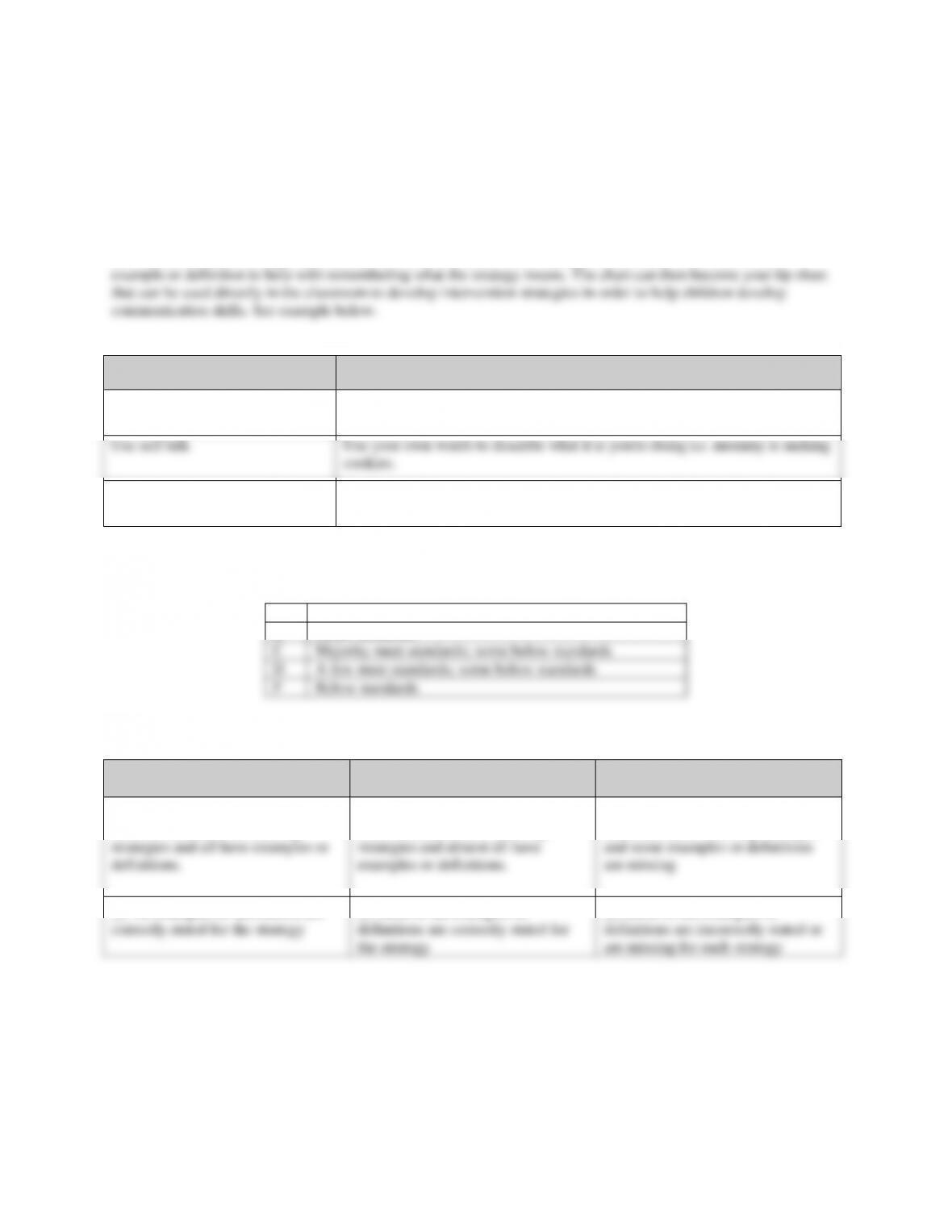
COURSE ASSIGNMENT
Communication Teaching Strategies Rubric Grading Sheet and Chart
Assignment directions:
Chapter 8 has a wealth of teaching strategies for developing communication skills. While the student reads this
chapter keep the Communication Teaching Strategies Chart handy (make as many copies as needed) and each time a
new communication strategy is discussed then write the name of the strategy on the chart. Next, write a brief
Teaching Strategy Name
Example or Definition
Commenting
Comment on what the child is currently doing to provide a model of language
Use self talk
Use your own words to describe what it is you’re doing i.e. mommy is making
cookies.
Repeating your own words in
different ways
Used to emphasize important words i.e. ball, it’s a ball, the ball is red.
Rubric:
C
Majority meet standards; some below standards
A
Exceeds standards
B
Meets standards
D
A few meet standards; some below standards
F
Below standards
Exceeds Standards
Meets standards
Below standards
__ Chart is filled out with 30 or
more communication teaching
strategies and all have examples or
definitions.
__ Chart is filled out with 20 or
more communication teaching
strategies and almost all have
examples or definitions.
__ Chart is filled out with 19 or less
communication teaching strategies
and some examples or definitions
are missing
__ All examples or definitions are
correctly stated for the strategy
__ Most of the examples or
definitions are correctly stated for
the strategy
__ Some of the examples or
definitions are incorrectly stated or
are missing for each strategy
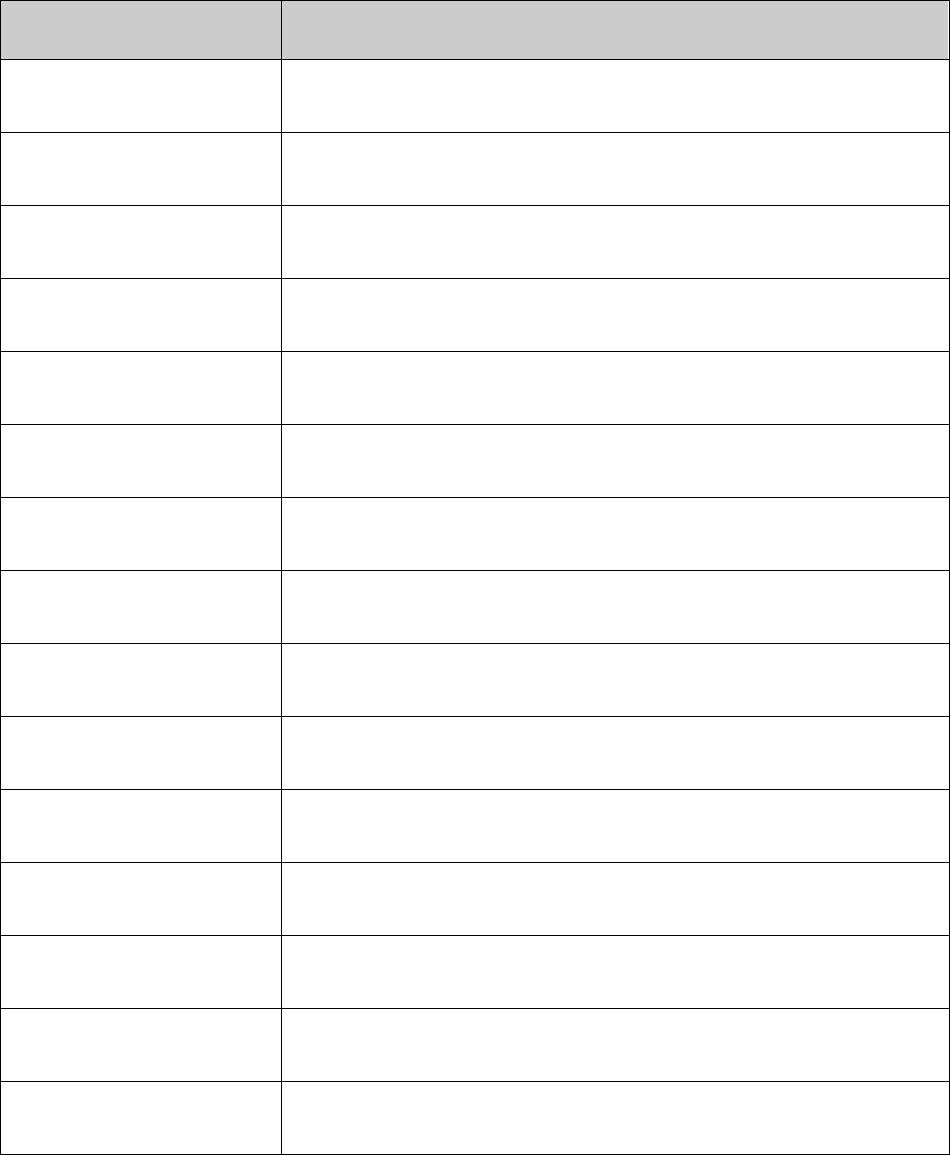
Communication Teaching Strategies Chart
Students Name: _______________________________________
Teaching Strategy Name
Example or Definition

COURSE ASSIGNMENT:
LANGUAGE OBSERVATION AND ANALYSIS
Assignment Preparation: To prepare, review table 8.1 Language Development: Expected Sequence and
Appropriate Age Norms and Appendix A: Chart of Typical Development specifically the language comprehension
and expressive communication section.
Your role: Your job is to sit back, be a researcher, and write down everything the child says. Do not interact with
the child.
Directions:
Language Sample: Collect a language sample by writing down everything the child says of at least 50
Analysis: Analyze the speech, language, and communication characteristics that the child uses by filling
out the language observation chart with specific examples from your language sample.
Conclusion: Based on information gathered from your analysis, draw conclusions about the age
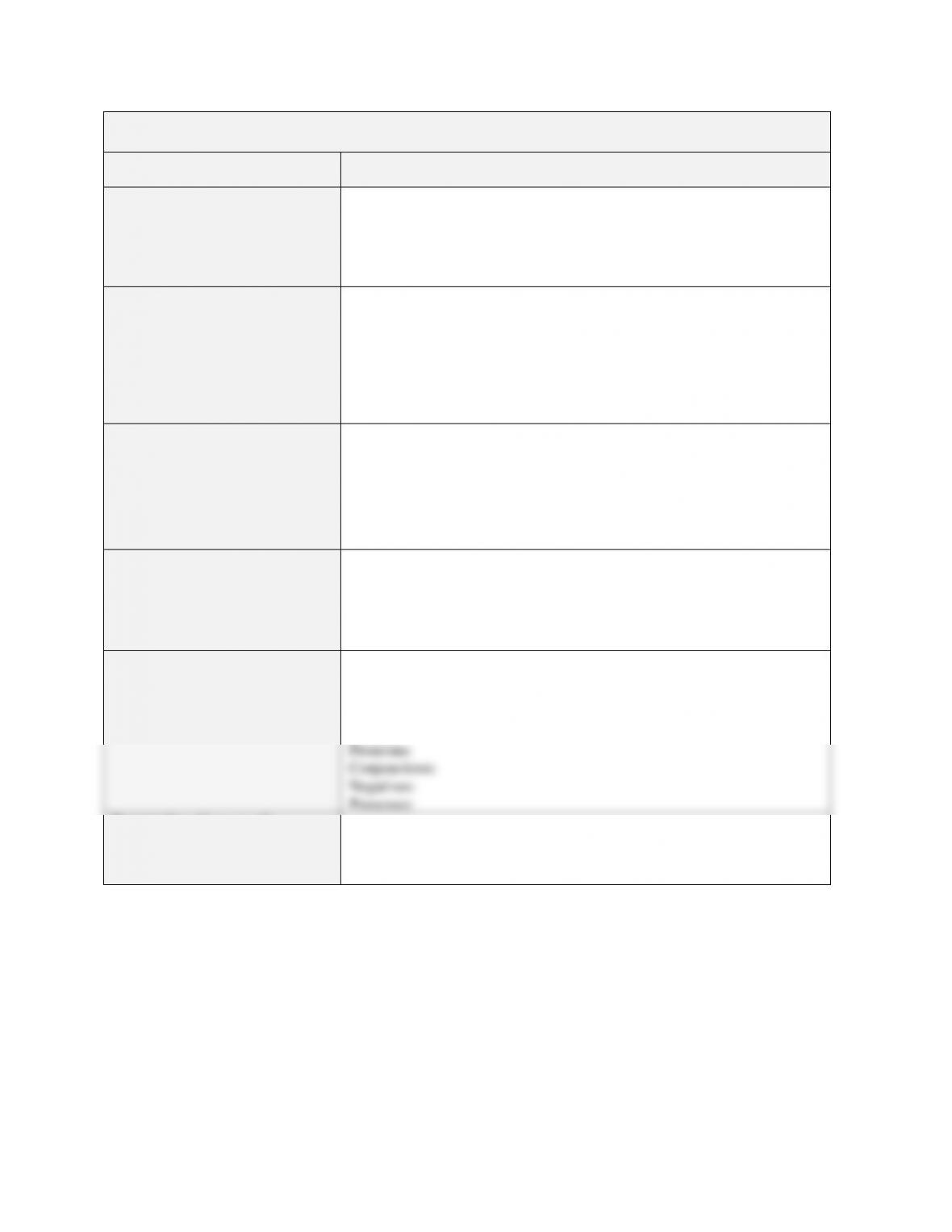
ANALYSIS: LANGUAGE OBSERVATION CHART
Child’s first name:
Student’s age in months:
Context of the observation date &
situation (what was the child doing
and who were others involved)
Semantics: Give examples of how
the child did/did not understand the
meaning of words and semantic
relations. (Receptive & expressive)
Phonology: Give examples of
specific vowel & consonants
sounds you heard. Give examples
of run together words/utterances
(i.e. gonna = going to) or any
errors/difficulties with
pronunciation.
Syntax: Count the number of
words/utterances that the child
used for each individual sentence.
What was the range?
Syntax: Give specific examples of
the types of words that were said
and any compound/complex
sentences.
Nouns (people, places and things):
Verbs (actions):
Descriptors/adjectives:
Prepositions (positional words):
Plurals:
Pronouns:
Conjunctions:
Negatives:
Possesses:
Pragmatics: Give specific
examples of how the child uses
language to communicate. i.e. uses
questions = What is your name?
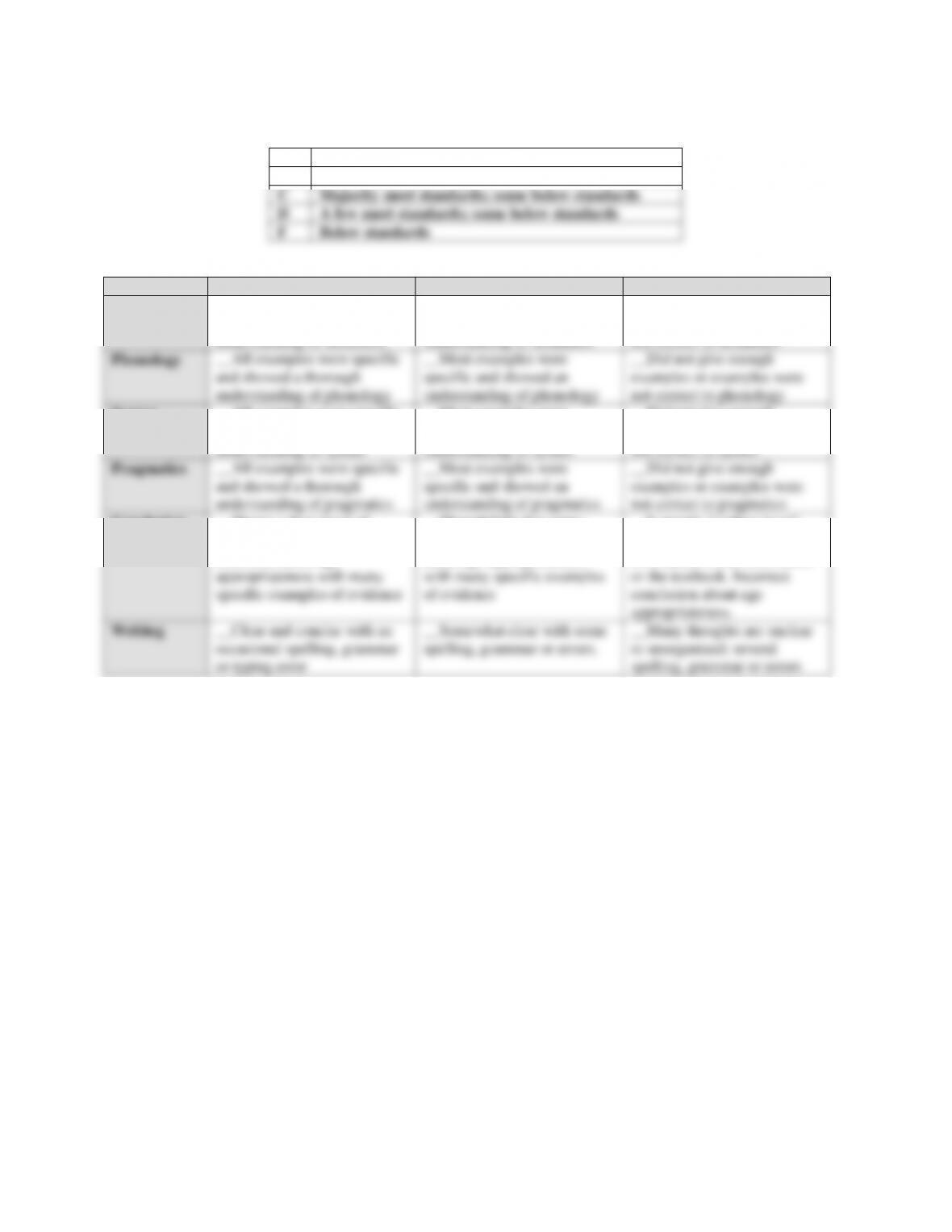
LANGUAGE OBSERVATION AND ANALYSIS RUBRIC
Exceeds standards
Meets standards
Below standards
Semantics
__All examples were specific
and showed a thorough
understanding of semantics
__Most examples were
specific and showed an
understanding of semantics
__Did not give enough
examples or examples were
not correct to semantics
Phonology
__All examples were specific
and showed a thorough
understanding of phonology
__Most examples were
specific and showed an
understanding of phonology
__Did not give enough
examples or examples were
not correct to phonology
Syntax
__All examples were specific
and showed a thorough
understanding of syntax
__Most examples were
specific and showed an
understanding of syntax
__Did not give enough
examples or examples were
not correct to syntax
Pragmatics
__All examples were specific
and showed a thorough
understanding of pragmatics
__Most examples were
specific and showed an
understanding of pragmatics
__Did not give enough
examples or examples were
not correct to pragmatics
Conclusion
__Shows a deep level of
thinking and personal
reflection about age
appropriateness with many
specific examples of evidence
__Thoughtfully has some
indication of deep thinking
about age appropriateness
with many specific examples
of evidence
__Is mostly “surface level”
and/or lacks specific examples
of evidence from observation
or the textbook. Incorrect
conclusion about age
appropriateness.
Writing
__Clear and concise with an
occasional spelling, grammar
or typing error
__Somewhat clear with some
spelling, grammar or errors.
__Many thoughts are unclear
or unorganized: several
spelling, grammar or errors
A
Exceeds standards
B
Meets standards
C
Majority meet standards; some below standards
D
A few meet standards; some below standards
F
Below standards