Chapter 1
EDUCATING YOUNG CHILDREN WITH DISABILITIES
THE CHALLENGE
OUTLINE
I. Viewing the Child with Disabilities as a Child First
II. Inclusion of Young Children with Disabilities in Community-Based Settings
III. Philosophy of This Text
IV. Early Childhood Special Education: An Evolving Field
A. Pioneering Influences and History of Early Childhood Special Education
B. Casa dei Bambini
V. Changing Policies: The Impact of Public Pressure and Legislation
A. Development of Professional Groups
B. The Power of Private Citizens
K. Public Law 108-446: The Individuals with Disabilities Act of 2004
VI. Foundational Principles of Early Childhood Special Education
A. Relationship-Focused Models of Early Intervention
B. Family-Centered Services
C. Community-Based Inclusive Settings
VI. Building on Recommended Practices
VII. Service Delivery
VIII. Educating Young Children with Disabilities in Inclusive Settings
IX. Summary
X. Reflect and Apply
ESSENTIAL CONCEPTS AND VOCABULARY
Activity-based intervention
Americans with Disabilities Act
Americans with Disabilities Act Amendments Act
Developmentally Appropriate Practices (DAP)
Early Intervention
Least restrictive environment
Natural environments
Person-first language
Recognition and response
Recommended practices
DISCUSSION TOPICS AND ACTIVITIES
1. If an interventionist believes that a child’s development is determined primarily by either heredity or by the
environment, how will his/her behavior be influenced? What is your belief? As a teacher, how would your
behavior be influenced?
2. Choose at least four articles about childrearing or education that have appeared in leading popular
magazines during the past year. Discuss these in light of the beliefs espoused. How can these beliefs
influence behavior of parents and early interventionists? Do you see any relationship between these beliefs
and historical developments? In what way might these be setting precedents?
4. Discuss specific criteria an evaluator might use to determine whether a program encompasses the
recommended practices of effective intervention programs listed in this chapter.
6. Compare and contrast the National Association for the Education of Young Children’s best practices with
the recommended practices of the Division for Early Childhood Education.
7. The NAEYC and DEC joint position statement Early Childhood Inclusion at
8. Become informed about the service delivery options available in your area. Role-play a transdisciplinary
9. Invite a teacher to speak to the class about the challenges he or she has faced in facilitating inclusion. If it is
10. Consider exactly how is person-first terminology different from usual terminology when describing
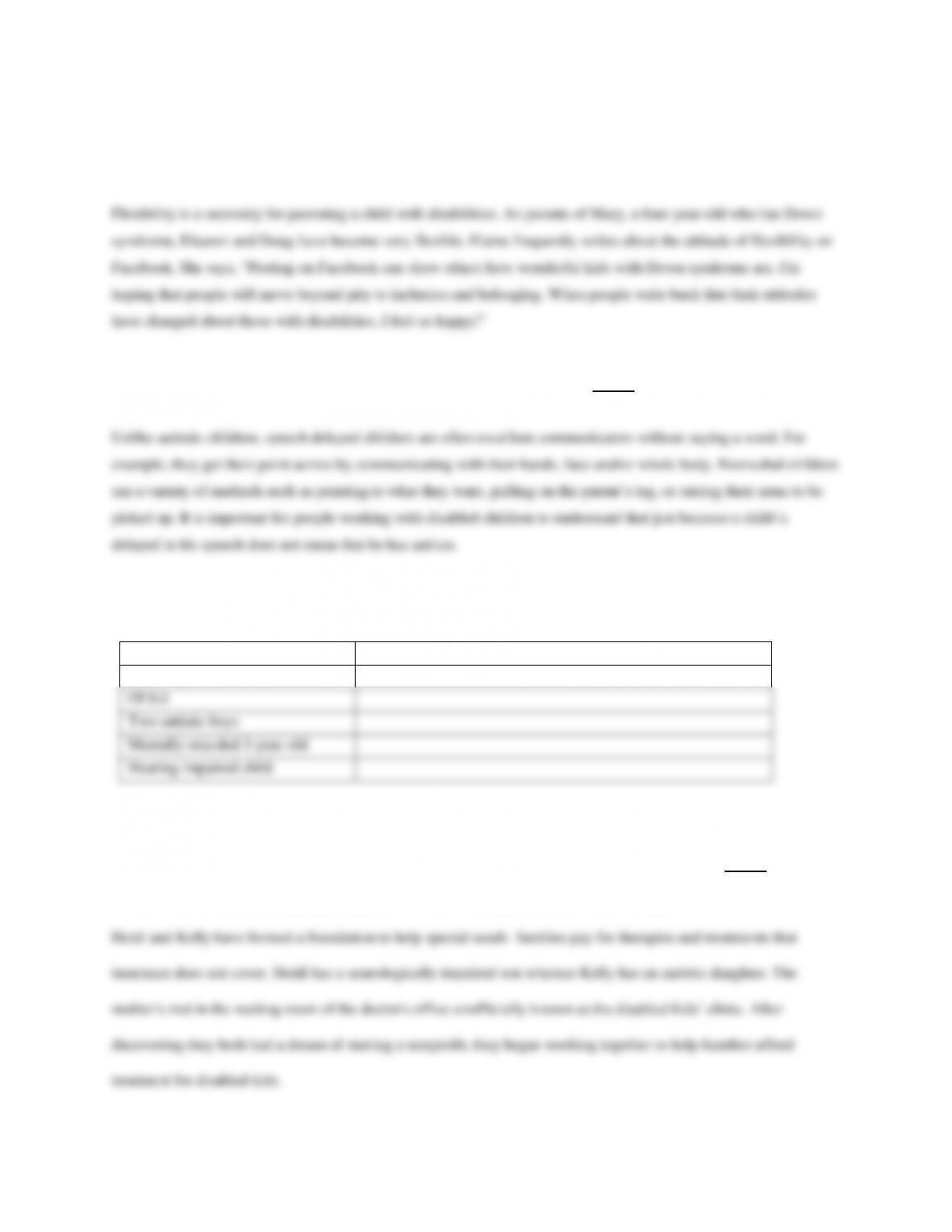
ACTIVITY: PERSON FIRST TERMINOLOGY PRACTICE
Activity1: Identify all the phrases (person and the disability) in this paragraph that place the person(s) ahead
of the disability (person first terminology). Underline or highlight.
Activity 2: Identify all the phrases (person and the disability) below that do not place the person(s) ahead of
the disability (non-person first terminology). Underline or highlight.
Activity 3: Rewrite these phrases by placing the person ahead of the disability (person first terminology) and
by using respectful terminology if needed.
OI kid
Two autistic boys
Mentally retarded 3-year-old
Hearing impaired child
Activity 4:
1) Underline or highlight all the phrases (person and a disability) in the next paragraph that do not place the
person(s) ahead of the disability
2) Above the underlined/highlighted phrase rewrite it using person first terminology
Six disabled children
Down’s girl
ASSIGNMENT: SPECIAL EDUCATION ACRONYMS
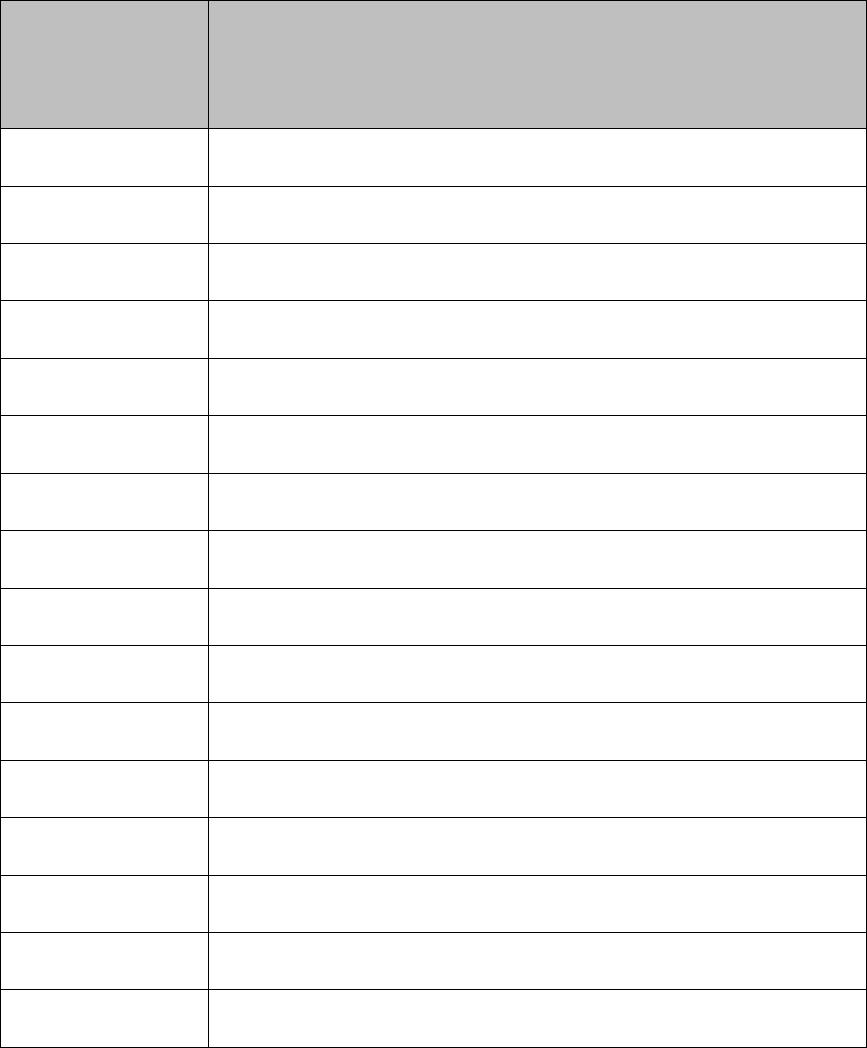
You will encounter many acronyms for specific terms throughout this text. As you read each chapter write down any
new acronyms and the specific terms they represent. You’ll need several copies of this handout.
SPECIAL
EDUCATION
ACRONYMS
FULL NAME
IDEA
Individuals with Disabilities Education Act
COURSE ASSIGNMENT
Person First Language Essay Reflection
Rubric Grading Sheet
Assignment directions:
Students will read the article Person First Language by Kathie Snow and write a 2-3 page reflection essay.
Essay will consist of answers to the following questions:
Introduction:
What concepts did you find interesting or important from this article? How do you relate personally to this
article? What thoughts and feelings came up for you as you read the article?
Body:
1. Discuss what Kathie Snow believes is the greatest obstacle facing people with disabilities. Do you agree?
Why or why not?
2. What does the author mean by this statement, “people with disabilities are not broken?” How do you feel
about that statement?
3. Give two other examples of how a “problem” can actually be rephrased into a need for a person who has a
disability.
Conclusion:
How do you currently use person first language when talking about people with disabilities? Or, if this is a
Rubric:
C
Majority meet standards; some below standards
A
Exceeds standards
B
Meets standards
D
A few meet standards; some below standards
F
Below standards
Exceeds Standards
Meets standards
Below standards
__Essay is thoughtful, based on
class content and readings; tied to
personal growth and shows
commitment to development as an
educator. Essay addresses each of
the points listed above.
__Essay is “surface level” tied to
class content and readings. Some
evidence of risk-taking and thought
is evident. Essay addresses most of
the points listed above.
__Essay lacks evidence of
commitment to personal growth
and/or poorly tied to class content
and readings. Essay addresses some
of the points listed above.
Course Assignment
Philosophical Basis of Early Childhood Education Assignment
Each student will select one philosophical basis (theory, approach) to early education. Students must present this
As part of the presentation, each class member will explain the basic views of their chosen approach to other class
members by providing multiple means of engagement and representation with the goal of reaching multiple types of
learners, i.e visual, kinesthetic, and auditory. All presentations should include references in APA format.
Students need to explain thoroughly how the theoretical model views the following:
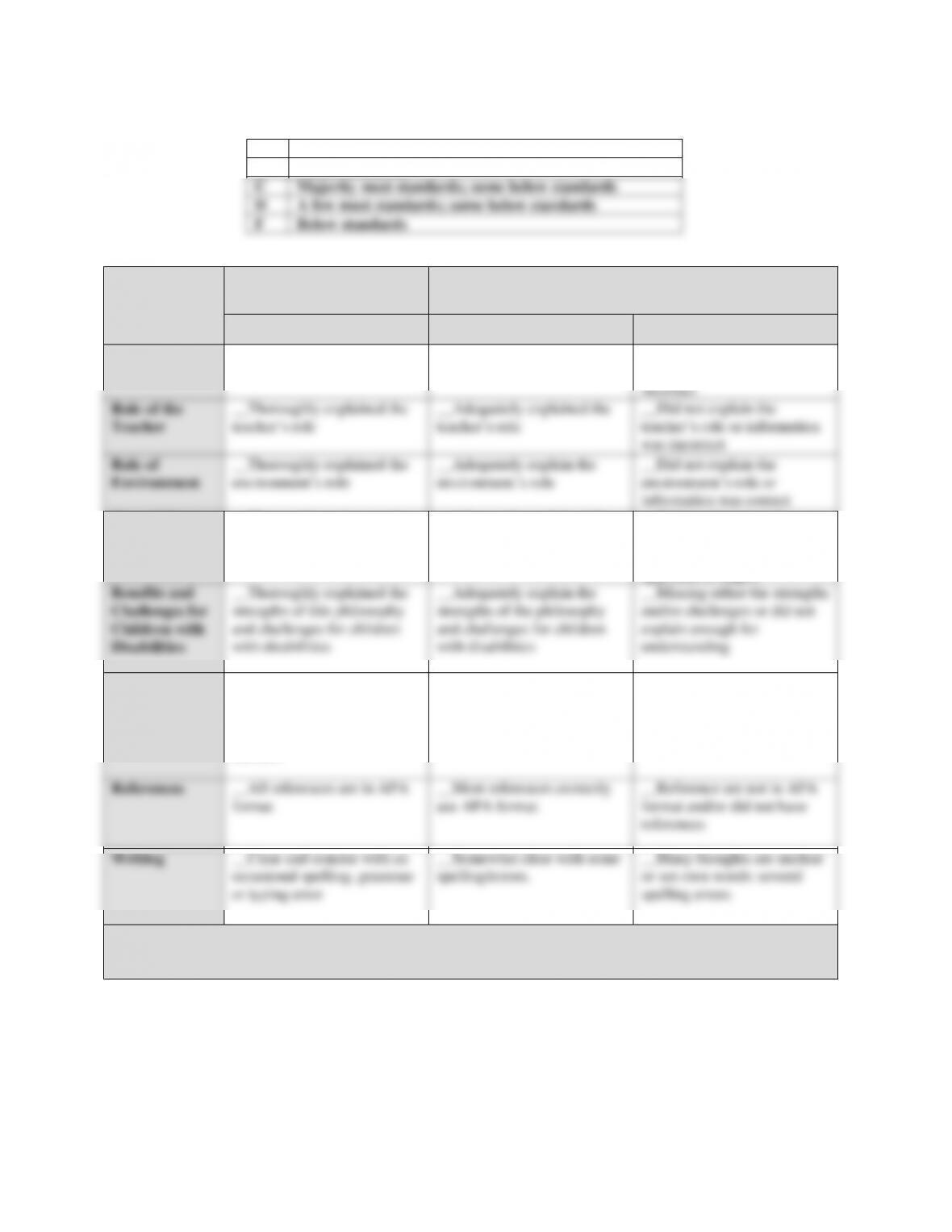
PHILOSOPHICAL BASIS OF EARLY CHILDHOOD EDUCATION RUBRIC
A
Exceeds standards
B
Meets standards
C
Majority meet standards; some below standards
D
A few meet standards; some below standards
F
Below standards
Student’s Name:
Philosophy Name:
Exceeds Standards
Meet standards
Below standards
Role of the
Child
__Thoroughly explained the
child’s role
__Adequately explain the
child’s role
__Did not explain the child’s
role or information was
incorrect
Role of the
Teacher
__Thoroughly explained the
teacher’s role
__Adequately explained the
teacher’s role
__Did not explain the
teacher’s role or information
was incorrect
Role of
Environment
__Thoroughly explained the
environment’s role
__Adequately explain the
environment’s role
__Did not explain the
environment’s role or
information was correct
Overall Focus,
Approach or
Stages
__Thoroughly and correctly
explained the focus, approach
or stages
__Adequately explained the
focus, approach or stages.
__Did not give enough
information or incorrect
information about the focus,
approach or stages.
Benefits and
Challenges for
Children with
Disabilities
__Thoroughly explained the
strengths of this philosophy
and challenges for children
with disabilities
__Adequately explain the
strengths of the philosophy
and challenges for children
with disabilities
__Missing either the strengths
and/or challenges or did not
explain enough for
understanding
Presentation
__Thoroughly and creatively
presented information by
engaging participants and
representing all 3 types of
learners
__Adequately presented
information by engaging
participants and representing
at least 2 types of learners
__Engaged only one type of
learner, unorganized, or
lacking creativity and
thoughtfulness
References
__All references are in APA
format
__Most references correctly
use APA format
__Reference are not in APA
format and/or did not have
references
Writing
__Clear and concise with an
occasional spelling, grammar
or typing error
__Somewhat clear with some
spelling/errors.
__Many thoughts are unclear
or not own words: several
spelling errors
Comments:
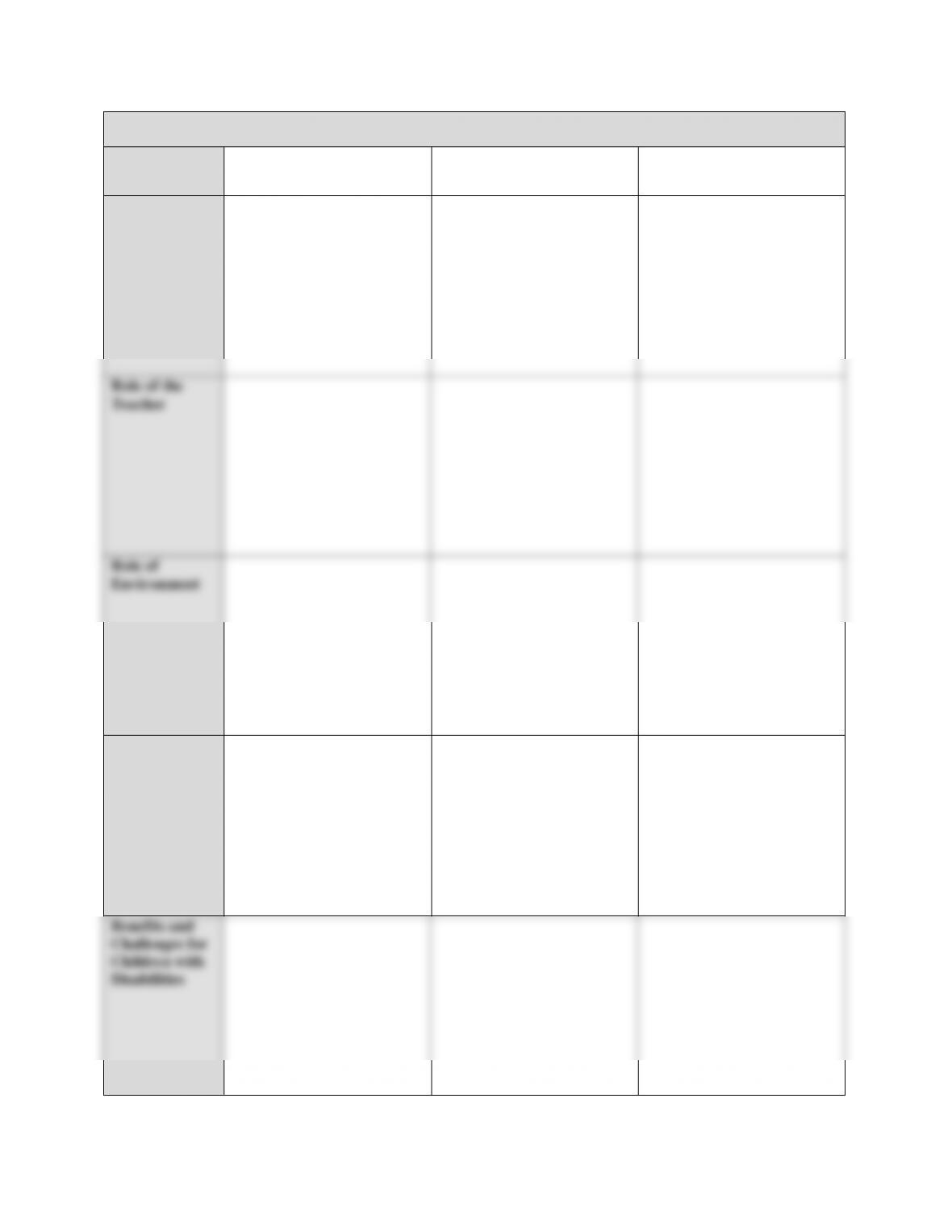
PHILOSOPHY WORKSHEET
Philosophy
Name:
Role of the
Child
Role of the
Teacher
Role of
Environment
Overall Focus,
Approach or
Stages
Benefits and
Challenges for
Children with
Disabilities