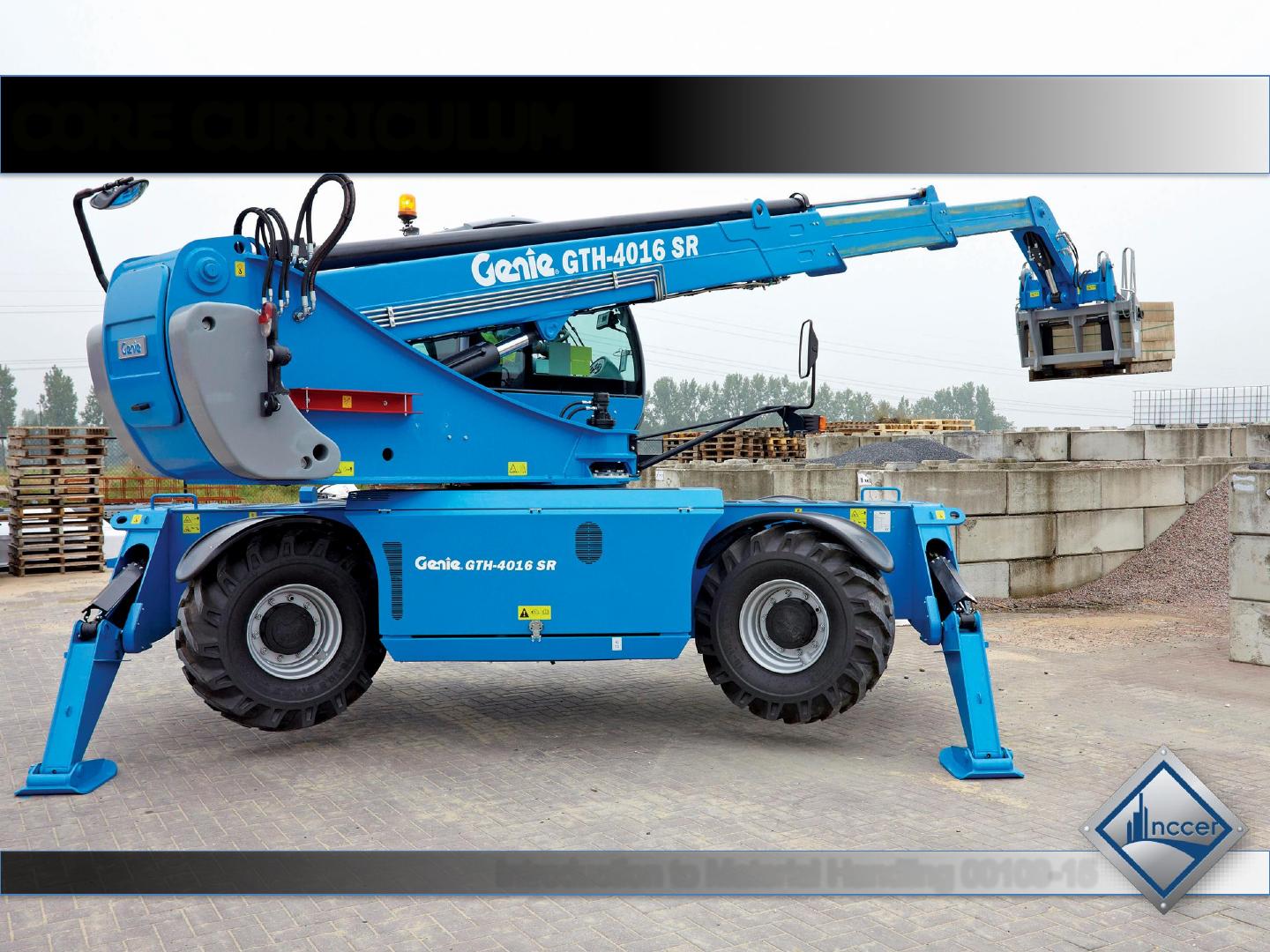
CORE CURRICULUM
Introduction to Material Handling 00109-15
Session 1: Material Handling; Material-Handling Equipment

Session One Objectives
When trainees have completed this session, they should be able to do
the following:
1. Describe the basic concepts of material handling and common safety
precautions.
2. Identify various types of material-handling equipment and describe how
they are used.
Introduction to Material Handling 00109–15

Session One Performance Tasks
Introduction to Material Handling 00109–15
1. Demonstrate safe manual lifting techniques.
2. Demonstrate how to tie two of the following common knots:
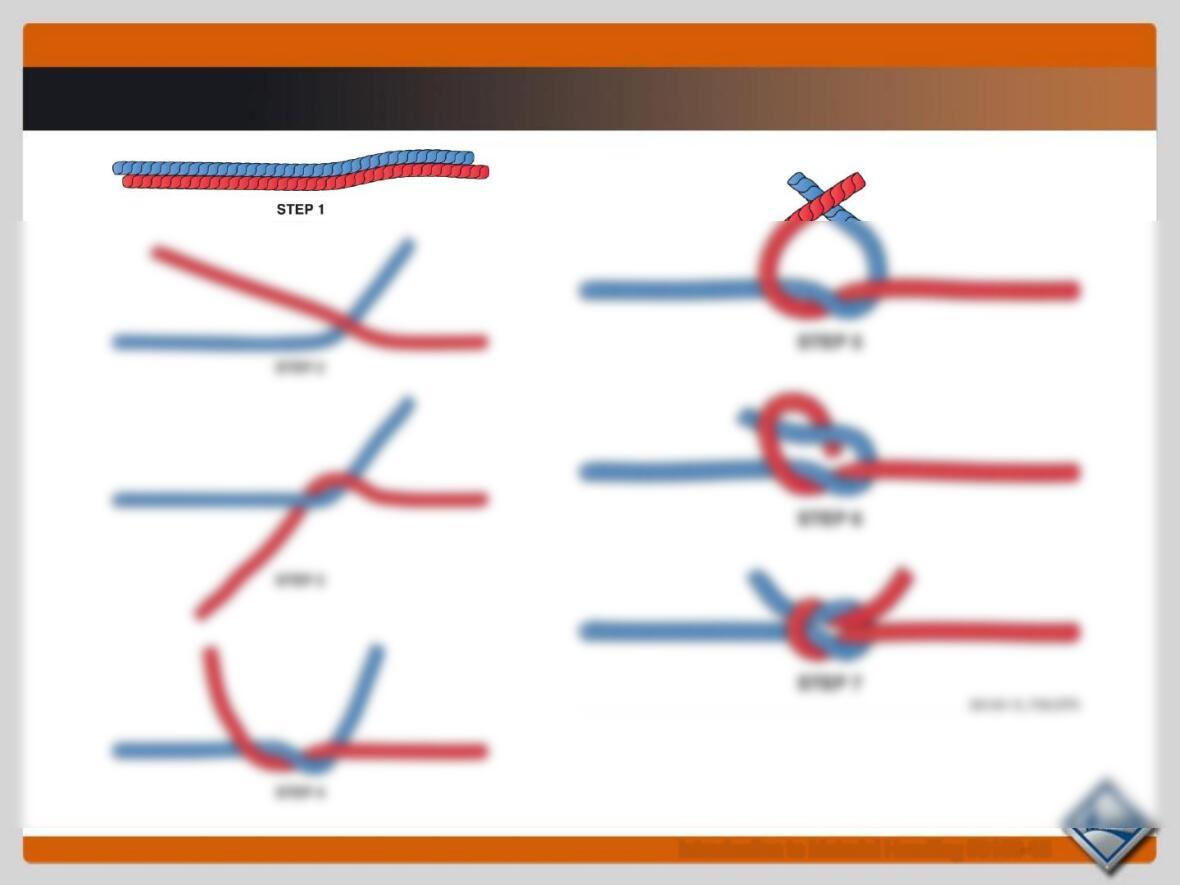
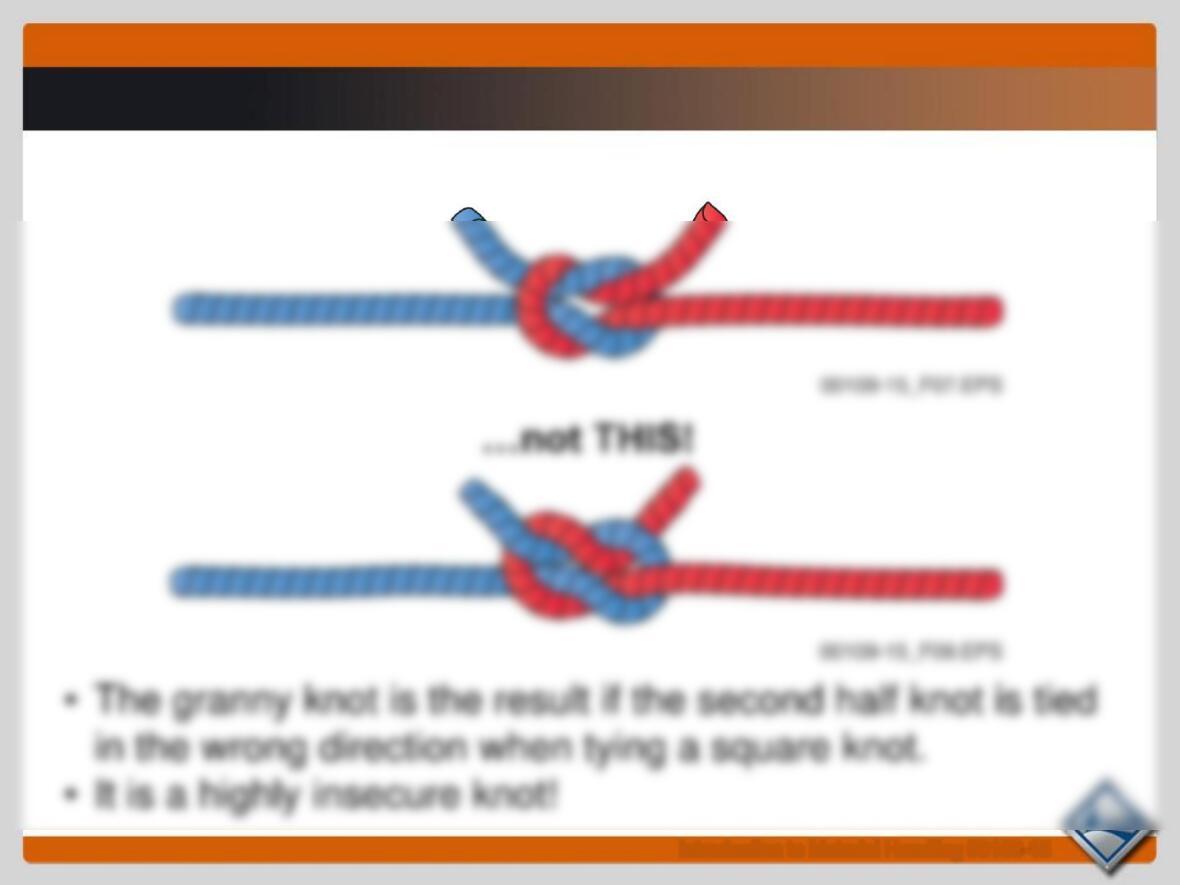
•Square

Kickoff Activity – What’s Changed
MATERIAL HANDLING –THEN AND NOW
Introduction to Material Handling 00109–15
Section 1.1.0 –Material-Handling Basics
To prevent injuries when handling materials:
•Pre-plan the task.
Introduction to Material Handling 00109–15
Sections 1.1.1 and 1.1.2
BASIC GUIDELINES
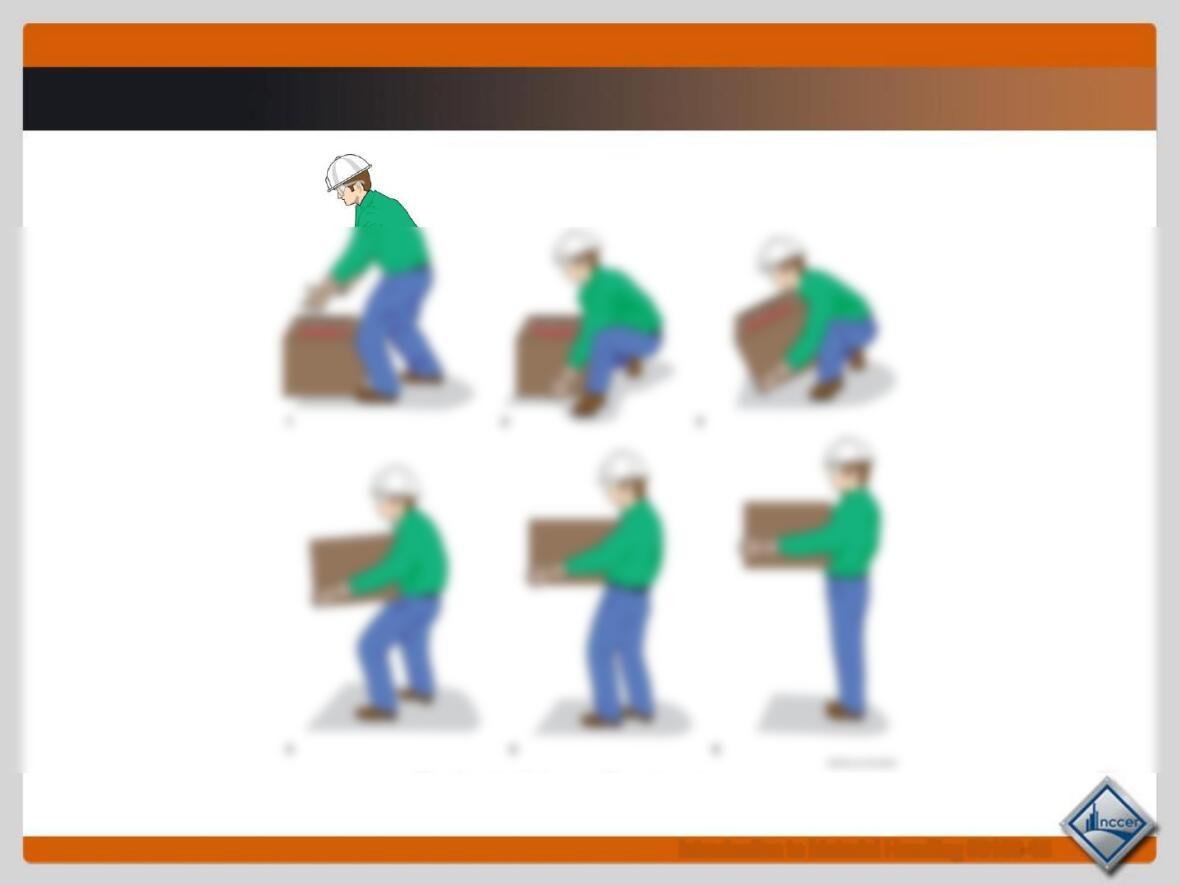
•Assess the situation before attempting a lift.
Introduction to Material Handling 00109–15
Section 1.1.3
Introduction to Material Handling 00109–15
Safe Lifting Technique
Section 1.1.3
Introduction to Material Handling 00109–15
GUIDELINES FOR LOWERING A LOAD
Section 1.2.1 –Stacking and Storing Materials
Introduction to Material Handling 00109–15
Follow safety guidelines for stacking and storing items
such as:
•Cartons
•Lumber
Section 1.2.1 –Stacking and Storing Materials
Introduction to Material Handling 00109–15
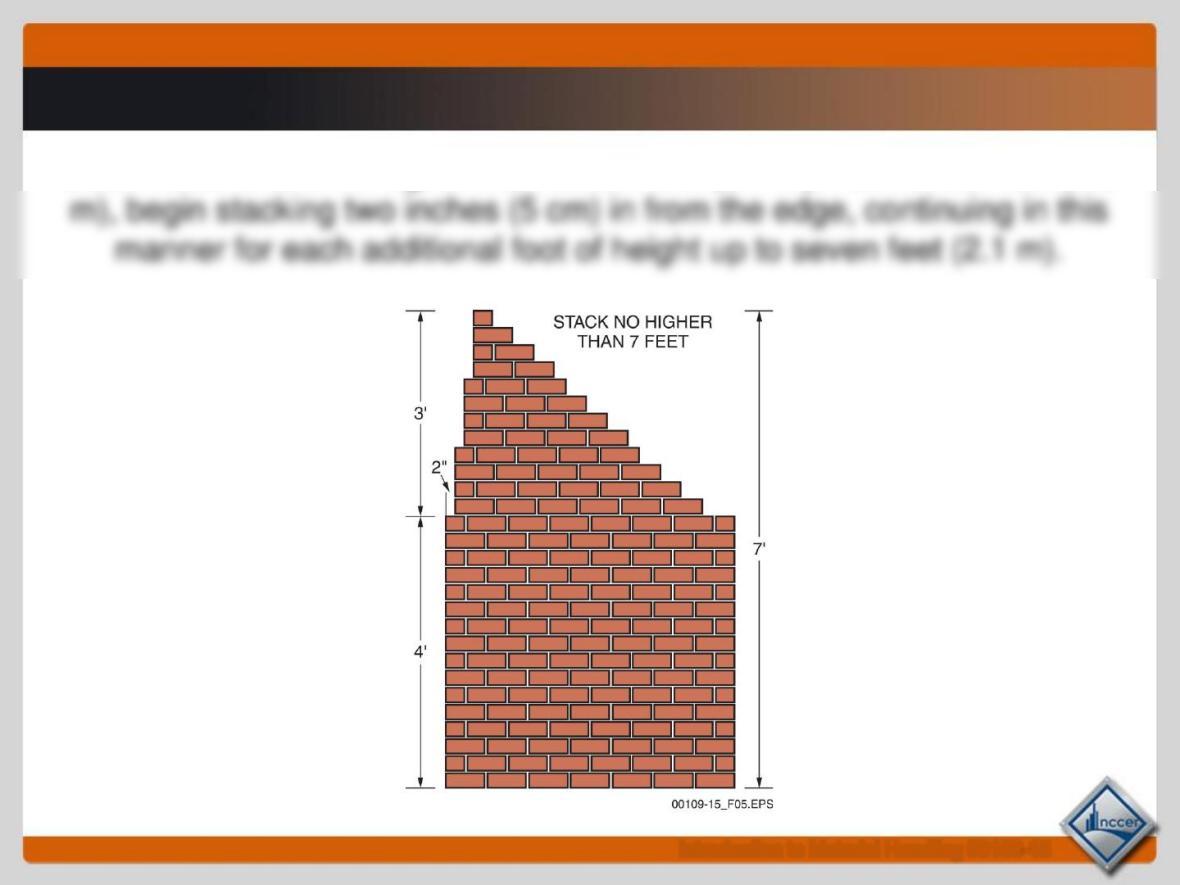
Stack loose bricks no higher than seven feet (2.1 m). Above four feet (1.2
Section 1.2.1 –Stacking and Storing Materials
Introduction to Material Handling 00109–15
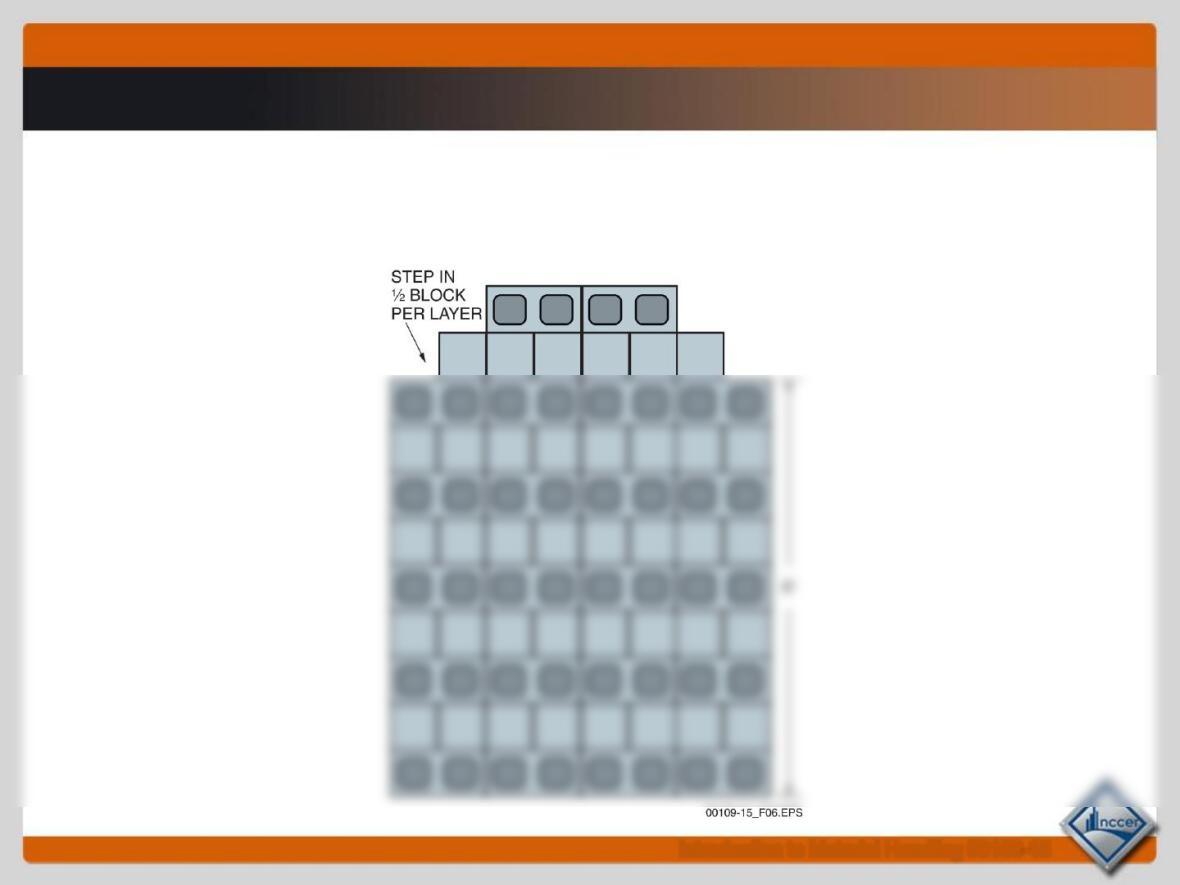
A stack of masonry blocks is set back one-half block per layer
above six feet (1.8 m).
Section 1.2.2 –Working from Heights
Safety Guidelines
•Use a safety harness with a fall-arrest lanyard at heights
over 6 feet (2 m).
Introduction to Material Handling 00109–15

Section 1.3.0 –Knots
Knots and Hitches
•True knots must be unwoven to be unfastened.
Introduction to Material Handling 00109–15
Section 1.3.1 –The Square Knot
Introduction to Material Handling 00109–15
Section 1.3.1 –The Square Knot
Introduction to Material Handling 00109–15
THIS…
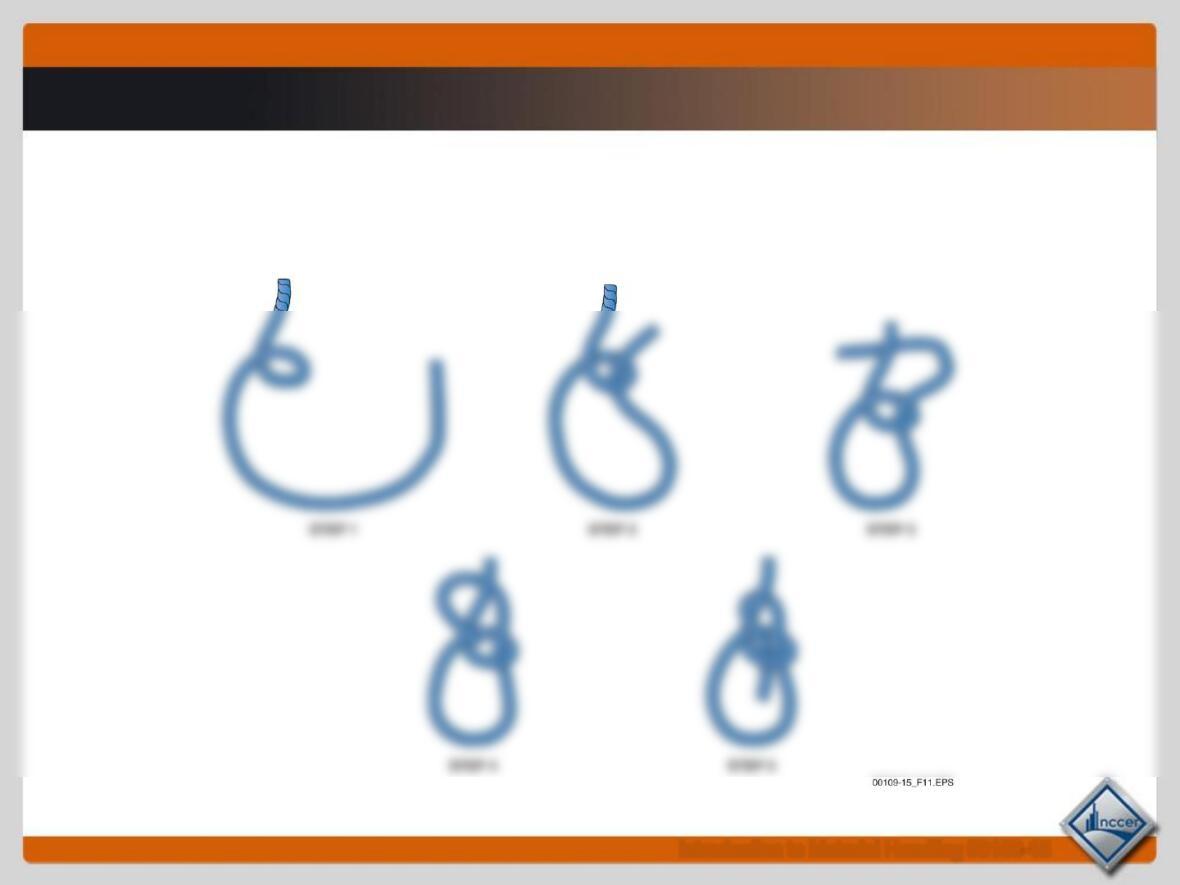
Section 1.3.2 –The Bowline
Introduction to Material Handling 00109–15
Do not use this knot if the rope may have to be
released while under load!
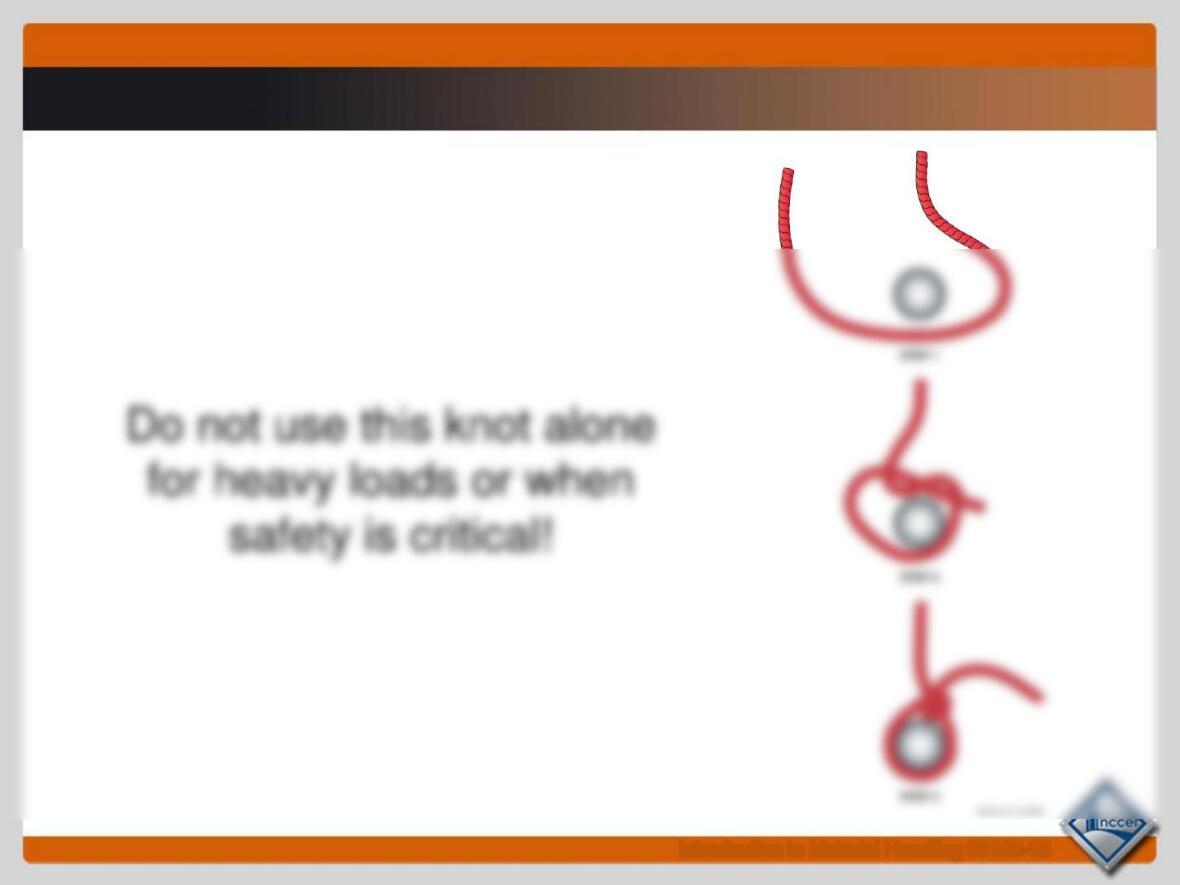
Section 1.3.3 –The Half Hitch
Introduction to Material Handling 00109–15
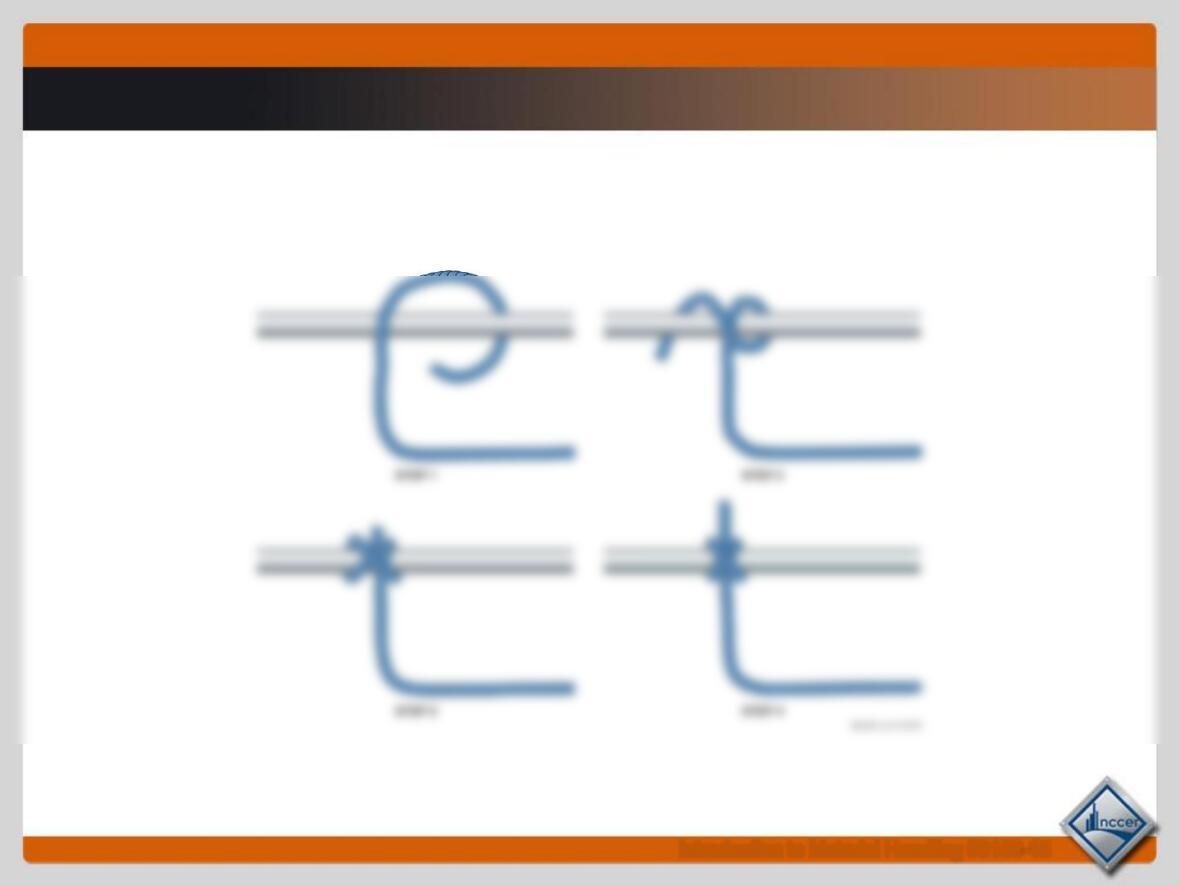
Section 1.3.4 –The Clove Hitch
Introduction to Material Handling 00109–15
Do not use this knot alone; use additional half hitches
to make it more secure.
CLOVE HITCH—THREADING THE END TECHNIQUE
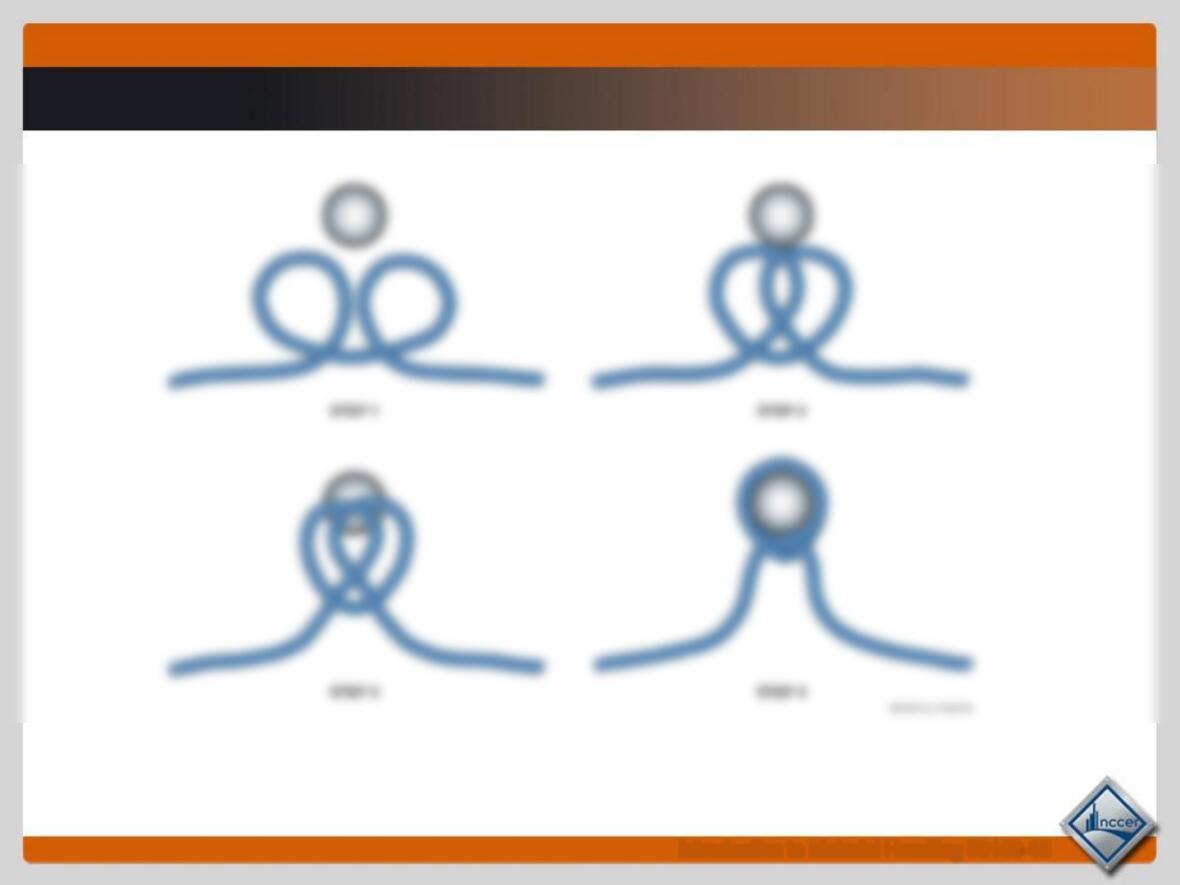
Section 1.3.4 –The Clove Hitch
Introduction to Material Handling 00109–15
CLOVE HITCH—STACKED LOOPS TECHNIQUE
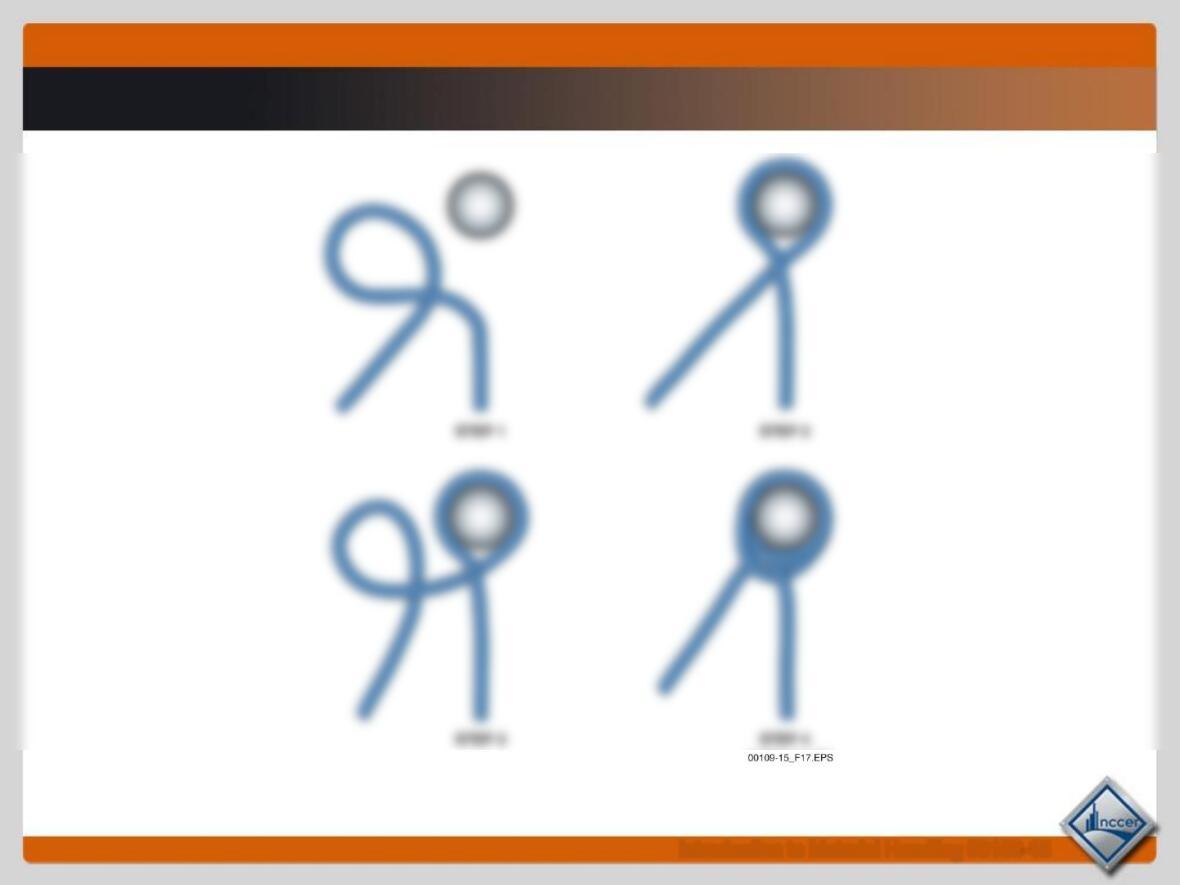
Section 1.3.4 –The Clove Hitch
Introduction to Material Handling 00109–15
CLOVE HITCH—TWO HALF HITCHES TECHNIQUE
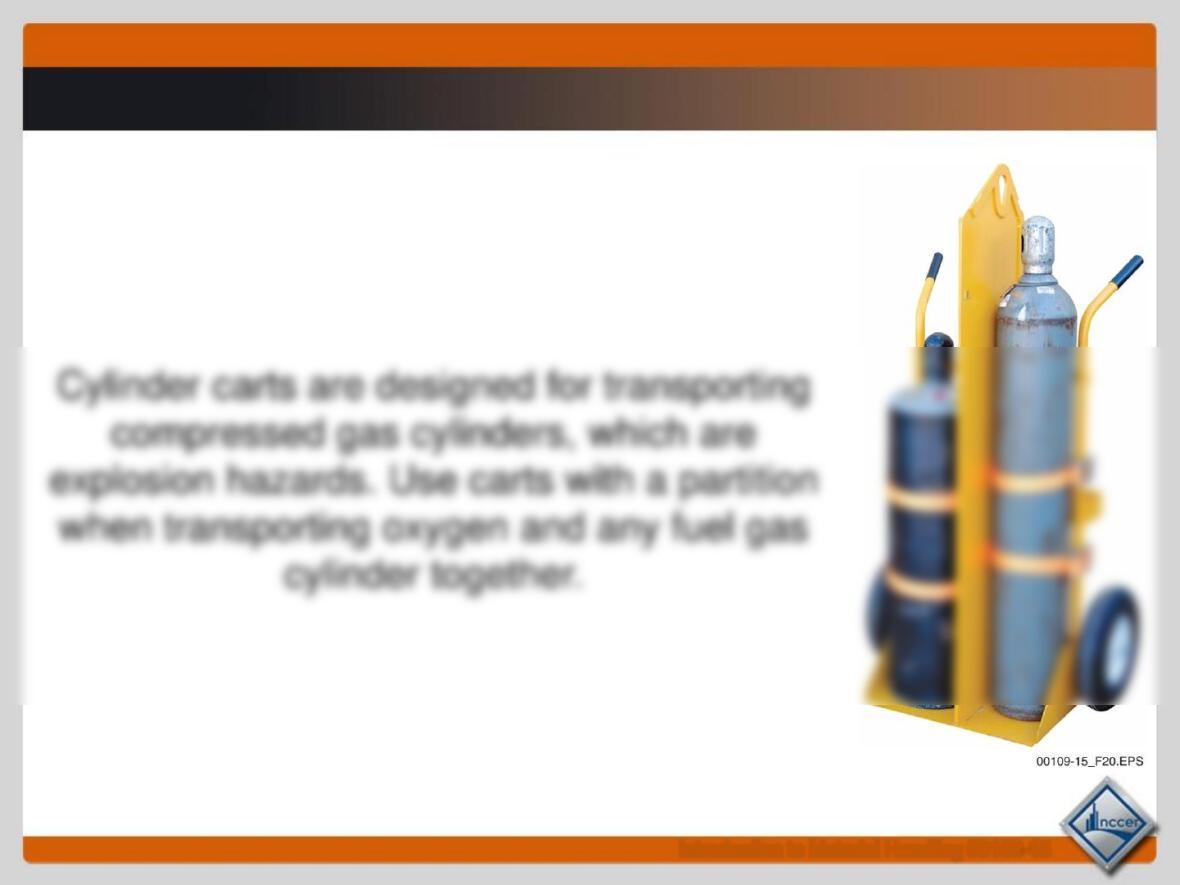
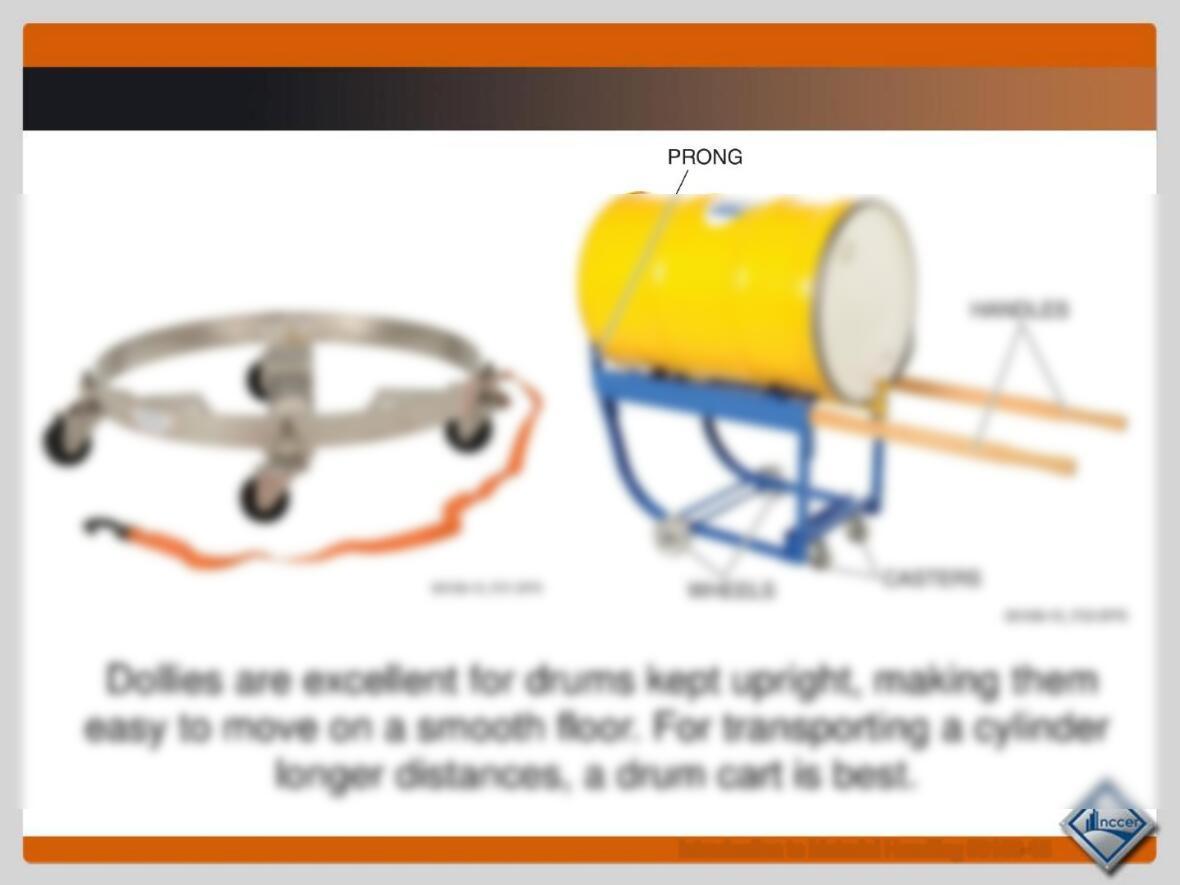
Sections 2.1.1 to 2.1.4 –Carts and Dollies
Introduction to Material Handling 00109–15
Sections 2.1.1 to 2.1.4 –Carts and Dollies
Introduction to Material Handling 00109–15
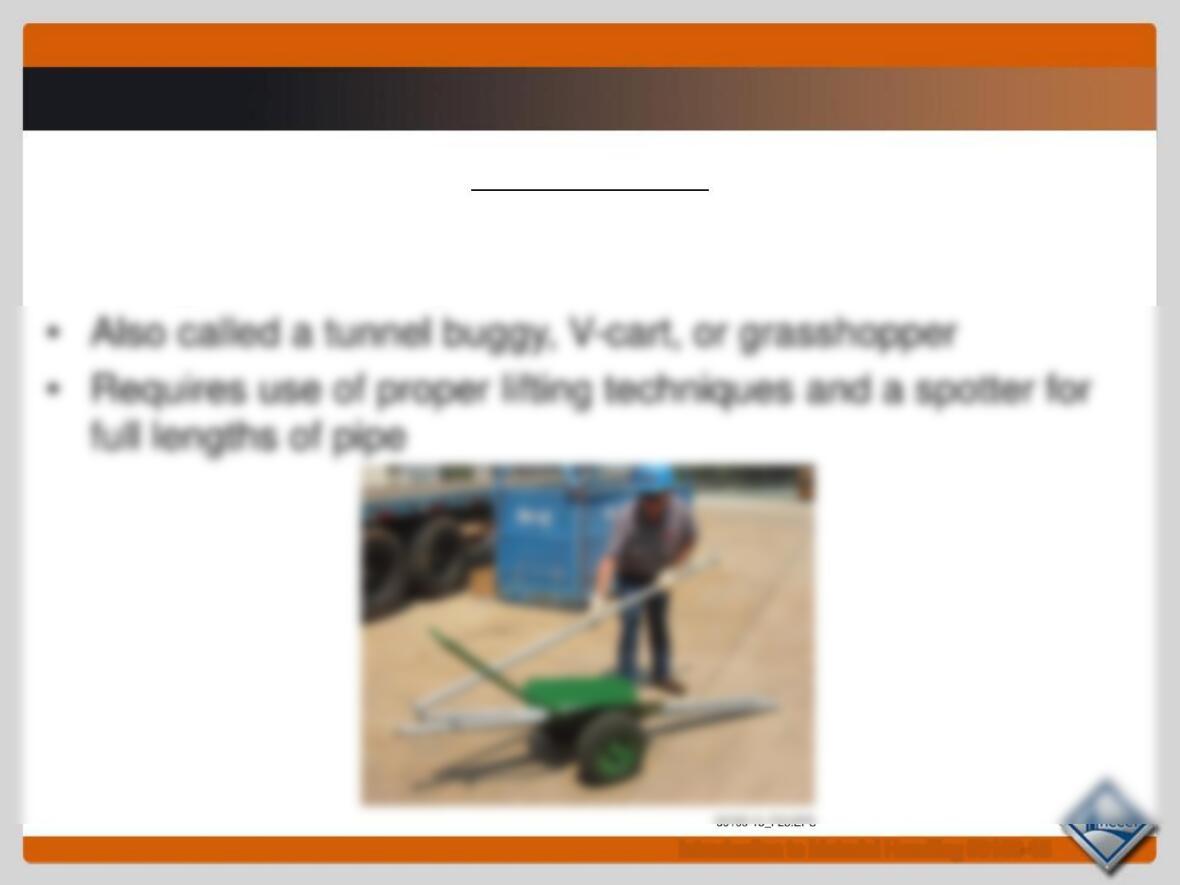
Sections 2.1.7 to 2.1.9 –Pipe Mules and Transports
Introduction to Material Handling 00109–15
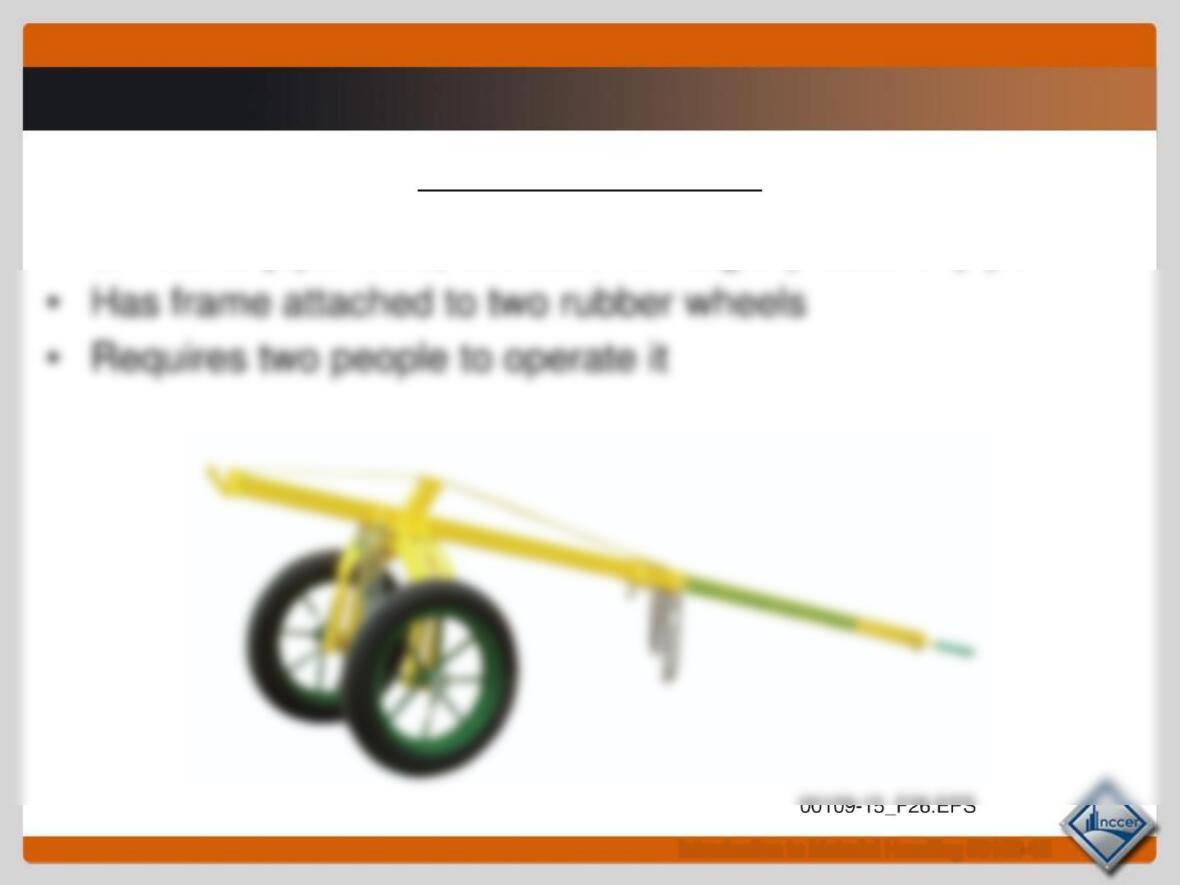
PIPE MULES
•Two-wheeled devices for transporting medium-length pipes,
tubing, or scaffolding
Sections 2.1.7 to 2.1.9 –Pipe Mules and Transports
Introduction to Material Handling 00109–15
PIPE TRANSPORT
•Similar to pipe mule, but used for larger pieces of pipe
Section 2.2.0
Operators of equipment powered by gasoline or
electric motors must…
Introduction to Material Handling 00109–15
Sections 2.2.1 and 2.2.2
Introduction to Material Handling 00109–15
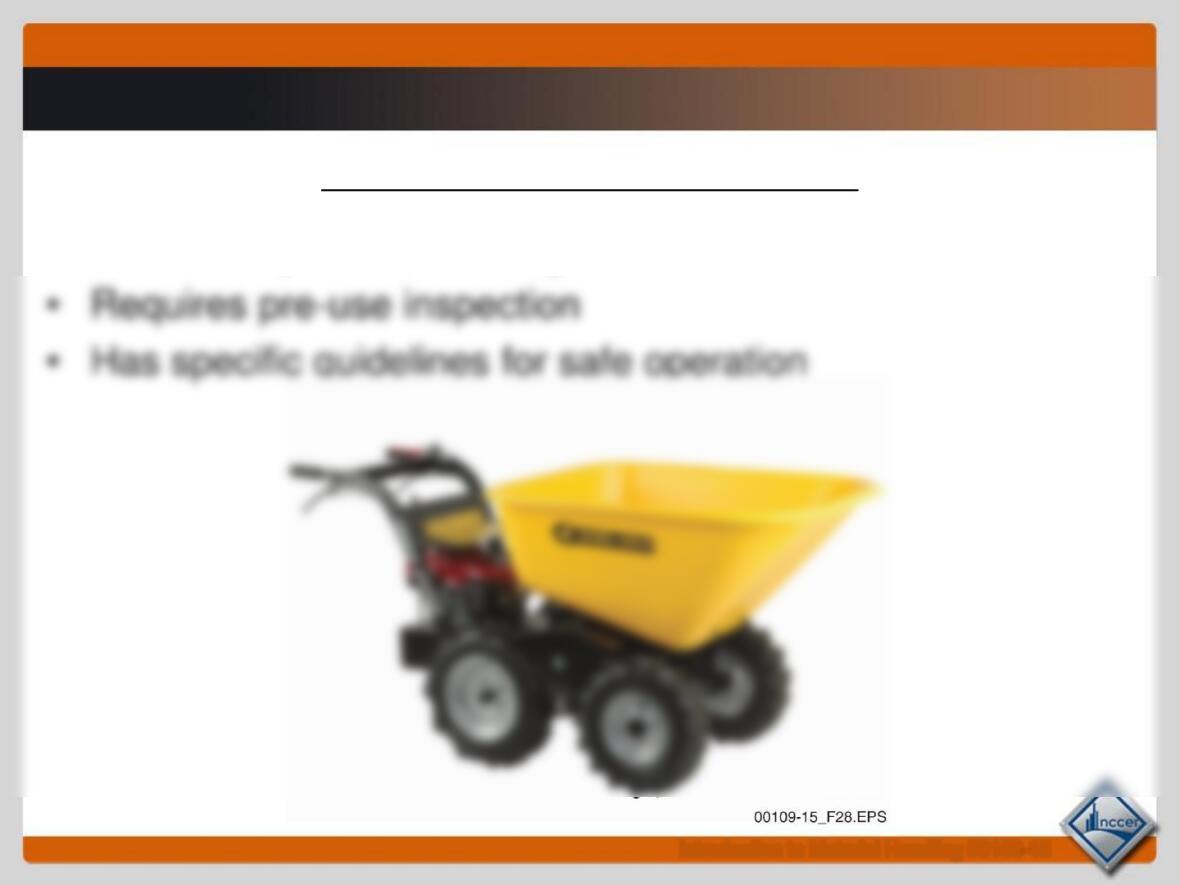
POWERED WHEELBARROW
•Powered by an electric or gas motor
Sections 2.2.1 and 2.2.2
Introduction to Material Handling 00109–15
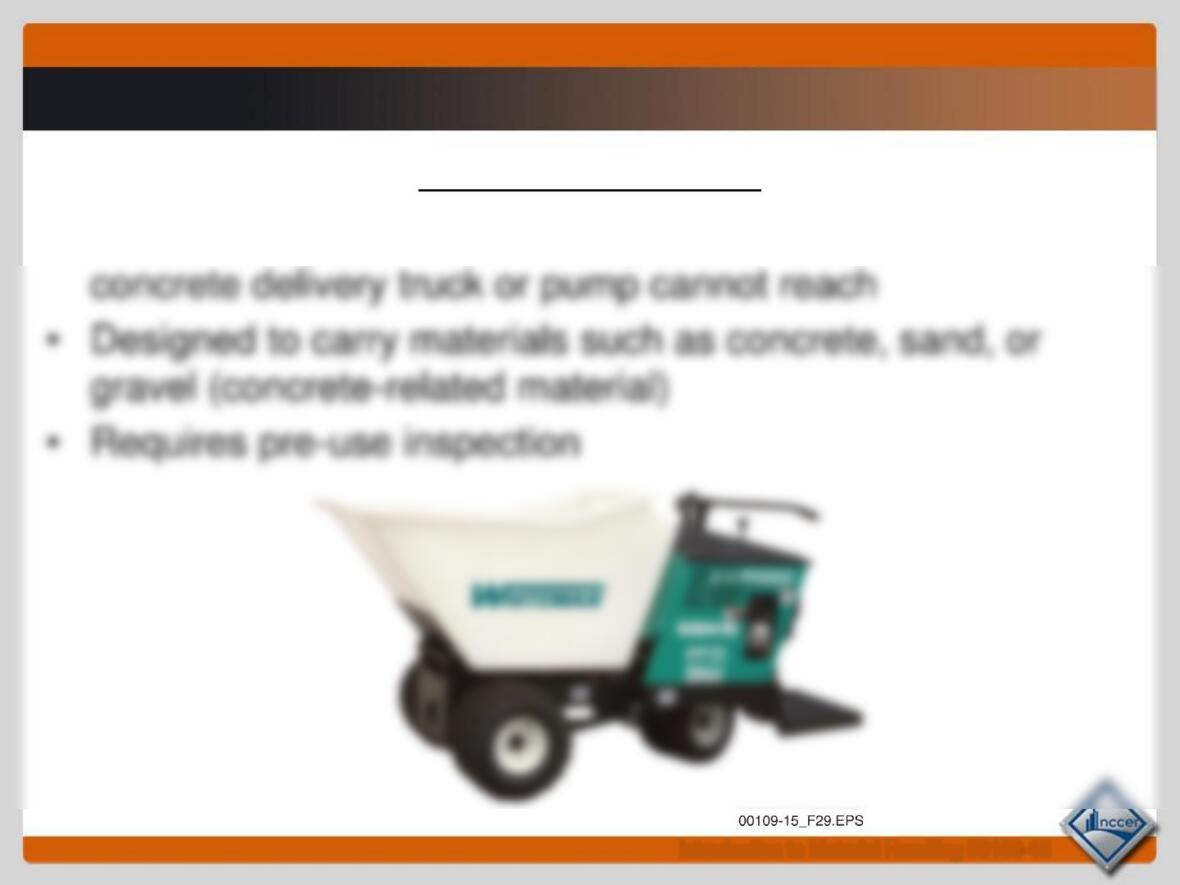
CONCRETE MULE
•A wheeled device for concrete pours in locations where
Sections 2.2.4 and 2.2.5 –Forklifts
Introduction to Material Handling 00109–15
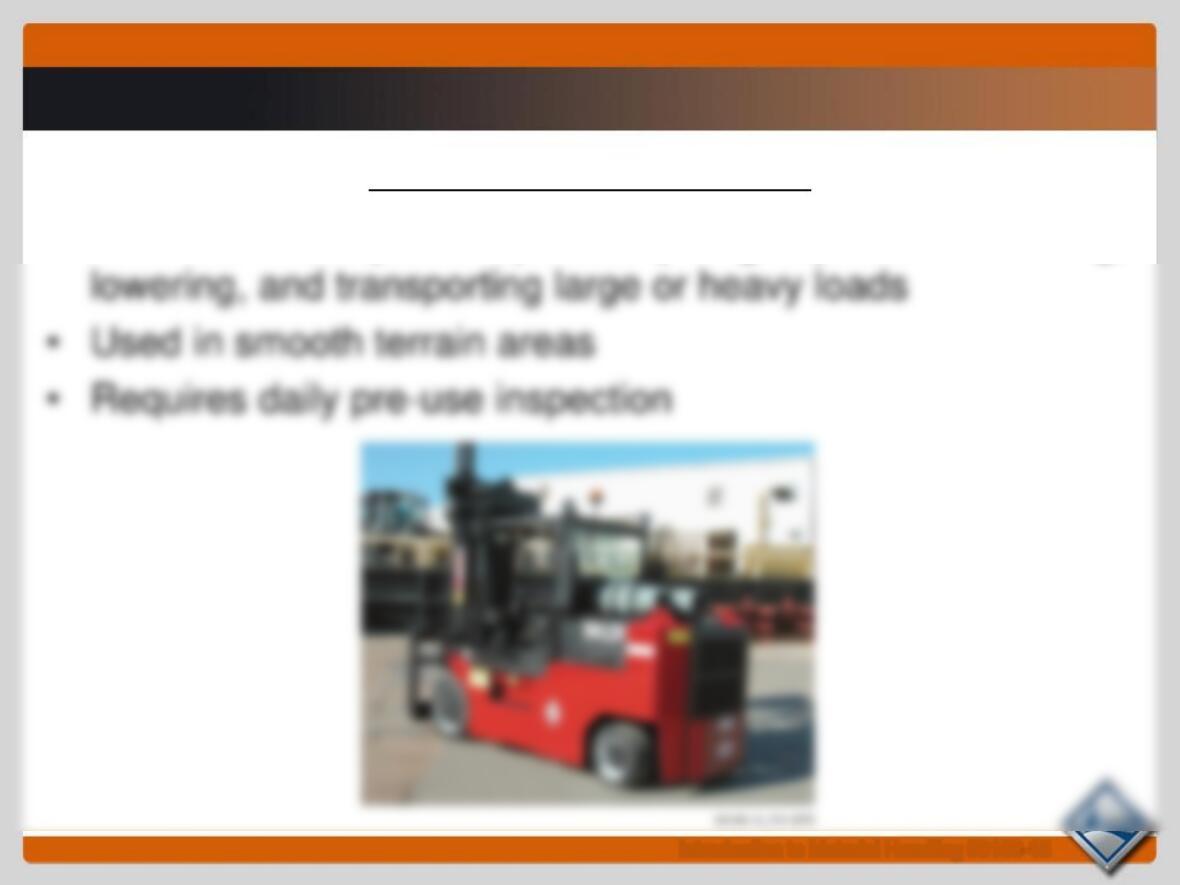
INDUSTRIAL FORKLIFT
•A vehicle with a power-operated pronged platform for lifting,
Sections 2.2.4 and 2.2.5 –Forklifts
Introduction to Material Handling 00109–15
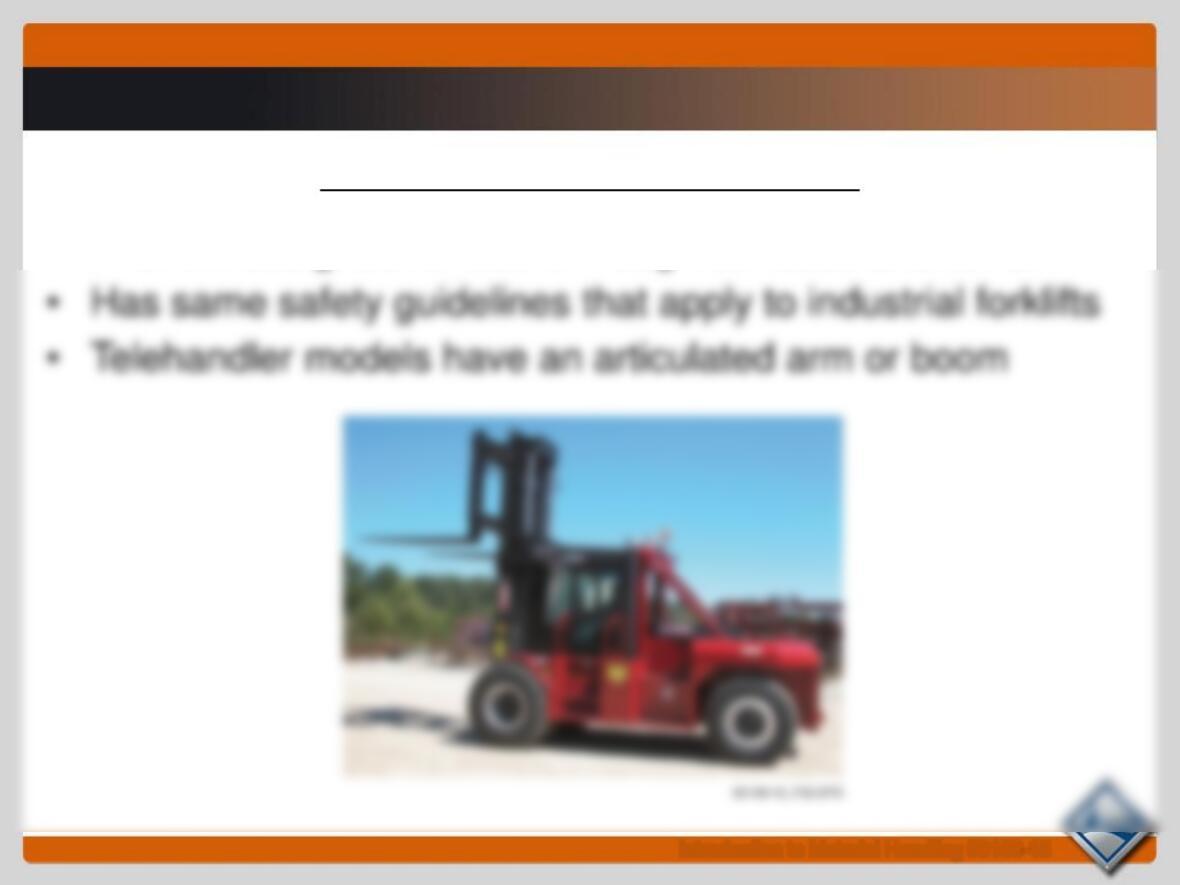
ROUGH-TERRAIN FORKLIFT
•A forklift designed for use on rough surfaces and terrain
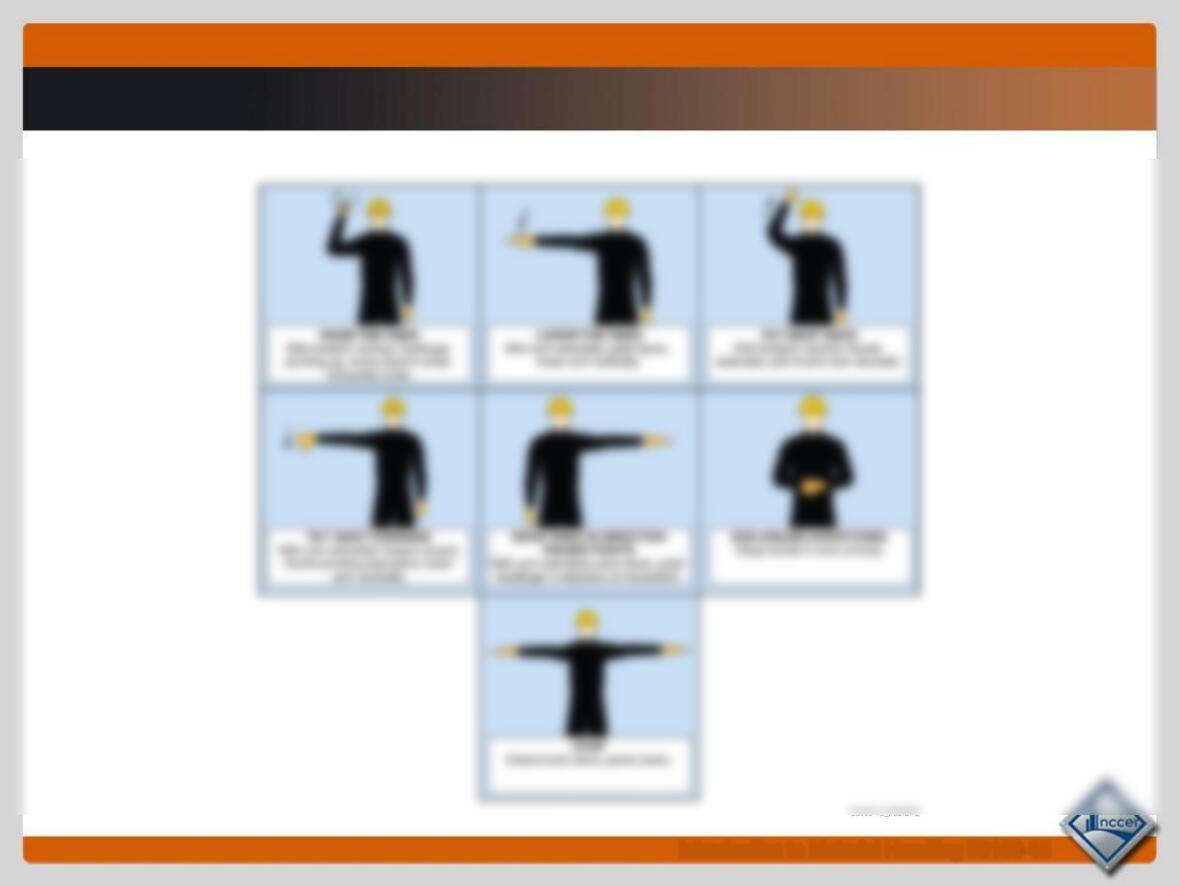
Section 2.2.6 –Hand Signals
Introduction to Material Handling 00109–15

Wrap Up
What would be the most appropriate device or practice to
use for the following material-handling situation?
Introduction to Material Handling 00109–15
1. A worker on the ground at a job site needs to tie a knot
Wrap Up
What would be the most appropriate device or practice to
use for the following material-handling situation?
Introduction to Material Handling 00109–15
Wrap Up
What would be the most appropriate device or practice to
use for the following material-handling situation?
Introduction to Material Handling 00109–15
Wrap Up
What would be the most appropriate device or practice to
use for the following material-handling situation?
Introduction to Material Handling 00109–15
4. A worker must deliver concrete mix to a pour in a

Wrap Up
What would be the most appropriate device or practice to
use for the following material-handling situation?
Introduction to Material Handling 00109–15
5. A worker needs to alert a forklift operator that the load

Next Session…
LABORATORY AND PERFORMANCE TASKS;
MODULE REVIEW AND TESTING
Introduction to Material Handling 00109–15