
CORE CURRICULUM
Introduction to Basic Rigging 00106-15

Introduction to Basic Rigging 00106-15
Session 2: Hardware, Hoists, and Hitches
Session Two Objectives
When trainees have completed this session, they should be able to do
the following:
1. Identify and describe various types of rigging slings, hardware, and
equipment.
Introduction to Basic Rigging 00106-15
Section 1.3.1 –Shackles
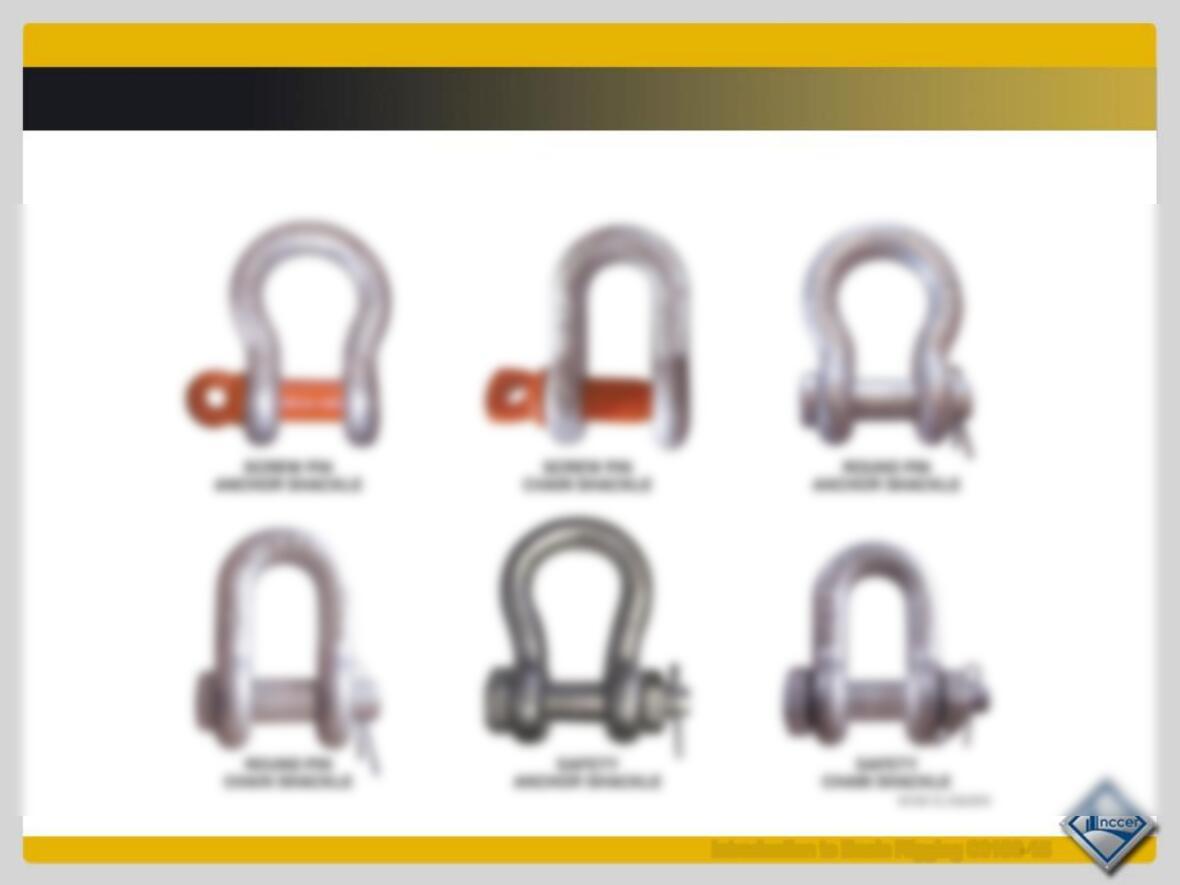
Screw-pin chain and anchor shackles are the most common.
Introduction to Basic Rigging 00106-15
Introduction to Basic Rigging 00106-15
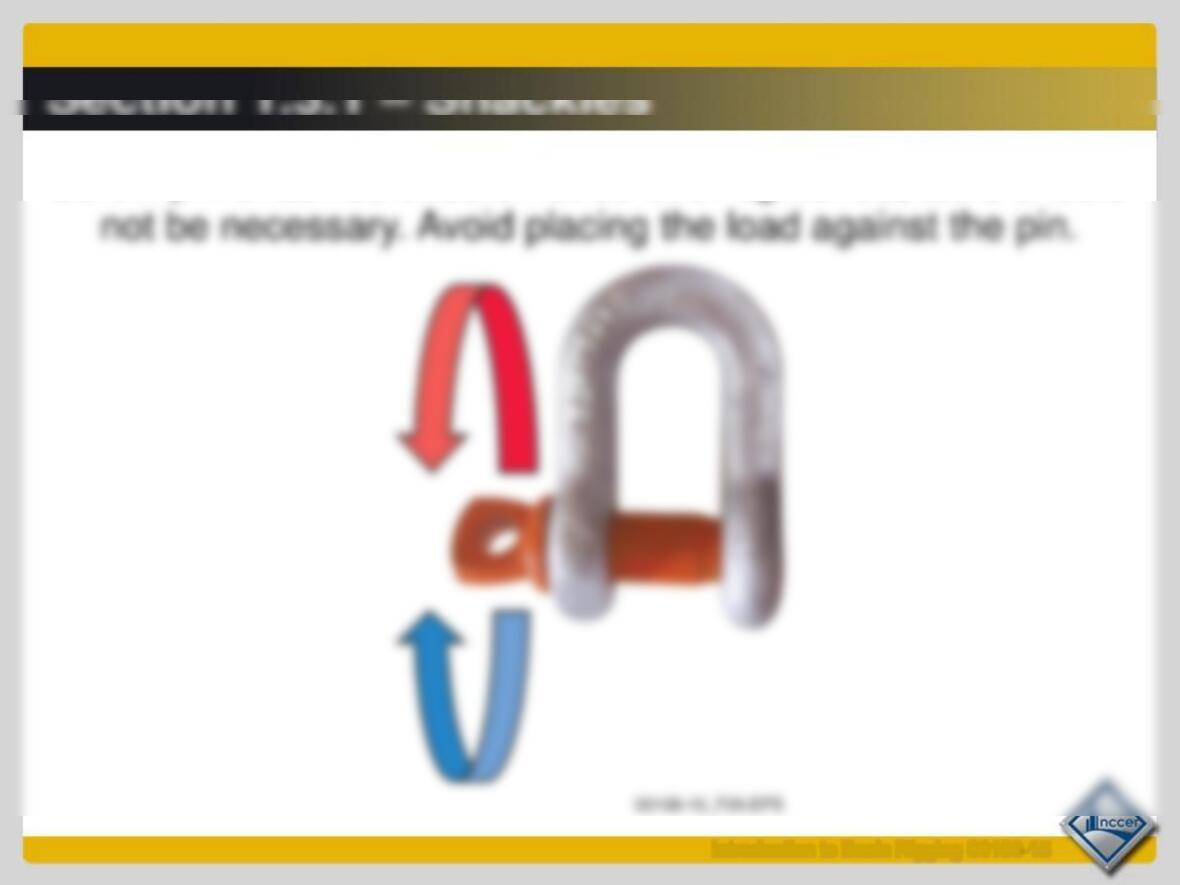
Screw pin shackles should not be over-tightened; tools should

Section 1.3.2 –Eyebolts
Unless an eyebolt has a shoulder, it should only be used for a
Introduction to Basic Rigging 00106-15
Section 1.3.2 –Eyebolts
Introduction to Basic Rigging 00106-15
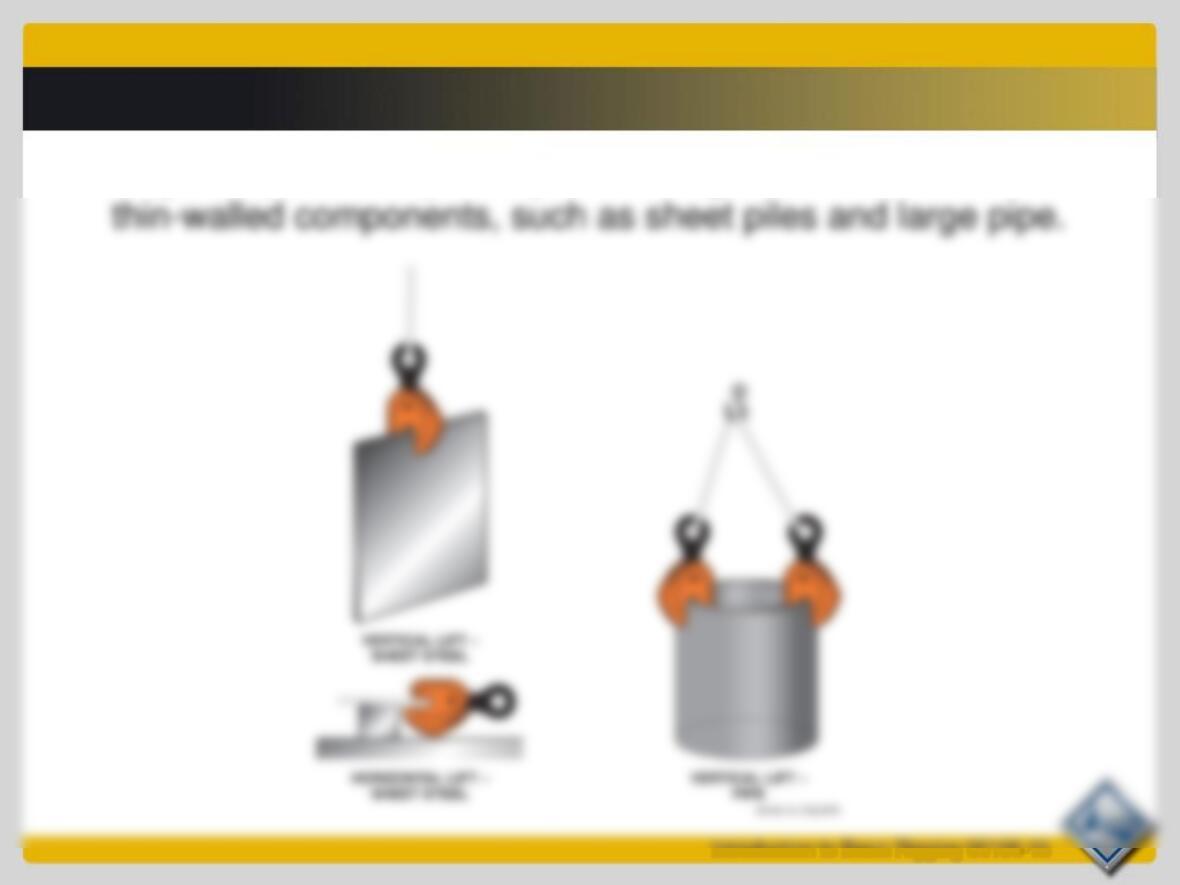
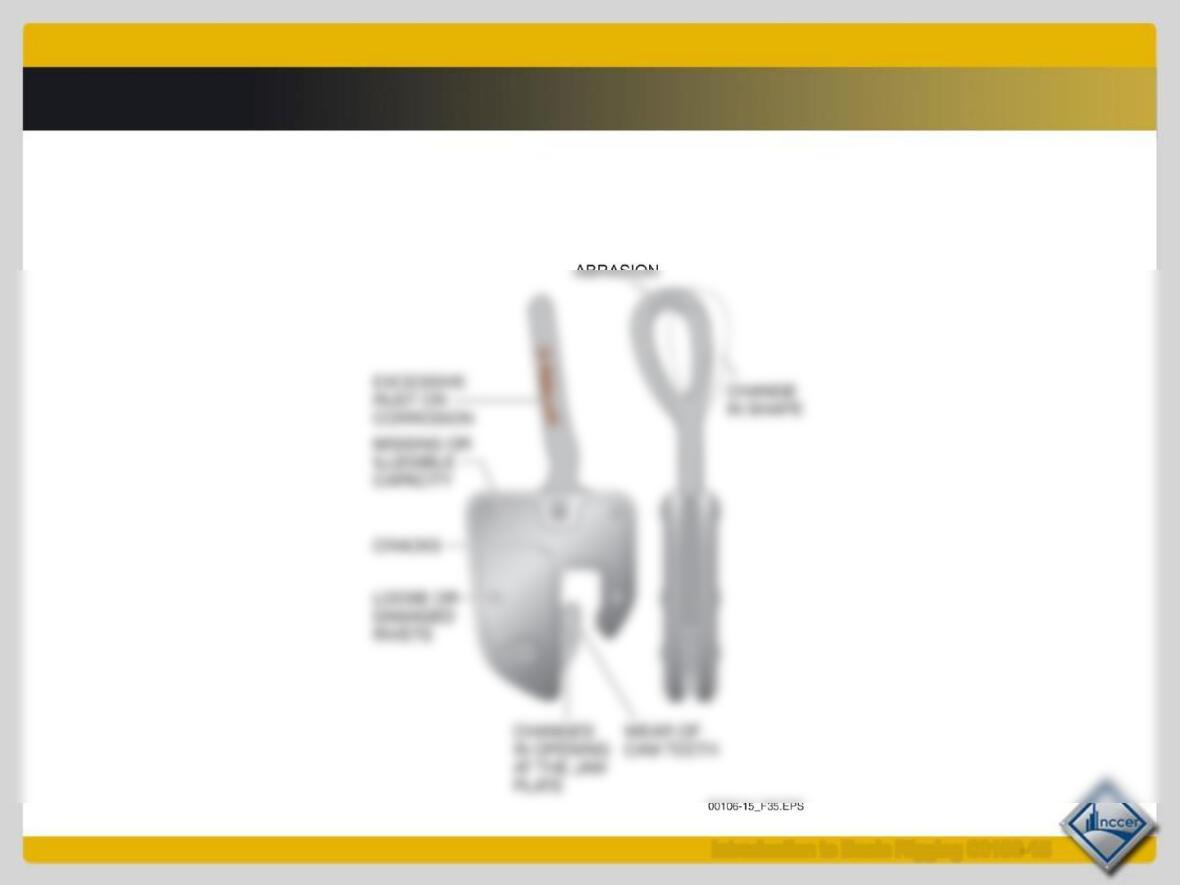
Lifting clamps are very handy for moving sheet material or other
Section 1.3.2 –Eyebolts
Introduction to Basic Rigging 00106-15
Like other rigging hardware, lifting clamps should be
inspected prior to each use.
Section 1.3.4 –Hooks
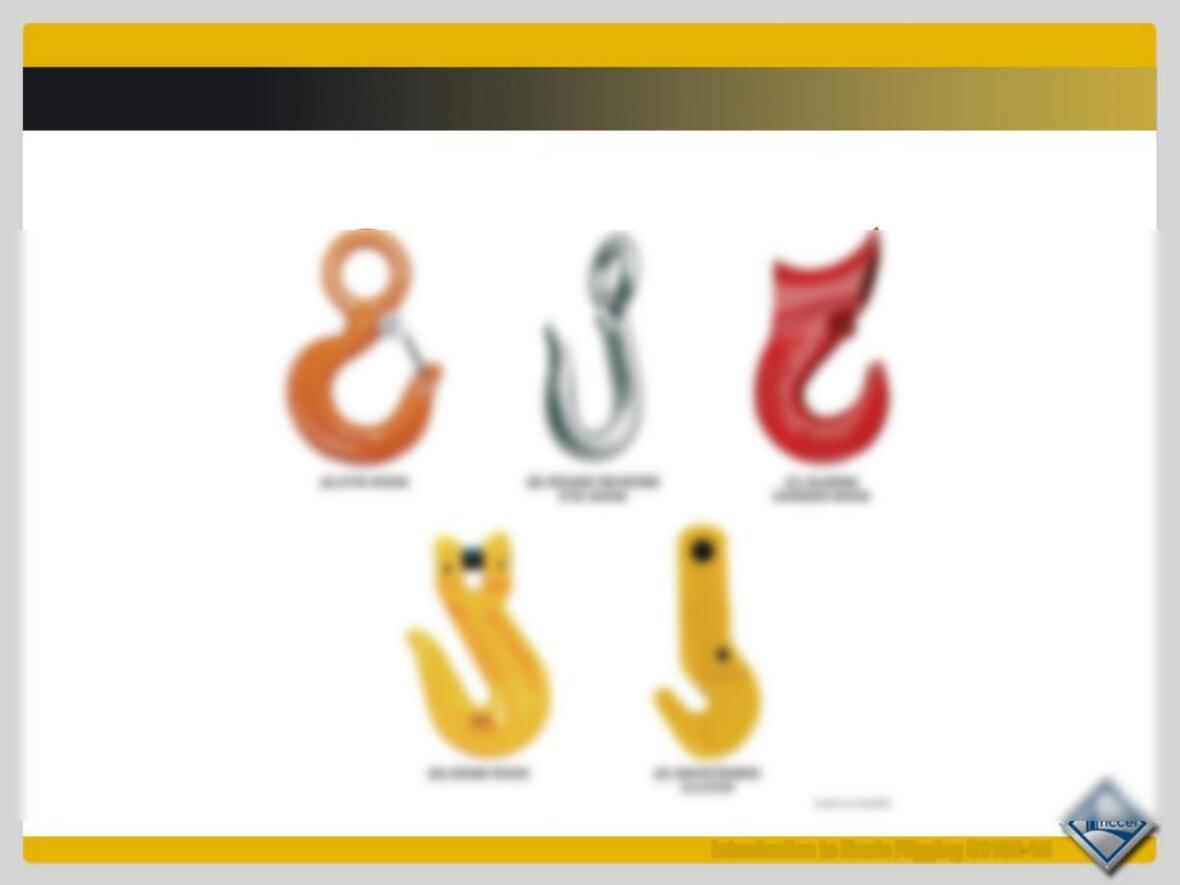
Rigging hooks are available in a surprising number of configurations.
Introduction to Basic Rigging 00106-15
Section 1.3.4 –Hooks
Introduction to Basic Rigging 00106-15
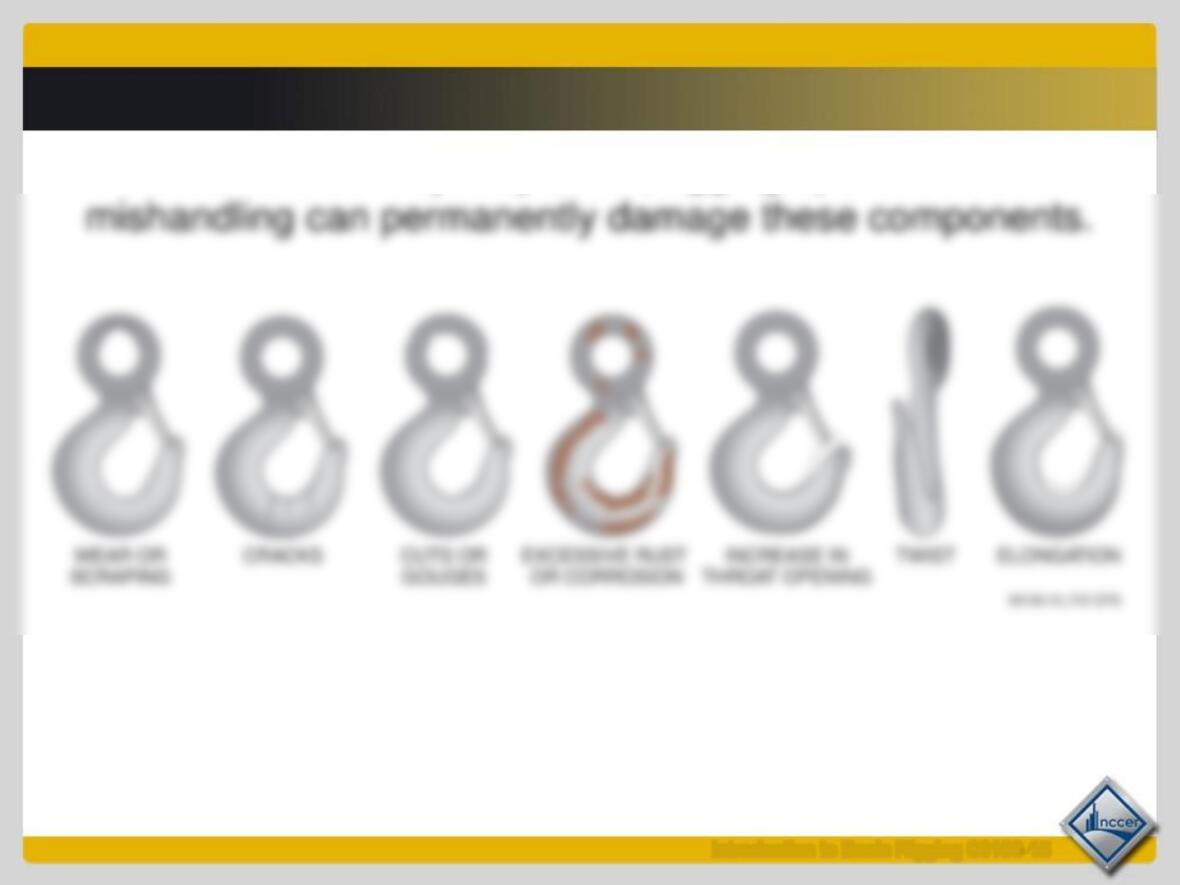
As durable as they may seem, rigging operations and
Section 1.4.0 –Hoists
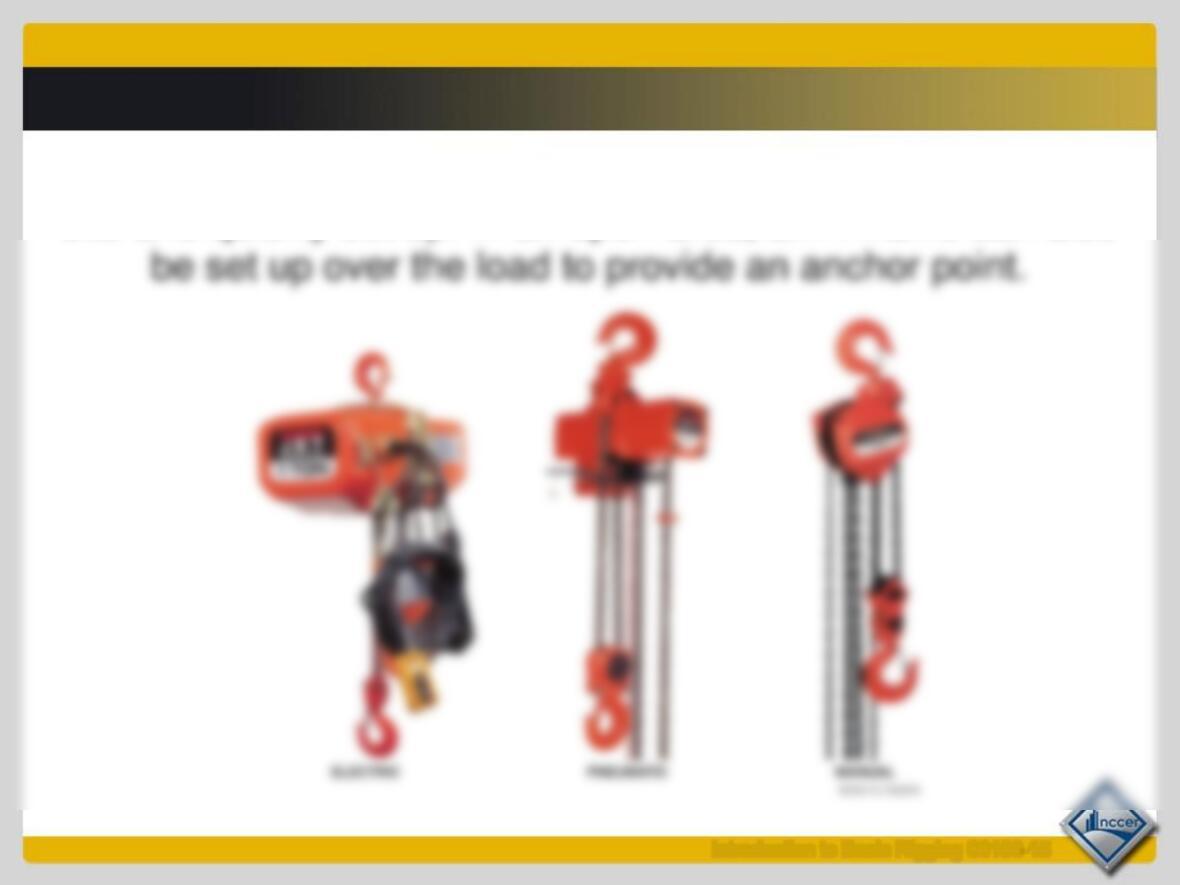
Chain hoists with a hook on the top can be taken to the job
site and quickly set up. In an open area, an A-frame can also
Introduction to Basic Rigging 00106-15
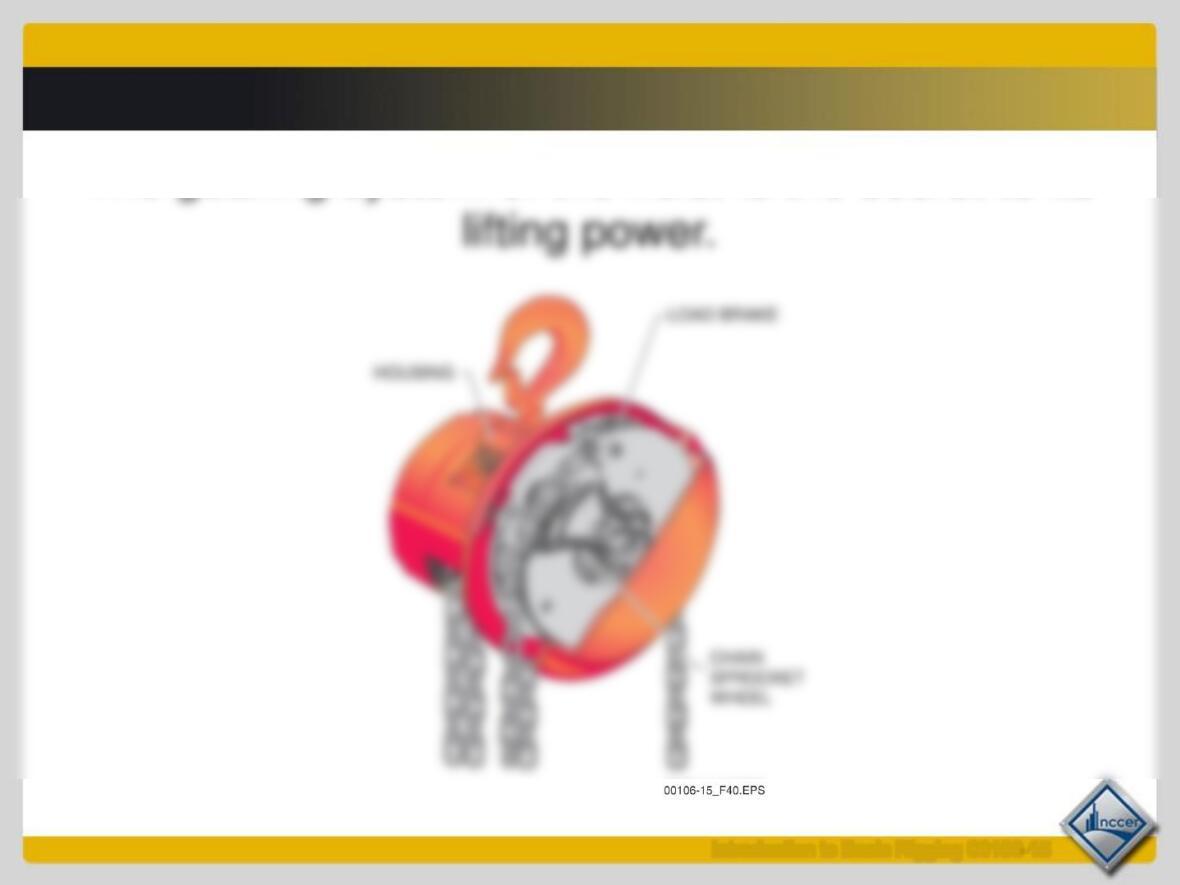
Section 1.4.0 –Hoists
Introduction to Basic Rigging 00106-15
The gearing system of the hoist is the secret to its
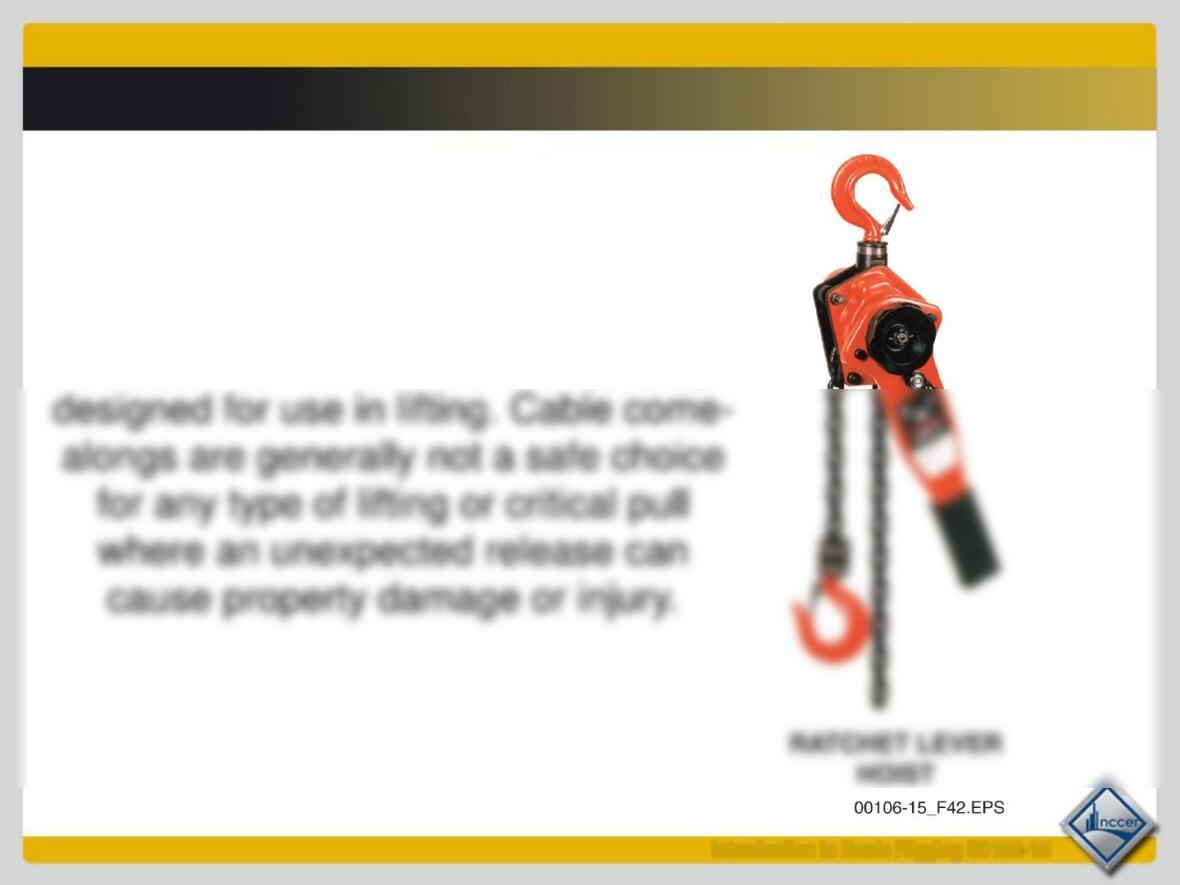
Section 1.4.2 –Hoists
A ratchet-lever chain hoist is typically
Introduction to Basic Rigging 00106-15
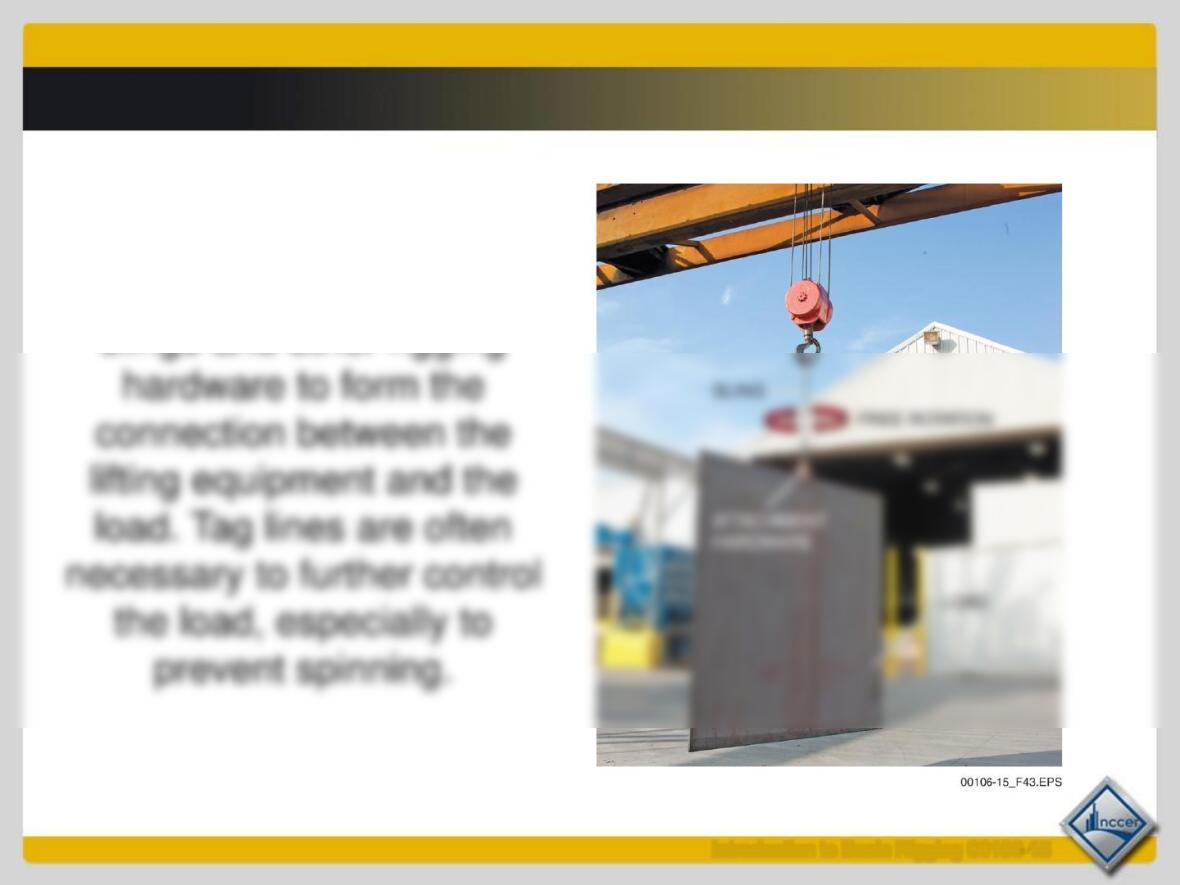
Section 1.5.1 –Hitches
A hitch is created using
slings and other rigging
Introduction to Basic Rigging 00106-15
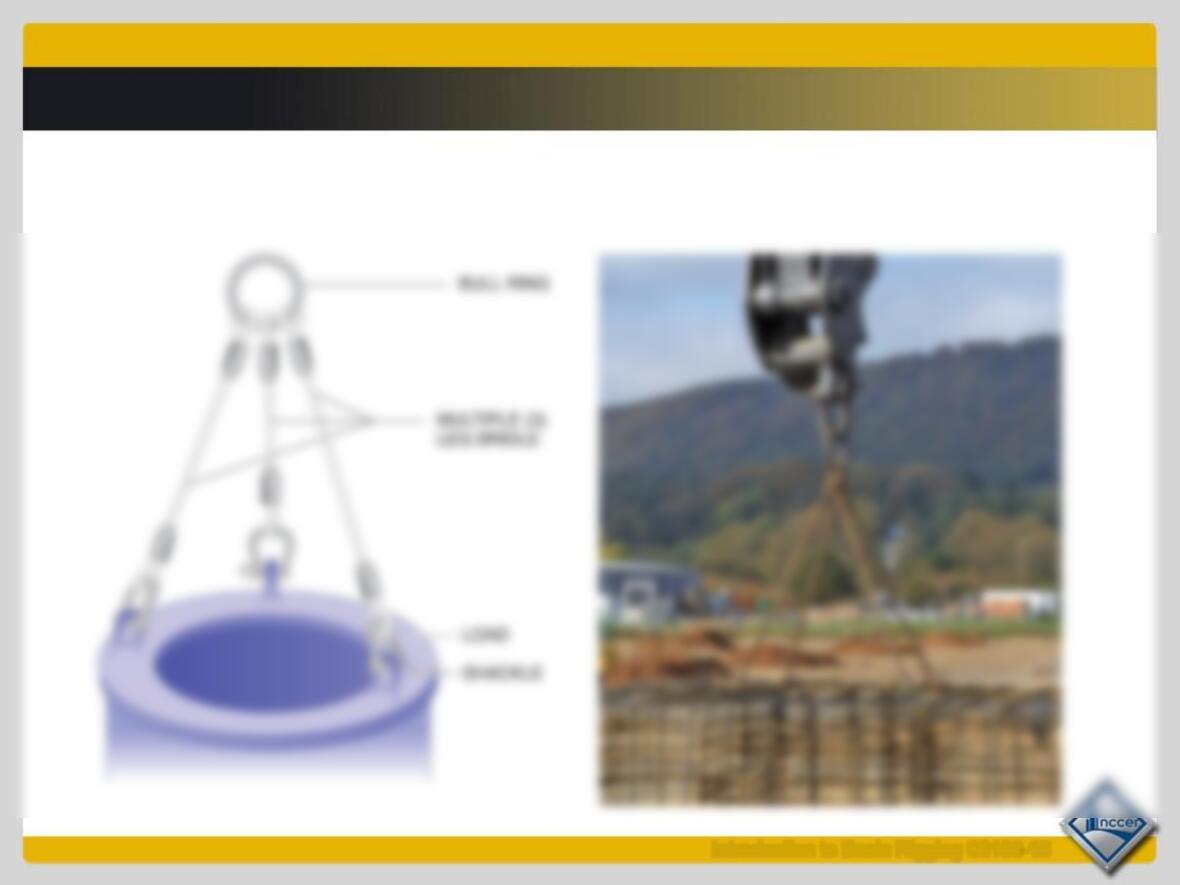
Section 1.5.1 –Hitches
Introduction to Basic Rigging 00106-15
A bridle hitch is formed using two or more single hitches.
Section 1.5.2 –Hitches
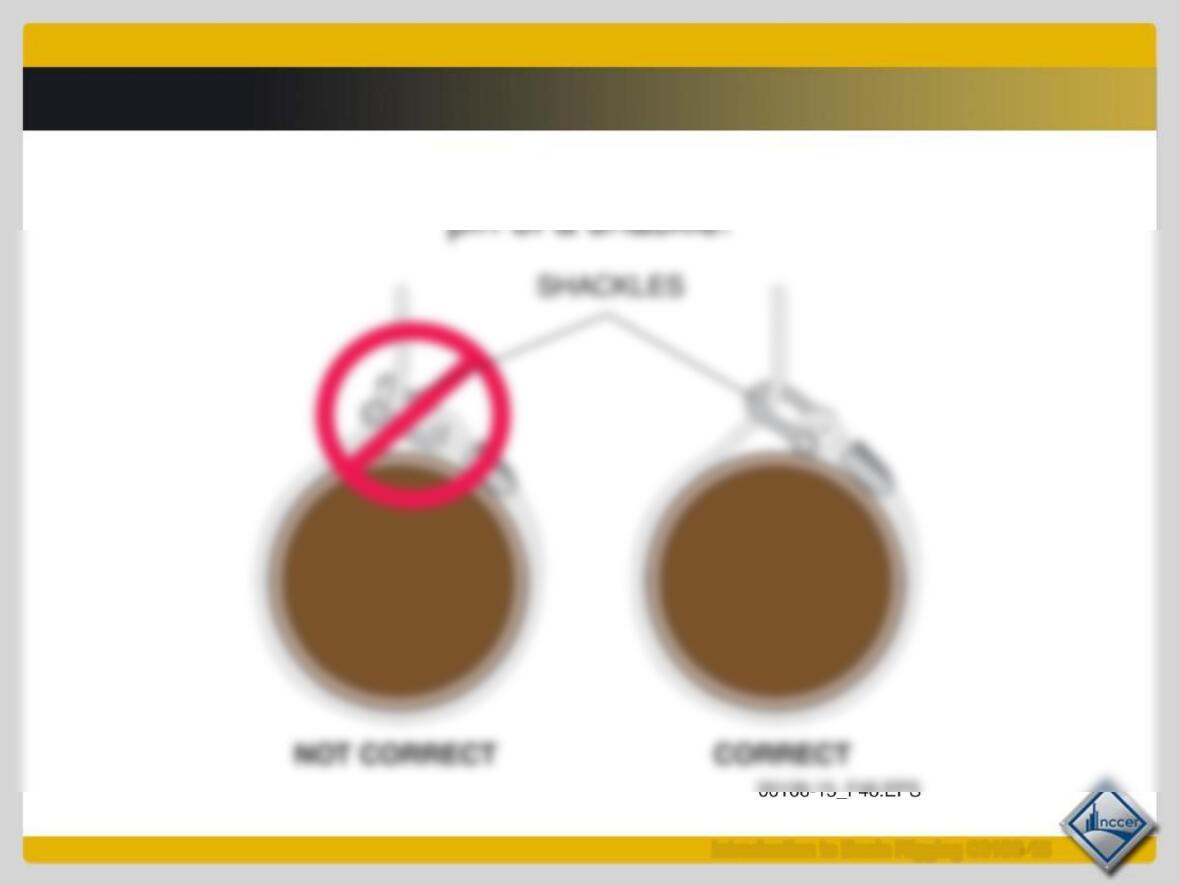
As mentioned previously, avoid placing the load against the
Introduction to Basic Rigging 00106-15
Section 1.5.2 –Hitches
Introduction to Basic Rigging 00106-15
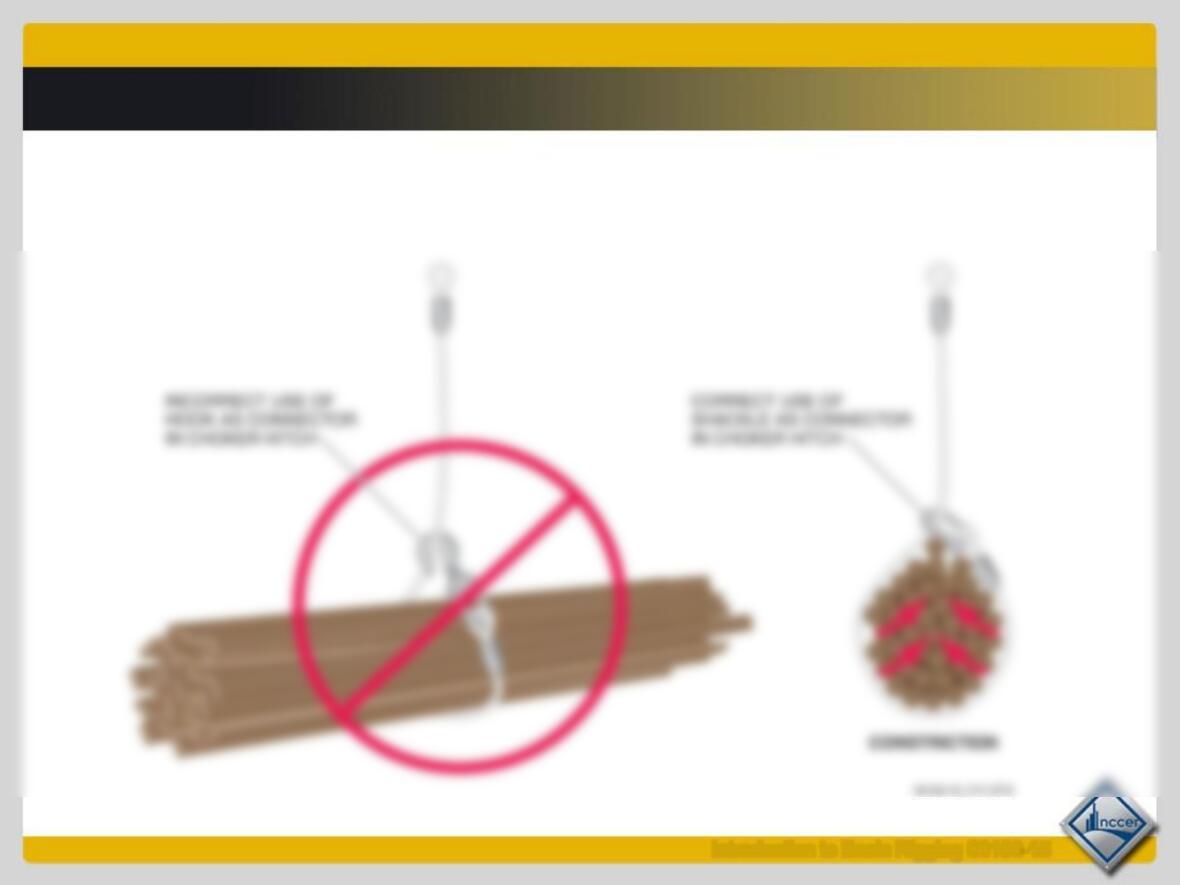
It may be tempting to use a simple hook to create a choker
quickly. A shackle must be used for this purpose.
Section 1.5.2 –Hitches
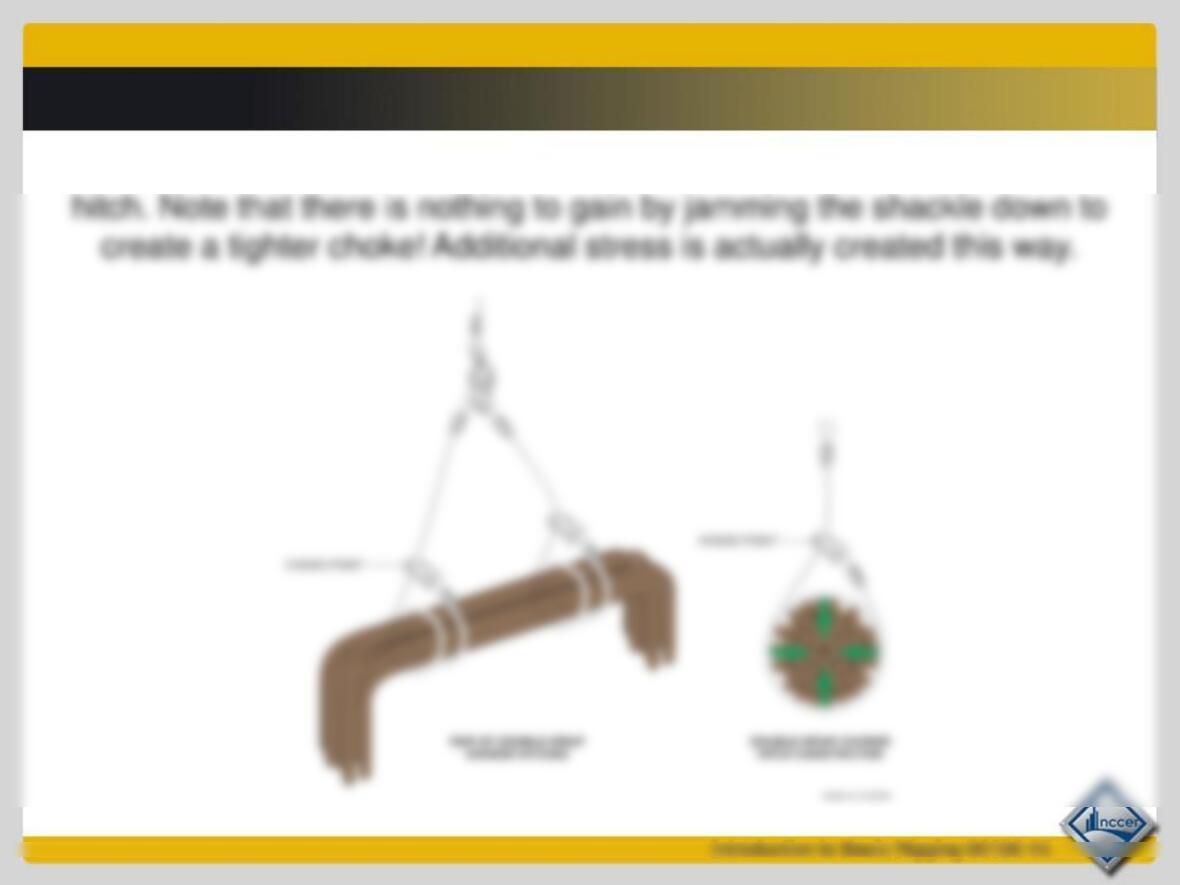
Bundles of loose items are best handled with the double-wrap choker

Section 1.5.4 –Hand Signals
Introduction to Basic Rigging 00106-15

Wrap Up –Trade Term Review
Block and tackle
A simple rope-and-pulley system used to lift loads.
Bridle
Introduction to Basic Rigging 00106-15

Wrap Up –Trade Term Review
Introduction to Basic Rigging 00106-15
Hitch
Hoist
Load

Wrap Up –Trade Term Review
Load control
Load stress
Master link
One-rope lay

Wrap Up –Trade Term Review
Introduction to Basic Rigging 00106-15
Plane
Rated capacity
Rejection criteria
Rigging hook
Wrap Up –Trade Term Review
Introduction to Basic Rigging 00106-15
Shackle
Sling

Wrap Up –Trade Term Review
Introduction to Basic Rigging 00106-15
Sling legs
Sling reach
Splice

Wrap Up –Trade Term Review
Introduction to Basic Rigging 00106-15
Tag line
Tattle-tail
Threaded shank

Introduction to Basic Rigging 00106-15
Warning yarn
Wire rope

Next Session…
MODULE REVIEW AND EXAM
Introduction to Basic Rigging 00106-15