CORE CURRICULUM
Introduction to Hand Tools 00103-15
Introduction to Hand Tools 00103-15
Session 1: Common Hand Tools
Session One Objectives
When trainees have completed this session, they should be able to do
the following:
1. Identify and explain how to use various types of hand tools.
a. Identify and explain how to use various types of hammers and
demolition tools.
b. Identify and explain how to use various types of chisels and punches.
Session One Objectives
When trainees have completed this session, they should be able to do
the following:
2. Identify and describe how to use various types of measurement and layout
tools.
Session One Performance Tasks
1. Visually inspect the following tools to determine if they are safe to
use:
•Hammer or demolition tool
•Chisel or punch
Session One Performance Tasks
2. Safely and properly use the following tools:
•Hammer or demolition tool
•Chisel or punch
•Screwdriver
•Adjustable or non-adjustable wrench
Sections 1.1.0 to 1.1.3 –Hammers
Introduction to Hand Tools 00103-15
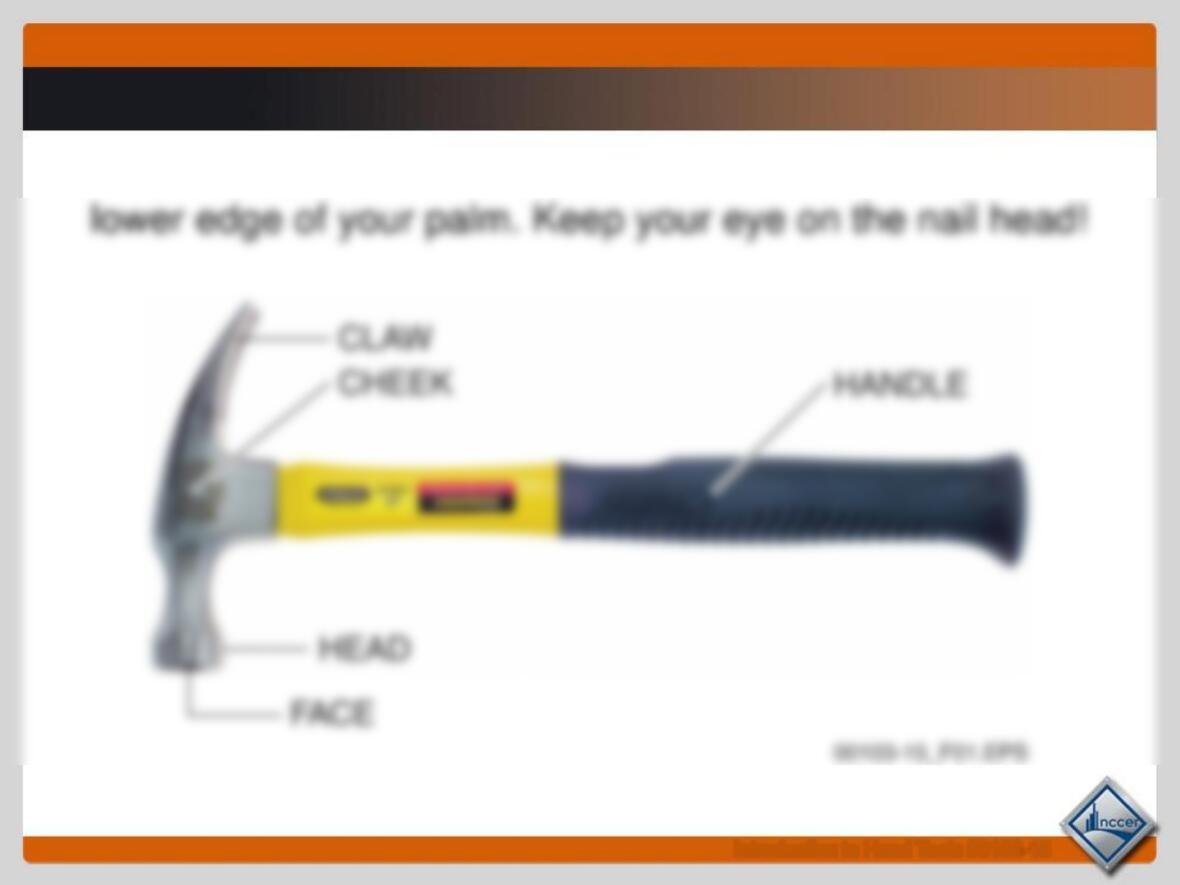
Hold the hammer with the end of the handle even with the
Sections 1.1.0 to 1.1.3 –Hammers
Introduction to Hand Tools 00103-15
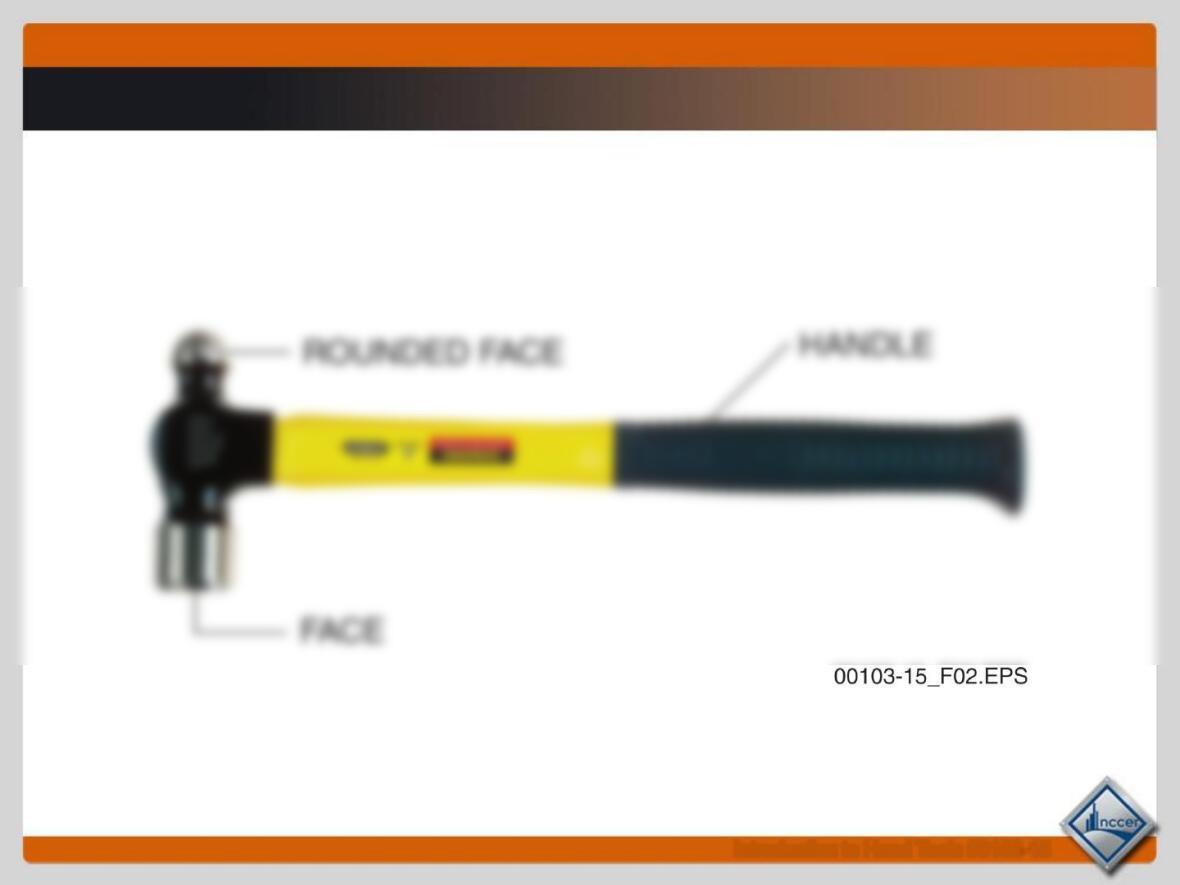
Ball-peen hammers should not be used to hammer a nail,
since the steel is tough but not as hard.
Sections 1.1.0 to 1.1.3 –Hammers
Introduction to Hand Tools 00103-15
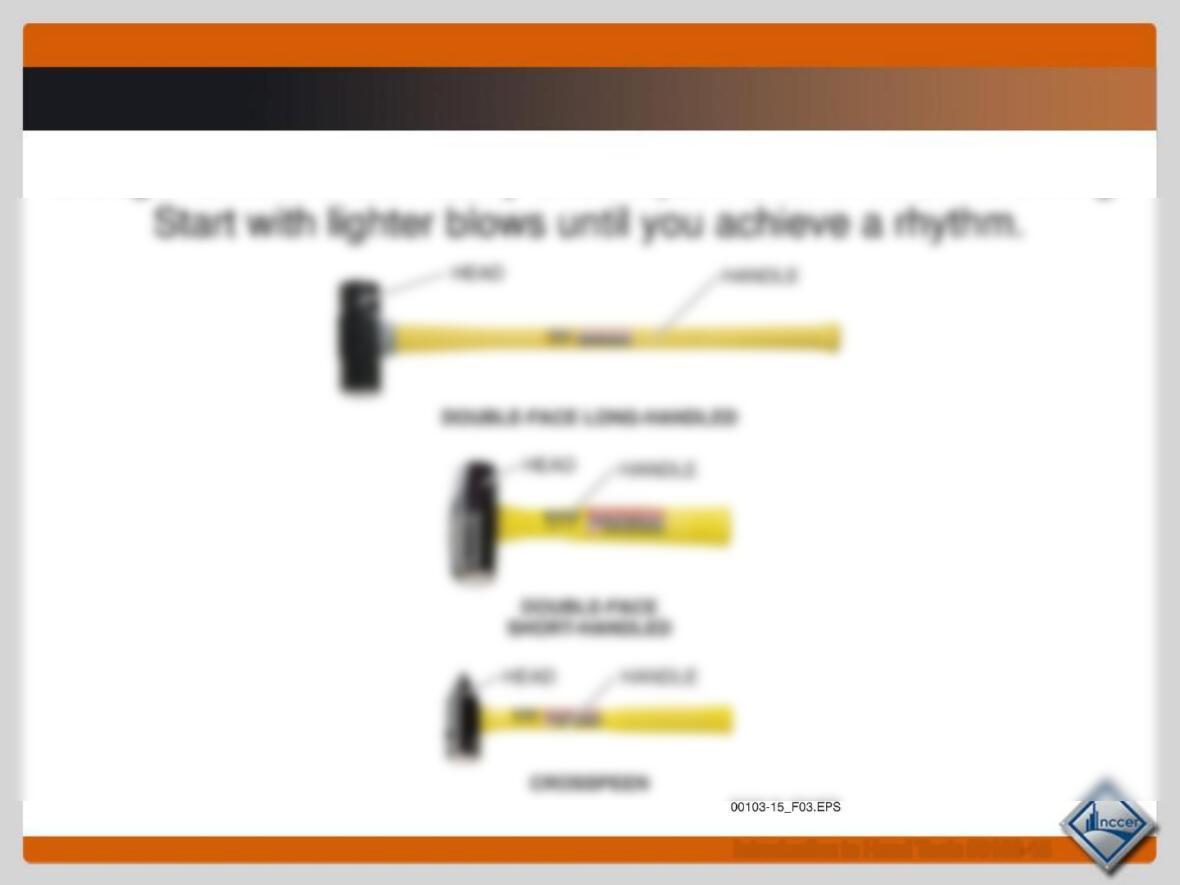
Sledgehammers are heavy and require a lot of effort to swing.
Sections 1.2.1 to 1.2.3 –Chisels and Punches
Introduction to Hand Tools 00103-15
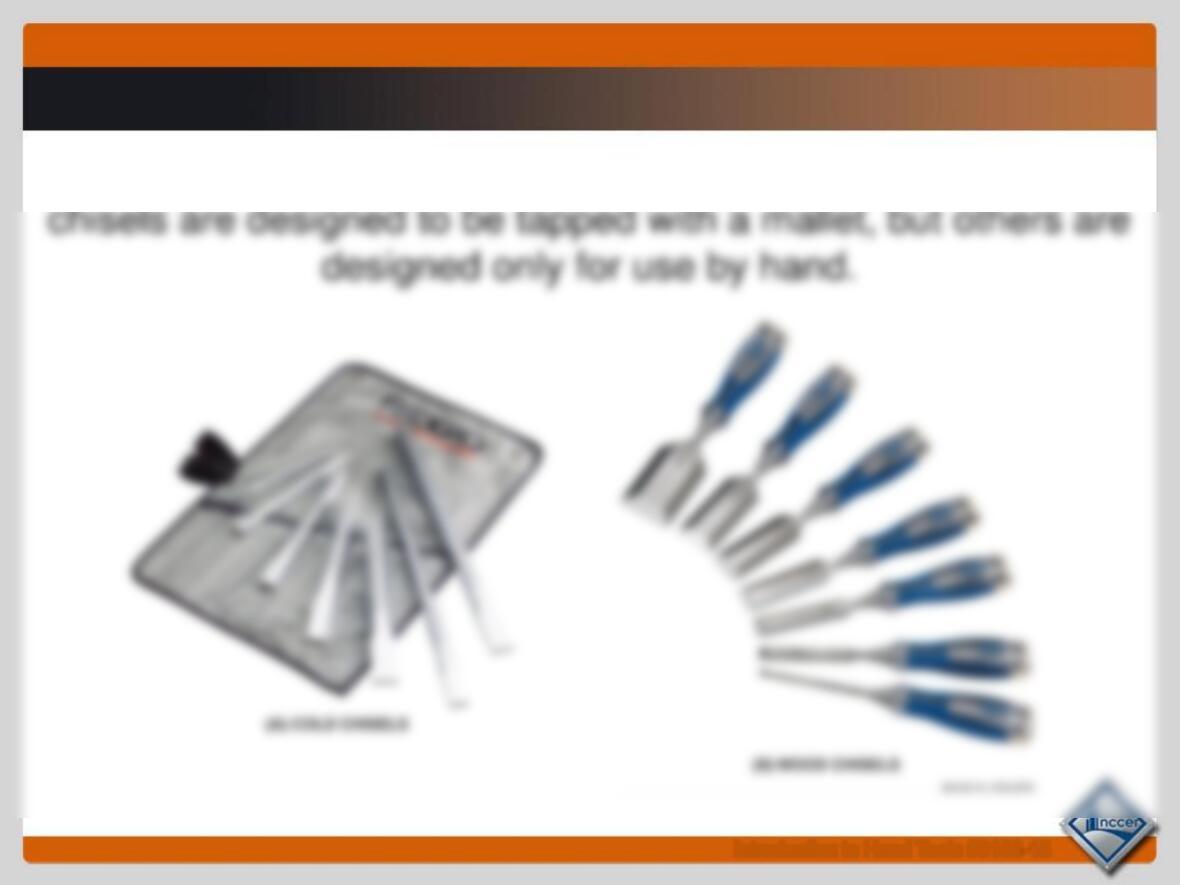
Cold chisels are designed for working with metal. Many wood
Sections 1.2.1 to 1.2.3 –Chisels and Punches
Introduction to Hand Tools 00103-15
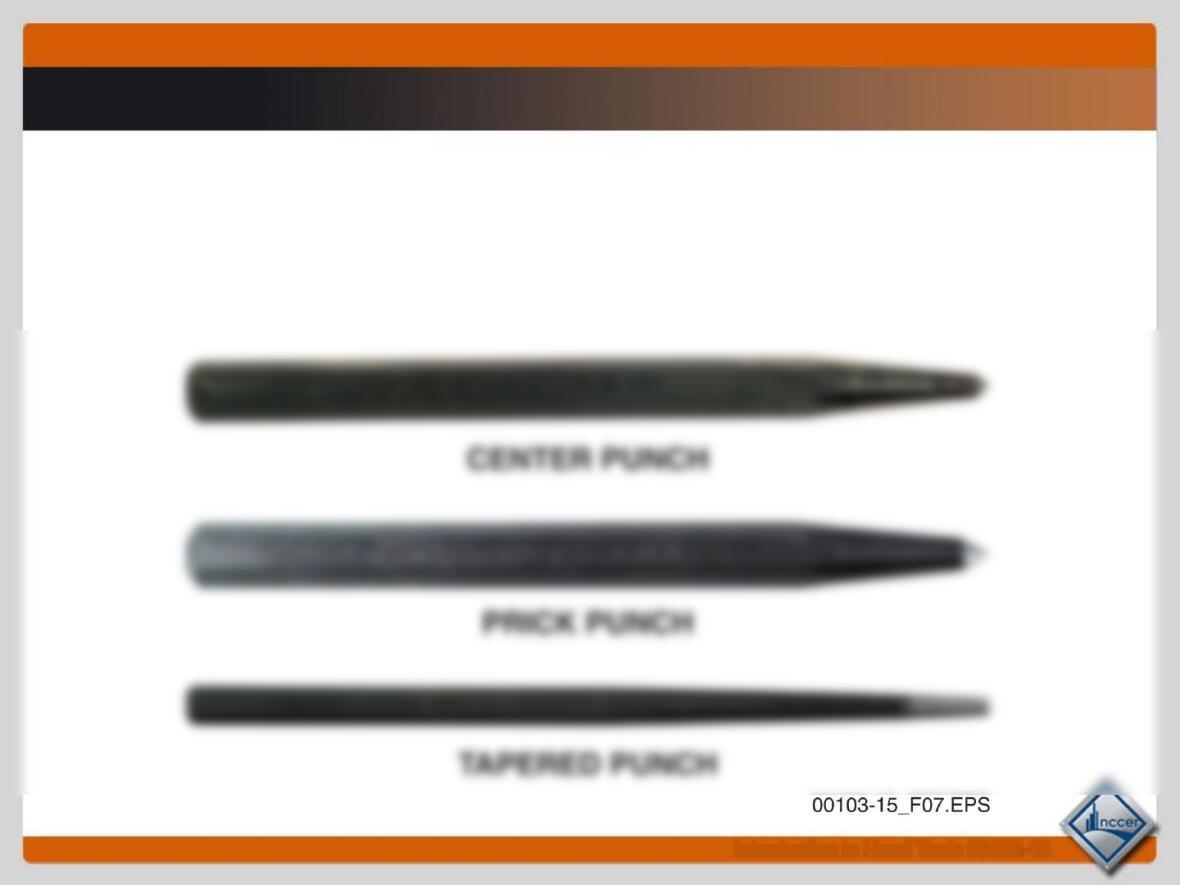
Center and prick punches have different tip angles. Pin
punches (not shown here) have straight and round shafts and
are often used to drive connecting pins out.
Section 1.3.0 –Screwdrivers
Introduction to Hand Tools 00103-15
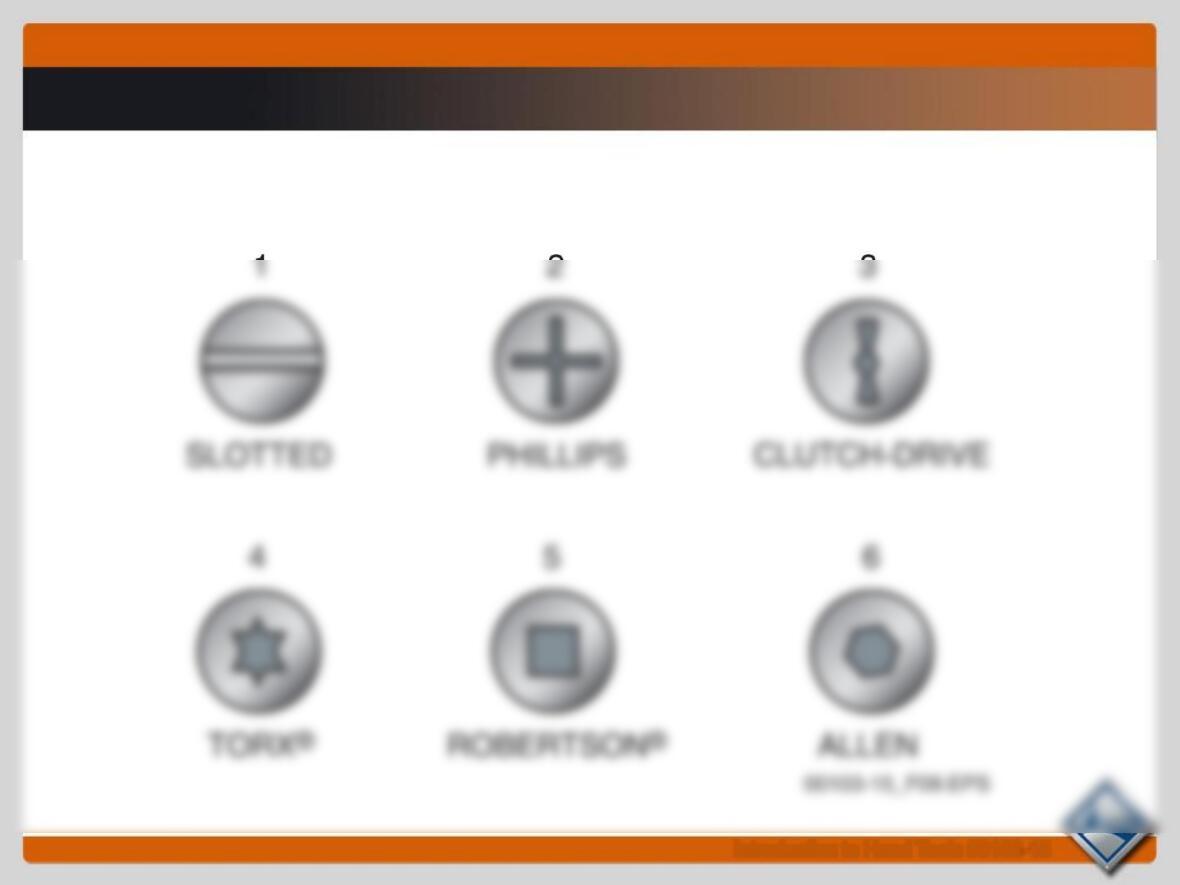
Each screw drive type has its own advantages. Some are popular for
woodworking while others have more varied purposes.
Section 1.3.0 –Screwdrivers
Introduction to Hand Tools 00103-15
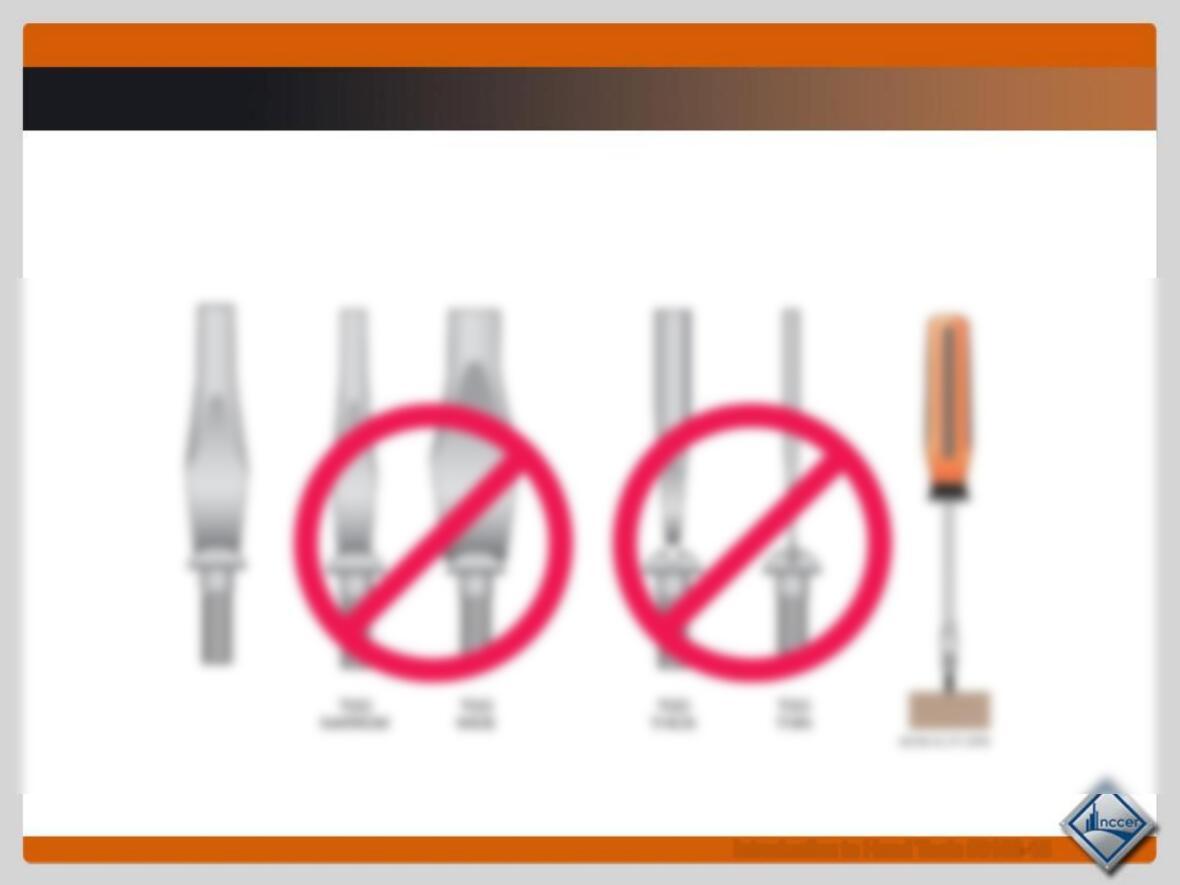
A slotted screwdriver that does not fit the screw head is likely to result in
damage to the screw and possibly the workpiece as well.
Sections 1.4.1 and 1.4.2 –Wrenches
Introduction to Hand Tools 00103-15
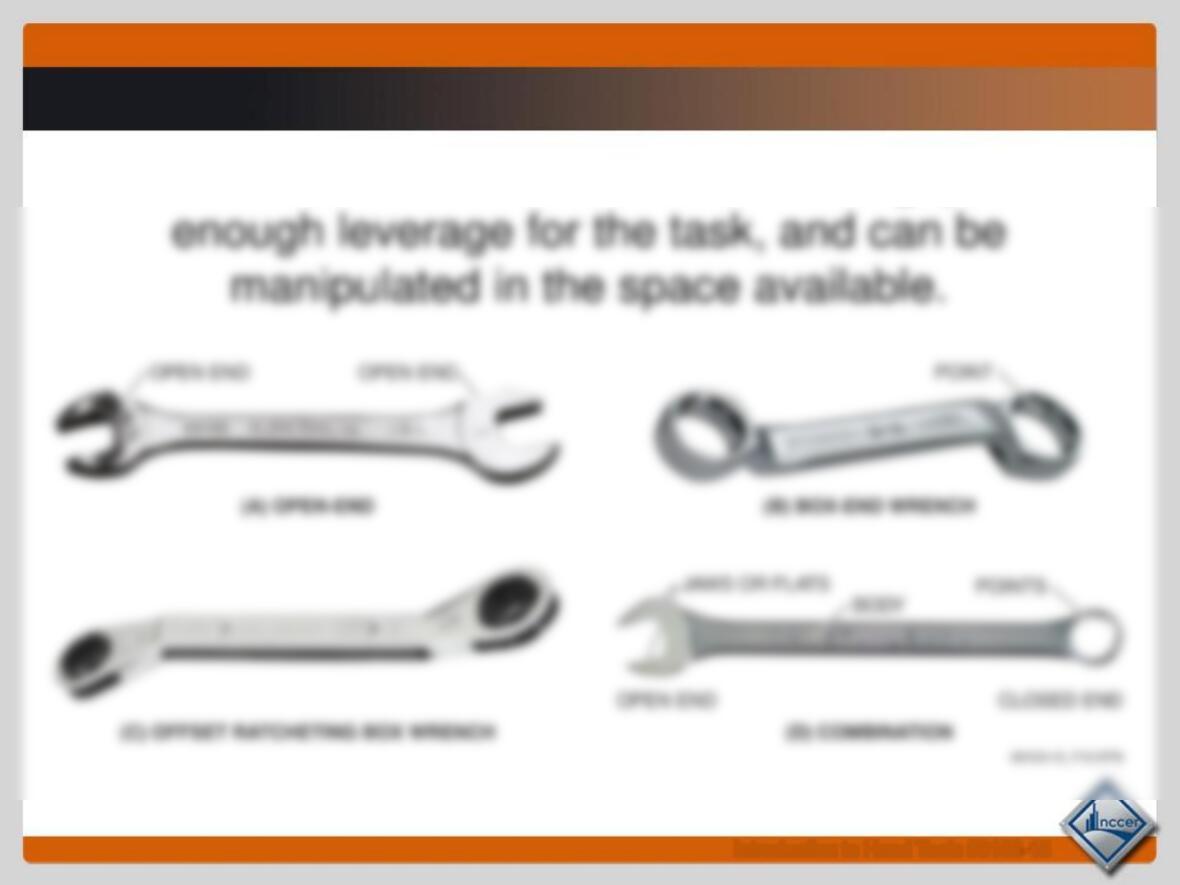
The correct wrench fits the hardware snug, provides
Sections 1.4.1 and 1.4.2 –Wrenches
Introduction to Hand Tools 00103-15
Sections 1.5.1 and 1.5.2 –Sockets
Introduction to Hand Tools 00103-15
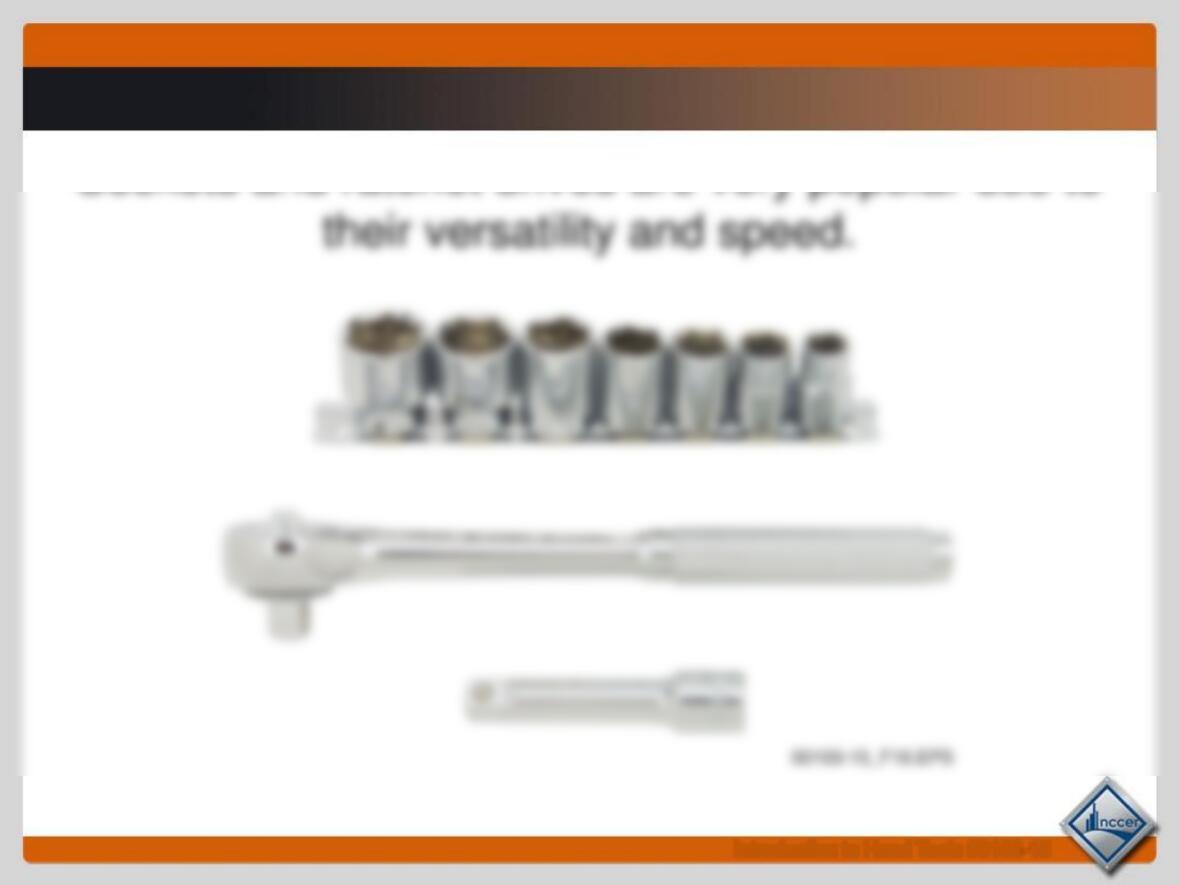
Sockets and ratchet drives are very popular due to
Sections 1.5.1 and 1.5.2 –Sockets
Introduction to Hand Tools 00103-15
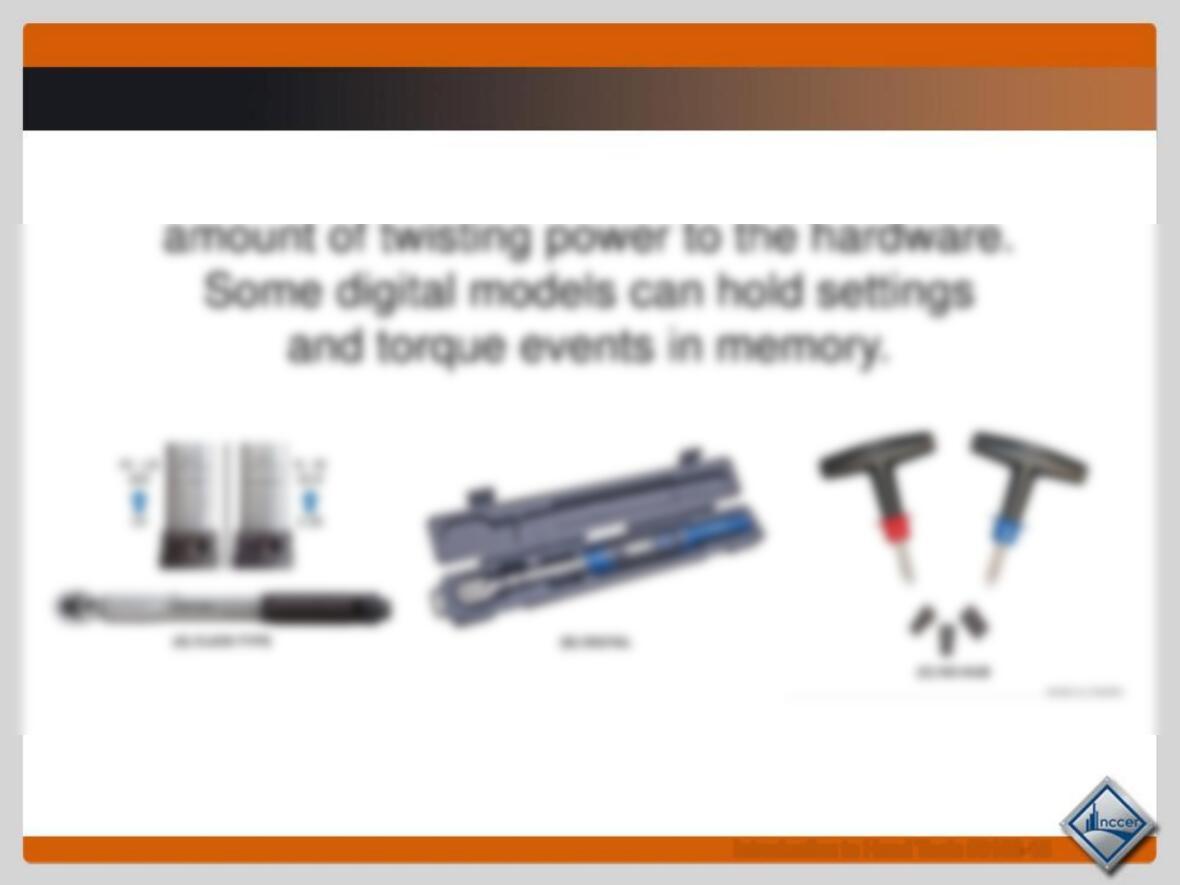
Torque wrenches allow the user to apply a specific
Sections 1.6.1 to 1.6.5 –Pliers
Introduction to Hand Tools 00103-15
Sections 2.1.2 and 2.1.3 –Tape Measures
Introduction to Hand Tools 00103-15
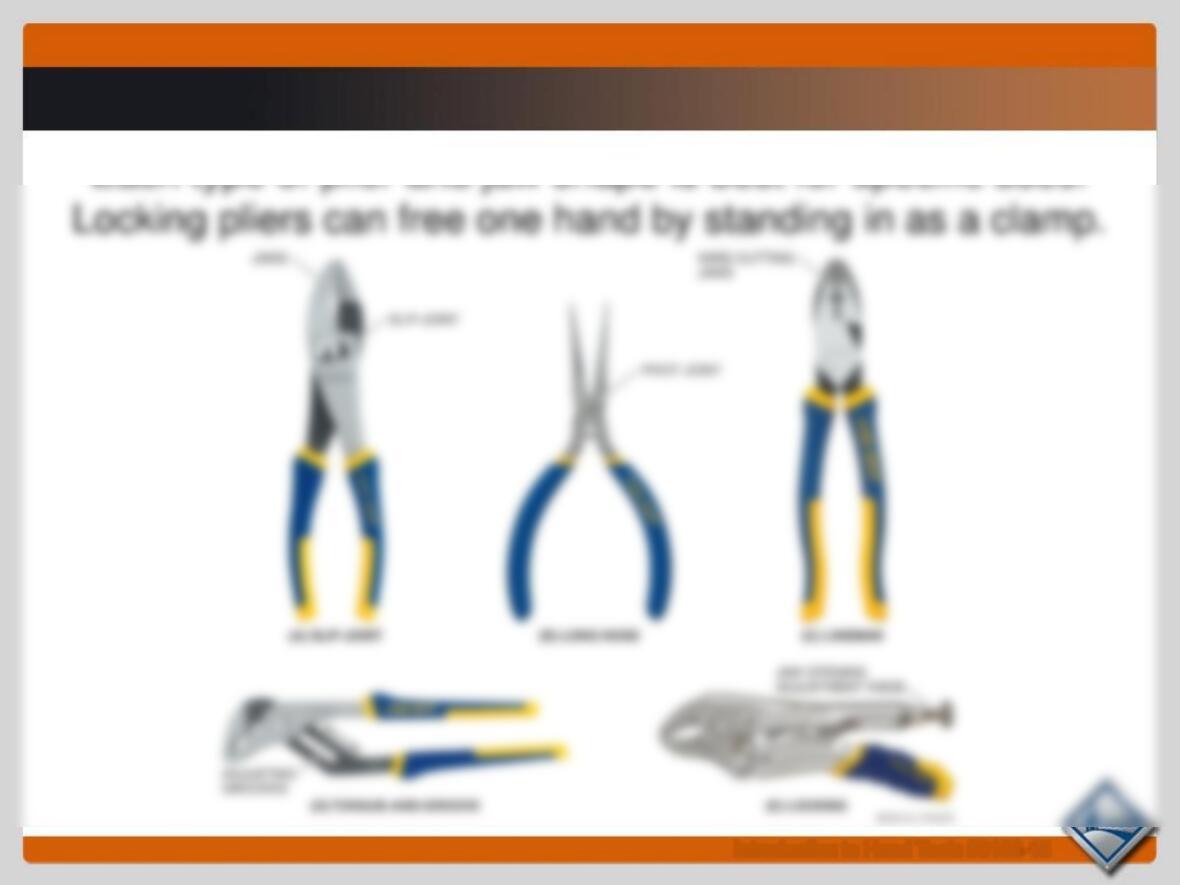
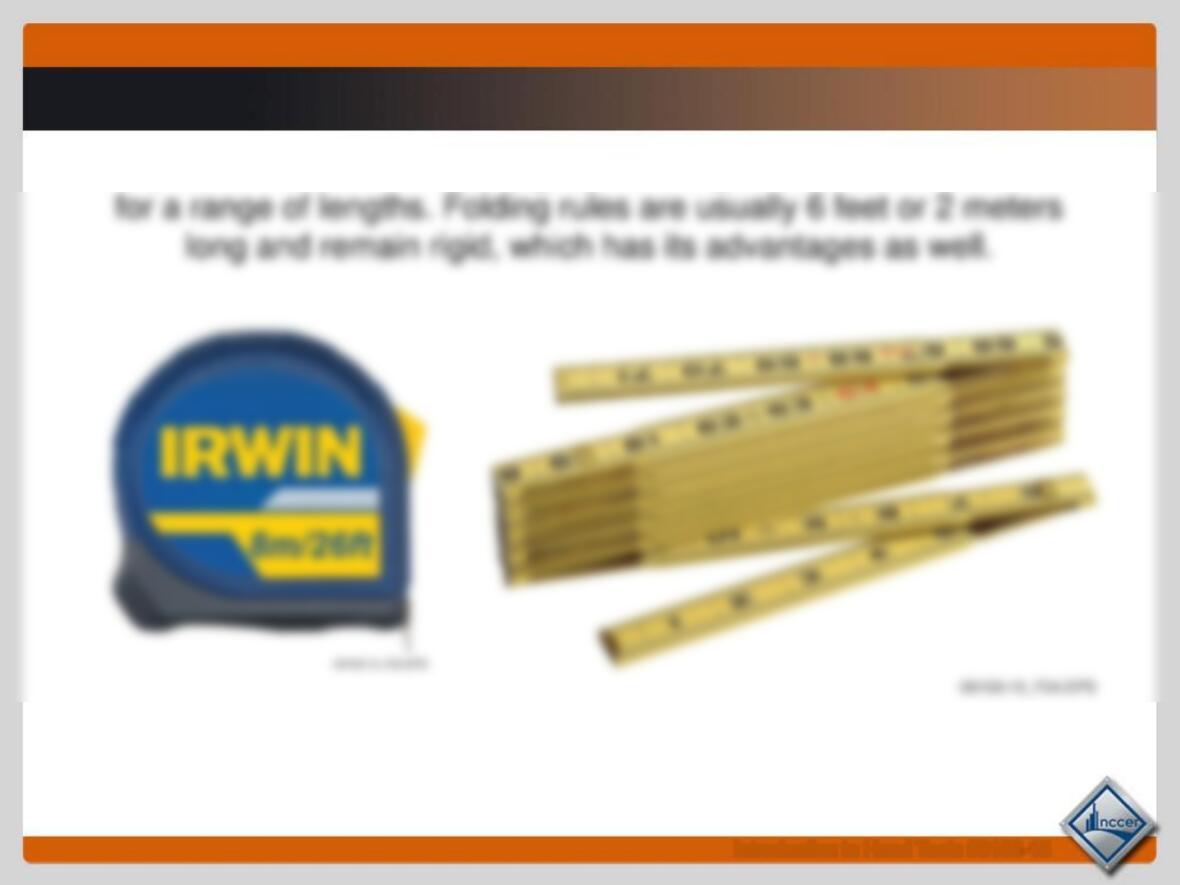
Tape measures, or measuring tapes, are great for measurements
Section 2.2.1 –Level Use
Introduction to Hand Tools 00103-15
Section 2.2.5 –Squares
Introduction to Hand Tools 00103-15
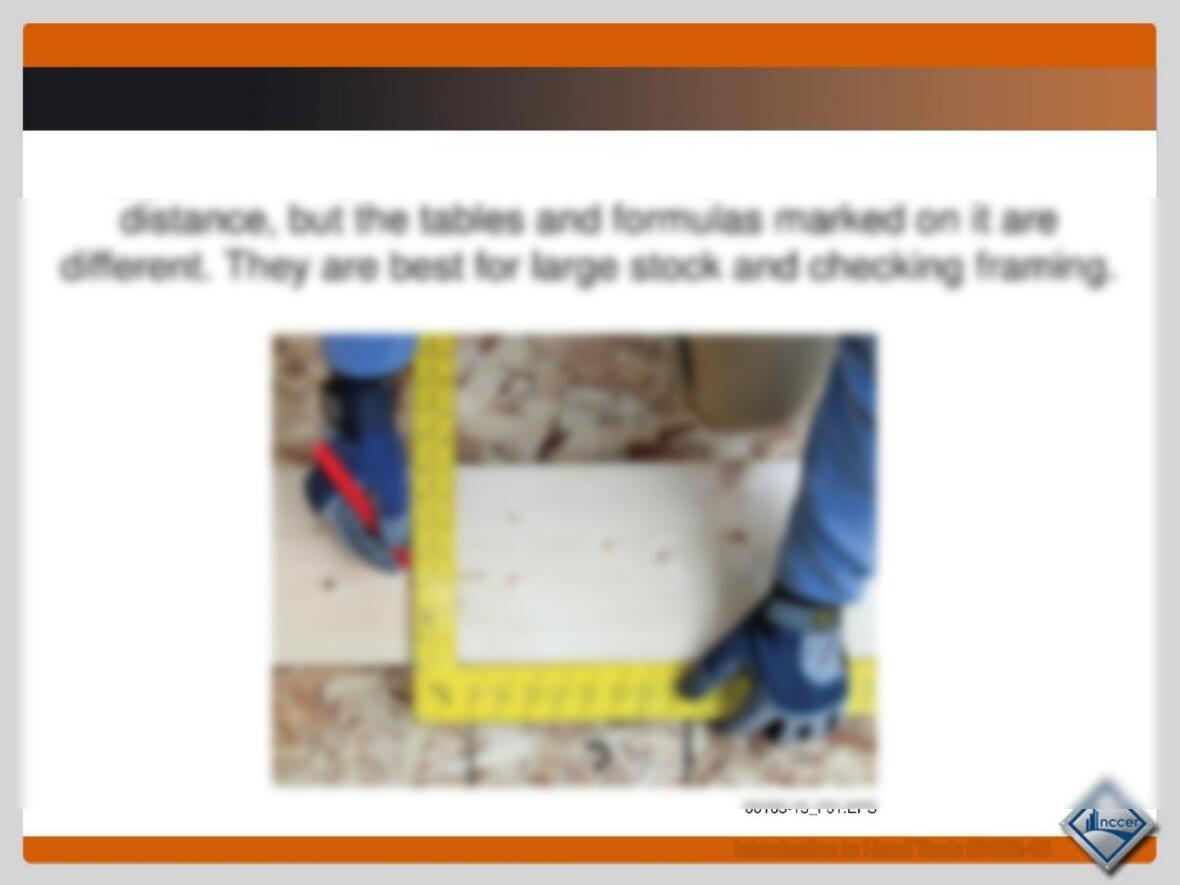
A pipefitter’s square looks like a carpenter’s square from a
Section 2.2.5 –Squares
Introduction to Hand Tools 00103-15
Section 2.2.5 –Squares
Introduction to Hand Tools 00103-15
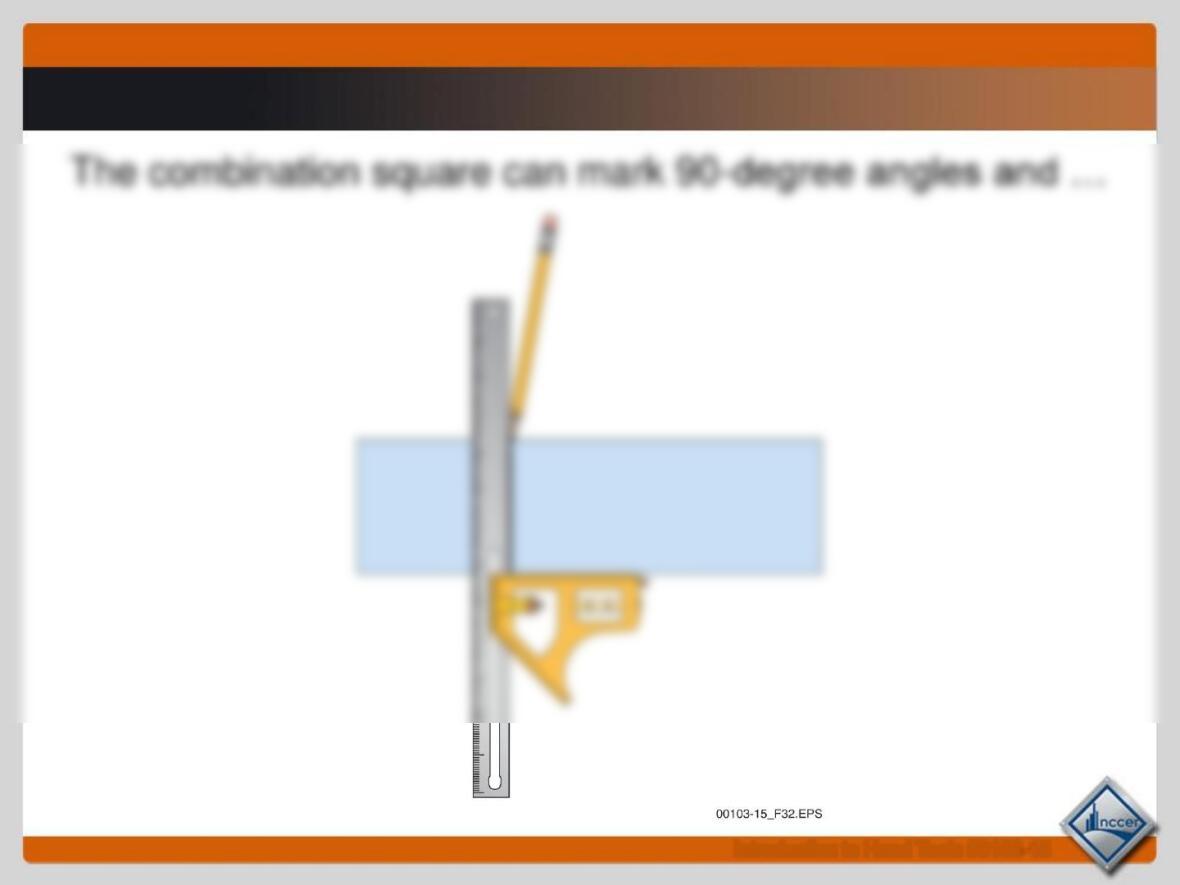
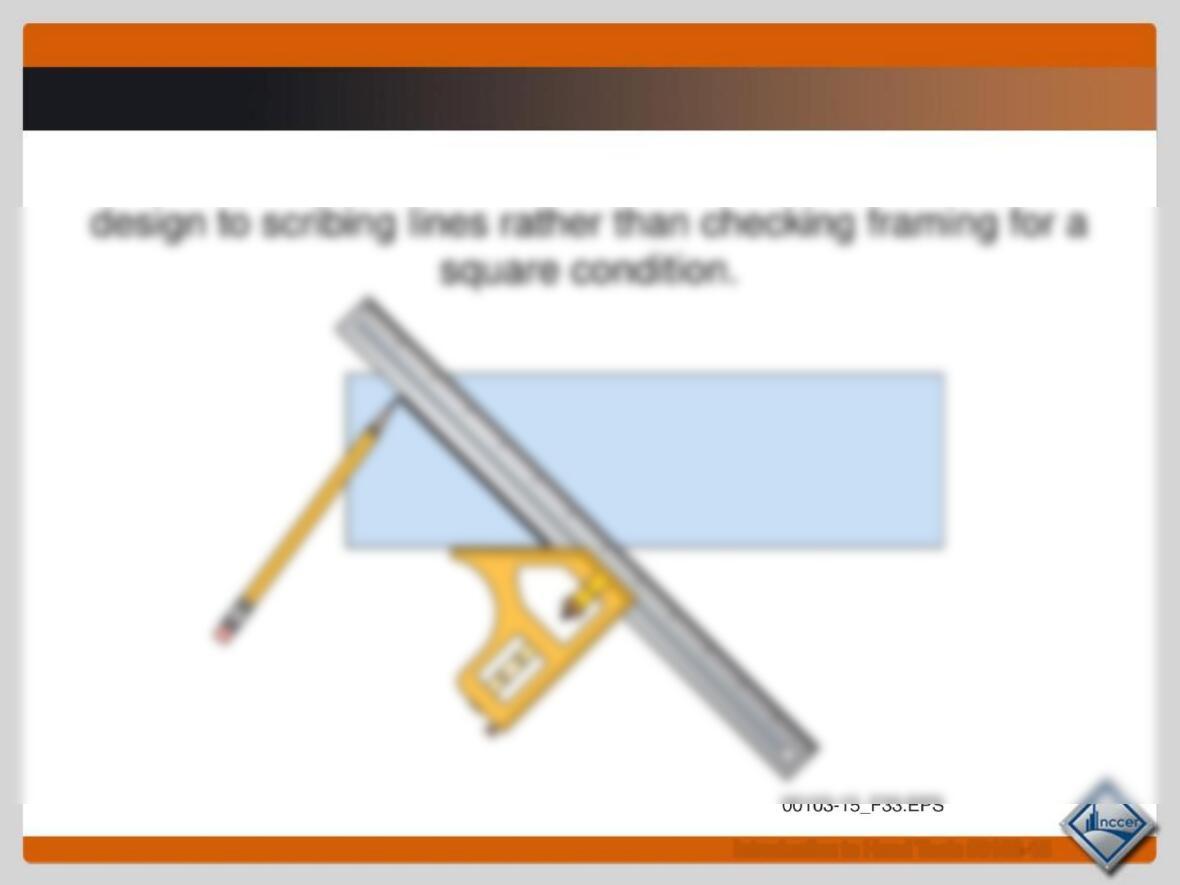
…45-degree angles. It is limited somewhat by its size and
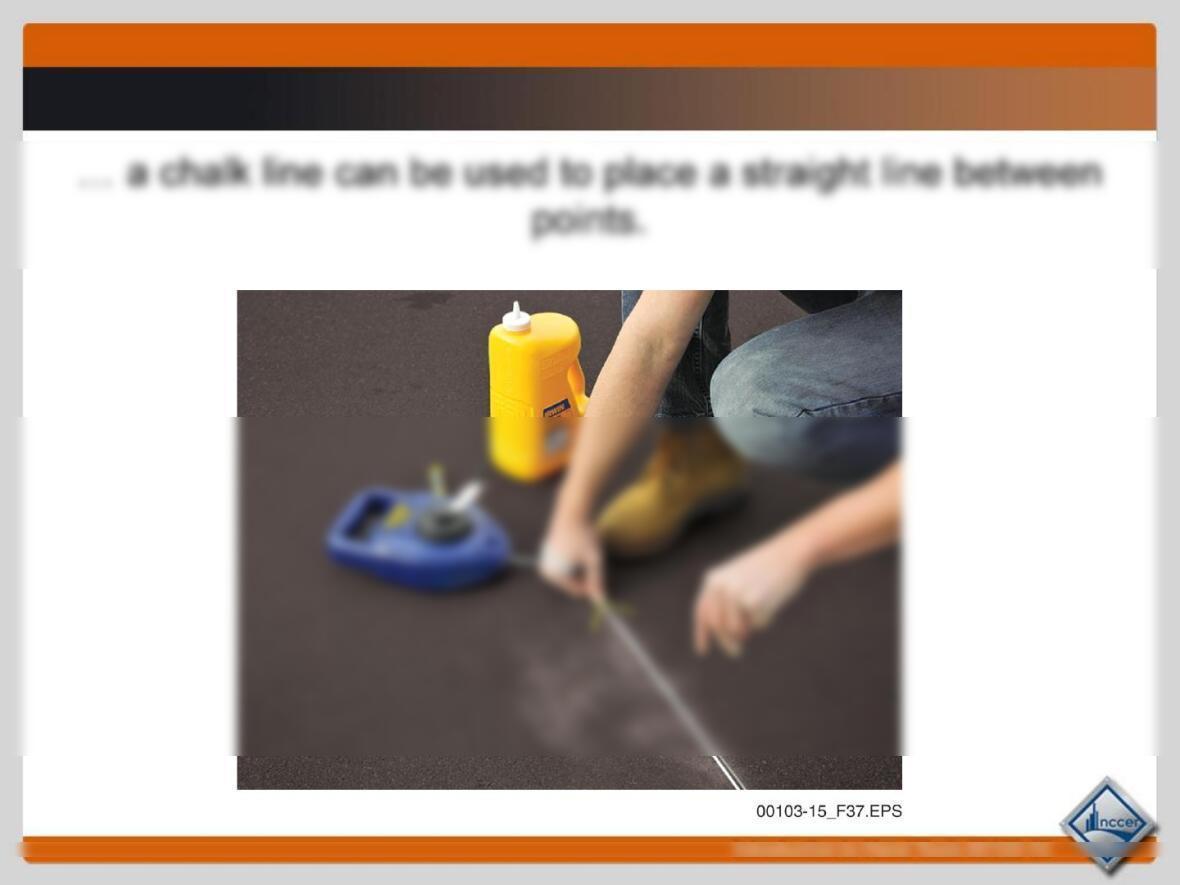
Sections 2.2.6 to 2.2.8 –Plumb Bobs and Chalk Lines
Introduction to Hand Tools 00103-15
Sections 2.2.6 to 2.2.8 –Plumb Bobs and Chalk Lines
Next Session…
Introduction to Hand Tools 00103-15