Chapter 11:
Working With Groups
IM1-
4
CHAPTER 11
Working With Groups
LEARNING OBJECTIVES
After studying this chapter, students should be able to:
•
Describe the types of groups and considerations that affect conducting groups in varied
settings.
CHAPTER OUTLINE
Aim of the Chapter
Group Work as the Treatment of Choice
Various Types of Groups
The Value of Group Work
Groups for Veterans and People in the Military
A Bereavement Group
The Value of Feedback in Groups
CHAPTER OVERVIEW
• For many target populations and certain purposes, groups are the treatment of choice, not a
Chapter 11:
Working With Groups
IM1-4
second-rate approach to helping people change.
• A group process can lead to self-acceptance, deeper understanding of oneself, and change.
Some of the values of a group experience are learning that one is not alone, receiving feedback
from many sources, gaining opportunities for experimenting with new behavior, and using the
SUGGESTIONS FOR ACTIVITIES
1. ASGW Best Practice Guidelines. You might want to get a copy of the “Best Practice Guidelines”
2. Evolution of a Group DVD. If the students will not be shown the Evolution of a Group DVD in
their group course, show the DVD in class in two parts, so that you can take time during each
3. The Ideal Coleader. Students could be asked to identify the qualities of their “ideal” coleader as
4. What Makes Groups So Powerful? Describe the therapeutic factors that operate in groups that
Chapter 11:
Working With Groups
5. Roles in Groups. Since group members often reenact their interpersonal patterns in counseling
groups, a relevant exercise that you might introduce to students in an introductory counseling
DISCUSSION QUESTIONS
1. What are some of the suggestions according to you that will help a group member to open
up about his or her emotions to the group?
KEY CONCEPTS ANDTERMS
Counseling groups focus on interpersonal concerns and address conscious thoughts, feelings, and
behavior. These groups aim at helping participants resolve problems in living or dealing with
developmental concerns.
Feedback occurs when both members and leaders share with each other their personal reactions about
one another.
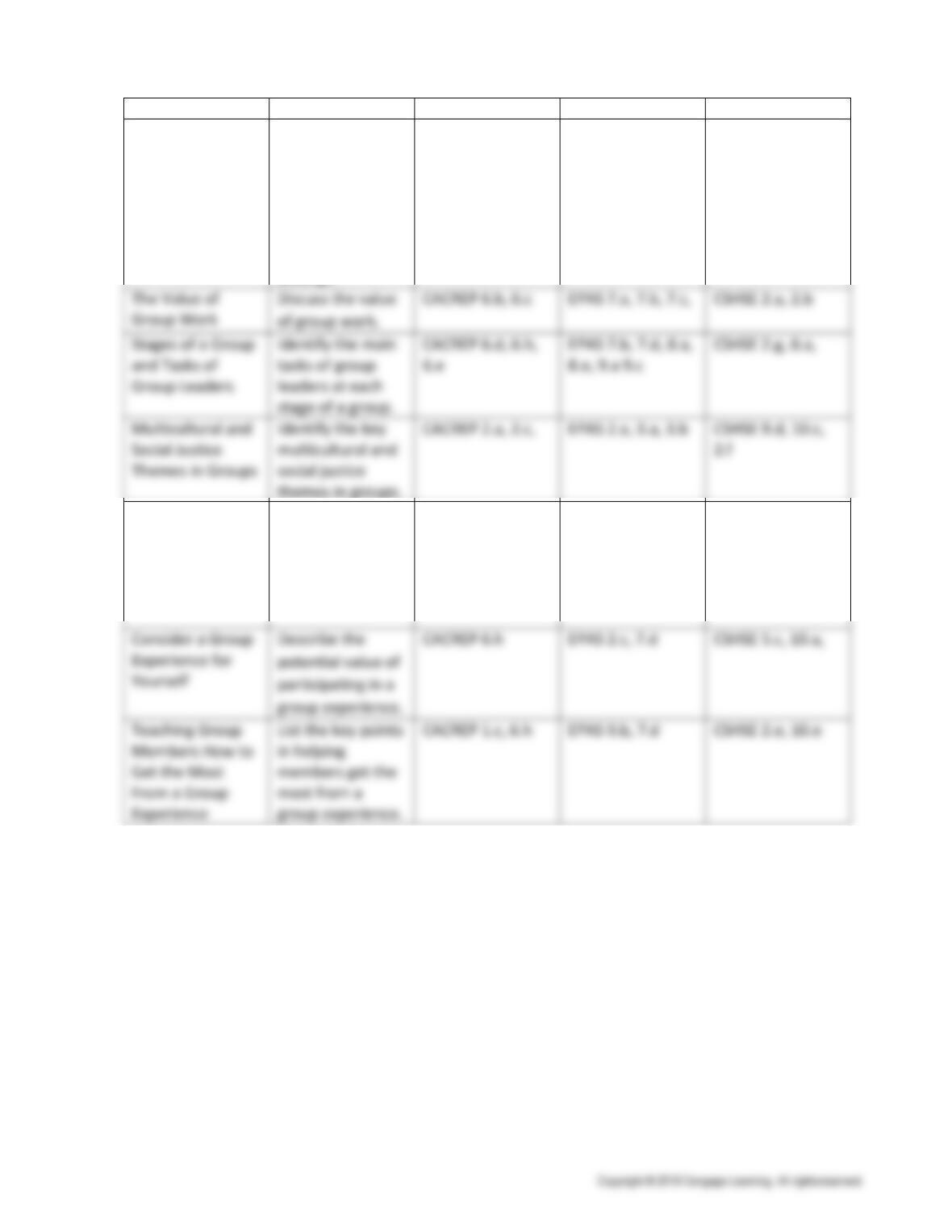
LO/STANDARDS CORRELATION CHART
Chapter 11:
Working With Groups
IM1-4
A-head
LO
Standard 1
Standard 2
Standard 3
Various Types of
Groups
Describe the
types of groups
and
considerations
that affect
conducting
groups in varied
settings.
CACREP 6.a, 6.f
EPAS8.a, 8.b
CSHSE 2.a, 2.d,
2.e
Group Leaders
leaders at each
stage of a group.
Multicultural and
Social Justice
Themes in Groups
Identify the key
multicultural and
social justice
themes in groups.
CACREP 2.a, 2.c,
EPAS 2.a, 3.a, 3.b
CSHSE 9.d, 10.c,
2.f
Teaching Group
Members How to
Get the Most
From a Group
Experience
List the key points
in helping
members get the
most from a
group experience.
CACREP 1.c, 6.h
EPAS 9.b, 7.d
CSHSE 2.e, 10.e
Working With
Coleaders
Identify a few
advantages and
disadvantages of
the coleadership
model of groups.
CACREP 2.h, 4.f,
6.d
EPAS 1.e, 2.a, 7.c,
7.d
CSHSE 2.f, 8.a,
9.d, 10.c