Module 8 krugman 1
Module 8
Consumer and Producer Surplus
What’s New in the Fourth Edition?
• Updated Economics in Action examples
Module Objectives
• What is the meaning of consumer surplus and its relationship to the demand curve?
• What is the meaning of producer surplus and its relationship to the supply curve?
Teaching Tips
Consumer Surplus and the Demand Curve
Creating Student Interest
• Have students consider and discuss the process of buying a new car. (This also can be an
opportunity to provide some instruction in real-world financial literacy.) Do most people
walk into a dealership and pay the sticker price on the side of the car? Should they? Does
everyone pay the same price for the same car? Why? Why not? How has the internet
changed the way people buy new cars? Since buyers negotiate their own deal for
differentiated new cars (including financing and trade-in), they pay different prices. What
• Ask students if they have ever entered a store expecting to pay a certain price for a good
(e.g., $10 for a book) and found that the book was on sale for $8. Have them imagine that
it happens. Would they pay the $10, or only $8? How would they feel about paying less?
• Another example is going to buy a good (e.g., toothpaste) and finding a valid coupon for
the toothpaste you want sitting on the shelf next to it. Would they use the coupon, and how
Presenting the Material
• Students rarely have difficulty understanding the basic concept of consumer surplus. They
understand there is a difference between the amount they are willing to pay for a good and
the price the store is charging. They know that when a good goes on sale they are getting
a better deal, and at this point you can tell them that this savings represents consumer
Module 8 krugman 2
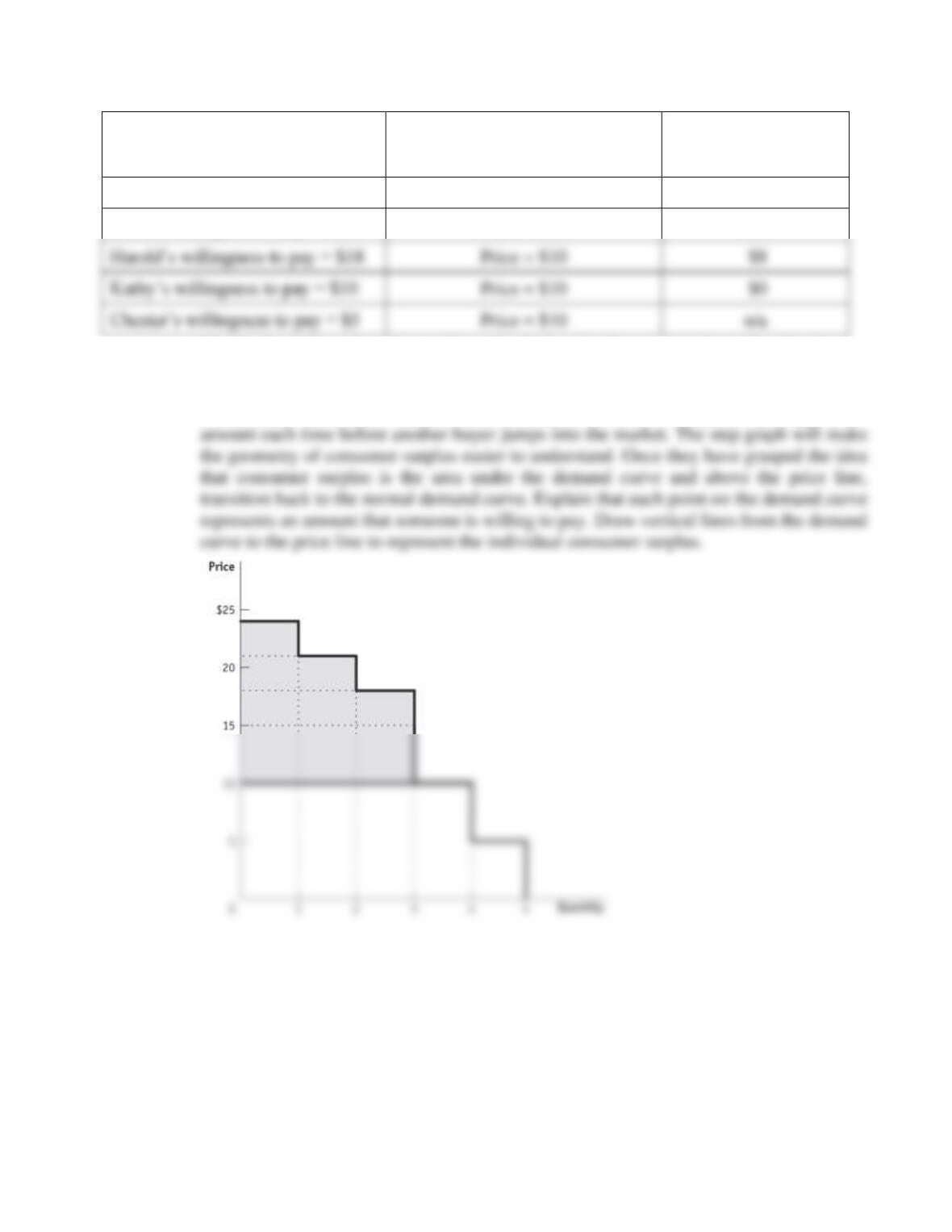
Willingness to pay
for one hour of
math tutoring
Actual market price
for one hour of
math tutoring
Consumer surplus
Jack’s willingness to pay = $24
Price = $10
$14
Karla’s willingness to pay = $21
Price = $10
$11
• Moving from the table to the graph can be challenging for some students. Start by plotting
the price quantity points for the five people in the table on the graph. Next, draw the
demand curve as a step graph. Tell them the steps exist because you are only selling five
whole units to five individuals, which means you must lower the price by a significant
Producer Surplus and the Supply Curve
Creating Student Interest
Harold’s willingness to pay = $18
Price = $10
Kathy’s willingness to pay = $10
Price = $10
Chester’s willingness to pay = $5
Price = $10
Module 8 krugman 3
• Ask students what determines the lowest price a seller is willing to sell a good for. Help
students see that this price will be equivalent to the seller’s cost. The cost in this case
represents all the opportunity costs of the seller.
• Return to the new car example. Ask about the motivations of the seller—what is the seller
trying to do? (Maximize their producer surplus.) What determines the lowest price the
Presenting the Material
• Students often have more trouble understanding producer surplus, perhaps because they are not
used to thinking of themselves as sellers of a good. Emphasize that the seller is willing to sell a
good for any price that at least covers his cost of production. The greater the price compared to the
cost of production, the higher the producer surplus. To present the concept of producer surplus,
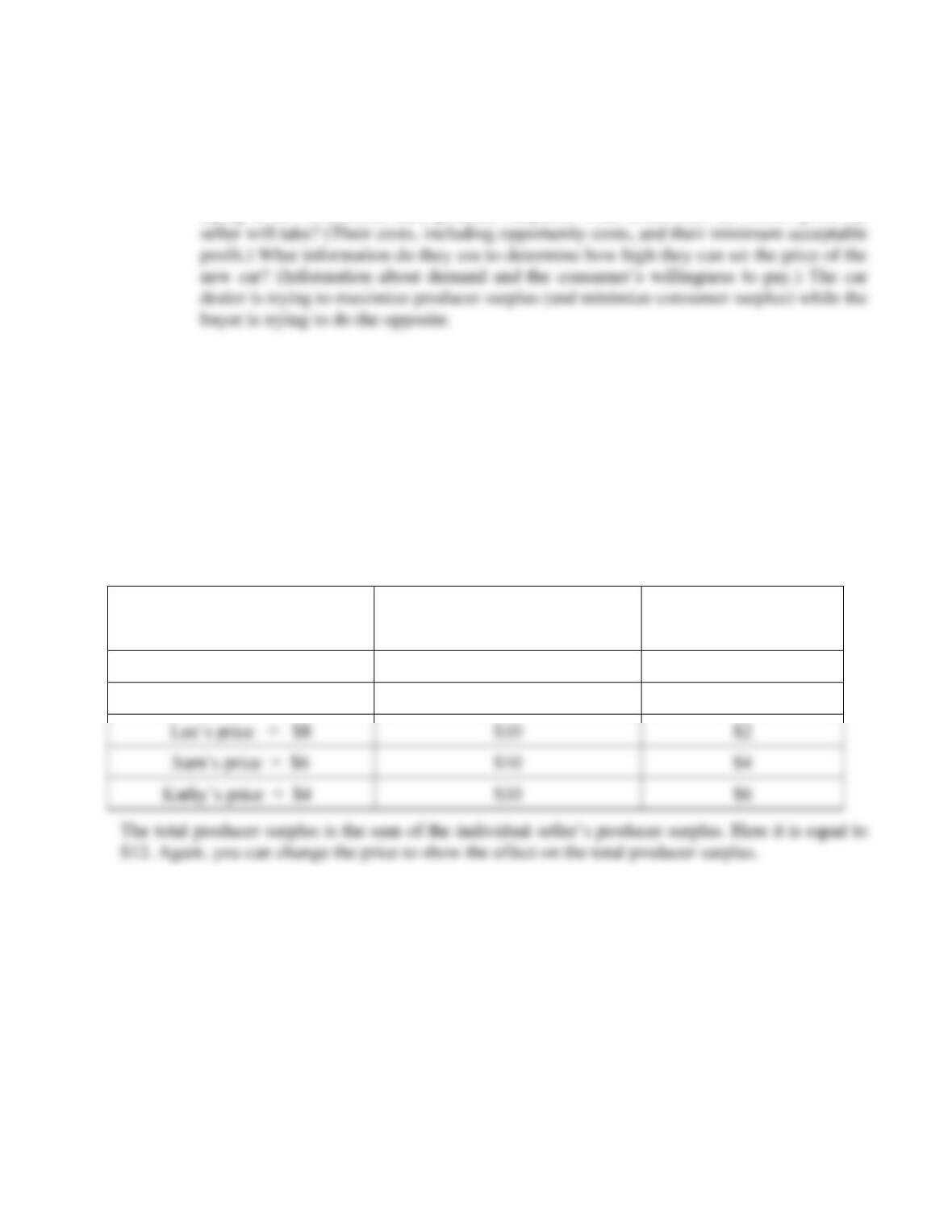
take the same approach used earlier to present consumer surplus. Start with the data in the table
below, then progress to the step graph, and finally the regular supply curve. Make clear that we
are now looking at tutors and their willingness to sell their services. The opportunity cost of using
their time in tutoring is equal to the forgone value of that time in other activities.
Seller’s minimum price
to sell (= the seller’s
opportunity cost)
Actual market price
for tutoring
Producer surplus
Jane’s price = $12
$10
n/a
Dora’s price = $10
$10
$0
Lee’s price = $8
$10
$2
Sam’s price = $6
$10
$4
$10
$6
Module Outline
I. Consumer Surplus and the Demand Curve
A. Willingness to pay and consumer surplus
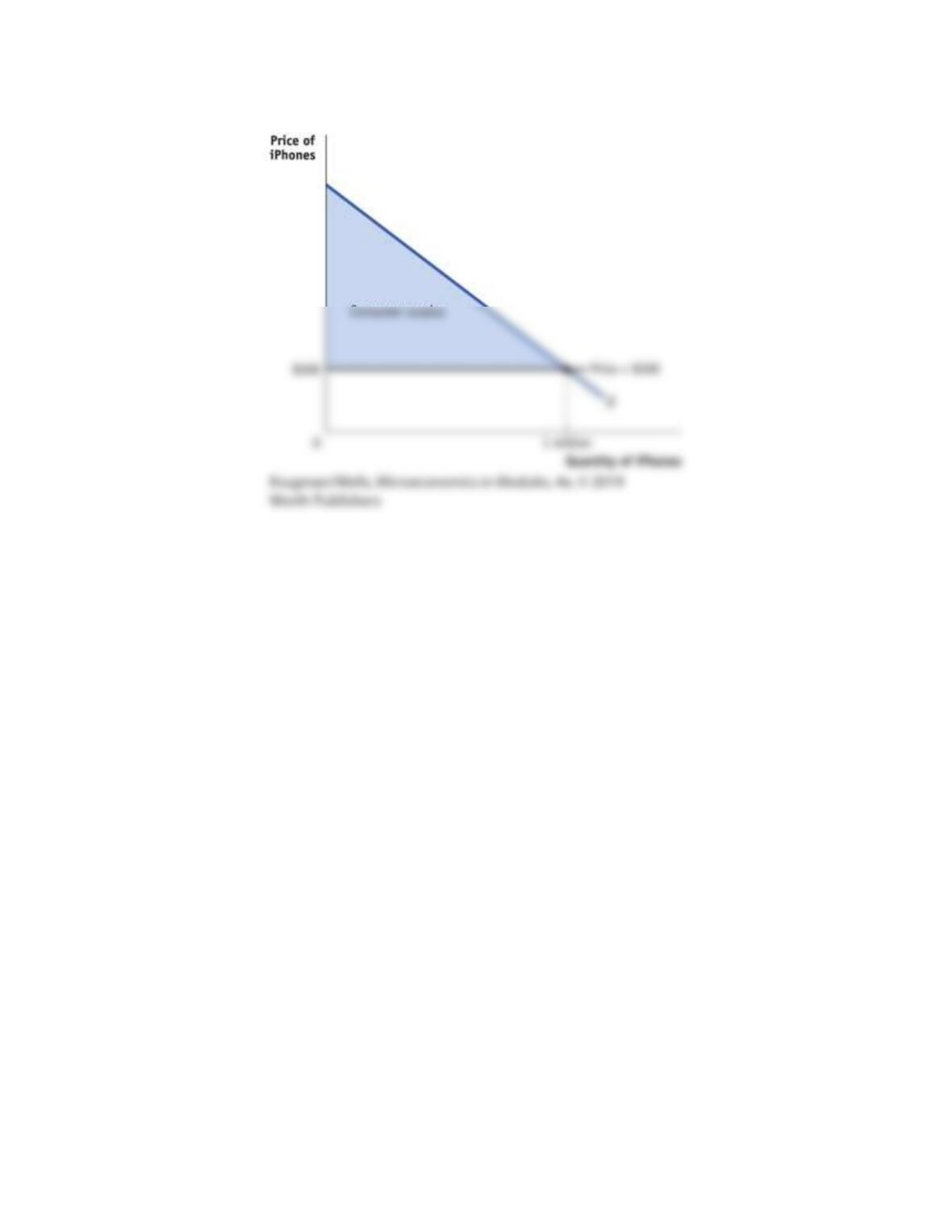
1. The total consumer surplus generated by purchases of a good at a given price is equal to
the area under the demand curve but above the price. This is illustrated in text Figure 8-
3, shown next.
Module 8 krugman 4
Figure 8-3
B. How changing prices affect consumer surplus
1. When the price of a good falls, the total consumer surplus increases through two
channels: a gain to consumers who would have bought at the original price, and a gain
to consumers who are persuaded to buy at the lower price. When the price of a good
increases, the total consumer surplus decreases in a similar fashion.
II. Producer Surplus and the Supply Curve
A. Cost and producer surplus
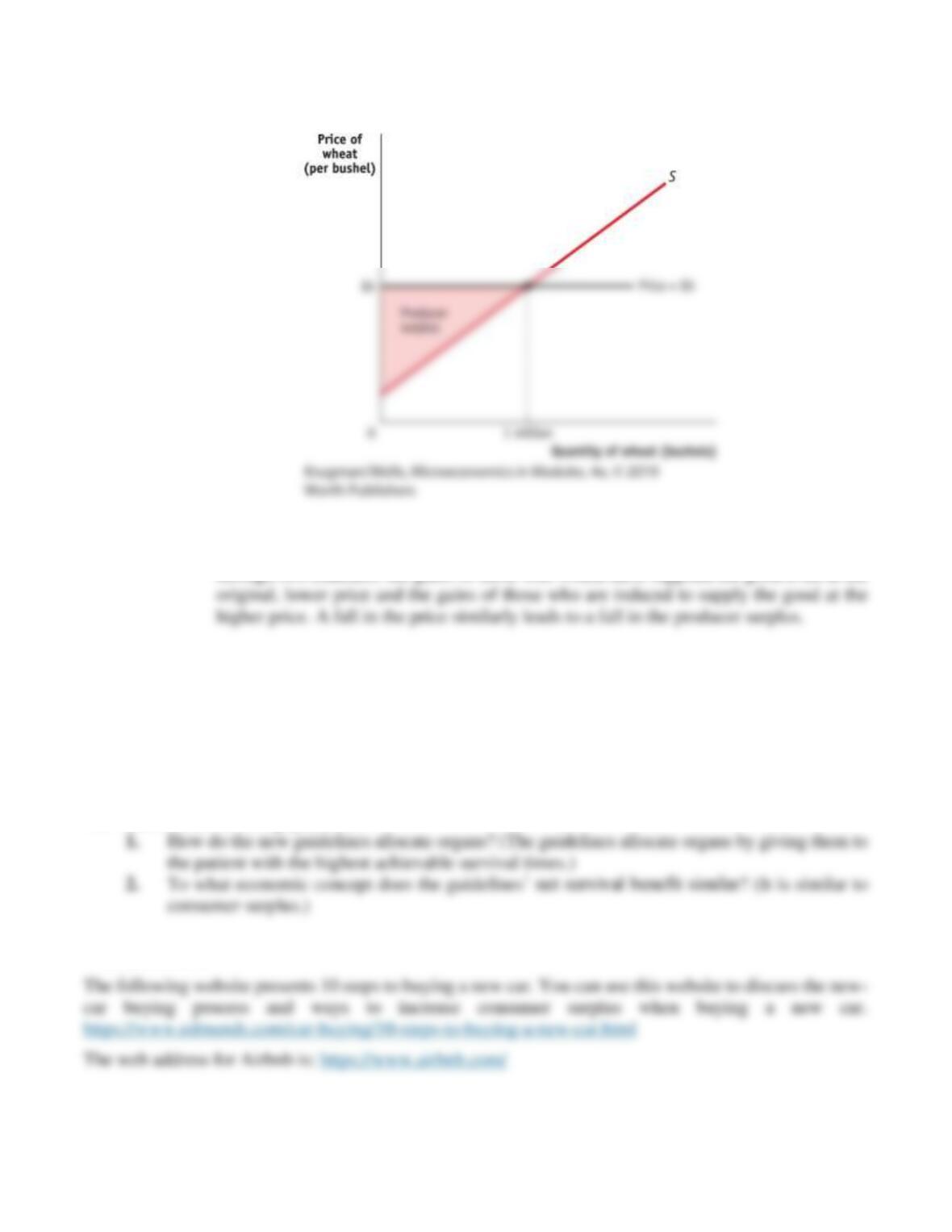
1. The total producer surplus from sales of a good at a given price is the area above the
supply curve but below that price. This is illustrated in text Figure 8-8, shown next.
Module 8 krugman 5
Figure 8-8
B. How changing prices affect producer surplus
1. If the price of a good rises, producers will experience an increase in producer surplus
through two channels: the gains of those who would have supplied the good even at the
Case Studies in the Text
Economics in Action
A Matter of Life and Death—This EIA discusses the United Network for Organ Sharing’s (UNOS) new
guidelines for organ transplants based on net survival benefit.
Ask students the following questions:
Web Resources

Module 8 krugman 6
Handout 8-1
Date_________ Name____________________________ Class________ Professor________________
What’s Your Bid?
Ask five classmates what they would be willing to pay for a Biology textbook for a class they will take
next semester. Record these amounts in the table below.
Classmate’s name
Willingness to pay
Consumer surplus
Total surplus
Calculate each classmate’s consumer surplus if the used price of the textbook is $35. Then, calculate the
total consumer surplus.
What’s a New Drug Worth? (3–5 minutes)
Given the idea of consumer surplus, how would you go about assigning a monetary value to the benefit
of a new drug on the market that cures autoimmune diseases?
Module 8 krugman 7
Handout 8-2
Date_________ Name____________________________ Class________ Professor________________
What’s Your Minimum Offer Price?
Ask five classmates what they would be willing to accept to sell their Econ textbook at the end of the
semester. Record these amounts in the table below.
Classmate’s name
Willingness to pay
Consumer surplus
Total surplus
Calculate each classmate’s producer surplus if the buyback price of the textbook is $25 at the campus
bookstore. Then, calculate the total consumer surplus.
What’s an Internship Worth?