person, not just as a teacher, to what students have written. Students appreciate comments that
acknowledge their pain, recognize their courage in dealing with issues, and applaud their
progress in developing skills. They also value comments in which a teacher shares personal
experiences that pertain to what they have written. Responding as both a teacher and a person to
the student as both a person and a student strengthens the instructional relationship.
Term Projects
their own learning. Major projects allow students to explore specific topics in depth. Projects
preferences and teaching goals. Our experience has been that group projects are more frustrating
to students and often involve uneven contributions by individual students. However, working
cooperation, collaboration, and setting standards. In addition, working with others requires
students to learn to deal with a variety of communication styles. Because group projects are also
fewer in number than individual projects, the results of group endeavors can be presented to the
entire class, should that be desired by the instructor.
Individual projects also have advantages and drawbacks. A virtue of individual assignments is
escape notice and evaluation by being in a group that is effective. Individual assignments also
have the benefit of allowing each student to pursue a topic that especially interests him or her
The nature of projects ranges from standard research papers and/or oral presentations to
extension and application of conceptual material. Based on what students seem to learn from
term projects, we have come to favor assignments that involve them in studying and analyzing
communication in everyday life. Following are examples of topics that we and our students have
found worthwhile.
1 . Observe prime-time portrayals of communication in African American, European
American and Latino/a families. Select at least two weekly prime-time shows for each
racial and ethnic group, and watch a minimum of six episodes of each show. Your report

20
2. Read a minimum of four popular advice books on the topic of effective communication
between romantic partners. Your report should do the following: (1) Identify and evaluate
3.
Ragged Edge Magazine and New Mobility Magazine for persons with disabilities,
4. Interview a minimum of ten couples involved in long-distance romantic relationships
(you must interview both partners in each relationship). Your interviews, which should
5. View a minimum of four commercial films (either current or older) that depict friendship.
You will probably need to watch each film more than once. At least one film should focus
on friendship between women (The Sisterhood of the Traveling Pants, Sex and The City
6. Choose any of the films listed below or in the Instru
7. Ask students to record and transcribe a conversation between themselves and a friend,
intimate, co-worker, or another person. (Remind students to ask the other person for
permission to record the conversation for this class.) Considering the length of time it

21
Class Schedules
Designing the syllabus for your class is an important part of teaching. A good syllabus describes
the course and the instructional goals, explains assignments and grading, articulates any special
policies pertinent to the class, and describes the schedule of classes and readings.
Following are three class schedules for a course in which Interpersonal
Communication–Everyday Encounters is the primary text. The first schedule is for a

22
Semester Schedule
Day Topic Assignment
1 Introduction to course
2 Diversity and communication Preface
3
4 *First Ideas about Communication First half of Chapter 1
5 Definitions and Key Concepts Complete Chapter 1
6 A model of interpersonal communication
13 Improving self through communication Complete Chapter 2
14 The perception process First half of Chapter 3
15 Interpersonal attributions Submit Journals
16 *How I See You
17 *Remaking the Social World Complete Chapter 3
18 Exam # 1
19 The nature of language First half of Chapter 4
20 *Then and Now *Euphemisms

23
*Learning to Listen
27 Adapting listening to diverse situations and goals Submit Journals
28 Communication and Emotions First half of Chapter 7
29 *Becoming Aware of Social Influences on Emotions Complete Chapter 7
30 Communication climate First half of Chapter 8
31 *Climates in the Workplace
32 Confirming and Disconfirming Climates Complete Chapter 8
*Creating Supportive Climates
33 Exam #2
34 Conflict: Definition, values, and styles First half of Chapter 9

Quarter Schedule
Day Topic Assignment
1 Introduction to course
2 Diversity and communication Preface
3
11 Generalized and particular others
12 *My Many Selves
13 Presenting and Negotiating Identity
14 Race in America *Multiracial Panel Submit Journals
15 Improving self through communication Complete Ch. 2
16 Exam # 1
17 The perception process First half of Ch. 3
18 Interpersonal attributions Complete Ch. 3
19 *How I See You
20 The nature of language First third of Ch. 4
21 *Is Our Language Sexist and Racist? Second third of Ch. 4

25
28 The listening process First half of Ch. 6
29 Obstacles to effective listening
30 Adapting listening to diverse situations and goals Complete Ch. 6
*Rumor Clinic
31 *Learning to Listen
38 Exam #2
39 Friendships First half of Ch. 10
40 Styles of communicating friendship Complete Ch. 10
Submit Journals
41 Romantic relationships: Definition and values Complete Ch. 11
42 The evolution of romantic relationships
43 *Personal Qualifications
44 Family communication Complete Ch. 12
45 Dual-career couples panel
A session to review for the exam can be scheduled if students desire this.

26
Summer Schedule
Day Topic Assignment
1 Introduction to course *
2 Diversity and communication Preface and
*First Ideas about Communication First half of Ch. 1
3 Definitions and Key Concepts Complete Ch. 1
6 Communication from the Generalized Other Second third of Ch. 2
* Multiracial Panel
7 Improving self through communication Complete Ch. 2
8 The perception process First half of Ch. 3
9 Interpersonal attributions Submit Journals
10 *How I See You
*Remaking the Social World Complete Ch. 3
11 Exam # 1

16 The listening process First half of Ch. 6
*She Says/He Says
17 Obstacles to effective listening Complete Ch. 6
17 Adapting listening to diverse situations and goals Submit Journals
18 Communication and Emotions Ch. 7
19 Communication climate First half of Ch. 8
* Becoming Aware of Social Influences on Emotions
*What I Heard You Say
20 *Defensive and Supportive Climates Complete Ch. 8
21 Exam #2
22 Conflict: Definition, values, and styles First half of Ch. 9
23 *Rewriting Conflict Scripts Complete Ch. 9
24 Friendships First half of Ch. 10
25 Styles and patterns in friendship Complete Ch. 10
28
General Media Resources for Teaching the Course
In addition to the films and Internet sites listed in the individual chapters, this section provides a
list of useful teaching resources.
Web Resources
Bibliographic and Resource Information
Developer: Karla Tonella, University of Iowa
Description: Links to guides for how to cite electronic sources.
URL: http://bailiwick.lib.uiowa.edu/journalism/cite.html
Course-specific Resources
-O-Rama Film Transcripts
Developer: Script-O-Rama.com
Name: Dre -O-Rama TV Transcripts
Developer: Script-O-Rama.com
Name: Teaching with Features Films in Class
Developer: Western Illinois University
Name: Lyrics.com — Music for Your Head
Developer: Lyrics.com

29
Name: A-Z Lyrics Universe
Developer: AZLyrics.com
Name: The Internet Companion
Developer: Tracy LeQuay
General Teaching Resources
Name: Preparing Teachers for Multicultural Classrooms
Developer: ETPro: Educational Technology Policy, Research & Outreach. Reprinted from
Films
A list of films and the topics most appropriate for them is contained in the following journal
article:
Adler, R. B., & Proctor, R. F. (1991). Teaching interpersonal communication with
feature films. Communication Education, 40, 3 96-3 97.
In addition to the films listed in the above article and those mentioned in the individual chapters,
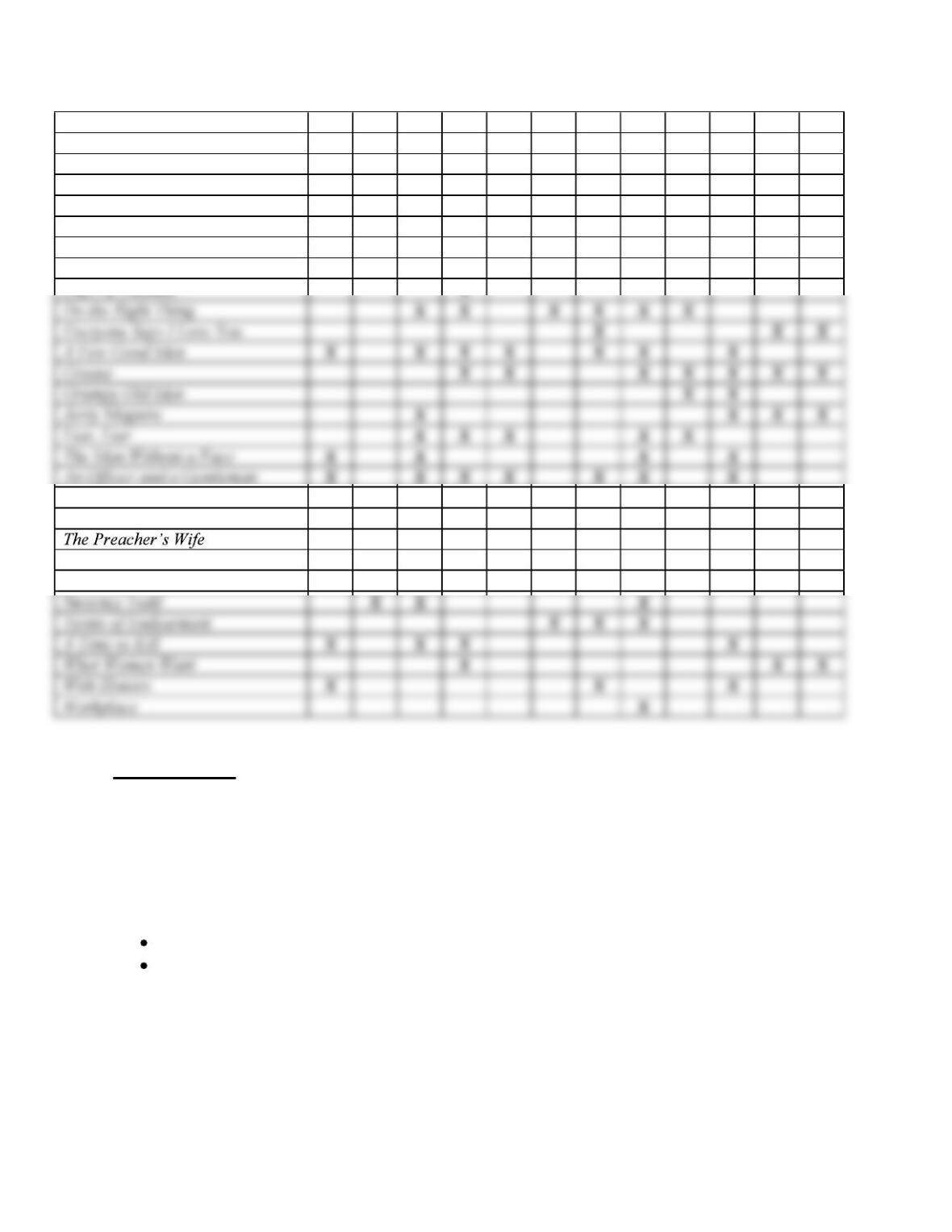
we would recommend the following films (see table on next page). Next to each film is an
indication of what chapters it best illustrates. Because these films cut across chapters, they work
well if you decide to have students complete a film analysis term project.
30
Film 1 2 3 4 5 6 7 8 9 10 11 12
The American President X X X X
An Affair To Remember X X X
As Good As It Gets X X X
Beaches X X X X
Bicentennial Man X
Birdcage X X X X X
Cast Away X X
One Fine Day X X
Philadelphia X X X
X X X X X
Rear Window X X X X
Sister Act X X X X X X X
Print Resources
There are many books that relate to interpersonal communication and can be critically
interrogated based on concepts and topics discussed in the textbook. Many of these books were
published for the popular press and thus work well if you decide to have students complete a
popular-press book analysis term project.
Chapter 1
How To Start A Conversation And Make Friends by Don Gabor
The Pocket Guide to Making Successful Small Talk: How to Talk to Anyone Anytime
Anywhere About Anything by Bernardo J Carducci
Chapter 2
The Saturated Self: Dilemmas of Identity in Contemporary Life by Kenneth J. Gergen
Honoring the Self: Self-Esteem and Personal Transformation by Nathaniel Branden
Chapter 3
The Spell of the Sensuous: Perception and Language in a More-Than-Human World by
David Abram
A Natural History of the Senses by Diane Ackerman
Action in Perception (Representation and Mind) by Alva Noe
Chapter 4
by Deborah Tannen
Talking from 9 to 5: Women and Men in the Workplace: Language, Sex, and Power by
Deborah Tannen
Chapter 5
The Power of Body Language by Tonya Reiman
by John T. Molloy
Casual Power: How to Power Up Your Nonverbal Communication & Dress Down for
Success by Sherry Maysonave
Body Language Secrets: A Guide During Courtship & Dating by R. Don Steele
Chapter 6
The Lost Art of Listening: How Learning to Listen Can Improve Relationships by
Michael P. Nichols
Are You Really Listening?: Keys to Successful Communication by Paul J., Ph.D.

32
The Coward’s Guide to Conflict: Empowering Solutions for Those Who Would Rather
Run Than Fight by Tim Ursiny
The High Conflict Couple: A Dialectical Behavior Therapy Guide to Finding Peace,
Intimacy, & Validation by Alan E., Ph.D. Fruzzetti and Marsha M. Linehan
Chapter 10
by Ame Mahler
Beanland
Navigating Differences: Friendships Between Gay and Straight Men by Jammie Price
The Friendship Factor: How to Get Closer to the People You Care for by Alan Loy
McGinnis