159
Chapter 28: Language and Style
Key Concepts
28-1 Distinguish what makes oral style different than written.
28-2 Develop the ability to use clear, vivid, and varied language.
Suggested Activities and Exercises
Oral and Written Style
Ask each student to write a paragraph on a familiar topic. After these are turned in, have each
Speaking STAT!
The class period before this discussion, assign students the task of finding a variety of words and
Stylistic Devices
Assign each student a stylistic device. The students are required to find a newspaper article, a
Analyzing a Speech
Analyzing a Tribute Speech
Have students analyze the text of the speech Princess Diana’s brother delivered at her funeral.
Testing Your Knowledge of Stylistic Devices
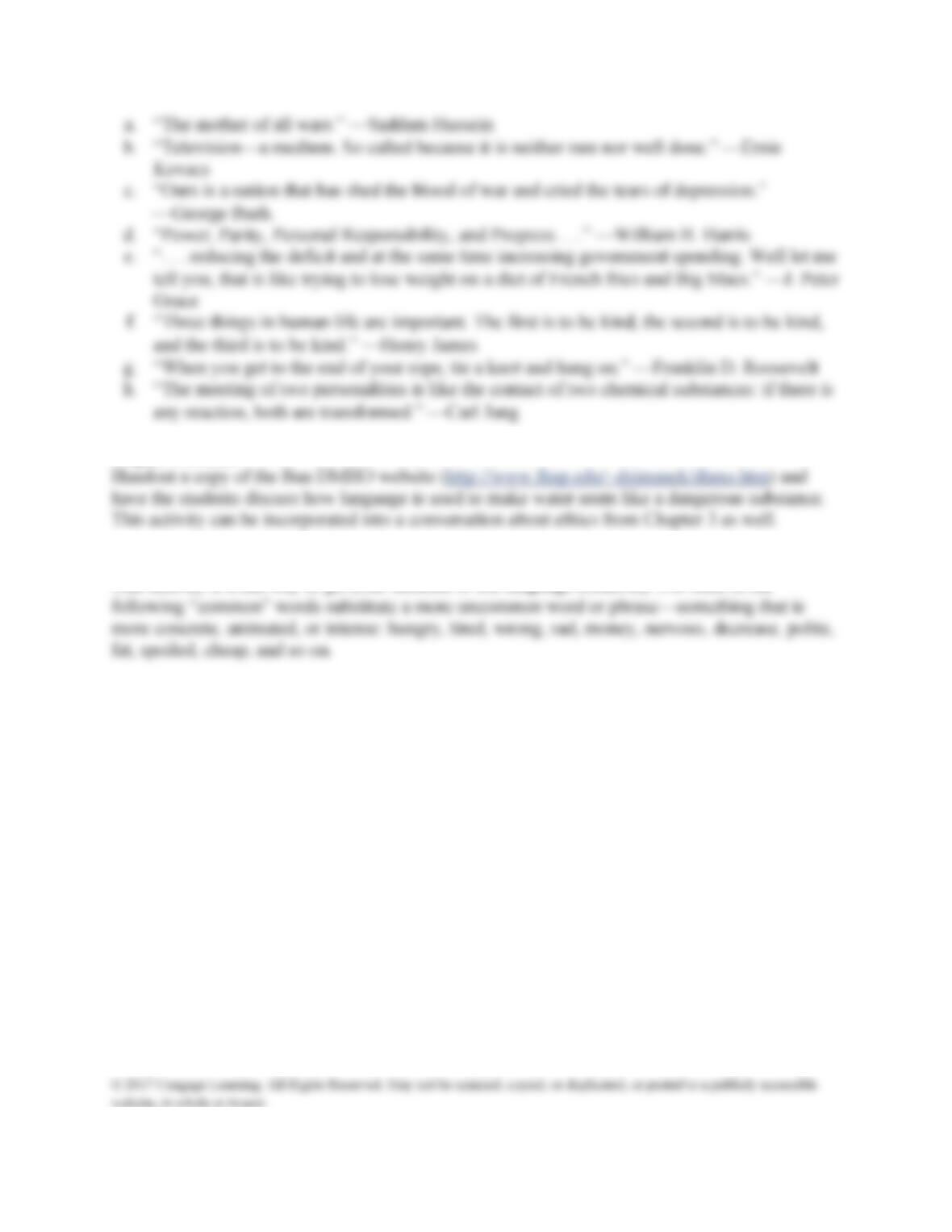
Have students examine the following quotes to determine which stylistic device is illustrated.
160
Vague Websites
Adding Excitement to Your Language
This activity is a fun way to get your students to use language creatively. For each of the
161
Adding Excitement to Your Language
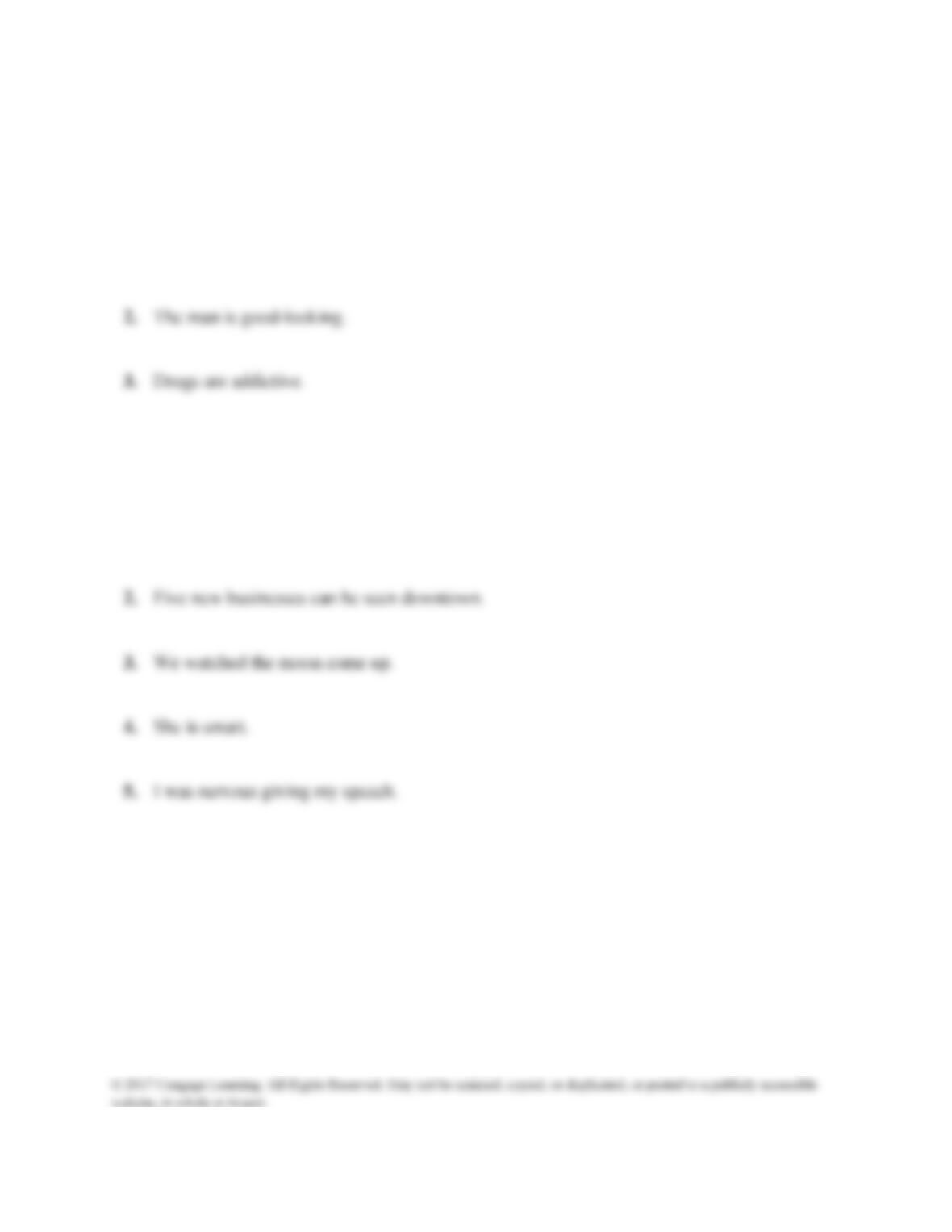
Substitute each of the following phrases with similes or metaphors.
1. Picking a topic was difficult.
Rewrite the following sentences using vivid language
paint a picture in the mind of the
listener.
1. He is a great piano player.
162
Tests
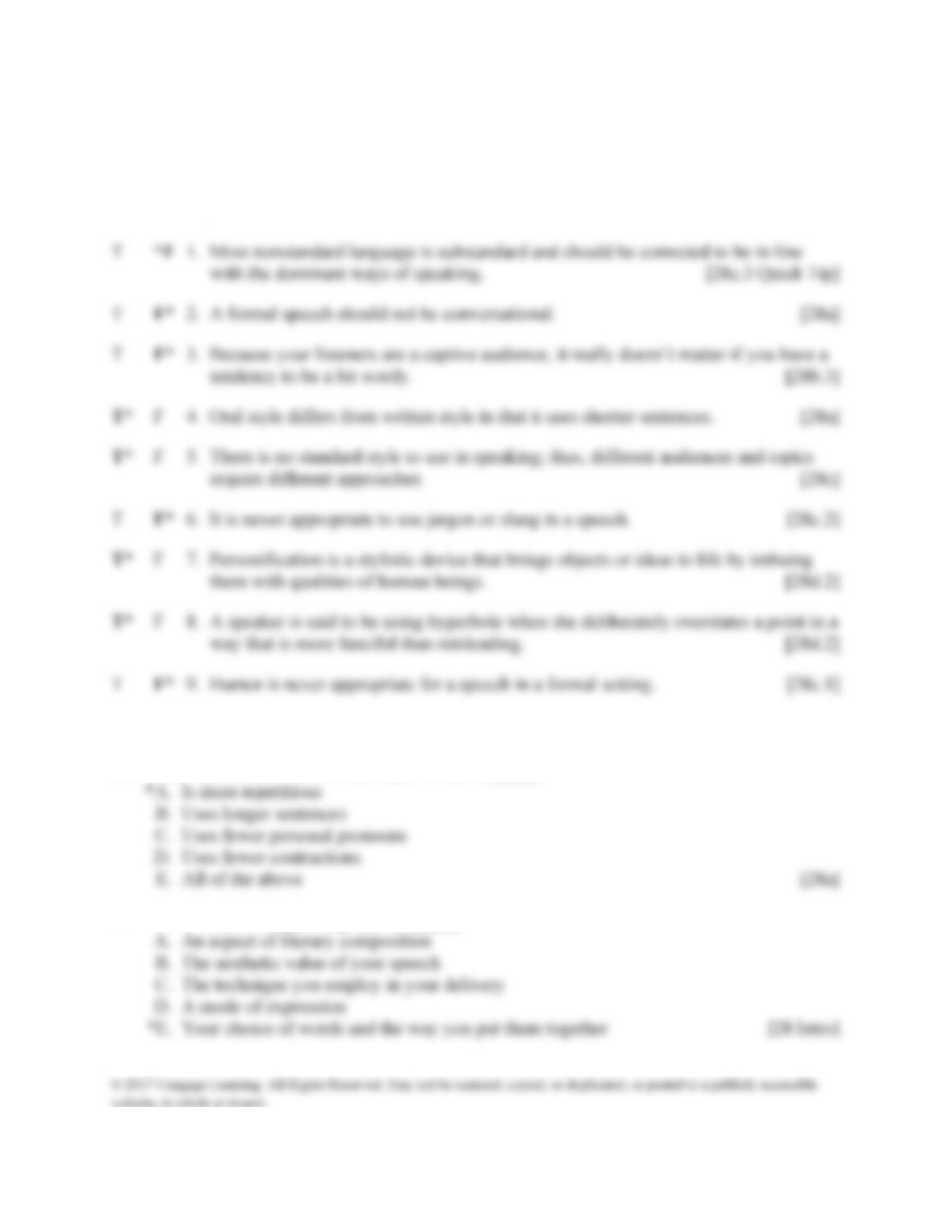
Correct answers are marked with an asterisk. The places in the Compact Handbook where the
information was presented are shown in brackets.
True/False Questions
Multiple Choice Questions
10. Oral style differs from written style in that it _____.
11. In the contest of speaking, style is _____.
163
12. The respectful and inclusive way to refer to members of non-dominant racial and ethnic
groups is _____.
Essay and Short Answer Questions
13. When is it appropriate to use jargon and/or slang? If you are unsure about the audience,
what is the recommended course of action regarding jargon and slang? [28c.2]