27
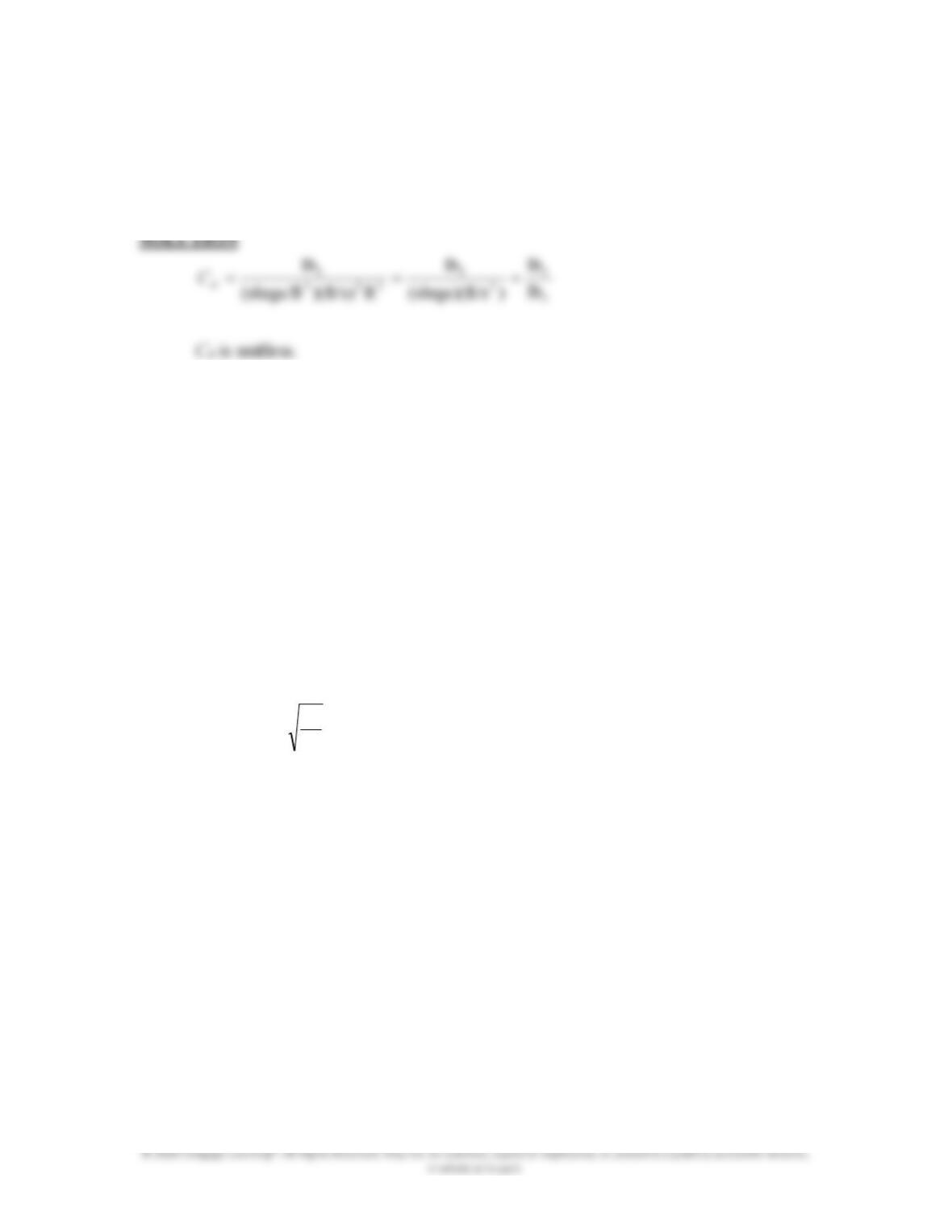
What is the appropriate unit for Cd, if the preceding equation is to be homogenous
in units? Show all steps of your work.
6.25 Fins, or extended surfaces, are commonly used in a variety of engineering
applications to enhance cooling. Common examples include a motorcycle engine
head, a lawnmower engine head, heat sinks used in electronic equipment, and
finned-tube heat exchangers in room heating and cooling applications. For long
fins, the temperature distribution along the fin is given by the exponential
relationship:
mx
ambientbaseambient eTTTT
)(
where
T = Temperature (K)
kA
hp
m
h = the heat transfer coefficient (W/m2·K)
p = perimeter of the fin (m)
A = cross-sectional area of the fin (m2)
k = thermal conductivity of the fin material
x = distance from the base of the fin (m)
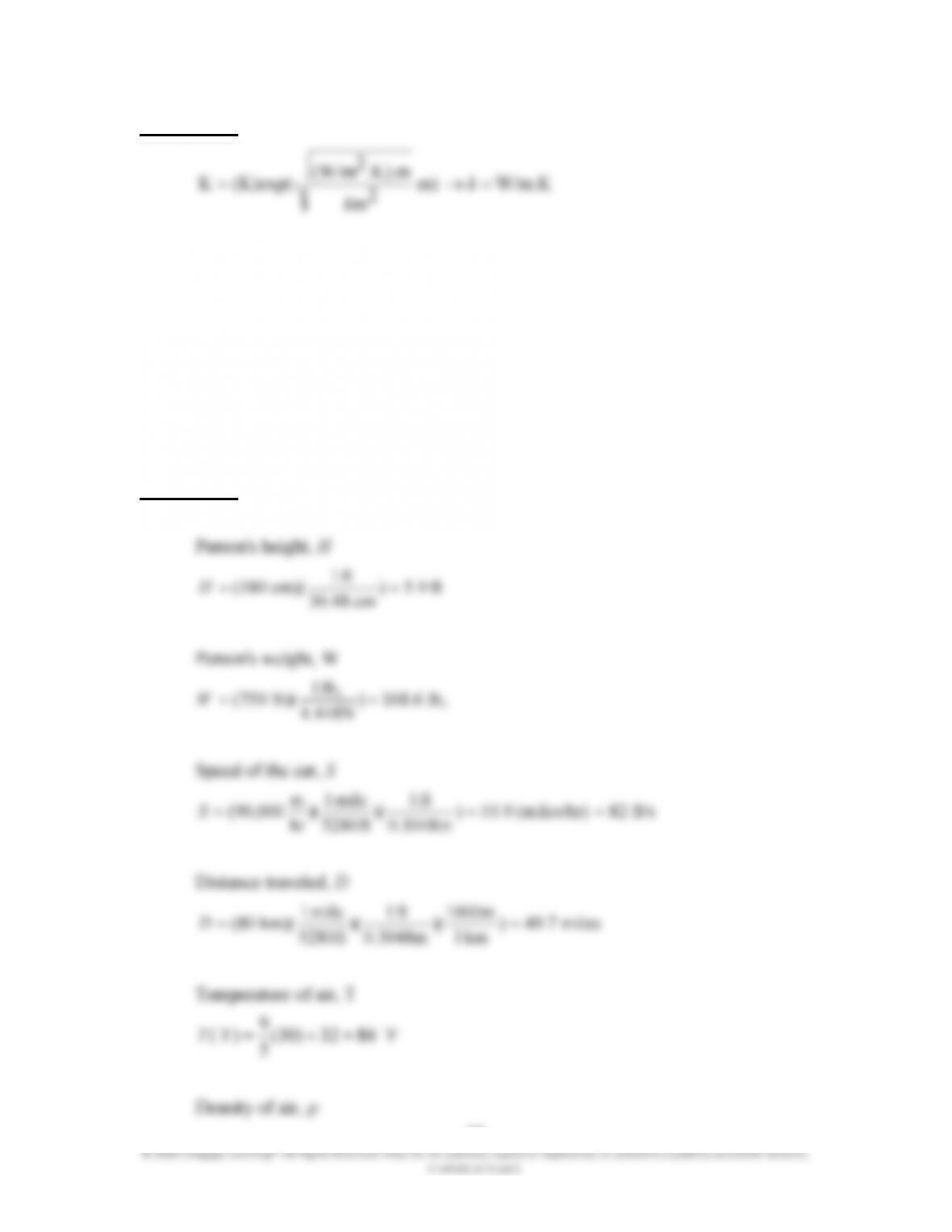
What is the appropriate unit for k if the preceding equation is to be homogenous
in units? Show all steps of your work.
28
SOLUTION
2
m
.K).m
2
(W/m
k
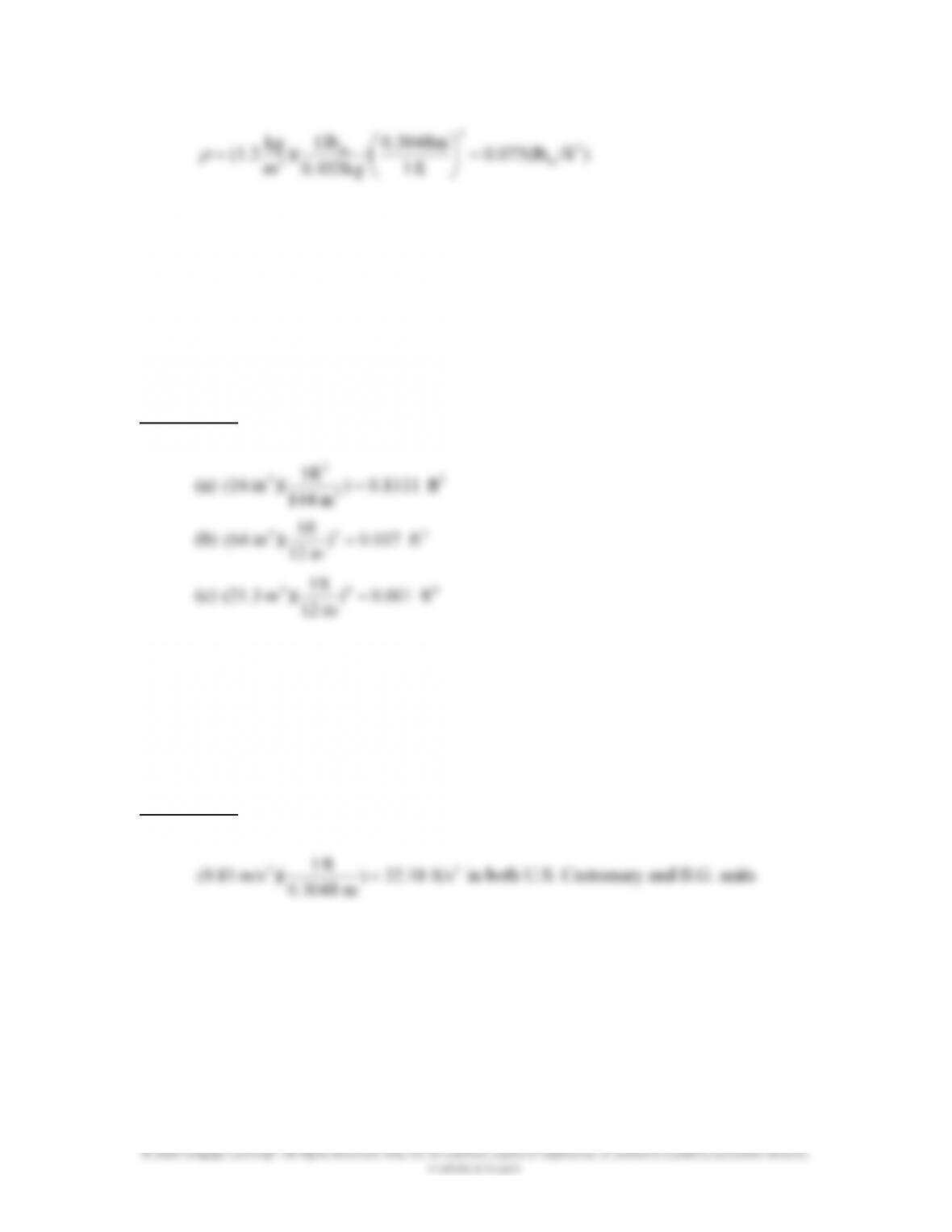
6.26 A person who is 180 cm tall and weighs 750 newtons is driving a car at a speed of
90 kilometers per hour over a distance of 80 kilometers. The outside air
temperature is 30C and has a density of 1.2 (kg/m3) kilograms per cubic meter.
Convert all of the values given in this example from SI units to U.S. Customary
units.
SOLUTION
29
© 2020 Cengage Learning®. All Rights Reserved. May not be scanned, copied or duplicated, or posted to a publicly accessible website,
in whole or in part.
)/ft0.075(lb
ft 1
0.3048m
)
0.453kg
lb 1
)(
m
kg
(1.2 3
m
3
m
3
6. 27 Use the conversion factors given on the front and back end covers of this text and
convert the given values. (a) area A = 16 in2 to ft2, (b) volume V = 64 in3 to ft3,
(c) area moment of inertia I = 21.3 in4 to ft4.
SOLUTION
2
2ft 0.1111)
1ft
in
12
6.28 The acceleration due to gravity g is 9.81 m/s2. Express the value g in U.S.
Customary and B.G. units. Show all conversion steps.
SOLUTION
m
0.3048
6.29 Sir Isaac Newton discovered that any two masses m1 and m2 attract each other
with a force that is equal in magnitude and acts in the opposite direction,
according to the relationship:
in
12
30
2
21
r
mGm
F
where
F = attractive force, N
G = Universal Gravitational Constant
m1 = mass of particle-1 (kg)
m2 = mass of particle-2 (kg)
r = distance between the center of each particle (m)
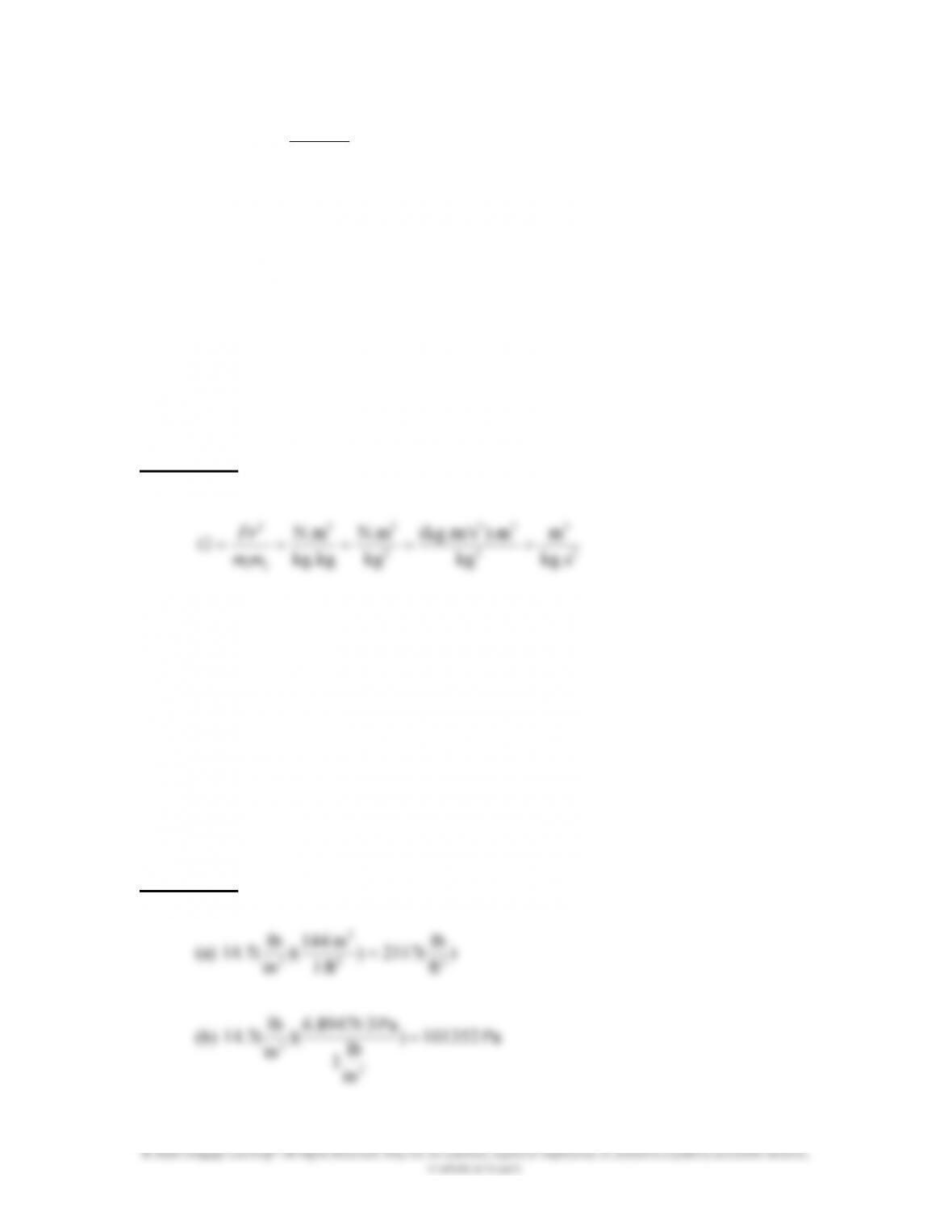
What is the appropriate unit for G, if the above equation is to be homogenous in
units?
SOLUTION
2
3
2
22
2
22
21
2
kg.s
m
kg
).m(kg.m/s
kg
N.m
kg.kg
N.m mm
Fr
G
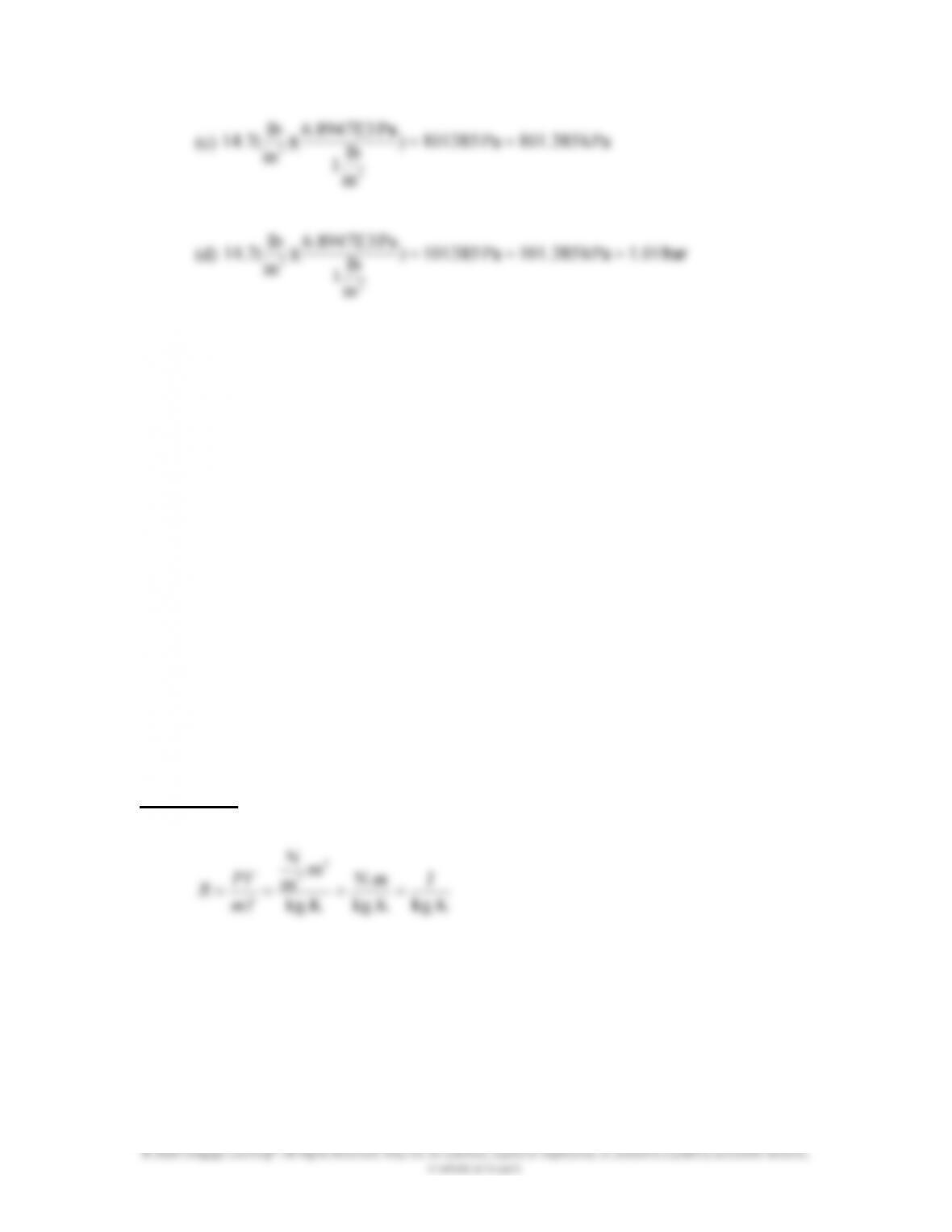
6.30 Convert the atmospheric pressure in the given units to requested units. Show all
the conversion steps.
(a) 14.7 lbf/in2 to lbf/ft2,
(b) 14.7 lbf/in2 to Pa,
(c) 14.7 lbf/in2 to kPa, and
(d) 14.7 lbf/in2 to bar (1 bar = 100 kPa).
SOLUTION
lb
in 144
lb
2
in
lb
1
in
2
31
© 2020 Cengage Learning®. All Rights Reserved. May not be scanned, copied or duplicated, or posted to a publicly accessible website,
in whole or in part.
(c) kPa 101.385Pa 101385)
in
lb
1
Pa 6.8947E3
)(
in
lb
14.7(
2
2
(d) bar 1.01kPa 101.385Pa 101385)
in
lb
1
Pa 6.8947E3
)(
in
lb
14.7(
2
2
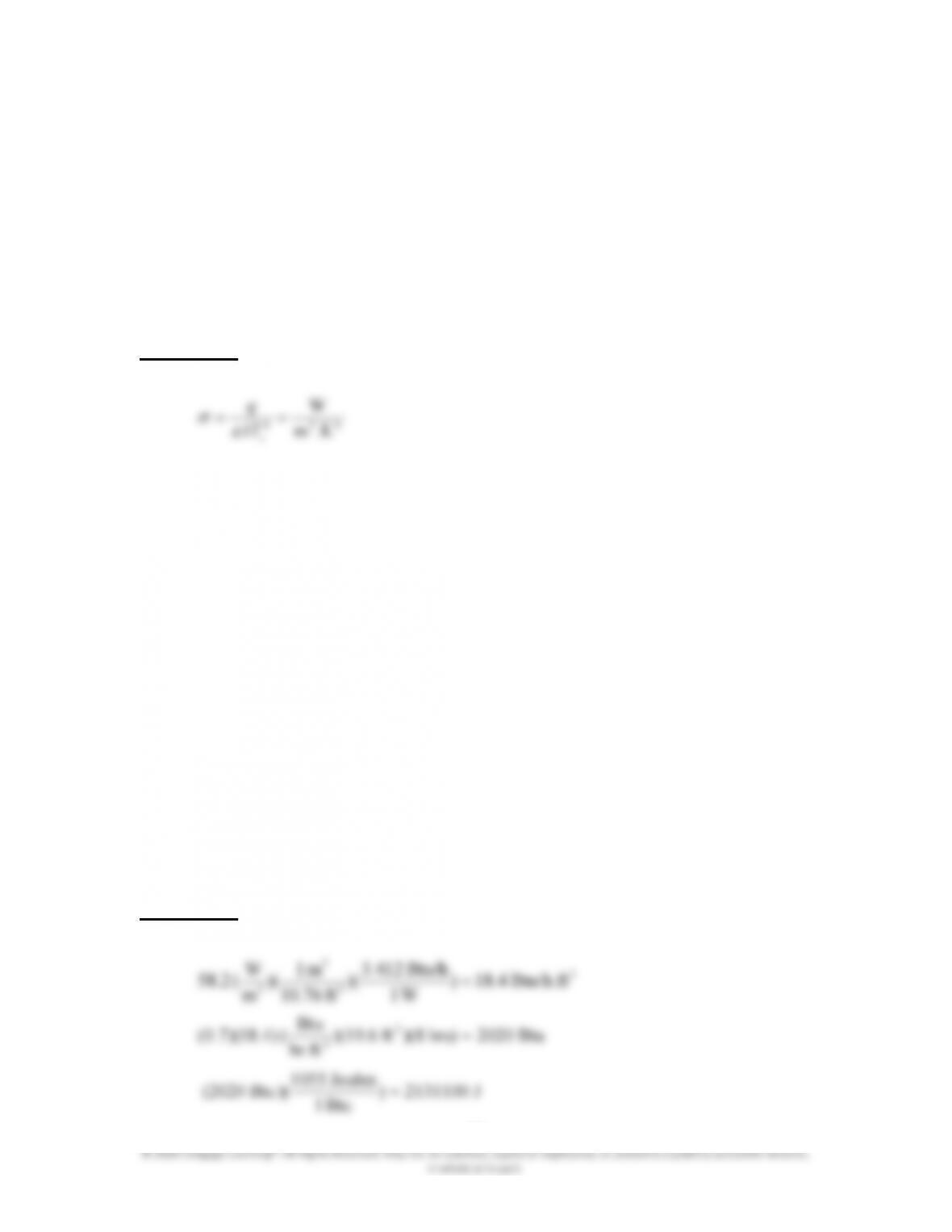
6.31 For gases under certain conditions, there is a relationship between the pressure of
the gas, its volume, and its temperature as given by what is commonly called the
ideal gas law. The ideal gas law is
mRTPV
where,
P = absolute pressure of the gas (Pa)
V = volume of the gas (m3)
m = mass (kg)
R = gas constant
T = absolute temperature (kelvin)
What is the appropriate unit for R if the preceding equation is to be homogenous
in units?
SOLUTION
32
6.32 The amount of radiant energy emitted by a surface is given by 4
s
ATq
, where
q represents the rate of thermal energy, per unit time, emitted by the surface in
watts;
is the emissivity of the surface 0<
<1 and is unitless;
is the Stefan-
Boltzman constant (
= 5.67 x 10⁸); A represents the area of the surface in m2;
and Ts is the surface temperature of the object expressed in kelvin. What is the
appropriate unit for
if the equation is to be homogenous in units?
SOLUTION
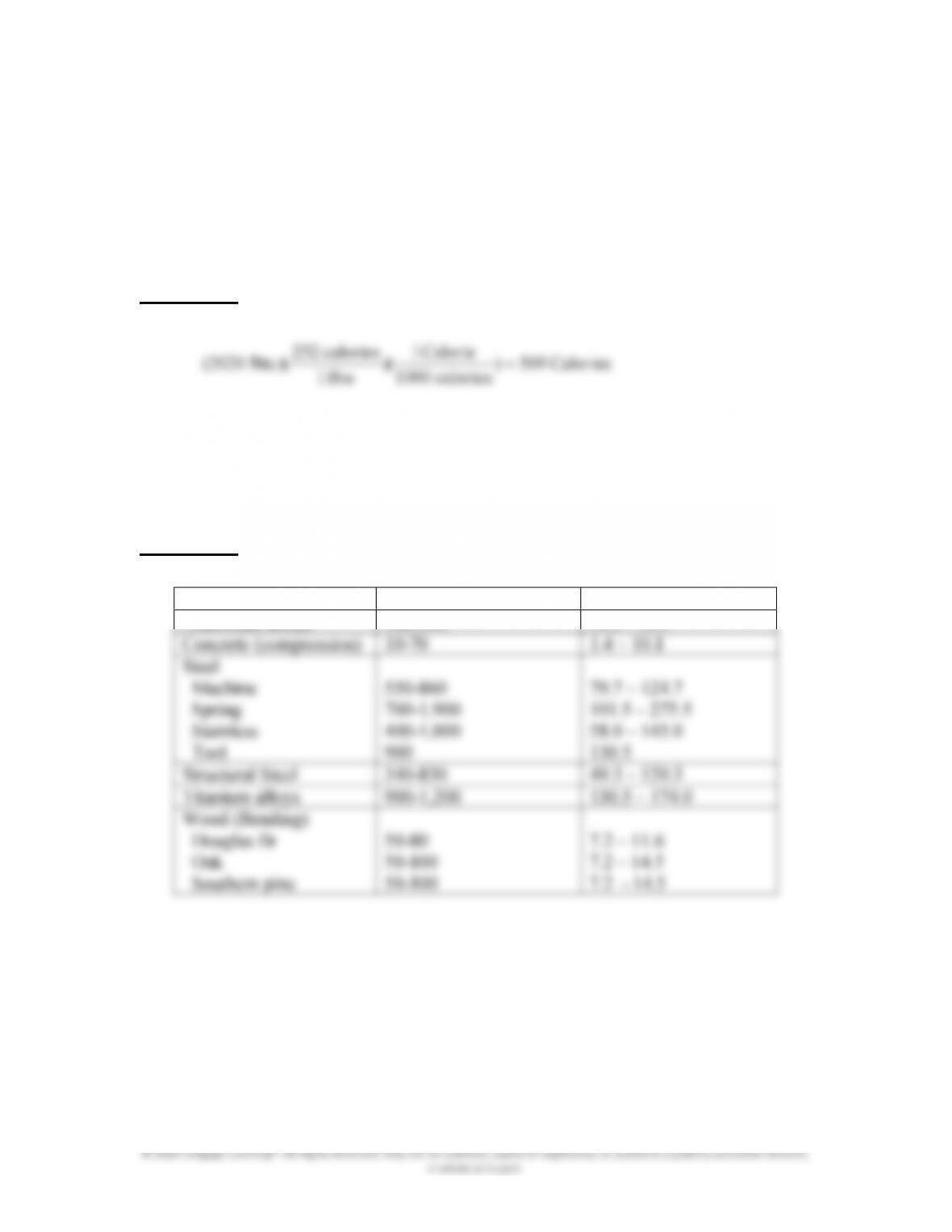
6.33 A person’s body temperature is controlled by (1) convective and radiative heat
transfer to the surroundings, (2) sweating, (3) respiration by breathing
surrounding air and exhaling it at approximately body temperature, (4) blood
circulation near the surface of the skin, and (5) metabolic rate. Metabolic rate
determines the rate of conversion of chemical to thermal energy within a person’s
body. The metabolic rate depends on the person’s activity level. A unit commonly
used to express the metabolic rate for an average person under sedentary
conditions (per unit surface area) is called met; 1 met is equal to 58.2 W/m2.
Convert this value to Btu/h·ft2. Also, calculate the amount of energy dissipated by
an average adult person sleeping for 8 hours if he or she generates 0.7 mets and
has a body surface area of 19.6 ft2. Express your results in Btu and joules (1 Btu =
1055 joules).
SOLUTION
Btu
1
33
6.34 The calorie is defined as the amount of heat required to raise the temperature of 1
gram of water by 1C. Also, the energy content of food is typically expressed in
Calories which is equal to 1000 calories. Convert the results of the previous
problem to Calories (1 Btu = 252 calories)
SOLUTION
calories
1000
Calorie 1
Btu
1
calories 252
6.35 Convert the strength of selected materials given in the accompanying table from
MPa to ksi, where 1000 lbf/in2 = 1 ksi.
SOLUTION
Material
Ultimate
strength (MPa)
Ultimate strength (ksi)
Aluminum alloys
100
–
55
0
14.5
–
79.7
Concrete (compression)
10
–
70
1.4
–
10.1
Tool
900
130.5
Structural Steel
340
–
830
49.3
–
120.3
Titanium alloys
900
–
1,2
00
130.5
–
174.0
Southern p
ine
50
–
10
0
7.2
–
14.5
6.36 The density of water is 1000 kg/m3. Express the density of water in lbm/ft3 and
lbm/gallon (7.48 gallons = 1 ft3).
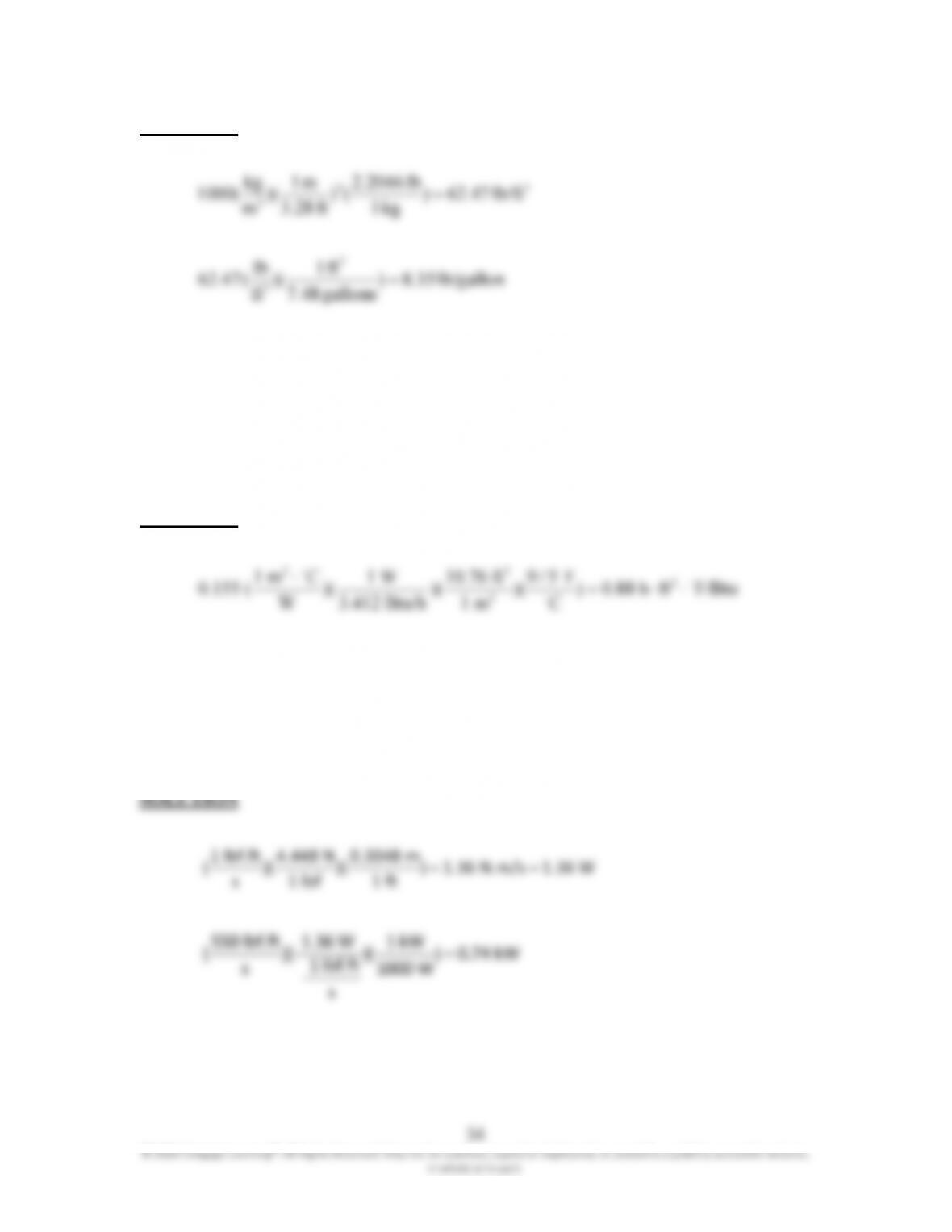
SOLUTION
6.37 A unit that is generally used to express the insulating value of clothing is called
clo. 1 clo is equal to 0.155 m2·C/W. Express this value in U.S. Customary units,
(F·ft2·hr/Btu).
SOLUTION
W 3.412 Btu/h 1 m C
6.38 Start with 1 lbf·ft/s and convert it to N·m/s and show that 1 lbf·ft/s is equal to
1.36 watts. Knowing that 550 lbf·ft/s is equal to 1 horsepower, how many kW is
that?
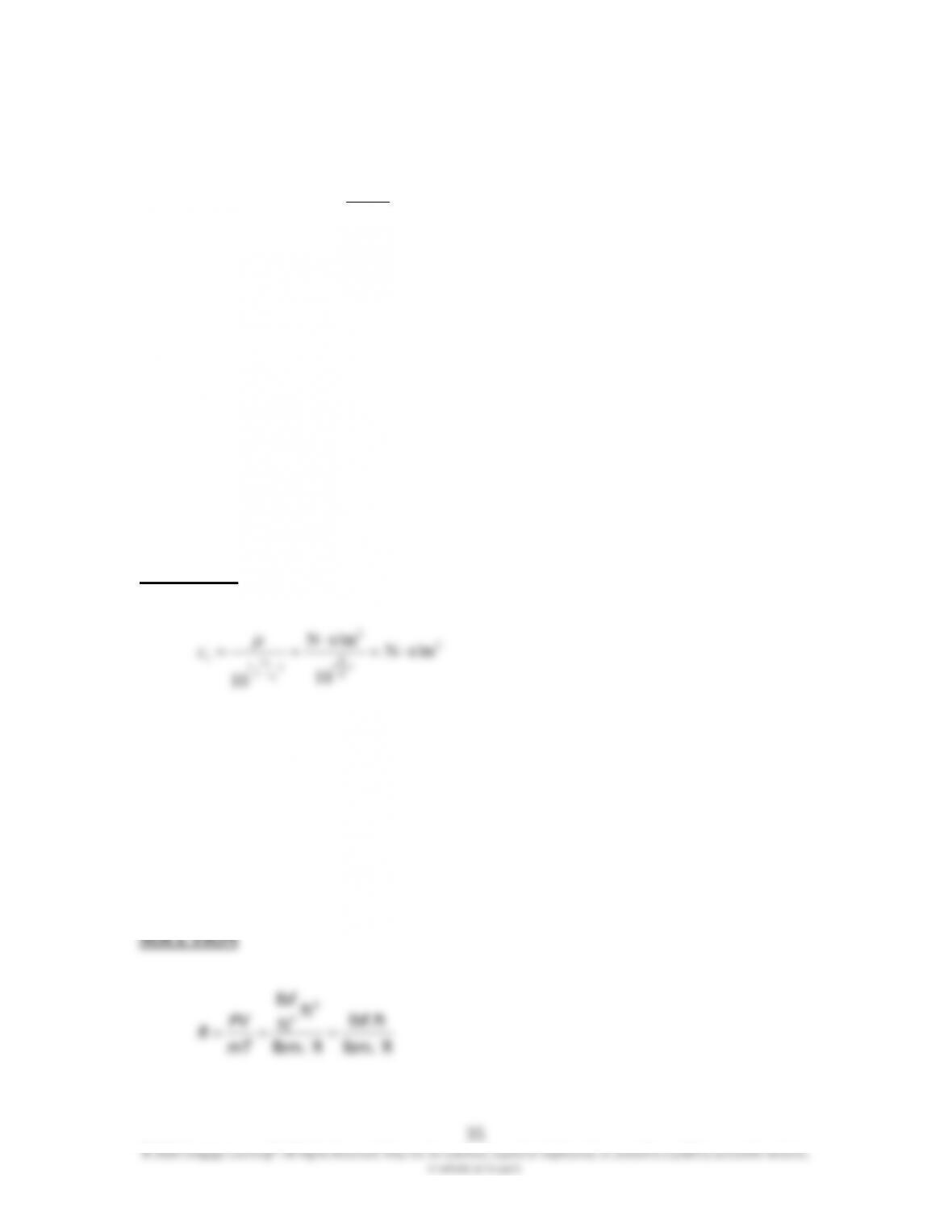
6.39 Viscosity of fluid plays significant roles in the analysis of many fluid dynamics
problems. The viscosity of water can be determined from the correlation:
)(
1
3
2
10 cT
c
c
where
viscosity (N·s/m2)
T temperature (K)
c1 2.414 x 10⁻⁵
c2 247.8 (K)
c3 140 (K)
What is the appropriate unit for c1 if the above equation is to be homogenous in
units?
SOLUTION
2
3
2
2
1( )
( )
N s/m
N s/m
10
10
c K
K
T c
c
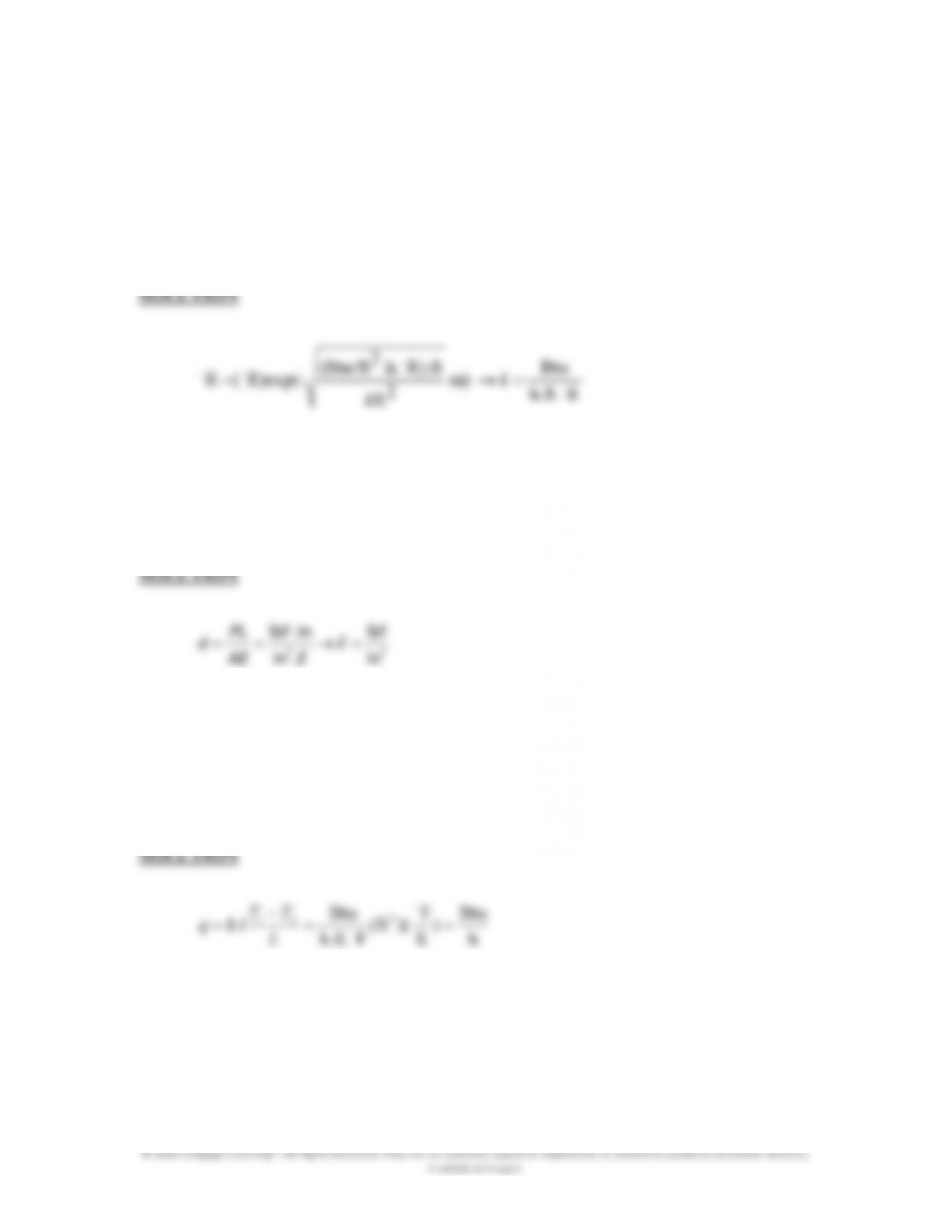
6.40 For the ideal gas law given in Problem 6.31, if the units of P, V, m, and T are
expressed in lbf/ft2, ft3, lbm, and degree Rankine (°R), respectively, what is the
appropriate unit for gas constant R if the ideal gas law is to be homogenous in
units?
36
6.41 For the fin equation described in Problem 6.25, if the units of T, h, P, A, and x are
expressed in degree Rankine (°R), Btu/h·ft2 ·°R, ft, ft2, and ft, respectively, what
are the appropriate units for thermal conductivity k if the fin equation is to be
homogenous in units? Show all steps of your work.
Rh.ft.
2
ft
k
6.42 For Example 6.6 part (a), if the units of d, P, L, and A are given in inches, lbf,
inches, in2, respectively, what are the units for modulus of elasticity E?
2 2
lbf in lbf
in . in
PL
d E
AE E
6.43 For Example 6.6 (b), if the units of k, A, T1 − T2, and L, are given in Btu/h·ft·°F,
ft2,°F, and ft, respectively, what is the appropriate unit for heat transfer rate q?
h
Btu
)
ft
F
)((ft
F
h.ft.
Btu 2
21
L
TT
kAq
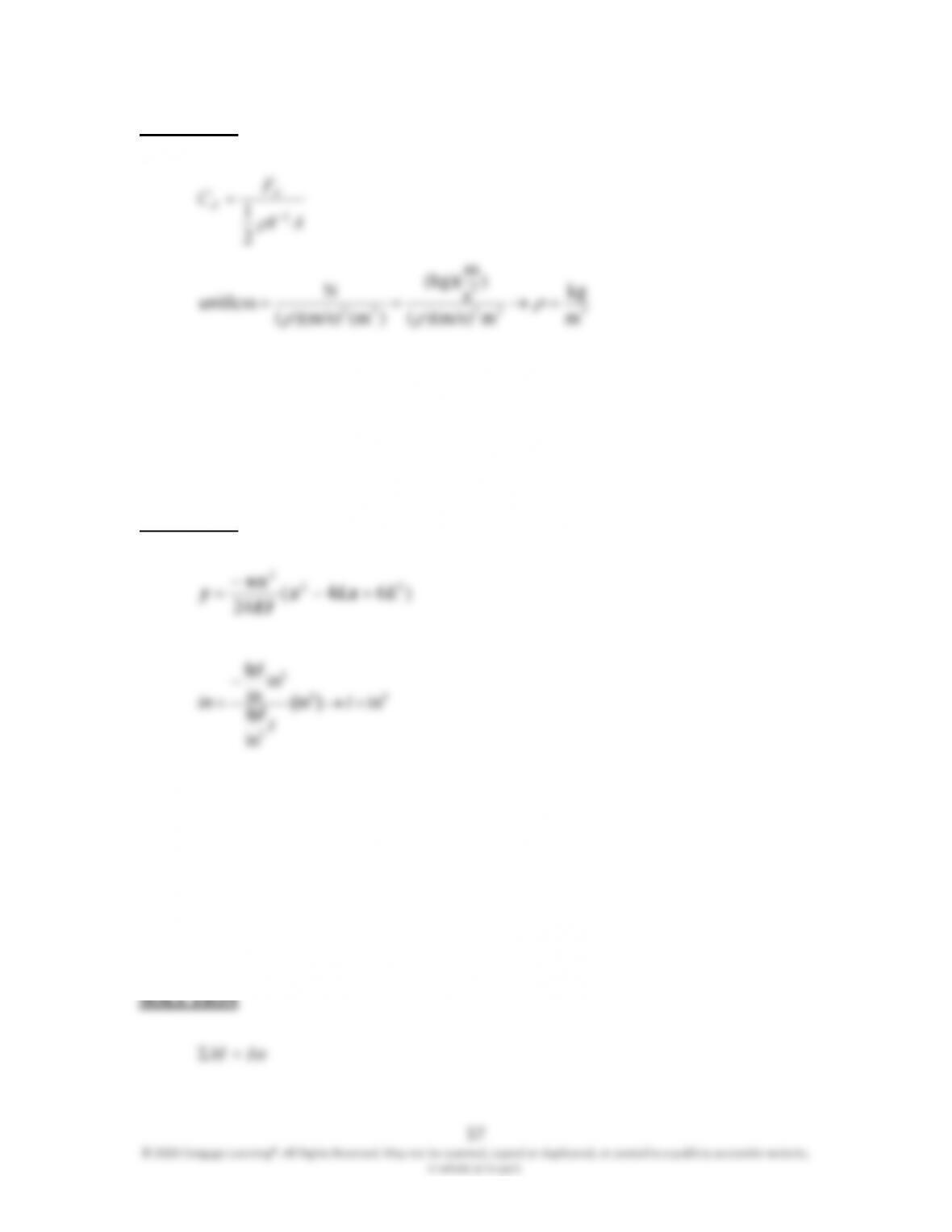
6.44 For the drag coefficient relationship given in Problem 6.24, if the units of Fd, V,
A, and Cd, are expressed in N, m/s, m2, and unitless, respectively what are the
appropriate units for
?
SOLUTION
AV
F
Cd
d
2
1
6.45 For the cantilever beam relationship given in Problem 6.21, if the units of y, w, E,
x, and L are expressed in inches, lbf/in, lbf/in2, inches, and inches, respectively,
what are the appropriate units for I?
SOLUTION
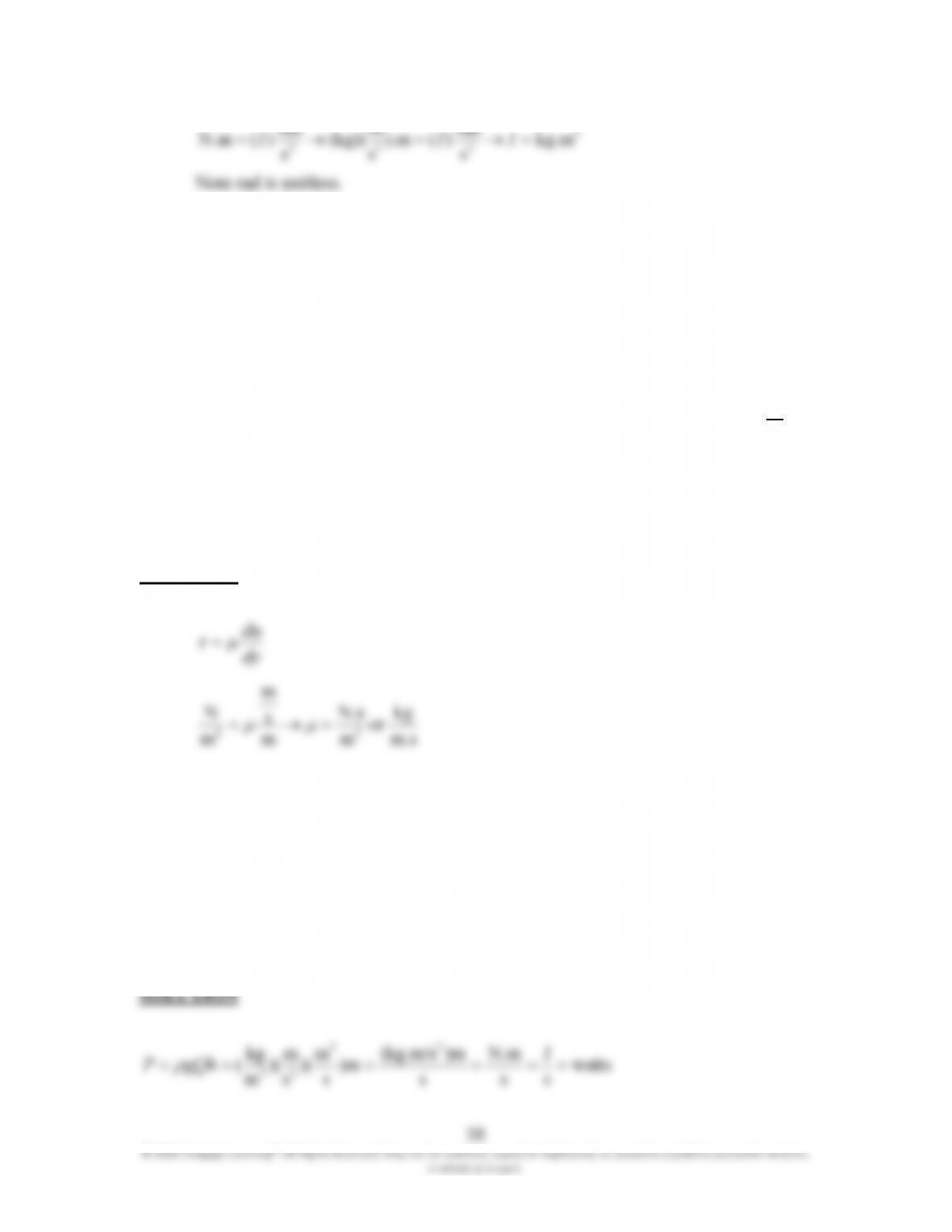
6.46 The rotation of a rigid object is governed by the relationship: ∑𝑀 = 𝐼𝛼, where,
∑𝑀 = sum of the moments due to external forces (N·m), I = mass moment of
inertia,
= angular acceleration of the object (rad/s2). What is the appropriate unit
for mass moment of inertia I?
38
© 2020 Cengage Learning®. All Rights Reserved. May not be scanned, copied or duplicated, or posted to a publicly accessible website,
in whole or in part.
2
222 kg.m
s
rad
)().m
s
m
(kg)(
s
rad
)(N.m III
Note rad is unitless.
6.47 In a fluid mechanics class, mechanical, civil, or chemical engineering students
will learn about viscosity. The value of viscosity of a fluid represents a measure
of how easily the given fluid can flow. The higher the viscosity value is, the more
resistance the fluid offers to flow. For example, it would require less energy to
transport water in a pipe than it would to transport motor oil or glycerin. The
viscosity of many fluids is governed by the Newton’s law of viscosity 𝜏 = 𝜇
,
where is shear stress (N/m2),
is viscosity, du is change in flow speed (m/s)
over a height dy (m). What are the appropriate units for viscosity?
SOLUTION
m.s
m
m
m
22
6.48 The power output of a water turbine is given by P =
gQh, where P is power,
is
density of water (kg/m3), g is acceleration due to gravity (m/s2), Q is water flow
rate (m3/s), and h is the available water head (m). What is the appropriate unit for
P?
39
6.49 As a mechanical engineer, civil engineer, or chemical engineer, you could come
across a project dealing with sizing pumps to overcome losses in piping systems.
The head loss due to flow of a fluid inside a pipe is calculated from
ℎ = 𝑓
, where hLoss (m), f is friction factor, L is pipe length (m), D is pipe
diameter (m), V is average flow velocity (m/s), and g is the acceleration due to
gravity (m/s2). What is the appropriate unit for friction factor f?
SOLUTION
V
L
2
2
s
m
m
6.50 For Problem 6.49, hLoss is expressed in feet, L and D in inches, V in (ft/s), and g in
(ft/s2). What is the appropriate unit for friction factor f?
SOLUTION
s