4-1
CHAPTER 4. PROBABILITY DISTRIBUTIONS FOR DISCRETE
RANDOM VARIABLES
CHAPTER 4. PROBABILITY DISTRIBUTIONS FOR DISCRETE RANDOM VARIABLES ….1
4.1. Introduction ………………………………………………………………………………………………………………1
4.2. to 4.7. All Distributions ………………………………………………………………………………………………1
4.9. Simulation and Probability Distributions …………………………………………………………………….14
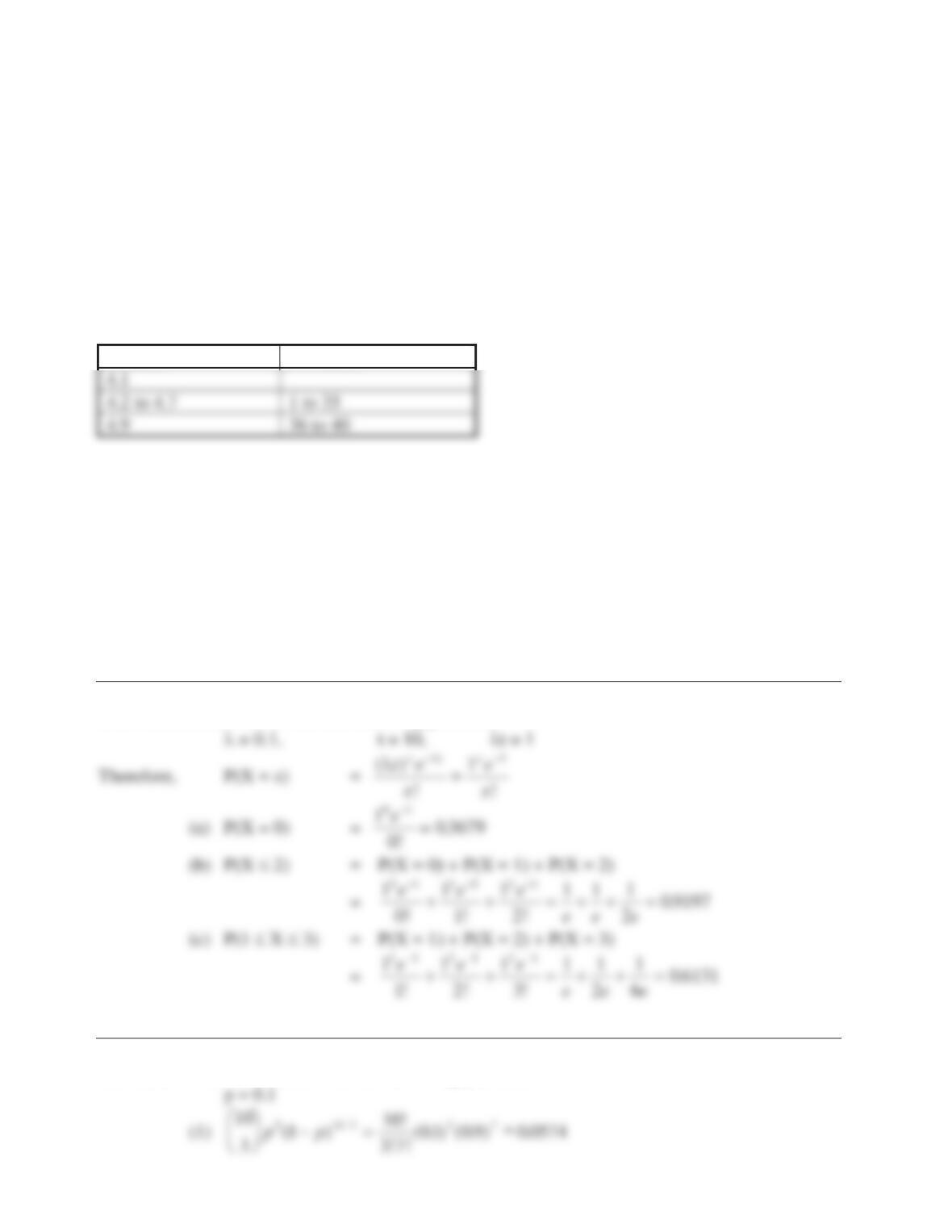
The following table provides a summary of the problems with their appropriate sections:
Section Problems
4.1. Introduction
None
4.2. to 4.7. All Distributions
Problem 4-1.
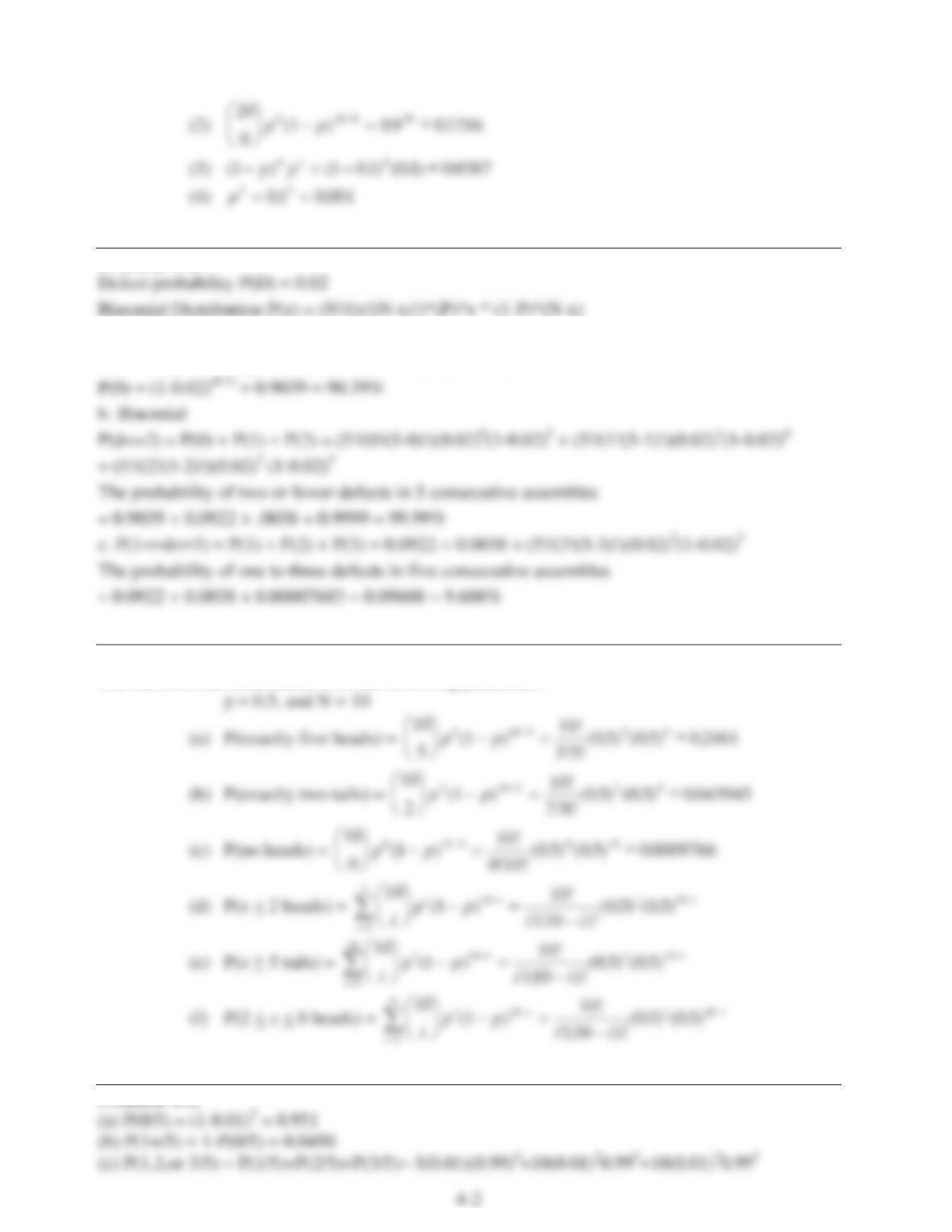
Use Poisson distribution with the following parameter:
Problem 4-2.
Use the binomial distribution with the following parameter:
Problem 4-3.
a. Binomial Distribution
Probability of having no defects in five consecutive assembles
Problem 4-4.
Use the binomial distribution with the following parameter:
Problem 4-5.
4-3
Problem 4-6.
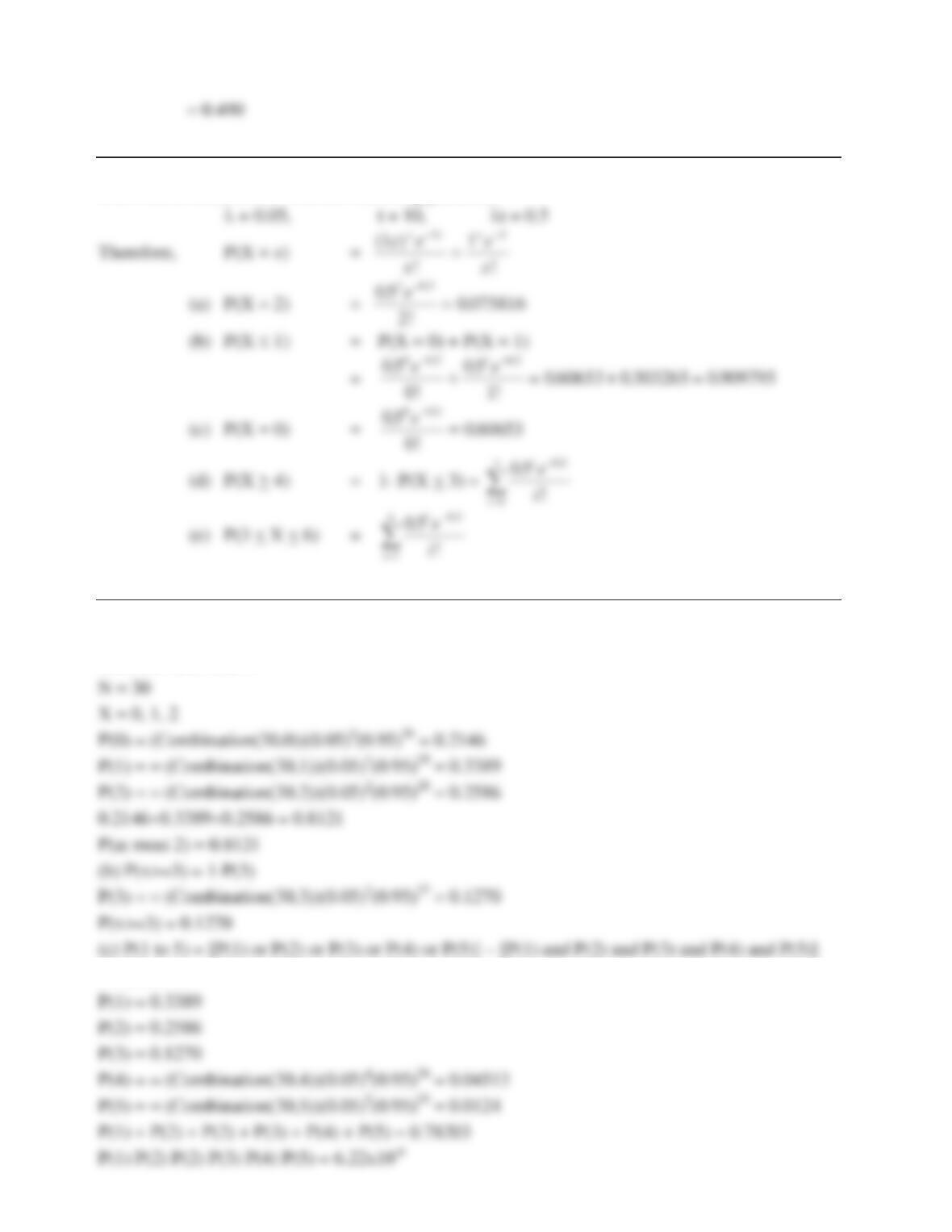
Use Poisson distribution with the following parameter:
Problem 4-7.
(a) P(at most 2) = P(0) + P(1) + P(2)
Binomial distribution
From above
4-4
Problem 4-8.
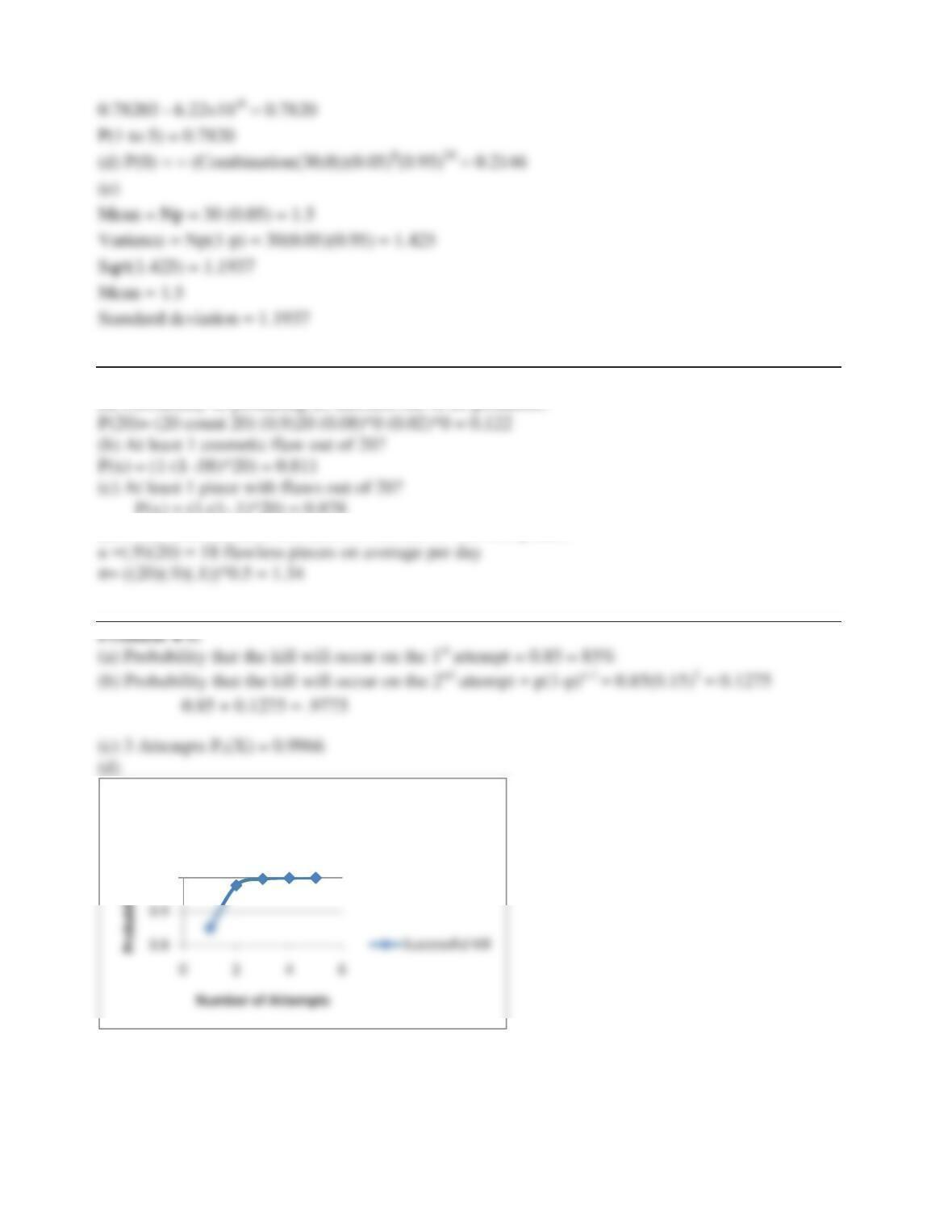
(a) Probability of producing 20 flawless out of 20 produced?
P(x) = (1-(1-.1)^20) = 0.878
(d) Mean and Standard Deviation of number of flawless pieces?
1
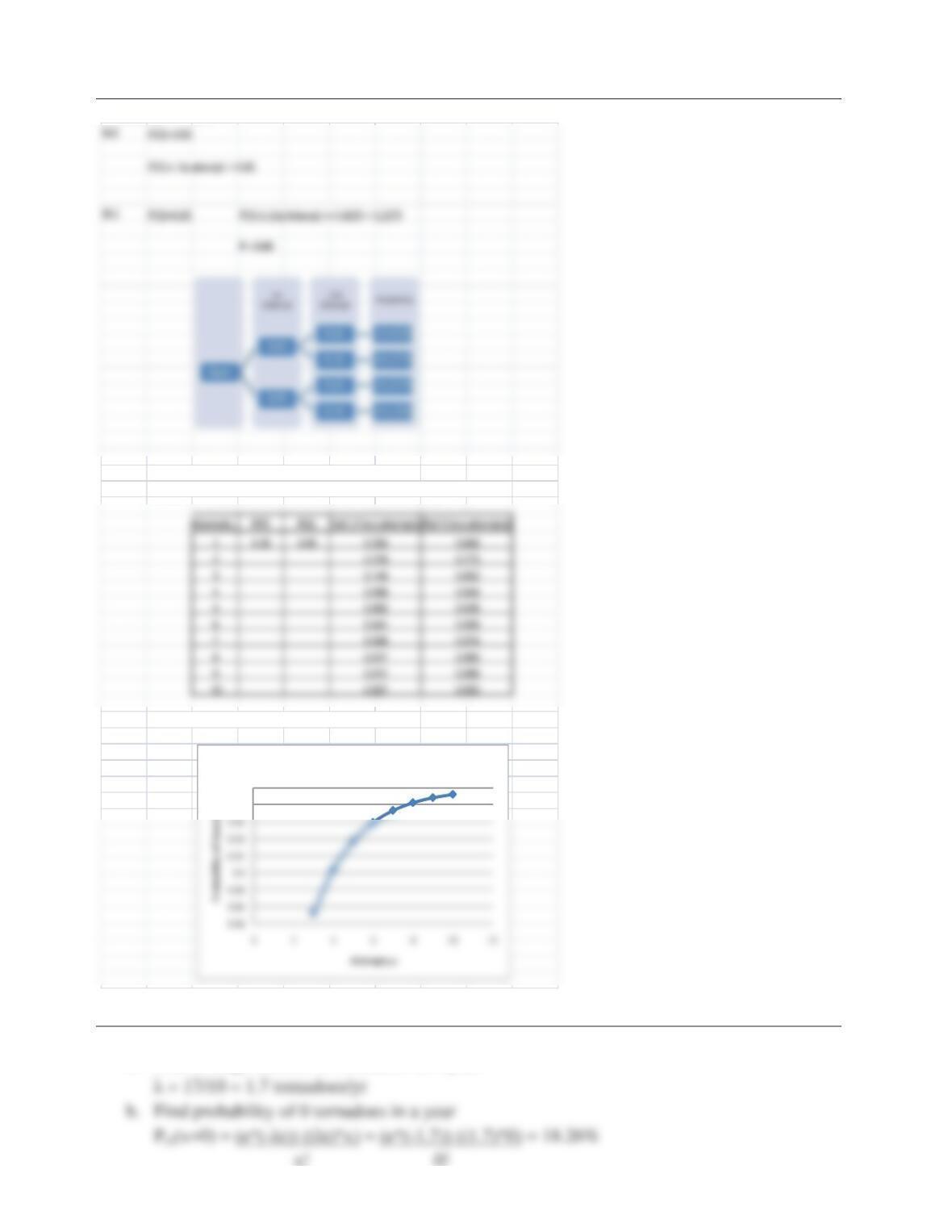
ProbabilityofSuccessful
Kill
4-5
Problem 4-10.
Problem 4-11.
a. Find average number of tornadoes in 1 year
x! 0!
(c.) )L Q
G
W
K
H
Q
X
P
EH
U
R
I
DW W H
P
SWV
WR
U
HDF
K
D
VXFFHVV
3U
REDE
LOL
W\
R
I
,QVWHDG,PILQGLQJWKHQXPEHURIDWWHPSWVWRKDYHD)DLOXUHSU REDEL O L W\RI
ZHO O V DU H QHHGHG W R GL VFRY HU RL O ZL W K D SU REDEL O L W \ RI
(d.)
0.98
1
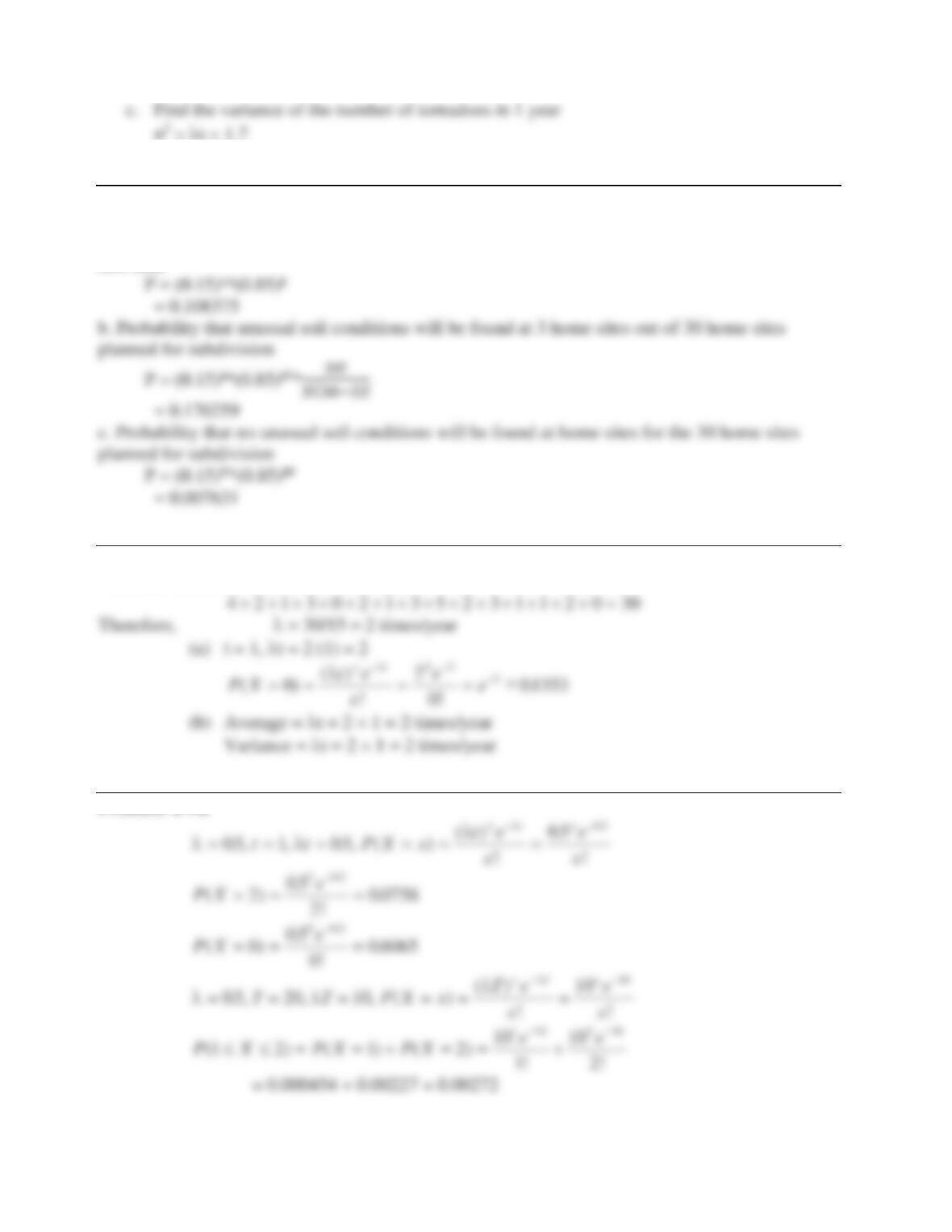
ProbabilityofFindingOil
4-6
Problem 4-12.
P(U)=0.15, P(S)=0.85
a. Probability that unusual soil conditions will be found at the third home site attempted for the
first time
Problem 4-13.
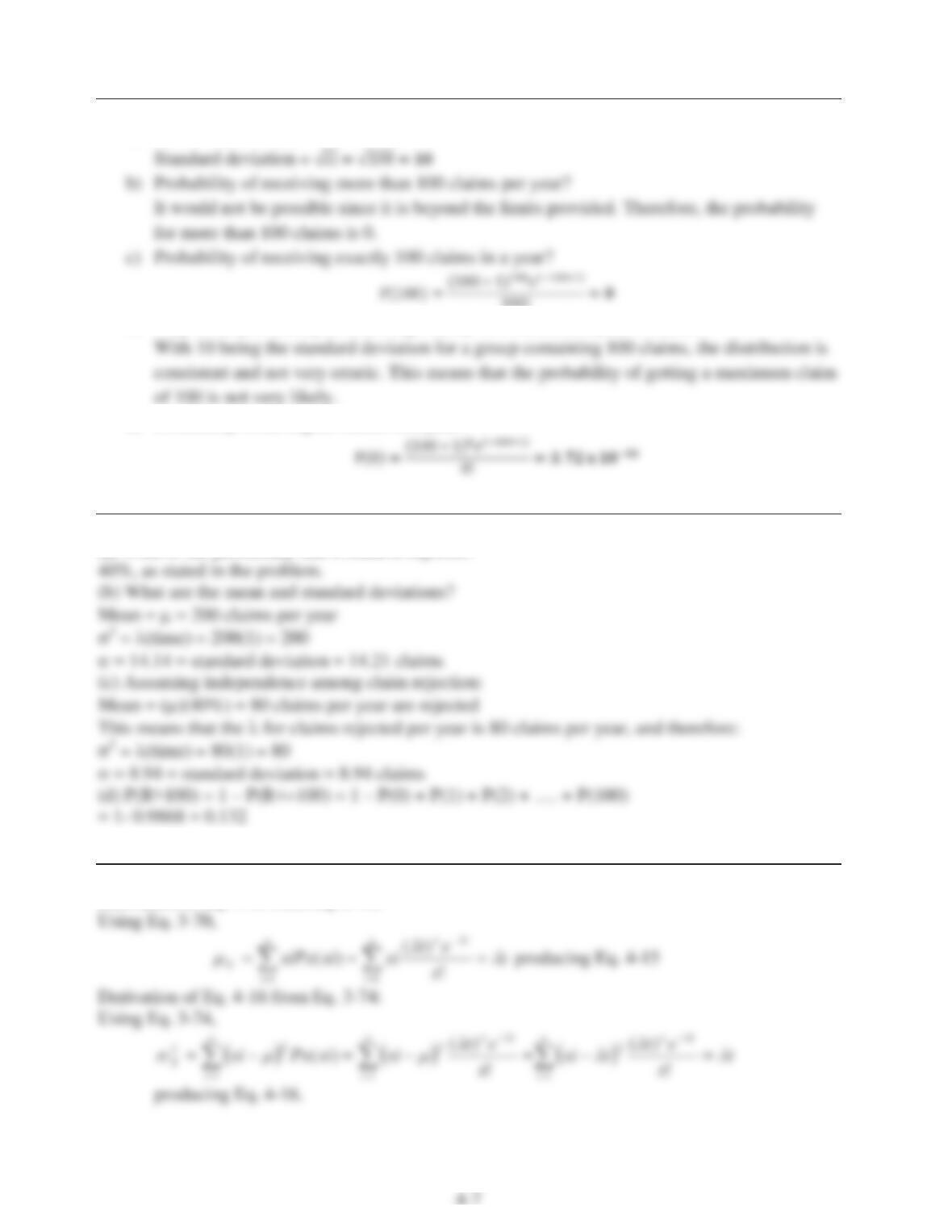
The total number of hurricanes for all years is
Problem 4-14.
Problem 4-15.
a) Mean = Ȝt = 100(1) = 100 claims
ͳͲͲǨ ൎ
d) Why is the probability of receiving exactly 100 claims in a year so small?
e) Probability of having no claims in a year?
Problem 4-16.
(a) What is the probability that a claim is rejected?
Problem 4-17.
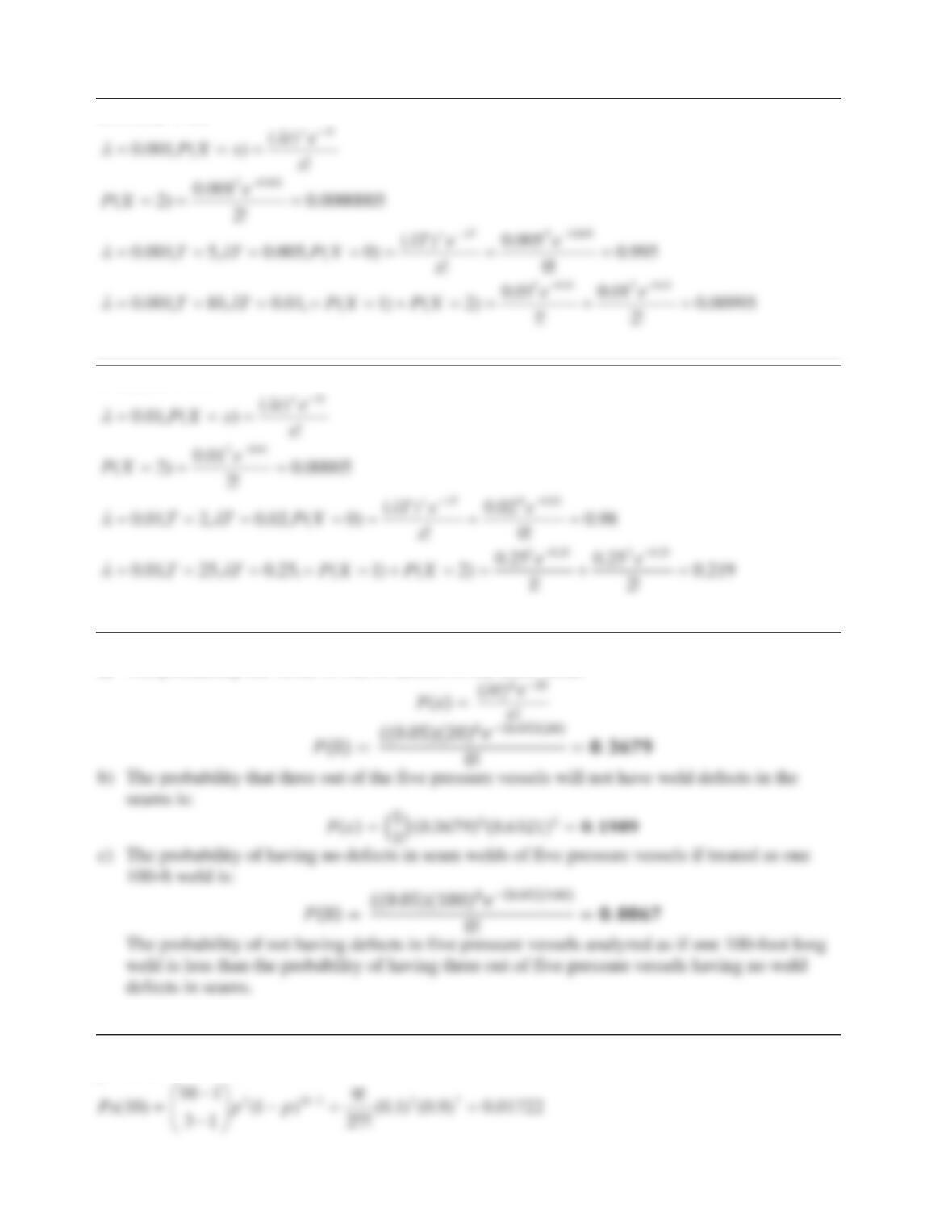
Derivation of Eq. 4-15 from Eq. 3-70:
4-8
Problem 4-18.
Problem 4-19.
Problem 4-20.
a) The probability the vessel is free of defects in the seam weld:
Problem 4-21.
p = 0.1, x=10, k = 3
Problem 4-22.
p = 0.1, x=10, k = 10
Problem 4-24.
N = 100, D = 10, n = 10, x = 0
)0(1)1( t xPxP
The probability of one fastener failing:
And, the probability of none of the fasteners failing:
4-10
Problem 4-26.
Problem 4-27.
N = 100,000, D = 10,000, n = 10
¹
©
Problem 4-28.
N = 10,000, D = (1-0.999)(10,000) = 10, n = 500
Expected length of defective welds = mean = (1-0.999)(10,000) = 10 ft.
Problem 4-29.
p = 0.95, N = 5, x = 3
Problem 4-30.
Individual components each have Probability = 0.9 independent of one another
Probability of 2 working
Problem 4-31.
p = 0.1, n = 3
4-11
Problem 4-32.
005.0
200
1 p, N = 1000
The distribution of the number of individuals who carry the gene is binomial, because the number
is a random variable.
2
2.5
3
3.5
4
Problem 4-33.
5 in 100 inflatable rafts are defective.
Using Binomial Distribution:
20 1 0.377354
a. For a vessel with 20 rafts onboard, what is the distribution of defected rafts?
0.3
0.4
ProbabilityDistribution
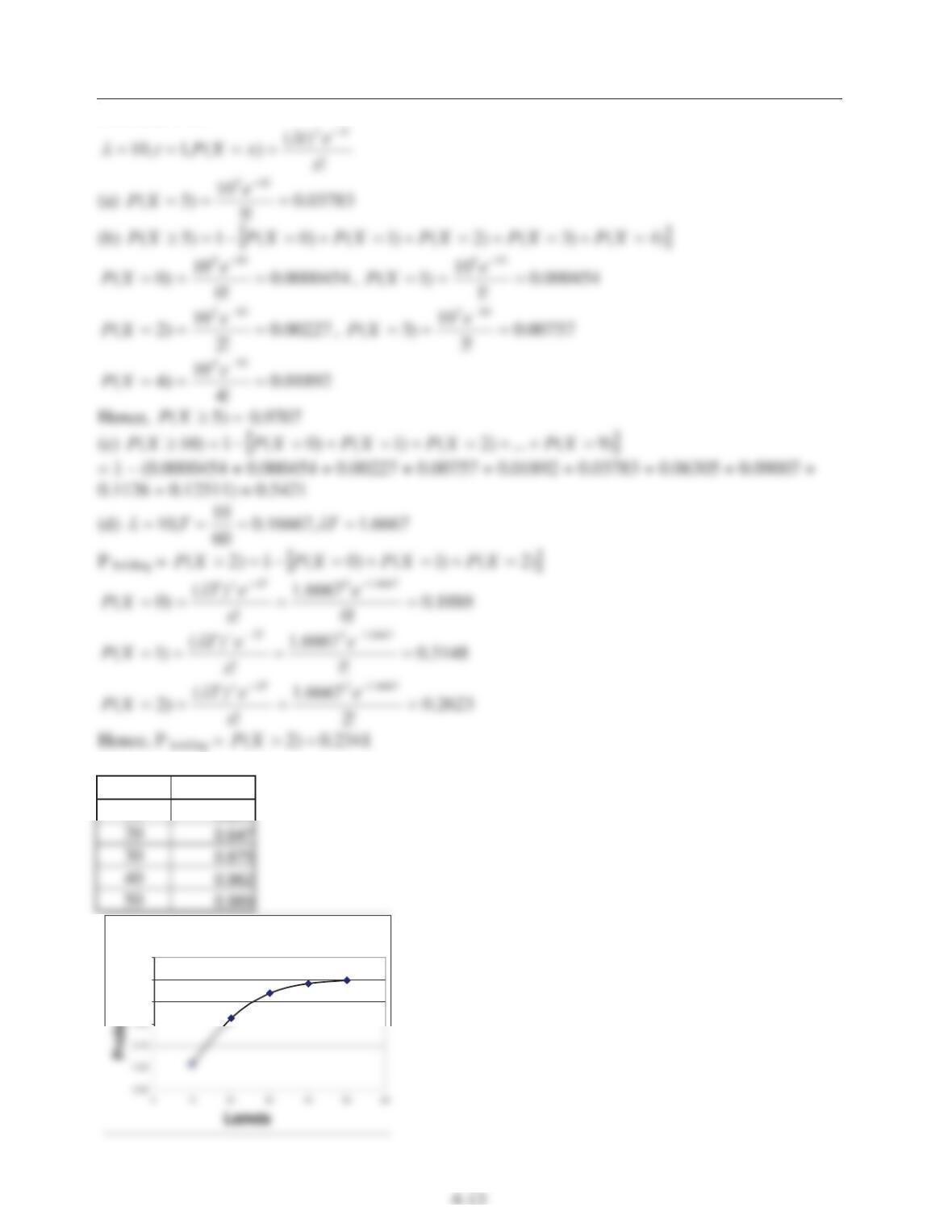
Problem 4-34.
(e)
lambda Probability
10 0.234
Probability of a holding event
0.80
1.00
1.20
y
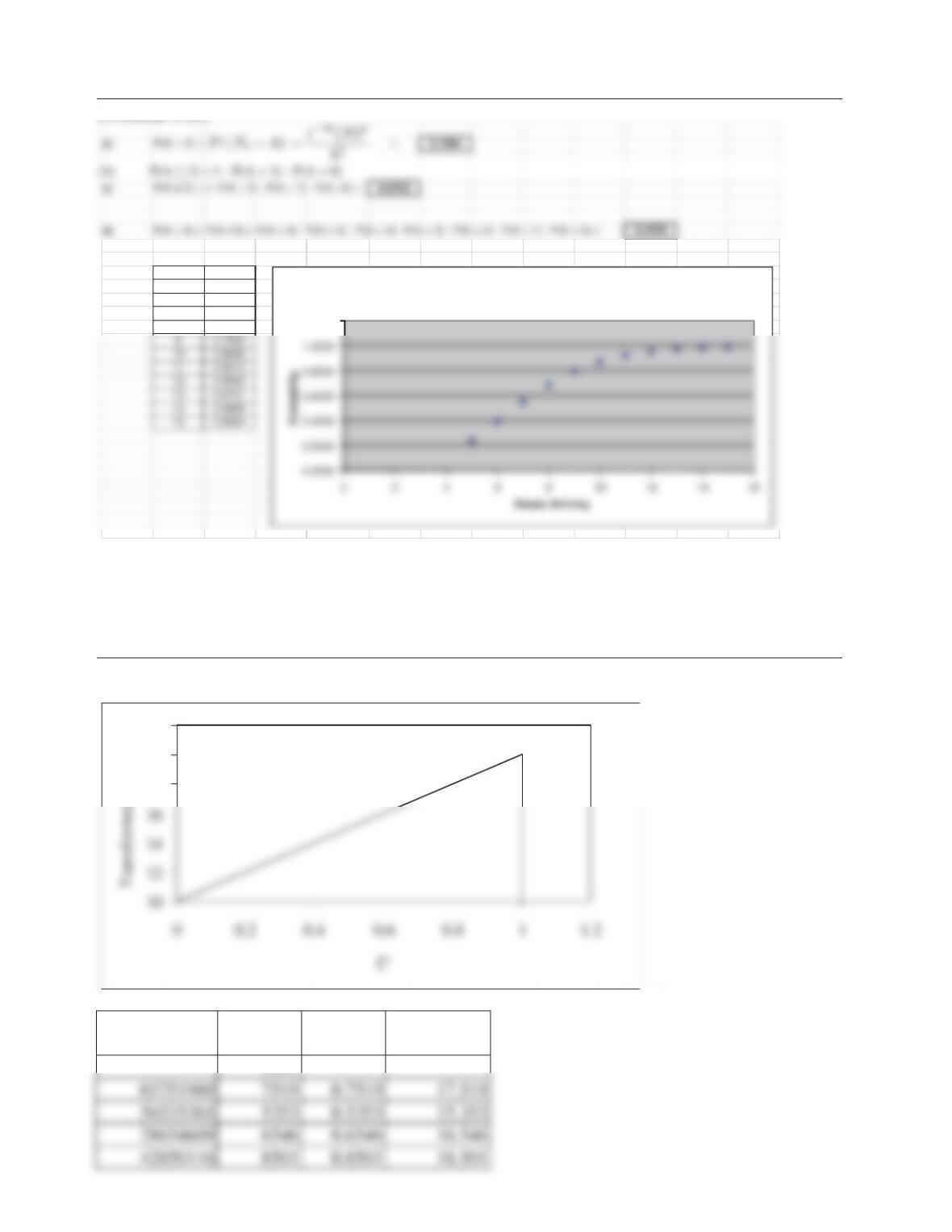
4-14
Problem 4-35.
4.9. Simulation and Probability Distributions
Problem 4-36.
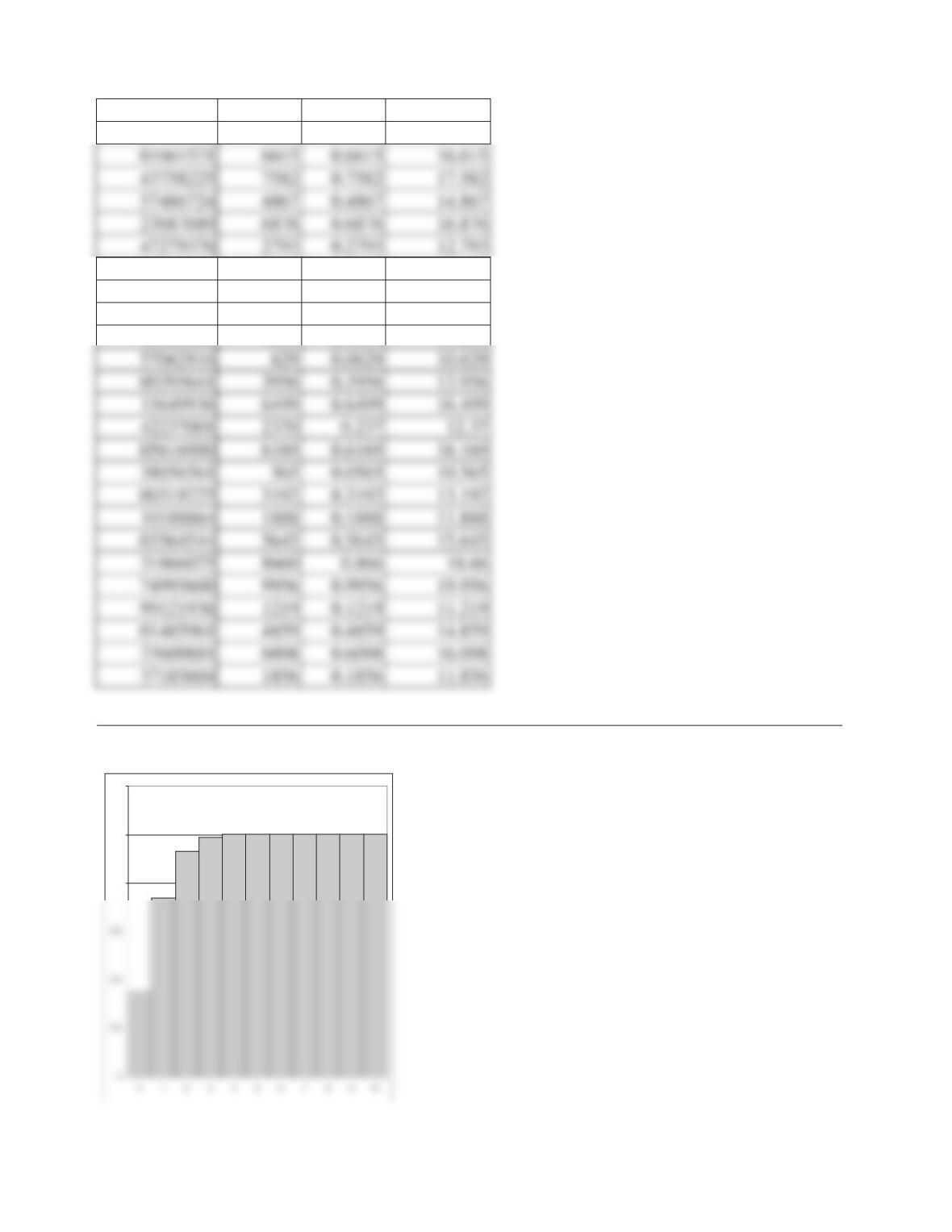
The transformation chart is given by
The random number generation and transformation are performed in the following table:
X2 X U 10 to 20
scale
e) ȜP
50.2378
60.3937
70.5503
80.6866
1.2000
Probability of Wait Time for Maintainance
18
20
22
e
4-15
72267001 2670 0.267 12.67
07128900 1289 0.1289 11.289
07800849 8008 0.8008 18.008
64128064 1280 0.128 11.28
01638400 6384 0.6384 16.384
40755456 7554 0.7554 17.554
Problem 4-37.
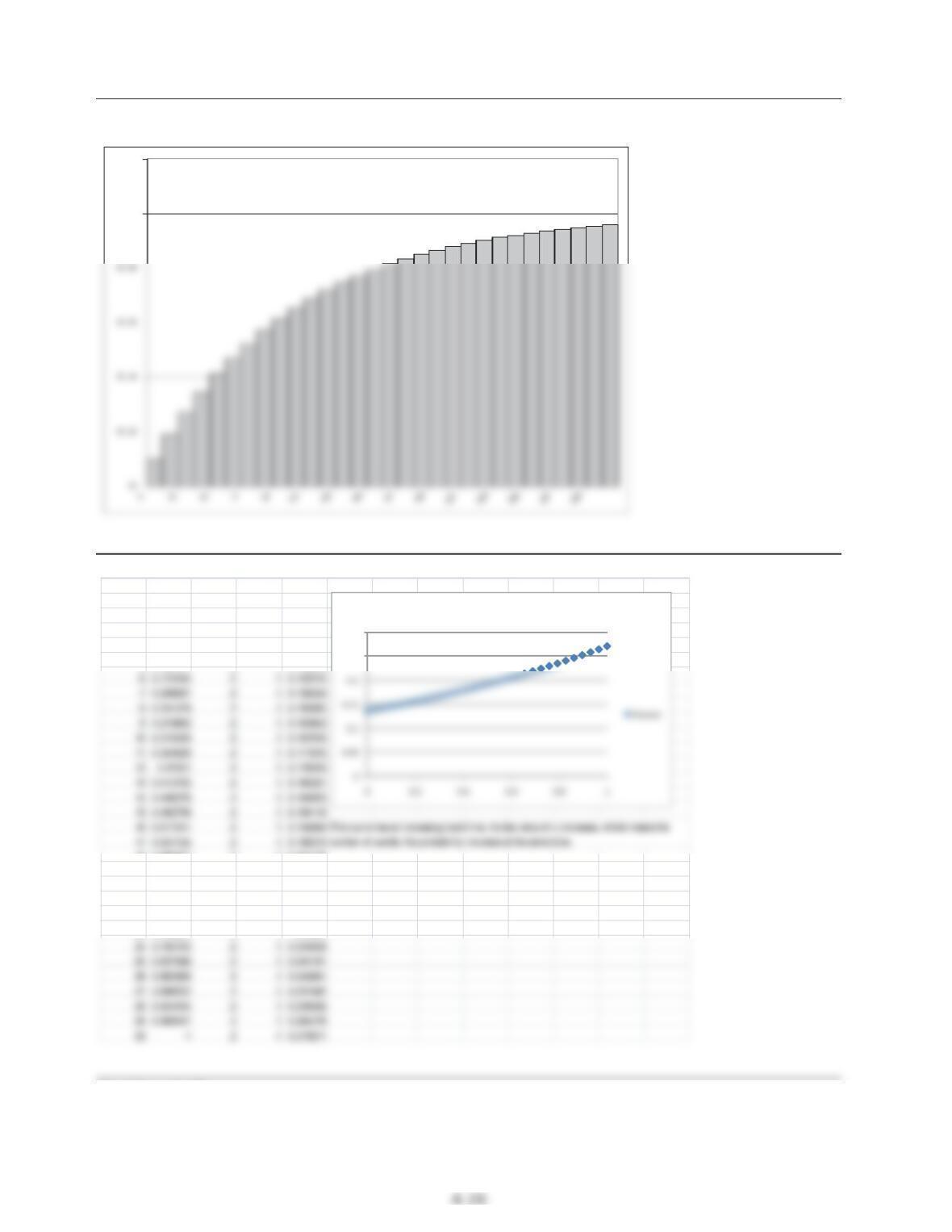
The transformation chart is given by
0.8
1
1.2
Problem 4-38.
The transformation chart is given by
Problem 4-39.
Problem 4-40.
A solution is not provided.
1
1.2
[OW3[
0.25
0.3
Poisson