322
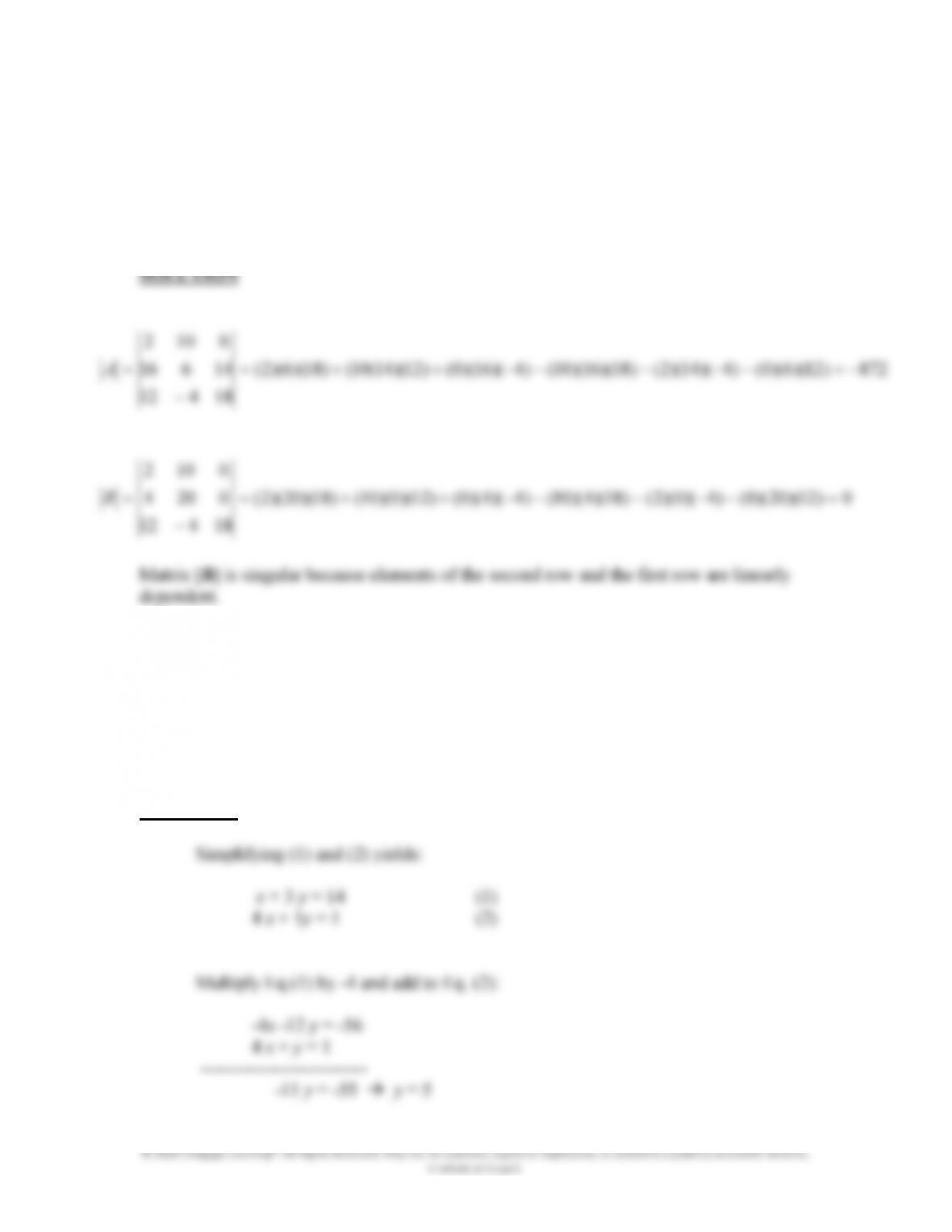
18.18 Given the following matrices:
18412
14616
0102
Aand
18412
0204
0102
B ,
calculate the determinant of [A] and [B] by direct expansion. Which matrix is singular?
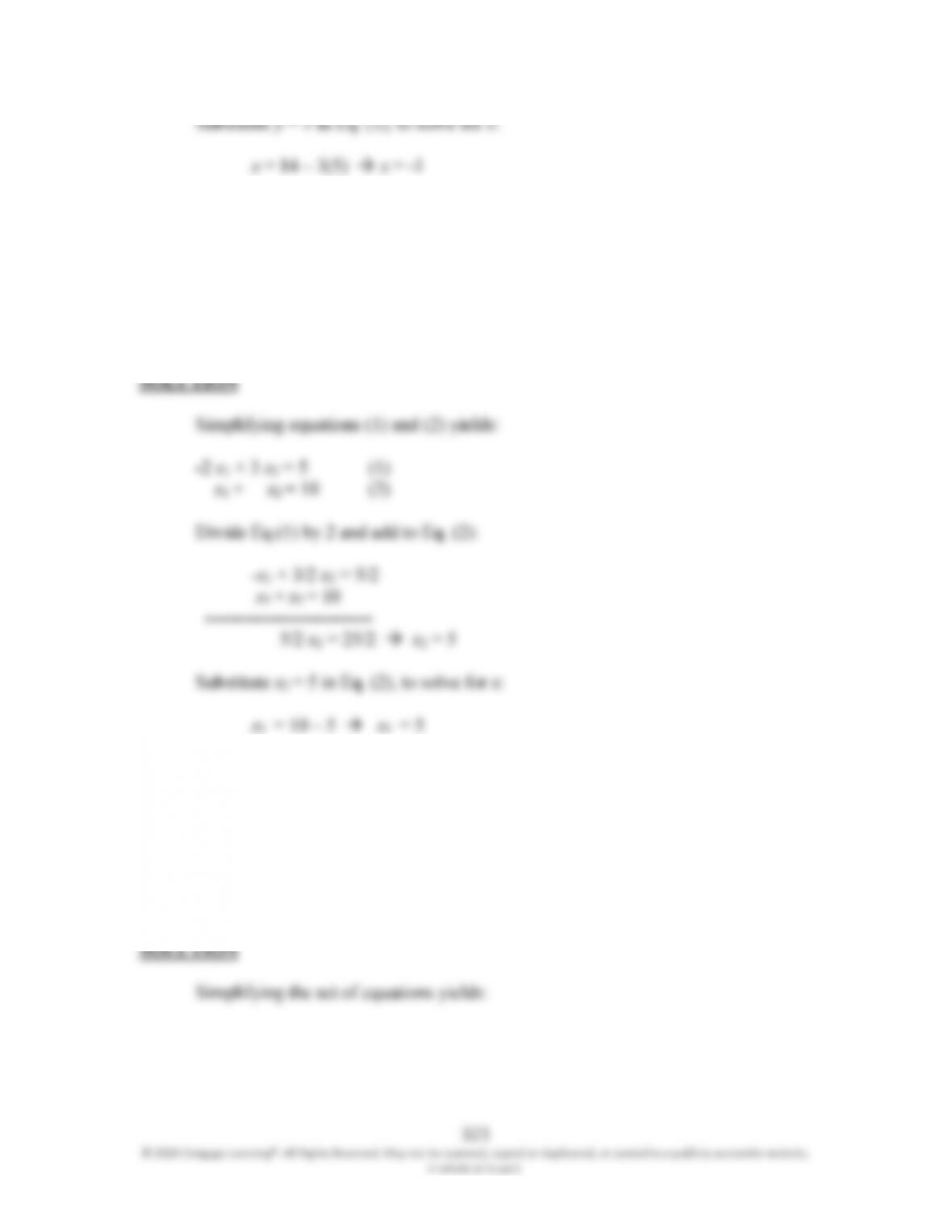
18.19 Solve the following set of equations using the Gaussian method.
2x + 6 y = 28 (1)
8 x + 2y = 2 (2)
SOLUTION
323
© 2020 Cengage Learning®. All Rights Reserved. May not be scanned, copied or duplicated, or posted to a publicly accessible website,
in whole or in part.
Substitute y = 5 in Eq. (1), to solve for x:
x = 14 – 3(5) x = -1
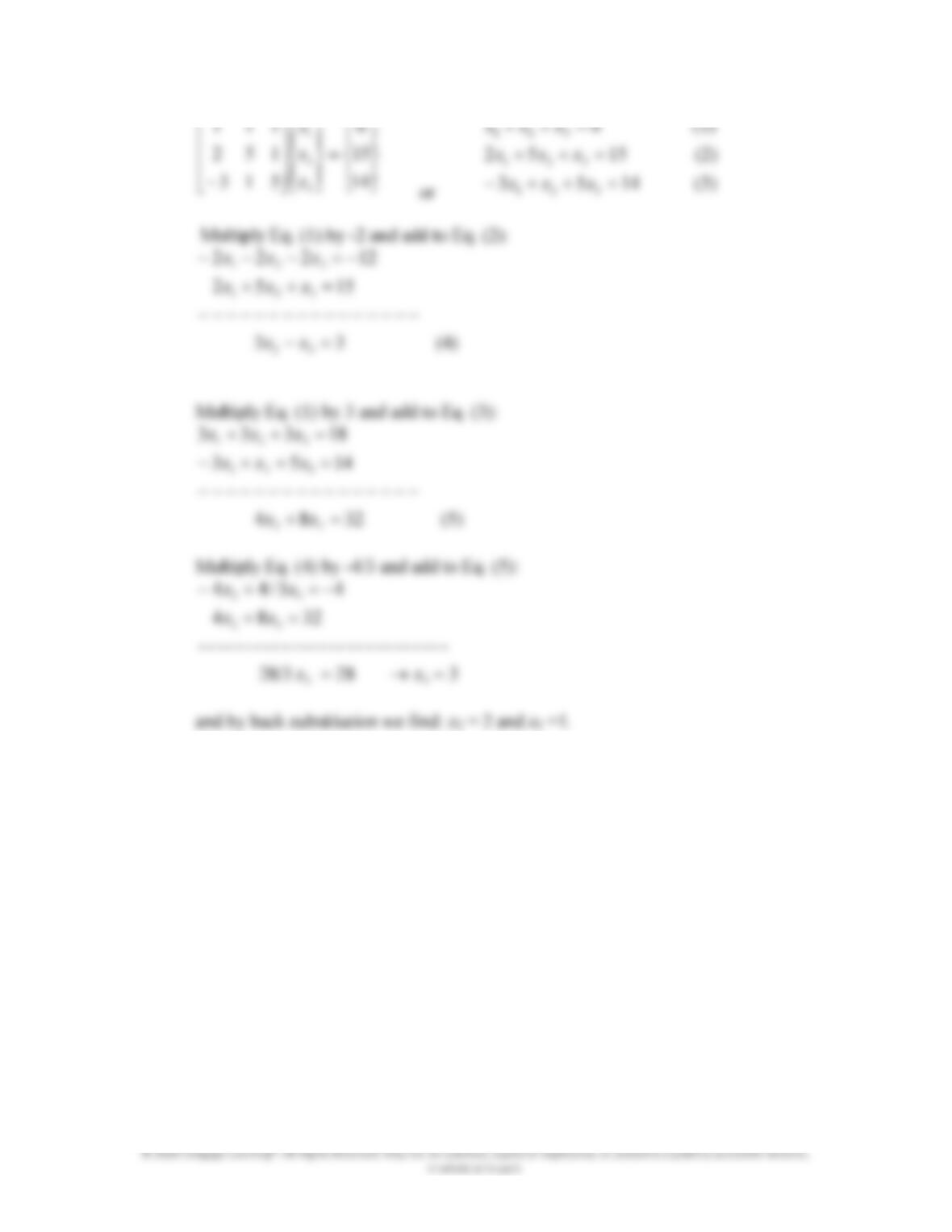
18.20 Solve the following set of equations using the Gaussian method.
-6 x1 + 9 x2 = 15 (1)
x1 + x2 = 10 (2)
18.21 Solve the following set of equations using the Gaussian method.
2 2 2
2 5 1
-9 3 15x1
x2
x3=12
15
42
324
© 2020 Cengage Learning®. All Rights Reserved. May not be scanned, copied or duplicated, or posted to a publicly accessible website,
in whole or in part.
14
15
6
513
152
111
3
2
1
x
x
x
or (3) 1453
(2) 1552
(1) 6
321
321
321
xxx
xxx
xxx
Multiply Eq. (1) by -2 and add to Eq. (2):
(4) 33
1552
12222
32
321
321
xx
xxx
xxx
Multiply Eq. (1) by 3 and add to Eq. (3):
(5) 3284
1453
18333
32
321
321
xx
xxx
xxx
Multiply Eq. (4) by -4/3 and add to Eq. (5):
3 28 28/3
–––––––––––––––––––––––––––
3284
43/44
33
32
32
xx
xx
xx
and by back substitution we find: x2 = 2 and x1 =1.
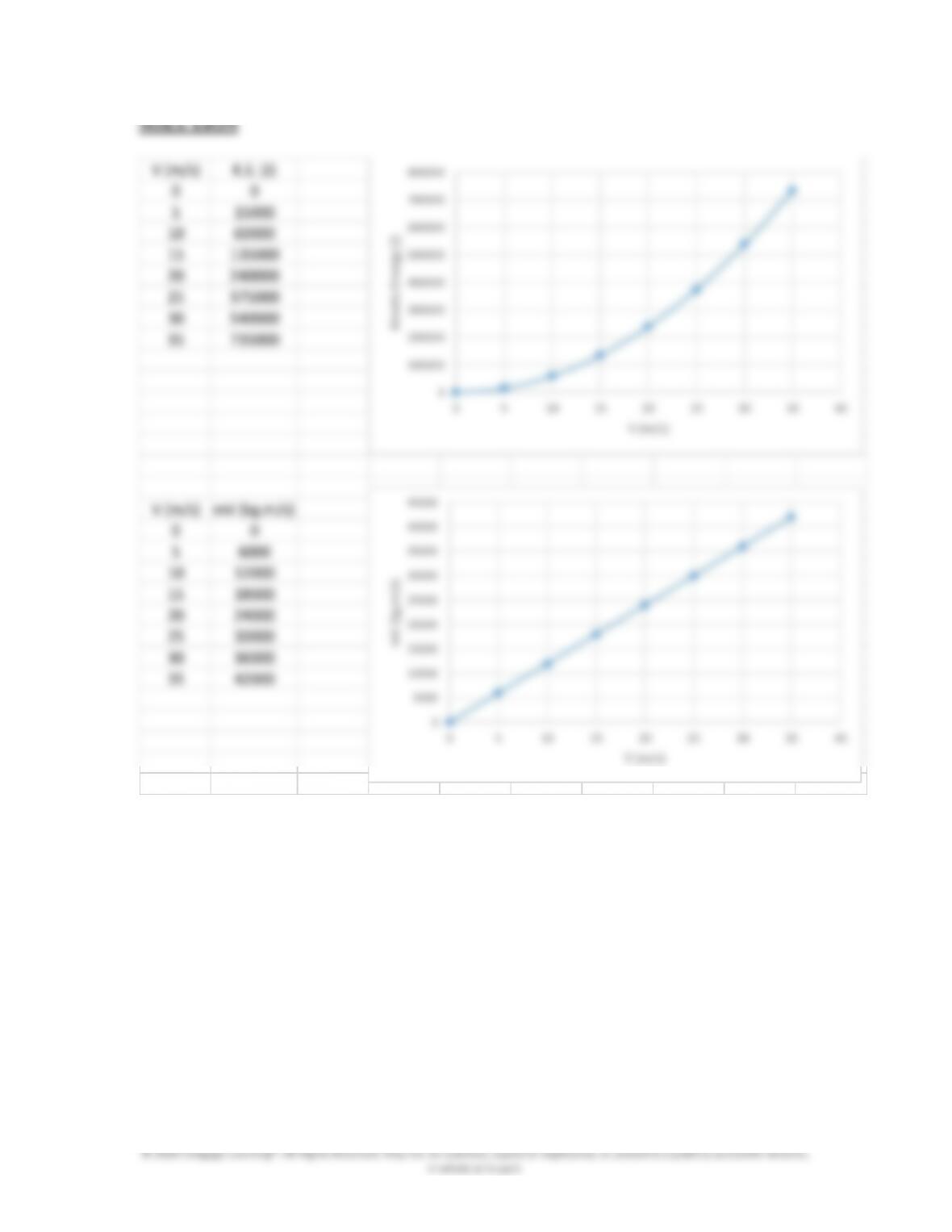
18.22 As we explained in Chapter 13, an object having a mass m and moving with a
speed V has a kinetic energy, which is equal to
kinetic energy = 1
2 𝑚𝑉
Plot the kinetic energy of a car with a mass of 1200 kg as the function of its
speed. Vary
the speed from zero to 35 m/s (126 km/h). Determine the rate of change of kinetic
energy of the car as a function of speed and plot it. What does this rate of change
represent?
325
© 2020 Cengage Learning®. All Rights Reserved. May not be scanned, copied or duplicated, or posted to a publicly accessible website,
in whole or in part.
SOLUTION
18.23 In Chapter 13, we explained that when a spring is stretched or compressed from its
stretched position, elastic energy is stored in the spring, and that energy will be
released when the spring is allowed to return to its unstretched position. The elastic
energy stored in a spring when stretched or compressed is determined from:
x
FdxEnergyElastic
0
Obtain expressions for the elastic energy of a linear spring described by
F = k x and a hard spring whose behavior is described by F = k x2.
326
© 2020 Cengage Learning®. All Rights Reserved. May not be scanned, copied or duplicated, or posted to a publicly accessible website,
in whole or in part.
SOLUTION
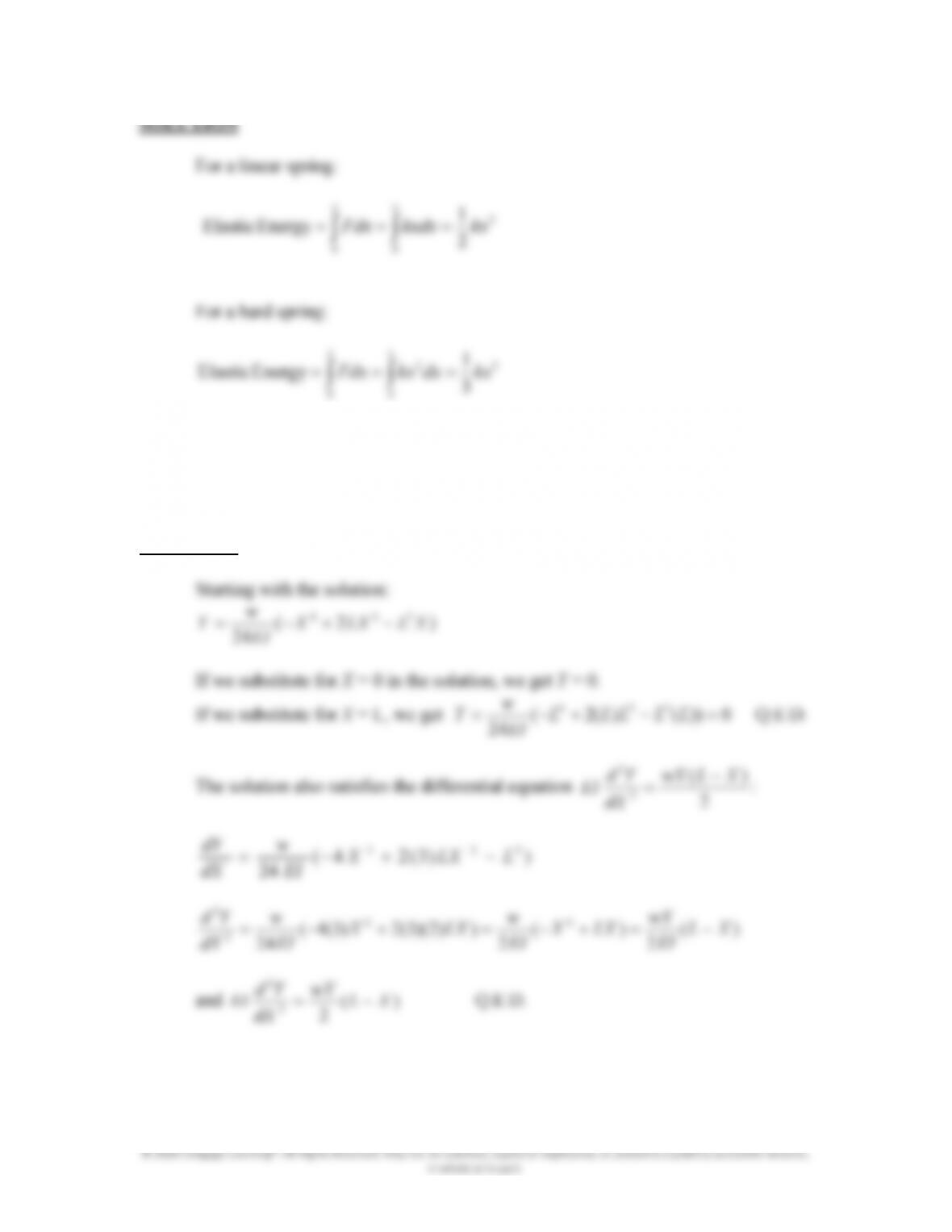
For a linear spring:
2
00 2
1
Energy Elastic kxkxdxFdx
xx
For a hard spring:
3
0
2
03
1
Energy Elastic kxdxkxFdx
xx
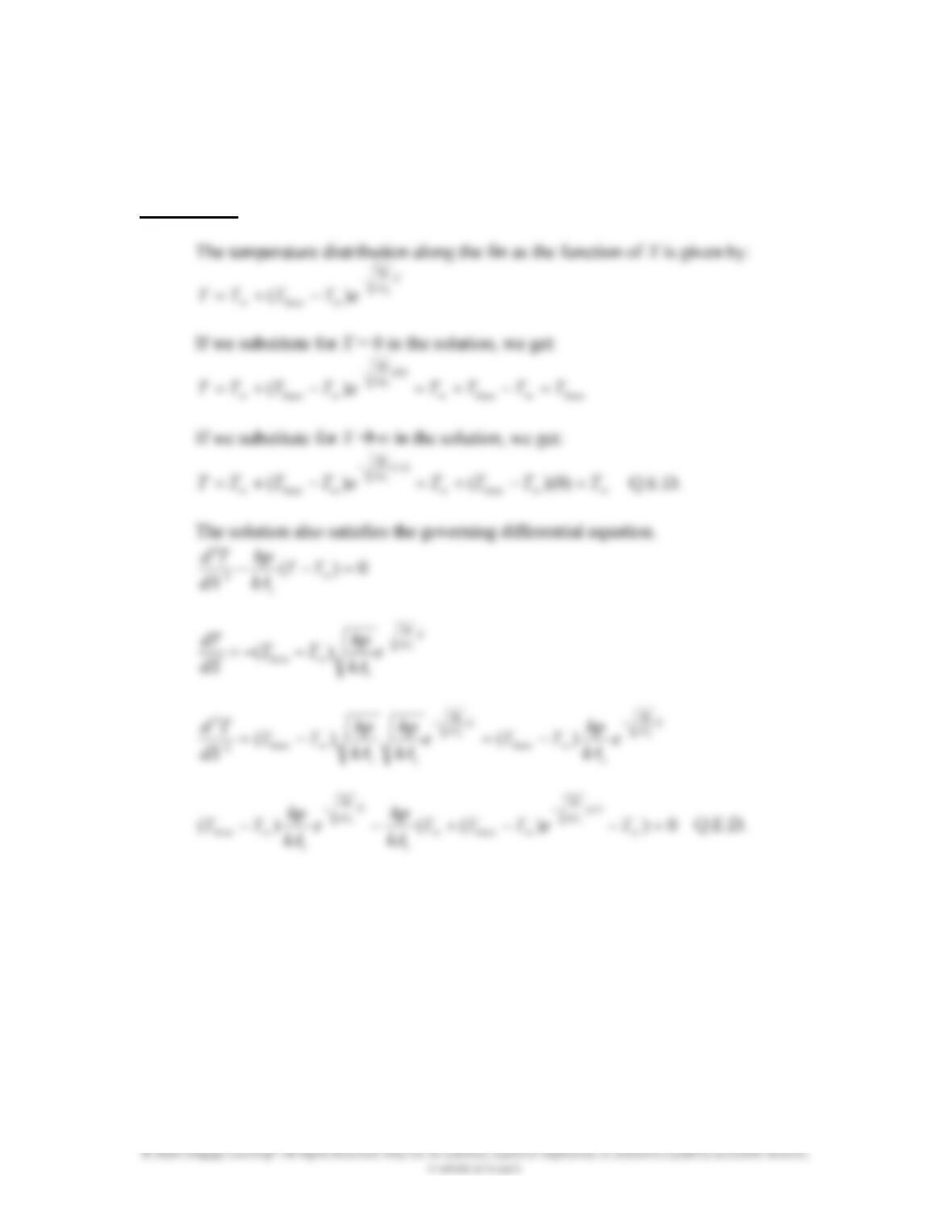
18.24 For Example 1 in Table 18.8, verify that the given solution satisfies the governing
differential equation and the boundary conditions.
SOLUTION
327
18.25 For Example 3 in Table 18.8, verify that the given solution satisfies the governing
differential equation and the initial conditions.
SOLUTION
kA
kA
c
c
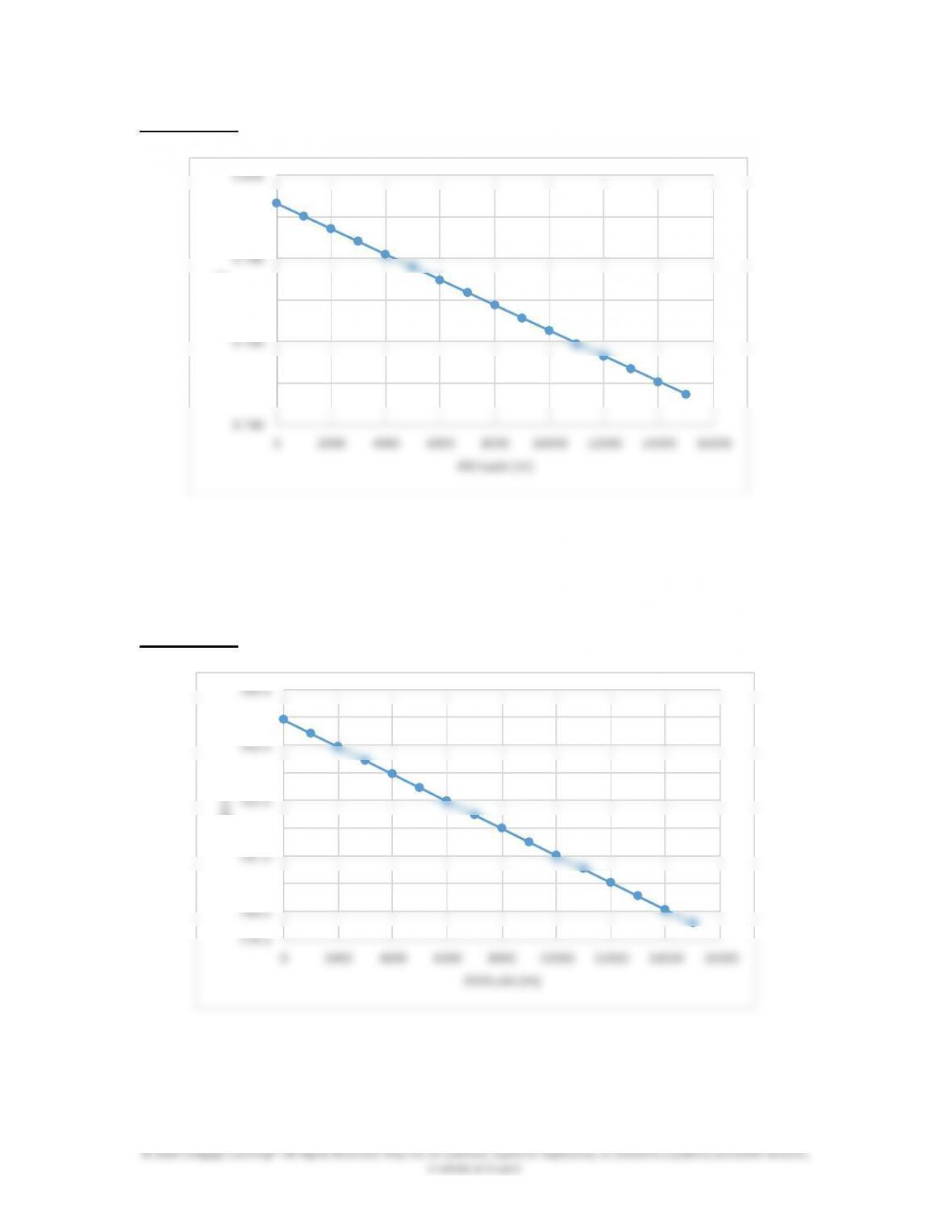
18.26 We presented Newton’s Law of Gravitation in Chapter 10. We also explained the
acceleration due to gravity. Create a graph that shows the acceleration due to
gravity as a function of distance from the earth’s surface. Change the distance
from sea level to an altitude of 15,000 m.
328
SOLUTION
329
18.28 An engineer is considering storing some radioactive material in a container she is
creating. As a part of her design, she needs to evaluate the ratio of volume to
surface area of two storage containers. Create curves that show the ratio of
volume to surface area of a sphere and a square container. Create another graph
that shows the difference in the ratios. Vary the radius or the side dimension of a
square container from 50 cm to 4 m.
SOLUTION
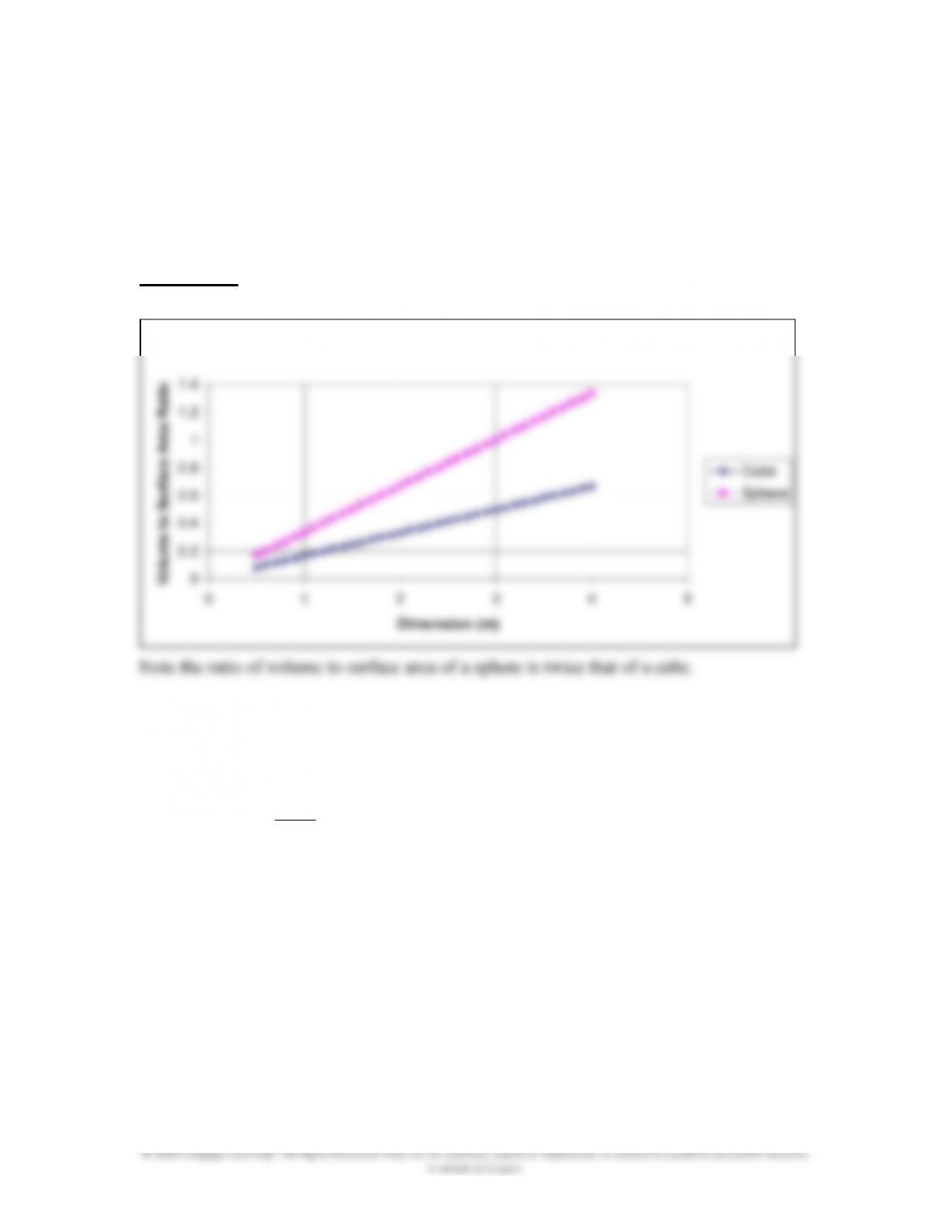
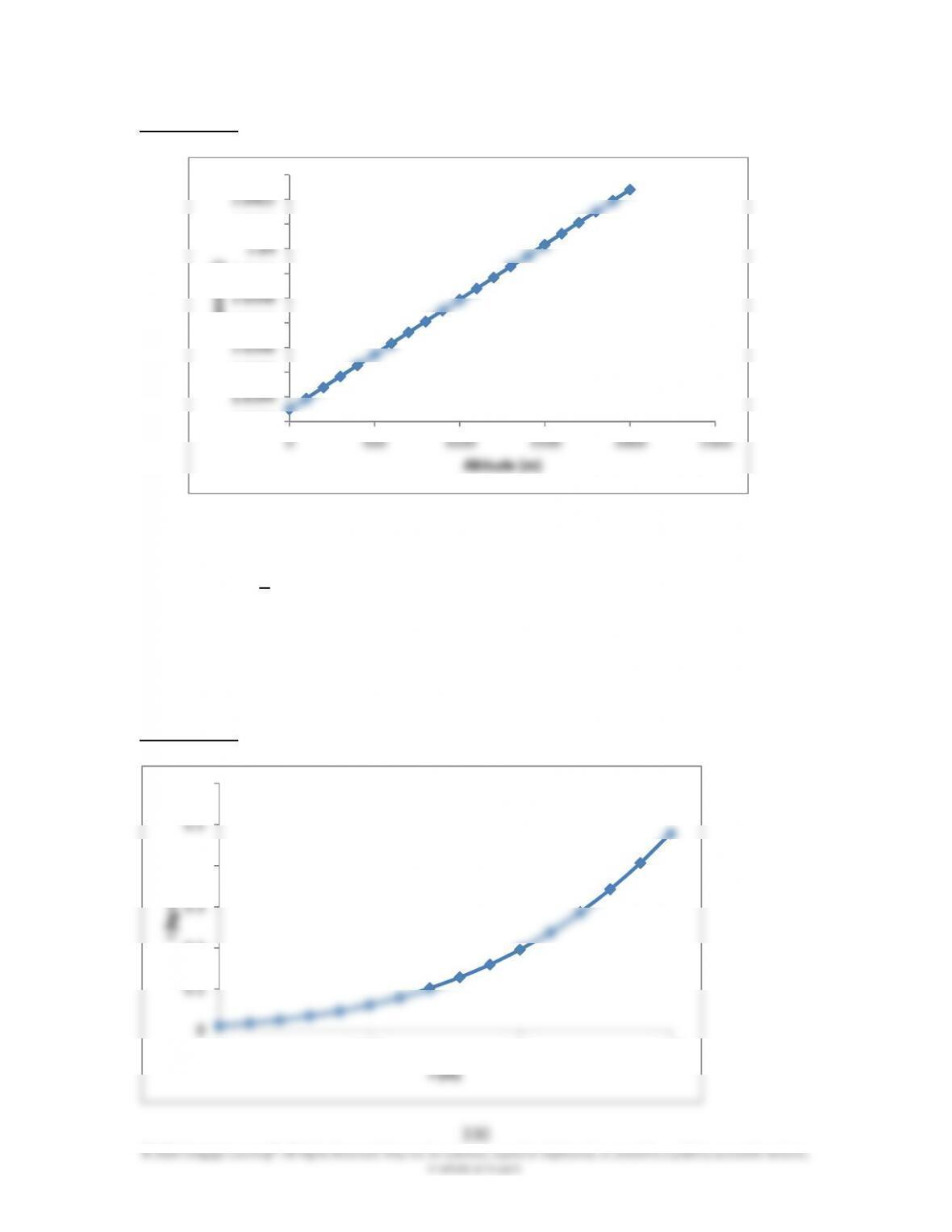
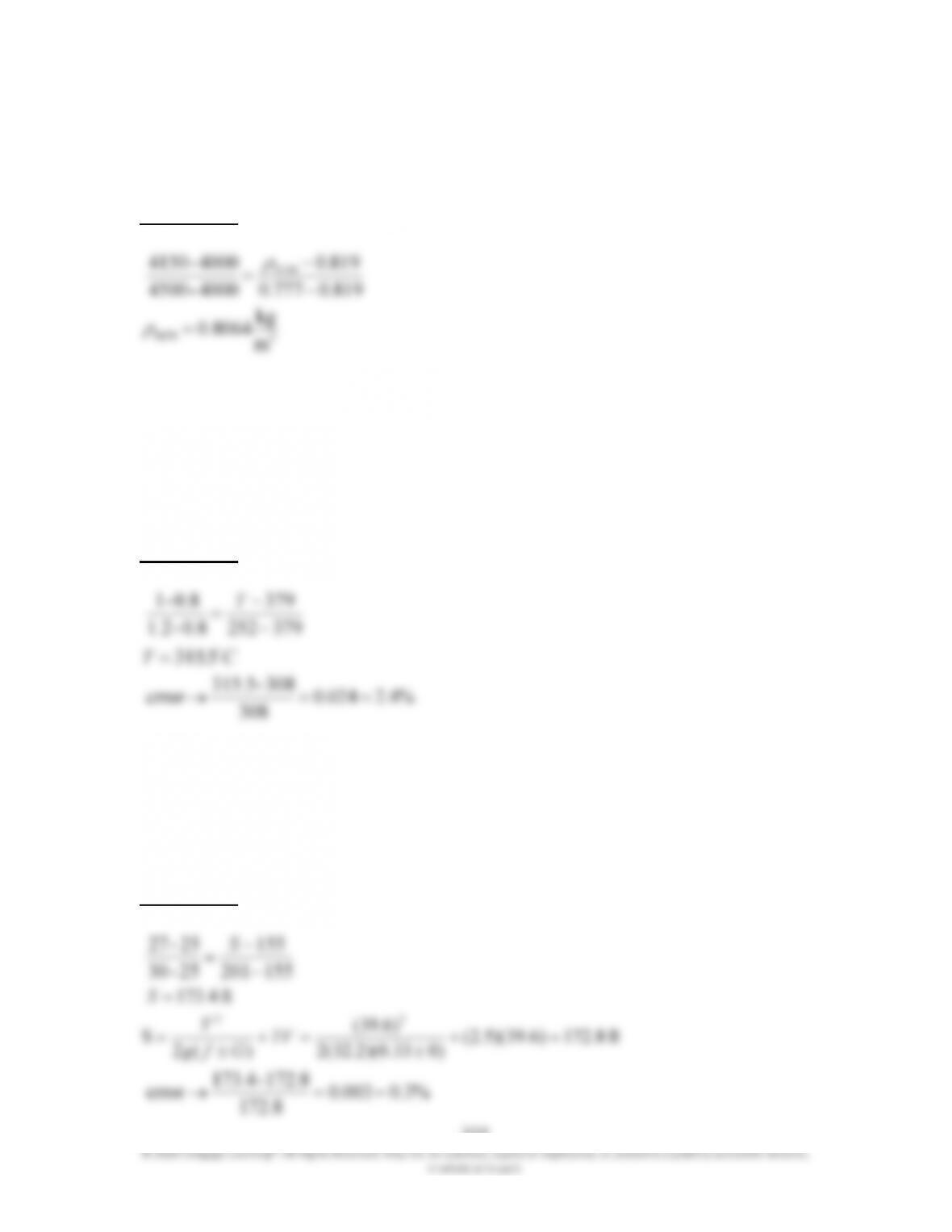
18.29 As we mentioned in Chapter 10, engineers used to use pendulums to measure the
value of g at a location. The formula to use the measure the acceleration due to
gravity is
𝑔=4𝜋𝐿
𝑇
where g is acceleration due to gravity (m/s2), L is the length of pendulum, and T is
the period of oscillation of the pendulum (the time that it takes the pendulum to
complete one cycle). For a pendulum of 2 m long, create a graph that could be
used for locations between an altitude of 0 and 2000 m, and shows g as a function
of T.
Volume to Surface Area Ratios vs Side/Radius Dimension
0
0.2
0.4
0.6
0.8
1
1.2
1.4
0 1 2 3 4 5
Dimension (m)
Volume to Surface Area Ratio
Cube
Sphere
SOLUTION
2.8393
2.8395
2.8397
2.8399
2.8401
2.8403
T (seconds)
331
18.31 Use the linear interpolation method discussed in Section 18.2 to estimate the
density of air at an altitude 4150 m.
SOLUTION
819
.
0
777
.
0
4000
–
4500
3
4150
m
18.32 For the cooling of steel plates discussed in Section 18.4 (Figure 18.17) using
linear interpolation, estimate the temperature of the plate at time equal to 1 hr,
from the temperature data at 0.8 hr and 1.2 hour. Compare the estimated
temperature value to the actual value of 308°C. What is the percentage of error?
SOLUTION
379
252
0.8
–
1.2
308
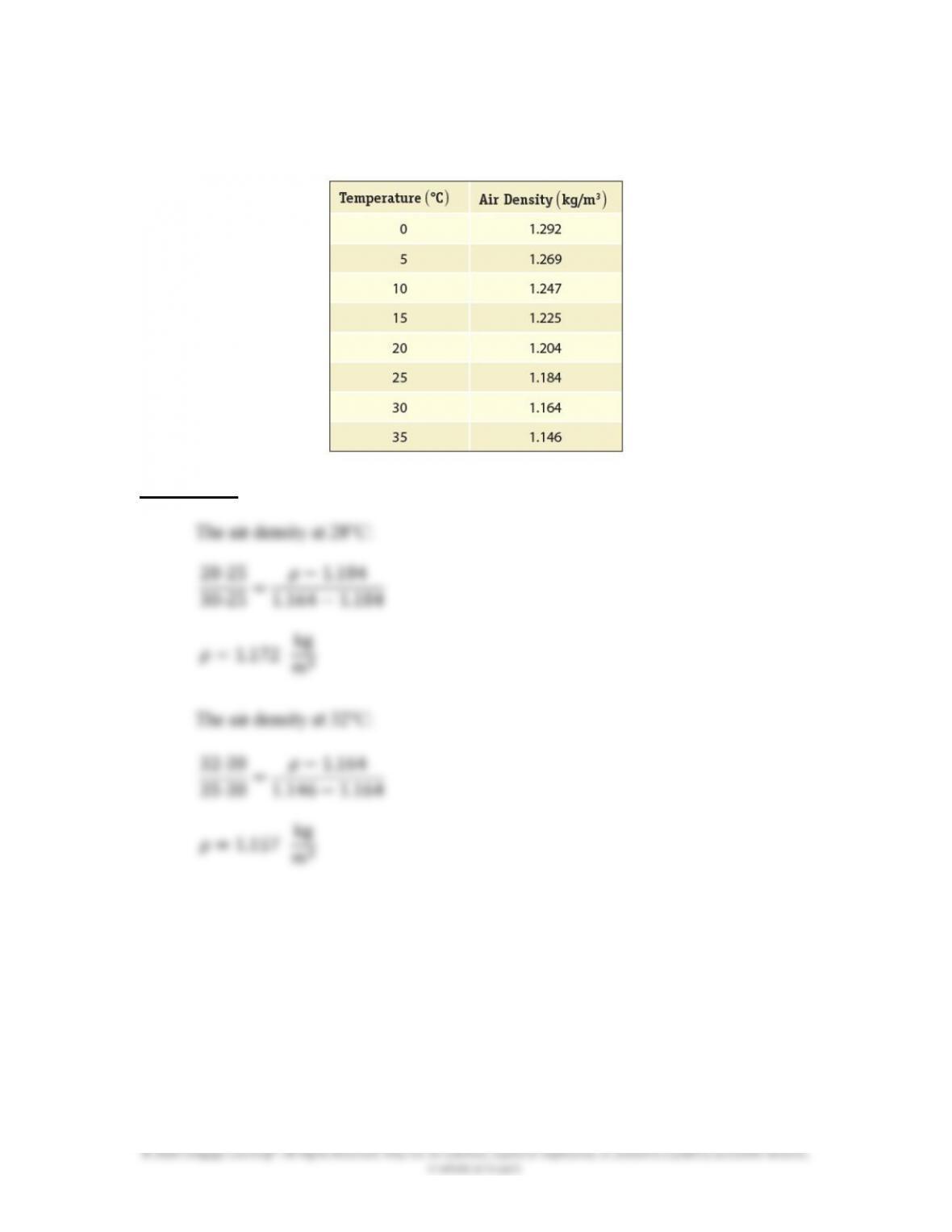
18.33 For the stopping sight distance problem of Figure 18.12, estimate the stopping
distance for speed of 27 mph, using the 25 mph and 30 mph data. Compare the
estimated stopping distance value to the actual value from Equation (18.7). What
is the percentage of error?
SOLUTION
155
201
155
25
–
30
25–27
S
ft 173.4
S
ft 172.8)6.39)(5.2(
)033.0)(2.32(2
)6.39(
)(2
S
22
TV
Gfg
V
%3.0003.0
172.8
172.8–173.4
error
332
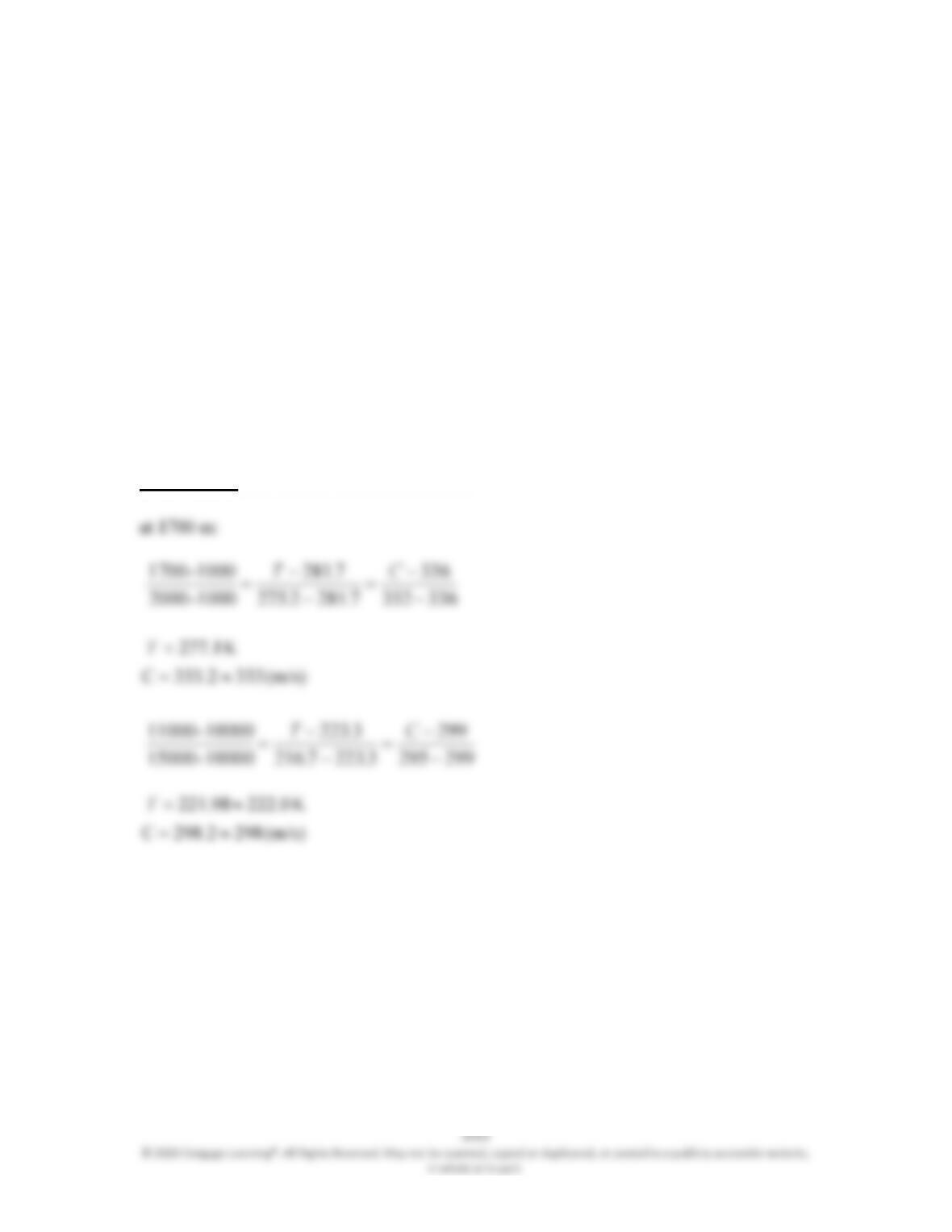
18.34 The variation of air density at the standard pressure as a function of temperature is
given in the accompanying table. Use linear interpolation to estimate the air
density at 28℃ and 32℃.
SOLUTION
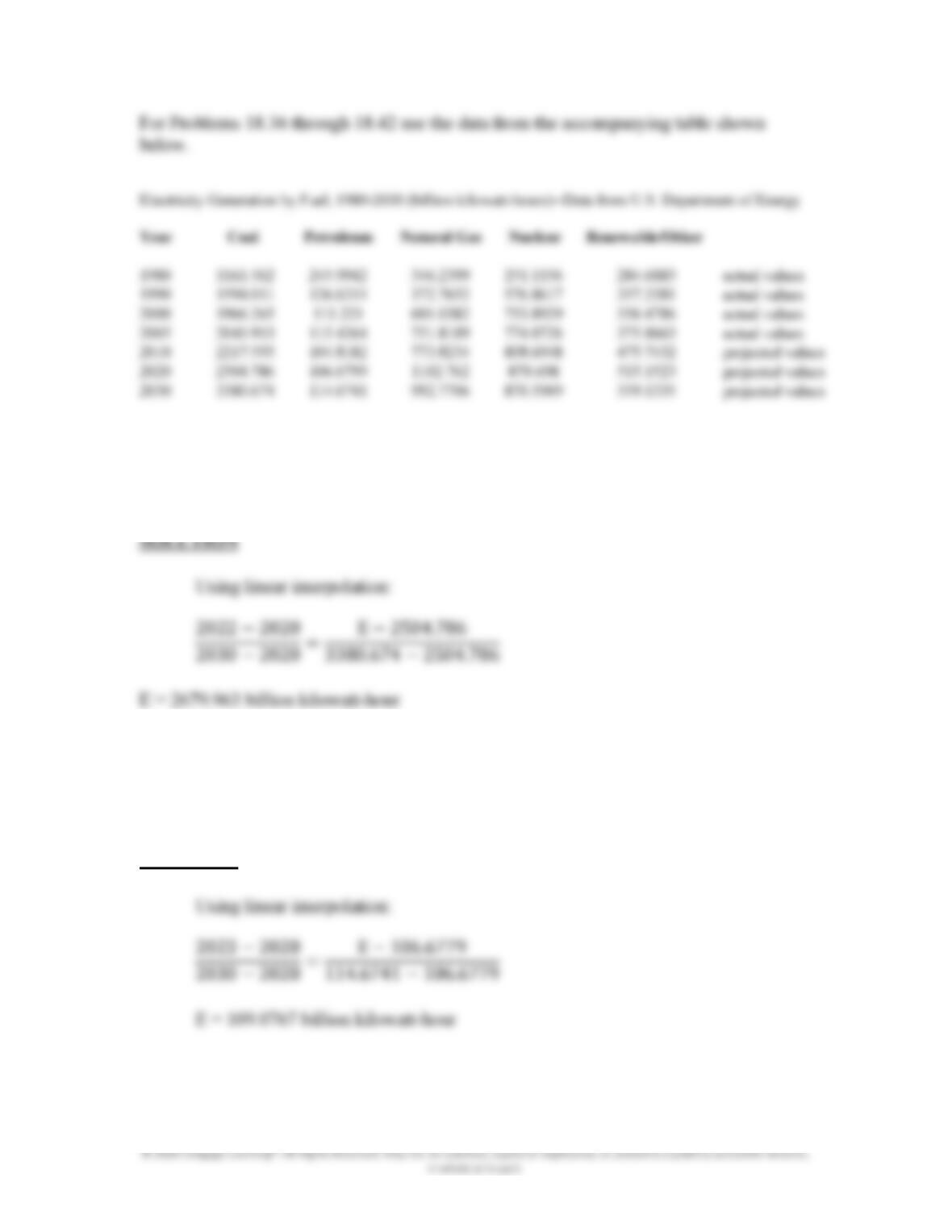
18.35 The air temperature and speed of sound for the U.S. standard atmosphere is given
in the accompanying table. Using linear interpolation, estimate the air
temperatures and the corresponding speeds of sound at altitudes of 1700 m and
11,000 m.
Altitude (m)
Air Temperature (K) Speed of Sound (m/s)
500 284.9 338
1,000 281.7 336
2,000 275.2 332
5,000 255.7 320
10,000 223.3 299
15,000 216.7 295
20,000 216.7 295
SOLUTION
(m/s) 298298.2C
334
© 2020 Cengage Learning®. All Rights Reserved. May not be scanned, copied or duplicated, or posted to a publicly accessible website,
in whole or in part.
For Problems 18.36 through 18.42 use the data from the accompanying table shown
below.
Electricity Generation by Fuel, 1980
–
2030 (billion kilowatt
–
hours)
—
Data from U.S. Department of Energy
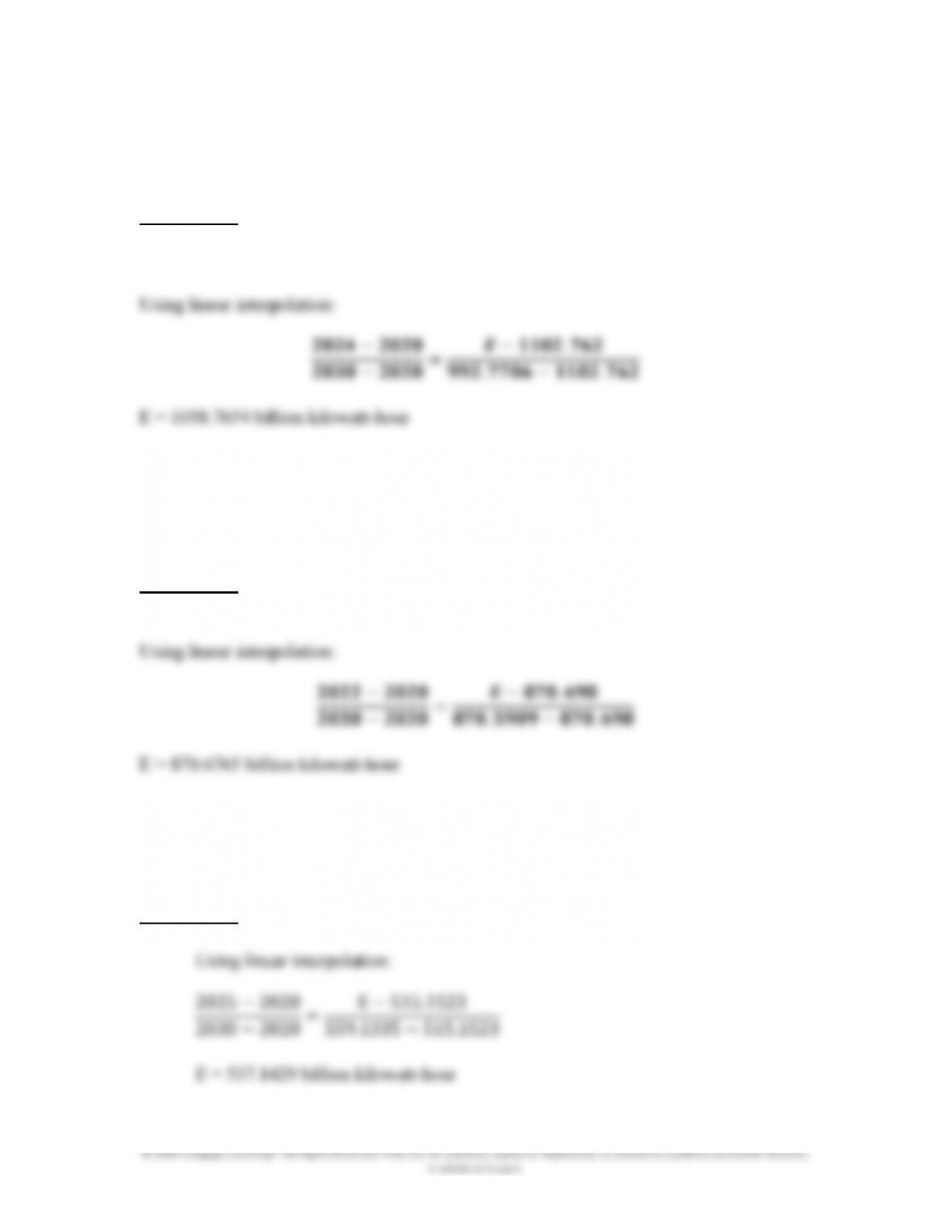
Year Coal Petroleum Natural Gas Nuclear Renewable/Other
1980 1161.562 245.9942 346.2399 251.1156 284.6883 actual values
1990 1594.011 126.6211 372.7652 576.8617 357.2381 actual values
2000 1966.265 111.221 601.0382 753.8929 356.4786 actual values
2005 2040.913 115.4264 751.8189 774.0726 375.8663 actual values
2010 2217.555 104.8182 773.8234 808.6948 475.7432 projected values
2020 2504.786 106.6799 1102.762 870.698 515.1523 projected values
2030 3380.674 114.6741 992.7706 870.5909 559.1335 projected values
18.36 Estimate the amount of electricity that is projected to be generated from coal in
2022.
18.37 Estimate the amount of electricity that is projected to be generated from
petroleum in 2023.
SOLUTION
335
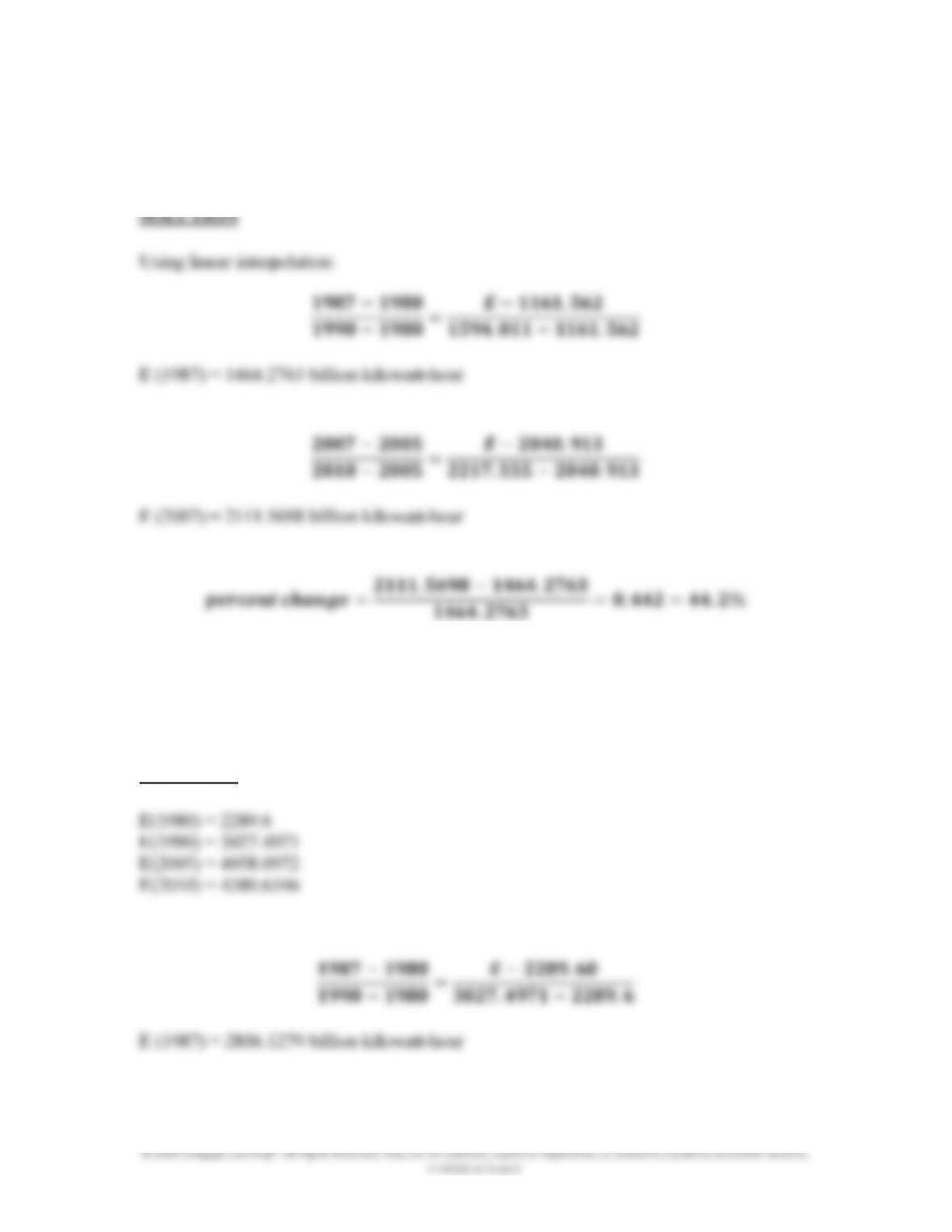
18.38 Estimate the amount of electricity that is projected to be generated from natural
gas in 2024.
SOLUTION
18.39 Estimate the amount of electricity that is projected to be generated from nuclear
fuel in 2022.
SOLUTION
18.40 Estimate the amount of electricity that is projected to be generated from
renewable and other sources in 2025.
SOLUTION
336
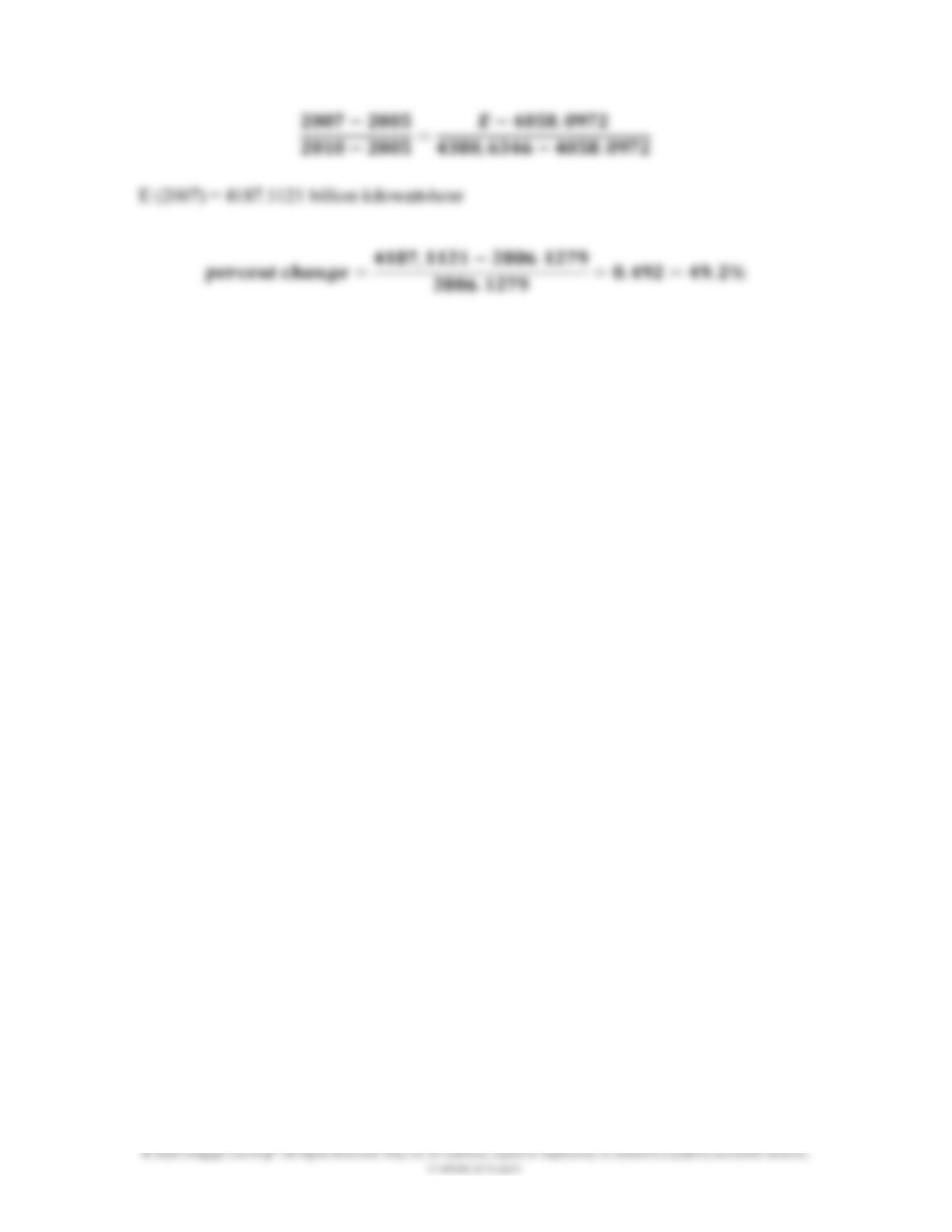
18.41 Using linear interpolation, estimate the percentage change in the amount of
electricity that was generated using coal in 2007 compared to 1987.
18.42 Using linear interpolation, estimate the percentage change in the total amount of
electricity that was generated in 2007 compared to 1987.
SOLUTION
337
© 2020 Cengage Learning®. All Rights Reserved. May not be scanned, copied or duplicated, or posted to a publicly accessible website,
in whole or in part.
𝟐𝟎𝟎𝟕−𝟐𝟎𝟎𝟓
𝟐𝟎𝟏𝟎−𝟐𝟎𝟎𝟓=𝑬−𝟒𝟎𝟓𝟖.𝟎𝟗𝟕𝟐
𝟒𝟑𝟖𝟎,𝟔𝟑𝟒𝟔−𝟒𝟎𝟓𝟖.𝟎𝟗𝟕𝟐
E (2007) = 4187.1121 billion kilowatt-hour
𝒑𝒆𝒓𝒄𝒆𝒏𝒕 𝒄𝒉𝒂𝒏𝒈𝒆=𝟒𝟏𝟖𝟕,𝟏𝟏𝟐𝟏−𝟐𝟖𝟎𝟔.𝟏𝟐𝟕𝟗
𝟐𝟖𝟎𝟔.𝟏𝟐𝟕𝟗 =𝟎.𝟒𝟗𝟐=𝟒𝟗.𝟐%