135
© 2020 Cengage Learning®. All Rights Reserved. May not be scanned, copied or duplicated, or posted to a publicly accessible website,
in whole or in part.
m 0.1524in 6
L
W17070)
m
0.1524
C0)(20
)(m )(92.90
m.K
W
(1.4 2
q
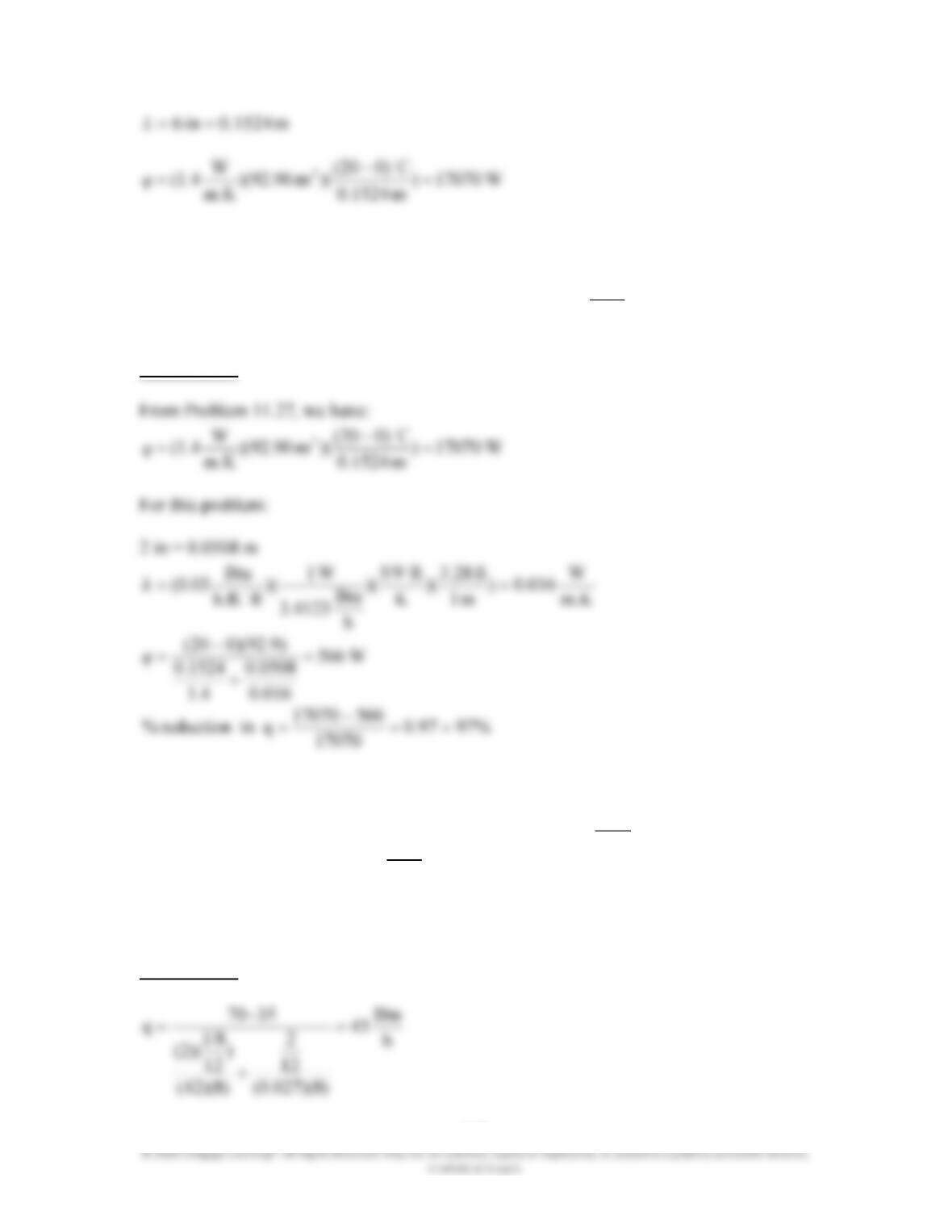
11.28 For Problem 11.27, calculate the reduction in the heat transfer rate if a 2-in.-
insulation batt with thermal conductivity of k = 0.03 Btu
h·ft·°F is added to the wall.
SOLUTION
17070
11.29 The side walls of a refrigerator are made from two thin layers of sheet metal, each
1/8 in. thick, and with thermal conductivity of k = 42 Btu
h·ft·°F , and a 2-in foam
insulation with k = 0.027 Btu
h·ft·°F. If the inside and outside surface temperatures of
the refrigerator wall are 35 ºF and 70 ºF, respectively, calculate the heat loss
through an area of 8 ft2.
SOLUTION
h
Btu
45
)8)(027.0(
12
2
)8)(42(
)
12
1/8
(2)(
35–70
q
m
0.1524
m.K
136
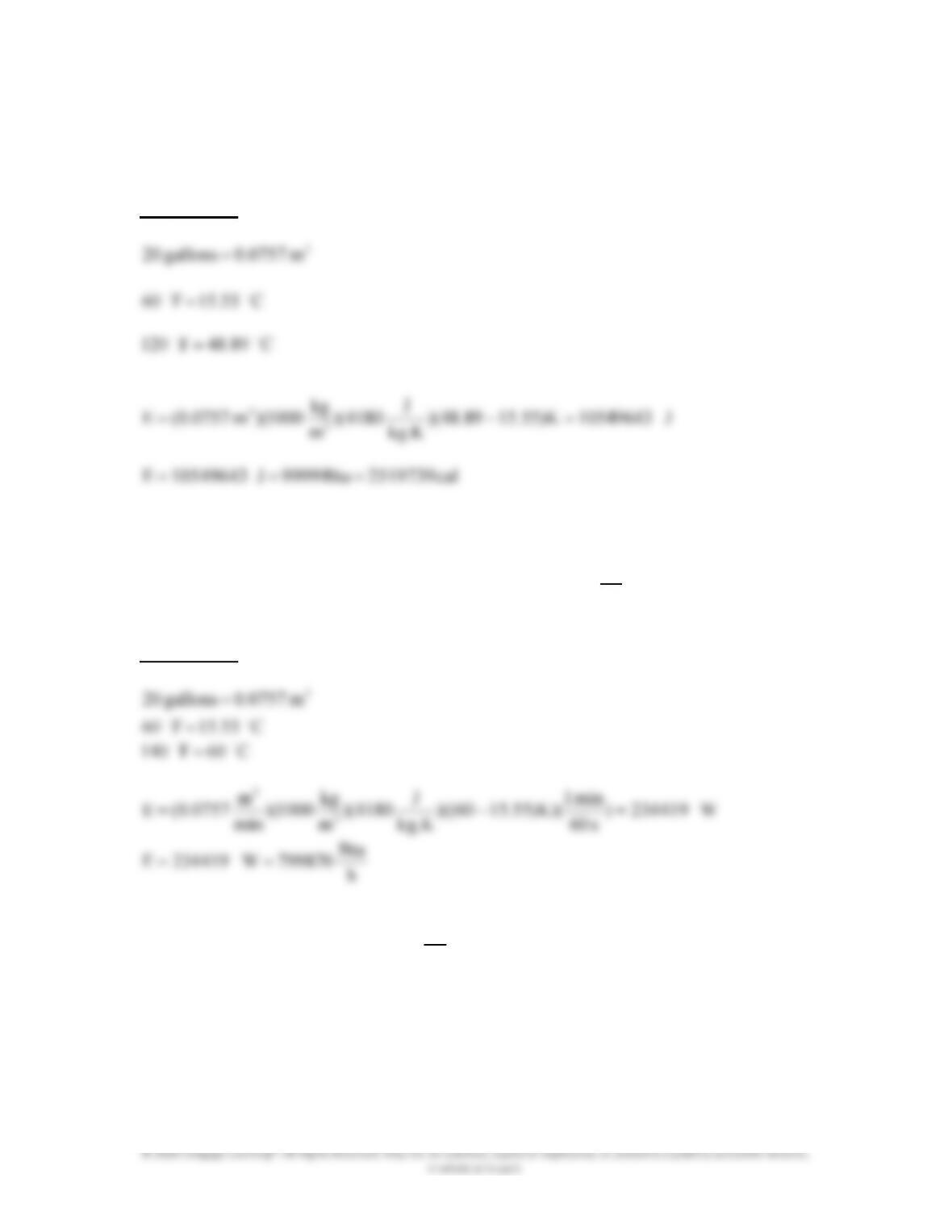
11.30 Calculate the amount of thermal energy required to raise the temperature of 20
gallon of water from 60 ºF to 120 ºF. Express your answer in Btu, J, and cal.
SOLUTION
11.31 In a commercial water heater, 20 gallons/min of water is heated from 60 ºF to 140
ºF. Calculate the amount of energy required per hour (
).
SOLUTION
h
11.32 A gas furnace puts out 60,000
to compensate for heat loss from a house
located in Minnesota. What is the equivalent value of thermal power (thermal
energy per unit time) output of the furnace in watts?
137
SOLUTION
kW 1
Btu
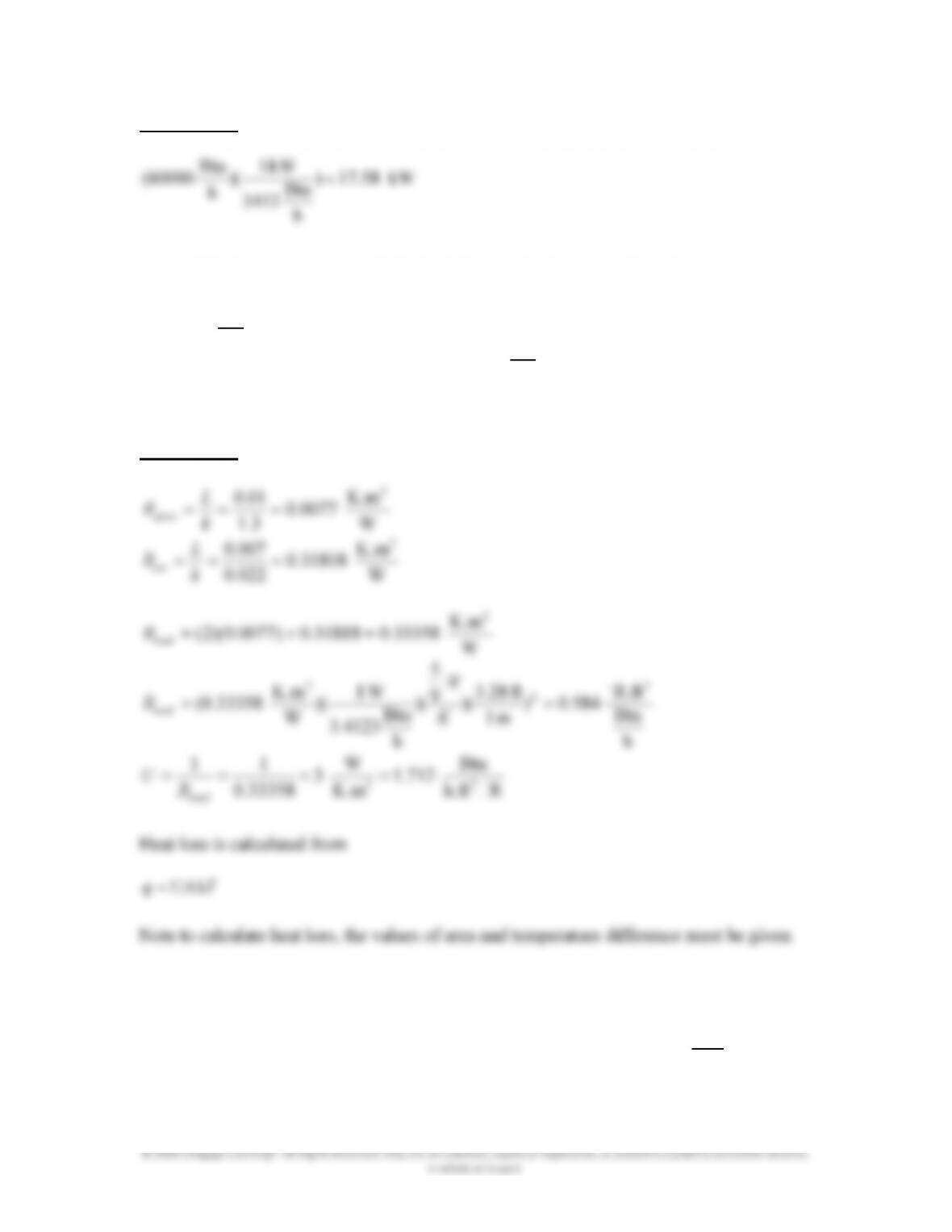
11.33 Calculate the heat loss from a double-pane-glass window consisting of two pieces
of glass, each having a thickness of 10 mm with a thermal conductivity of k =
1.3
· . The two glass-panes are separated by an air gap of 7 mm. Assume
thermal conductivity of air to be k = 0.022
· . Also, express the total R and U
values in both SI and U.S. customary units.
SOLUTION
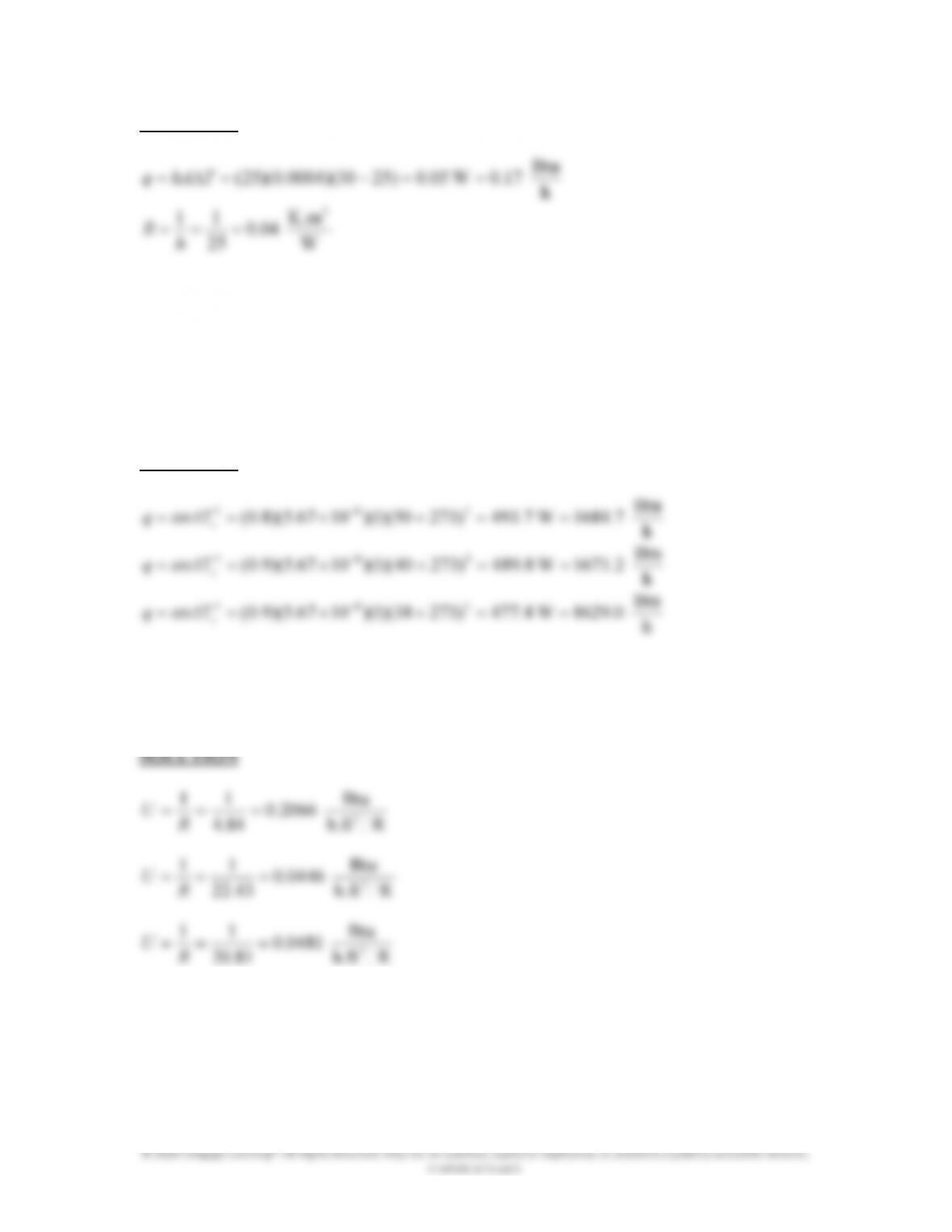
11.34 Determine the heat transfer rate from an electronic chip whose surface temperature
is 30ºC and has an exposed surface area of 4 cm2. The temperature of surrounding
air is 25ºC. The heat-transfer coefficient for this situation is h = 25
· . Express
your answer in both SI and U.S. customary units. What is the R-factor (film
resistance) for this situation?
138
SOLUTION
h
11.35 Calculate the amount of radiation emitted for a unit surface (1 m2) for the
following situations: (a) a hot pavement in Arizona at 50 ºC (122 ºF) and ≈ 0.8,
(b) a hood of a car at 40 ºC (104 ºF) and ≈ 0.9, and (c) a sunbather at 38 ºC (100
ºF) and ≈ 0.9. Express your answers in both SI and U.S. customary units.
SOLUTION
h
h
h
s
11.36 For Problems 11.11, 11.12, and 11.13, calculate the U-factors.
R
.
h.ft
84
.
4
R
R
.
h.ft
43
.
22
R
R
.
h.ft
81
.
20
2
R
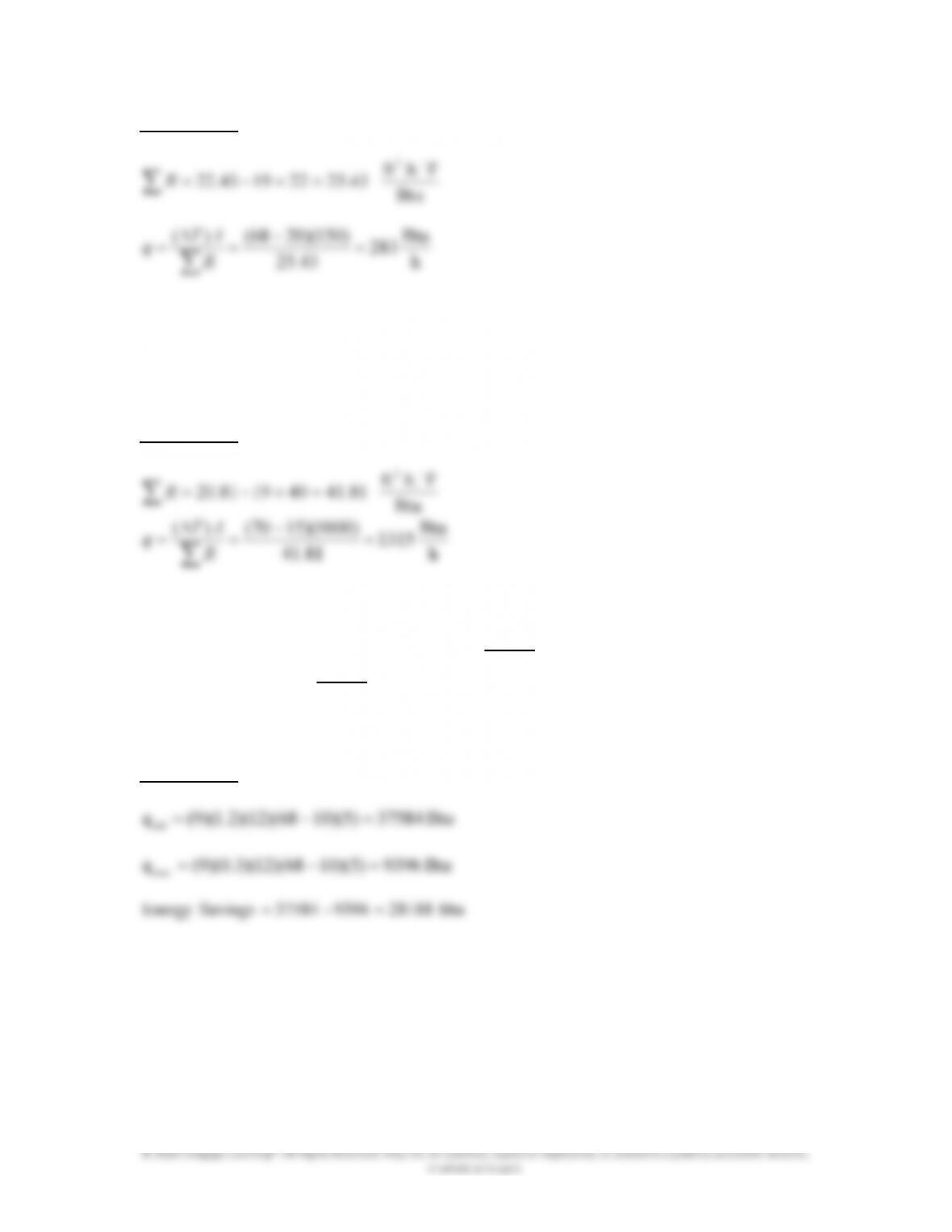
11.37 For Problem 11.12, calculate the heat loss through the frame wall if the R-19
insulation batt is replaced by foam insulation having a R-value of 22.
139
SOLUTION
h
43.25
R
11.38 For Problem 11.13, calculate the heat loss through the ceiling, if the R-19
insulation batt is replaced by R-40 fiberglass insulation.
SOLUTION
h
81.41
R
11.39 Nine, old, 12 ft2 windows with U= 1.2
··℉ were replaced with new windows
having U = 0.3
··℉. Calculate the energy savings on a day during a 5-hour
period, when Tin = 68ºF, Toutside = 10ºF.
SOLUTION
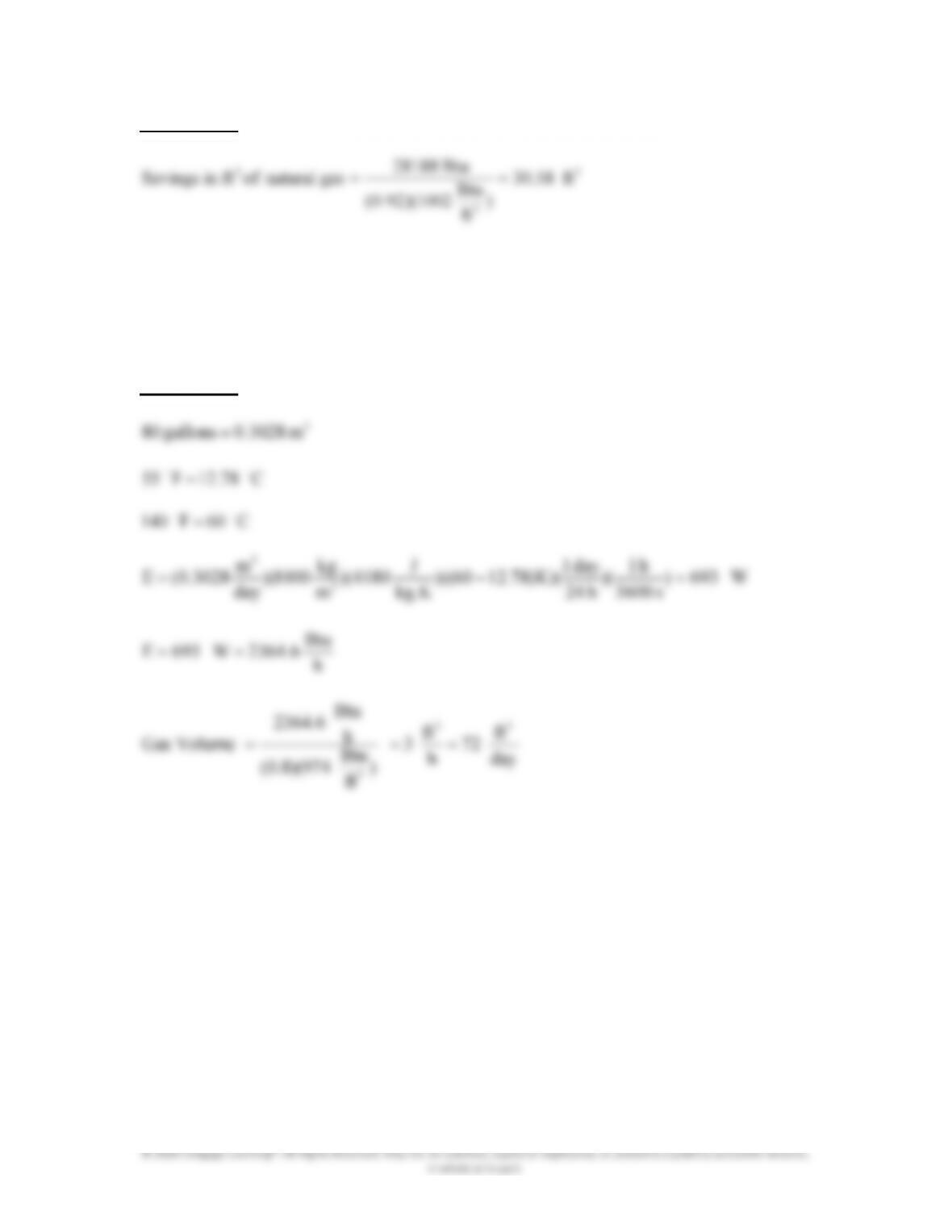
11.40 For Problem 11.39, calculate the savings in ft3 of natural gas (from Louisiana).
Assume the furnace has an efficiency of 92%.
140
SOLUTION
3
)
ft
Btu
1002)(92.0(
11.41 A family uses 80 gallons of hot water per day. The water is heated from a line
temperature of 55 ºF to 140 ºF. Calculate the amount of natural gas (Oklahoma)
that is required to heat the water in a heater with an efficiency of 80%.
SOLUTION
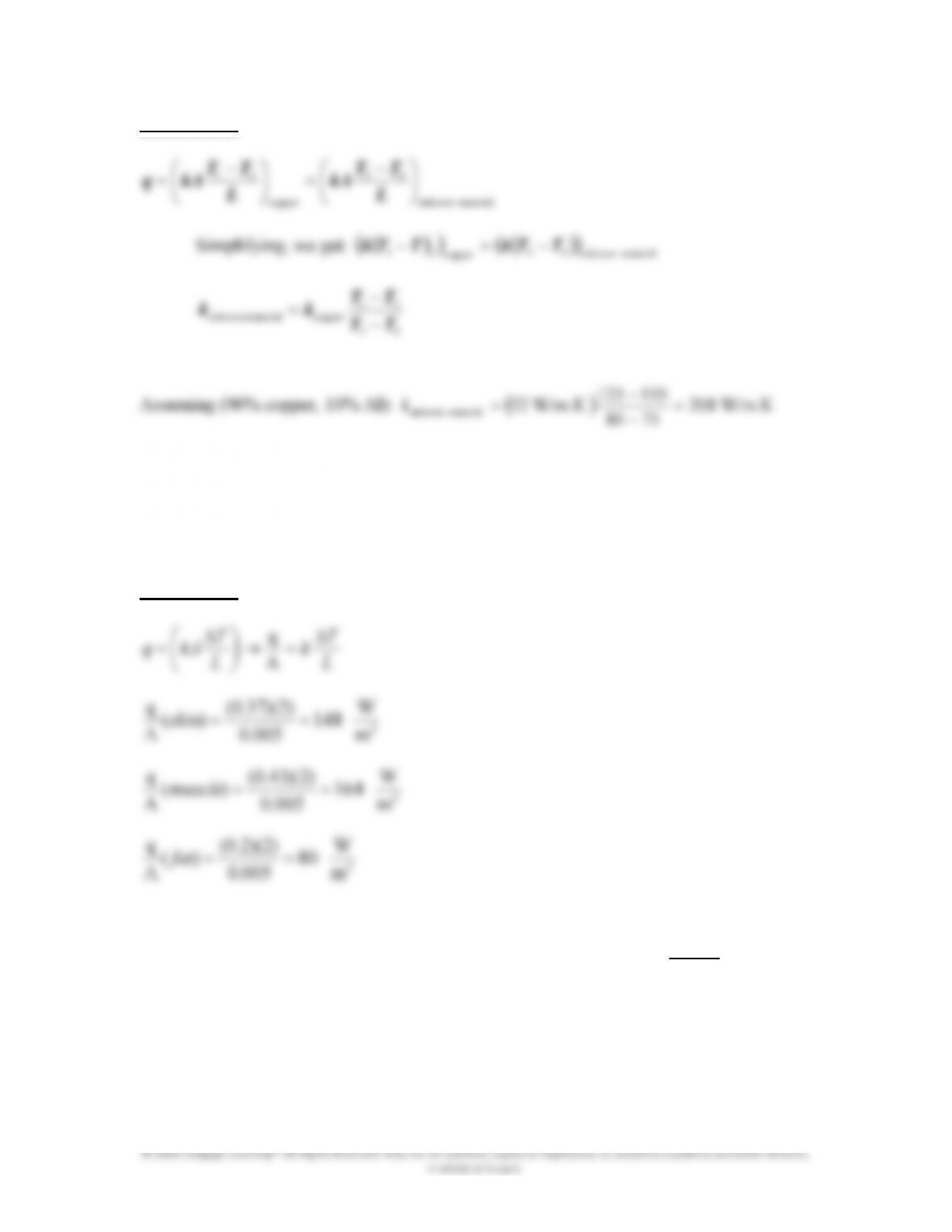
11.42 For Problem 11.17, determine the thermal conductivity of the unknown sample
for the set of data given in accompanying table.
Thermocouple
Location
Temperature
(
C)
1
125
2
105
3
80
4
75
141
SOLUTION
75
80
materialunkown
11.43 Compare heat-transfer rates through layers of human skin, human muscle, and
human fat tissue. Assume a 5-mm-thickness and a temperature difference of 2 ºC
across each layer.
SOLUTION
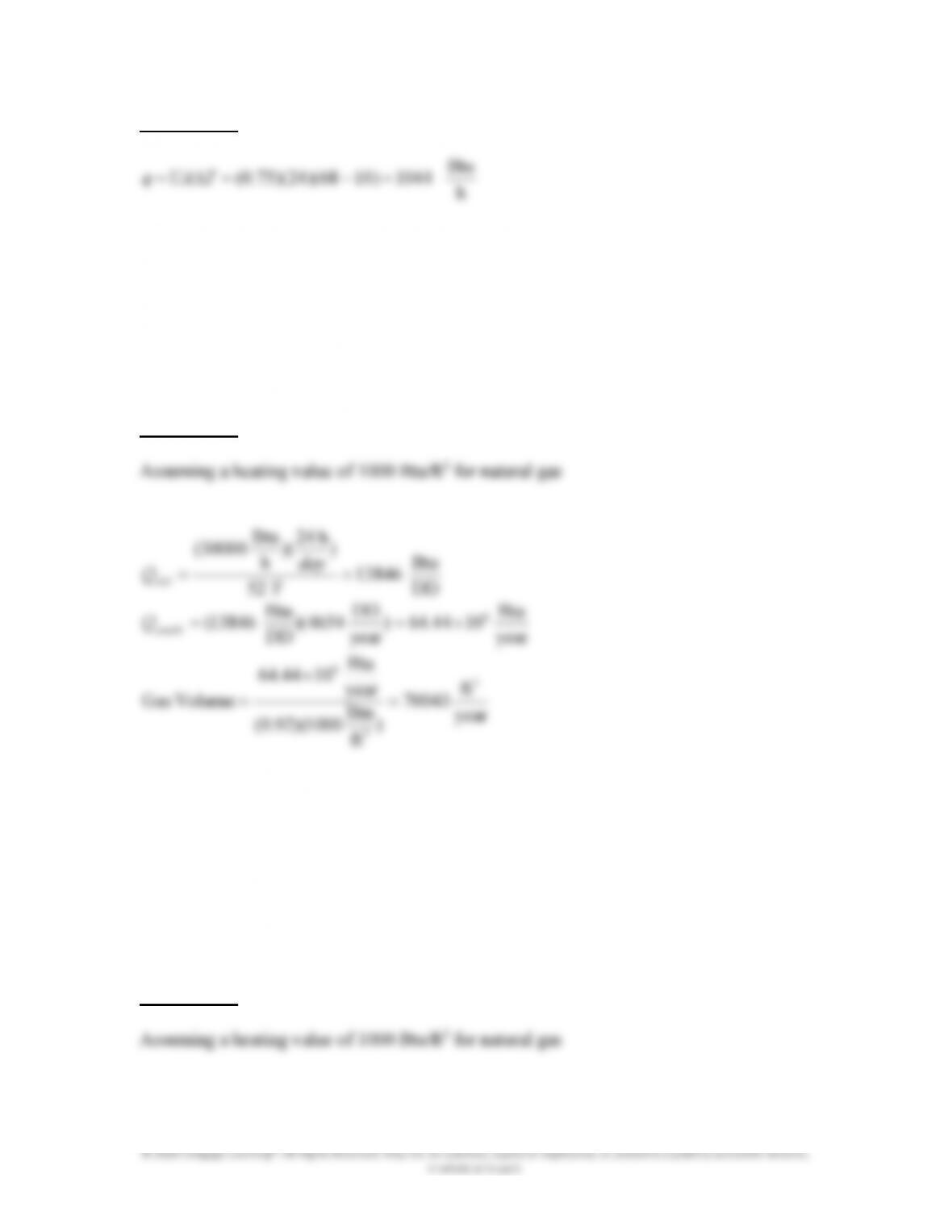
11.44 Calculate heat-transfer rate through a 24 ft2 door with U = 0.75
··℉ . The
indoor and outdoor temperatures are 68 ºF and 10 ºF.
142
SOLUTION
11.47 For a building located in Baltimore, Maryland with annual heating degree-days
(dd) of 4654 and a heating load (heat loss) of 30,000 Btu/h and a design
temperature difference of 52°F (68°F indoor and 16°F outdoor), estimate the
annual energy consumption. If the building is heated with a furnace with an
efficiency of 92%, how much gas is burned to keep the home at 68°F. State your
assumptions.
SOLUTION
year
)
ft
Btu
1000)(92.0(
3
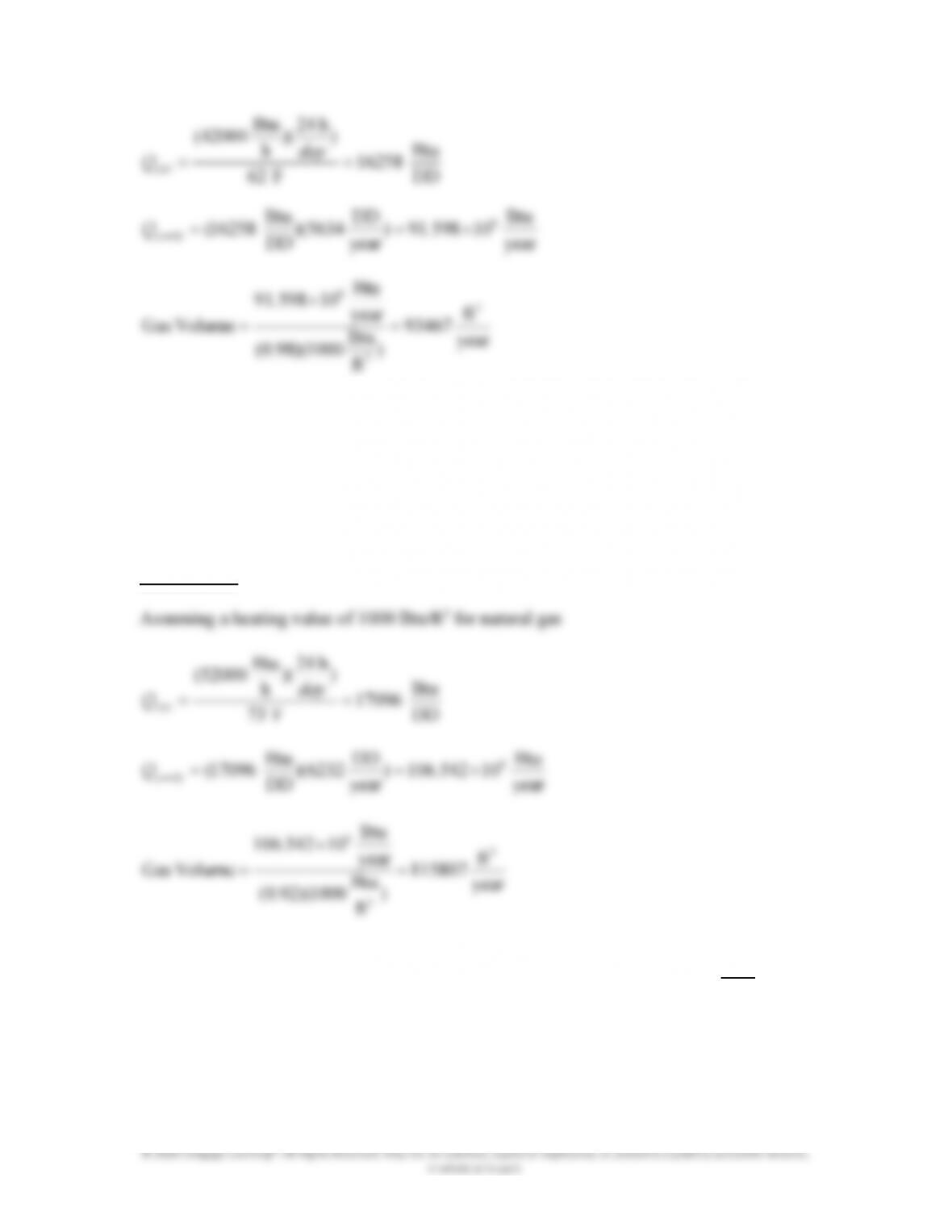
11.48 For a building located in Boston, Massachusetts with annual heating degree-days
(dd) of 5634 and a heating load (heat loss) of 42,000 Btu/h and a design
temperature difference of 62°F (68°F indoor and 6°F outdoor), estimate the
annual energy consumption. If the building is heated with a furnace with an
efficiency of 98%, how much gas is burned to keep the home at 68°F. State your
assumptions.
SOLUTION
143
© 2020 Cengage Learning®. All Rights Reserved. May not be scanned, copied or duplicated, or posted to a publicly accessible website,
in whole or in part.
DD
Btu
16258
F
62
)
h 24
)(
h
Btu
42000(
day
QDD
year
Btu
10598.91)
year
DD
5634)(
DD
Btu
16258( 6
yearly
Q
year
ft
93467
)
ft
Btu
1000)(98.0(
year
Btu
10598.91
Volume Gas
3
3
6
11.49 For a building located in Detroit, Michigan with annual heating degree-days (dd)
of 6232 and a heating load (heat loss) of 52,000 Btu/h and a design temperature
difference of 73°F (68°F indoor and -5°F outdoor), estimate the annual energy
consumption. If the building is heated with a furnace with an efficiency of 92%,
how much gas is burned to keep the home at 68°F. State your assumptions.
SOLUTION
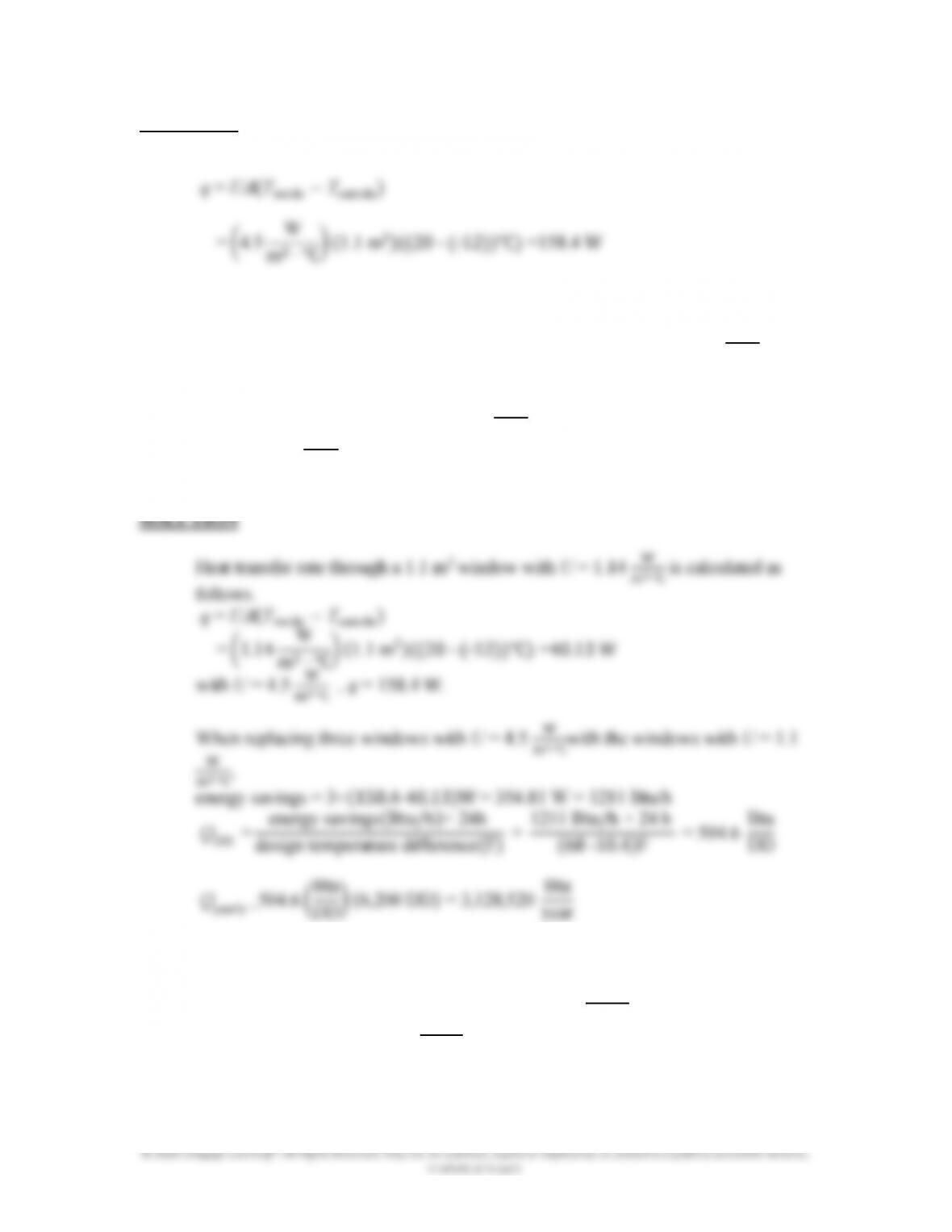
11.51 Calculate the heat transfer rate through a 1.1 m2 window with U = 4.5
∙℃. The
indoor and outdoor temperatures are 20℃ and -12℃, respectively.
DD
F
73
ft
144
SOLUTION
11.52 Calculate the heat transfer rate through a 1.1m2 window with U = 1.14
∙℃. The
indoor and outdoor temperatures are 20℃ and -12℃, respectively. Compare the
results of this exercise with the results of Problem 11.51. How much energy will
be saved if three windows with U = 4.5
∙℃ are replaced with three windows
with U = 1.14
∙℃ for a home in a location with annual degree days of 6200?
11.53 Nine old, 12-ft2 windows with a U-value of U = 1.2
∙∙℉ were replaced with
new windows having U = 0.3
∙∙℉. Calculate the energy savings on a day during
a five-hour period when Tin = 68℉ and Toutside = 10℉.
145
© 2020 Cengage Learning®. All Rights Reserved. May not be scanned, copied or duplicated, or posted to a publicly accessible website,
in whole or in part.
SOLUTION
𝑞 = (1.2-0.3) Btu
h·ft2·F 9×12 ft2(68-10F) = 5,638 Btu
h
energy savings for a period of 5 hours = 5,638 Btu/h × 5h = 28,190 Btu
11.54 For Problem 11.53, calculate the savings in cubic feet of natural gas. Assume the
furnace has an efficiency of 98%.
SOLUTION
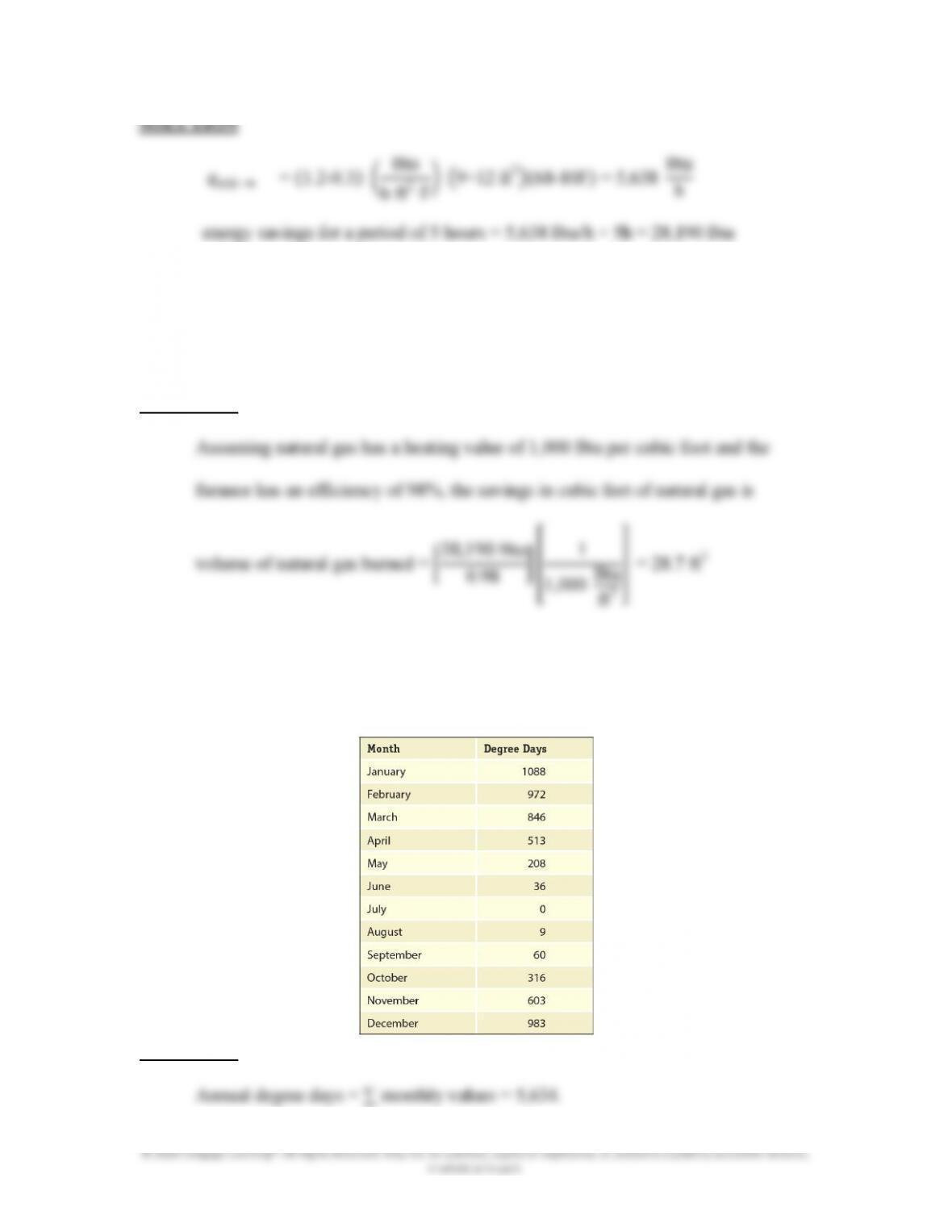
11.55 Calculate the annual degree days for Boston, Massachusetts, using the following
given monthly values.
SOLUTION