
95
Chapter 10: Force and Force-Related Variables in Engineering
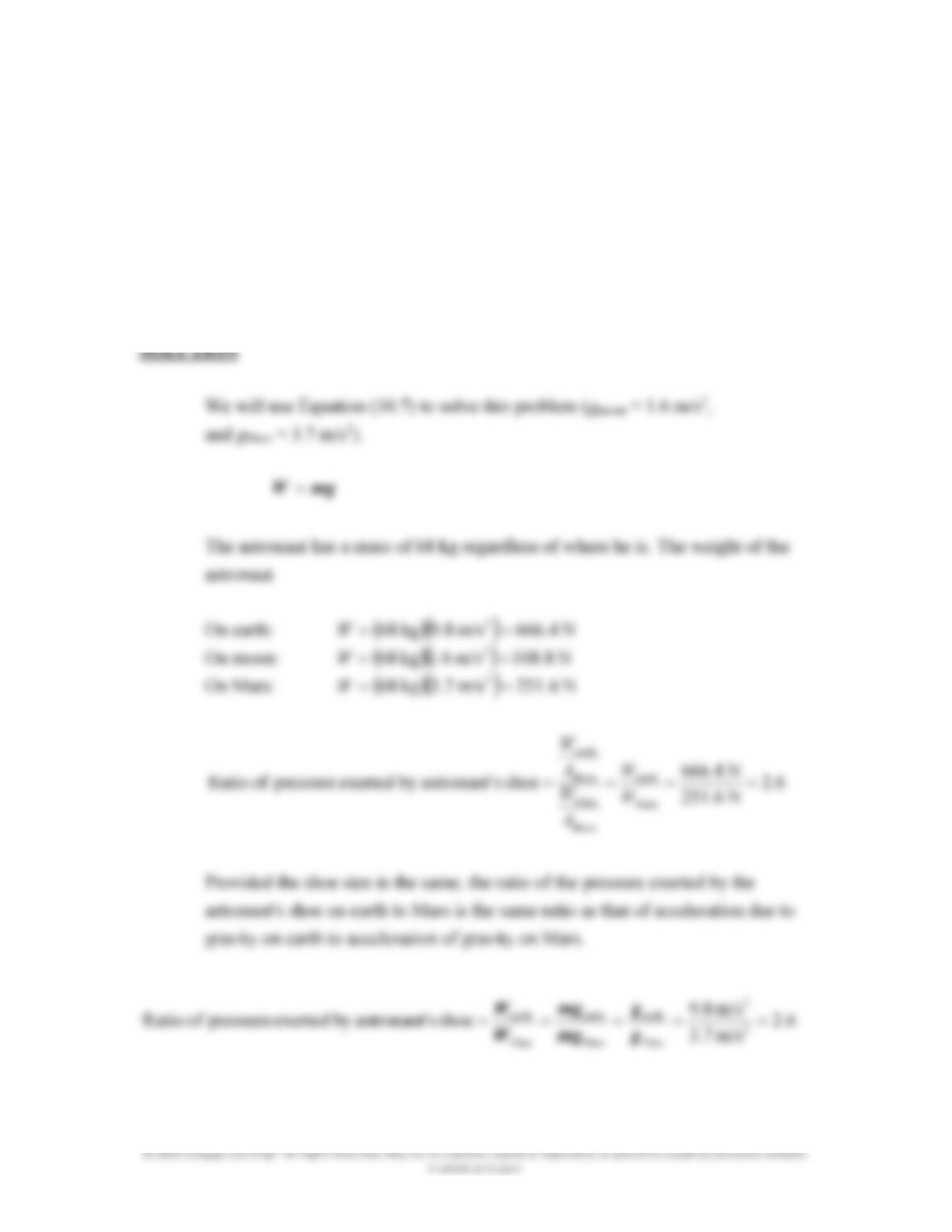
10.3 An astronaut has a mass of 68 kg, what is the weight of the astronaut on earth at
sea level? What are the mass and the weight of the astronaut on the Moon, and on
Mars? What is the ratio of the pressure exerted by the astronaut’s shoe on Earth to
Mars?
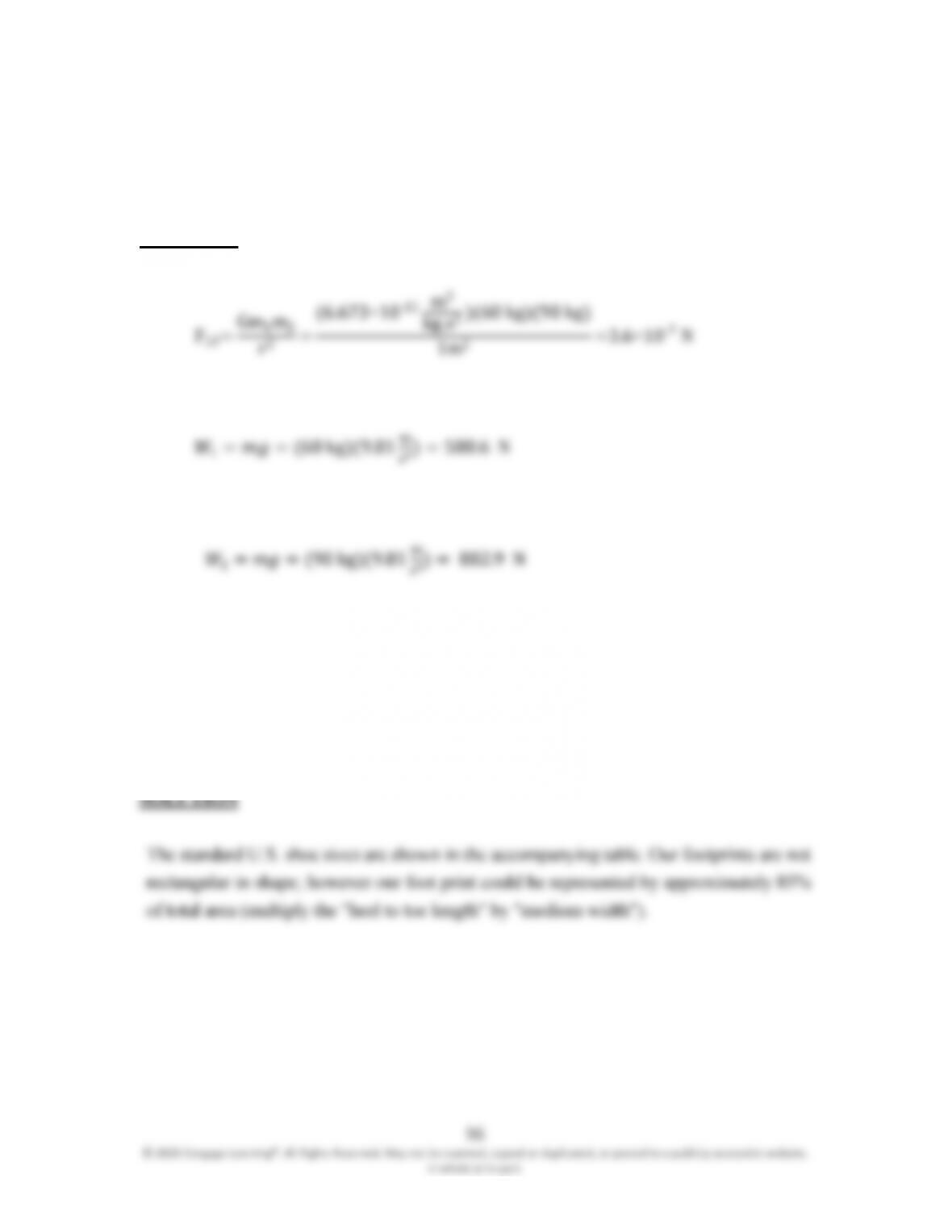
10.4 Calculate the attractive force between two students with masses of 60 kg and 90 kg.
The students are standing about one meter apart. Compare their attractive force to
their weights.
SOLUTION
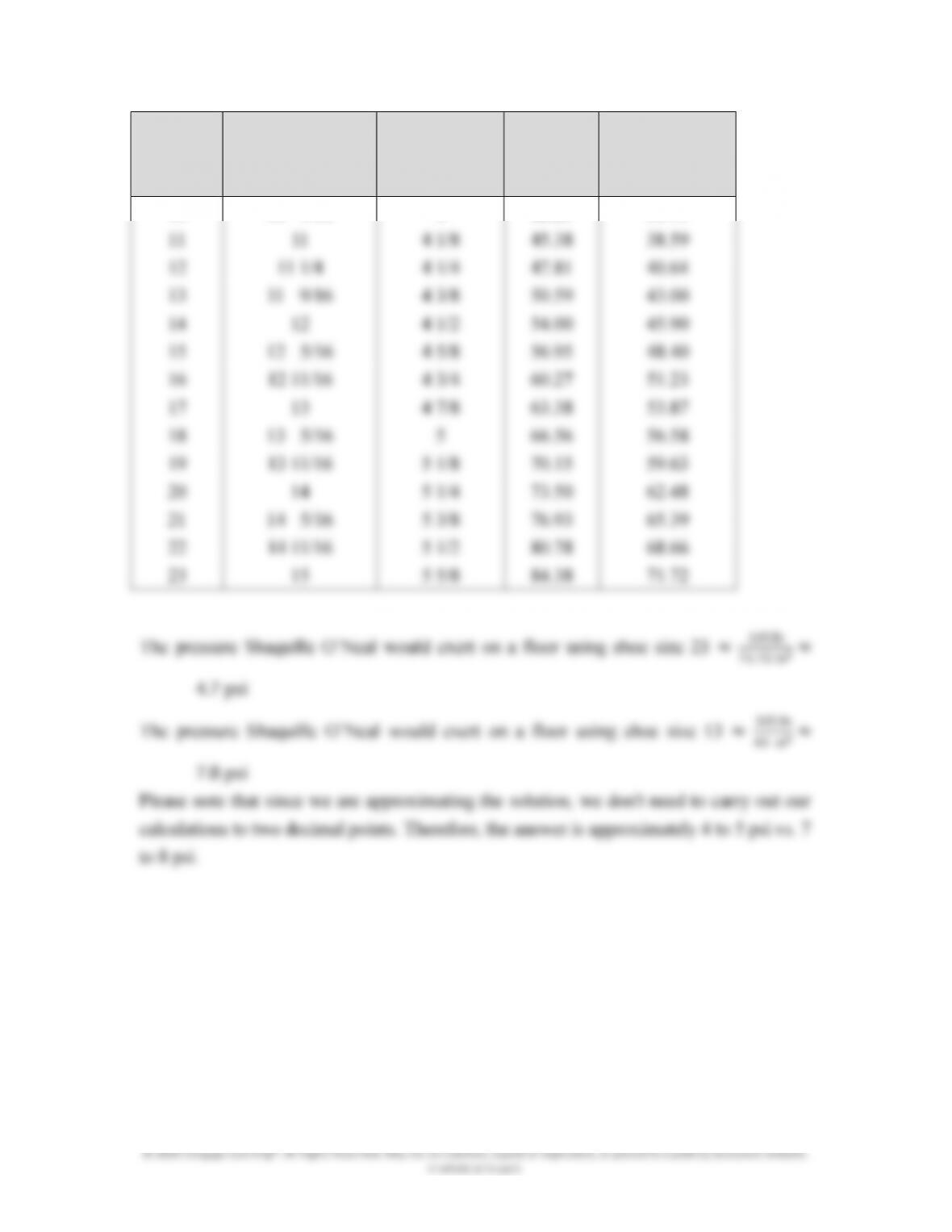
10.5 Former basketball player Shaquille O’Neal weighs approximately 335 lb and wears
a size 23 shoe. Estimate the pressure he exerts on a floor. What pressure would he
exert if his shoe size were 13? State all your assumptions, and show how you
arrived at a reasonable solution.

97
Size
(USA)
Heel to toe
Length (in
inches)
Medium
Width (in
inches)
Total
Area (in2)
0.85*Total
Area
10 10 9/16 4 42.25 35.91
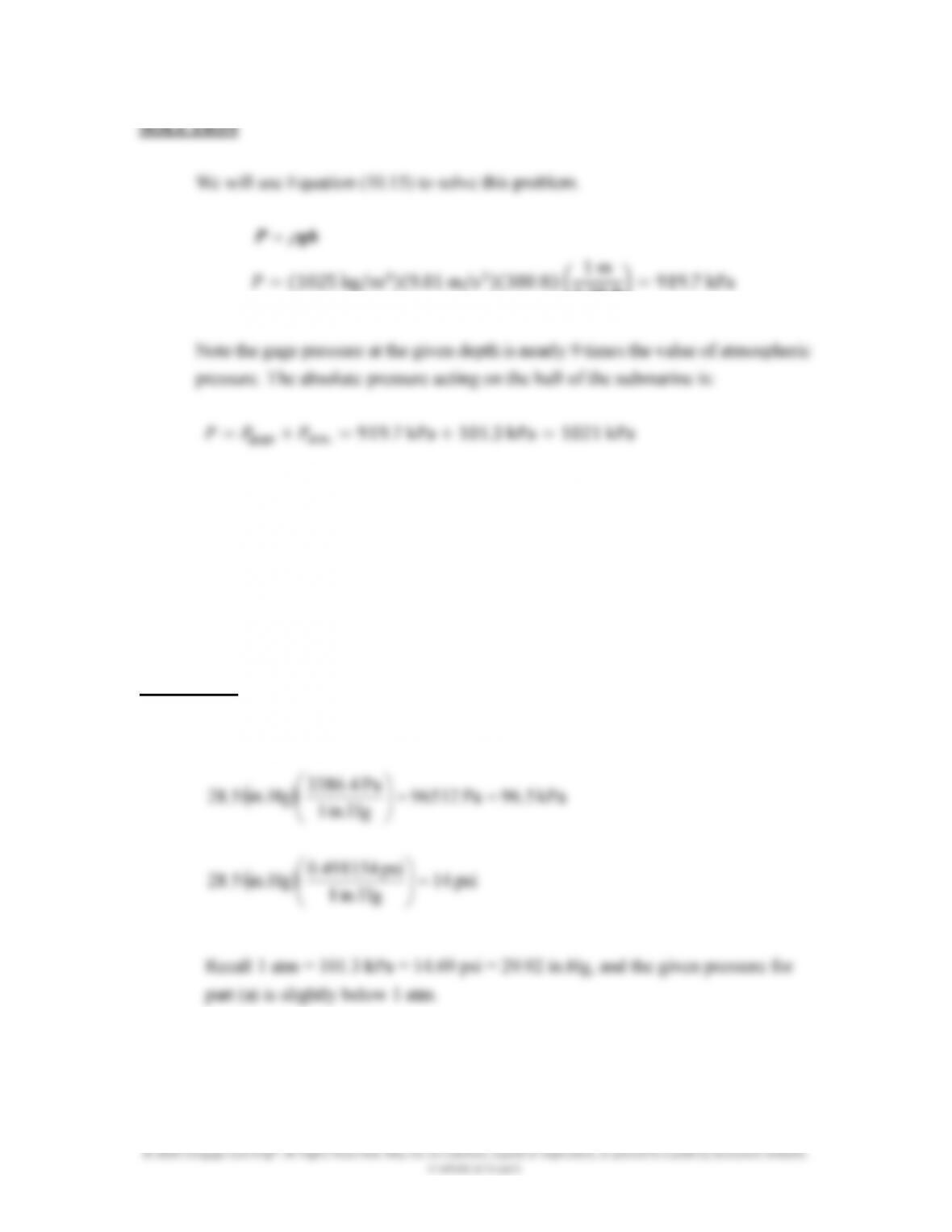
10.9 Calculate the pressure exerted by water on the hull of a submarine that is cruising at
a depth of 300 ft below ocean level. Assume the density of the ocean water is
=1025 kg/m3.
98
3.28 ft=919.7 kPa
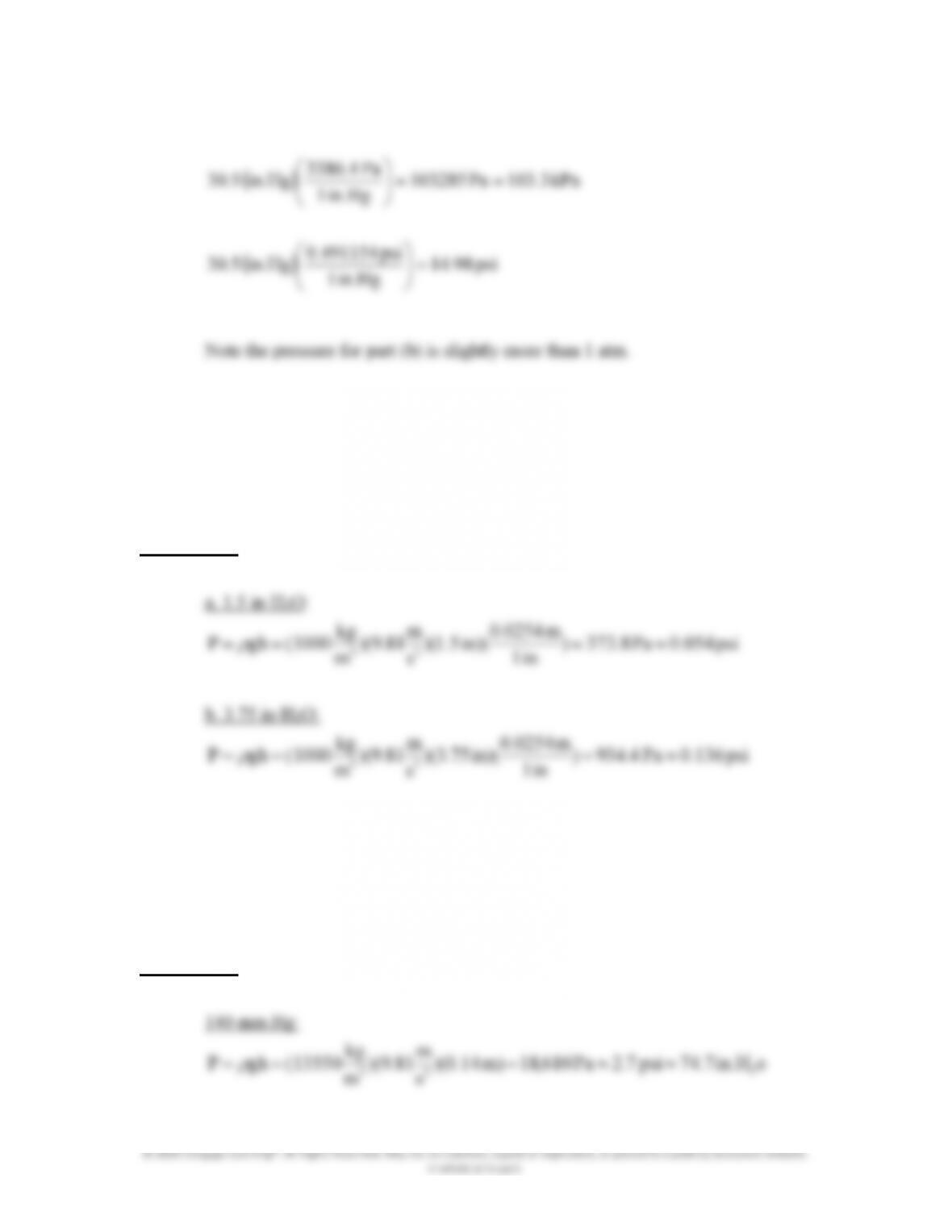
10.11 Convert the following pressure readings from inches of mercury units to psi and
Pascal units:
a. 28.5 in·Hg
b. 30.5 in·Hg.
SOLUTION
a.
99
b.
10.12 Convert the following air pressure readings from in·H2O to psi and Pa.
a. 1.5 in·H2O
b. 3.75 in·H2O
SOLUTION
10.13 A person with hypertension has a systolic/diastolic of 140/110 mm·Hg. Express
these pressures in Pa, psi, and in·H2O.
SOLUTION
100
10.14 If a pressure gauge on a compressed air tank reads 125 psi, assuming standard
atmospheric pressure at sea level, what is the absolute pressure of air in
a. psi
b. pascal
c. feet of water
d. feet of mercury
SOLUTION
101
10.15 An air compressor intakes atmospheric air at 14.7 psi and increases its pressure to
150 psi (gauge). The pressurized air is stored in a horizontal tank. What is the
absolute pressure of air inside the tank? Express your answers in: (a) psi, (b) kPa, (c)
bar, and (d) standard atm (recall that 1 atm = 14.7 psi = 101.325 kPa).
SOLUTION
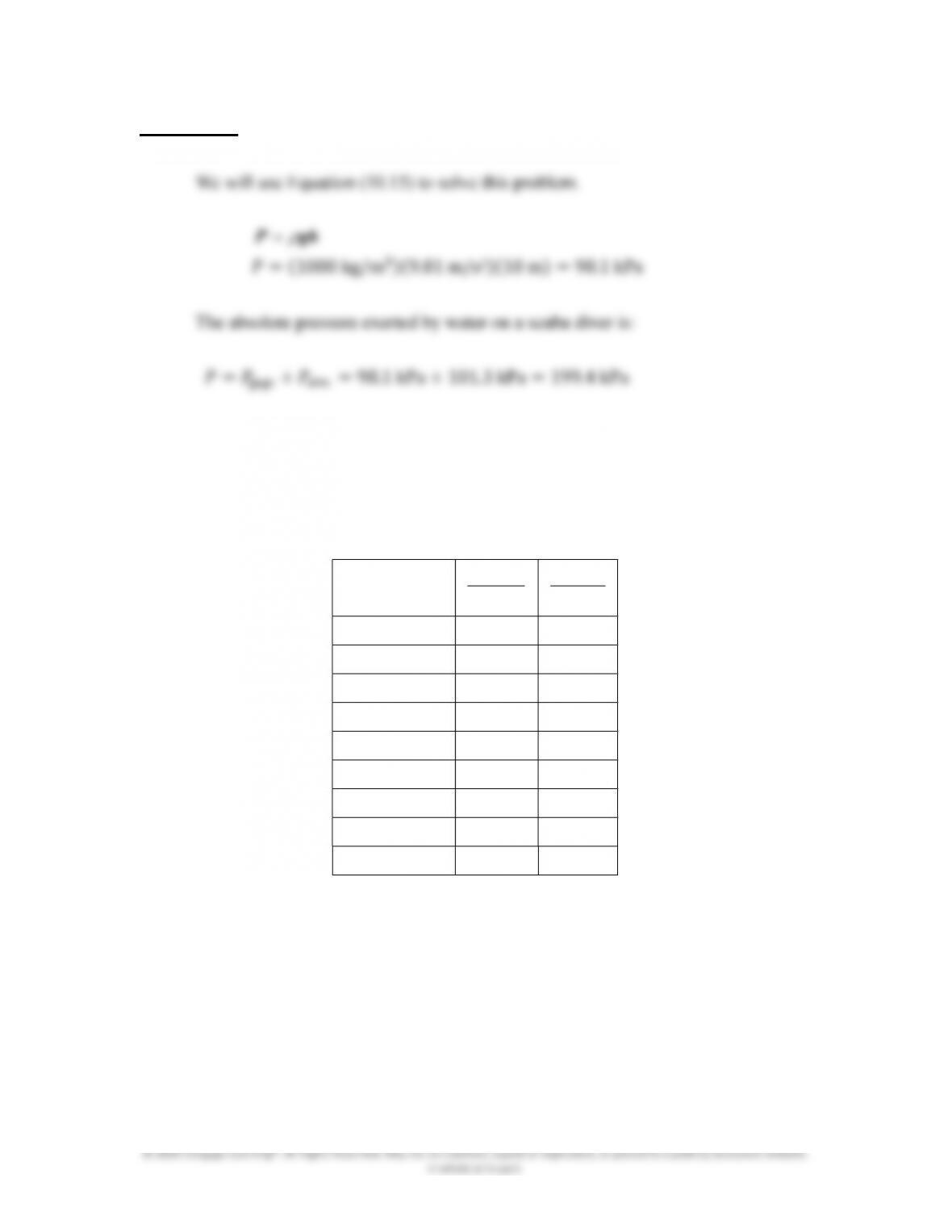
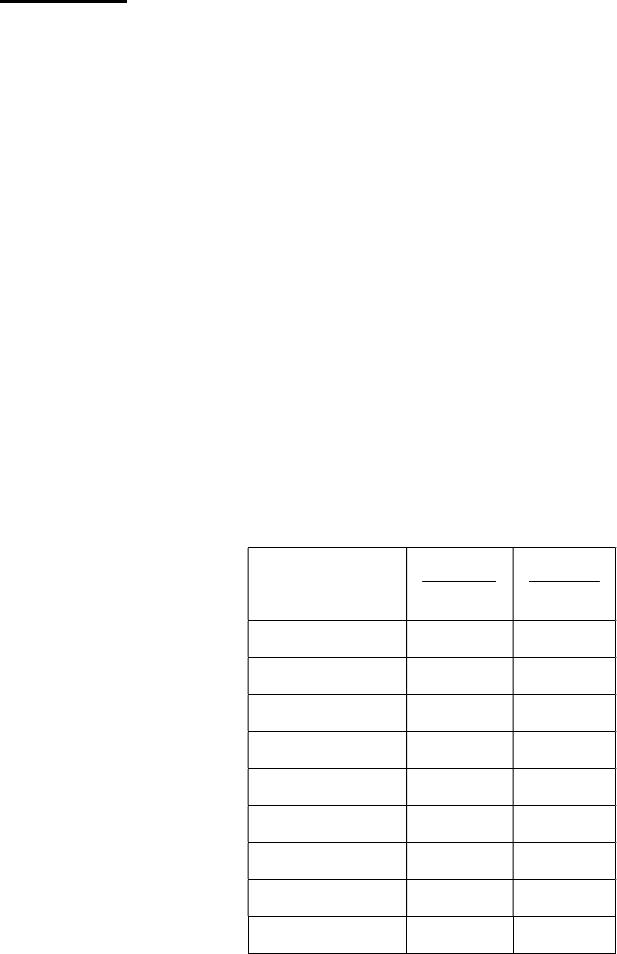
10.16 Calculate the pressure exerted by water on a scuba diver who is swimming at a
depth of 10 m below the water surface.
102
SOLUTION
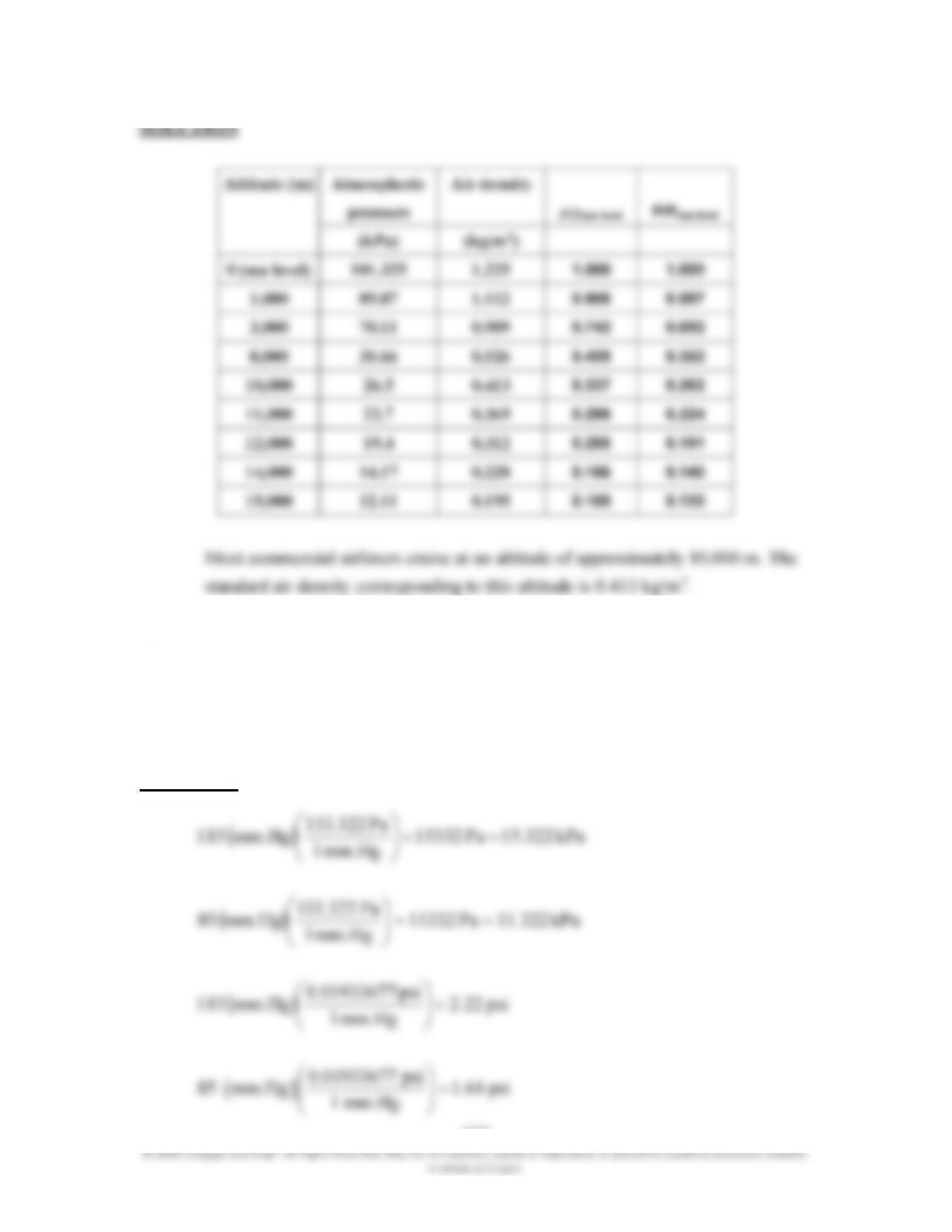
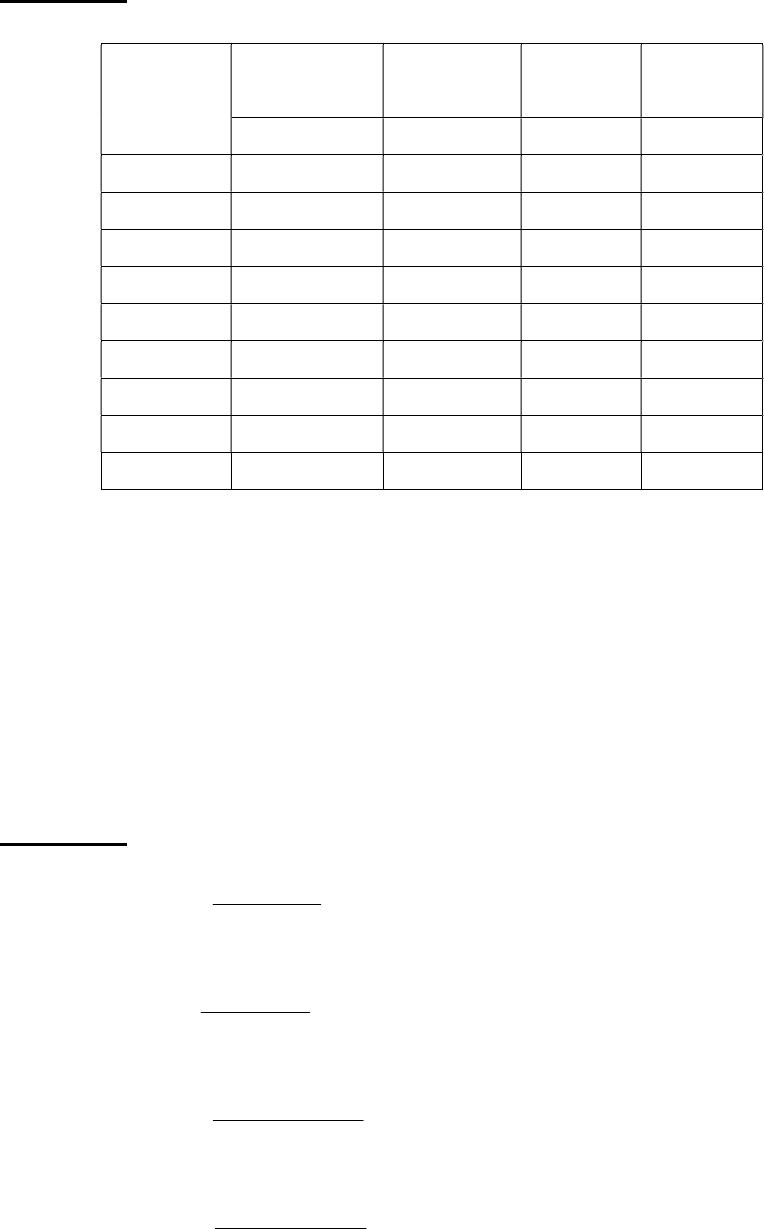
10.18 Using the information given in Table 10.4, determine the ratio of local pressure
and density to sea-level values. Estimate the value of air density at the cruising
altitude of most commercial airliners.
Altitude (m)
levelsea
levelsea
P
P
0 (sea level)
1,000
3,000
5,000
8,000
10,000
12,000
14,000
15,000
103
10.21 Convert the 115/85 systolic/diastolic pressures given in millimeters of Hg to Pa,
psi and in·H20.
SOLUTION
104
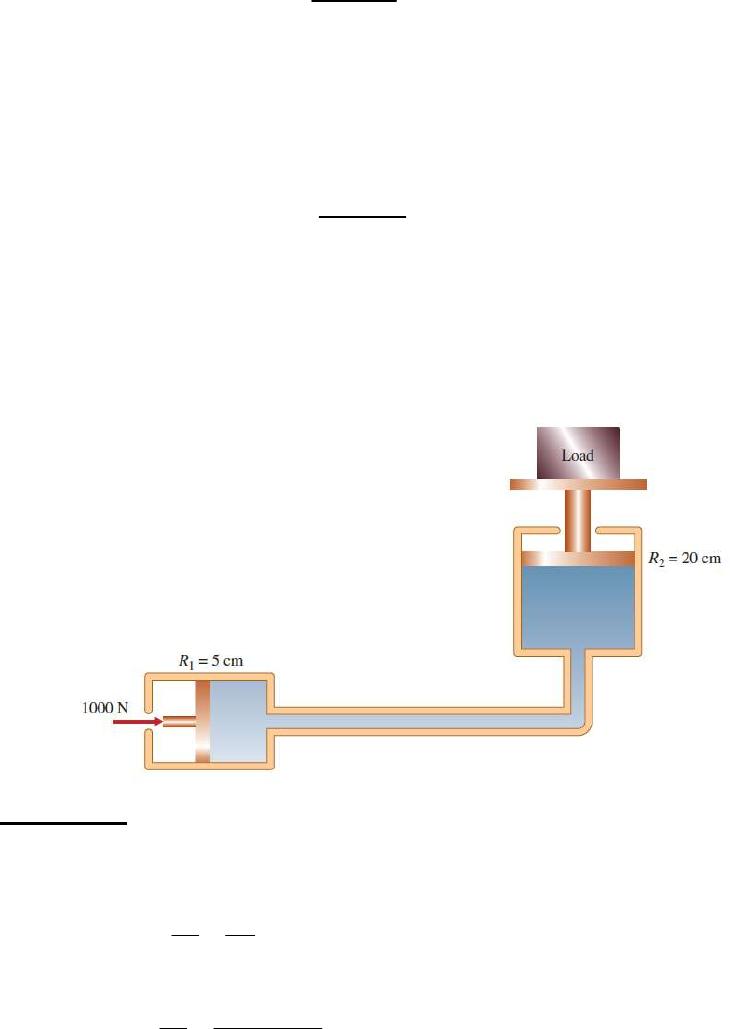
10.22 Determine the load that can be lifted by the hydraulic system shown in the
accompanying figure. All of the necessary information is shown on the figure.
SOLUTION
10.23 Determine the load that can be lifted by the system shown in Problem 10.22, if R1
is reduced to 4 cm.
SOLUTION
10.24 Determine the load that can be lifted by the system shown in Problem 10.22, if R2
is increased to 25 cm.
SOLUTION
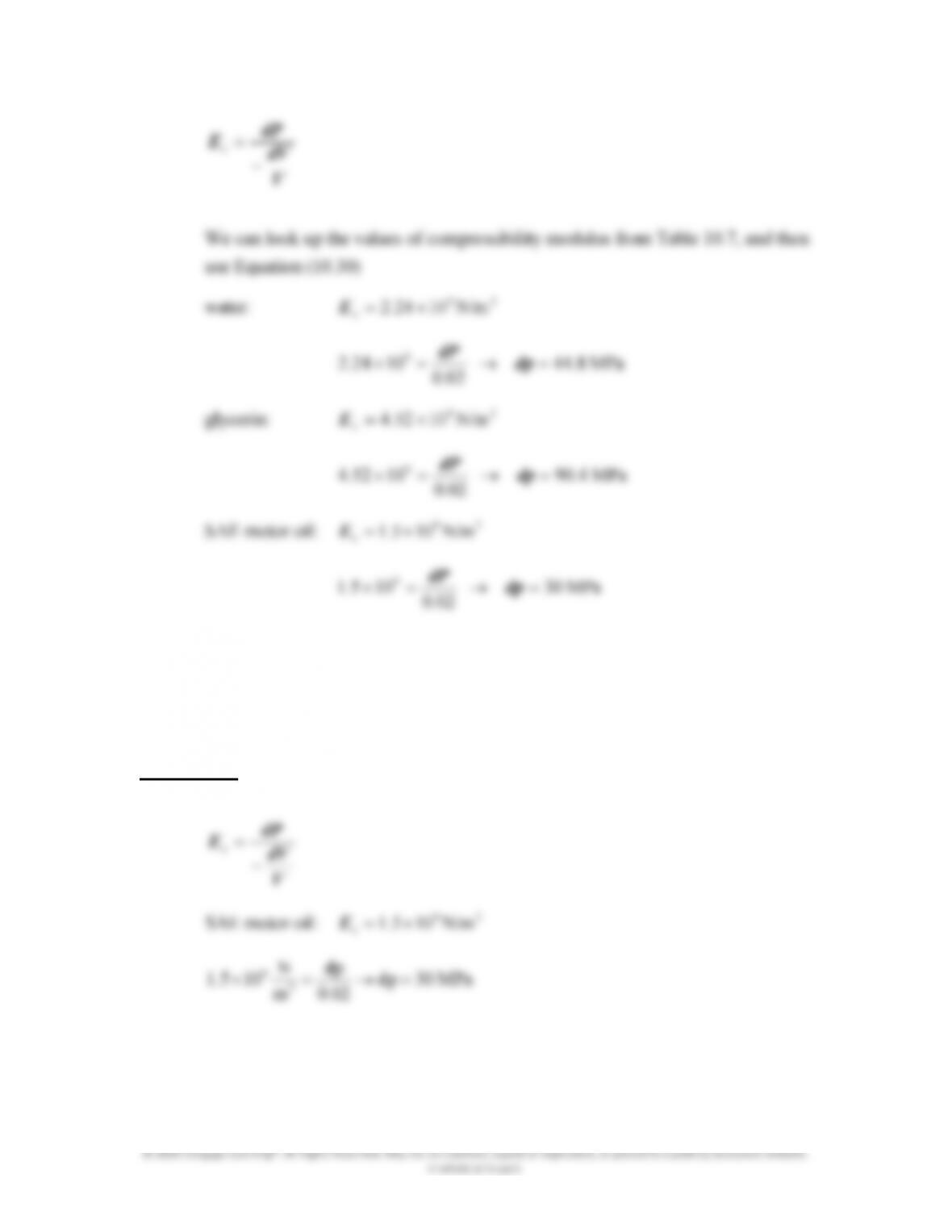
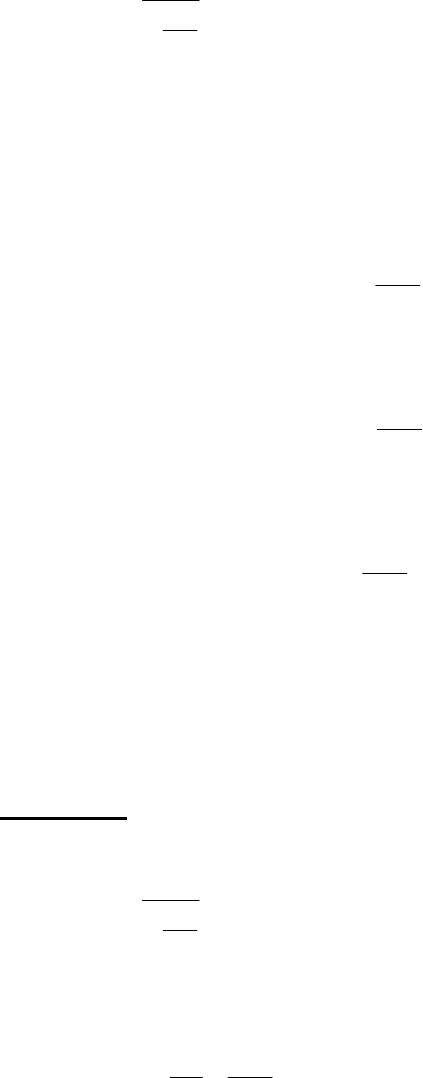
10.25 Determine the pressure required to decrease the volume of the following fluids by
2%: (a) water, (b) glycerin, and (c) SAE motor oil.
106
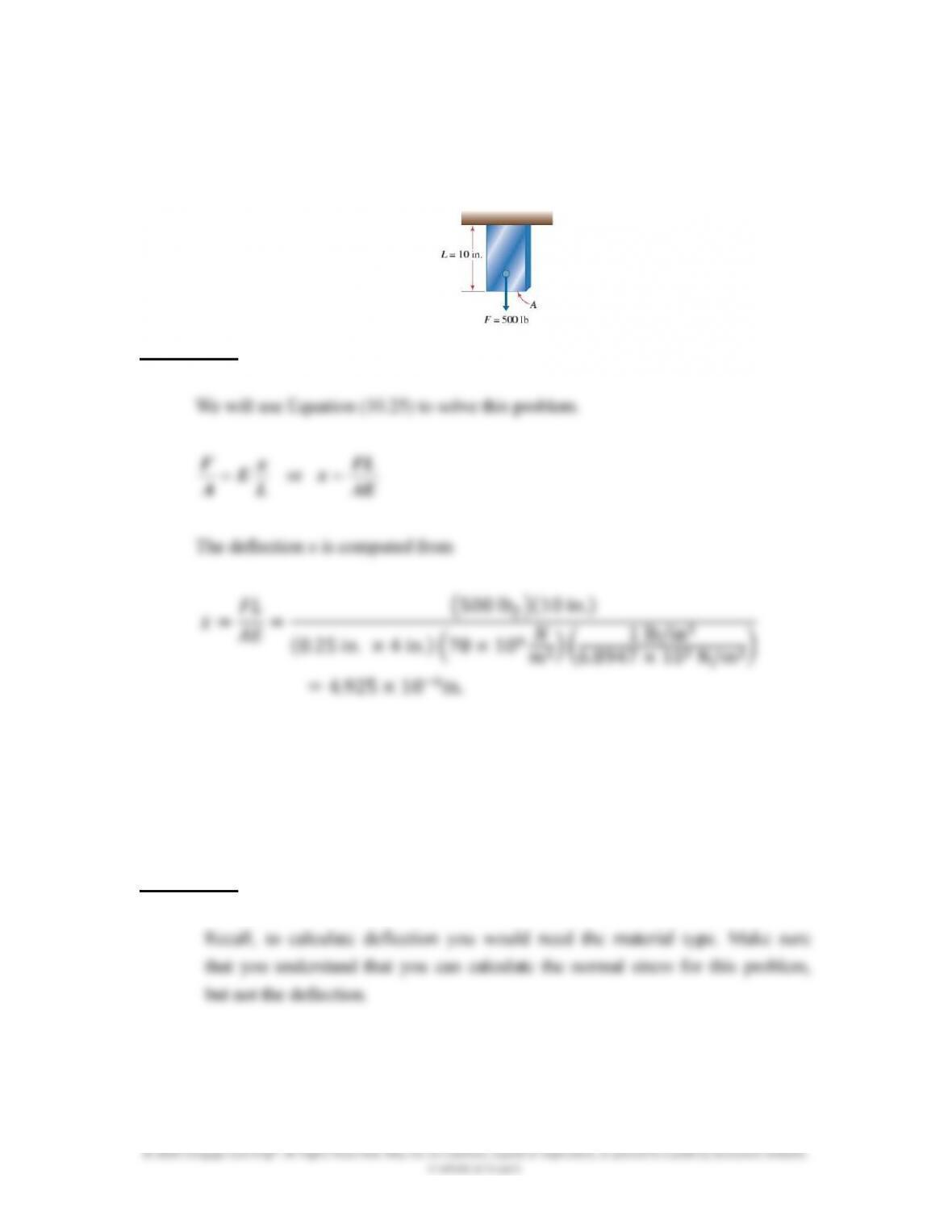
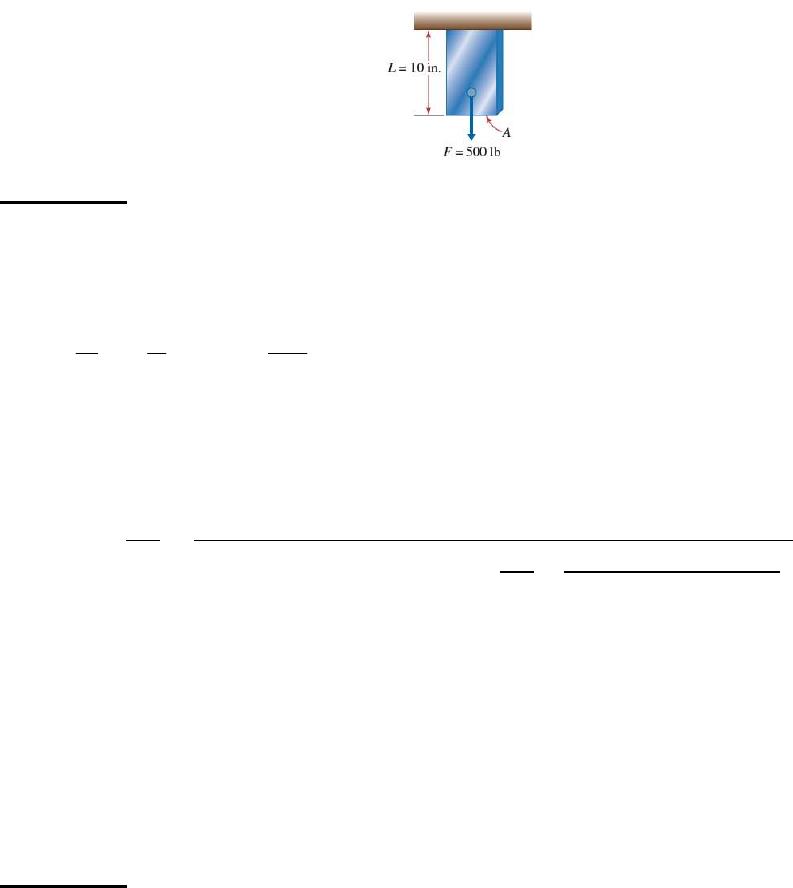
10.26 SAE 30 oil is contained inside a cylinder with inside diameter of 1-in and length of
1-ft. What is the pressure required to decrease the volume of the oil by 2%?
SOLUTION
107
10.27 Compute the deflection of a structural member made of aluminum, if a load of 500
lb is applied to the bar. The member has a uniform rectangular cross-section with
the dimensions of ¼ in × 4 in., as shown in the accompanying figure.
SOLUTION
10.28 A 20-cm-diameter rod is subjected to a tensile load of 1000 N at one end and is
fixed at the other end. Calculate the deflection of the rod, if it is 50-cm-long.
SOLUTION
108
Assuming a steel rod:
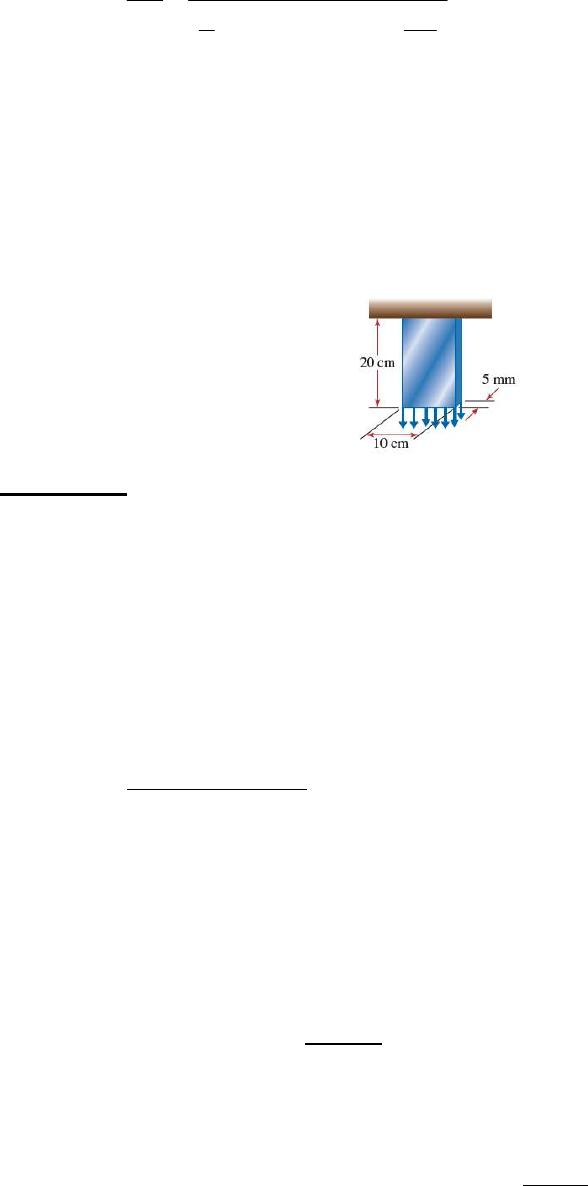
10.29 A structural member with a rectangular cross-section as shown in the
accompanying figure is used to support a load of 2000 N. What type of material do
you recommend be used to carry the load safely? Base your calculations on the
yield strength and a factor of safety of 2.0.
SOLUTION