1-1
CHAPTER 1. INTRODUCTION
CHAPTER 1. INTRODUCTION ………………………………………………………………………………………….1
1.2 to 1.5. Ignorance and Uncertainty …………………………………………………………………………….…..1
1.6. Introduction to Simulation ………………………………………………………………………………….……….3
The following table provides a summary of the problems with their appropriate sections:
Section Problems
1.2 to 1.5. Ignorance and Uncertainty
Problem 1-1.
The structural analysis of a reinforced concrete building is used herein to construct different levels
of abstractions. It is common in this type of analysis to use a model to describe the structural
behavior of the building due to various loads. The model can be viewed as an abstraction of some
aspects of the building system. In performing this abstraction, an analyst or engineer must decide
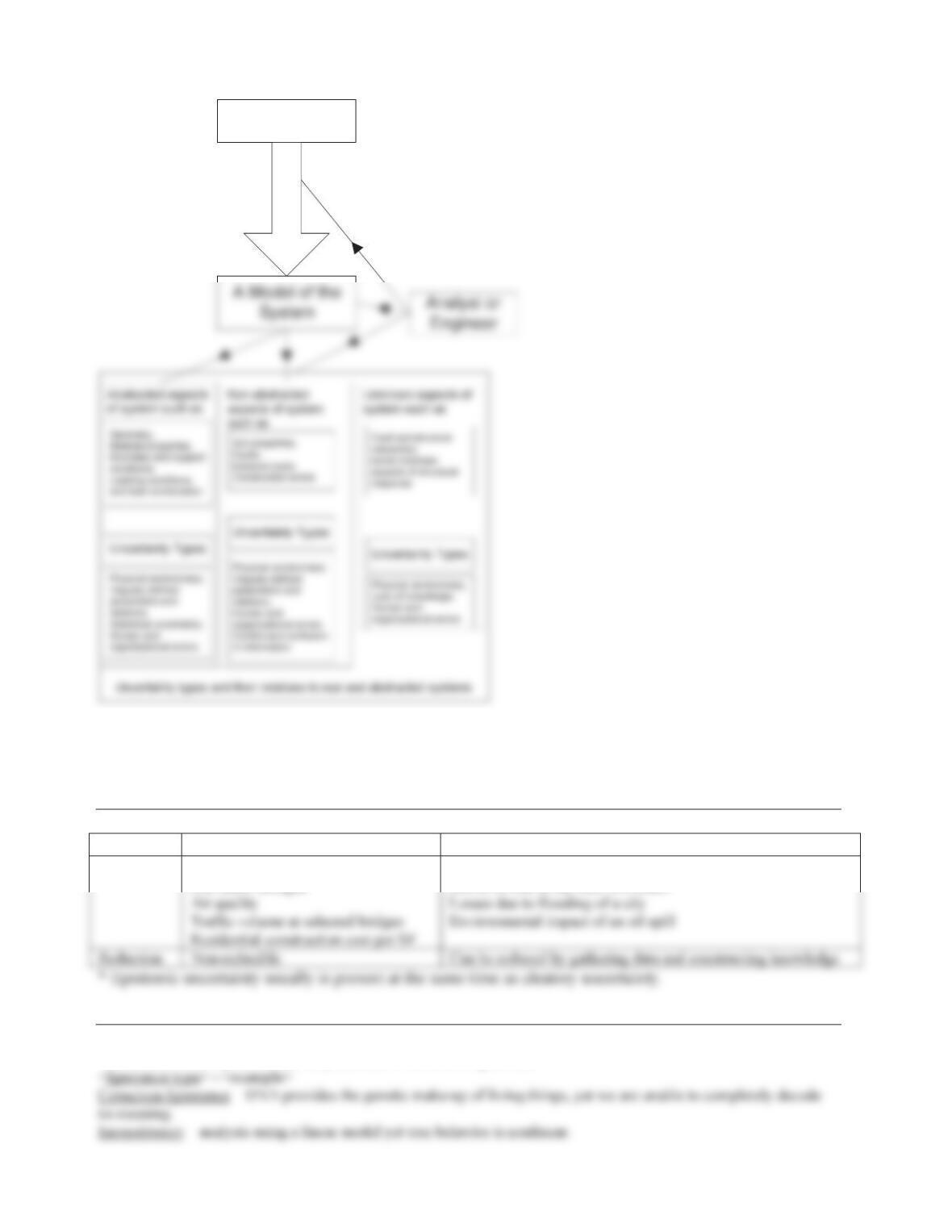
which aspects of the system to include and which to leave out. Figure 1-1 shows example
abstractions with different types of uncertainty. Therefore depending on the state of knowledge
about the system and the background of the analyst or engineer, other aspects of the system might
not be known, thus increasing the overall uncertainty of the system. In these three categories, i.e.,
abstracted, non-abstracted, and unknown aspects of the system, several types of uncertainty can be
present. Figure 1-1 provides examples of uncertainties within each category.
1-2
Real System
Abstraction at several
epistemological levels
Figure 1-1. Uncertainty types for a reinforced concrete building system
Problem 1-2.
Item Aleatory uncertainty Epistemic uncertainty*
Examples Sea wave elevation
Soil shear strength
Occurrence rate of hurricanes in the Gulf of Mexico
Sea-level rise in the next 100 years
Problem 1-3.
The solution to this problem can be presented in the following format:
1-3
Confusion – in their attempt to develop explanations of previously unexplained phenomena, young graduate student
often lack the understanding to clearly identify the problem.
Inaccuracy – design equations often lend much insight into a physical problem, yet most often their results, though
may be on the same order of magnitude, are inaccurate.
Vagueness – researchers sometimes develop solutions to problems without completely understanding the true nature
of the problem.
Coarseness – in structural analysis, crude calculations are often made to validate highly complex numerical models. .
If the order of magnitude is achieved, the model is assumed valid, yet the trie result may not be real.
Simplifications – taking a nonlinear problem and simplifying it enough to justify using linear analysis.
failure modes that may not be included in the analysis techniques.
Fallacy – pre-Galilean concepts that understood the earth to be the center of the universe (erroneous belief).
Unknowable – The behavior of an n-dimensional creature and its way of life (cannot be ascertained by humans).
Irrelevance – Some scientists once ignored the behavior and events of planets far distant from Earth, citing these
events as irrelevant to the conditions in our solar system. Yet, it has been observed that though distance lessens any
1.6. Introduction to Simulation
Problem 1-4.
die sum die sum die sum die sum die sum die sum
1,1 2 2,1 3 3,1 4 4,1 5 5,1 6 6,1 7
ZNumber of
occurrences of Z(NZ)PZ NZ
() 36
2 1 1/36
Problem 1-5.
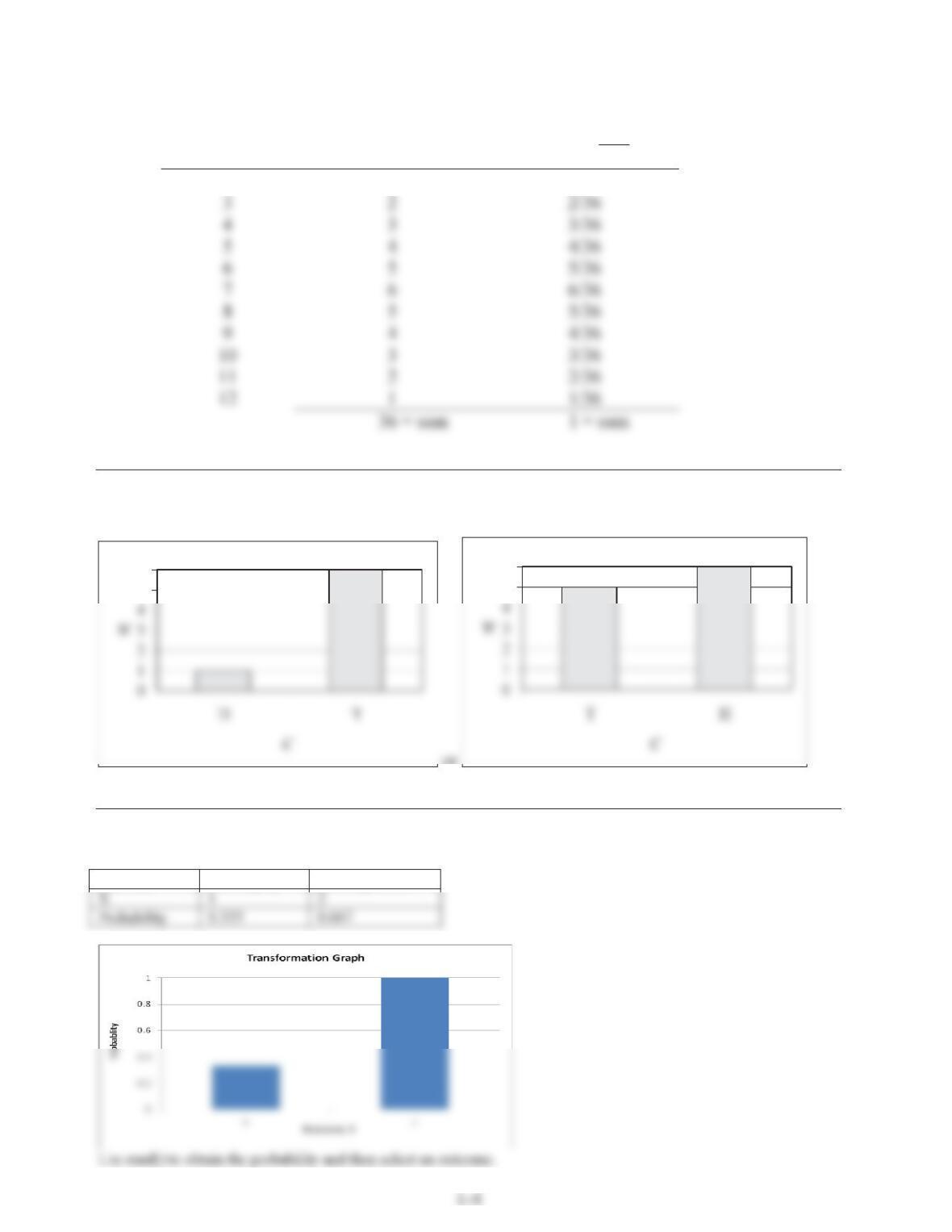
If the probability of a tail is 5/6, then the probability of a head is 1/6. Thus, the transformation
graph would be as follows:
5
6
or
5
6
Problem 1-6.
u – needle pointing up d – needle pointing down
P(d) = 2/3 P(u) = 1/3
Outcome Pointing up Pointing down
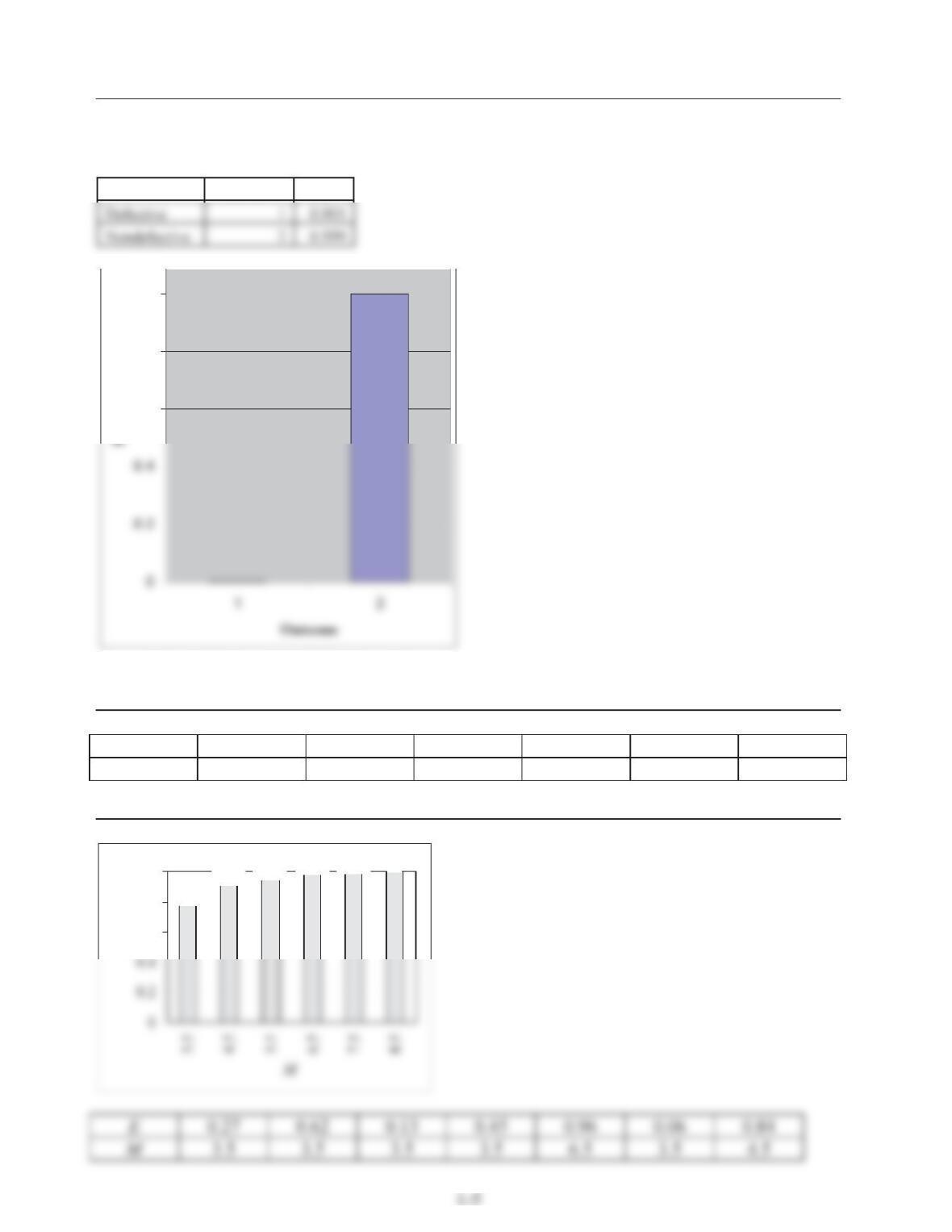
Problem 1-7.
P(d) = probability of defective chip = 1/1000
P(n) = probability of nondefective chip = 999/1000
Defective chip = 1, Nondefective chip = 2
Outcome x P(x)
0.6
0.8
1
Use rand() to obtain the probability and then select an outcome.
Problem 1-8.
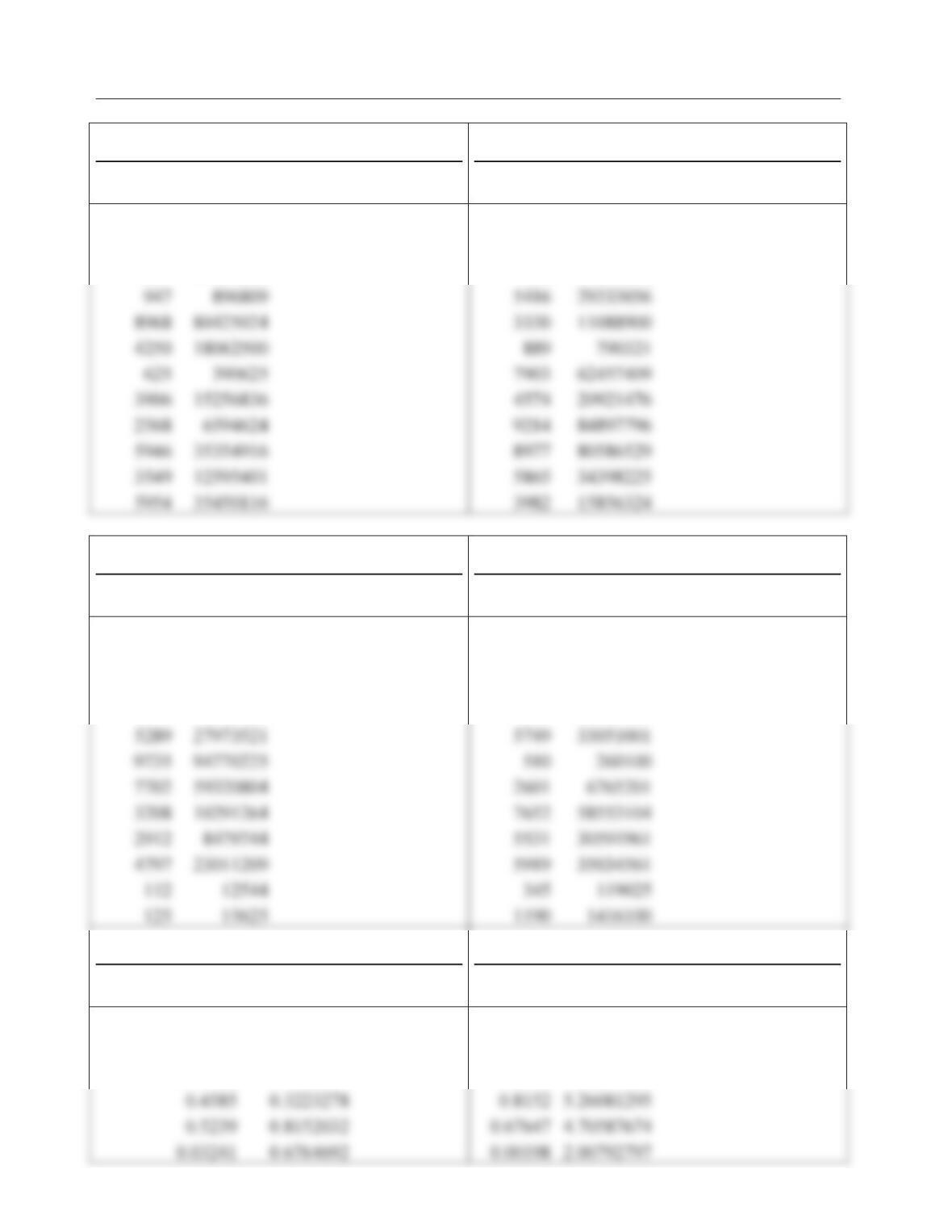
X0.37 0.82 0.64 0.25 0.02 0.94
N0 2 1 0 0 3
Problem 1-9.
0.78
0.91 0.95 0.98 0.99 1
0.6
0.8
1
E
1-6
Problem 1-10. Problem 1-11.
u u^2
3456 11943936
9439 89094721
u u^2
8371 70073641
736 541696
Problem 1-12. Problem 1-13.
u u^2
9658 93276964
2769 7667361
6673 44528929
u u^2
2468 6091024
910 828100
8281 68574961
Problem 1-14. Problem 1-15.
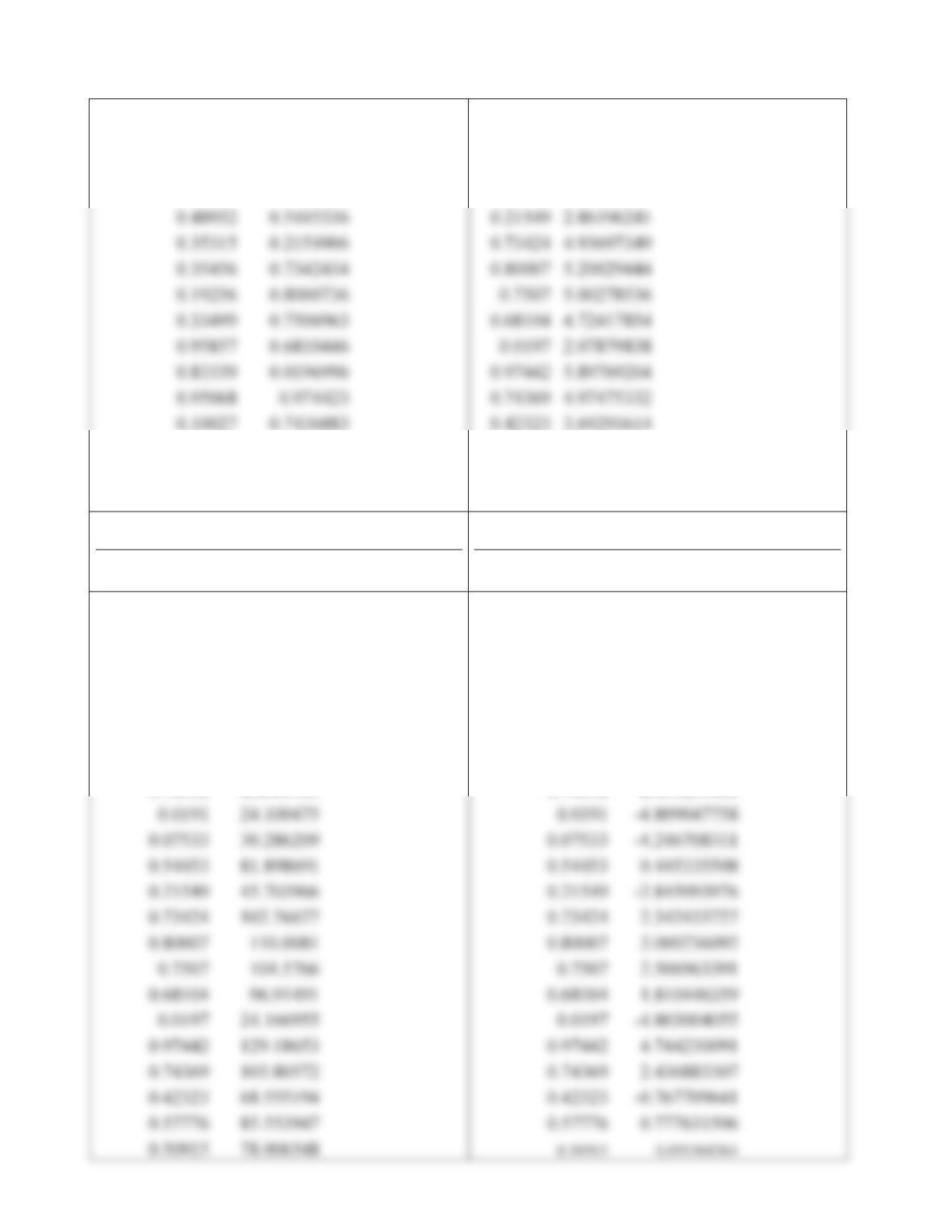
Two different sets.
u1 u2
0.17526 0.7928874
u x in [2,6]
0.79289 5.1715498
0.32233 3.2893113
1-7
0.25077 0.001982
0.19438 0.7455239
0.07779 0.0190952
0.86721 0.0753292
0.99032 0.423229
0.89113 0.5777632
0.02125 0.5091504
0.74552 4.98209578
0.0191 2.0763809
0.07533 2.30131668
0.54453 4.1781342
0.57776 4.3110526
0.50915 4.03660175
Problem 1-16. Problem 1-17.
Top 20 are listed.
u x in [22,132]
0.79289 109.21762
0.32233 57.456061
0.8152 111.67236
0.67647 96.41161
0.00198 22.218019
0.74552 104.00763
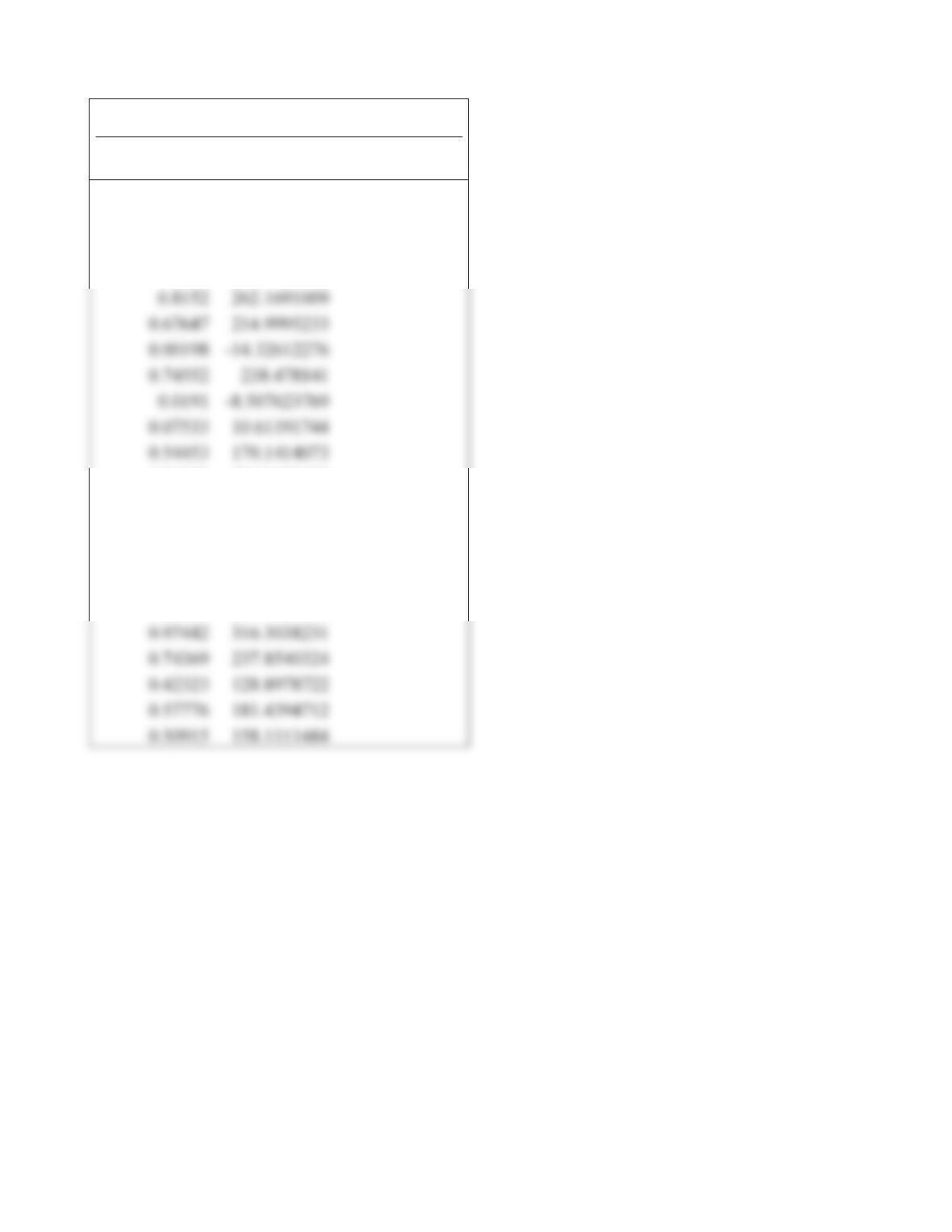
Top 20 are listed.
u x in [-5,5]
0.79289 2.92887449
0.32233 -1.776721759
0.8152 3.15203238
0.67647 1.764691861
0.00198 -4.980180081
0.74552 2.455239441
1-8
Problem 1-18.
Top 20 are listed.
u x in [22,132]
0.79289 254.5817327
0.32233 94.59146019
0.21549 58.26680483
0.73424 234.6427467
0.80007 257.0250271
0.7507 240.2367553
0.68104 216.5551762
0.0197 -8.302137868