6-1
Chapter 6
6.1 Methods for setting pressure of a distillation column
a. Set based on the pressure required to condense the overhead stream using cooling water
6.2 Run a distillation column above ambient pressure because
a. The components to be distilled have very high vapor pressures (very “light” components)
and the temperatures at which they can be condensed at or below ambient pressure are
<Tcooling water. Thus, we run the column at a high pressure to avoid the use of refrigeration
in the condenser.
6.3 Run reactions at elevated temperature because
a. The rate of reaction rate is faster. This results in a smaller reactor and/or higher single-pass
conversion
6-2
6.4 Running a process above 250 C is undesirable because
a. In order to heat the streams to that temperature the use of a fired heater is required, which
6.5 A “condition of special concern” is a process condition that deviates from an “ideal” or
“low-cost” operating condition. There are many examples given in this chapter.
6.6 Many of these products are thermally labile meaning that they degrade at quite low
6.7 Distillation of a binary mixture, the effect of an increase in column pressure on:
a. The tendency to flood at a given reflux ratio will decrease because the density of vapor
will increase and hence the superficial velocity in the tower will decrease thus moving
away from flooding.
6-3
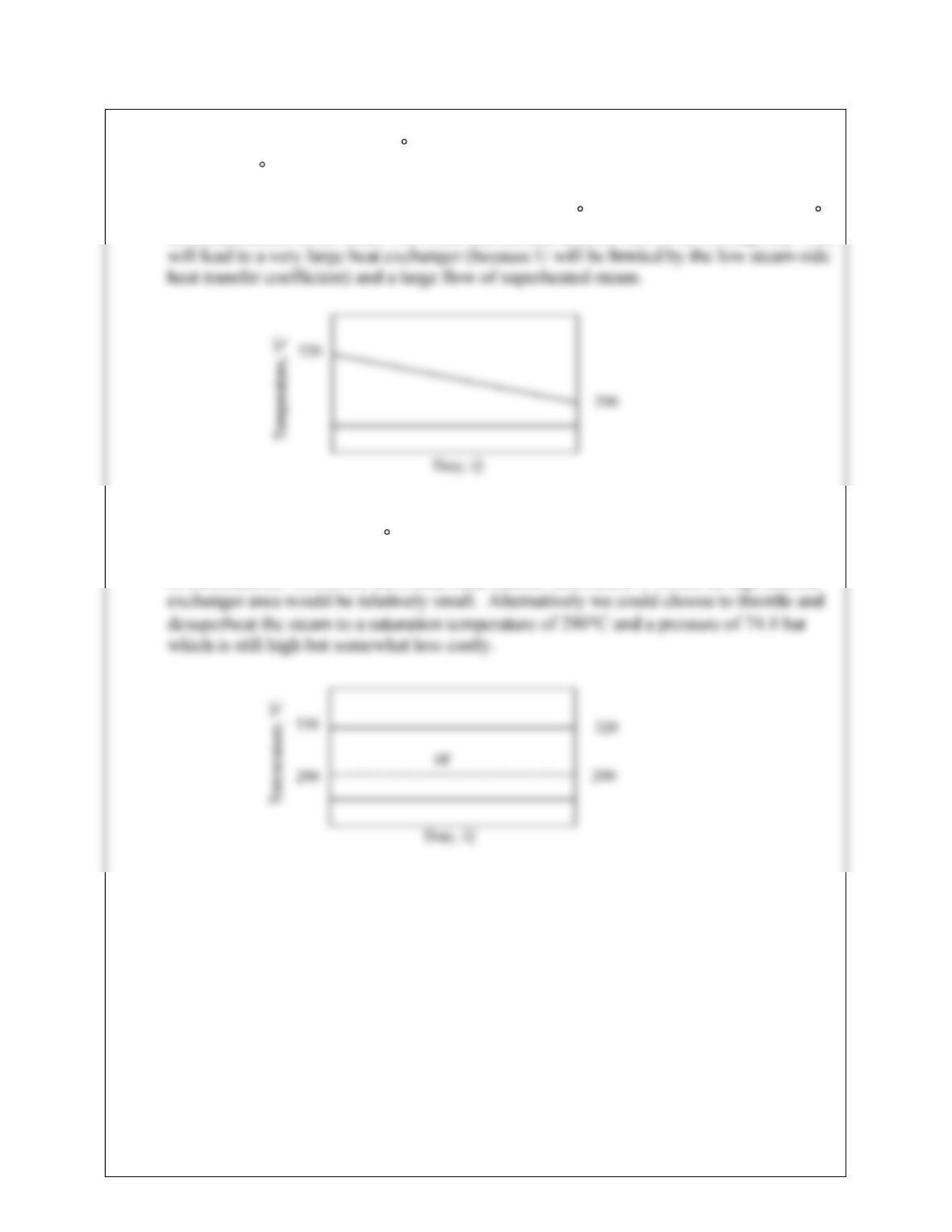
6.8 Required reboiler utility at 290 C or higher. Assume that the exit temperature of utility is
fixed at 290 C. Look at the T-Q diagram for the reboiler for both cases:
a. Using high-pressure (42 bar) steam superheated to 320 C. Since hps condenses at 254 C,
no condensation of the steam will occur and all heat transfer will be by cooling only. This
b. Using saturated steam at 320 C requires a pressure of 112.7 bar. This is very high and
would cause the exchanger to be very expensive and possibly requiring special materials
of construction. However, the overall heat transfer coefficient U would be high and the
6-4
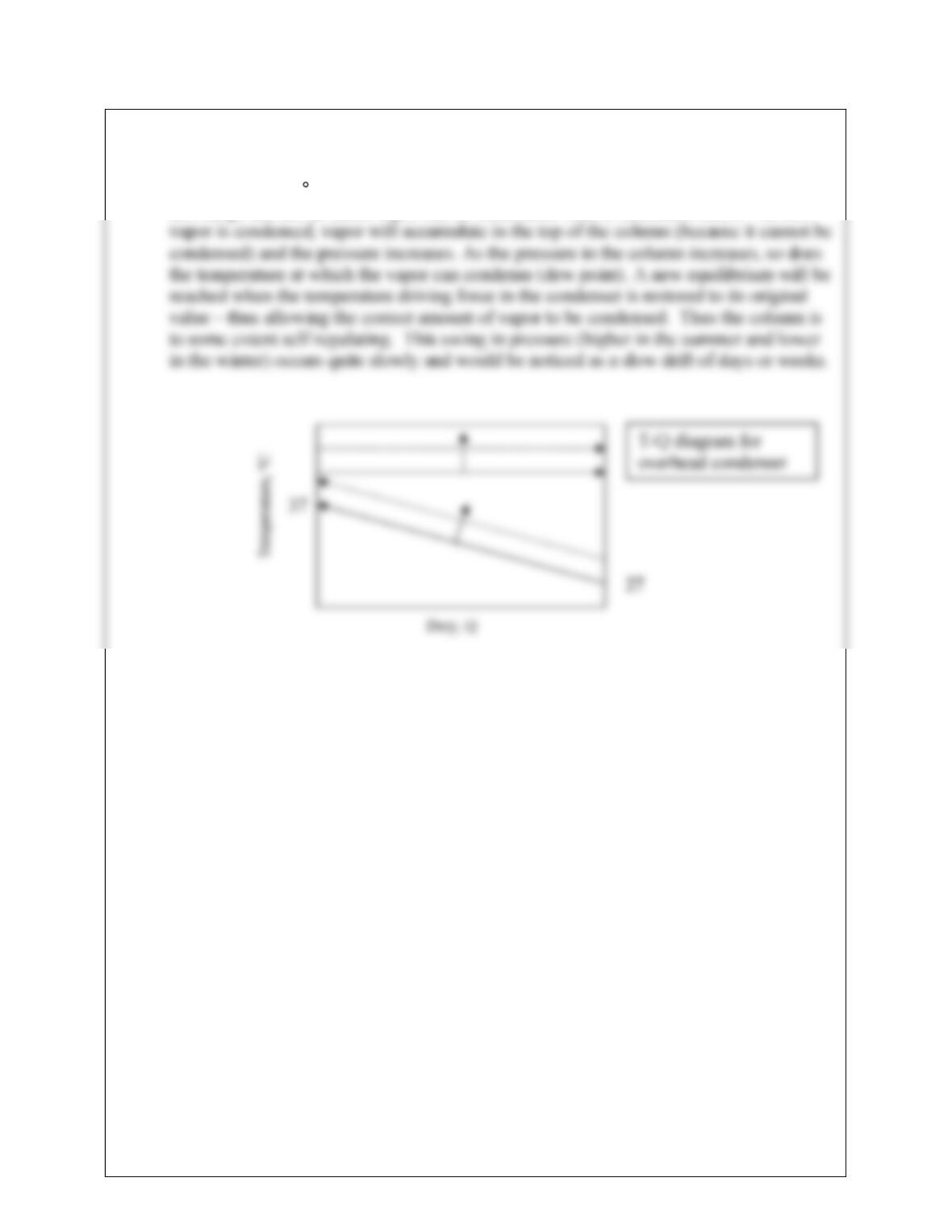
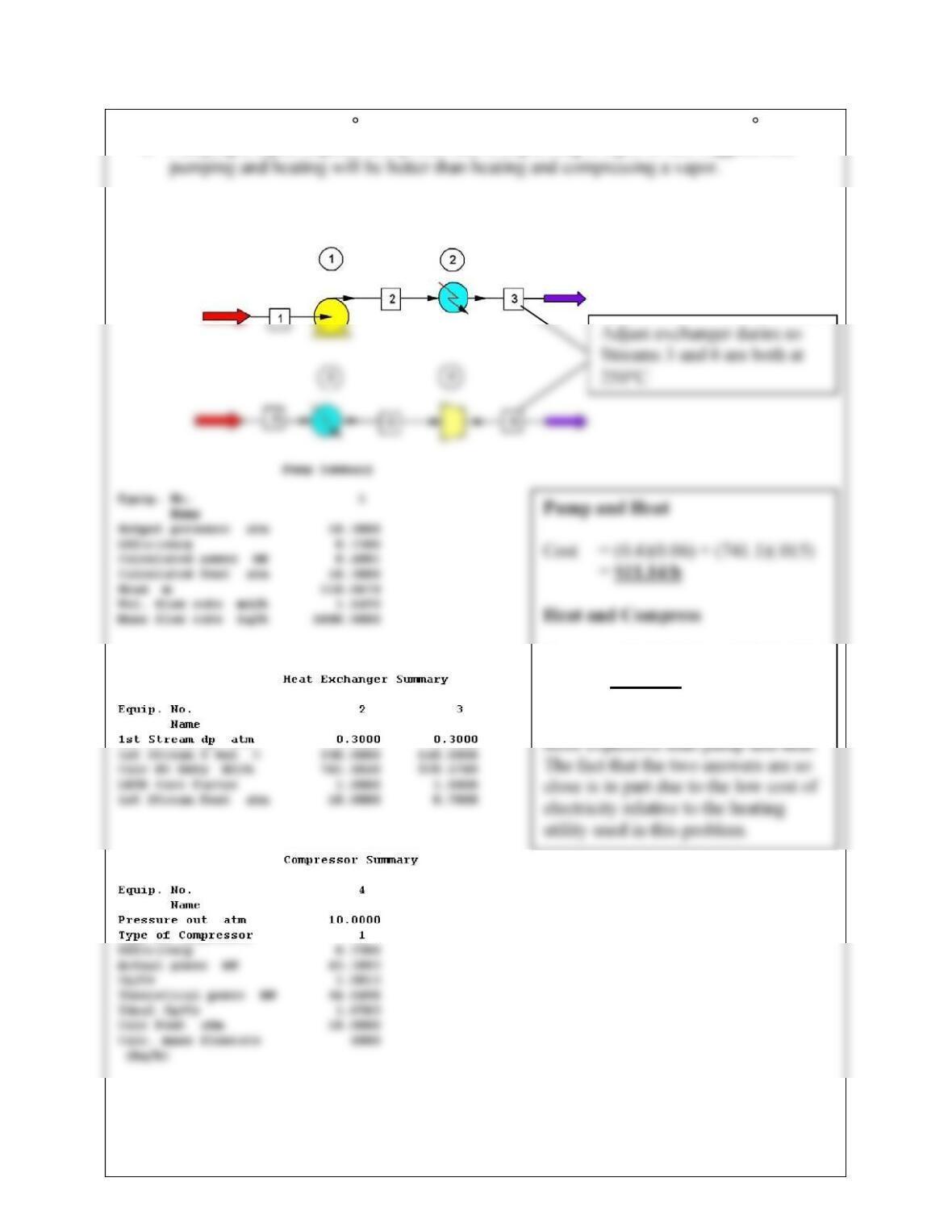
6.9 If the column is designed to produce a saturated overhead product and reflux then a
change in cooling water will affect the column pressure. For example, if the column is
working at a pressure Pwinter in the winter when the cooling water is available at a
temperature of 27 C then as the cw temperature increases, the temperature driving force
also drops and not as much vapor can be condensed. This is illustrated below. As less
6-5
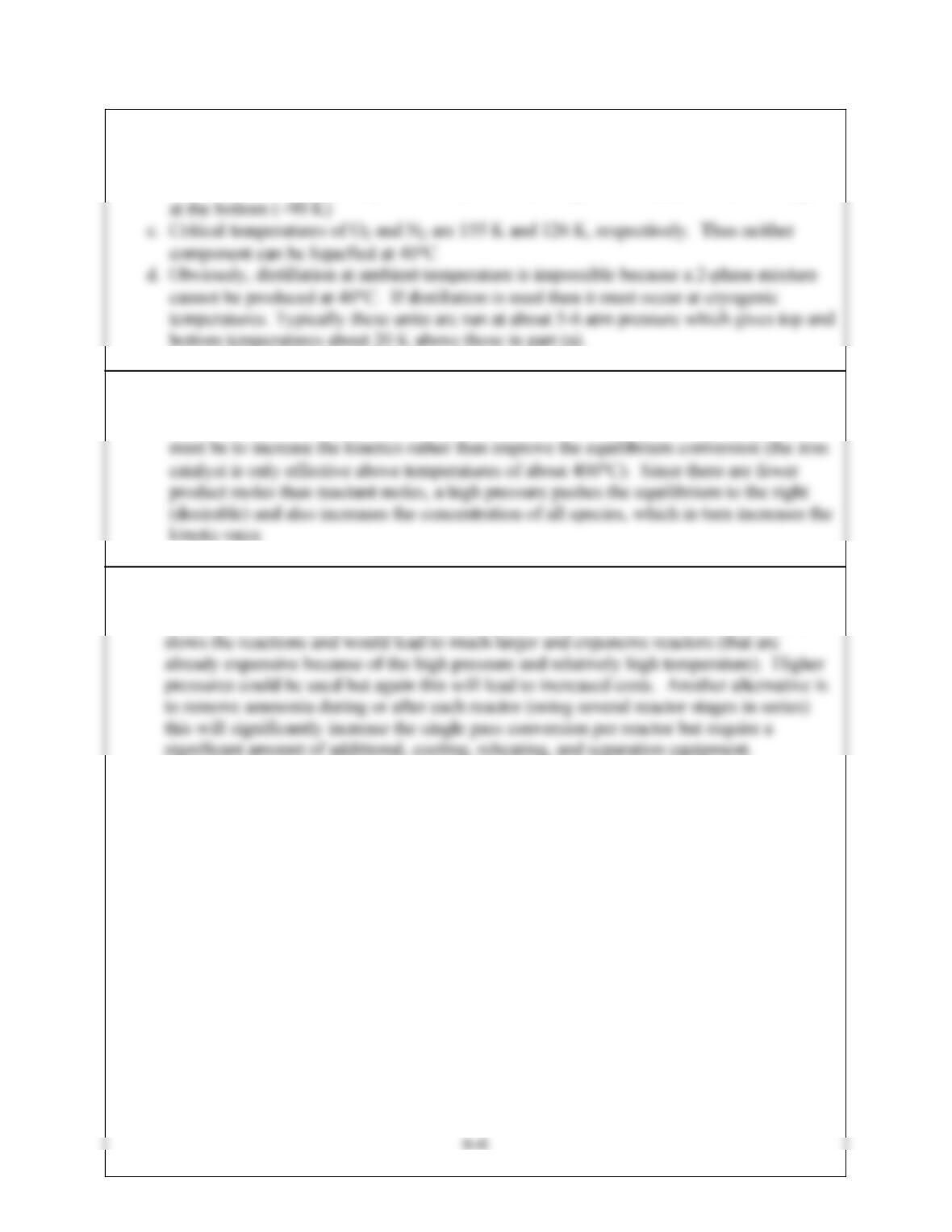
6.10 Benzene at 1 atm and 25 C to be vaporized and pressurized to 10 atm and 250 C.
a. Pumping a liquid requires less power than compressing a vapor so this suggests that
b. Use a basis of 1,000 kg/h of benzene, simulation results (Chemcad – SRK) are given
below
Cost = (45.4)(0.06) + (579.5)(.015)
= $11.41/h
Heat and Compression is slightly
6.11 Production of high purity oxygen via cryogenic distillation.
a. Normal Boiling Point of O2 = 90.2 K, NBP of N2 = 77.7 K
b. Assuming nearly pure compositions of products, nitrogen at the top (~78 K) and oxygen
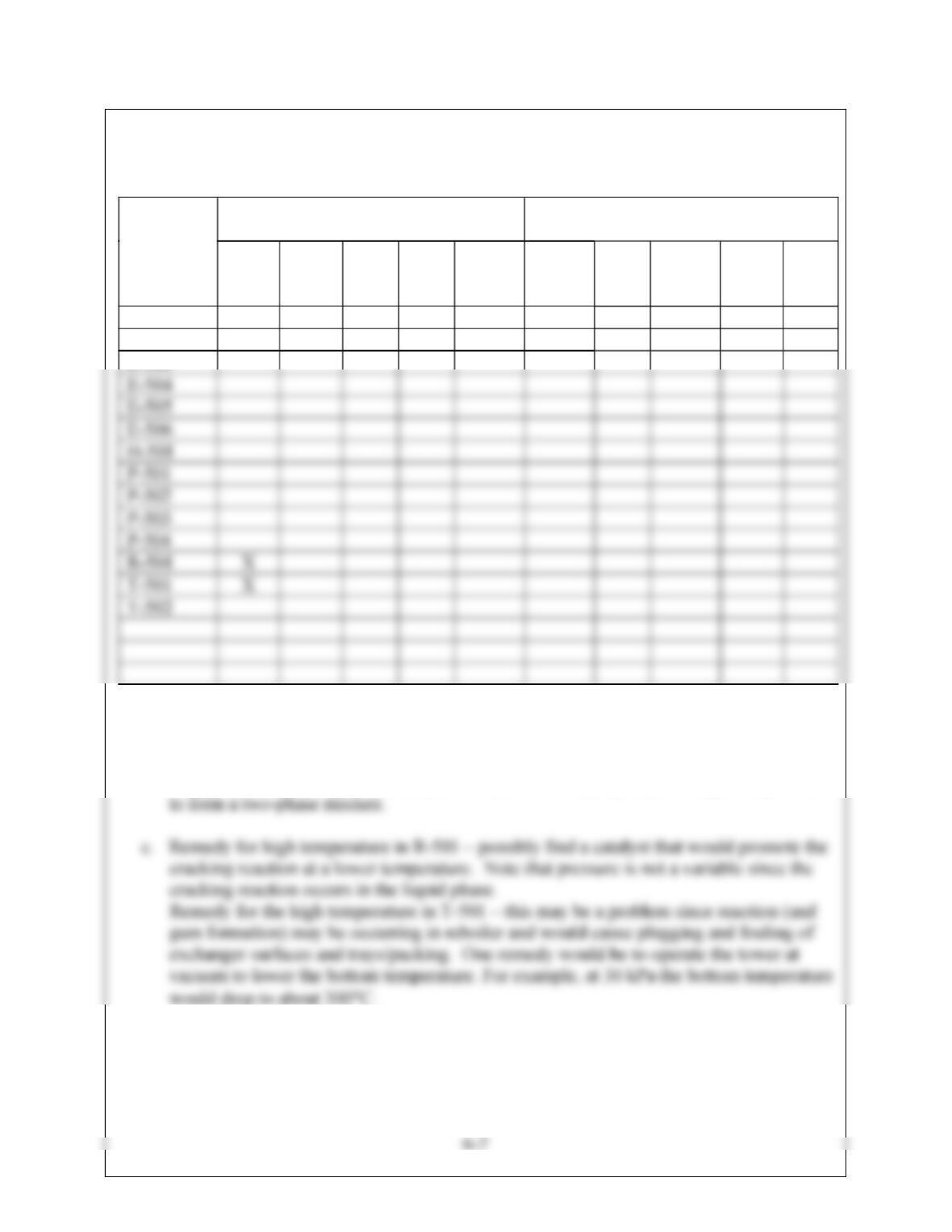
6.12 Since the synthesis reaction to produce ammonia is highly exothermic, a high temperature
tends to push the reaction to the left (undesirable). The reason for the high temperature
6.13 The conversion is limited by equilibrium and so it would be increased by using lower
temperature and higher pressure. As pointed out in Problem 12, the lower temperature
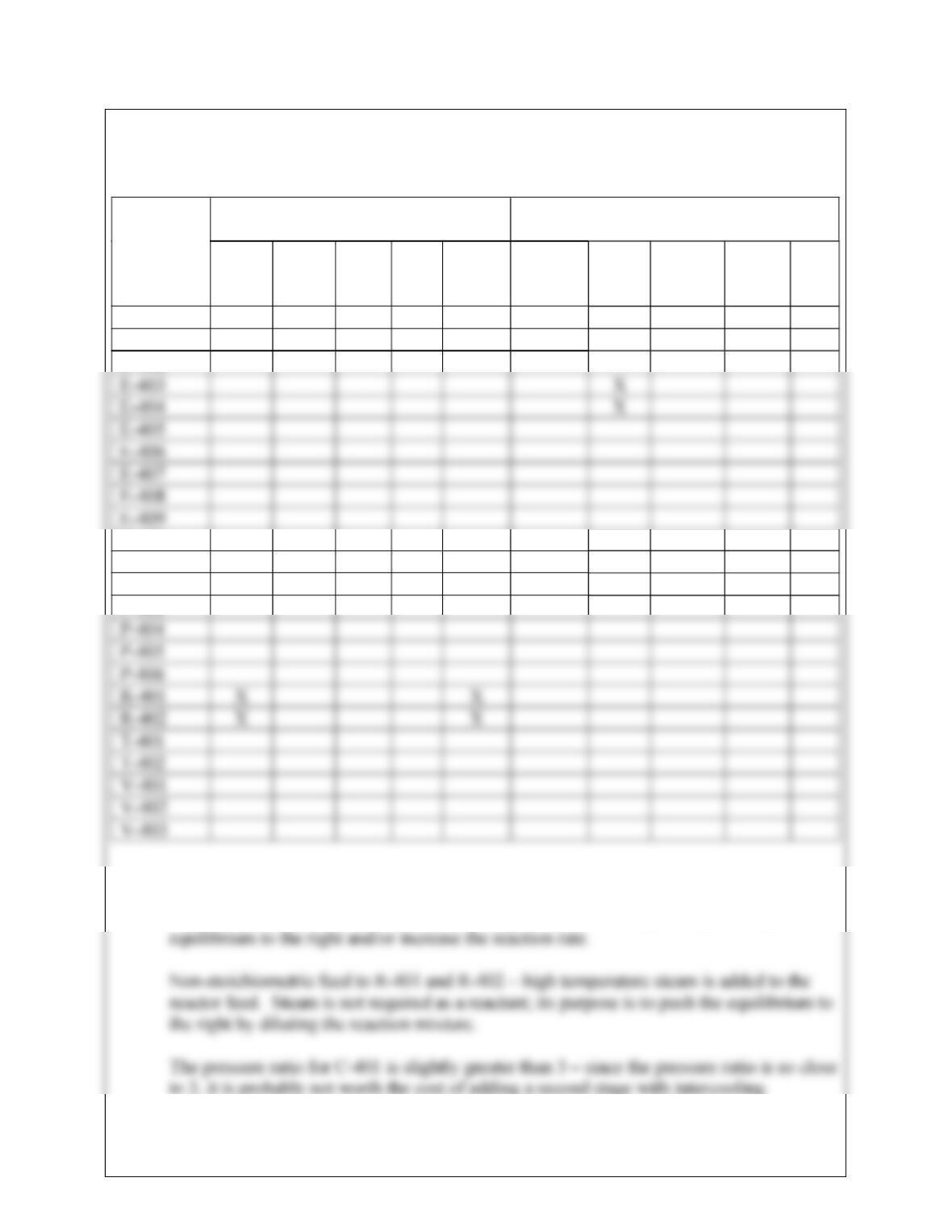
6.14 Drying Oil Process
Equipment
Reactors and Separators
Tables 6.1 – 6.3
Other Equipment
Table 6.4
High
Temp
Low
Temp
High
Pres
Low
Pres
Non-
Stoich.
Feed
Compr Exch Heater Valve Mix
E-501
E-502
E-503
a. PCM is shown above
b. High temperature in R-501 – need high temperature to initiate cracking reactions. High
temperature in T-501 – heavy components (ACO and drying oil) need high temperature
6-8
6.15 Styrene process
a. PCM
Equipment
Reactors and Separators
Tables 6.1 – 6.3
Other Equipment
Table 6.4
High
Temp
Low
Temp
High
Pres
Low
Pres
Non-
Stoich
. Feed
Compr Exch Heater Valve Mix
C-401 X
E-401
E-402
H-401
P-401
P-402
P-403
b. High temperatures in R-401 and R-402 – the desired reaction is slightly endothermic and
may be equilibrium limited. Therefore, the high temperature may be required to push the
6-9
The Tlm for E-403 and E-404 are both greater than 100 C – shows low heat integration
but represents a simple, low-cost configuration.
c. A possible remedy to using such high temperatures in the reactors is to use a lower
pressure but since the pressure is already quite low (170 kPa) this would lead to larger
reactors and possibly vacuum operations.