2-1
Chapter 2
2.1 The five elements of the Hierarchy of Process Design are:
a. Batch or continuous process
2.2 a. Separate/purify unreacted feed and recycle use when separation is feasible.
b. Recycle without separation but with purge when separation of unused reactants is
2.3 Batch preferred over continuous when: small quantities required, batch-to-batch
2.4 One example is the addition of steam to a catalytic reaction using hydrocarbon feeds.
Examples are given in Appendix B (styrene, acrylic acid.) In the styrene process,
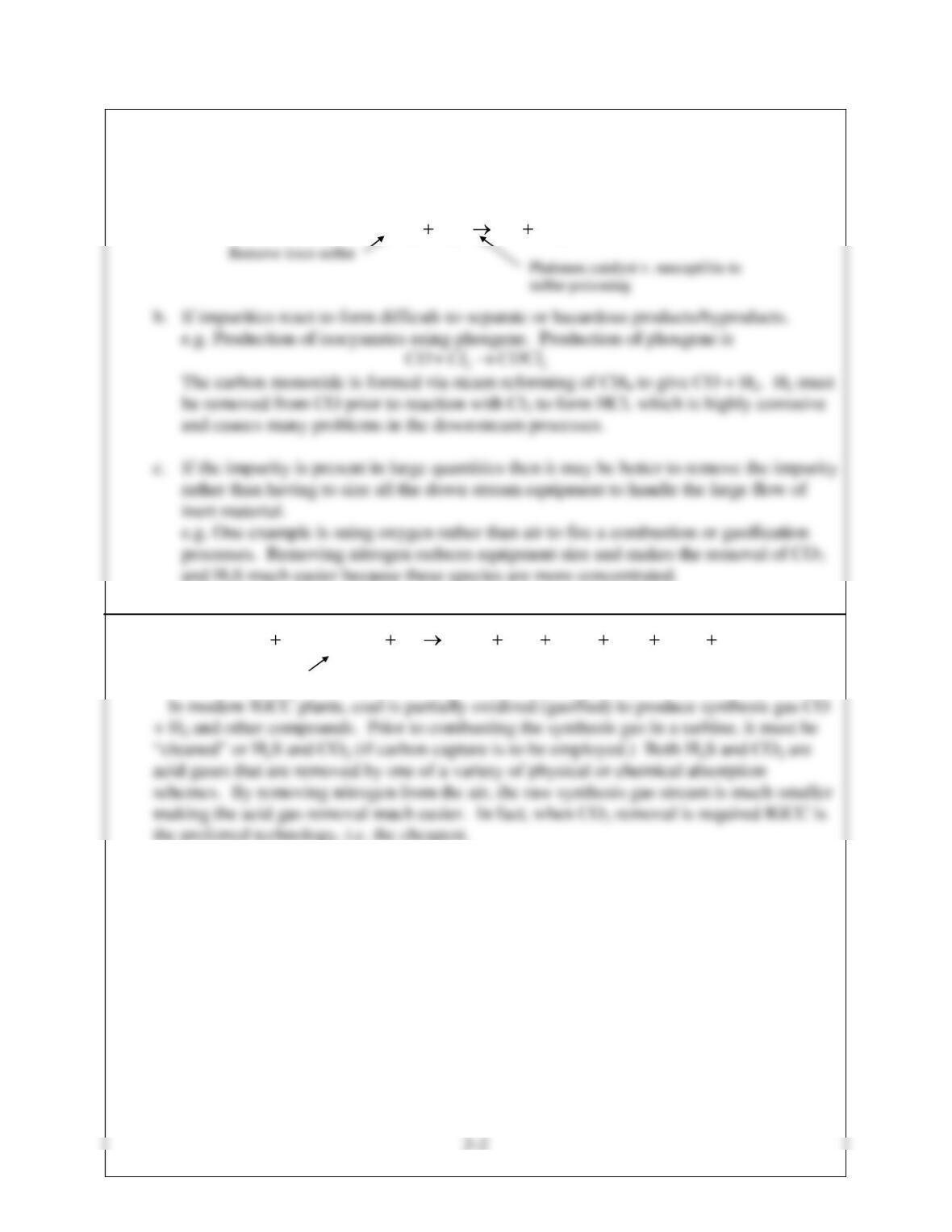
2.5 Reasons for purifying a feed material prior to feeding it to a process include:
a. If impurity foul or poison a catalyst used in the process.
e.g. Remove trace sulfur compounds in natural gas prior to sending to the steam
reforming reactor to produce hydrogen.
C
H
4
H
20CO 3
H
2
2.6 IGCC
H
2O
C
a
H
bScO
d
N
eO2
p
CO2q
H
2r
H
2O sCO tNH3u
H
2S
Coal
2-3
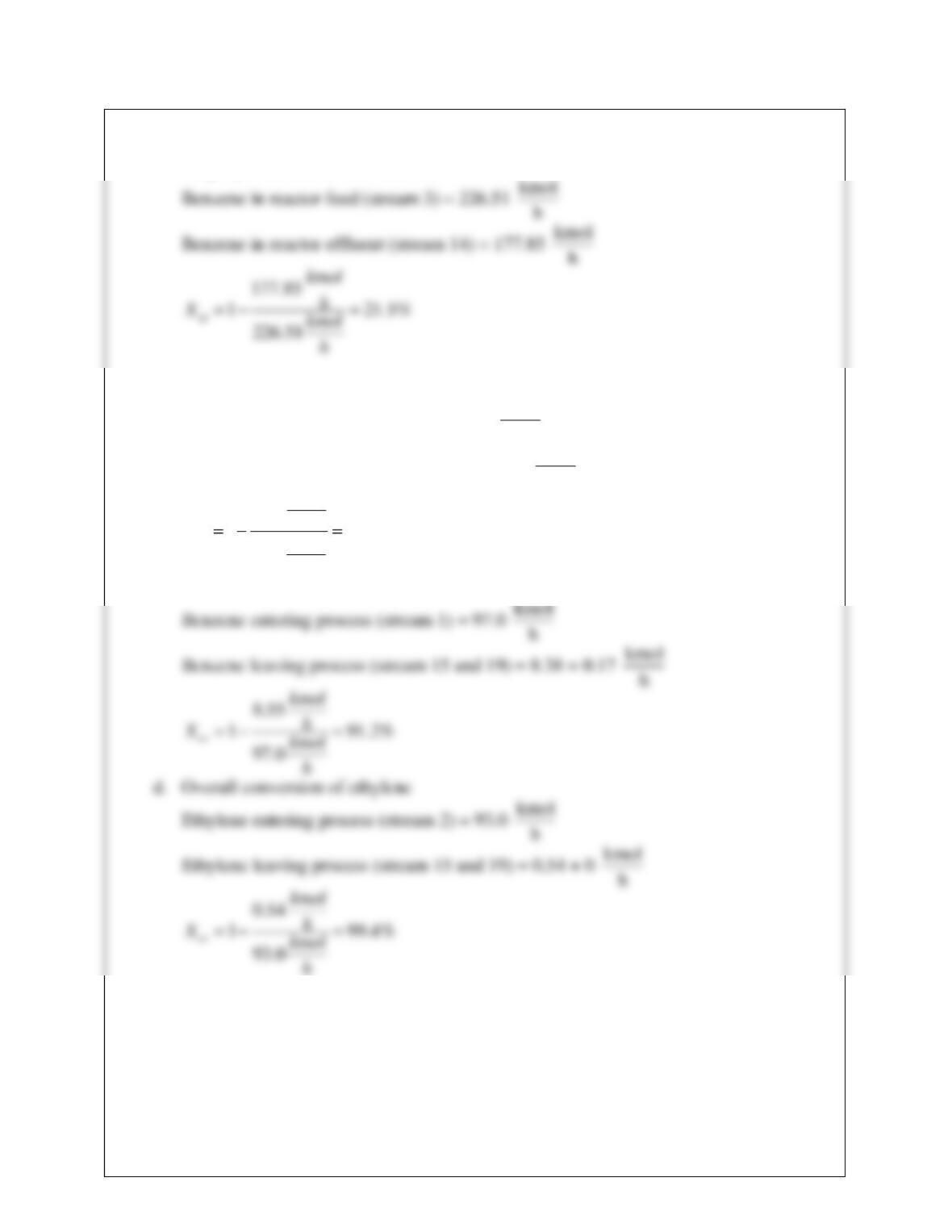
2.7 Ethylebenzene Process
a. Single pass conversion of benzene
b. Single pass conversion of ethylene
Ethylene in reactor feed (stream 2) = 93.0 kmol
h
Ethylene in reactor effluent (stream 14) = 0.54 kmol
h
Xsp 1
0.54 kmol
h
93.0 kmol
h
99.4%
c. Overall conversion of benzene
2-4
2.8 Separation of G from reactor effluent may or may not be difficult. (a) If G reacts to form a
heavier (higher molecular weight) compound then separation may be relatively easy using
2.9 Pharmaceutical products are manufactured using batch process because:
a. they are usually required in small quantities
2-5
2.10 a. Single pass conversion of ethylbenzene
Ethylbenzene in reactor feed (stream 7) = 223.73 kmol
b. Overall conversion of ethylbenzene
Ethylbenzene entering process (stream 1) = 121 kmol
h
c. Yield of styrene
Moles of ethylbenzene required to produce styrene (Stream 21) = 120.03 kmol
h
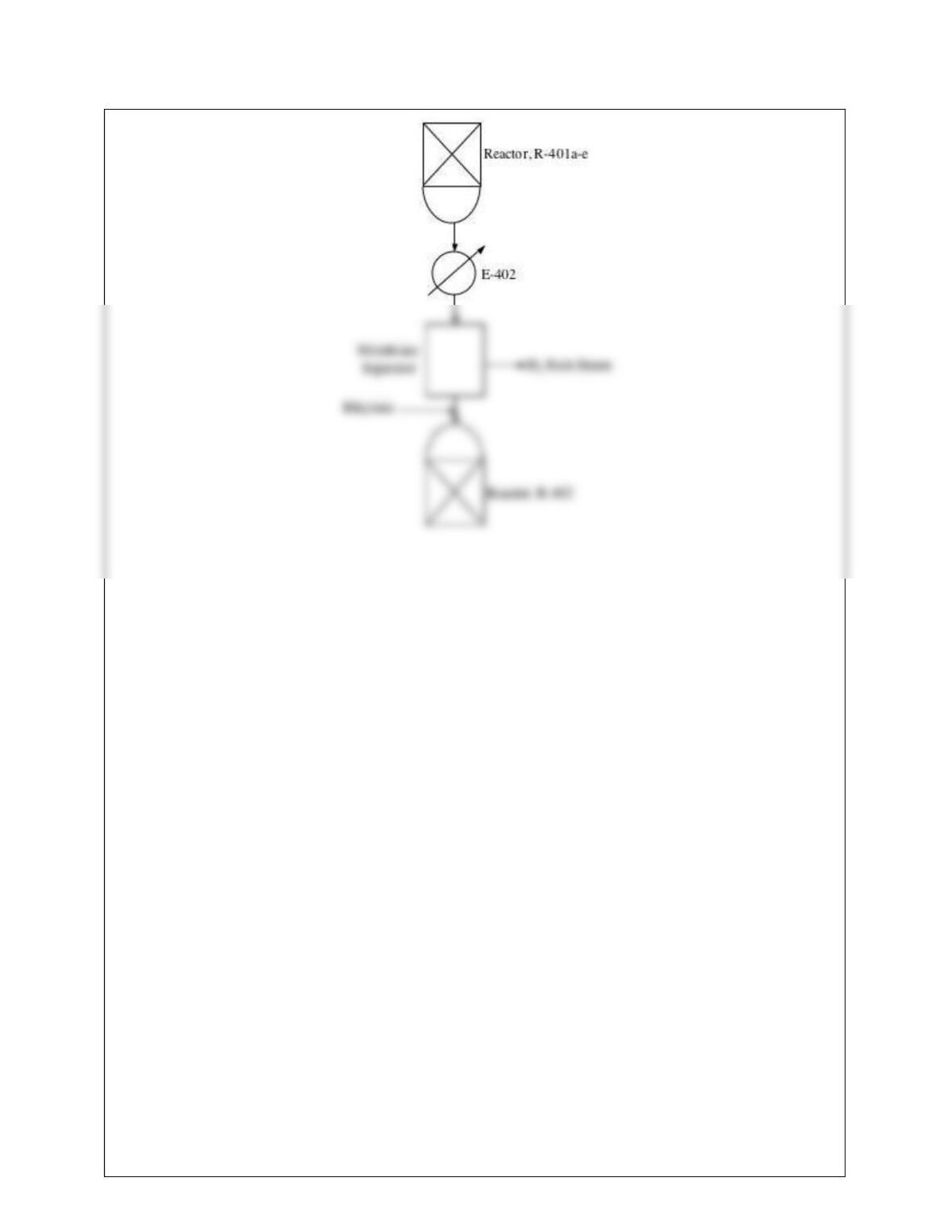
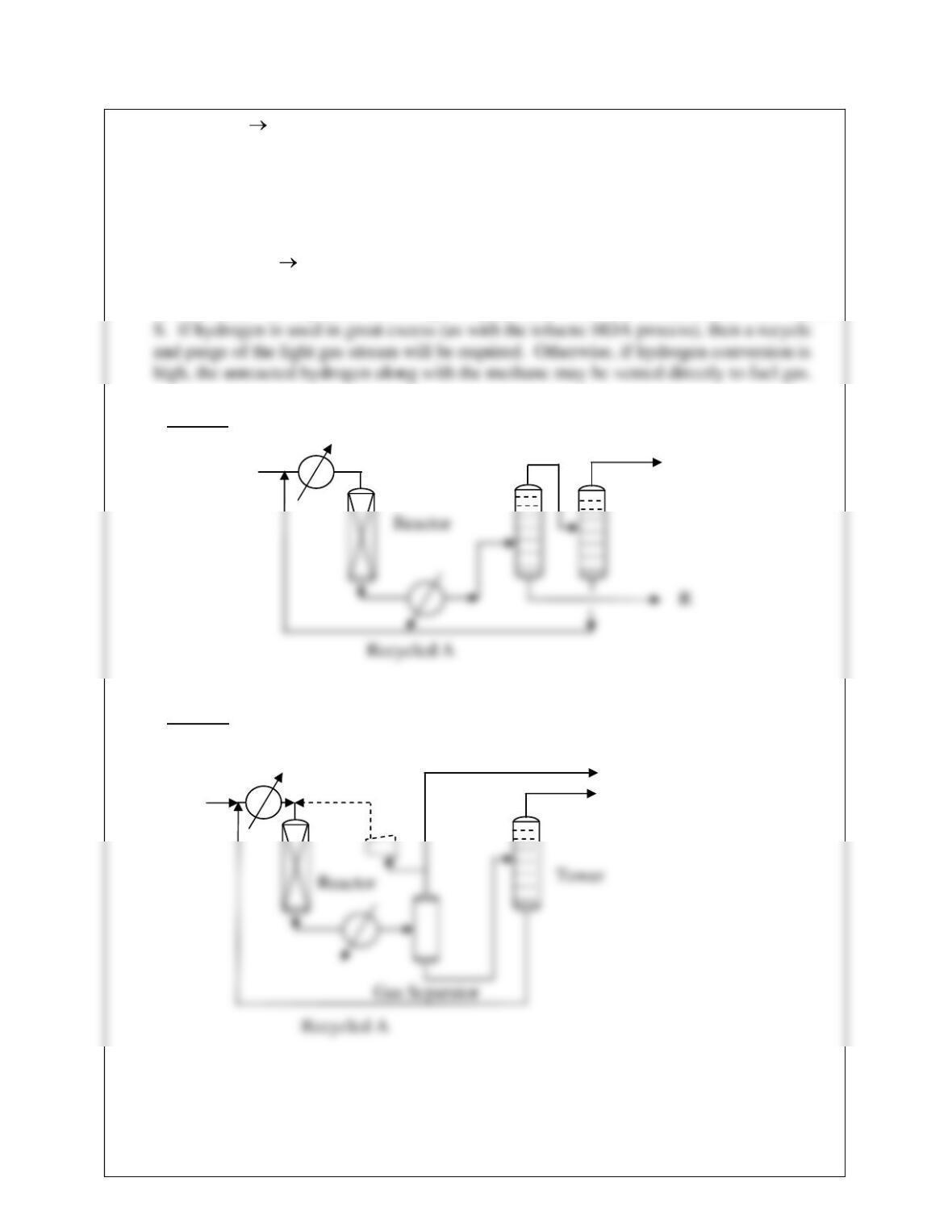
Possible strategies to increase the yield of styrene (not necessary based on the yield above
but these will also increase the single pass conversion) are:
2-6
2-7
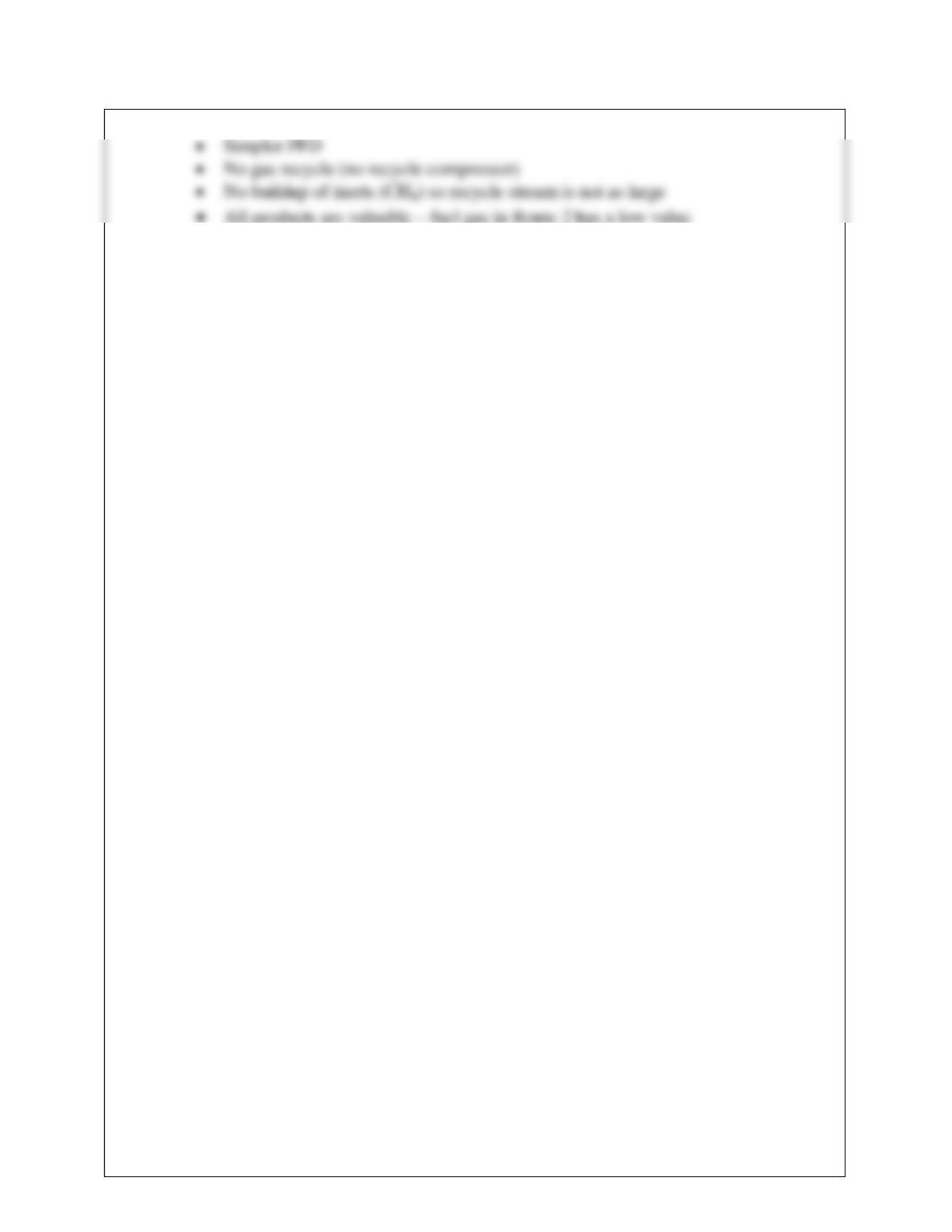
2.11 Route 1: 2A S + R
Key features are that no light components (non-condensables) are formed and only one
reactant is used. Therefore, separation of A, R, and S can take place using distillation
columns.
Route 2: A + H2 S + CH4
Unlike Route 1, this process route requires separation of the non-condensables from A and
Route 1 PFD sketch
Route 2 PFD sketch gas recycle shown dotted since it is only needed if H2 is used in
(considerable) excess and must be recycled.
S
A
Tower 1 Tower 2
S
A
H2 + CH4
Compressor
2-8
Route 1 is better since:
2.12 a. Good when product(s) and reactant(s) are easily separated and purified (most often by
distillation.) Any inerts in the feed or byproducts can be removed by some unit
2-10
2.13 a.
b.
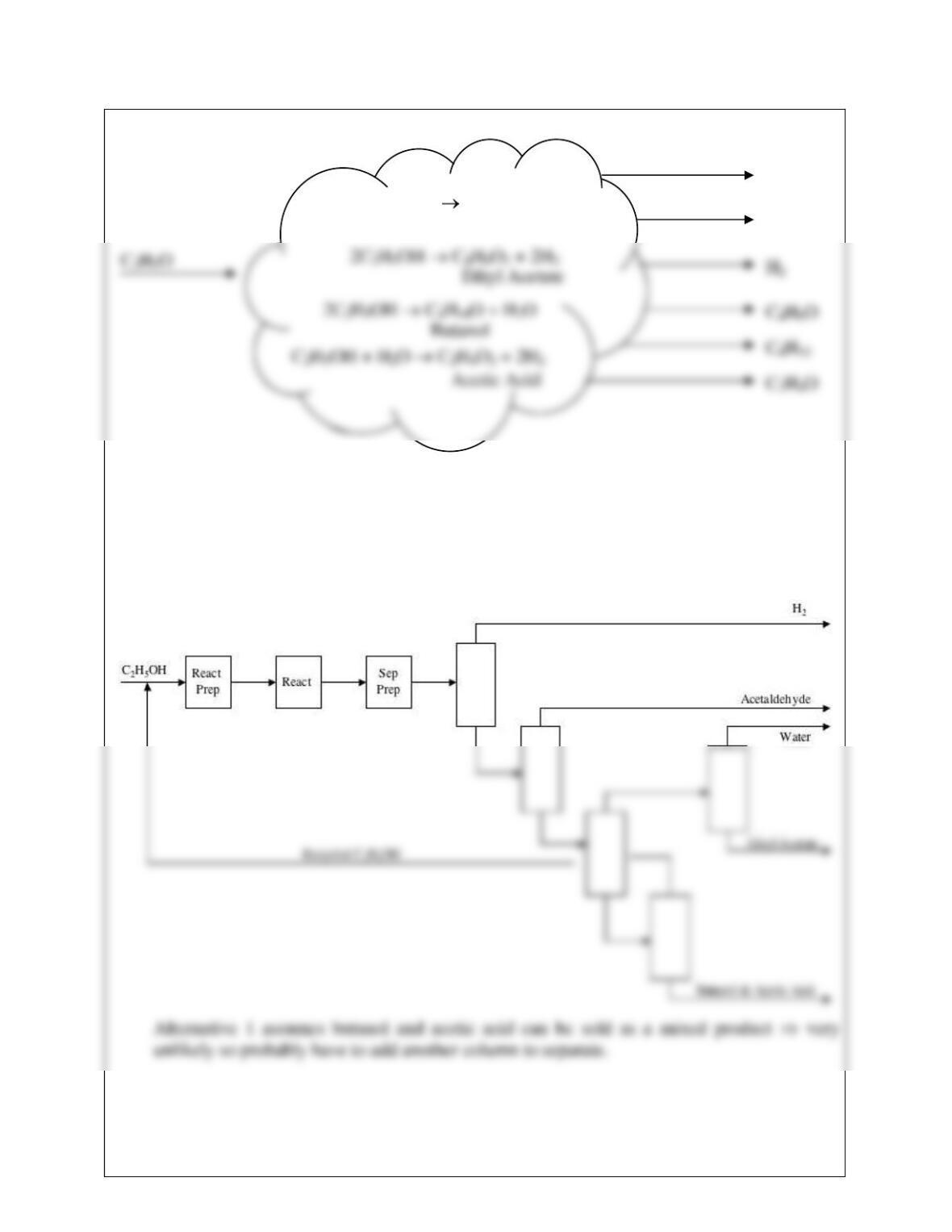
Alternative 1
C
2
H
5
OH
C
2
H
4
O + H
2
Acetaldeh
y
de
H
C2H4
Order of volatility is acetaldehyde, water, ethyl acetate, ethanol, isobutanol, acetic acid.
2
5
4
8
2
2
2
5
4
2
2-11
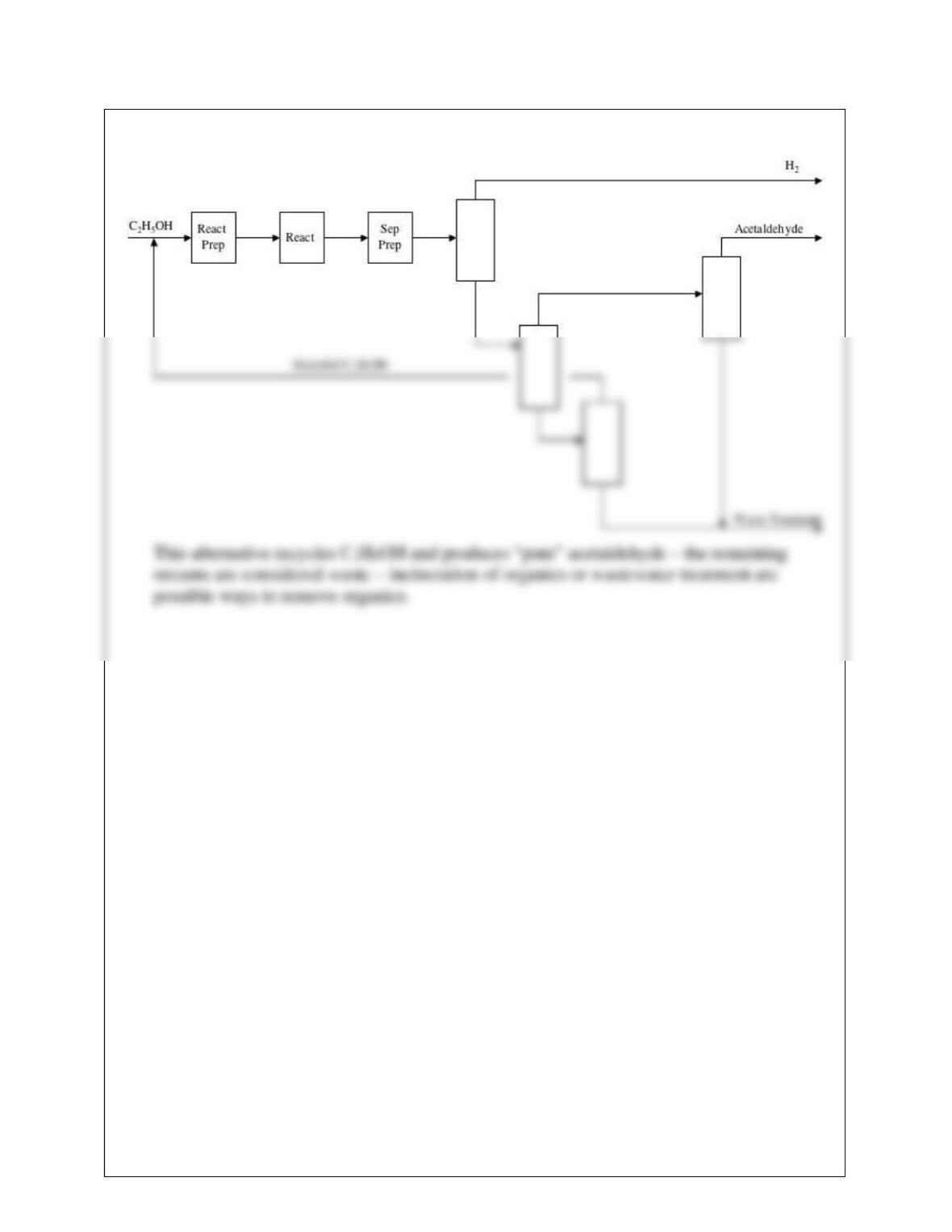
Alternative 2
2.14
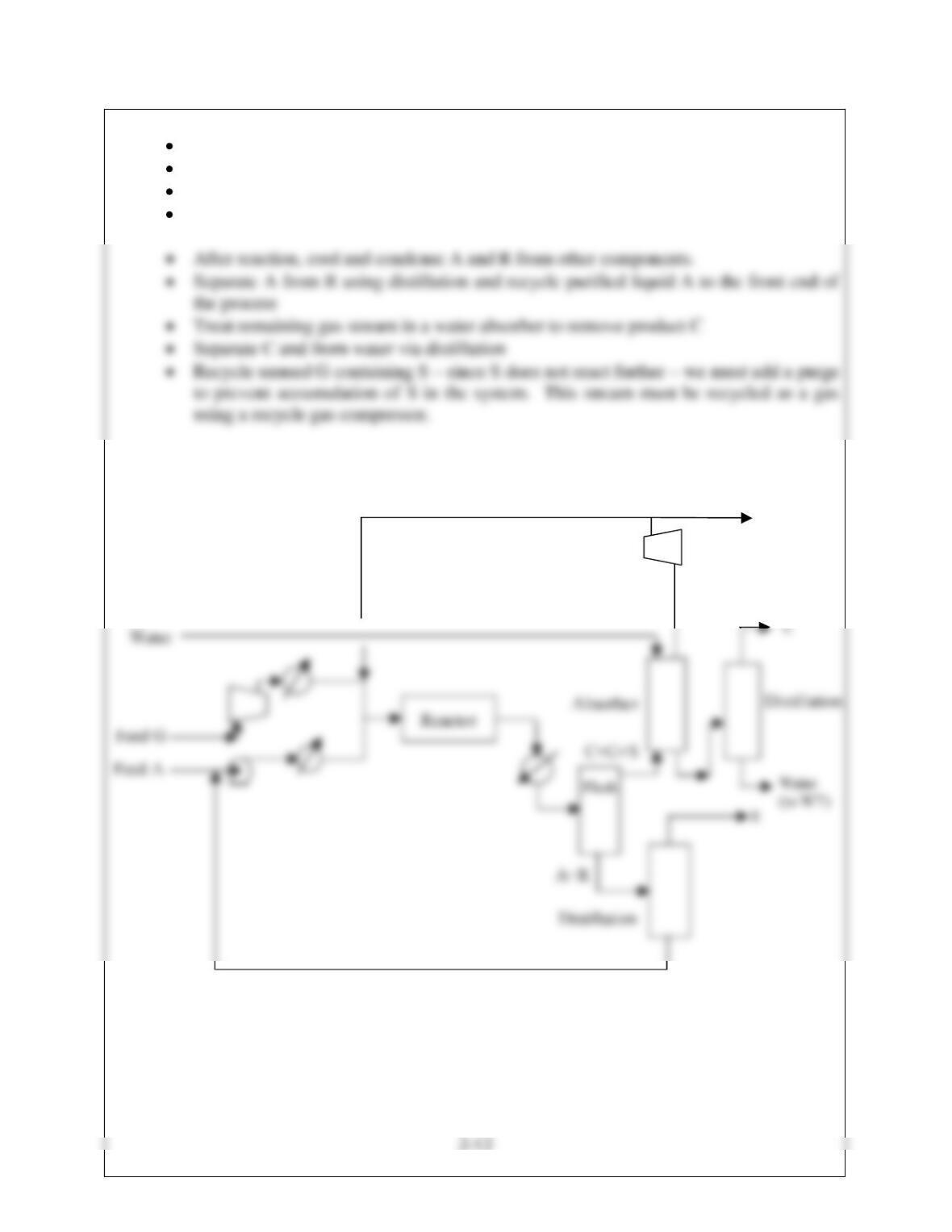
A and R are both condensable and may be separated via distillation
C may be separated by absorption into water
R will be absorbed into water
G and S cannot be separated except at very high pressure or low temperature
If the value of G was very low, then consider not recycling G (and S.)
G+S Purge
(to WT)
G+S Recycle
2-13
2.15
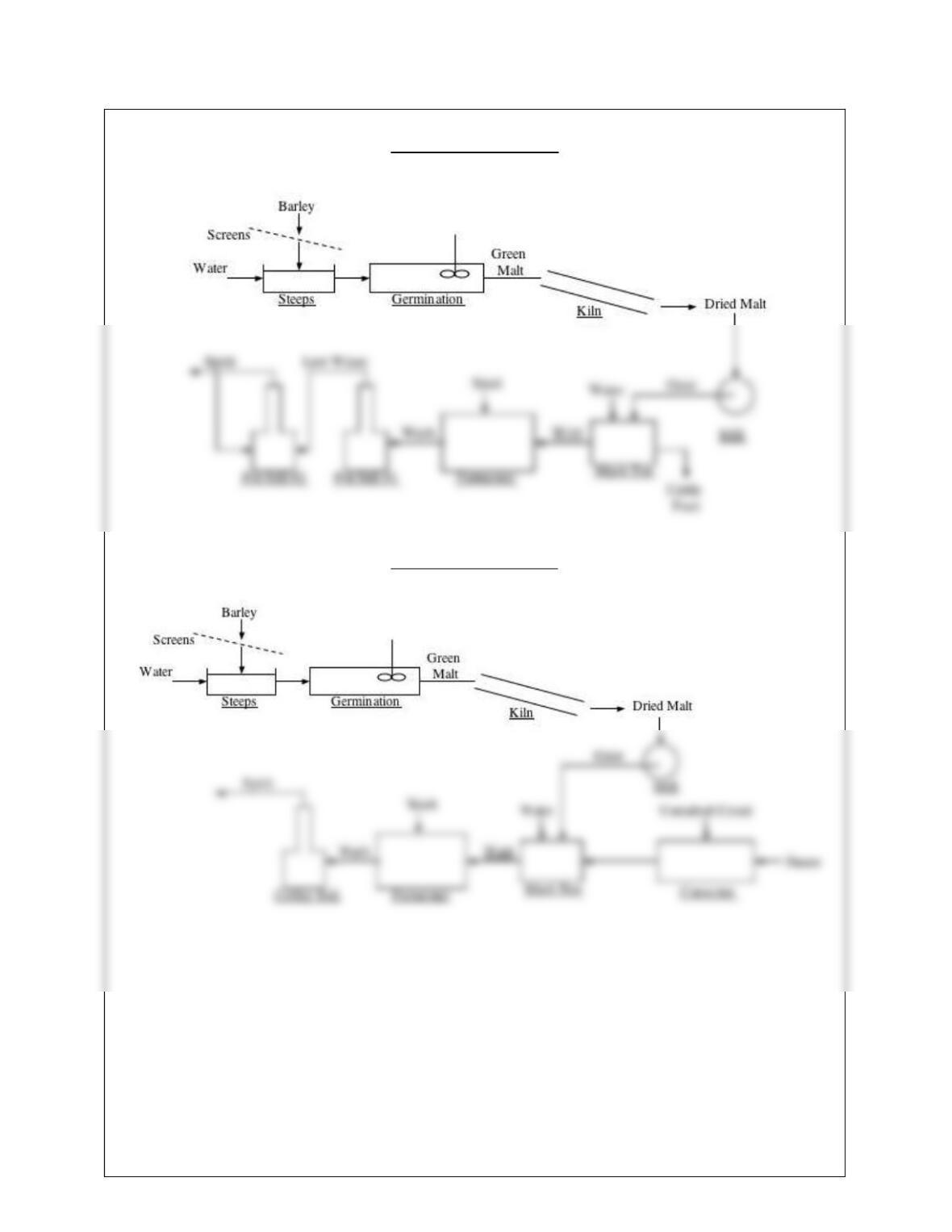
Malt Whiskey Process
Grain Whisky Process