16-12
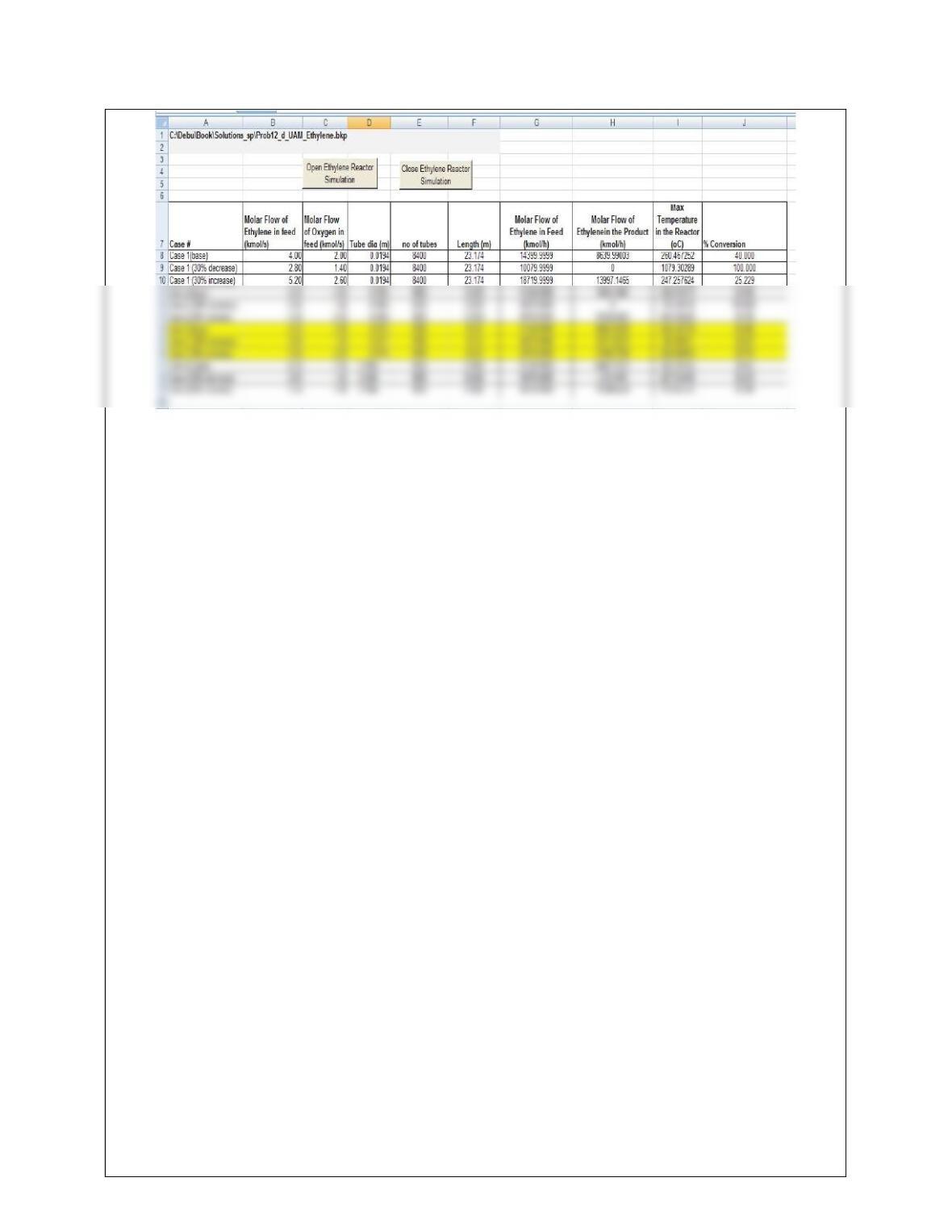
It can be seen in the UAM shown below that the upper two designs exceed the high
temperature limit when the flowrate is decreased by 30%. Both the lower designs satisfy
16-13
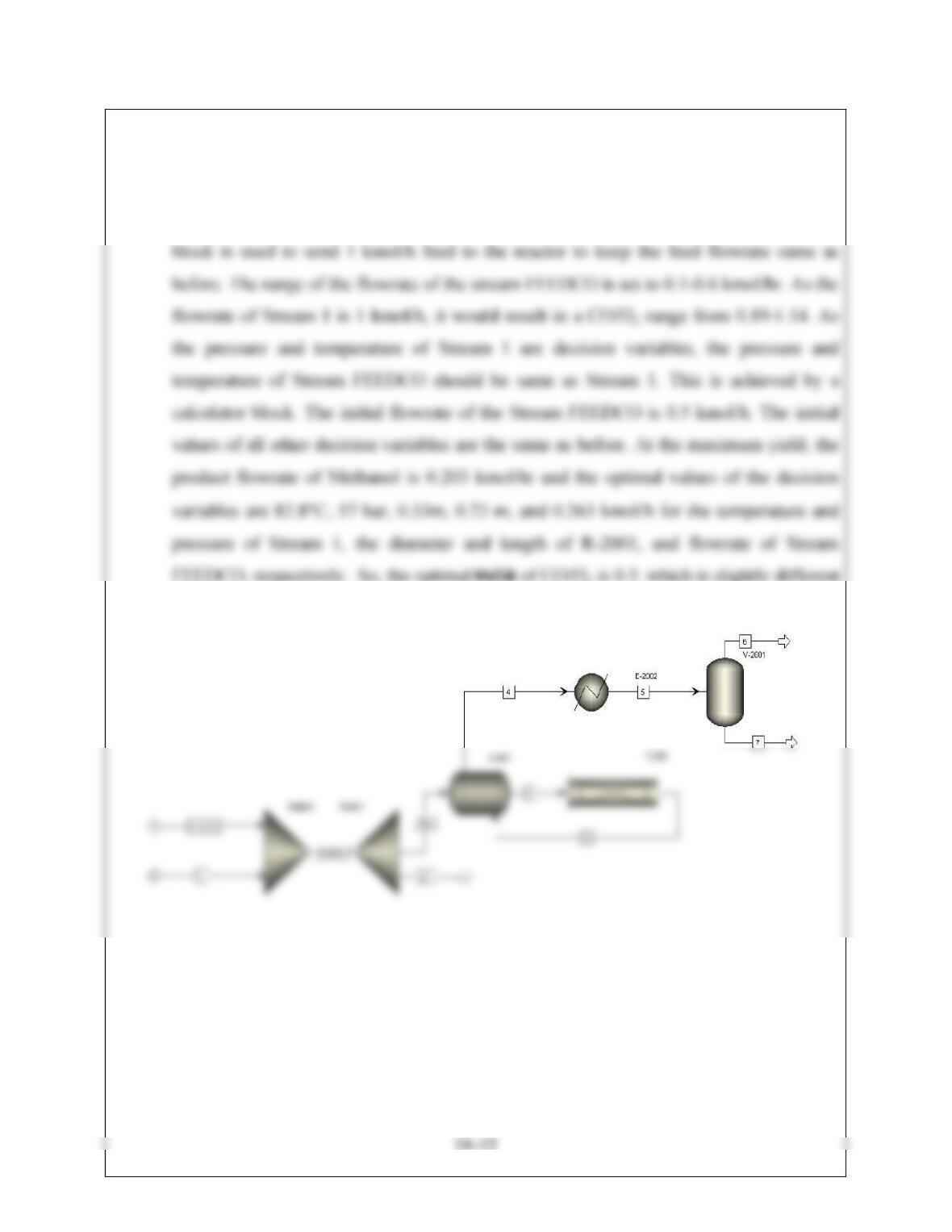
16.13 This problem is set up in Aspen Plus V7.2. Please note that in the first print of the 4th ed.,
the units have been placed wrongly after the pre-exponential factor. These are rate units
and should be at the end of the equations (does not matter for the 2nd reaction, though).
The PR EOS is used. E-2001 is set up with 15 C temperature approach. The equilibrium
constants are calculated from Gibbs free energy minimization. The reactor and other
depends upon the initial guess of the decision variables. It will take the values of the
decision variables in the beginning of the optimization to be the initial guess. The initial
values provided are 40 C, 15 bar, 0.1 m, and 0.3 m for the temperature and pressure of
Stream1, diameter and length of R-2001, respectively. The SQP or COMPLEX
algorithm can be used to solve the optimization problem while the tear stream is
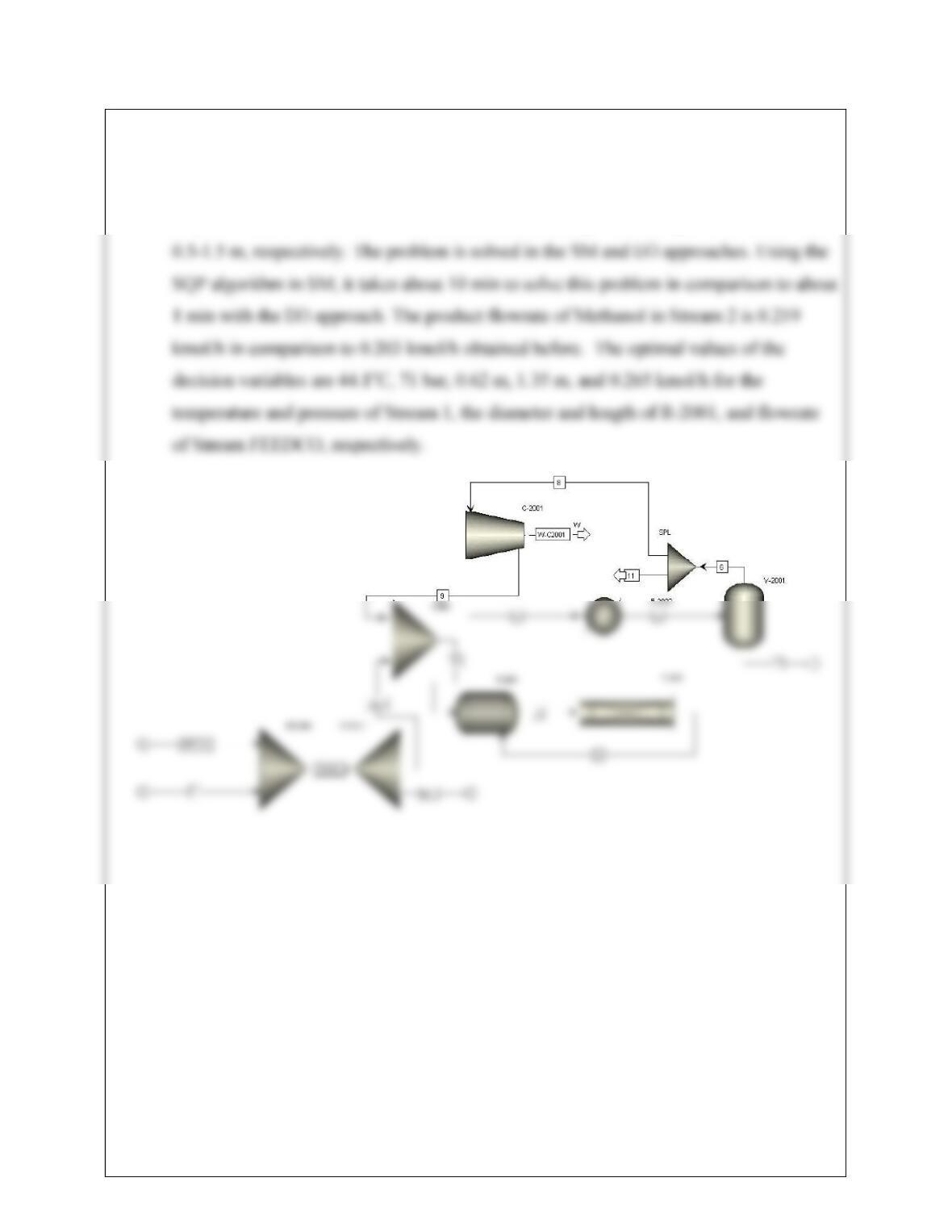
16.14 For manipulating the CO/H2 ratio, the flowsheet is modified as shown below. A separate
stream with pure CO, FEEDCO, is considered. The previous feed stream, Stream 1, is
made CO-free and its composition is normalized. The new composition of the Stream 1
is: CO2– 0.275, H2– 0.525, H2O- 0.2. After mixing FEEDCO and Stream 1, a splitter
than 0.476 in the previous problem. Note that the pressure has not hit the upper limit.
16-16
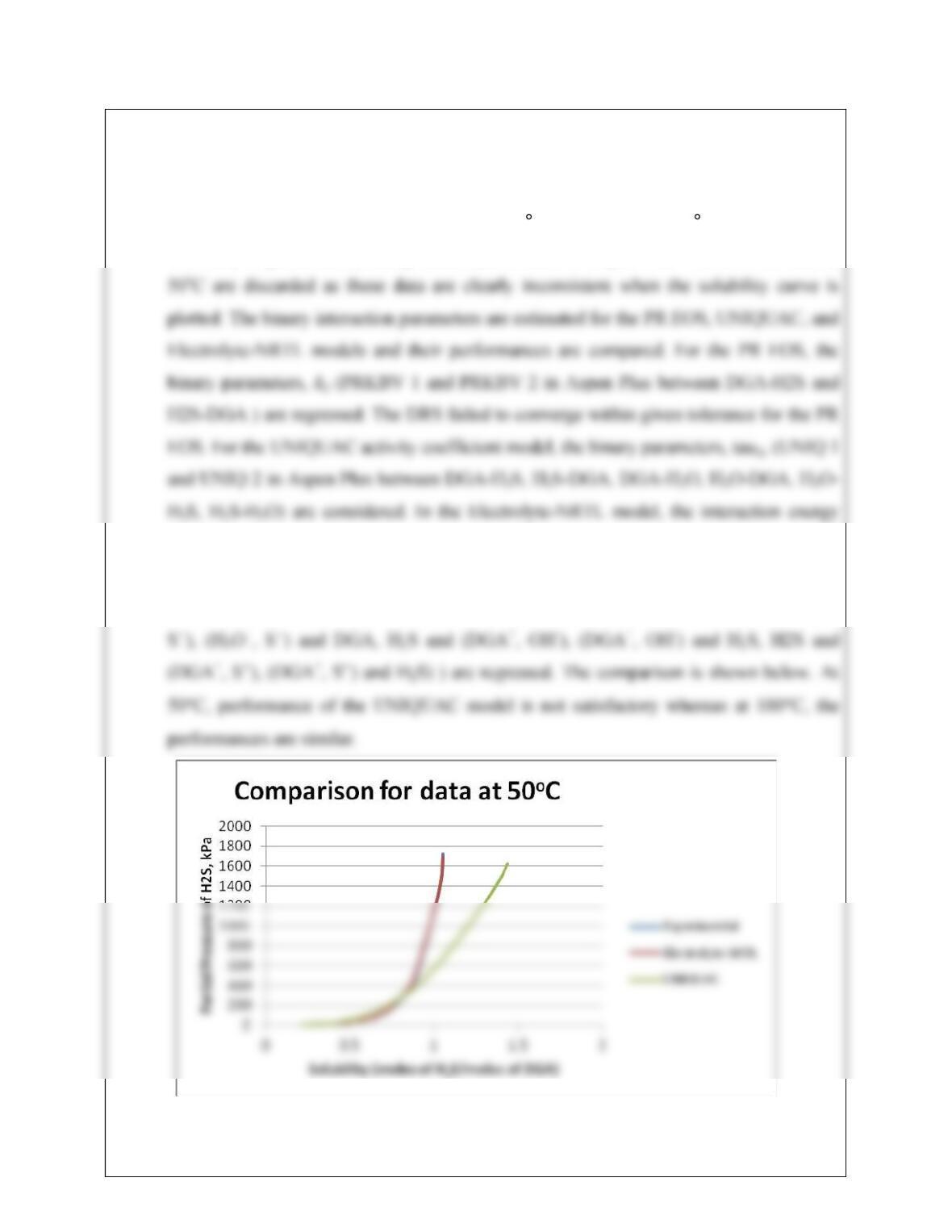
16.15 Please note the typo in the first printing of the 4th edition of this book. The purge stream
flow should be 20% of the total flow of Stream 6. The flowsheet is modified as shown
below. The objective function is modified. To accomodate for the higher flowrate for the
recycle stream, the bounds on the diameter and and length are changed to 0.1-0.7 m and
16-17
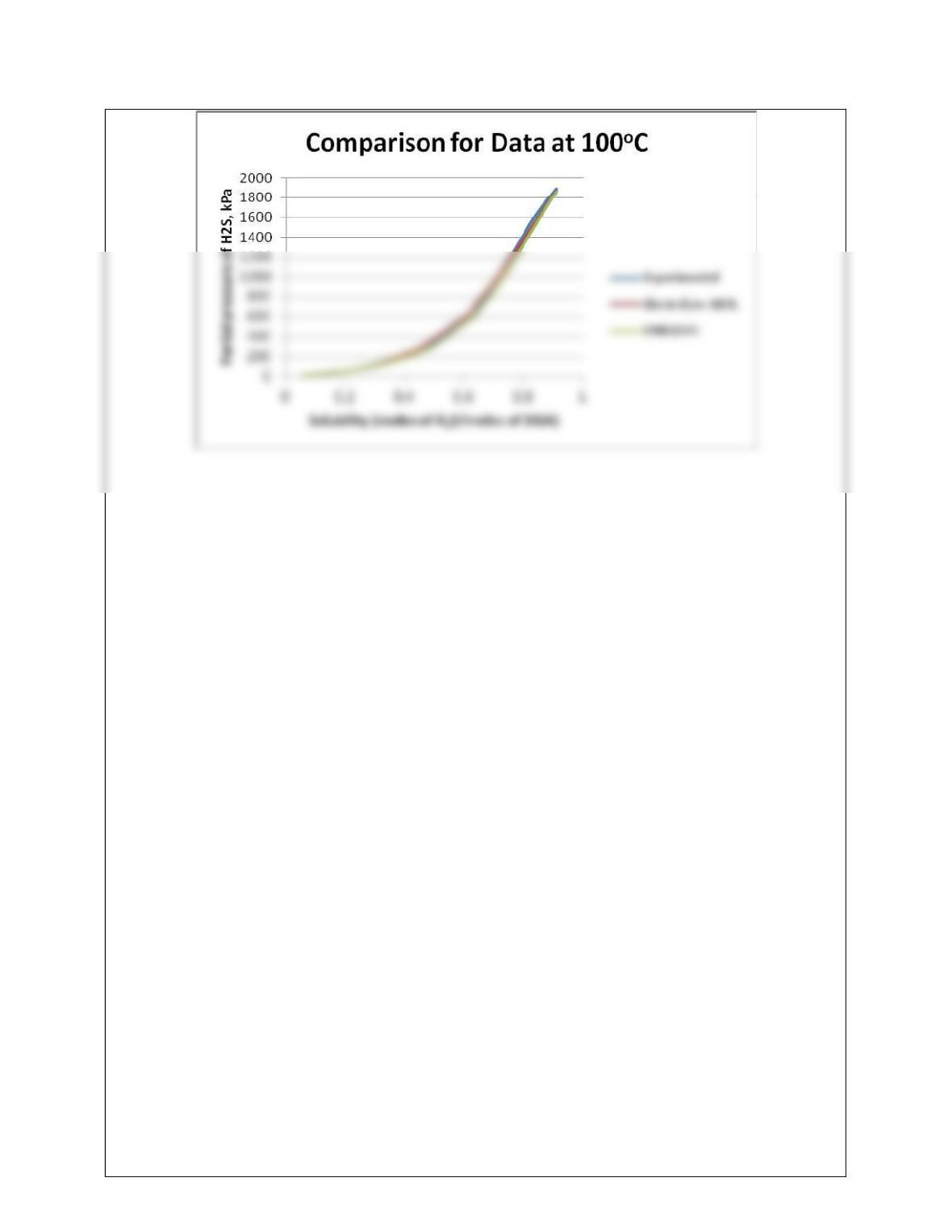
16.16 This problem is set up similar to Example 16.7. For using in Aspen Plus data regression
system ((DRS), the data provided is converted to PXY form to make it suitable with
Properties|Data|Setup|Data type. From the references, it is noted that the vapor pressure
of 60% DGA solution is about 9.33 kPa at 50 C and 80 kPa at 100 C. The electrolyte
chemistry is generated by using Electrolyte Wizard in Aspen Plus. The last two data at
parameters between electrolyte-molecule/electrolyte-electrolyte (GMELCC in Aspen
Plus between DGA and (DGA+, HS–), (DGA+, HS–) and DGA, DGA and (DGA+, S—),
(DGA+, S—) and DGA, DGA and (H3O+, HS–), (H3O+, HS–) and DGA, DGA and (H3O+,
16-18
16-19
16.17
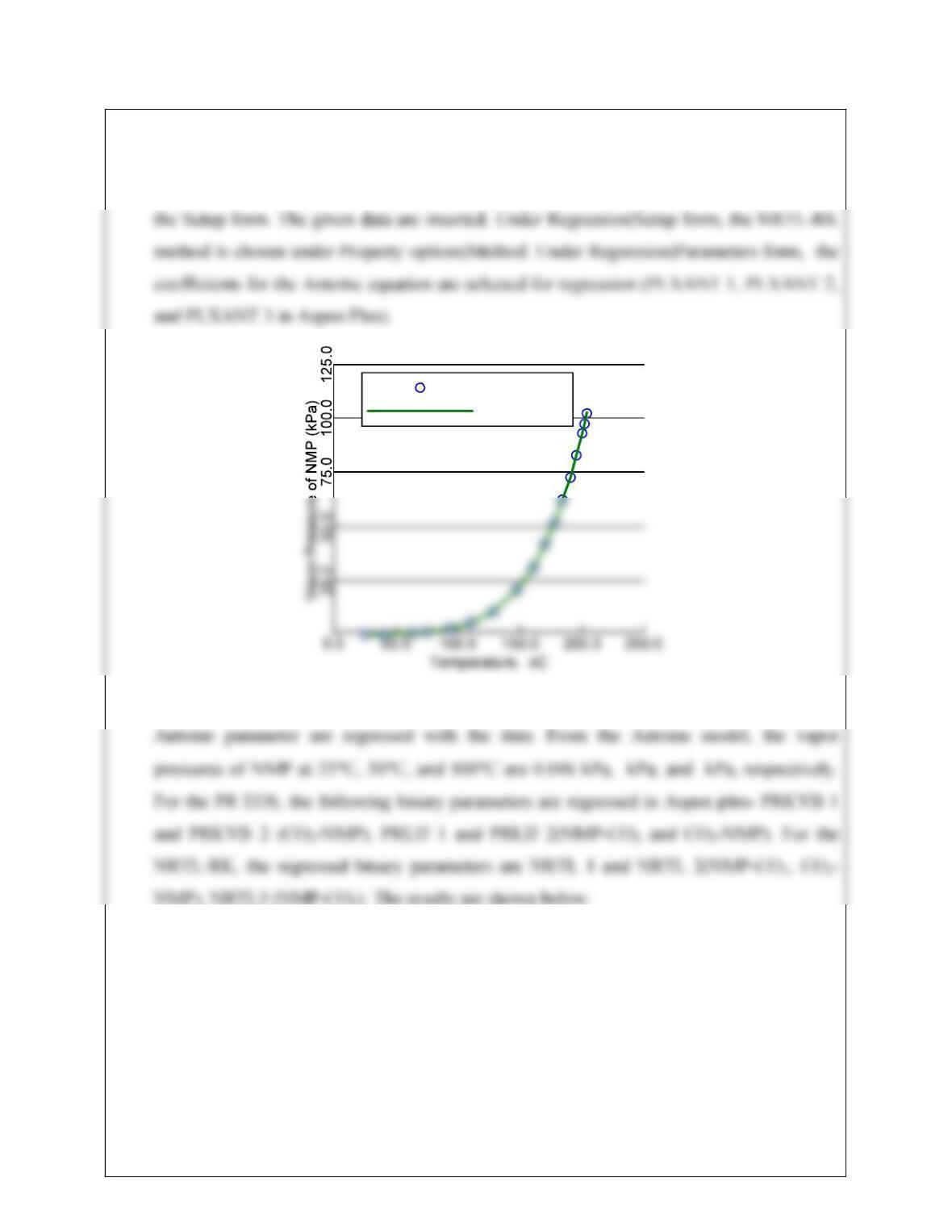
a. The problem is set up in Aspen Plus DRS. Under Properties|Data|Setup, the
“Thermodynamic” category is chosen. For vapor pressure, the property “PL” is chosen in
Regression of NMP vapor pressure
Experimental
Estimated
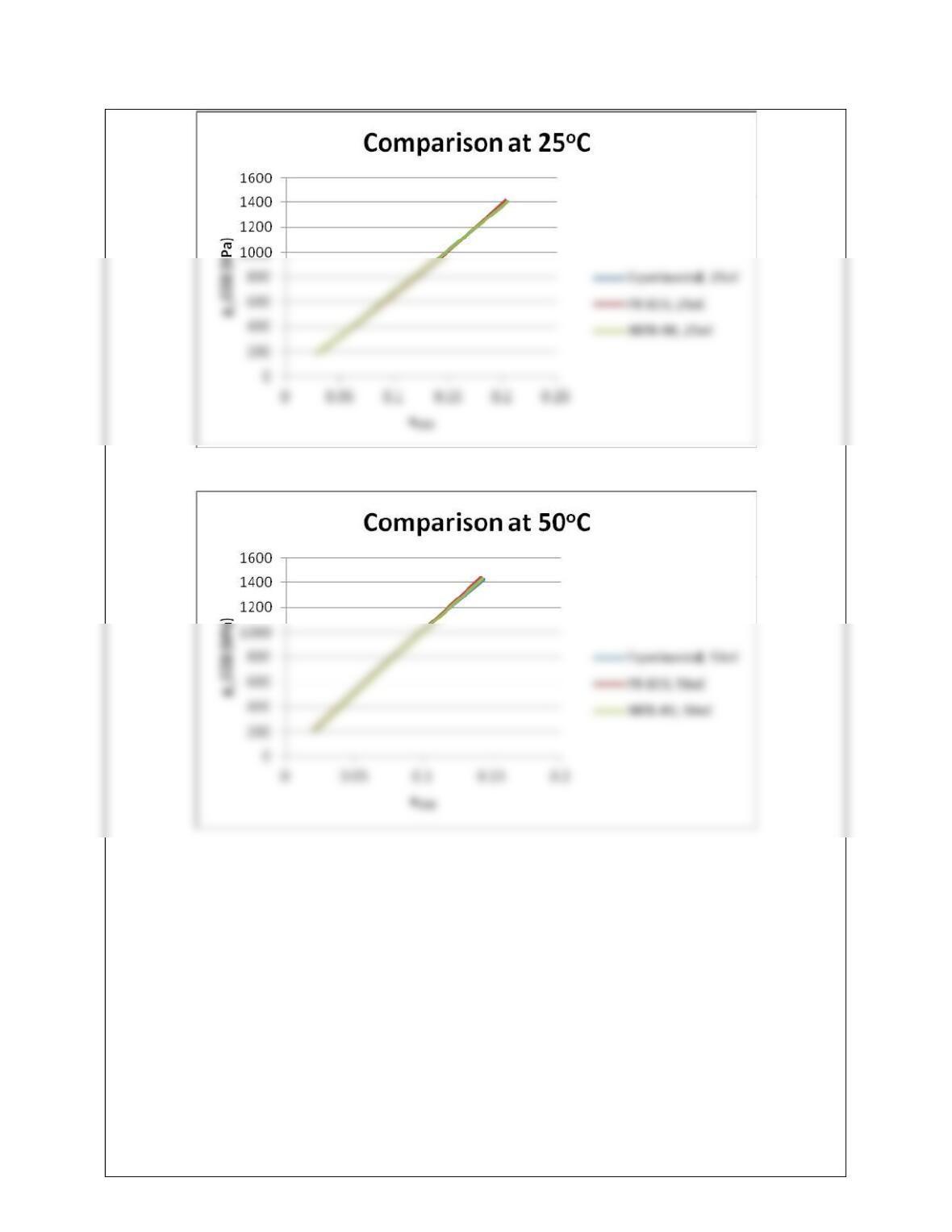
b. The binary interaction parameters PR EOS model and NRTL-RK model with the updated
16-20