14-54
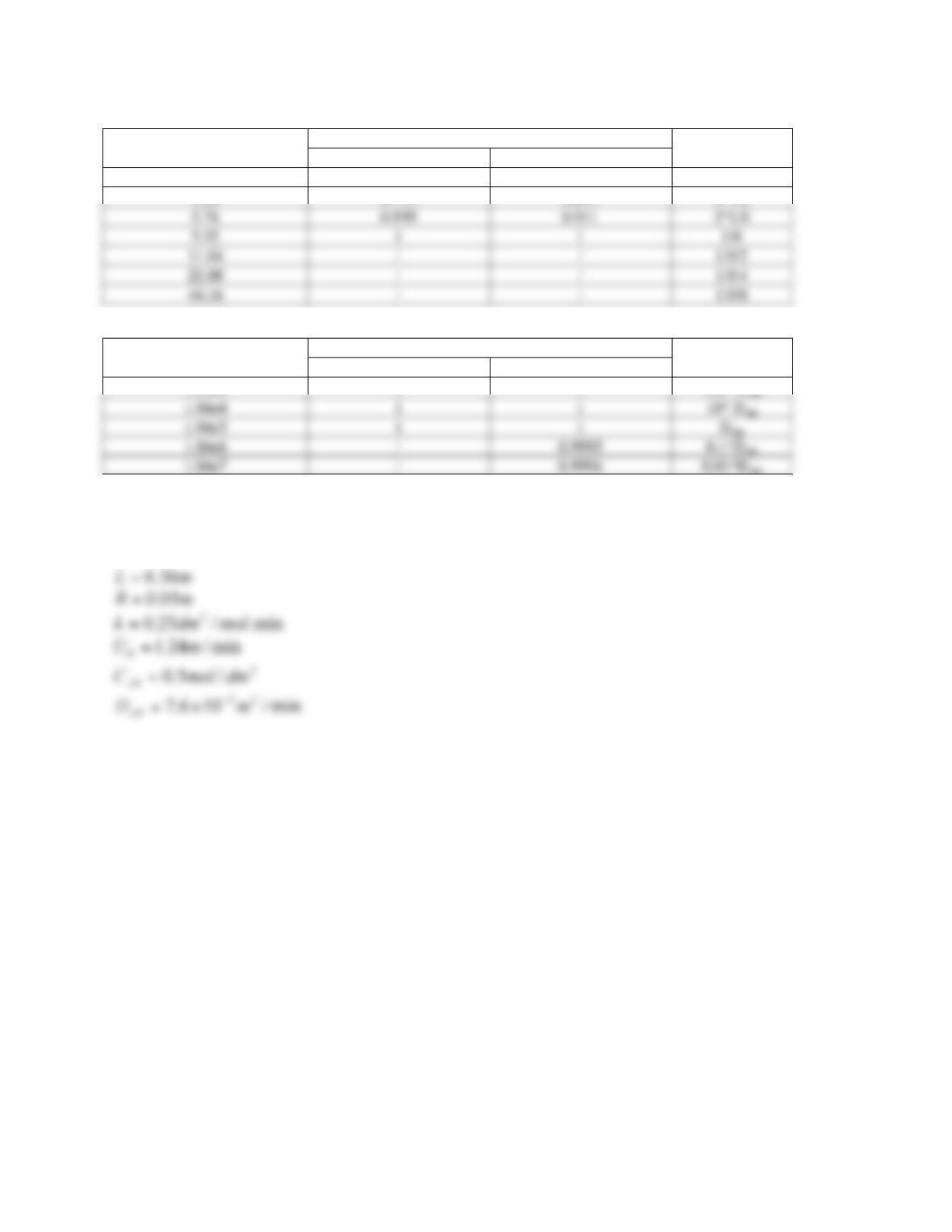
I. Variation of Da number
Conversion
Damköhler number/ Da
Closed-vessel
Open-vessel
Parameter
0.69
0.432
0.378
8*U0
1.38
0.713
0.641
4*U0
II. Variation of Pe number
Conversion
Peclet number/Pe
Closed-vessel
Open-vessel
Parameter
1.04e3
1
1
100* DAB
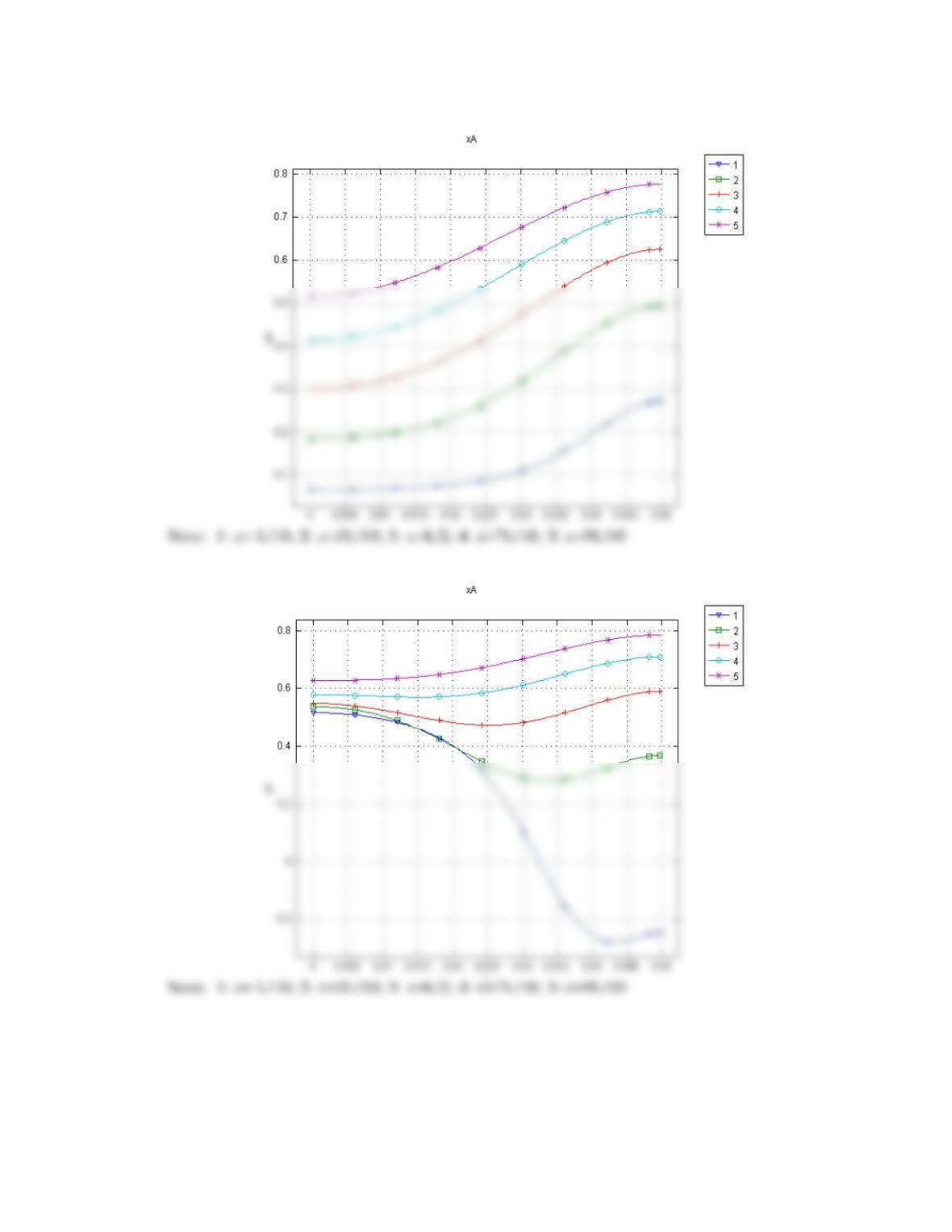
(d) The radial conversion profiles for various order of reaction
(1) First order
1=n
14-55
I. Open–vessel:
II. Closed-vessel:
Something is not correct with z= L/10 because of the FEMLAB!
14-56
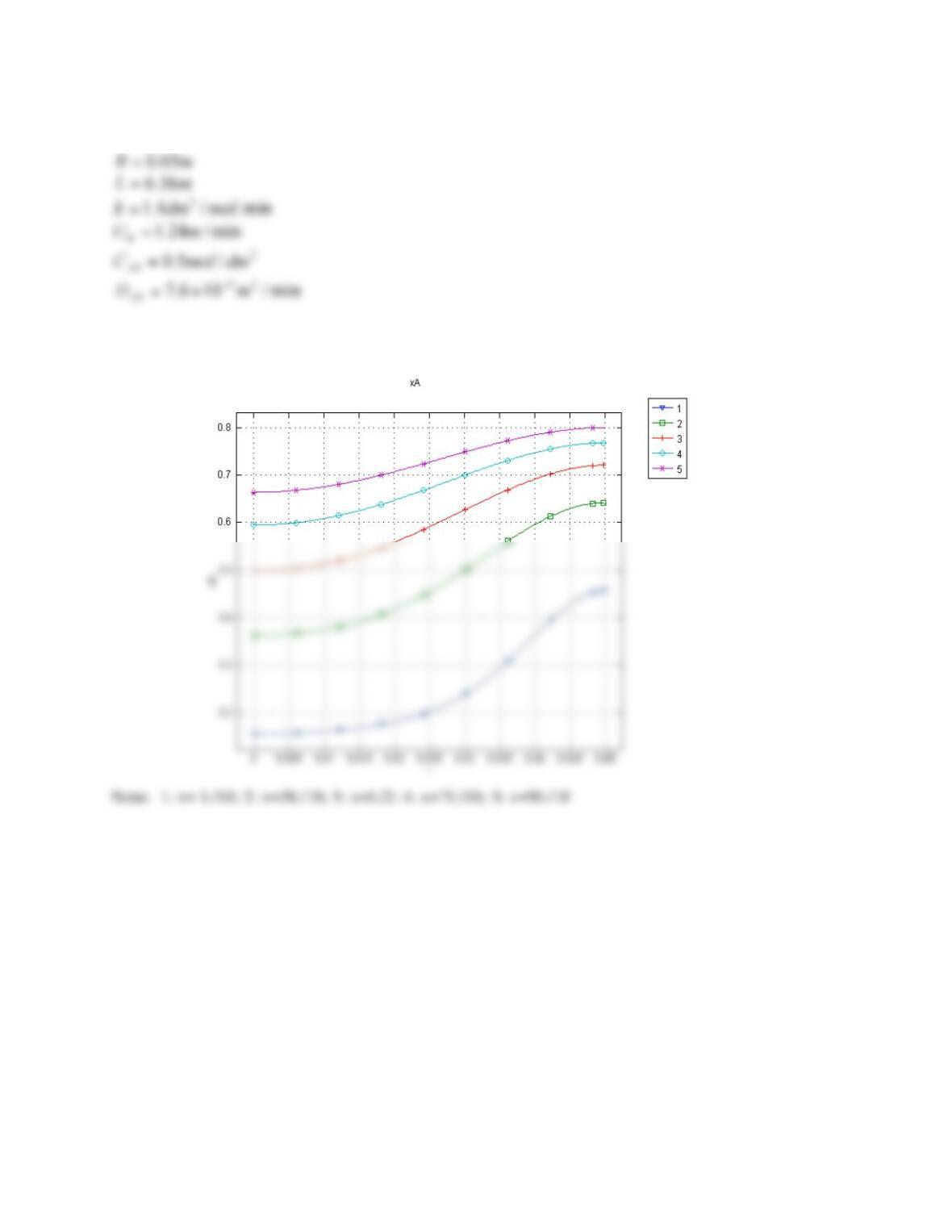
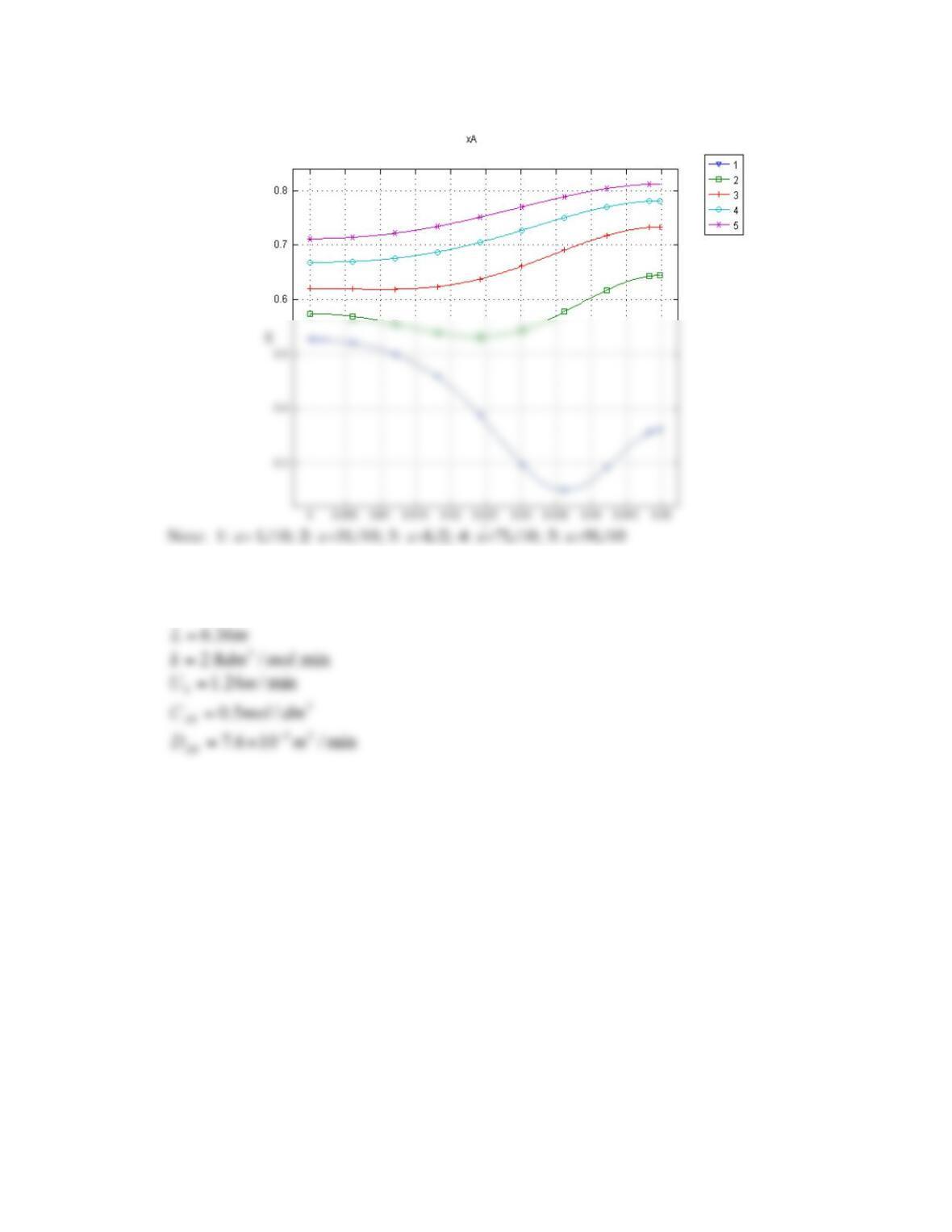
(2) Second order
2=n
I. Open–vessel:
14-57
II. Closed-vessel:
(3) Third order
3=n
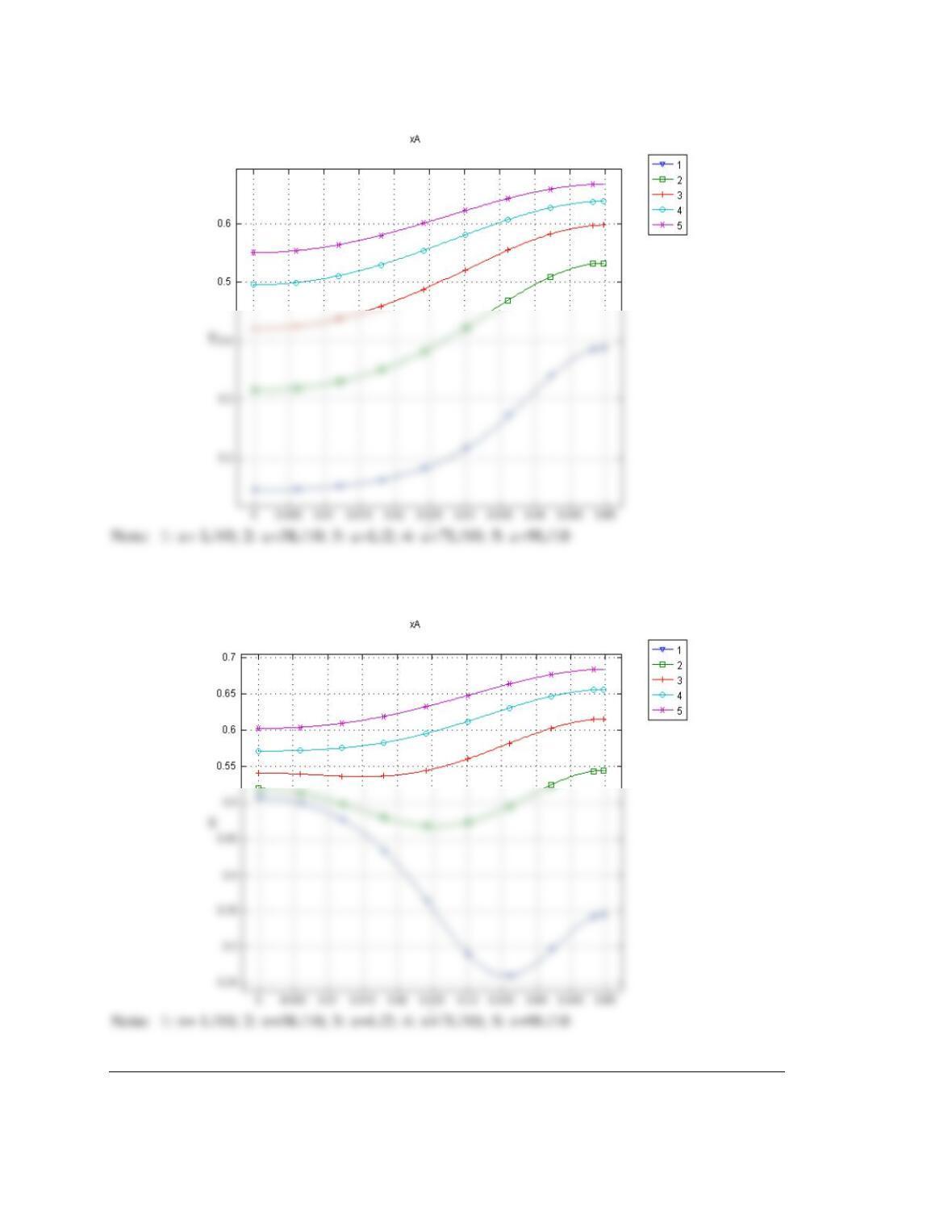
mR 05.0=
14-58
I. Open vessel:
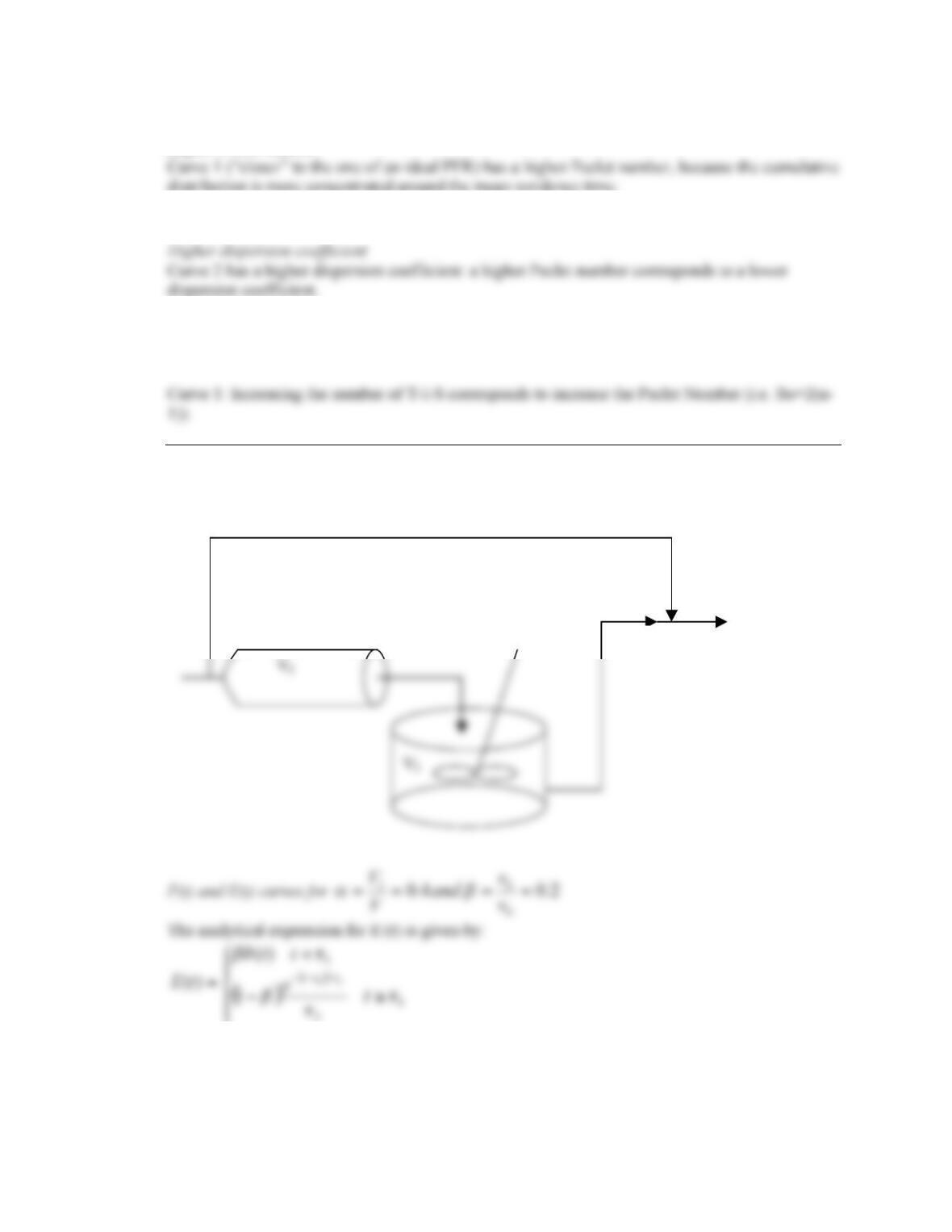
II. Closed– vessel
14-59
P14-20 (a)
Higher Peclet number
distribution is more concentrated around the mean residence time.
P14-20 (b)
P14-20 (b)
Large number of T-I-S
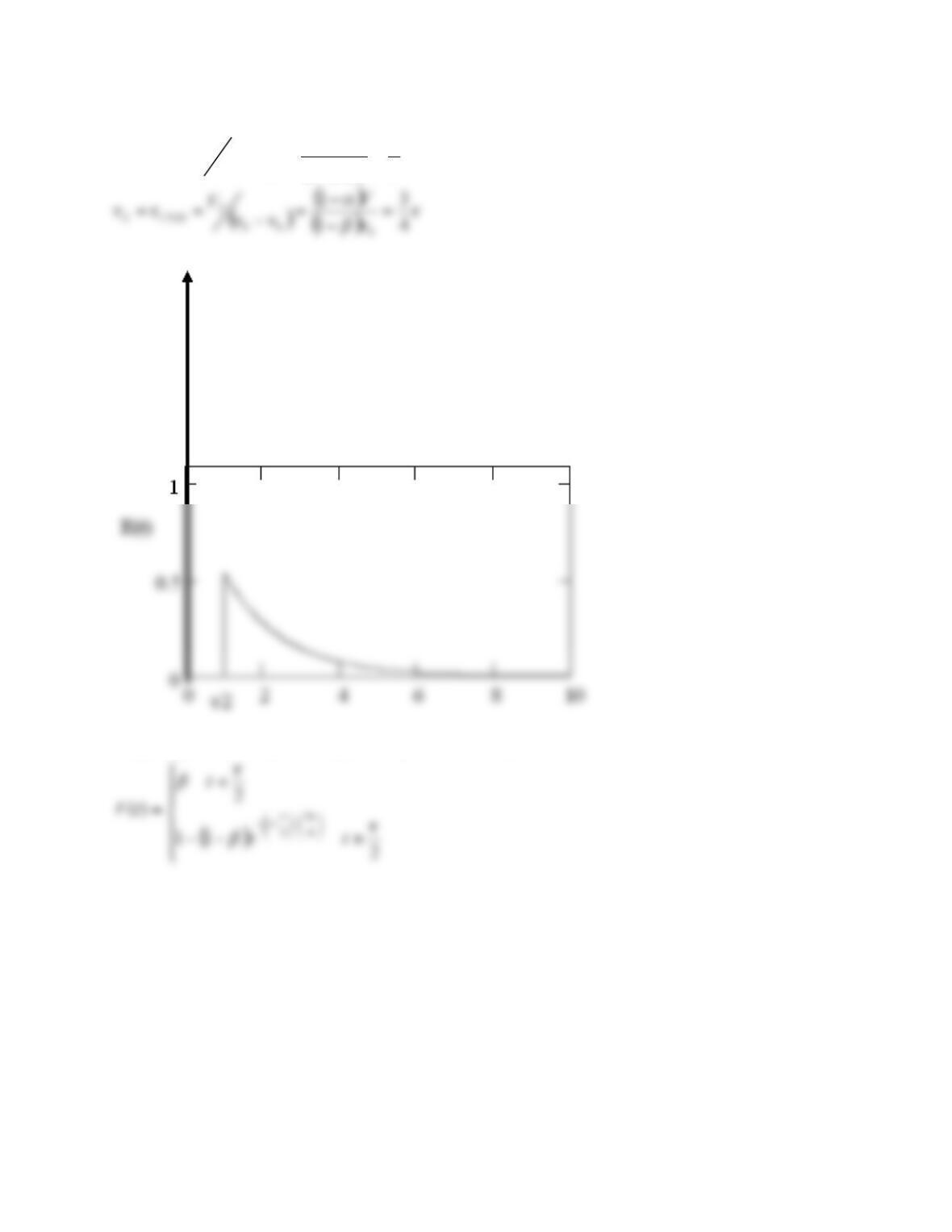
P14-21 (a)
vb
vb=βvo
V1=αV
node1
14-60
Where:
( ) ( )
!
“
#
!!
2
1
1
0
0
1
1
=
$
=
$
==
v
V
vv
V
b
PFR
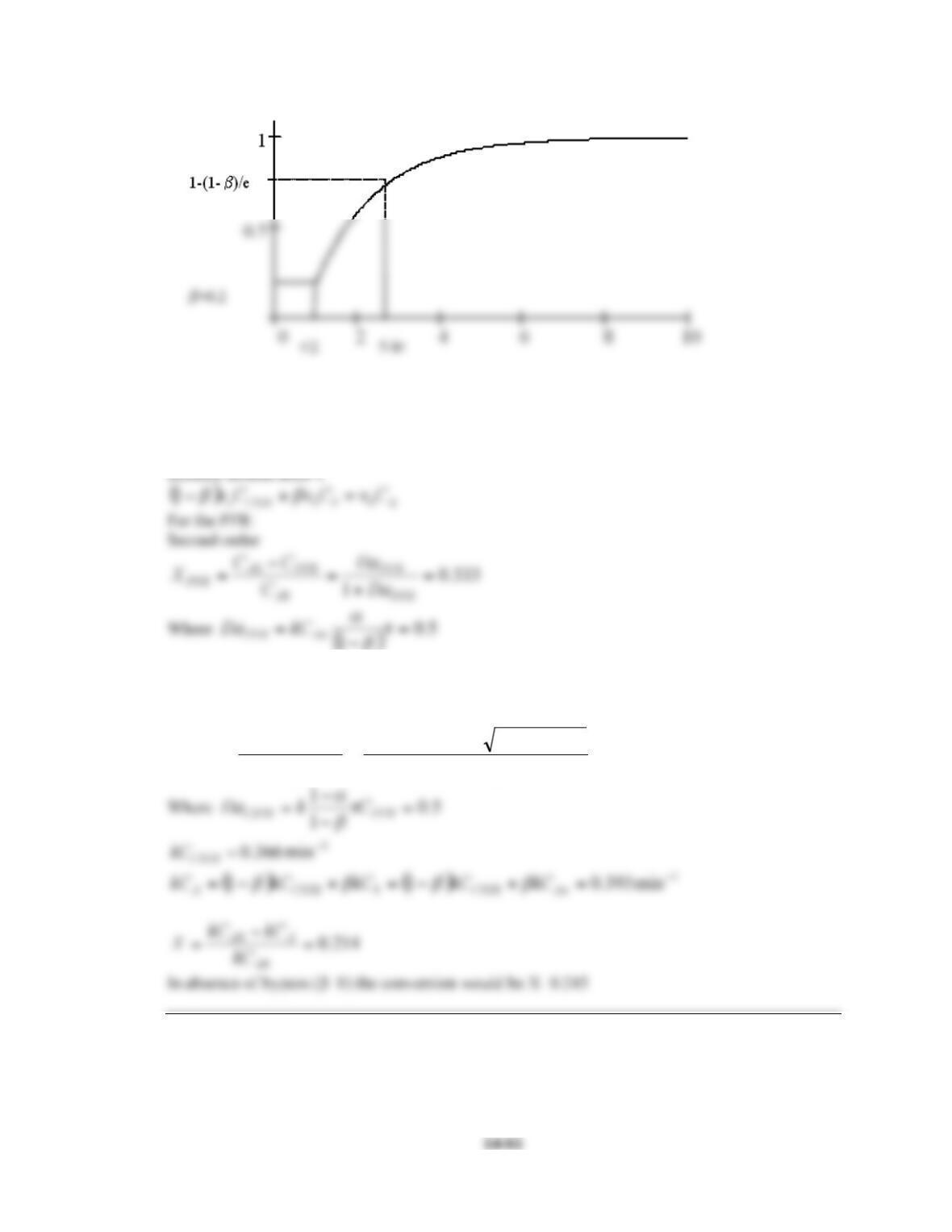
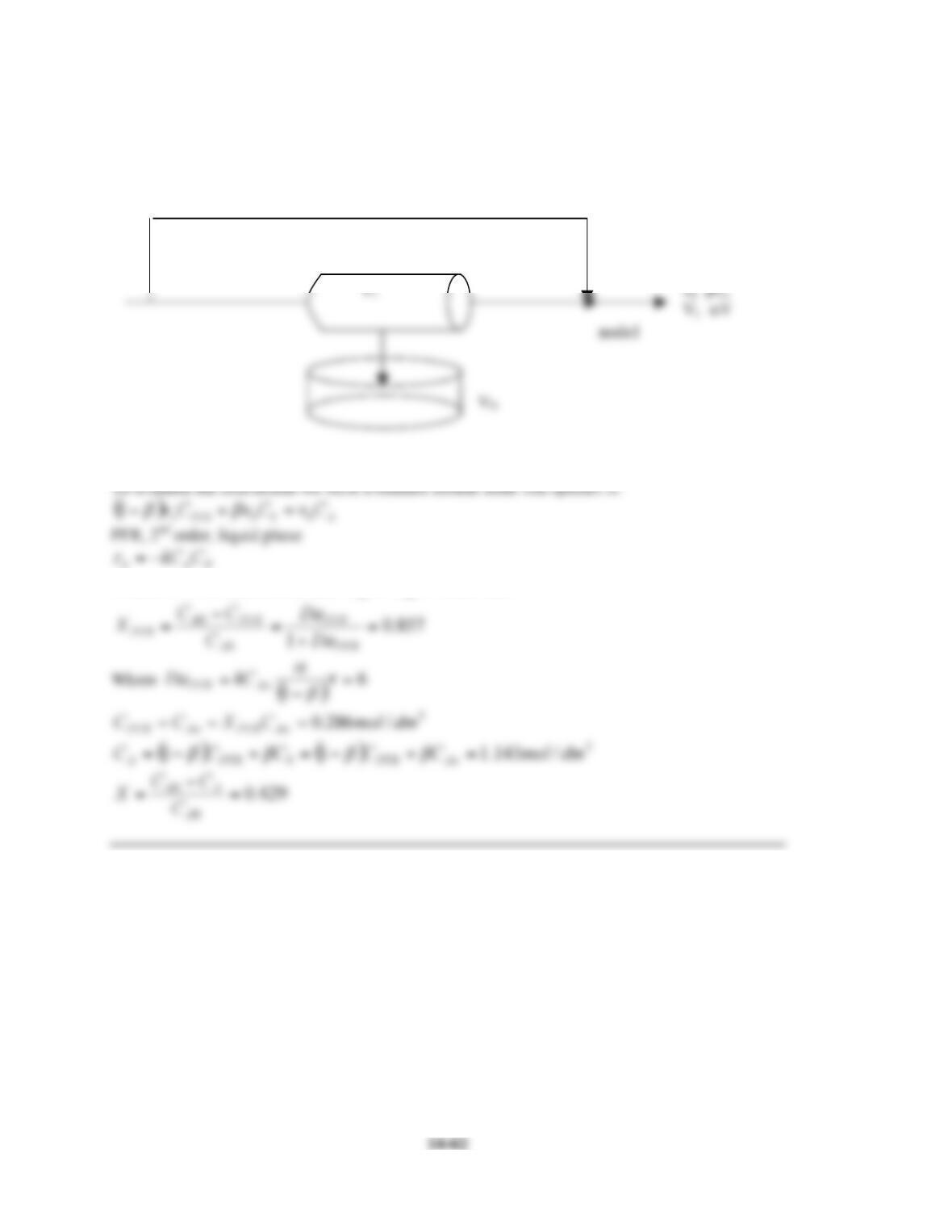
Integrating we can obtain the analytical expression for F (t):
P14-21 (b)
Conversion
2nd order, kCAo=0.5min-1, τ=2min
1
min333.0 !
=
PFR
kC
For the CSTR:
( ) 268.0
2
4121
=
+!+
=
!
=
CSTR
CSTRCSTR
PFR
CSTRPFR
CSTR Da
DaDa
C
CC
X
P14-22
Two parameters model
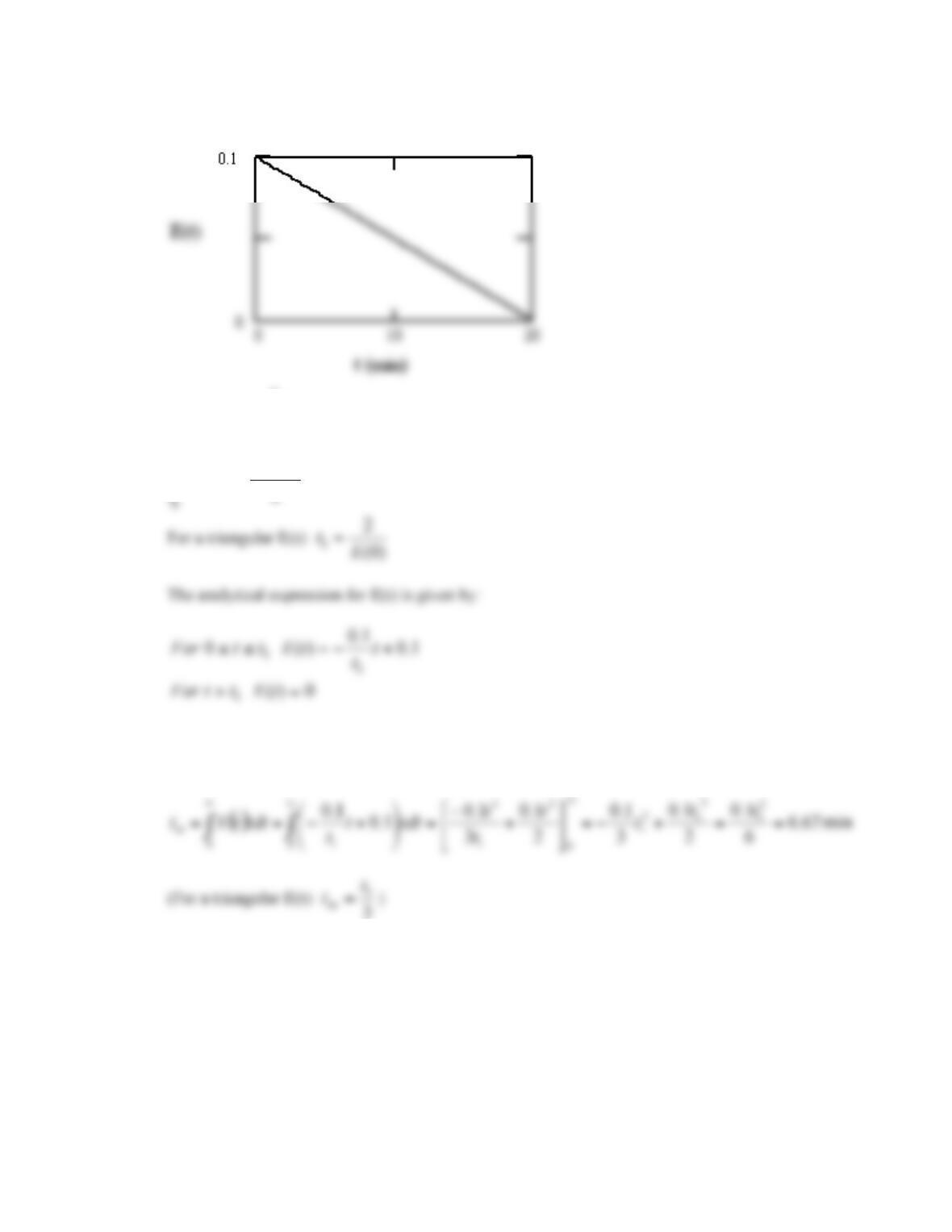
A possible two-parameter model is the PFR with Bypass (vb) and Dead Volume (VD)
Where vo=1m3min-1, V=2m3, α=V1/V=0.5, β=vb/vo=0.5 and τ=V/vo=2min
Where k=1.5 m3/(kmol⋅min) and
3
/2 dmmolCC BoAo ==
vb
14-63
P14-23
By definition:
1)(
0
=
!
“
dttE
min2011
2
1*1.0
)(
=!==
“
#
t
t
dttE
P14-23 (a)
Mean residence time
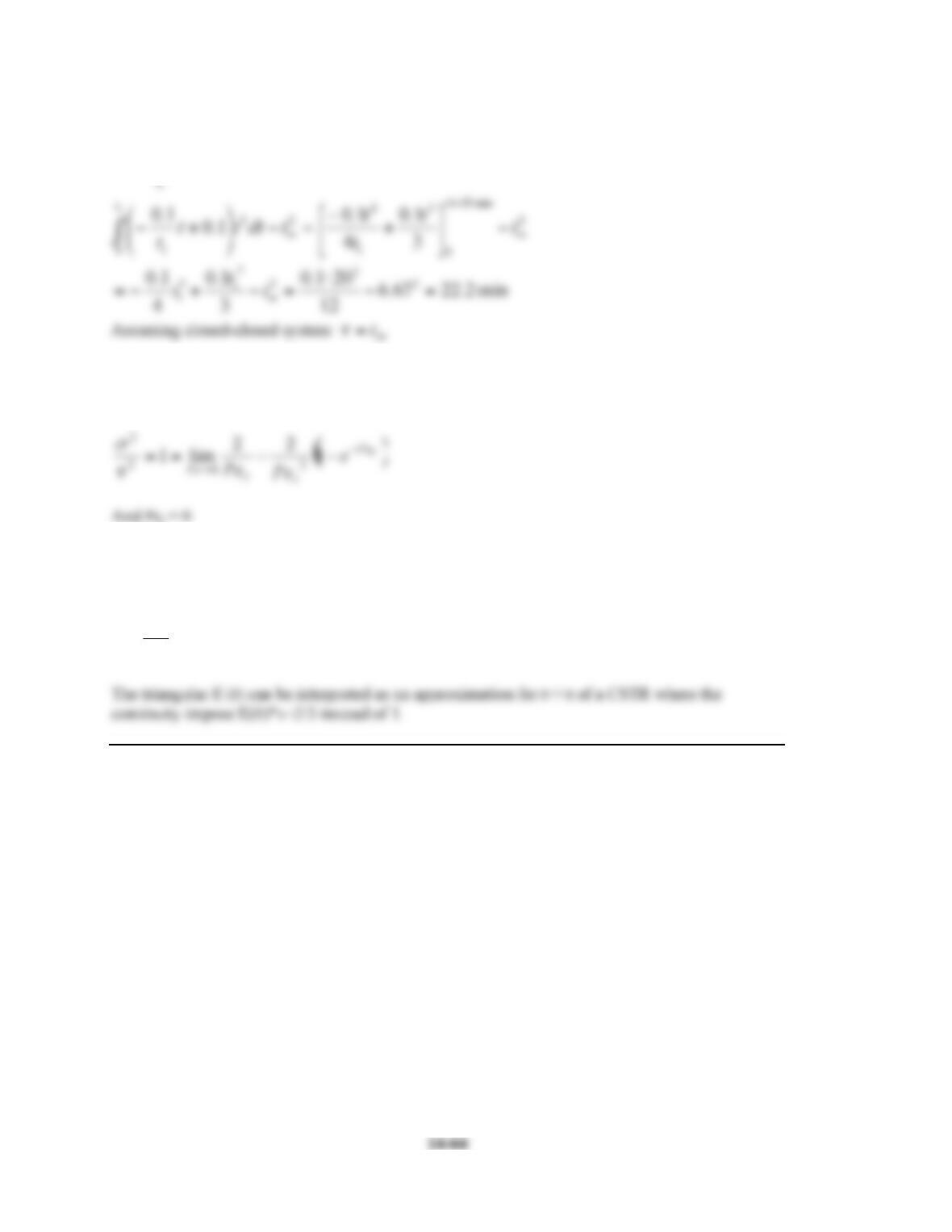
Variance
( )( )
2
2
=!=
/
0
m
dttttE
1
P14-23 (b)
Peclet number
P14-23 (c)
Tanks in series
1
2
2
==
!
“
n
14-65
P14-24
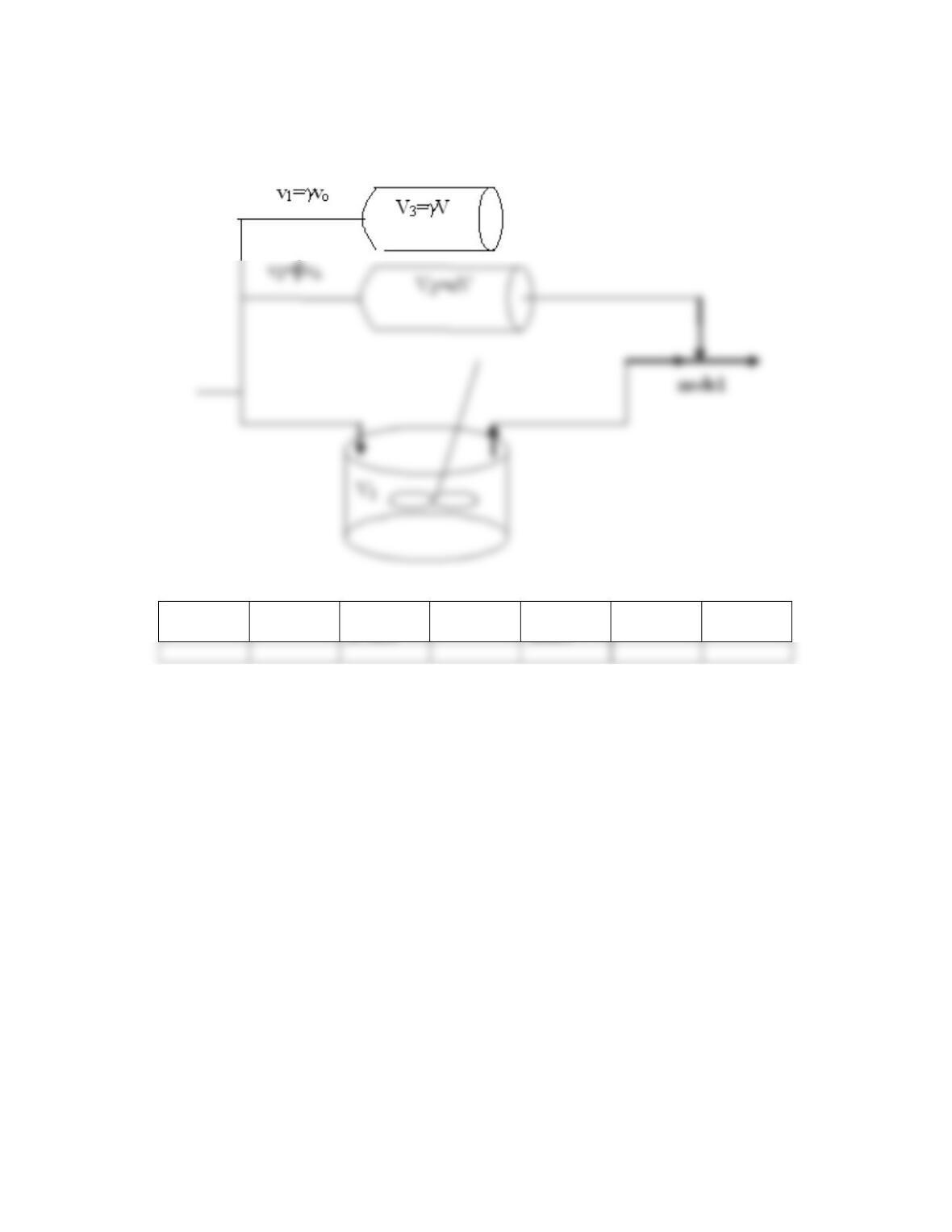
The F(t) con be representative of a CSTR in parallel with two PFRs:
First order reaction
Ideal PFR
Ideal CSTR
Ideal laminar
flow reactor
Segregation
Maximum
Mixedness
Dispersion
Tanks in series