9.1: PROBLEM DEFINITION
Situation:
In which case is the flow caused by a pressure gradient?
a. Couette flow
b. Hele-Shaw flow
SOLUTION
1
9.2: PROBLEM DEFINITION
Situation:
Couette flow of liquid with temperature distribution between plates.
Find:
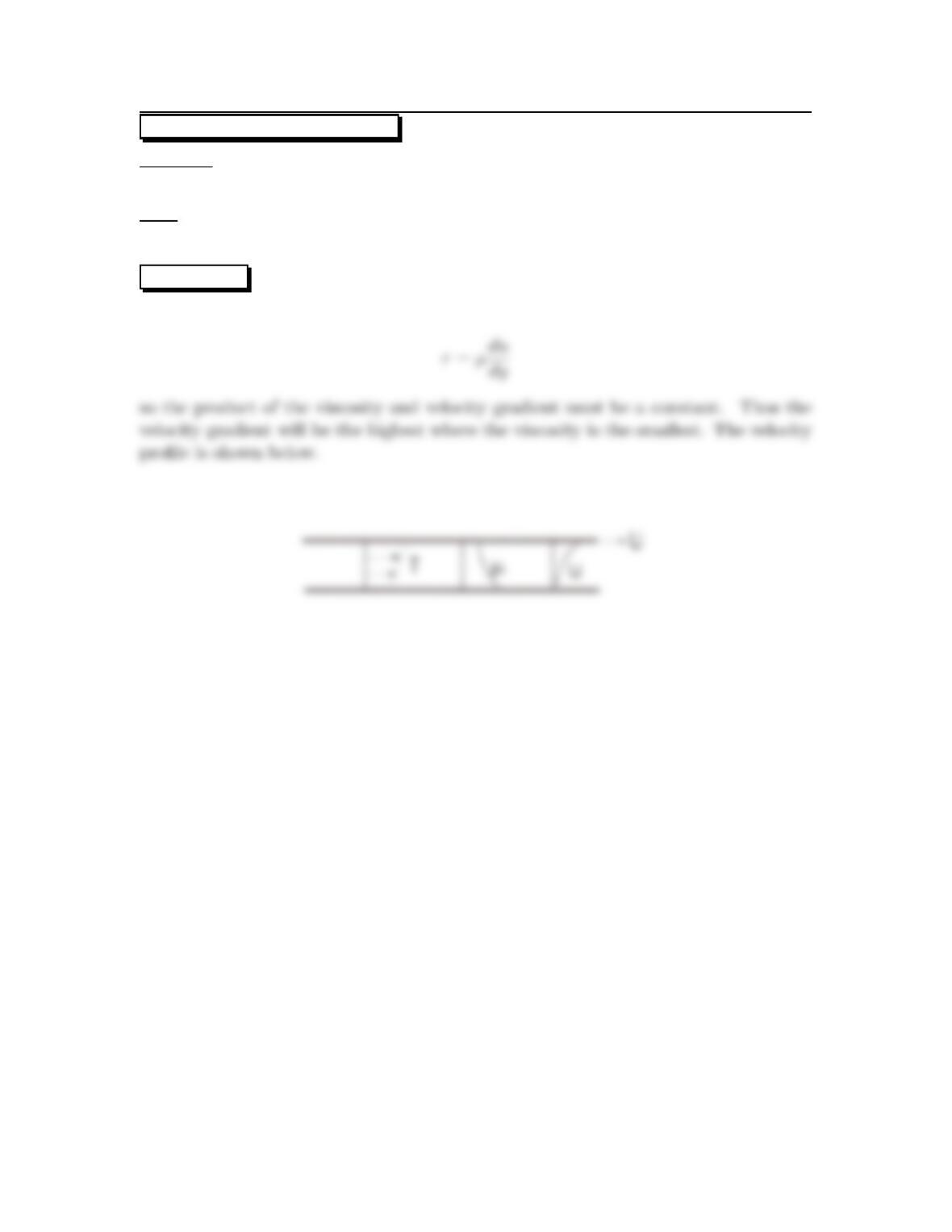
Qualitative description of velocity profile.
SOLUTION
In a Couette flow, the shear stress is constant across the flow so
2
9.3: PROBLEM DEFINITION
Situation:
a. Liquid flow between parallel plates and the viscosity is constant in the flow
direction; compare this with a case where the viscosity decreased in the flow direction,
suchasduetoatemperaturerise.
b. Gas flow between two flat plates and temperature increases in flow direction
and density decreases. Assume viscosity is unaffected.
Find:
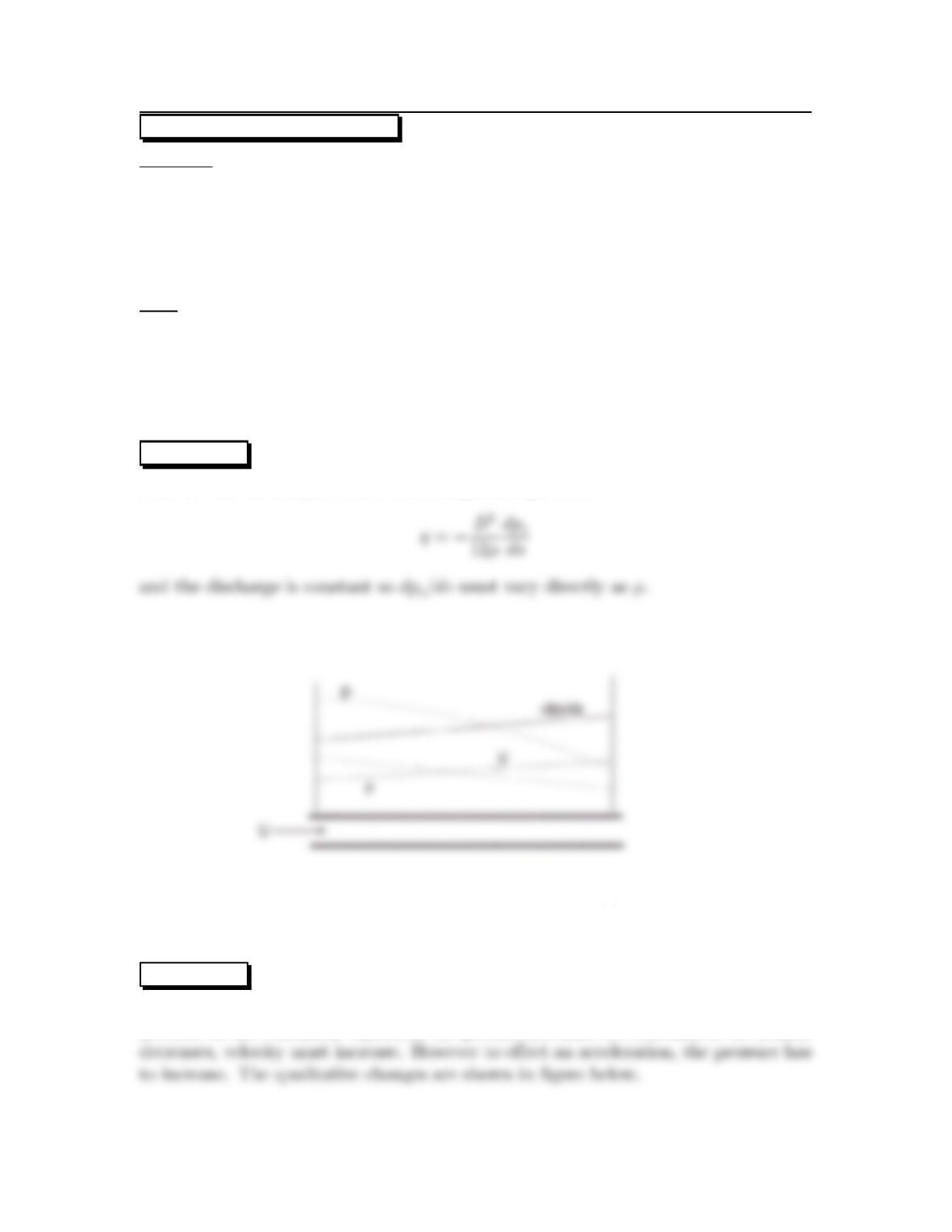
a. How will the pressure distribution change in the flow direction due to the
temperature rise in the flow direction.
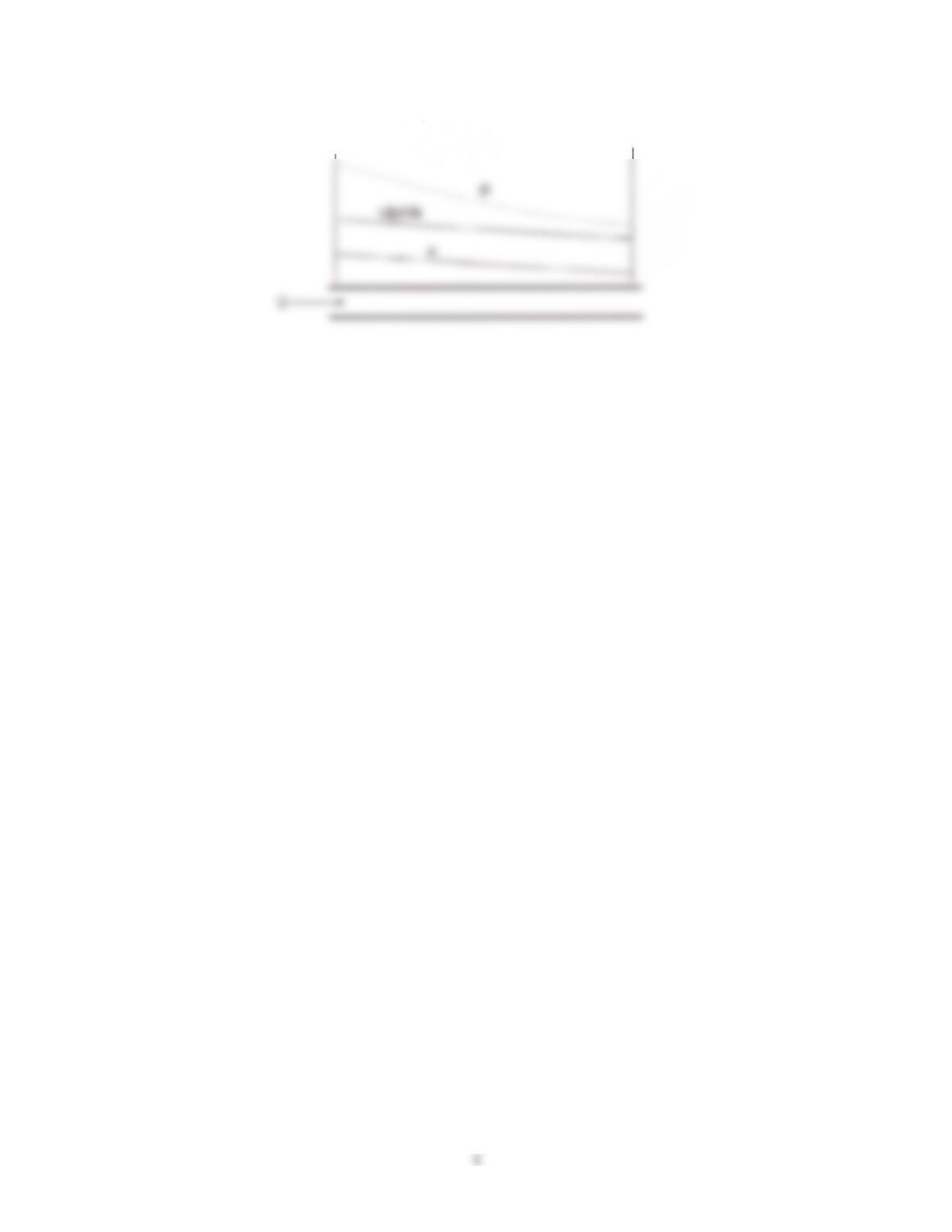
b. How will the velocity and pressure distribution change from the case with
constant density? Sketch the pressure distribution and give the rationale for your
result.
SOLUTION
Part a. The discharge for flow between parallel plates is
SOLUTION
Part b.
Because of the continuity equation, the product ρu must be constant, so as density
3
9.4: PROBLEM DEFINITION
Situation:
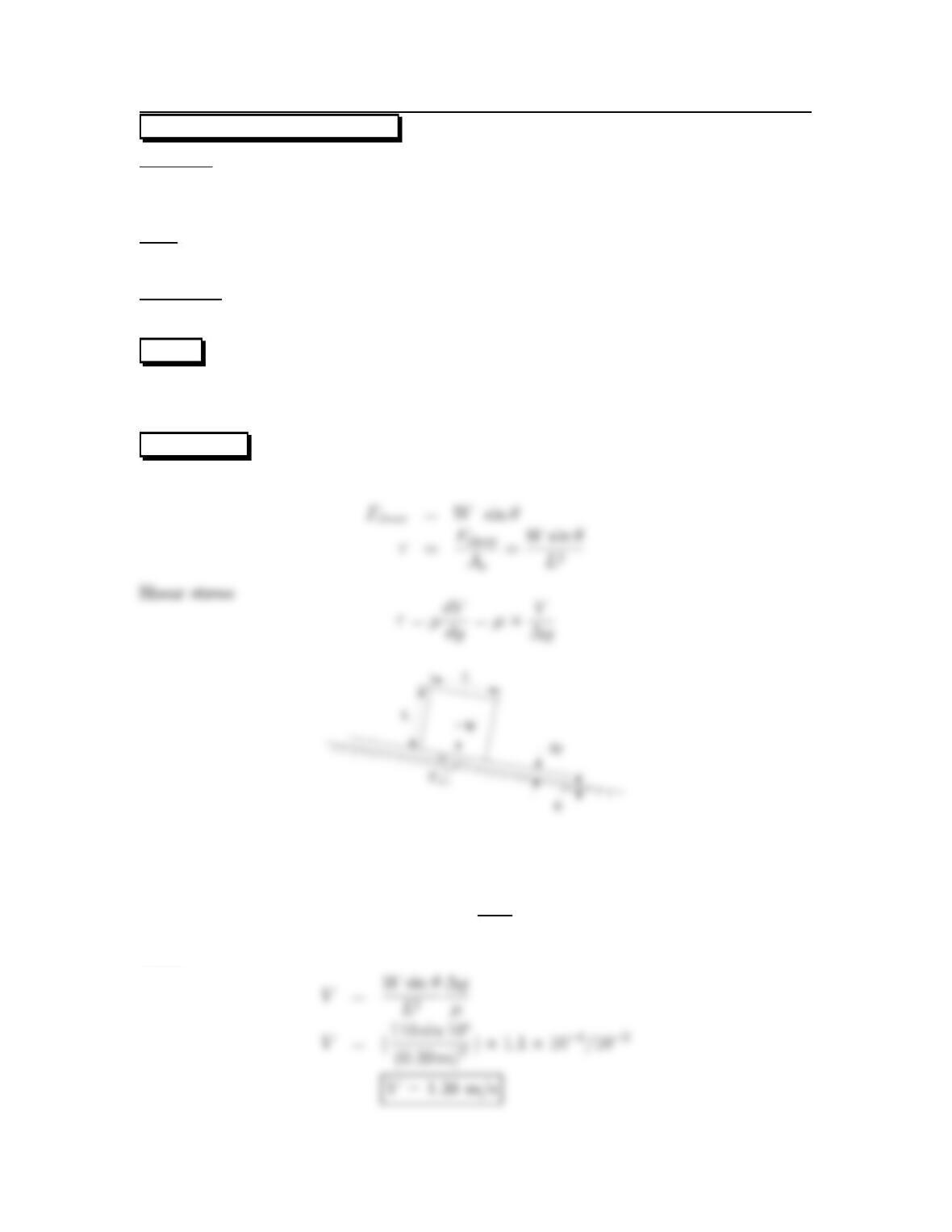
A 39 cm block on side weighing 110 N slides on an oil film with thickness of 0.11
mm.
Find:
Terminal velocity of block.
Properties:
Viscosity is 10−2N·s/m2
PLAN
Apply equilibrium. Then relate shear force (viscous drag force) to viscosity and solve
the resulting equation.
SOLUTION
Force equilibrium
or
V=τ∆y
μ
Then
5
9.5: PROBLEM DEFINITION
Situation:
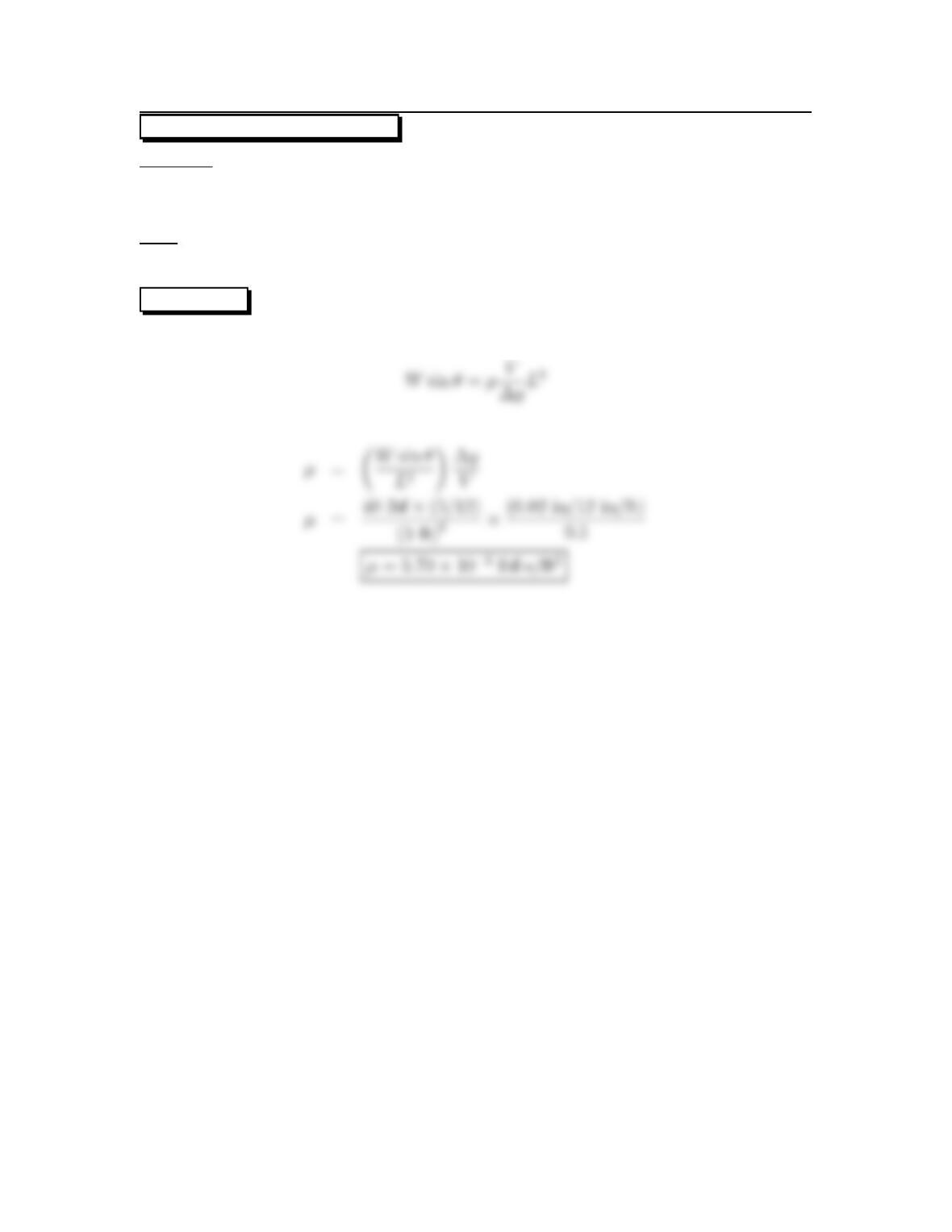
A board 3 ft by 3 ft weighing 40 lbf slides on an inclined surface at 0.5 fps on a
film of oil 0.02 in. thick.
Find:
Dynamic viscosity of oil
SOLUTION
Equating the gravitational force and shear force
6
9.6: PROBLEM DEFINITION
Situation:
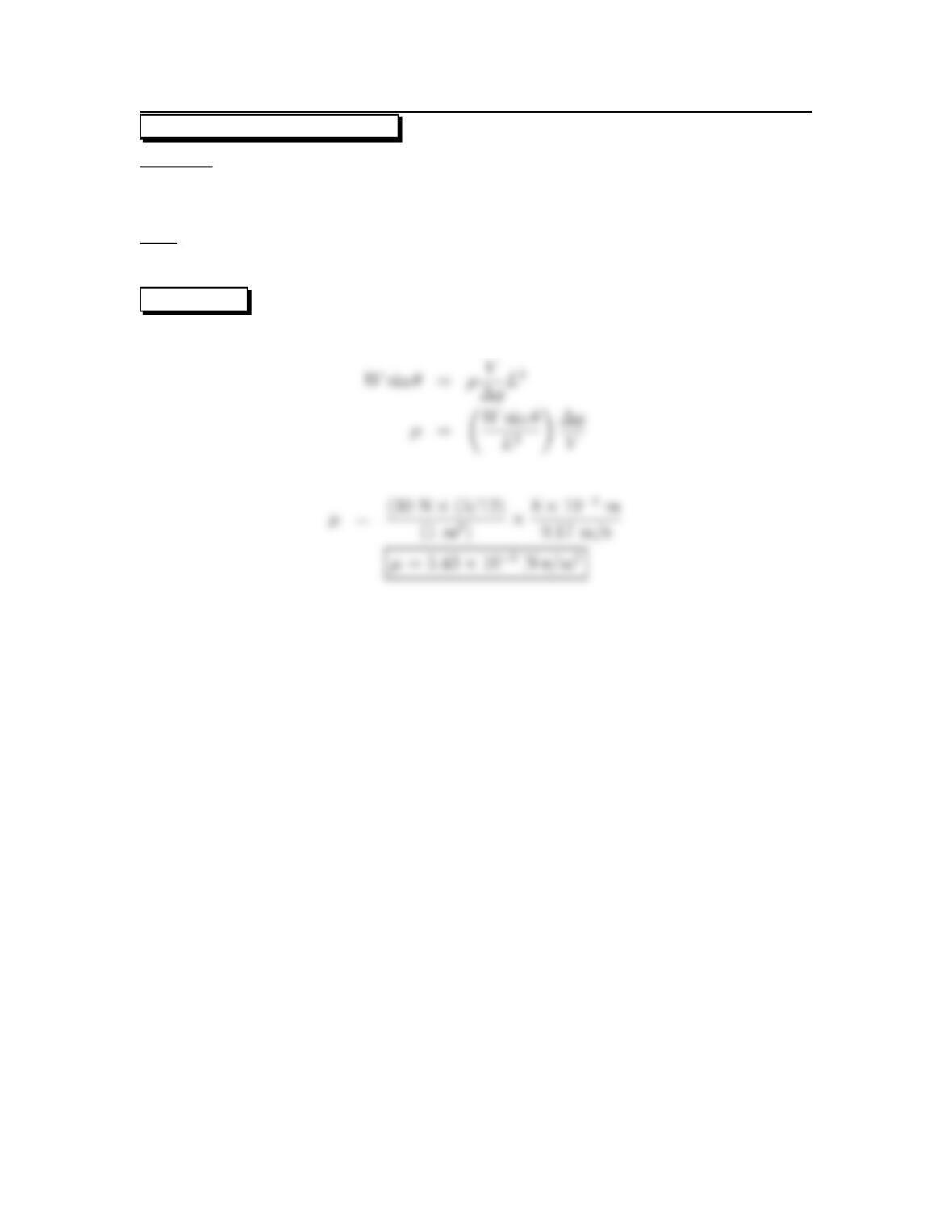
A board 1 m by 1 m weighing 30 N slides down inclined ramp at 17 cm/s on 0.8
mm layer of oil.
Find:
Dynamic viscosity of oil.
SOLUTION
Equating gravitational and shear force
7
9.7: PROBLEM DEFINITION
Situation:
Uniform, steady flow is occurring between horizontal parallel plates.
Find:
a. The flow is Hele-Shaw, therefore what is causing the fluid to move?
b. Where is the maximum velocity located?
c. Where is the maximum shear stress located?
d. Where is the minimum shear stress located?
SOLUTION
a. By definition, if the flow is Hele-Shaw, it is caused by a pressure gradient.
8
9.8: PROBLEM DEFINITION
Situation:
Uniform, steady flow occurs between two plates.
Find:
(a) Conditions present to cause odd velocity distribution.
(b) Location of minimum shear stress.
SOLUTION
9
9.9: PROBLEM DEFINITION
Situation:
A asymmetrical laminar velocity distribution
Find:
Whether statements (a) through (d) are true or false.
SOLUTION
10
9.10: PROBLEM DEFINITION
Situation:
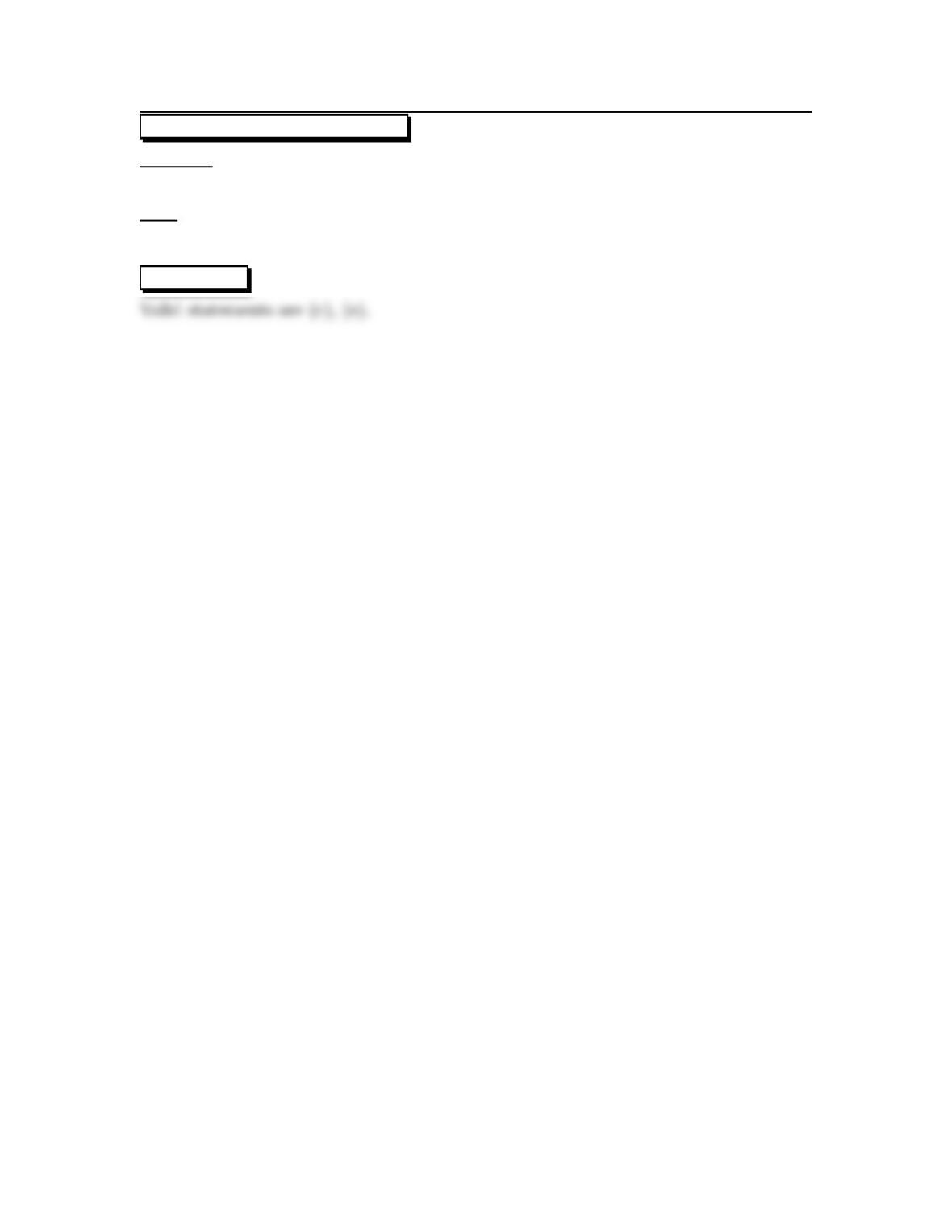
A plate 1 m long and 30 cm wide is being pulled over layer of oil 2 mm thick.
Find:
(a) Express the velocity mathematically in terms of the coordinate system shown.
(b) Whether flow is rotation or irrotational.
(c) Whether continuity is satisfied.
(d) Force required to produce plate motion.
Properties:
Viscosity is 4 N·s/m2
SOLUTION
a) By similar triangles u/y =umax/∆t
or
b) For flow to be irrotational ∂u/∂y =∂V/∂x here ∂u/∂y =150and ∂V/∂x =0.
11
9.11: PROBLEM DEFINITION
Situation:
The figure shows a Hele-Shaw flow.
Find:
Determine which of the statements (a) through (e) are true.
SOLUTION
12
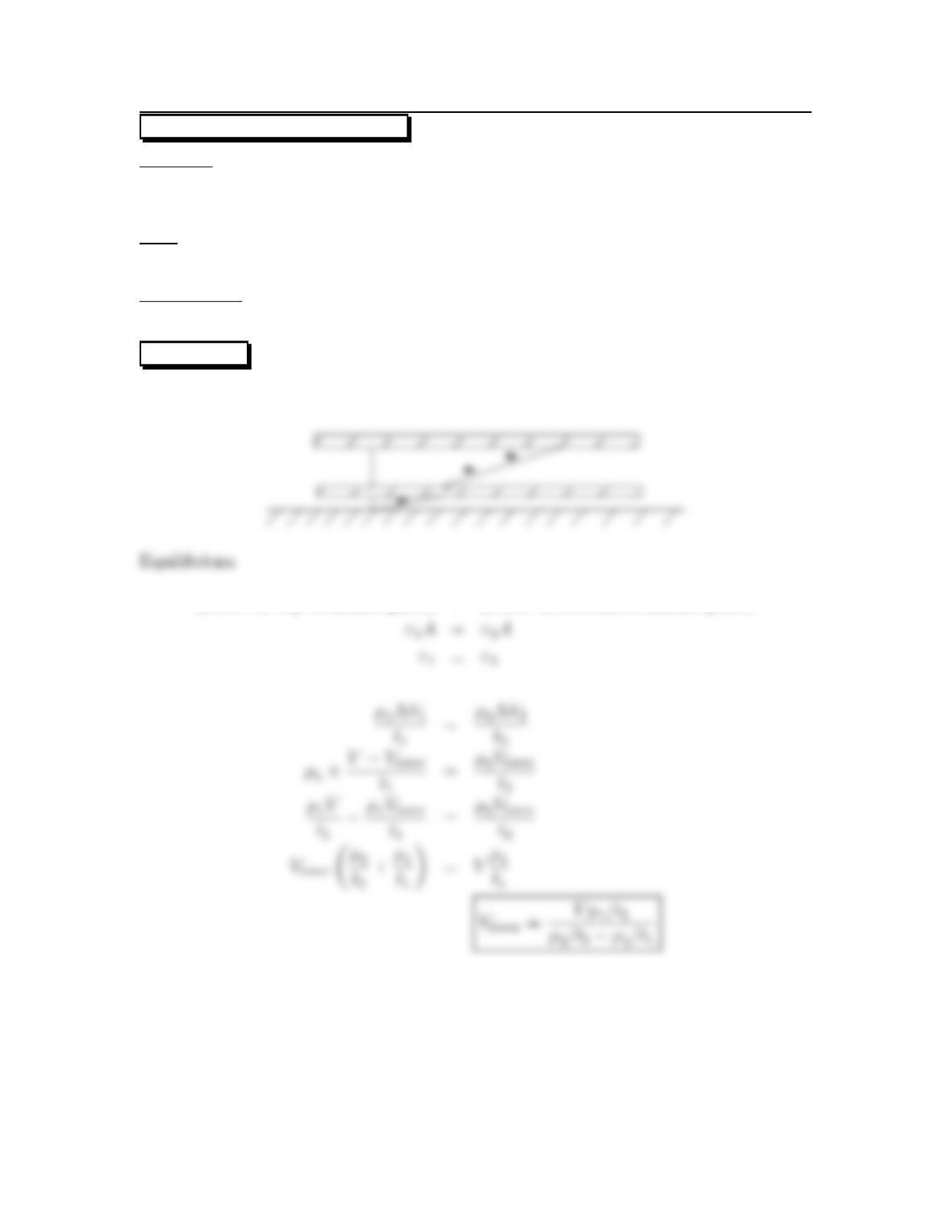
9.12: PROBLEM DEFINITION
Situation:
A plate is separated by a layer of oil between and moving upper plate and a fixed
lower plate.
Find:
Derive an equation for the velocity of the intermediate plate.
Assumptions:
A linear velocity distribution within the oil.
SOLUTION
The velocity distribution will appear as below:
(Force on top of middle plate)=(Force on bottom of middle plate)
13
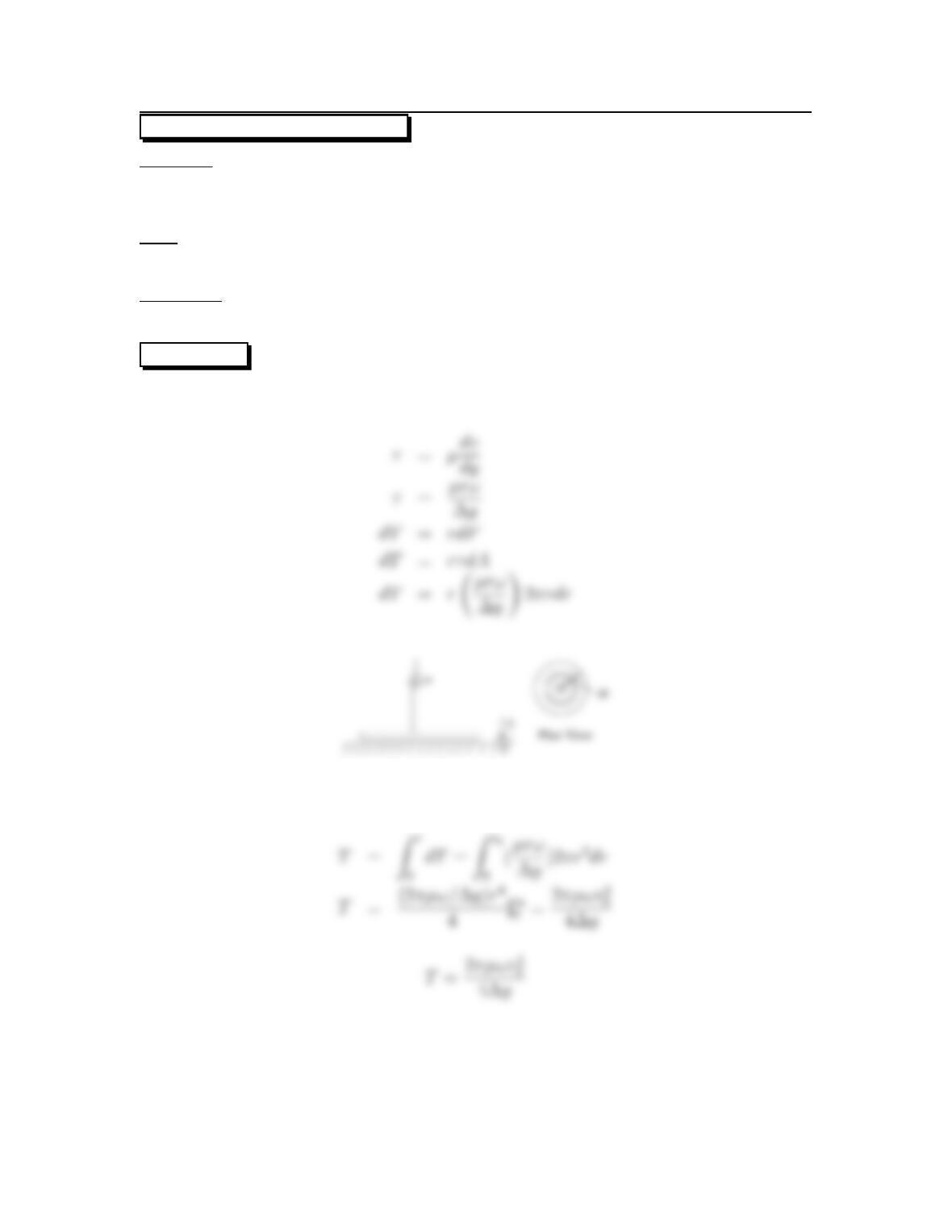
9.13: PROBLEM DEFINITION
Situation:
A 27 cm-diameter disk in oil is rotated at 31 rad/s above a fixed plate over a layer
of oil 3 mm thick.
Find:
Torque required to rotate disk.
Properties:
Viscosity is 8 N·s/m2
SOLUTION
Assume a Couette flowbetweenplateanddisk.
Then
14
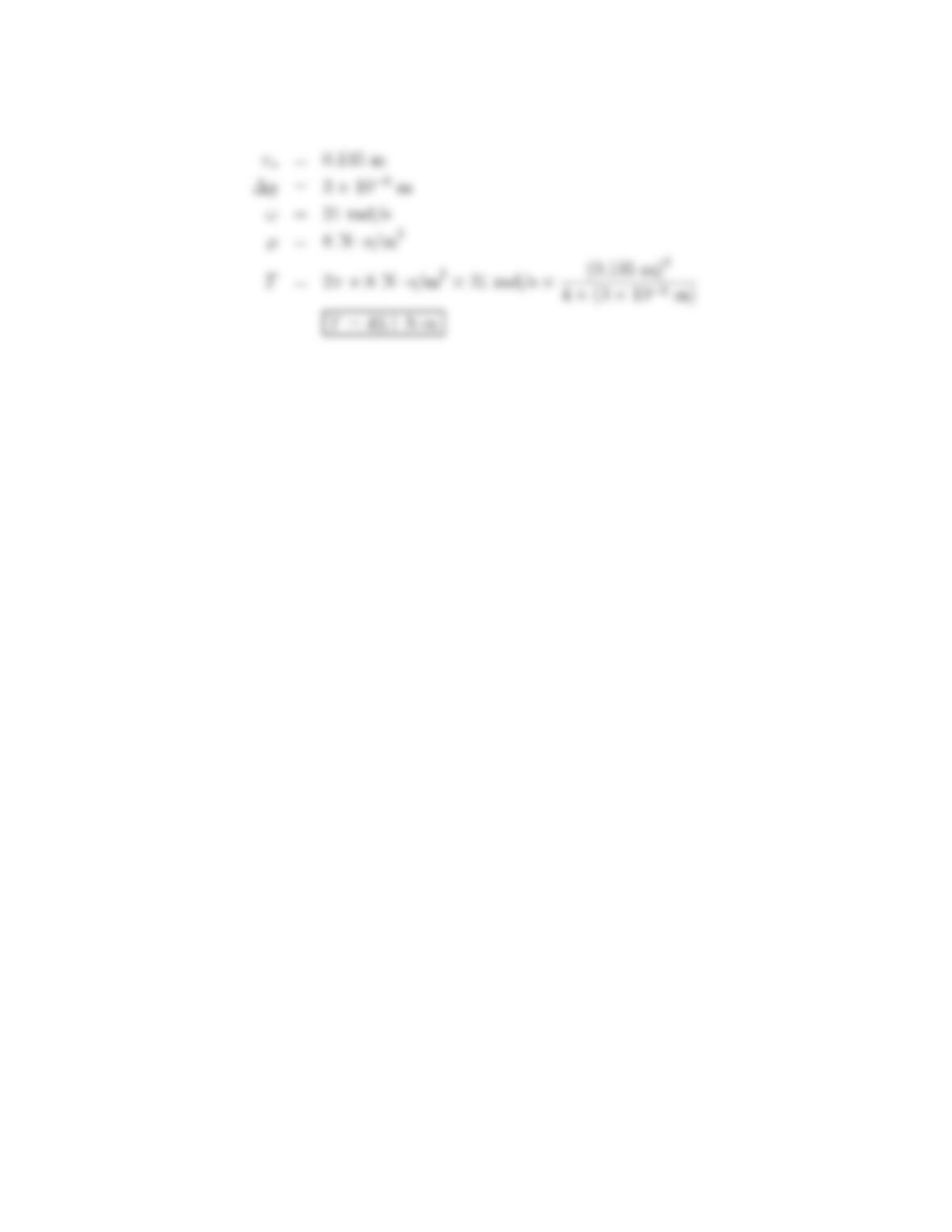
where
15
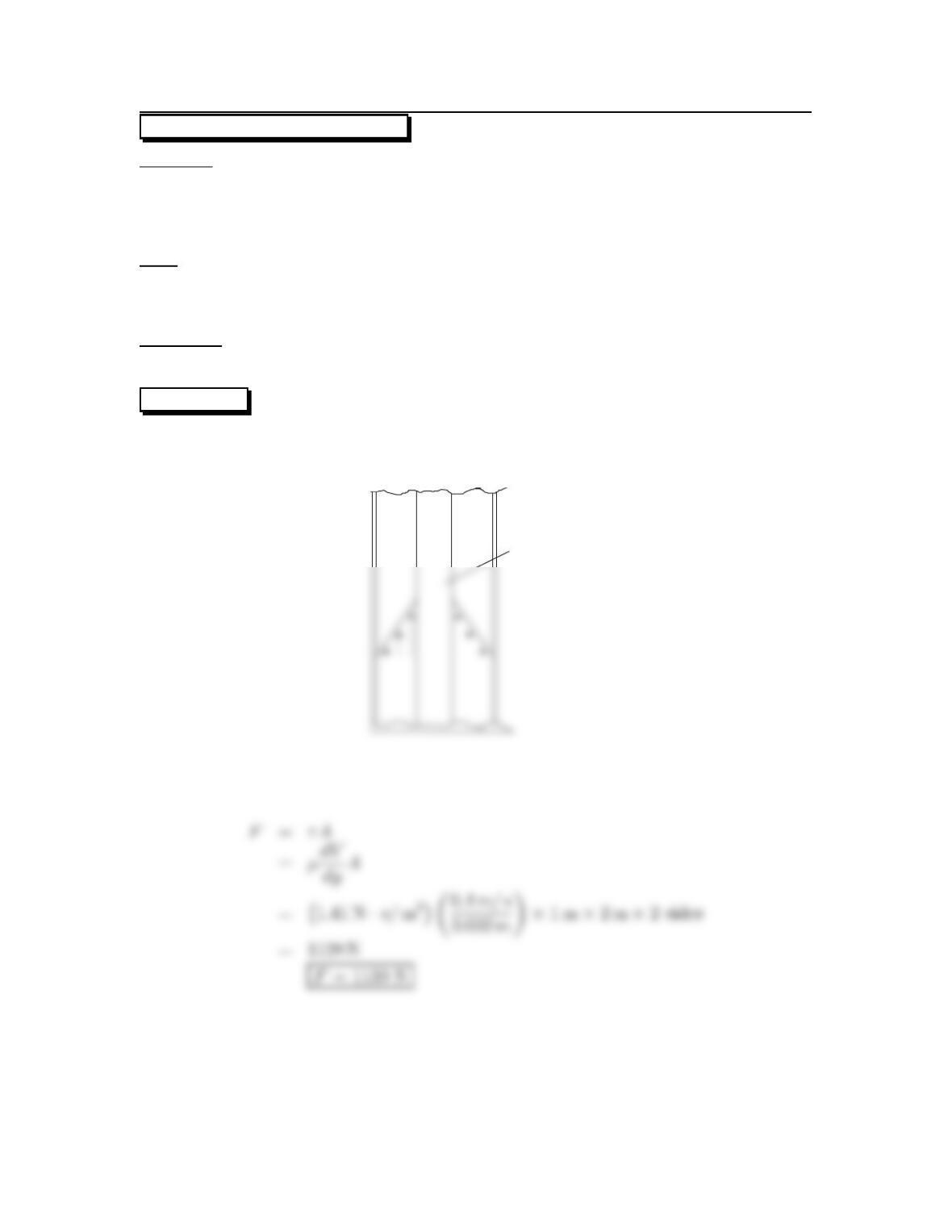
9.14: PROBLEM DEFINITION
Situation:
A 2 mm thick plate and 1 m wide is pulled at 0.4 m/s between two walls and
the space is occupied by glycerine at 20oCinglycerinisdescribedintheproblem
statement.
Find:
a) Sketch the velocity distribution at section A−A.
b) Force required to pull plate.
Properties:
Glycerin (Table A.4): μ=1.41 N ·s/m2.
SOLUTION
Velo city distribution:
V=0.4 m/s
16
9.15: PROBLEM DEFINITION
Situation:
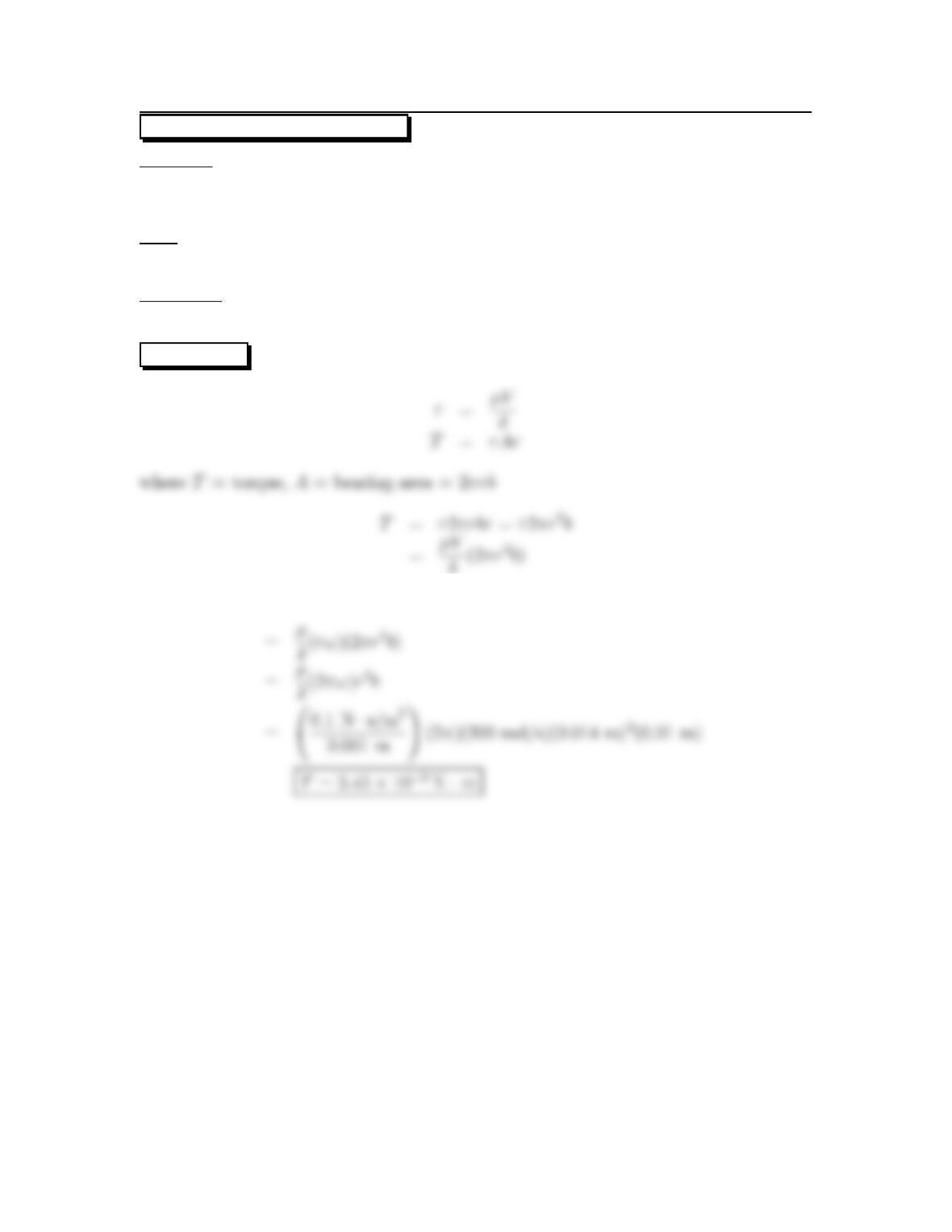
A bearing turns at 200 rad/s inside a 30-mm diameter cylinder 1 cm long. The
distance between the shaft and cylinder is 1 mm and filled with SAE 30 oil
Find:
Torque required to turn bearing.
Properties:
Viscosity from Table A.4 is 0.1 N·s/m2
SOLUTION
δ(2πr2b)
where V=rω. Then
17
9.16: PROBLEM DEFINITION
Situation:
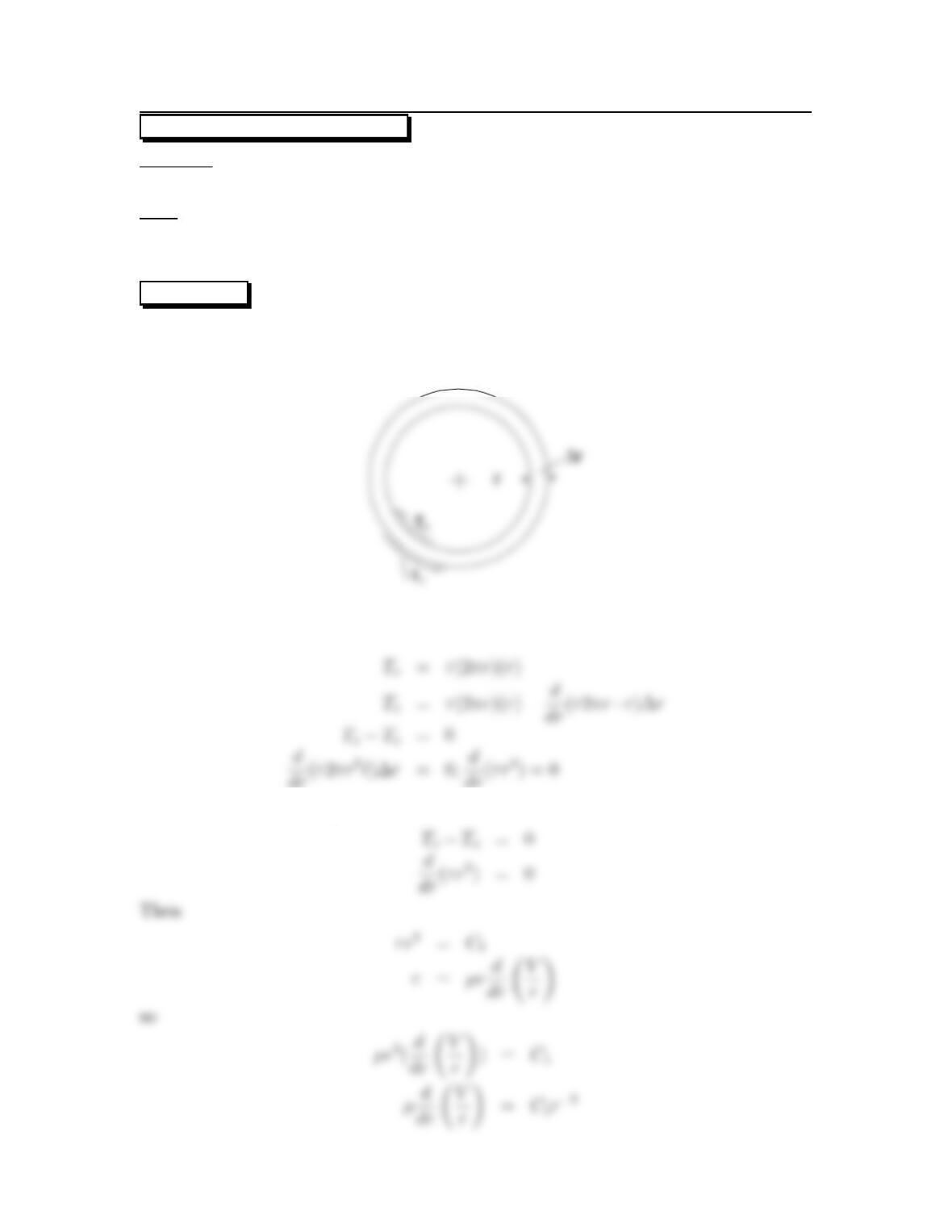
A shaft turning inside a cylinder is described in the problem statement.
Find:
Show that d(τr)/dr =0and that the torque per unit length acting on the inner
cylinder is given by T=4πμωr2
s/(1 −(r2
s/r2
o).
SOLUTION
Subscript srefers to inner cylinder. Subscript orefers to outer cylinder. The cylinder
is unit length into page.
Since there is no net angular acceleration, the net torque must be zero so
18
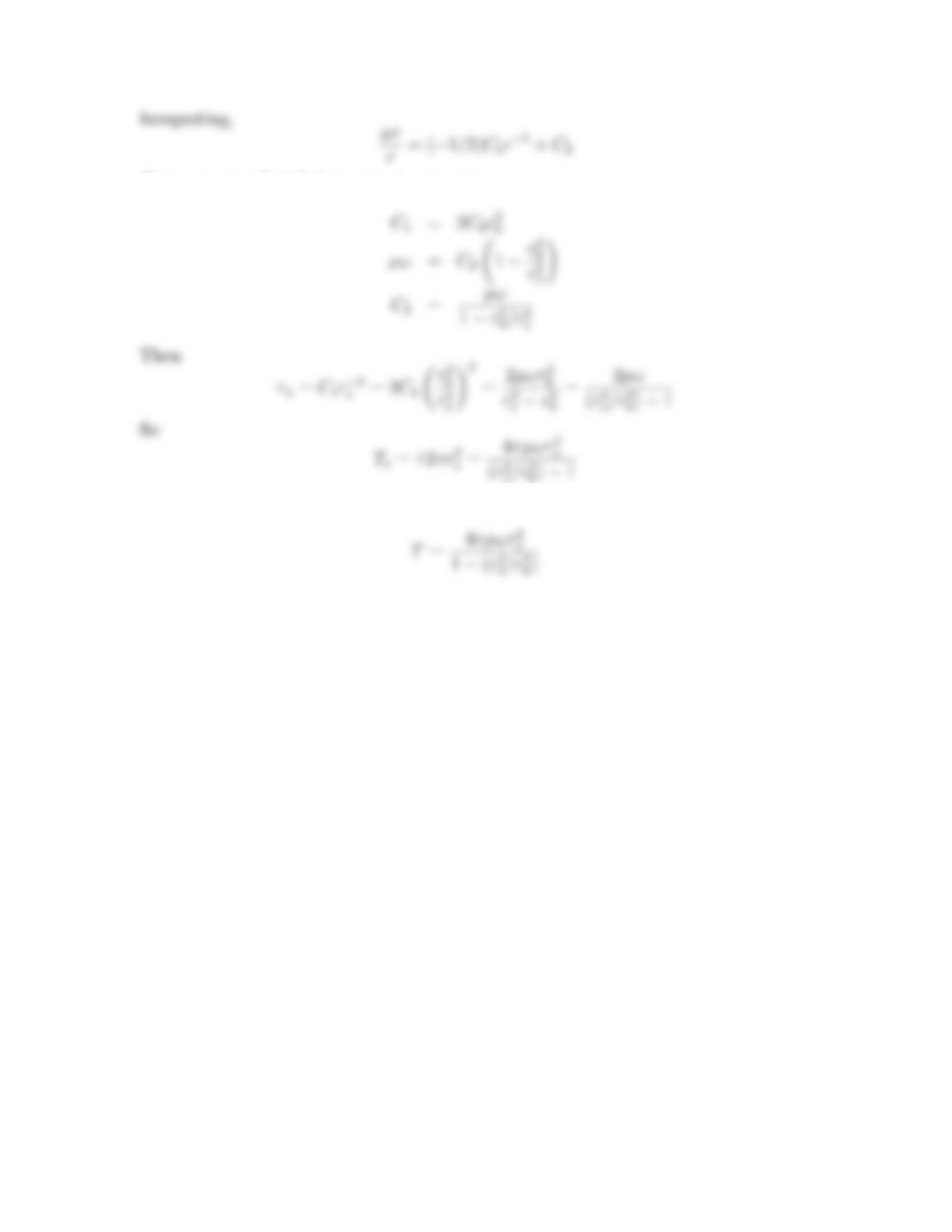
At r=ro,v=0and at r=rs,v=rsωso
which is the torque per unit length on the fluid.
19
9.17: PROBLEM DEFINITION
Situation:
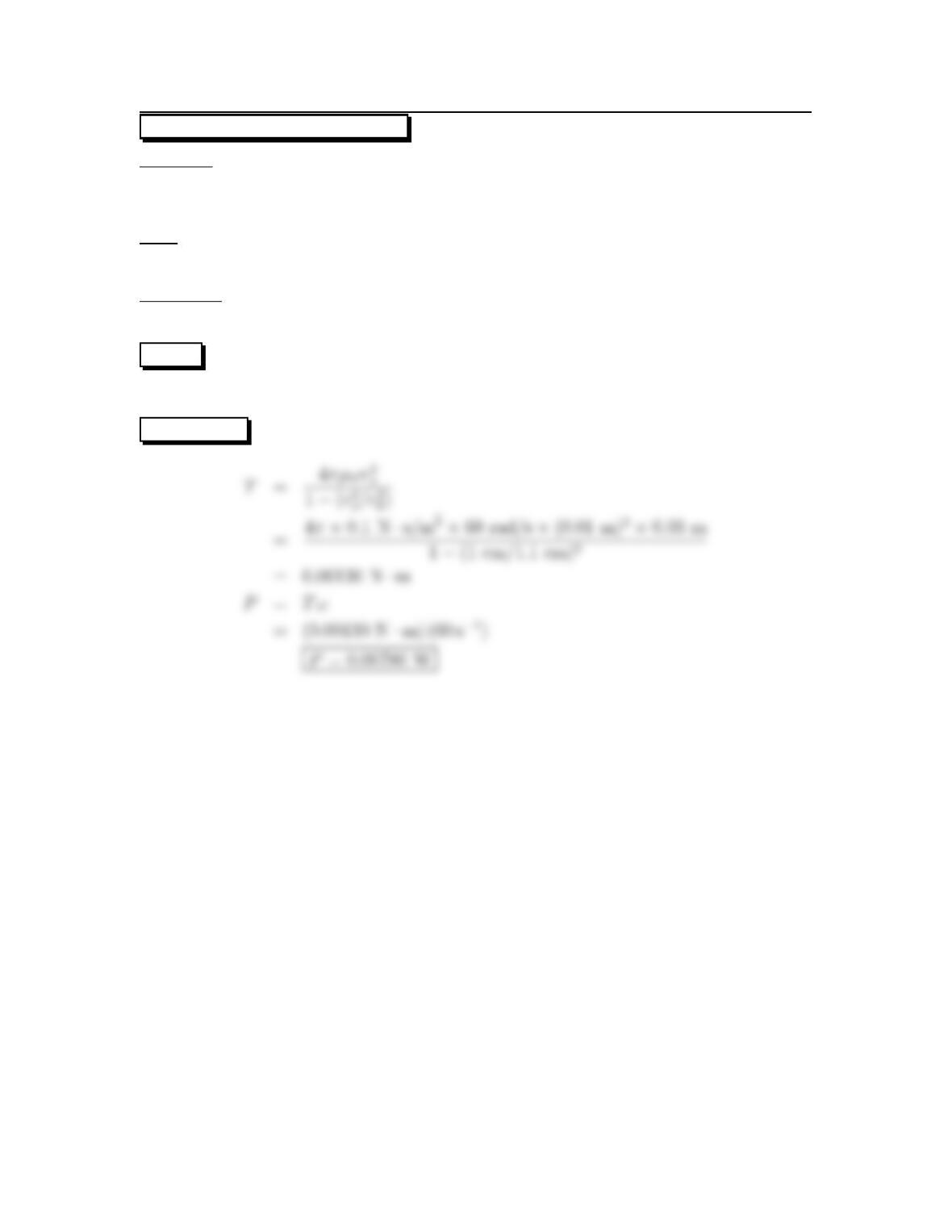
A2–cmshaft3cmlongturninginsidea2.2–cmcasingat60rad/swithSAE30oil
as lubricant.
Find:
Power necessary to rotate shaft.
Properties:
Viscosity from Table A.4 is 0.1 N·s/m2
PLAN
Apply the equation developed in Problem 9.15 (10e).
SOLUTION
20