Continuing Case Solution
Chapter 9
(a)
Memorandum
To: Eric Conner and Phil Martin, CM2
From: L. Harbach
Re: Lower-of-Cost-or-Market
Date: January 13, 2013
Presented below is my analysis of the lower-of-cost-or-market approach.
The lower-of-cost-or-market (LCM) principle is applied to ensure that when
inventory has experienced a decline in utility its value is not overstated on the
balance sheet. Cost is the original acquisition price, and market is the cost to
As a consequence, inventory cannot be reported at an amount in excess of the
NRV or less than the NRV minus normal profit margin. The upper limit (ceiling)
covers obsolete, damaged, or shopworn material. It would not be a good
business decision to re-value inventory to a price greater than the potential
selling price. The ceiling also prevents overstatement of inventories and
understatement of the loss in
the current period.
The ceiling, the floor, and the replacement cost are compared to determine the
market value. The middle value is identified as the market value to be used for
Continuing Case Solution
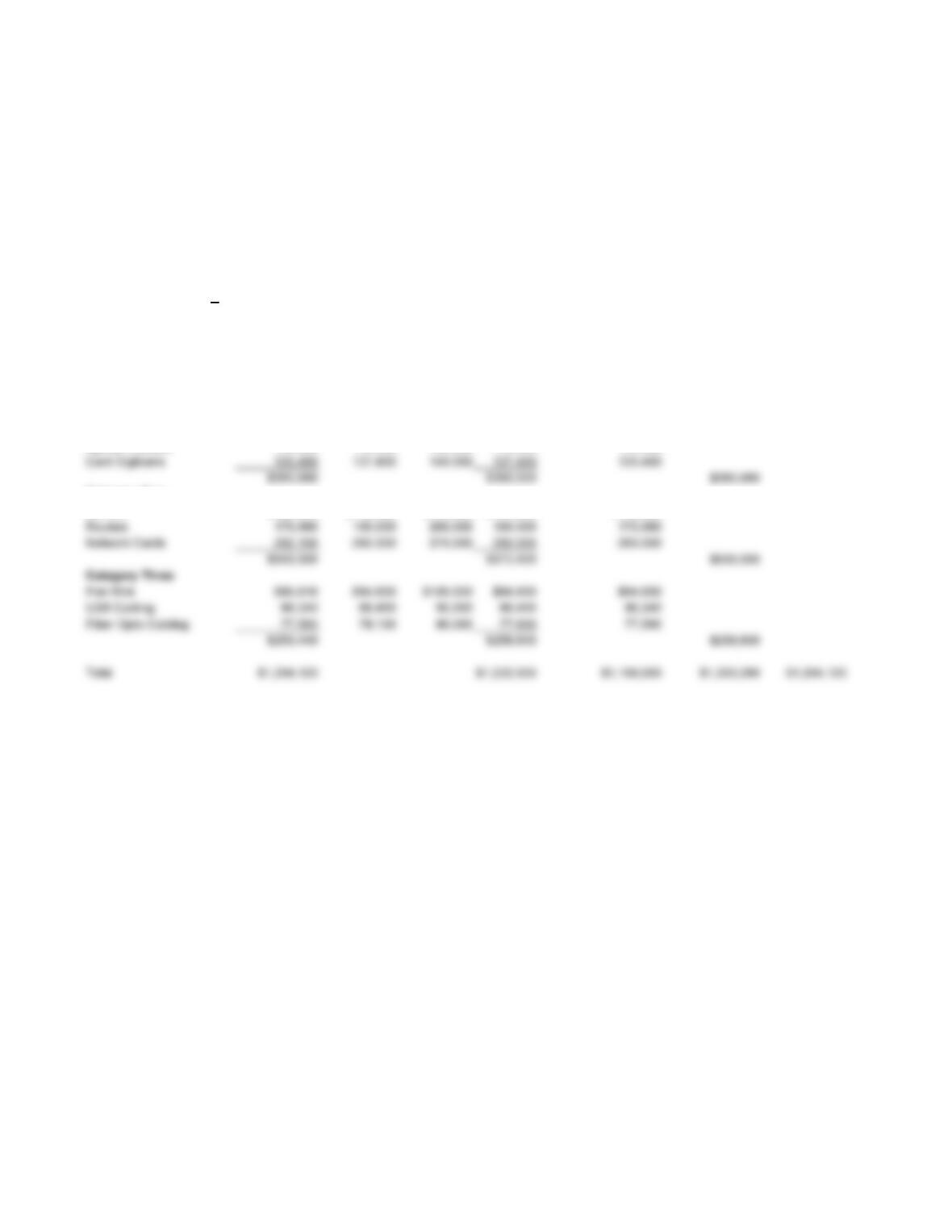
(b)
Current Replacement
Selling Item by Total
Inventory Cost Cost Price Market Item Classification
Inventory
Category One
Scanners
$143,320
$144,200
$180,000
$147,600
$143,320
Optical Readers
116,900
115,500
135,000
115,500
115,500
Category Two
Servers
$120,870
$118,300
$145,000
$118,900
$118,900
262,150
260,500
270,000
260,500
260,500
$559,000
$573,400
$559,000
$95,610
$94,600
$100,000
$94,600
86,240
86,400
95,000
86,400
86,240
77,590
78,100
80,000
77,600
77,590
$259,440
$258,600
$258,600
$1,204,120
$1,222,500
$1,198,090
$1,203,280
$1,204,120
Note: Disposal costs are 3% of gross selling price.
Normal profit is 15% of selling price.
125,460
127,400
140,000
125,460
$385,680
$390,500
$385,680