Problem 9.61
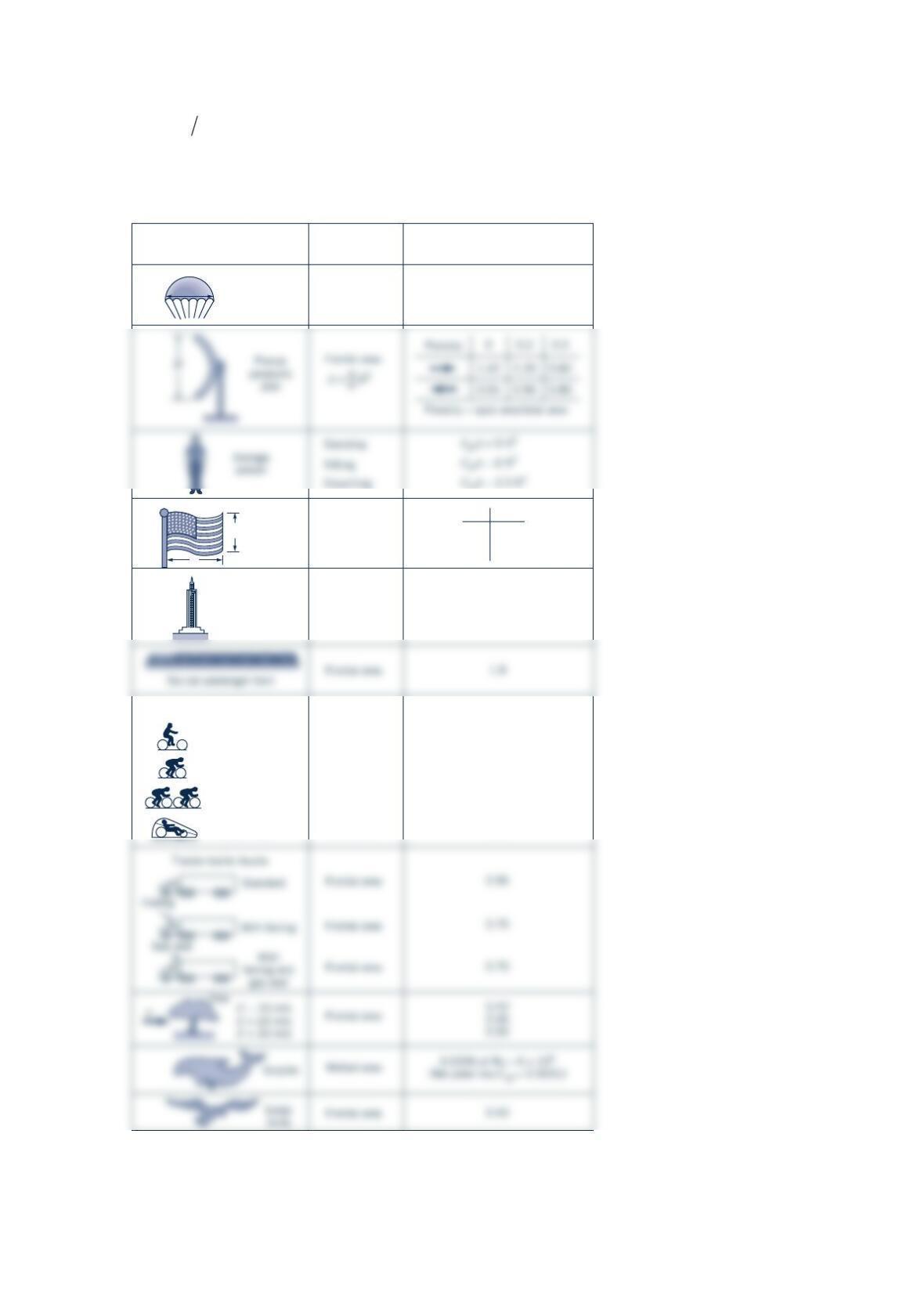
Estimate the velocity with which you would contact the ground if you jumped from an
airplane at an altitude of 5000 ft and (a) air resistance is negligible, (b) air resistance is
important, but you forgot your parachute, or (c) you use a 25-ft-diameter parachute.
Solution 9.61
(a) Without air resistance
()
2
ft ft
2 2 32.2 5000 ft 567 s
s
V
gh
== =
(b) With air resistance assume terminal velocity is reached. Thus,
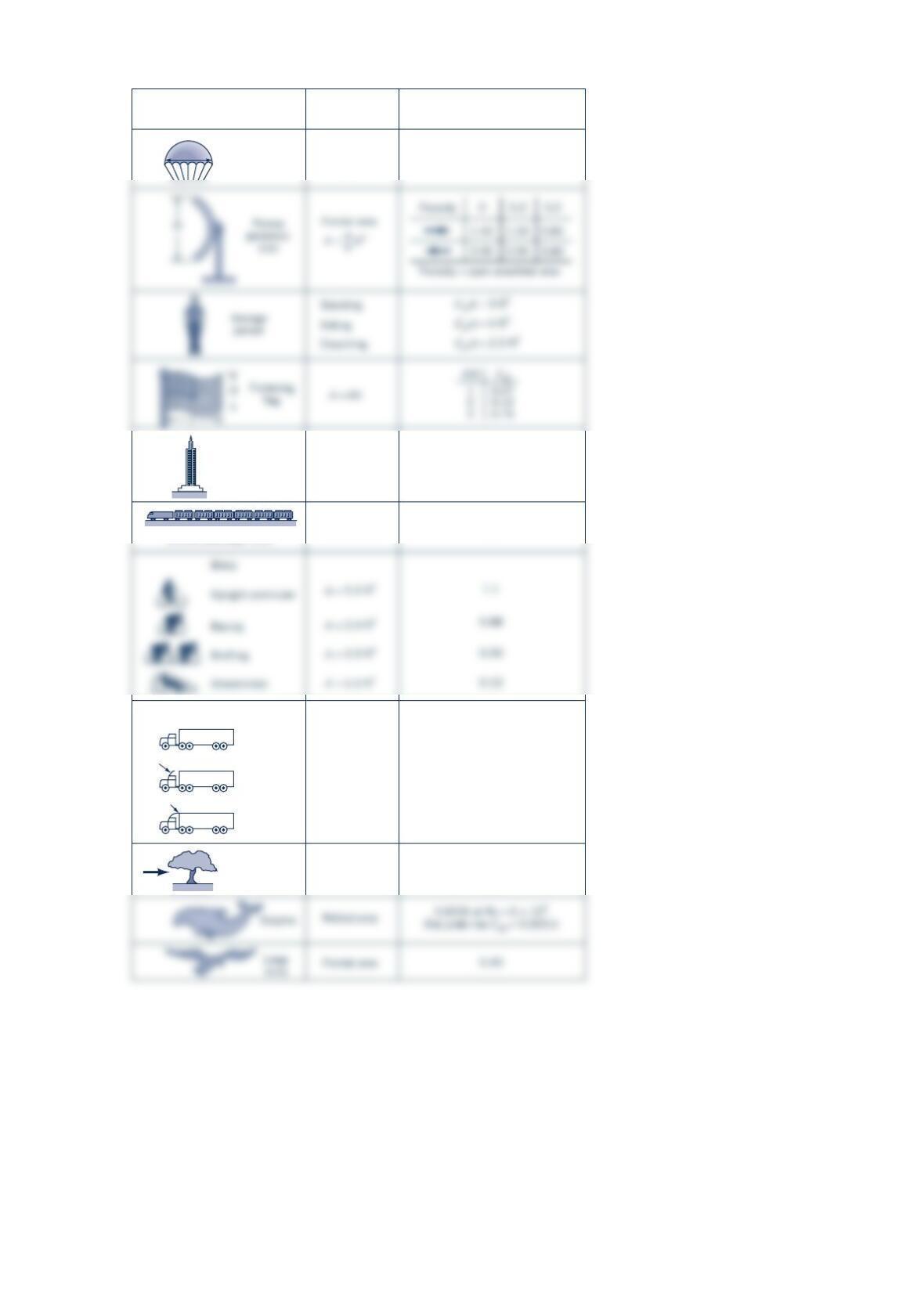
(c) With a parachute assume =1.4
D
CA (see the figure below) and
U
D
Parachute
Empire
State Building
Six-car passenger train
Tractor-trailer trucks
Fairing
Gap seal
Standard
With fairing
With
fairing and
gap seal
Tree
U
= 10 m/s
U
= 20 m/s
U
= 30 m/s
Shape Reference area
Frontal area
A
=
D
2
__
4
π
Frontal area
Frontal area
Frontal area
Frontal area
Frontal area
Frontal area
Drag coefficient
C
D
1.4
1.4
1.8
0.96
0.76
0.70
0.43
0.26
0.20
Problem 9.62
The drag on a rough golf ball may be less than that on an equal-sized smooth ball. Does it
follow that a 10-m-diameter spherical water tank resting on a 20-m-tall support should
have a rough surface so as to reduce the moment needed at the base of the support when a
wind blows? Explain.
Solution 9.62
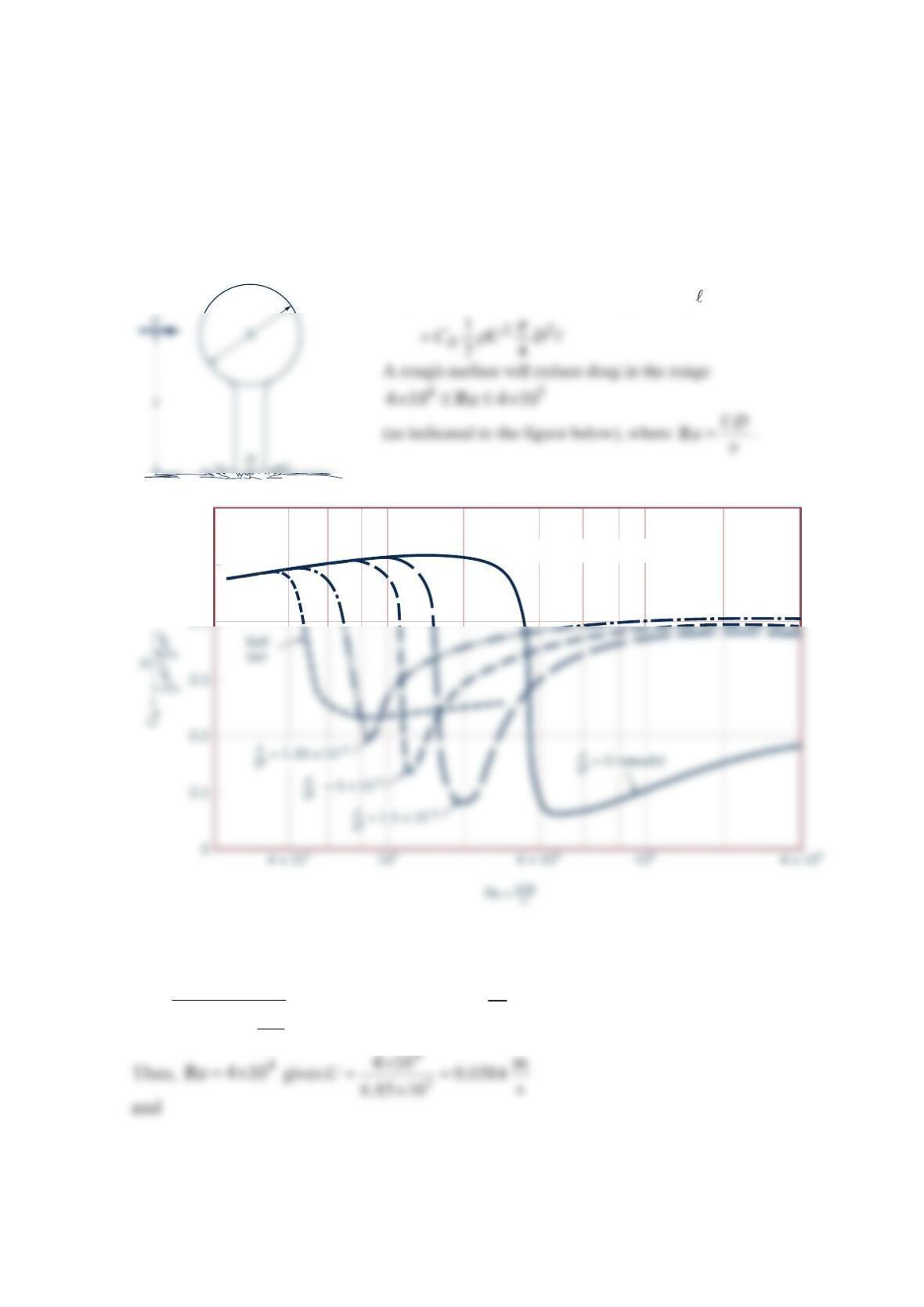
==
moment about of drag Drag
O
MO
For this flow
5
2
5
(10 m )
Re 6.85 10
m
1.46 10 s
UU
−
==×
×
where m
s
U
∼
0.6
0.5
ε
__
D
= relative roughness

5
Re 4 10=× gives m
0.584 s
U=
Problem 9.63
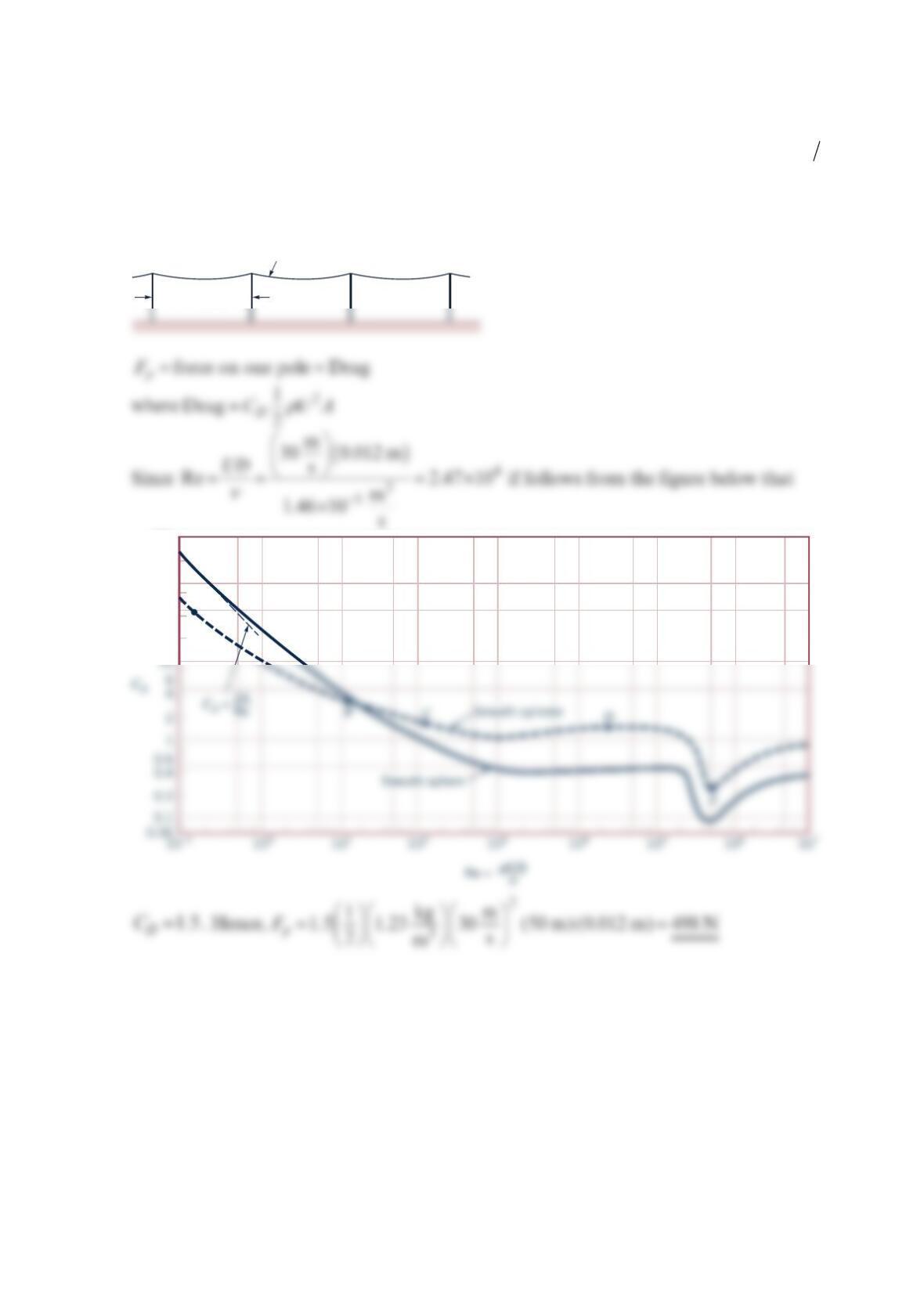
A 12-mm-diameter cable is strung between a series of poles that are 50 mm apart.
Determine the horizontal force this cable puts on each pole if the wind velocity is
3
0m s
.
Solution 9.63
ℓ
= 50 m
D = 12 mm
A
400
200
100
60
40
20
Problem 9.64
A strong wind can blow a golf ball off the tee by pivoting it about point 1 as shown in the
figure below. Determine the wind speed necessary to do this.
Solution 9.64
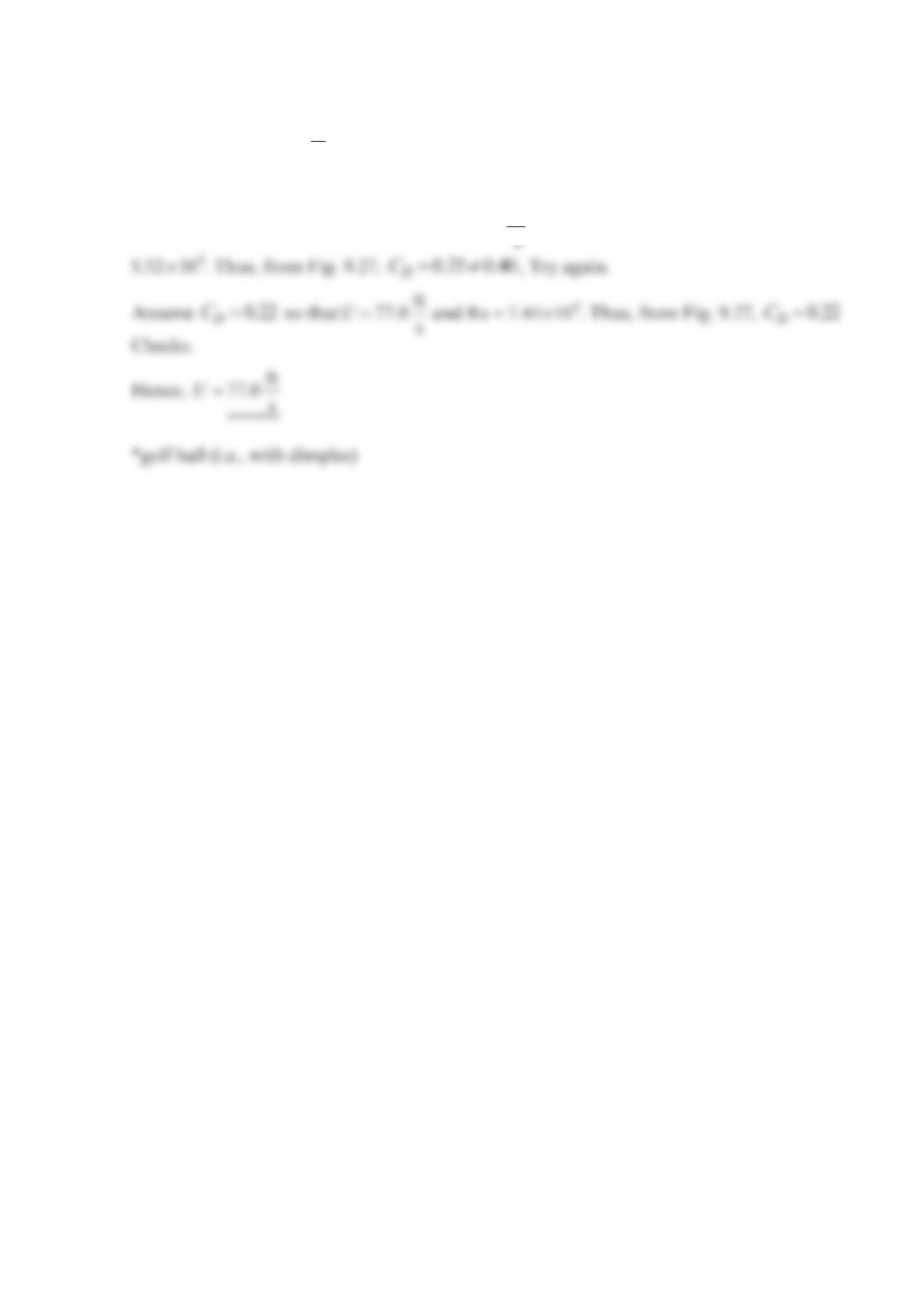
When the ball is about to be blown from the tee the free body
diagram is as shown. Hence, by summing moments about (1):
Thus,
0.20 in.
Weight = 0.0992 lb
Radius = 0.845 in.
(1)
U
r
= 0.845 in.
0.821 in.
or
Re 966
,
U= where ft
s
U∼ (3)
Trial and error solution:
Assume =0.4
D
C so that from Eq. (1), ft
57.1 s
U= and from Eq. (3), Re 966 (57.1)=
=
Problem 9.65
A
2
2in.– by
3
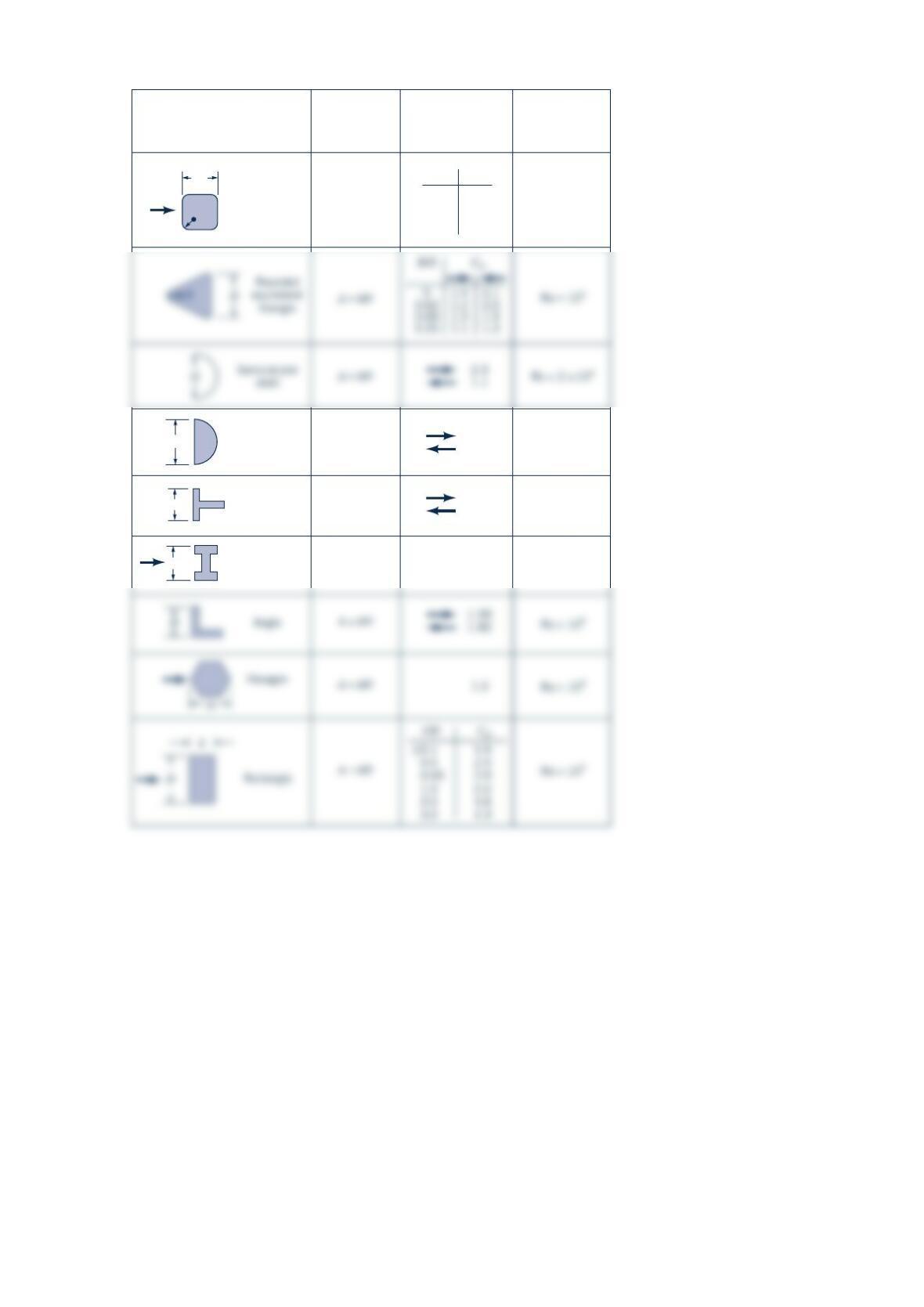
4in.– speed limit sign is supported on a 3-in.-wide , 5-ft-long pole. Estimate the
bending moment in the pole at ground level when a 30-mph wind blows against the sign.
List any assumptions used in your calculations.
Solution 9.65
For equilibrium, =
00Mor 17
2.5 ft 5 ft
12
Bp
s
M
=Δ++ Δ
, (1)
where drag on the pole
p
Δ
= and drag on the sign
s
Δ
=.
22 in.
34 in.
35
𝒟
s
D
R
Square rod
with rounded
corners
Semicircular
cylinder
D
D
T-beam
I-beam
D
Shape
Reference area
A
(
b
= length)
A
=
bD
A
=
bD
A
=
bD
A
=
bD
Drag coefficient
C
D
=
𝒟
________
U2A
1
__
2
ρ
R
/
DC
D
0
0.02
0.17
0.33
2.2
2.0
1.2
1.0
2.15
1.15
1.80
1.65
2.05
Reynolds number
Re =
UD
/
ρ
Re = 10
5
Re > 10
4
Re > 10
4
Re > 10
4
μ
Problem 9.66
A
2
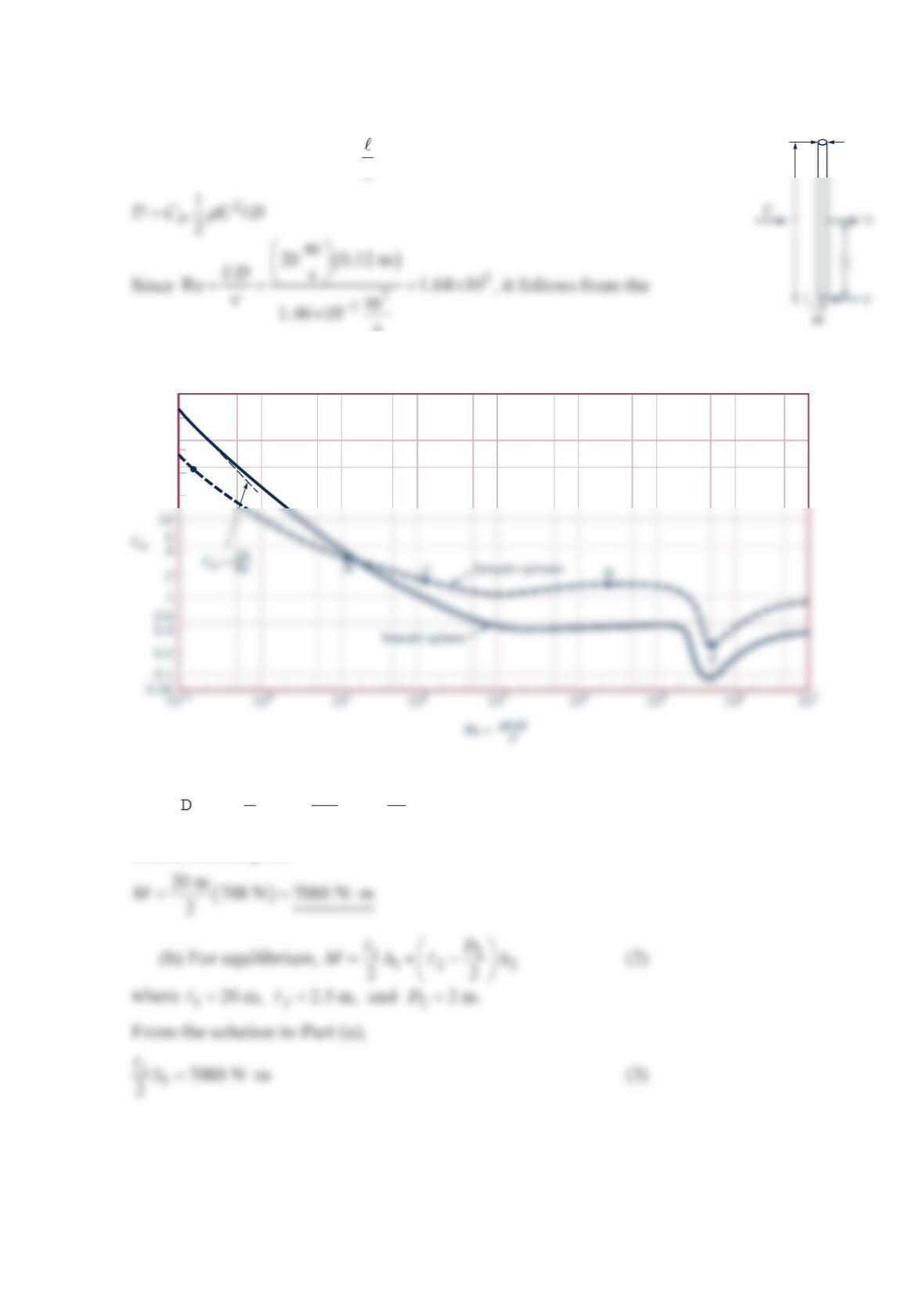
0- m s wind blows against a 20-m-tall , 0.12-m-diameter flag pole. (a) Determine the
anchoring moment at the base of the pole. (b) Determine the anchoring moment if a 2-m
by 2.5-m flag is attached to the top of the pole. See the figure below for drag coefficient
data for flags.
D
Parachute
Fluttering
flag
D
l
Empire
State Building
Bikes
Upright commuter
Racing
Drafting
Streamlined
Shape Reference area
Frontal area
A
=
D
2
__
4
π
A
=
𝓵
D
Frontal area
A
= 5.5 ft2
A
= 3.9 ft2
A
= 3.9 ft2
A
= 5.0 ft2
Drag coefficient
C
D
1.4
D
𝓵/
DC
D
2
1
3
0.12
0.07
0.15
1.4
1.1
0.88
0.50
0.12
Solution 9.66
(a) For equilibrium, 2
M
=D where (1)
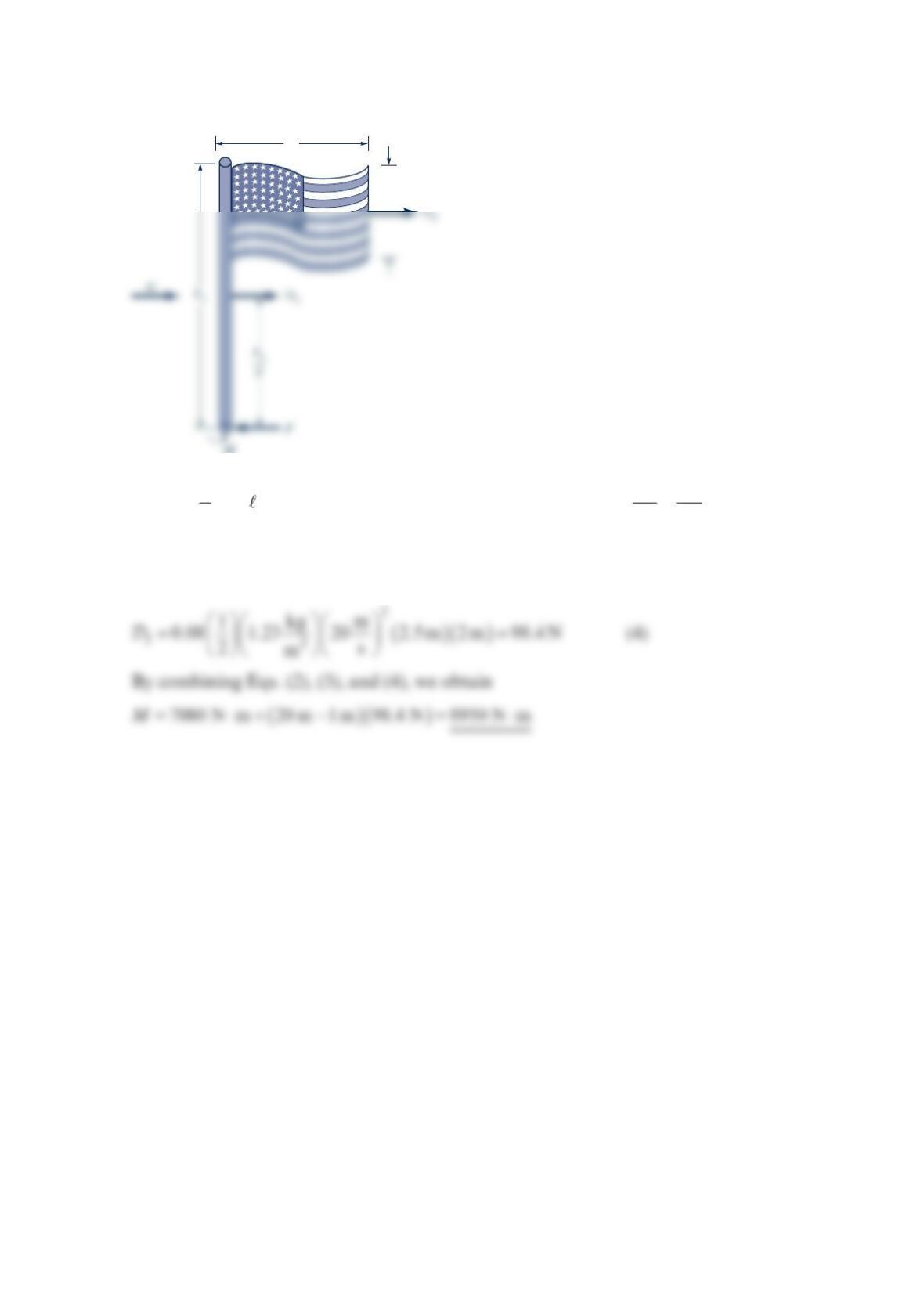
figure below that =1.2
D
C
Thus,
()( )
2
3
1kgm
1.2 1.23 20 20 m 0.12 m 708
N
2s
m
==
Hence, from Eq. (1)
M
A
400
200
100
60
40
20
D
Also,
2
222
1
2
D
CUD
ρ
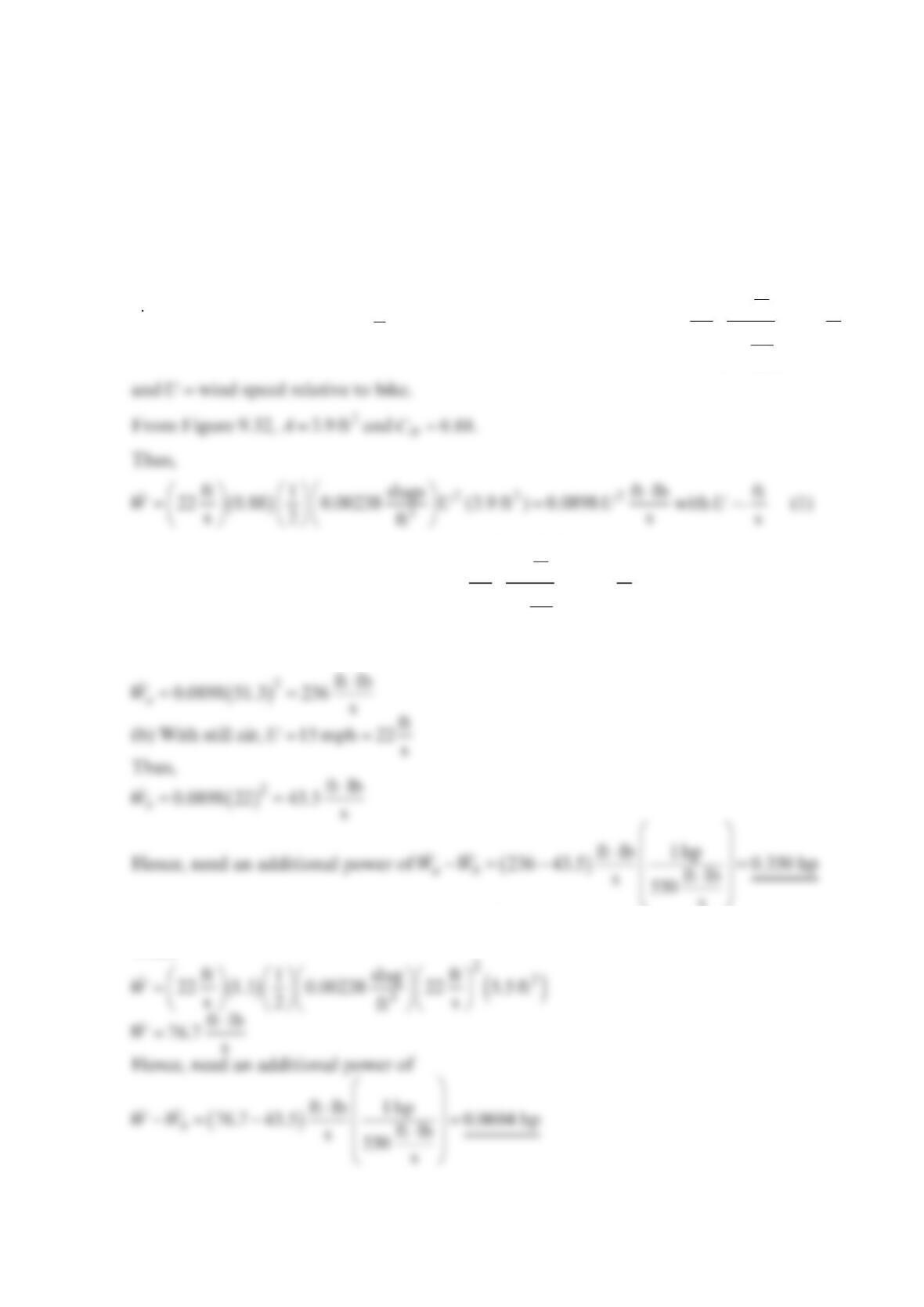
=D, where from the figure in the problem with 2
2
2.5 1.25,
2
==
Δ we obtain
=0.08
D
C.
Thus,
D
2
M
ℓ
2
Problem 9.68
With the rider in the racing position, how much more power is required to pedal a bicycle at
15 mph into a 20-mph head-wind than at 15 mph through still air? Pedaling at 15 mph in
still air, how much more power is required for an upright position instead of a racing
position?
Solution 9.68
power B
W
U==Δ and 2
1
2
D
CUA
ρ
=Δ, where
ft
88
mi ft
s
speed of bike 15 22
mi
hr s
50 hr
B
U
== =
(a) With a
2
0mph
headwind,
ft
88
mi ft
s
(15 20) 51.3
mi
hr s
60 hr
U
=+ =
Thus,
c) Now for upright, Fig. 9.32 reveals 2
5.5 ft
A
= and 1.1
D
C
=.
Thus,
A
C
Problem 9.69
Estimate the wind velocity necessary to knock over a
2
0-lbgarbage can that is
3
-ft tall and
in diameter. List your assumptions.
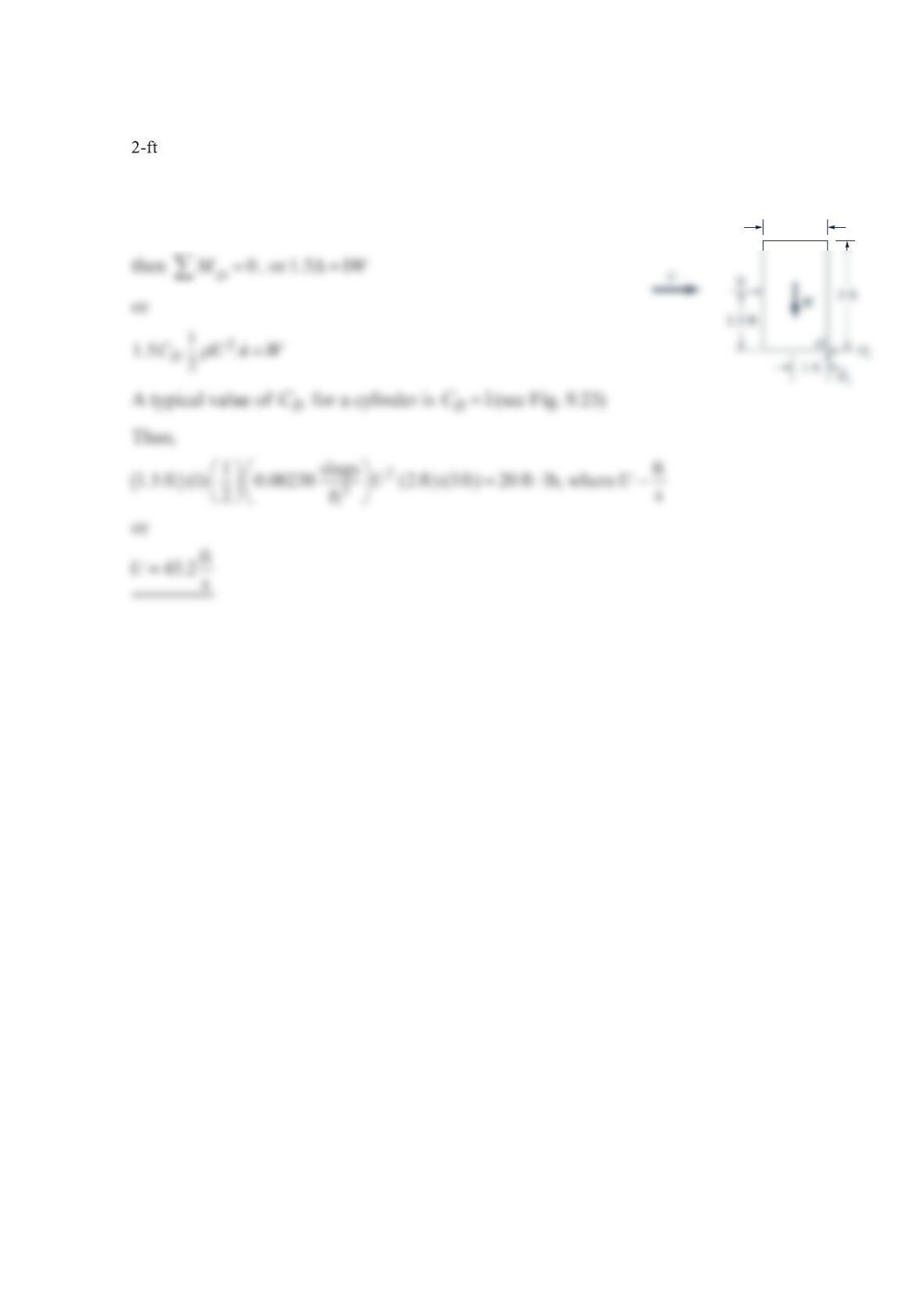
Solution 9.69
If the can is about to tip around corner
O
,
D
= 2 ft
Problem 9.70
On a day without any wind, your car consumes x gallons of gasoline when you drive at a
constant speed,
U
, from point A to point B and back to point A. Assume that you repeat
the journey, driving at the same speed, on another day, when there is a steady wind blowing
from B to A. Would you expect your fuel consumption to be less than, equal to, or greater
than xgallons for this windy round-trip? Support your answer with appropriate analysis.
Solution 9.70
Trip with the larger power lost due to aerodynamic drag will use the most gas. Let
()
1
mean “no wind” and
()
2 mean “wind.”
(1) No wind:
(2) Wind
()
=<wind speed; assume
WW
UUU
:
== →→
Energy used , where time to go from or Wt t A B B A
Thus,
A
B
UW
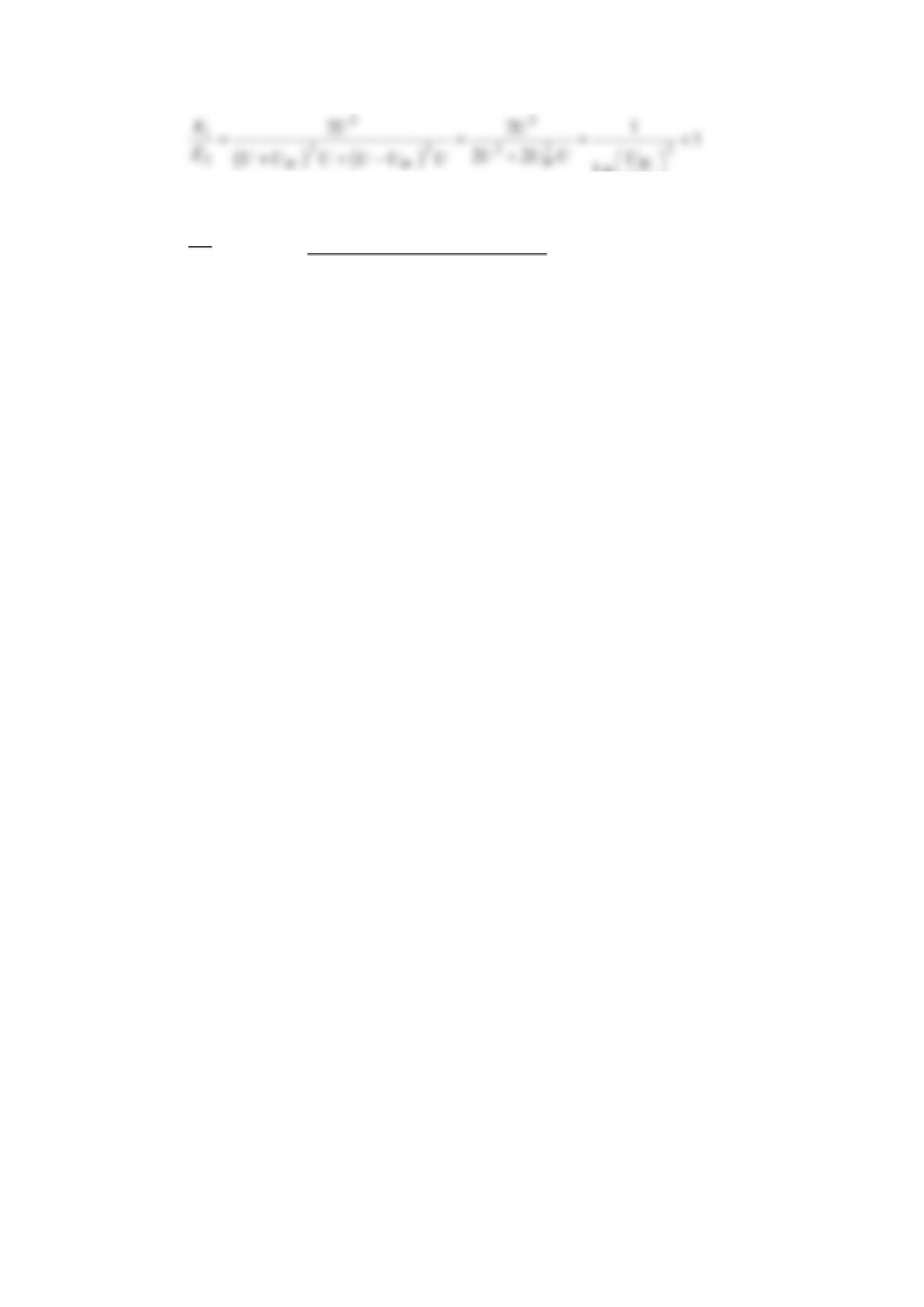
Thus,
+
U
Hence,
<
1
2
1
E
E, that is, more fuel needed when windy.
Problem 9.71
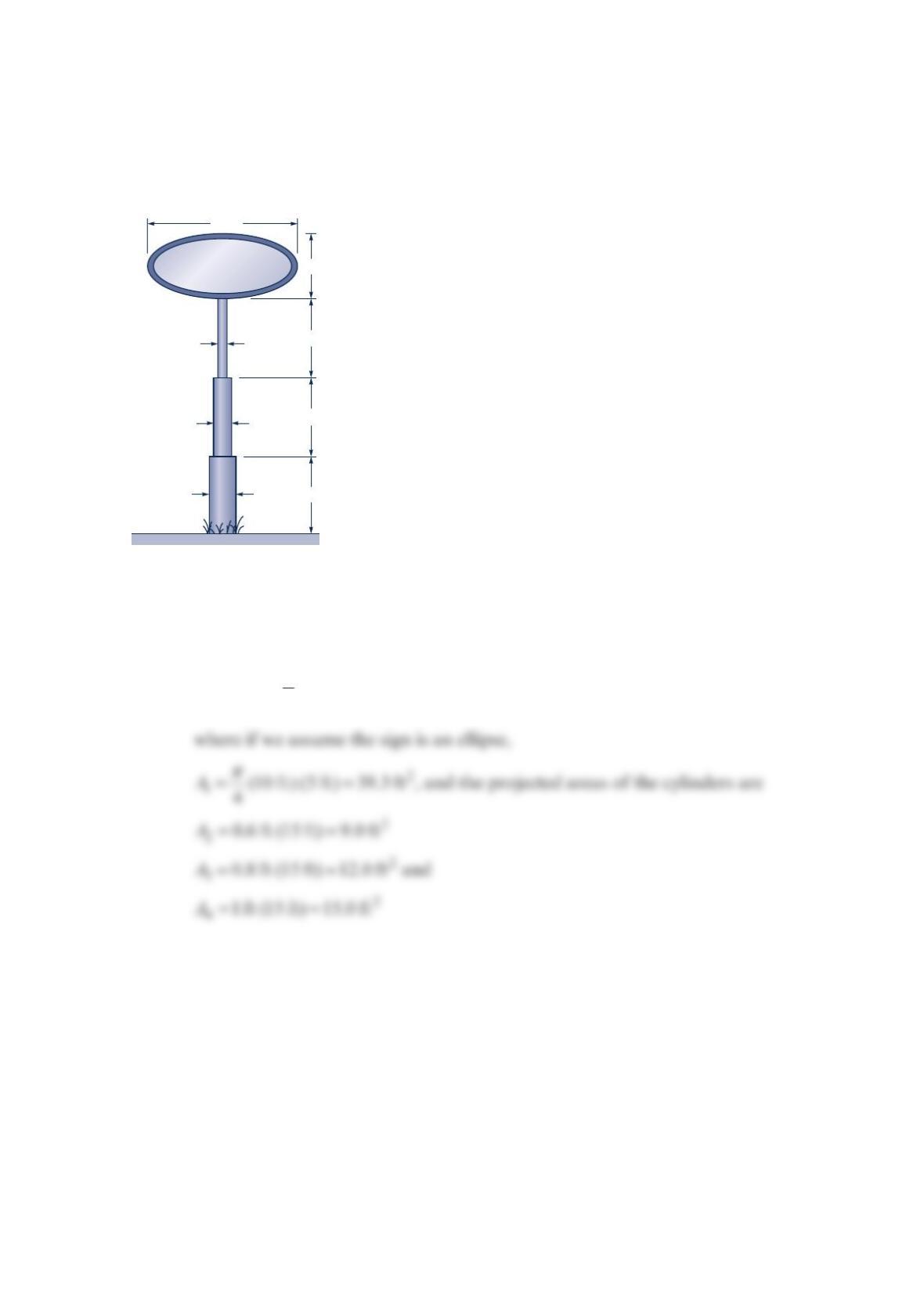
The structure shown in figure below consists of three cylindrical support posts to which an
elliptical flat plate sign is attached. Estimate the drag on the structure when a 50-mph wind
blows against it.
Solution 9.71
For the composite body:
(1) 12 3 4
42
1234
1
1
2
iDDDD
i
UCACACACA
ρ
=
Δ
=Δ= + + +
16 ft
0.6 ft
0.8 ft
1 ft 15 ft
15 ft
15 ft
5 ft
(4)
(3)
(2)
(1)
Adrianna’s
Petting
Zoo
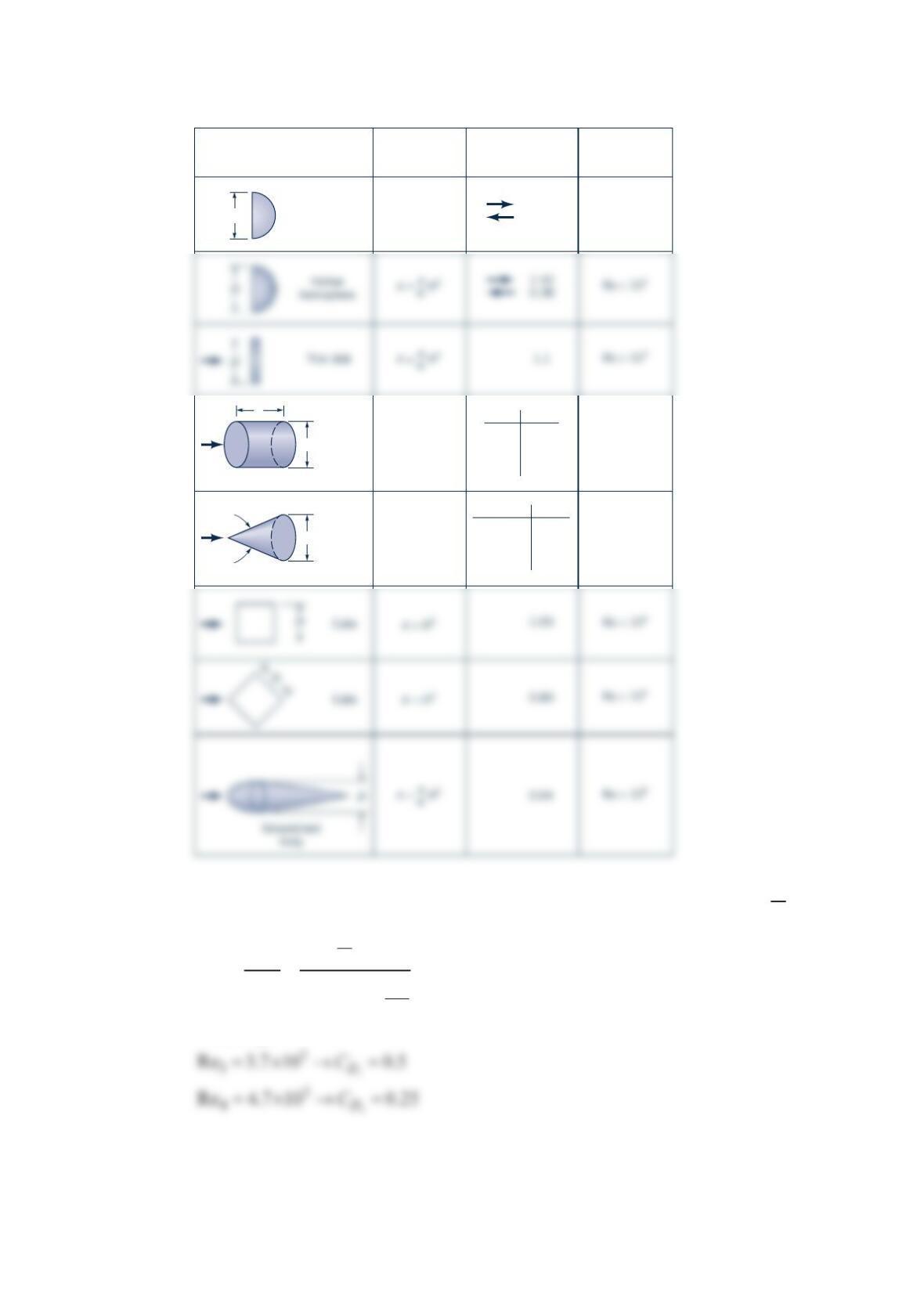
From the figure below, for a thin disc =
11.1
D
C
For the cylindrical part, obtain D
C
from Fig. 9.23 as: ft
50 mph 73.3 s
U
==
()
2
5
2
22
4
ft
73.3 0.6 ft
s
Re 2.8 10 0.6
ft
1.57 10 s
D
UD C
ν
−
== =×→=
×
Similarly,
D
Solid
hemisphere
𝓵
D
Circular
rod
parallel
to flow
D
Cone
Shape Reference area
A
A
=
D
2
__
4
π
A
=
D
2
__
4
π
A
=
D
2
__
4
π
Drag coefficient
C
D
1.17
0.42
C
D
10
30
60
90
0.30
0.55
0.80
1.15
𝓵/
DC
D
0.5
1.0
2.0
4.0
1.1
0.93
0.83
0.85
(°)
θ
Re > 10
4
Re > 10
5
Re > 10
4
Reynolds number
Re =
UD
/
ρμ
θ
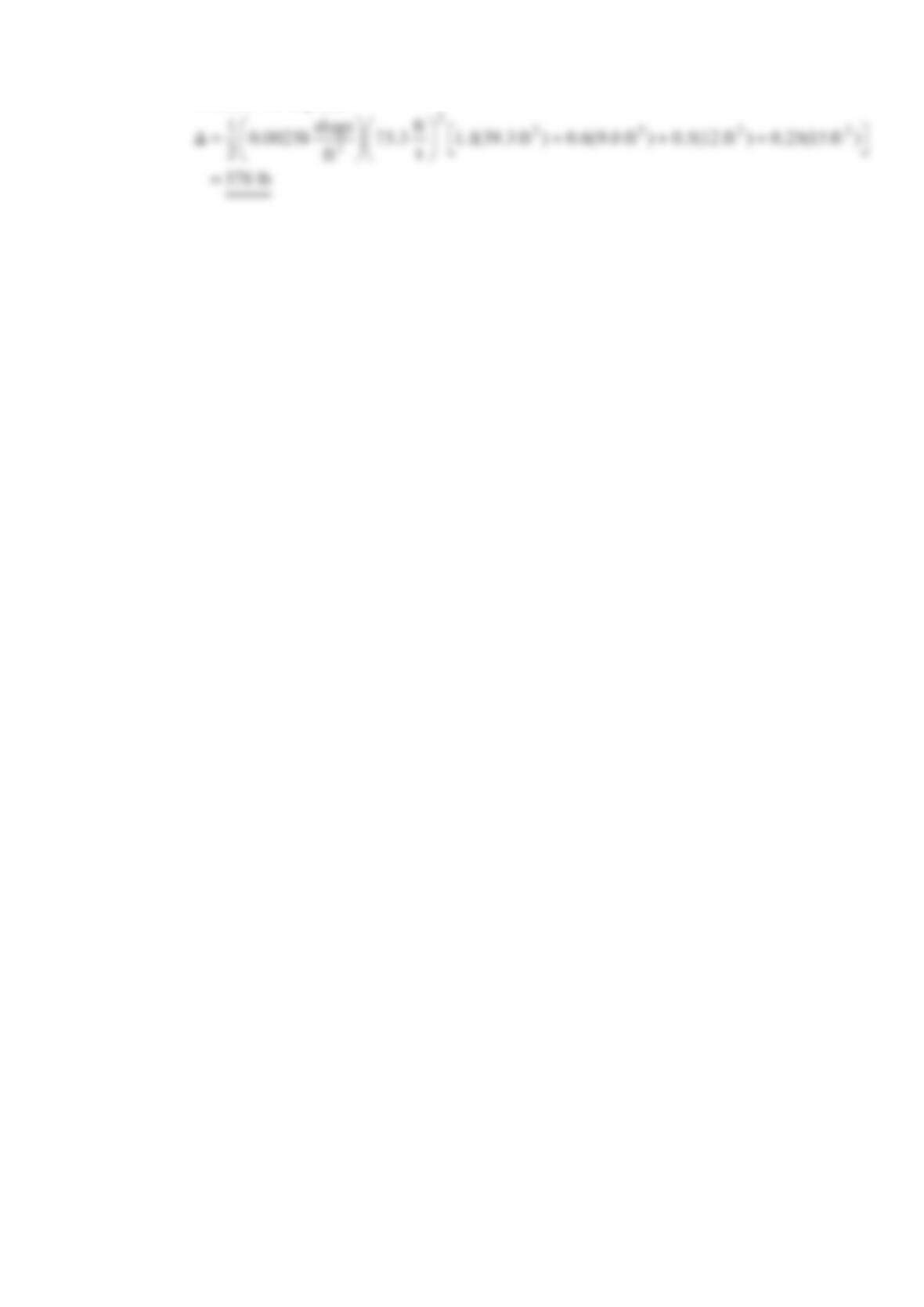
Thus, from Eq. (1):
Problem 9.72
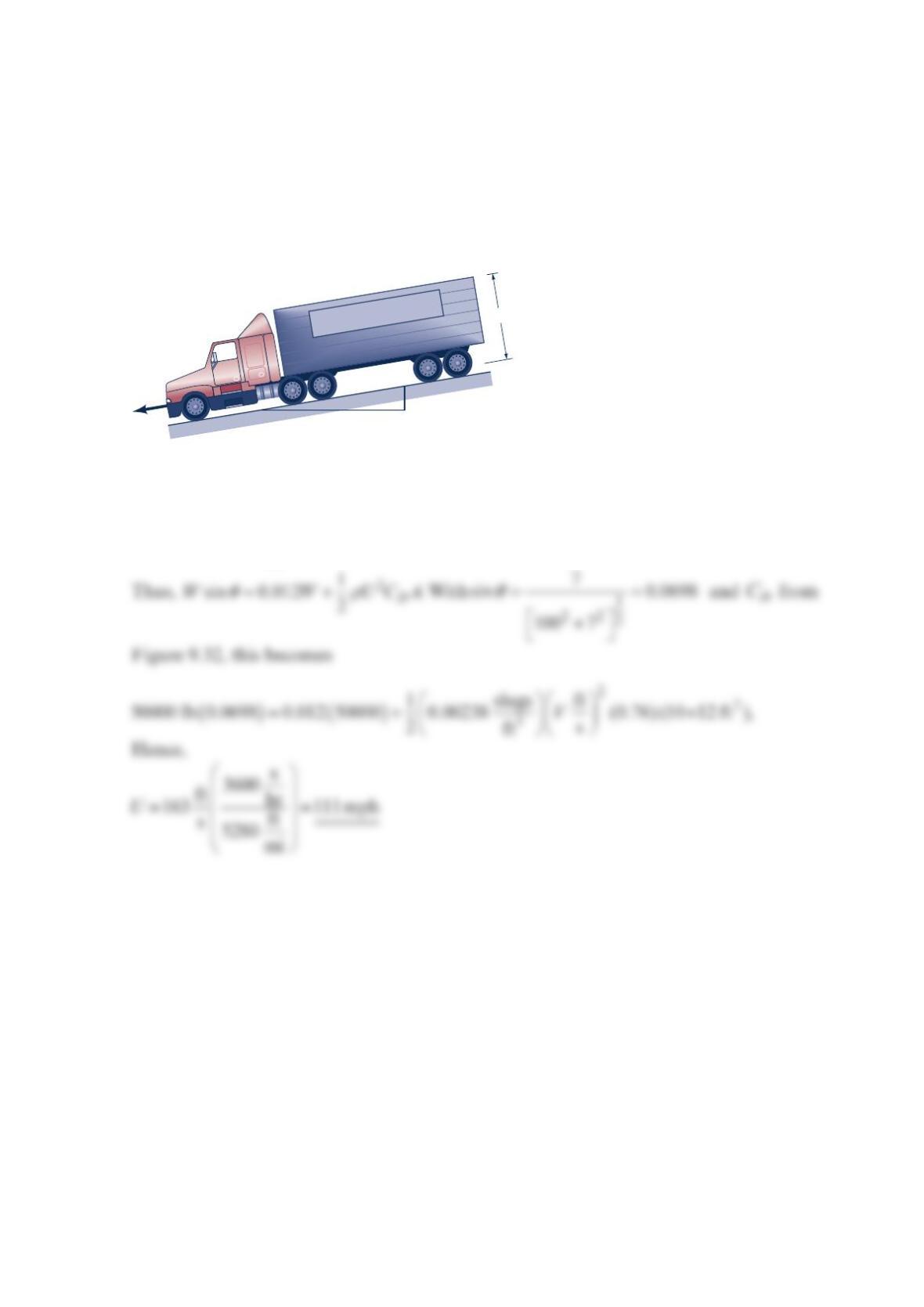
A 25-ton (50,000-lb ) truck coasts down a steep 7% mountain grade without brakes, as
shown in the figure below. The truck’s ultimate steady-state speed,
V
, is determined by a
balance between weight, rolling resistance, and aerodynamic drag. Determine
V
if the
rolling resistance for a truck on concrete is 1.2 % of the weight and the drag coefficient
based on frontal area is 0.76.
Solution 9.72
For steady state ==
0
xx
Fma , or sin 0
R
W
F
θ
−−Δ=
100
7
Truck width = 10 ft
12 ft
V