Problem 9.48
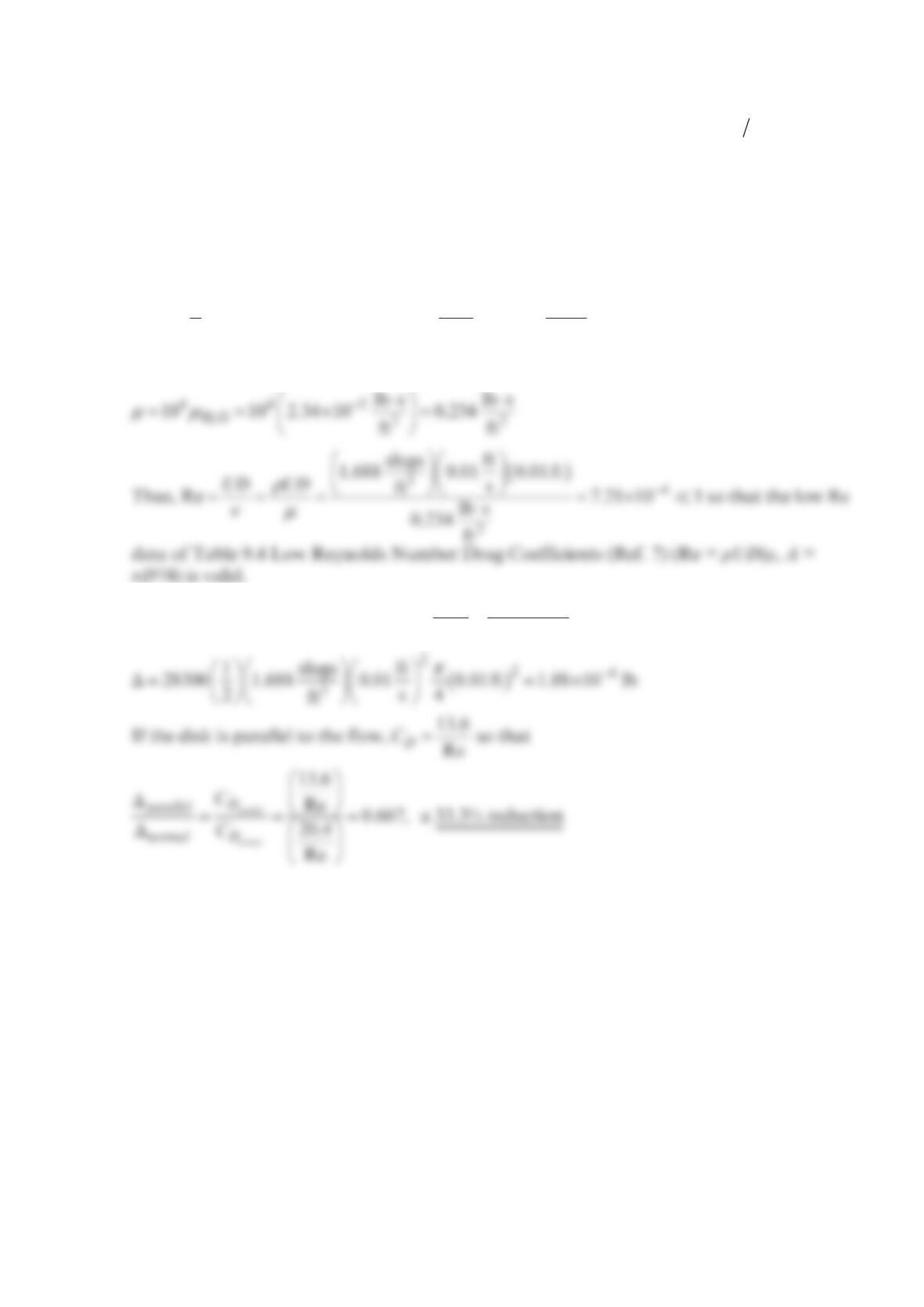
Determine the drag on a small circular disk of 0.01-ft diameter moving 0.01ft s through oil
with a specific gravity of 0.87 and a viscosity 10,000 times that of water. The disk is
oriented normal to the upstream velocity. By what percent is the drag reduced if the disk is
oriented parallel to the flow?
Solution 9.48
2
1
2
D
CUA
ρ
=Δ, where
()
33
slug slugs
0.87 1.94 1.688
ft ft
ρ
==
(1)
and
For the disk normal to the flow, 4
20.4 20.4 28300
Re 7.21 10
D
C
−
== =
× so that from Eq. (1)
Problem 9.49
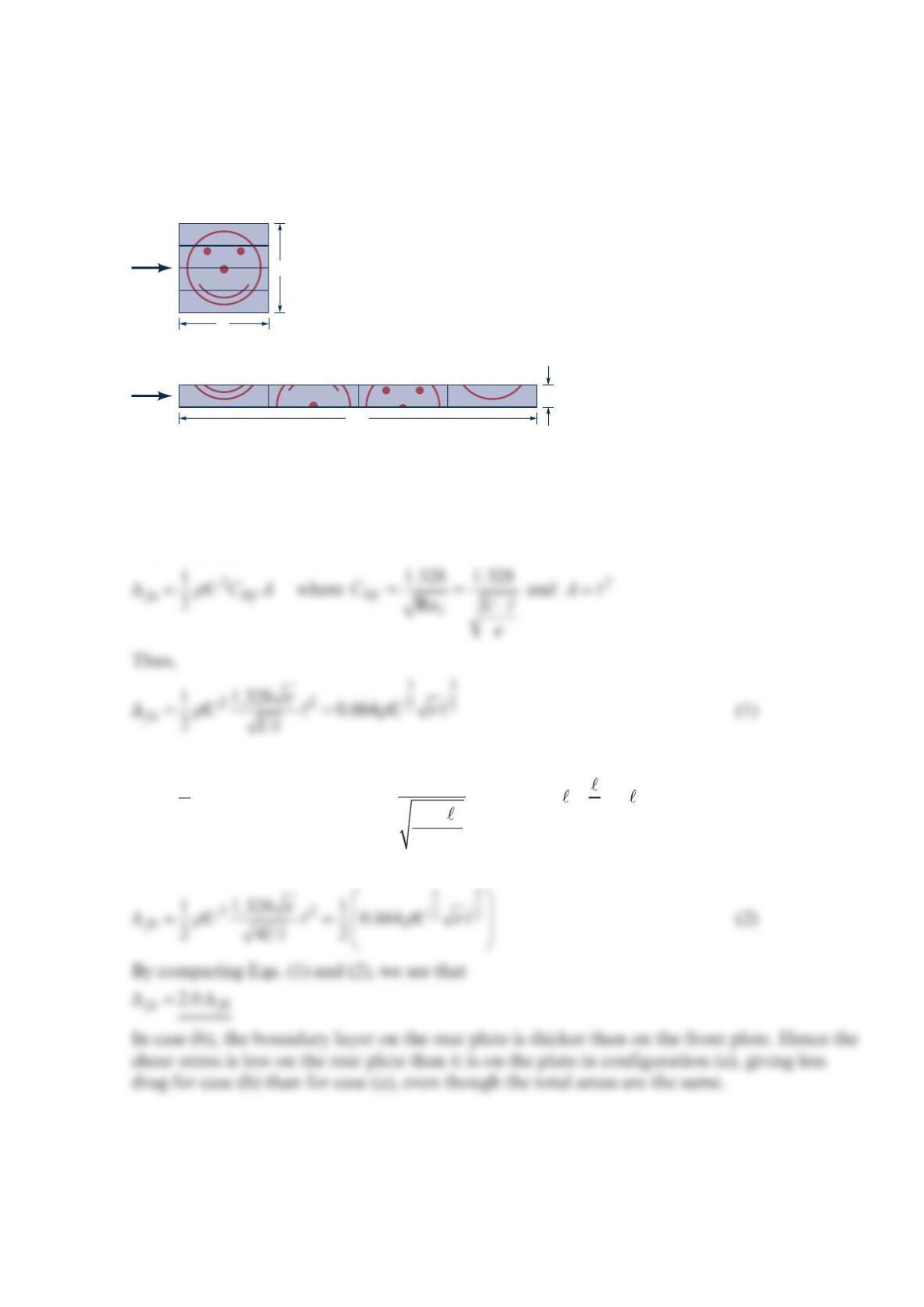
The square, flat plate shown in figure (a) below is cut into four equal-sized pieces and
arranged as shown in figure (b) below. Determine the ratio of the drag on the original plate
[case (a)] to the drag on the plates in the configuration shown in (b). Assume laminar
boundary flow. Explain your answer physically.
Solution 9.49
For a case (a):
For case (b):
2
1
2
fb Df
UC A
ρ
Δ
= where
()
1.328
4
Df
C
U
ν
= and
()
==
2
44
A
Thus,
U
U
𝓵
4𝓵
𝓵
𝓵/4
(b)
(a)
Δ
Problem 9.50
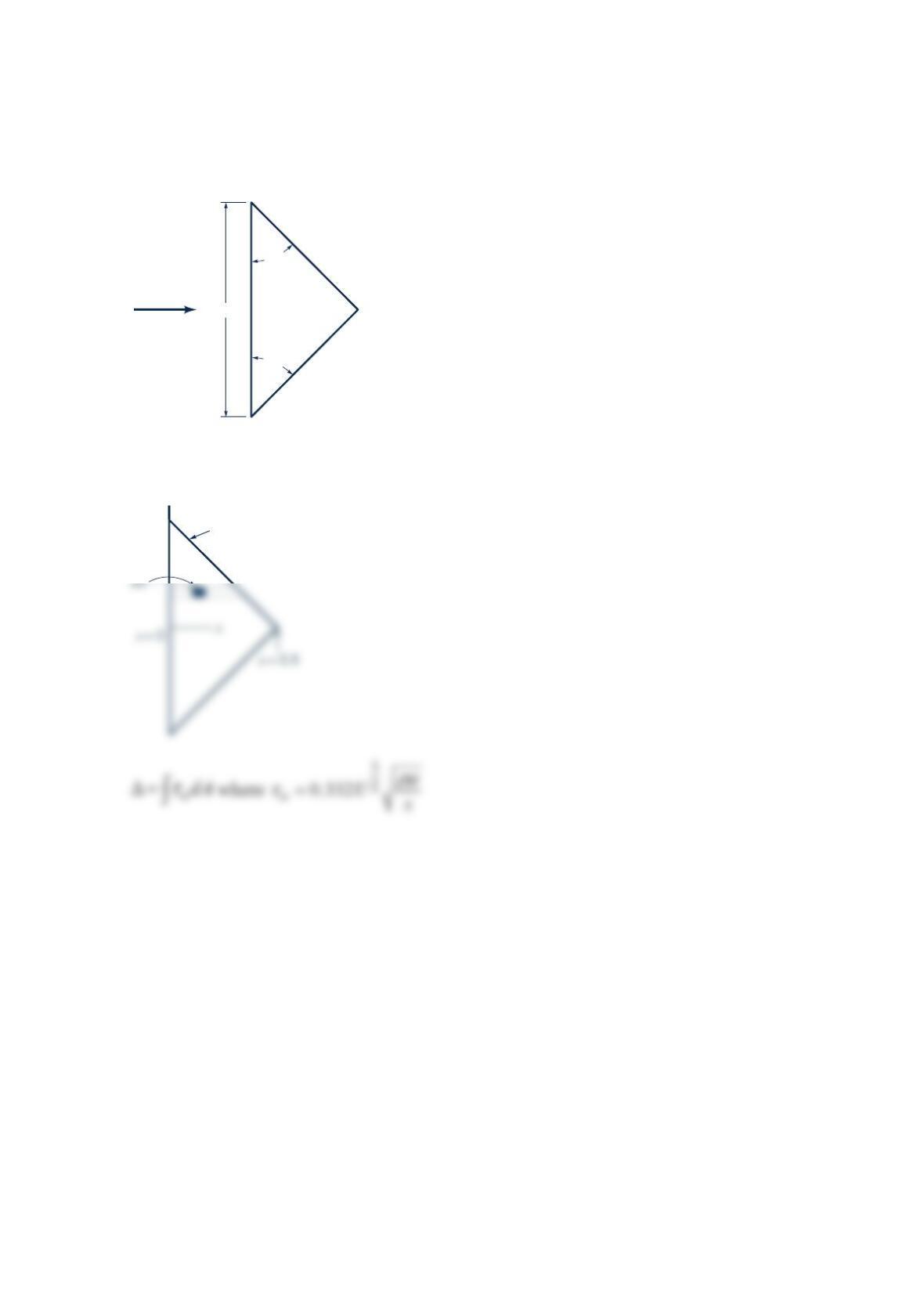
Water flows past a triangular flat plate oriented parallel to the free stream as shown in the
figure below. Integrate the wall shear stress over the plate to determine the friction drag on
one side of the plate. Assume laminar boundary layer flow.
Solution 9.50
U
= 0.2 m/s
1.0 m
45
°
45
°
y
y = 0.5–x
Thus,
or
0.0296
N
=Δ
Problem 9.52
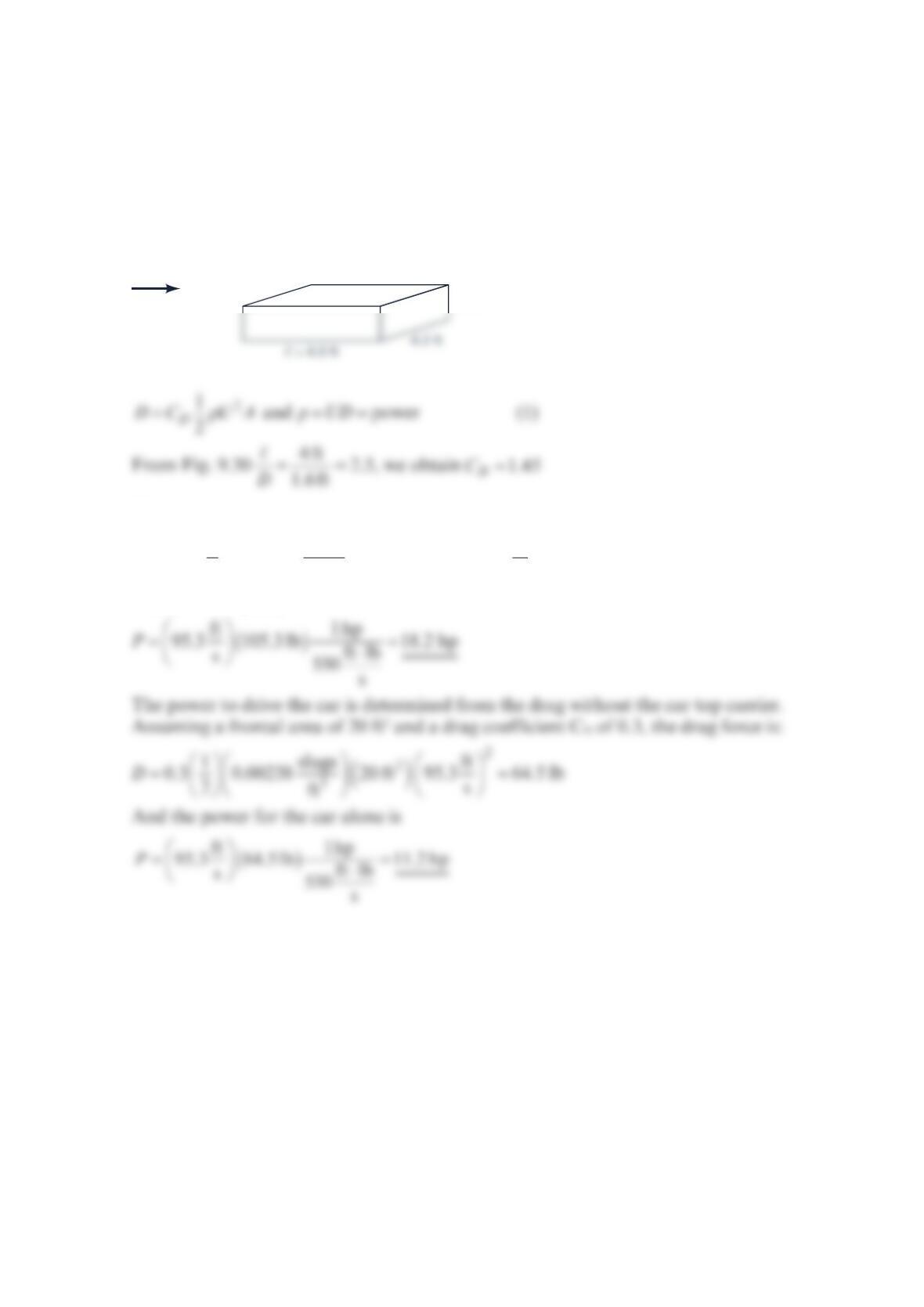
A rectangular car-top carrier of 1.6 ft height, 4 ft length (front to back), and 4.2 ft width is
attached to the top of a car. Estimate the additional power required to drive the car with
the carrier at 65 mph through still air compared with the power required to drive only the
car at 65 mph.
Solution 9.52
Hence,
()()
2
3
1slugs ft
1.45 0.00238 1.6 ft 4.2 ft 95.3 105.3 lb
2s
ft
D
==
Thus, from Eq. (1),
1.6 ft
U = 65 mph = 95.3 ft
__
s
Problem 9.53
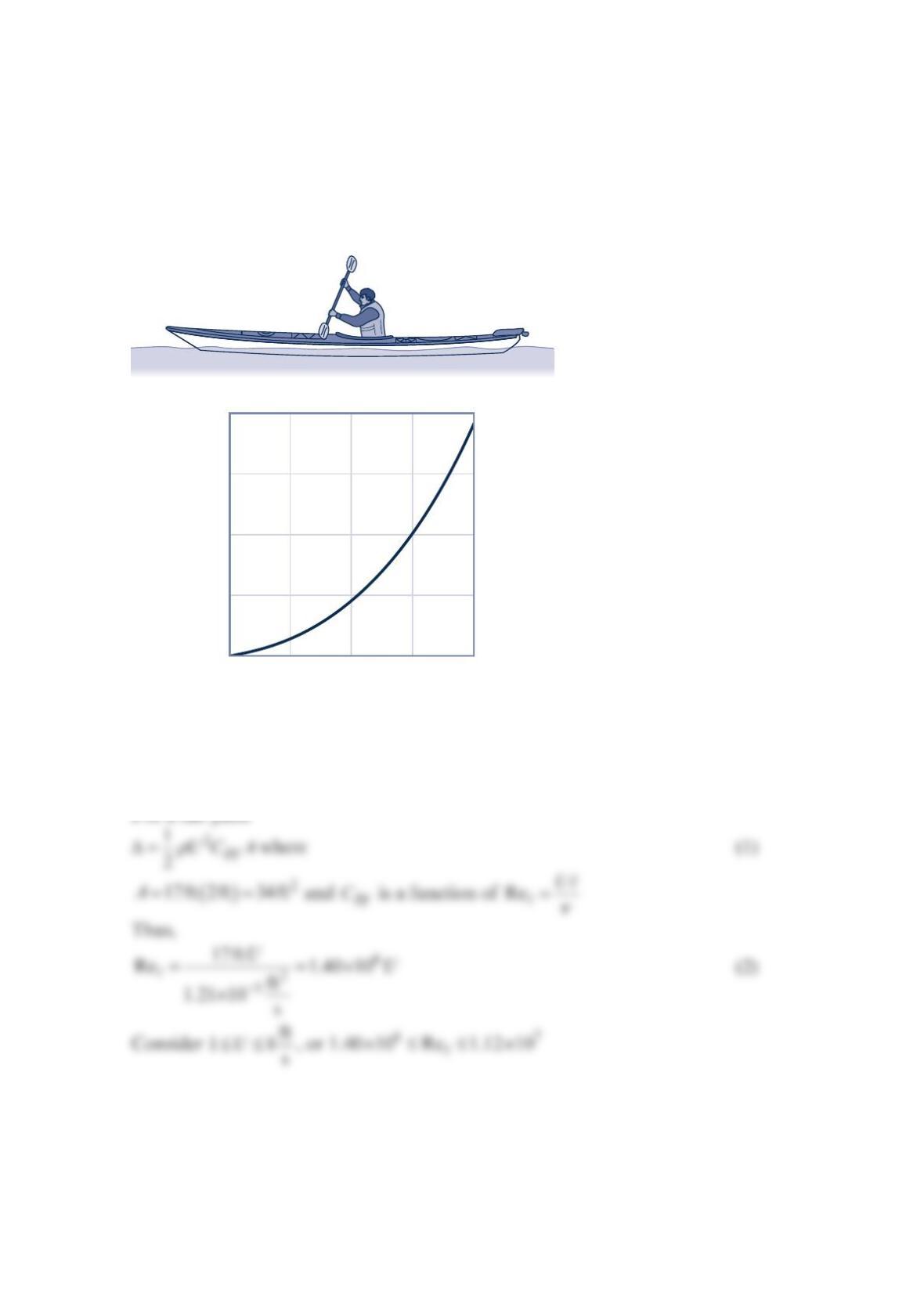
As shown in Video V9.2 and in figure P53(a), a kayak is a relatively streamlined object. As
a first approximation in calculating the drag on a kayak, assume that the kayak acts as if it
were a smooth, flat plate 17 ft long and 2 ft wide. Determine the drag as a function of speed
and compare your results with the measured values given in figure 9.53(b) below. Comment
on reasons why the two sets of values may differ.
Solution 9.53
8
6
4
2
0
24
Kayak speed U, ft/s
68
Measured drag 𝒟, lb
(b)
(a)
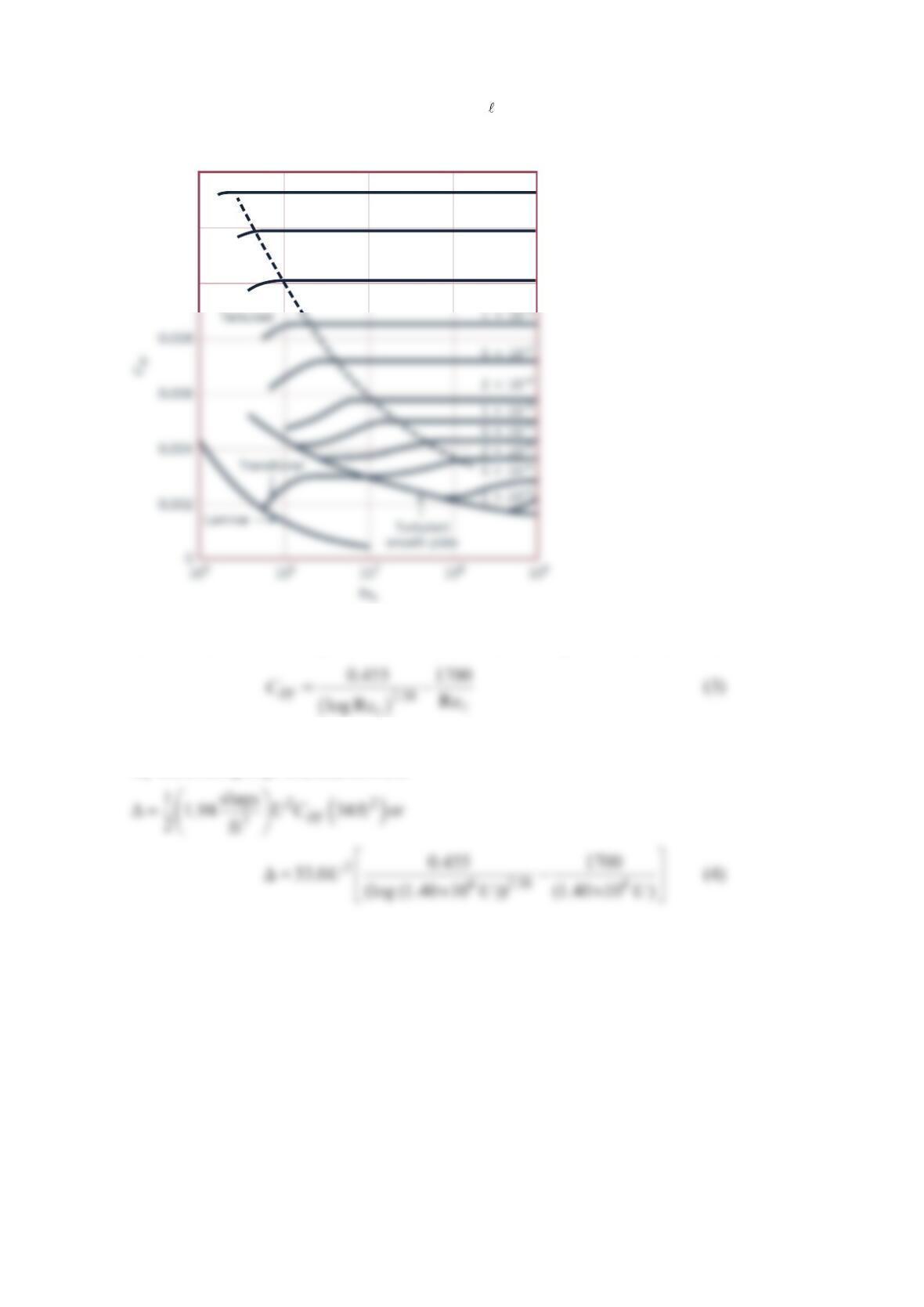
From the figure below, we see that in this Re range the boundary layer flow is in the
transitional range.
Thus, from Table 9.3 Equations for the Flat Plate Drag Coefficient (Ref. 1)
By combining Eqs. (1), (2), and (3):
ε
__
ℓ
0.014 5
×
10
–3
Completely
turbulent
= 3
×
10
–3
2
×
10
–3
0.012
0.010
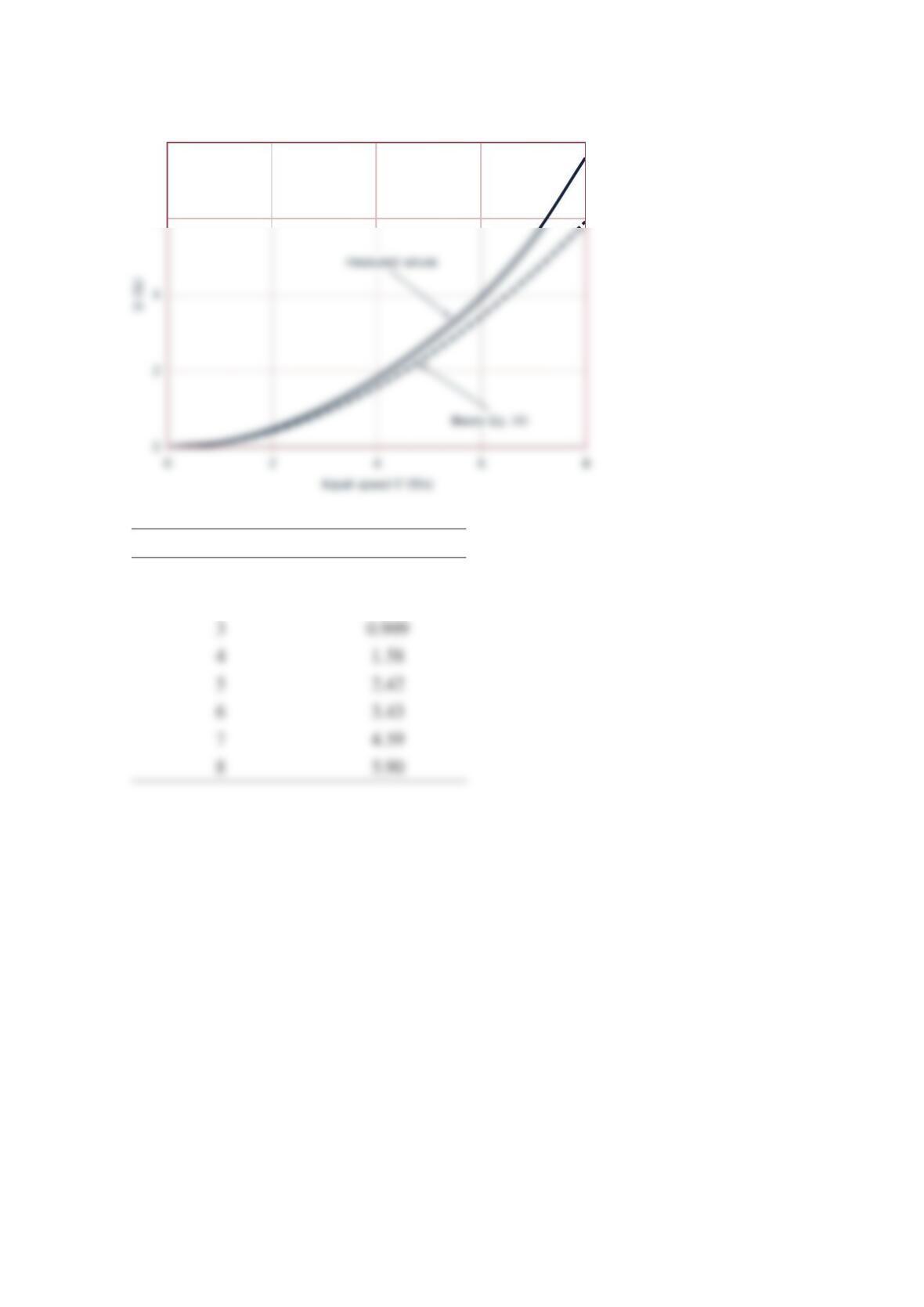
The results from this equation are plotted below.
U (ft/s) D (lb)
1 0.0986
2 0.410
6
8
Problem 9.54
A coal barge
1
000 ft long and
1
00 ft wide is submerged a depth of
1
2 ft in
6
0 F° water. It is
being towed at a speed of
1
2 mph. Estimate the friction drag on the barge.
Solution 9.54
The properties of water at
t
emp 60 F=°
, from Table B.1 Physical Properties of Water
(BG/EE Units)
Therefore the flow is assumed turbulent over the entire length of the barge. The Reynolds
Number at the end of barge is
From Table 9.3, assuming turbulent smooth plate,
Problem 9.55
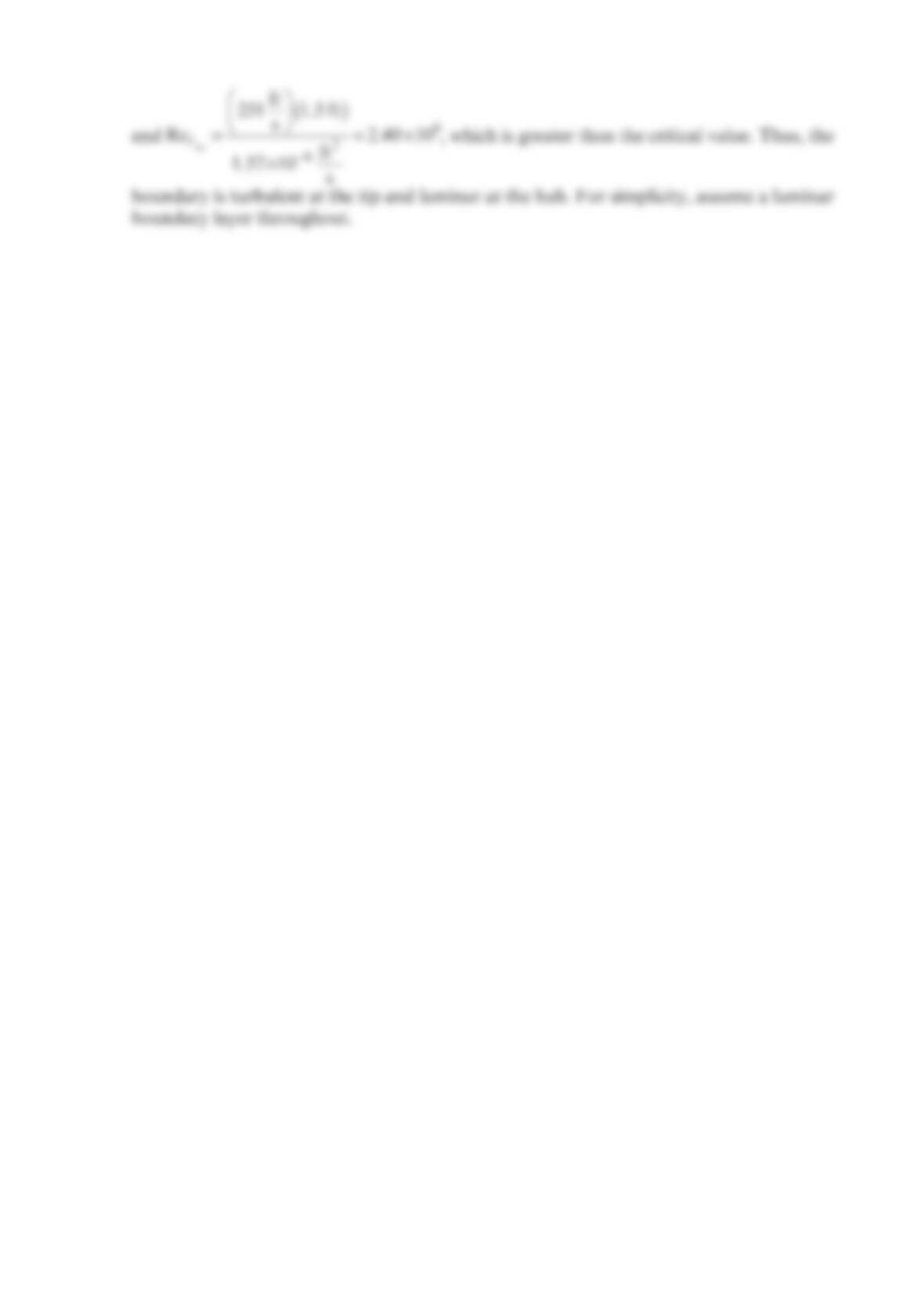
A three-bladed helicopter blade rotates at 200 rpm. If each blade is 12 ft long and 1.5 ft
wide, estimate the torque needed to overcome the friction on the blades if they act as flat
plates.
Solution 9.55
Let =torquedM from the drag on area element dA or
()
2
1
22
top bottom Df
d
MyUCdA
y
ρ
=Δ +Δ =
where
311 5
222 2
1.328
d
Mydy
ρω ν
=
() ()()
=
== =
5
12 7
22
0
2
3 3 0.00465 3 0.00465 12
7
y
MdM y
or
ω
= 200 rpm
Problem 9.56
A thin, smooth sign is attached to the side of a truck as indicated in the figure below.
Estimate the friction drag on the sign when the truck is driven at 55 mph .
Solution 9.56
Assume the boundary layer starts at the front of the trailer and that
21
Thus,
5 ft 20 ft
4 ft
Eli Van Lines
A1
A2
5 ft
25 ft
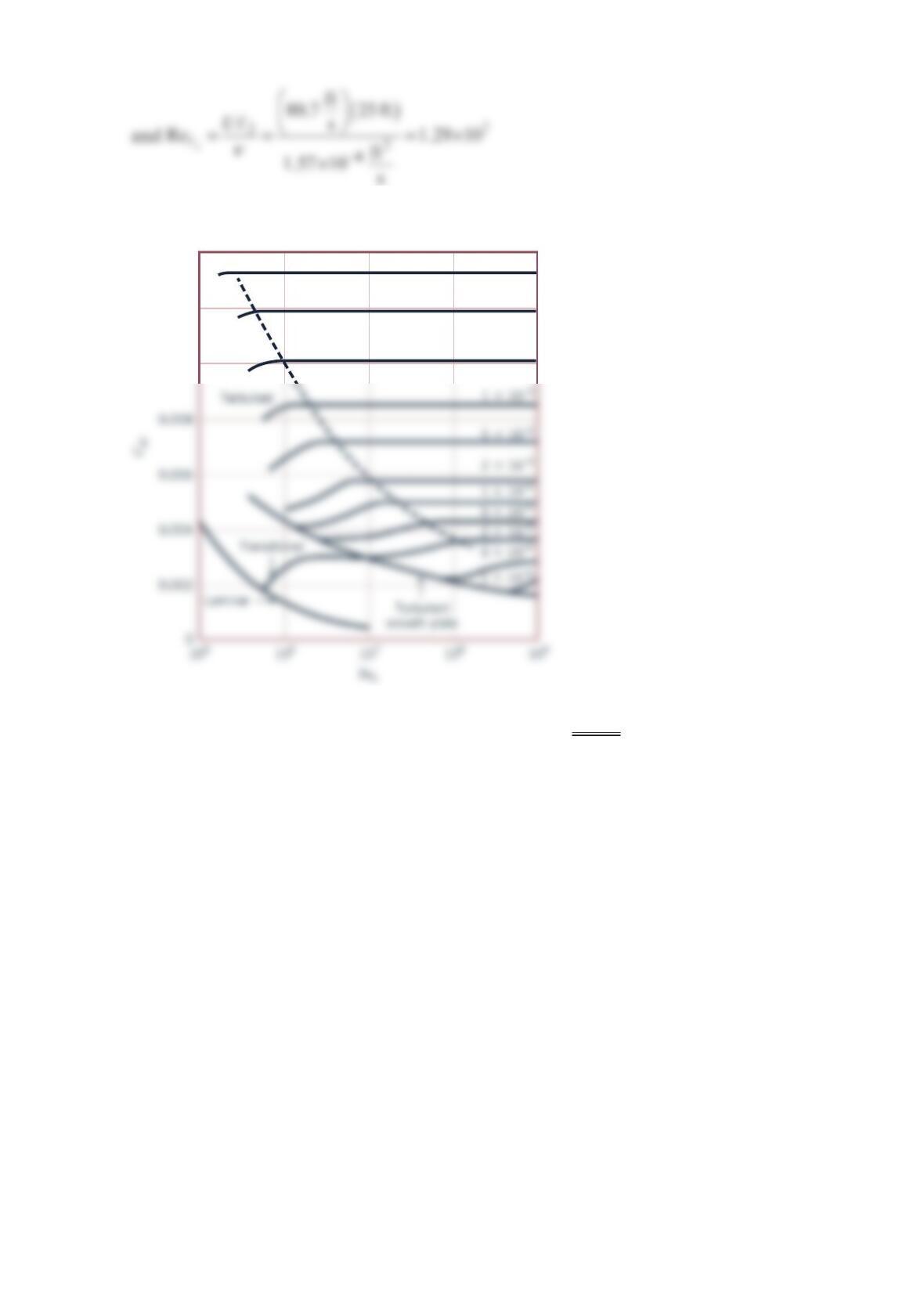
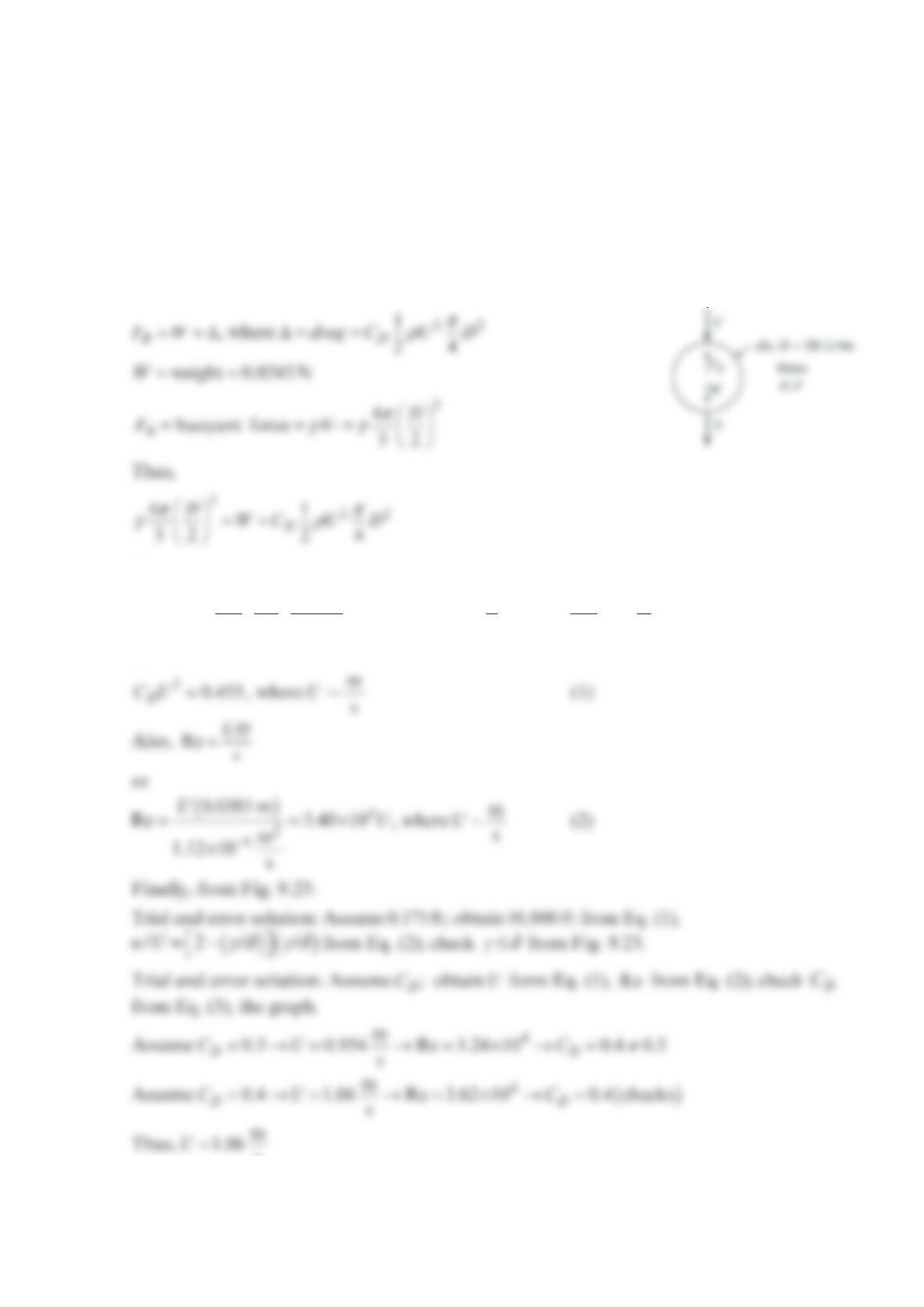
it follows from the figure below that ≈
10.002
Df
C and ≈
20.0028
Df
C
Thus, from Eq. (1)
()()
7.75 100 0.0028 20 0.002 1.86 lb
Δ
=−=
ε
__
ℓ
0.014 5
×
10–3
Completely
turbulent
= 3
×
10–3
2
×
10–3
0.012
0.010
Problem 9.57
A
3
8.1-mm-diameter, 0.0245-N weight table tennis ball is released from the bottom of a
4-m– deep swimming pool. Assuming that the ball has reached its terminal velocity within
1
m, estimate the time required to rise the remaining distance to the surface.
Solution 9.57
For steady rise =
0
z
F
or
or
()
33
32
33
N 4 0.0381 1 kg
9.80 10 m 0.0245 N 999 0.0381 m
32 2 4
mm
D
CU
ππ
×=+
or
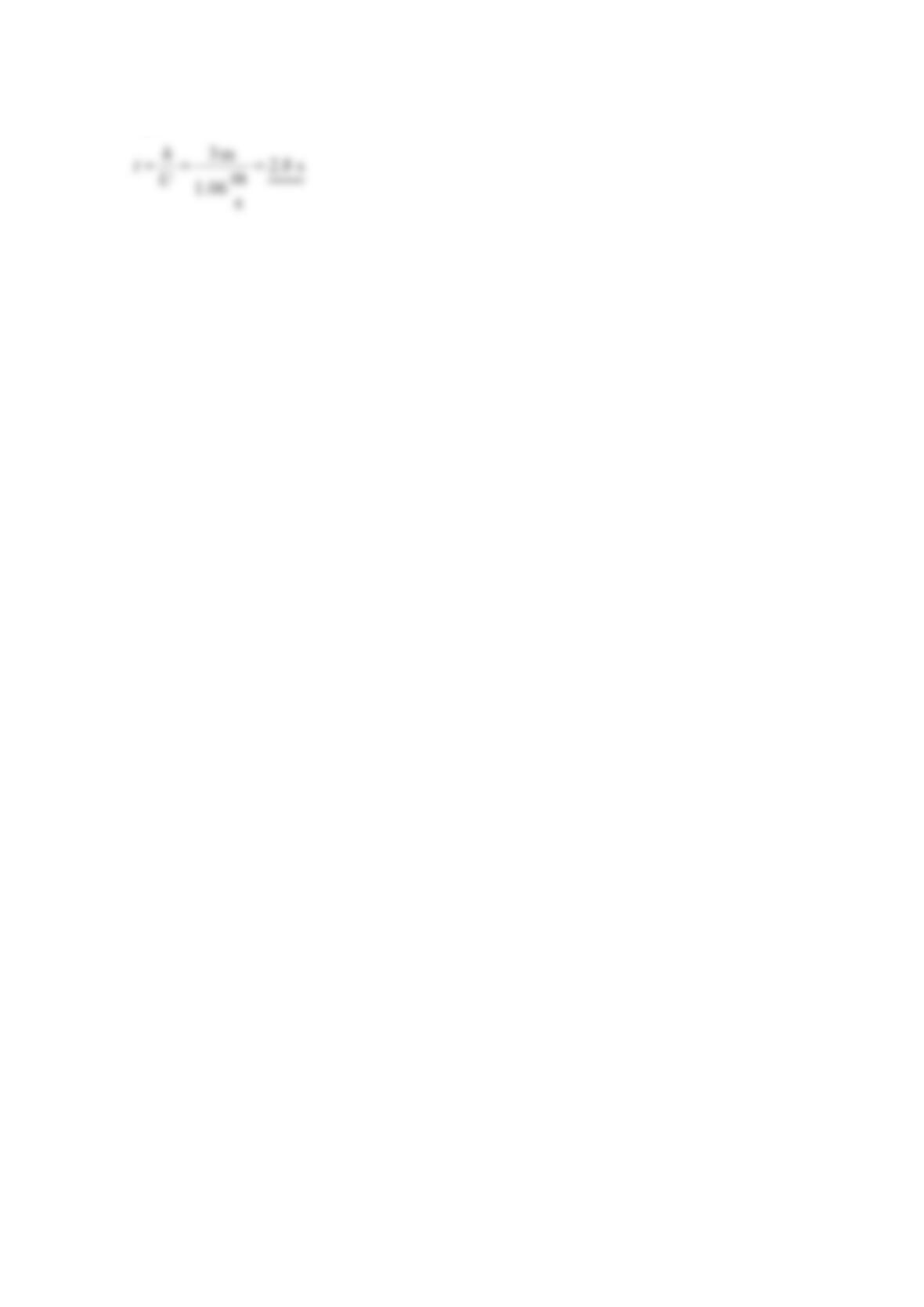
Note: Because of the graph (Fig.9.23), the answers are not accurate to three significant
figures.
Problem 9.58
A hot-air balloon roughly spherical in shape has a volume of 3
7
0,000 ft and a weight of
500 lb (including passengers, basket, balloon fabric, etc.). If the outside air temperature is
8
0°F
and the temperature within the balloon is
1
65 °
F
, estimate the rate at which it will rise
under steady-state conditions if the atmospheric pressure is
1
4.7 psi.
Solution 9.58
For steady rise 0
z
F=
, or B
F
W=+Δ
where
22
1
drag 24
D
CUD
π
ρ
Δ
==
and
()
2
22
3
lb in. ft
14.7 12 32.2 lb
ft
in. s 0.0636
ft lb ft
1715 460 165 °R
slug R
in
in
pg
RT
γ
== =
⋅+
⋅°
Note: Since the balloon is open at the bottom, the pressure within the balloon is nearly the
same as it is outside.
Δ
air
γ
dia. D
F
U
=+ 2
5152 lb 4952 lb 2.36 D
CU or =
284.7
D
CU (1)
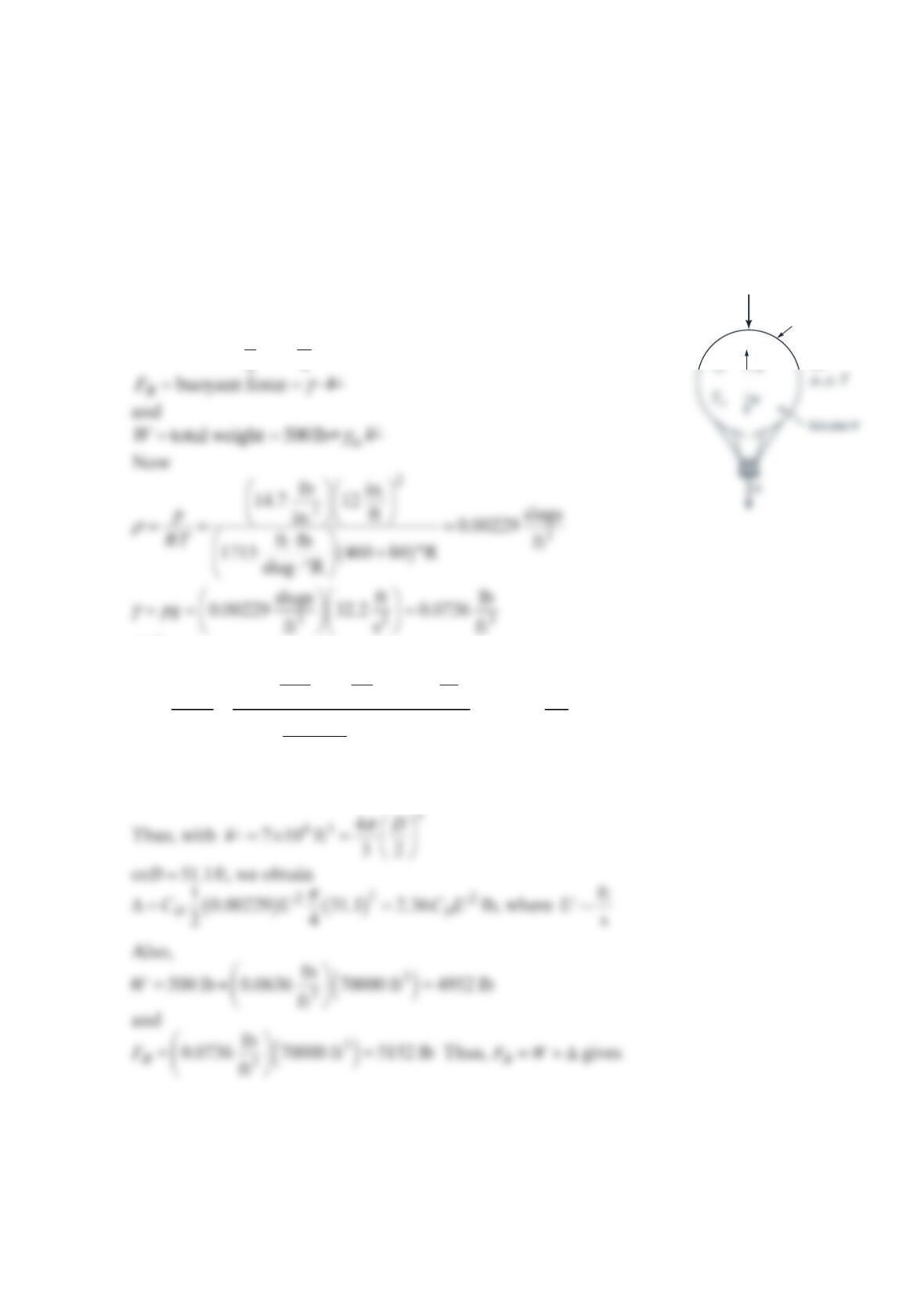
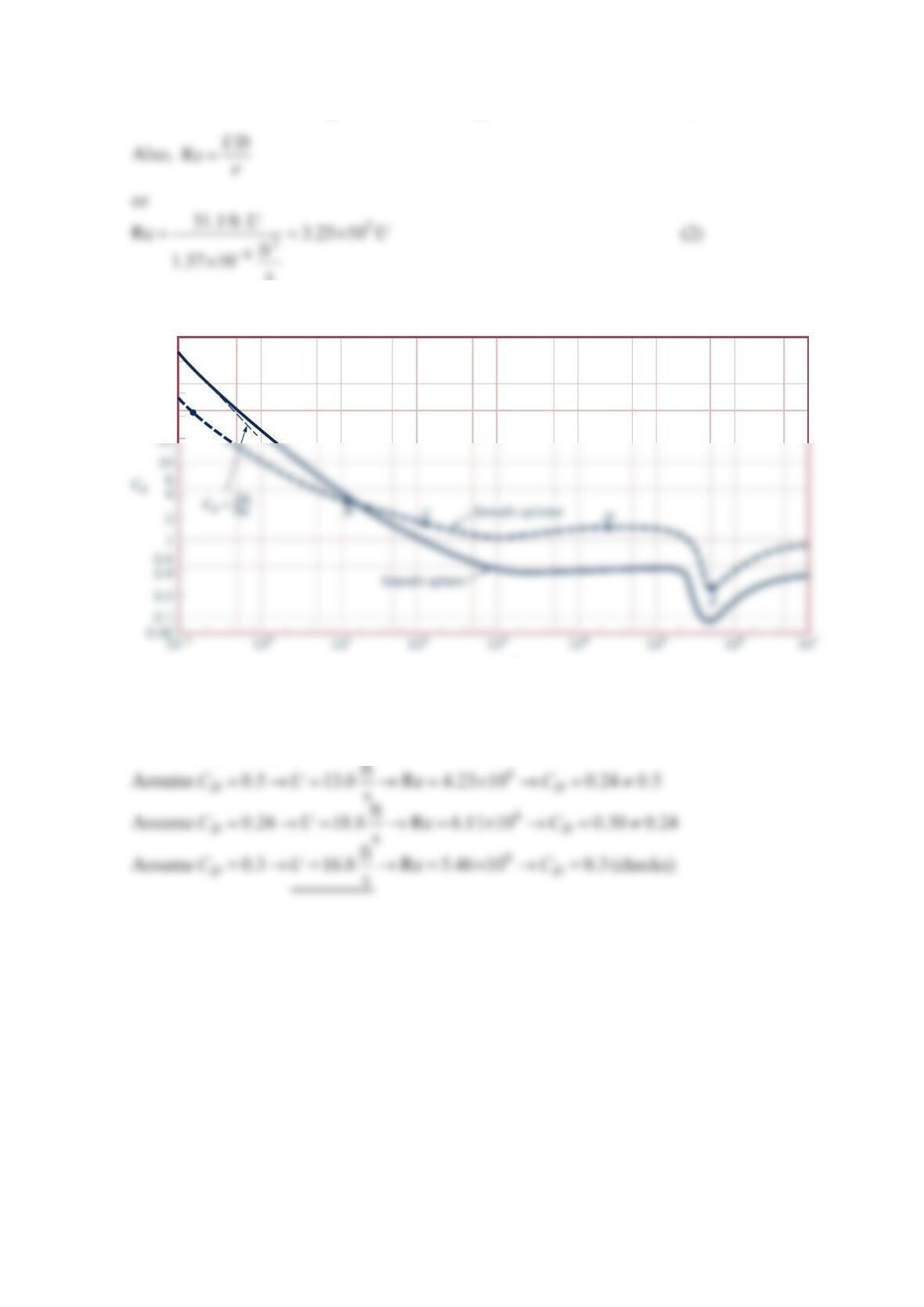
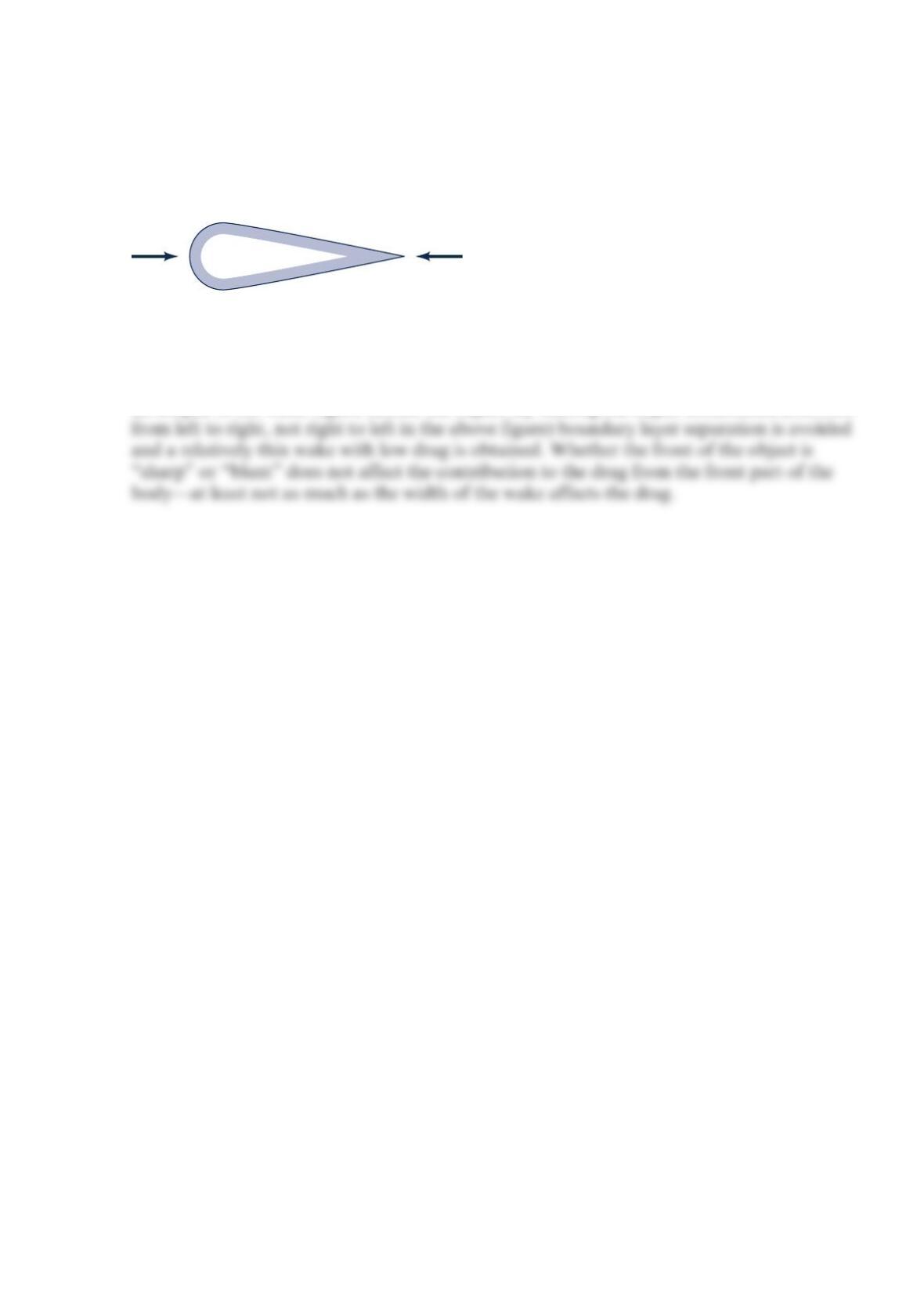
and from the figure below (3)
Trial and error solution: Assume D
C
; obtain U from Eq. (1), Re from Eq. (2); check D
C
from Eq. (3), the graph.
A
400
200
100
60
40
Re = UD
____
ρμ
Problem 9.59
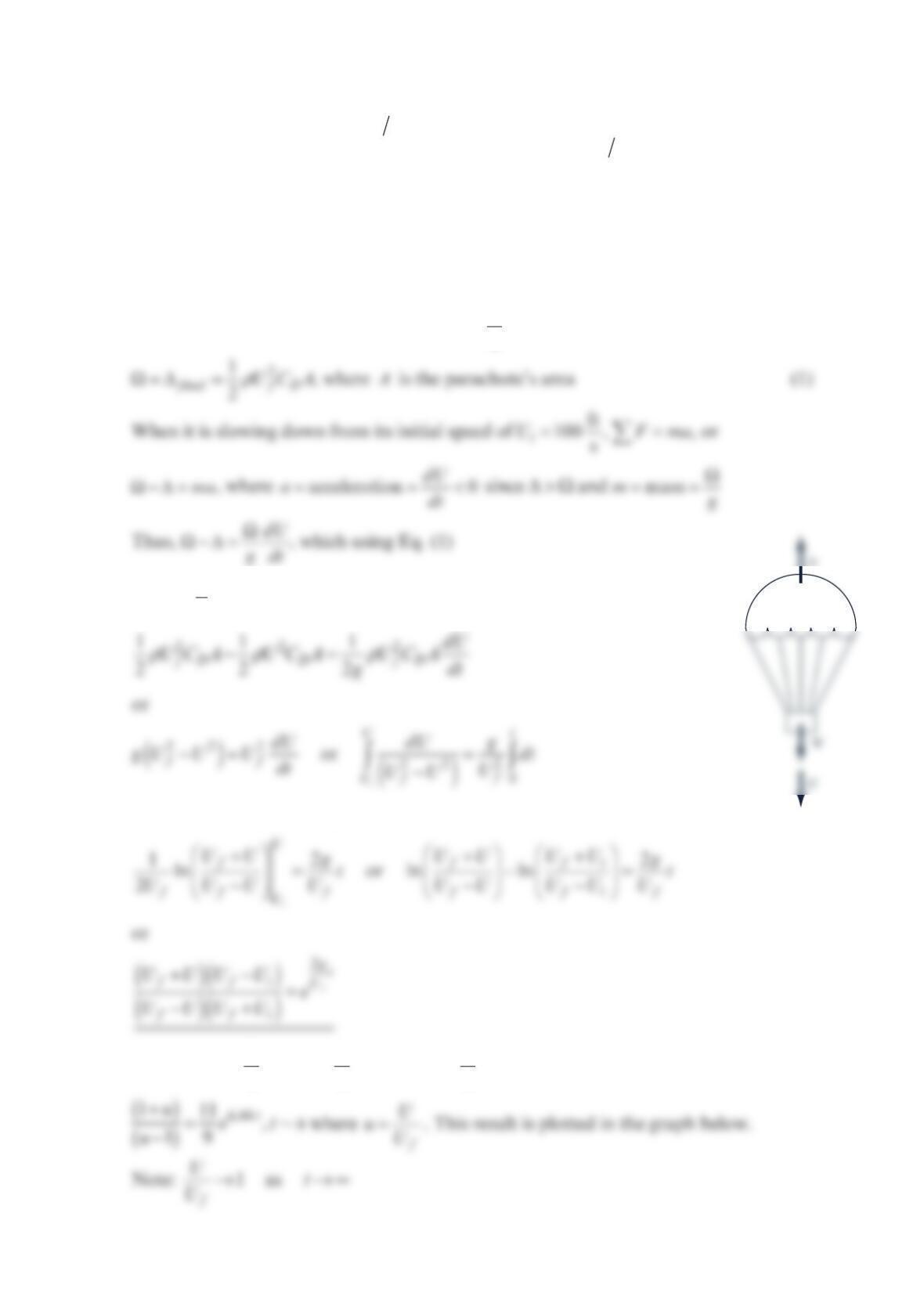
It is often assumed that “sharp objects can cut through the air better than blunt ones.”
Based on this assumption, the drag on the object as shown in the figure below should be
less when the wind blows from right to left than when it blows from left to right.
Experiments show that the opposite is true. Explain.
Solution 9.59
A significant portion of the drag on an object can be from the relatively low pressure
developed in the wake region behind the object. By making the object streamlined (i.e., flow
U?U?
Problem 9.60
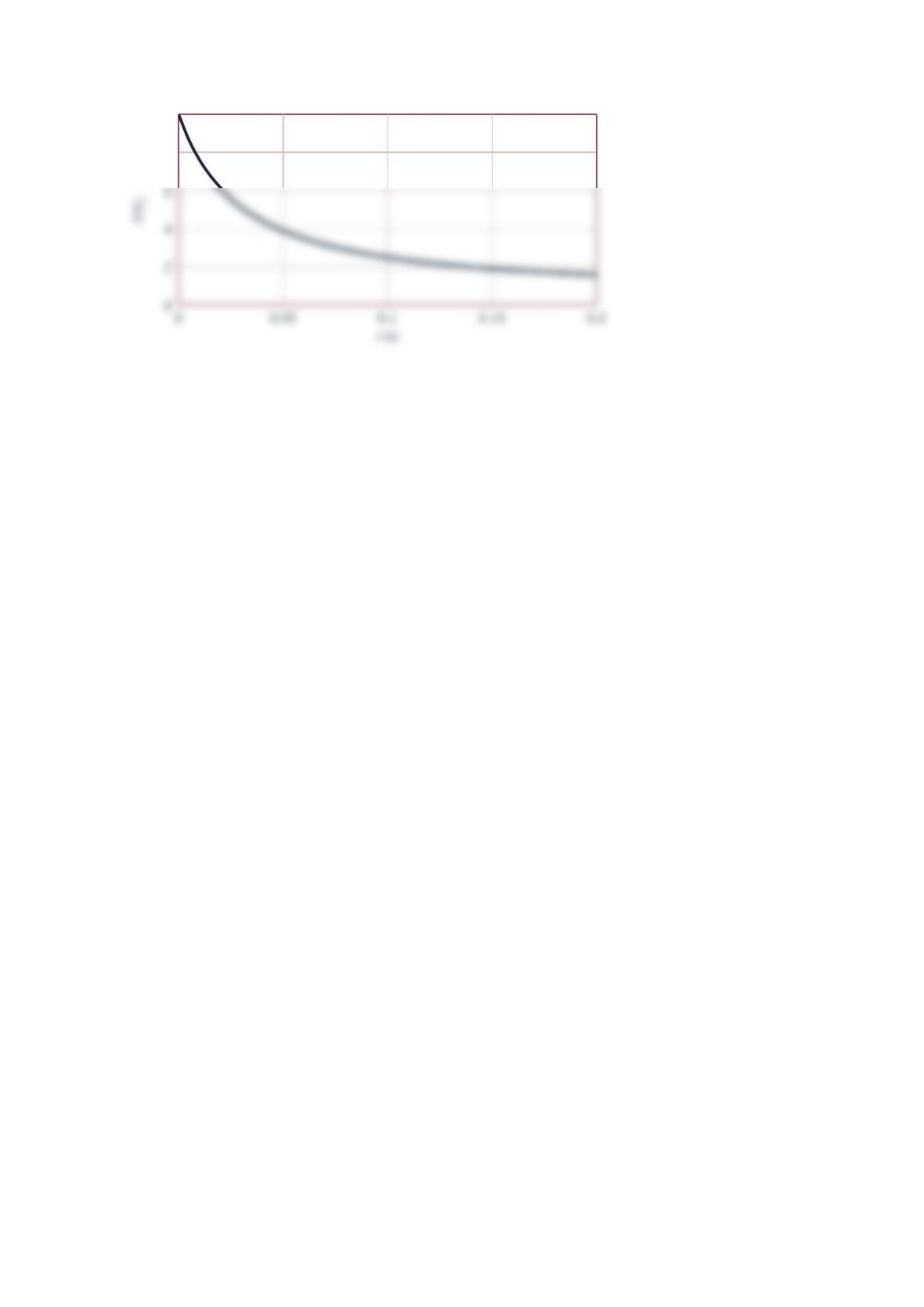
An object falls at a rate of
1
00 ft s immediately prior to the time that the parachute attached
to it opens. The final descent rate with the chute open is
1
0ft s
. Calculate and plot the speed
of falling as a function of time from when the chute opens. Assume that the chute opens
instantly, that the drag coefficient and air density remain constant, and that the flow is
quasisteady.
Solution 9.60
When falling at its terminal speed of ft
10 s
f
U=, the weight is balanced by the drag. That is,
and 2
1
2D
UC A
ρ
Δ
= becomes
This can be integrated to give:
With ft ft
100 , 10
ss
if
UU==
, and ft
32.2 s
g=, this can be written as:
𝒟
8
10