9.37: PROBLEM DEFINITION
Situation:
A liquid flows past a smooth flat plate at U0=2m/s.
Find:
Liquid velocity at a location x=1.0 m downstream from the leading edge and y=
0.8 mm from surface.
Properties:
ν=2×10−5.m2/s, μ=2×10⁻²N·s/m2,ρ= 1000 kg/m3
PLAN
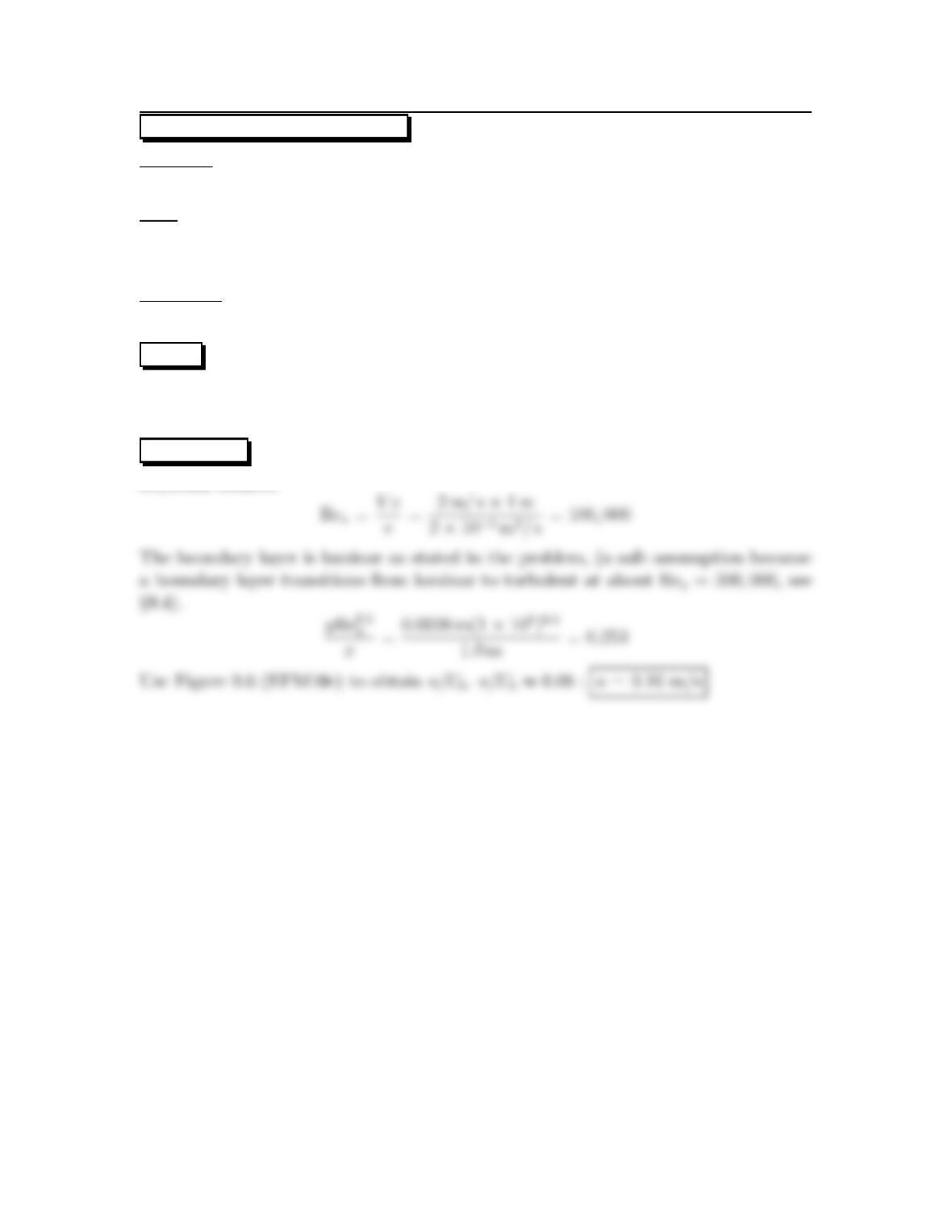
Calculate Reynolds number and then use Figure 9.6 (EFM10e) for velocity distribu-
tion in laminar boundary layer.
SOLUTION
Reynolds number
41
9.38: PROBLEM DEFINITION
Situation:
Flow over a thin, flat plate 3 m long and 1 m wide. Same properties as problem
9.37.
Find:
Skin friction drag on one side of plate.
SOLUTION
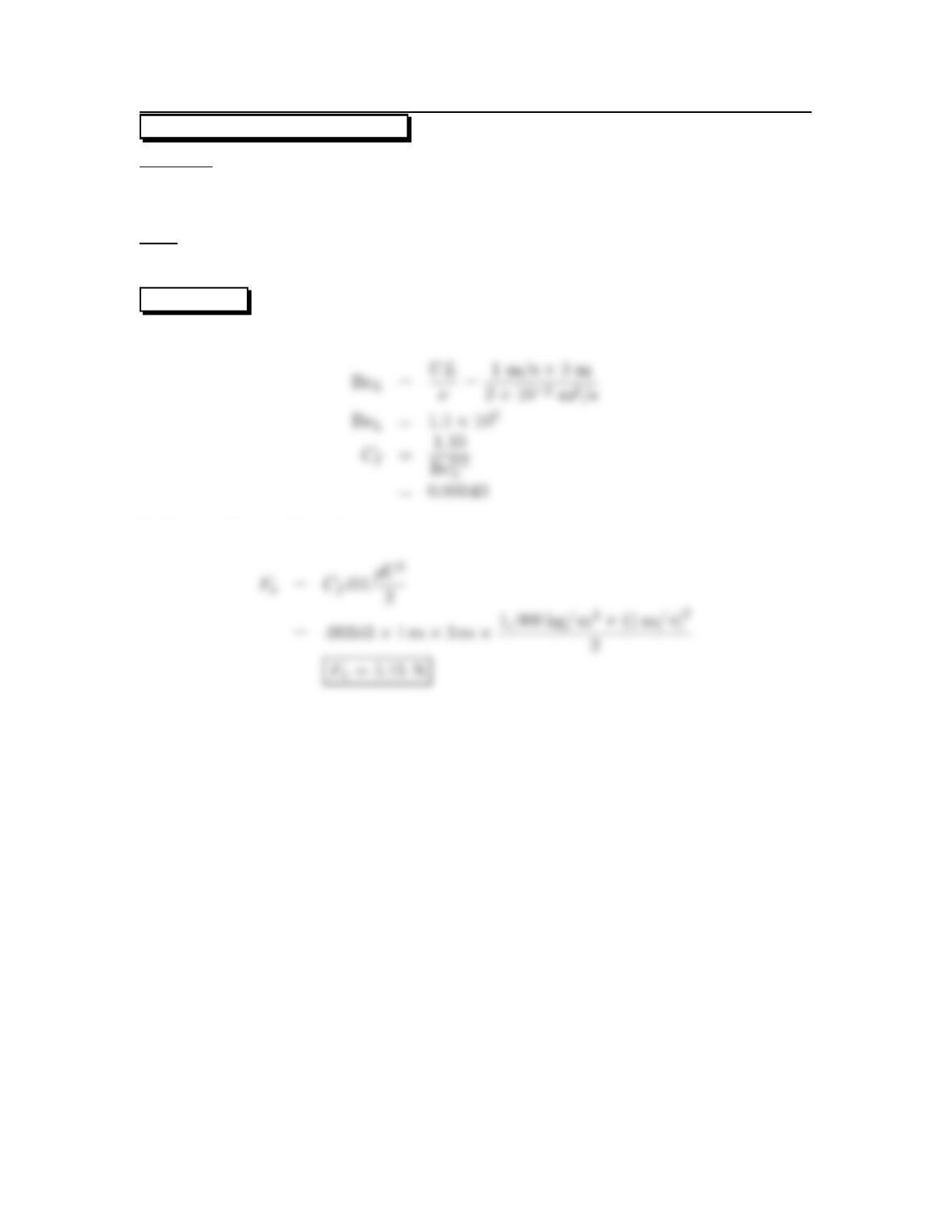
Reynolds number
Surface resistance (drag force)
42
9.39: PROBLEM DEFINITION
Situation:
Oil flows over a smooth, flat plate at 5 m/s.
Find:
Velocity 1 m downstream and 3 mm from plate.
Properties:
ν=10
−4m2/s
SOLUTION
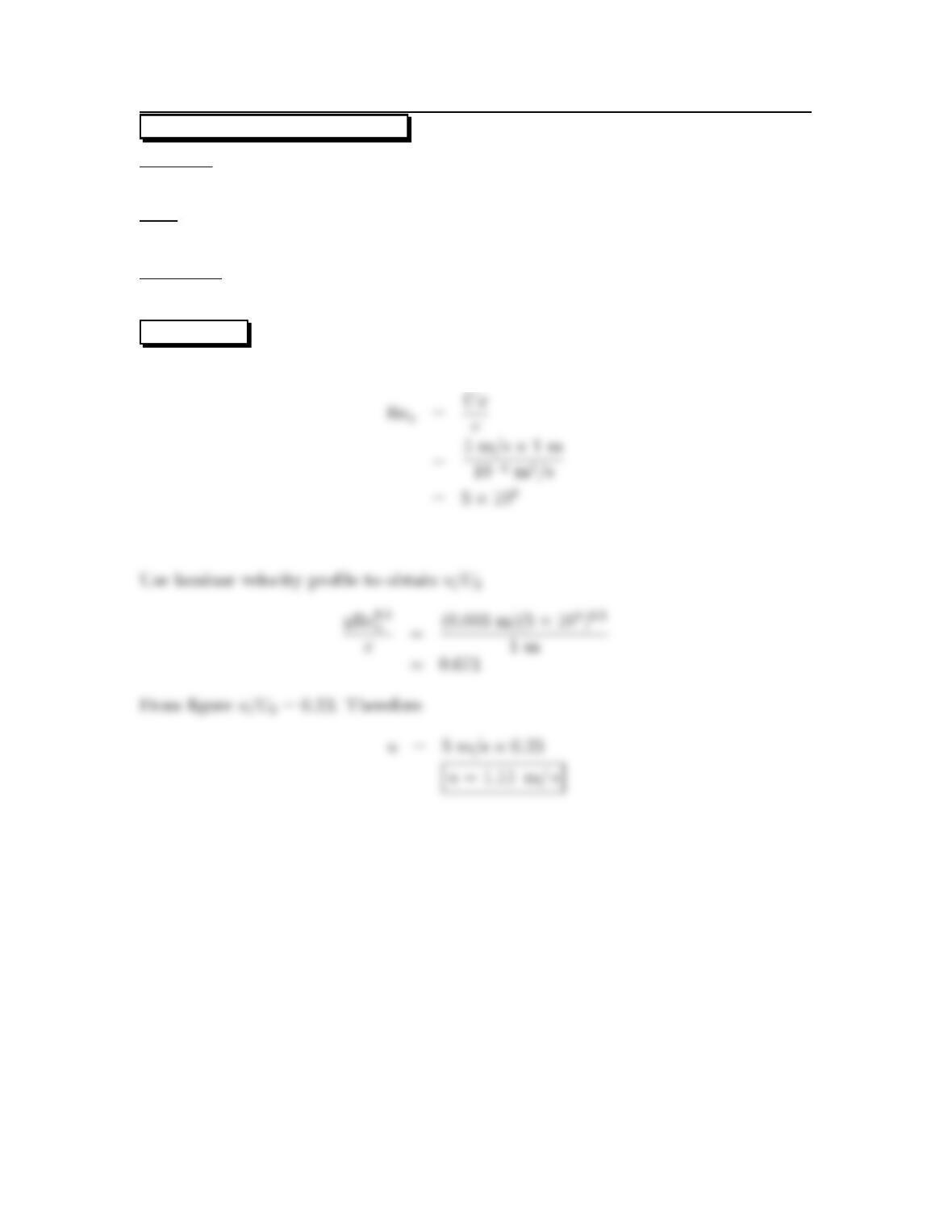
Reynolds number
Since Rex≤500,000, the boundary layer is laminar.
43
9.40: PROBLEM DEFINITION
Situation:
Oil flows over a flat plate at 0.85 m/s.
Find:
Oil velocity 1.6 m from leading edge and 10 cm from surface.
Properties:
ν=10
−4m2/s
PLAN
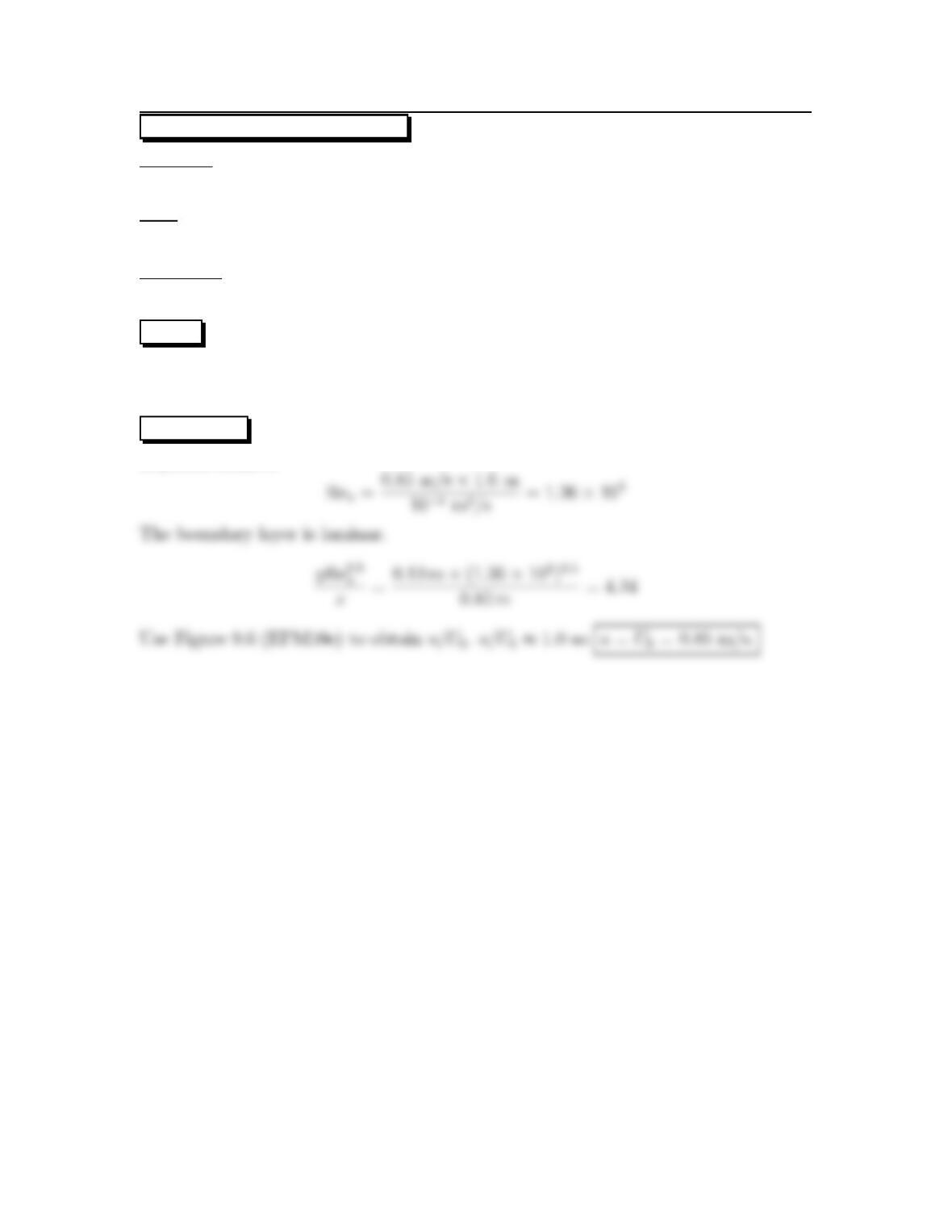
Calculate Reynolds number and apply Figure 9.6 (EFM10e) for velocity distribution
in laminar boundary layer.
SOLUTION
Reynolds number
44
9.41: PROBLEM DEFINITION
Situation:
Water at 10oCflows over a submerged flat plate 0.7 m long and 1.5 m wide at 1.5
m/s.
Find:
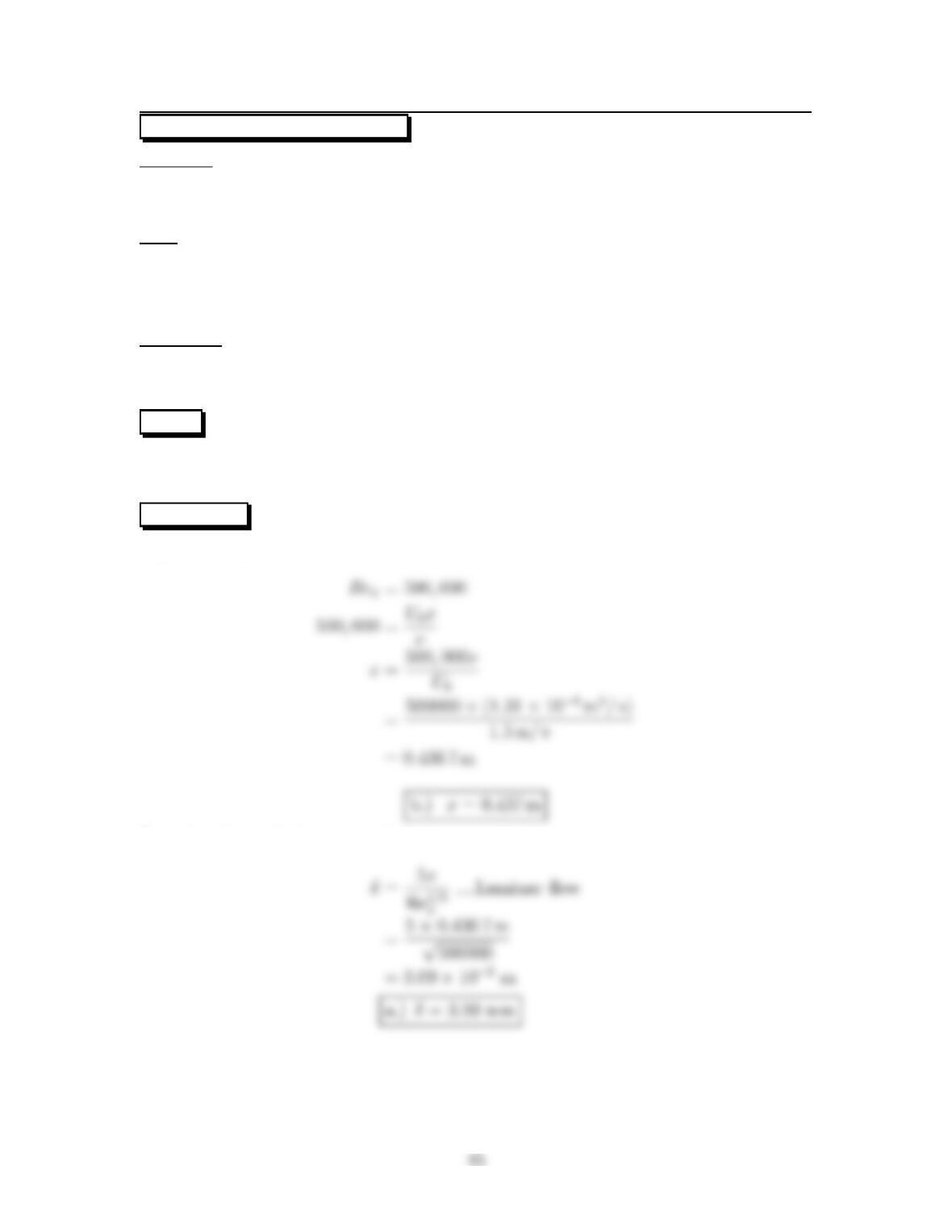
(a) Thickness of boundary layer at the location where Rex=500,000.
(b) Distance from leading edge.where the Reynolds number reaches 500,000.
(c) Local shear stress at the location where Rex=500,000.
Properties:
Table A.5 (water at 10 ◦C): ρ=1000kg/m3.
μ=1.31 ×10⁻³N·s/m2,ν=1.31 ×10−6m2/s.
PLAN
Calculate Reynolds number. Next calculate boundary layer thickness and local shear
stress.
SOLUTION
Reynolds number
Boundary layer thickness correlation
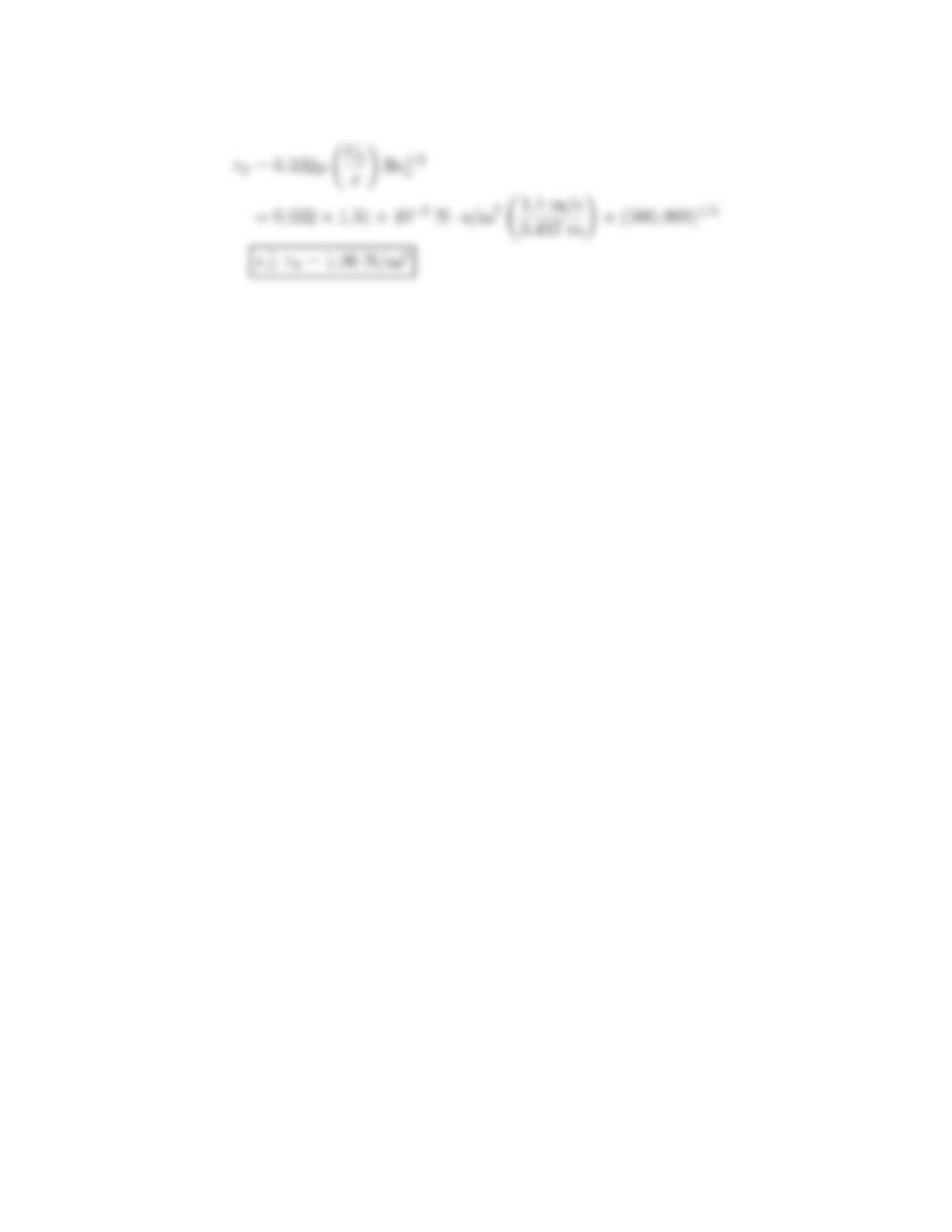
Local shear stress correlation
46
9.42: PROBLEM DEFINITION
Situation:
Water at 20oCflows over a flat plate 1.5 m long and 1.0 m wide at 15 cm/s.
Find:
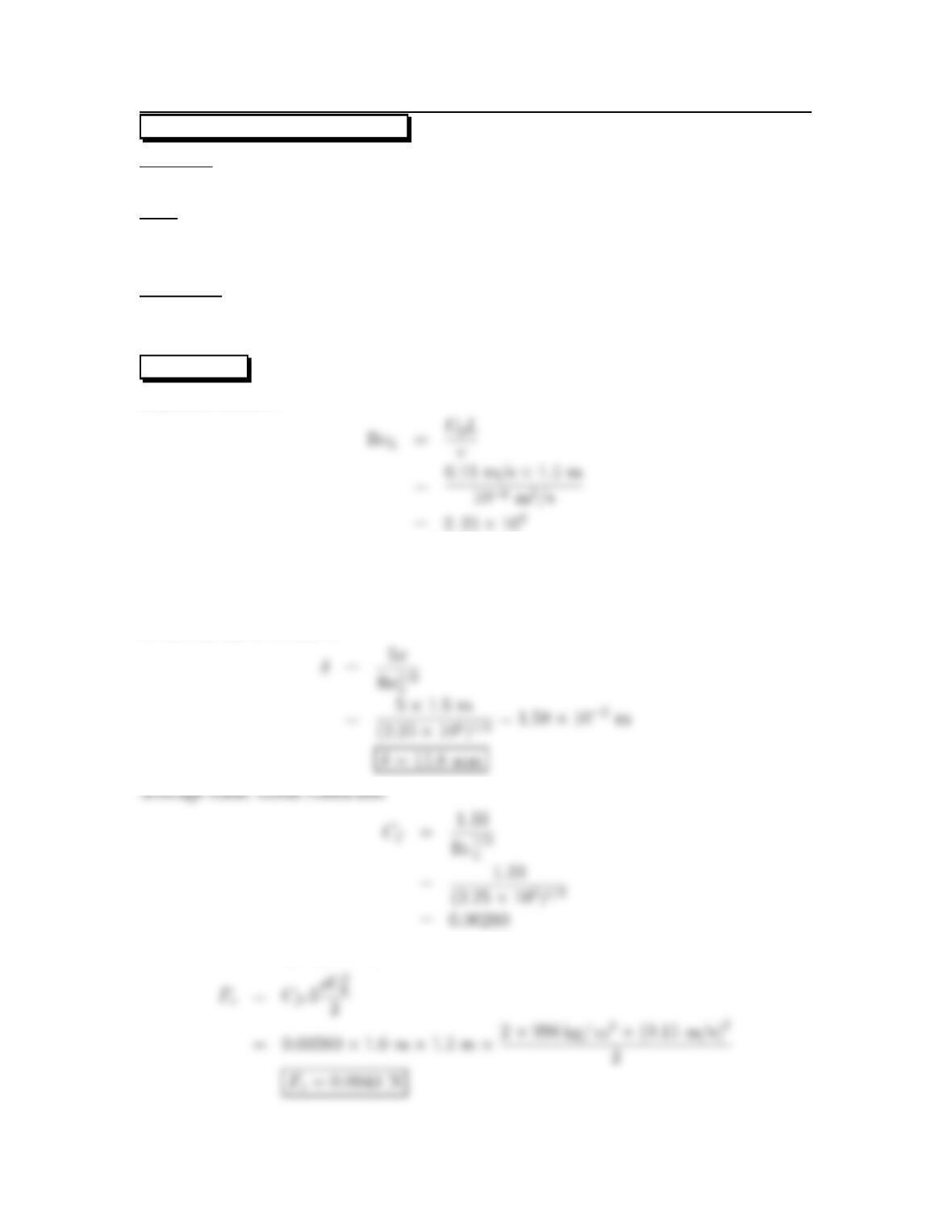
(a) Resistance of plate.
(b) Boundary layer thickness at trailing edge.
Properties:
Table A.5 (water at 20 ◦C): ρ=998kg/m3.
μ=1.00 ×10⁻³N·s/m2,ν=1.00 ×10−6m2/
SOLUTION
Reynolds number
Re L≤500,000; therefore, laminar boundary layer
Boundary layer thickness
Surface resistance (drag force)
47
9.43: PROBLEM DEFINITION
Situation:
Transition between laminar and turbulent boundary layer occurs between 105and
3×10⁶.The thickness for a turbulent boundary layer is δ/x =0.16/Re1/7
x.
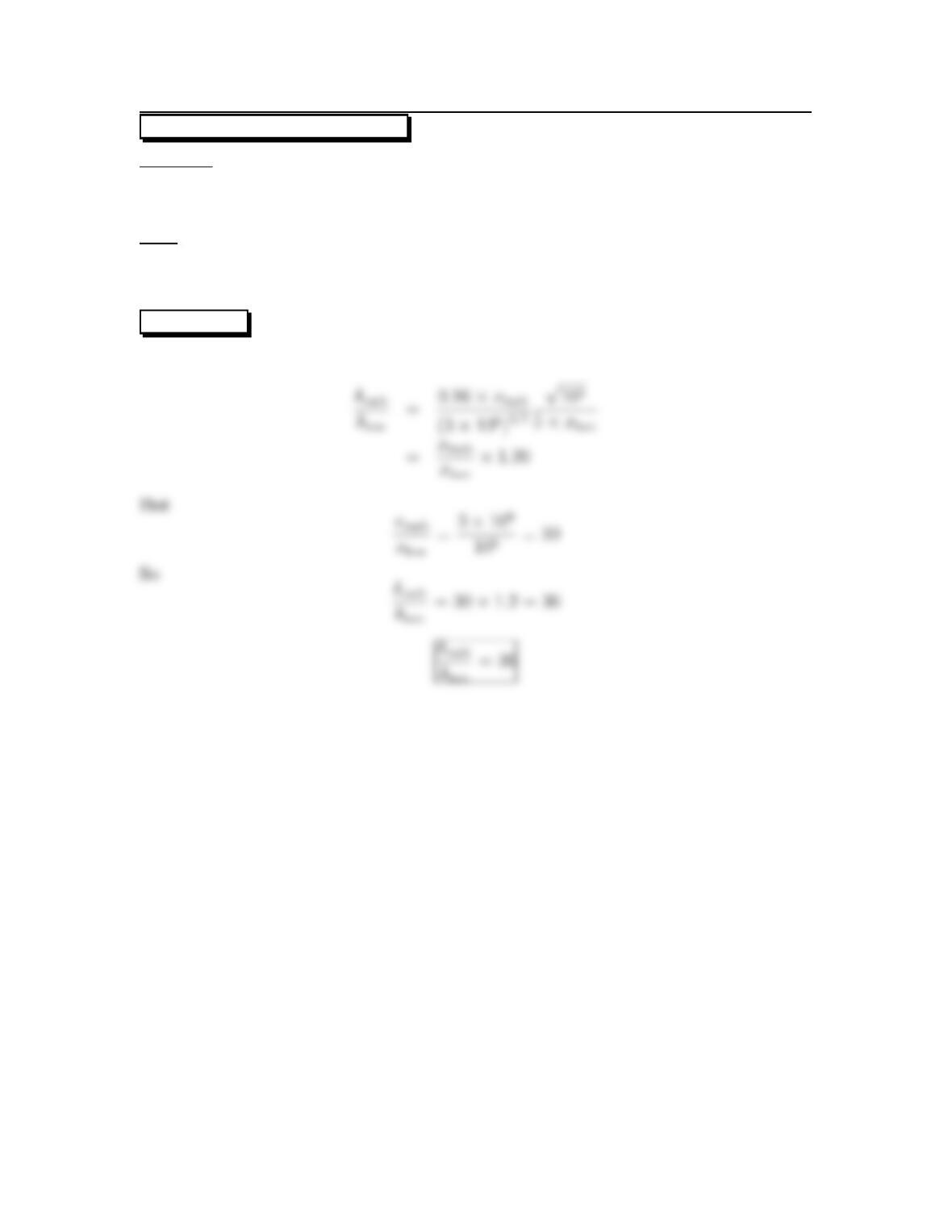
Find:
The ratio of the boundary layer thickness at the end to transition to that at the
beginning.
SOLUTION
The thickness of the laminar boundary layer is δ/x =5/Re1/2
x.Thus
48
9.44: PROBLEM DEFINITION
Situation:
Classify the following into one of 2 categories: laminar boundary layer (L), or
turbulent boundary layer (T).
a. Flow is smooth
b. Three differently shaped velocity distributions in 3 zones
c. Velocity profile that follows a power law
d. Velocity profile that is a function of √Re
e. Logarithmic velocity distribution
f. Thickness is inversely related to the 7th root of Re
g. Thickness is inversely related to √Re
h. Velocity defect region
i. Mixing action causes locally unsteady velocities
j. Shear stress is a function of a natural log
k. Shear stress is a function of √Re
SOLUTION
a. Flow is smooth L
49

9.45: PROBLEM DEFINITION
Situation:
The viscosity of a turbulent boundary layer is reduced near the wall.
Find:
The change in the turbulent boundary layer.
SOLUTION
50
9.46: PROBLEM DEFINITION
Situation:
Air flows over a flat plate.
Uo=30m/s.
Sensing element: 1 cm by 1 cm; situated 1 m from the leading edge.
The boundary layer is tripped.
Find:
Force due to shear stress on the sensing element.
Properties:
Air (properties given in problem statement): ρ=1.2kg/m3,ν =1.5×10⁻⁵m2/s
Assumptions:
Over the length of the device (1 cm), assume that the local shear stress coefficient
(cf)equals the average shear stress coefficient (Cf).
SOLUTION
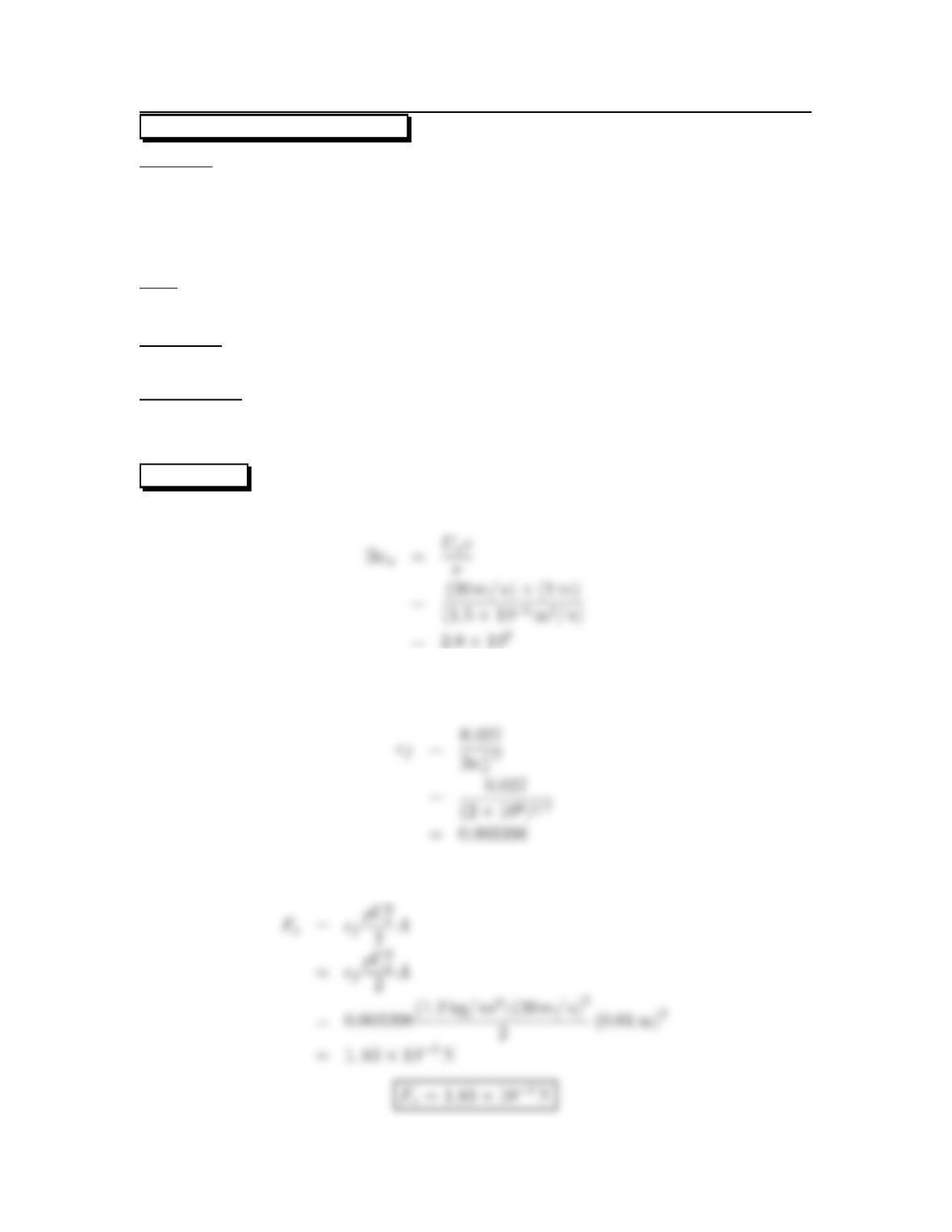
Reynolds number
Reynolds number less than 107so
Surface resistance (drag force)
51
9.47: PROBLEM DEFINITION
Situation:
Water at 10oCflows over a submerged flat plate 0.7 m long and 1.5 m wide at 1.5
m/s.
Find:
(a) Shear resistance (drag force) for the portion of the plate that is exposed to
laminar boundary layer flow.
(b) Ratio of laminar shearing force to total shearing force.
Properties:
Table A.5 (water at 10 ◦C): ρ= 1000 kg/m3,μ =1.31 ×10⁻³N·s/m2,ν=
1.31 ×10⁻⁶m2/s.
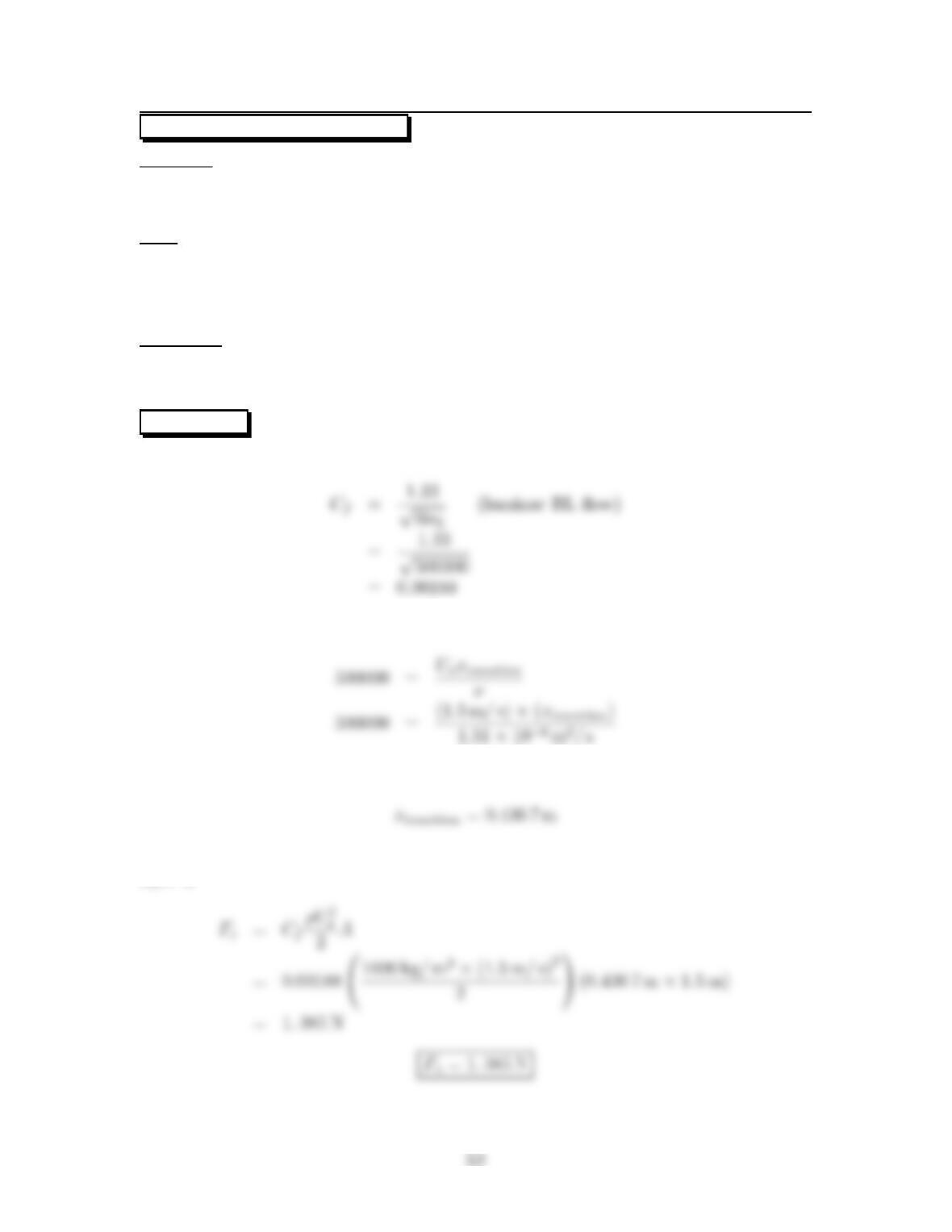
SOLUTION For the part of the plate exposed to laminar boundary layer flow, the
average shear stress coefficient (Cf)is
Transition occurs when Reynolds number is 500,000.
Solving for the transition location gives
Surface resistance (drag force) for the part of the plate exposed to laminar boundary
layer is
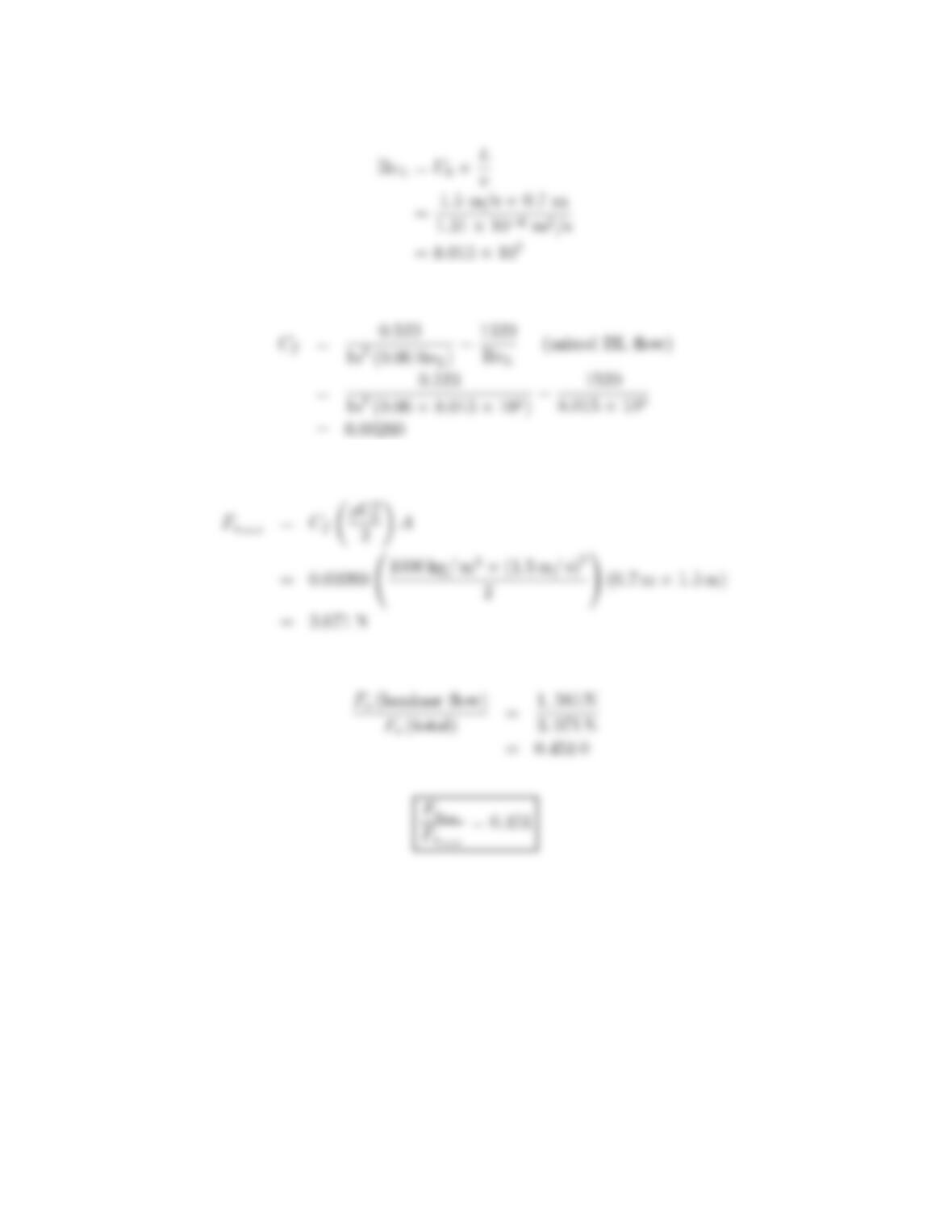
Reynolds number for the plate
Thus, the boundary layer is mixed. The average shear stress coefficient (Cf)is
Surface resistance (drag force) for the whole plate is
The ratio of drag forces is
53
9.48: PROBLEM DEFINITION
Situation:
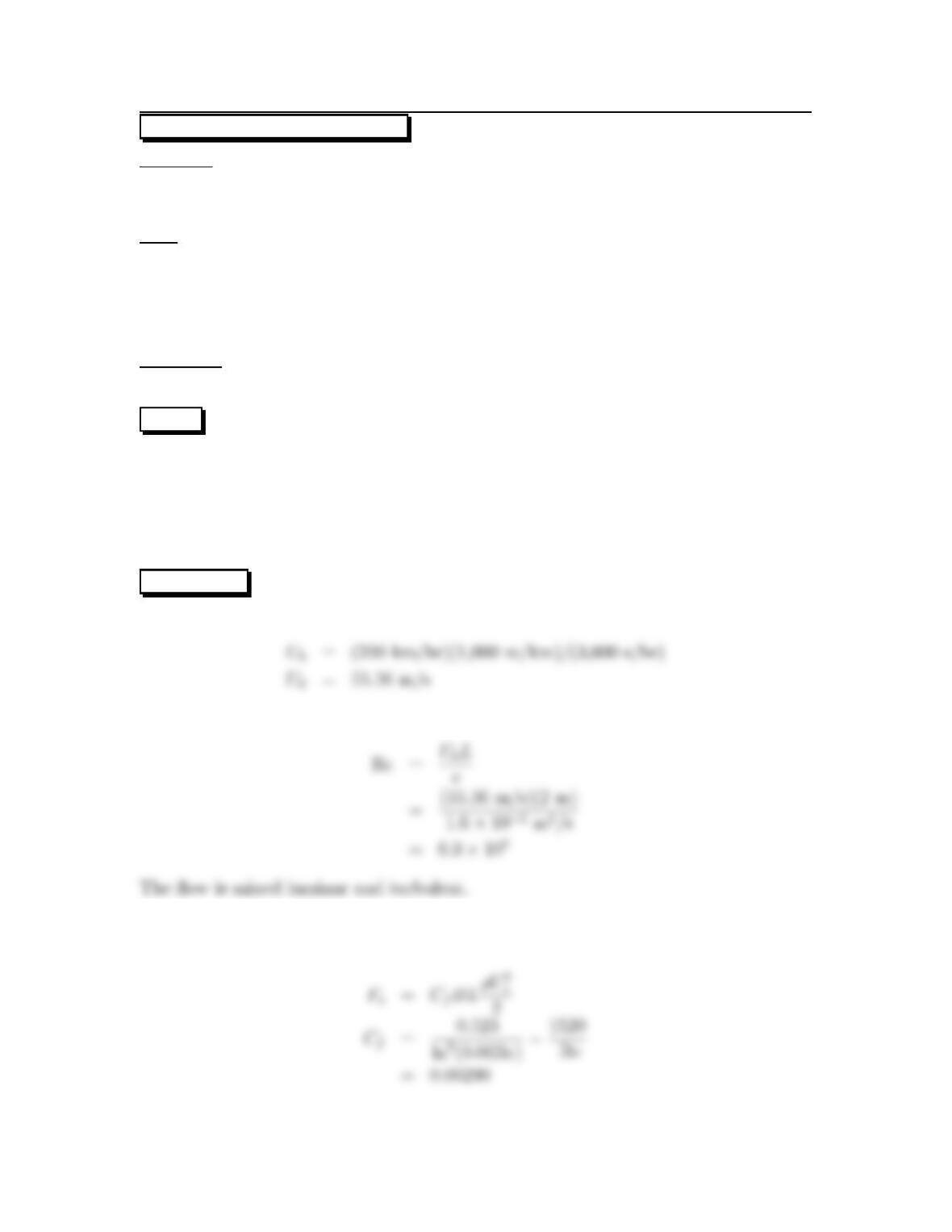
Air at 30oCflows over an airplane wing with 2 m chord and 11 m span at 200
km/hr.
Find:
(a) Friction drag on wing.
(b) Power to overcome friction drag.
(c) Fraction of chord which is laminar flow.
(d) Change in drag if boundary tripped at leading edge.
Properties:
From Table A.3 ν=1.6×10⁻⁵m2/sandρ=1.17 kg/m3.
PLAN
(a) Calculate friction drag.
(b) Find power as the product of drag force and speed: P=FsV
(c) Calculate the critical length at a Reynolds number of Re = 5 ×10⁵.
(d) Compare the average shear stress coefficients for a mixed boundary layer and
all-turbulent boundary layer.
SOLUTION
Reynolds number
Surface resistance (drag force)
54
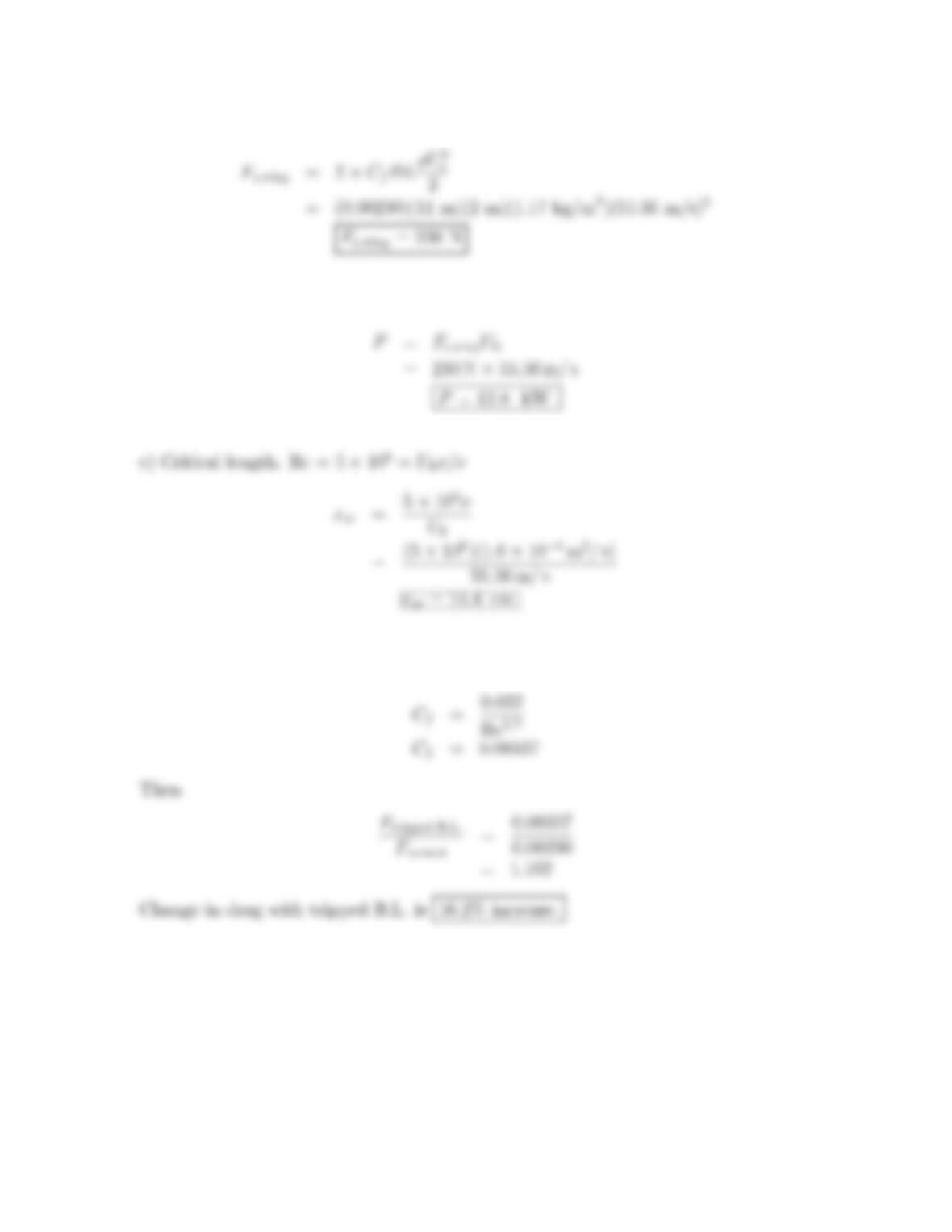
a) Total resistance. Wing has two surfaces so
b) Power
d) If all of boundary layer is turbulent then
55
9.49: PROBLEM DEFINITION
Situation:
Water at 20oCflows over creating a turbulent boundary layer. Local shear stress
at point is 0.2 N/m2.
Find:
Velocity 0.52 cm above plate surface.
Properties:
From Table A.5 ρ= 998 kg/m3;ν=10
−6m2/s.
SOLUTION
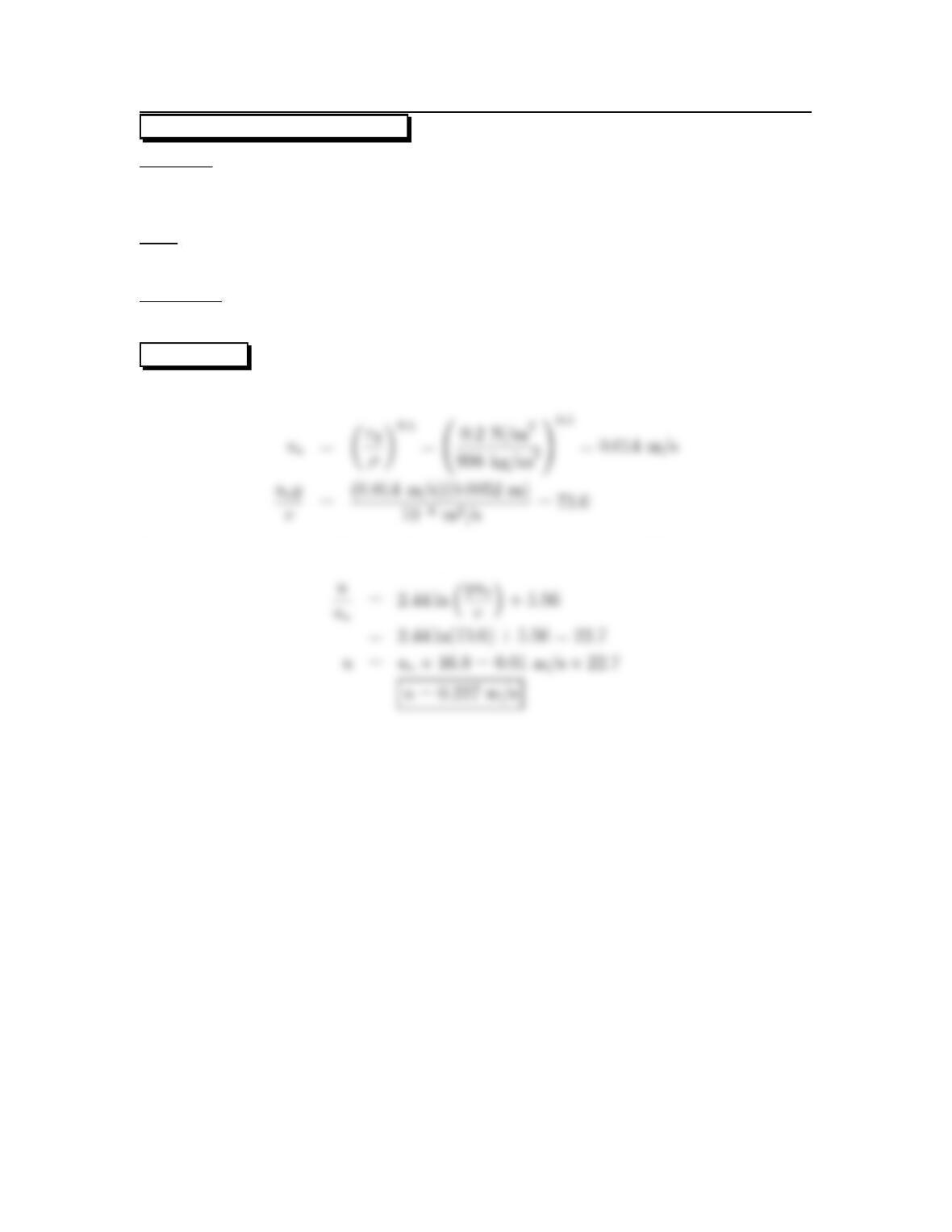
Local shear velocity and nondimensional wall distance.
The point is in the law of the wall region since 11.6<u∗y/ν < 500 so
56
9.50: PROBLEM DEFINITION
Situation:
Liquid flows over a flat plate 2.5 m long with velocity of 16 m/s.
Find:
(a) Skin friction drag per unit width of plate.
(b)Velocitygradientatsurface1mdownstreamfromleadingedge.
Properties:
μ=10
−5N·s/m2,ρ=1.5kg/m3.
SOLUTION
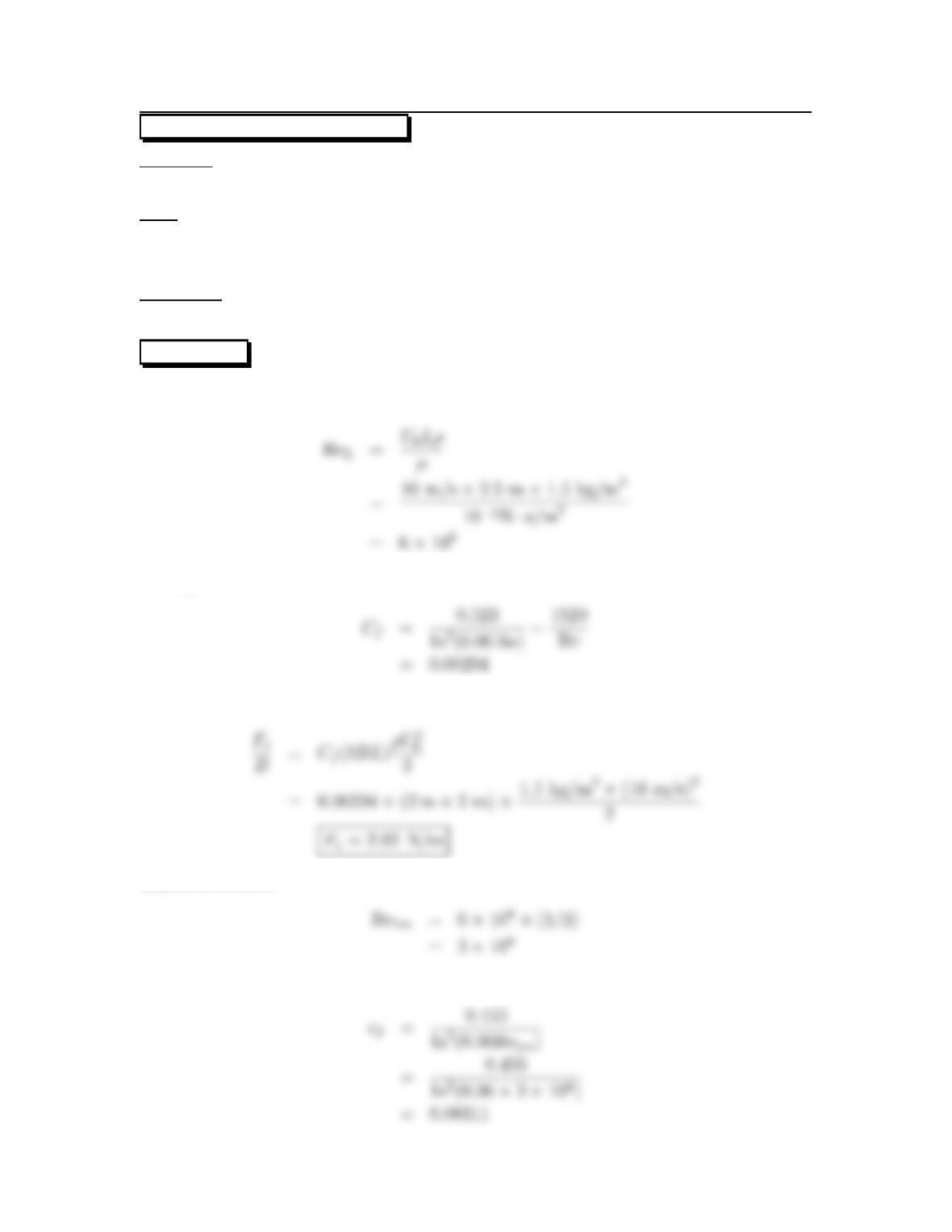
Calculate Reynolds number
Average shear stress coefficient
Surface resistance (drag force)
Reynolds number
Local shear stress coefficient
57
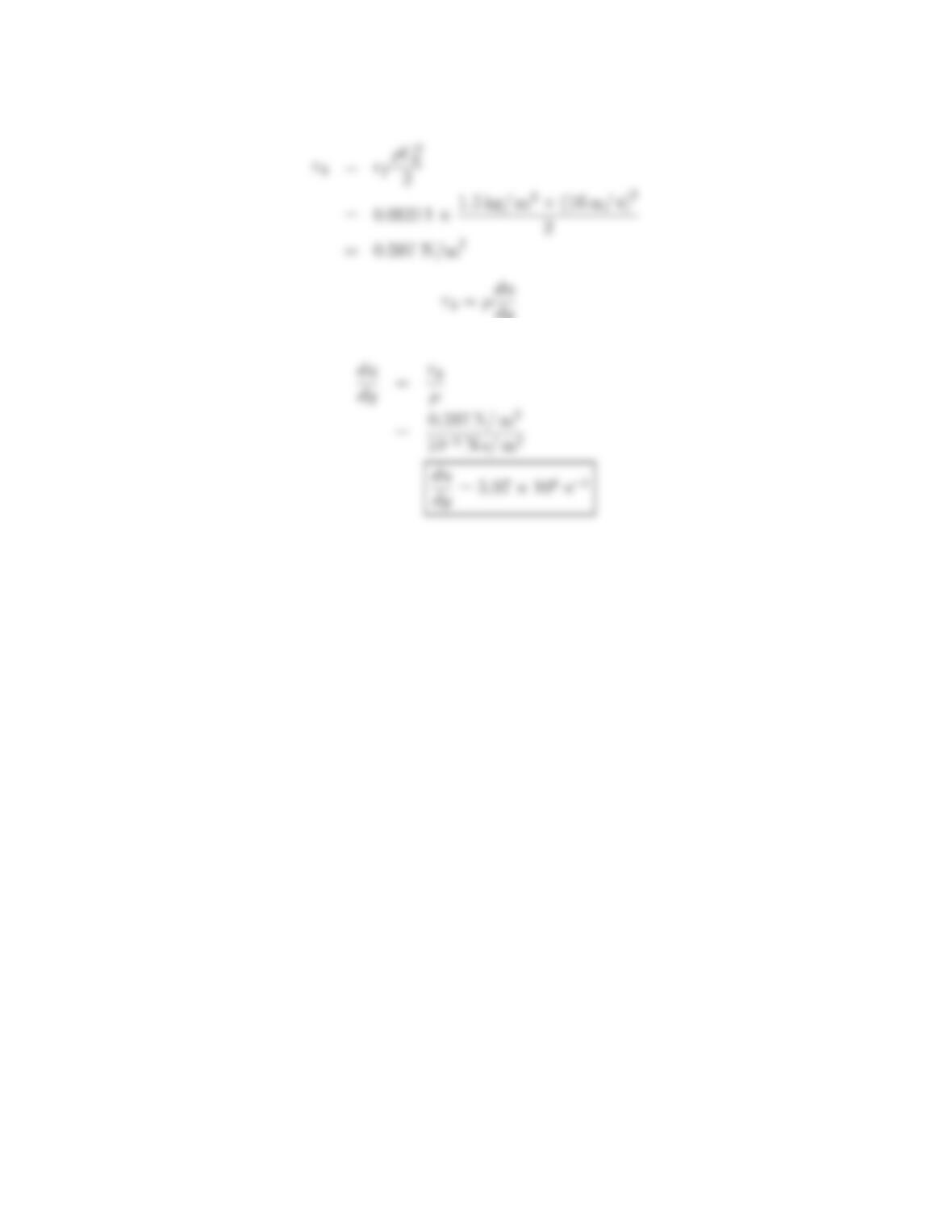
Local shear stress
dy
or
58
9.51: PROBLEM DEFINITION
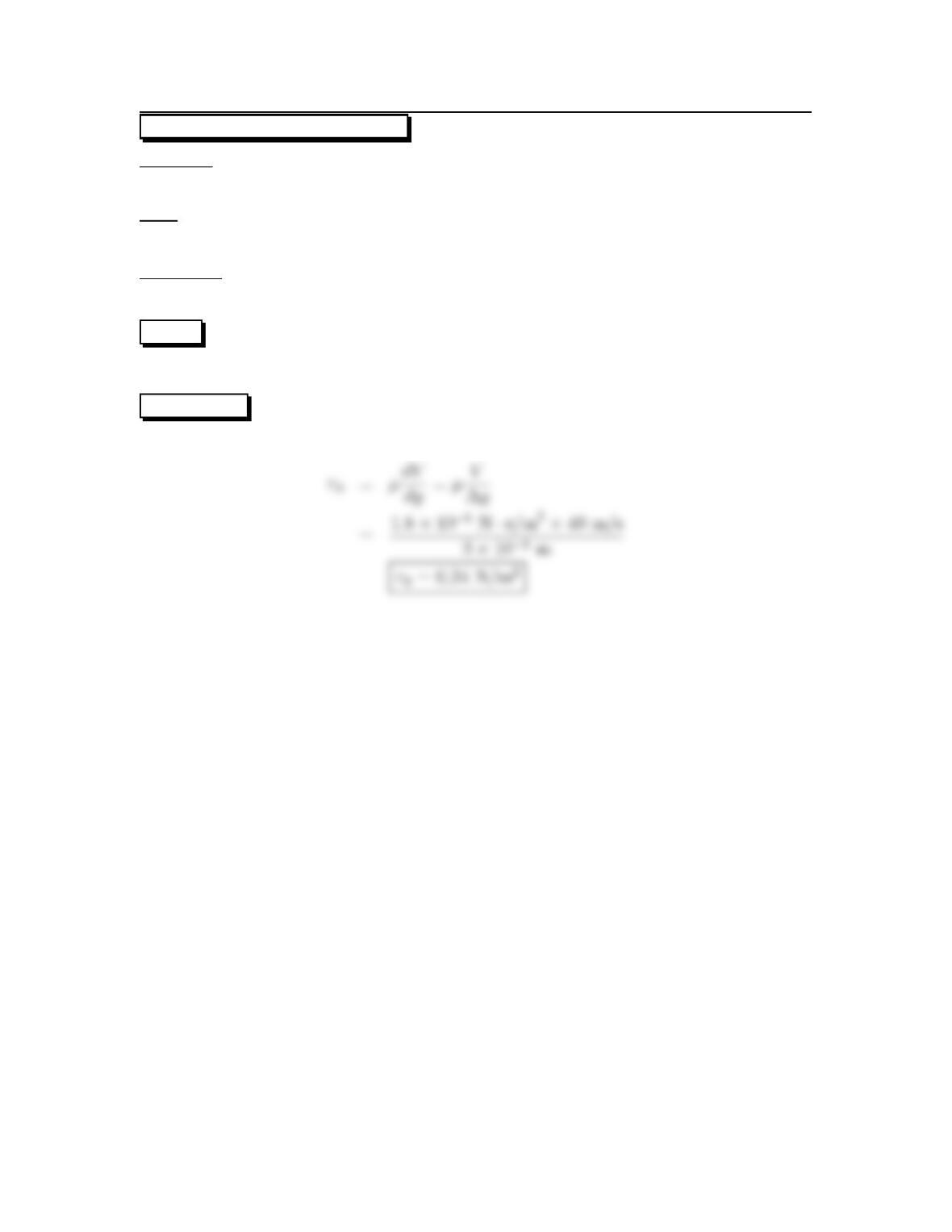
Situation:
Flow over a flat plate with linear velocity profile at trailing edge.
Find:
Skin friction drag on top per unit width stress on plate at downstream end.
Properties:
μ=1.8×10⁻⁵N·s/m2
PLAN
Relate velocity profile and shear stress at trailing edge.
SOLUTION
Local shear stress
59
9.52: PROBLEM DEFINITION
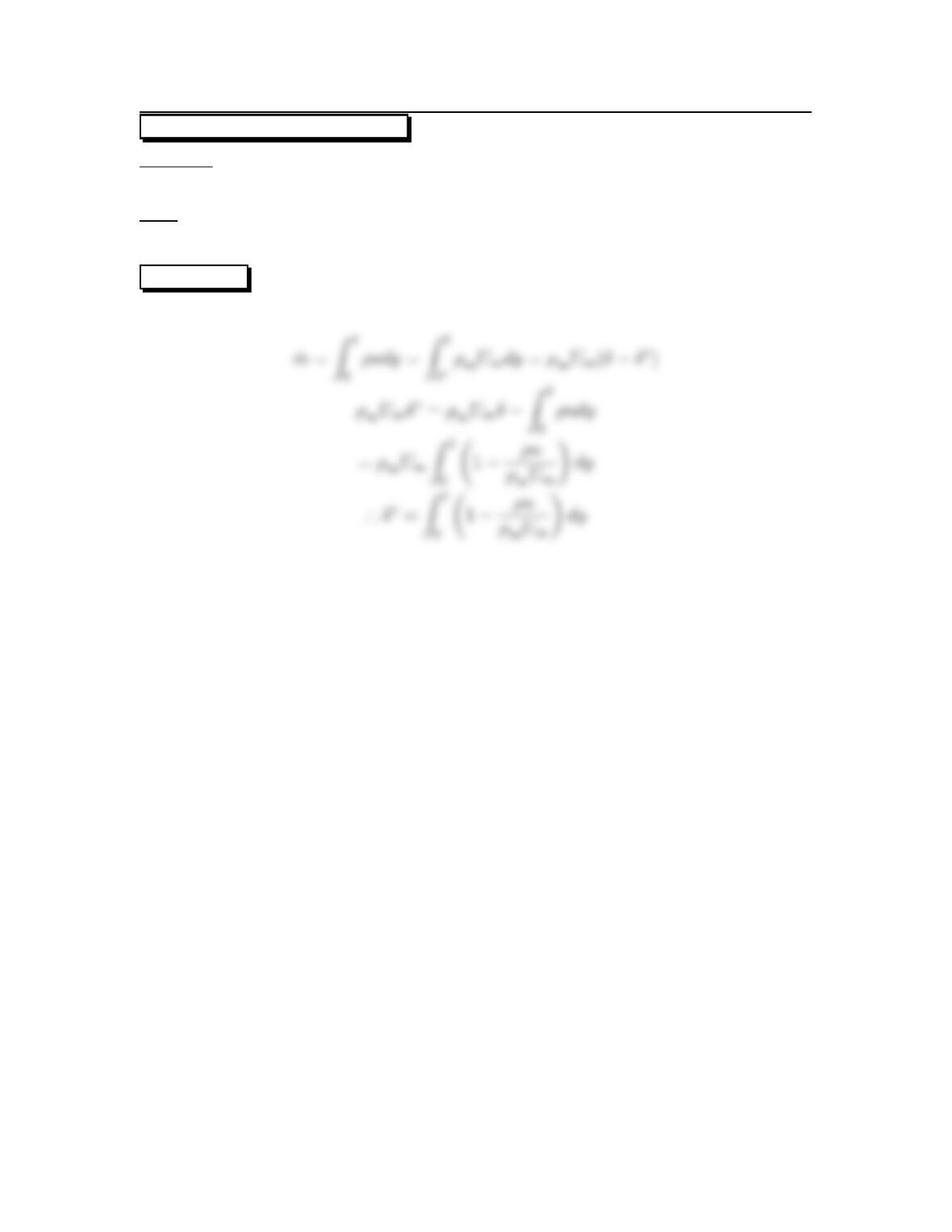
Situation:
The velocity profile in a boundary layer is replaced by a step profile.
Find:
Derive an equation for displacement thickness.
SOLUTION
60