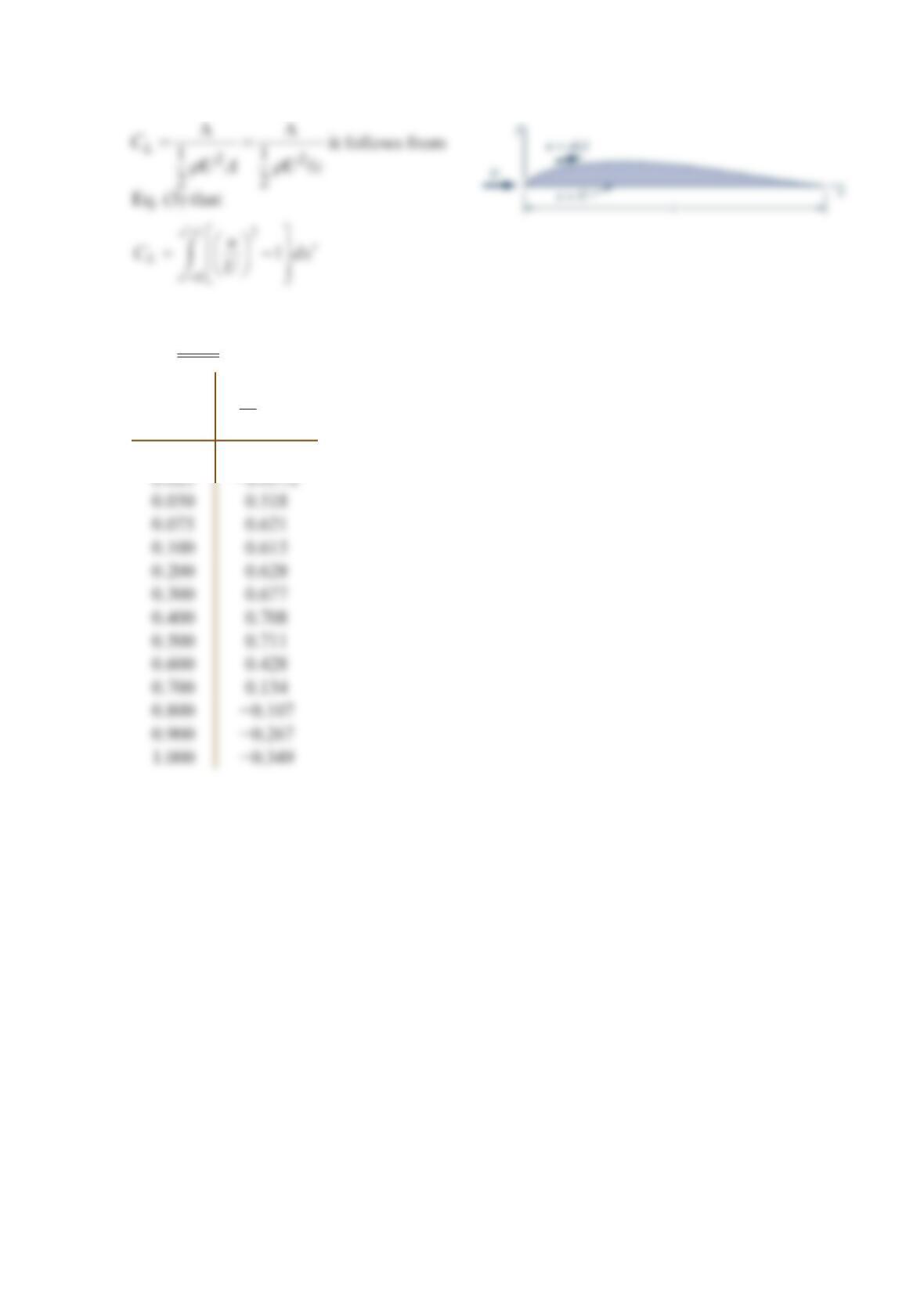
Thus, since
Using a standard numerical integration routine with the data given, we obtain
=0.327
L
C
′x
2
1
u
U−
0.000 −1.00
Problem 9.110
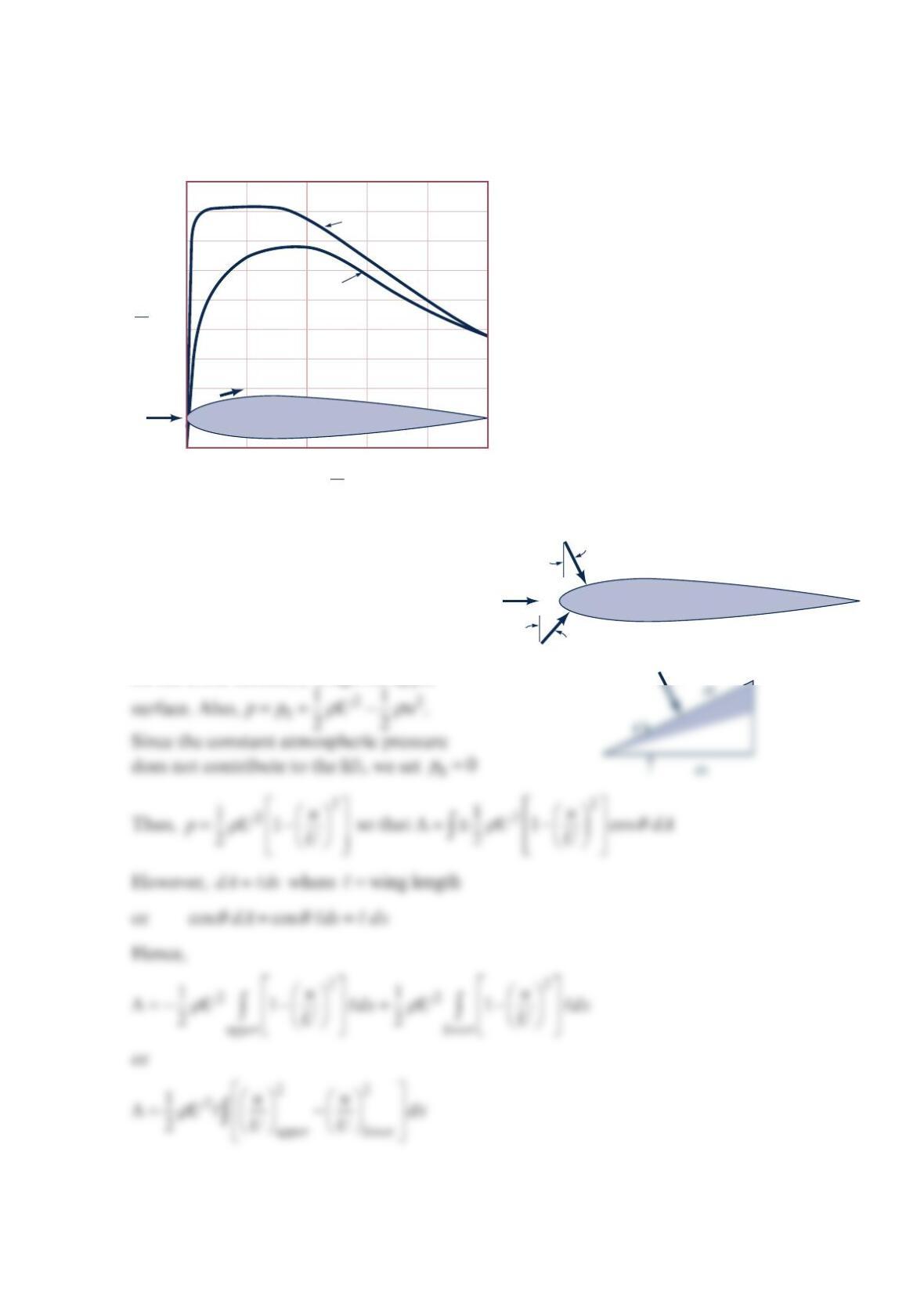
When air flows past the airfoil shown in the figure below, the velocity just outside the
boundary layer, u, is as indicated. Estimate the lift coefficient for these conditions.
Solution 9.110
If shear forces are negligible
cos
p
dA
θ
Λ
=±
, where the (+) sign is used
on the lower surface; (−) sign on upper
0.4
0.8
1.2
1.6
00 0.2 0.4 0.6 0.8 1.0
Lower surface
NACA 632−015
Upper surface
U
u
x
c
2
(
)
u
U
p
0
, U
θ
θ
pdA
c
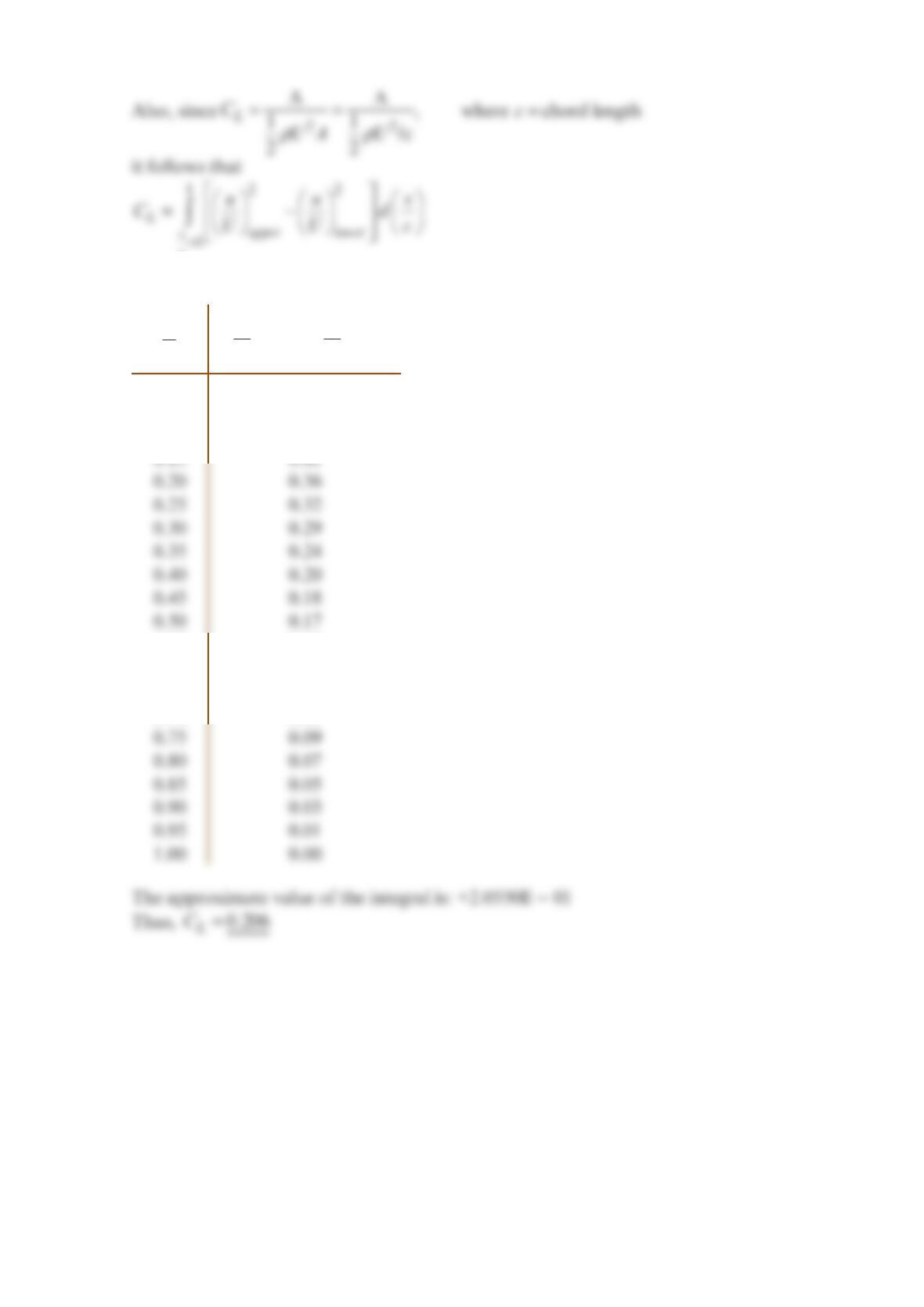
This integral is obtained by numerical integration of the data given in the figure.
The following table of data is obtained from the figure in the problem:
x
c
22
–
upper lower
uu
UU
0.00 0.00
0.05 0.65
0.10 0.52
0.55 0.15
0.60 0.14
0.65 0.12
0.70 0.11
Problem 9.111
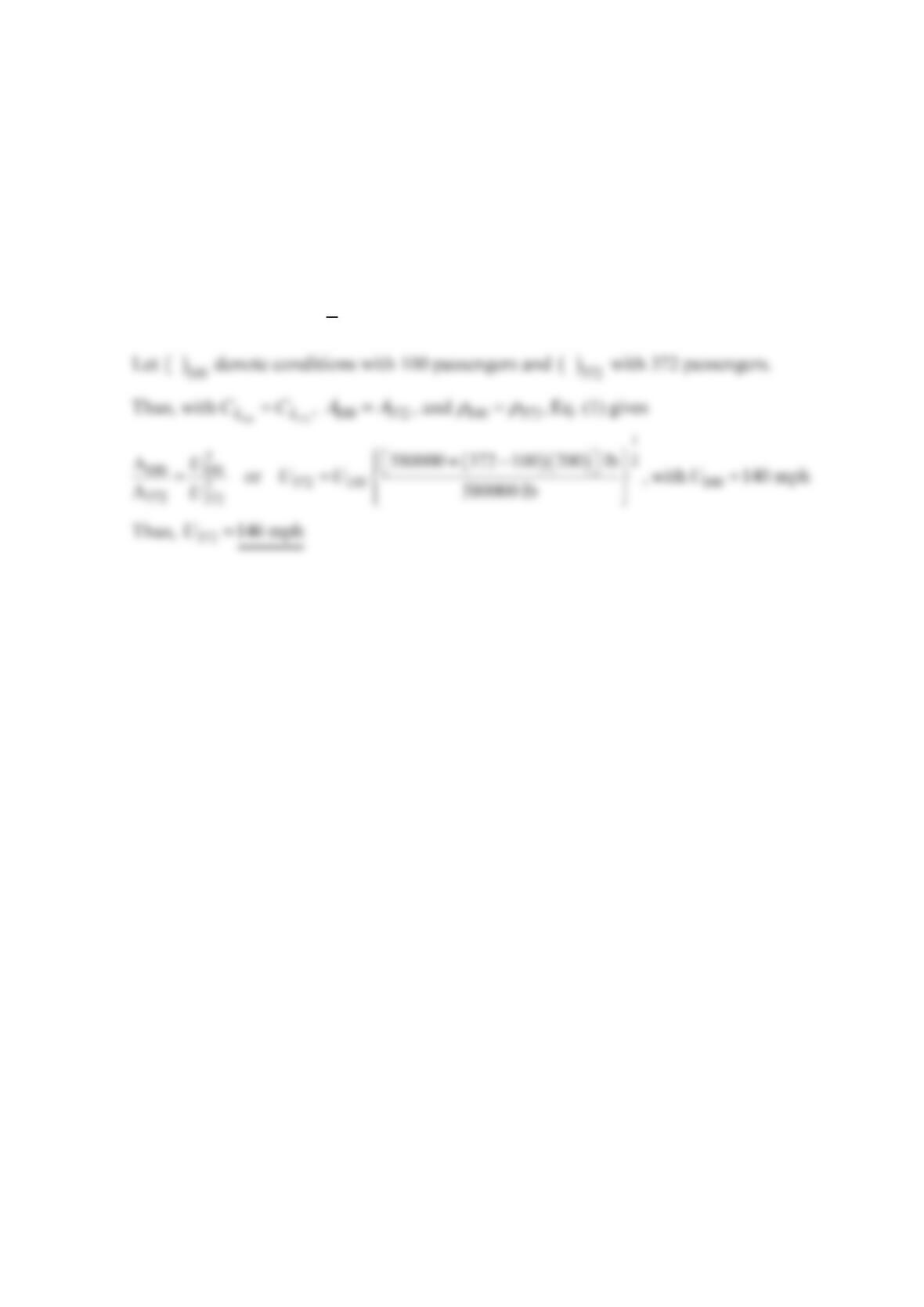
A Boeing 747 aircraft weighing 580,000 lb when loaded with fuel and 100 passengers takes
off with an airspeed of
1
40 mph. With the same configuration (i.e., angle of attack, flap
settings, etc.), what is its takeoff speed if it is loaded with 372 passengers? Assume each
passenger with luggage weighs
2
00 lb.
Solution 9.111
For steady flight 2
1
2
L
CUA
W
ρ
Λ
==
(1)
Problem 9.112
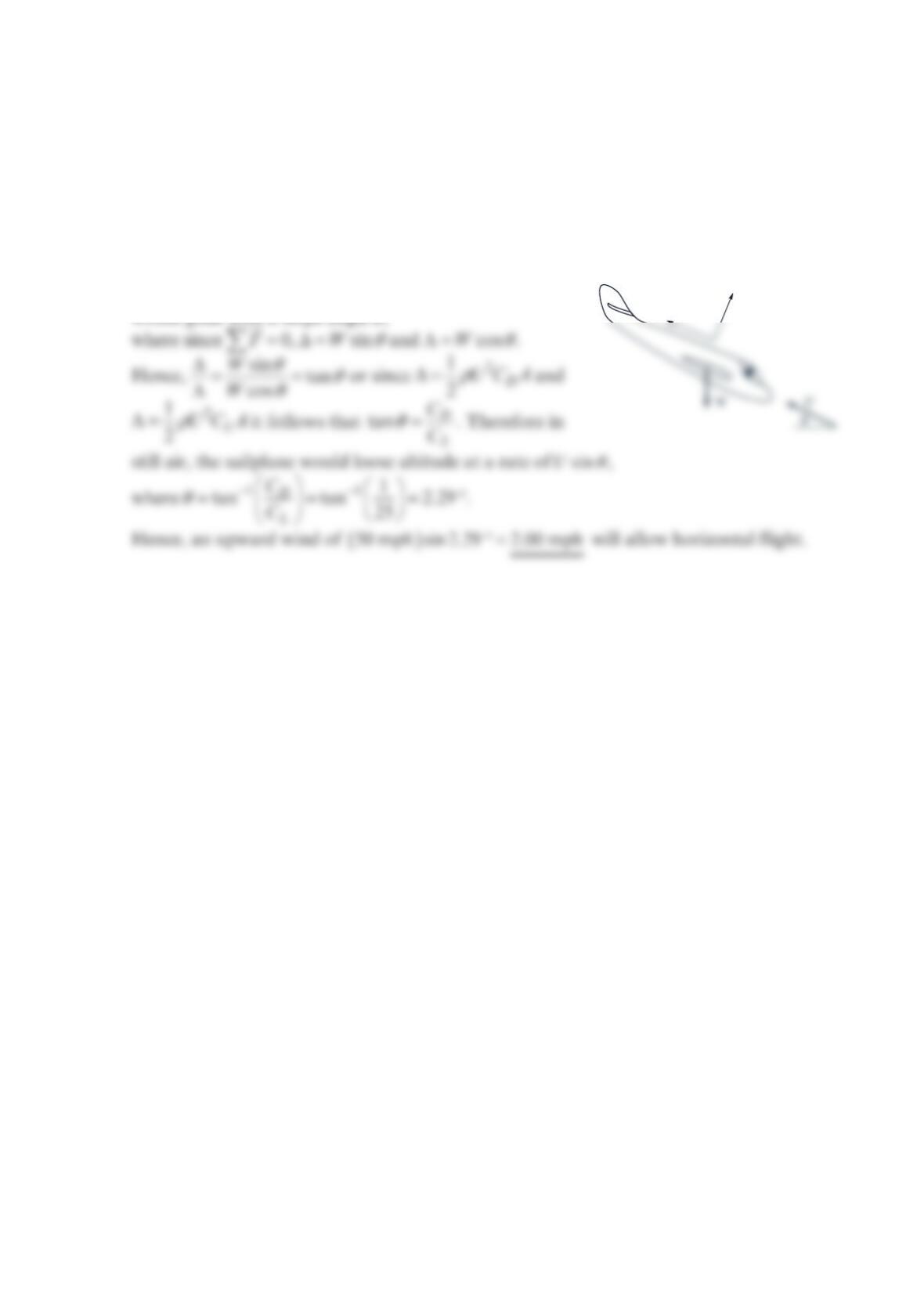
Show that for unpowered flight (for which the lift, drag, and weight forces are in
equilibrium) the glide slope angle,
θ
, is given by
t
an DL
CC
θ
=.
Solution 9.112
For steady unpowered flight
0
X
F=
gives sinW
θ
Δ
=
θ
𝒟
ℒ
Problem 9.113
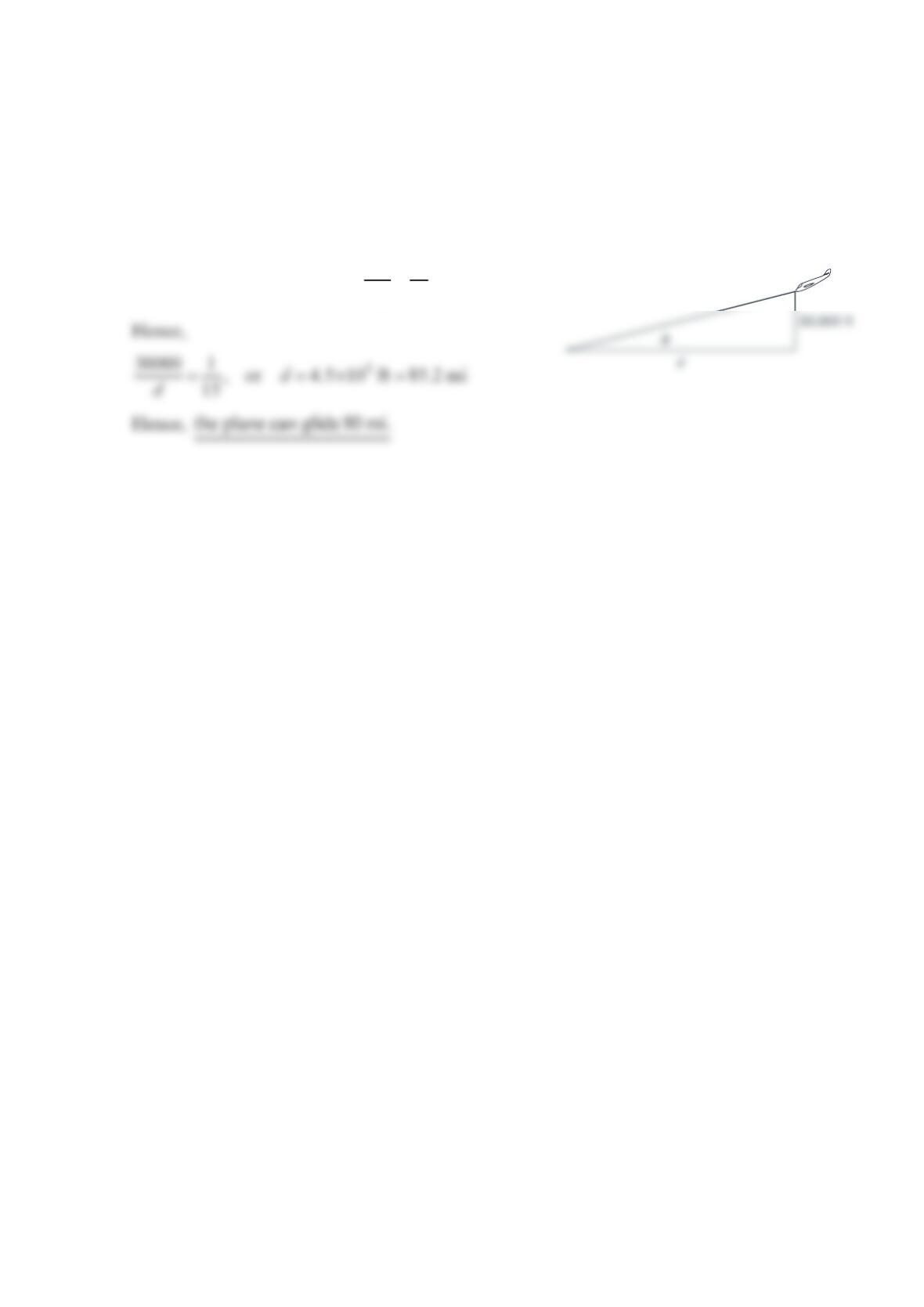
A sail plane with a lift-to-drag ratio of 25 flies with a speed of 50 mph. It maintains or
increases its altitude by flying in thermals, columns of vertically rising air produced by
buoyancy effects of nonuniformly heated air. What vertical airspeed is needed if the sail
plane is to maintain a constant altitude?
Solution 9.113
With no vertical air motion, the sailplane
would glide with a slope angle
θ
,
𝒟
ℒ
Problem 9.114
If the lift coefficient for a Boeing 777 aircraft is 15 times greater than its drag coefficient,
can it glide from an altitude of 30,000 ft to an airport
8
0 mi away if it loses power from its
engines? Explain. (See Problem 9.112.)
Solution 9.114
From Problem 9.112,
θ
==
1
tan 15
D
L
C
C
Problem 9.115
Over the years, there has been a dramatic increase in the flight speed (
U
), altitude (
h
),
weight (
W
), and wing loading ( weight divided by wing areaWA=) of aircraft. Use the
data given in the table below to determine the lift coefficient for each of the aircraft listed.
Aircraft Year
W(lb) U (mph) W/A (lb/ft2) h (ft)
Wright Flyer 1903 750 35 1.5 0
Douglas DC-3 1935 25,000 180 25.0 10,000
Douglas DC-6 1947 105,000 315 72.0 15,000
Boeing 747 1970 800,000 570 150.0 30,000
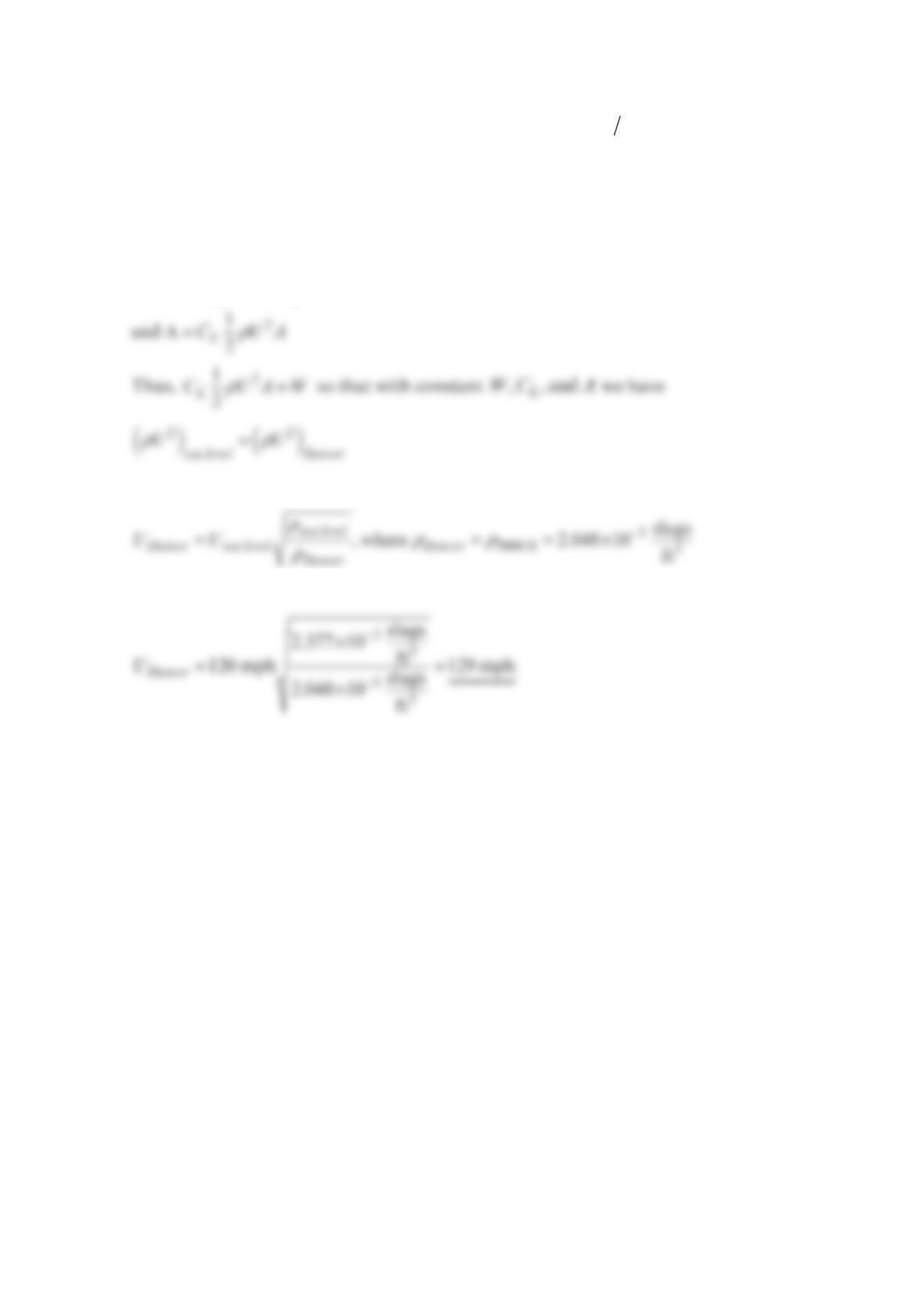
Solution 9.115
Thus,
3
(slugs/ft )
ρ
(f t / s )
U
2
(lb/ft )W/A L
C
Wright Flyer 2.38 × 10³ 51.3 1.5 0.480
Problem 9.116
If the required takeoff speed of a particular airplane is
1
20 mi hr at sea level, what will be
required at Denver (elevation
5
000 ft)? Use properties of the U.S. Standard Atmosphere.
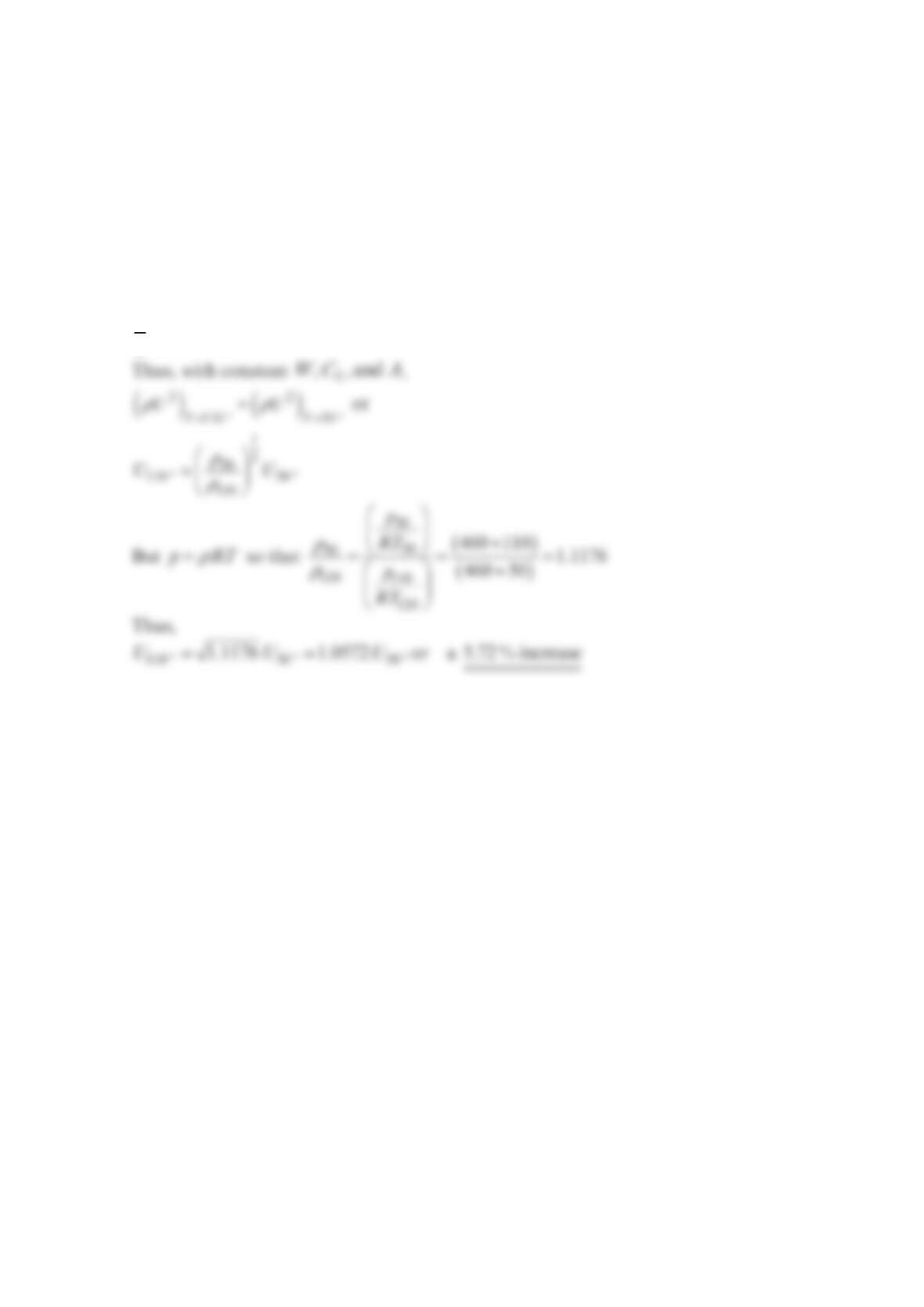
Solution 9.116
For steady flight, W
Λ
= where
airplane weight
W
=
or
Thus,
Problem 9.117
The landing speed of a winged aircraft such as the Space Shuttle is dependent on the air
density. By what percent must the landing speed be increased on a day when the
temperature is
1
10
F
° compared to a day when it is °50 F ? Assume that the atmospheric
pressure remains constant.
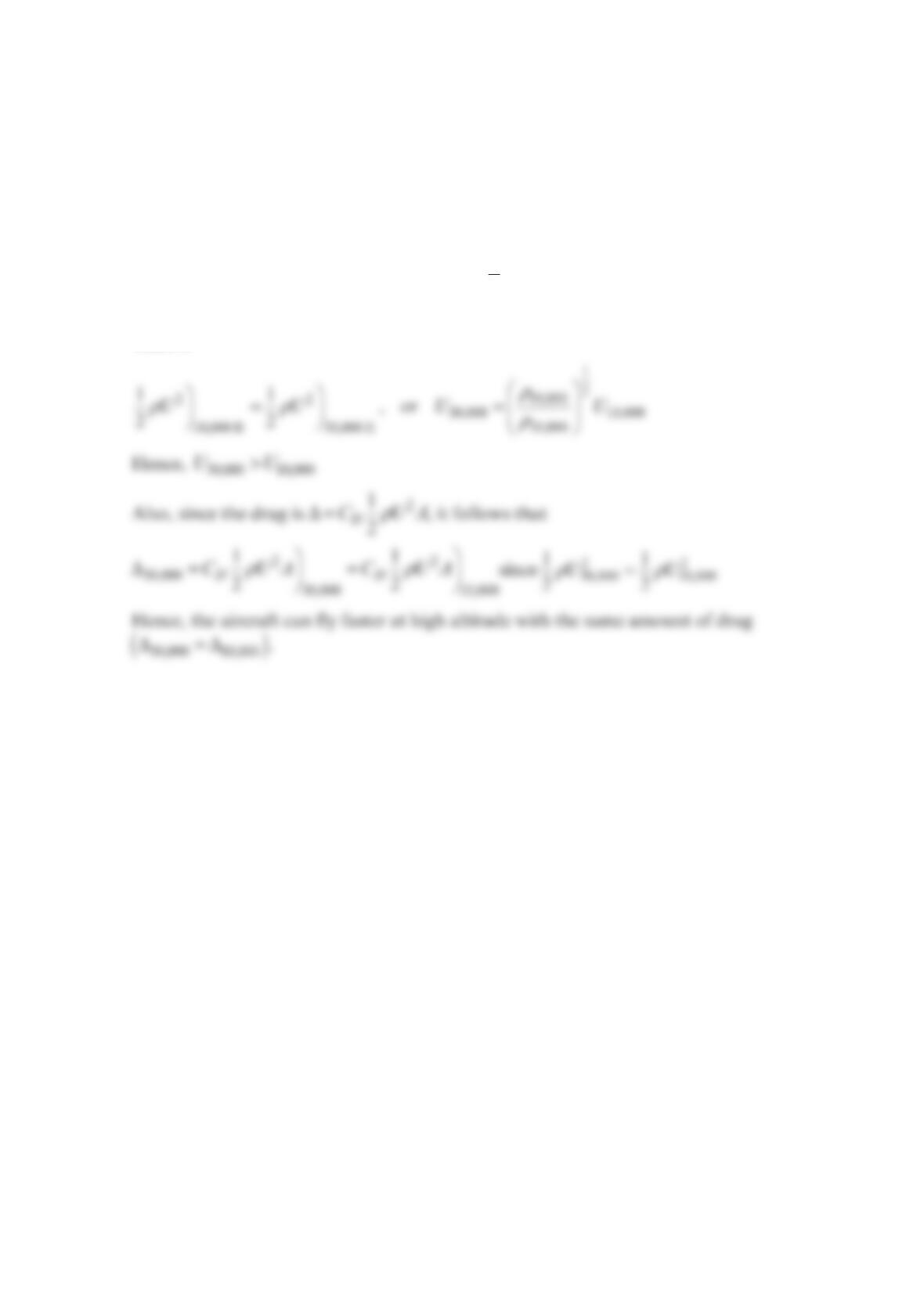
Solution 9.117
For equilibrium, lift = weight, or
ρ
=
2
1
2L
UC A W
Problem 9.118
Commercial airliners normally cruise at relatively high altitudes (
3
0,000 to 35,000 ft).
Discuss how flying at this high altitude (rather than, e.g.,
1
0,000 ft) can save fuel costs.
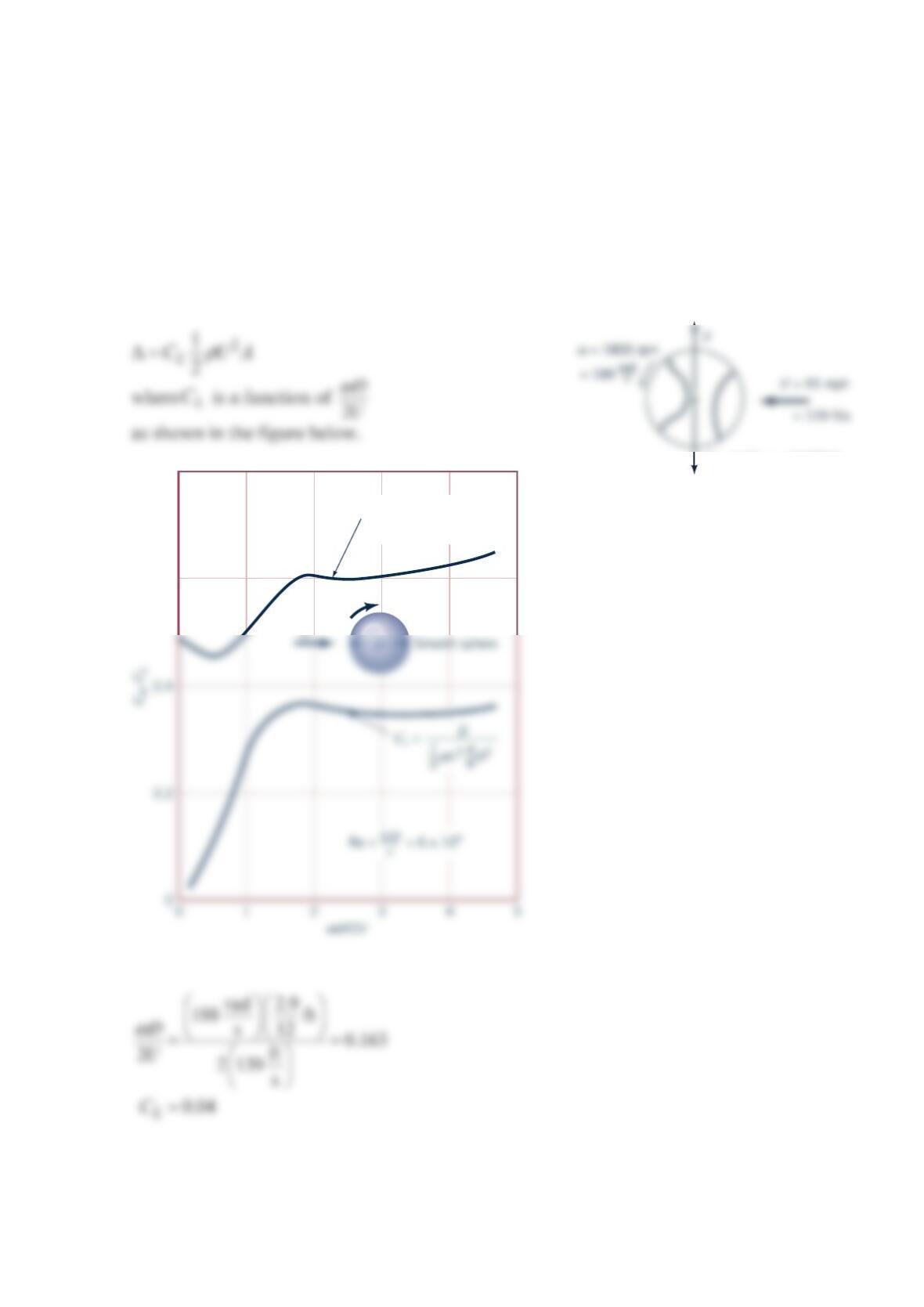
Solution 9.118
For level flight, 2
1
aircraft weight 2
L
WCU
A
ρ
==Λ=
Thus, for given ,,and
L
W
CA
, the dynamic pressure is constant, independent of altitude.
Than is
Problem 9.120
For many years, hitters have claimed that some baseball pitchers have the ability to actually
throw a rising fastball. Assuming that a top major leaguer pitcher can throw a 95-mph
pitch and impart an
1
800-rpmspin to the ball, is it possible for the ball to actually rise?
Assume the baseball diameter is
2
.9 in. and its weight is
5
.25 oz.
Solution 9.120
If the lift produced on the spinning ball is greater than its weight the ball will rise.
Thus, with
ω
0.6
0.8
C
D
=
𝒟
____________
U
2
D
2
1
__
2
__
4
ρπ
𝒲
= 5.25
oz–
= 0.328 Ib
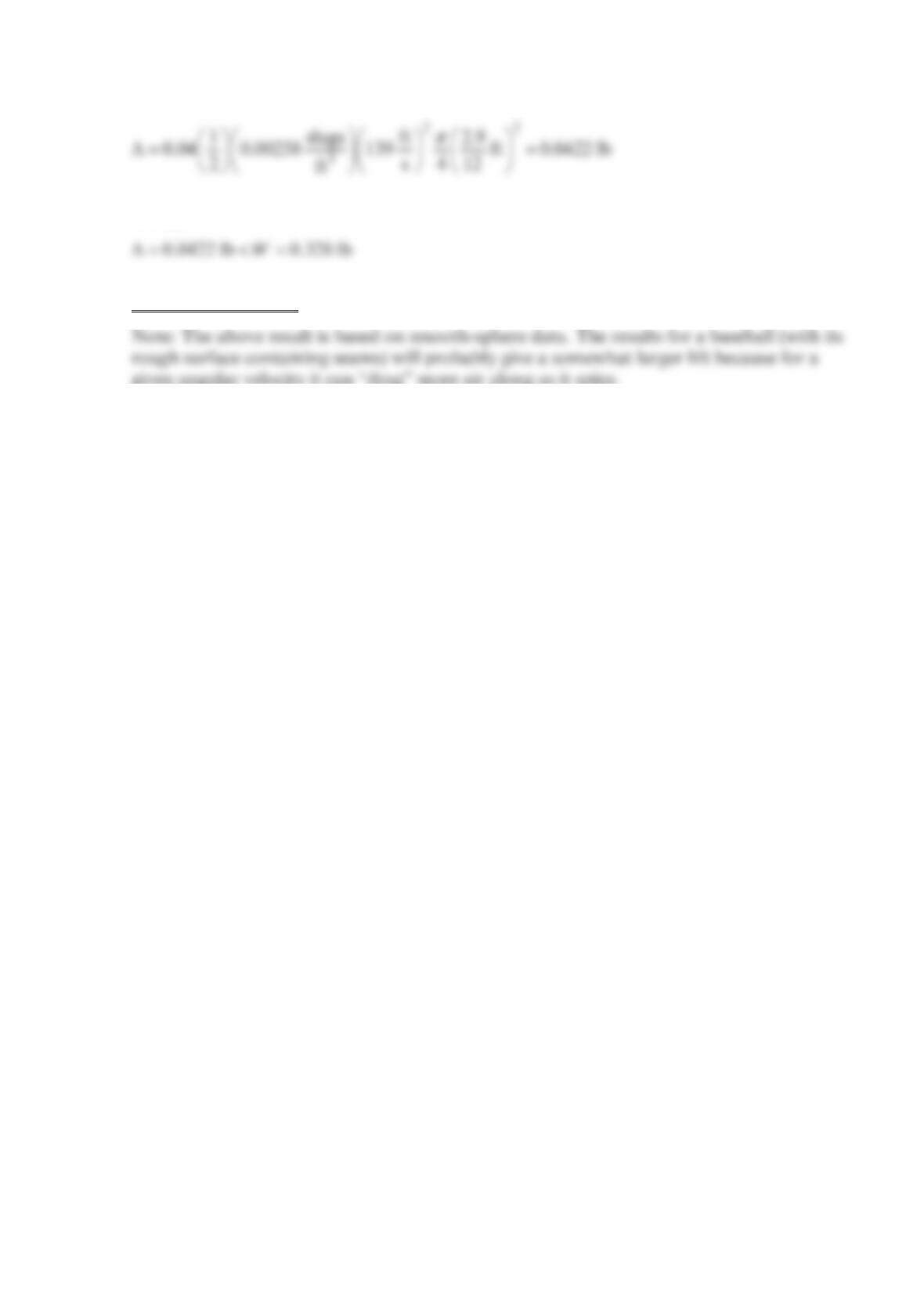
Hence, for the given conditions
so that
The ball will not rise.
Problem 9.121
A baseball leaves the pitcher’s hand with horizontal velocity of 90 mph and travels a
distance of 45 ft. Neglect air drag and gravity, so the ball moves in a horizontal plane. The
ball has a mass of
5
oz, a circumference of 9 in., a rotational speed of
1
600 rev/min, and a
baseball lift coefficient of 0.75. How far does the baseball “break’’ in the horizontal plane
in
6
0 °F, still air?
Solution 9.121
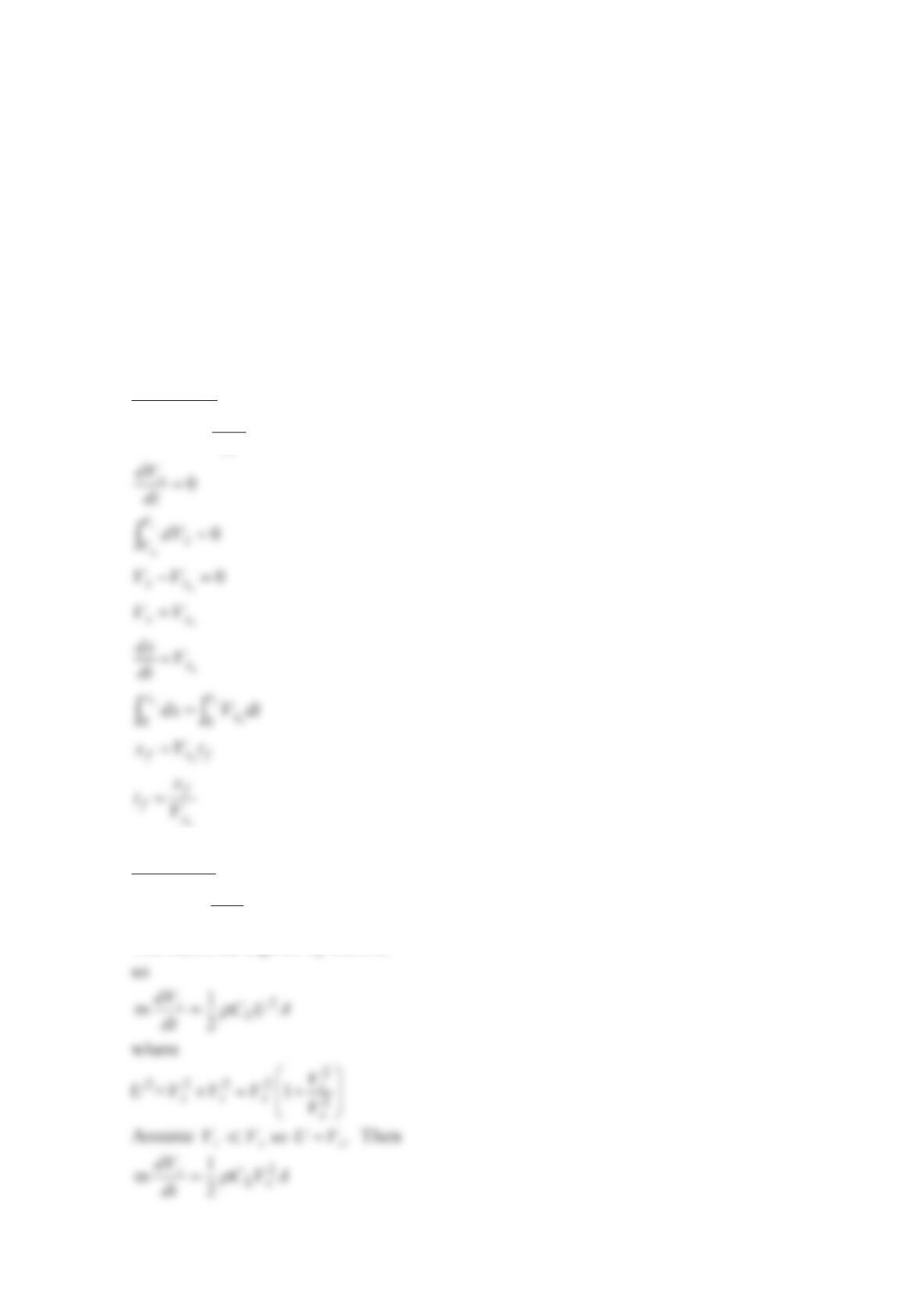
Denote the x-direction from the pitcher to home plate and the z-direction to the pitcher’s
left. Apply Newton’s second law to the baseball in the x- and z-directions with the ball’s
initial velocity in the x-direction.
x-direction
==
0
x
x
dV
Fm
dt
z-direction
==
sideforce
z
z
dV
Fm
dt
The sideforce is given by the lift,
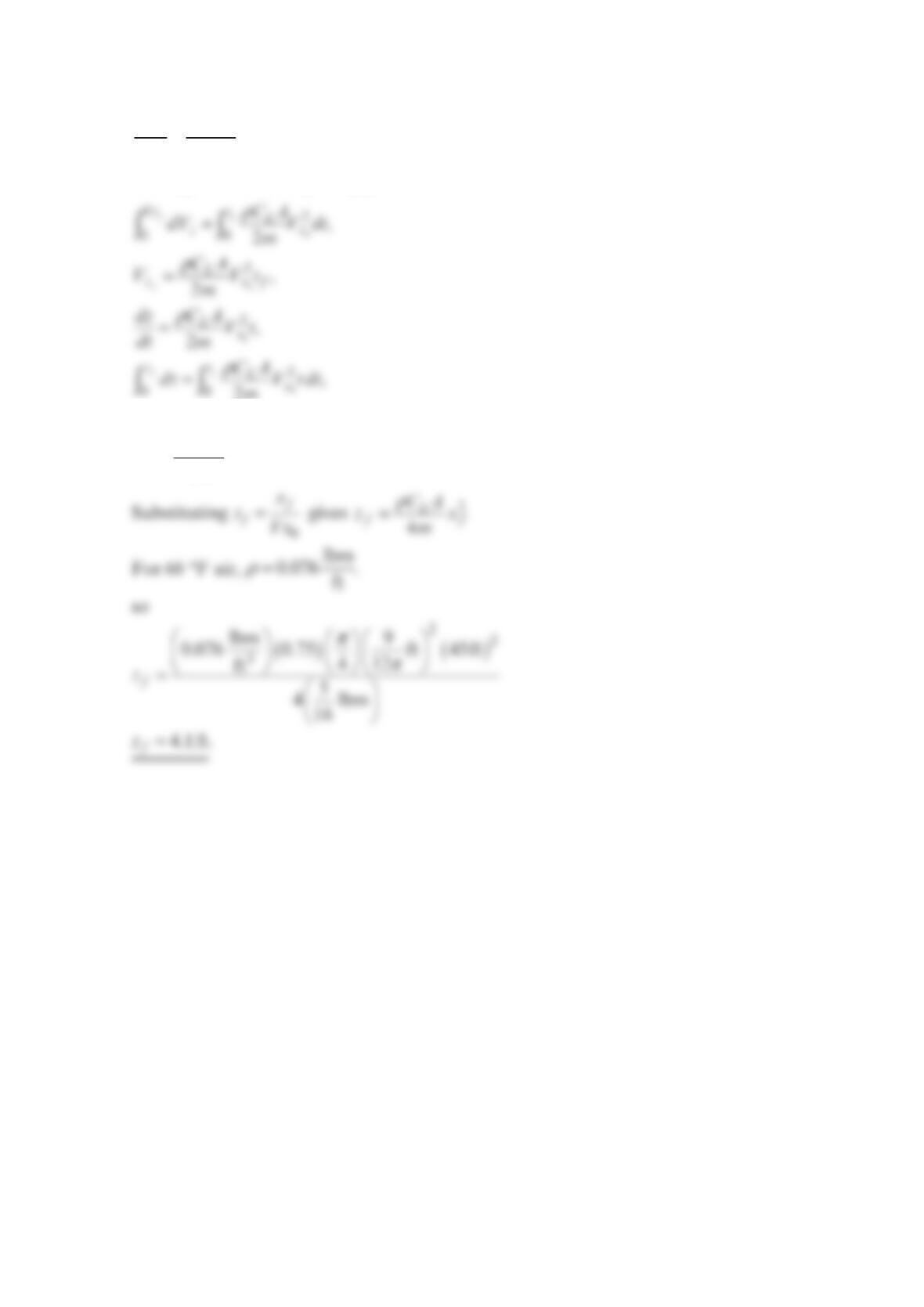
and
ρ
=2
2
zL
x
dV C AV
dt m
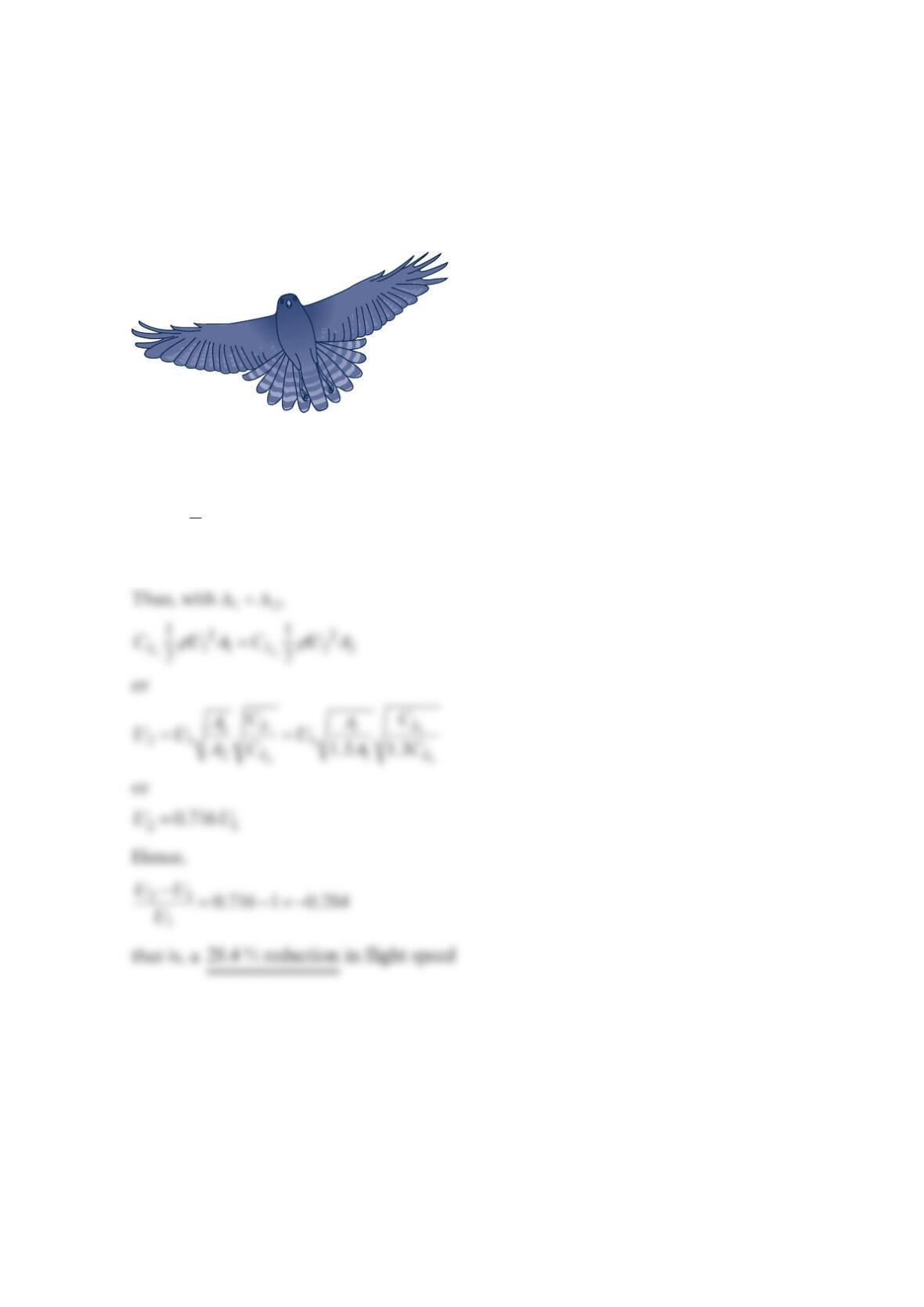
For L
Cconstant, integrating gives
2
m
and
ρ
=0
22
4
L
f
xf
CA
zVt
m
ρ
f
ρ
ρ
Problem 9.122
As indicated in the figure below, birds can significantly alter their body shape and increase
their planform area,
A
, by spreading their wing and tail feathers, thereby reducing their
flight speed. If during landing the planform area is increased by 50 % and the lift
coefficient increased by 30 % while all other parameters are held constant, by what percent
is the flight speed reduced?
Solution 9.122
2
1
2
L
CU
A
ρ
Λ
=
Let
()
2 denote landing conditions and
()
1 denote normal flight conditions.
Problem 9.123
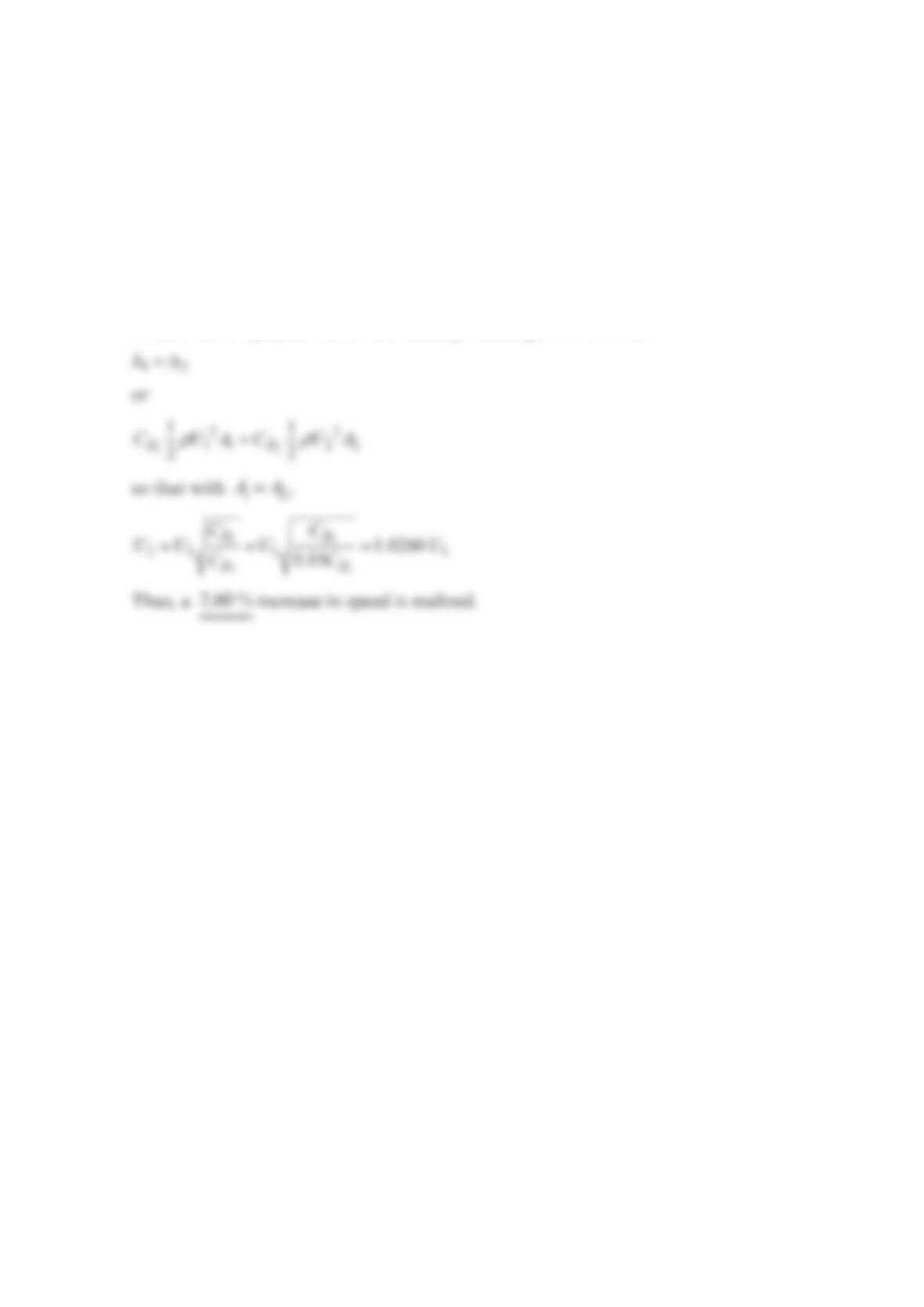
It is estimated that by installing appropriately designed winglets on a certain airplane, the
drag coefficient will be reduced by
5
%. For the same engine thrust, by what percent will the
aircraft speed be increased by use of the winglets?
Solution 9.123
Let
()
1denote without winglets and
()
2 with winglets.
Thus, since drag equals thrust and 12
t
hrust thrust=, it follows that