9.66: PROBLEM DEFINITION
Situation:
A passenger train 81 m long with a 10 m perimeter moving through air at 81.1
km/hr and 204 km/hr. Boundary layer is tripped.
Find:
Powerrequiredatbothspeeds.
Surface resistance at both speeds.
Properties:
Table A.3 ν=1.41 ×10⁻⁵m2/s, ρ=1.25 kg/m3.
SOLUTION
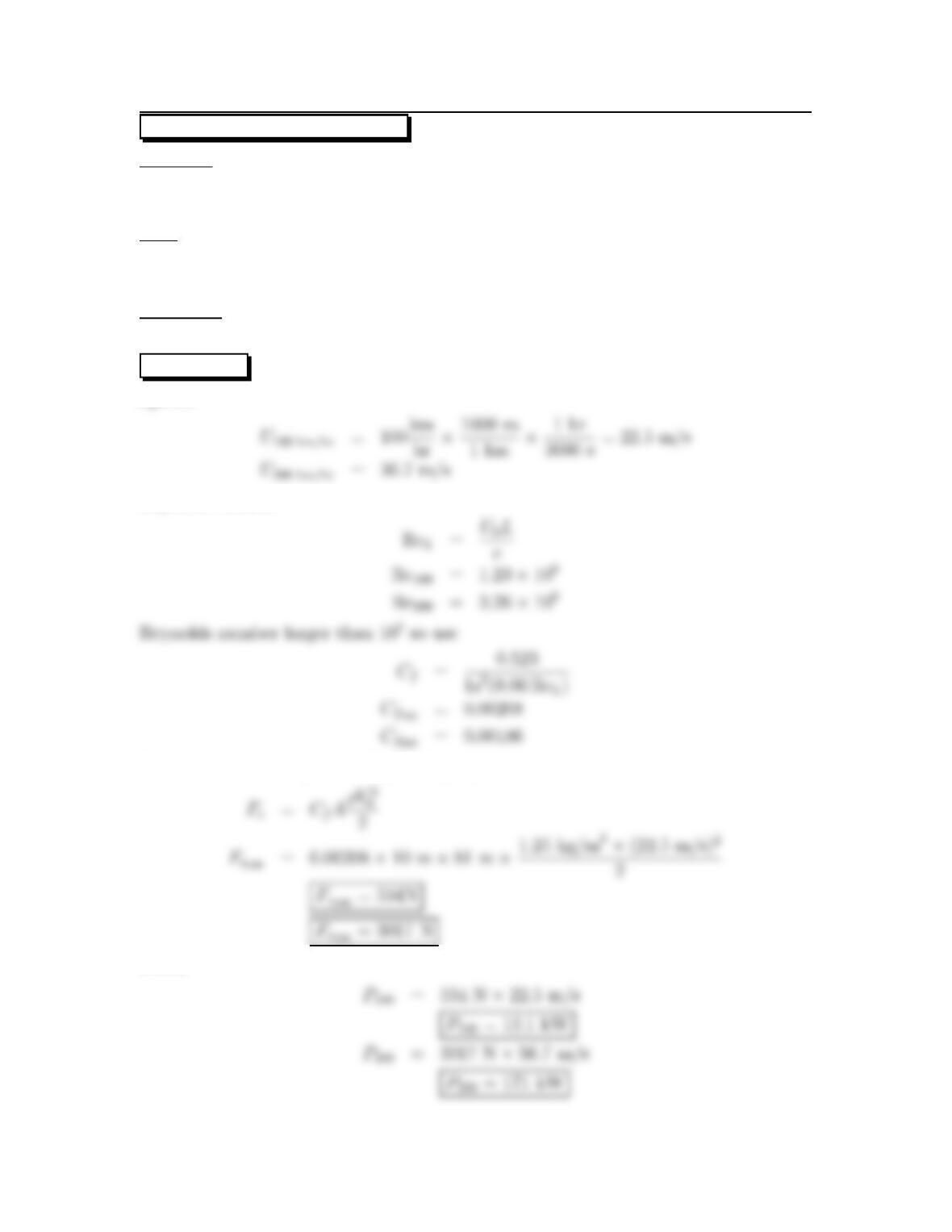
Speeds
Reynolds number
Surface resistance equation, Eq. 9.17 (10e)
Power
77
9.67: PROBLEM DEFINITION
Situation:
A boundary layer next to the smooth hull of a ship that moves at 45/ft/s in fresh
water at 60oF.
Find:
(a) Thickness of boundary layer at x=100ft.
(b) Velocity of water at y/δ =0.5.
(c) Shear stress on hull at x=100ft.
Properties:
Table A.5 (water at 60 ◦F): ρ=1.94 slug/ft3,γ =62.37 lbf/ft3,μ=2.36 ×
10−5lbf ·s/ft2,ν=1.22 ×10−5ft2/s.
SOLUTION
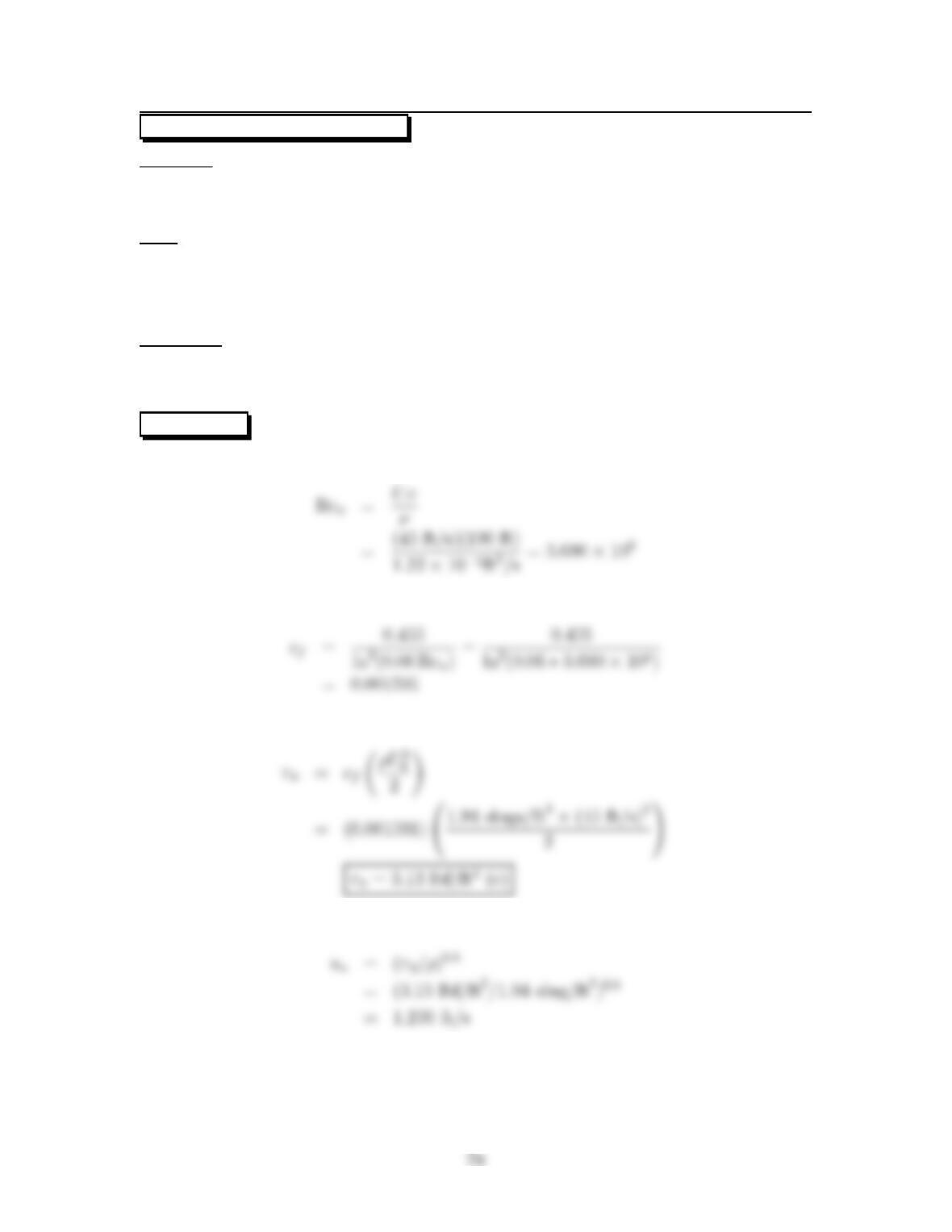
Reynolds number
Local shear stress coefficient
Local shear stress
Shear velocity
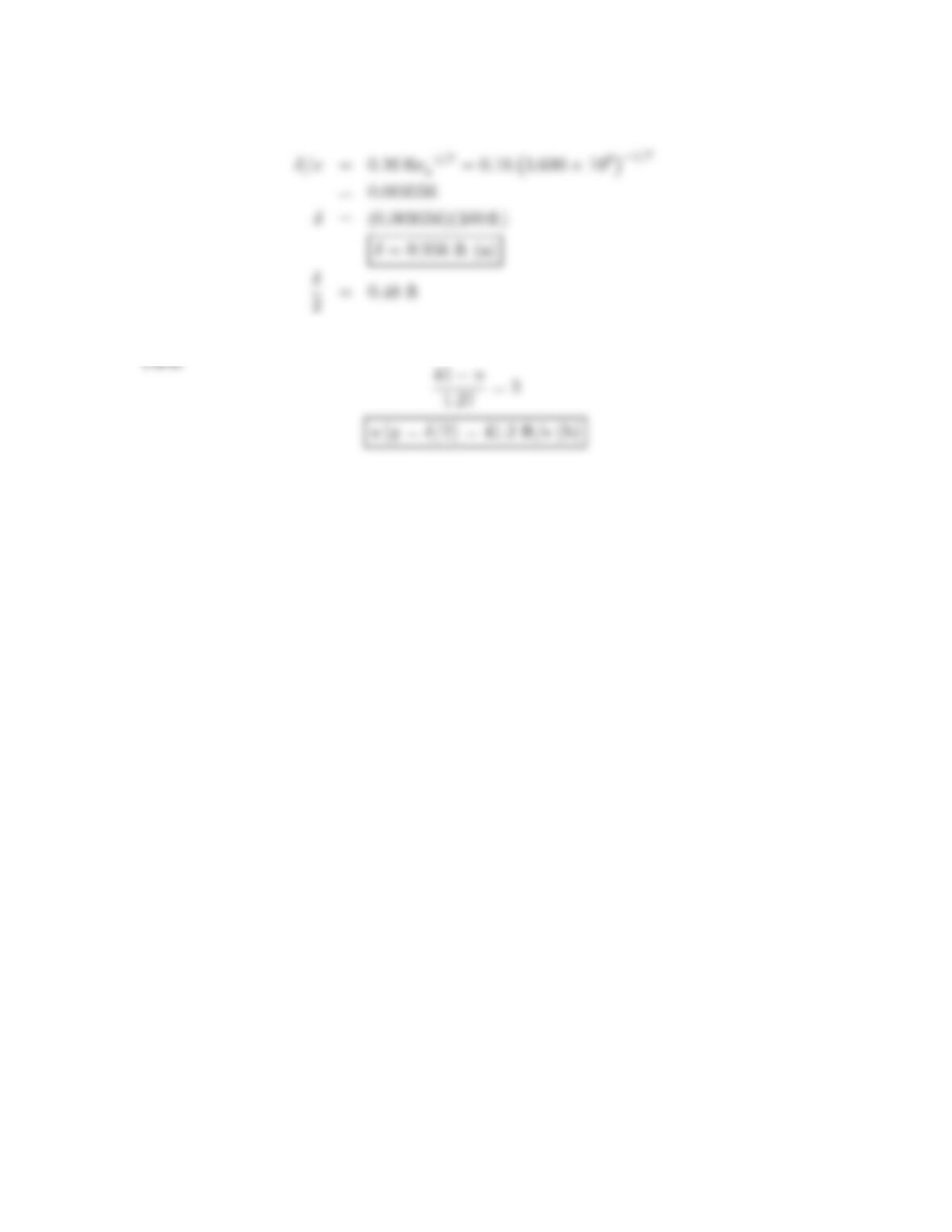
Boundary layer thickness (turbulent flow)
From figure for velocity defect law (Fig 9.12 in 10e), at y/δ =0.50,(U0−u)/u∗≈3
79
9.68: PROBLEM DEFINITION
Situation:
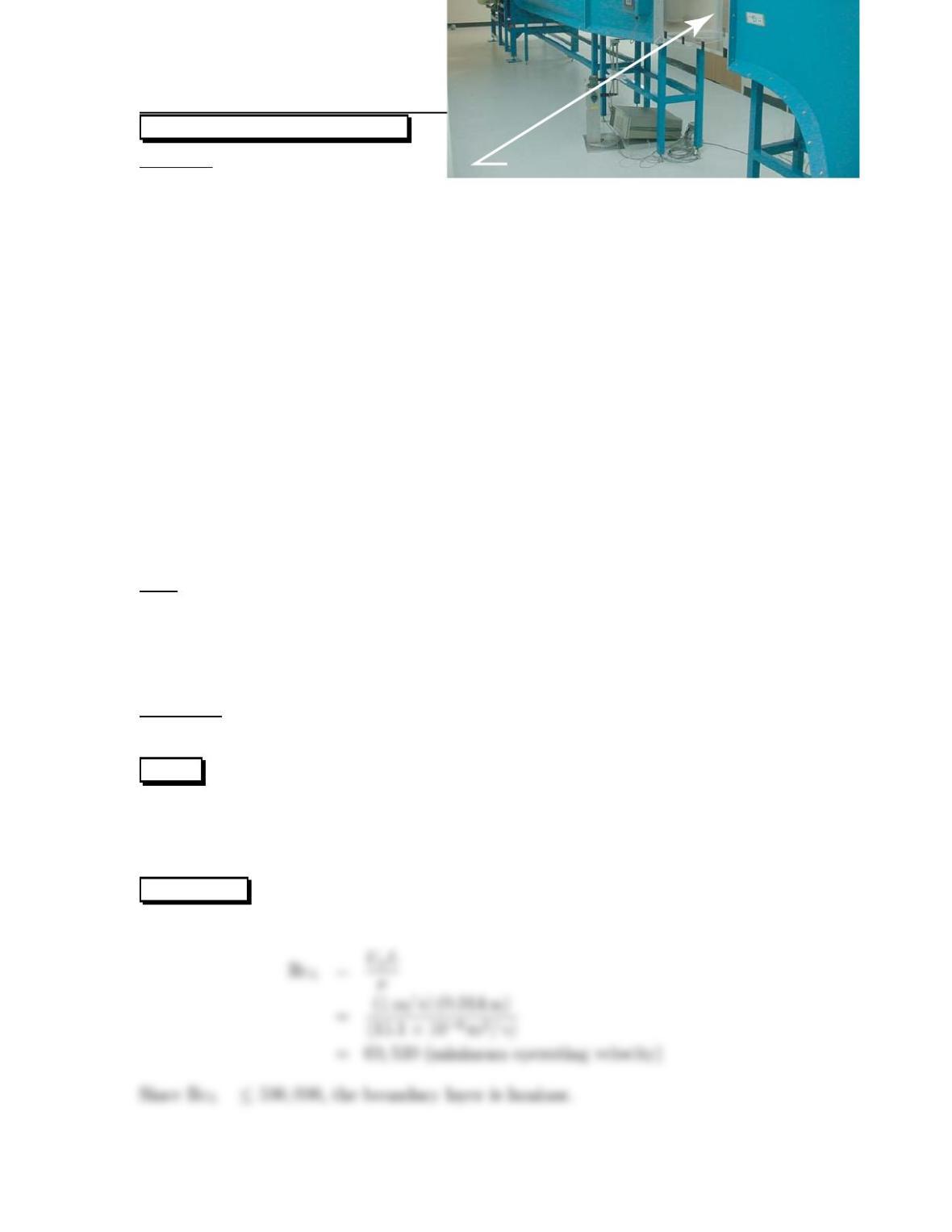
This problem involves an Eiffel-type wind tunnel.
Test Section
Test section width (square) is W=457mm.Test section length is L=914mm.
Find:
Find the ratio of maximum boundary layer thickness to test section width (δ(x=L)/W )
for two cases:
(a) Minimum operating velocity (Uo=1m/s).
(b) Maximum operating velocity (Uo=70m/s).
Properties:
Air properties from Table A.3. At T=20◦Cand p=1atm,ν=15.1×10⁻⁶m2/s.
PLAN
Calculate the Reynolds number to establish if the boundary layer flow is laminar or
turbulent. Then, apply the appropriate correlation for boundary layer thickness (i.e.
for δ).
SOLUTION
Reynolds number for minimum operating velocity
80
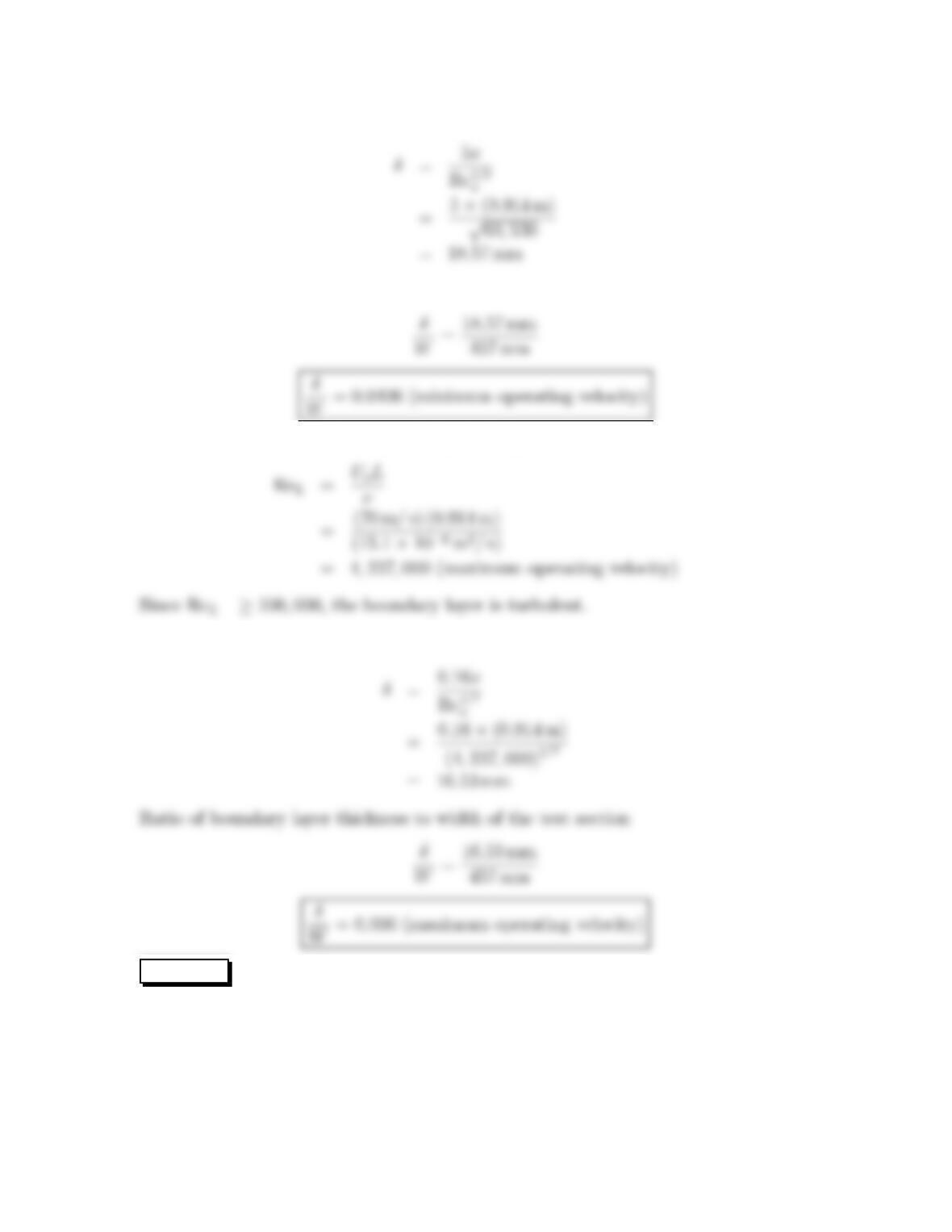
Correlation for boundary layer thickness (laminar flow)
Ratio of boundary layer thickness to width of the test section
Reynolds number (maximum operating velocity)
Correlation for boundary layer thickness (turbulent flow):
REVIEW
1. Notice that the boundary layer is slightly thinner for the maximum velocity.
2. In both cases (maximum and minimum velocity), the boundary layer thickness
is only a small fraction of the width.
81
9.69: PROBLEM DEFINITION
Situation:
A 600-ft long ship moving at 25 ft/s through fresh water. Submerged area is 50,000
ft2.
Find:
Skin friction drag on ship.
Properties:
Table A.5 ν=1.41 ×10⁻⁵ft2/sandρ=1.94 slugs/ft3.
SOLUTION
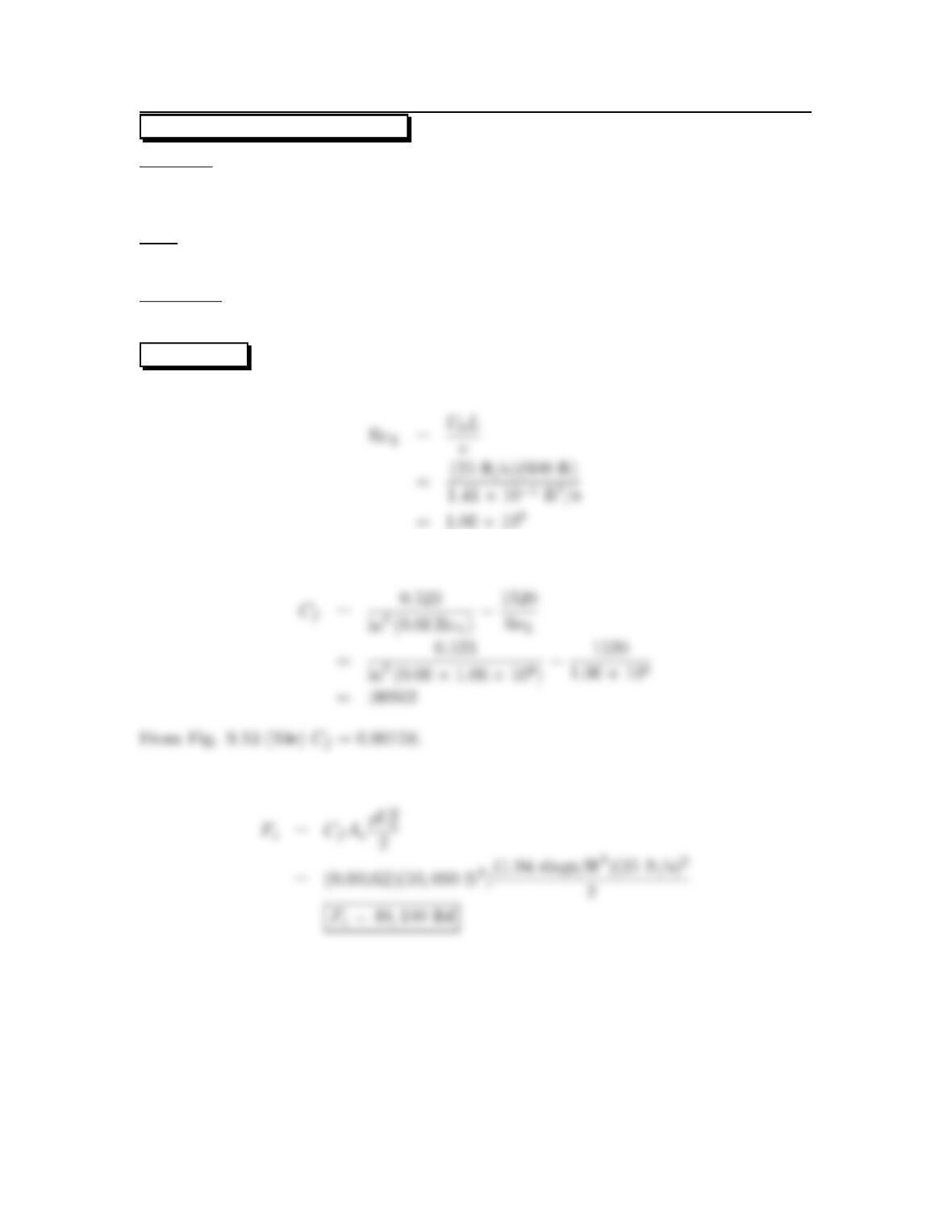
Reynolds number
Averageskinfrictioncoefficient
Surface resistance equation.
82
9.70: PROBLEM DEFINITION
Situation:
A barge in a river draws 2 ft water and towed at 10 ft/s..
Find:
Shear (drag) force.
Properties:
Table A.5 ν=1.2a×10−5ft2/sandρ=1.94 slugs/ft3.
SOLUTION
Barge length=208 ft, submerged surface area ‘9134 ft2
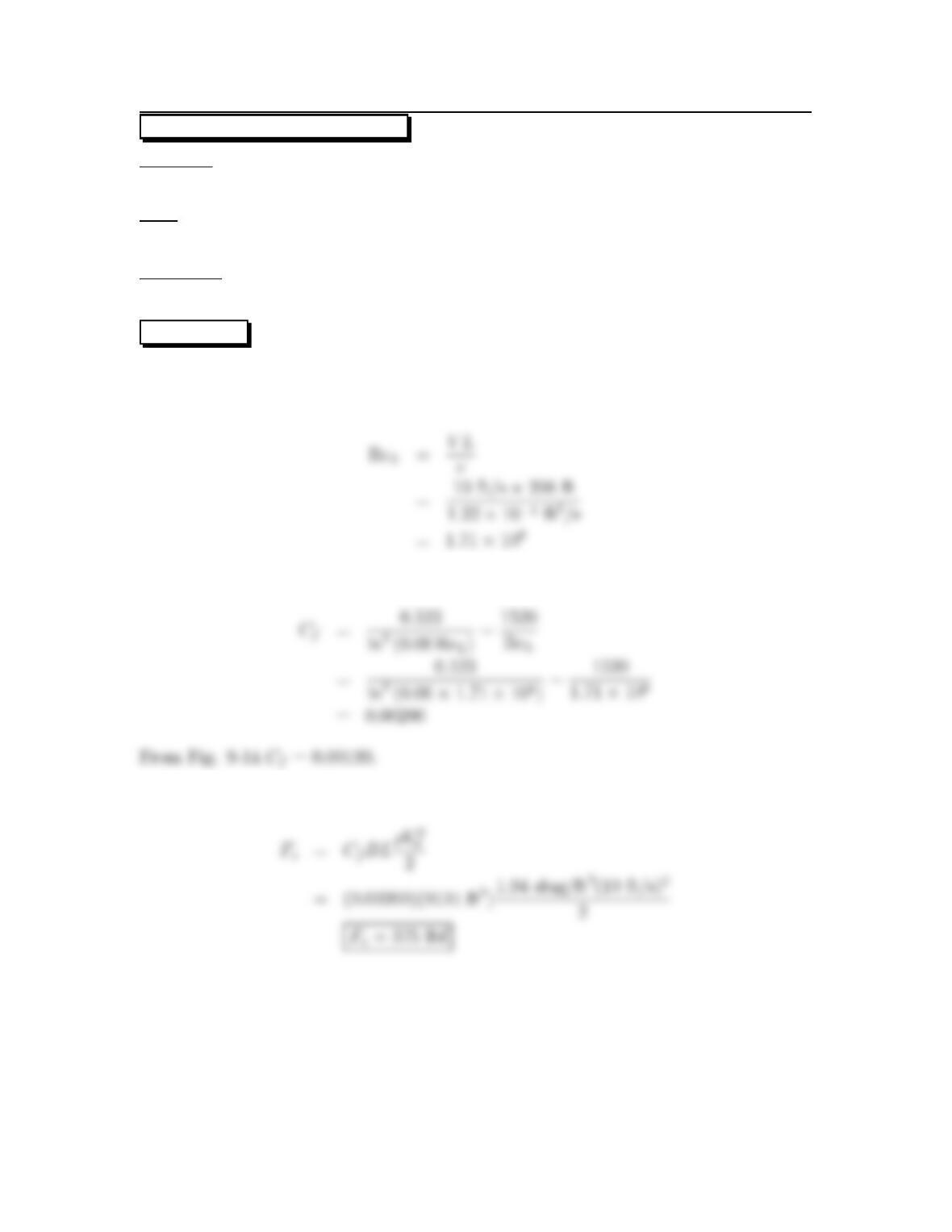
Reynolds number
Average shear stress coefficient
Surface resistance (drag force)
83
9.71: PROBLEM DEFINITION
Situation:
A supertanker with length 325 m, breadth 48 m and draught 19 m sails in open
seas at 18 kts.
Find:
(a) Skin friction drag.
(b) Power required.
(c) Boundary layer thickness 300 m from bow.
Properties:
From Table A.4 ν=1.4×10⁻⁶m2/sandρ=1026kg/m3.
PLAN
Find Reynolds number, and then calculate the average shear stress coefficient (Cf).
Next, find the drag force and calculate power as the product of drag force and speed
(P=Fs×V).To find boundary layer thickness, apply the correlation for a turbulent
boundary layer.
SOLUTION
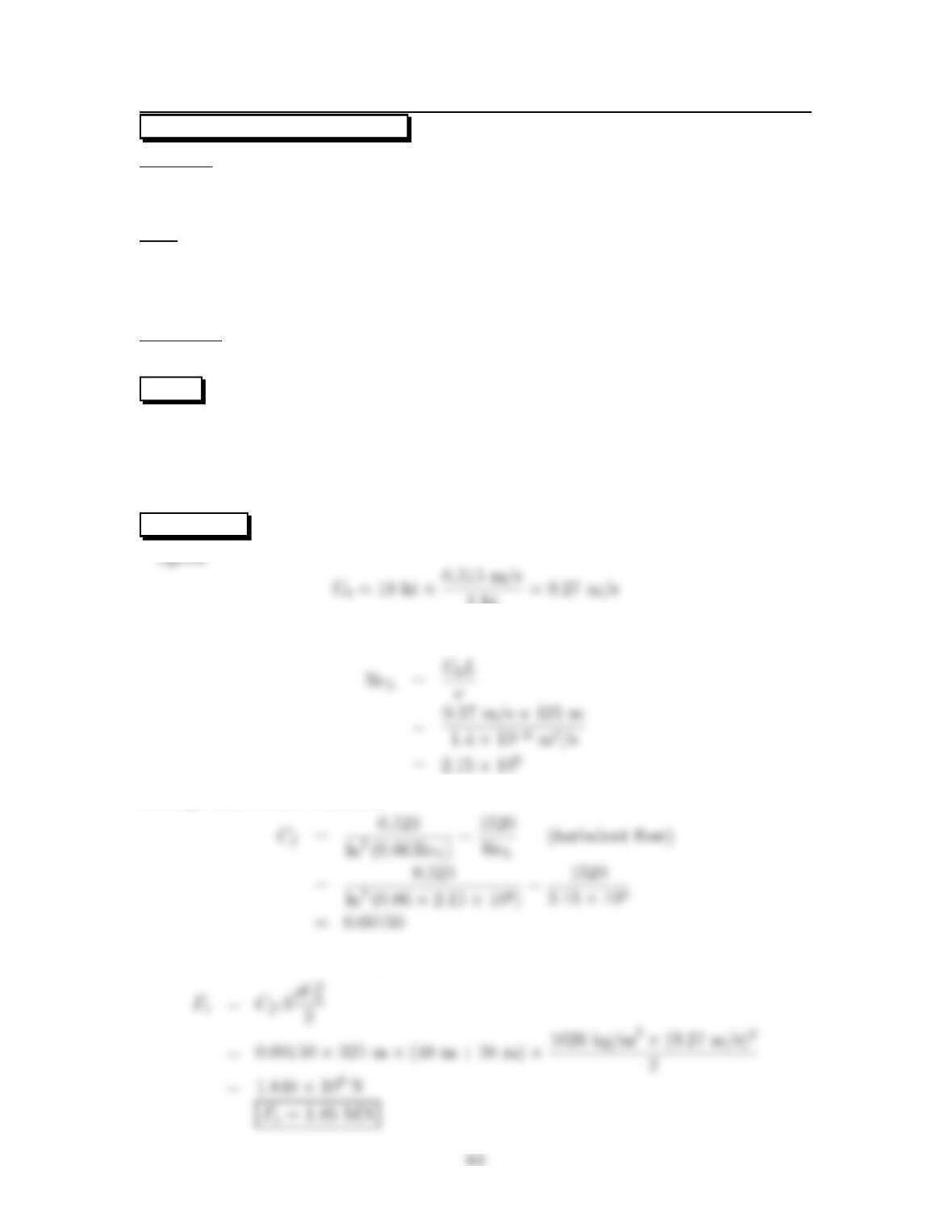
1kt =9.27 m/s
Reynolds number
Average shear stress coefficient
Surface resistance (drag force)
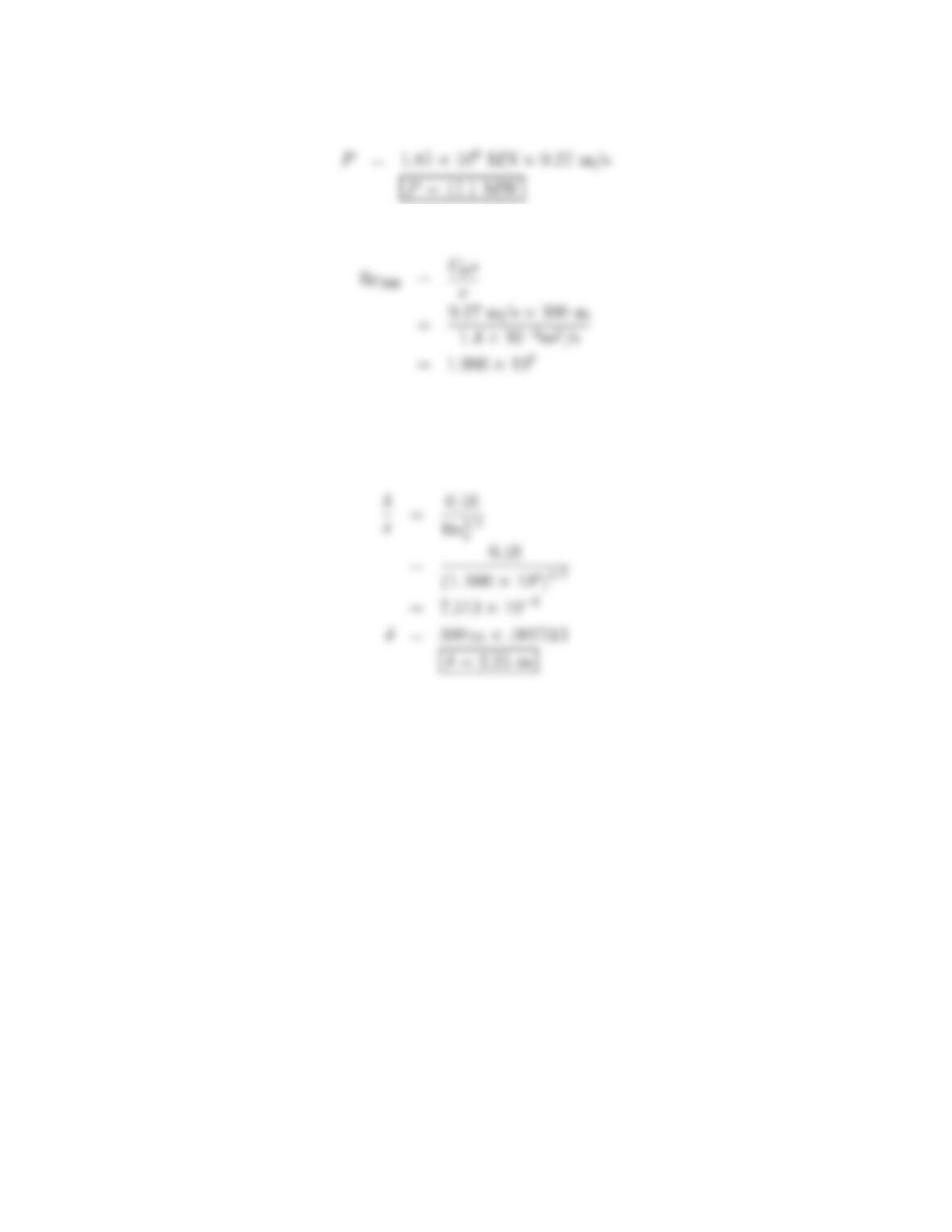
Power
Reynolds number
Thus, turbulent boundary layer
Correlation for boundary layer thickness (turbulent flow)
85
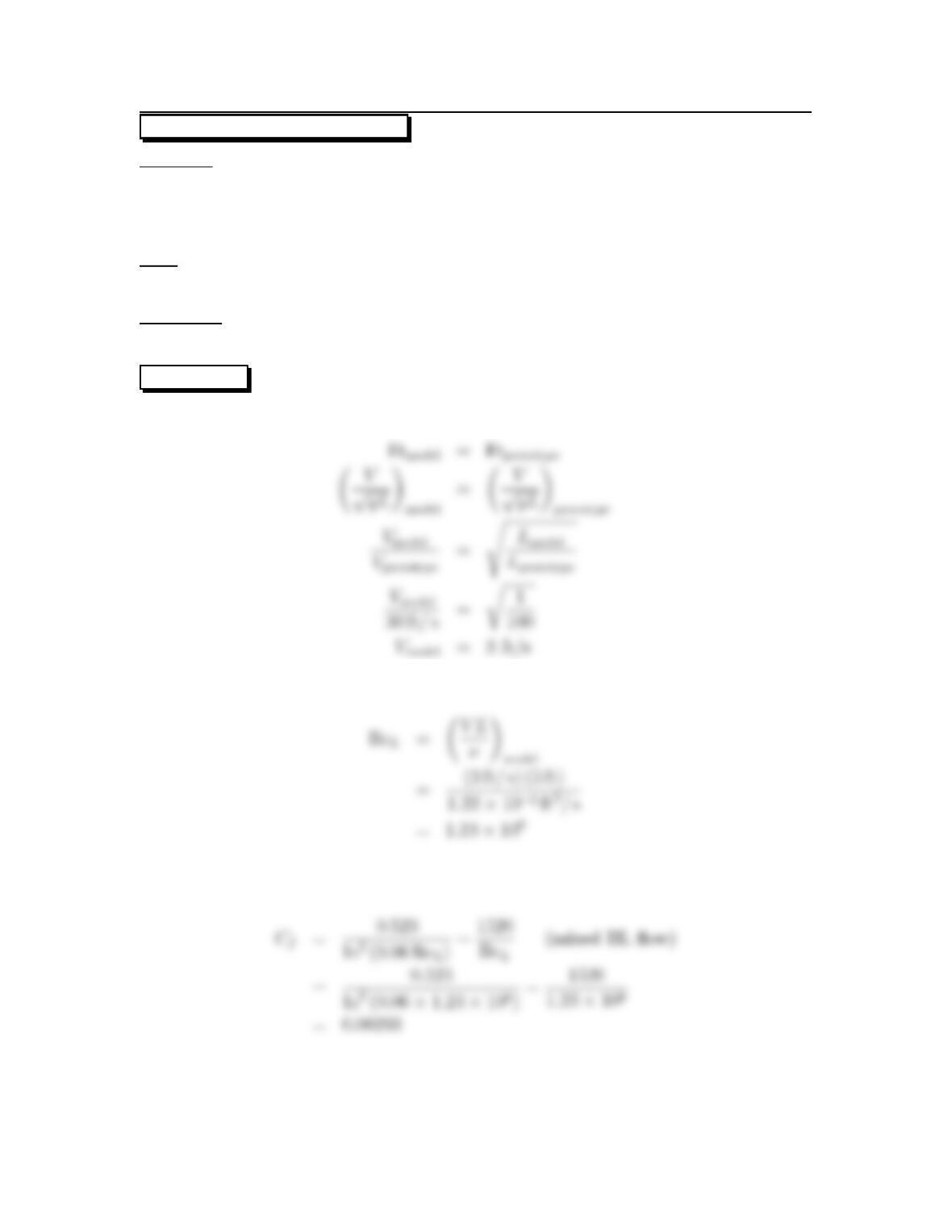
9.72: PROBLEM DEFINITION
Situation:
A 1:100 model test used to predict the drag on a prototype ship which is 500 ft
long, has wetted area of 25,000 ft2andoperatesat30ft/sinseawater. Measured
model drag is 0.1 lbf.
Find:
Wave drag on actual ship.
Properties:
Table A.5 ν=1.22 ×10⁻⁵ft2/sandρ=1.94 slugs/ft3.
SOLUTION
Match Froude numbers
Reynolds number on model1.229 5 ×10⁶
Average shear stress coefficient on model
86
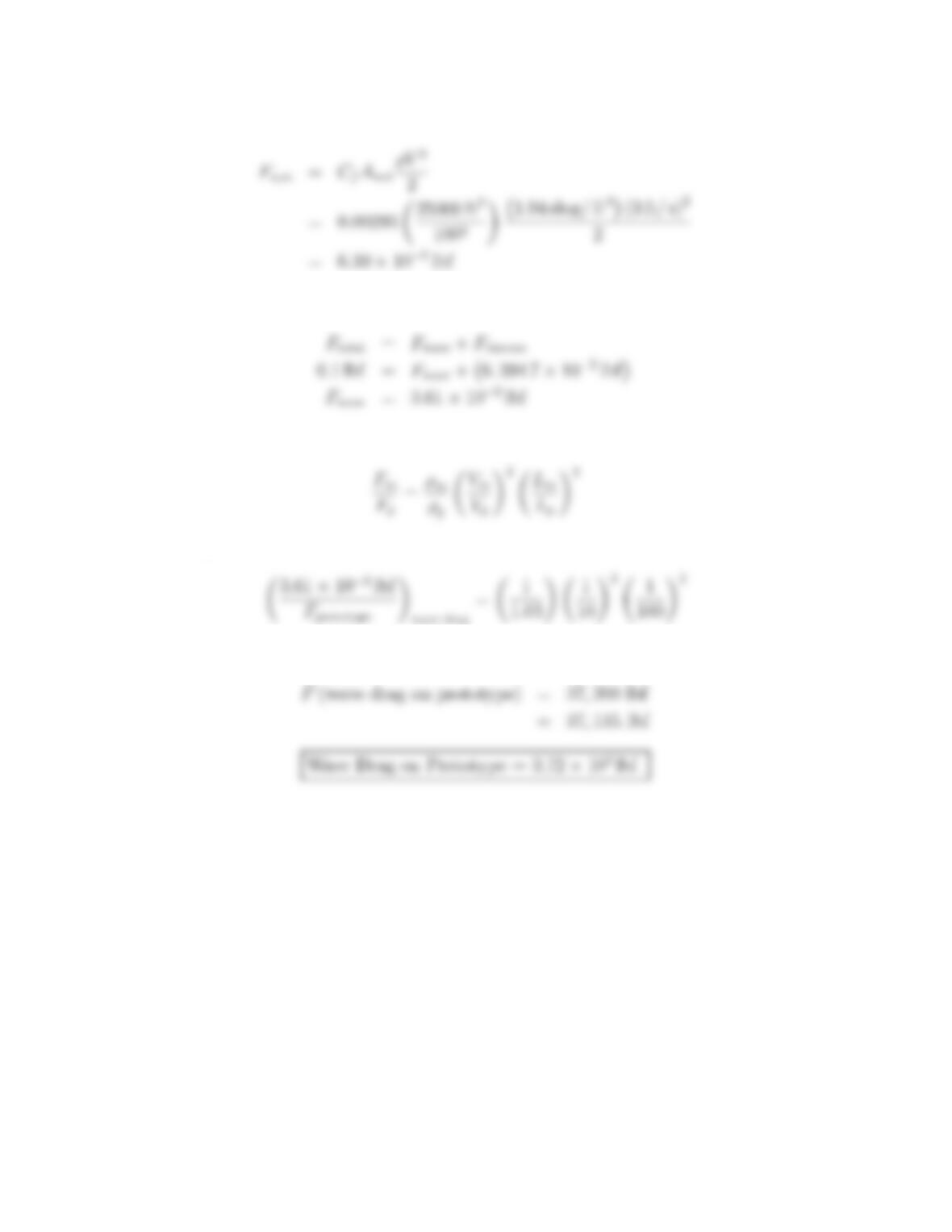
Surface resistance (drag force) on model
Wave drag on model
Equating force coefficients
Inserting values
Thus
87
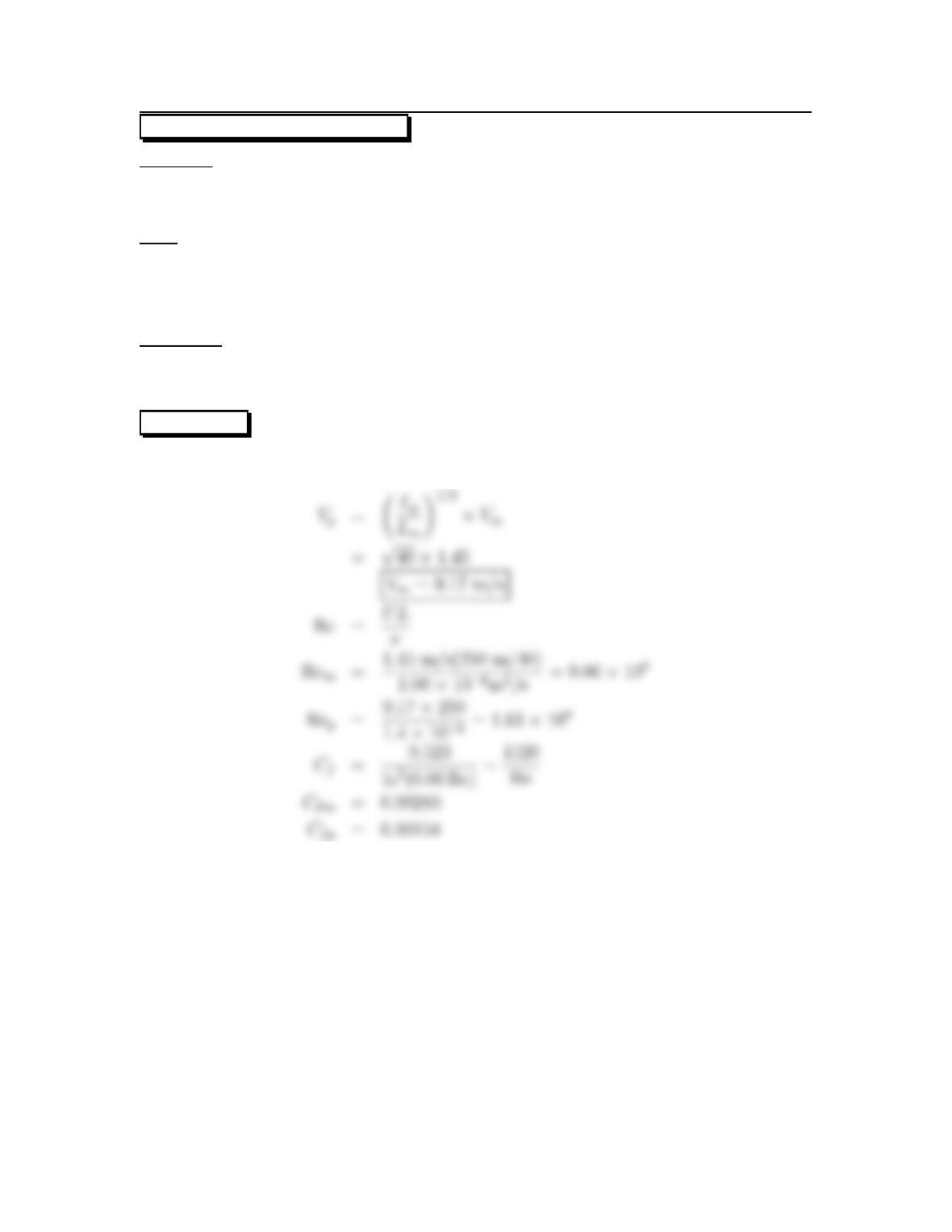
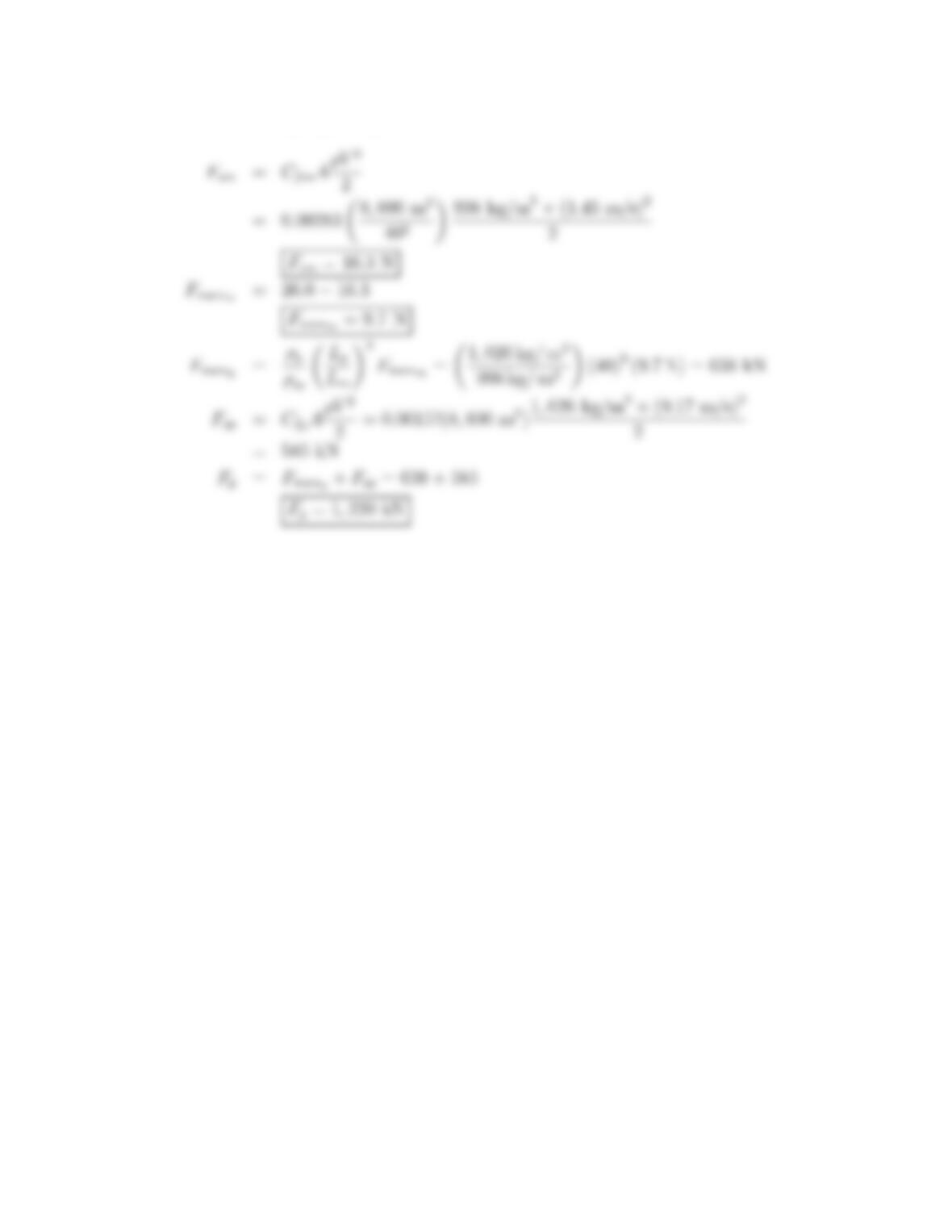
9.73: PROBLEM DEFINITION
Situation:
A 1:40 scale model of ship 250 m long, with 30 m beam and 12 m draft and surface
area at waterline of 880 m2. A drag of 26 N measured on model at 1.45 m/s.
Find:
(a) Speed of prototype.
(b) Model skin friction and wave drag.
(c)Shipdraginsaltwater.
Properties:
From Table A.5 νm=1.00 ×10⁻⁶m2/s and ρm=998kg/m3.
From Table A.4 νp=1.4×10⁻⁶m2/sandρm=1026kg/m3.
SOLUTION
Vm=1.45 m/s
88
Surface resistance (drag force)
89
9.74: PROBLEM DEFINITION
Situation:
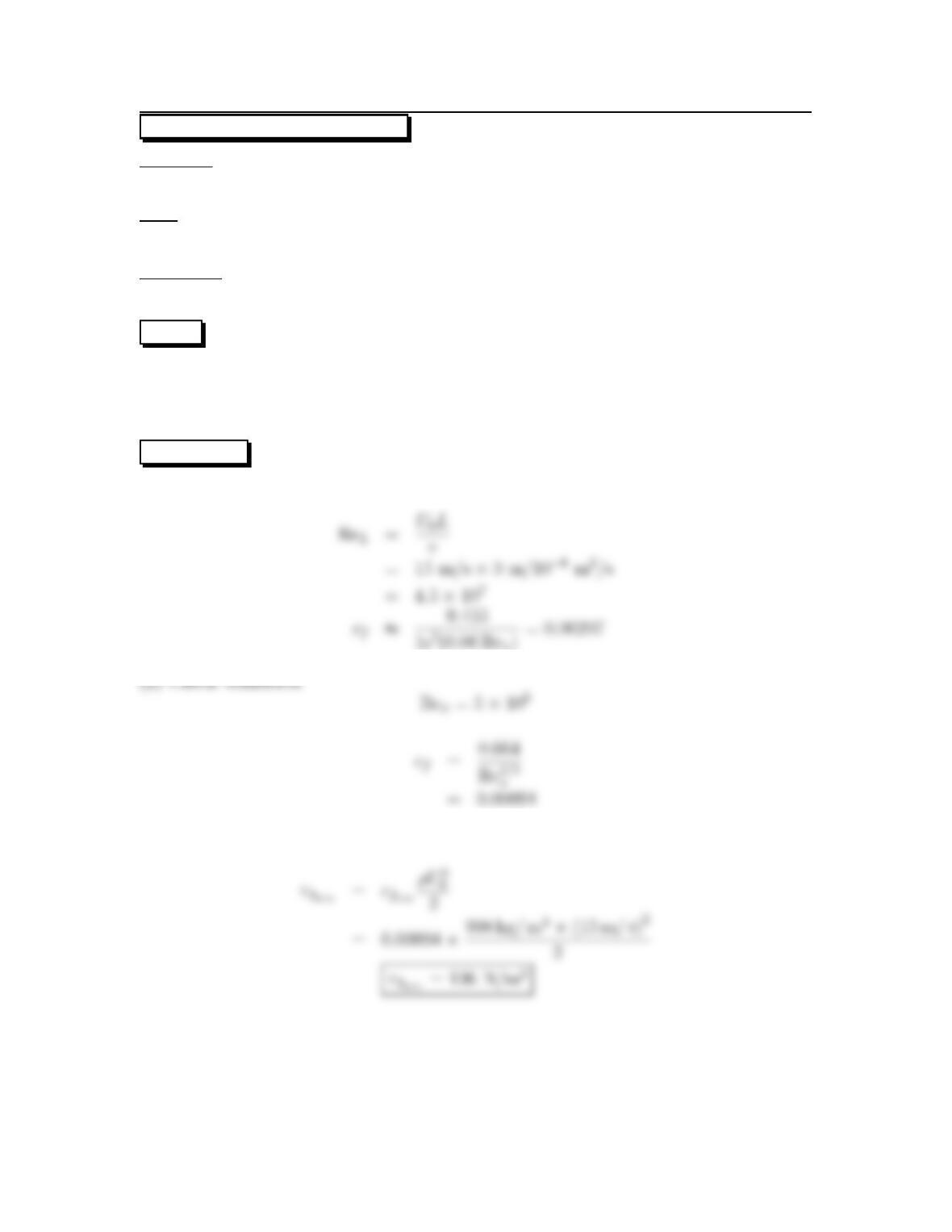
A hydroplane 3 m long skims at 15 m/s across a lake.
Find:
Minimum shear stress on smooth bottom.
Properties:
From Table A.5 ν=10
−6m2/sandρ=998kg/m3.
PLAN
Minimum τ0occurs where cfis minimum. Two points to check: (1) where Rexis
highest; i.e., Rex=Re
Land (2) Transition point at Rex=5×10⁵(this is the end of
the laminar boundary layer).
SOLUTION
(1) Check end of plate
Minimum shear stress at end of plate
90
9.75: PROBLEM DEFINITION
Situation:
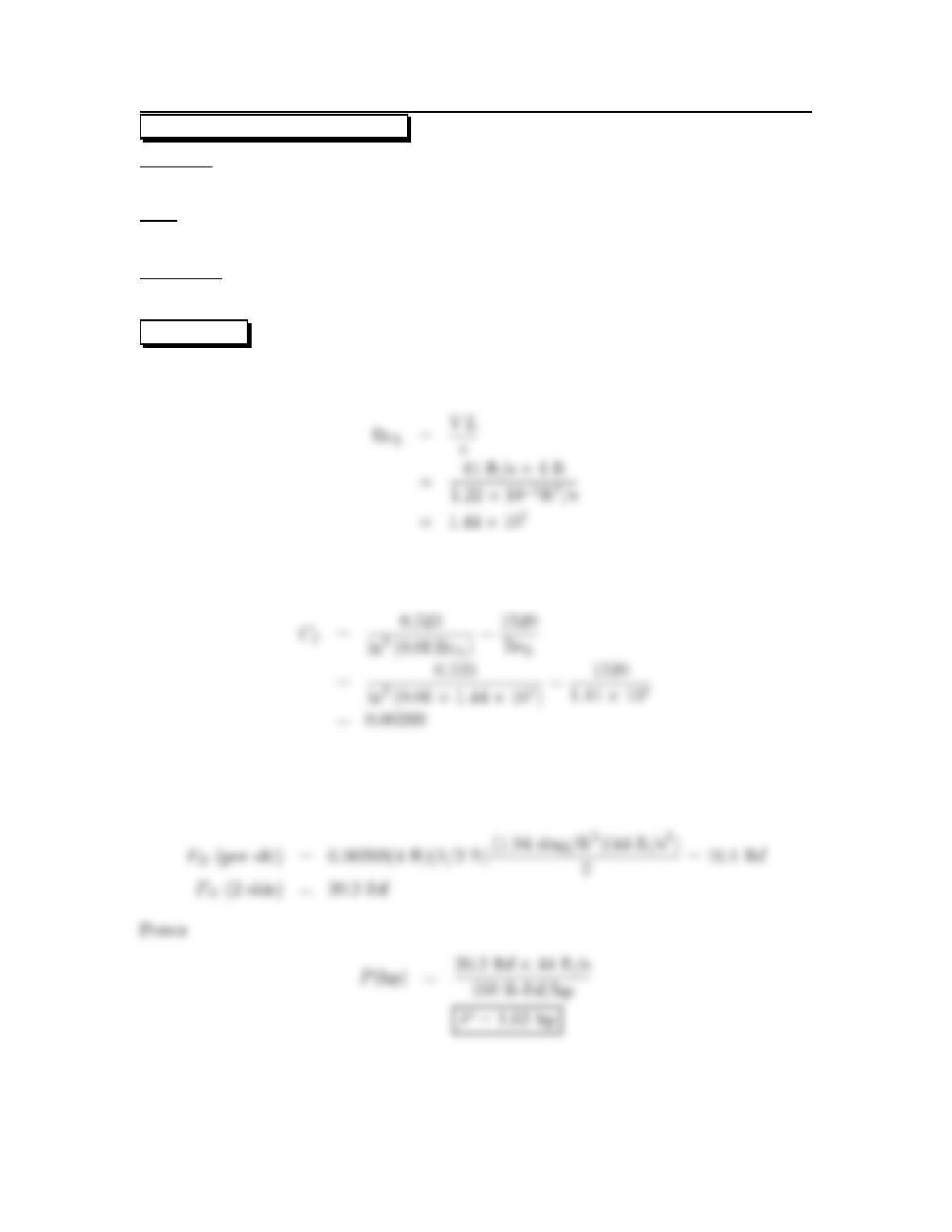
A water skier with skis 4 ft long and 6 inches wide moving at 30 mph.
Find:
Power to overcome surface resistance.
Properties:
Table A.5 ν=1.22 ×10⁻⁵ft2/sandρ=1.94 slugs/ft3.
SOLUTION
Speed, 30 mph=44 ft/s
Reynolds number
Average shear stress coefficient.
Surface resistance (drag force)
91
9.76: PROBLEM DEFINITION
Situation:
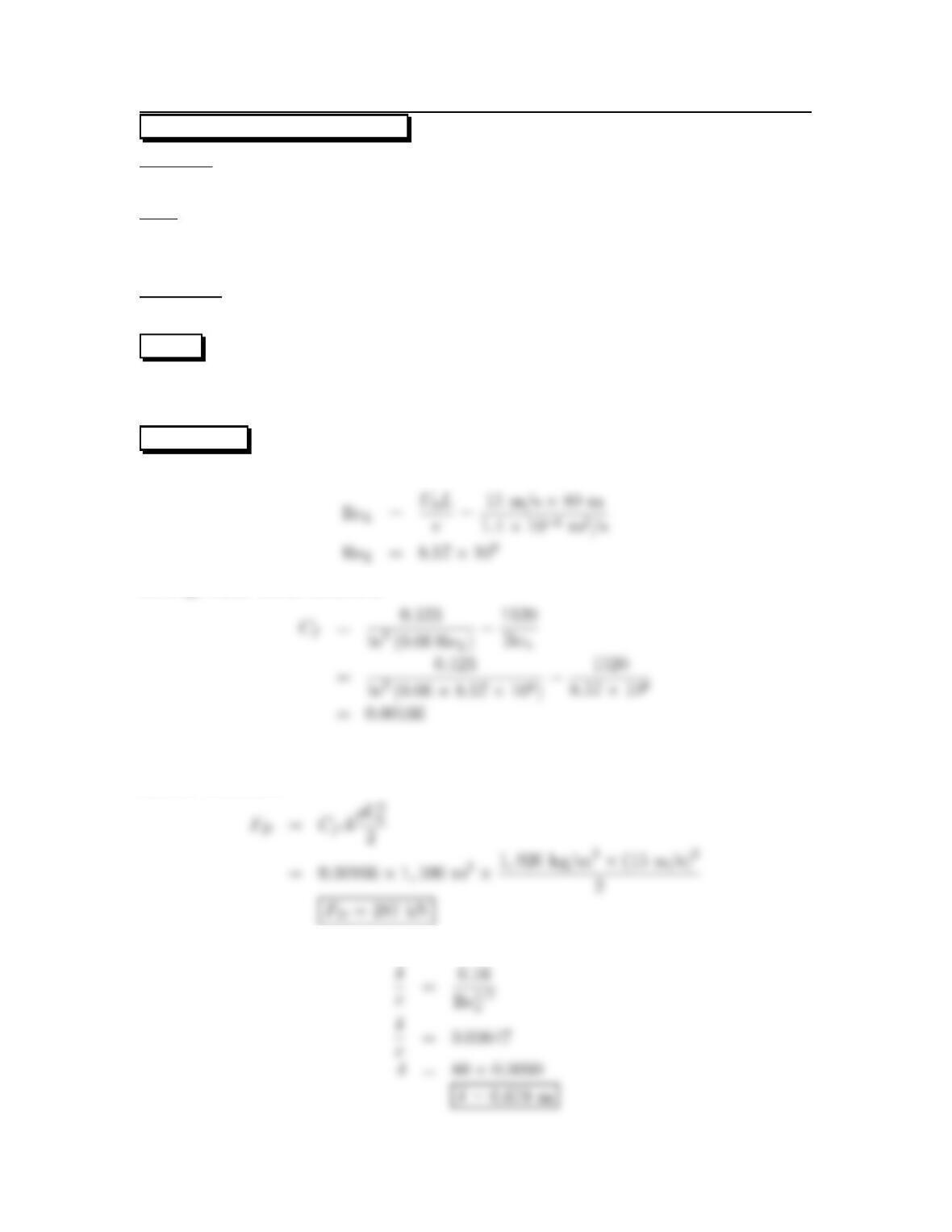
A80–mshipwith1500m
2wetted area travels at 15 m/s.
Find:
(a) Surface drag.
(b) Thickness of boundary layer at stern.
Properties:
Table A.4 ν=1.4×10⁻⁶m2/s, ρ=1026kg/m3.
PLAN
Apply the surface resistance equation by first finding Reynolds number and Cf.Then
apply the correlation for boundary layer thickness.
SOLUTION
Reynolds number
Average shear stress coefficient
Surface resistance
Boundary layer thickness
92