9.53: PROBLEM DEFINITION
Situation:
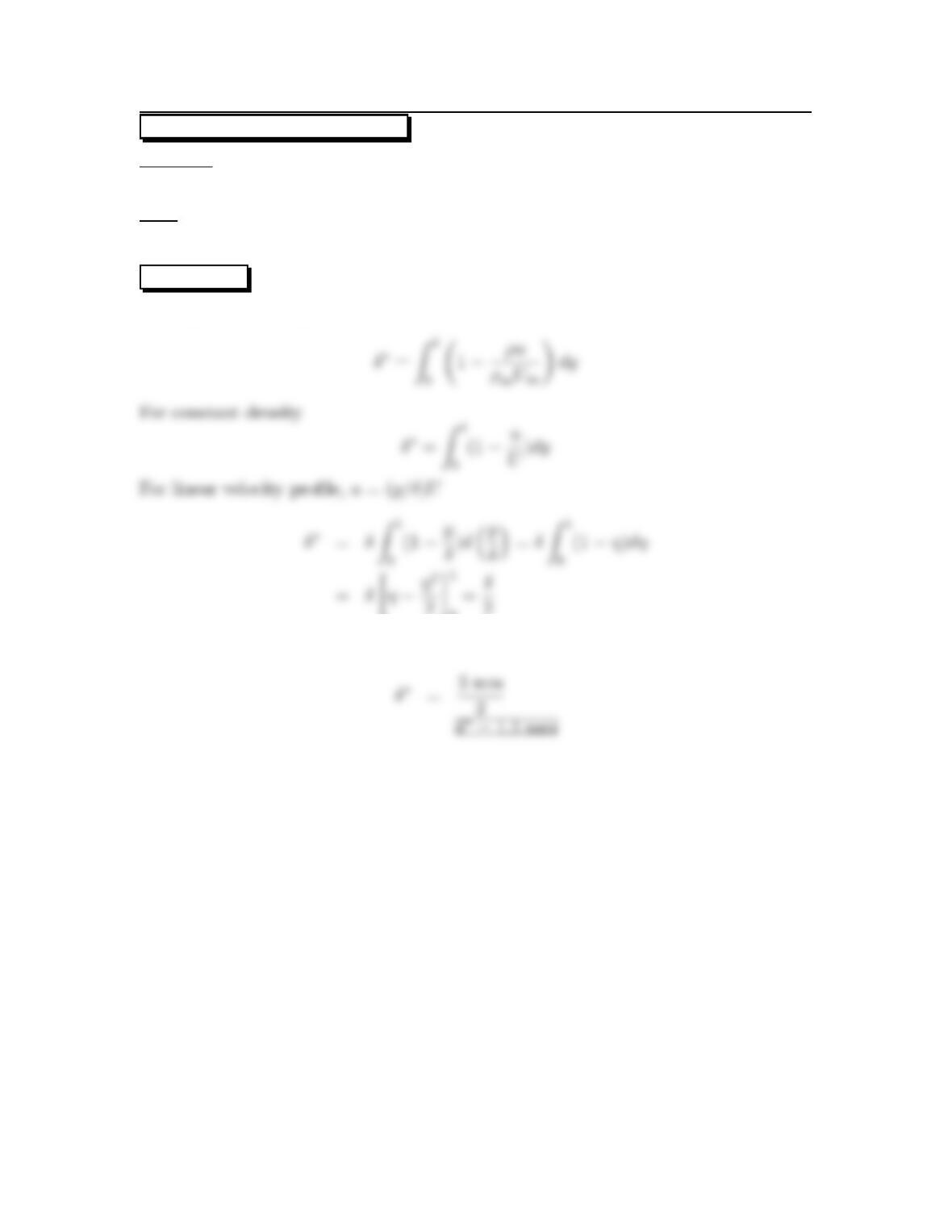
Displacement thickness for a linear velocity profile.
Find:
Magnitude of displacement thickness.
SOLUTION
The equation for displacement thickness is
0
Displacement thickness
61
9.54: PROBLEM DEFINITION
Situation:
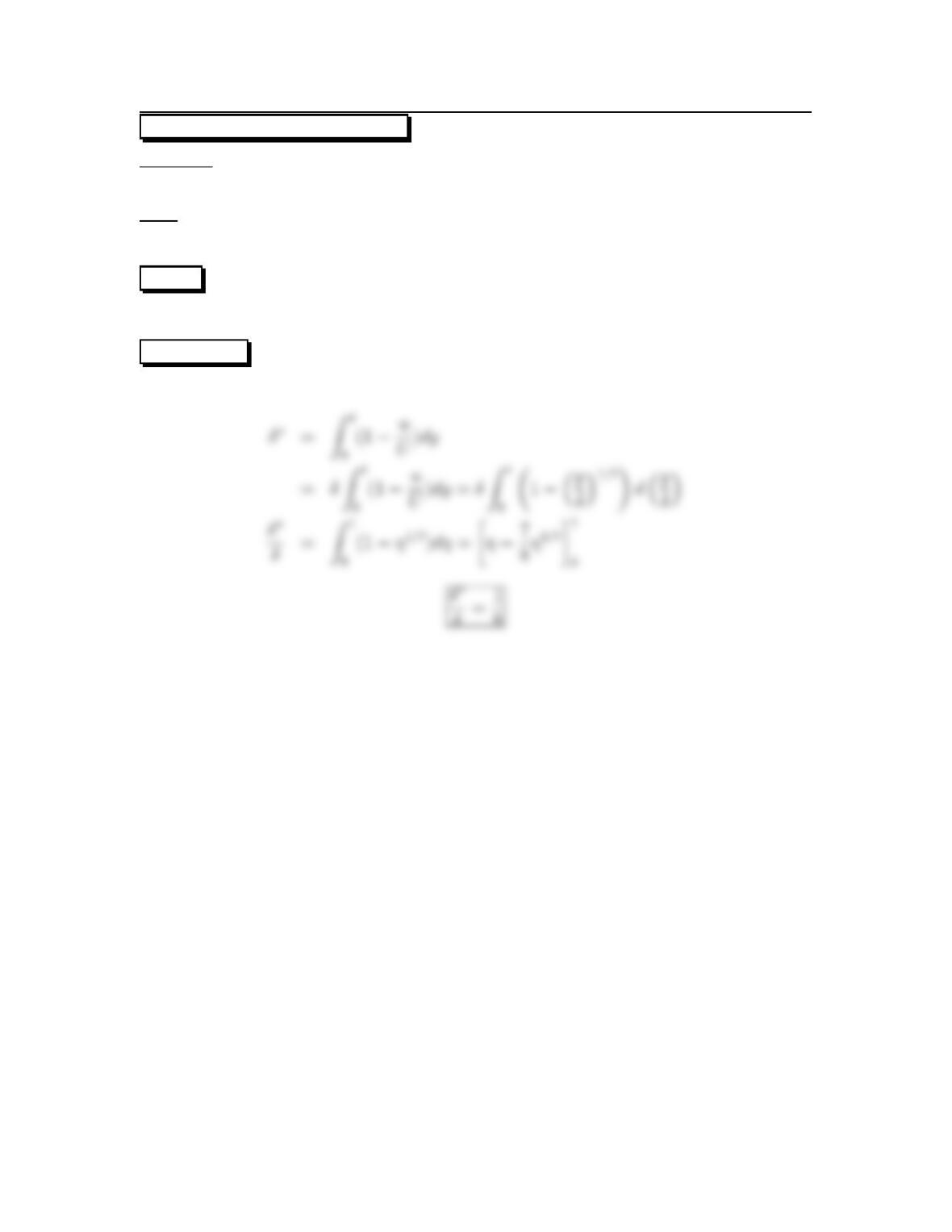
Boundary layer profile is u/Uo=(y/δ)1/7.
Find:
The ratio δ∗/δ.
PLAN
Use the equation for displacement thickness.
SOLUTION
Equation for displacement thickness with constant density
62
9.55: PROBLEM DEFINITION
Situation:
Two flat plates, one 30 m long and 5 m wide and the other 10 m long and 5 m
wide, are towed through water at 10 m/s.
Find:
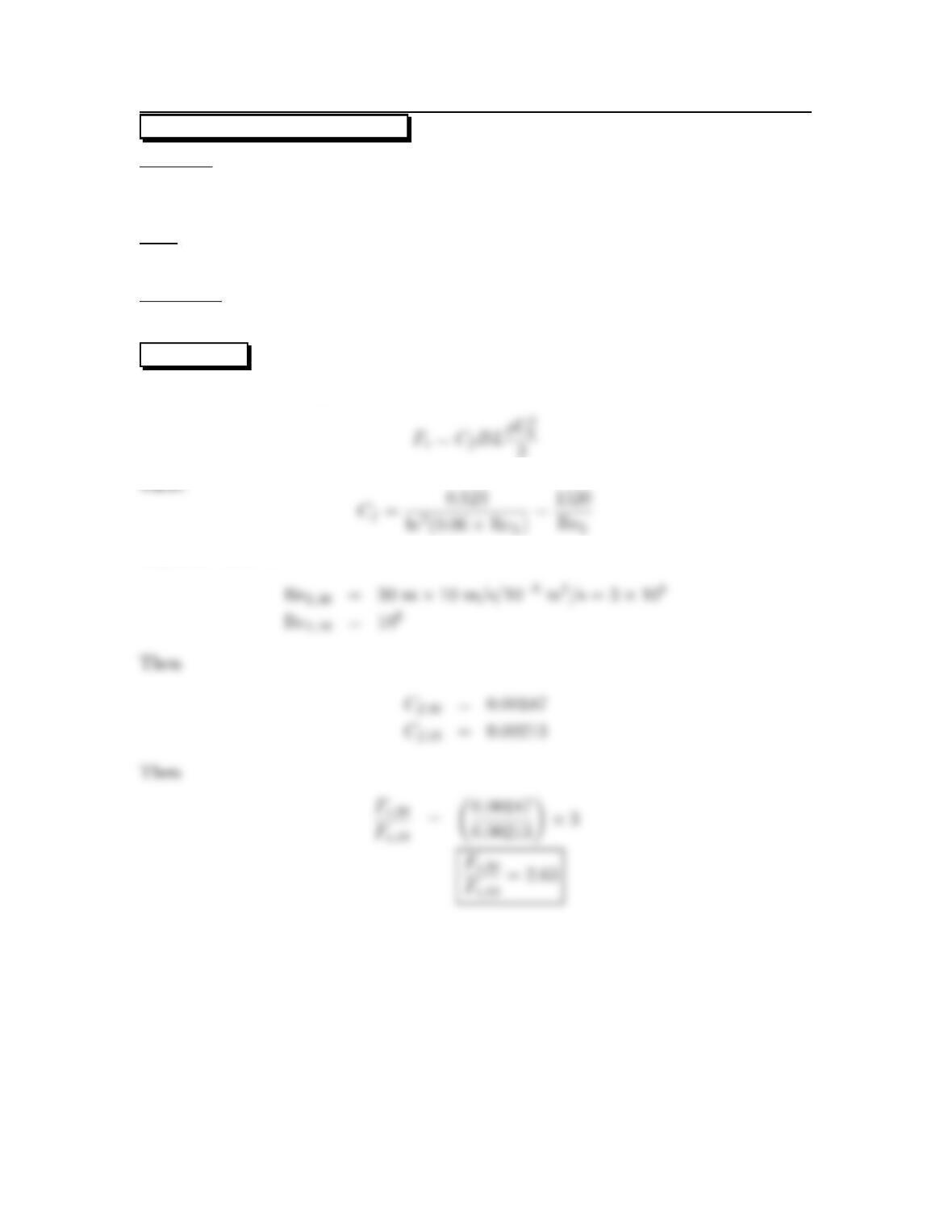
Ratioofskinfrictiondragontwoplates.
Properties:
From Table A.5 ν=10
−6m2/s
SOLUTION
Surface resistance (drag force)
Reynolds number
63
9.56: PROBLEM DEFINITION
Situation:
A sign 30 m long and 2 m wide is being pulled through air at 40 m/s.
Find:
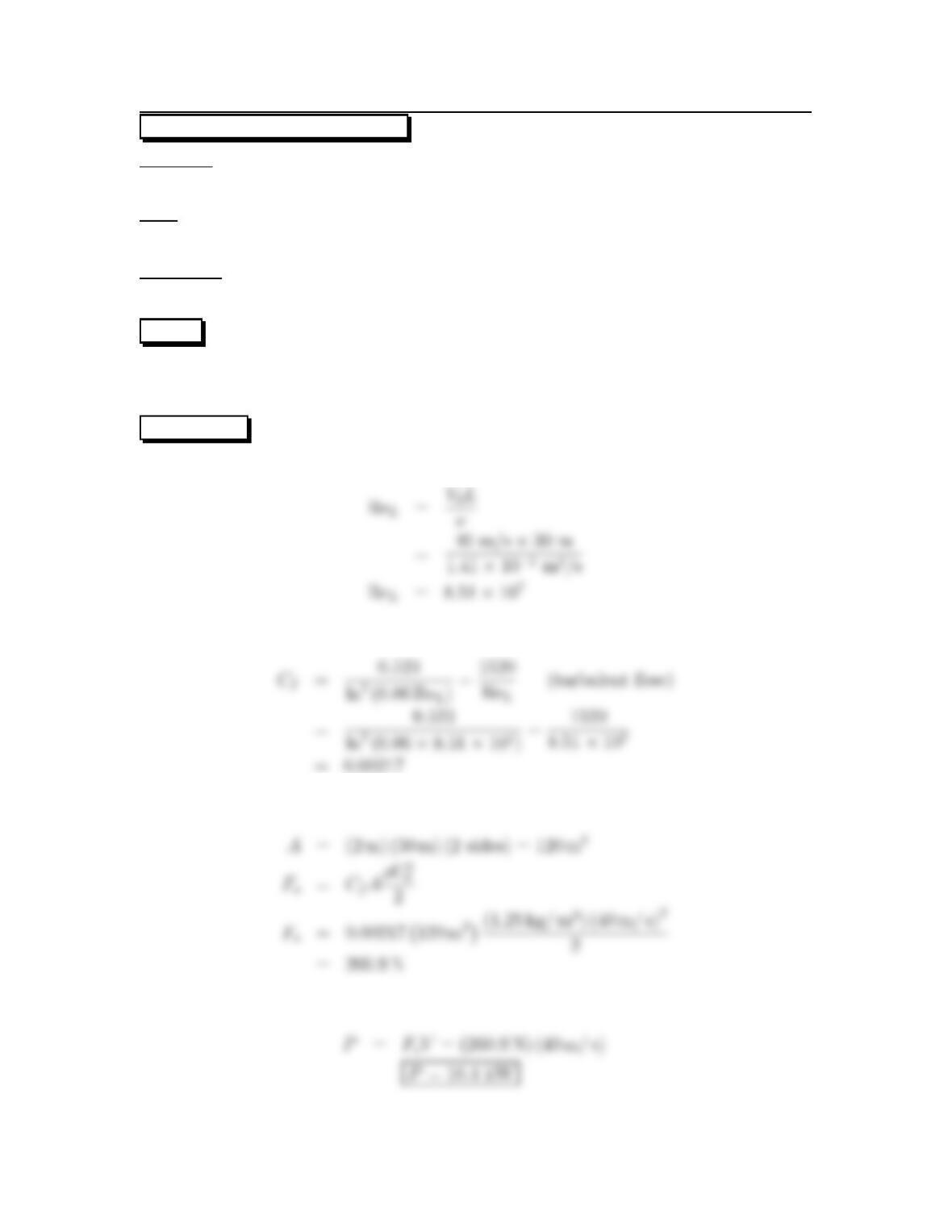
Power required to pull sign.
Properties:
From Table A.3 ν=1.41 ×10⁻⁵m2/sandρ=1.25 kg/m3.
PLAN
Find the average shear stress coefficient (Cf)and then calculate the surface resistance
(drag force). Find power using the product of speed and drag force (P=FsV).
SOLUTION
Reynolds number
Average shear stress coefficient
Surface resistance (drag force)
Power equation
64
9.57: PROBLEM DEFINITION
Situation:
A plastic panel 3 mm thick and weighing 300 N is being lowered in the ocean at 3
m/s.
Find:
Tensionincable.
Properties:
From Table A.4 ν=1.4×10⁻⁶m2/sandγ=10,070 N/m3,.ρ=1026kg/m3
PLAN
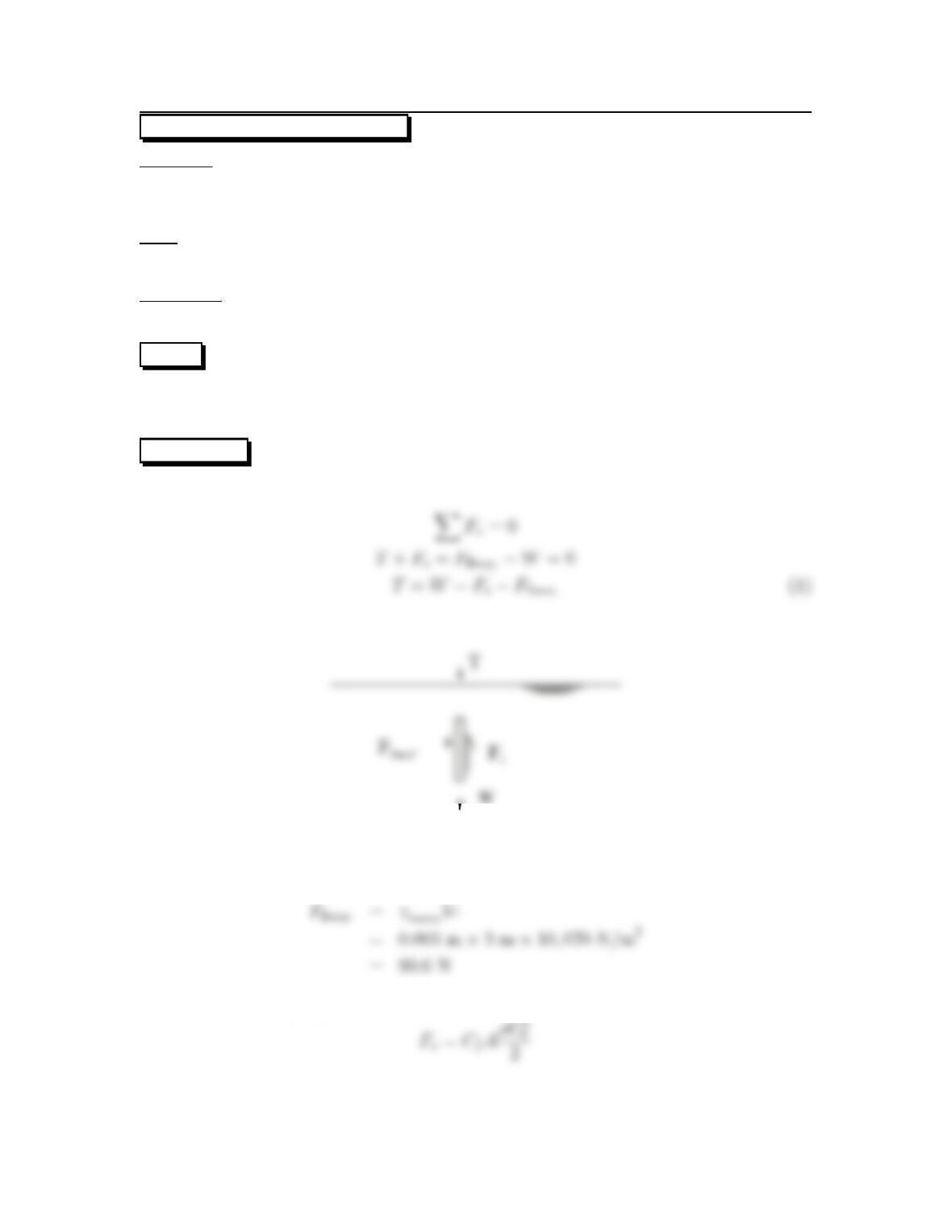
Apply equilibrium to the panel. Apply the surface resistance equation and the
buoyancy force equation to calculate the unknown forces.
SOLUTION
Equilibrium
Buoyancy force
Surface resistance (drag force)
65
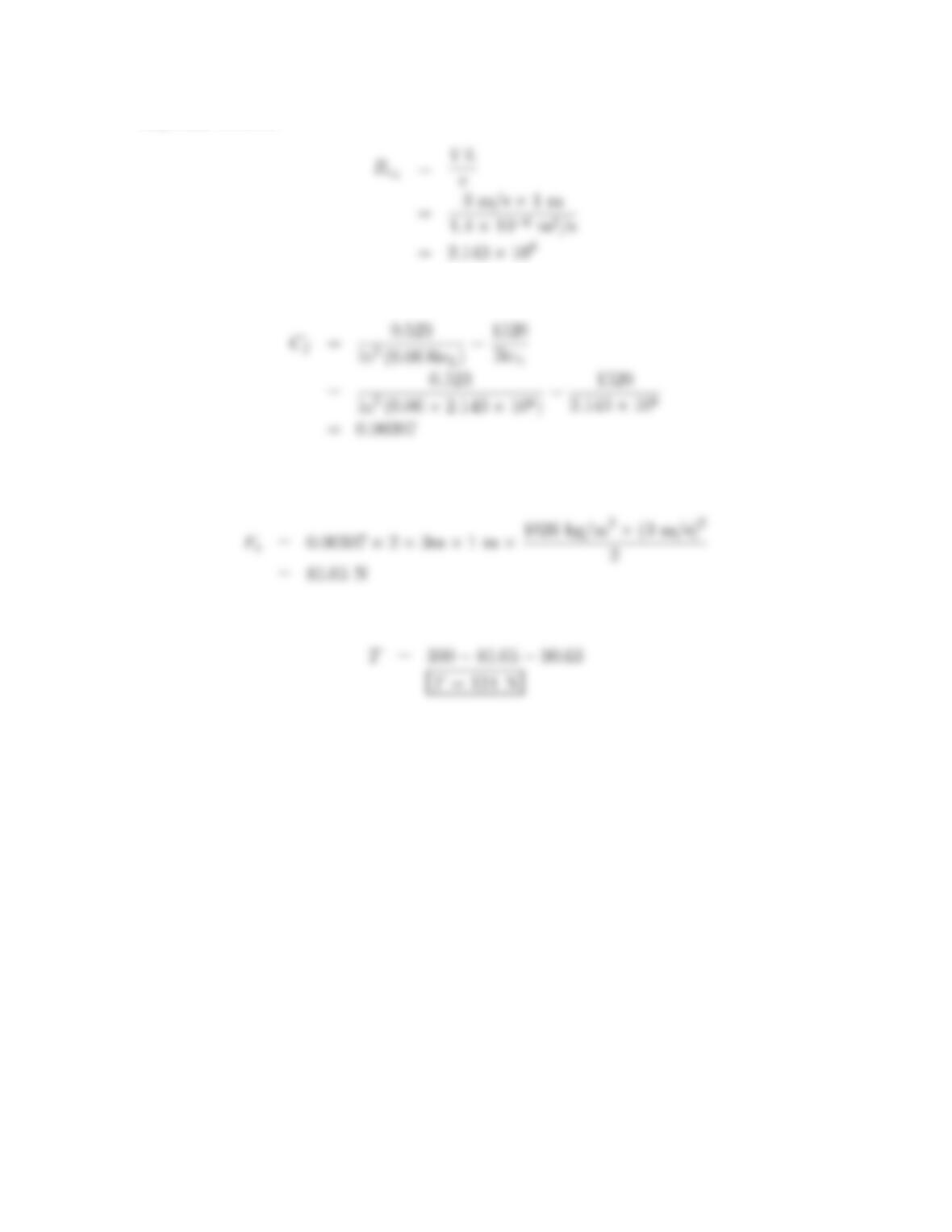
Reynolds number
Equation for average shear stress, Eq. (9.38, in 10e)
So for both sides
Eq. (1) gives
66
9.58: PROBLEM DEFINITION
Situation:
A1mby2mplatewithavolumeof0.002m
3is falling though water.
Find:
Falling speed in fresh water.
Properties:
From Table A.5 ν=10
−6m2/sandρ=998kg/m3
PLAN
Apply equilibrium with the weight, buoyancy and drag force.
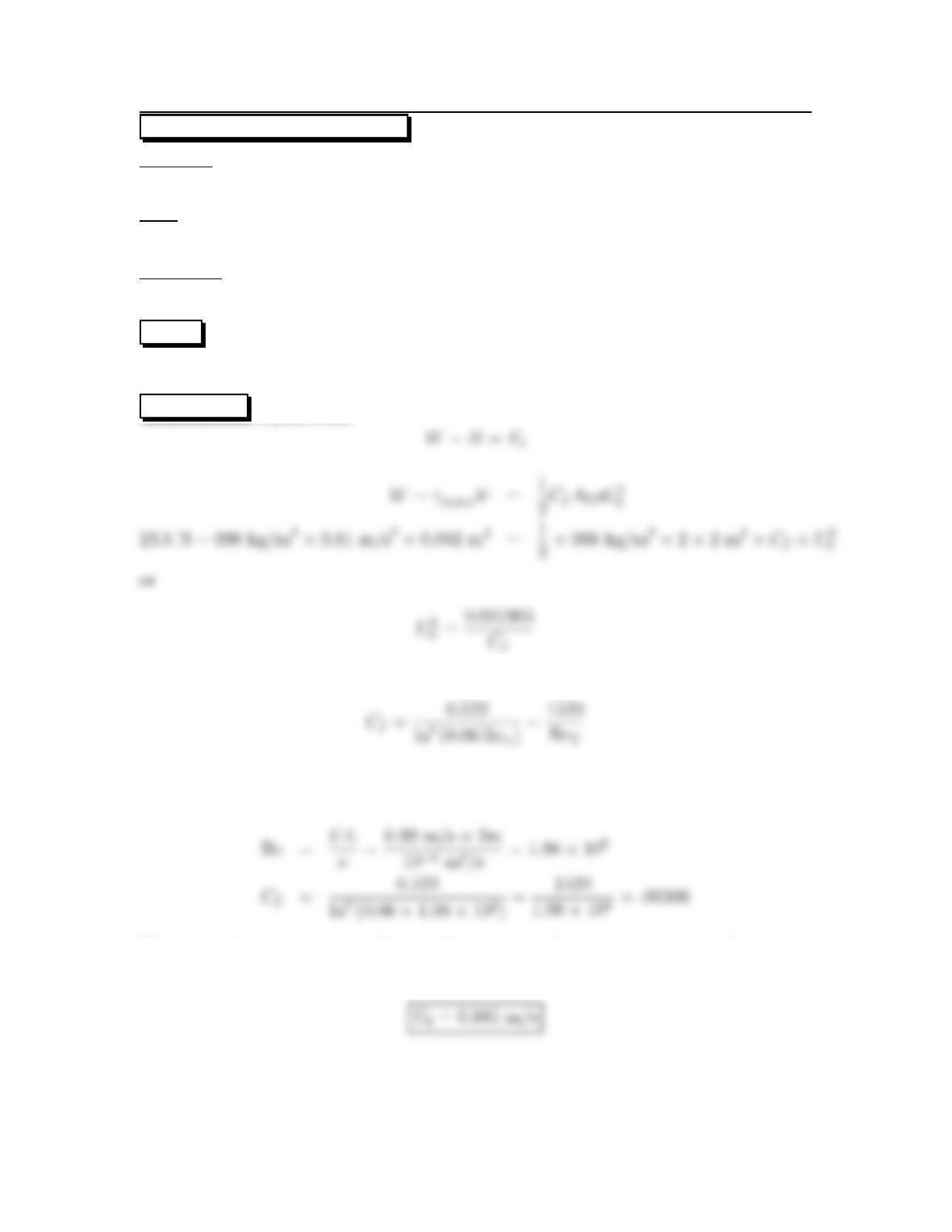
SOLUTION Equilibrium
Using the equation for the average resistance coefficient, Eq. (9.38, in 10e)
and iterate. As a first guess assume Cf=0.002,thenU0=0.99 m/s. Then calculate
the Reynolds number and a new Cf.
The new velocity estimate is U0=0.801 m/s. One further iteration is sufficient and
gives
67
9.59: PROBLEM DEFINITION
Situation:
Turbulent boundary on flat plate in 7.7 m/s flow of water at 20oC.
Find:
Thickness of viscous sublayer 7.8 m downstream from leading edge.
Properties:
From Table A.5 ν=10
−6m2/s.
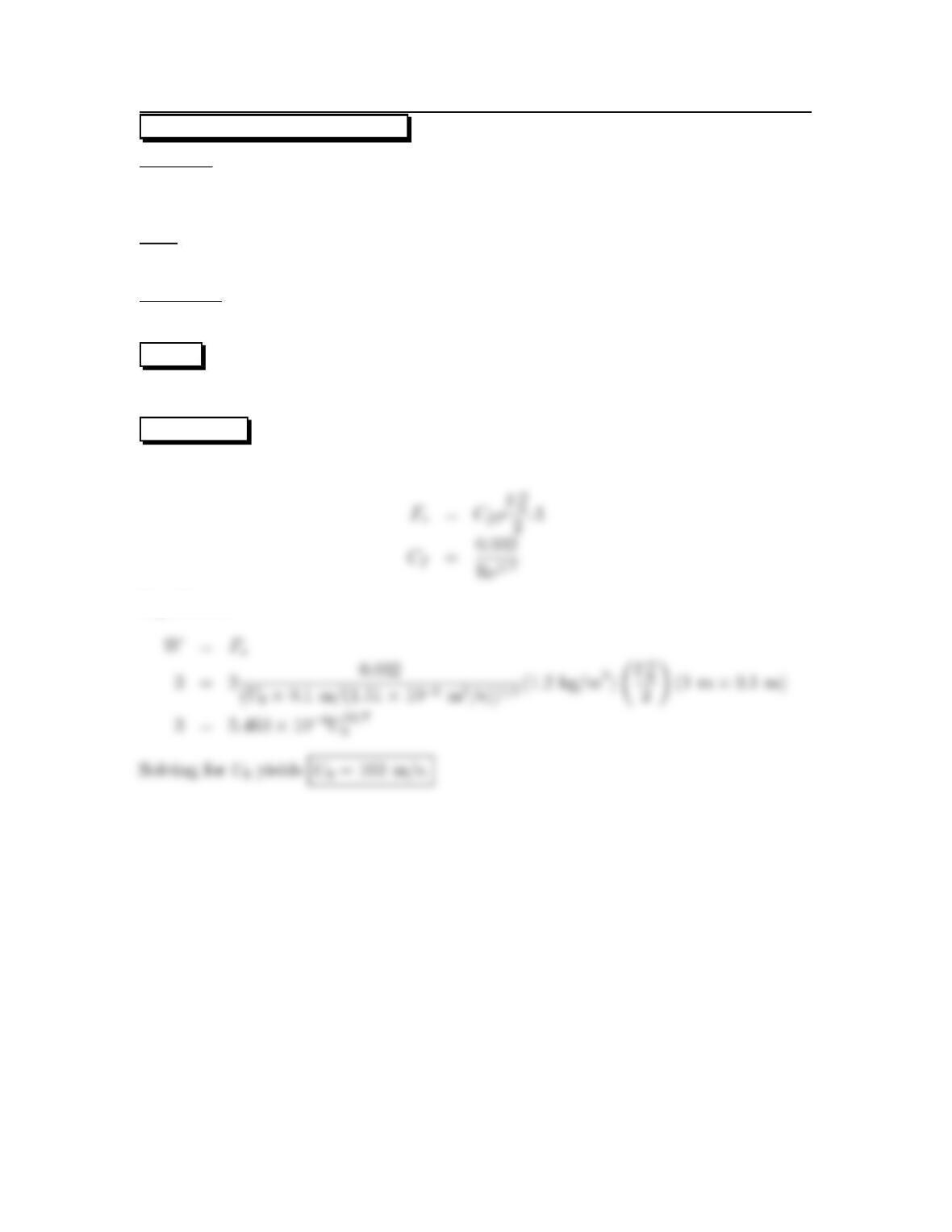
SOLUTION
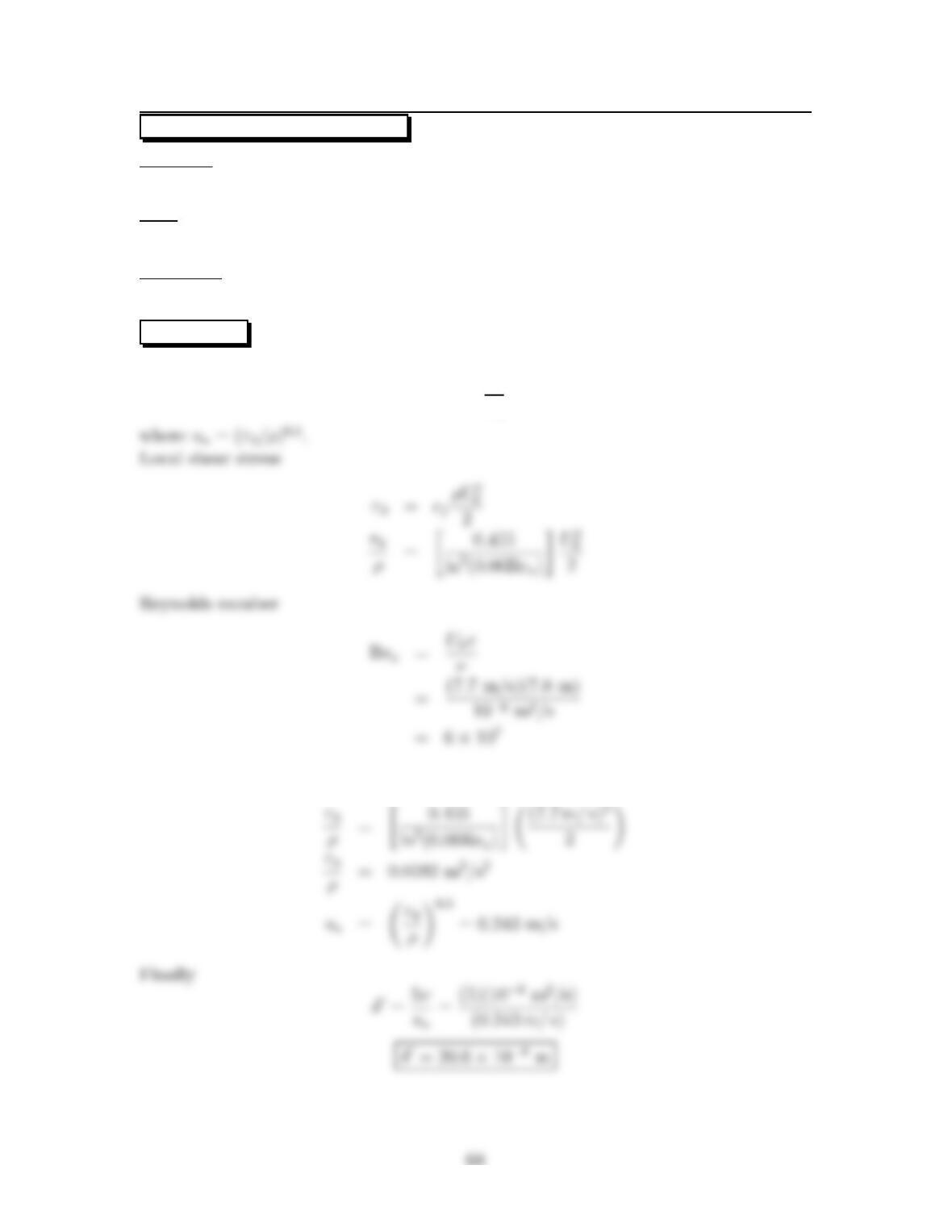
Thickness of viscous sublayer
δ0=5ν
u∗
Then
9.60: PROBLEM DEFINITION
Situation:
A model airplane with 1 m span and 10 cm chord and weighing 3 N dives vertically
though air at 20oC.
Find:
Falling speed.
Properties:
From Table A.3 ρ=1.2kg/m3;ν=1.51 ×10−5m2/s.
PLAN
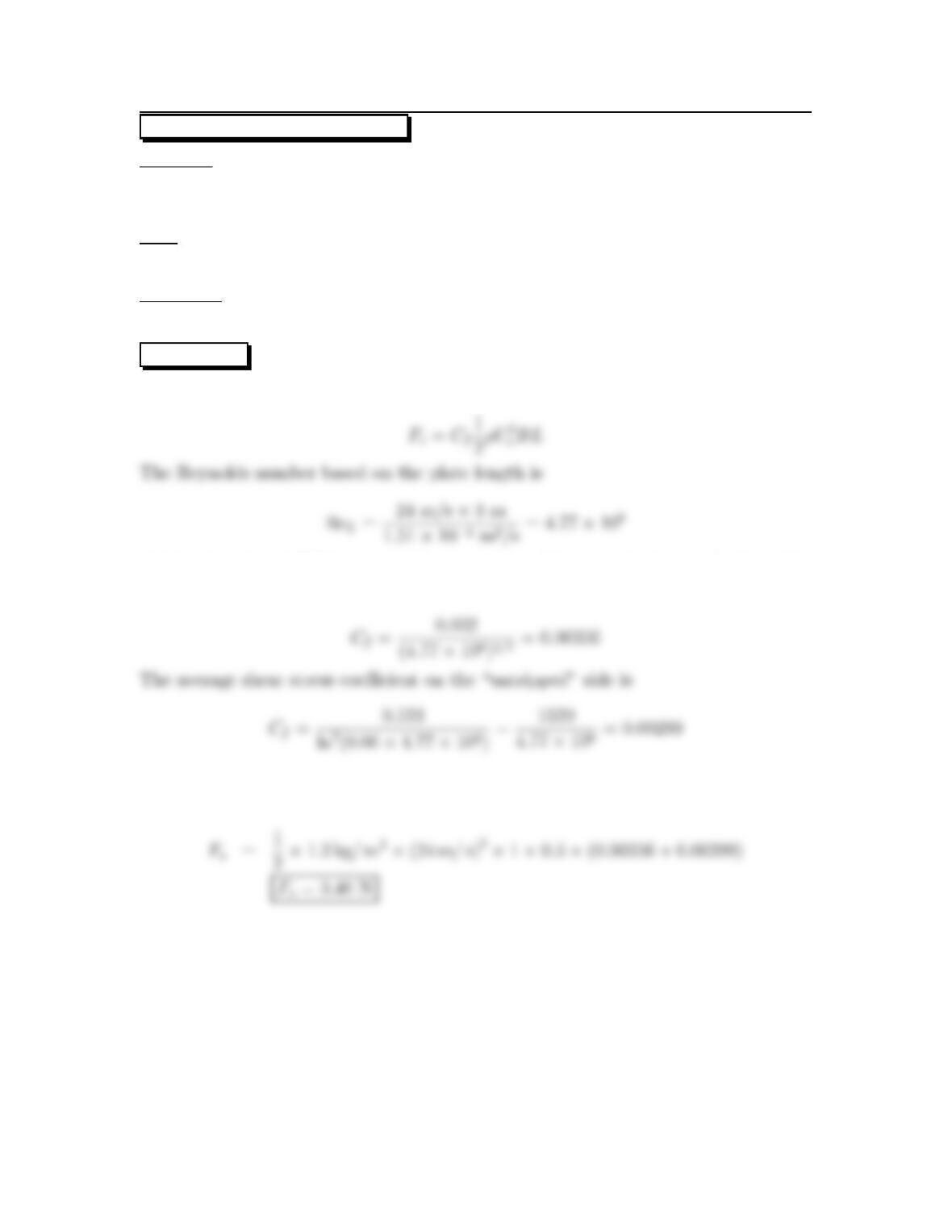
Determine the drag force (surface resistance) and apply equilibrium.
SOLUTION
Surface resistance (drag force)
Equilibrium
69
9.61: PROBLEM DEFINITION
Situation:
A24m/sflowinairoveraflat plate 3 m long and 0.5 m wide. Boundary layer
tripped on one side but not on other.
Find:
Total drag force on plate.
Properties:
From Table A.3 ρ=1.2kg/m3;ν=1.51 ×10−5m2/s.
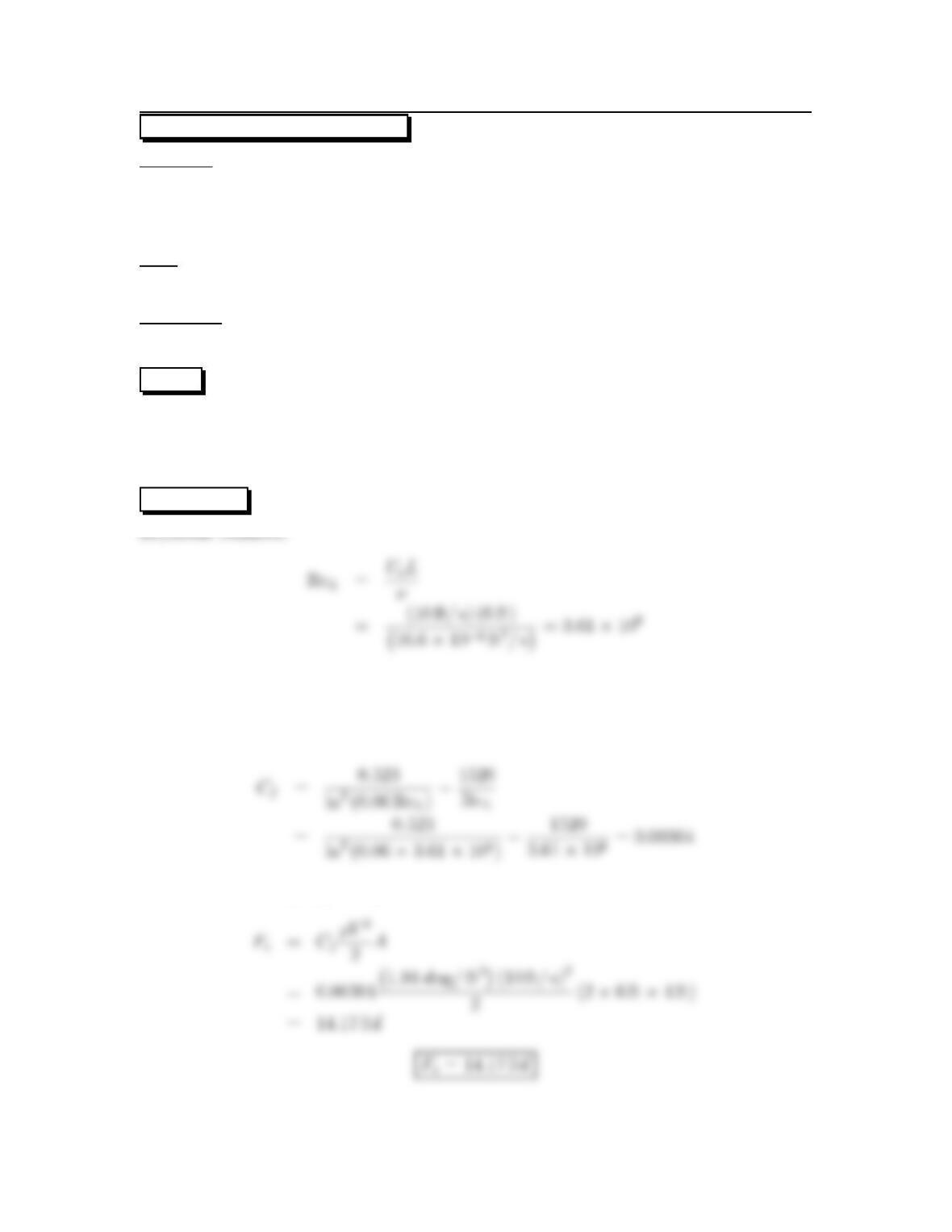
SOLUTION
The drag force (due to shear stress) is
which is less than 107.The average shear stress coefficient on the “tripped” side of the
plate is
The total force is
70
9.62: PROBLEM DEFINITION
Situation:
A horizontal plate (part of an engineered system for fish bypass) divides a flow
of water at 40oF into two streams. The plate is 6 ft long and 4 ft wide and water
velocity is 10 ft/s
Find:
Calculate the viscous drag force on the plate (both sides).
Properties:
From Table A.5. ν=1.66 ×10⁻⁵ft2/s,ρ =1.94 slug/ft3.
PLAN
Find the Reynolds number to establish whether the boundary layer is laminar or
mixed. Select the appropriate correlation for average resistance coefficient (Cf).
Then, calculate the shear (i.e. drag) force (Fs).
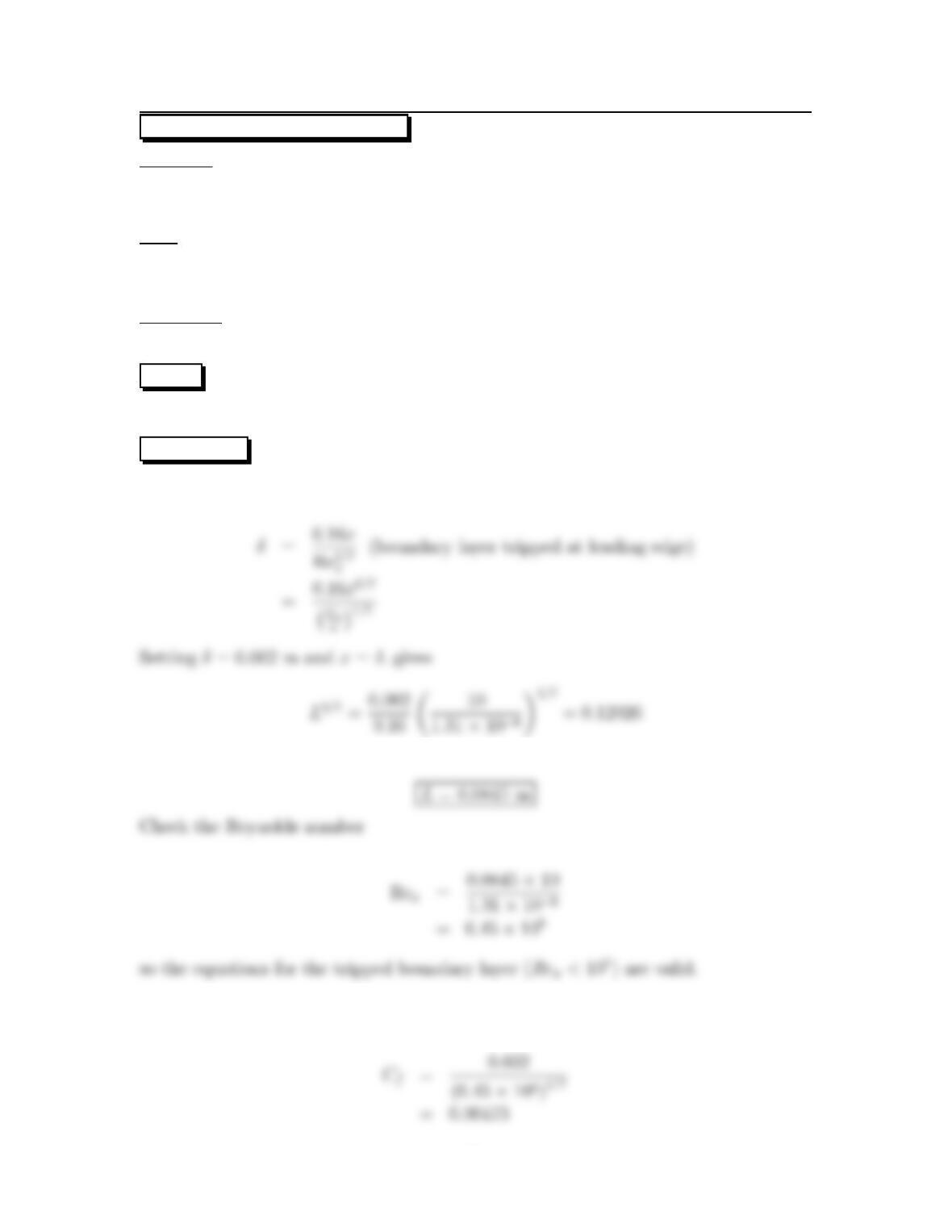
SOLUTION
Thus, the boundary layer is mixed.
Average shear stress coefficient
Surface resistance (drag force)
71
9.63: PROBLEM DEFINITION
Situation:
Entrance region consists of two flat plates 4 mm apart. Water flow at 10 m/s and
boundary layer tripped..
Find:
(a) Length where boundary layers merge.
(b) Shearing force per unit depth.
Properties:
From Table A.5 ρ=1000 kg/m3,ν=1.31×10−6m2/s.
PLAN
Apply the correlation for boundary layer thickness for a tripped leading edge.
SOLUTION
Boundary layer thickness
or
Average shear stress coefficient
72
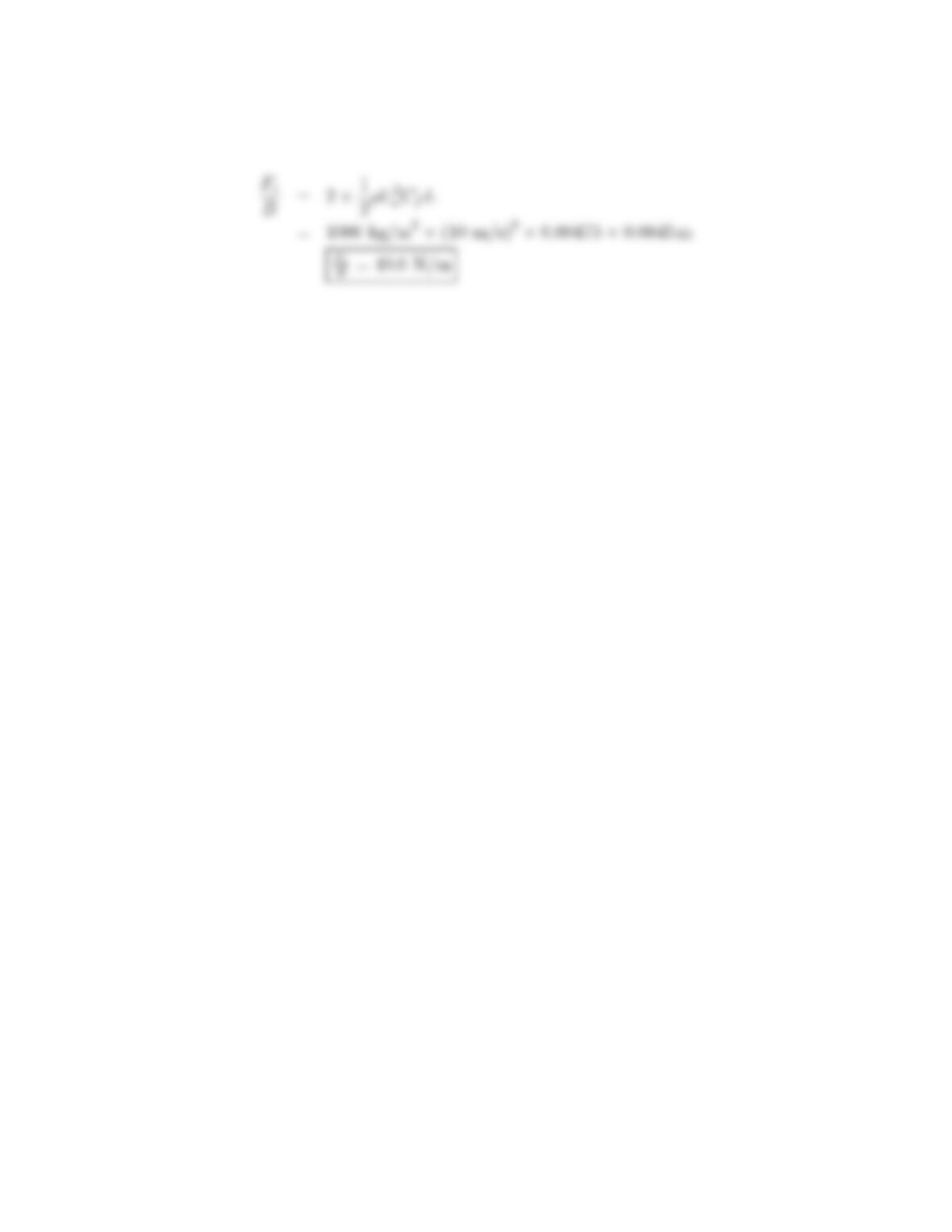
Surface resistance (drag force).
73
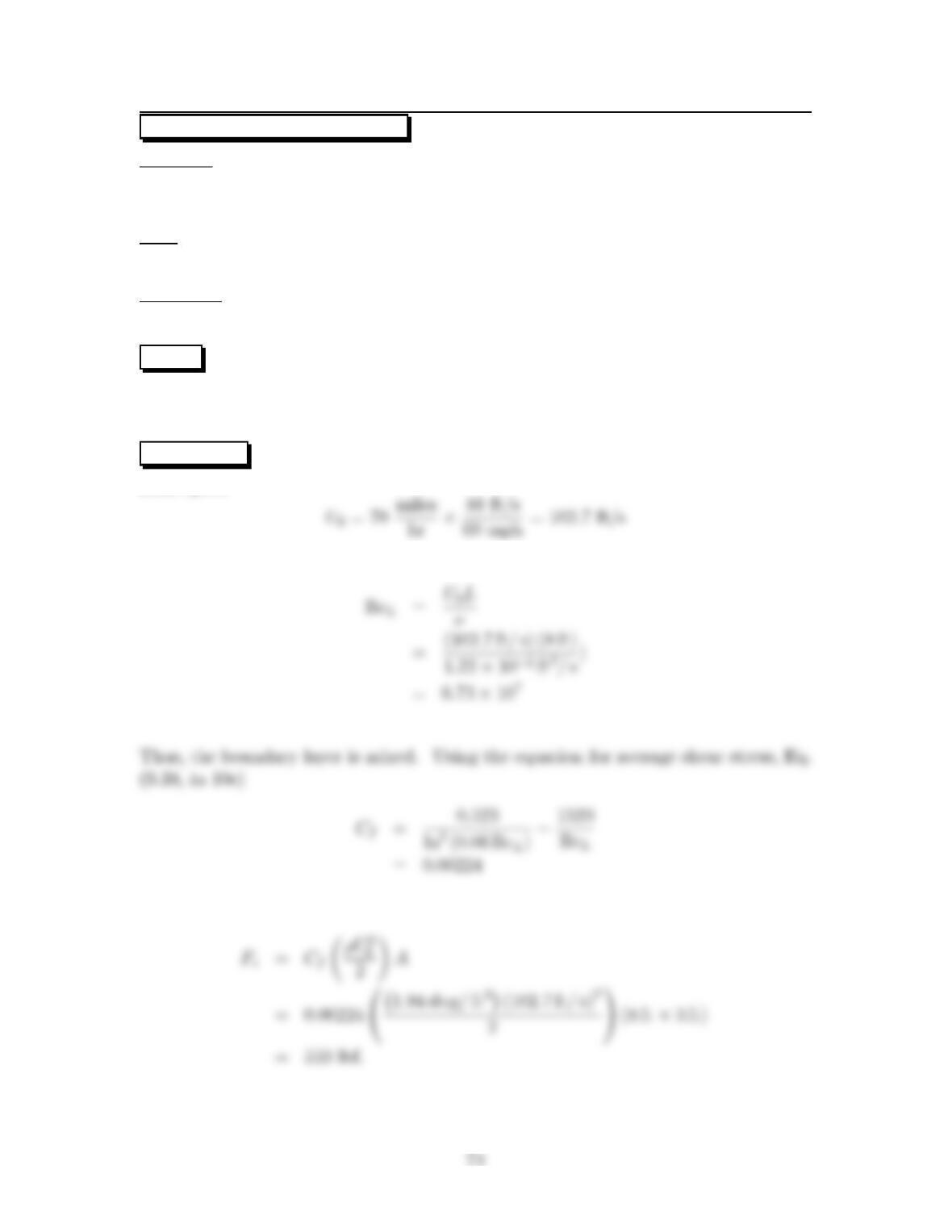
9.64: PROBLEM DEFINITION
Situation:
Aboatwithawidthof3ftandlengthof8ftplanesinwateratatemperatureof
60 ◦F. Boat speed is U0=70mph =102.7ft/s.
Find:
Power required to overcome skin friction drag.
Properties:
Table A.5 ν=1.22 ×10⁻⁵ft2/s, ρ=1.94 slug/ft3.
PLAN
Power is the product of drag force and speed (P=FsU0).Find the drag force using
the appropriate correlation.
SOLUTION
Boat speed
Reynolds number
Surface resistance (drag force)
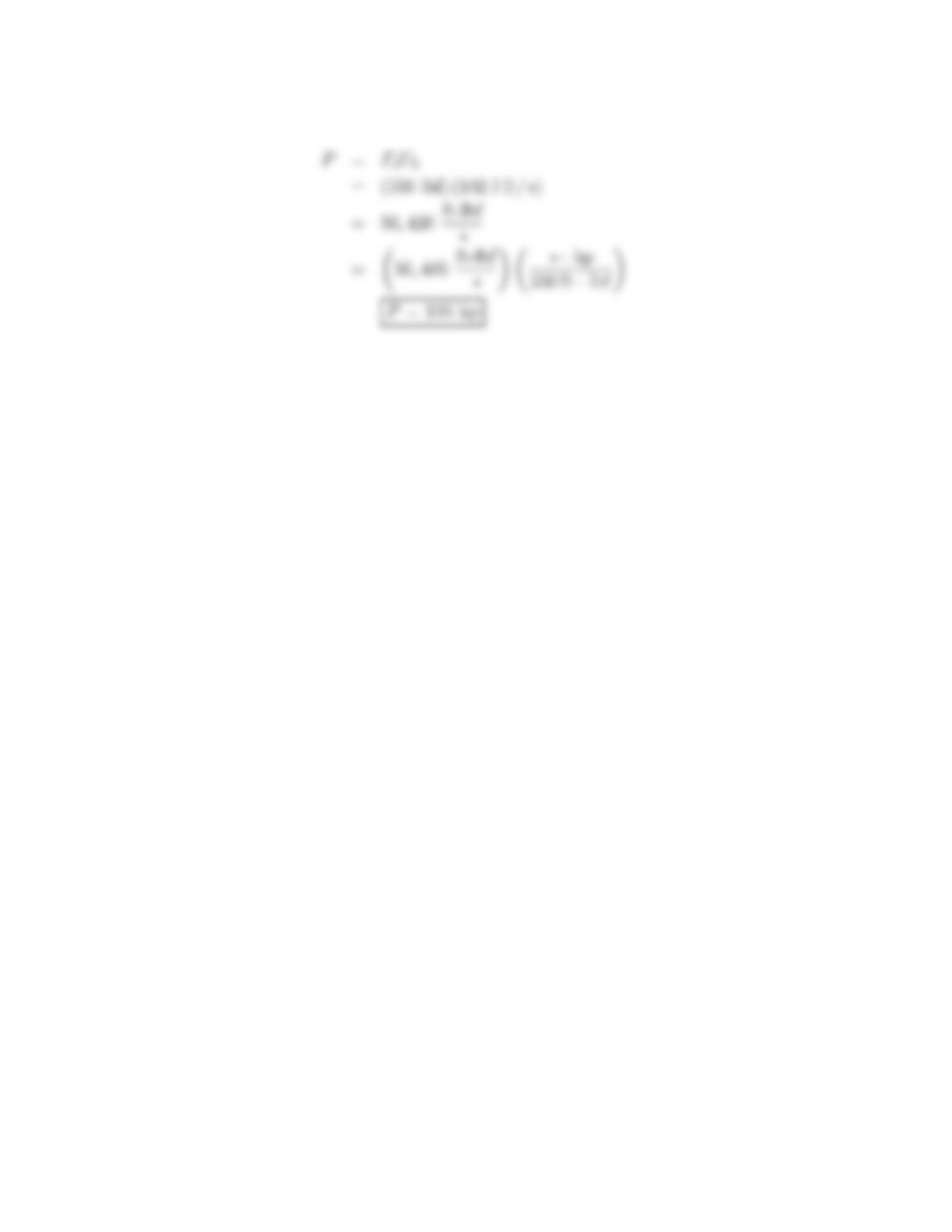
Power
75
9.65: PROBLEM DEFINITION
Situation:
A 0.5 m diameter log 50 m long is being pulled through water at 1.7 m/s. Boundary
layer tripped at leading edge
Find:
Force required to overcome surface resistance.
Properties:
Table A.5 ν=1.31 ×10⁻⁶m2/s, ρ=1000kg/m3.
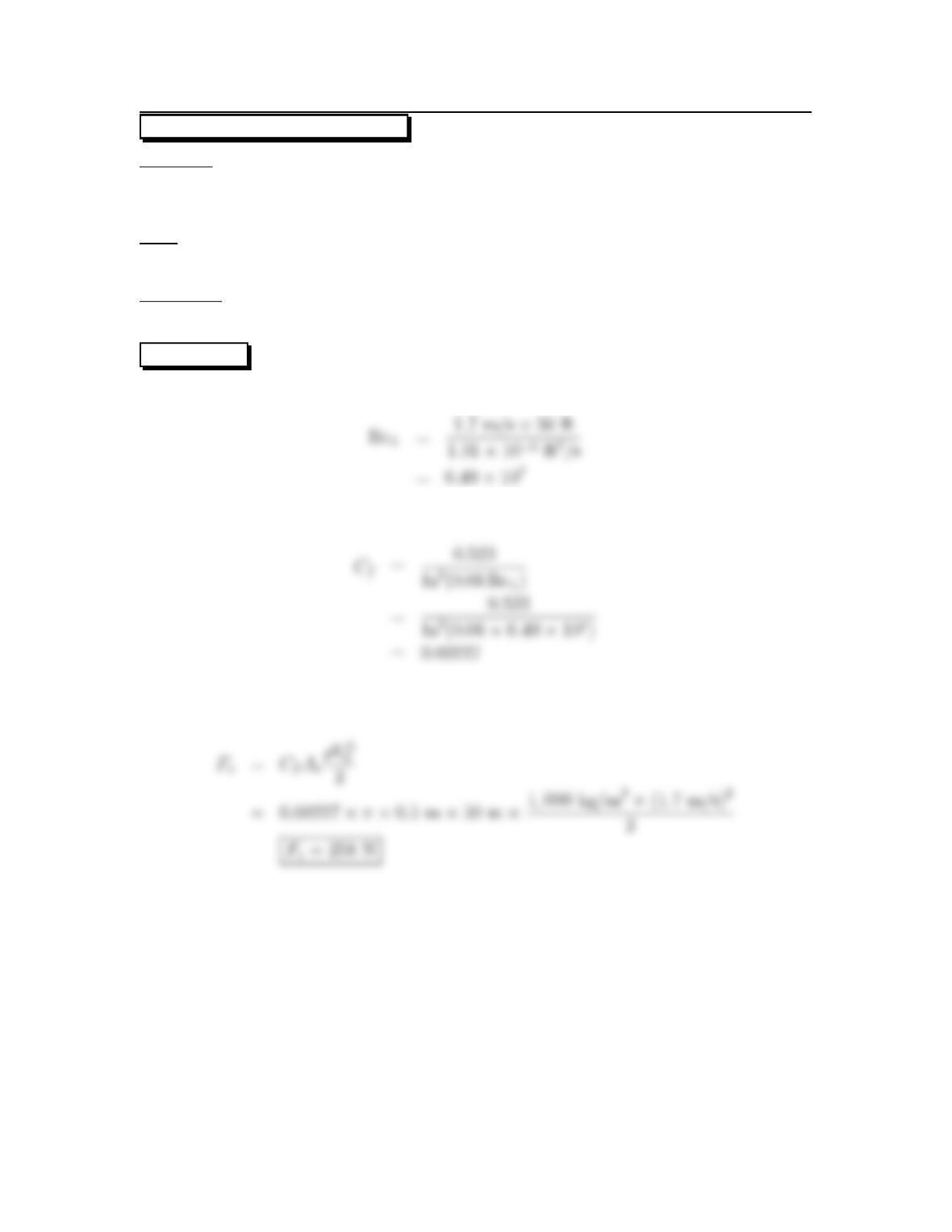
SOLUTION
Reynolds number
Reynolds number larger than 107so use
Surface resistance
76