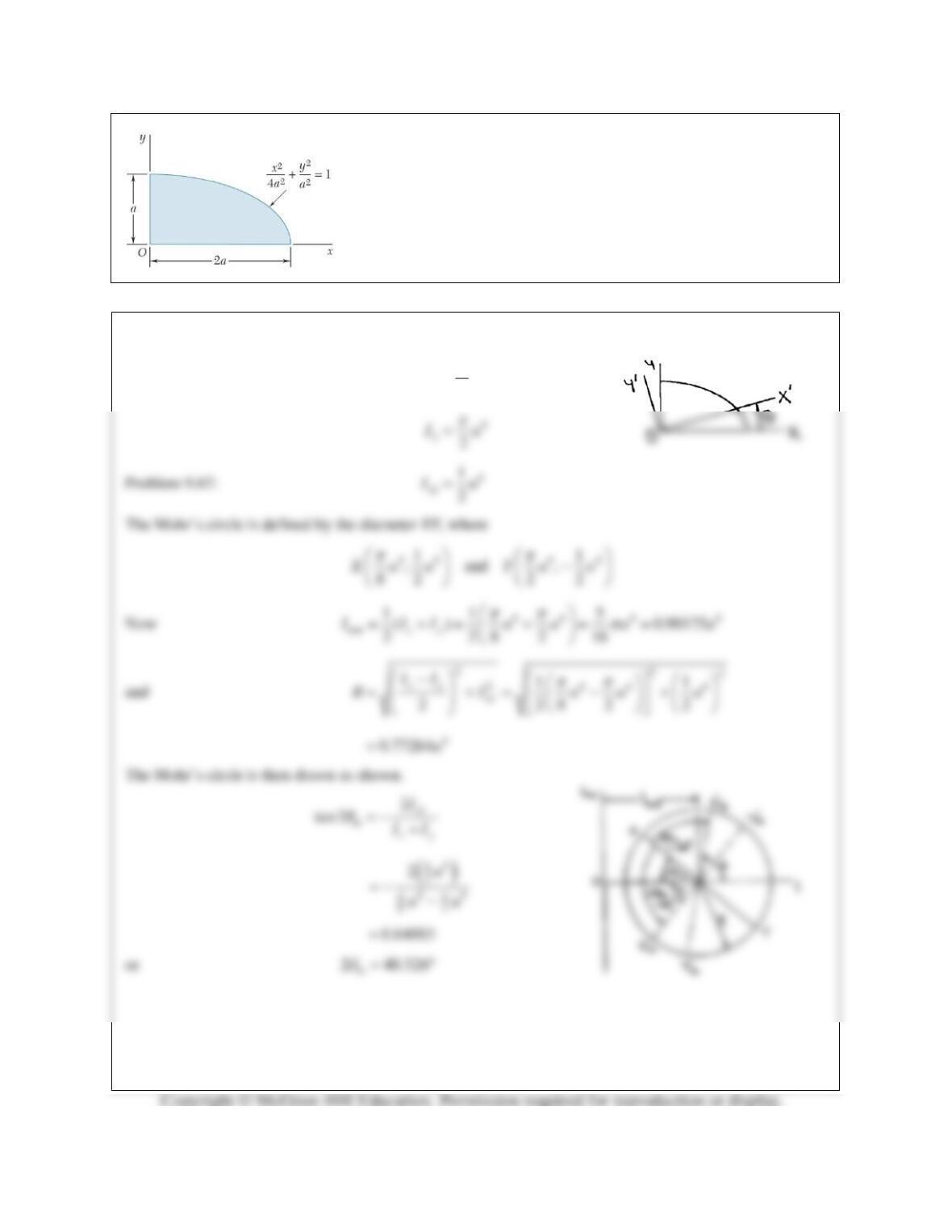
PROBLEM 9.91
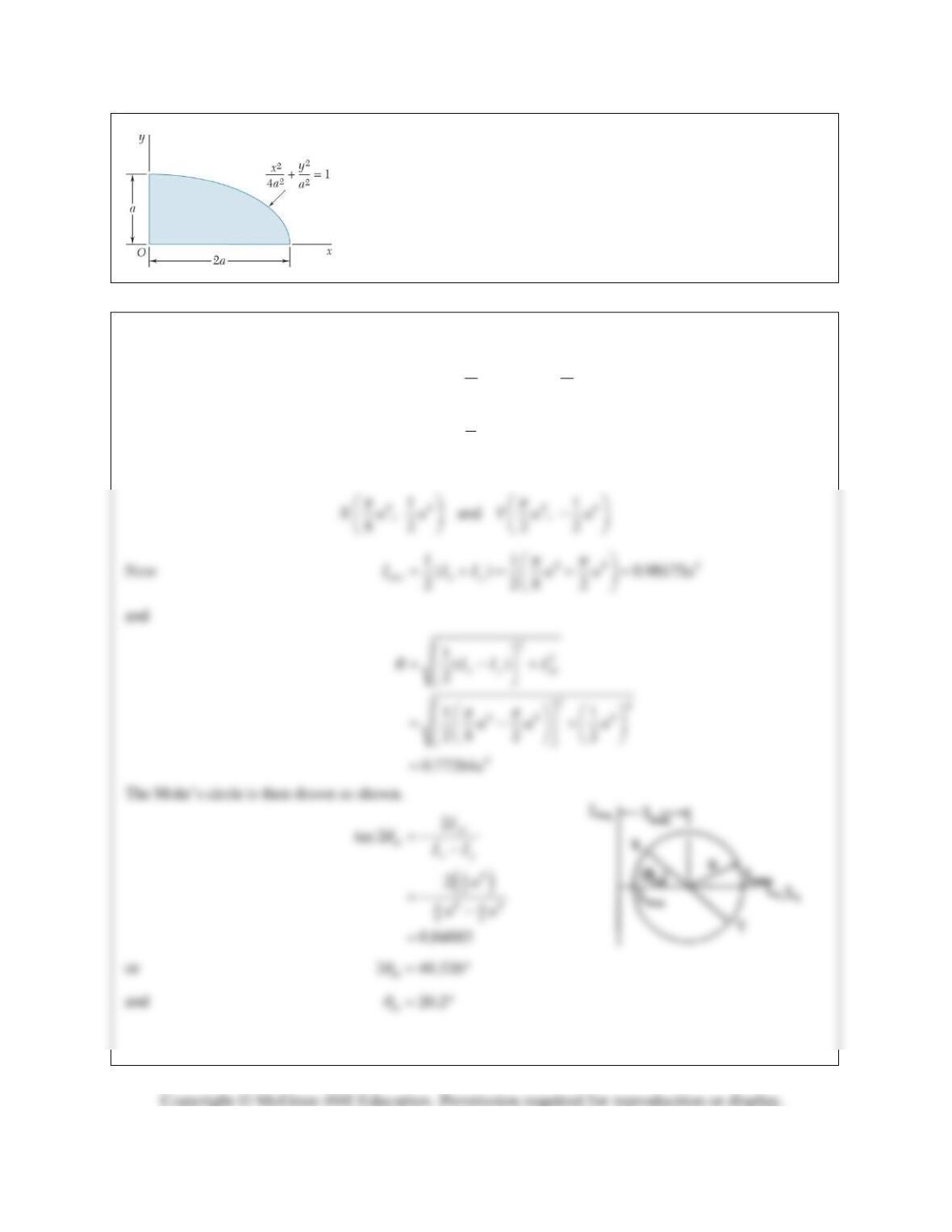
Using Mohr’s circle, determine for the quarter ellipse of Problem 9.67
the moments of inertia and the product of inertia with respect to new
axes obtained by rotating the x and y axes about O (a) through 45
counterclockwise, (b) through 30 clockwise.
SOLUTION
From Problem 9.79:
4
8
x
Ia
PROBLEM 9.91 (Continued)
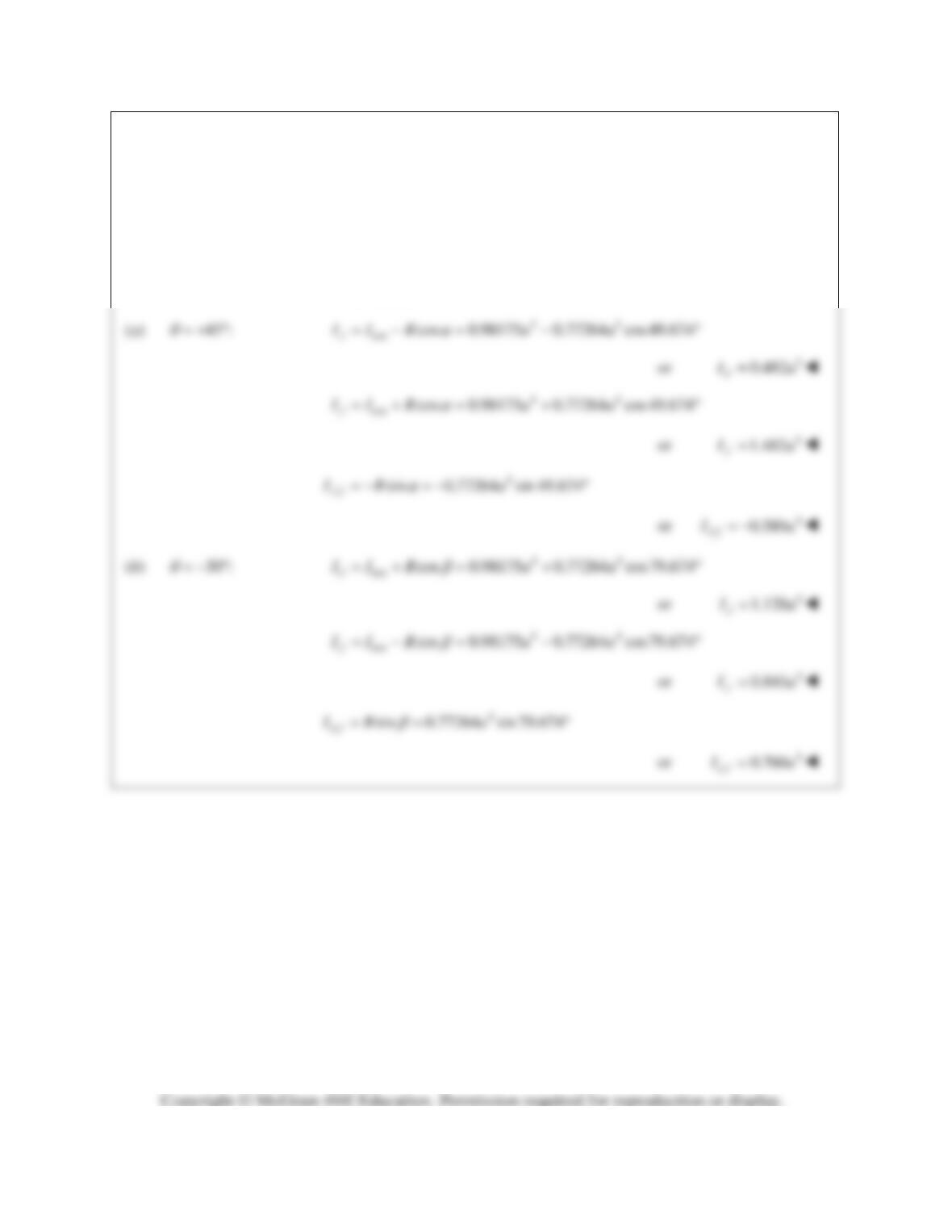
Then 90 40.326
49.674
180 (40.326 60 )
79.674
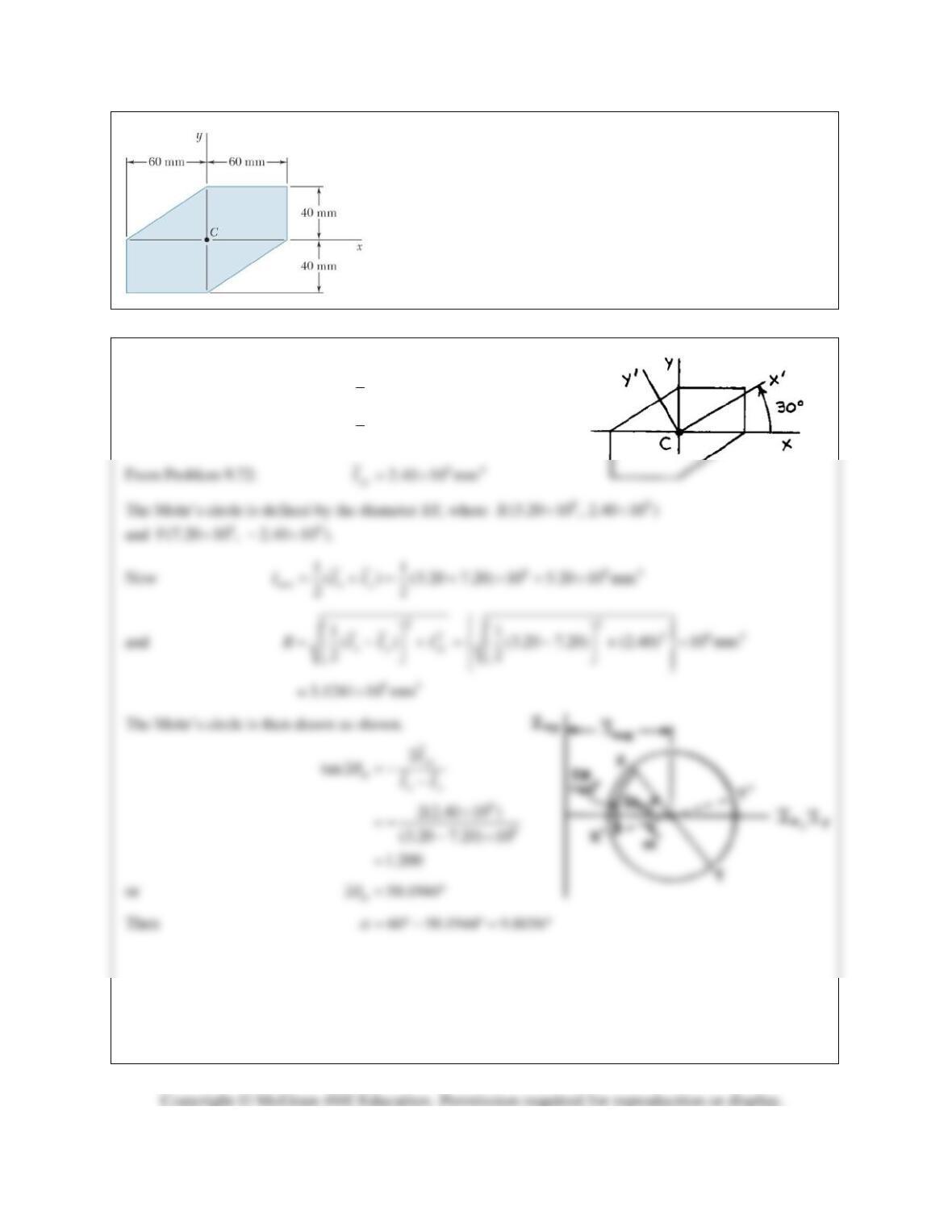
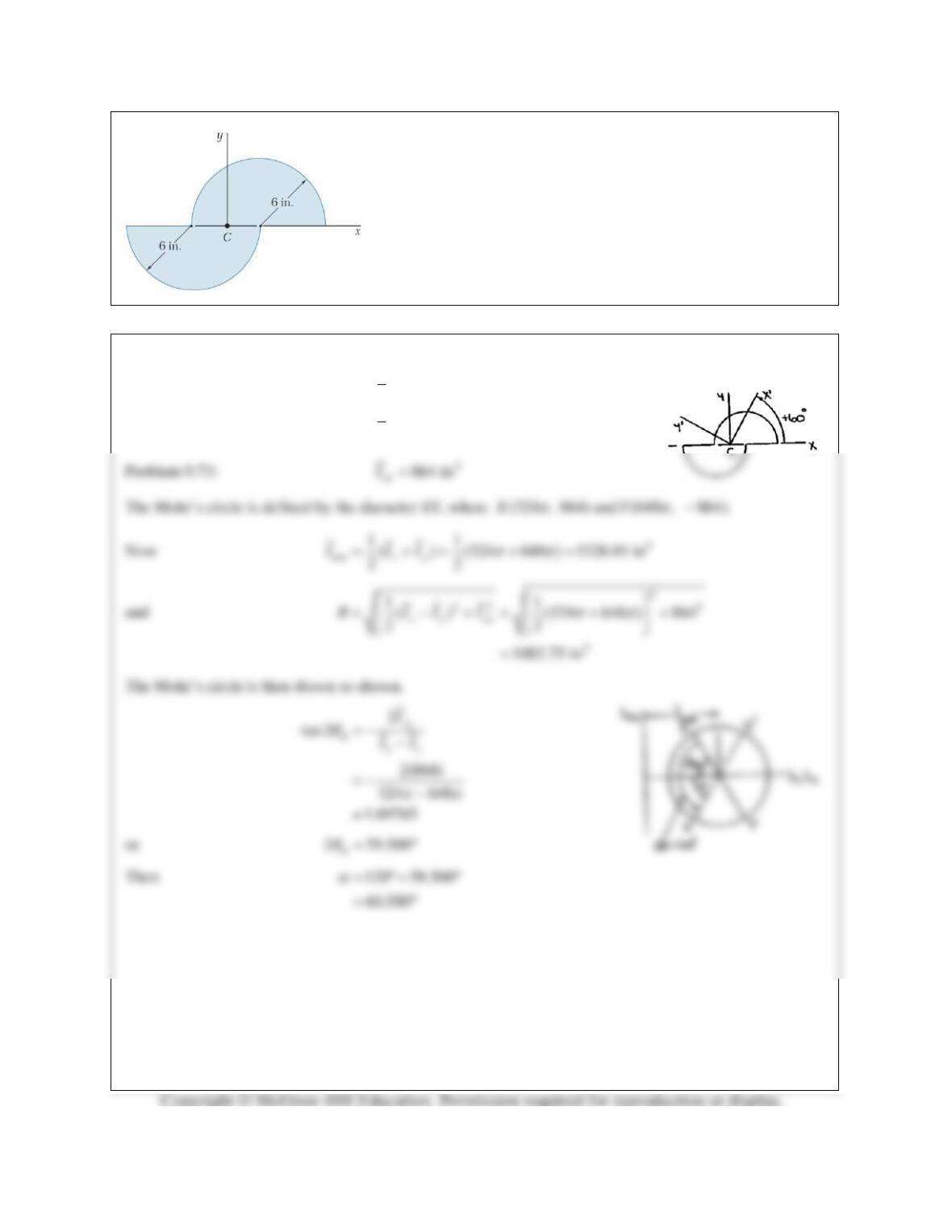
PROBLEM 9.92
Using Mohr’s circle, determine the moments of inertia and the
product of inertia of the area of Problem 9.72 with respect to new
centroidal axes obtained by rotating the x and y axes 30
counterclockwise.
SOLUTION
From Problem 9.80: 64
3.20 10 mm
x
I
64
7.20 10 mm
y
I
PROBLEM 9.92 (Continued)
Then 6
ave cos (5.20 3.1241cos9.8056 ) 10
x
II R
xy
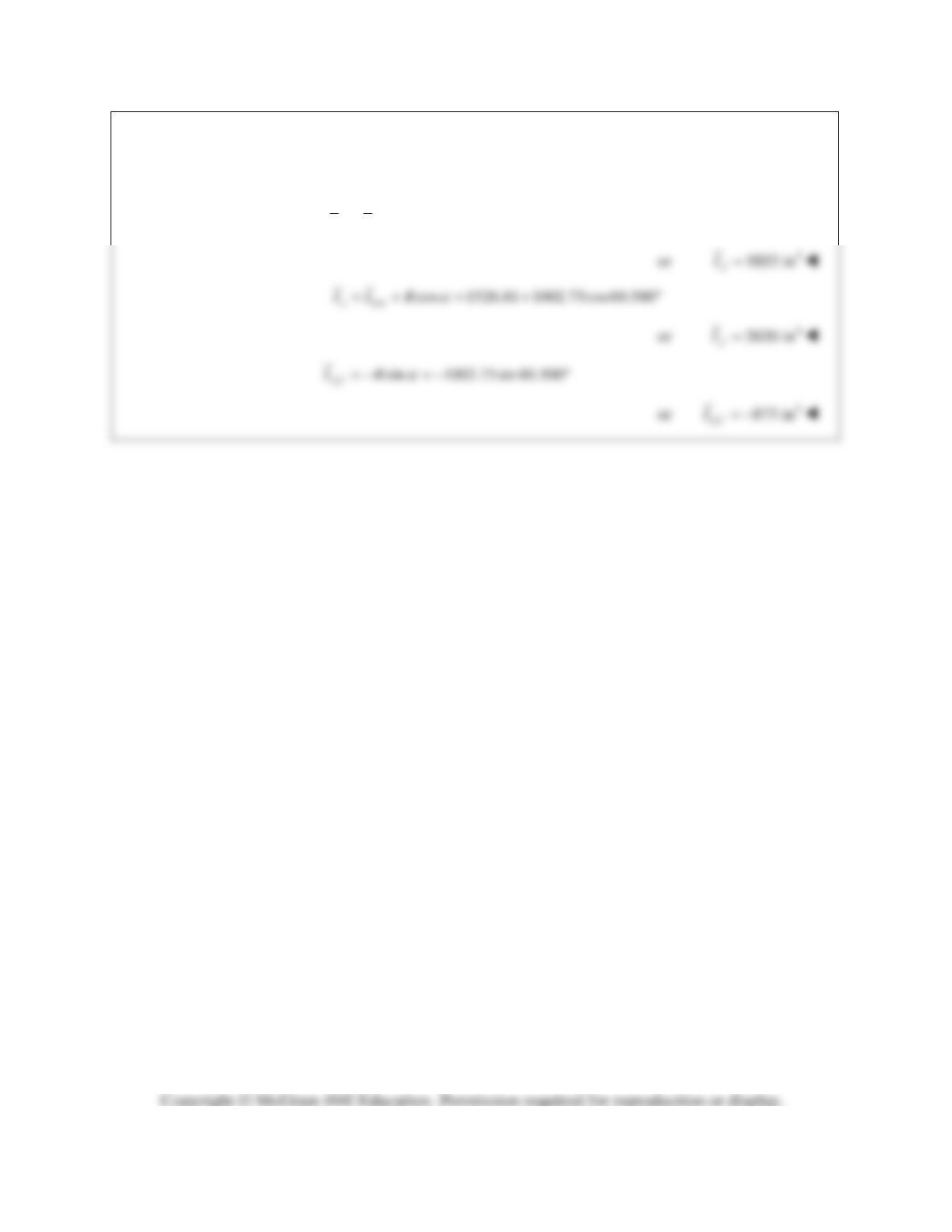
PROBLEM 9.93
Using Mohr’s circle, determine the moments of inertia and the
product of inertia of the area of Problem 9.73 with respect to new
centroidal axes obtained by rotating the x and y axes 60
counterclockwise.
SOLUTION
From Problem 9.81:
4
324 in
x
I
4
648 in
y
I
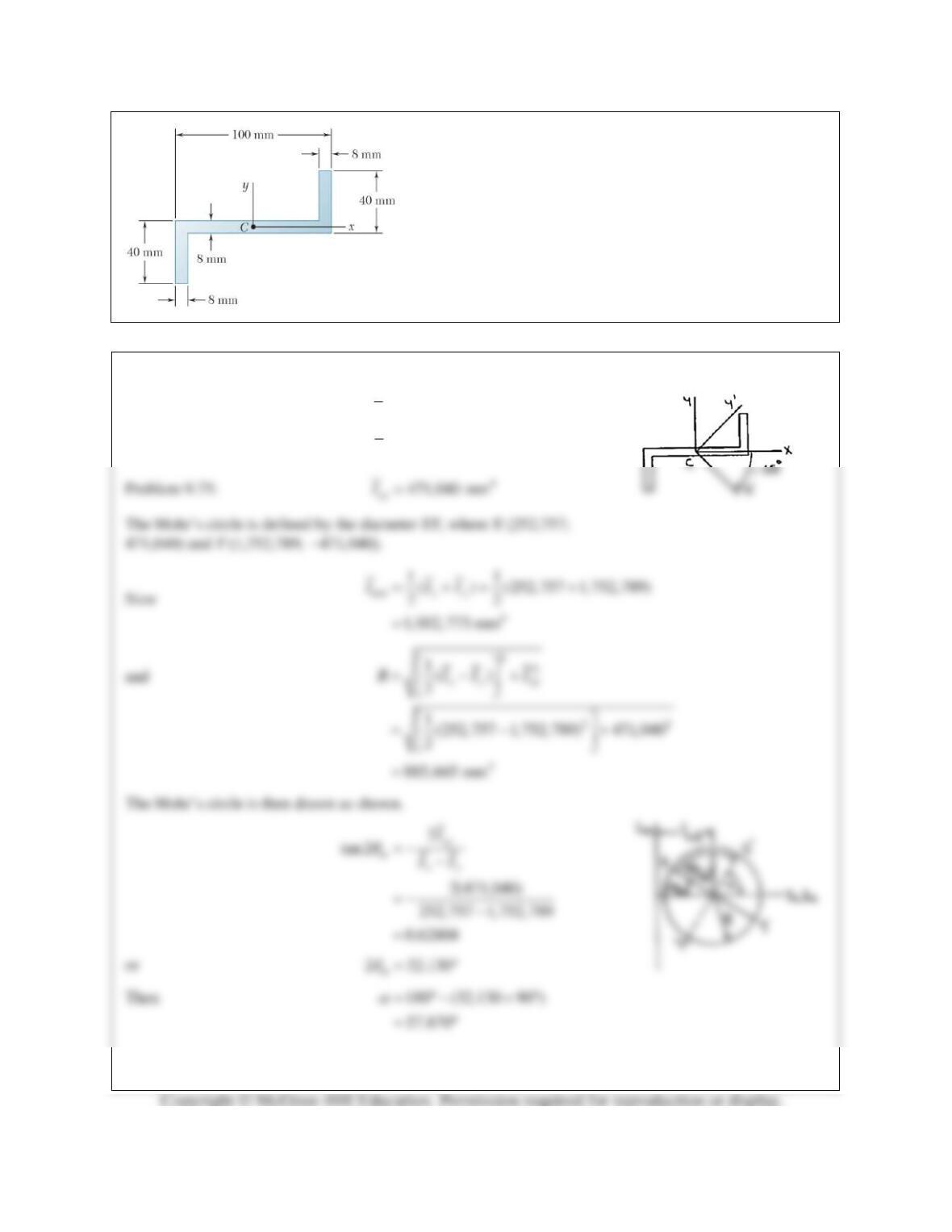
PROBLEM 9.93 (Continued)
Then ave cos 1526.81 1002.75cos60.500
x
II R
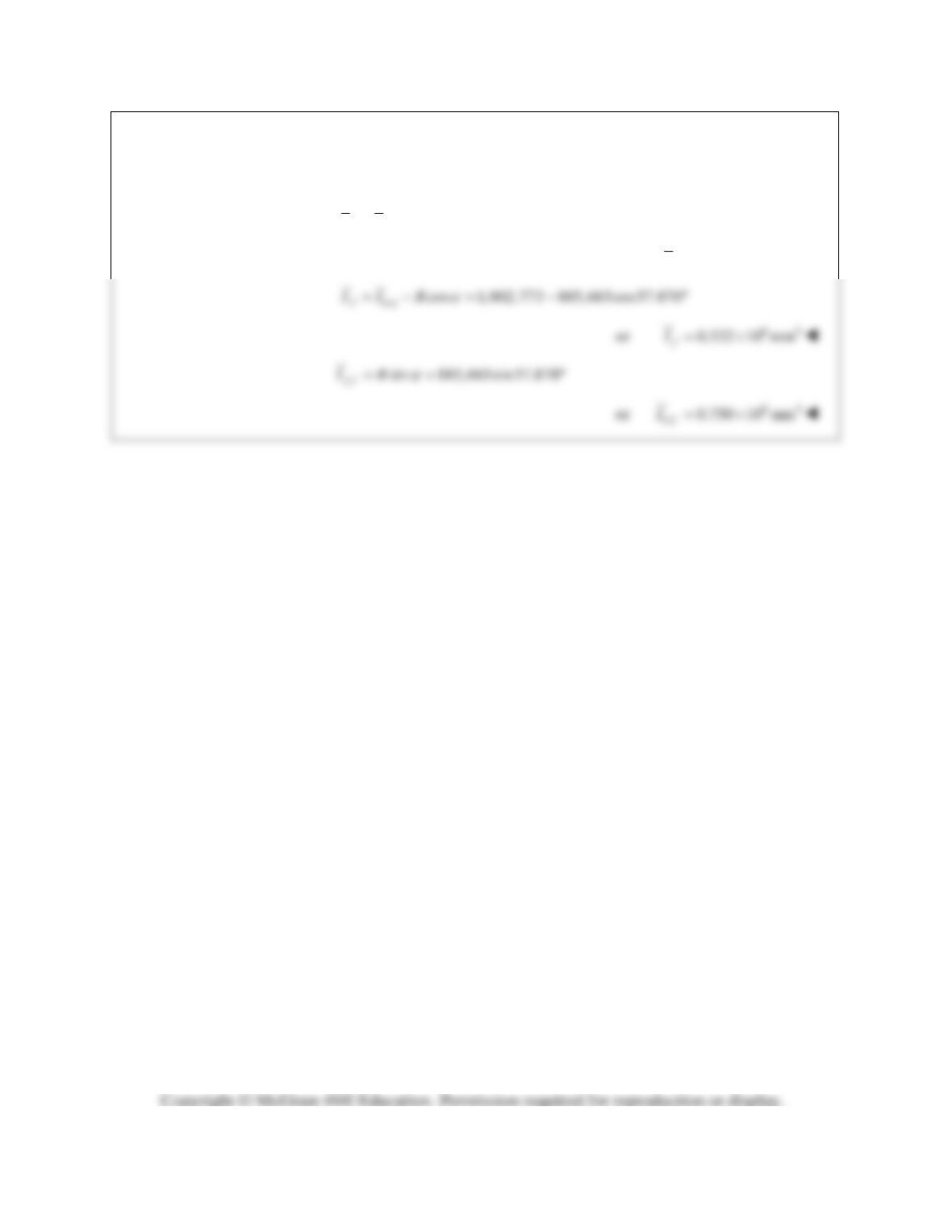
PROBLEM 9.94
Using Mohr’s circle, determine the moments of inertia and
the product of inertia of the area of Problem 9.75 with
respect to new centroidal axes obtained by rotating the x and
y axes 45 clockwise.
SOLUTION
From Problem 9.82:
4
252,757 mm
x
I
4
1, 752, 789 mm
y
I
PROBLEM 9.94 (Continued)
Then ave cos 1,002,773 885,665cos57.870
x
II R
or
64
1.474 10 mm
x
I
PROBLEM 9.95
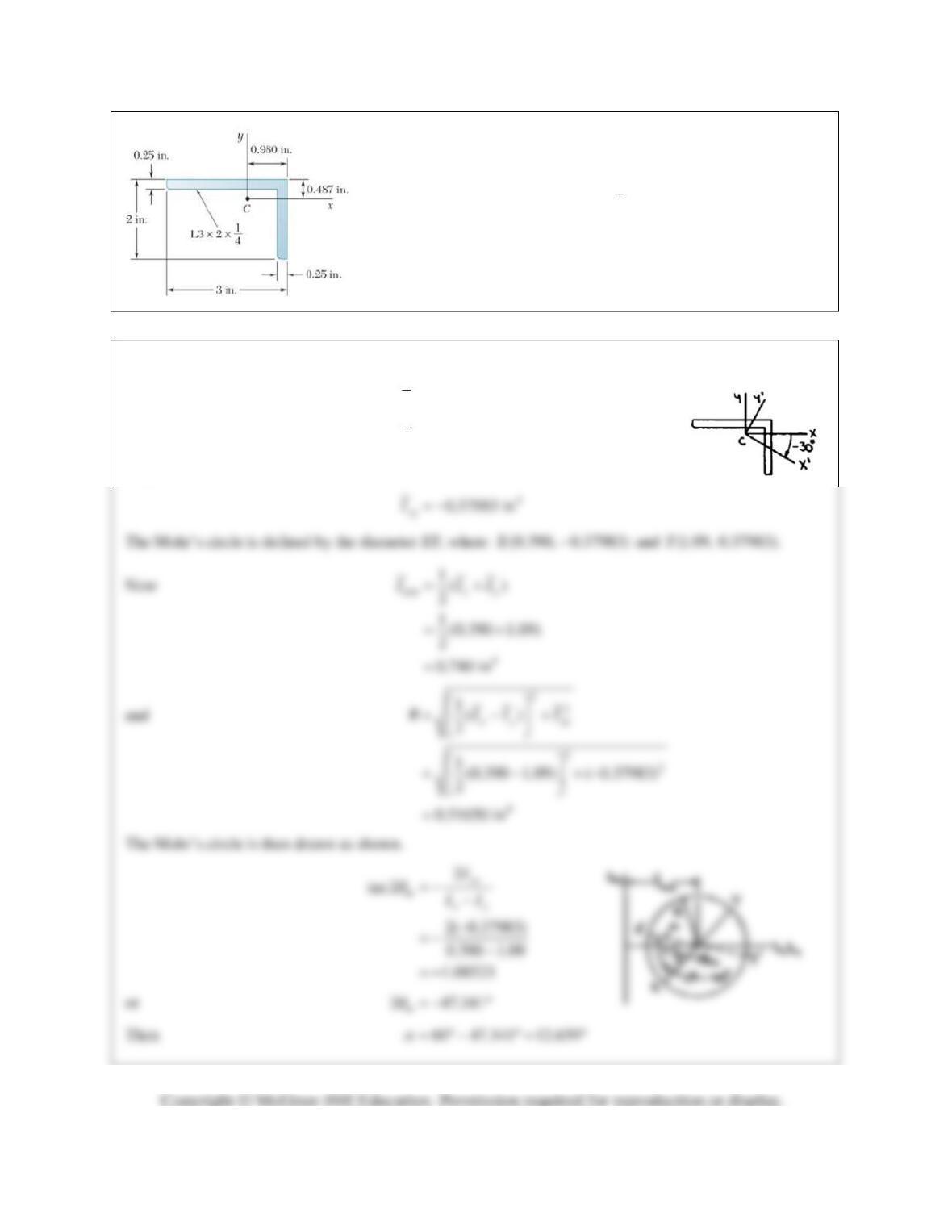
Using Mohr’s circle, determine the moments of inertia and the
product of inertia of the
1
4
L3 2 -in.
angle cross section of
Problem 9.74 with respect to new centroidal axes obtained by
rotating the x and y axes 30 clockwise.
SOLUTION
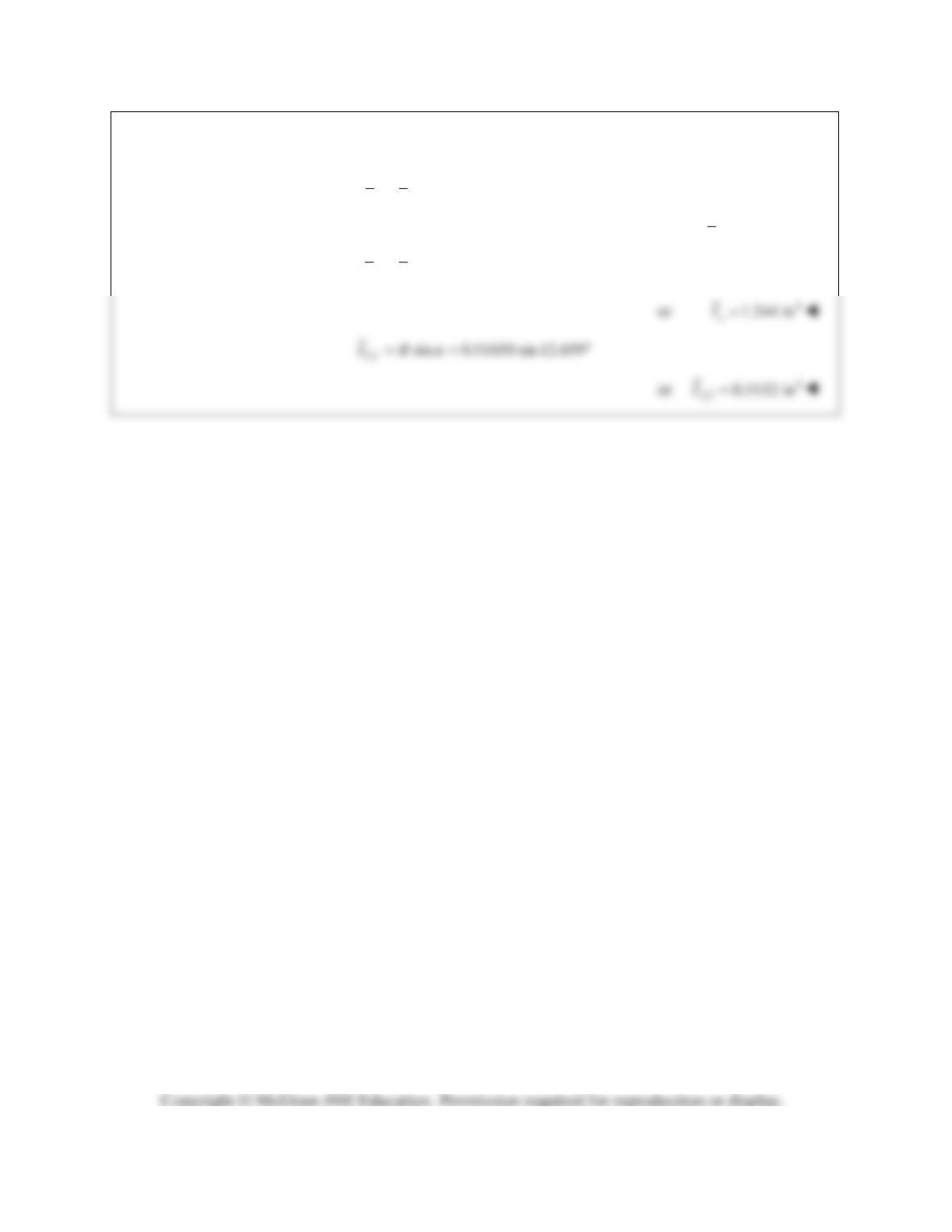
From Problem 9.83:
4
0.390 in
x
I
4
1.09 in
y
I
Problem 9.74:
PROBLEM 9.95 (Continued)
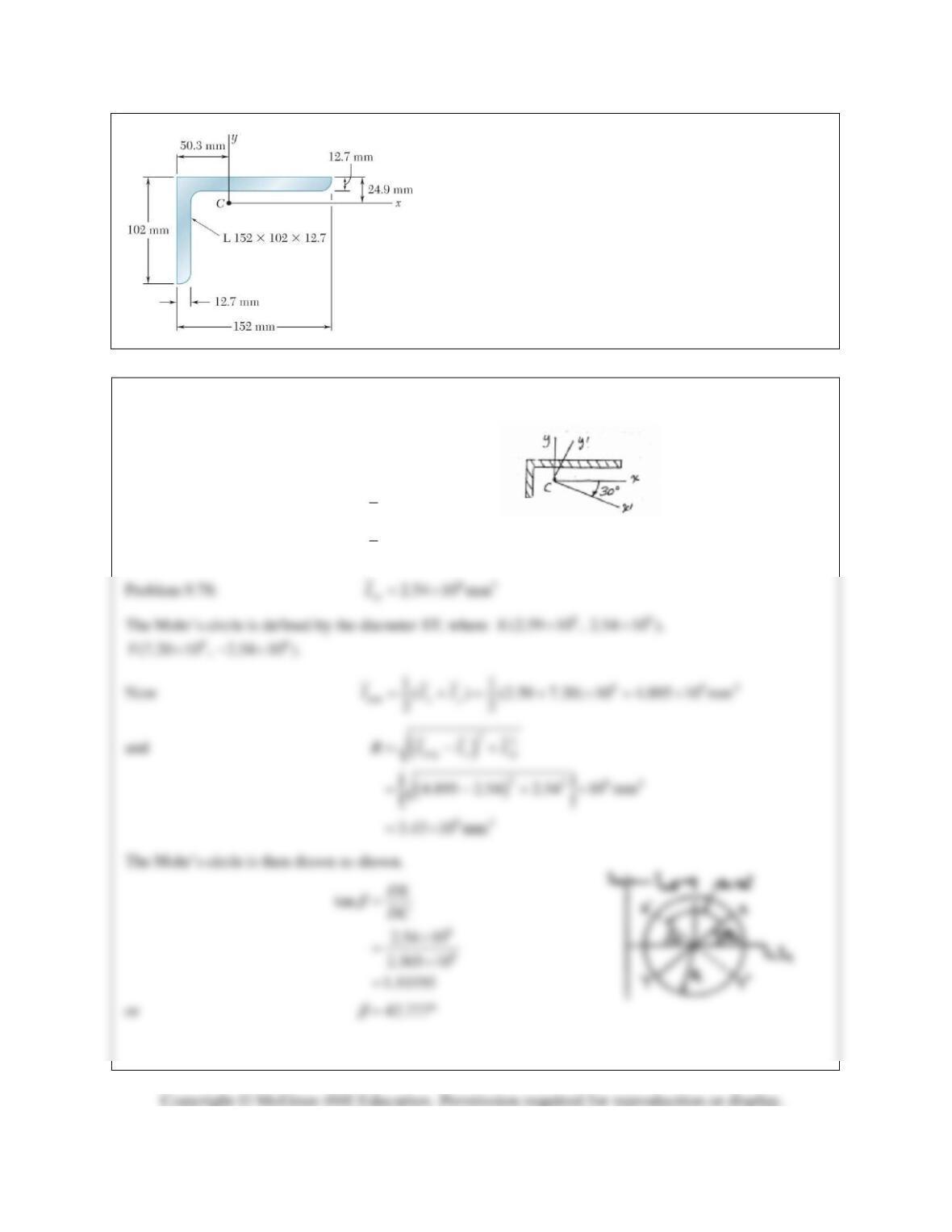
Then ave cos 0.740 0.51650 cos 12.659
x
II R
or 4
0.236 in
x
I
ave cos 0.740 0.51650 cos 12.659
y
II R
PROBLEM 9.96
Using Mohr’s circle, determine the moments of inertia and
the product of inertia of the
L152 102 12.7-mm
angle
cross section of Problem 9.78 with respect to new
centroidal axes obtained by rotating the x and y axes 45
counterclockwise.
SOLUTION
From Problem 9.84:
64
2.59 10 mm
x
I
64
7.20 10 mm
y
I
PROBLEM 9.96 (Continued)
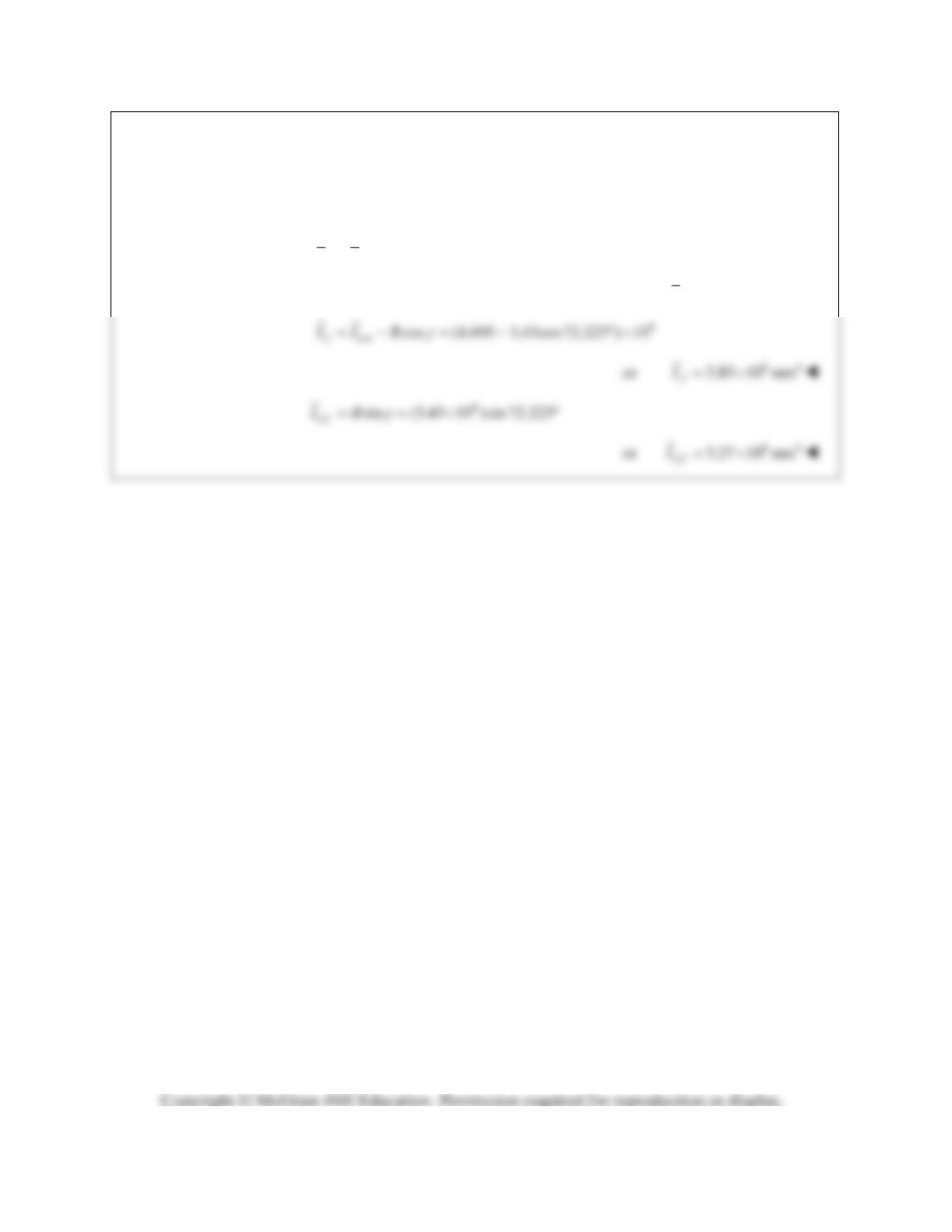
Then 180 60 47.777
72.223
and 6
ave cos (4.895 3.43cos 72.223 ) 10
x
II R
or
64
5.94 10 mm
x
I
PROBLEM 9.97
For the quarter ellipse of Problem 9.67, use Mohr’s circle to determine
the orientation of the principal axes at the origin and the corresponding
values of the moments of inertia.
SOLUTION
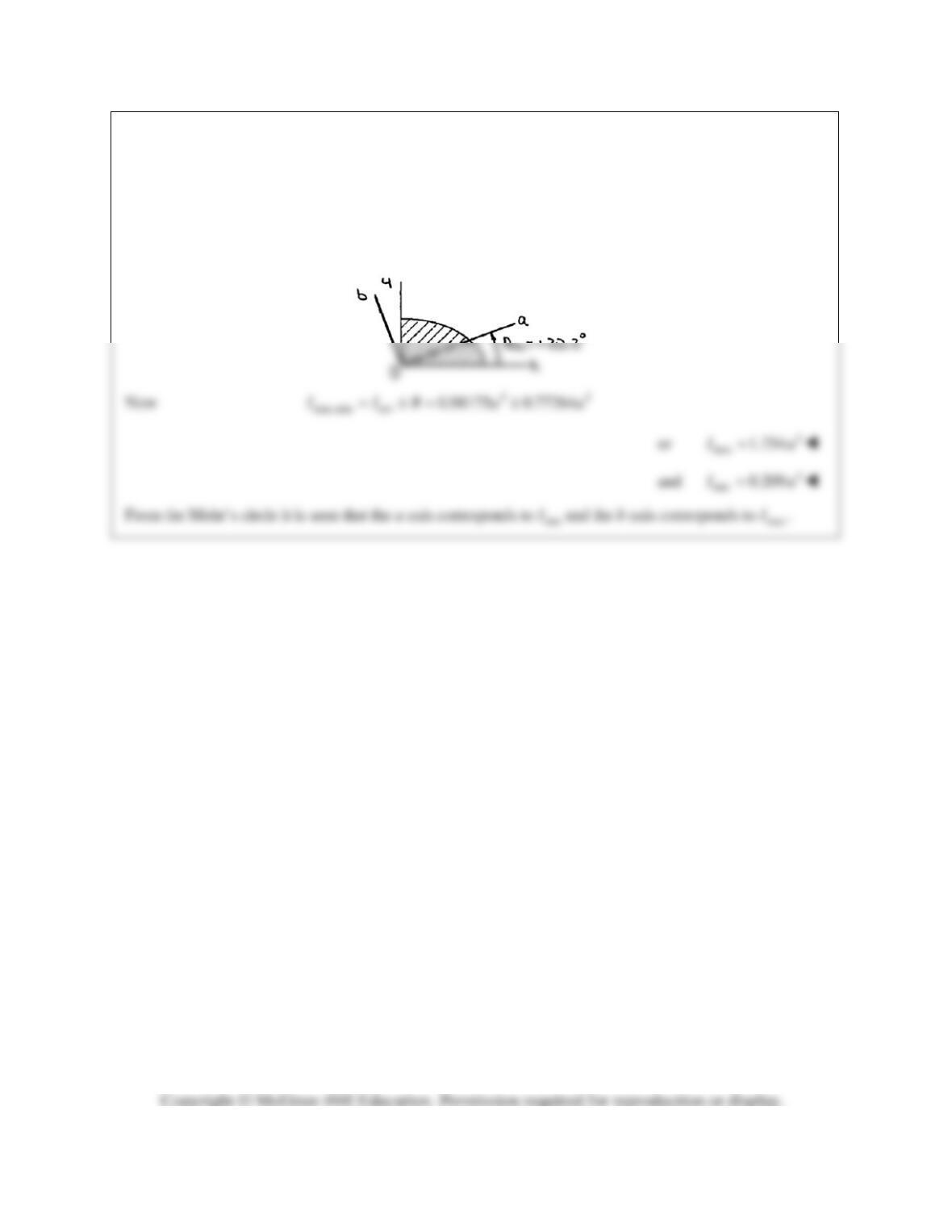
From Problem 9.79:
44
82
xy
IaIa
Problem 9.67:
4
1
2
xy
Ia
The Mohr’s circle is defined by the diameter XY, where
PROBLEM 9.97 (Continued)
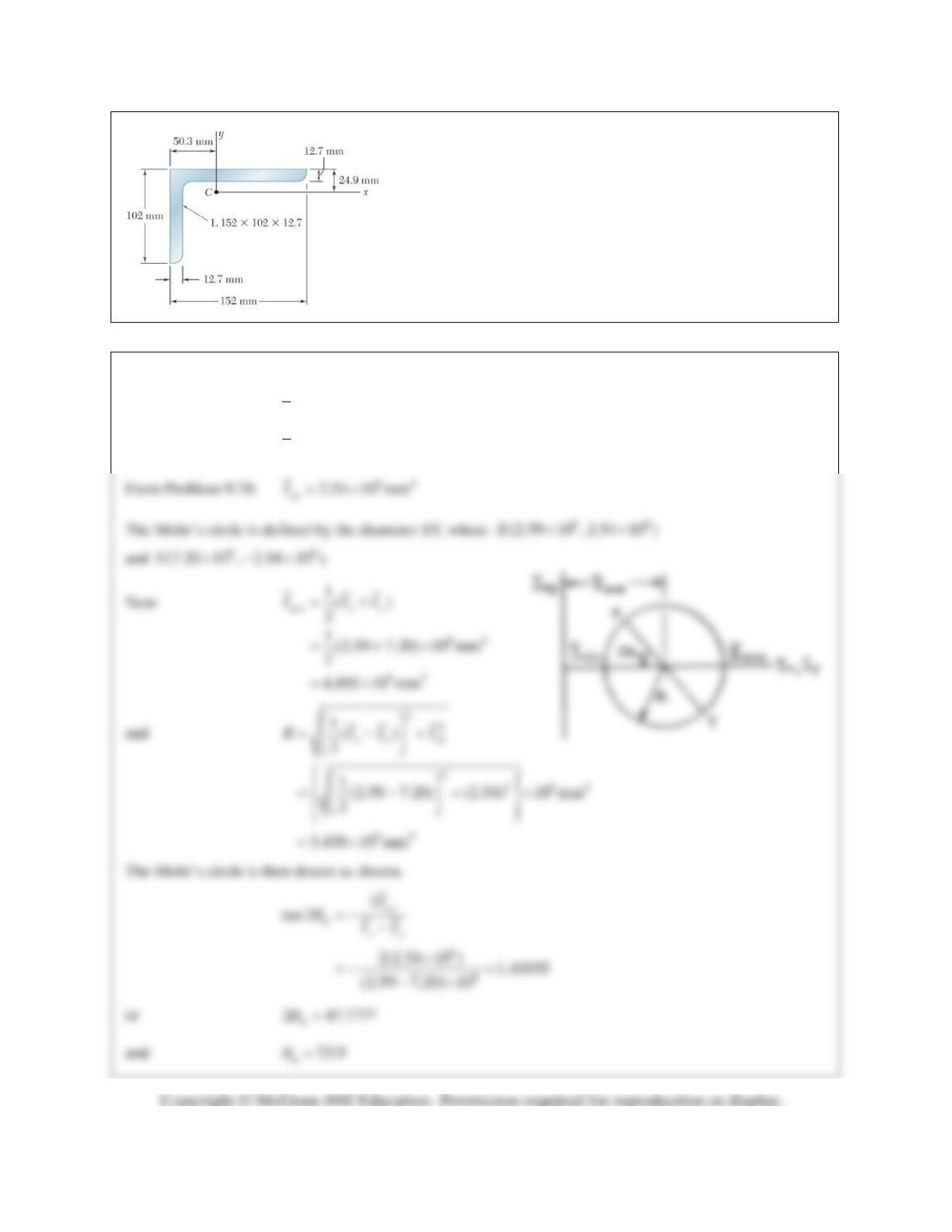
The principal axes are obtained by rotating the xy axes through
20.2 counterclockwise
about O.
PROBLEM 9.98
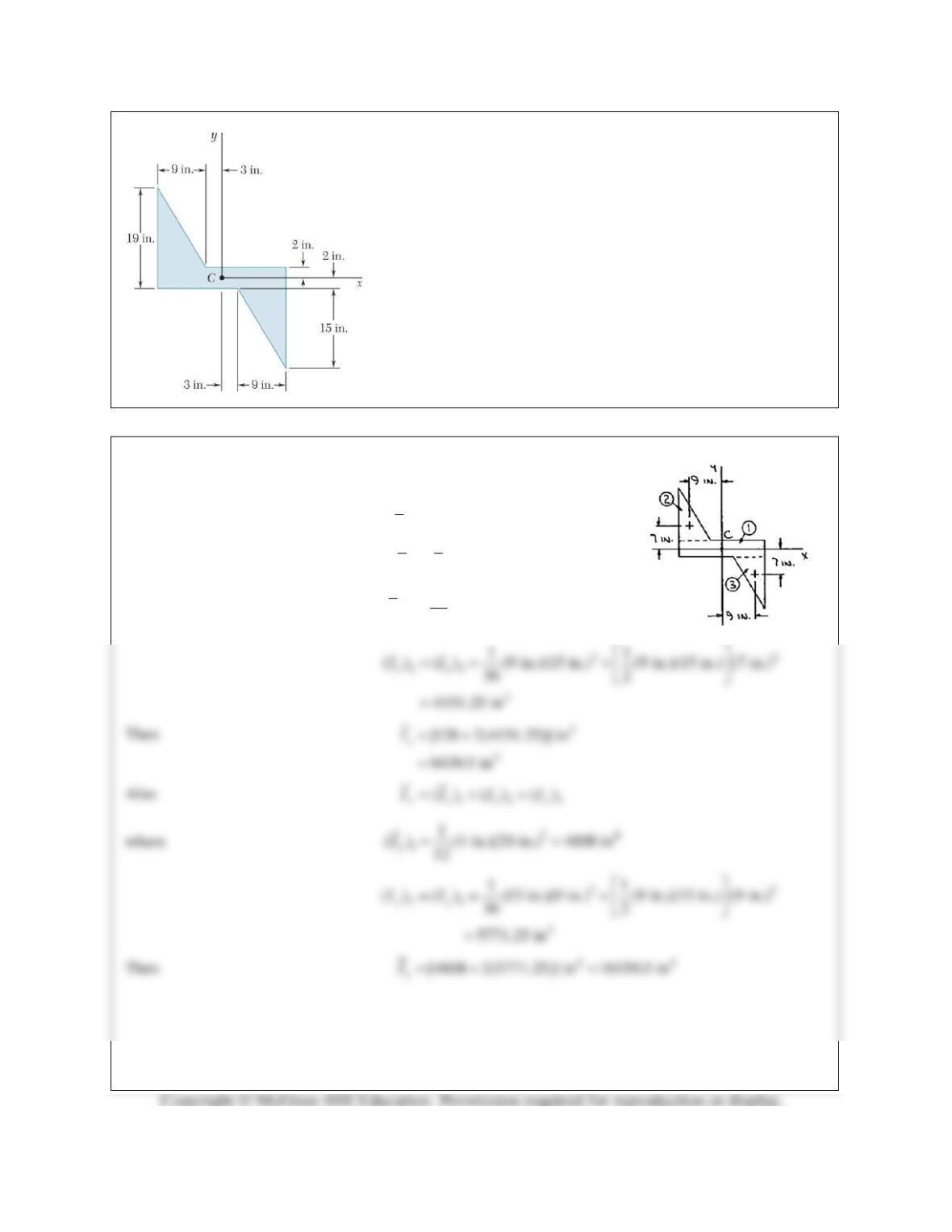
Using Mohr’s circle, determine for the area indicated the
orientation of the principal centroidal axes and the
corresponding values of the moments of inertia.
Area of Problem 9.78.
SOLUTION
From Fig. 9.13: 64
2.59 10 mm
x
I
64
7.20 10 mm
y
I
PROBLEM 9.98 (Continued)
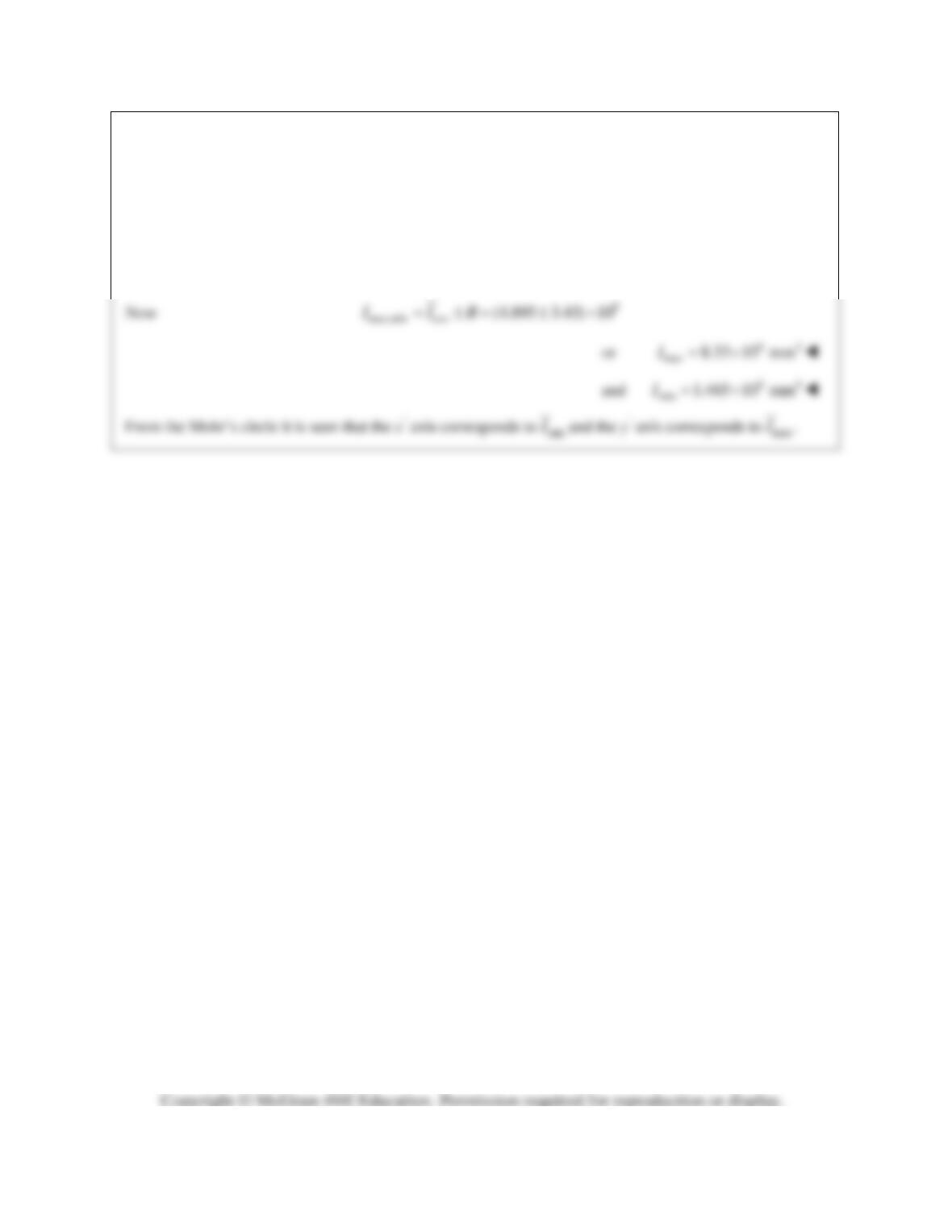
The principal axes are obtained by rotating the xy axes through
23.9° counterclockwise
about C.
PROBLEM 9.99
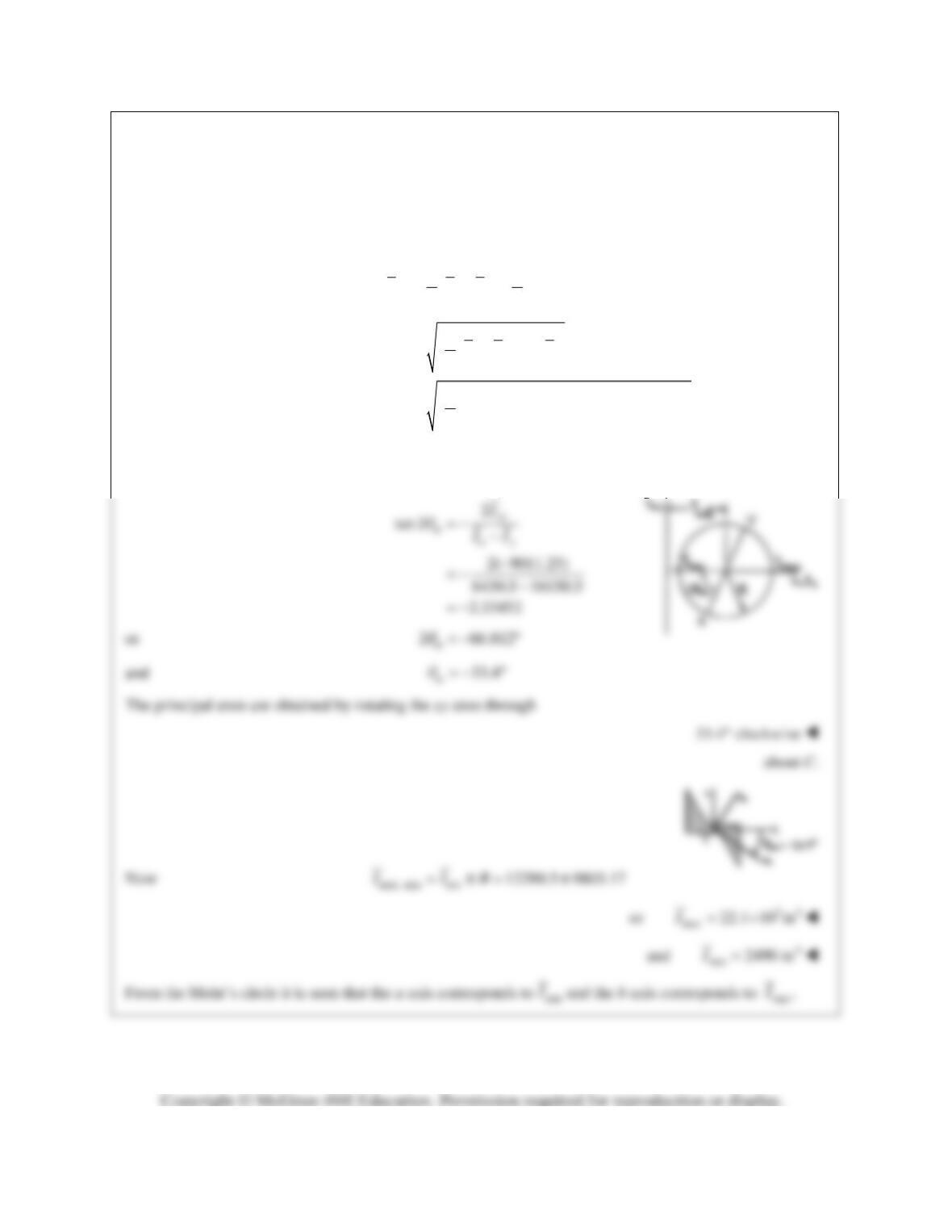
Using Mohr’s circle, determine for the area indicated the
orientation of the principal centroidal axes and the corresponding
values of the moments of inertia.
Area of Problem 9.76.
SOLUTION
From Problem 9.76:
4
9011.25 in
xy
I
Now
123
() () ()
xx x x
II I I
where
34
1
1
( ) (24 in.)(4 in.) 128 in
12
x
I
PROBLEM 9.99 (Continued)
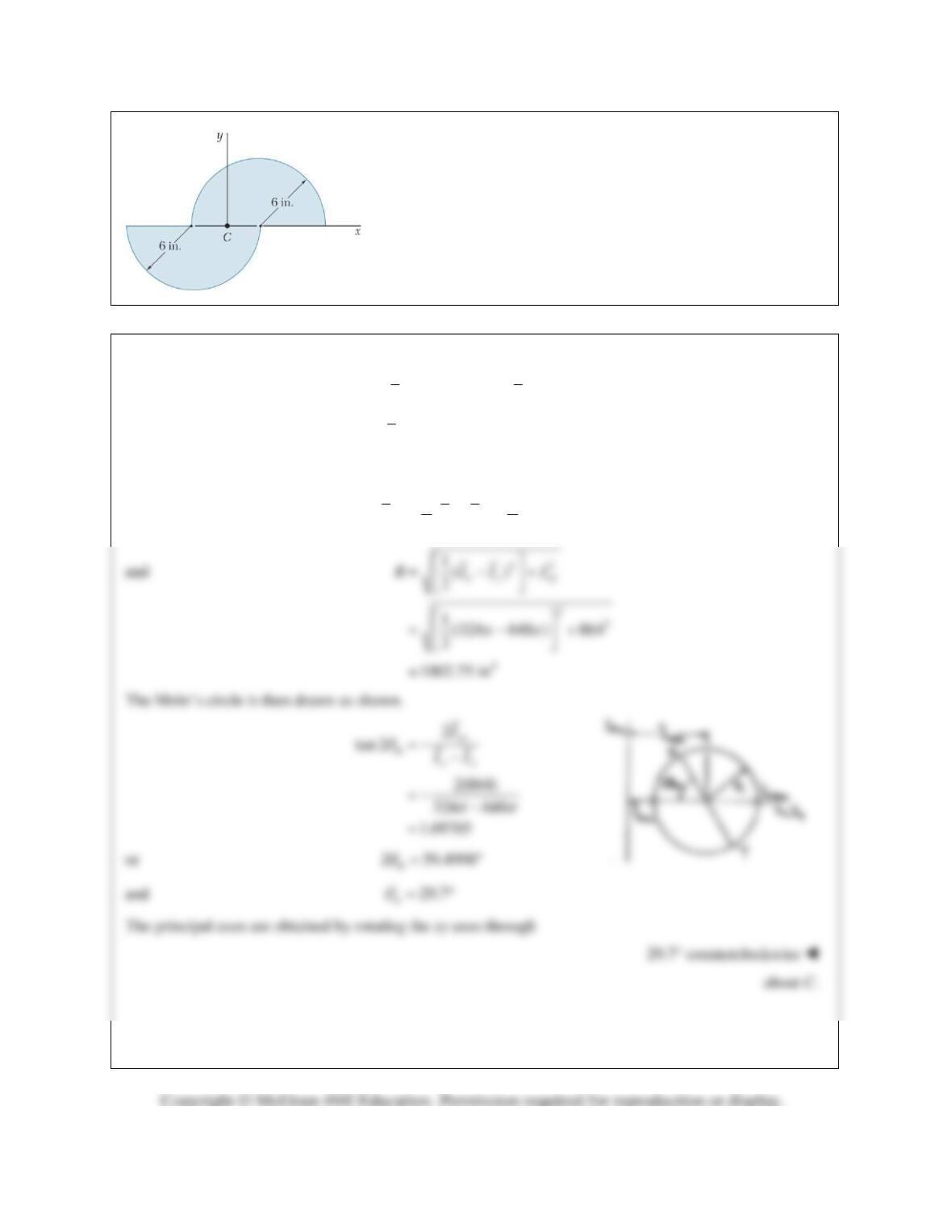
The Mohr’s circle is defined by the diameter XY, where
(8430.5, 9011.25)X
and
(16150.5, 9011.25).Y
Now
4
ave
11
( ) (8430.5 16150.5) 12290.5 in
22
xy
III
and
2
2
2
2
4
1()
2
1(8430.5 16150.5) ( 9011.25)
2
9803.17 in
xy xy
RIII
The Mohr’s circle is then drawn as shown.
PROBLEM 9.100
Using Mohr’s circle, determine for the area indicated the
orientation of the principal centroidal axes and the corresponding
values of the moments of inertia.
Area of Problem 9.73
SOLUTION
From Problem 9.81: 44
324 in 648 in
xy
II
Problem 9.73: 4
864 in
xy
I
The Mohr’s circle is defined by the diameter XY, where (324 , 864)
X and (648 , 864).Y
Now 4
ave
11
( ) (324 648 ) 1526.81 in
22
xy
III
PROBLEM 9.100 (Continued)
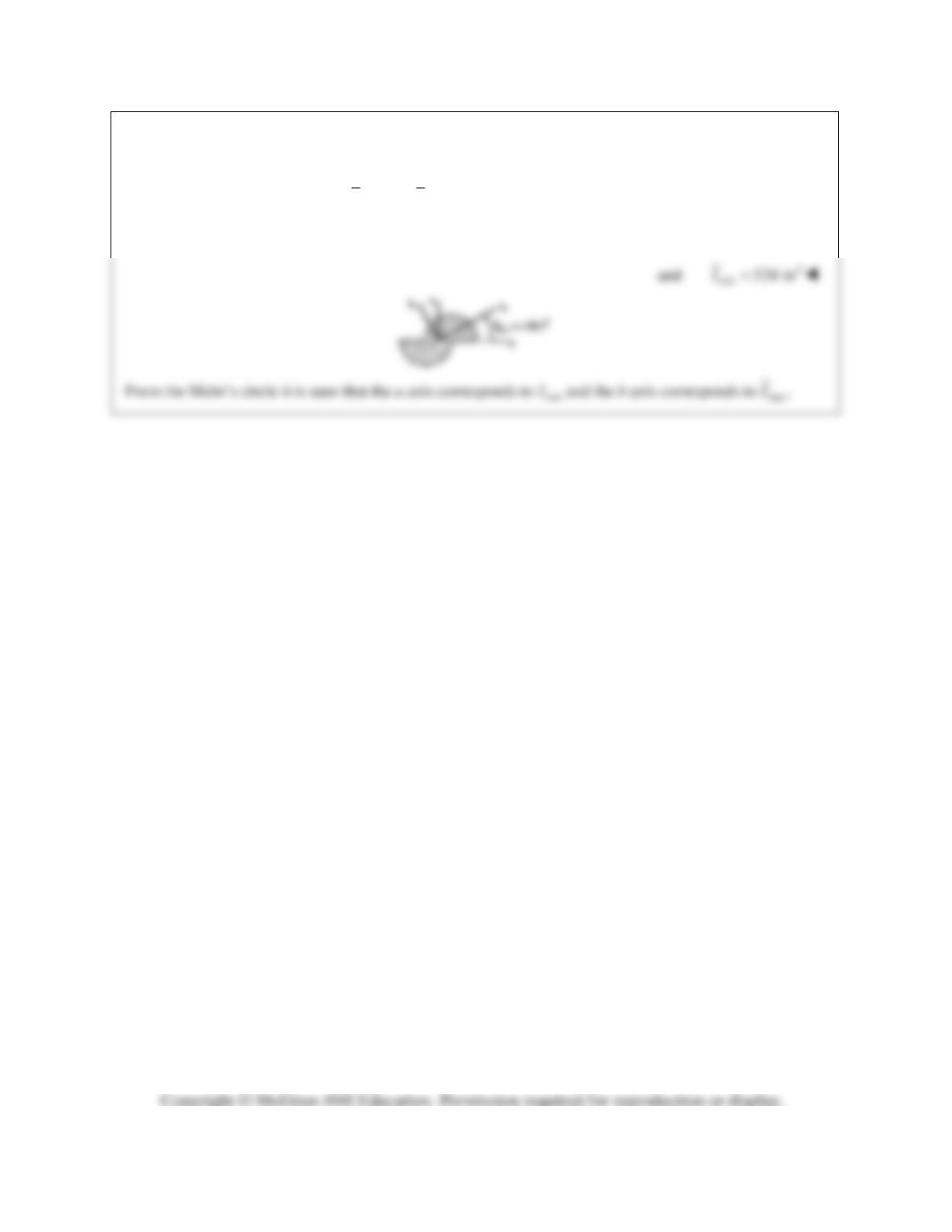
Now
max,min ave
1526.81 1002.75IIR
or
4
max
2530 inI