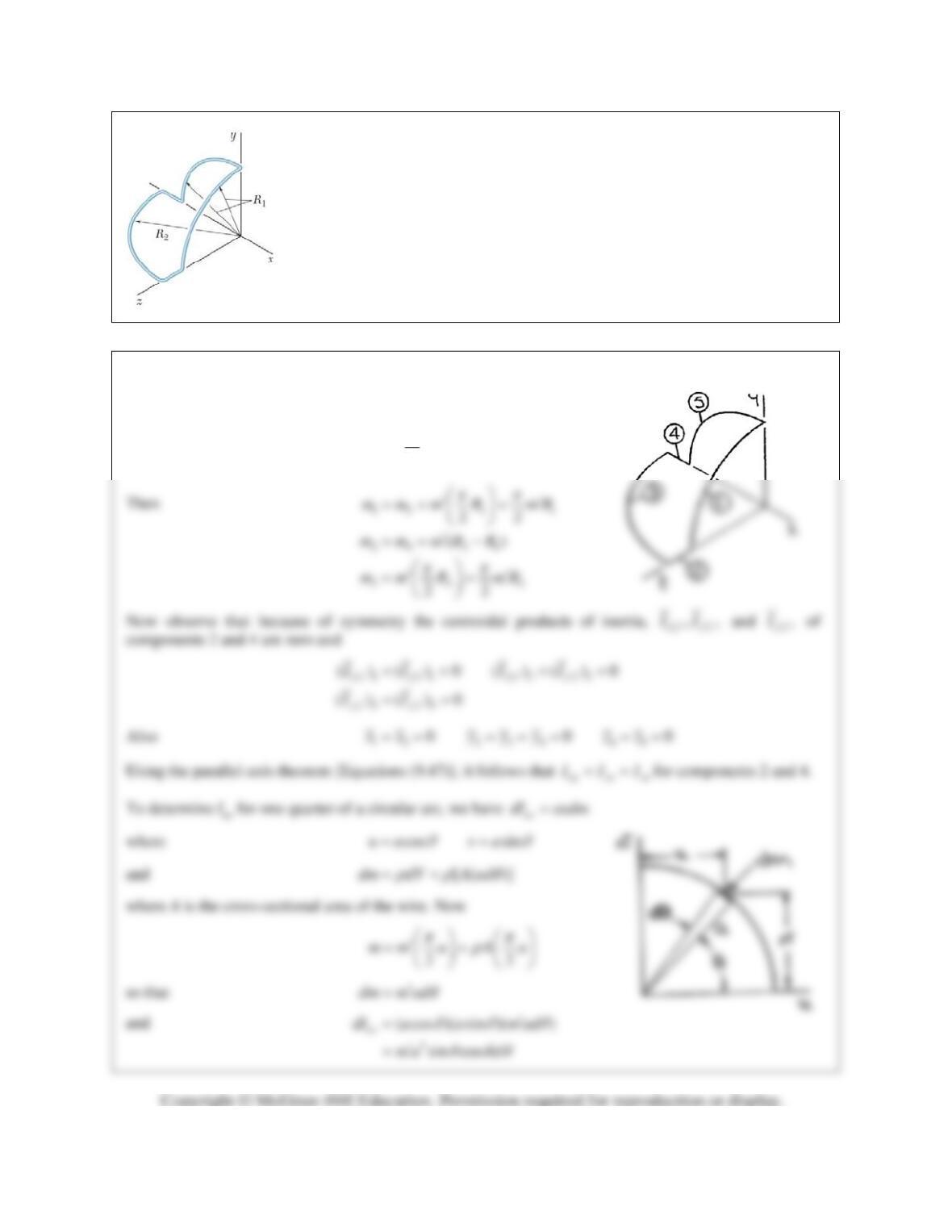
PROBLEM 9.158
Thin aluminum wire of uniform diameter is used to form the figure shown.
Denoting by m the mass per unit length of the wire, determine the mass
products of inertia I
xy
, I
yz
, and I
zx
of the wire figure.
SOLUTION
First compute the mass of each component. We have
m
mLmL
L
PROBLEM 9.158 (Continued)
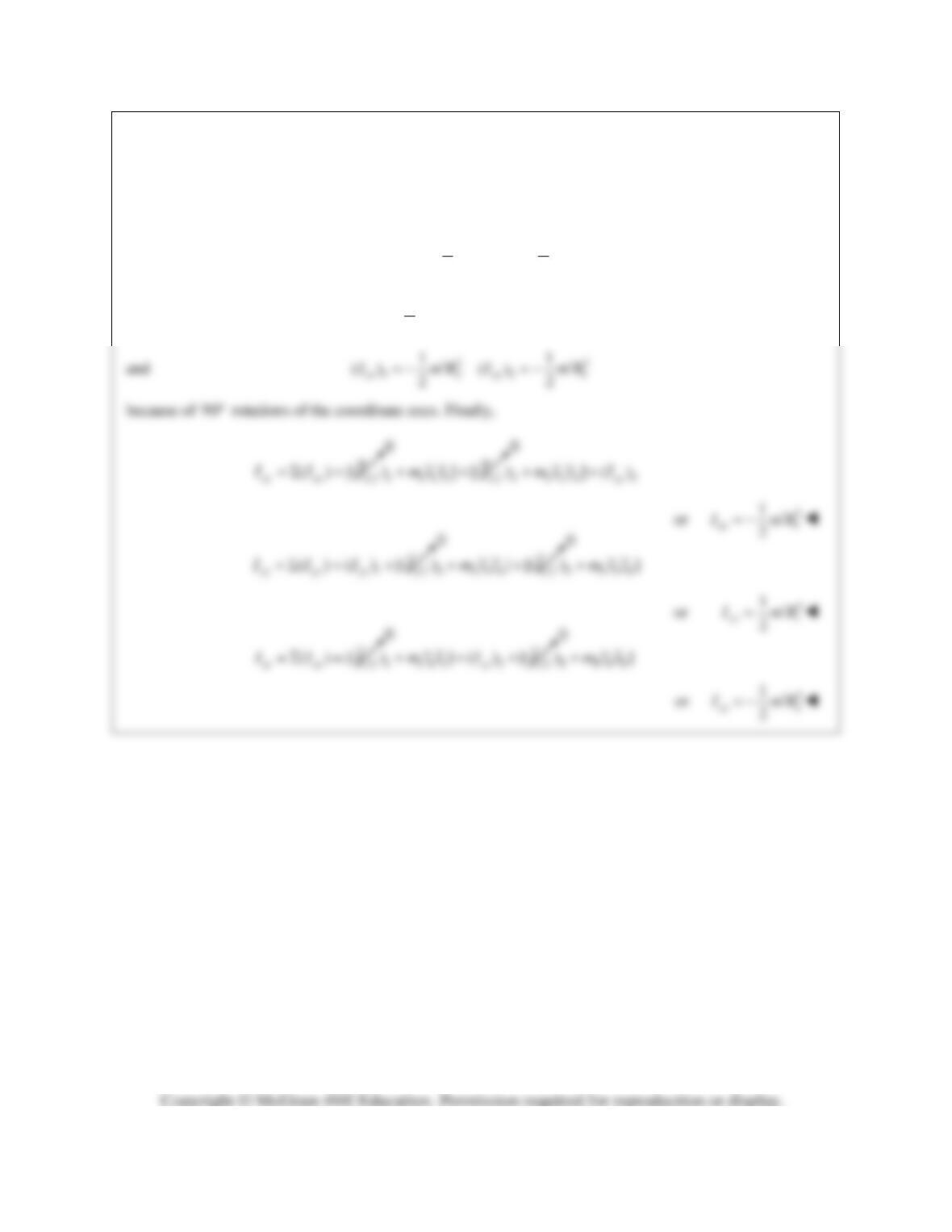
Then
/2 3
0
/2
32 3
0
sin cos
11
sin
22
uv uv
I
dI m a d
ma ma
Thus, 3
11
1
() 2
yz
I
mR
I
I
I
I
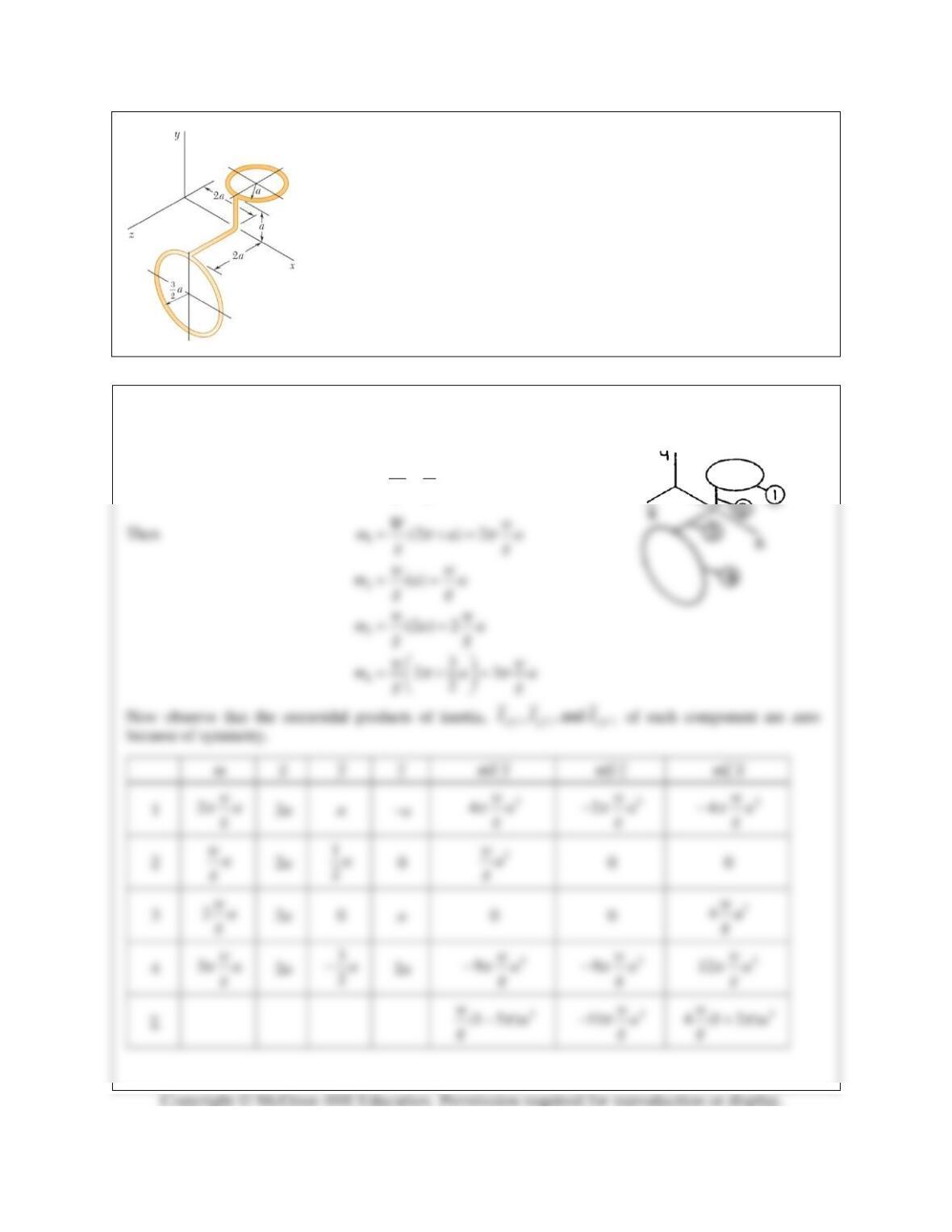
PROBLEM 9.159
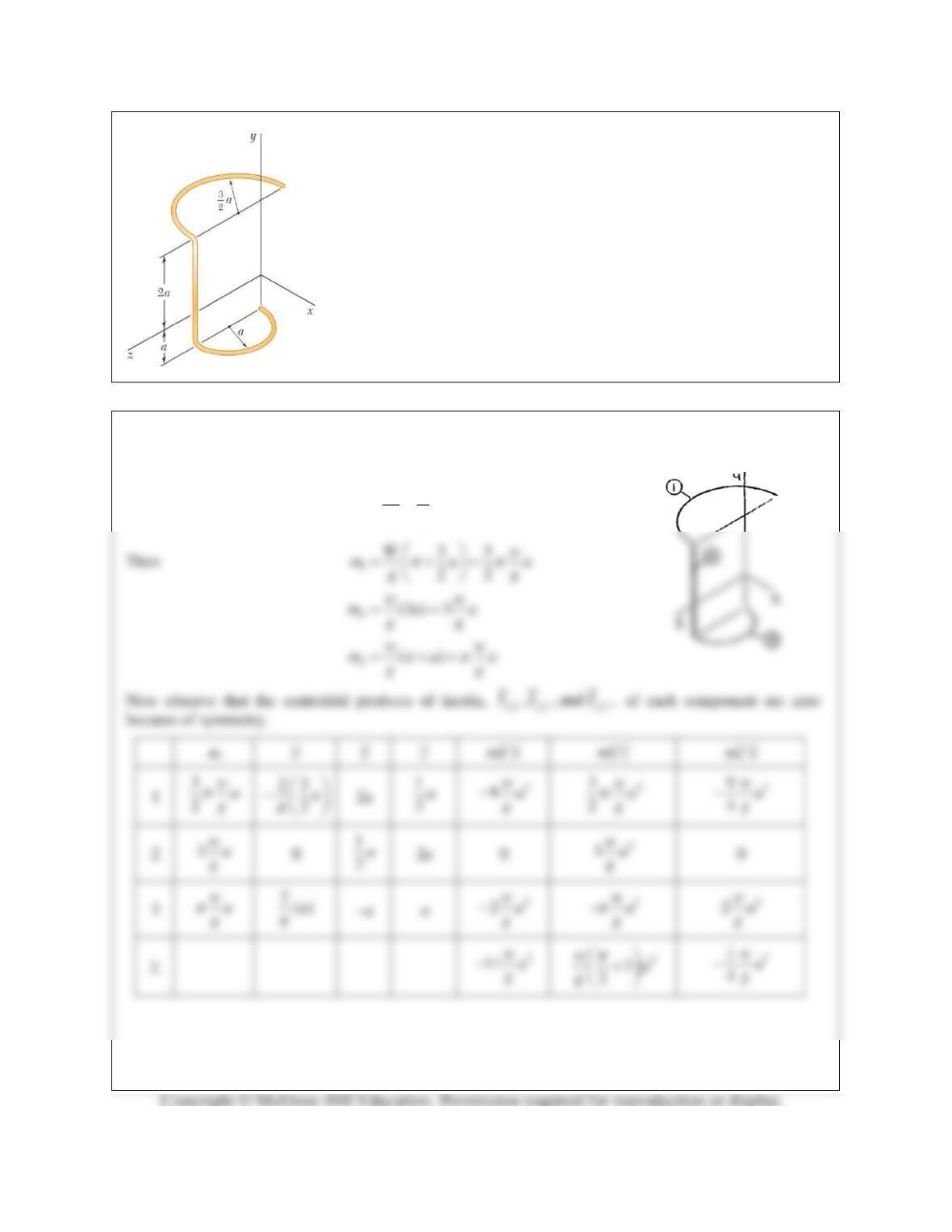
Brass wire with a weight per unit length w is used to form the figure shown.
Determine the mass products of inertia I
xy
, I
yz
, and I
zx
of the wire figure.
SOLUTION
First compute the mass of each component. We have
1W
mwL
gg
PROBLEM 9.159 (Continued)
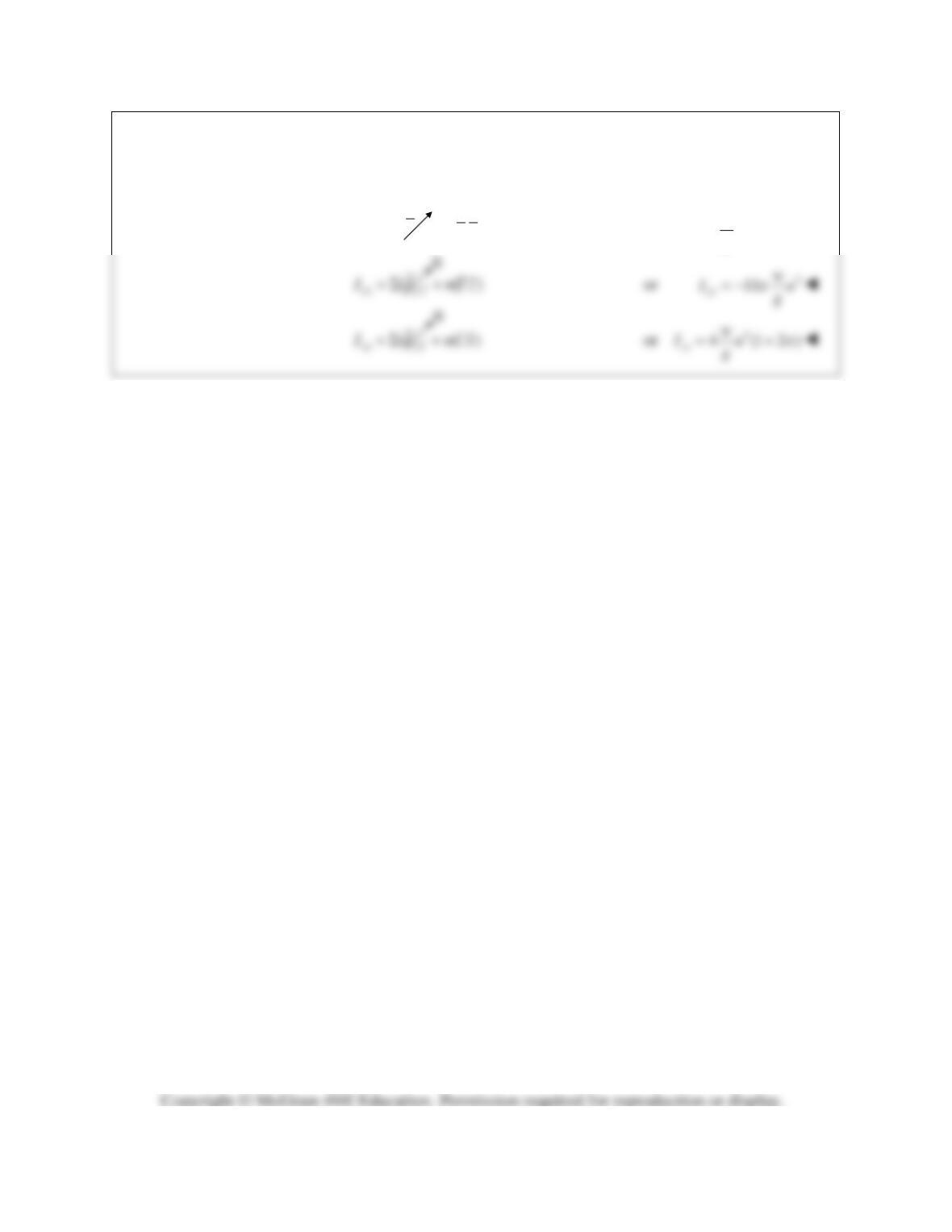
Then ()
xy x y
IImxy
or
3(1 5 )
xy
w
Ia
g
0
PROBLEM 9.160
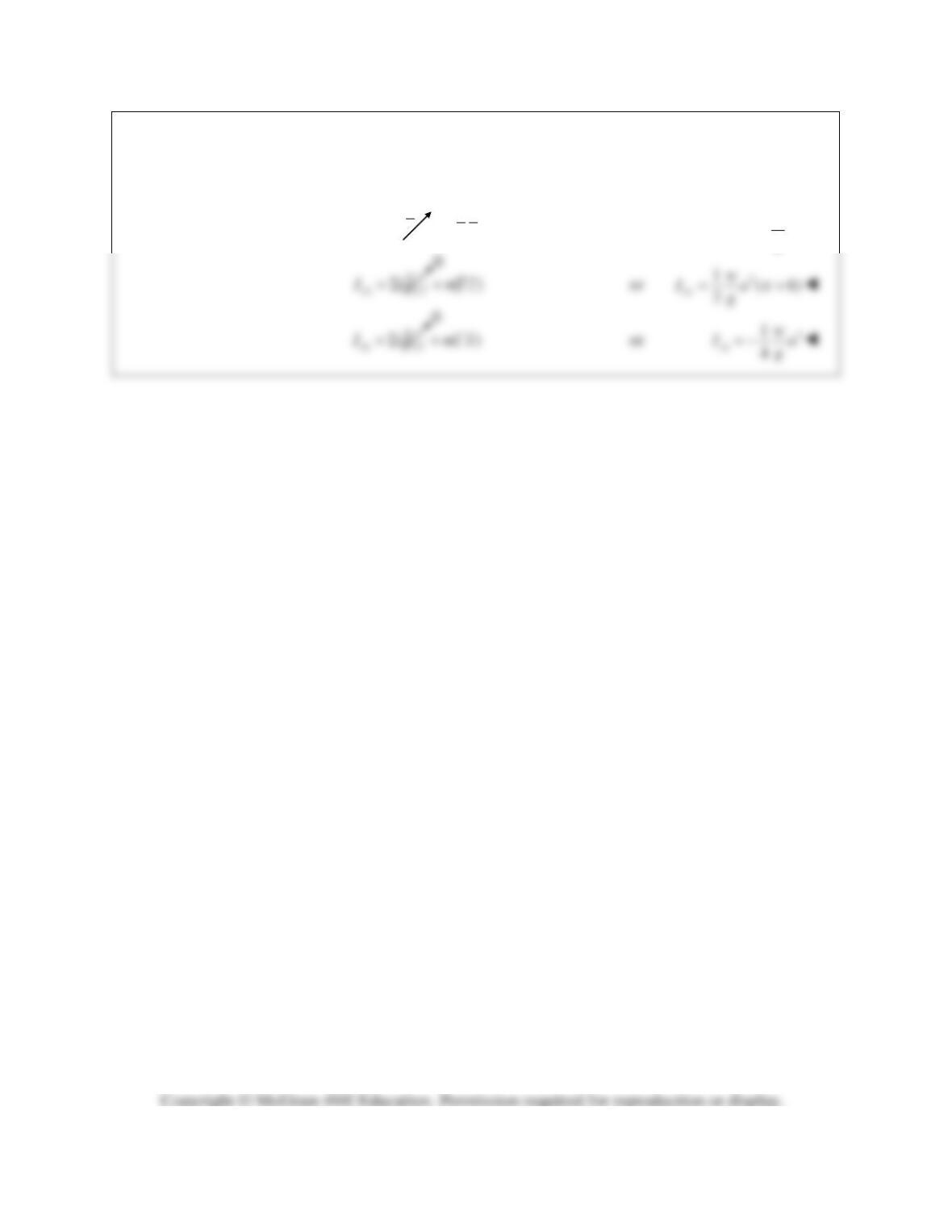
Brass wire with a weight per unit length w is used to form the figure
shown. Determine the mass products of inertia I
xy
, I
yz
, and I
zx
of the wire
figure.
SOLUTION
First compute the mass of each component. We have
1W
mwL
gg
PROBLEM 9.160 (Continued)
Then ()
xy x y
IImxy
or 3
11
xy
w
I
a
g
I
g
0
PROBLEM 9.161
Complete the derivation of Eqs. (9.47), which express the parallel-axis theorem for mass products of
inertia.
SOLUTION
We have xy yz zx
I xydm I yzdm I zxdm
(9.45)
and
x
xxyyyzzz
(9.31)
Consider xy
I xydm
I
PROBLEM 9.162
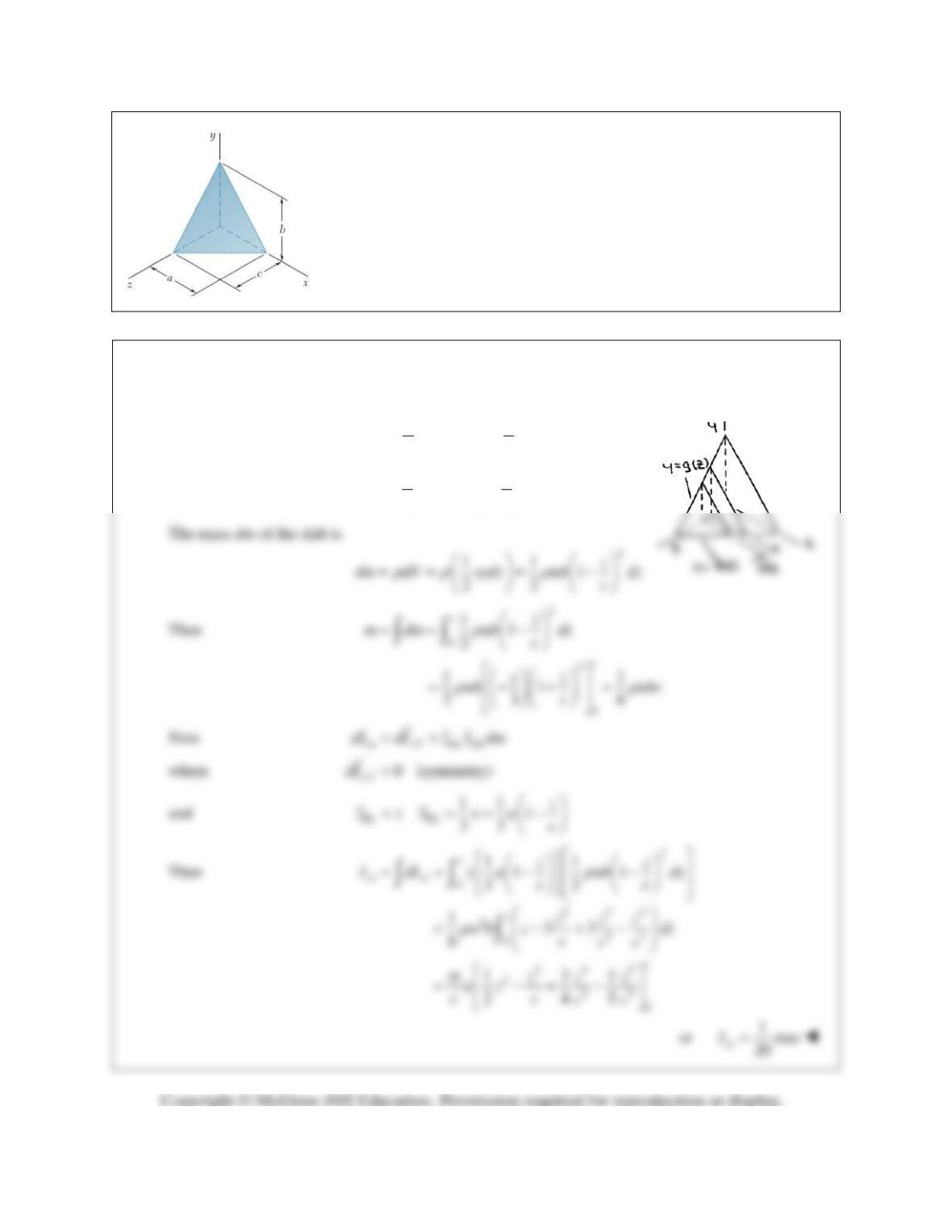
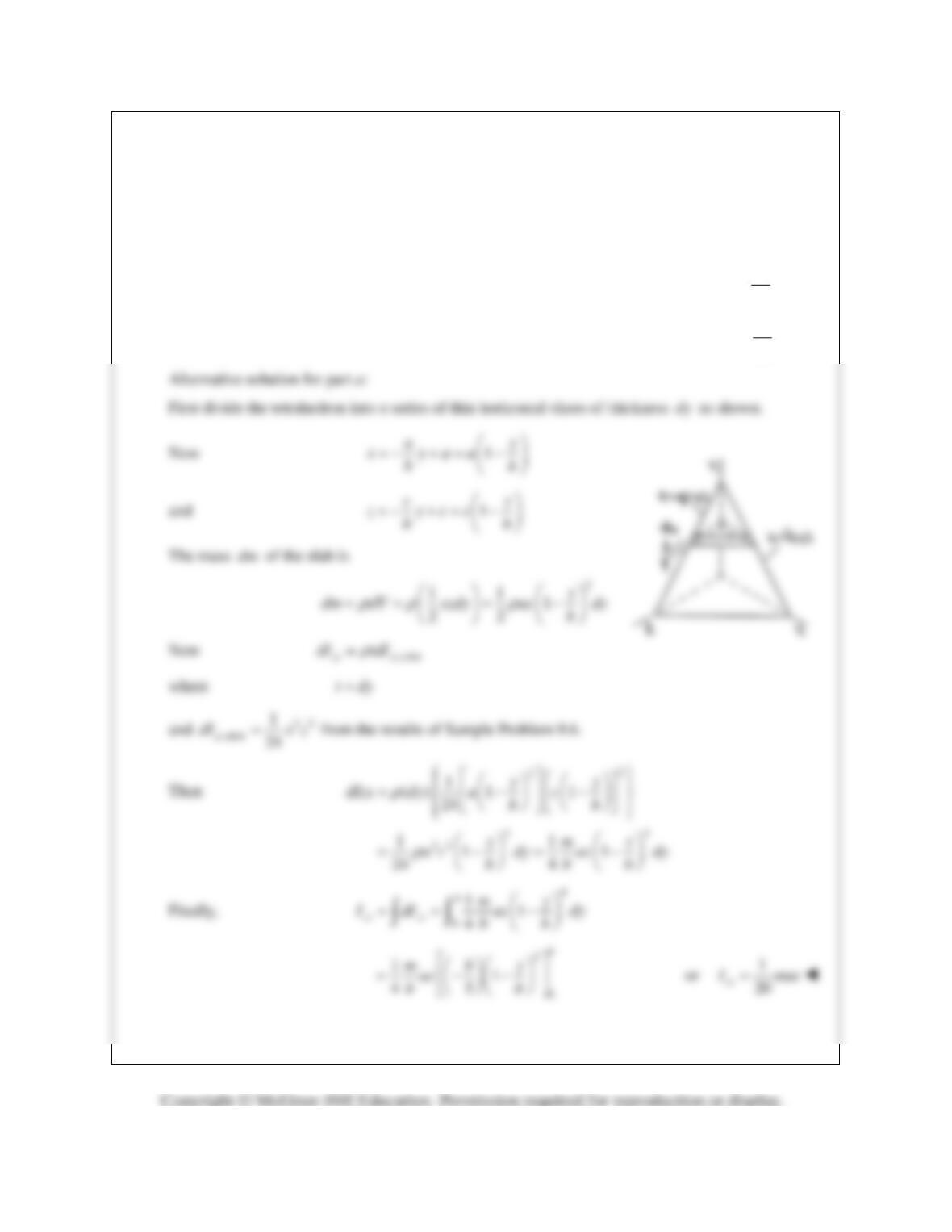
For the homogeneous tetrahedron of mass m shown, (a) determine by
direct integration the mass product of inertia I
zx
, (b) deduce I
yz
and I
xy
from
the result obtained in part a.
SOLUTION
(a) First divide the tetrahedron into a series of thin vertical slices of thickness dz as shown.
Now
1
az
xzaa
cc
and
1
bz
yzbb
cc
PROBLEM 9.162 (Continued)
(b) Because of the symmetry of the body,
x
y
I
and
y
z
I
can be deduced by considering the circular
permutation of
(, ,)xyz
and
(,,)abc
.
Thus,
1
20
xy
Imab
1
20
yz
Imbc
PROBLEM 9.162 (Continued)
Alternative solution for part a:
The equation of the included face of the tetrahedron is
1
xyz
abc
so that 1
x
z
yb ac
PROBLEM 9.163
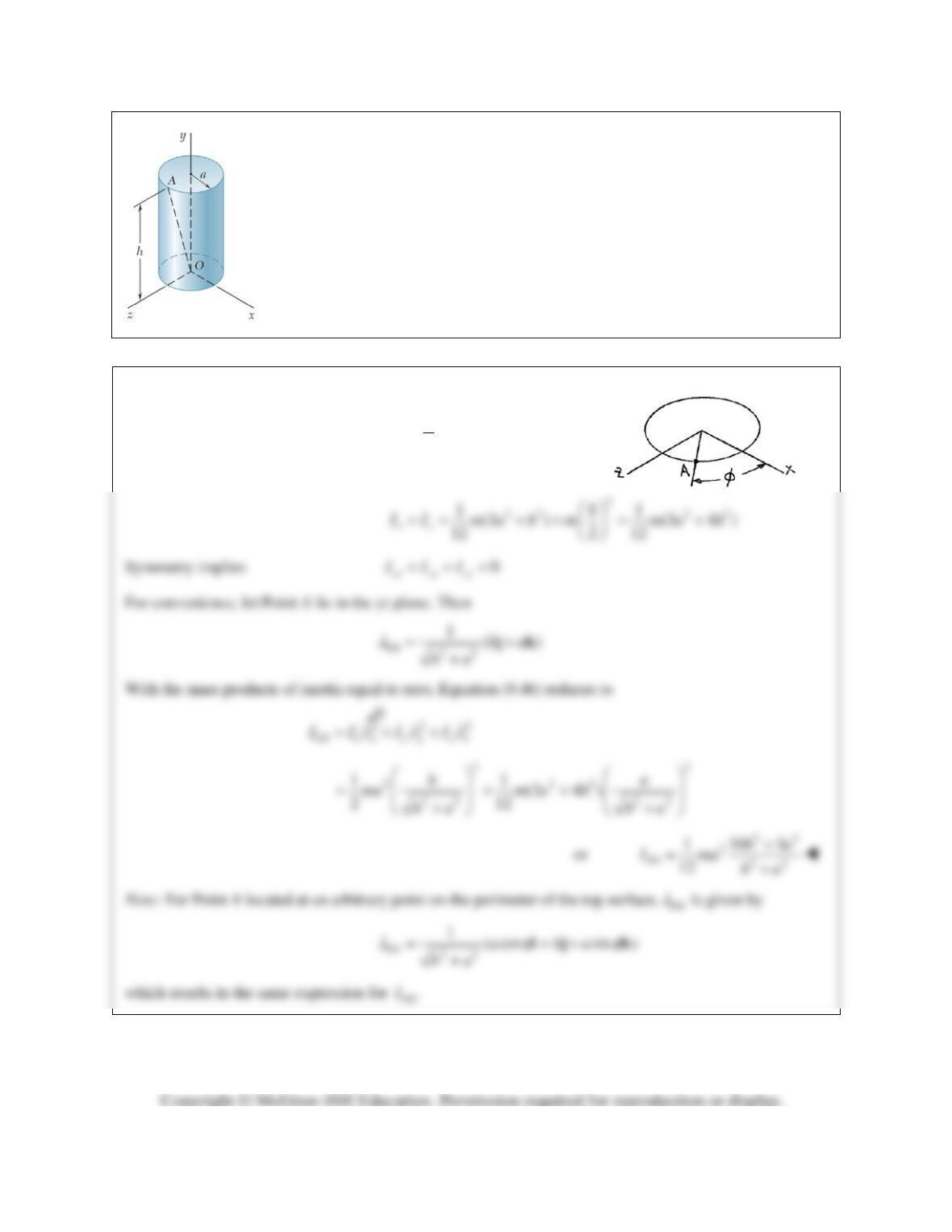
The homogeneous circular cone shown has a mass m.
Determine the mass moment of inertia of the cone with respect
to the line joining the origin O and Point A.
SOLUTION
First note that
2
22
39
(3) (3)
22
OA
daaaa
PROBLEM 9.164
The homogeneous circular cylinder shown has a mass m. Determine the mass
moment of inertia of the cylinder with respect to the line joining the origin O and
Point A that is located on the perimeter of the top surface of the cylinder.
SOLUTION
From Figure 9.28: 2
1
2
y
Ima
and using the parallel-axis theorem
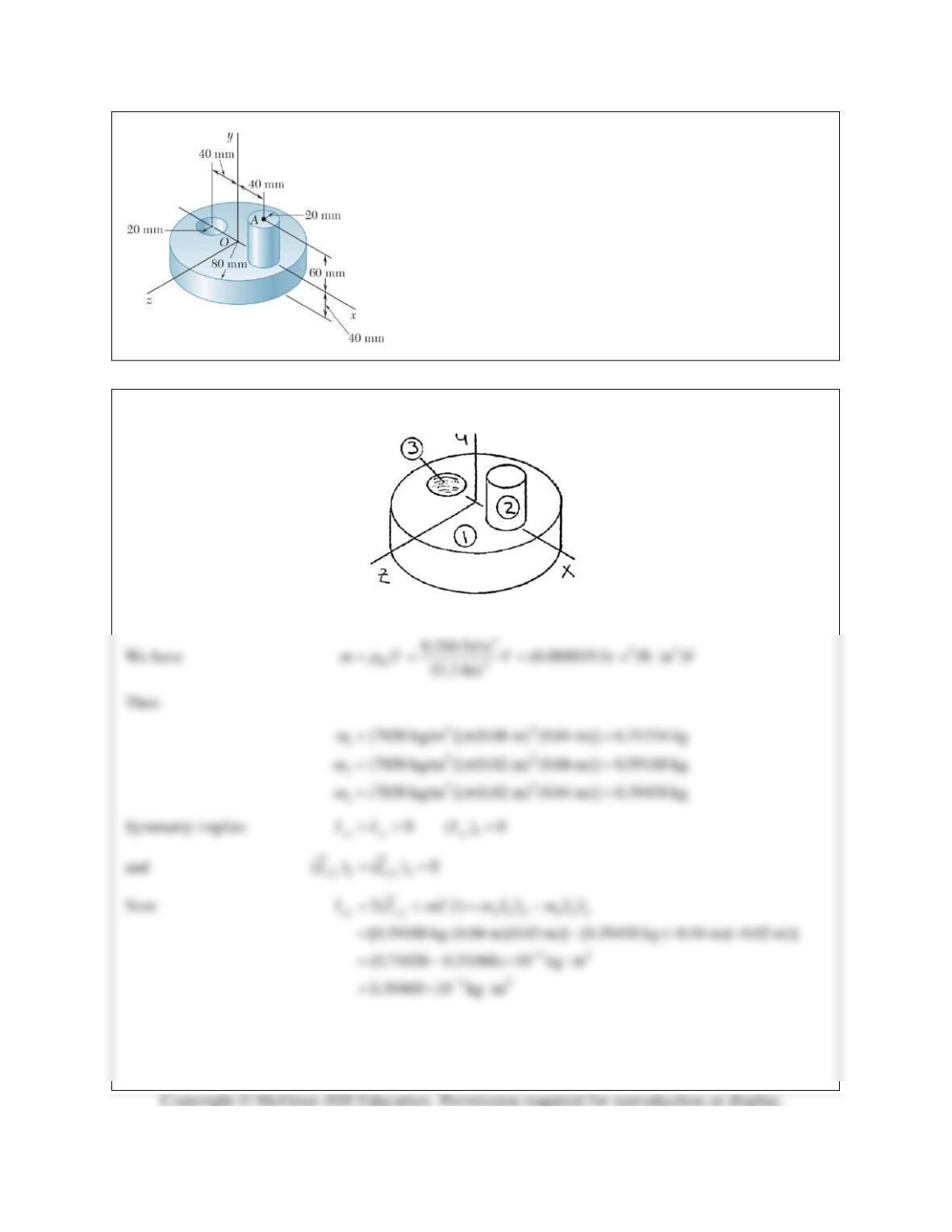
PROBLEM 9.165
Shown is the machine element of Problem 9.141. Determine its
mass moment of inertia with respect to the line joining the
origin O and Point A.
SOLUTION
First compute the mass of each component.
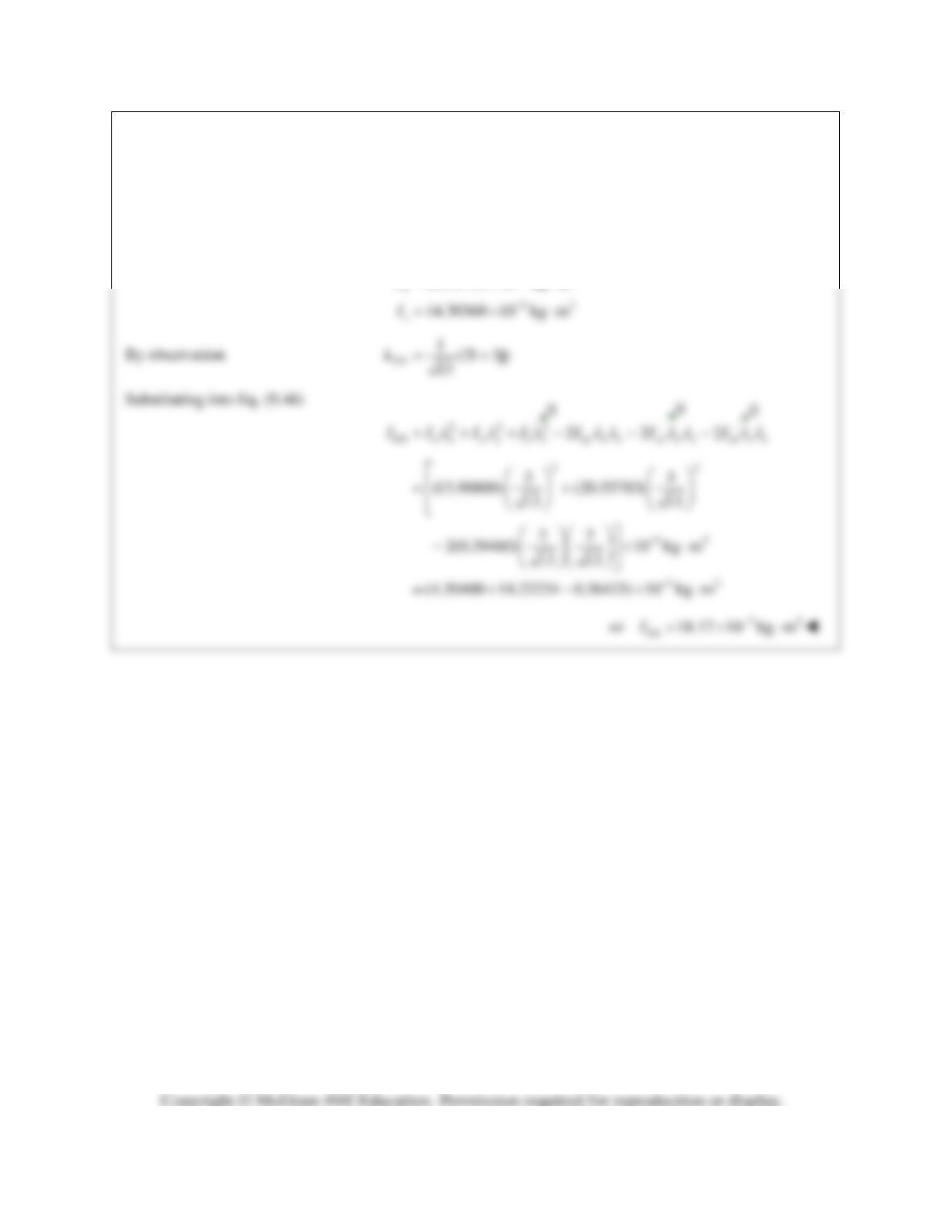
PROBLEM 9.165 (Continued)
From the solution to Problem 9.141, we have
32
32
13.98800 10 kg m
20.55783 10 kg m
x
I
I
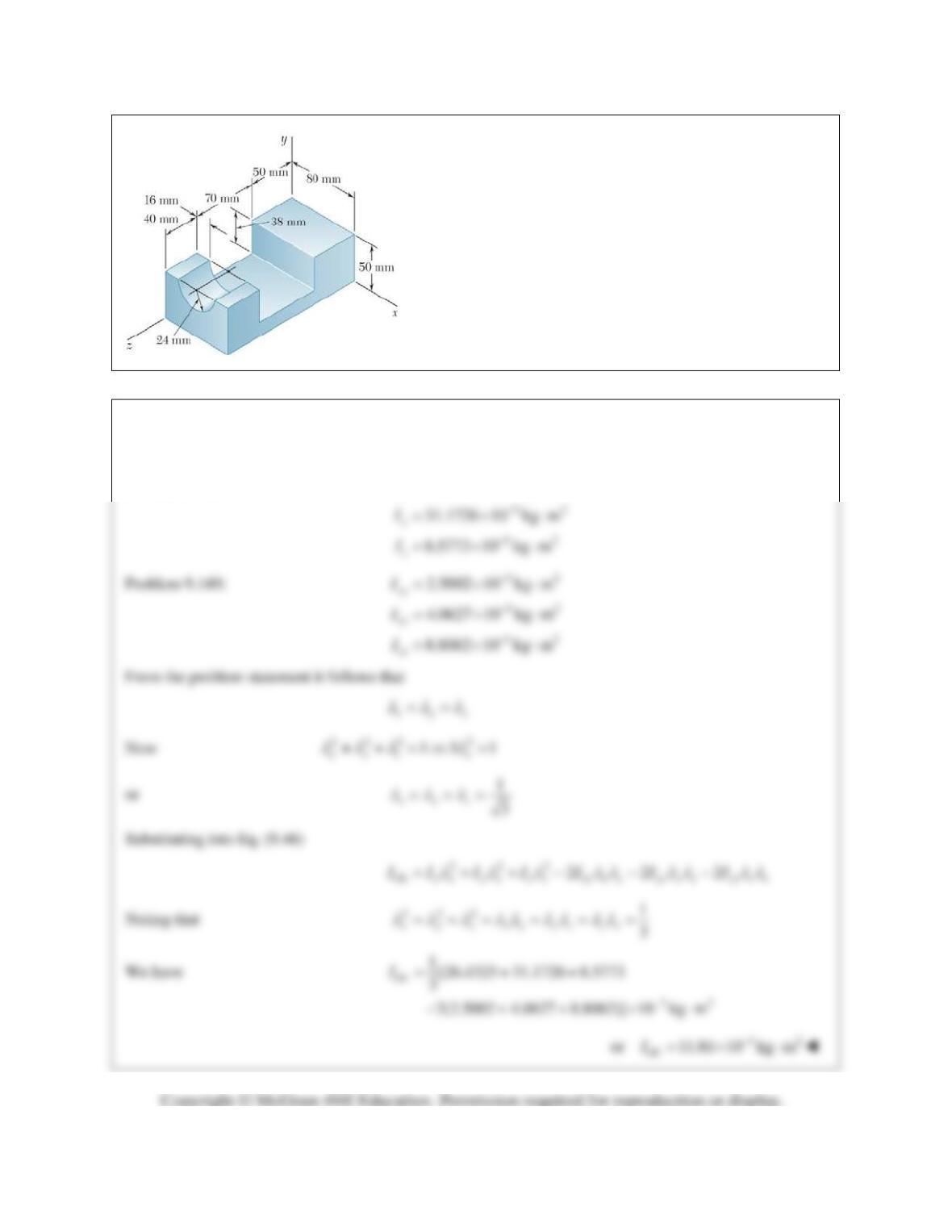
PROBLEM 9.166
Determine the mass moment of inertia of the steel fixture of
Problems 9.145 and 9.149 with respect to the axis through
the origin that forms equal angles with the x, y, and z axes.
SOLUTION
From the solutions to Problems 9.145 and 9.149, we have
Problem 9.145: 32
26.4325 10 kg m
x
I
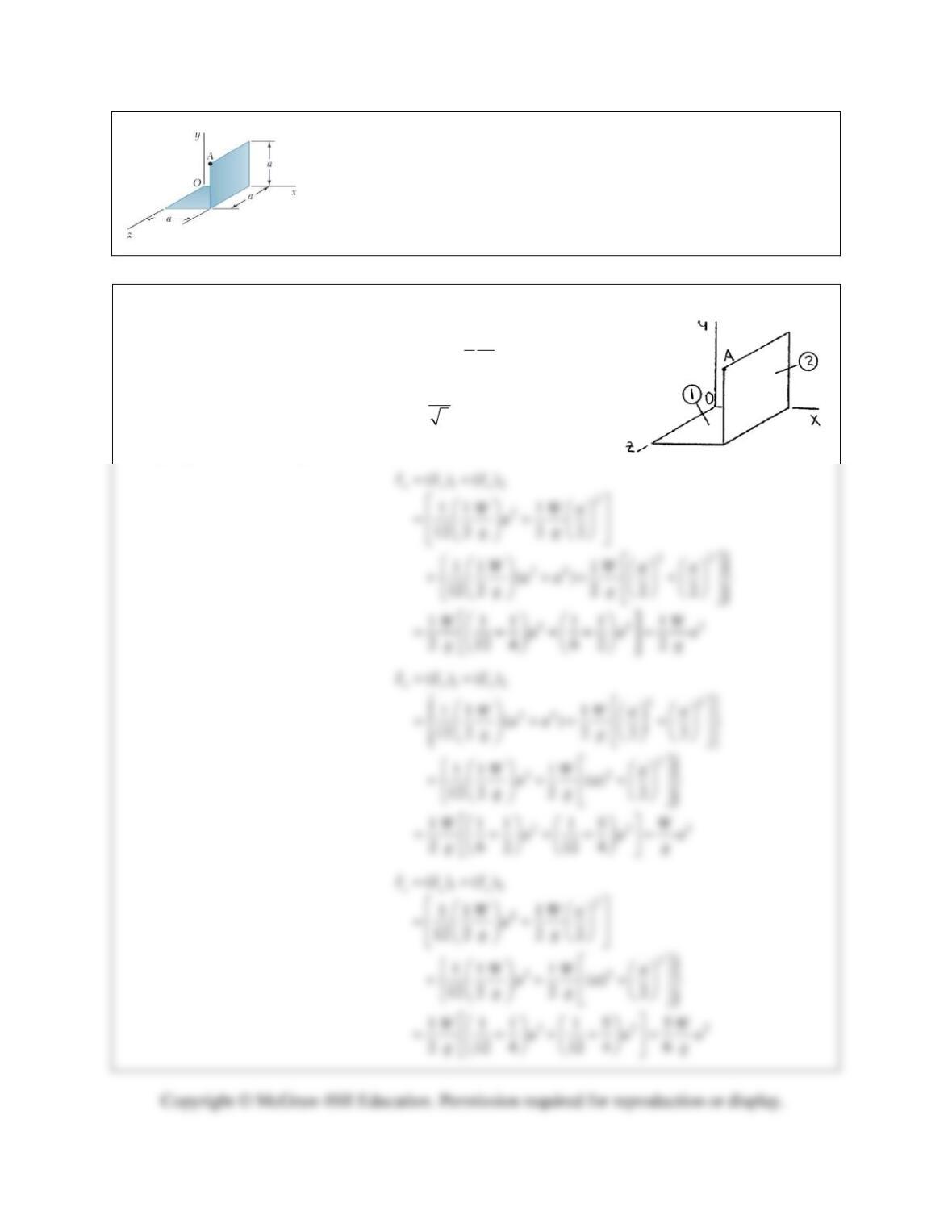
PROBLEM 9.167
The thin bent plate shown is of uniform density and weight W. Determine its
mass moment of inertia with respect to the line joining the origin O and
Point A.
SOLUTION
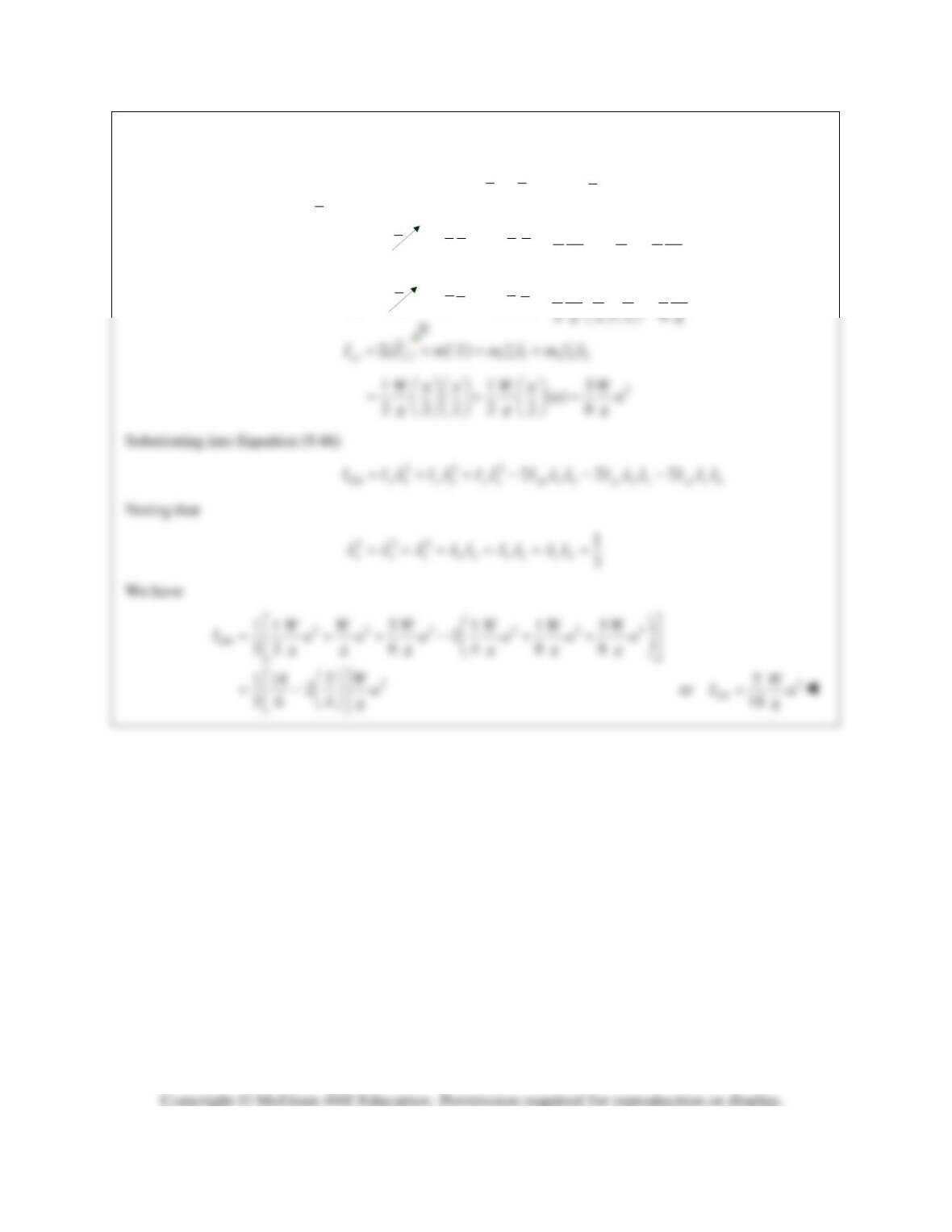
First note that
12
1
2
W
mm g
and that
1()
3
OA
ijk
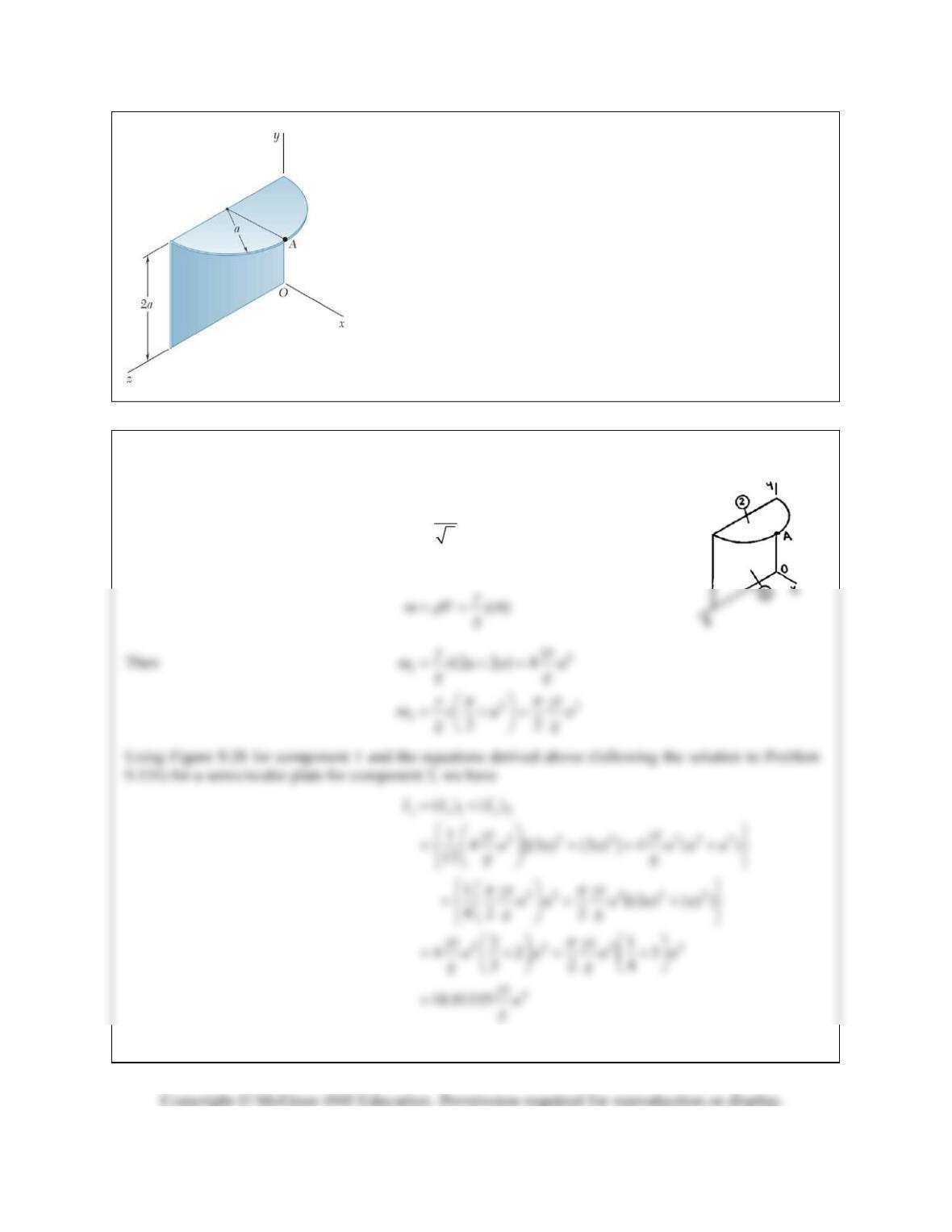
Using Figure 9.28 and the parallel-axis theorem, we have
PROBLEM 9.167 (Continued)
Now observe that the centroidal products of inertia, ,,
x
yyz
II
and ,
zx
I
of both components are zero
because of symmetry. Also, 10y
Then 2
222
11
() ()
224
xy x y
Wa W
I
Imxymxy a a
g
g
2
222
11
() 2228
yz y z
Wa a W
I
Imyzmyz a
I
g
0
0
PROBLEM 9.168
A piece of sheet steel of thickness t and specific weight
is cut and
bent into the machine component shown. Determine the mass
moment of inertia of the component with respect to the joining the
origin O and Point A.
SOLUTION
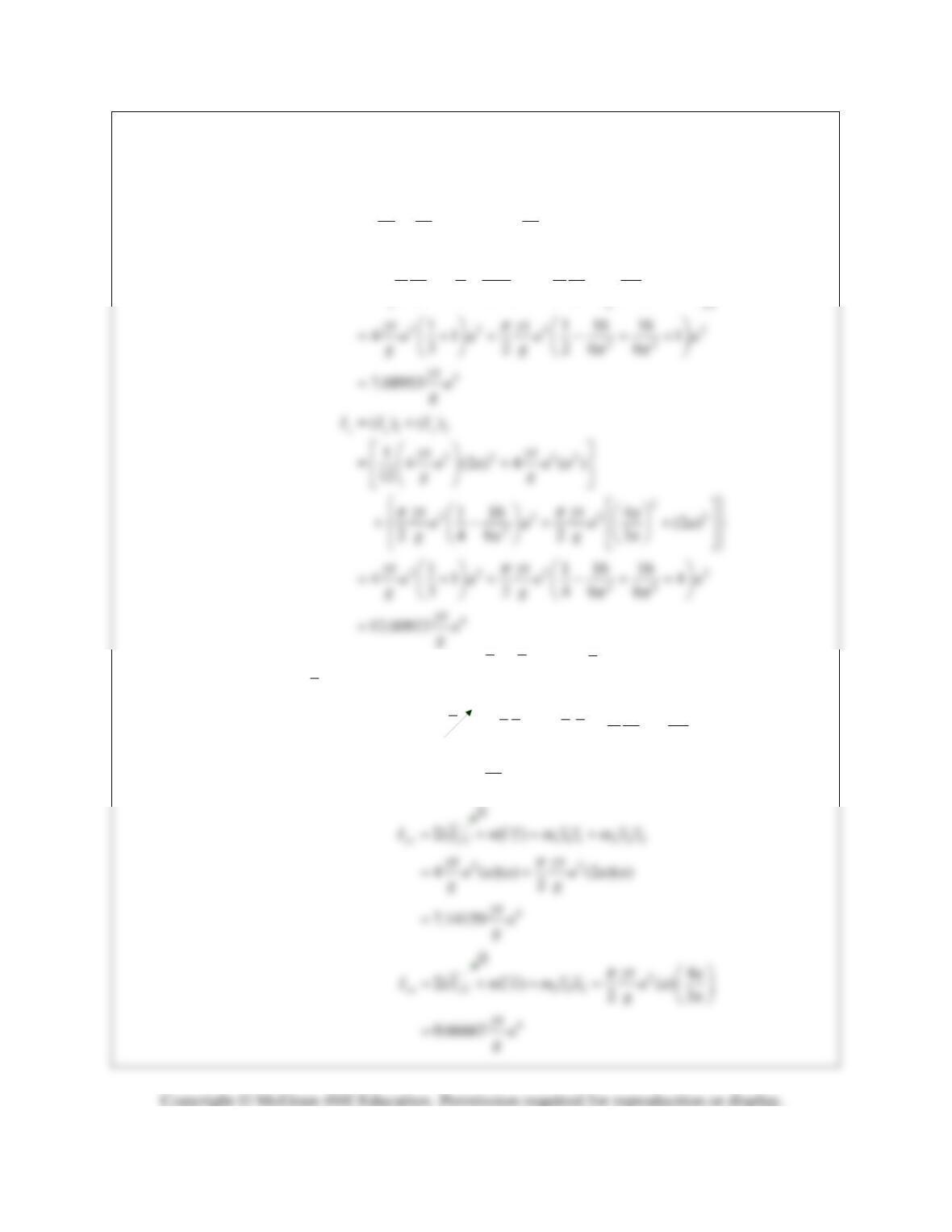
First note that
1(2 )
6
OA
λijk
Next compute the mass of each component. We have
PROBLEM 9.168 (Continued)
12
22 22
2
222 2
2
() ()
14(2)4()
12
116 4 ()
22 2 3
9
yy y
II I
tt
aa aa
gg
tta
aaaa
gg
Now observe that the centroidal products of inertia, ,,
x
yyz
II
and ,
zx
I
of both components are zero
because of symmetry. Also 10.x
Then 2
222
4
4
() (2)
23
1.33333
xy x y
ta
I
Imxymxy a a
g
ta
g
0
PROBLEM 9.168 (Continued)
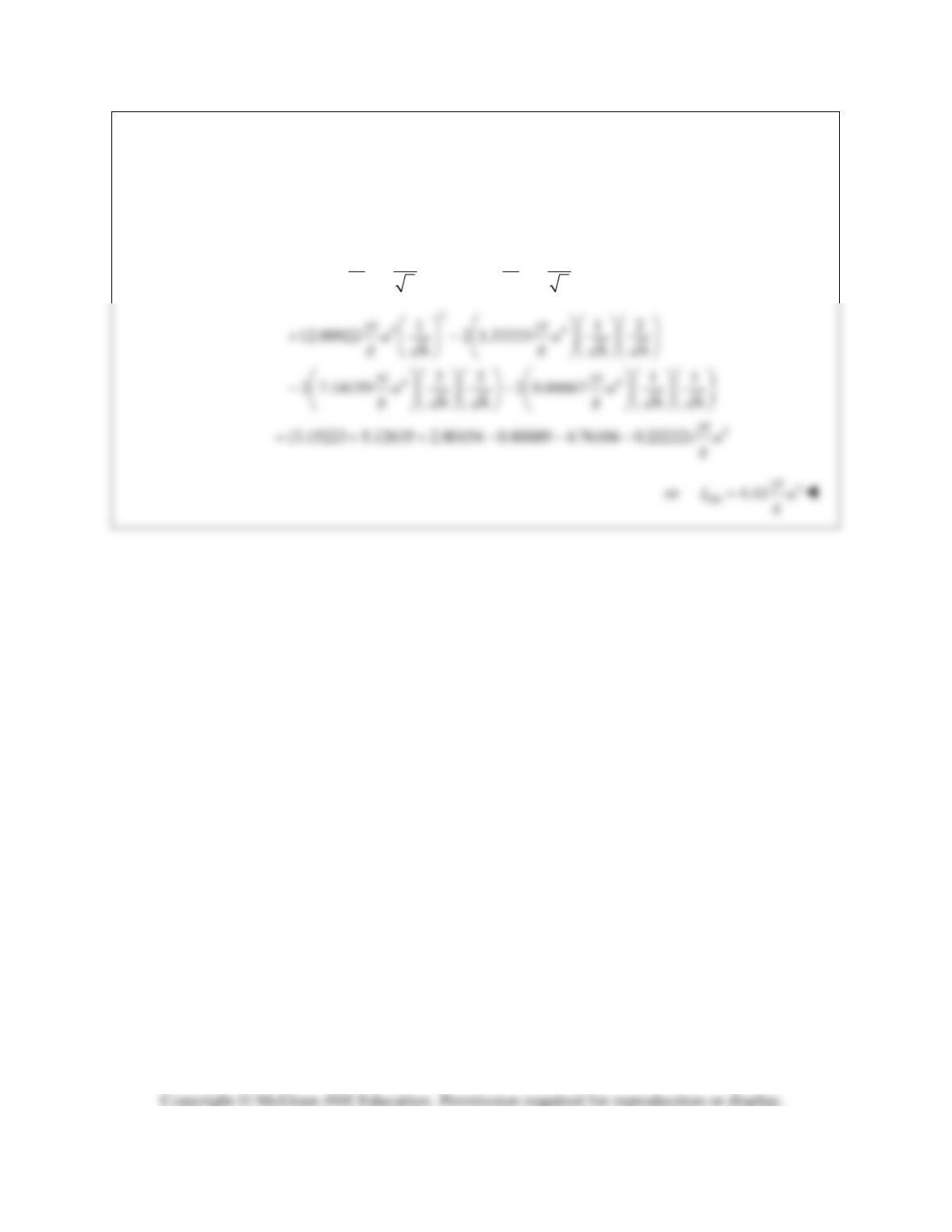
Substituting into Eq. (9.46)
222
22
44
222
12
18.91335 7.68953
66
OA x x y y z z xy x y yz y z zx z x
II I I I I I
tt
aa
gg