Solution 9.76
(a)
2
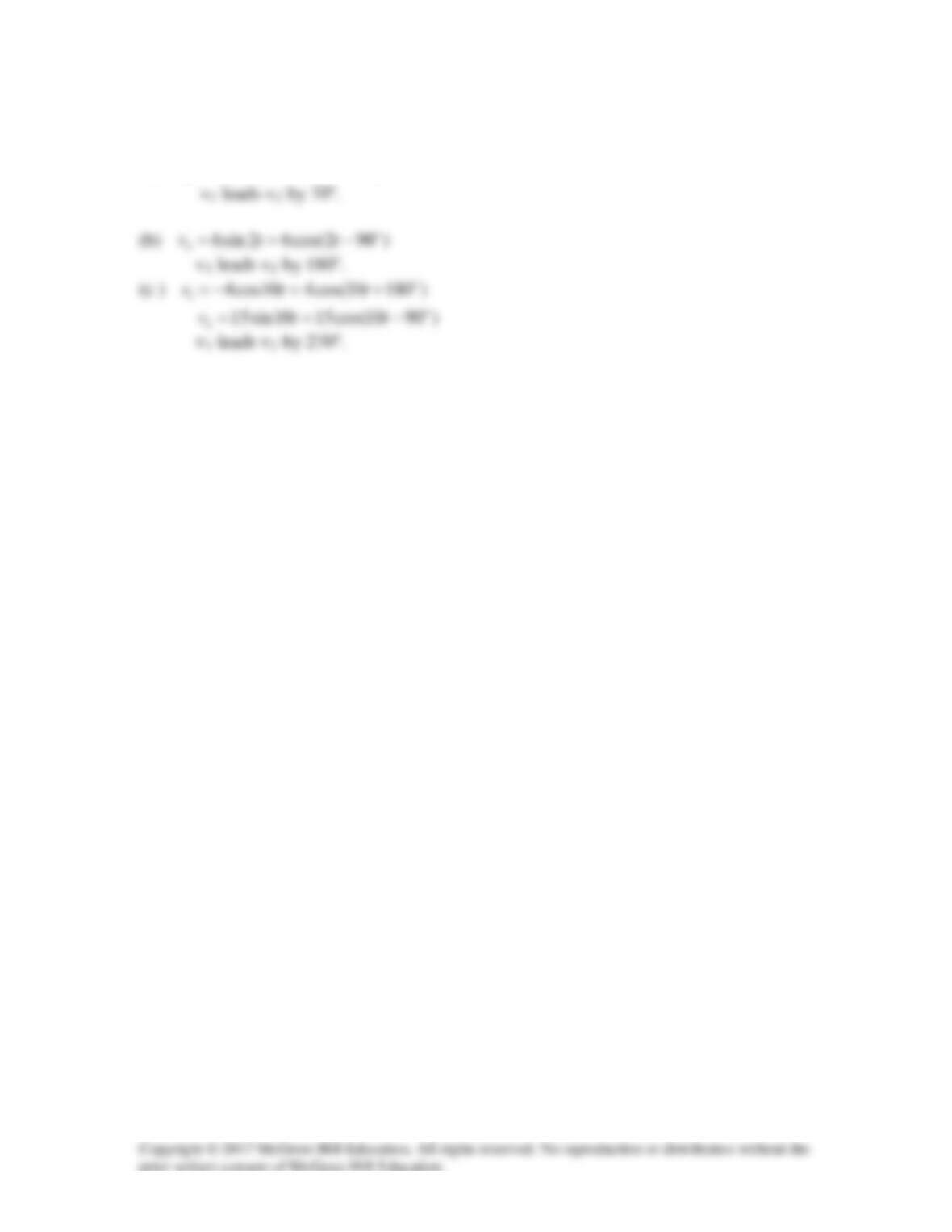
8sin 5 8cos(5 90 )
o
vtt= = −
Solution 9.77
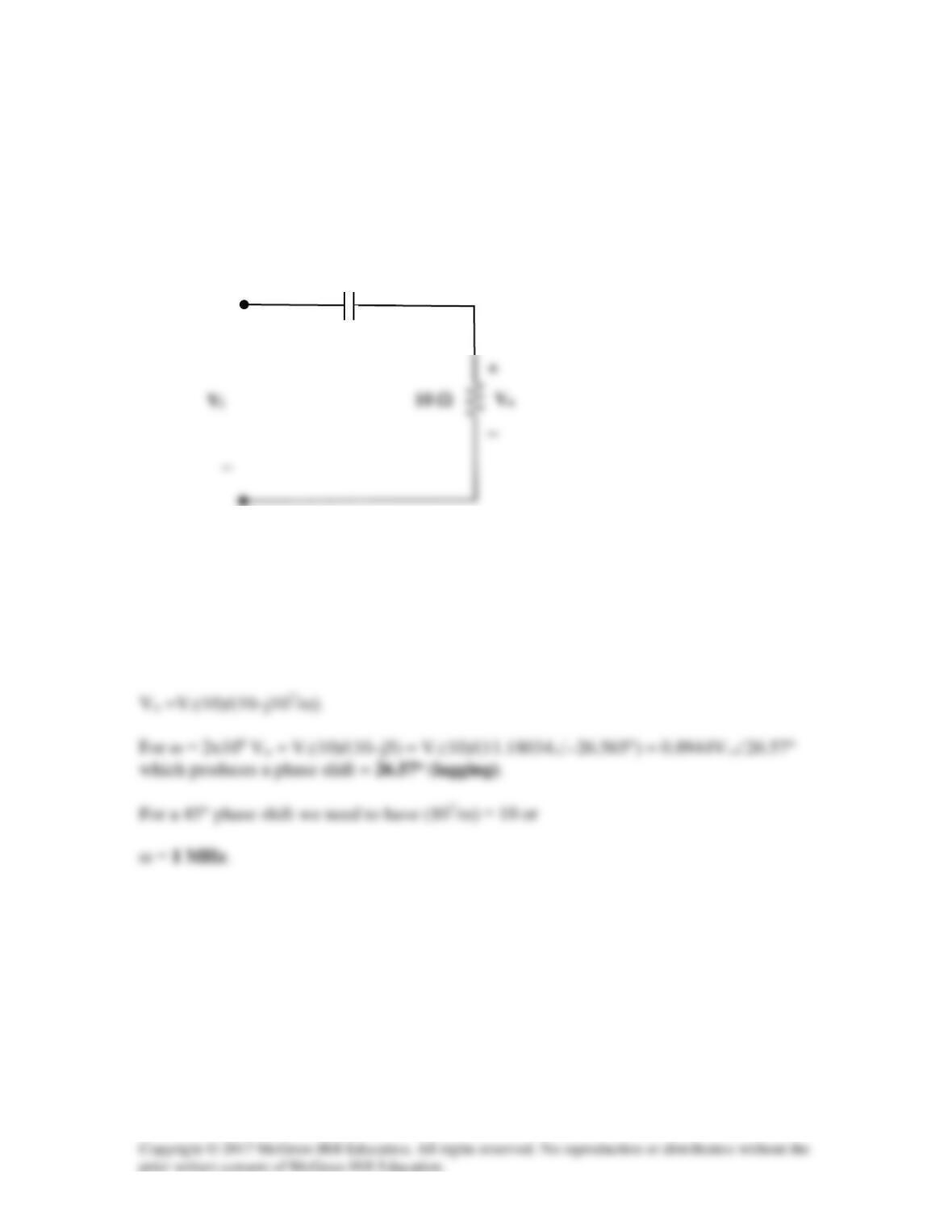
Refer to the RC circuit in Fig. 9.81.
(a) Calculate the phase shift at 2 MHz.
(b) Find the frequency where the phase shift is 45°.
Figure 9.81
For Prob. 9.77.
Solution
In the frequency domain, the capacitance is equal to –j107/ω which leads to,
+
100 nF
Solution 9.78
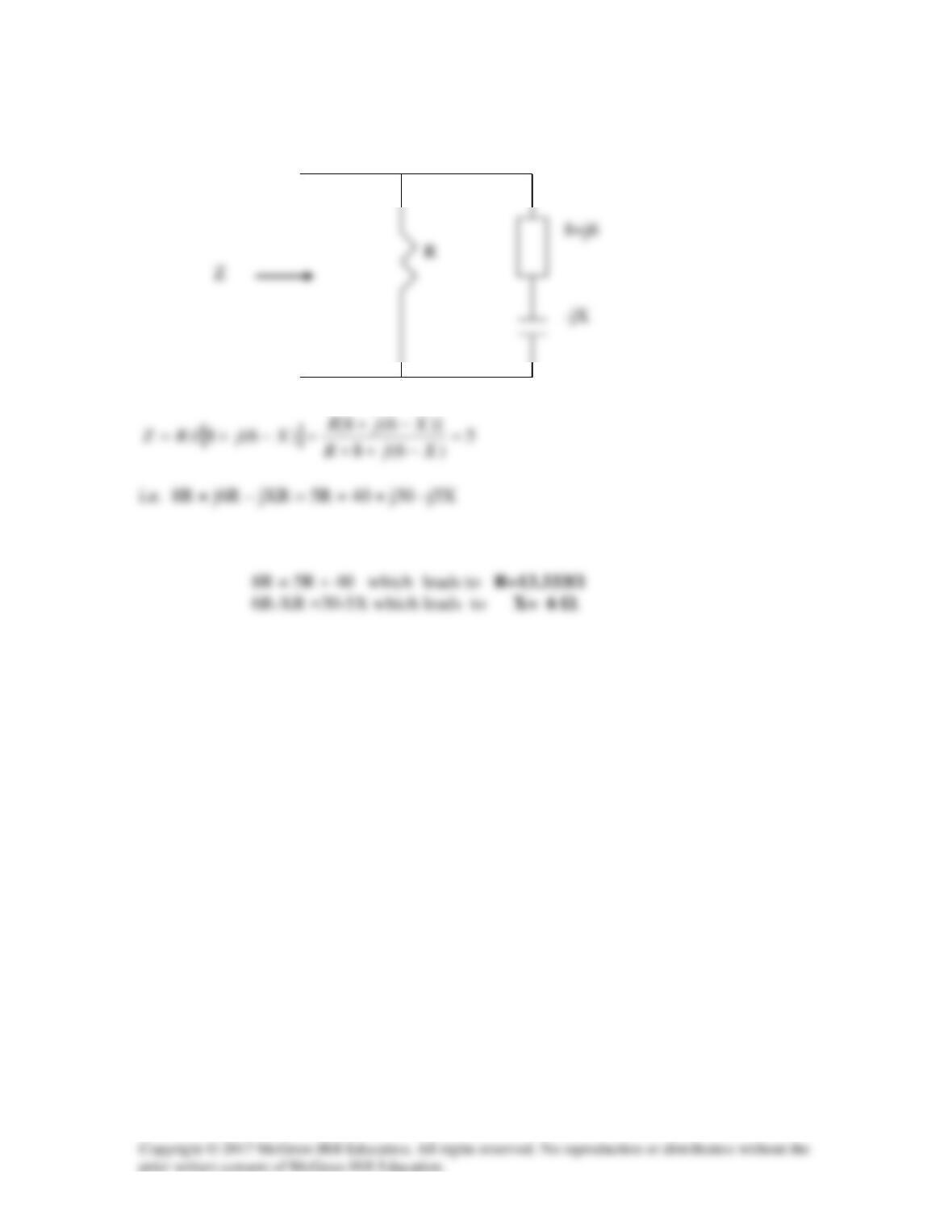
Equating real and imaginary parts:
Solution 9.79
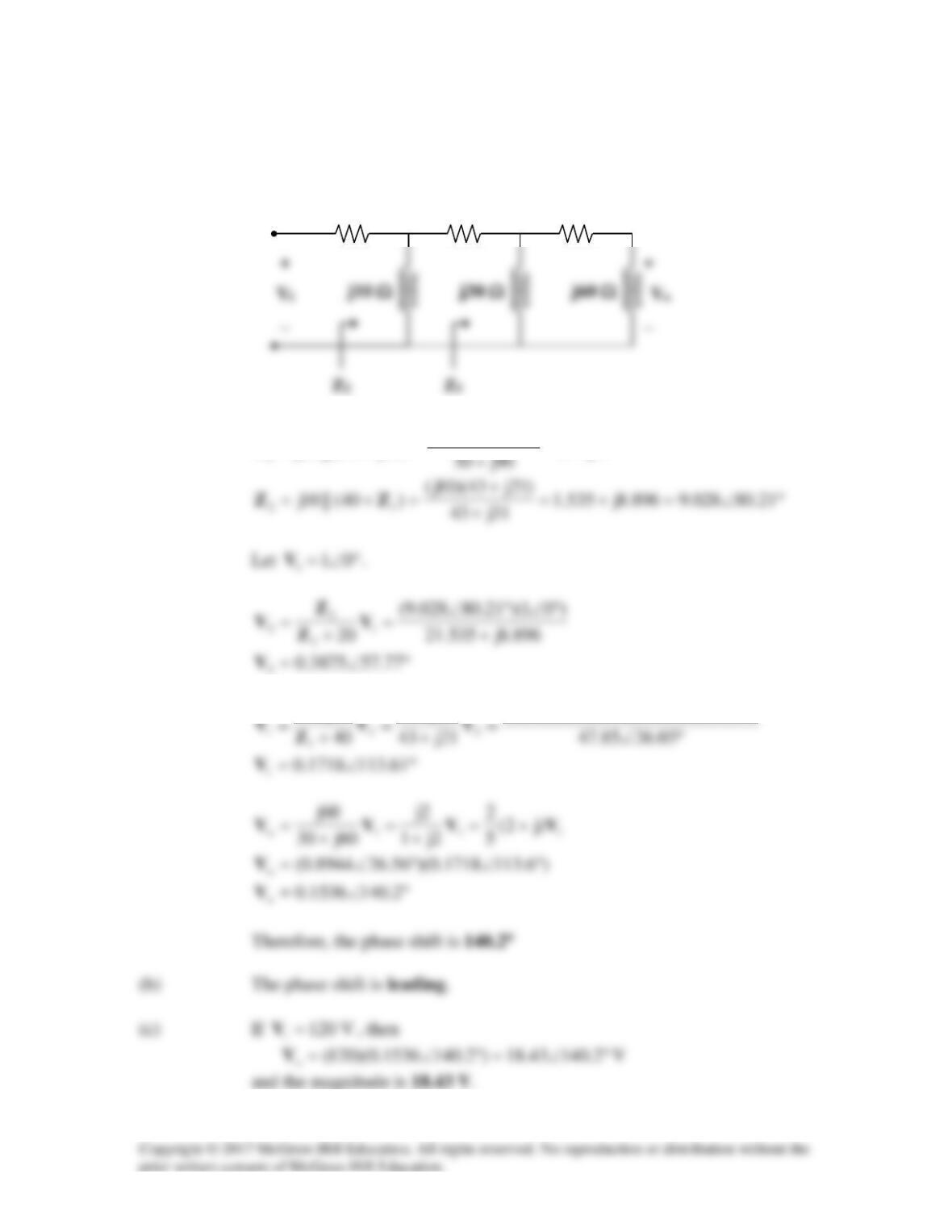
(a) Consider the circuit as shown.
21j3
)60j30)(30j(
)60j30(||30j
1
+=
+
=+=Z
°∠°∠
+
)77.573875.0)(87.81213.21(
21j3
1
Z
20 Ω
30 Ω
Z2
Z1
40 Ω
V2
V1
Solution 9.80
Ω=×π=ω→ 4.75j)10200)(60)(2(jLjmH200 3–
(a) When
Ω= 100R
,
(b) When
Ω= 0R
,
(c) To produce a phase shift of 45°, the phase of
o
V
= 90° + 0° − α = 45°.
Solution 9.81
Let
11 R=Z
,
2
22
Cj
1
Rω
+=Z
,
33
R=Z
, and
x
xx
Cj
1
Rω
+=Z
.

Solution 9.82

Solution 9.83
Solution 9.84
Let
s
11 Cj
1
||R ω
=Z
,
22
R=Z
,
33
R=Z
, and
xxx LjR ω+=Z
.
s
Since
2
1
3
xZ
Z
Z
Z=
,
Equating the real and imaginary components,
1
32
x
R
RR
R=
Given that
Ω= k40R1
,
Ω= k6.1R 2
,
Ω= k4R
3
, and
F45.0Csµ=

Since
32412
3
4
ZZZZZ
Z
Z
Z=→=
,
Equating the real and imaginary components,
41
RR =
(2)
Dividing (1) by (2),
22
44
CR
CR
1ω=
ω
Solution 9.86
84j–
1
95j
1
240
1++=Y
Solution 9.87
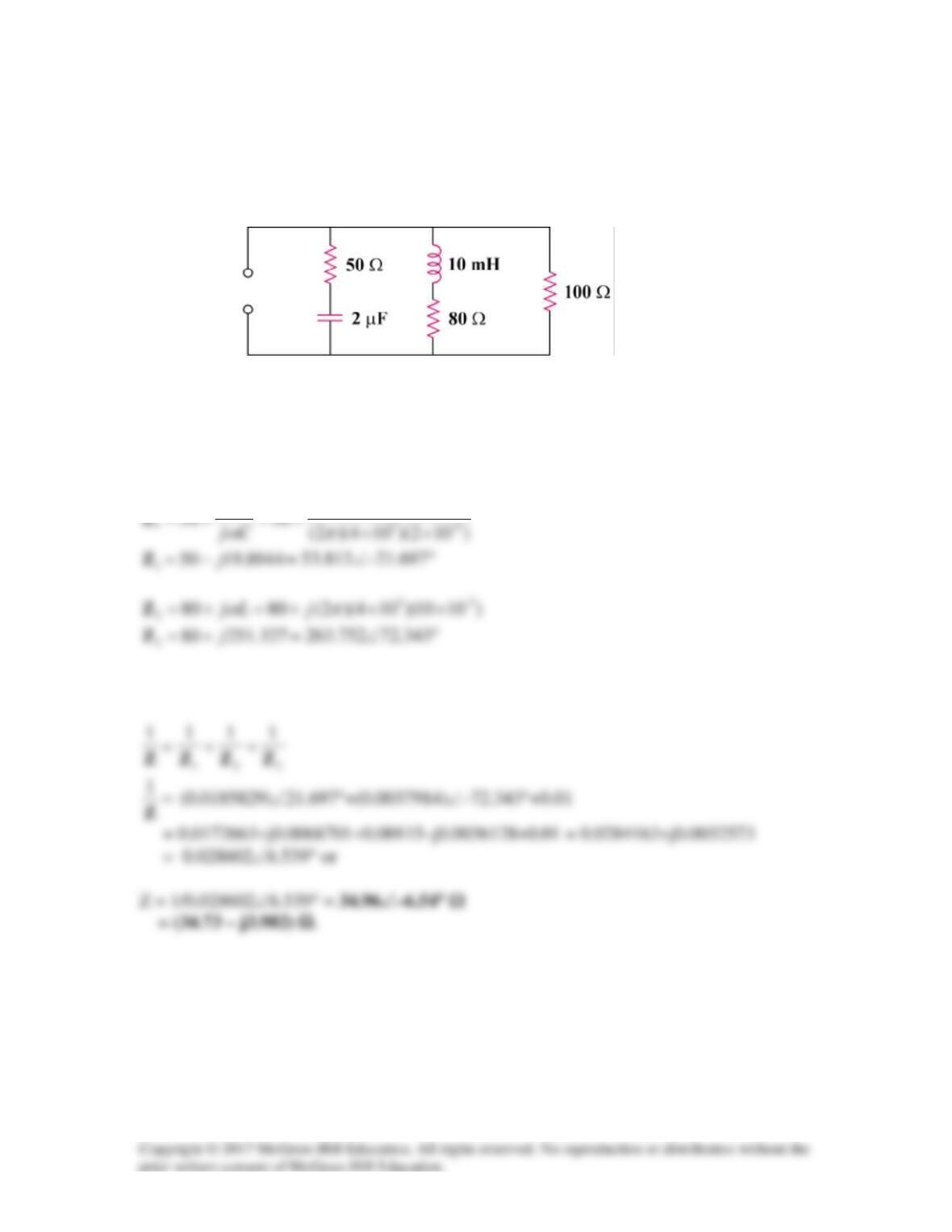
The network in Fig. 9.87 is part of the schematic describing an industrial electronic
sensing device. What is the total impedance of the circuit at 4 kHz?
Figure 9.87
For Prob. 9.87.
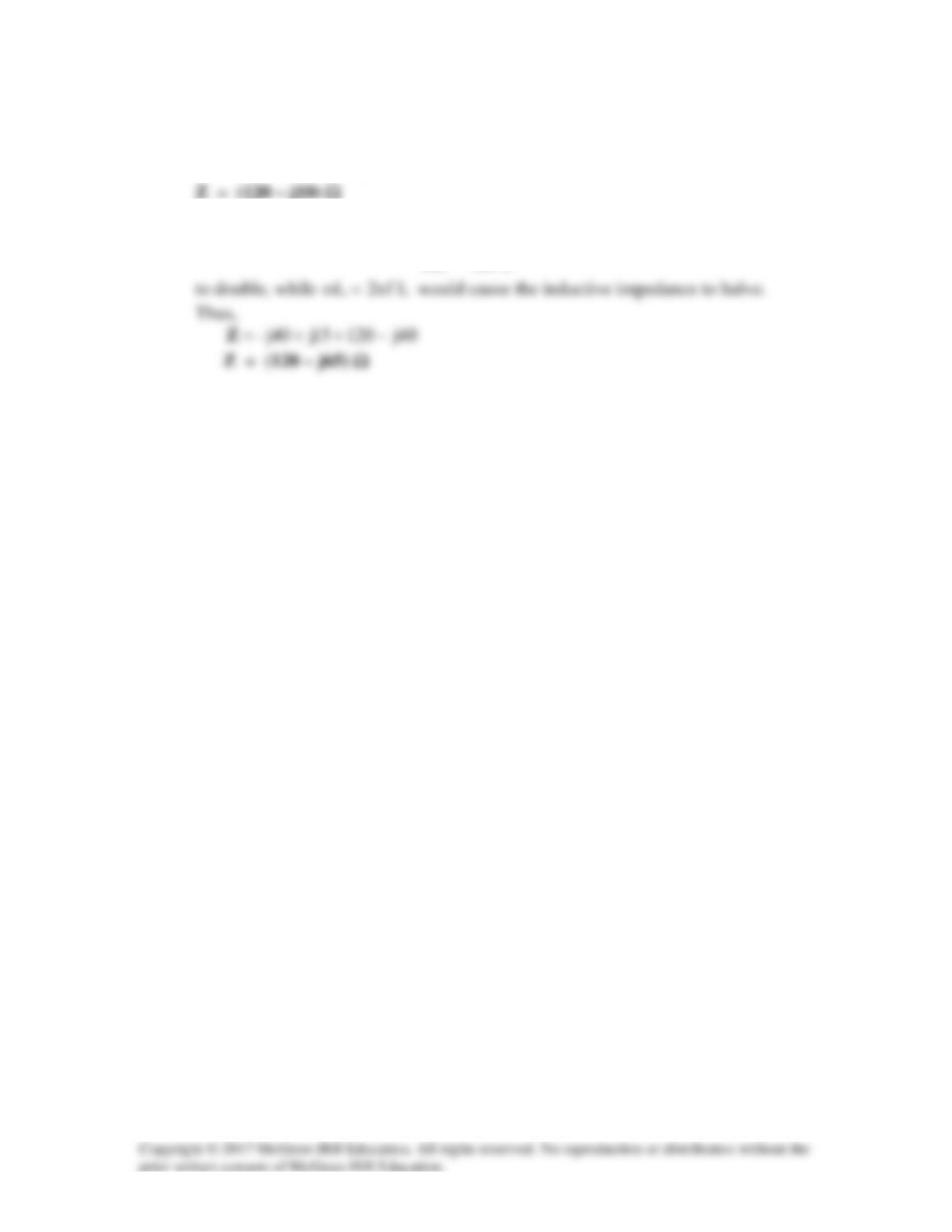
Solution
–
1
j
100
3
=Z
Solution 9.88
(a)
20j12030j20j– −++=Z
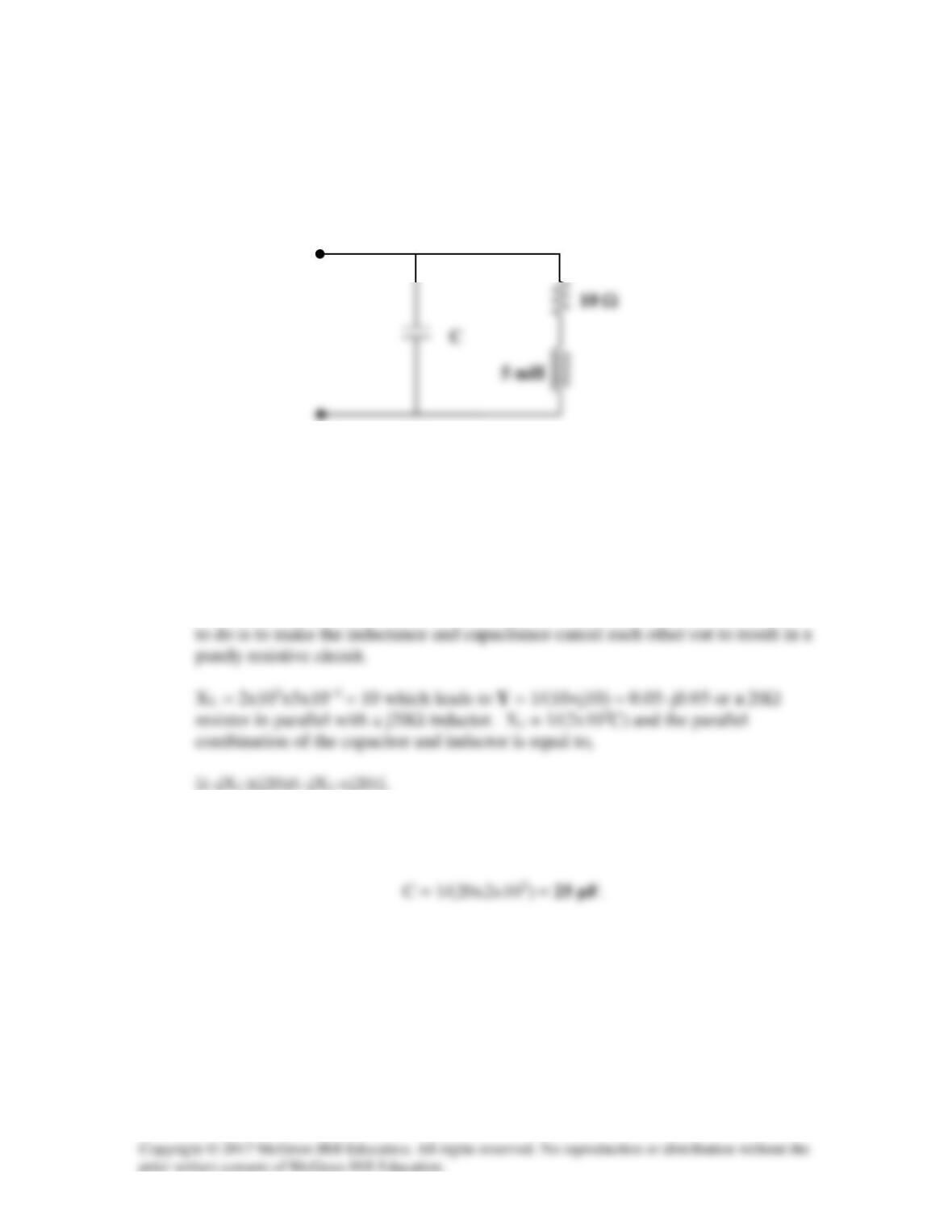
(b) If the frequency were halved,
Cf2
1
C
1
π
=
ω
would cause the capacitive impedance
Solution 9.89
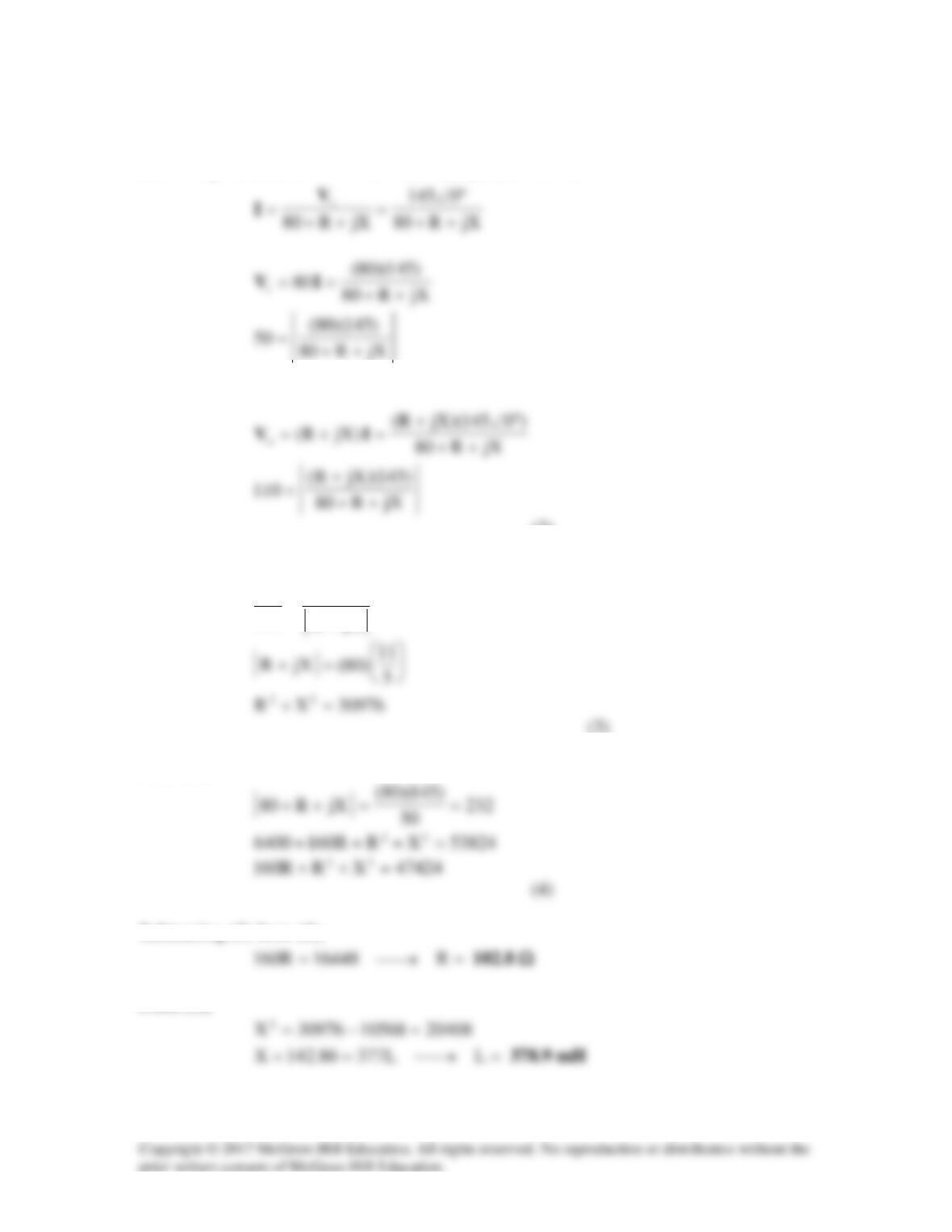
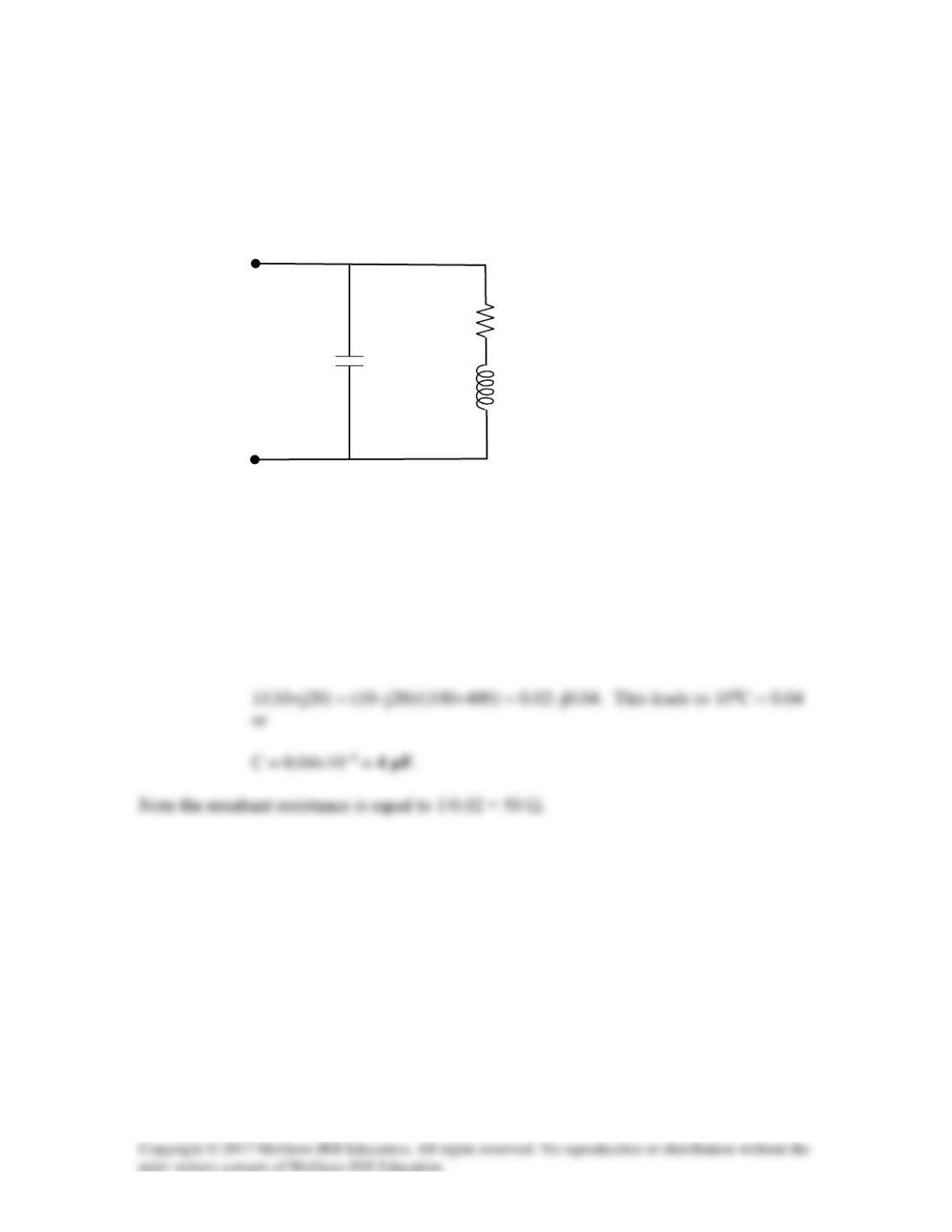
An industrial load is modeled as a series combination of an inductor and a resistance as
shown in Fig. 9.89. Calculate the value of a capacitor C across the series combination so
that the net impedance is resistive at a frequency of 2 kHz.
Figure 9.89
For Prob. 9.89.
Solution
Step 1.
There are different ways to solve this problem but perhaps the easiest way is to
convert the series R L elements into their parallel equivalents. Then all you need
Step 2.
Now we just need to set XC = 20 = 1/(2×103C) which will create an open circuit.
Solution 9.90
Let
°∠= 0145
s
V
,
L377L)60)(2(LX =π=ω=
(1)
(2)
From (1) and (2),
jXR
80
110
50
+
=
(3)
From (1),
Subtracting (3) from (4),
From (3),
Solution 9.91
Figure 9.91 shows a series combination of an inductance and a resistance. If it is desired
to connect a capacitor in parallel with the series combination such that the net impedance
is resistive at 10 kHz, what is the required value of C?
Figure 9.91
For Prob. 9.91.
Solution
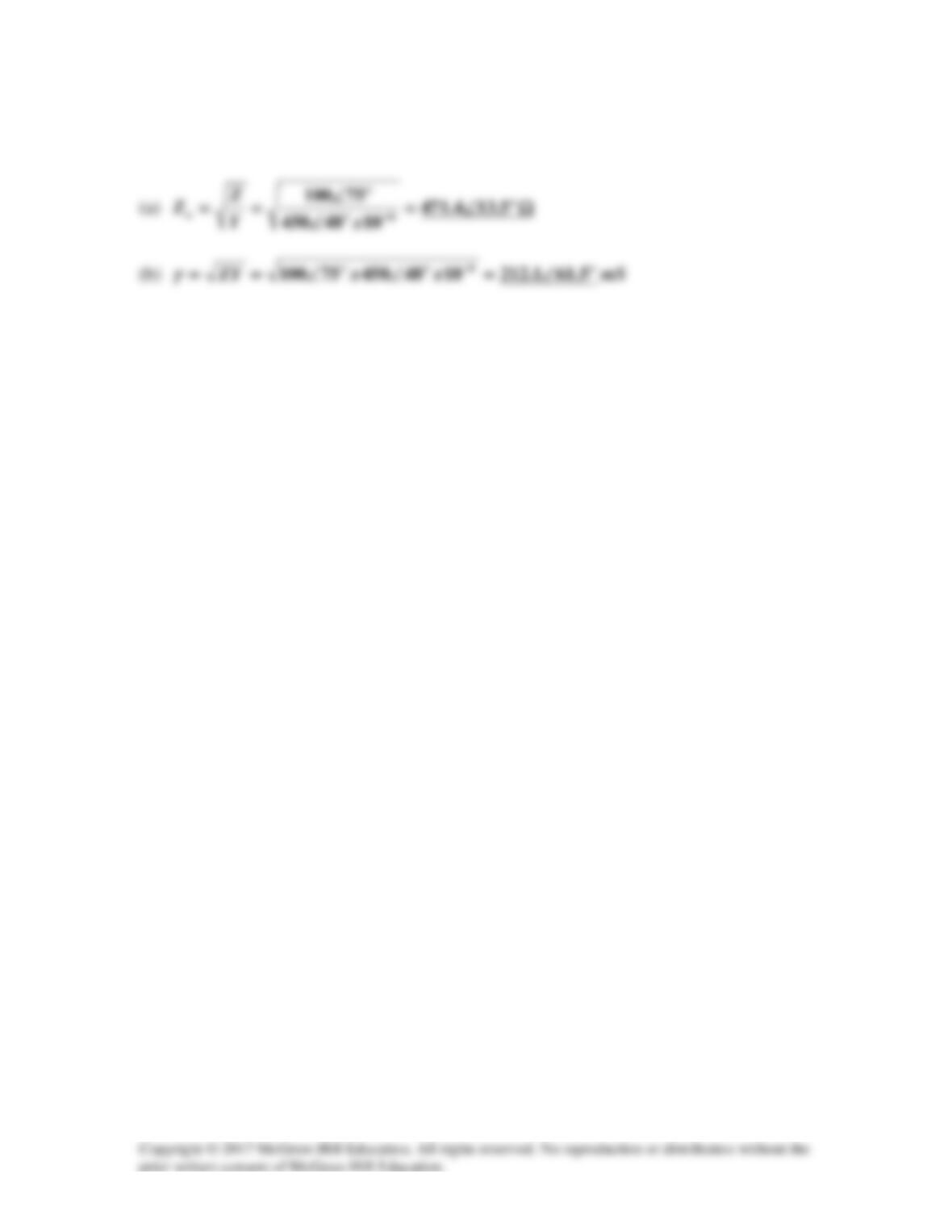
At 10 kHz the inductive reactance is equal to j20 Ω and the capacitive reactance is equal
to –j/(104C). The easiest way to eliminate the effect of the inductor with the capacitor is
to convert the resistor and inductor to admittance. Thus,
2 mH
10 Ω
C
Solution 9.92
Solution 9.93
Ls 2ZZZZ ++=