PROBLEM 9.146 (Continued)
24 35
12345
2
32 2
() (), () ()
() () () () ()
1 ft
[(8.5857 10 lb s /ft)(16 in.) ] 12 in.
yy yy
yy y y y y
II II
II I I I I
PROBLEM 9.147
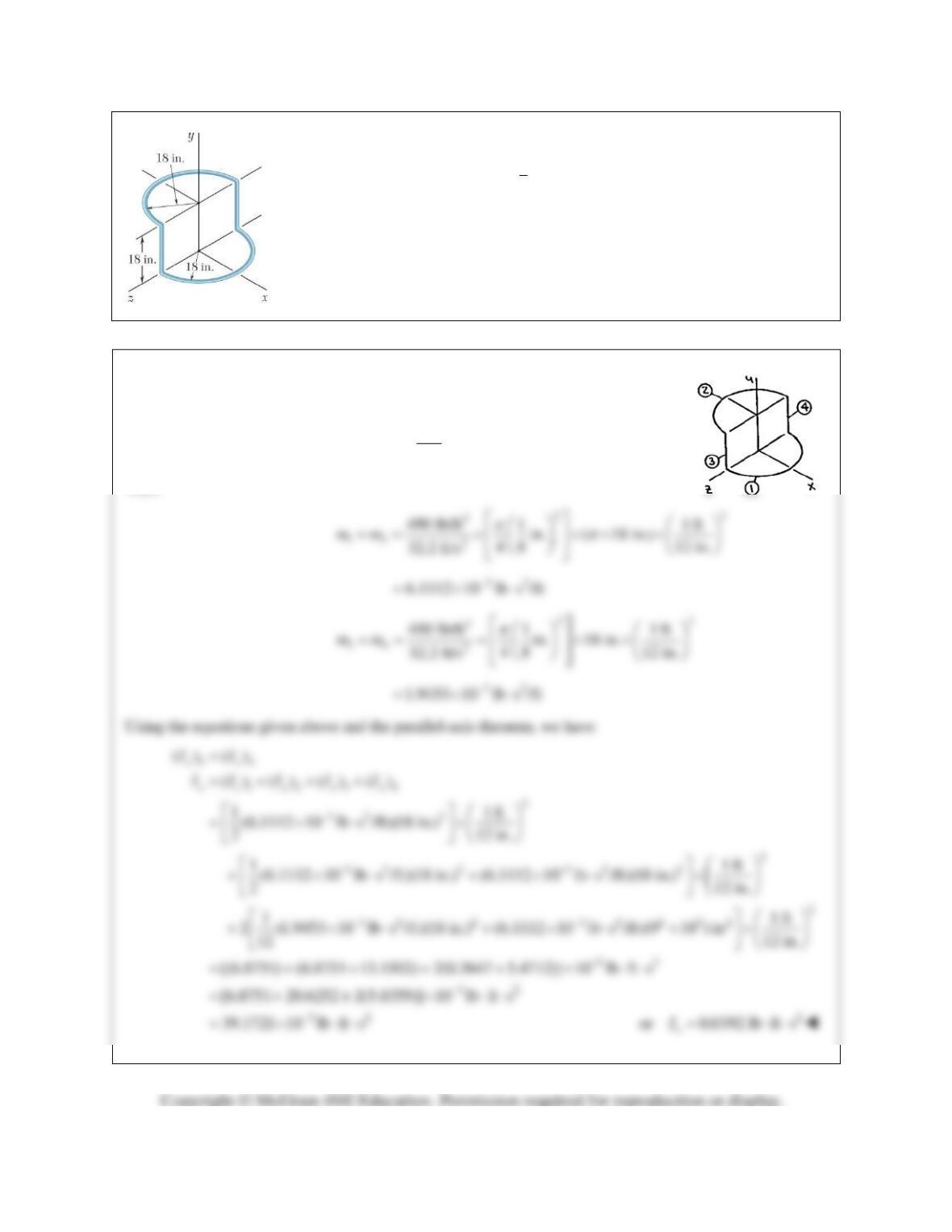
The figure shown is formed of 1
8-in.-diameter steel wire. Knowing that the
specific weight of the steel is 490 lb/ft3, determine the mass moment of inertia of
the wire with respect to each of the coordinate axes.
SOLUTION
First compute the mass of each component. We have
ST
ST
mV AL
g
Then
PROBLEM 9.147 (Continued)
12 34
1234
2
32 2
() (),() ()
() () () ()
1 ft
2[(6.1112 10 lb s /ft)(18 in.) ] 12 in.
yy y y
yy y y y
II II
II I I I
32
36.2542 10 lb ft s
2
or 0.0363 lb ft s
y
I
34
1234
2
32 2
32 2
2
() ()
() () () ()
11 ft
(6.1112 10 lb s /ft)(18 in.)
212 in.
14
(6.1112 10 lb s /ft) (18 in.)
2
zz
zz z z z
II
II I I I
PROBLEM 9.148
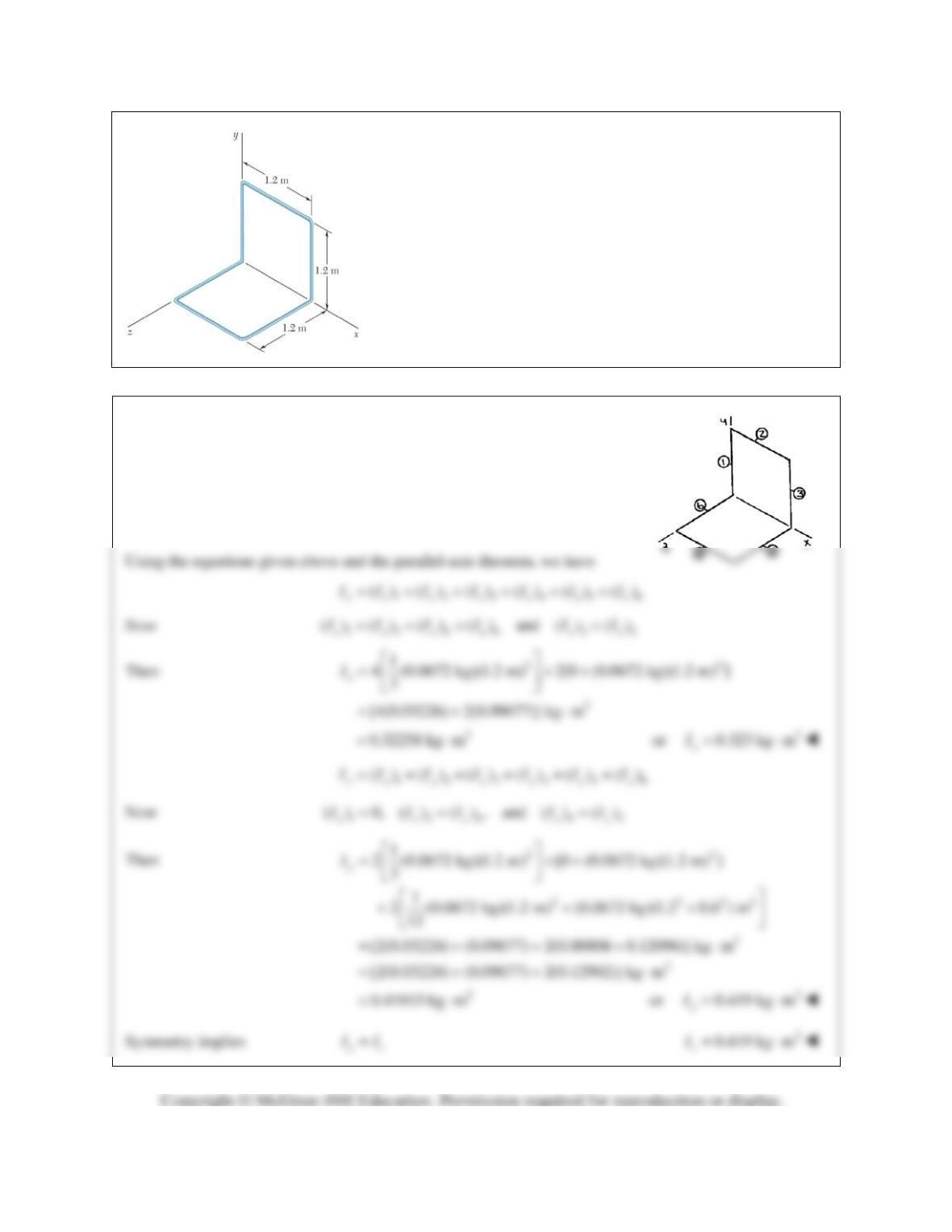
A homogeneous wire with a mass per unit length of 0.056 kg/m is
used to form the figure shown. Determine the mass moment of
inertia of the wire with respect to each of the coordinate axes.
SOLUTION
First compute the mass m of each component. We have
(/)
0.056 kg/m 1.2 m
0.0672 kg
mmLL
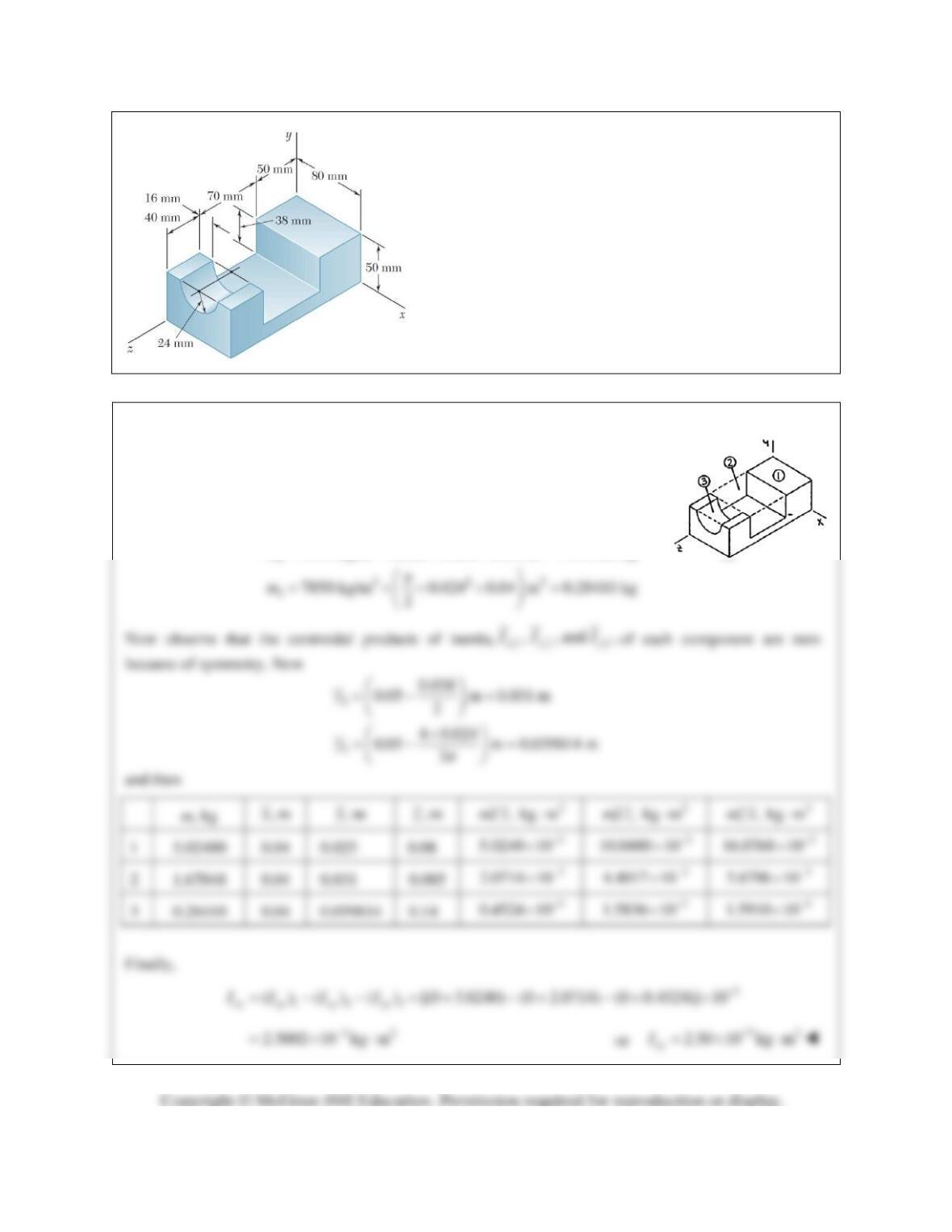
PROBLEM 9.149
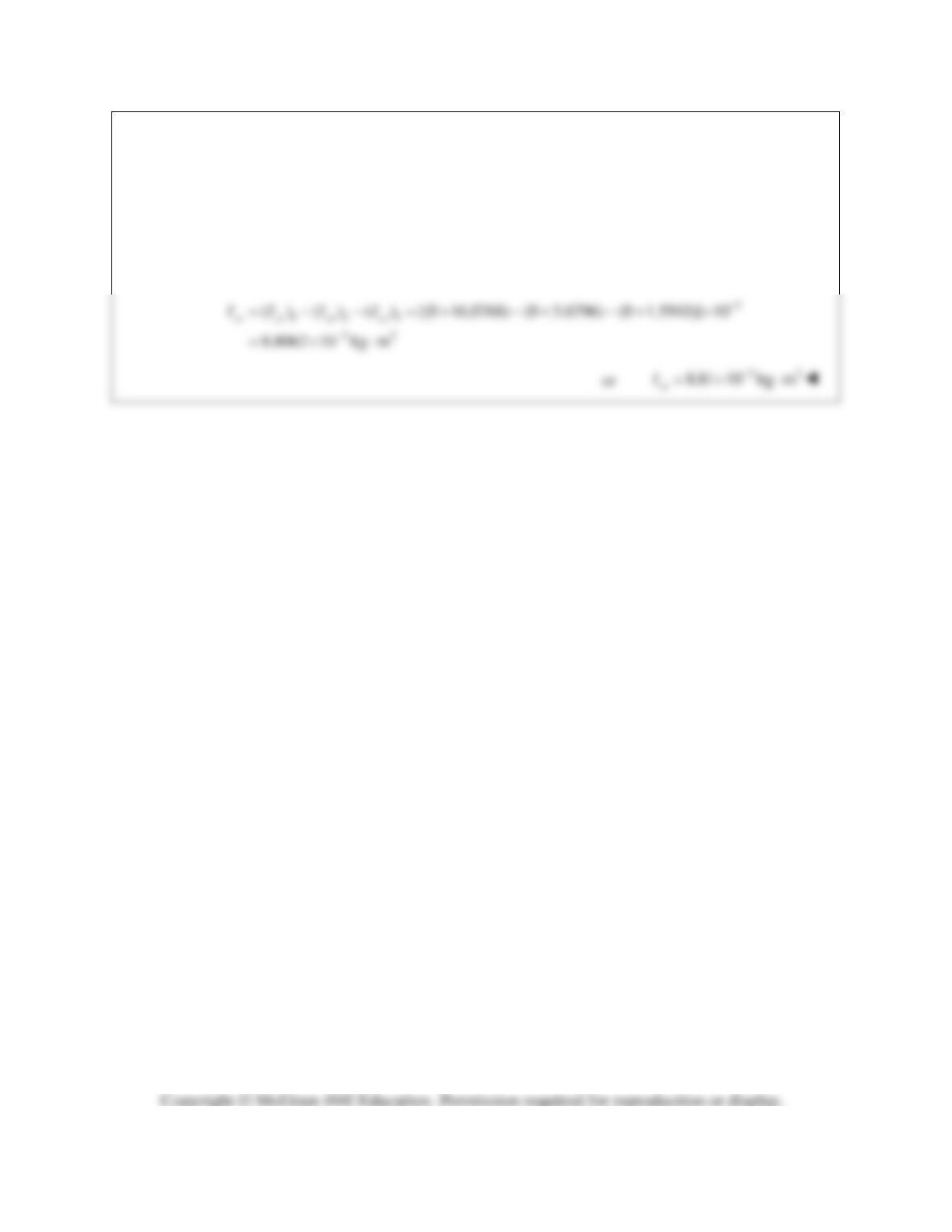
Determine the mass products of inertia I
xy
, I
yz
, and I
zx
of the
steel fixture shown. (The density of steel is 7850 kg/m
3
.)
SOLUTION
First compute the mass of each component. We have
mV
Then 33
1
33
7850 kg/m (0.08 0.05 0.16) m 5.02400 kg
7850 kg/m (0.08 0.038 0.07) m 1.67048 kg
m
m
PROBLEM 9.149 (Continued)
3
123
( ) ( ) ( ) [(0 10.0480) (0 4.4017) (0 1.5836)] 10
yz yz yz yz
II I I
32
4.0627 10 kg m
or 32
4.06 10 kg m
yz
I
PROBLEM 9.150
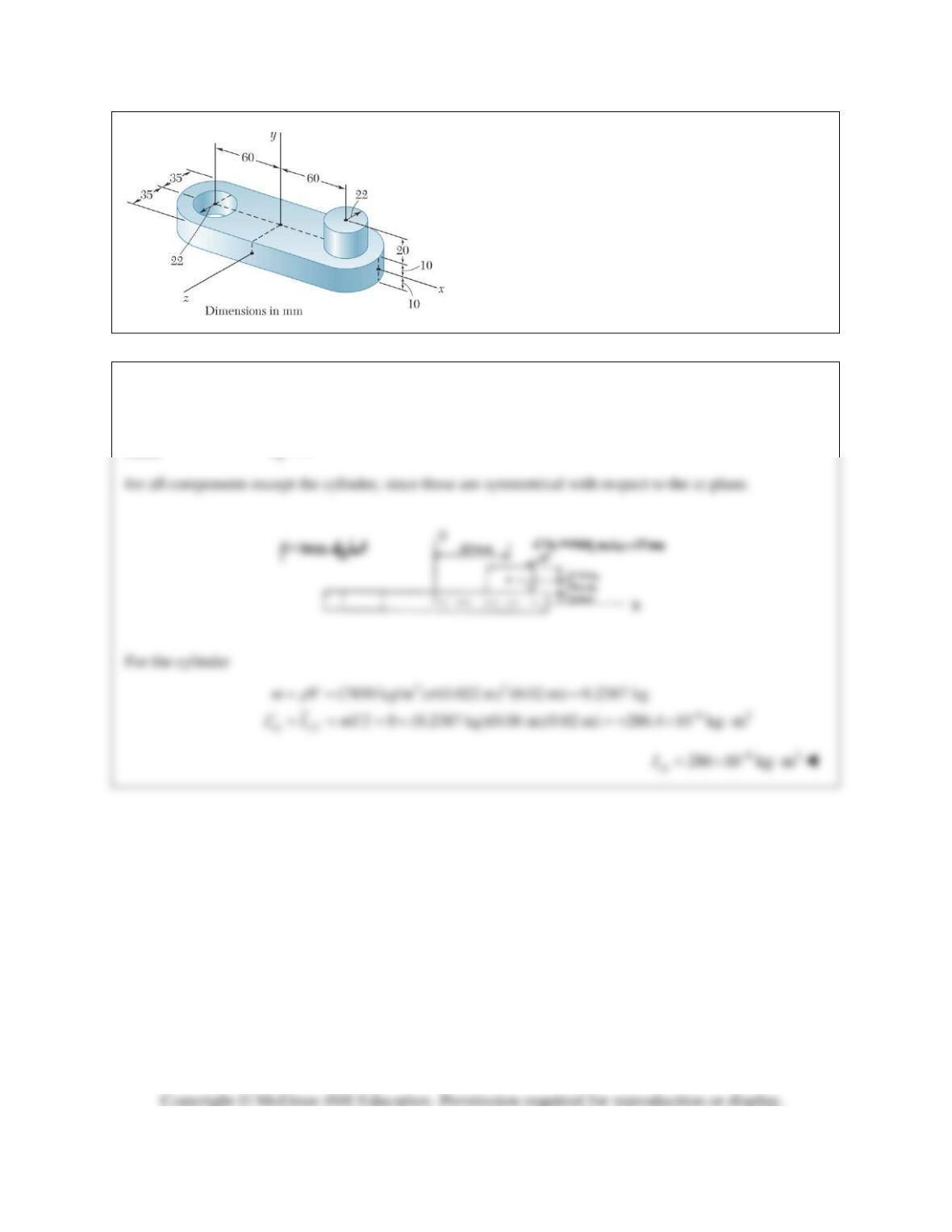
Determine the mass products of inertia I
xy
, I
yz
, and I
zx
of the steel machine element shown. (The density of
steel is 7850 kg/m
3
.)
SOLUTION
Since the machine element is symmetrical with respect to the xy plane, I
yz
= I
zx
= 0
Also,
0
I
PROBLEM 9.151
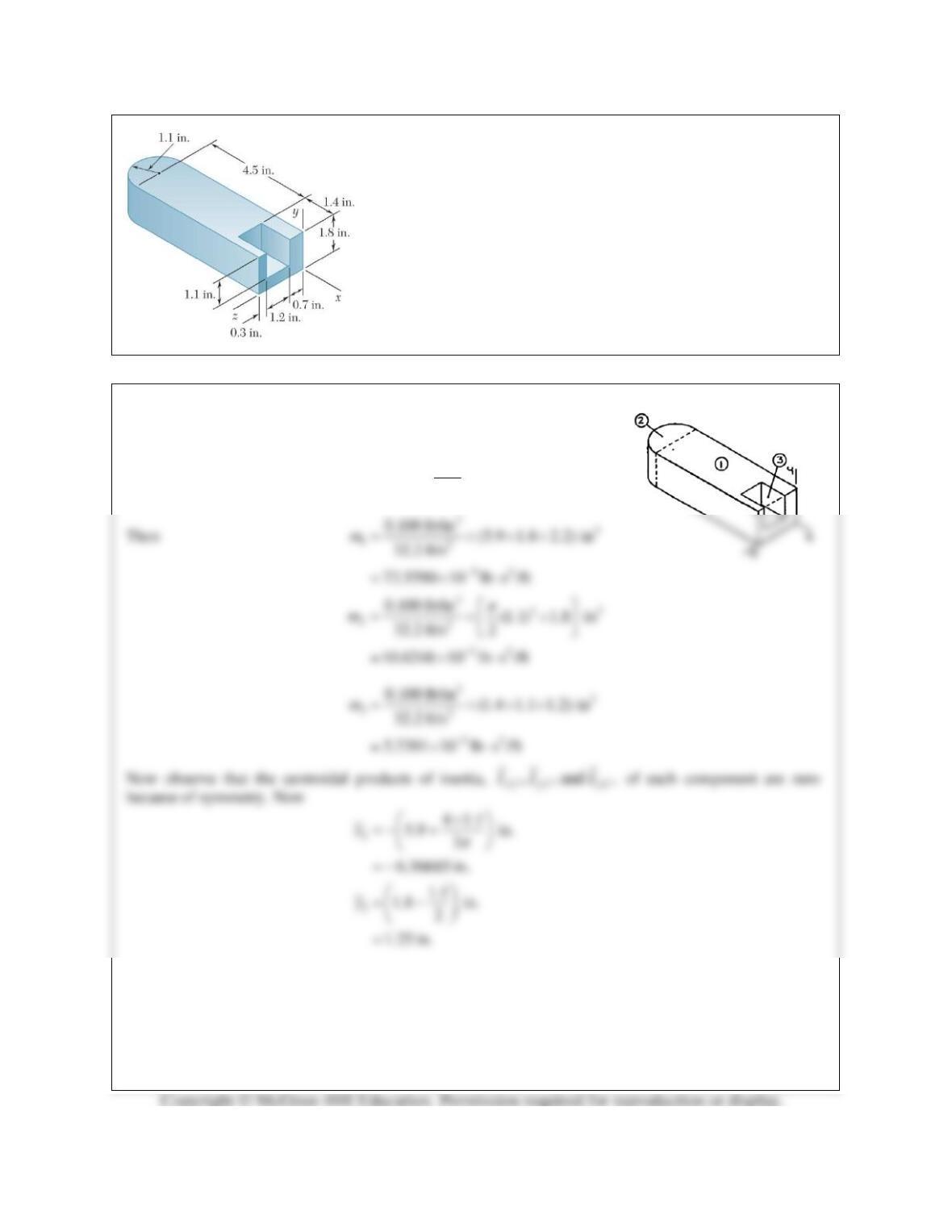
Determine the mass products of inertia I
xy
, I
yz
, and I
zx
of the cast
aluminum machine component shown. (The specific weight of
aluminum is 0.100 lb/in
3
)
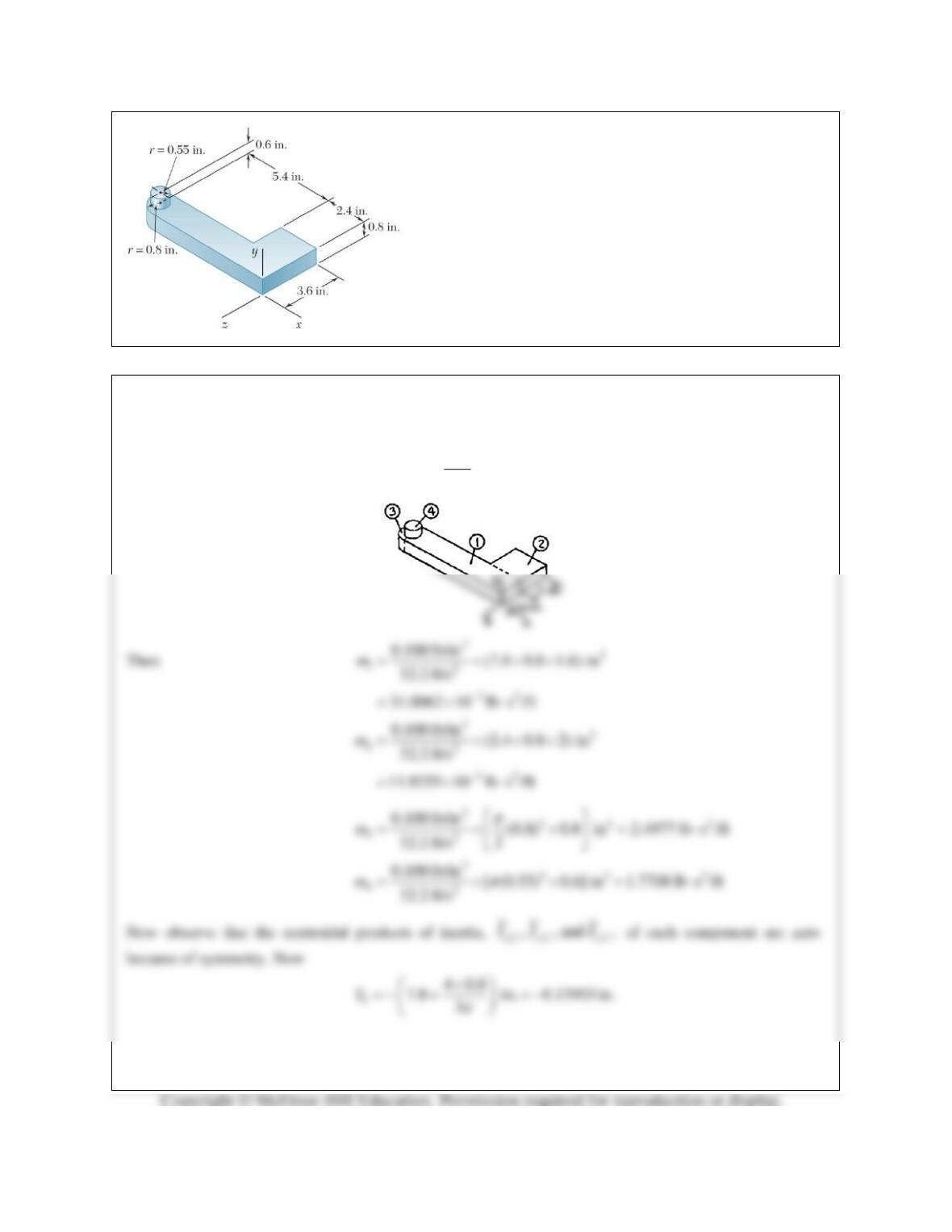
SOLUTION
First compute the mass of each component. We have
AL
AL
mV V
g
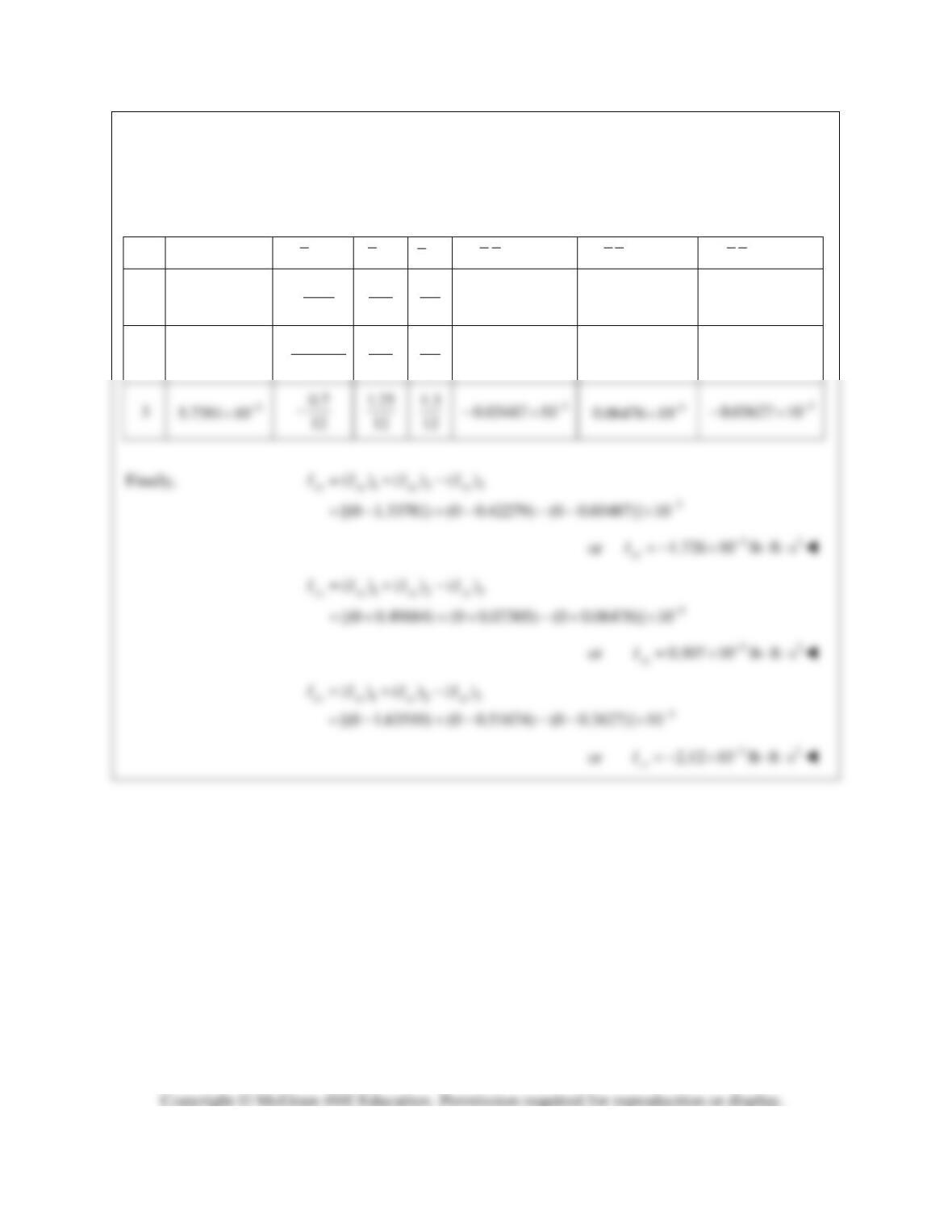
PROBLEM 9.151 (Continued)
and then
2
,lb s /ftm ,ft
x
,fty ,ftz2
,lb ft smx y
2
,lb ft smy z
2
,lb ft smz x
1 3
72.5590 10
2.95
12
0.9
12 1.1
12
3
1.33781 10
3
0.49884 10
3
1.63510 10
2 3
10.6248 10
6.36685
12
0.9
12 1.1
12
3
0.42279 10
3
0.07305 10
3
0.51674 10
PROBLEM 9.152
Determine the mass products of inertia I
xy
, I
yz
, and I
zx
of the
cast aluminum machine component shown. (The specific
weight of aluminum is 0.100 lb/in
3
)
SOLUTION
First compute the mass of each component. We have
AL
AL
mV V
g
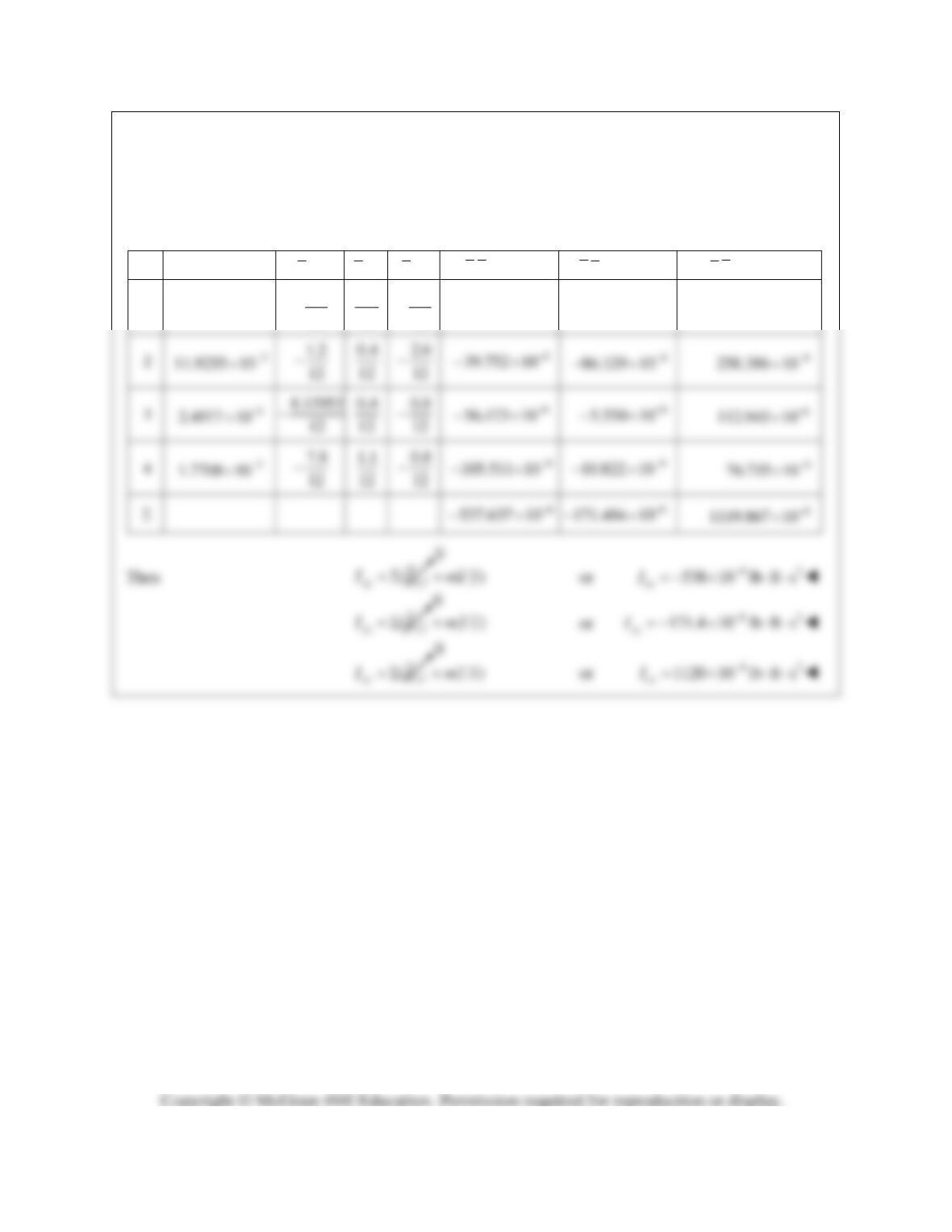
PROBLEM 9.152 (Continued)
and then
2
,lb s /ftm ,ft
x
,fty,ftz 2
,lb ft smx y
2
,lb ft smy z
2
,lb ft smz x
1 3
31.0062 10
3.9
12
0.4
12
0.8
12
6
335.901 10
6
68.903 10
6
671.801 10
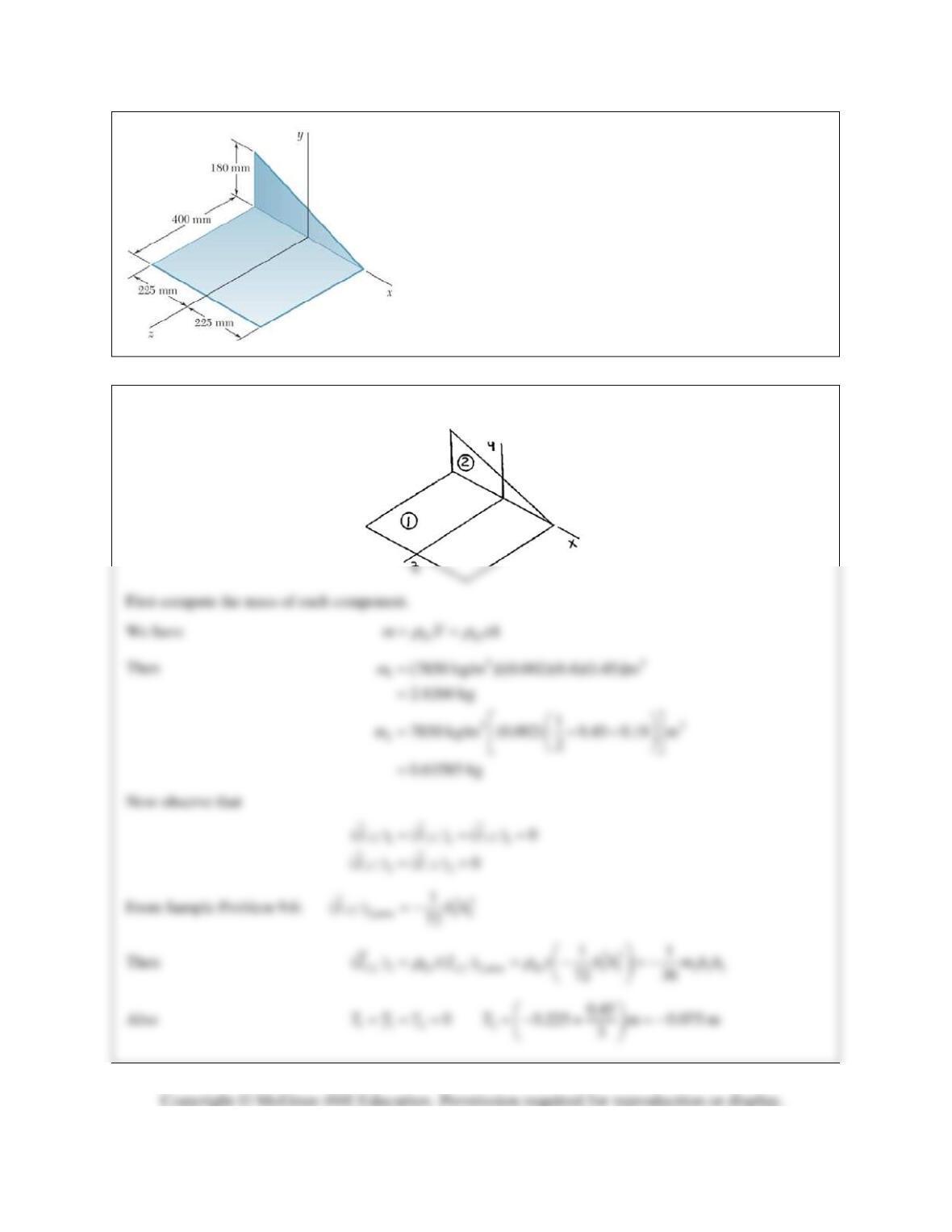
PROBLEM 9.153
A section of sheet steel 2 mm thick is cut and bent into the
machine component shown. Knowing that the density of steel
is 7850 kg/m
3
, determine the mass products of inertia I
xy
, I
yz
,
and I
zx
of the component.
SOLUTION
PROBLEM 9.153 (Continued)
Finally,
1
( ) (0 0) (0.63585 kg)(0.45 m)(0.18 m)
36
0.18 m
(0.63585 kg)( 0.075 m) 3
xy xy
IImxy
PROBLEM 9.154
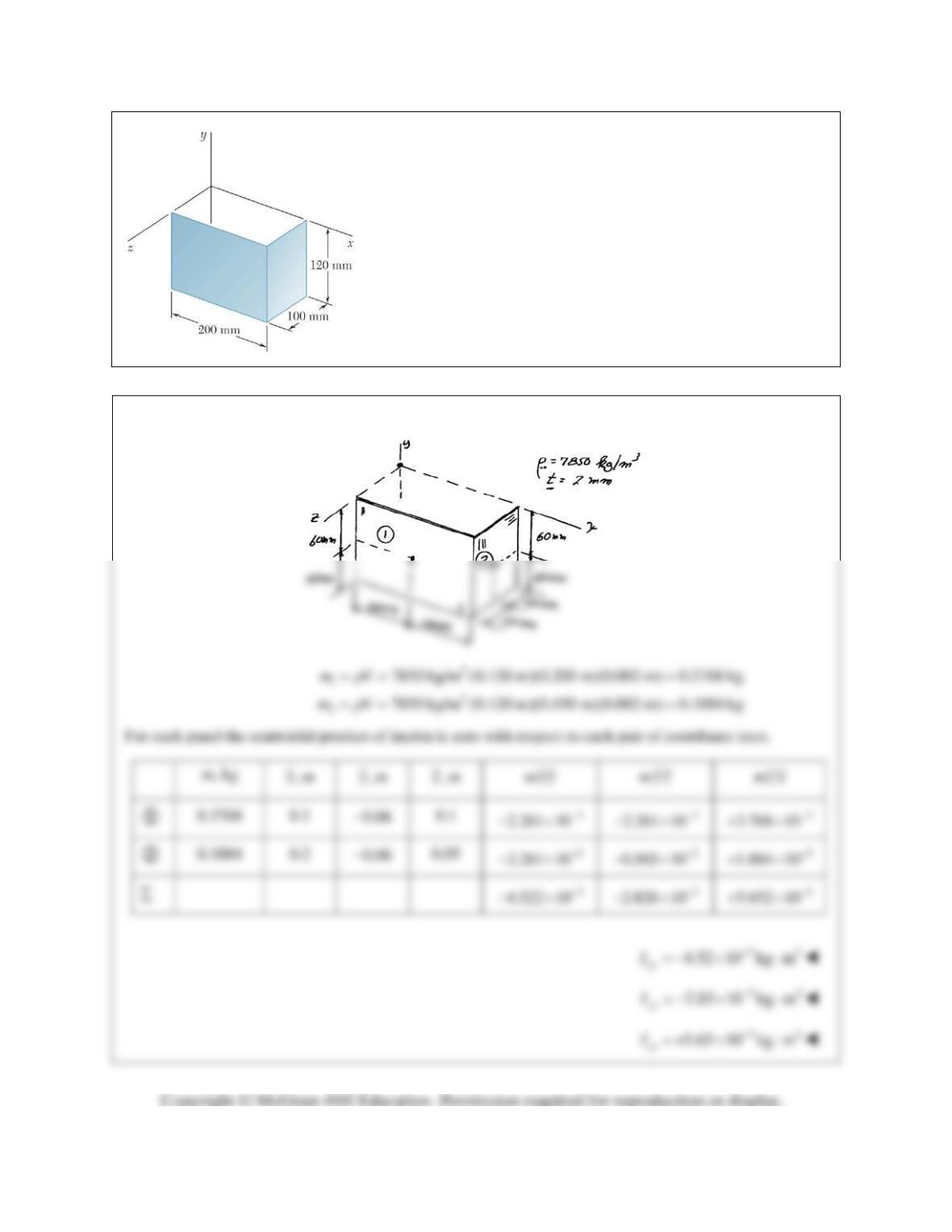
A section of sheet steel 2 mm thick is cut and bent into the machine
component shown. Knowing that the density of steel is 7850 kg/m3,
determine the mass products of inertia Ixy, Iyz, and Izx of the
component.
SOLUTION
PROBLEM 9.155
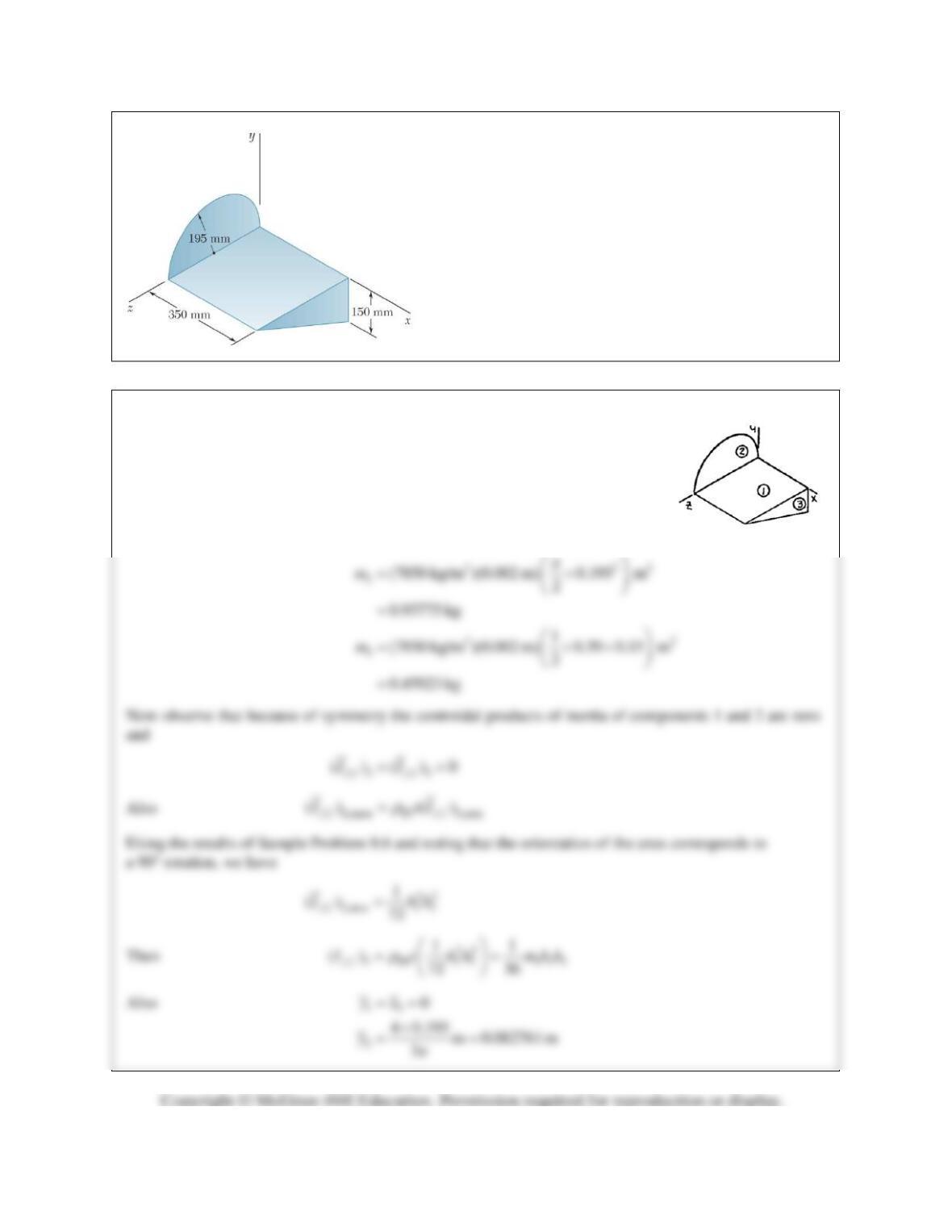
A section of sheet steel 2 mm thick is cut and bent into the
machine component shown. Knowing that the density of
steel is 7850 kg/m
3
, determine the mass products of inertia
I
xy
, I
yz
, and I
zx
of the component.
SOLUTION
First compute the mass of each component. We have
ST ST
mV tA
Then
32
1
(7850 kg/m )(0.002 m)(0.35 0.39) m
2.14305 kg
m
PROBLEM 9.155 (Continued)
Finally,
()
0.15
(0 0) (0 0) 0 (0.45923 kg)(0.35 m) m
3
xy x y
IImxy
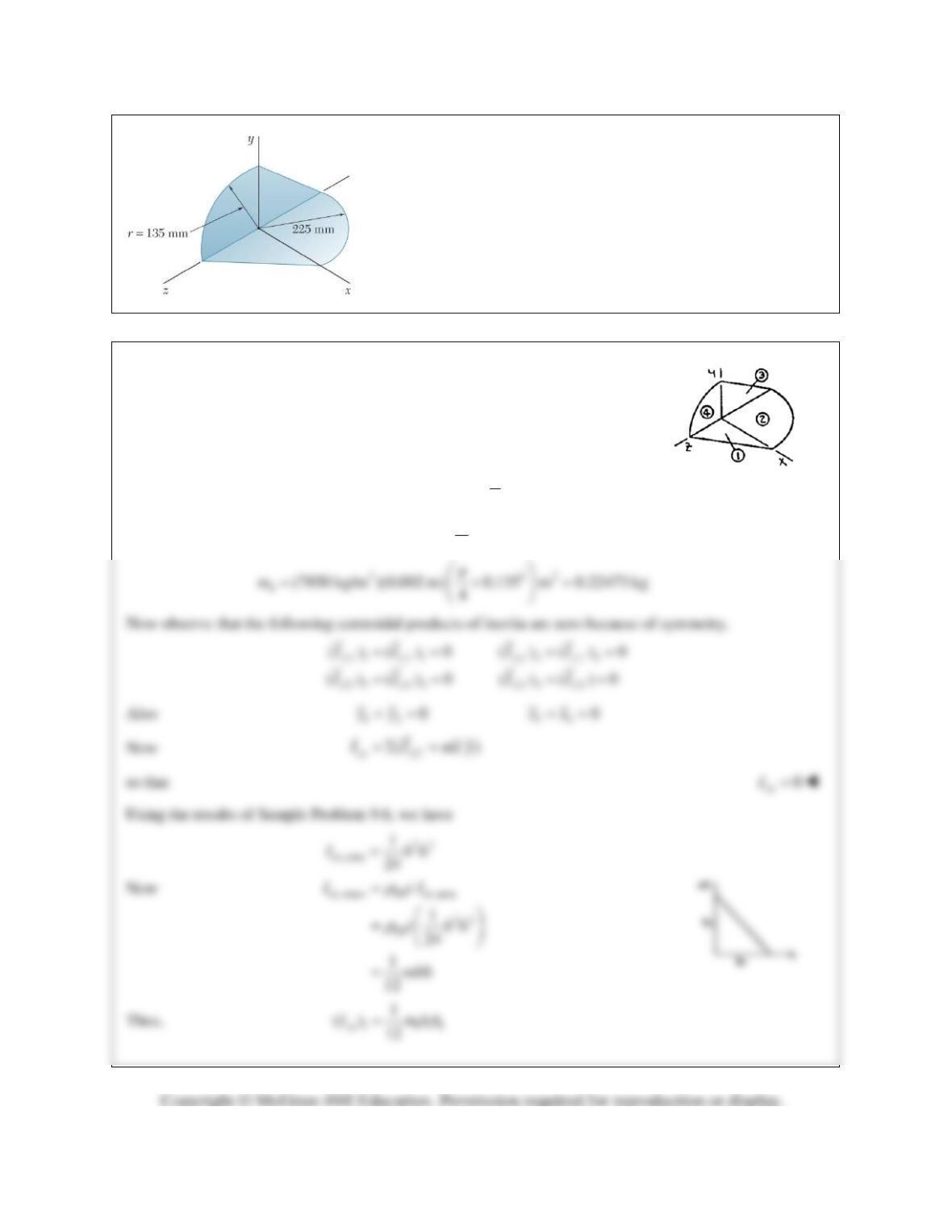
PROBLEM 9.156
A section of sheet steel 2 mm thick is cut and bent into the machine
component shown. Knowing that the density of steel is 7850 kg/m
3
,
determine the mass products of inertia I
xy
, I
yz
, and I
zx
of the
component.
SOLUTION
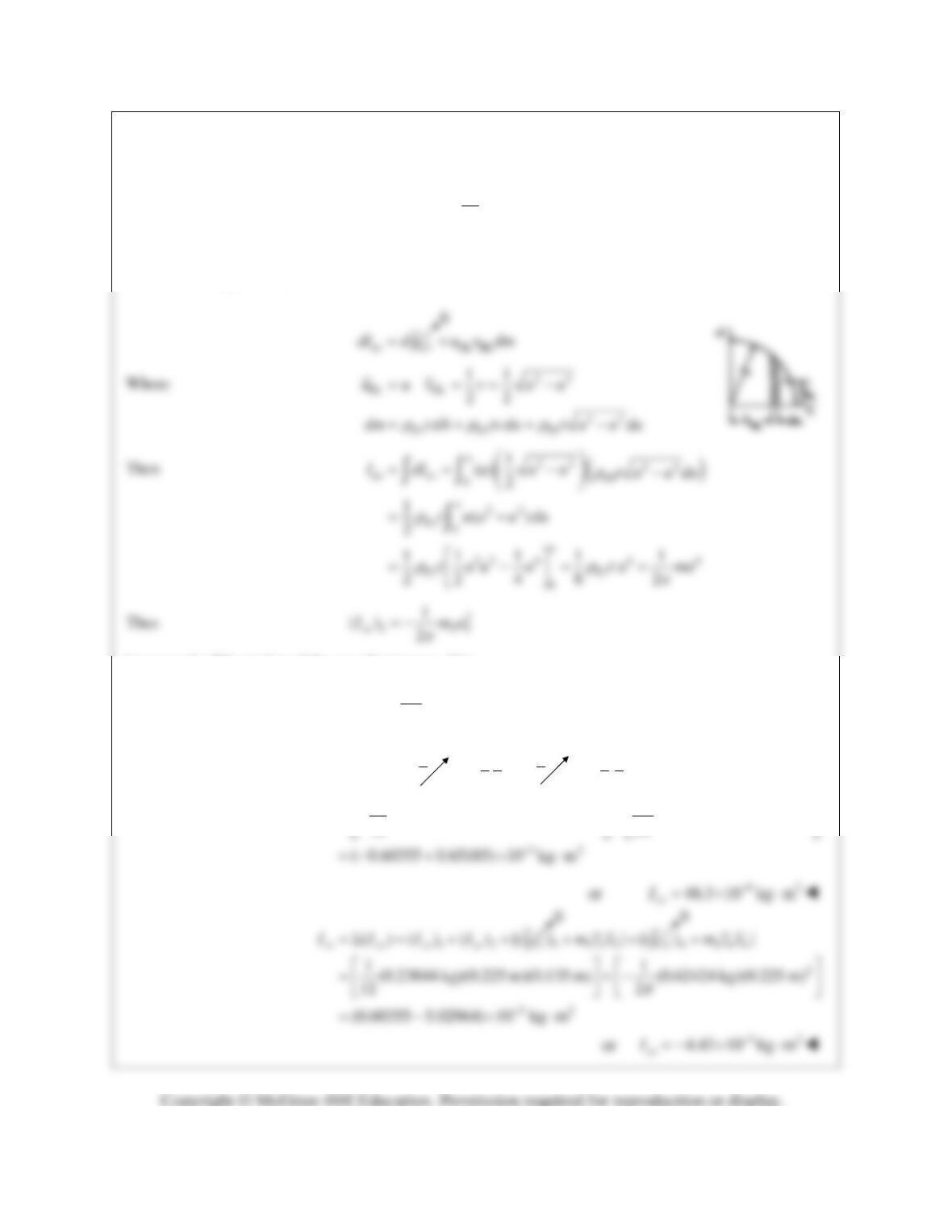
First compute the mass of each component. We have
ST ST
mV tA
Then
32
13
322
2
1
(7850 kg/m )(0.002 m) 0.225 0.135 m 0.23844 kg
2
(7850 kg/m )(0.002 m) 0.225 m 0.62424 kg
4
mm
m
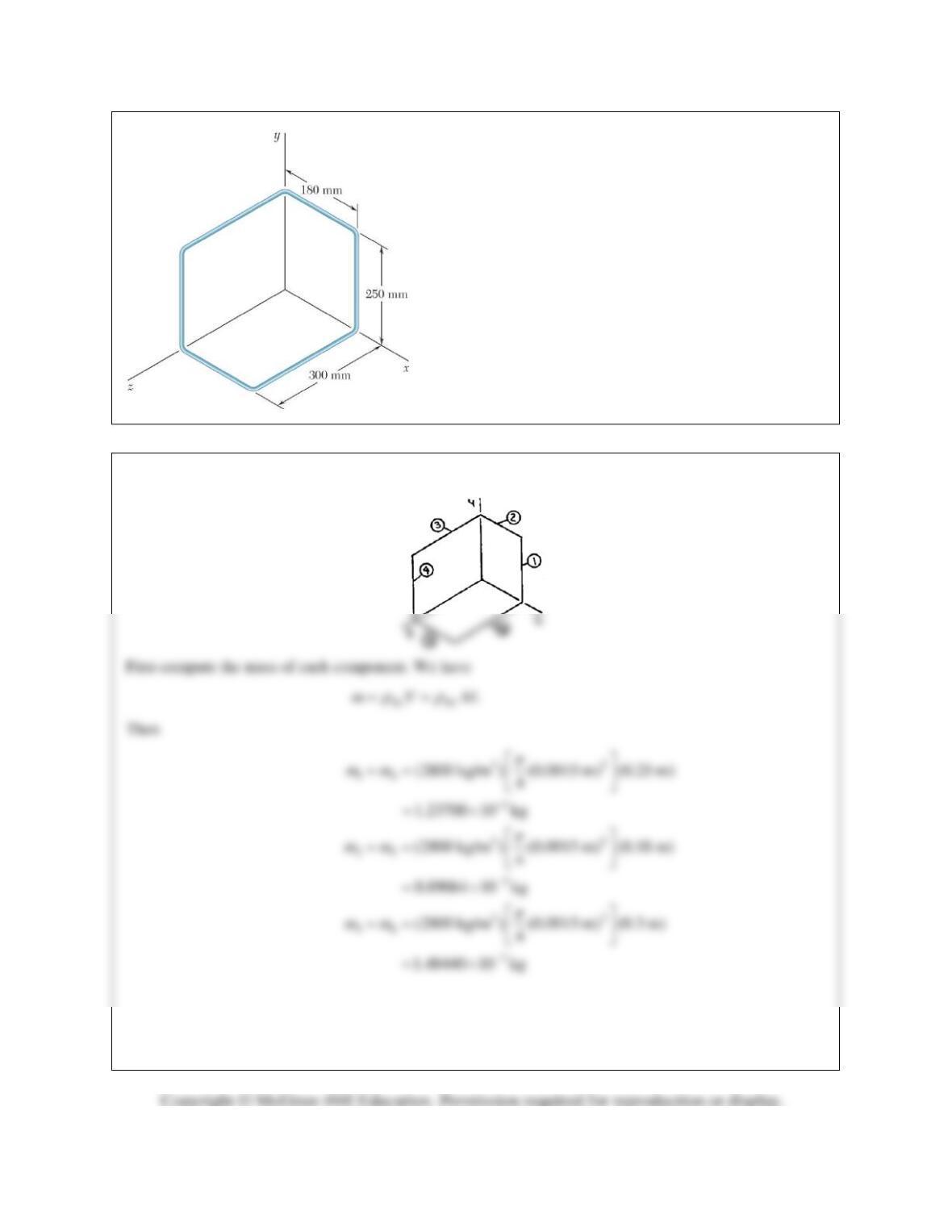
PROBLEM 9.156 (Continued)
While
3333
1
() 12
yz
Imbh
because of a 90° rotation of the coordinate axes.
To determine uv
I
for a quarter circle, we have
because of a 90° rotation of the coordinate axes. Also
2
444
1
() 2
yz
Ima
Finally,
111 2 22 3 4
2
()[( ) ][( ) ]() ()
11
(0.23844 kg)(0.225 m)(0.135 m) (0.22473 kg)(0.135 m)
12 2
yz yz y z y z yz yz
IIImyzImyzI I
0 0
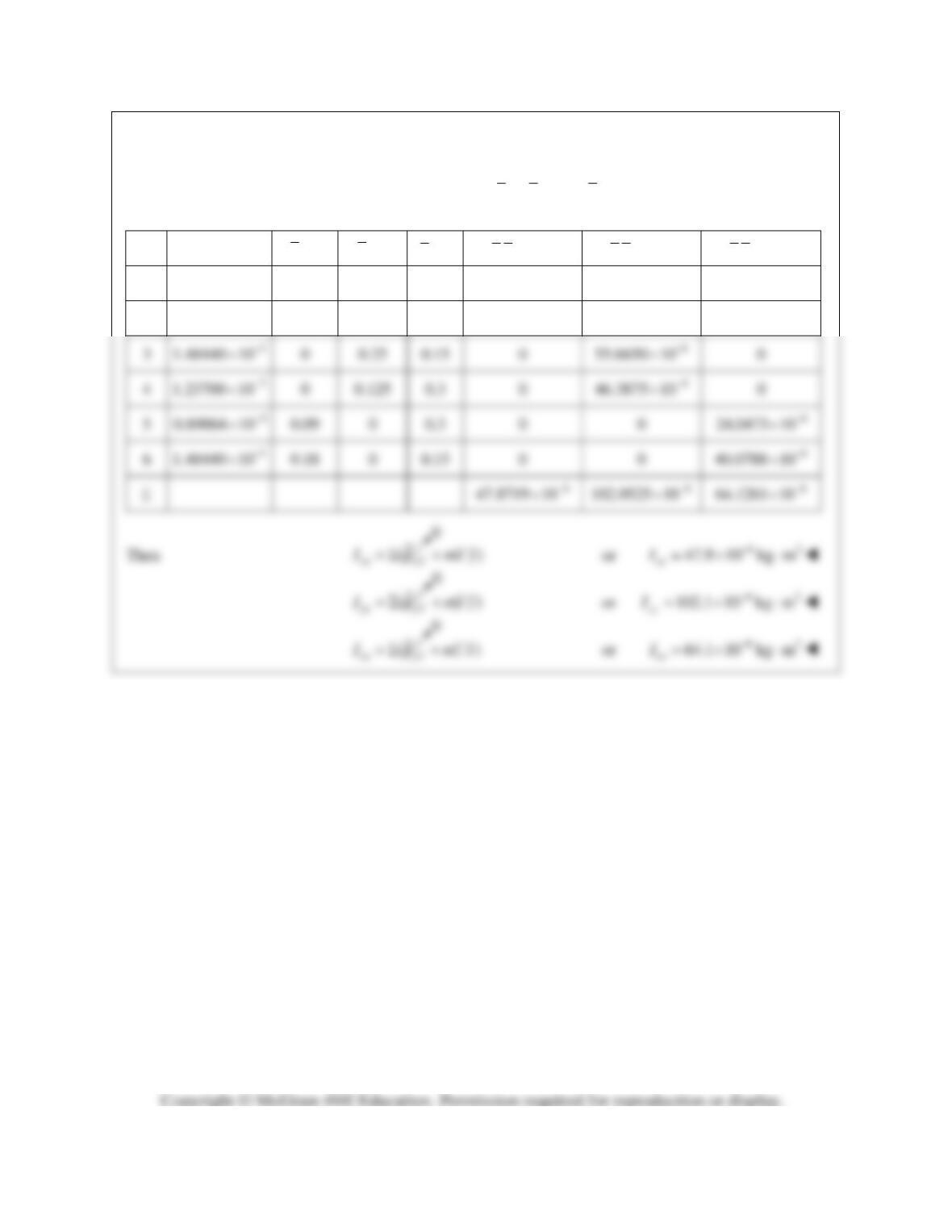
PROBLEM 9.157
The figure shown is formed of 1.5-mm-diameter
aluminum wire. Knowing that the density of aluminum is
2800 kg/m
3
, determine the mass products of inertia I
xy
, I
yz
,
and I
zx
of the wire figure.
SOLUTION
PROBLEM 9.157 (Continued)
Now observe that the centroidal products of inertia, ,,and,
x
yyz zx
II I
of each component are zero
because of symmetry.
m, kg ,m
x
,my ,mz 2
,kg mmx y
2
,kg mmy z
2
,kg mmz x
1 3
1.23700 10
0.18 0.125 0 6
27.8325 10
0 0
2 3
0.89064 10
0.09 0.25 0 6
20.0394 10
0 0