PROBLEM 9.19 (Continued)
Find: and
xx
Ik
We have
33
21
3
33
3
11 12
(2) sin
33 3 2
8(2)sin
32
x
h
dI y y dx x a h x dx
aa
hxa x
a
a
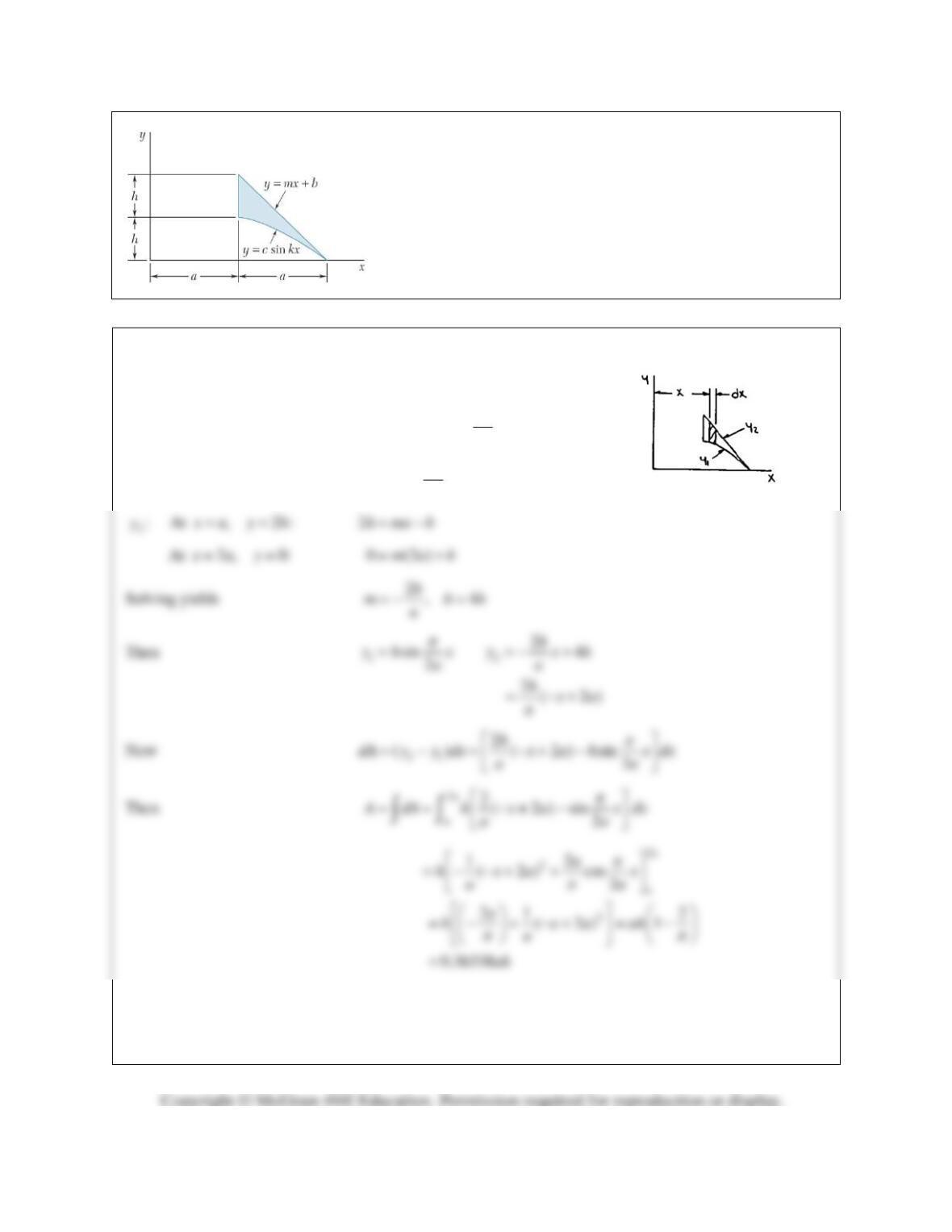
PROBLEM 9.20
Determine the moment of inertia and the radius of gyration of the
shaded area shown with respect to the y axis.
SOLUTION
1:y At 2, 0:xay
0sin(2)cka
2or
2
ak k a
At
,:
x
ayh
sin ( )
2
hc a
a
or ch
x
PROBLEM 9.20 (Continued)
Find: and
y
y
I
k
We have 22
322
2(2)sin
2
2(2)sin
2
y
h
dI x dA x x a h x dx
aa
hxaxx xdx
aa
I
Then 22
22
sin cos cos (2 )
222
aa
x
xdx x x x xdx
aaa
Now let cos 2
ux dv xdx
a
2sin 2
a
du dx v x
a
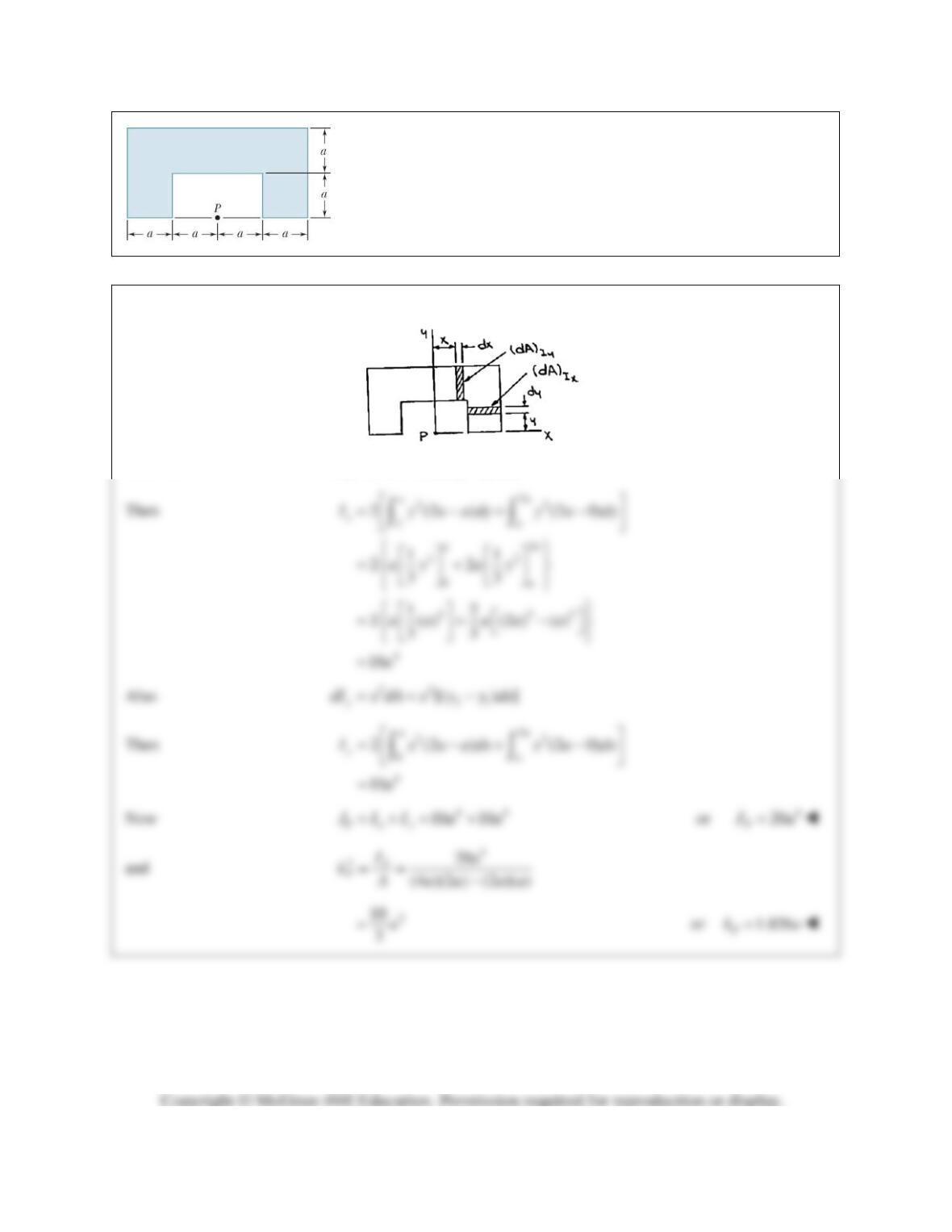
PROBLEM 9.21
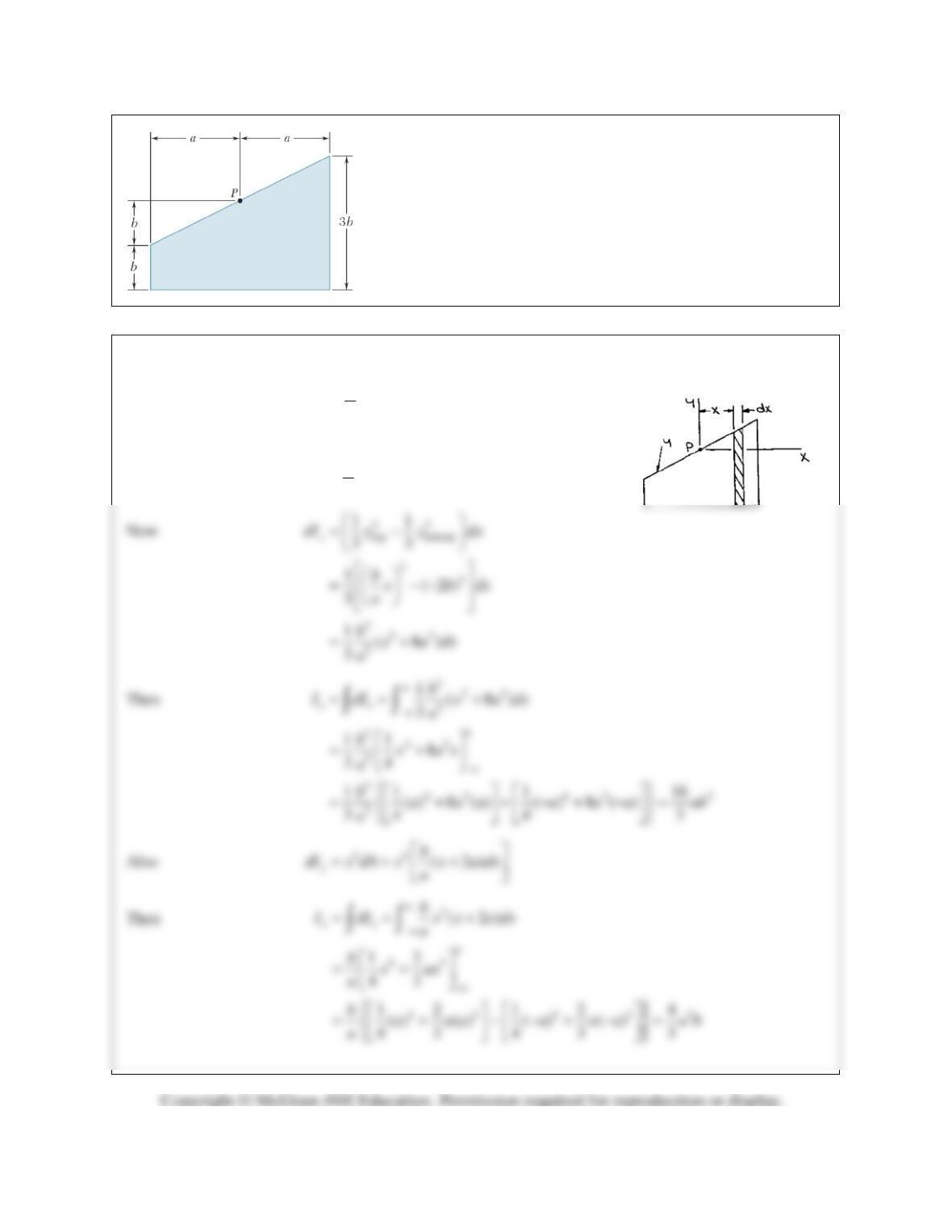
Determine the polar moment of inertia and the polar radius of gyration
of the shaded area shown with respect to Point P.
SOLUTION
We have
22
21
[( ) ]
x
dI y dA y x x dy
PROBLEM 9.22
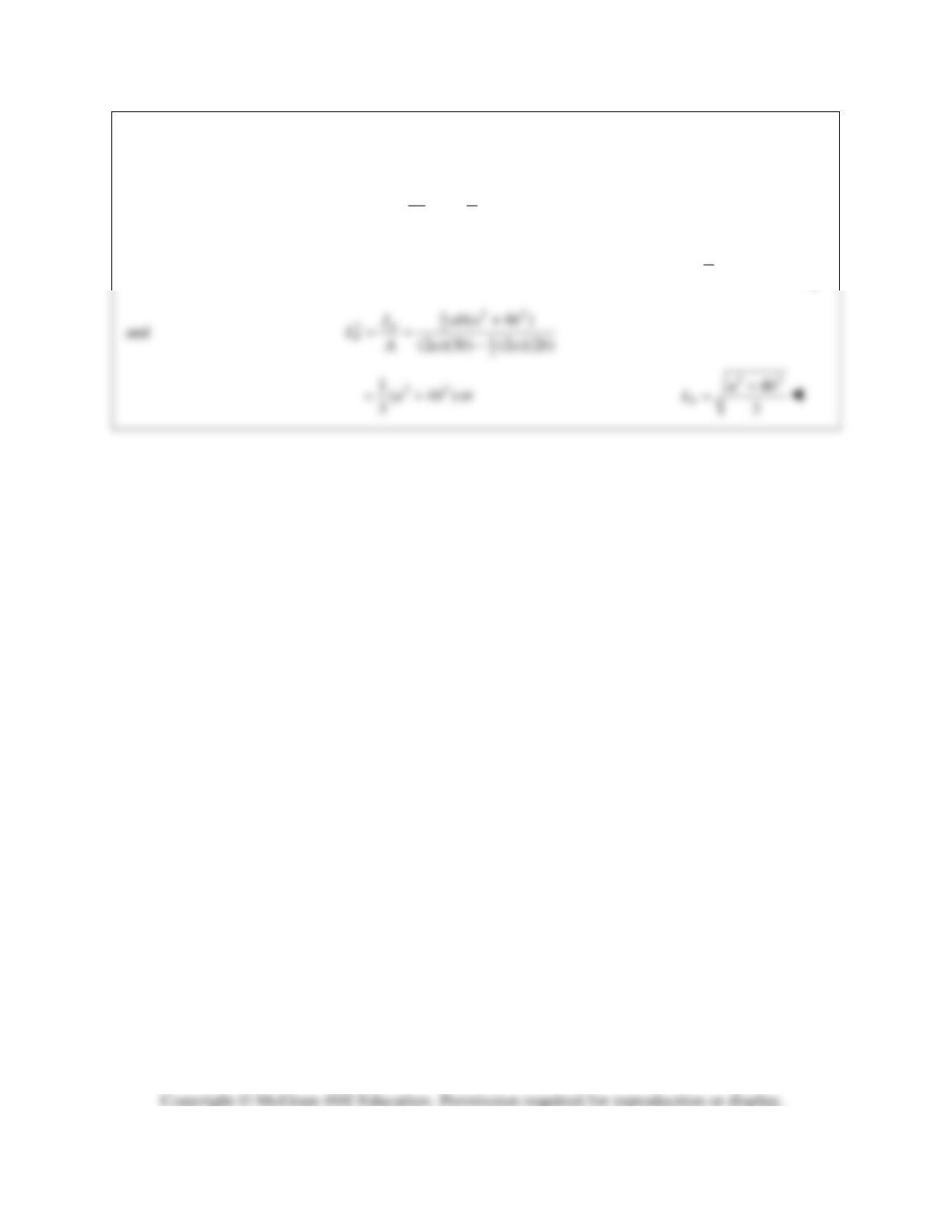
Determine the polar moment of inertia and the polar radius of
gyration of the shaded area shown with respect to Point P.
SOLUTION
By observation b
yx
a
First note (2)
(2)
dA y b dx
b
x
adx
a
PROBLEM 9.22 (Continued)
Now 33
16 4
33
Pxy
JII ab ab
22
4(4)
3
P
Jabab
PROBLEM 9.23
Determine the polar moment of inertia and the polar radius of
gyration of the shaded area shown with respect to Point P.
SOLUTION
1
:y
At
2, 2:xaya
2
11
1
2(2)or 2
ak a k a
2
:y
At
0, :xya
ac
At
2, 2:xaya
2
2
2(2)aak a
or
2
1
4
ka
PROBLEM 9.23 (Continued)
Then
2642246
3
0
1
2 (64 48 12 7 )
192
a
xx
I
dI a a x a x x dx
a
2
643257
3
112
64 16 5
96
a
ax ax ax x
a
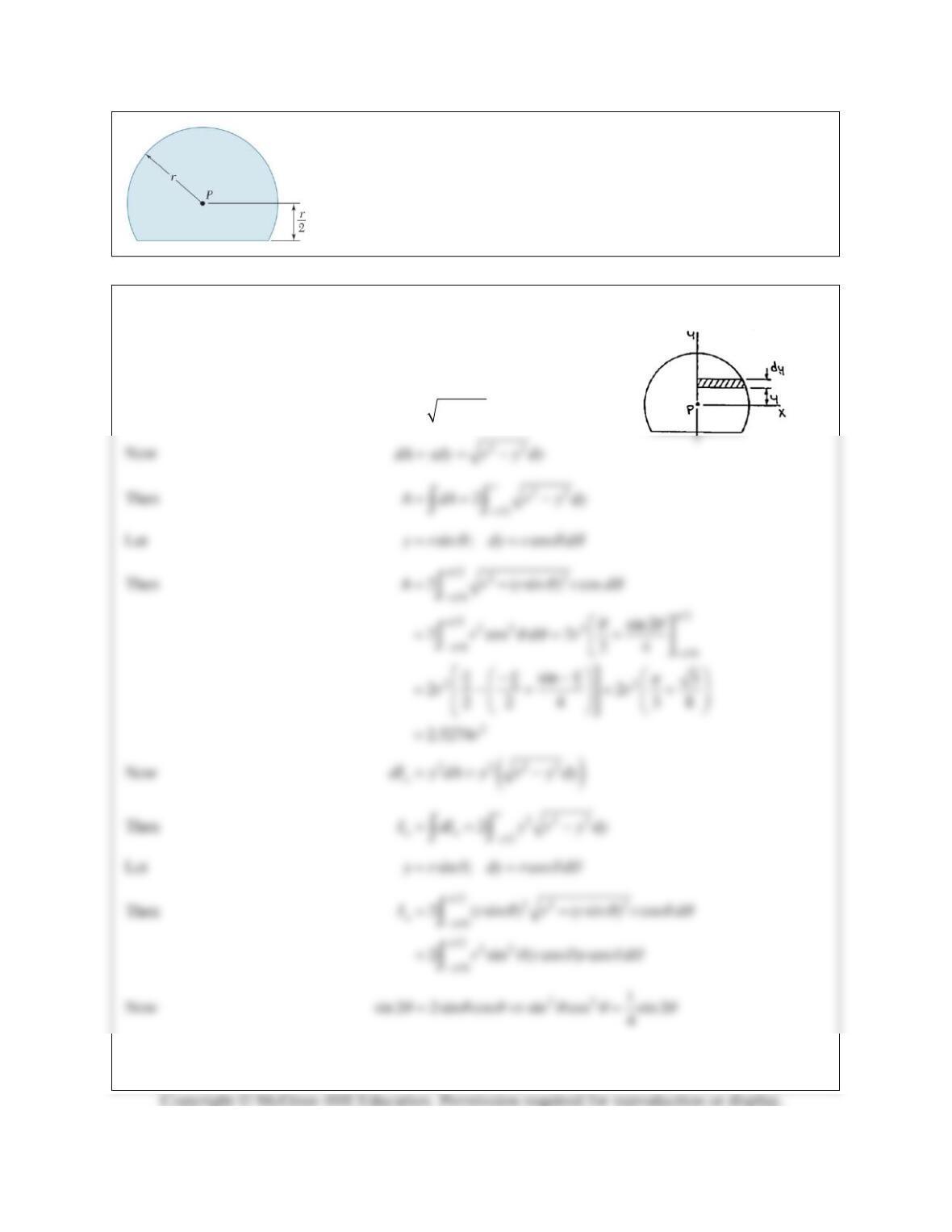
PROBLEM 9.24
Determine the polar moment of inertia and the polar radius of gyration of
the shaded area shown with respect to Point P.
SOLUTION
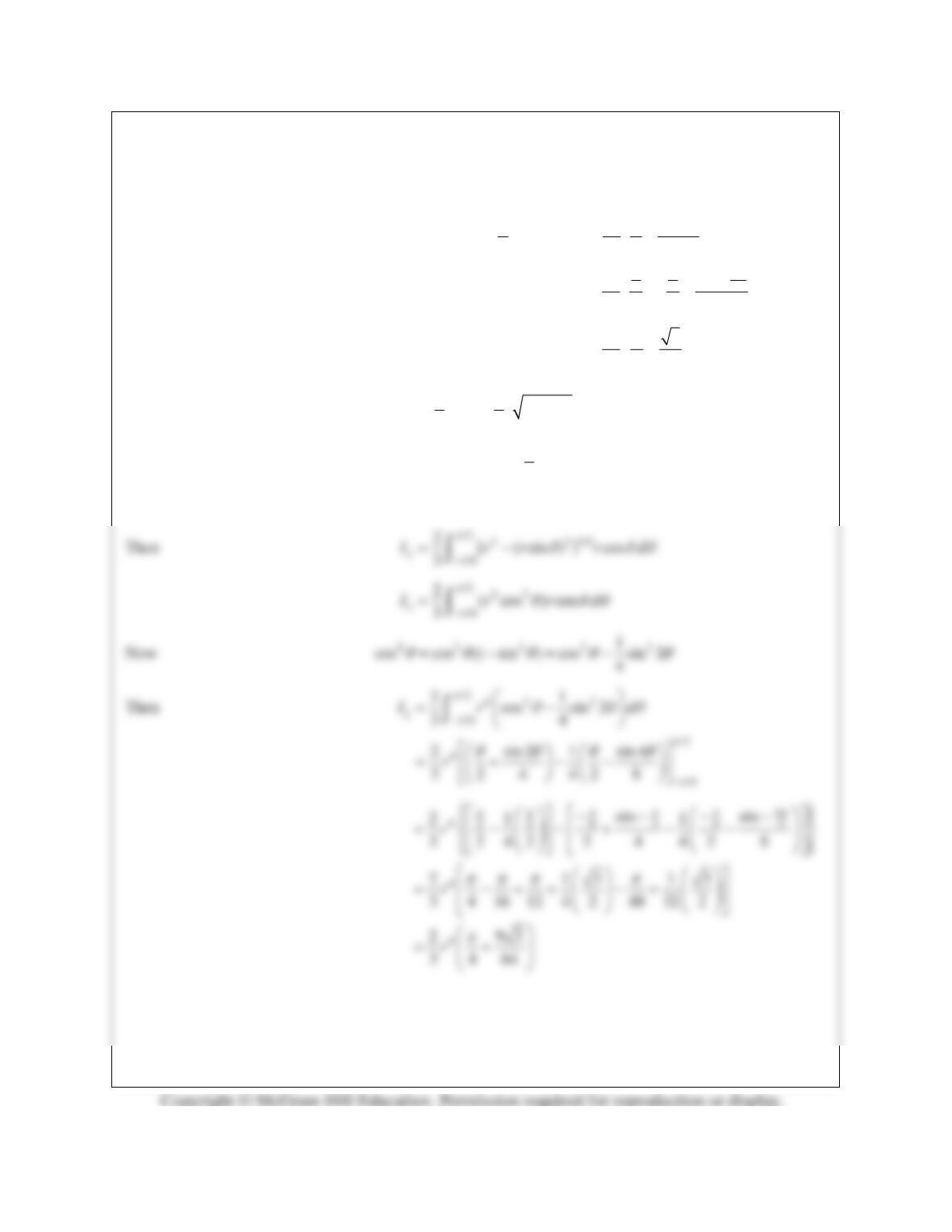
The equation of the circle is
222
xyr
So that
22
xry
PROBLEM 9.24 (Continued)
Then
/2
4
/2 42
/6 /6
2
4
63
2
4
1sin4
2sin2
4228
sin
22 2 8
3
23 16
x
r
Ir d
r
r
Also
3
322
11
33
y
dI x dy r y dy
Then 223/2
/2
1
2( )
3
r
yy
r
I
dI r y dy
Let sin ; cosyr dyr d
PROBLEM 9.24 (Continued)
Now
4
4
32 93
2 3 16 3 4 64
Pxy
r
JII r
PROBLEM 9.25
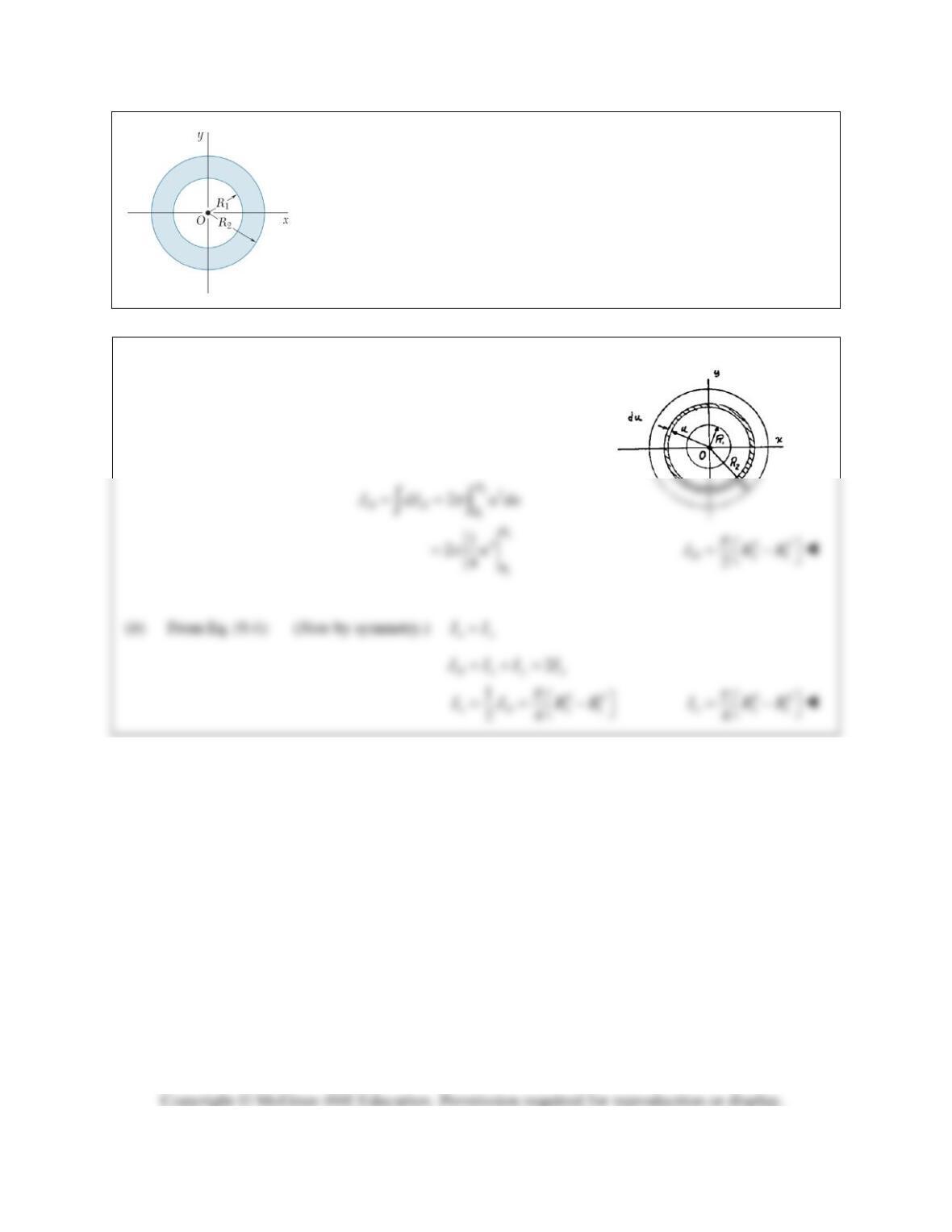
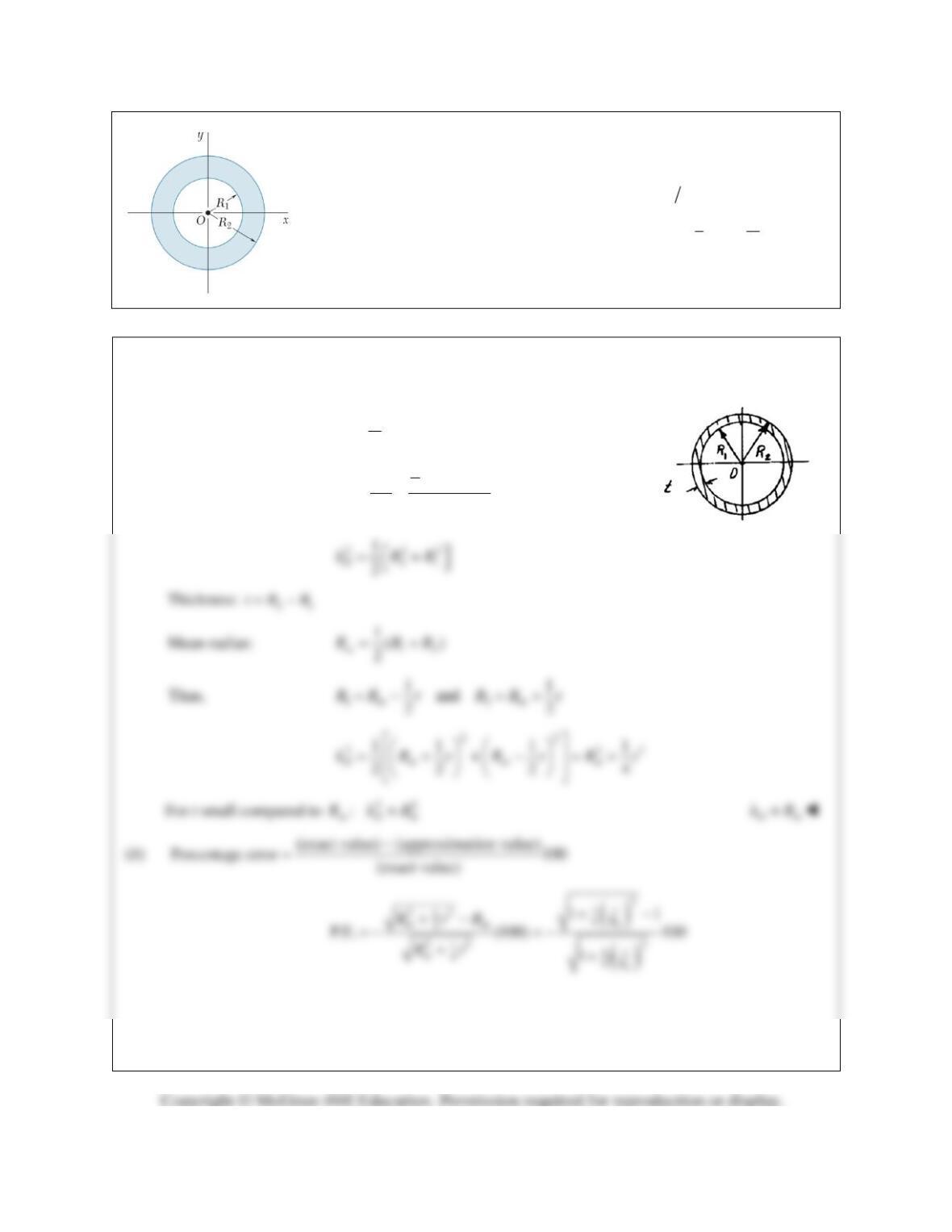
(a) Determine by direct integration the polar moment of inertia of the annular
area shown with respect to Point O. (b) Using the result of Part a, determine
the moment of inertia of the given area with respect to the x axis.
SOLUTION
(a)
2dA u du
22
3
(2 )
2
O
dJ u dA u u du
udu
PROBLEM 9.26
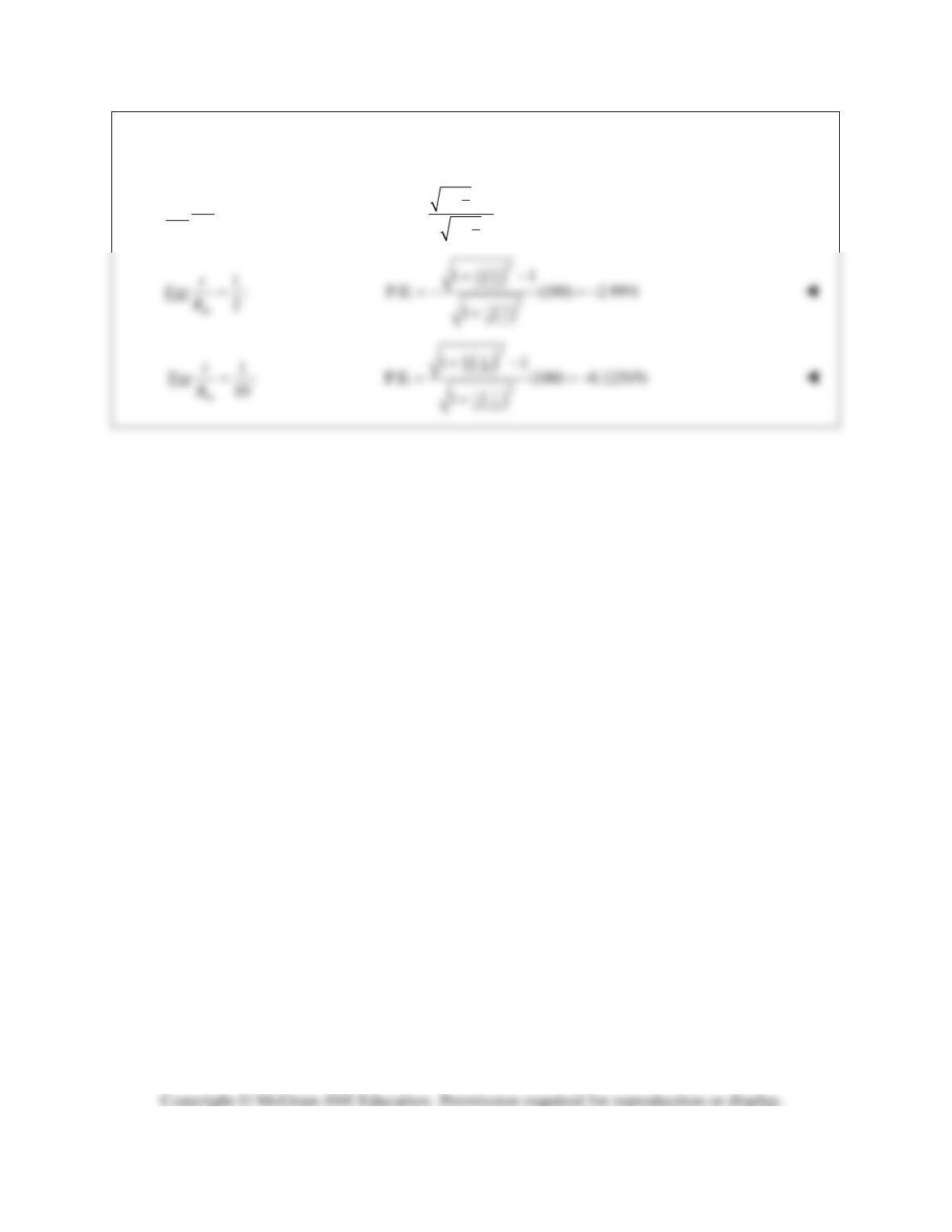
(a) Show that the polar radius of gyration k
O
of the annular area shown is
approximately equal to the mean radius 12
()2
m
RRR for small values of
the thickness 21
.tR R (b) Determine the percentage error introduced by
using R
m
in place of k
O
for the following values of t/R
m
: 1,
1
2
, and
1
10
.
SOLUTION
(a) From Problem 9.23:
44
21
2
O
JRR
44
21
2
2
22
21
O
O
RR
J
kARR
PROBLEM 9.26 (Continued)
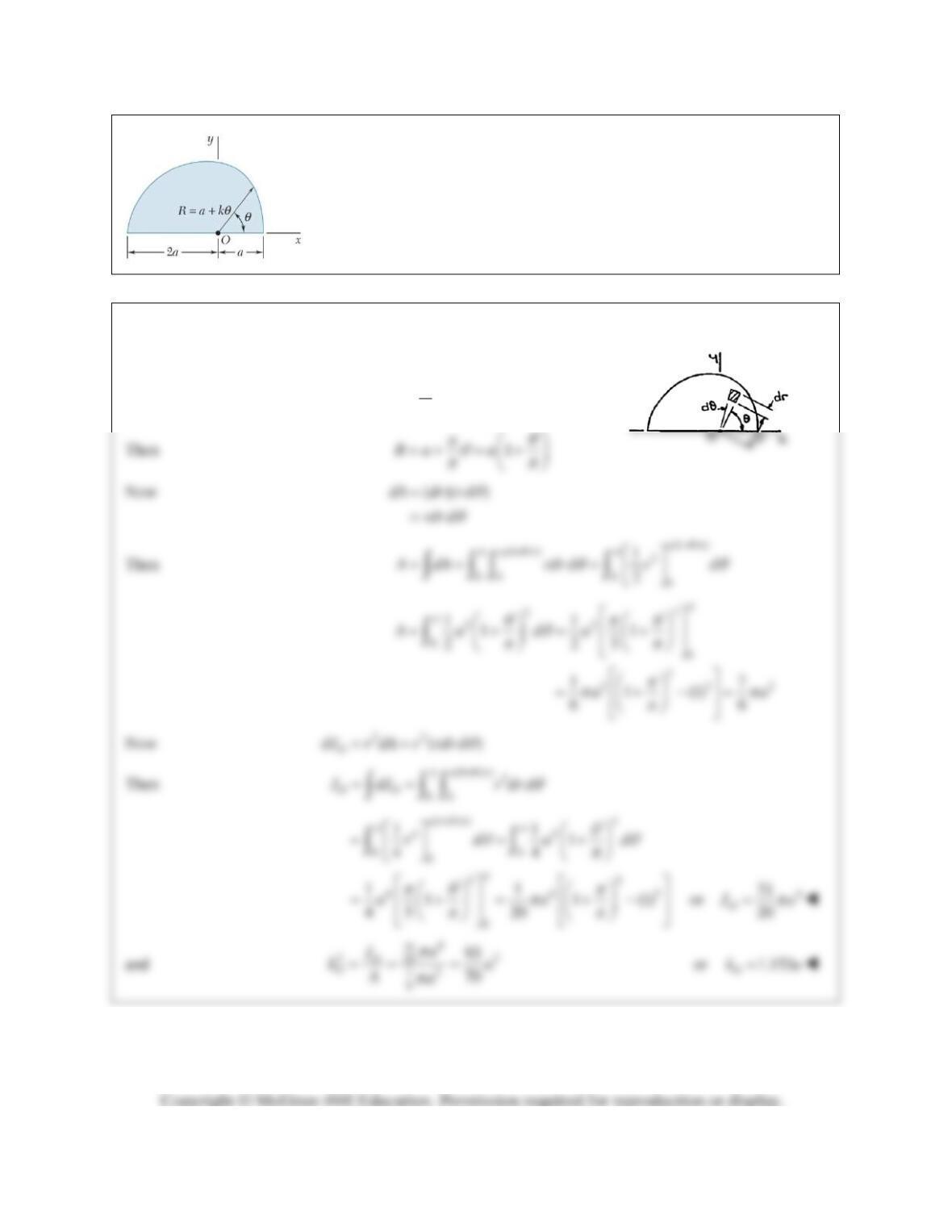
For 1:
m
t
R
1
4
1
4
11
P.E. (100) 10.56%
1
PROBLEM 9.27
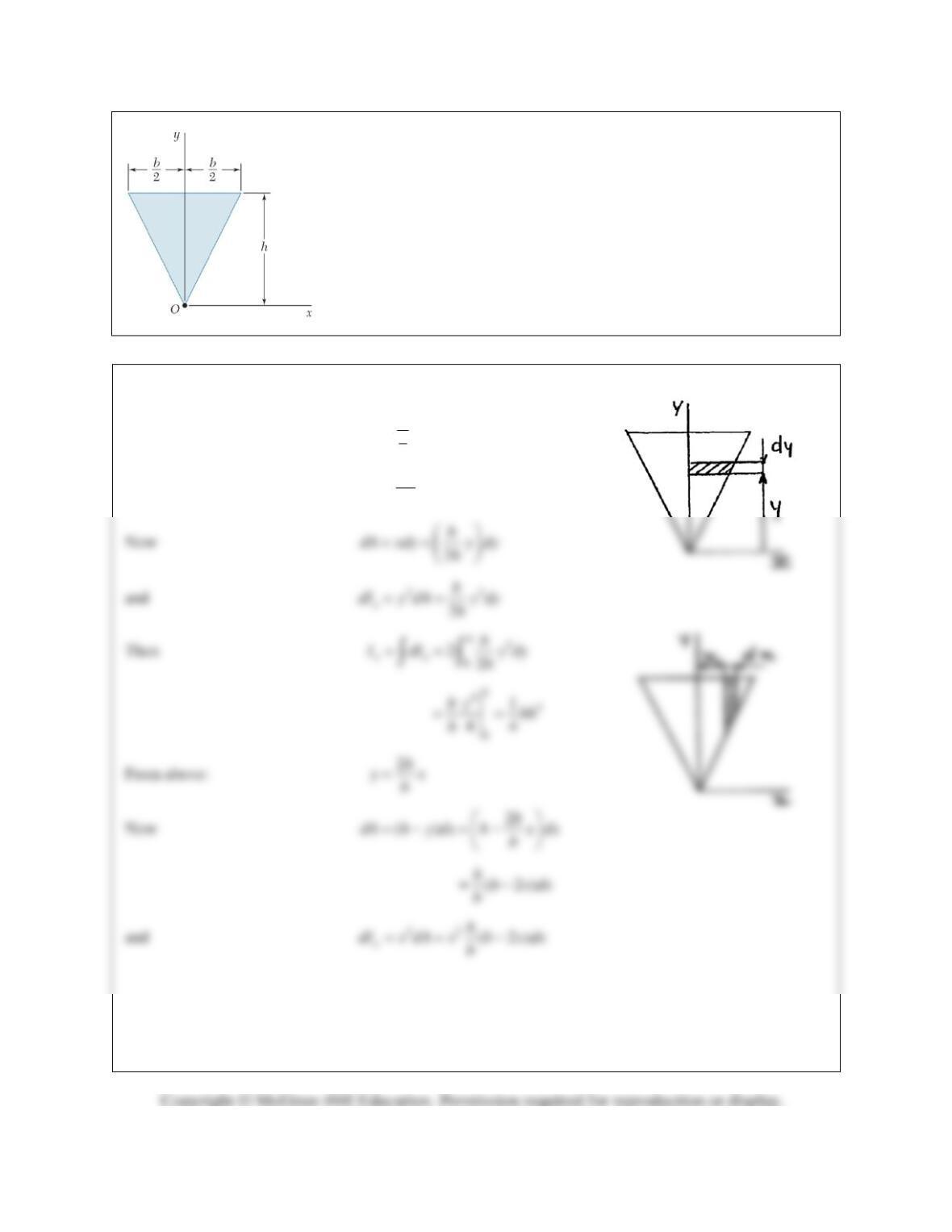
Determine the polar moment of inertia and the polar radius of gyration of
the shaded area shown with respect to Point O.
SOLUTION
At
,2:Ra
2()aak
or
a
k
PROBLEM 9.28
Determine the polar moment of inertia and the polar radius of gyration of
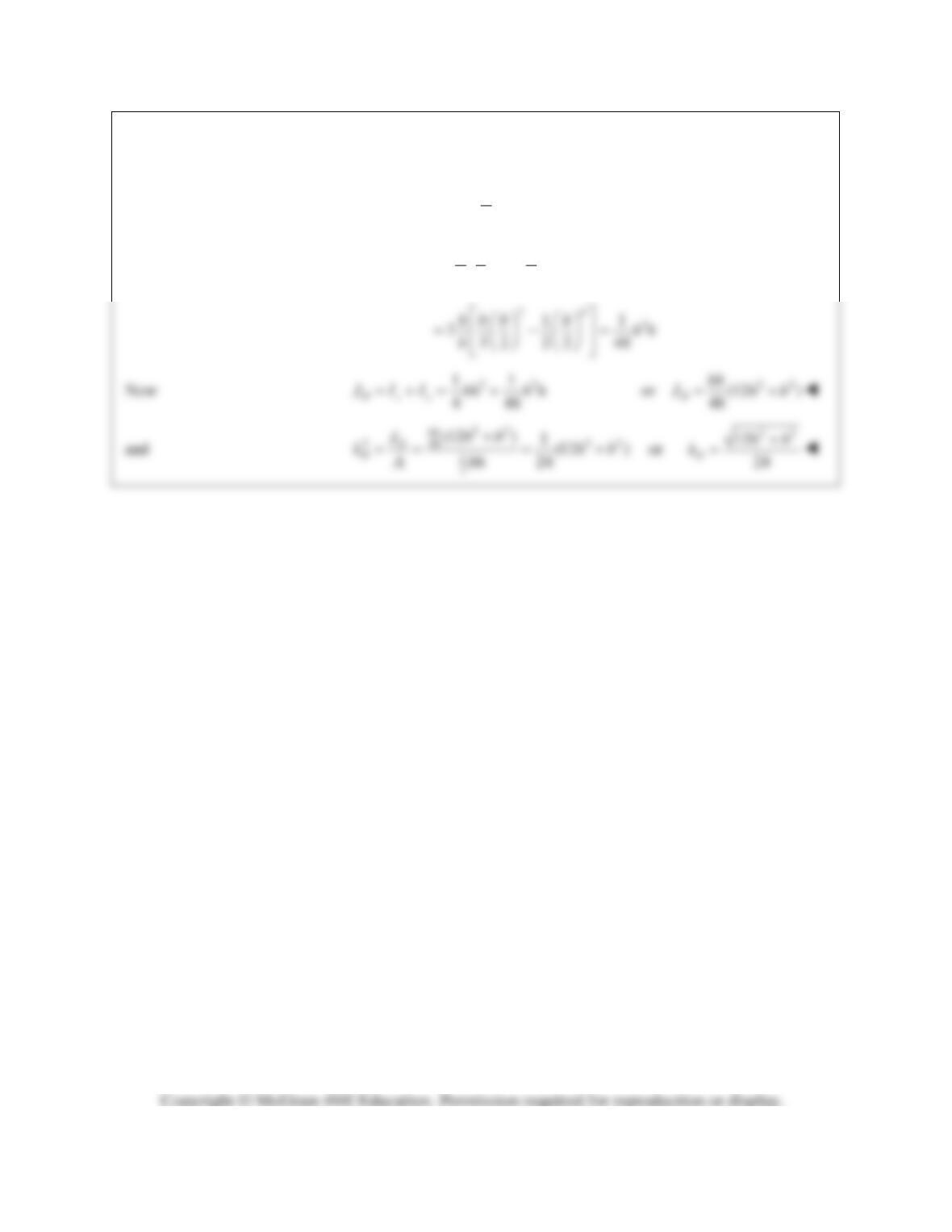
the isosceles triangle shown with respect to Point O.
SOLUTION
By observation:
2
b
h
yx
or 2
b
xy
h
PROBLEM 9.28 (Continued)
Then
/2 2
0
2(2)
b
yy
h
I
dI x b x dx
b
/2
34
0
11
232
b
hbx x
b
PROBLEM 9.29*
Using the polar moment of inertia of the isosceles triangle of Problem
9.28, show that the centroidal polar moment of inertia of a circular area of
radius r is
4
/2.r
(Hint: As a circular area is divided into an increasing
number of equal circular sectors, what is the approximate shape of each
circular sector?)
PROBLEM 9.28
Determine the polar moment of inertia and the polar
radius of gyration of the isosceles triangle shown with respect to Point O.
SOLUTION
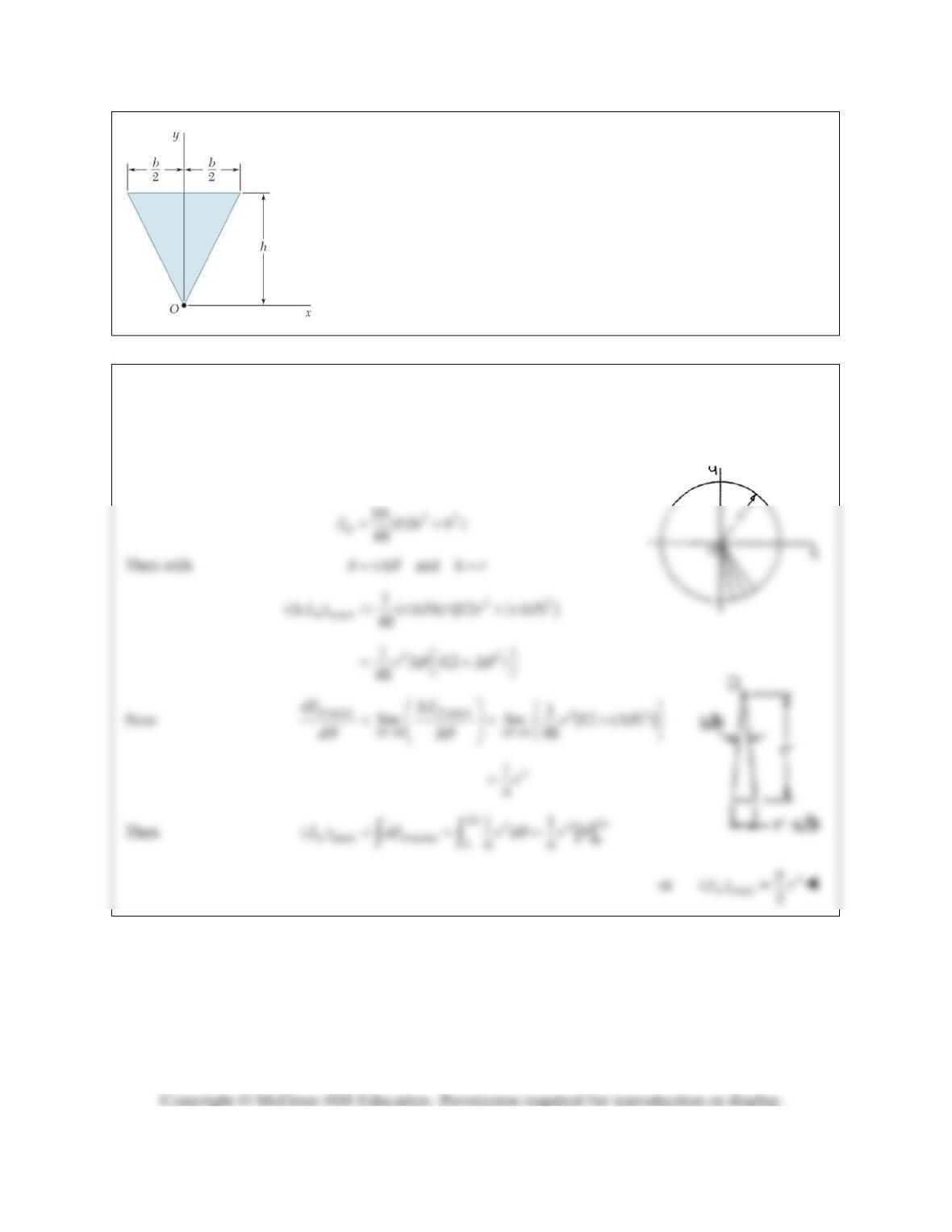
First the circular area is divided into an increasing number of identical circular sectors. The sectors can be
approximated by isosceles triangles. For a large number of sectors the approximate dimensions of one of
the isosceles triangles are as shown.
For an isosceles triangle (see Problem 9.28):
PROBLEM 9.30*
Prove that the centroidal polar moment of inertia of a given area A cannot be smaller than
2/2 .A
(Hint:
Compare the moment of inertia of the given area with the moment of inertia of a circle that has the same
area and the same centroid.)
SOLUTION
From the solution to sample Problem 9.2, the centroidal polar moment of inertia of a circular area is
4
cir
() 2
C
Jr
The area of the circle is
2
cir
Ar
PROBLEM 9.30* (Continued)
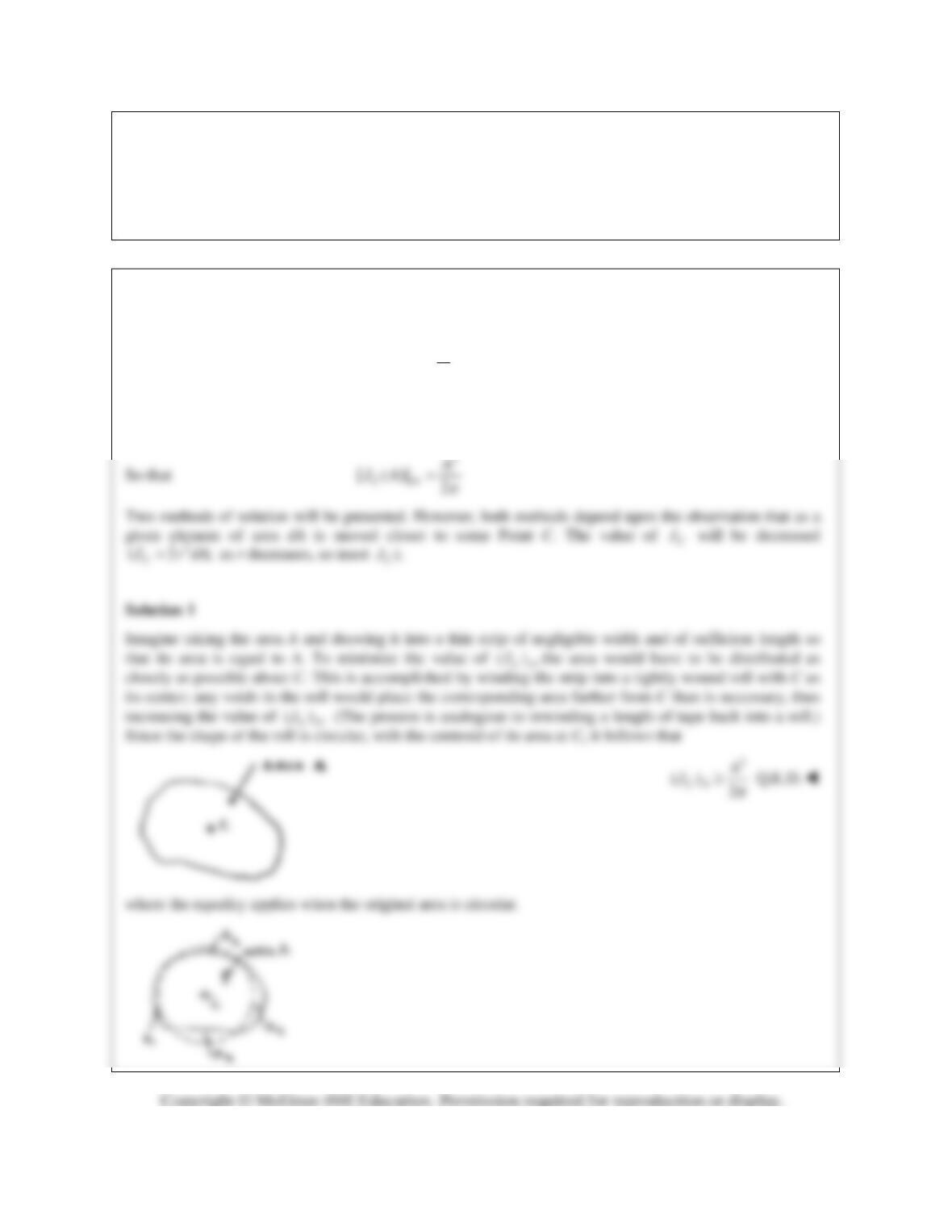
Solution 2
Consider an area A with its centroid at Point C and a circular area of area A with its center (and centroid)
at Point C. Without loss of generality, assume that
12 34
A
AAA
J