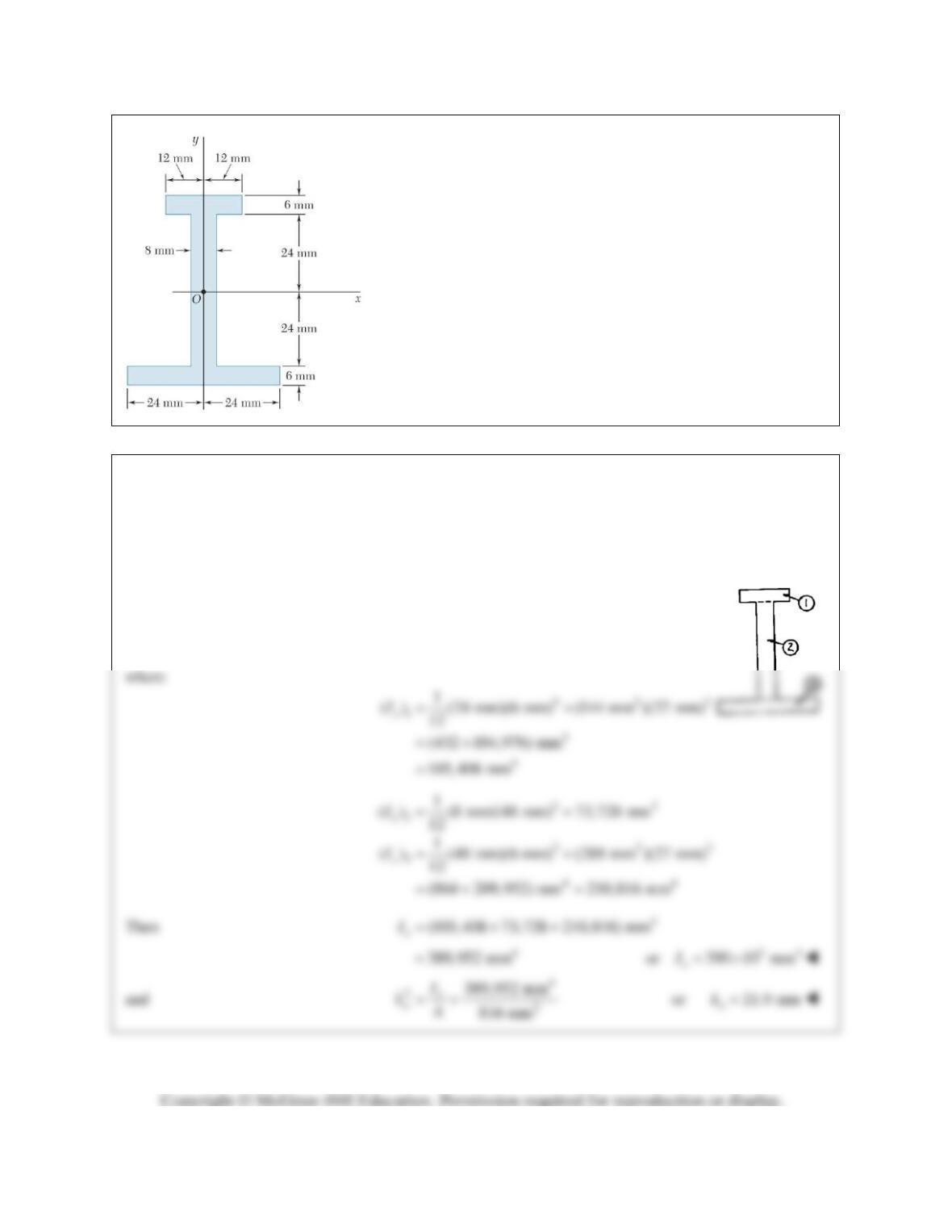
PROBLEM 9.31
Determine the moment of inertia and the radius of gyration of the
shaded area with respect to the x axis.
SOLUTION
First note that
123
2
2
2
[(24)(6) (8)(48) (48)(6)] mm
(144 384 288) mm
816 mm
AA A A
Now
123
() () ()
xx x x
II I I
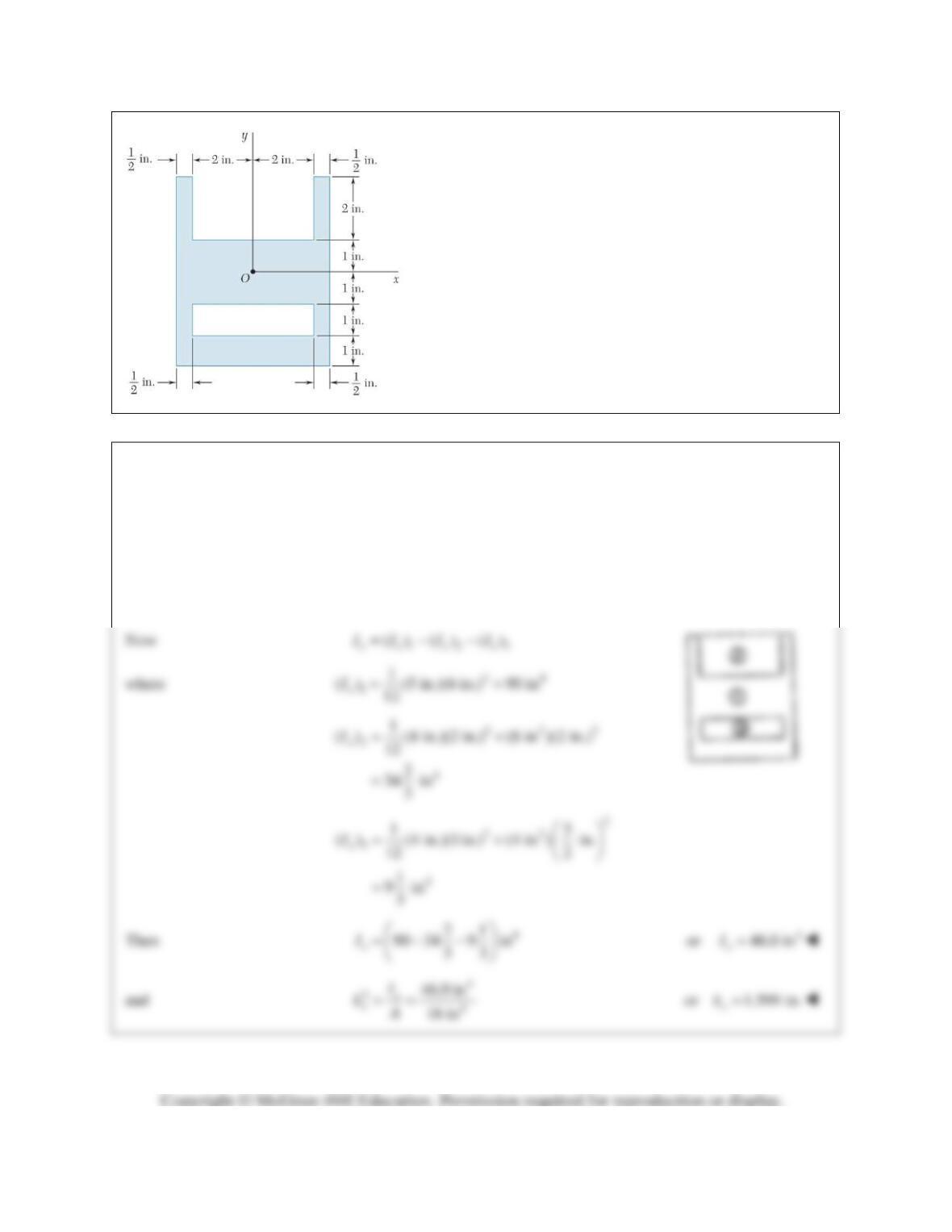
PROBLEM 9.32
Determine the moment of inertia and the radius of gyration of
the shaded area with respect to the x axis.
SOLUTION
First note that
123
2
2
2
[(5)(6) (4)(2) (4)(1)] in
(30 8 4) in
18 in
AA A A
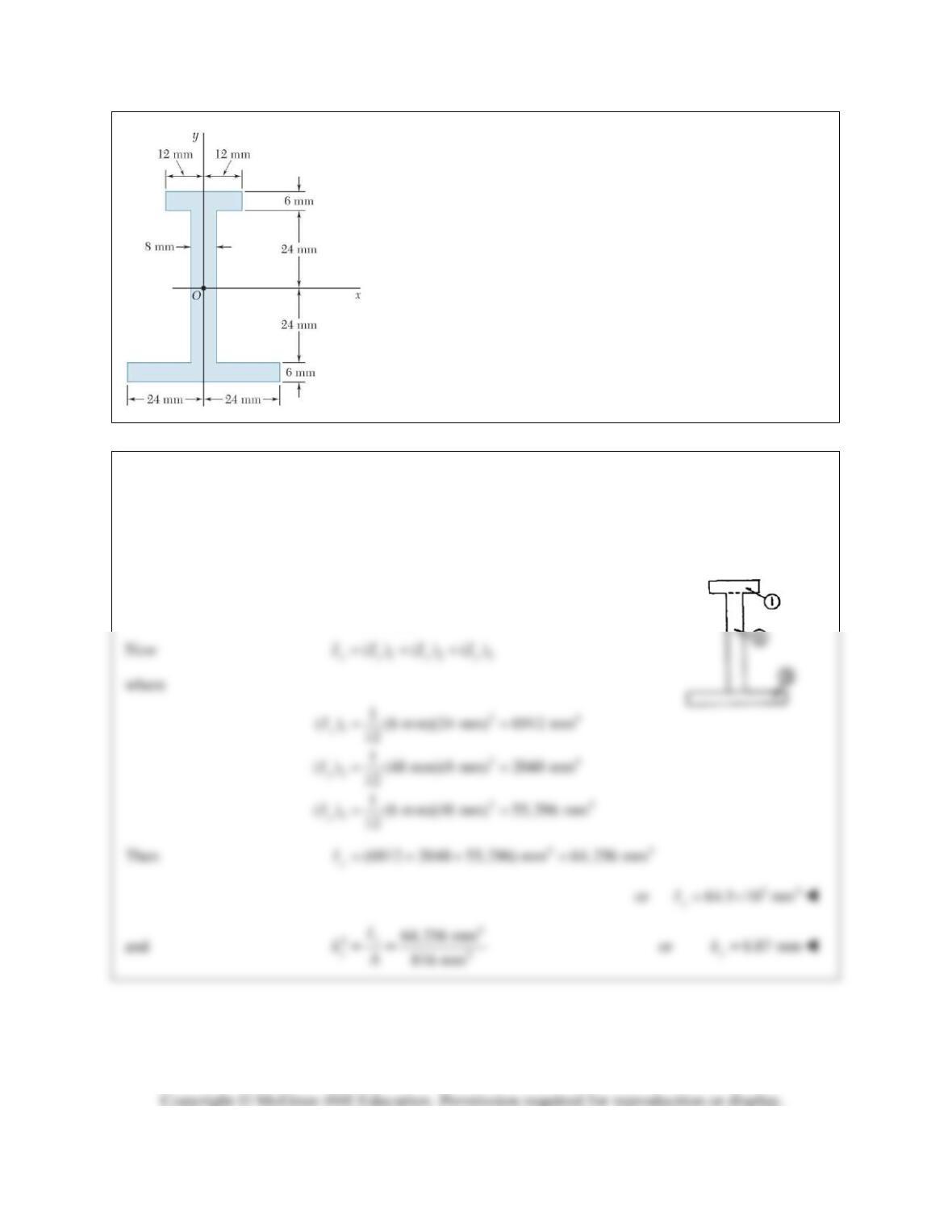
PROBLEM 9.33
Determine the moment of inertia and the radius of gyration of the
shaded area with respect to the y axis.
SOLUTION
First note that
123
2
2
2
[(24 6) (8)(48) (48)(6)] mm
(144 384 288) mm
816 mm
AA A A
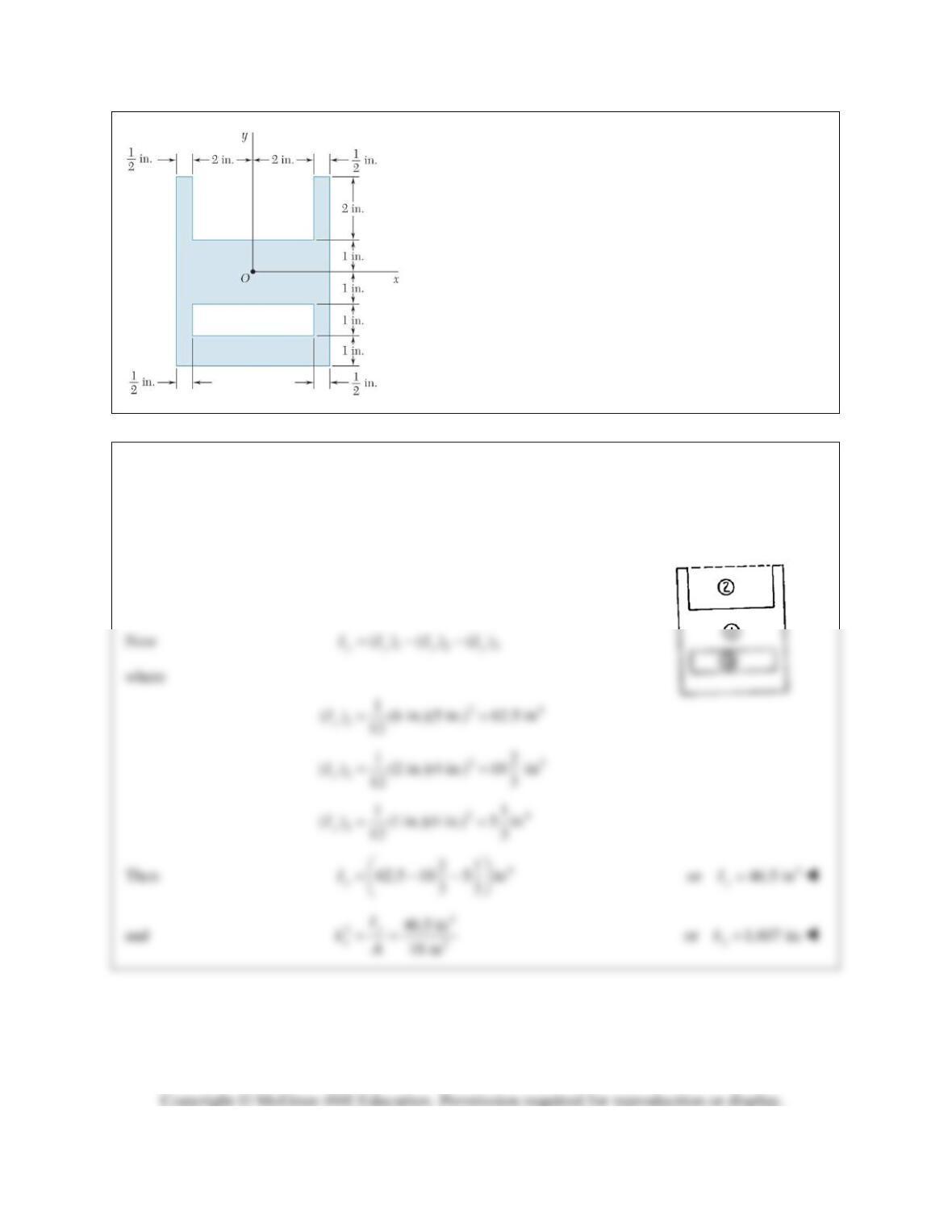
PROBLEM 9.34
Determine the moment of inertia and the radius of gyration
of the shaded area with respect to the y axis.
SOLUTION
First note that
123
2
2
2
[(5)(6) (4)(2) (4)(1)] in
(30 8 4) in
18 in
AA A A
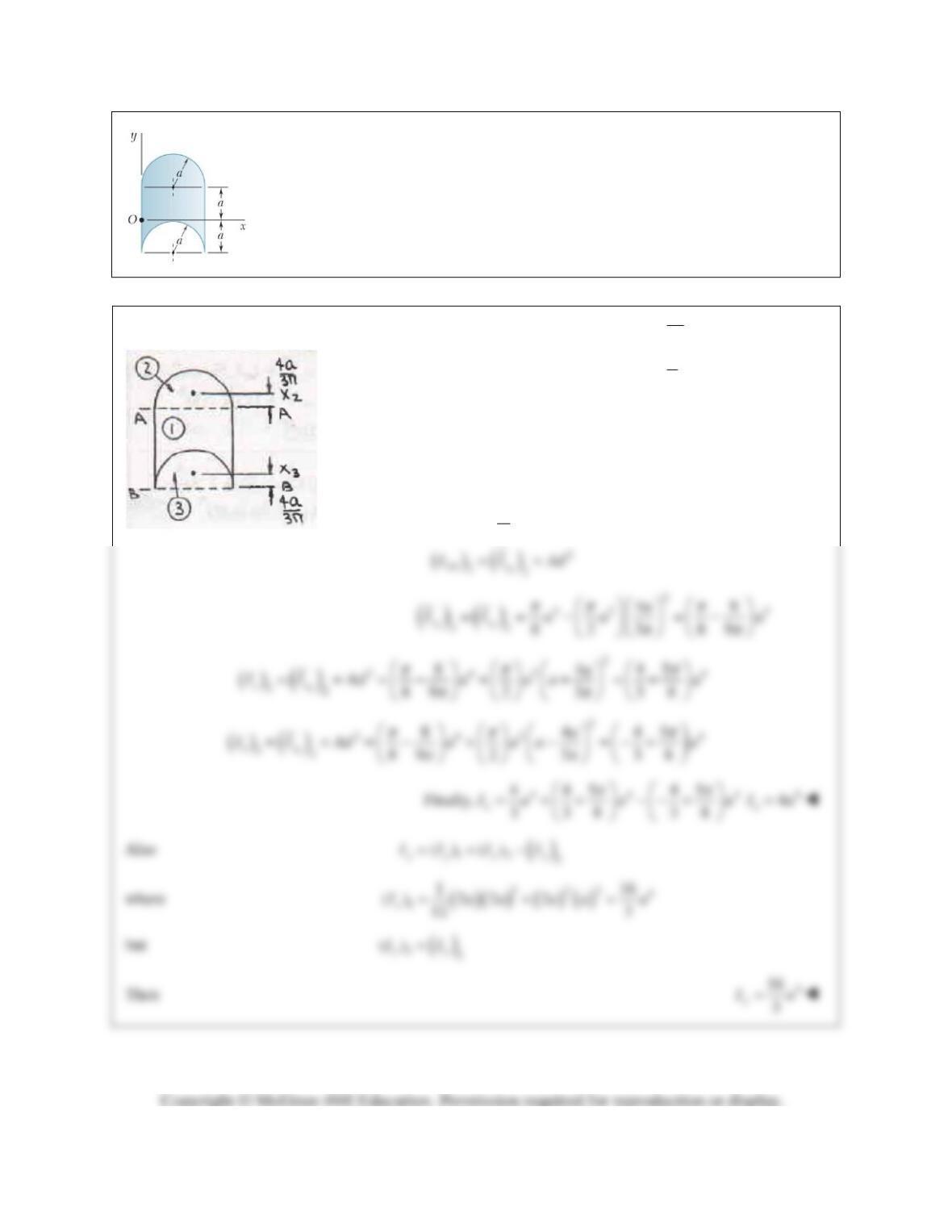
PROBLEM 9.35
Determine the moments of inertia of the shaded area shown with respect to the x and
y axes.
SOLUTION We have
12 3
() ()
xx x x
II I Iwhere
3
1
4
1
() (2)(2a)
12
4
3
x
Ia
a
4
23
() 8
AA BB
II a
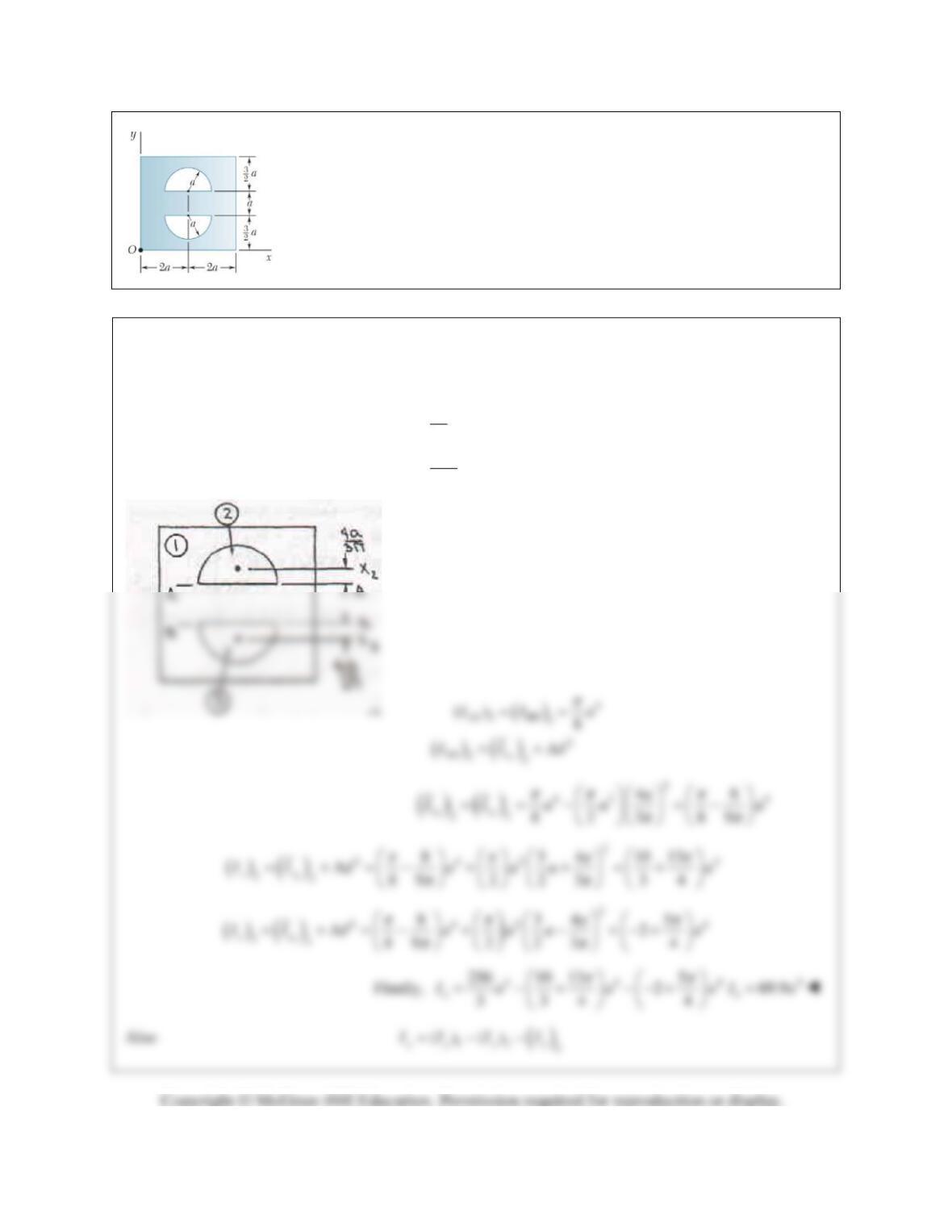
PROBLEM 9.36
Determine the moments of inertia of the shaded area shown with respect to the
x and y axes.
SOLUTION
We have
12 3
() ()
xx x x
II I I
where
22
3
1
4
1
() (4)(4a) 4 2
12
256
3
x
Iaaa
a
PROBLEM 9.36 (Continued)
322 4
1
1 256
() 4 4 4 2
12 3
y
I
aa a a a
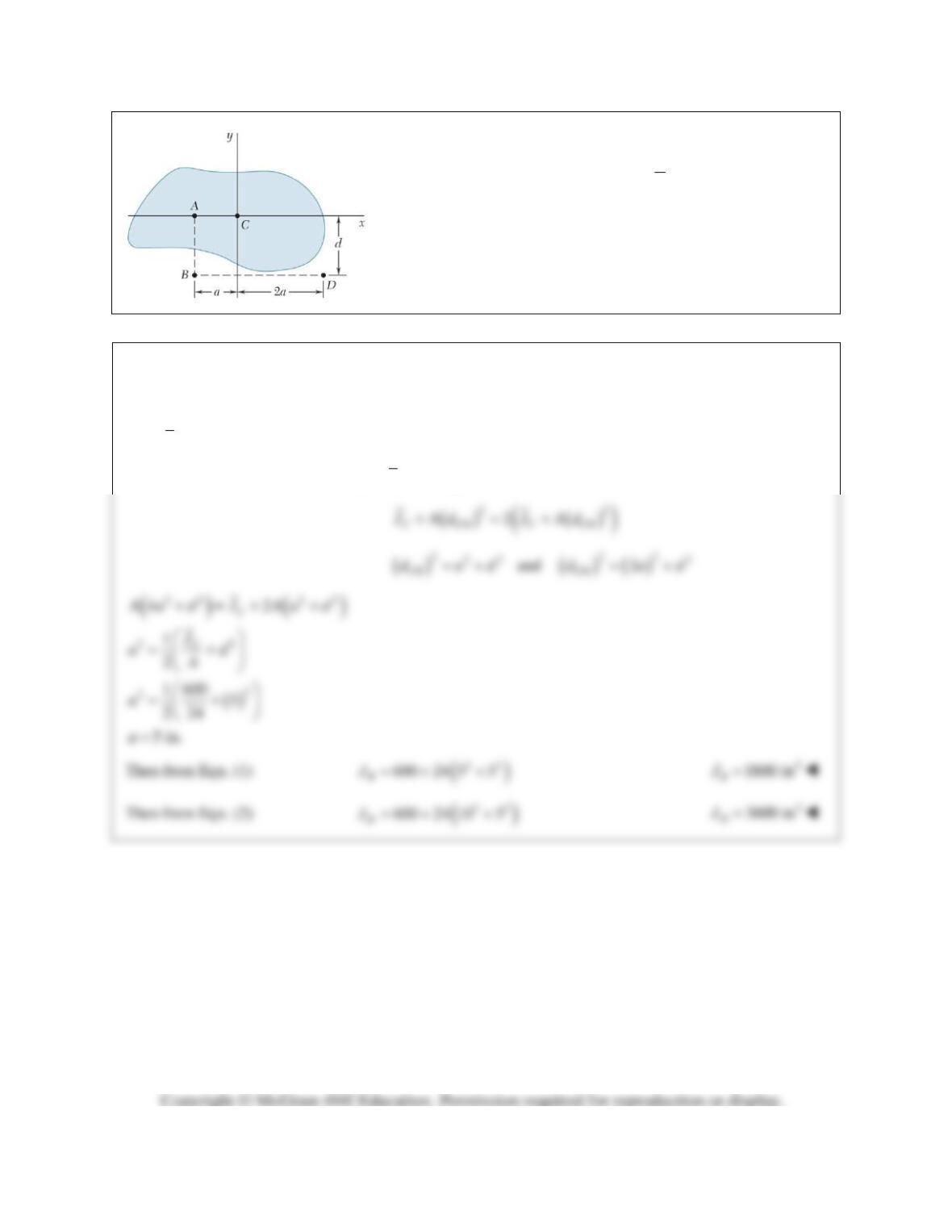
PROBLEM 9.37
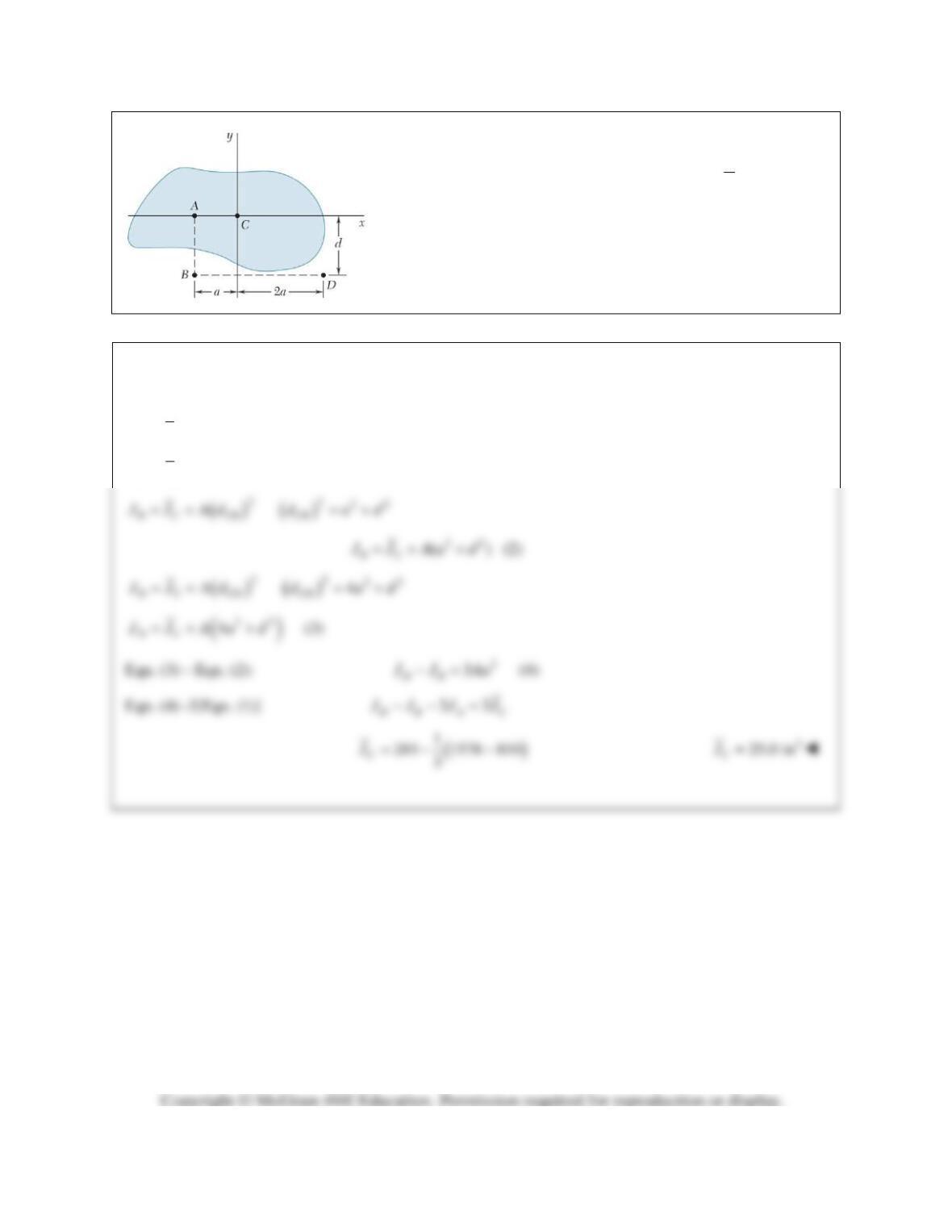
The centroidal polar moment of inertia C
J of the 24-in2 shaded
area is 600 in4. Determine the polar moments of inertia JB and JD
of the shaded area knowing that JD = 2JB and d = 5 in.
SOLUTION
Given: 2
24 in
A
4
2600 in
DBC
JJJ
2
( ) (1)
BC CB
JJAd
2
( ) (2)
DC CD
JJAd
PROBLEM 9.38
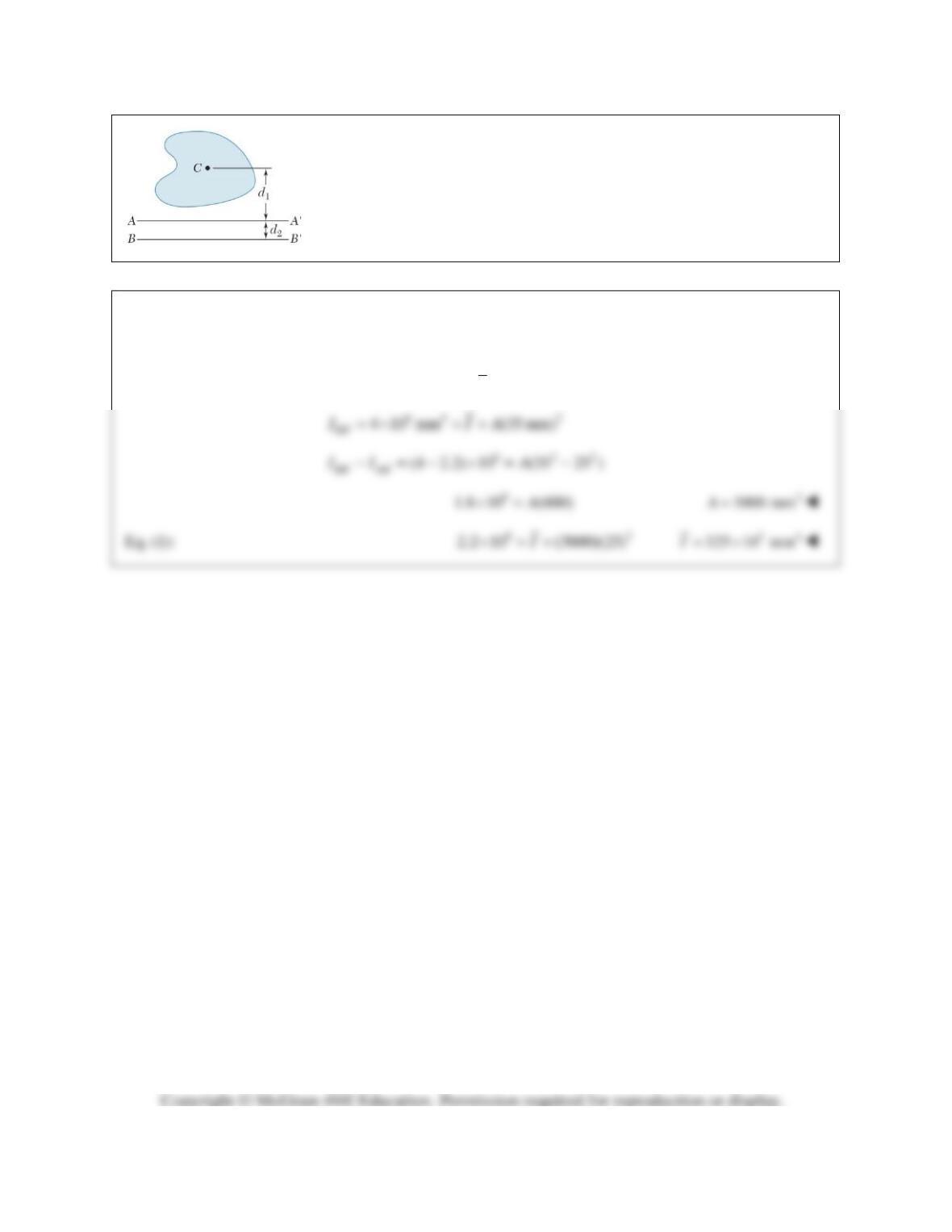
Determine the centroidal polar moment of inertia C
J of the 25-
in2 shaded area knowing that the polar moments of inertia of the
area with respect to points A, B, and D are, respectively, JA = 281
in4, JB = 810 in4, and JD = 1578 in4.
SOLUTION
22
2
A C CA CA
JJAd d a
2
( ) (1)
BC
JJAa
PROBLEM 9.39
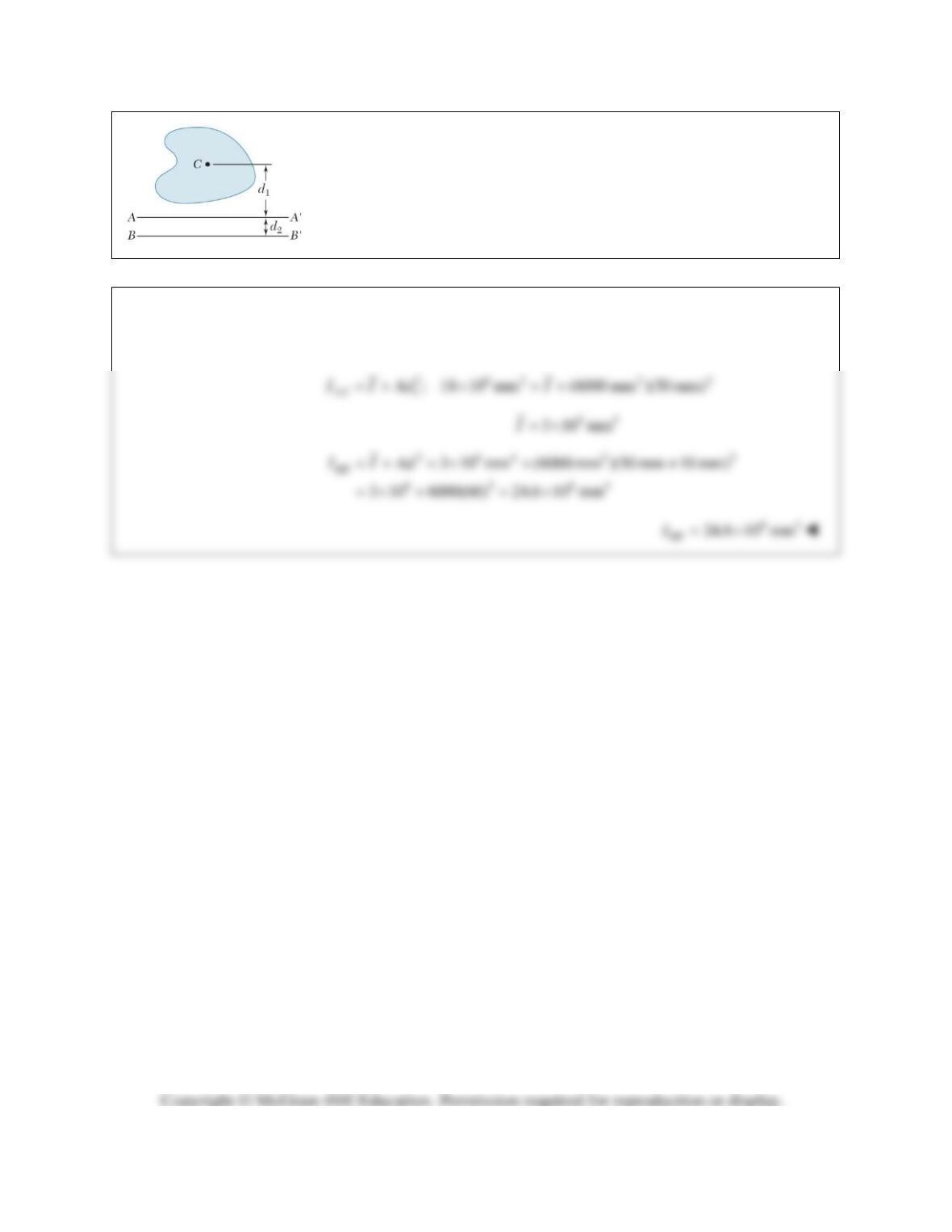
Determine the shaded area and its moment of inertia with respect to the
centroidal axis parallel to AA knowing that d1 = 25 mm and d2 = 10 mm
and that its moments of inertia with respect to AA and BB are 2.2 106
mm4 and 4 106 mm4, respectively.
SOLUTION
64 2
2.2 10 mm (25 mm)
AA
IIA
(1)
PROBLEM 9.40
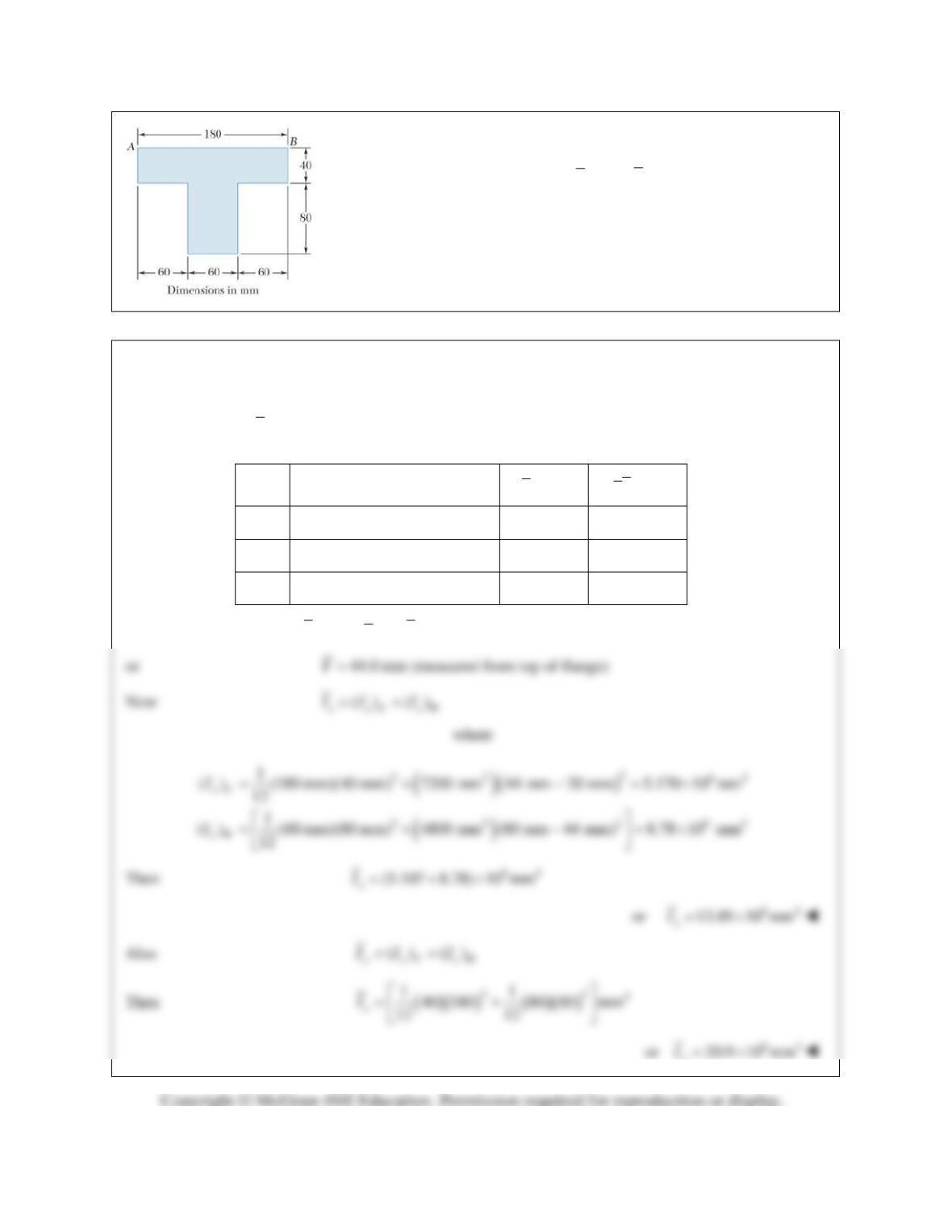
Knowing that the shaded area is equal to 6000 mm2 and that its moment of
inertia with respect to AA is 18 106 mm4, determine its moment of inertia
with respect to BB for d1 = 50 mm and d2 = 10 mm.
SOLUTION
Given: 2
6000 mmA
PROBLEM 9.41
Determine the moments of inertia
x
I
and y
I of the area shown with
respect to centroidal axes respectively parallel and perpendicular to side
AB.
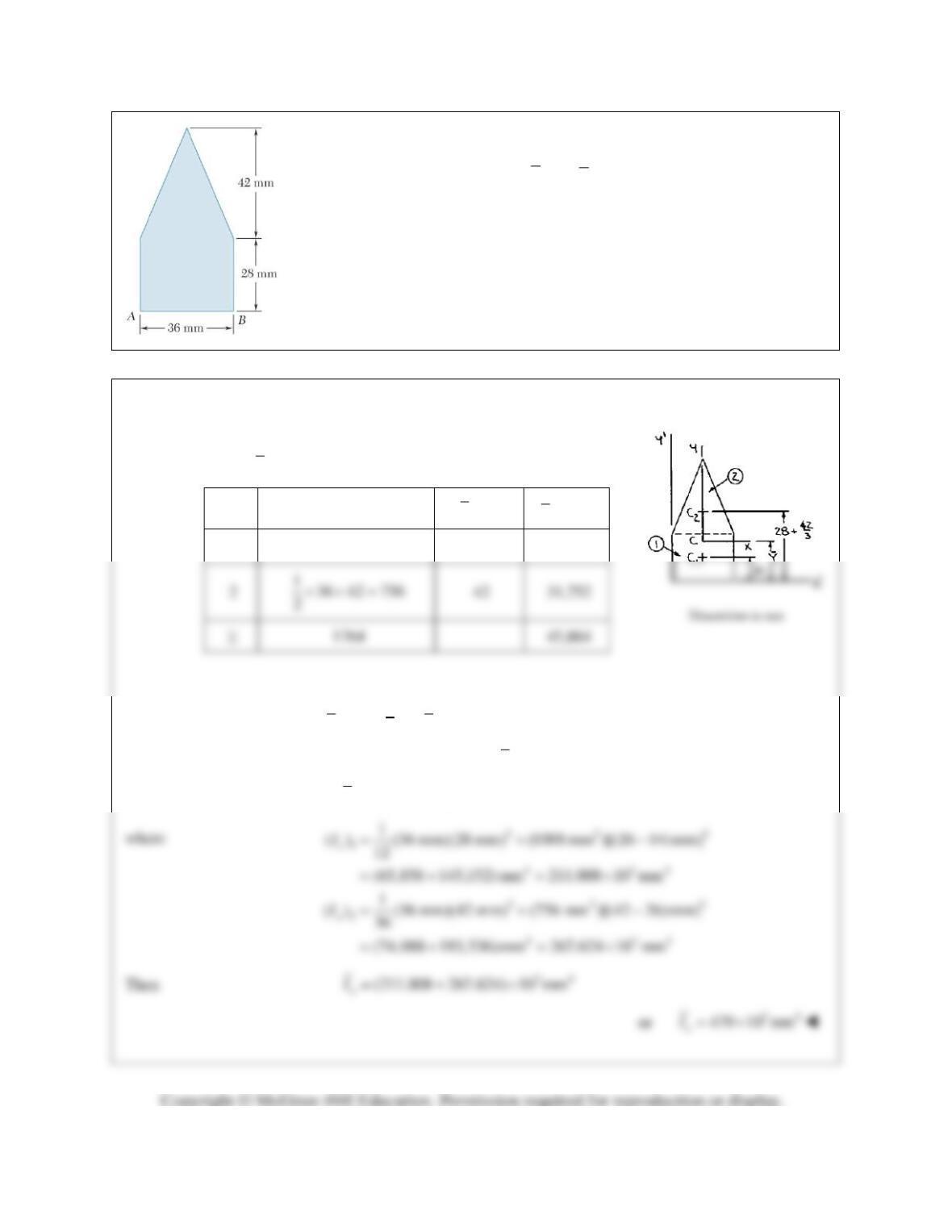
SOLUTION
First locate centroid C of the area.
Symmetry implies 0X
2
,mmA ,mmy 3
,mmyA
Flng. 180 40 7200 20 144,000
Web 80 60 4800 80 384,000
12,000 528,000
Then 23
: (12,000 mm ) 528,000 mmYA yA X
y
PROBLEM 9.42
Determine the moments of inertia
x
I
and
y
I
of the area shown with respect to
centroidal axes respectively parallel and perpendicular to side AB.
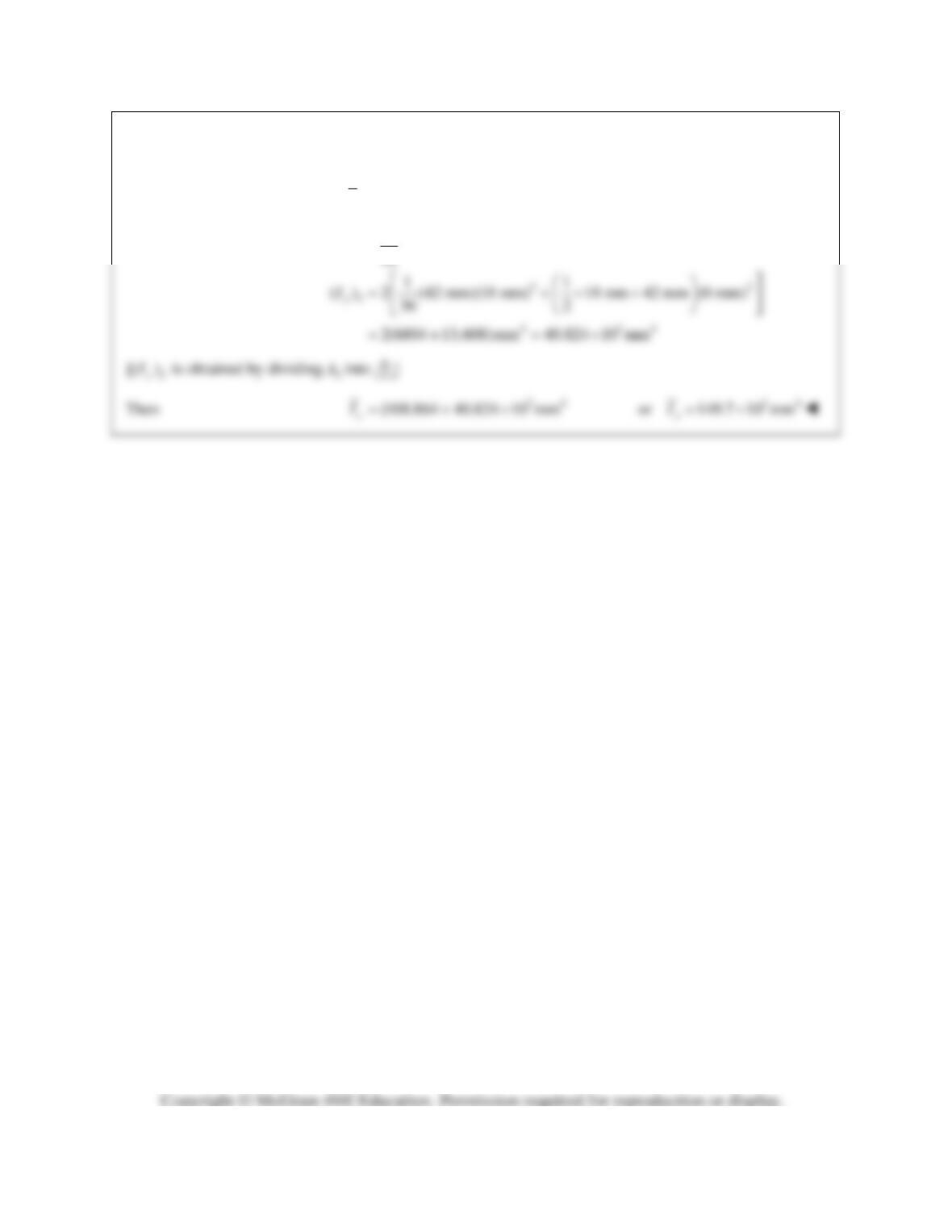
SOLUTION
First locate C of the area.
Symmetry implies
18 mm.X
2
,mmA
,mmy
3
,mmyA
1
36 28 1008
14 14,112
Then
23
: (1764 mm ) 45,864 mmYA yA Y
or
26.0 mmY
Now
12
() ()
xx x
II I
PROBLEM 9.42 (Continued)
Also 12
() ()
yy y
II I
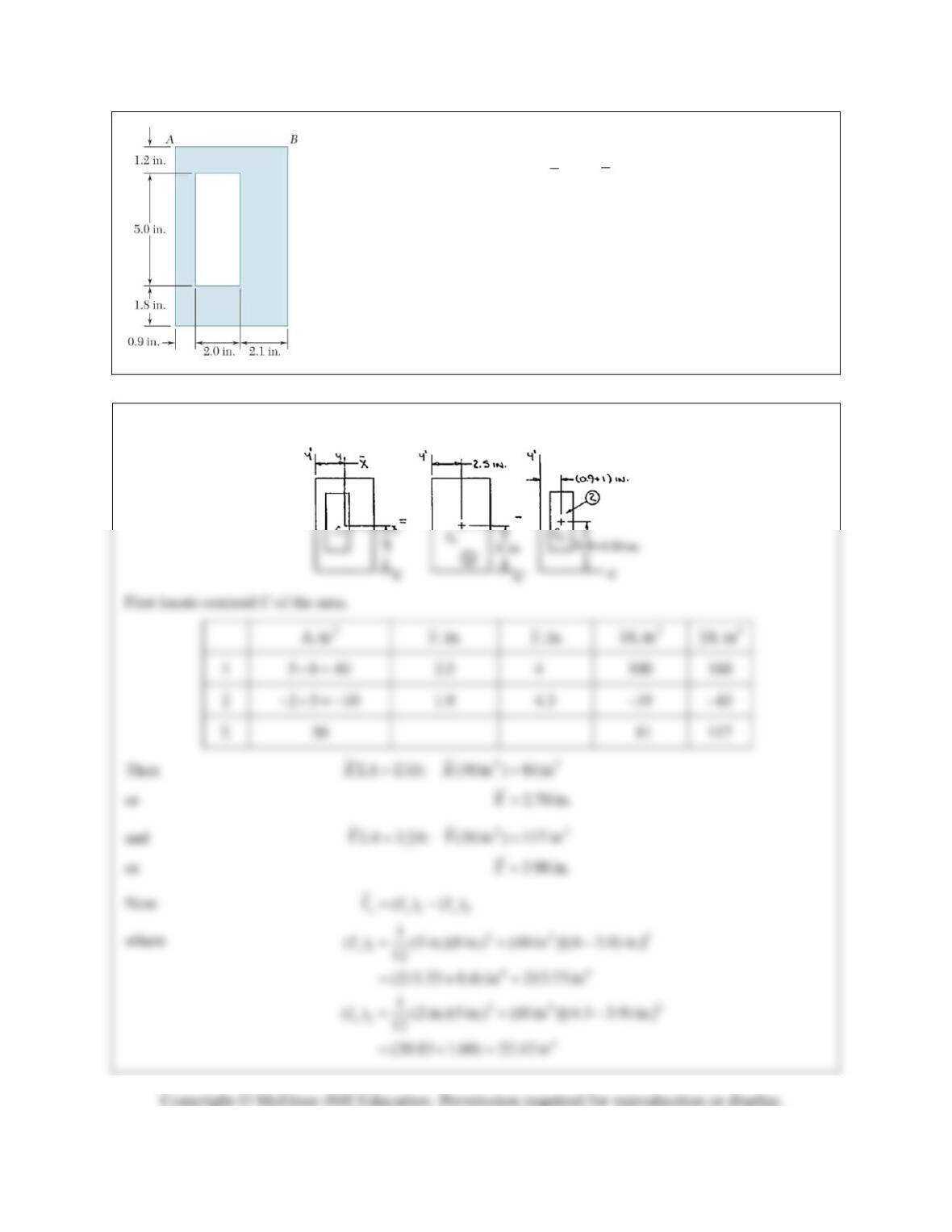
where 334
1
1
( ) (28 mm)(36 mm) 108.864 10 mm
12
y
I
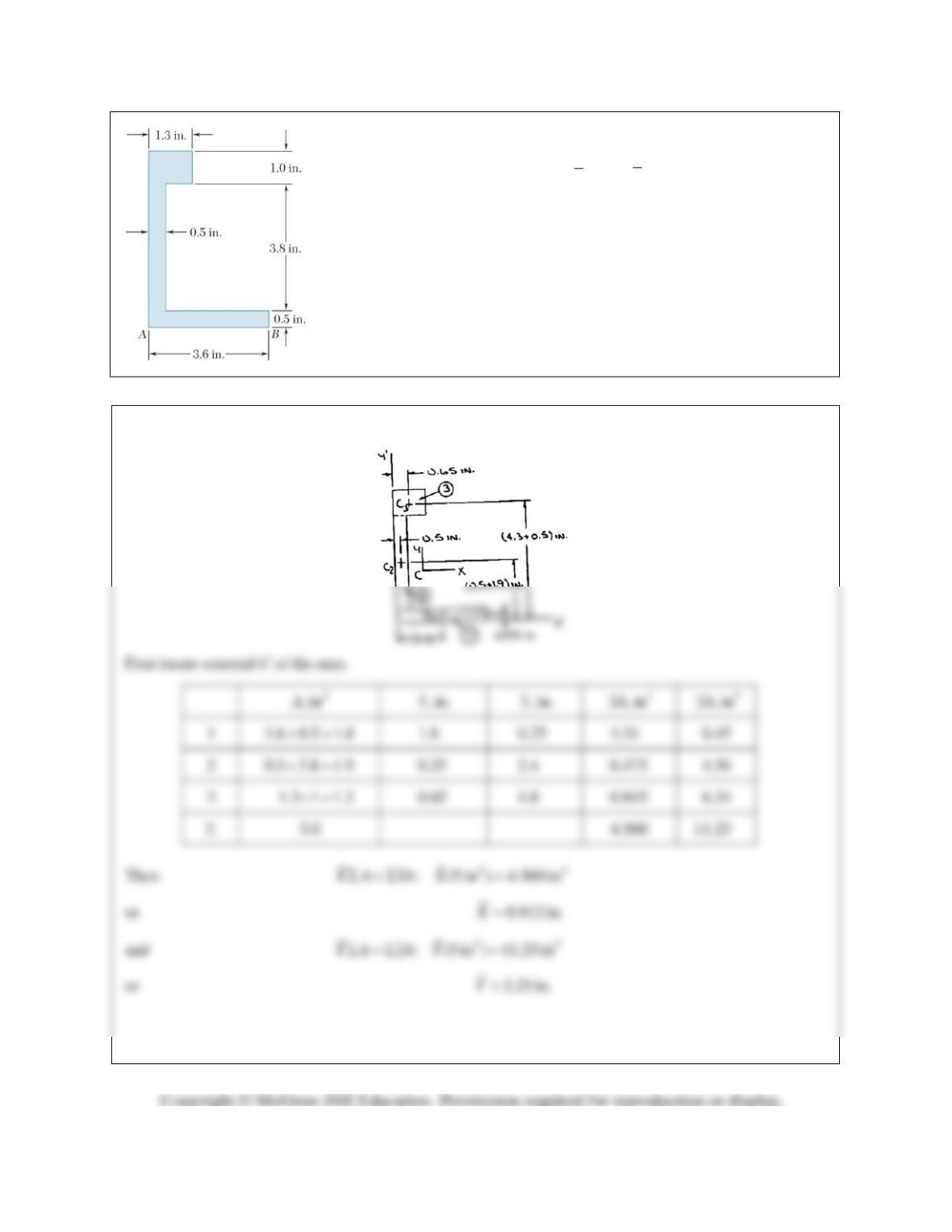
PROBLEM 9.43
Determine the moments of inertia
x
I
and
y
I of the area shown with respect
to centroidal axes respectively parallel and perpendicular to side AB.
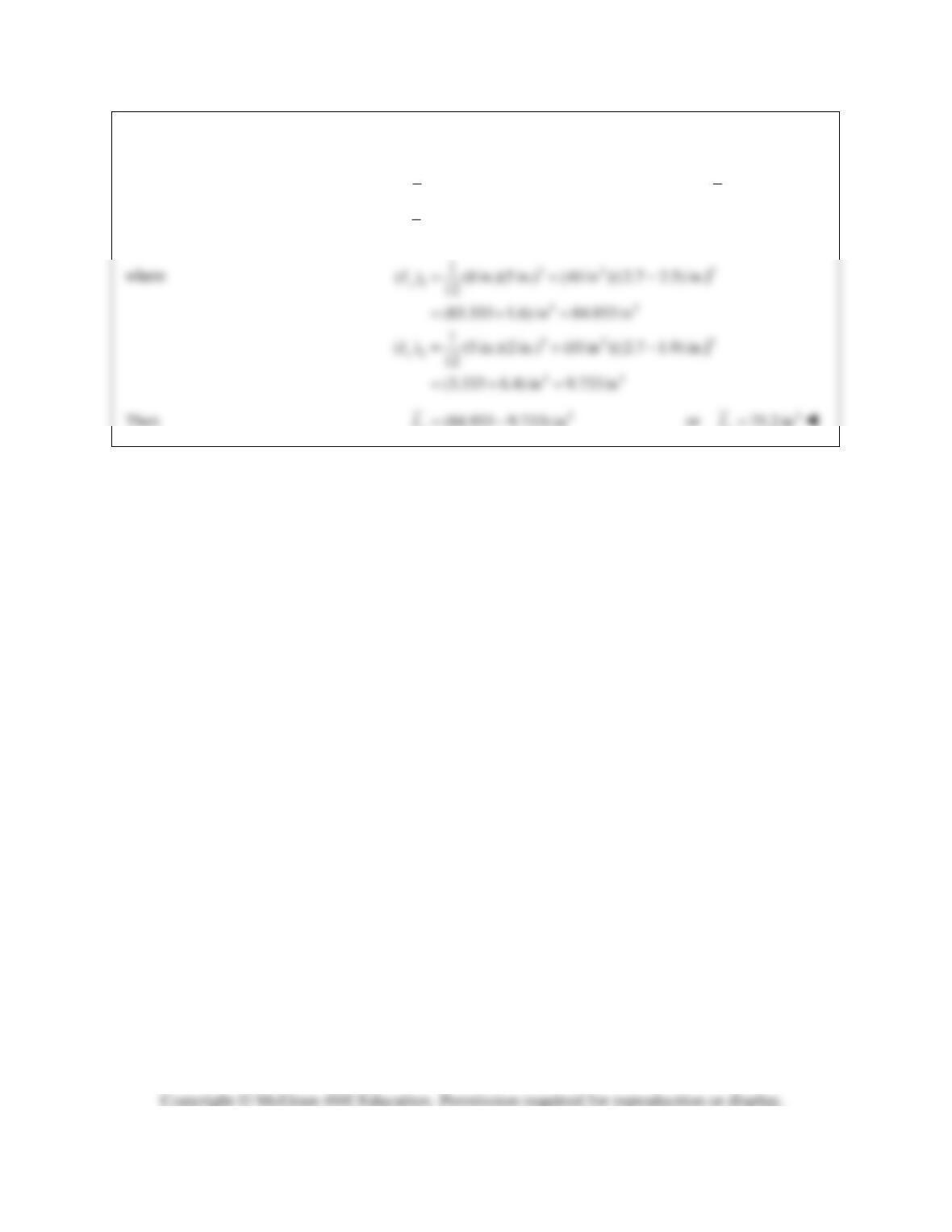
SOLUTION
PROBLEM 9.43 (Continued)
Then 4
(213.73 22.43) in
x
I or 4
191.3 in
x
I
Also 12
() ()
yy y
II I
y
y
PROBLEM 9.44
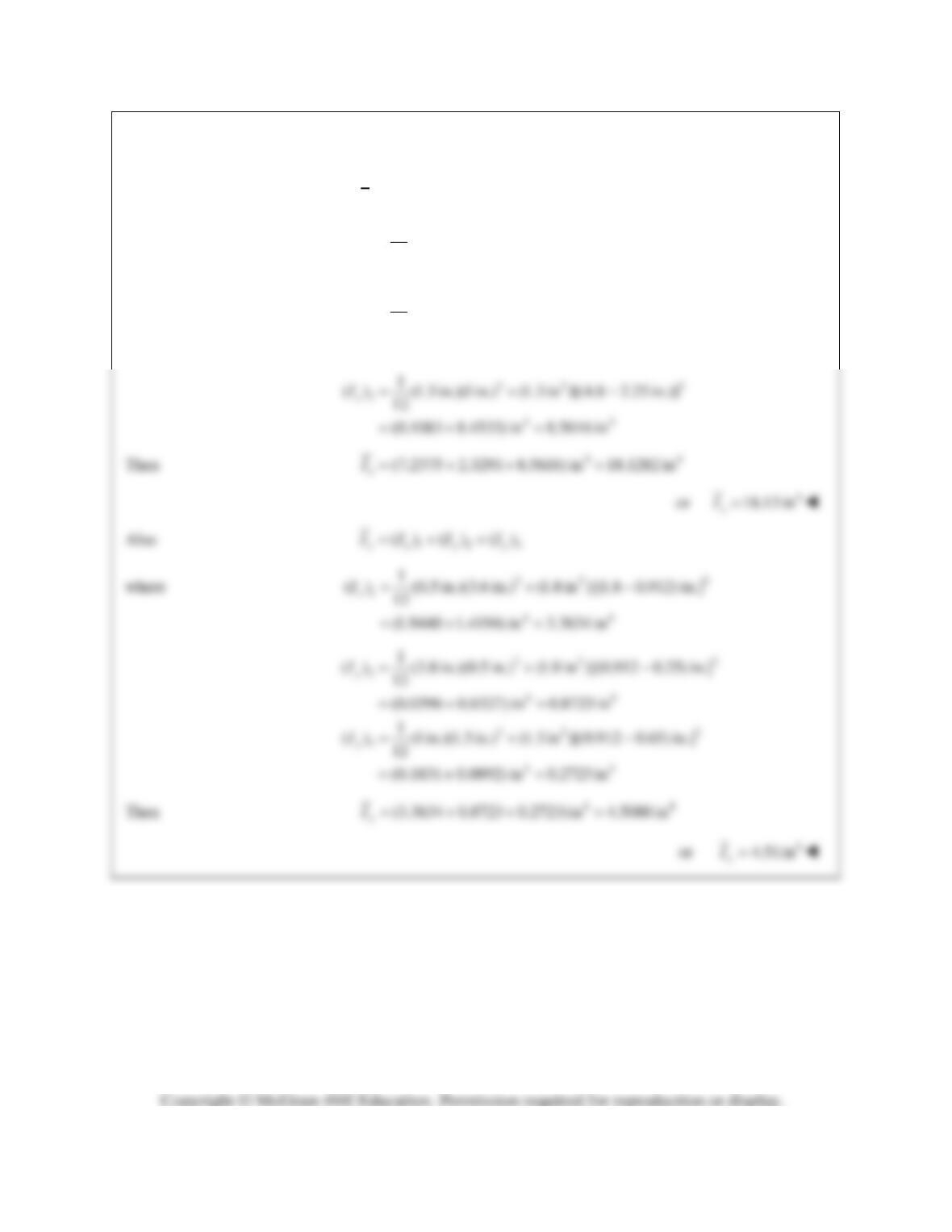
Determine the moments of inertia
x
I
and
y
I of the area shown with
respect to centroidal axes respectively parallel and perpendicular to side
AB.
SOLUTION
PROBLEM 9.44 (Continued)
Now 123
() () ()
x
xx x
I
II I
where 32 2
1
44
32 2
2
44
1
( ) (3.6 in.)(0.5 in.) (1.8 in )[(2.25 0.25) in.]
12
(0.0375 7.20) in 7.2375 in
1
( ) (0.5 in.)(3.8 in.) (1.9 in )[(2.4 2.25) in.]
12
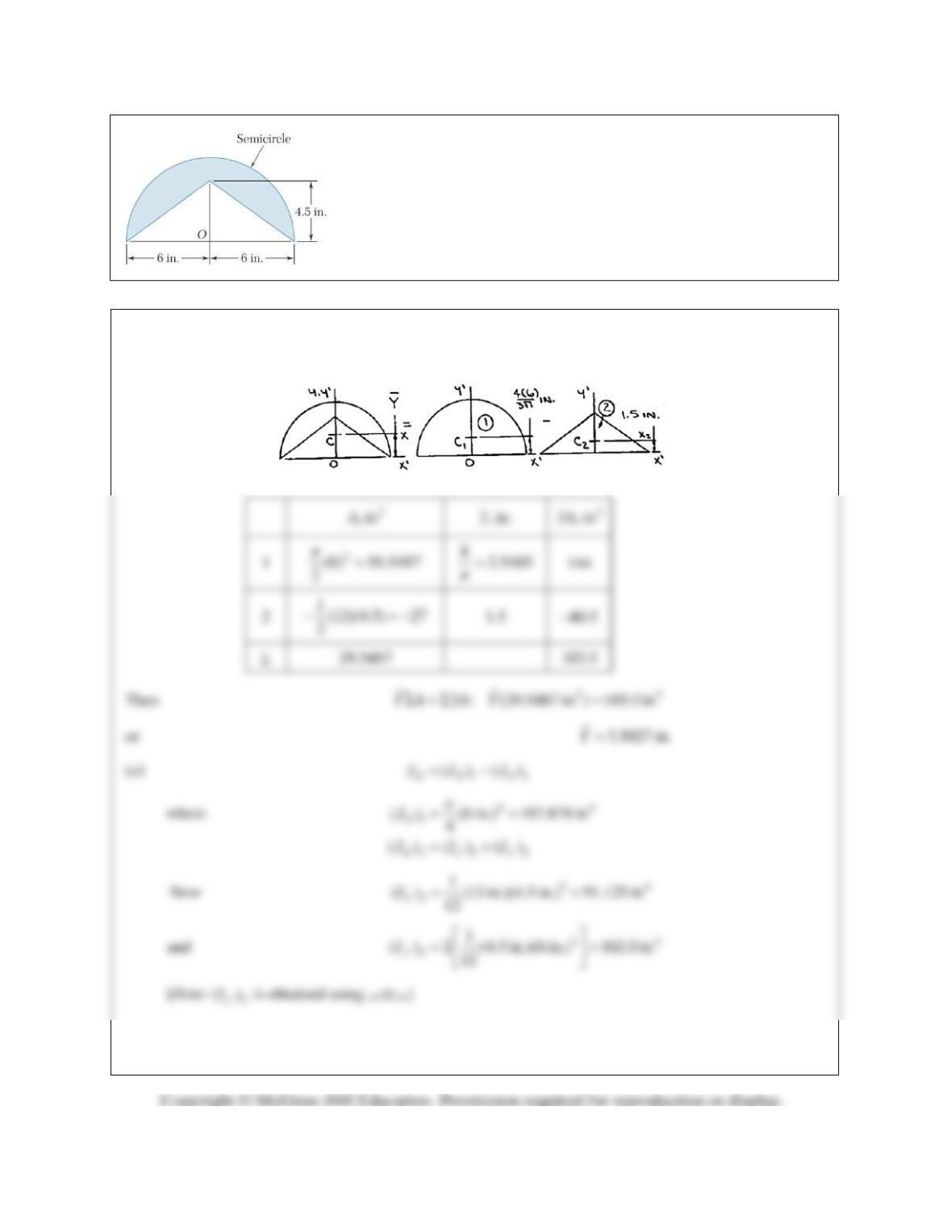
(2.2863 0.0428) in 2.3291 in
x
x
I
I
PROBLEM 9.45
Determine the polar moment of inertia of the area shown with respect
to (a) Point O, (b) the centroid of the area.
SOLUTION
First locate centroid C of the figure.
PROBLEM 9.45 (Continued)
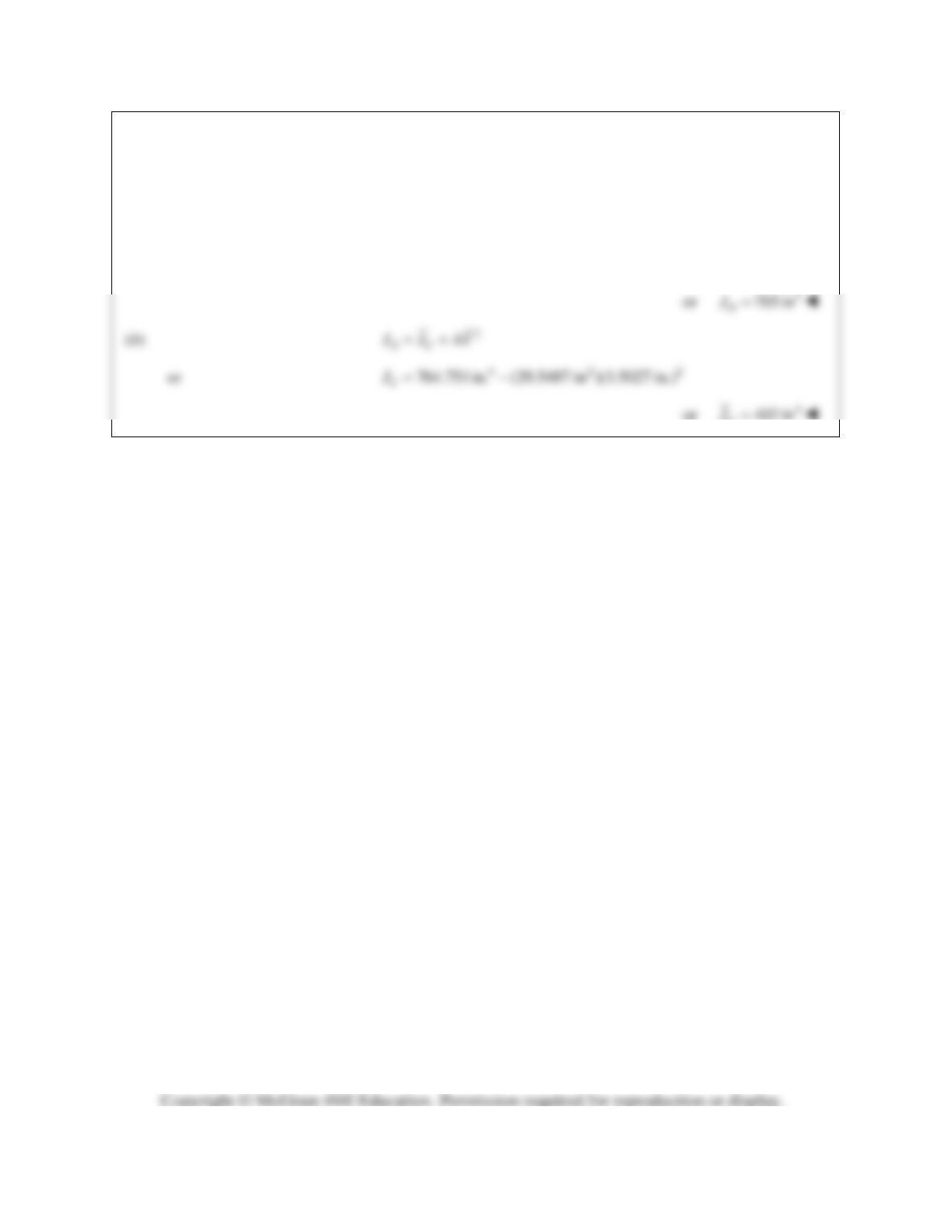
Then
4
2
4
( ) (91.125 162.0) in
253.125 in
O
J
Finally 44
(1017.876 253.125) in 764.751 in
O
J
C