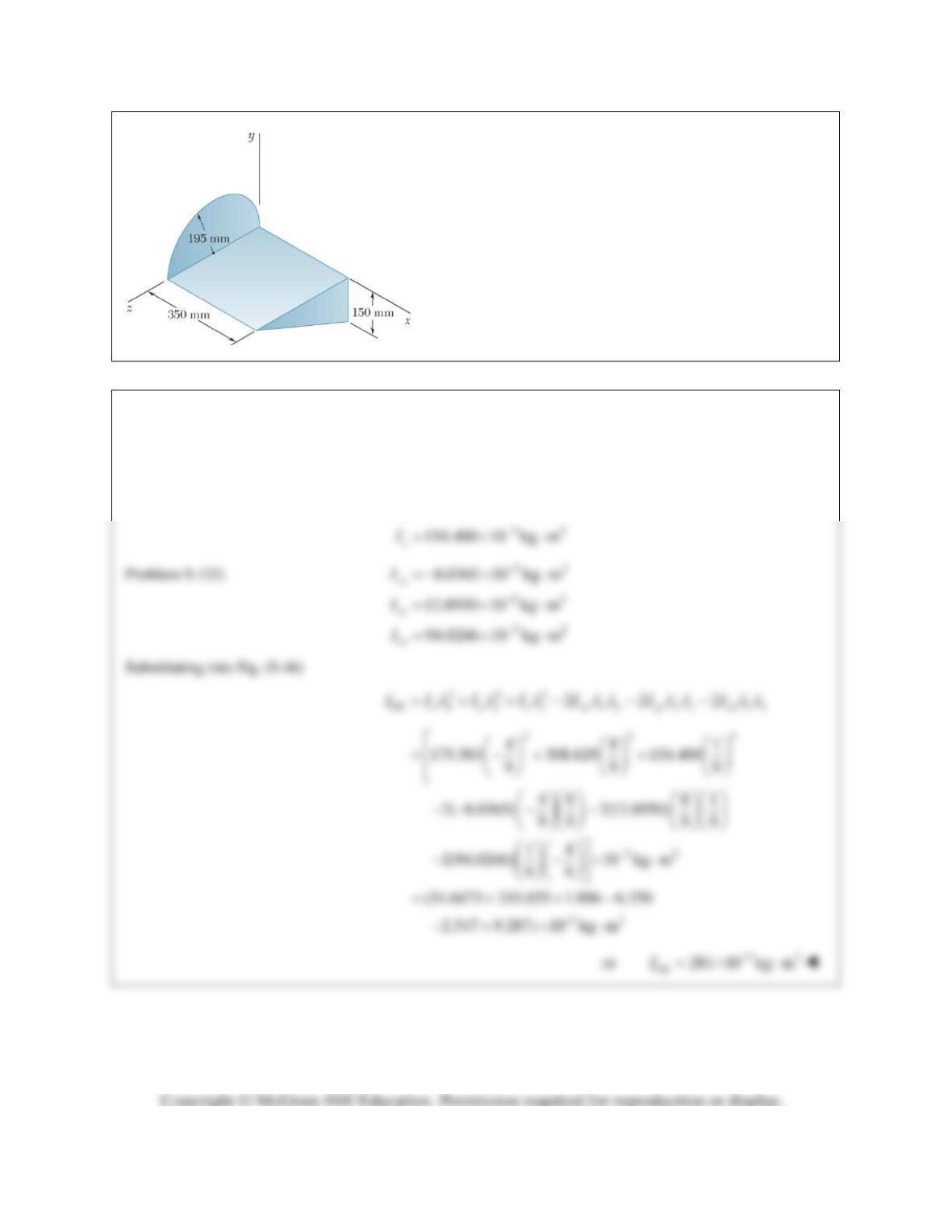
PROBLEM 9.169
Determine the mass moment of inertia of the machine
component of Problems 9.136 and 9.155 with respect to
the axis through the origin characterized by the unit vector
(4 8 )/9.
λijk
SOLUTION
From the solutions to Problems 9.136 and 9.155. We have
Problem 9.136: 32
32
175.503 10 kg m
308.629 10 kg m
x
y
I
I
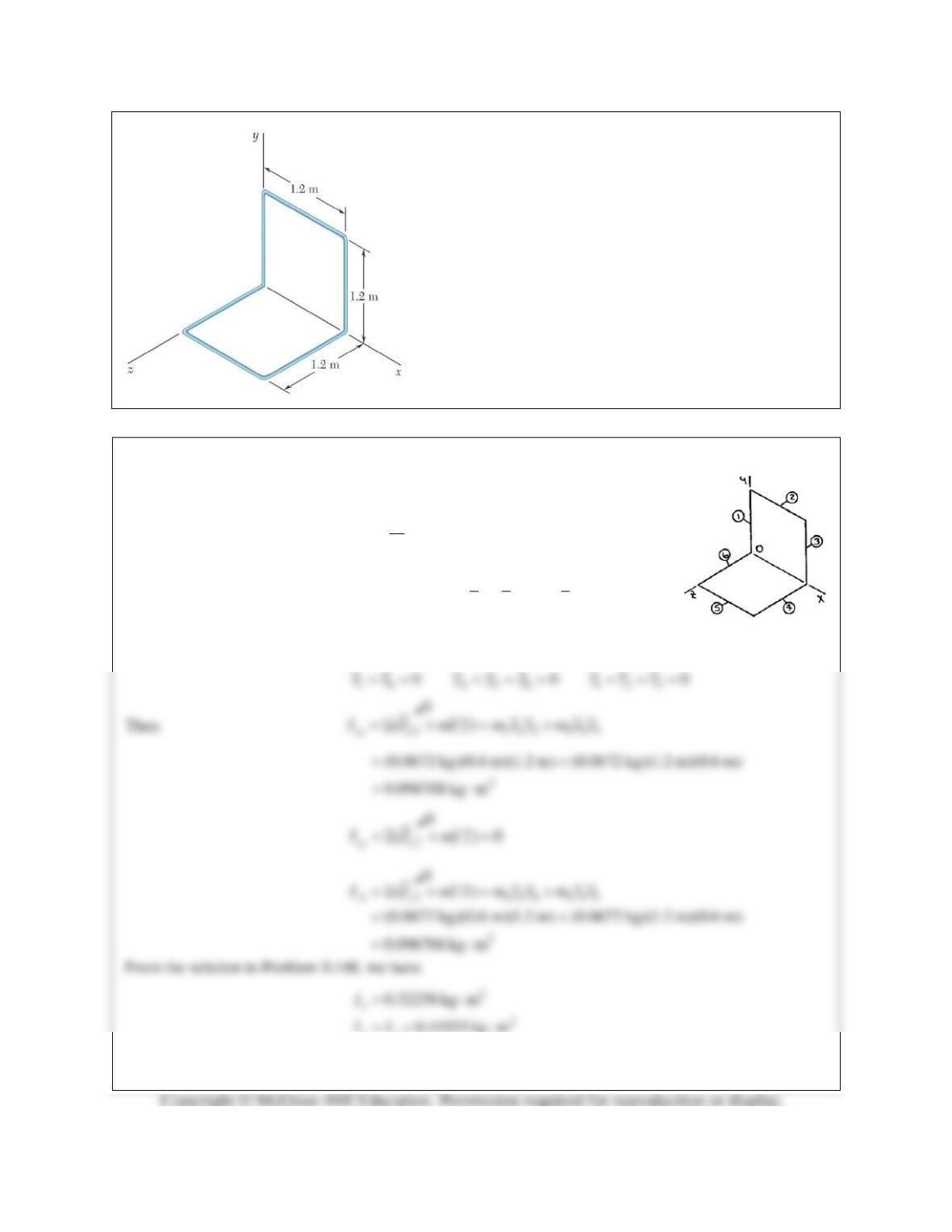
PROBLEM 9.170
For the wire figure of Problem 9.148, determine the mass
moment of inertia of the figure with respect to the axis
through the origin characterized by the unit vector
(3 6 2)/7.
ijk
SOLUTION
First compute the mass of each component. We have
0.056 kg/m 1.2 m
0.0672 kg
m
mL
L
Now observe that the centroidal products of inertia,
,,and,
x
yyz zx
II I
for each
component are zero because of symmetry.
Also
yz
PROBLEM 9.170 (Continued)
Substituting into Eq. (9.46)
222
222
222
362
0.32258 0.41933 0.41933
777
OL x x y y z z xy x y yz y z zx z x
II I I I I I
0
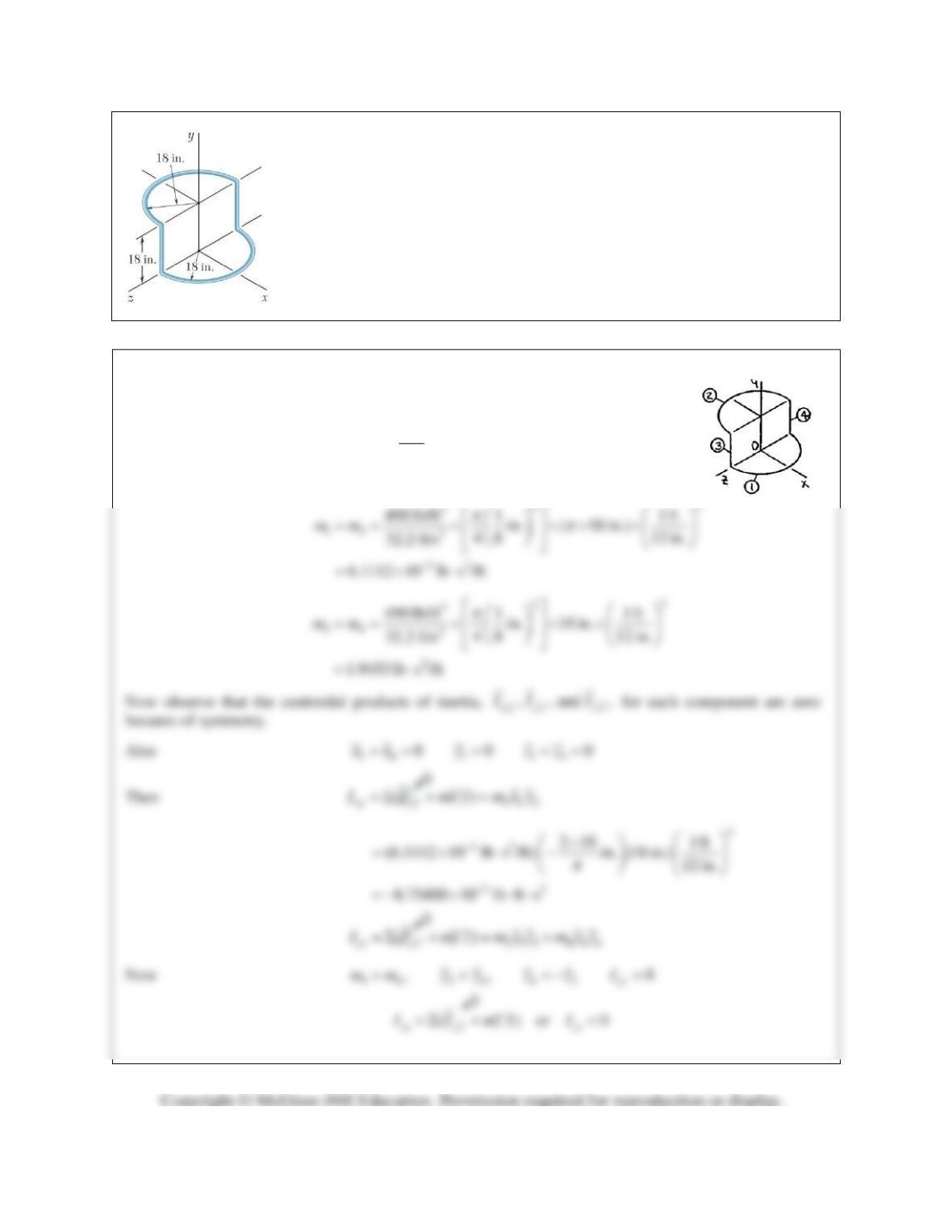
PROBLEM 9.171
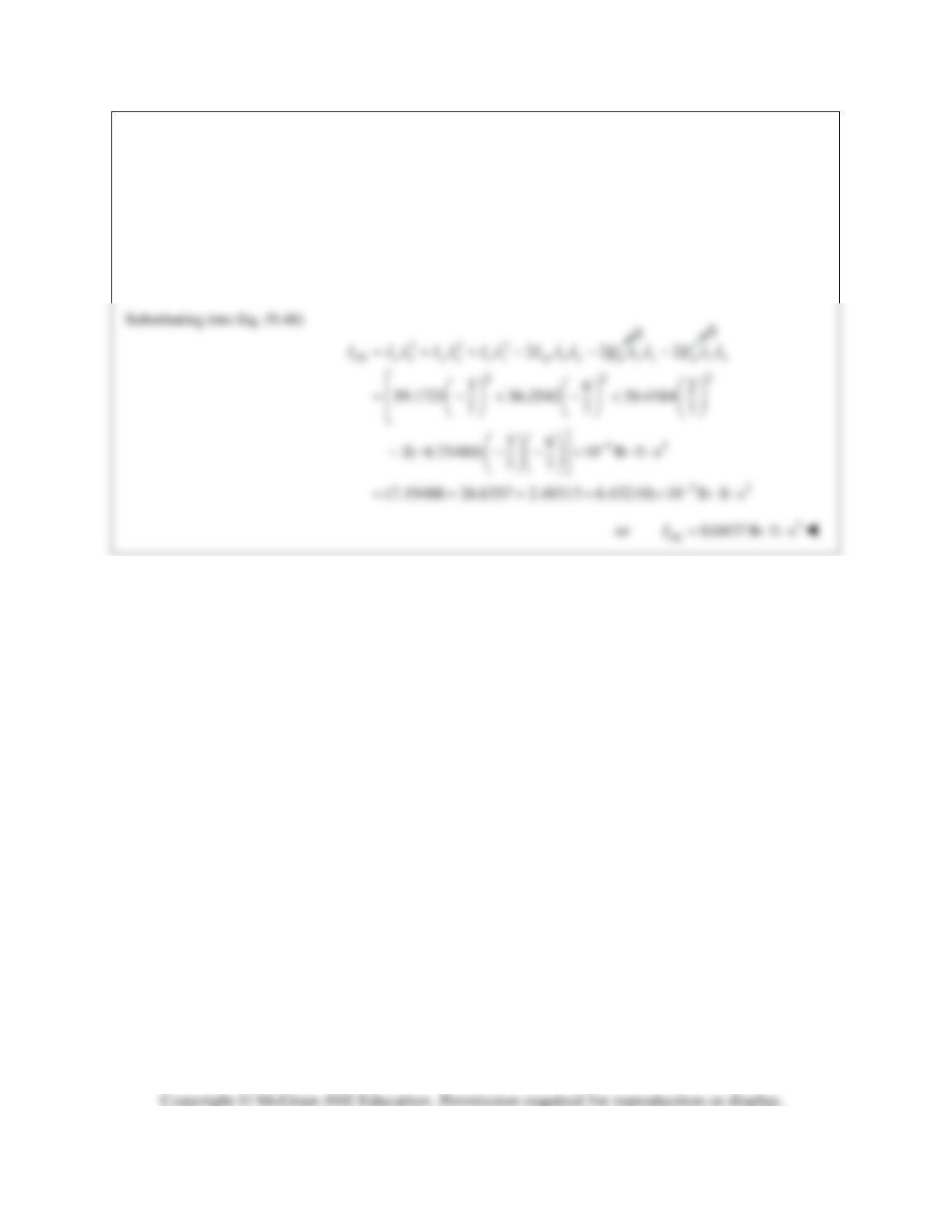
For the wire figure of Problem 9.147, determine the mass moment of inertia of
the figure with respect to the axis through the origin characterized by the unit
vector
(3 6 2)/7.
ijk
SOLUTION
First compute the mass of each component. We have
ST
ST
mV AL
g
Then
PROBLEM 9.171 (Continued)
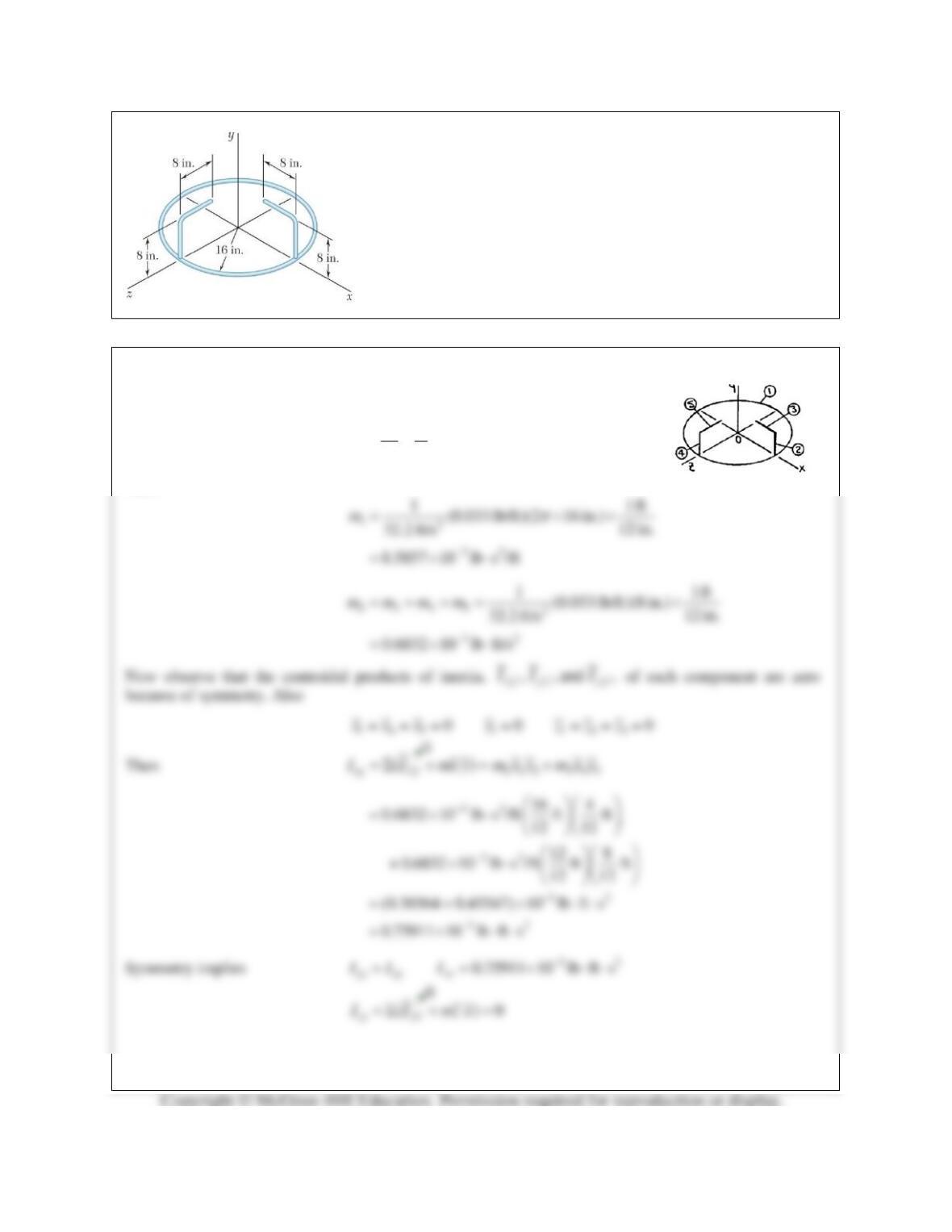
From the solution to Problem 9.147, we have
32
32
32
39.1721 10 lb ft s
36.2542 10 lb ft s
30.4184 10 lb ft s
x
y
z
I
I
I
PROBLEM 9.172
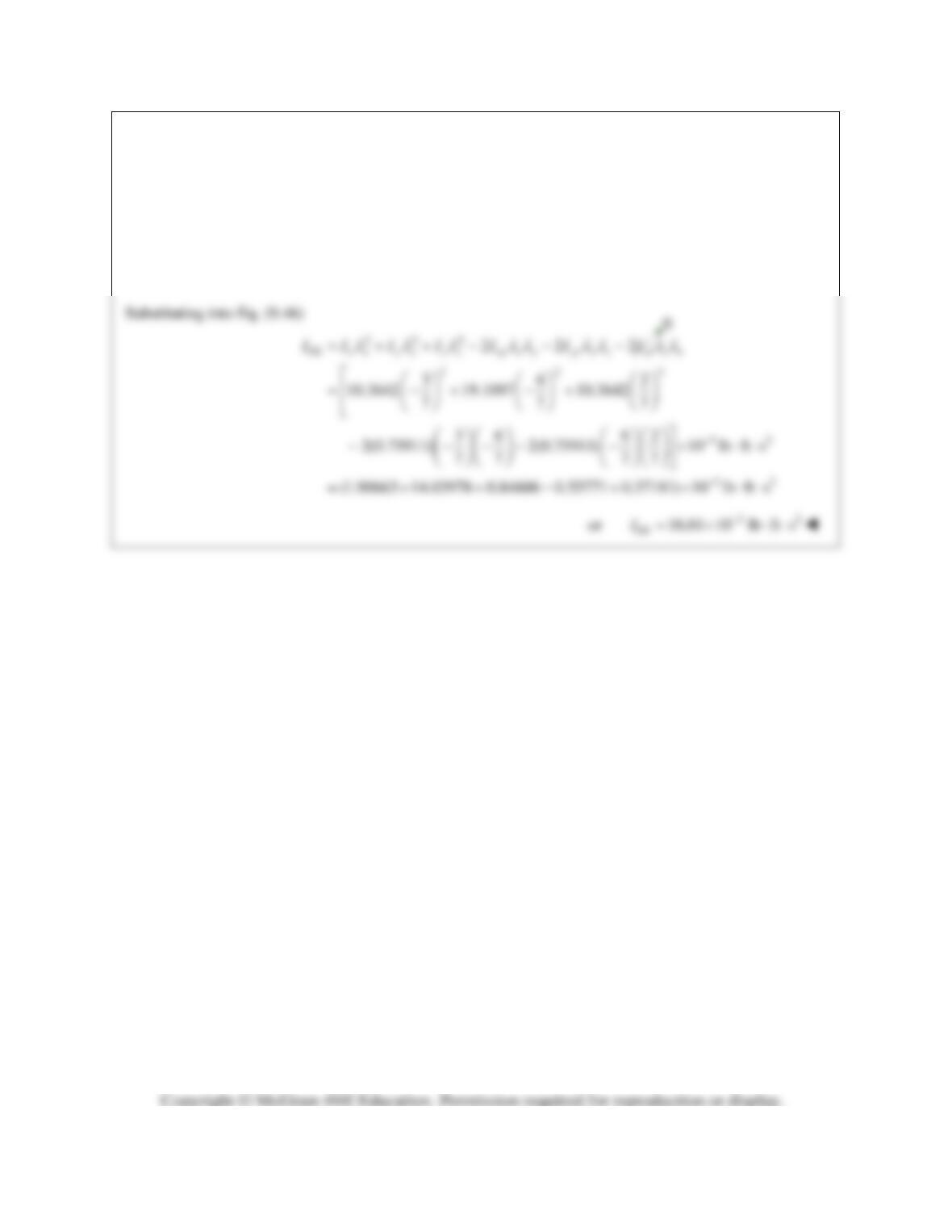
For the wire figure of Problem 9.146, determine the mass moment
of inertia of the figure with respect to the axis through the origin
characterized by the unit vector
(3 6 2)/7.
ijk
SOLUTION
First compute the mass of each component. We have
AL
1(/)
W
mWLL
gg
Then
PROBLEM 9.172 (Continued)
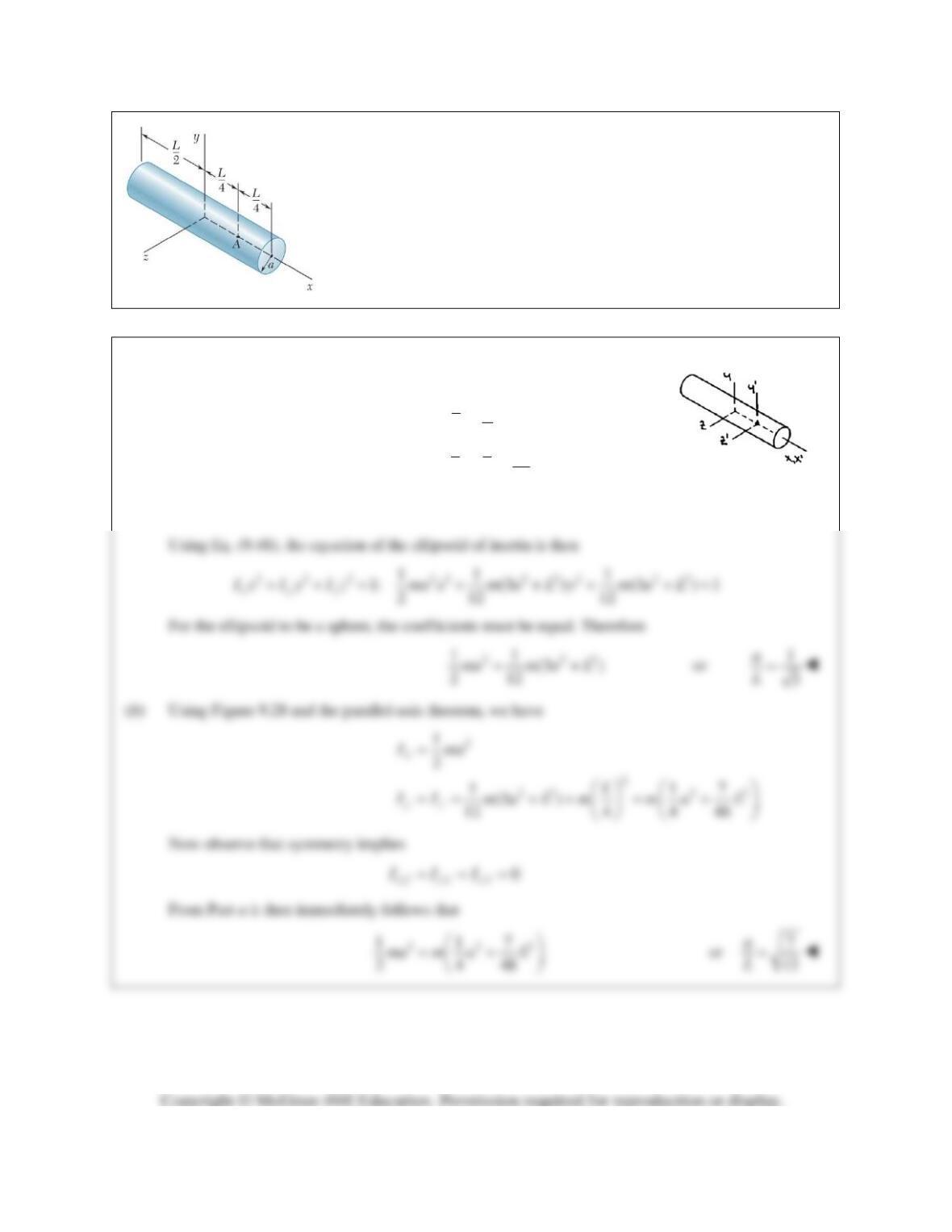
From the solution to Problem 9.146, we have
32
32
10.3642 10 lb ft s
19.1097 10 lb ft s
xz
y
II
I
PROBLEM 9.173
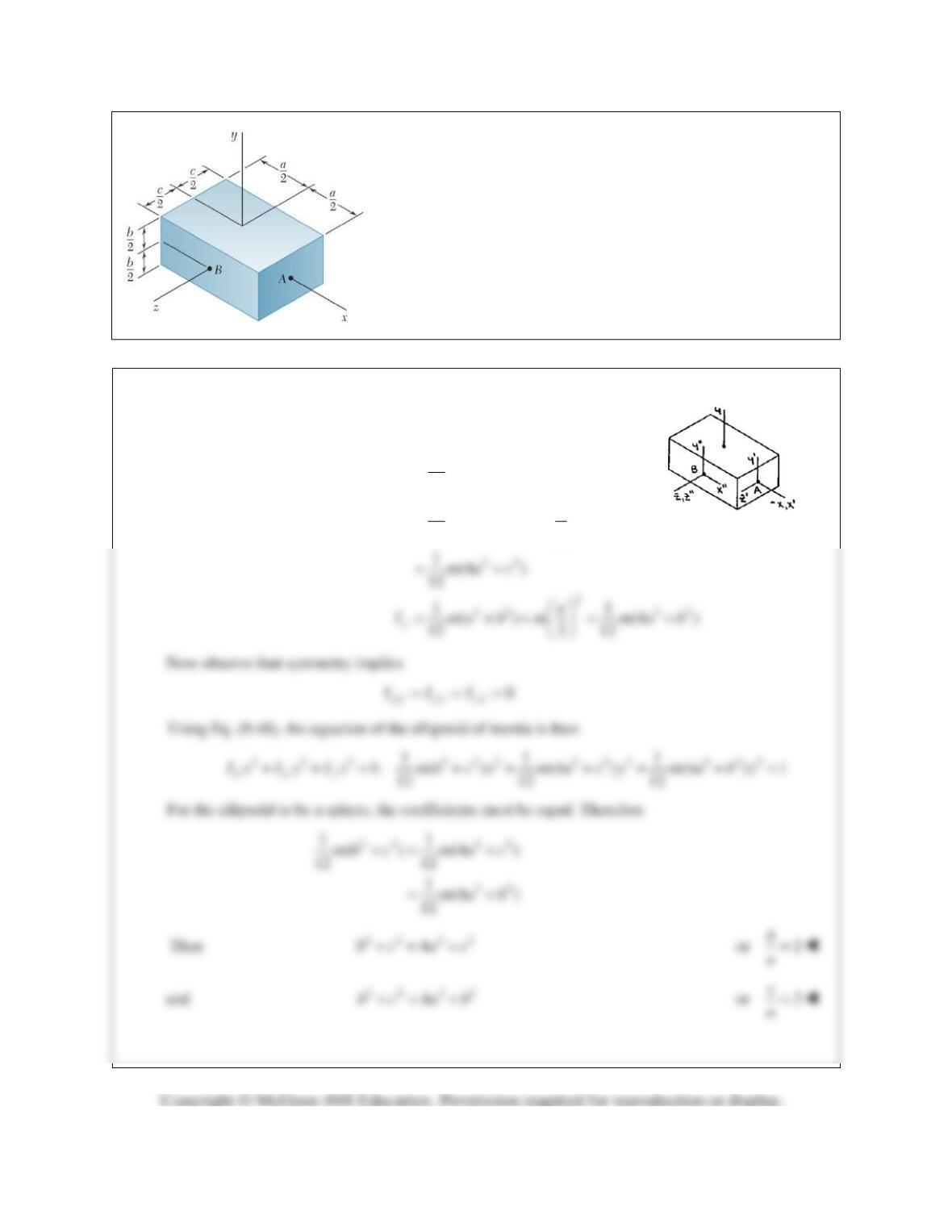
For the homogeneous circular cylinder shown, of radius a and length L,
determine the value of the ratio a/L for which the ellipsoid of inertia of
the cylinder is a sphere when computed (a) at the centroid of the cylinder,
(b) at Point A.
SOLUTION
(a) From Figure 9.28:
2
22
1
2
1(3 )
12
x
yz
Ima
II maL
Now observe that symmetry implies
0
xy yz zx
III
PROBLEM 9.174
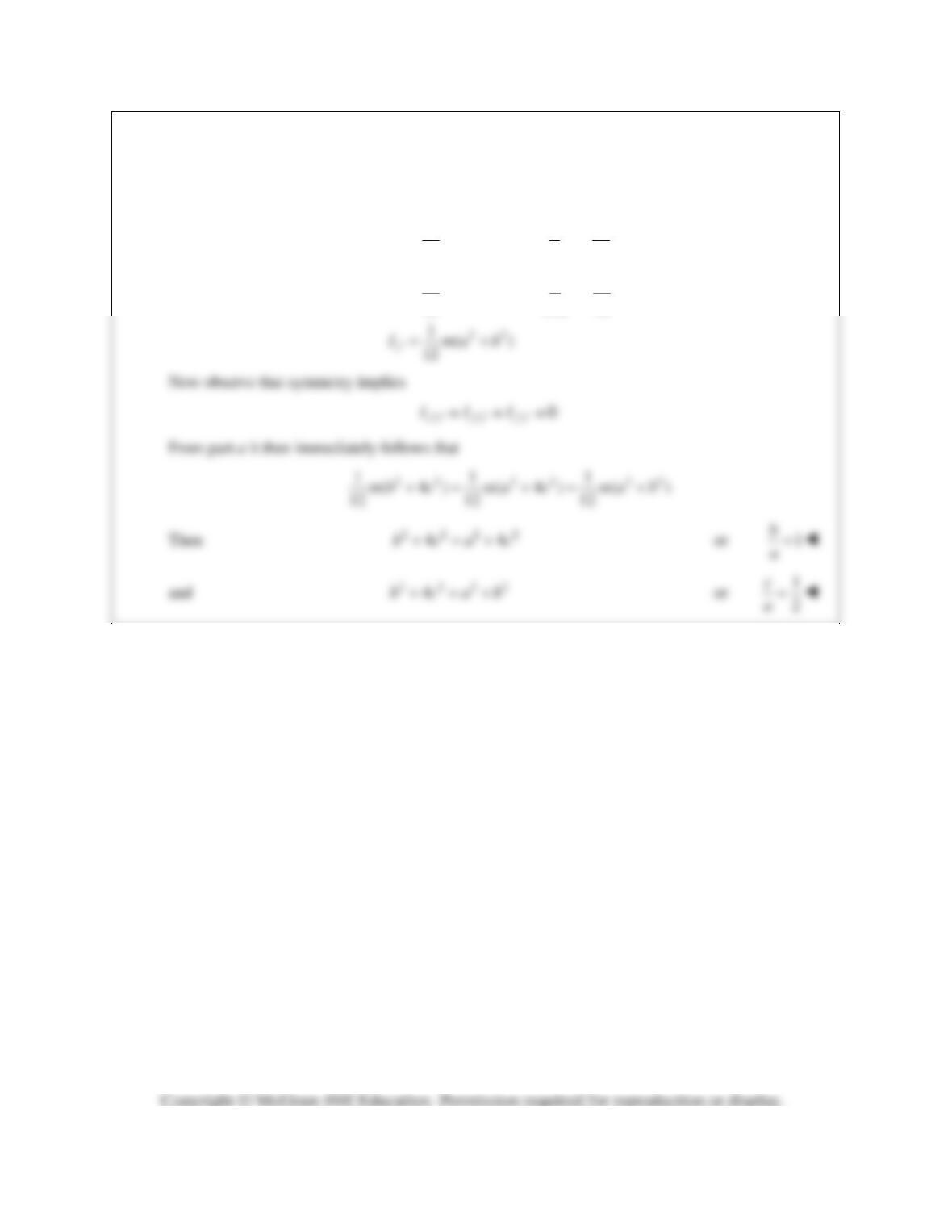
For the rectangular prism shown, determine the values of the
ratios b/a and c/a so that the ellipsoid of inertia of the prism is a
sphere when computed (a) at Point A, (b) at Point B.
SOLUTION
(a) Using Figure 9.28 and the parallel-axis theorem, we have
at Point A
22
2
22
1()
12
1()
12 2
x
y
Imbc
a
Imacm
PROBLEM 9.174 (Continued)
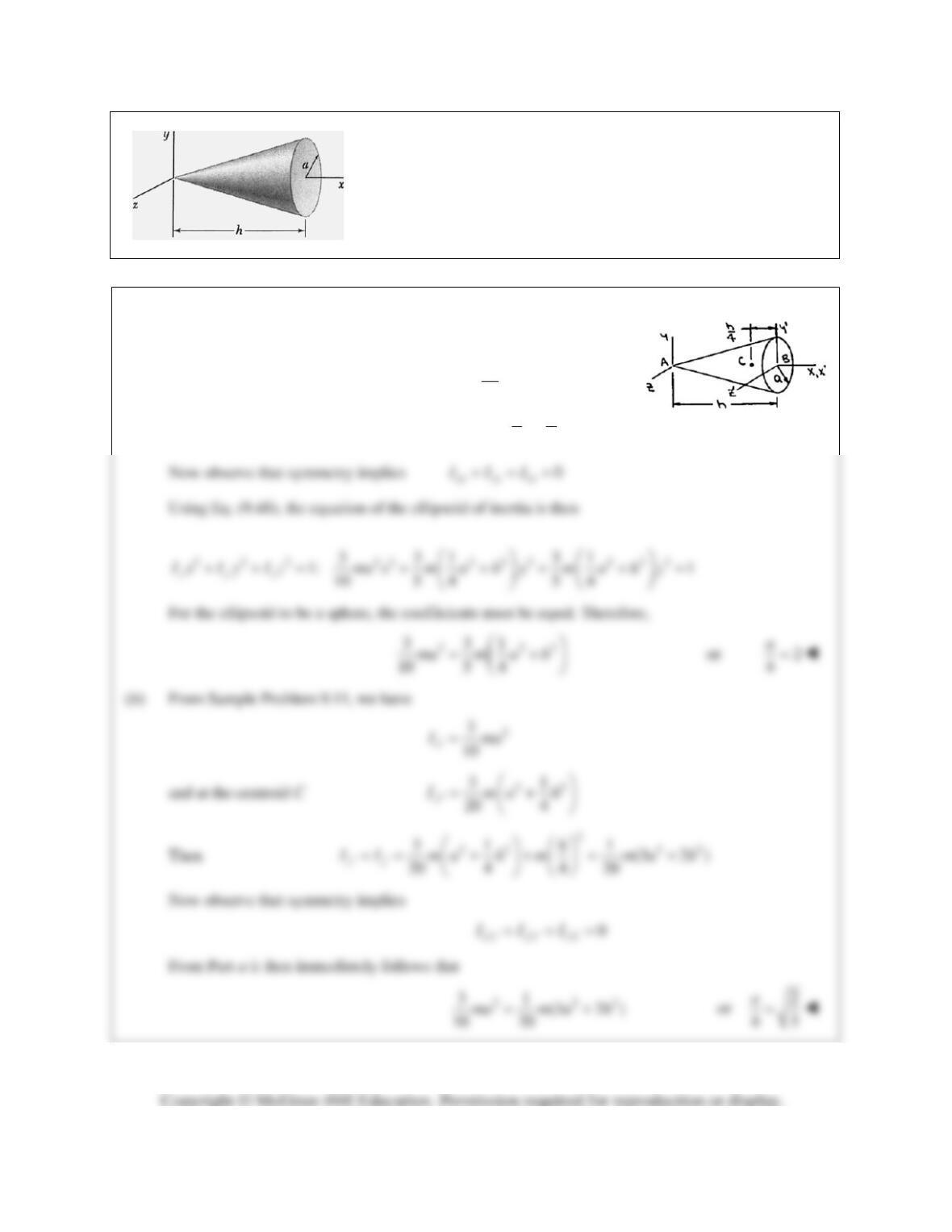
(b) Using Figure 9.28 and the parallel-axis theorem, we have at Point B
2
22 2 2
2
22 2 2
11
() (4)
12 12
2
11
() (4)
12 2 12
x
y
c
I
mb c m mb c
c
I
ma c m ma c
PROBLEM 9.175
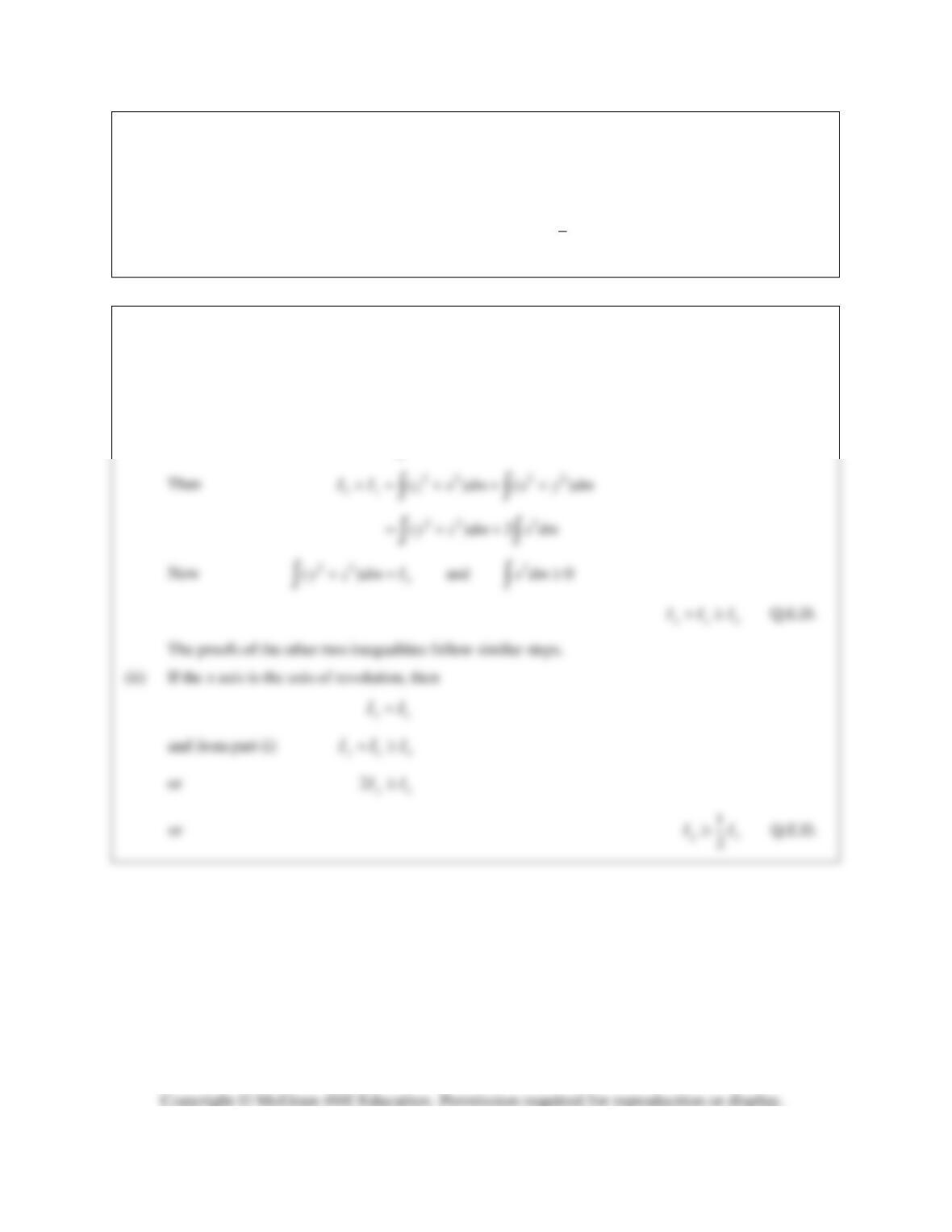
For the right circular cone of Sample Problem 9.11, determine the
value of the ratio a/h for which the ellipsoid of inertia of the cone is a
sphere when computed (a) at the apex of the cone, (b) at the center of
the base of the cone.
SOLUTION
(a) From Sample Problem 9.11, we have at the apex A
2
22
3
10
31
54
x
yz
Ima
II mah
PROBLEM 9.176
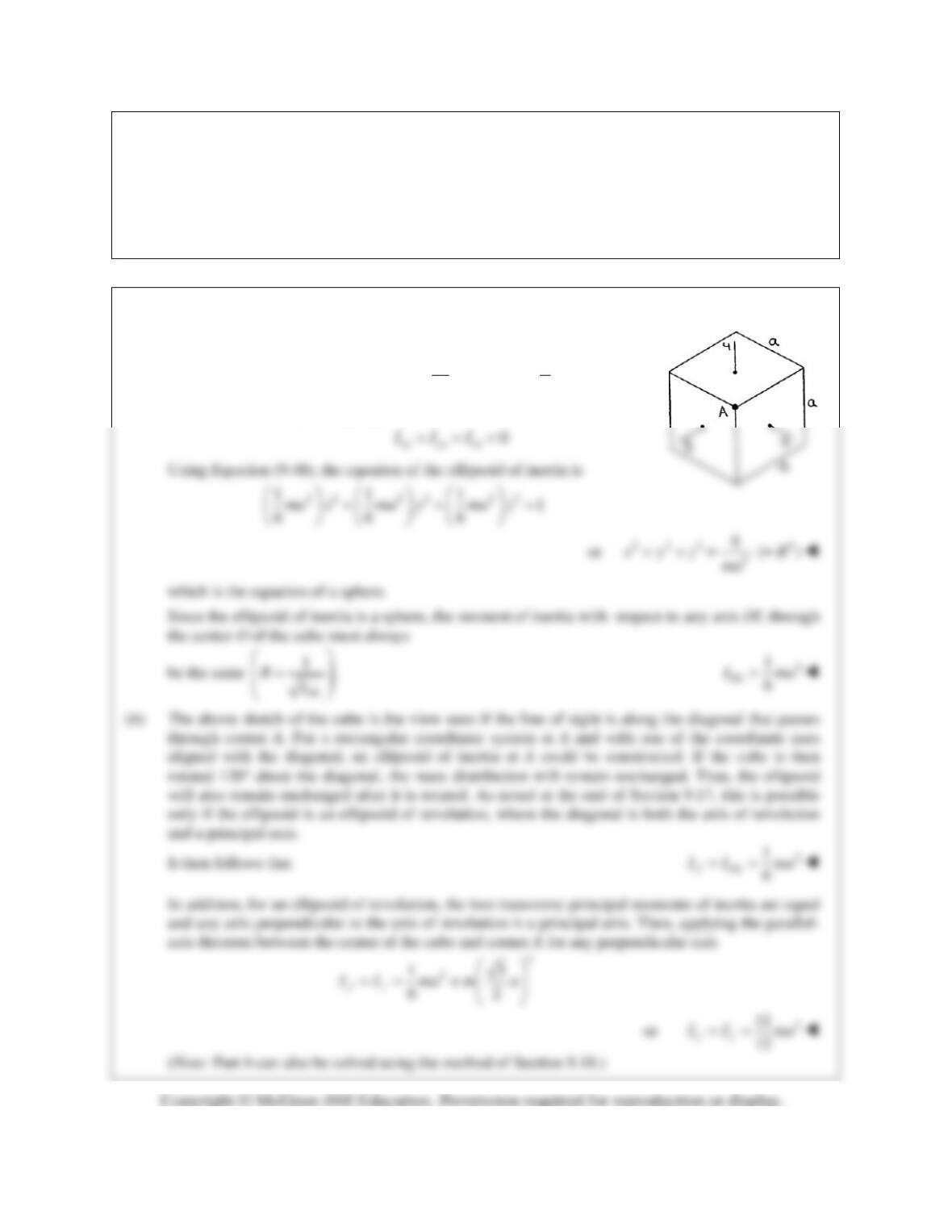
Given an arbitrary body and three rectangular axes x, y, and z, prove that the mass moment of inertia of
the body with respect to any one of the three axes cannot be larger than the sum of the mass moments of
inertia of the body with respect to the other two axes. That is, prove that the inequality
x
yz
I
II
and
the two similar inequalities are satisfied. Further, prove that 1
2
yx
IIif the body is a homogeneous solid
of revolution, where x is the axis of revolution and y is a transverse axis.
SOLUTION
(i) To prove
y
zx
I
II
By definition 22
22
()
()
y
z
I
zxdm
I
xydm
PROBLEM 9.177
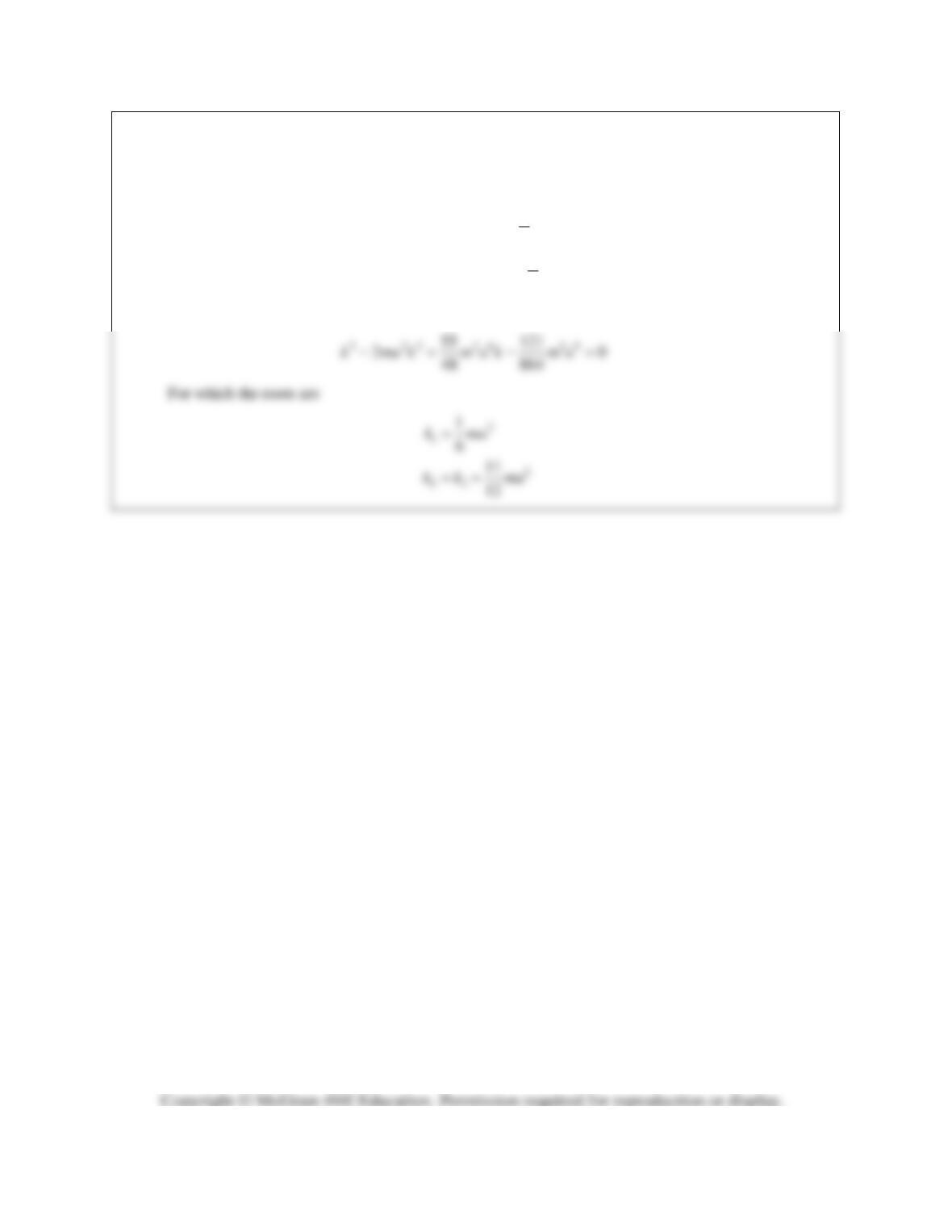
Consider a cube of mass m and side a. (a) Show that the ellipsoid of inertia at the center of the cube is a
sphere, and use this property to determine the moment of inertia of the cube with respect to one of its
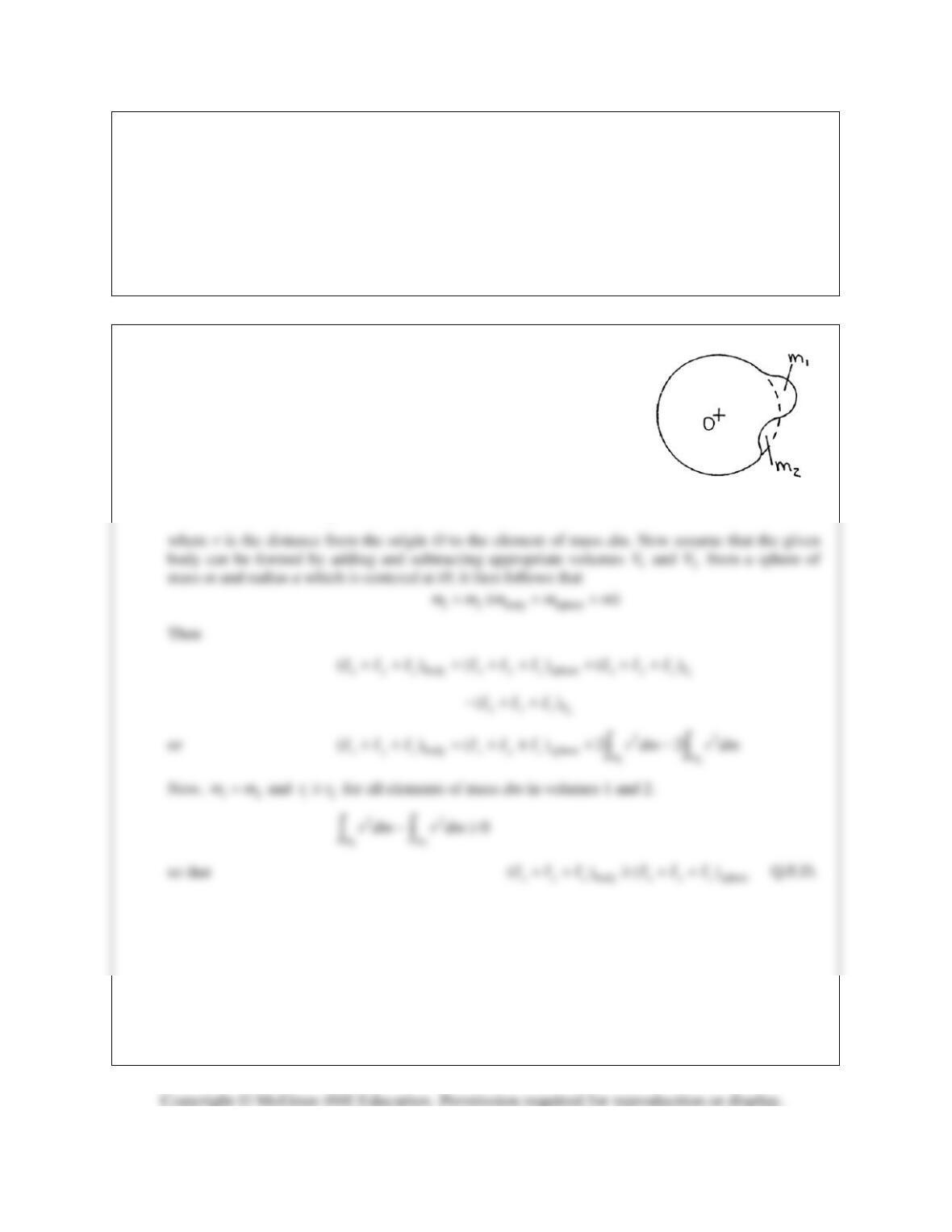
diagonals. (b) Show that the ellipsoid of inertia at one of the corners of the cube is an ellipsoid of
revolution, and determine the principal moments of inertia of the cube at that point.
SOLUTION
(a) At the center of the cube have (using Figure 9.28)
22 2
11
()
12 6
xyz
III maa ma
Now observe that symmetry implies
PROBLEM 9.177 (Continued)
First note that at corner A
2
2
2
3
1
4
xyz
xy yz zx
I
II ma
I
II ma
Substituting into Equation (9.56) yields
PROBLEM 9.178
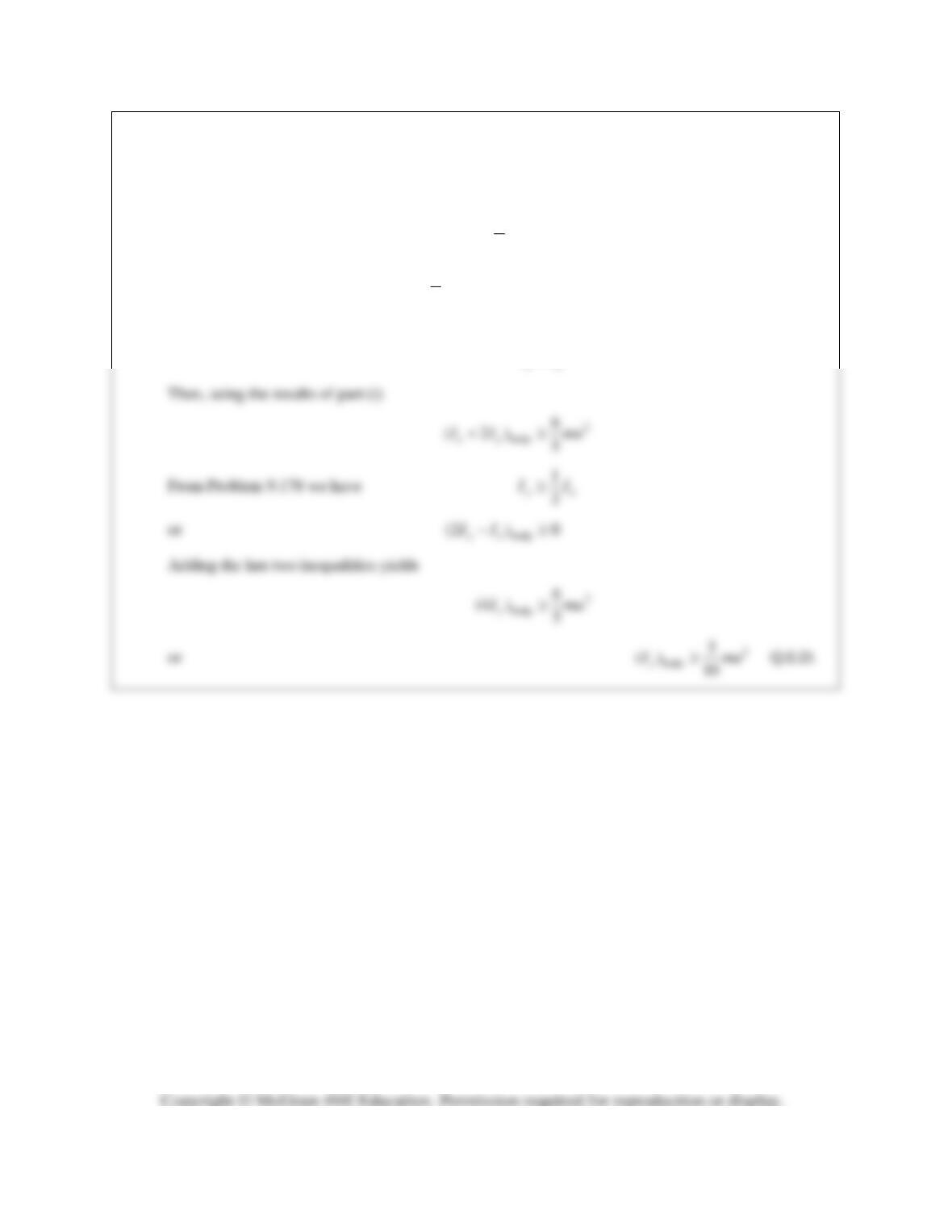
Given a homogeneous body of mass m and of arbitrary shape and three rectangular axes x, y, and z with
origin at O, prove that the sum I
x
+ I
y
+ I
z
of the mass moments of inertia of the body cannot be smaller
than the similar sum computed for a sphere of the same mass and the same material centered at O.
Further, using the result of Problem 9.176, prove that if the body is a solid of revolution, where x is the
axis of revolution, its mass moment of inertia I
y
about a transverse axis y cannot be smaller than 3ma
2
/10,
where a is the radius of the sphere of the same mass and the same material.
SOLUTION
(i) Using Equation (9.30), we have
22 22 2 2
()()()
xyz
III yzdm zxdm xydm
222
2( )xyzdm
2
2rdm
PROBLEM 9.178 (Continued)
(ii) First note from Figure 9.28 that for a sphere
2
2
5
xyz
I
II ma
Thus 2
sphere
6
()
5
xyz
I
II ma
For a solid of revolution, where the x axis is the axis of revolution, we have
y
z
I
I
I
I
I
PROBLEM 9.179*
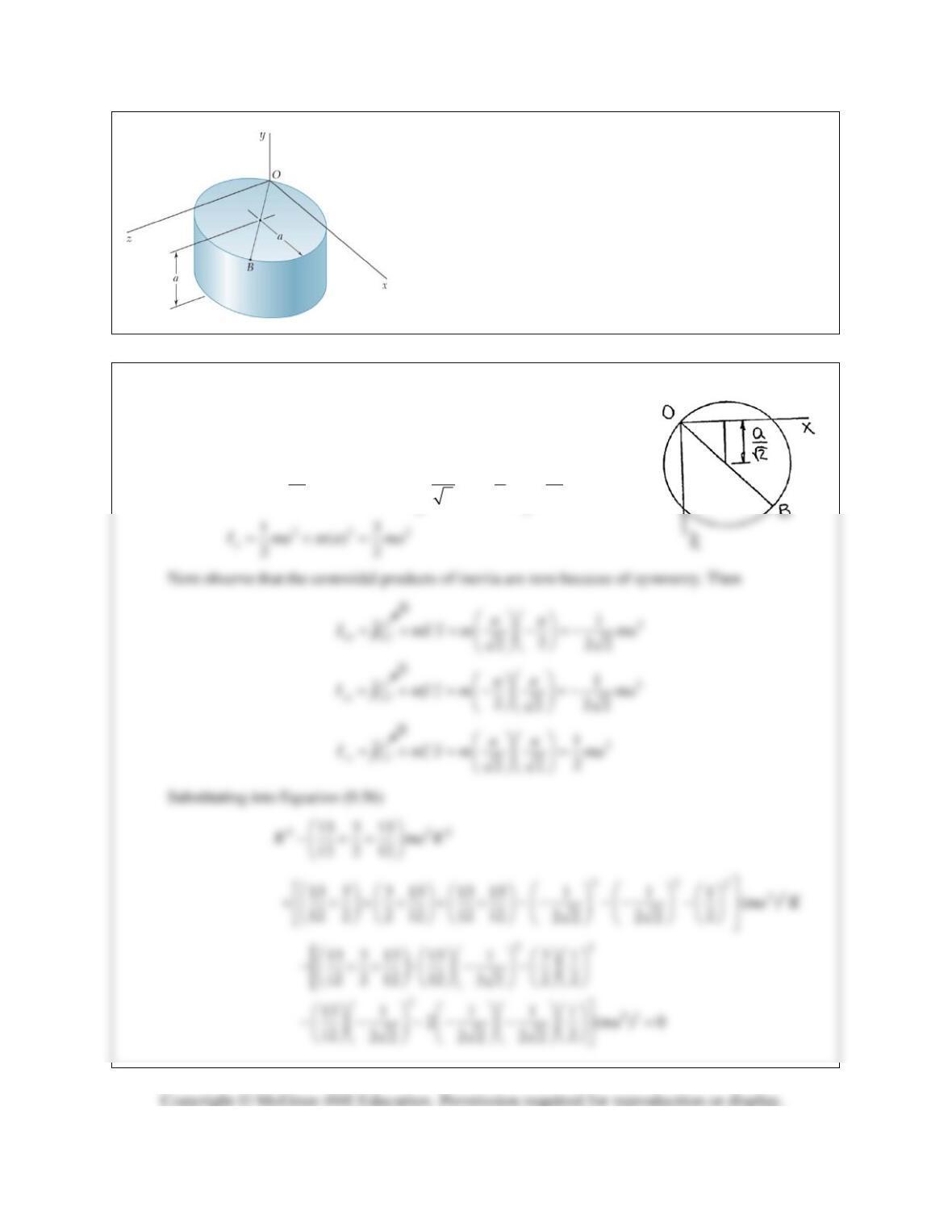
The homogeneous circular cylinder shown has a mass m, and
the diameter OB of its top surface forms 45 angles with the x
and z axes. (a) Determine the principal mass moments of
inertia of the cylinder at the origin O. (b) Compute the angles
that the principal axes of inertia at O form with the coordinate
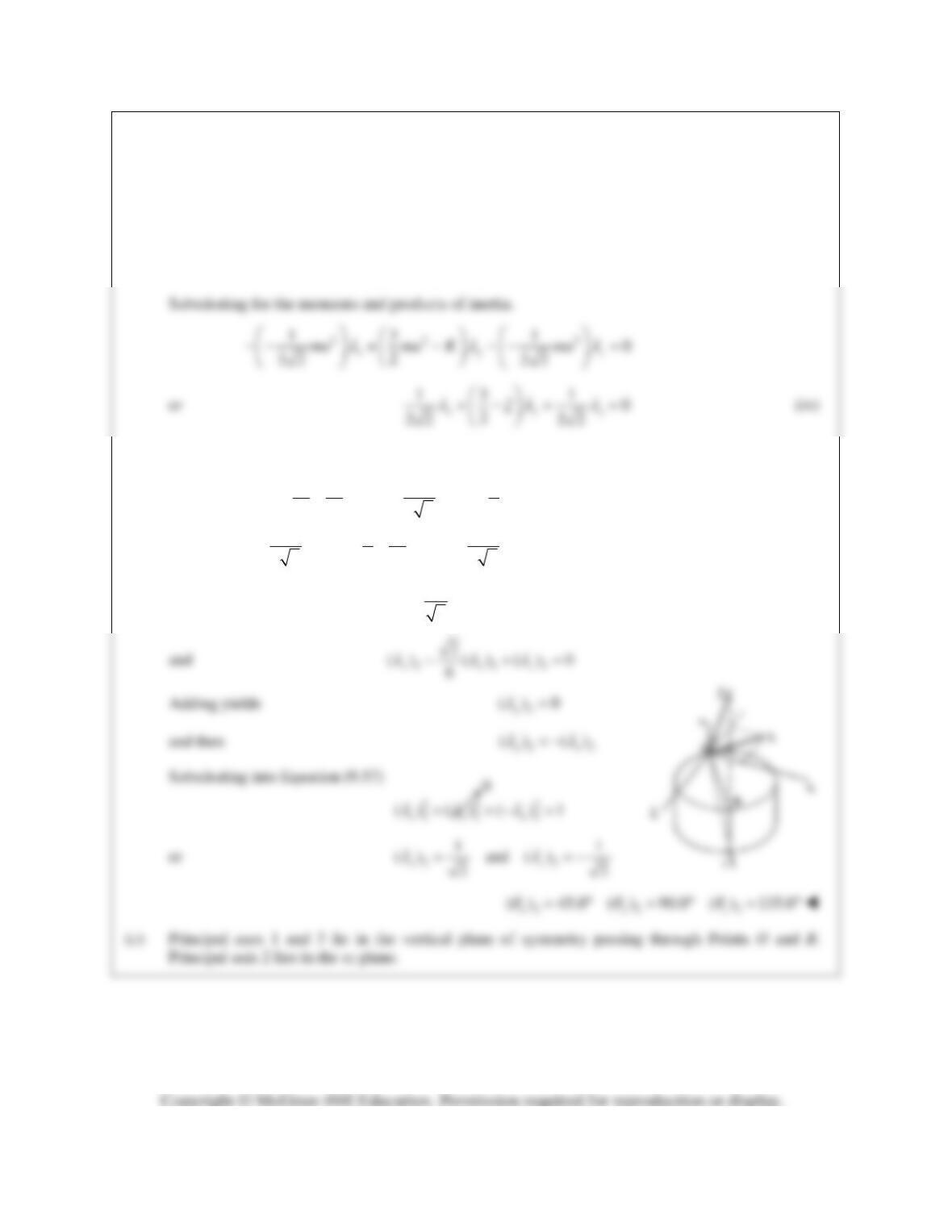
axes. (c) Sketch the cylinder, and show the orientation of the
principal axes of inertia relative to the x, y, and z axes.
SOLUTION
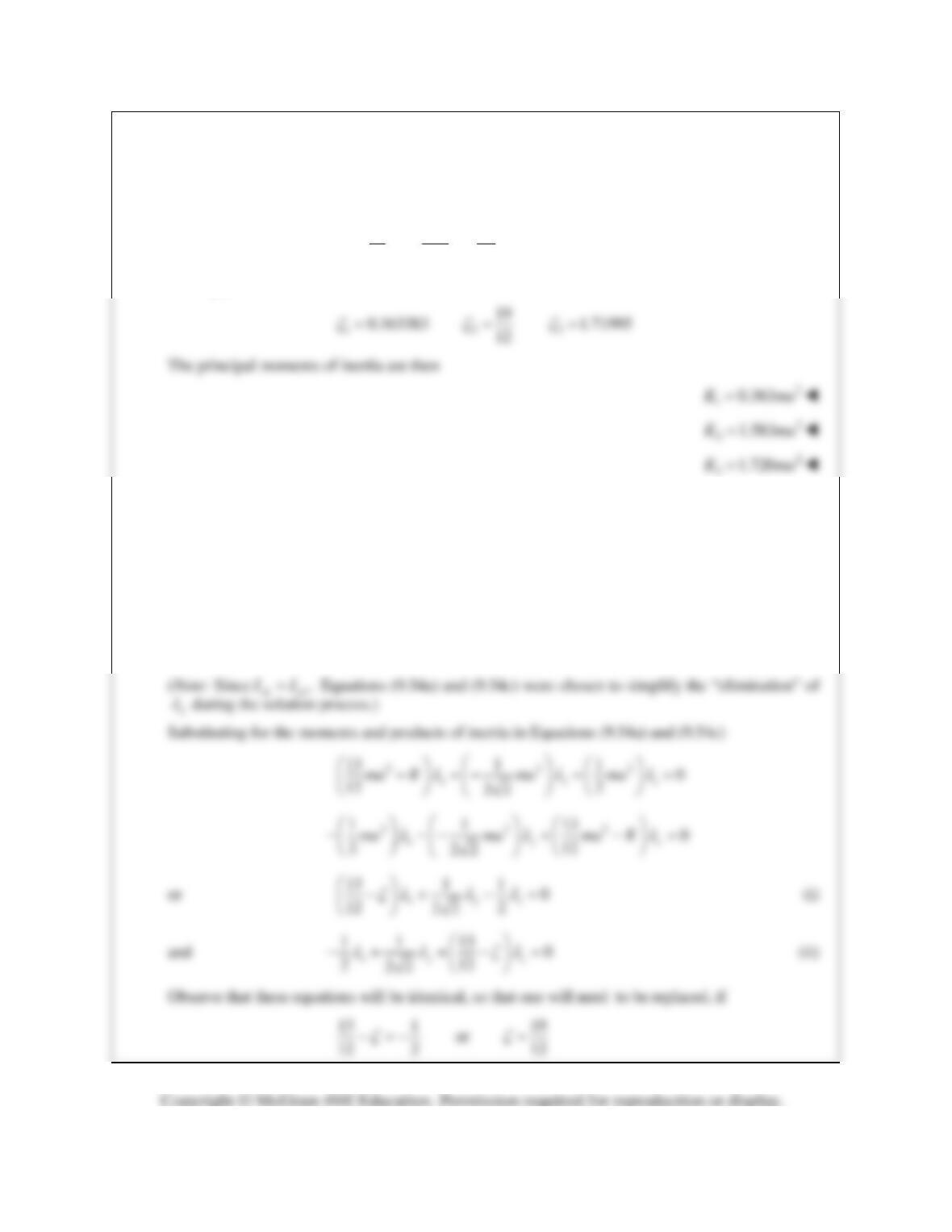
(a) First compute the moments of inertia using Figure 9.28 and the
parallel-axis theorem.
22
22 2
113
(3 )
12 2 12
2
xz
aa
II maa m ma
PROBLEM 9.179* (Continued)
Simplifying and letting 2
Kma
yields
32
11 565 95 0
3 144 96
Solving yields
(b) To determine the direction cosines , ,
x
yz
of each principal axis, we use two of the equations
of Equations (9.54) and (9.57).
Thus,
() 0
xxxyyzxz
IK I I
(9.54a)
()0
zx x yz y z z
II IK
(9.54c)
222
1
xyz
(9.57)
x
PROBLEM 9.179* (Continued)
Thus, a third independent equation will be needed when the direction cosines associated with 2
K
are determined. Then for 1
K and 3
K
Eq. (i) through Eq. (ii): 13 1 1 13 0
12 2 2 12
xz
or zx
Substituting into Eq. (i): 13 1 1 0
12 2
22
xyx
or 7
22 12
yx
PROBLEM 9.179* (Continued)
K
2
: For this case, the set of equations to be solved consists of Equations (9.54a), (9.54b),
and (9.57).
Now
() 0
xy x y y yz z
IIKI
(9.54b)
Substituting the value of
2
into Eqs. (i) and (iv):
222
222
13 19 1 1
() () () 0
12 12 2
22
13191
() () () 0
212
22 22
xyz
xyz
or
222
1
() () () 0
2
xyz