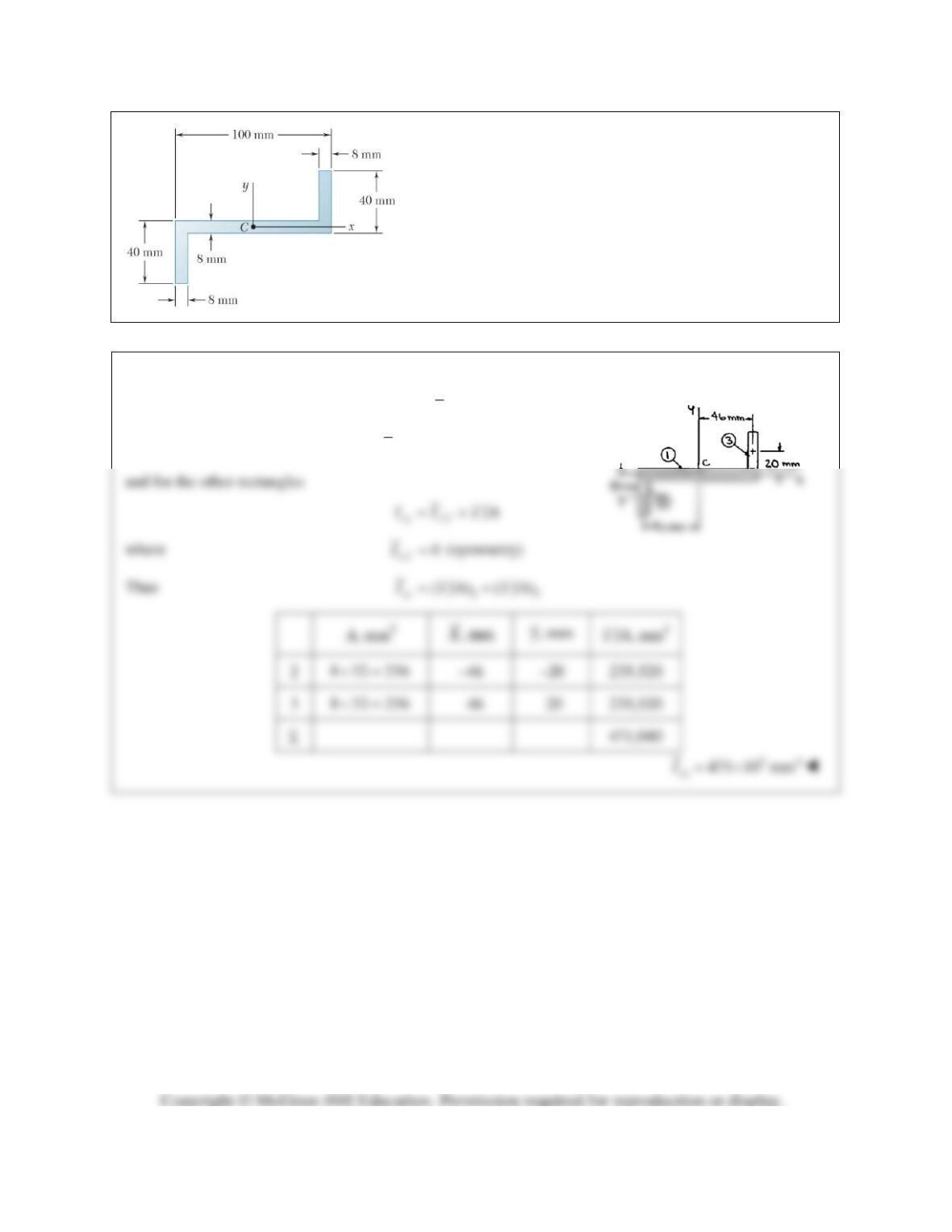
PROBLEM 9.75
Using the parallel-axis theorem, determine the product of
inertia of the area shown with respect to the centroidal x and
y axes.
SOLUTION
We have
123
()() ()
xy xy xy xy
II I I
Now symmetry implies
1
() 0
xy
I
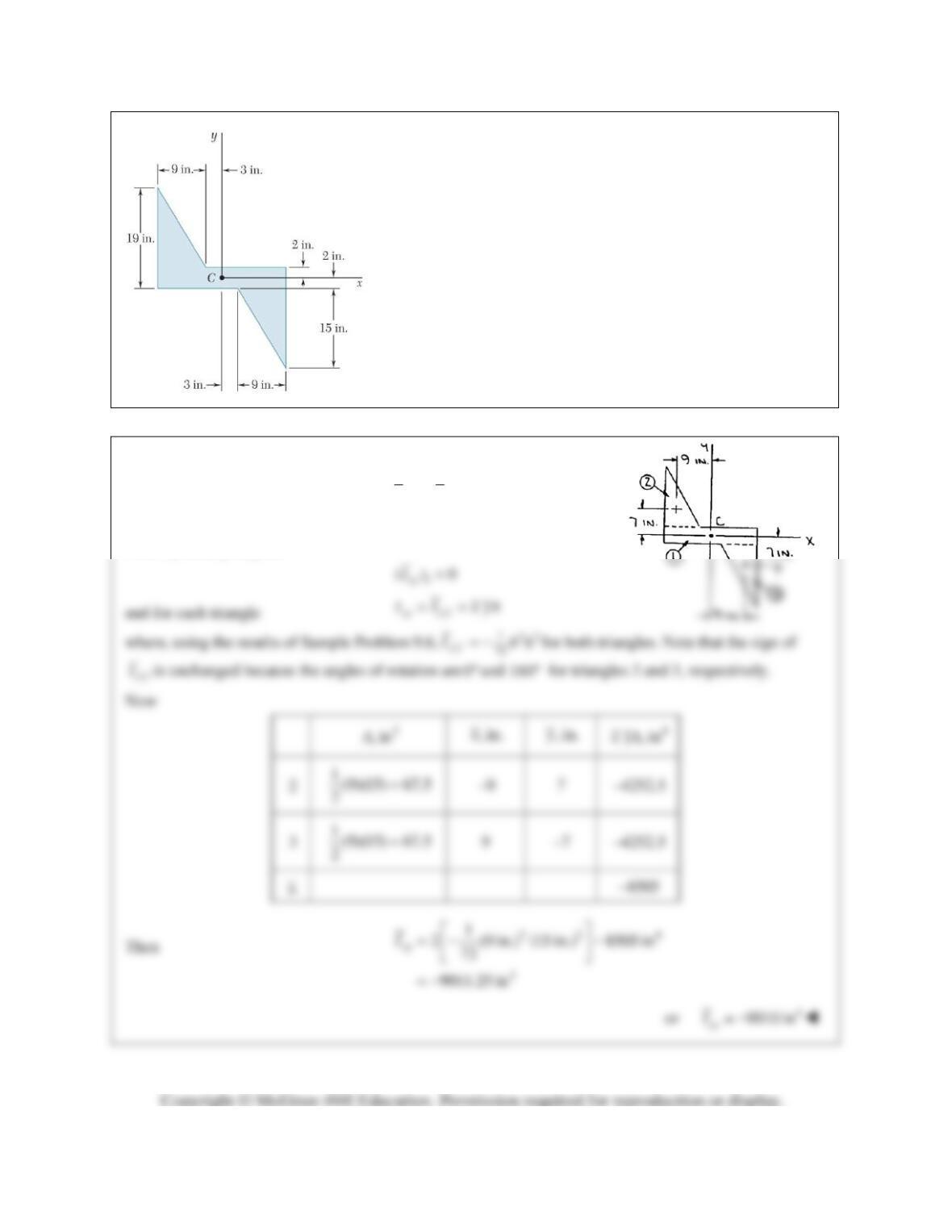
PROBLEM 9.76
Using the parallel-axis theorem, determine the product of inertia
of the area shown with respect to the centroidal x and y axes.
SOLUTION
We have
123
()() ()
xy xy xy xy
II I I
Now, symmetry implies
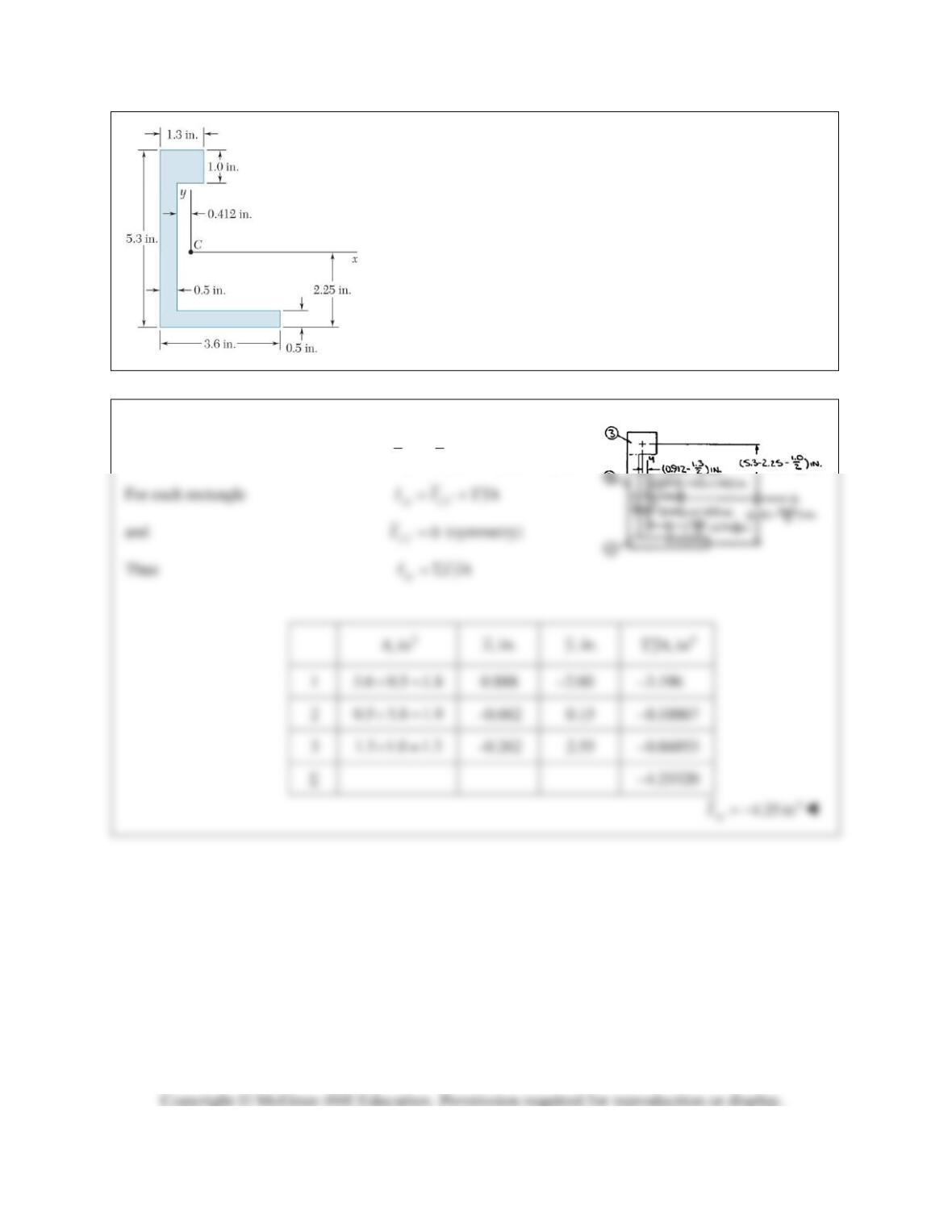
PROBLEM 9.77
Using the parallel-axis theorem, determine the product of inertia
of the area shown with respect to the centroidal
x
and
y
axes.
SOLUTION
We have
123
()() ()
xy xy xy xy
II I I
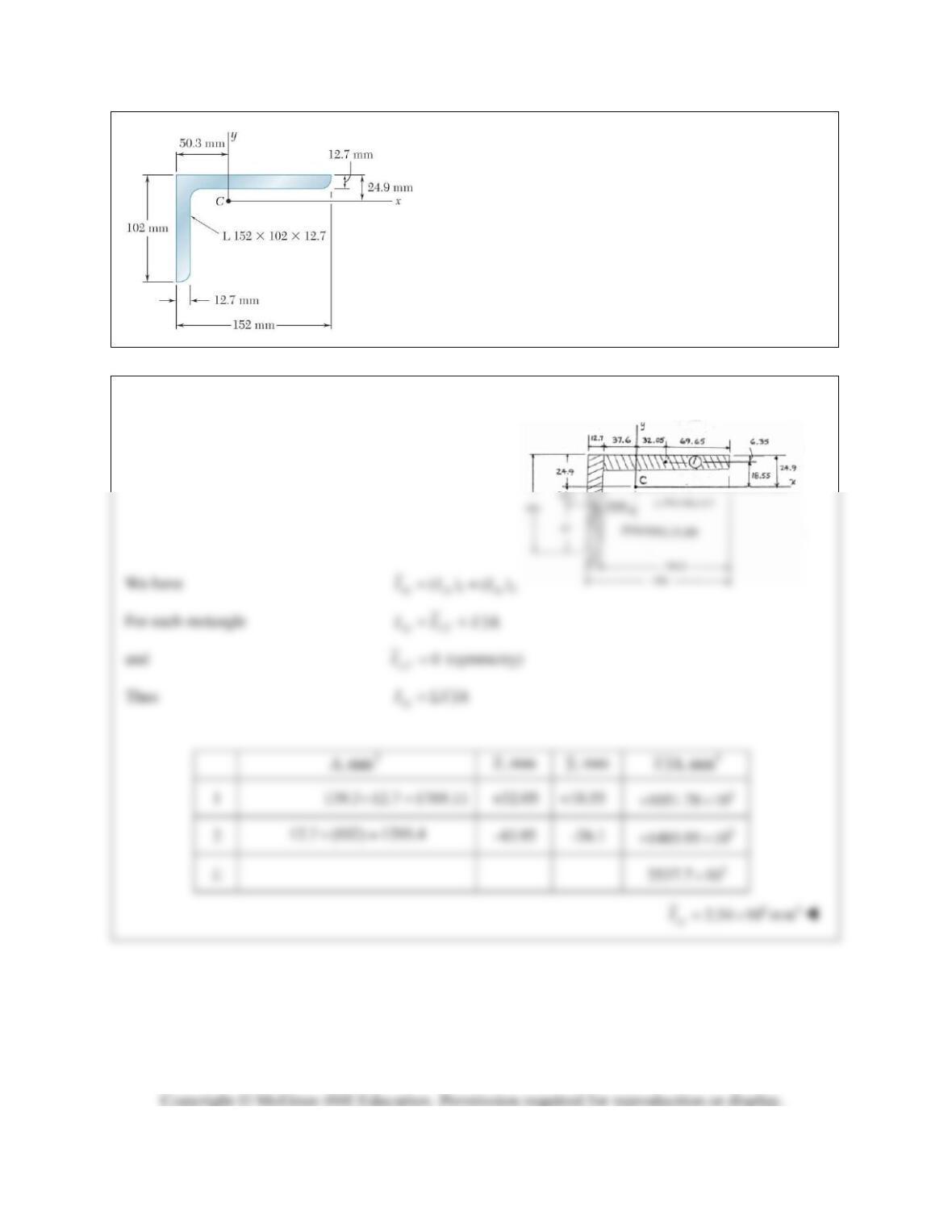
PROBLEM 9.78
Using the parallel-axis theorem, determine the product of
inertia of the area shown with respect to the centroidal
x
and
y
axes.
SOLUTION
PROBLEM 9.79
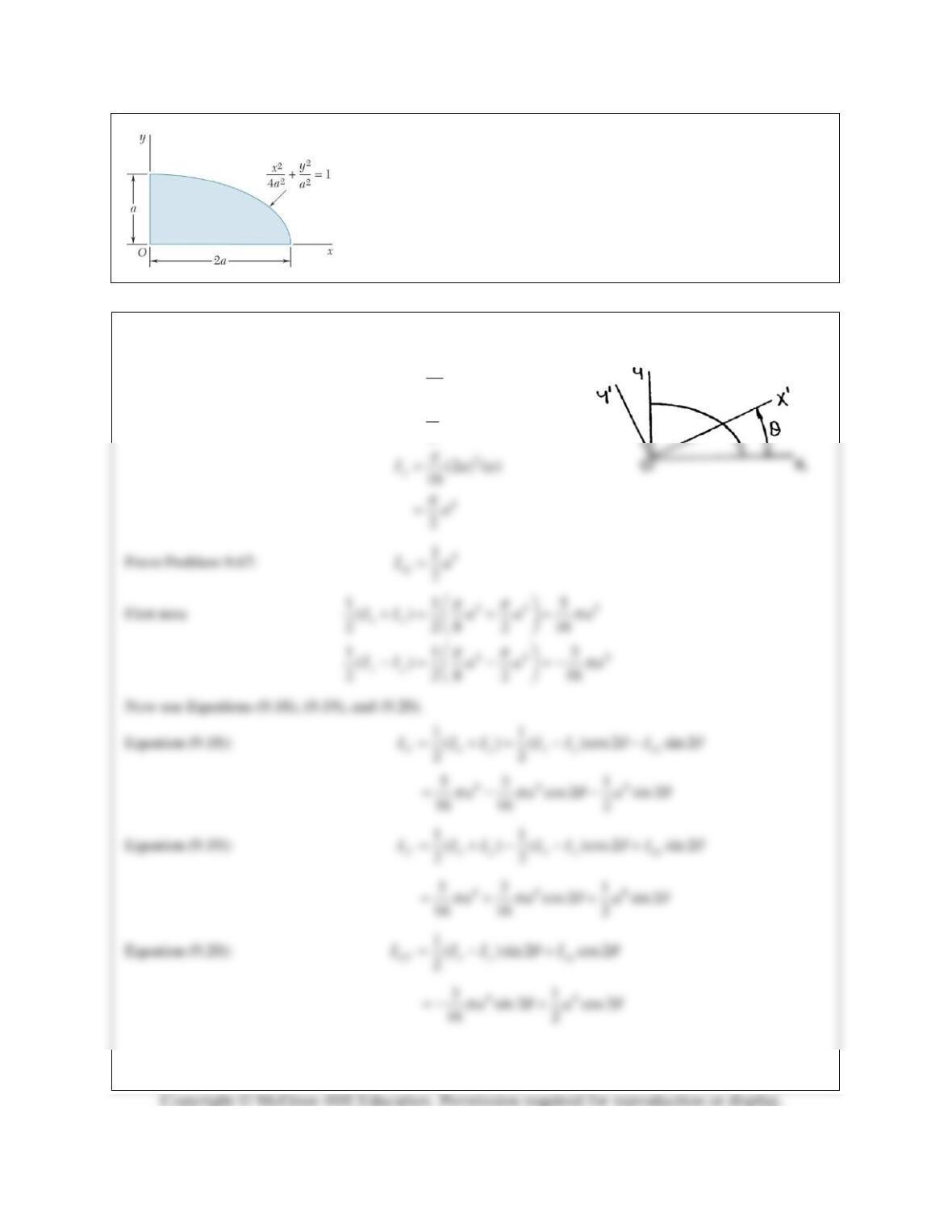
Determine for the quarter ellipse of Problem 9.67 the moments of
inertia and the product of inertia with respect to new axes obtained by
rotating the
x
and
y
axes about
O
(
a
) through 45 counterclockwise,
(
b
) through 30 clockwise.
SOLUTION
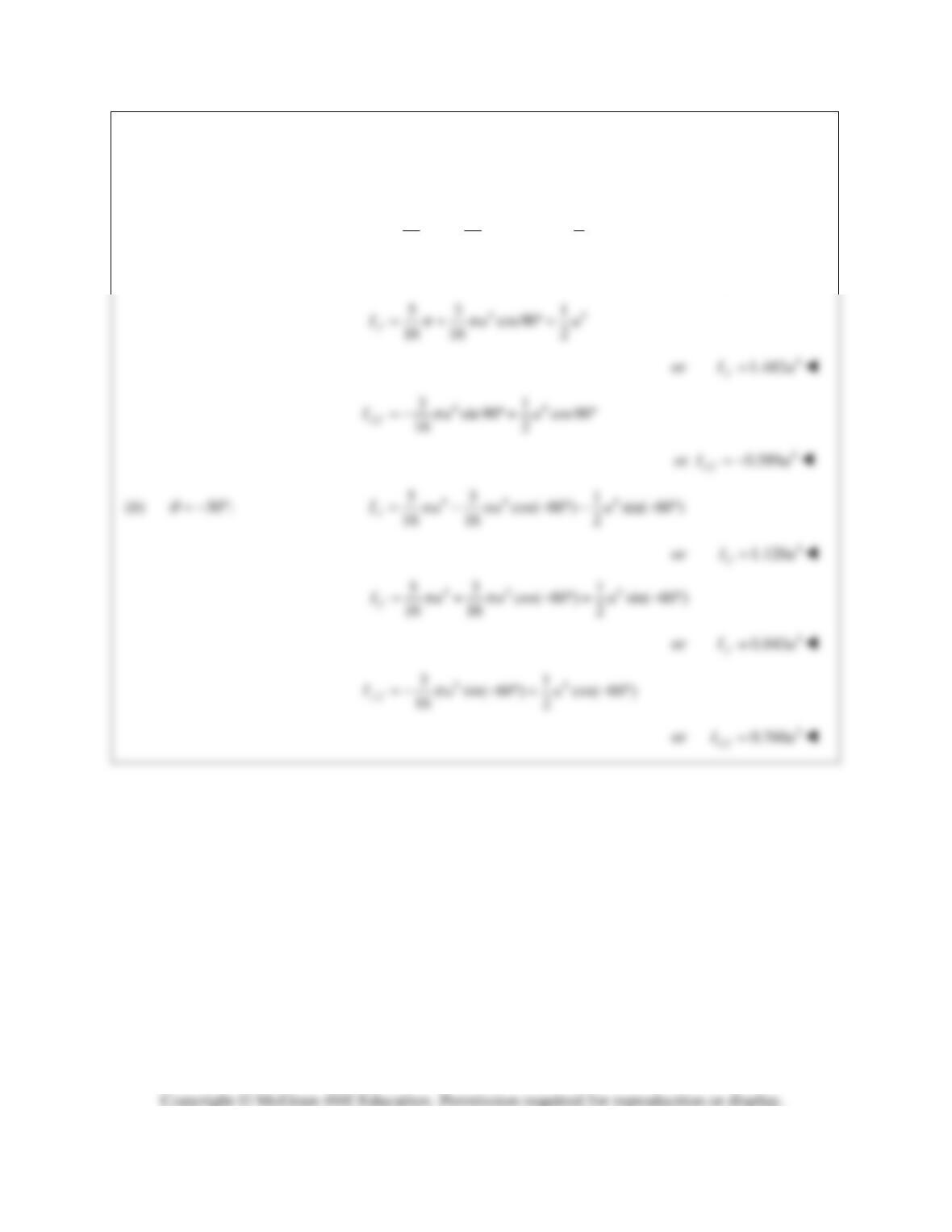
From Figure 9.12:
3
4
(2 )( )
16
8
x
Iaa
a
PROBLEM 9.79 (Continued)
(a) 45 :
44 4
53 1
cos90 sin 90
16 16 2
x
Iaa a
or 4
0.482
x
I
a
PROBLEM 9.80
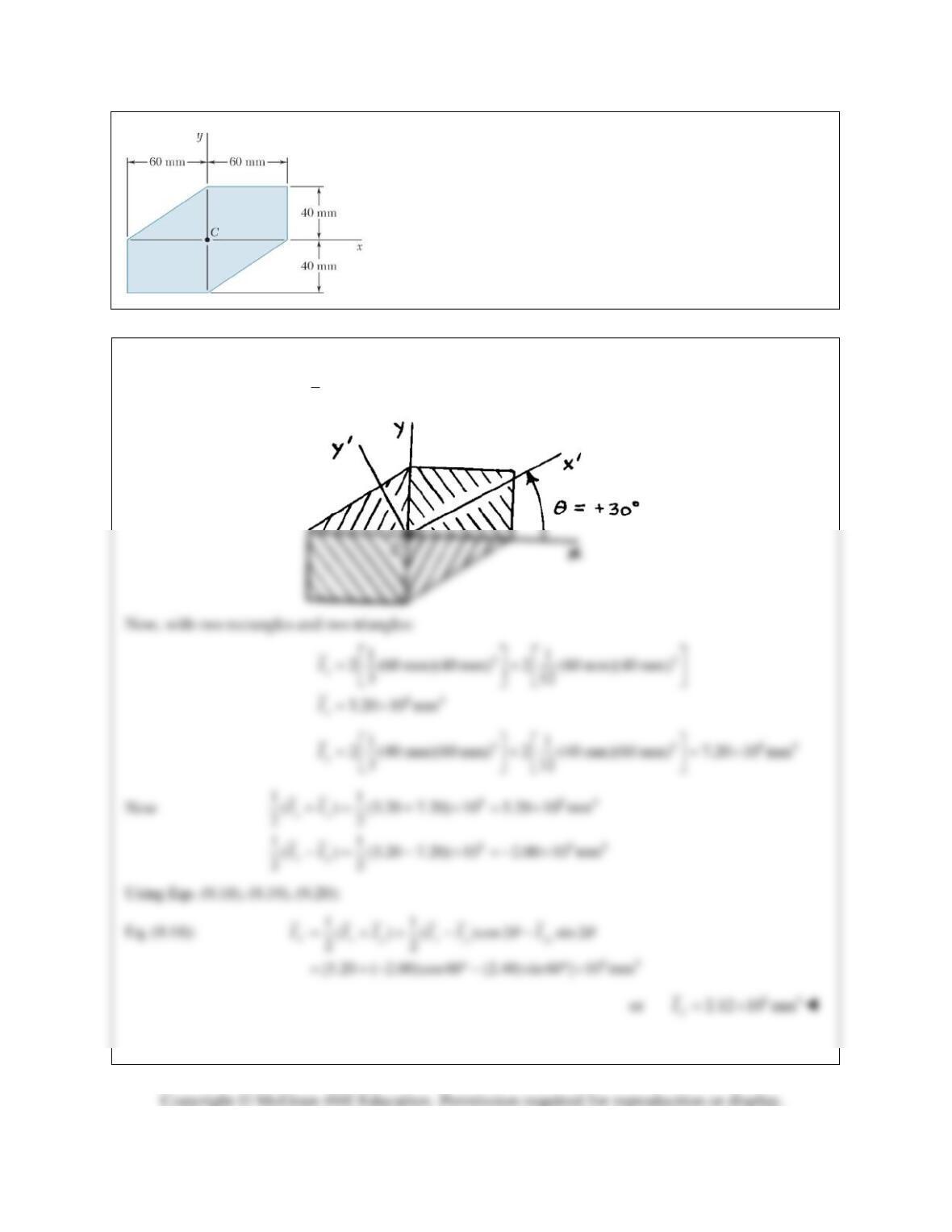
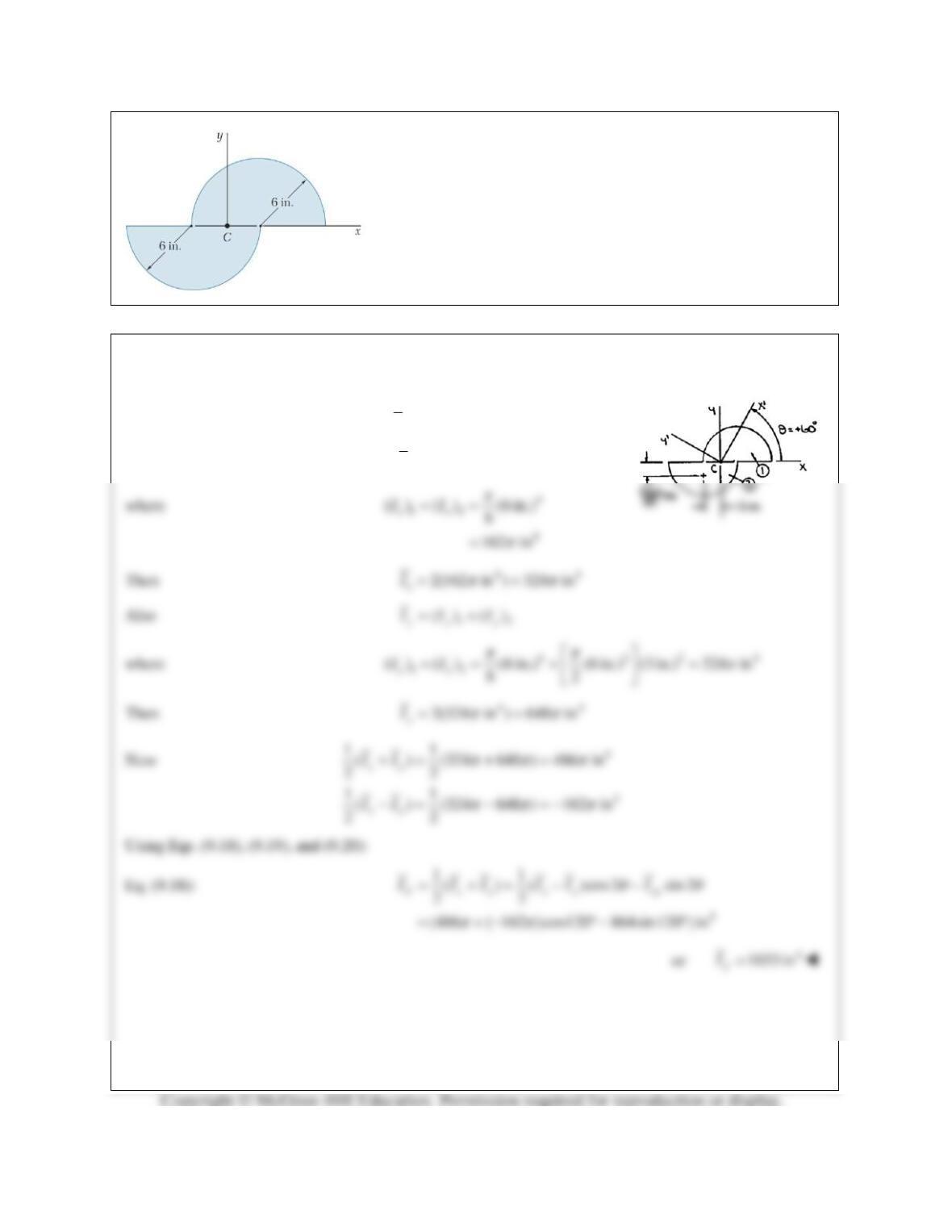
Determine the moments of inertia and the product of inertia of the
area of Problem 9.72 with respect to new centroidal axes obtained
by rotating the x and y axes 30 counterclockwise.
SOLUTION
From Problem 9.72: 64
2.40 10 mm
xy
I
PROBLEM 9.80 (Continued)
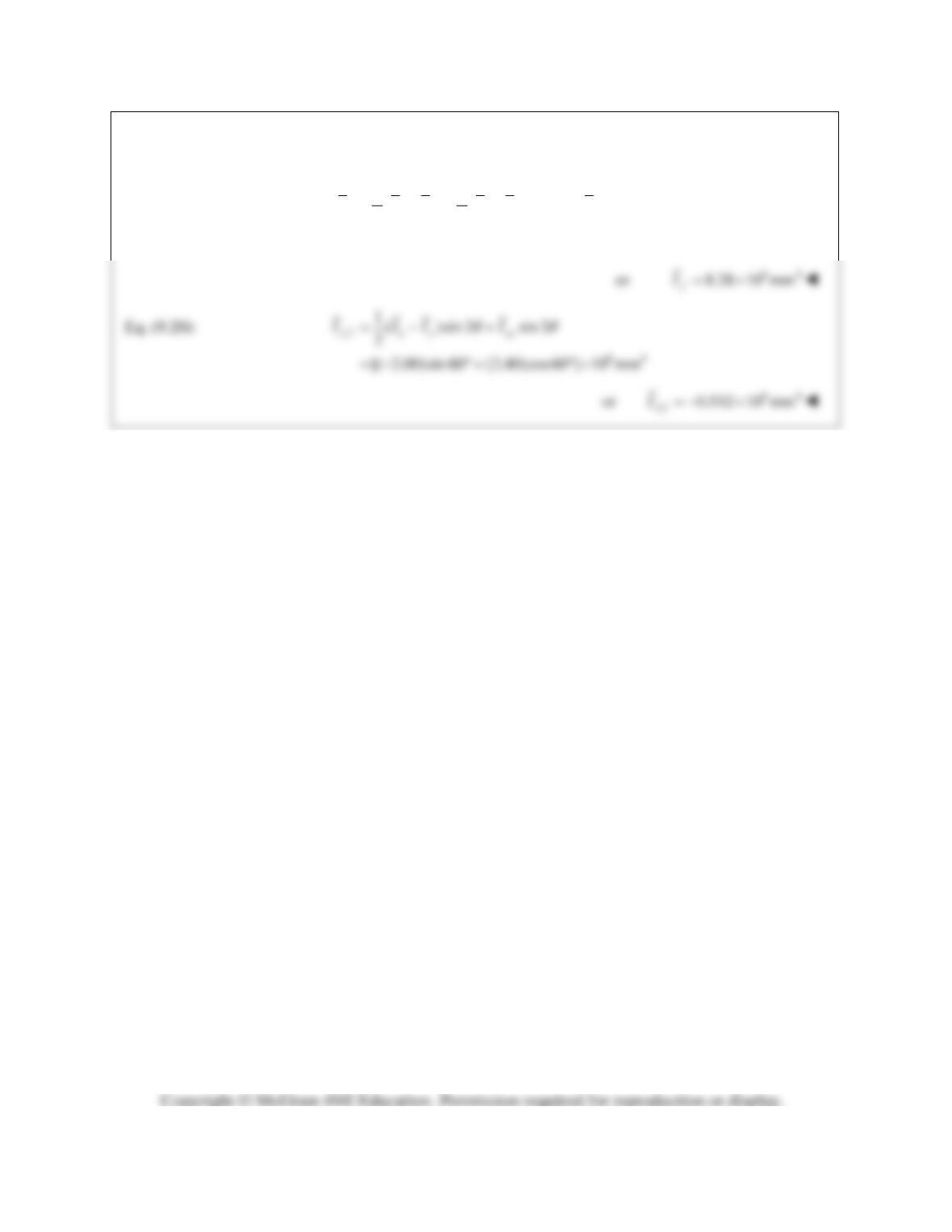
Eq. (9.19):
64
11
()()cos2sin2
22
[5.20 ( 2.00) cos 60 (2.40) sin 60 ] 10 mm
yxy xy xy
III II I
PROBLEM 9.81
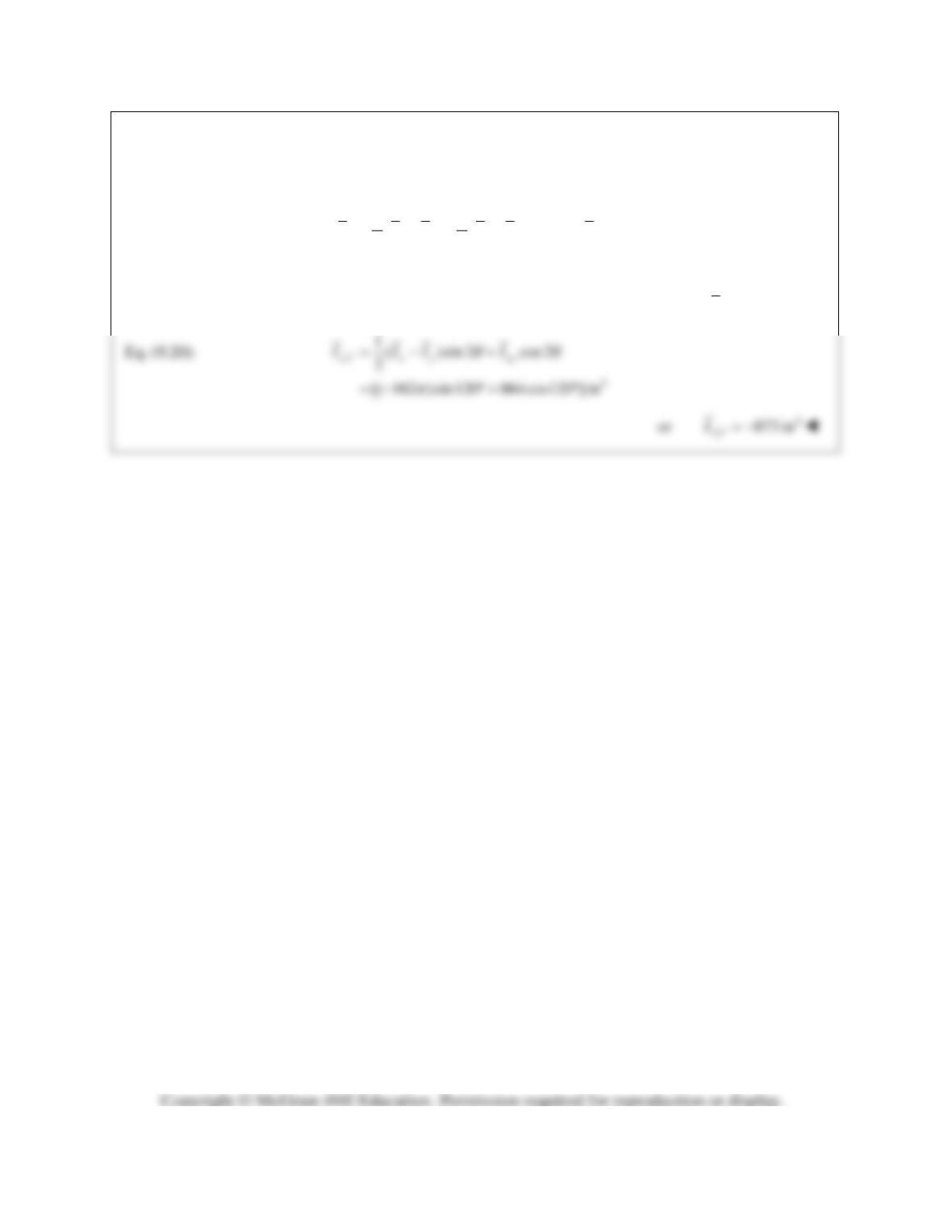
Determine the moments of inertia and the product of inertia of
the area of Problem 9.73 with respect to new centroidal axes
obtained by rotating the x and y axes 60 counterclockwise.
SOLUTION
From Problem 9.73:
4
864 in
xy
I
Now
12
() ()
xx x
II I
PROBLEM 9.81 (Continued)
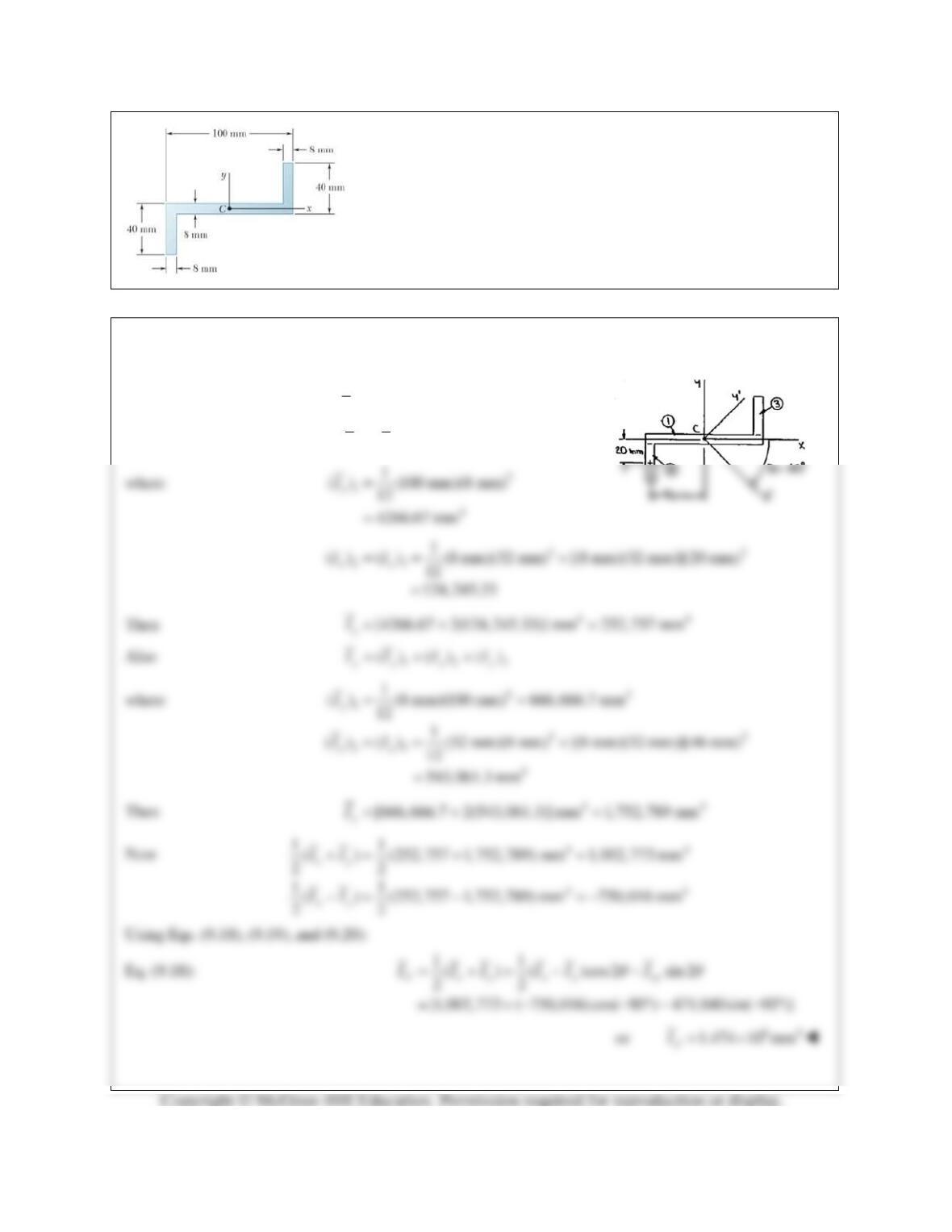
Eq. (9.19):
4
11
()()cos2sin2
22
[486 ( 162 )cos120 864sin120 ] in
yxy xy xy
III II I
or 4
2020 in
y
I
PROBLEM 9.82
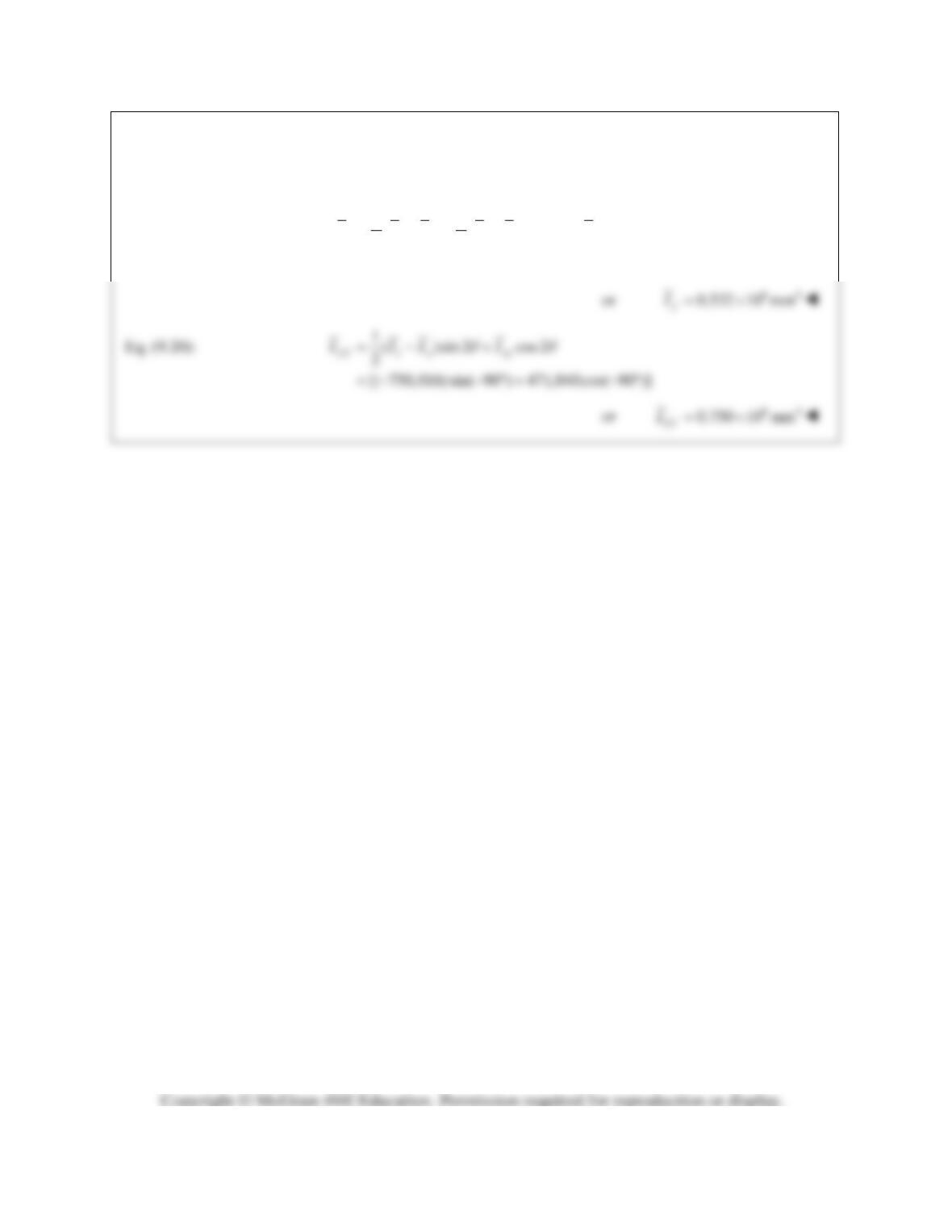
Determine the moments of inertia and the product of inertia of the
area of Problem 9.75 with respect to new centroidal axes obtained
by rotating the x and y axes 45 clockwise.
SOLUTION
From Problem 9.75:
4
471,040 mm
xy
I
Now
123
() () ()
xx x x
II I I
PROBLEM 9.82 (Continued)
Eq. (9.19): 11
()()cos2sin2
22
[1,002,773 ( 750,016)cos( 90 ) 471,040sin( 90 )]
yxy xy xy
III II I
PROBLEM 9.83
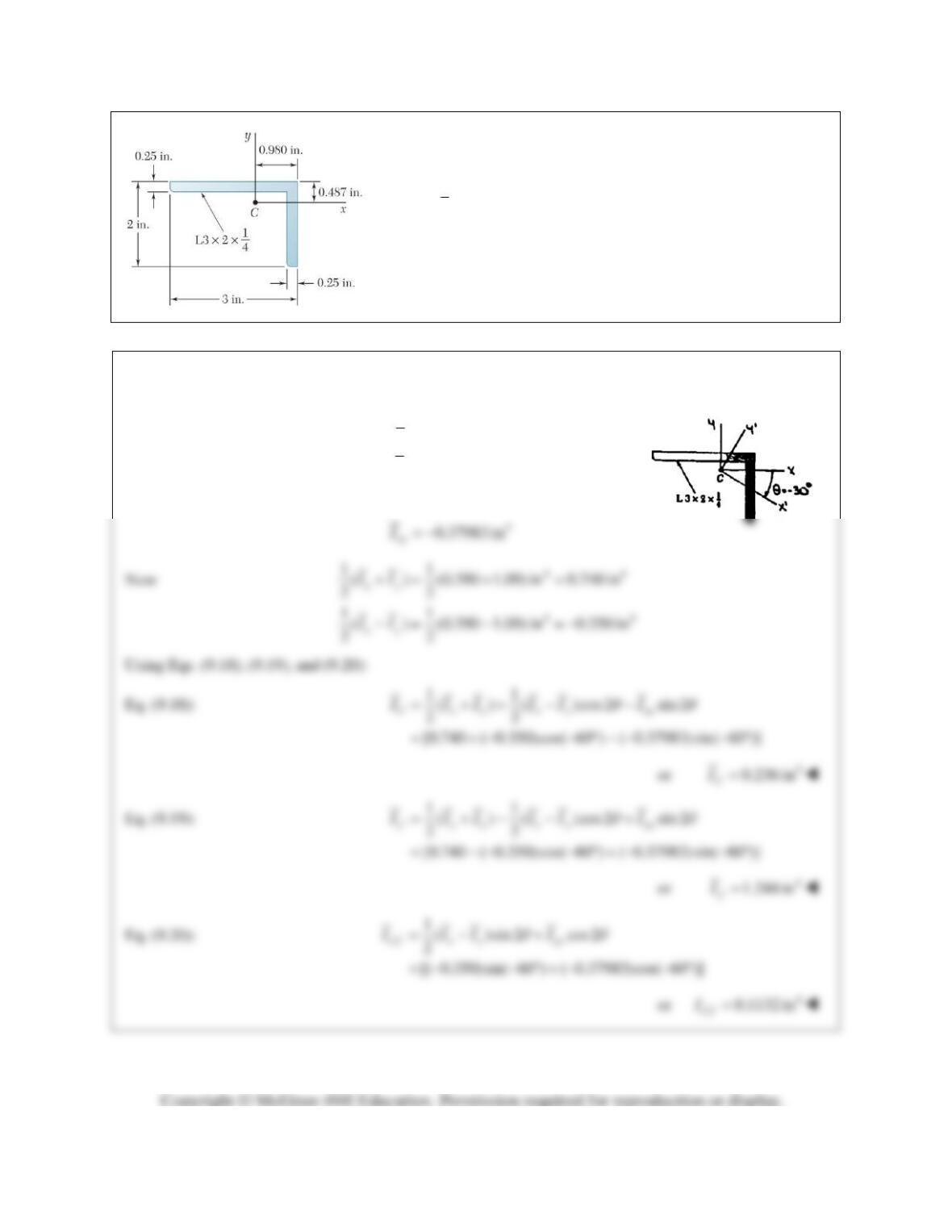
Determine the moments of inertia and the product of inertia of the
1
4
L3 2 –in.
angle cross section of Problem 9.74 with respect to
new centroidal axes obtained by rotating the x and y axes 30
clockwise.
SOLUTION
From Figure 9.13:
4
4
0.390 in
1.09 in
x
y
I
I
From Problem 9.74:
PROBLEM 9.84
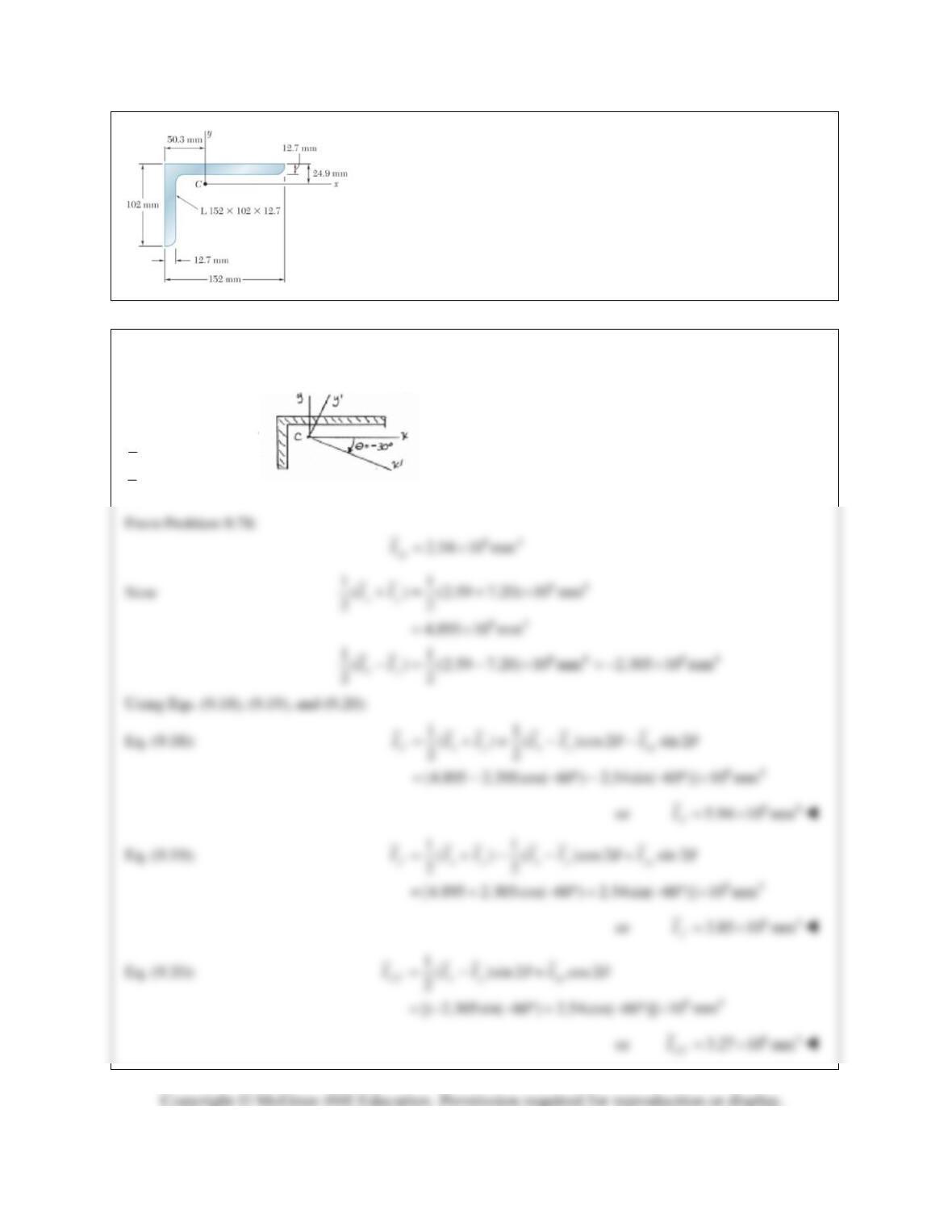
Determine the moments of inertia and the product of inertia of the
L152 102 12.7-mm angle cross section of Prob. 9.78 with
respect to new centroidal axes obtained by rotating the x and y axes
30 clockwise.
SOLUTION
From Figure 9.13: Note the axes are reversed in sketch.
64
64
2.59 10 mm
7.20 10 mm
x
y
I
I
PROBLEM 9.85
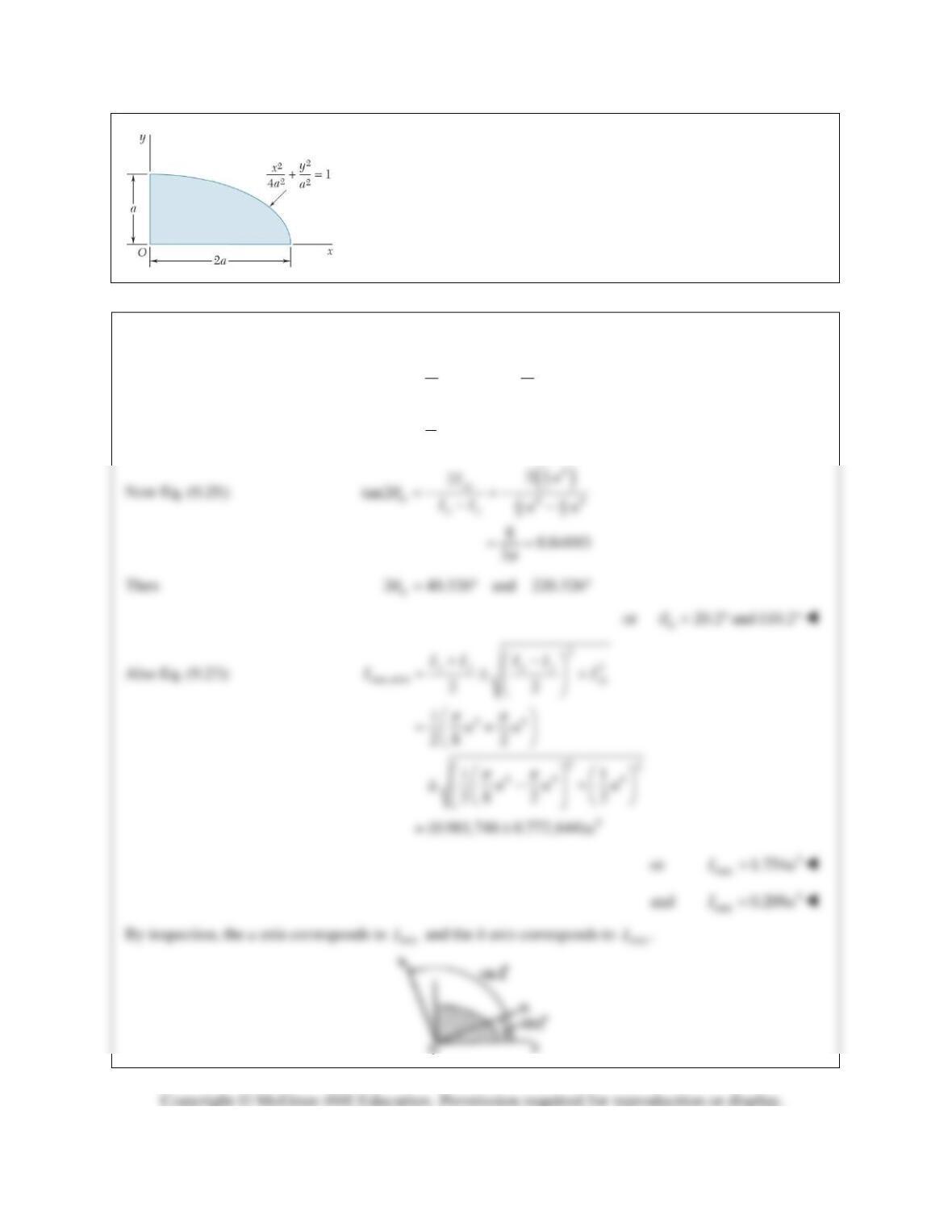
For the quarter ellipse of Problem 9.67, determine the orientation of
the principal axes at the origin and the corresponding values of the
moments of inertia.
SOLUTION
From Problem 9.79:
44
82
xy
IaIa
Problem 9.67:
4
1
2
xy
Ia
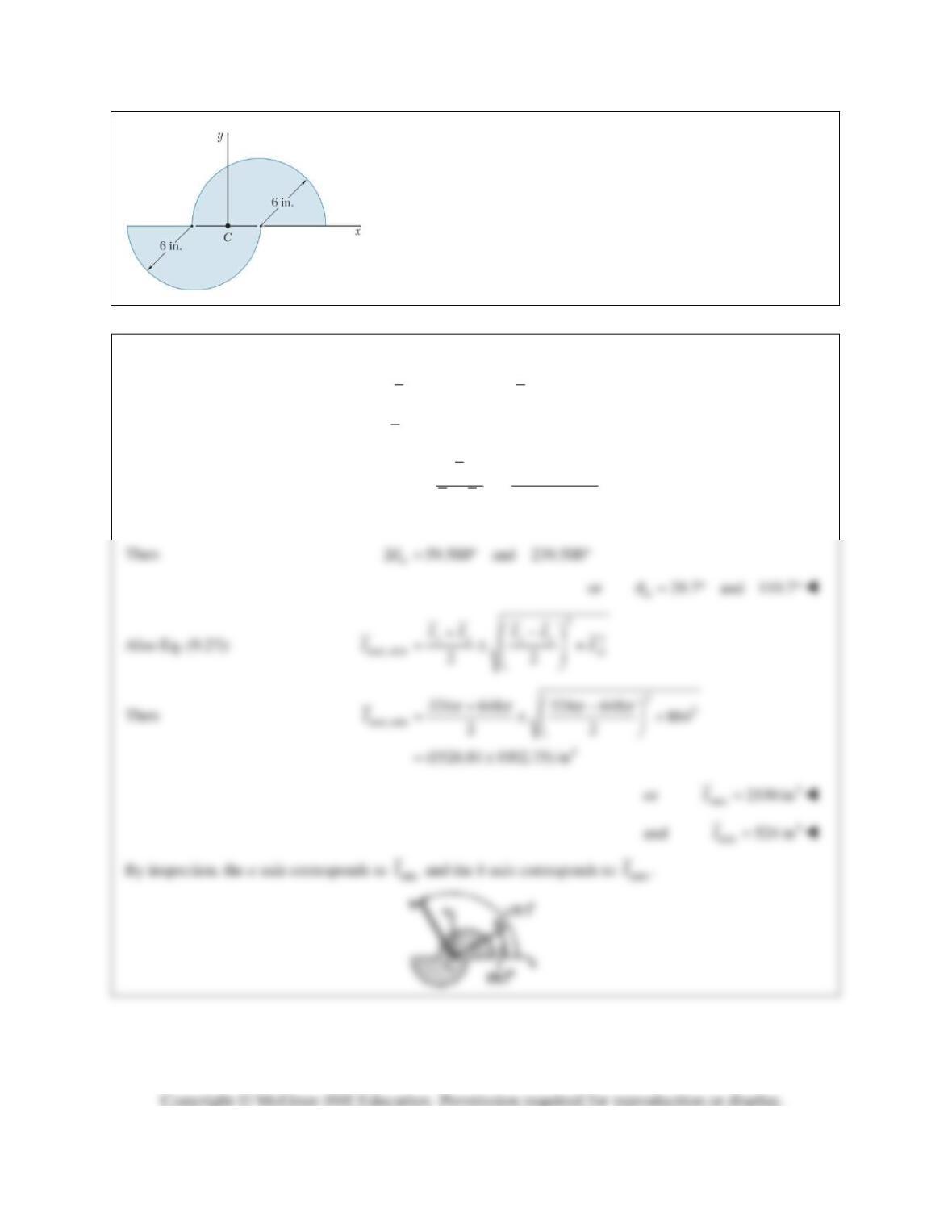
PROBLEM 9.86
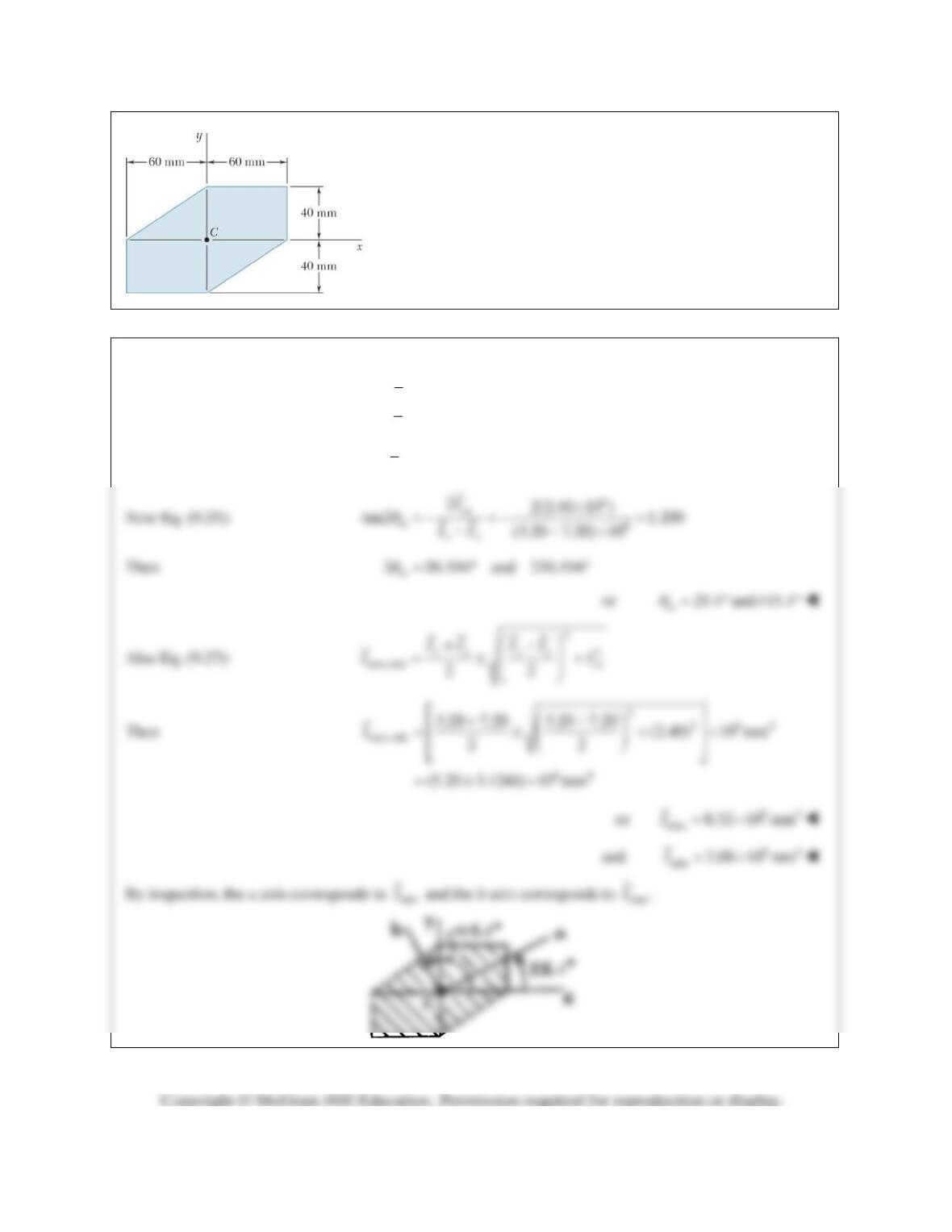
For the area indicated, determine the orientation of the principal
axes at the origin and the corresponding values of the moments of
inertia.
Area of Problem 9.72.
SOLUTION
From Problem 9.80: 64
64
3.20 10 mm
7.20 10 mm
x
y
I
I
From Problem 9.72: 64
2.40 10 mm
xy
I
PROBLEM 9.87
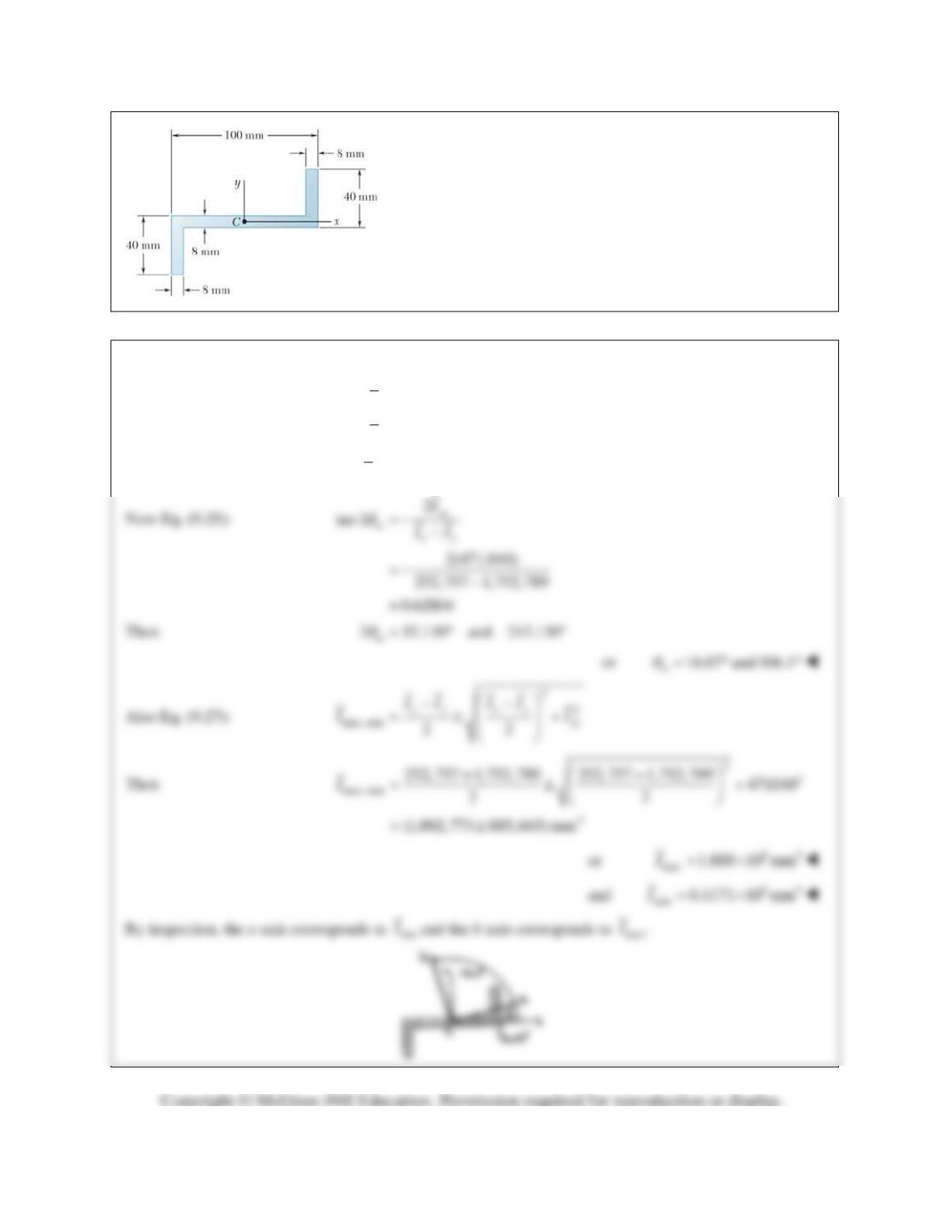
For the area indicated, determine the orientation of the principal
axes at the origin and the corresponding values of the moments of
inertia.
Area of Problem 9.73.
SOLUTION
From Problem 9.81: 44
324 in 648 in
xy
II
Problem 9.73: 4
864 in
xy
I
Now Eq. (9.25): 22(864)
tan2 324 648
1.69765
xy
m
xy
I
II
PROBLEM 9.88
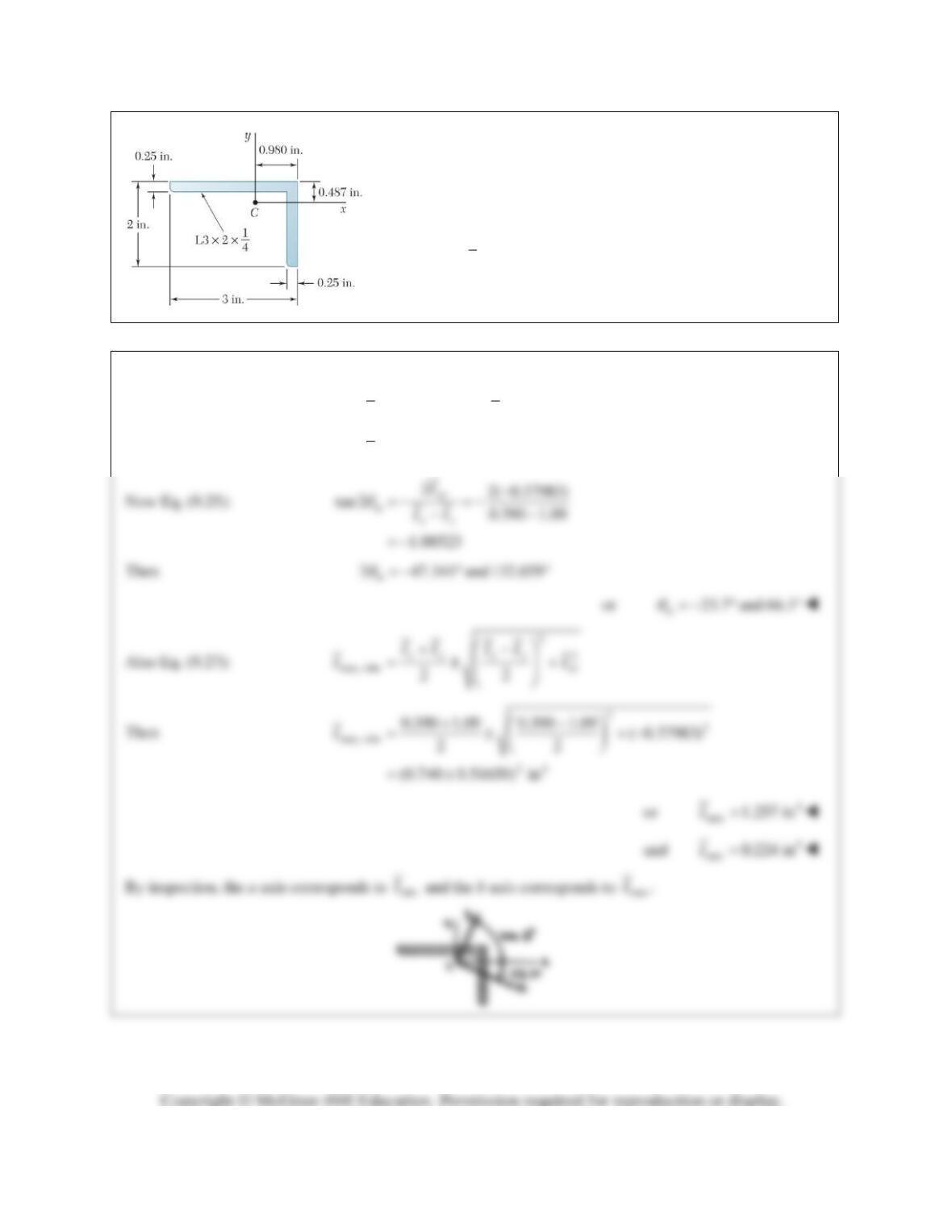
For the area indicated, determine the orientation of the principal
axes at the origin and the corresponding values of the moments
of inertia.
Area of Problem 9.75.
SOLUTION
From Problem 9.82:
4
252,757 mm
x
I
4
1,752,789 mm
y
I
Problem 9.75: 4
471,040 mm
xy
I
PROBLEM 9.89
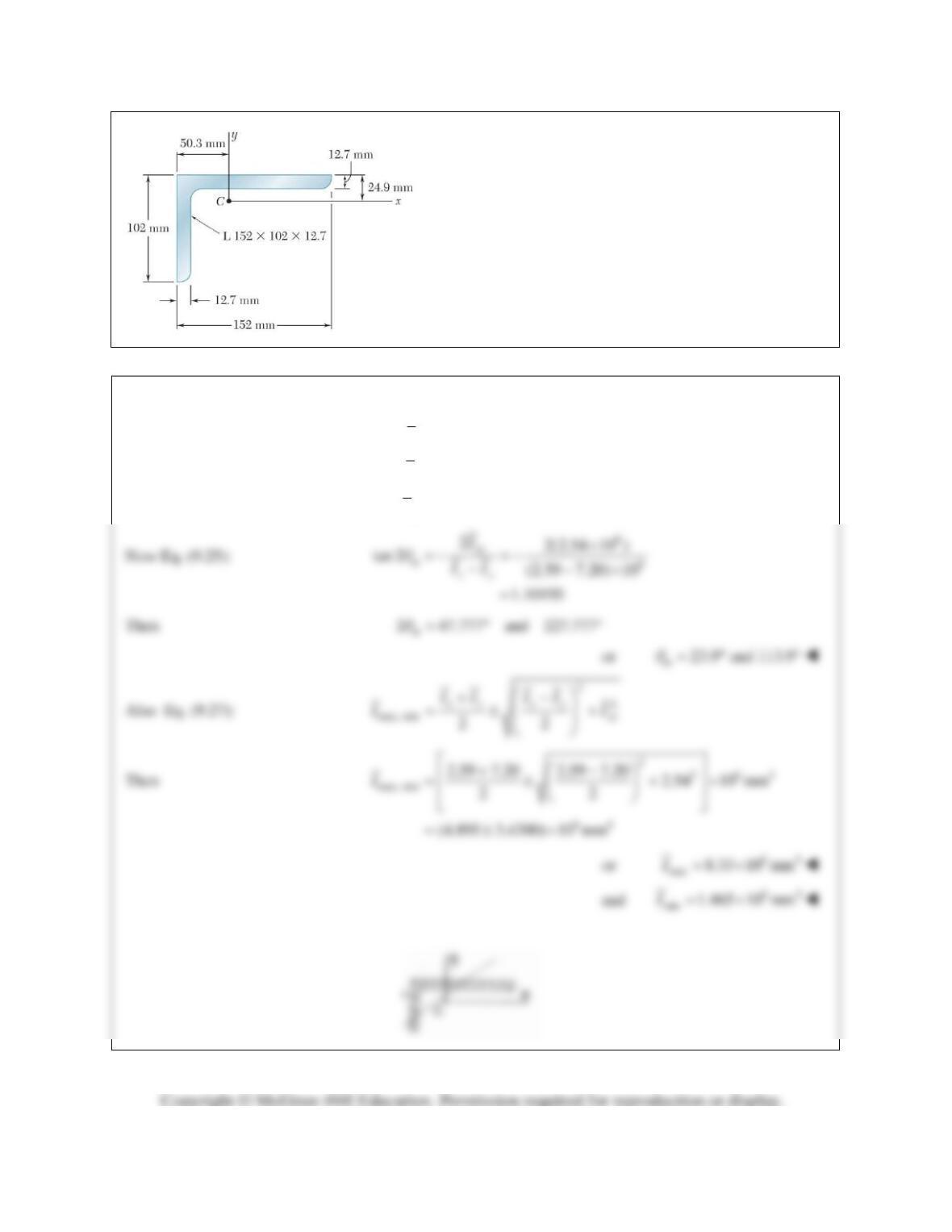
For the angle cross section indicated, determine the orientation of
the principal axes at the origin and the corresponding values of the
moments of inertia.
The
1
4
L3 2 -in.
angle cross section of Problem 9.74.
SOLUTION
From Problem 9.83: 44
0.390 in 1.09 in
xy
II
Problem 9.74: 4
0.37983 in
xy
I
PROBLEM 9.90
For the angle cross section indicated, determine the
orientation of the principal axes at the origin and the
corresponding values of the moments of inertia.
The
L152 102 12.7-mm
angle cross section of
Problem 9.78.
SOLUTION
From Figure 9.13B:
64
2.59 10 mm
x
I
64
7.20 10 mm
y
I
Problem 9.78: 64
2.54 10 mm
xy
I