CASE 9
Enron: Questionable Accounting Leads to
Collapse
CASE NOTES FOR INSTRUCTORS
The purpose of this case is to show how it is possible for a well-known and respected company to become
Citigroup. Enron sold its last business, Prisma Energy, in 2006. In early 2007, it changed its name to
Enron Creditors Recovery Corporation. The sole goal of the newly-named organization was to pay off
Enron’s remaining creditors and wrap up Enron’s affairs. By 2008 Enron had settled with all involved
institutions, with Citigroup being the last. Enron was able to obtain nearly $20 million to distribute to its
creditors as a result of the megaclaims litigation.
Although this case may not seem so shocking now in the wake of Bernard Madoff and the failure of so
many of Wall Street’s most venerable firms, students should keep in mind that at that time this case sent
shock waves around the world. Instructors may wish to have students compare aspects of this Enron case
with other cases provided in this book, such as the Galleon Group and frauds of the century. These cases
share elements, such as the type of misconduct and pervasiveness of unethical behavior in the companies’
QUESTIONS AND DISCUSSION
1. How did the corporate culture of Enron contribute to its bankruptcy?
Most students will agree that Enron appears to have had a highly unethical corporate culture. However,
this point may be missed by students who are unfamiliar with business ethics and by those who view
Enron’s difficulties as stemming from accounting or auditing problems. In reality, the root of the
2. Did Enron’s bankers, auditors, and attorneys contribute to Enron’s demise? If so, how?
All corporations are supposed to have a number of different gatekeepers in place who ensure that the
business’s dealings are transparent and in compliance with the law. However, in the case of Enron, these
gatekeepers, such as accountants, independent auditors, and government regulators, failed to make sure
that Enron conducted business in a way that was in stakeholders’ interests. For example, the auditors
3. What role did the company’s chief financial officer play in creating the problems that led to
Enron’s financial problems?
This question should help students better understand the role of the chief financial officer (CFO), a role
filled at Enron by Andrew Fastow, who was key in creating Enron’s financial problems. Representing the
final word on a corporation’s finances, the CFO plays a very important role in most firms. At Enron, most
ADDITIONAL RESOURCES
• Ungagged.net: The Other Side of the Enron Story offers the perspectives of Enron employees
who believe they were the victims of the federal government’s desire to get convictions and place
blame: http://ungagged.net
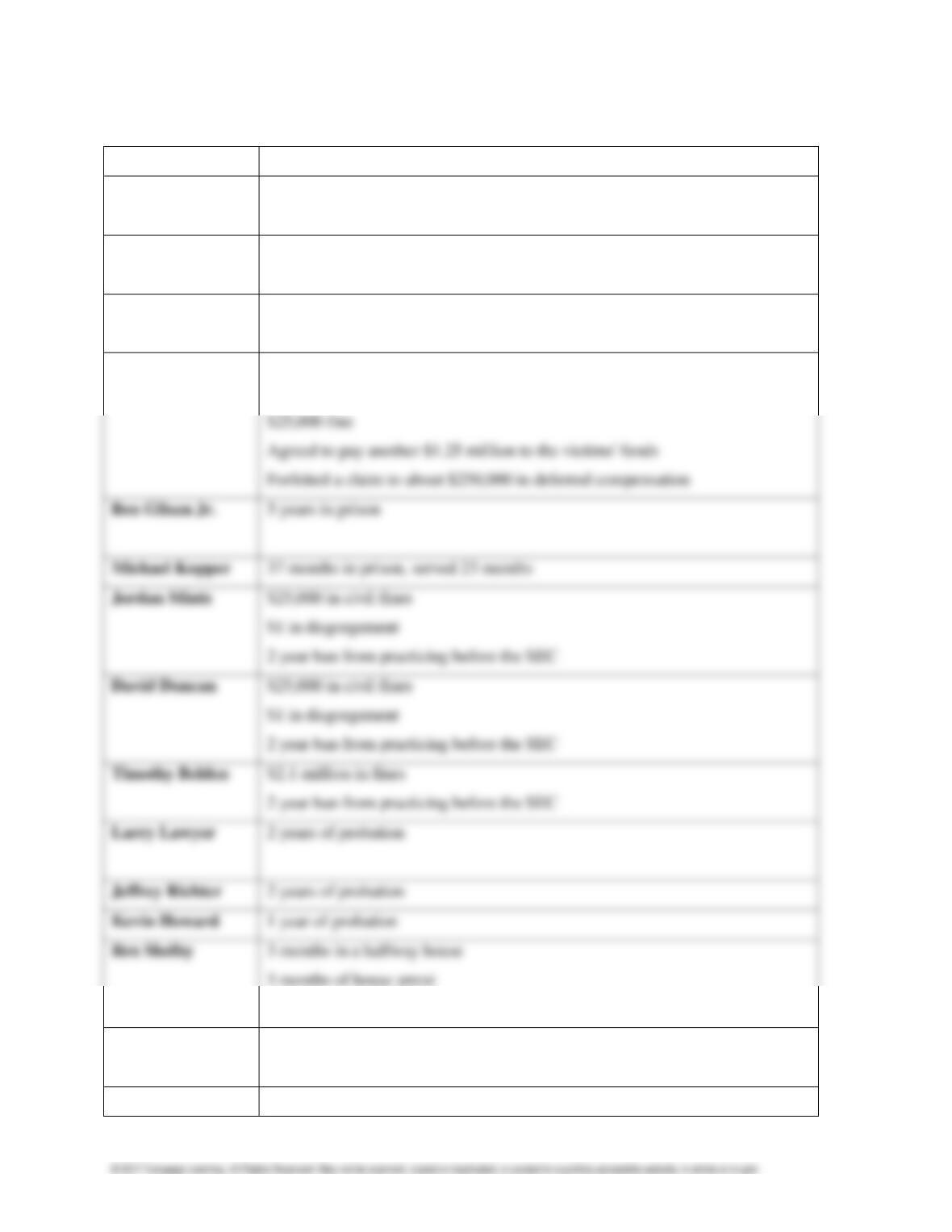
Key Enron Figures and Their Sentences
Name
Sentence
Jeffrey Skilling
24 years and 4 months in prison; sentence reduced to 14 years
$45 million in fines
Andrew Fastow
6 years in prison
$23.8 million in cash and property
Lea Fastow
1 year in prison
1 year of supervised release.
Richard Causey
5 years and 6 months in prison
2 years of probation
Michael Kopper
$1 in disgorgement
Timothy Belden
$2.1 million in fines
Larry Lawyer
Jeffrey Richter
2 years of probation
Kevin Howard
3 months of house arrest
$3.6 million in fines
Dan Boyle
3 years and 10 months in prison
$320,000 in fines
David Delainey
2 years and 6 months in prison