Solution 9.1
(a) Vm = 50 V.
Solution 9.2
(a) amplitude = 15 A
Solution 9.3
Solution 9.4
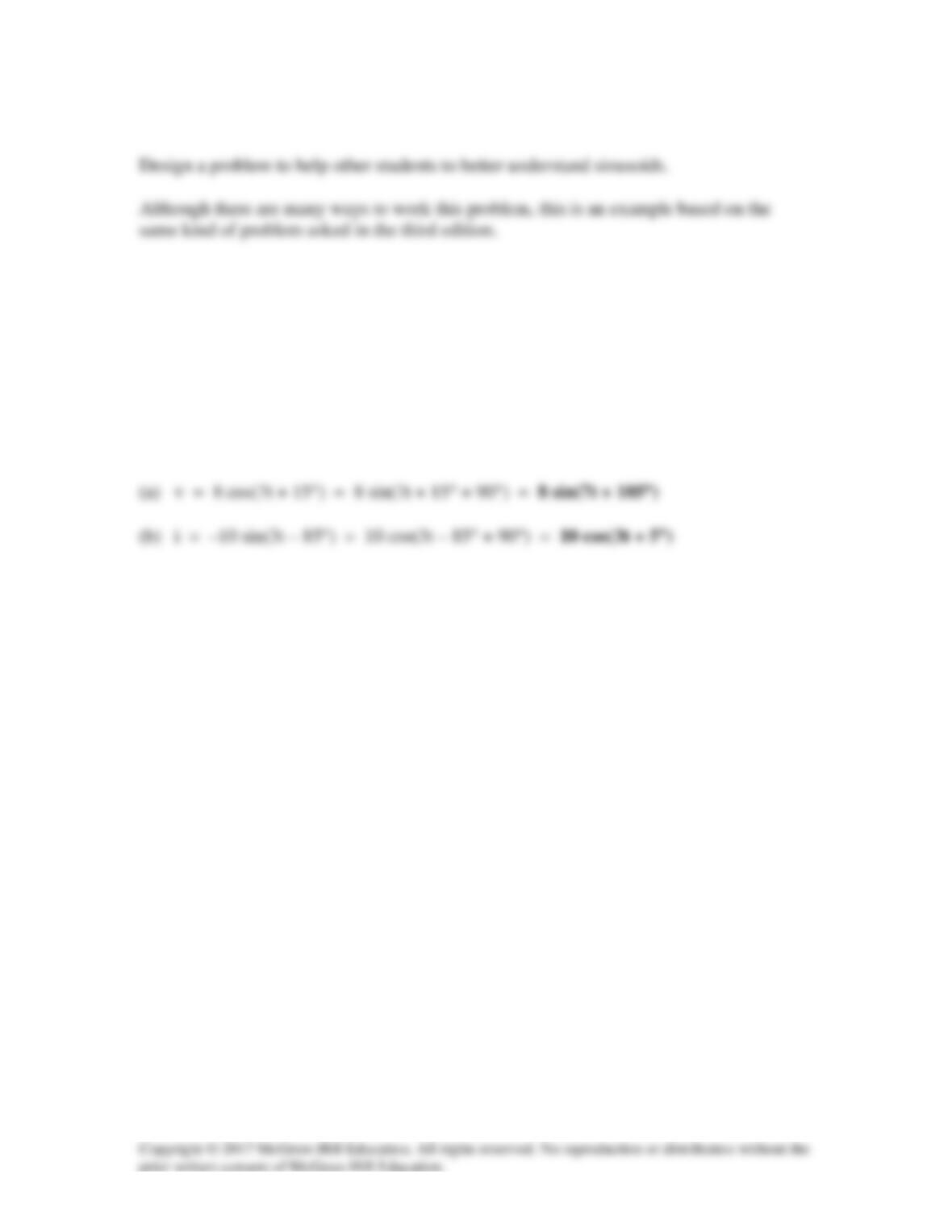
Problem
(a) Express v = 8 cos(7t + 15°) in sine form.
(b) Convert i = –10sin(3t – 85°) to cosine form.
Solution
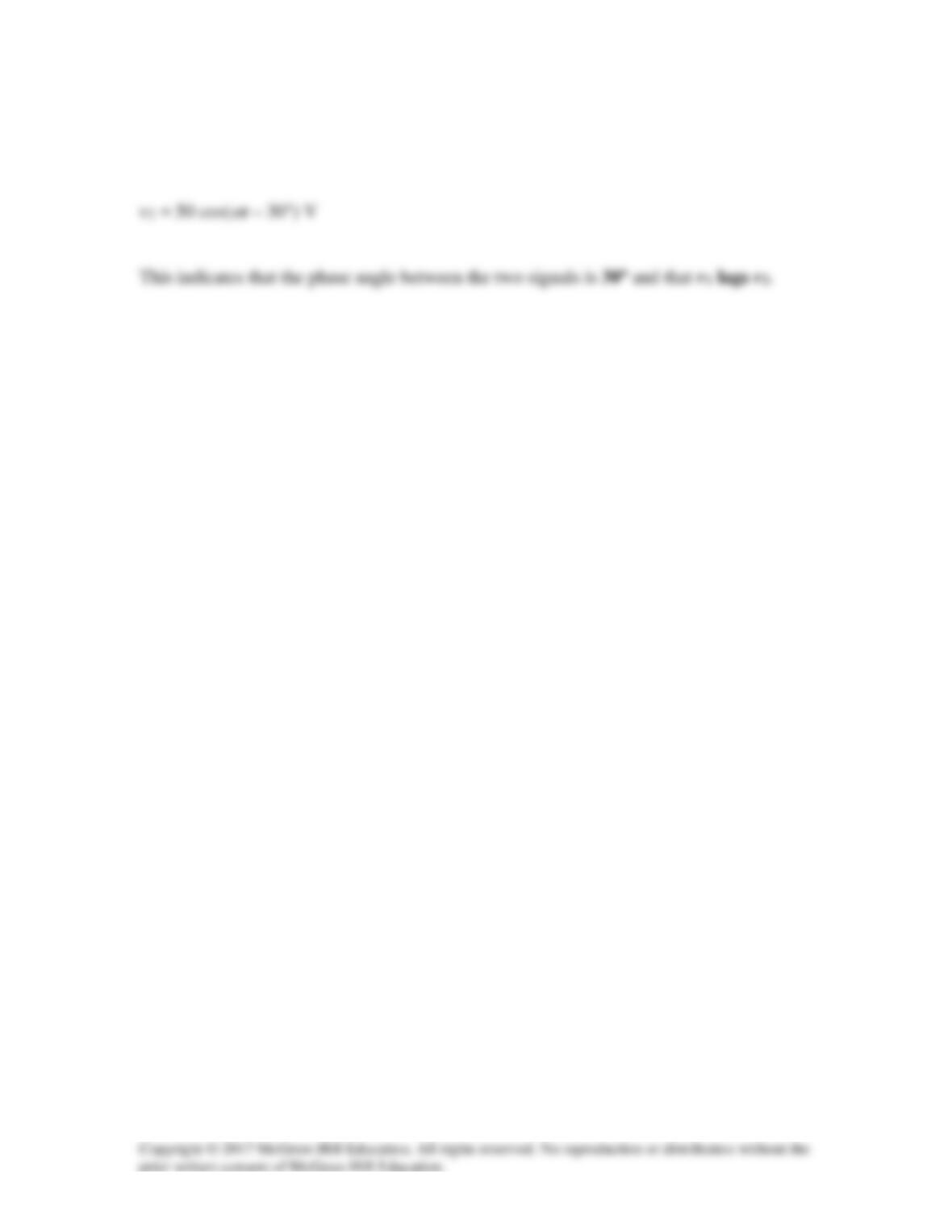
Solution 9.5
v1 = 45 sin(
ω
t + 30°) V = 45 cos(
ω
t + 30° − 90°) = 45 cos(
ω
t − 60°) V
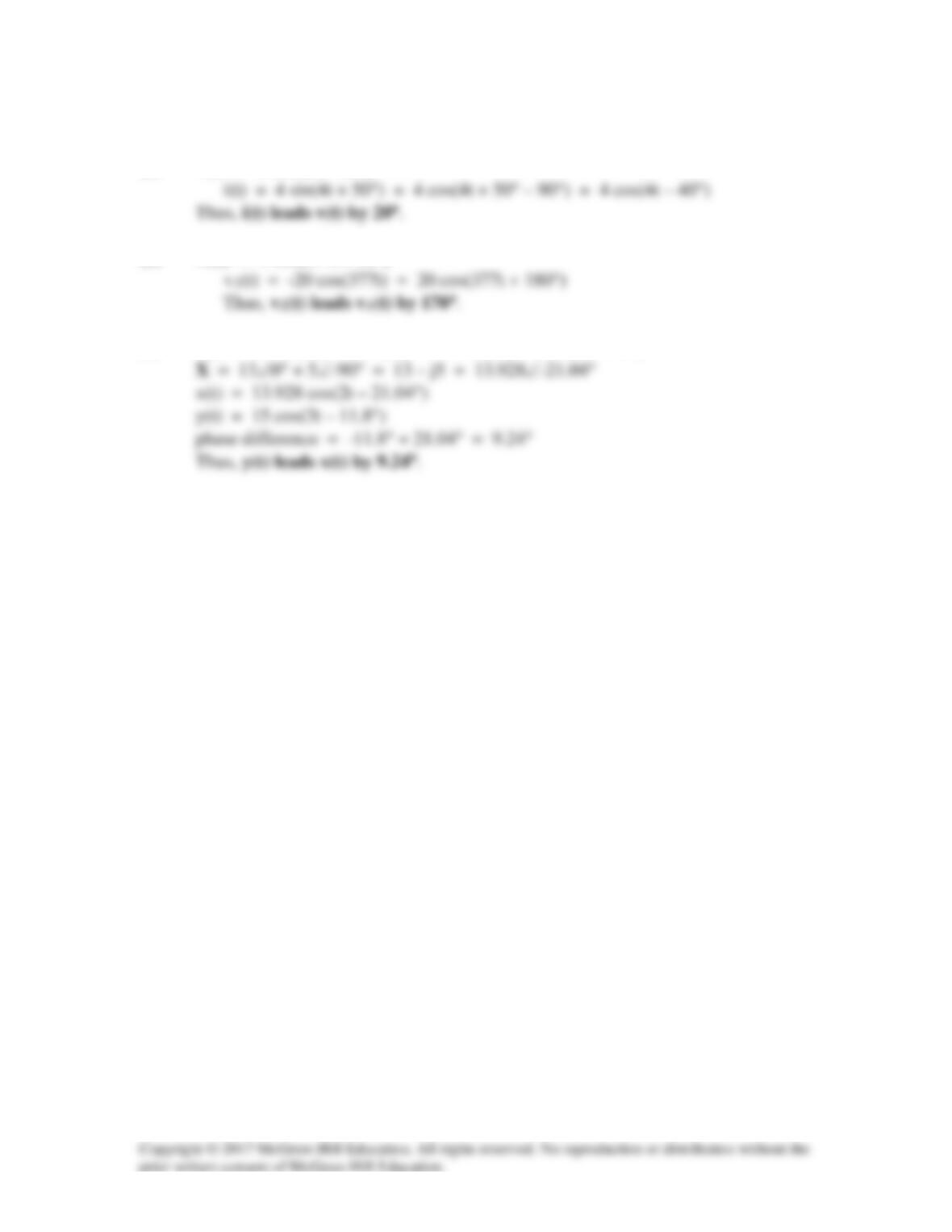
Solution 9.6
(a) v(t) = 10 cos(4t – 60°)
(b) v1(t) = 4 cos(377t + 10°)
(c) x(t) = 13 cos(2t) + 5 sin(2t) = 13 cos(2t) + 5 cos(2t – 90°)
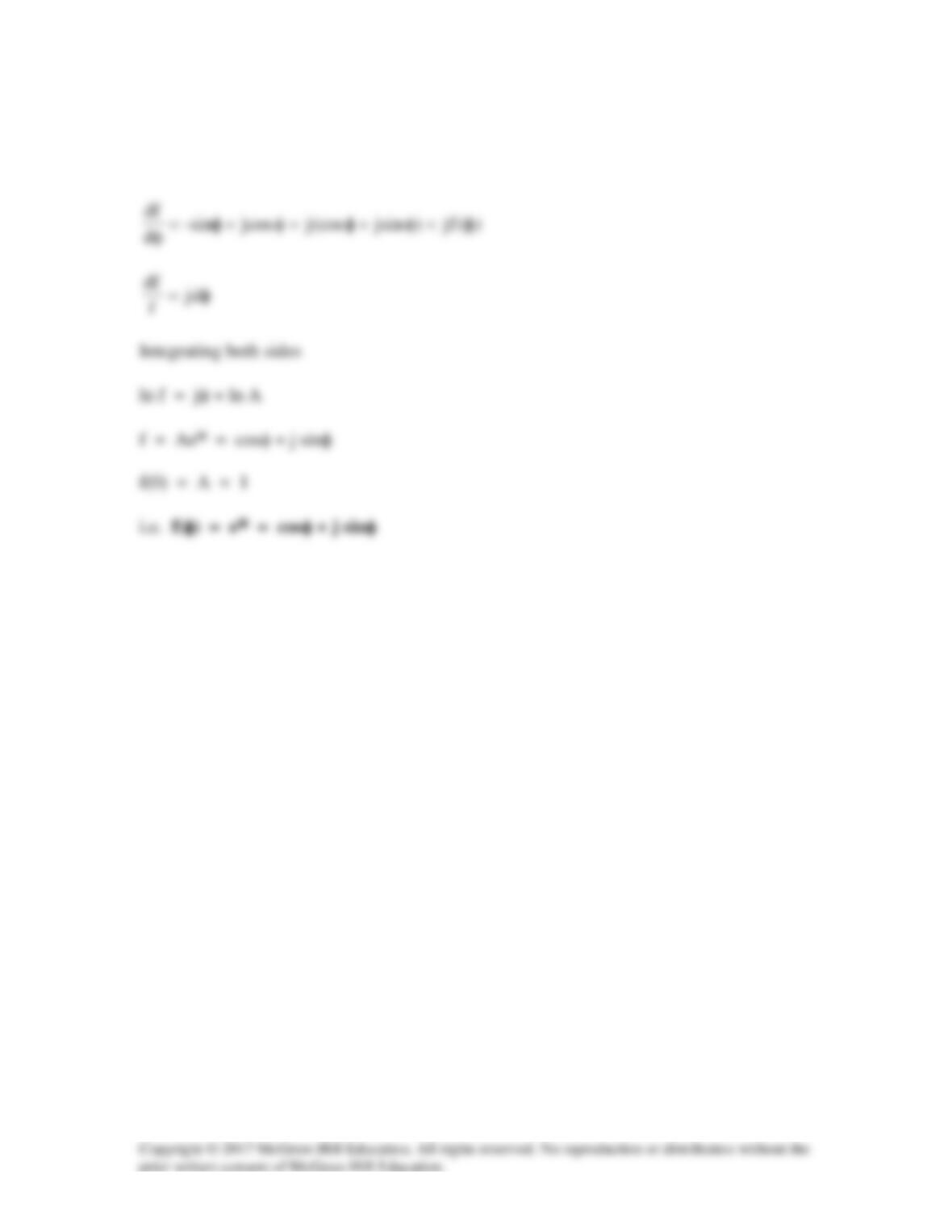
Solution 9.7
If f(φ) = cosφ + j sinφ,
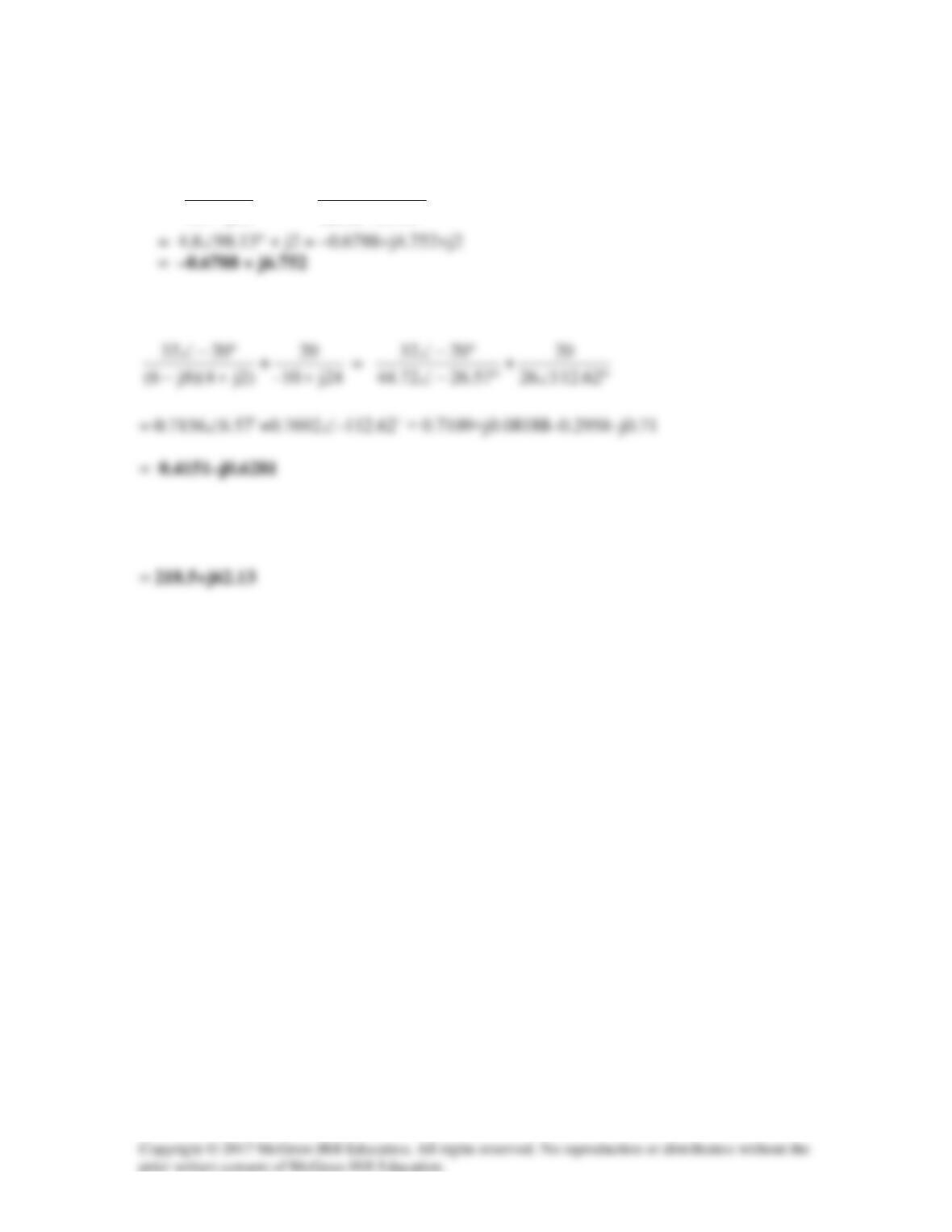
Solution 9.8
(a)
105.7
4560
j−
°∠
+ j2 =
°∠
°∠
53.13–5.12
4560
+ j2
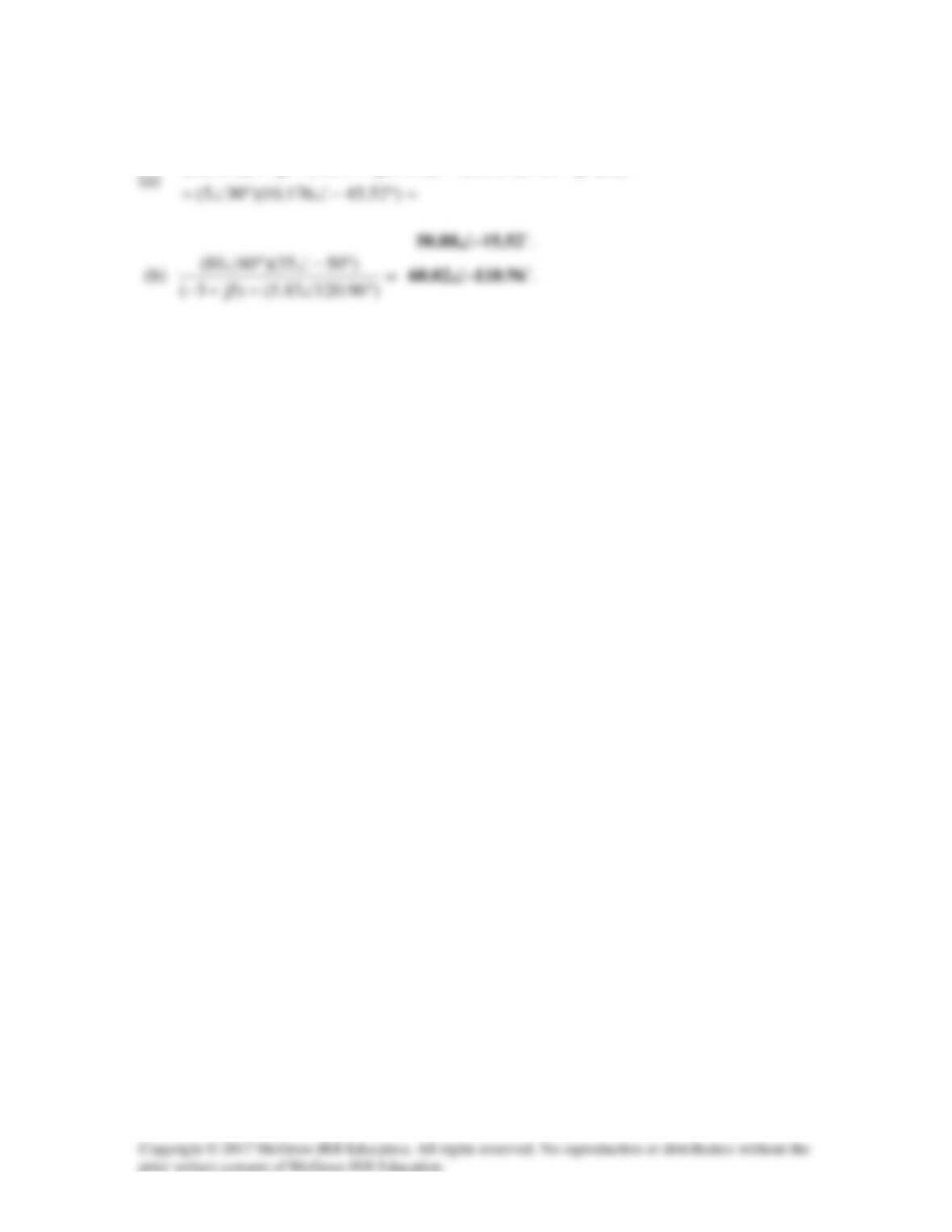
(b) (6–j8)(4+j2) = 24–j32+j12+16 = 40–j20 = 44.72∠–26.57˚
(c) 20 + (16∠–50°)(13∠67.38°) = 20+208∠17.38° = 20 + 198.5+j62.13
Solution 9.9
−°∠=++−°∠
)261.7j13.7)(305()7392.0j1197.18j6)(305(
Solution 9.10
Design a problem to help other students to better understand phasors.
Problem
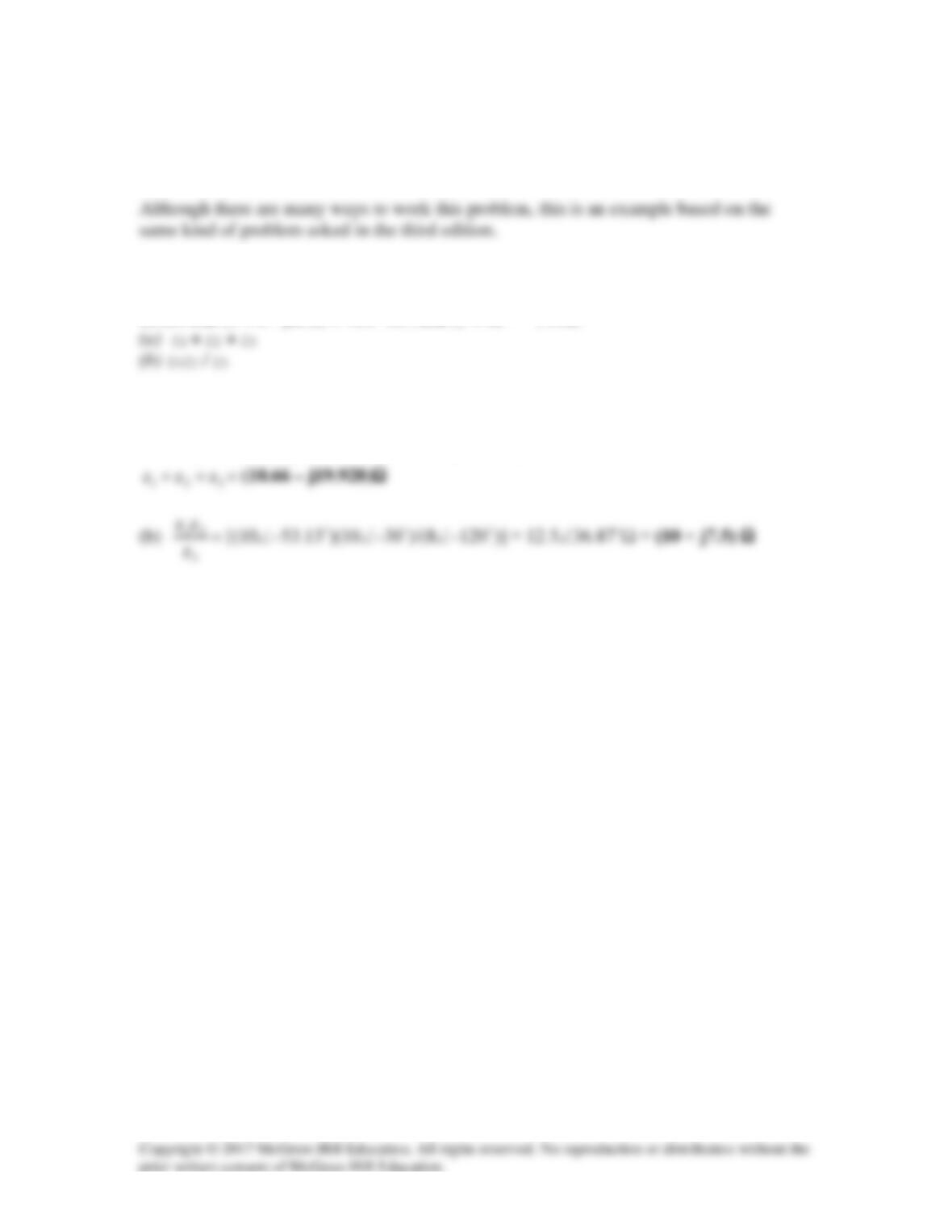
Given that z1 = 6 – j8, z2 = 10∠–30°, and z3 = 8e–j120°, find:
Solution
(a)
9282.64z and ,566.8z ,86 321 jjjz −−=−=−=
Solution 9.11
(a)
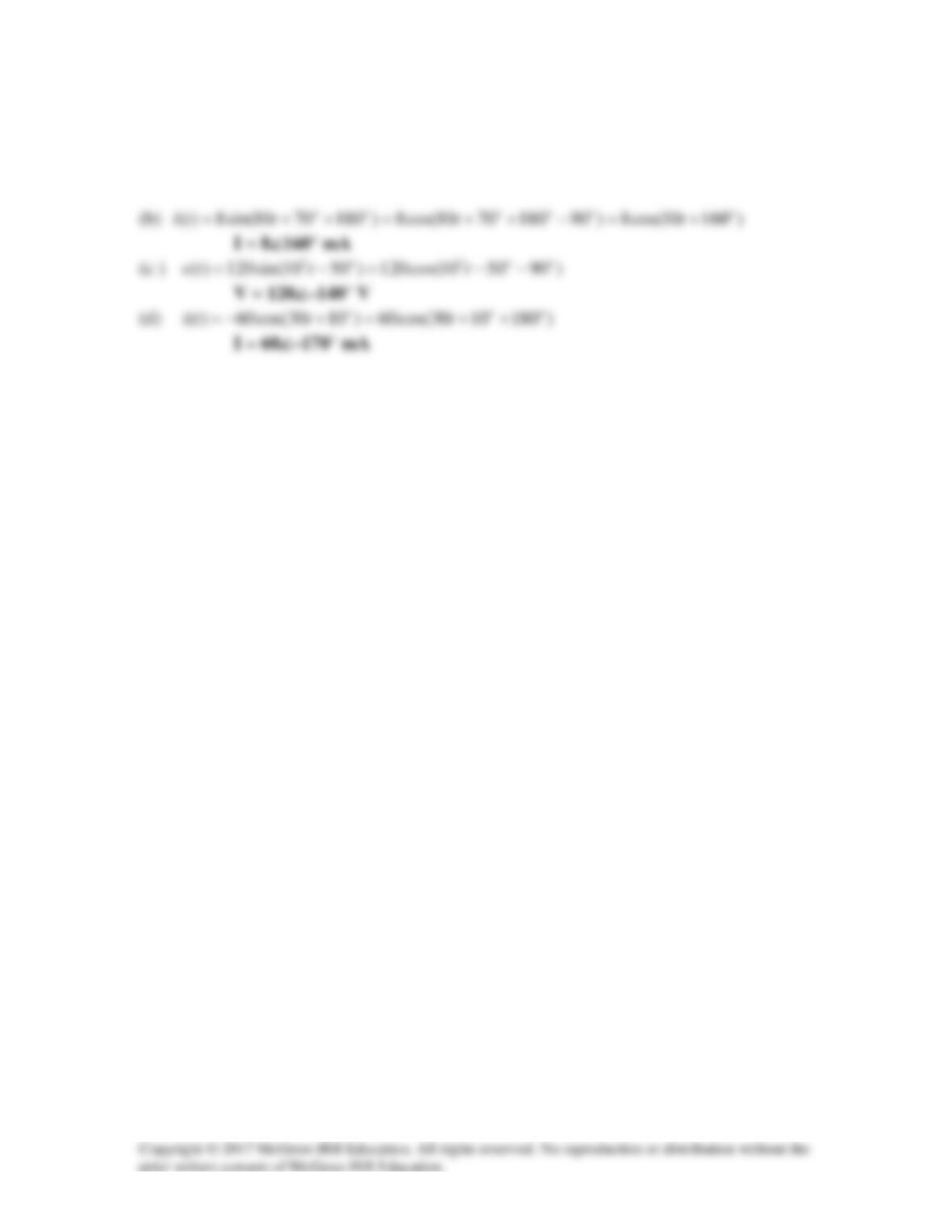
21 15 V
o
V= <−
Solution 9.11
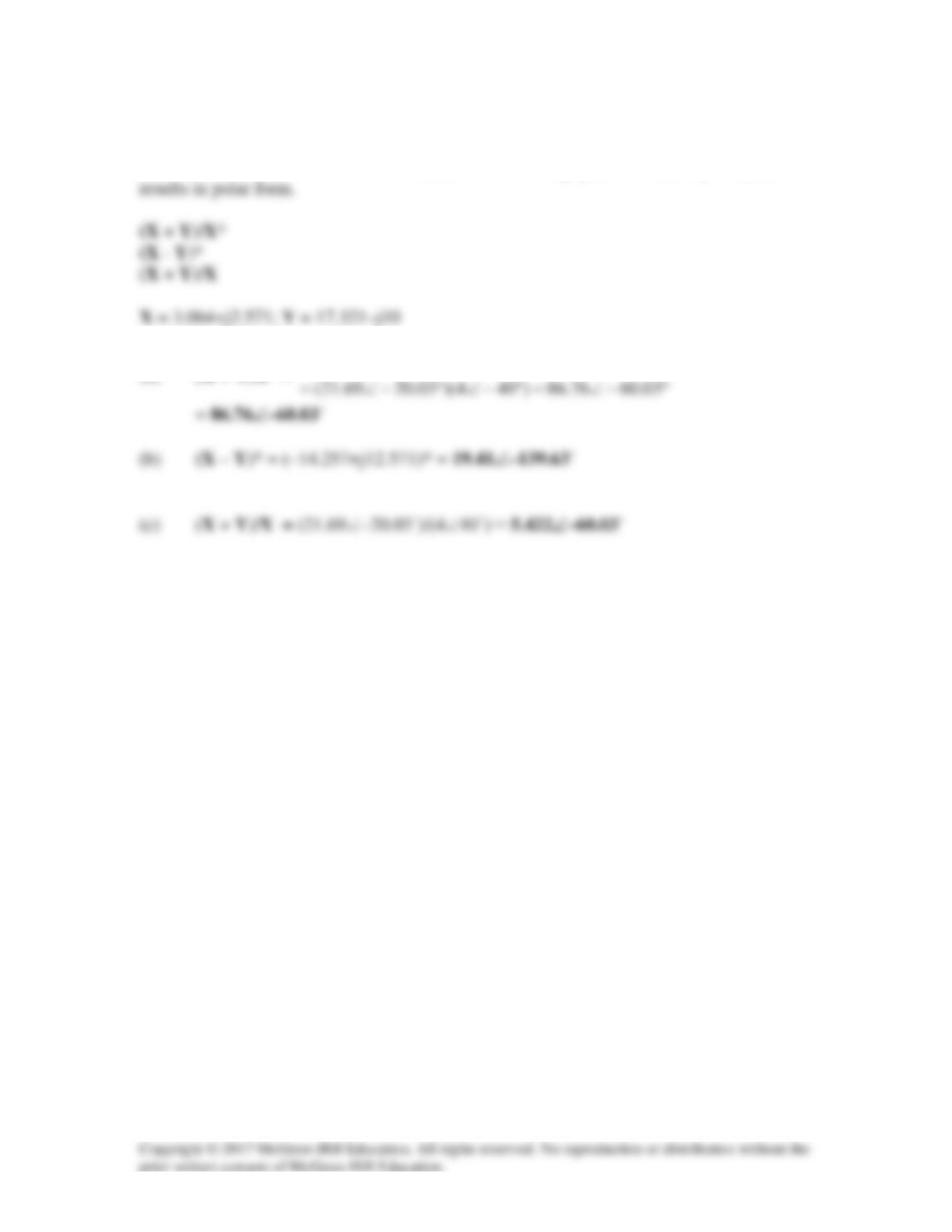
Let X = 4∠40° and Y = 20∠–30°. Evaluate the following quantities and express your
(a) (X + Y)X* =
°−∠−
)404)(429.738.20( j
Solution 9.13
Solution 9.14
91.77318.14
14j3 +−=°∠=
°−∠
−
(c)
Solution 9.15
(a)
j1–5–
3j26j10
+
−+
= -10 – j6 + j10 – 6 + 10 – j15
(c)
j1j1
j1j
0jj1
+
−
−−
Solution 9.16
(a) –20 cos(4t + 135°) = 20 cos(4t + 135° − 180°)
(b) 8 sin(20t + 30°) = 8 cos(20t + 30° – 90°)
(c) 20 cos(2t) + 15 sin(2t) = 20 cos(2t) + 15 cos(2t – 90°)
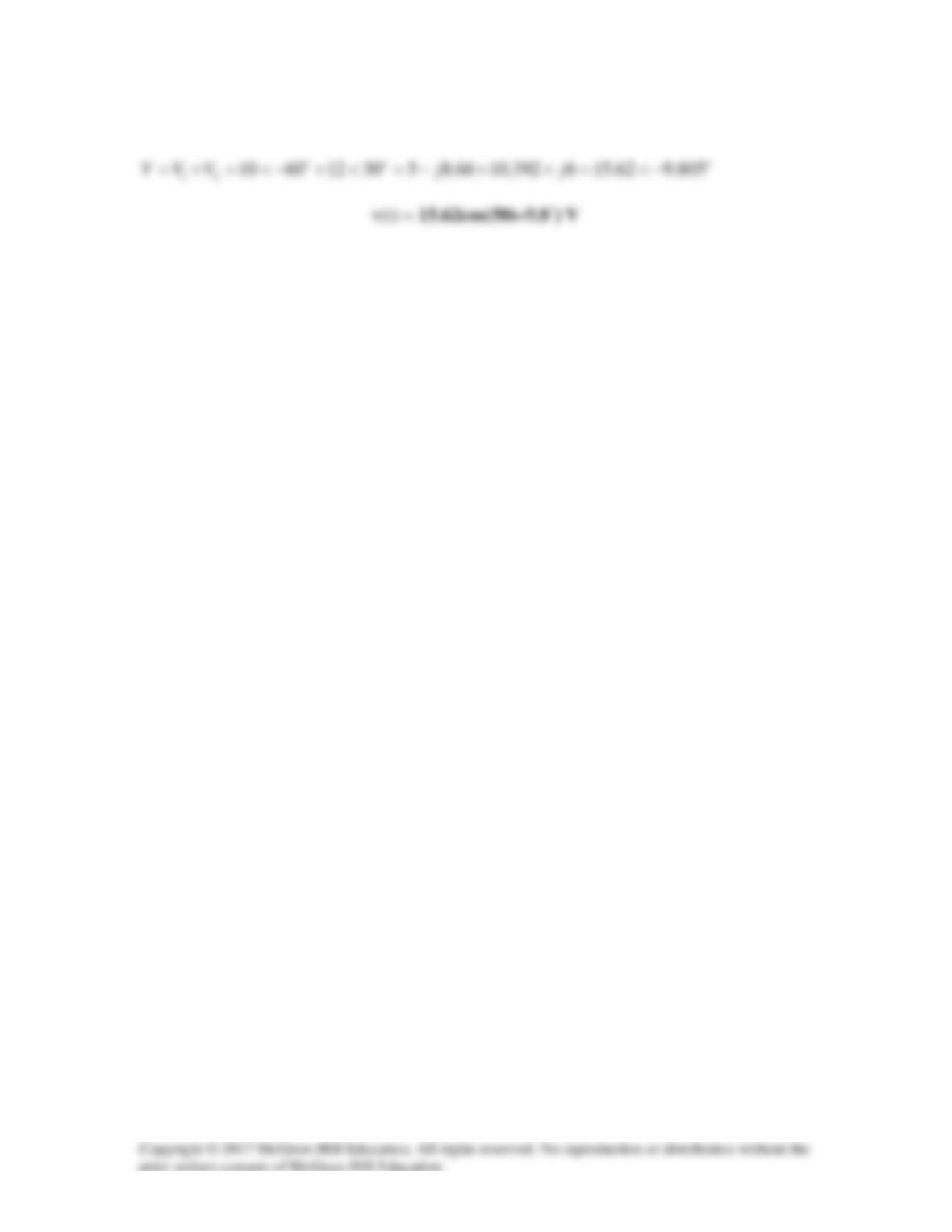
Solution 9.17
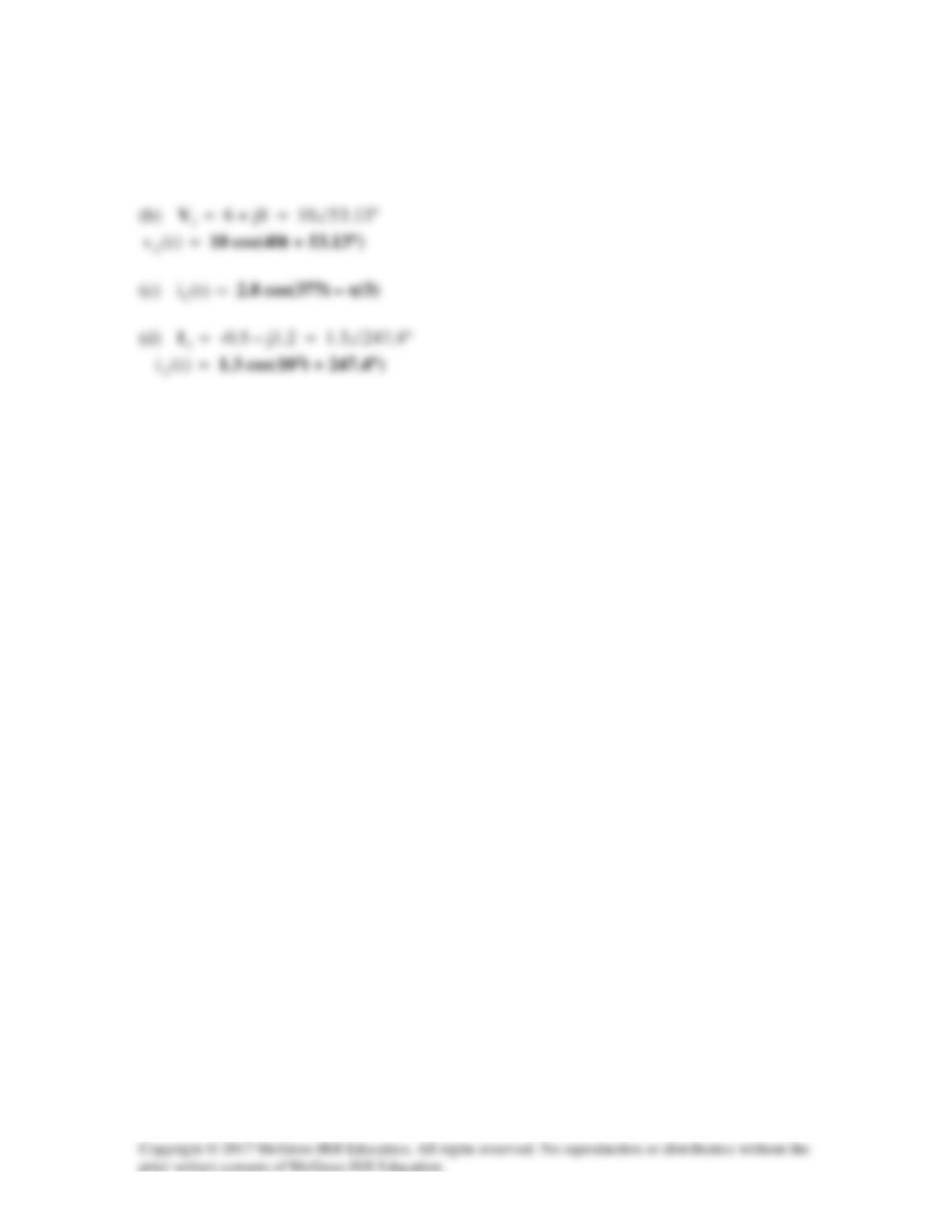
Solution 9.18
(a)
)t(v1
= 60 cos(t + 15°)
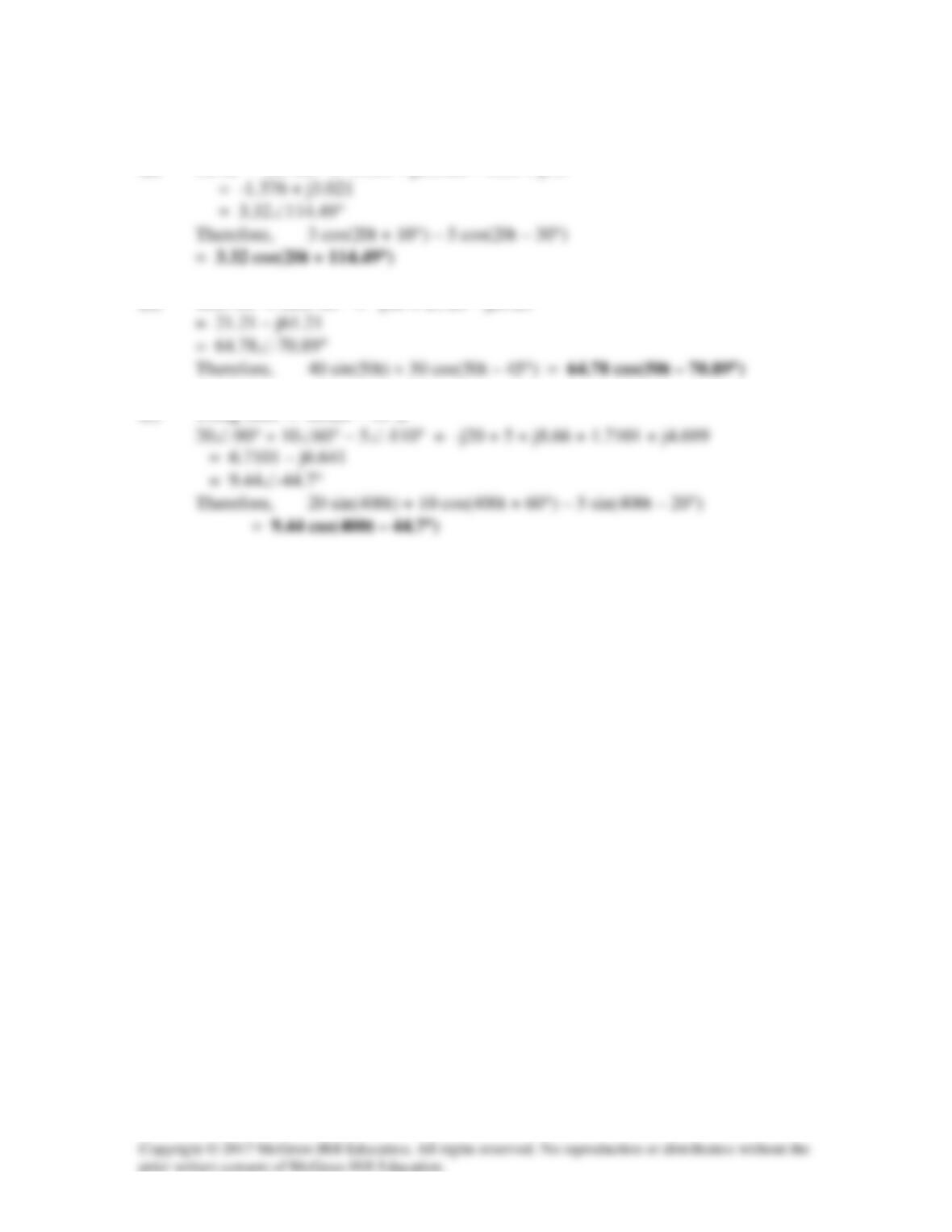
Solution 9.19
(a) 3∠10° − 5∠-30° = 2.954 + j0.5209 – 4.33 + j2.5
(b) 40∠-90° + 30∠-45° = -j40 + 21.21 – j21.21
(c) Using sinα = cos(α − 90°),
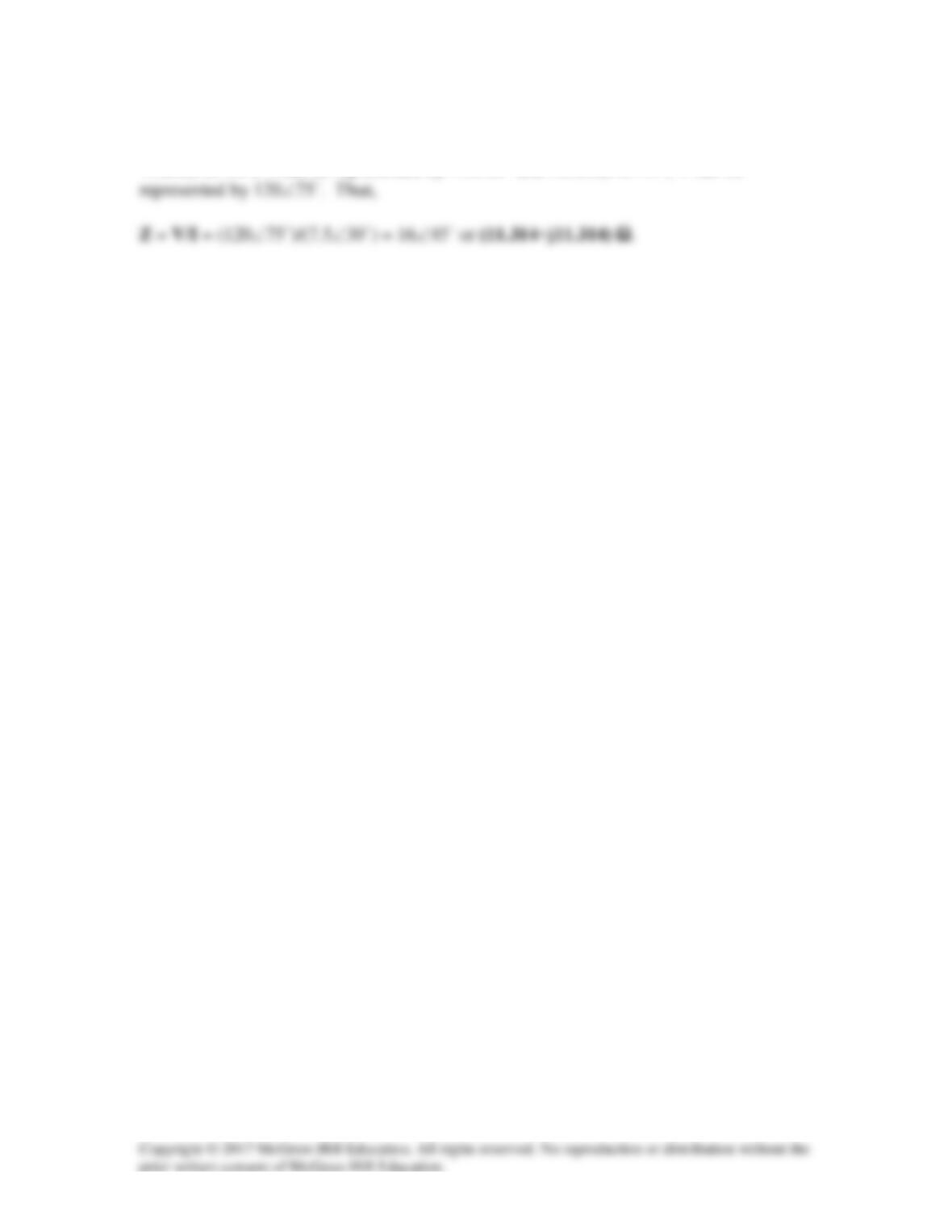
Solution 9.20
7.5cos(10t+30˚) A can be represented by 7.5∠30˚ and 120cos(10t+75˚) V can be