8-41
P8-6 (continued)
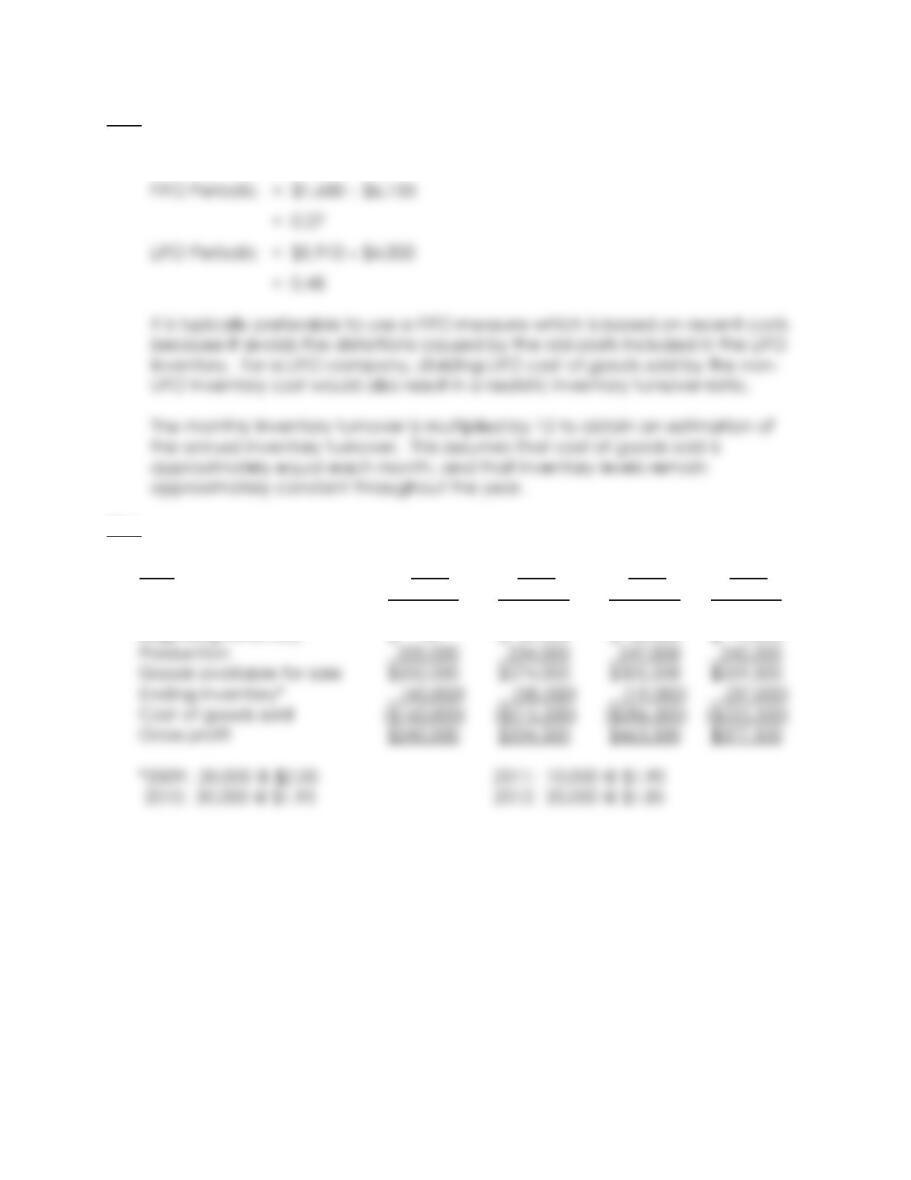
4. Inventory turnover = Cost of goods sold ÷ Ending inventory
P8-7
1.
a. FIFO: 2009 2010 2011 2012
Sales
Cost of Goods Sold:
Beginning inventory
$400,000
$ -0-
$550,000
$ 40,000
$750,000
$ 58,500
$600,000
$ 19,000
8-42
P8-7
1. (continued)
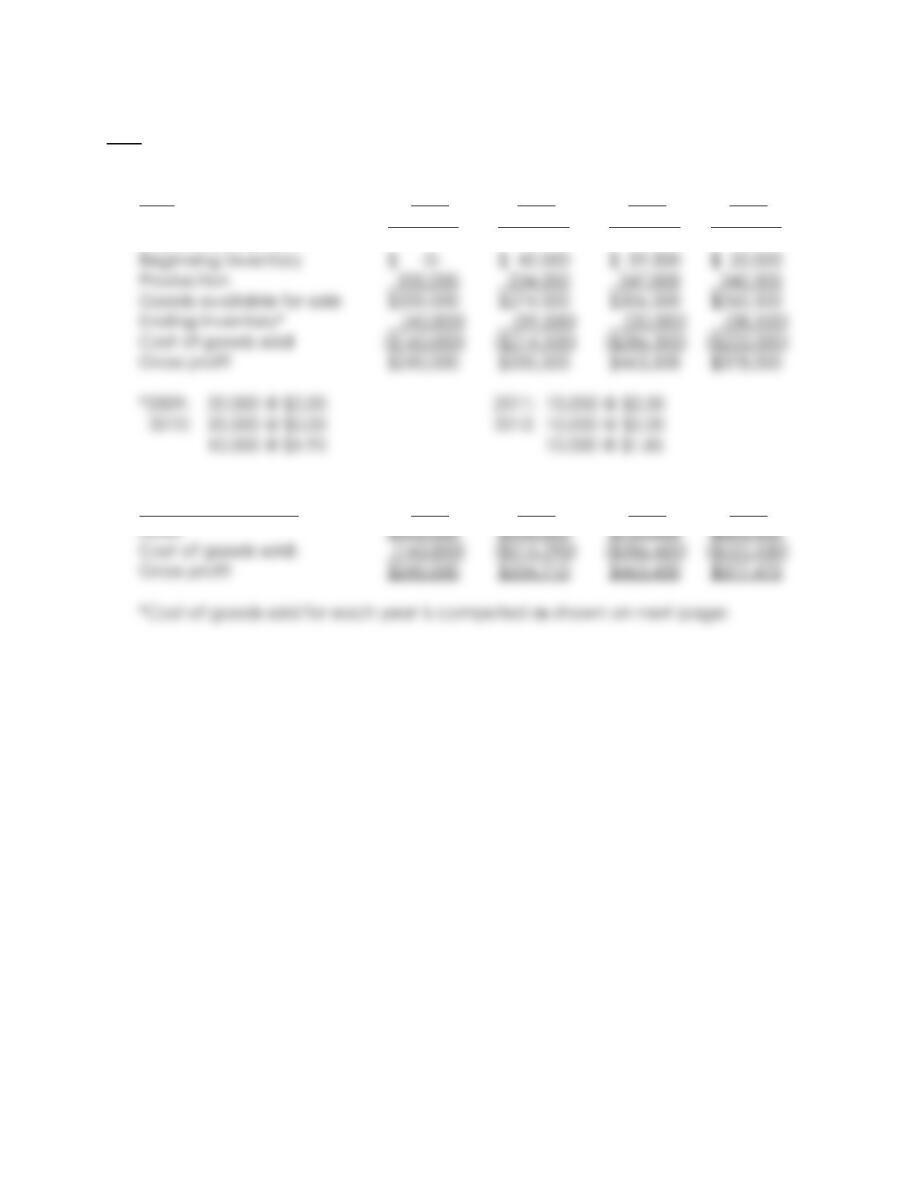
b. LIFO: 2009 2010 2011 2012
Sales
Cost of Goods Sold:
$400,000
$550,000
$750,000
$600,000
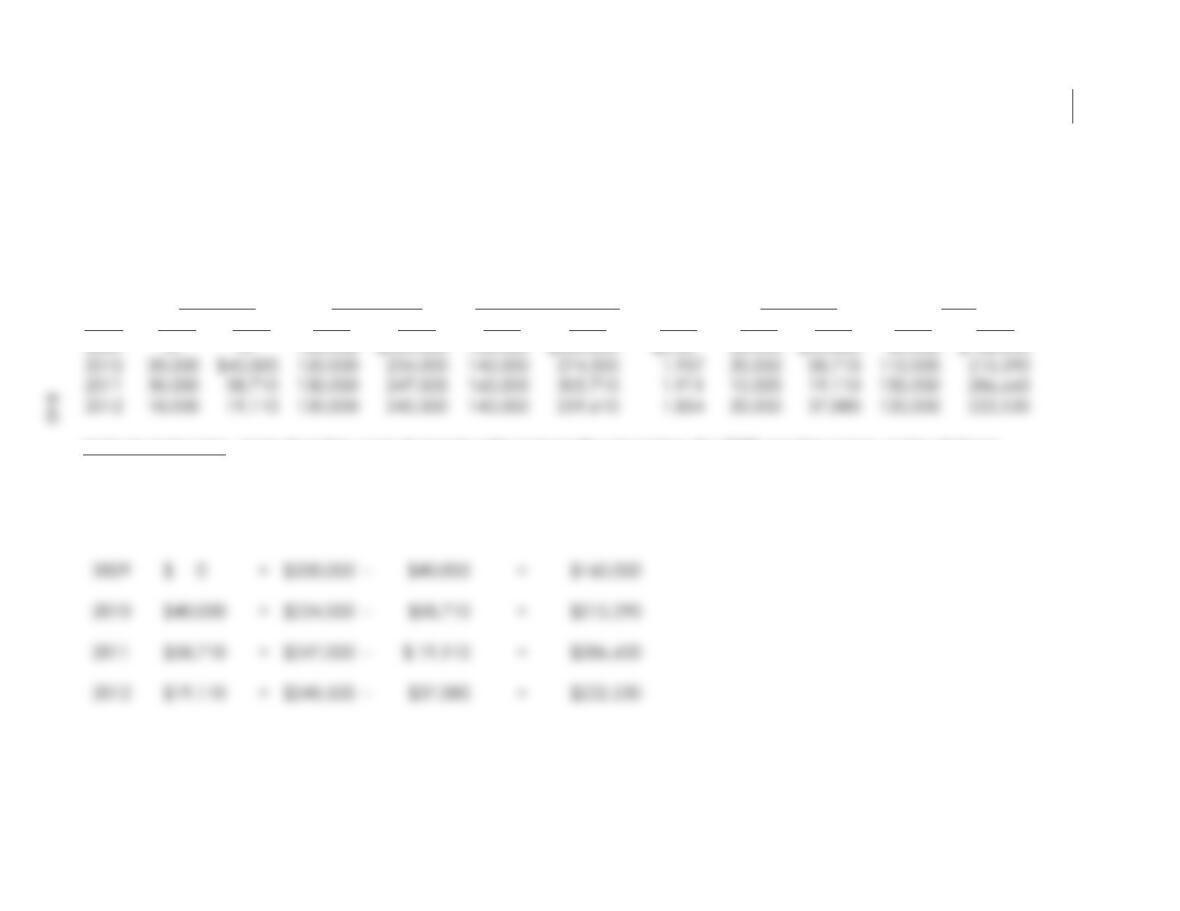
c. Weighted Average: 2009 2010 2011 2012
Beginning
Inventory
Production
Cost of Goods
Available for Sale
Average
Unit
Ending
Inventory
Cost of Goods
Sold
Year Units Cost Units Cost Units Cost Cost Units Cost Units Cost*
2009
-0-
-0-
100,000
$200,000
100,000
$200,000
$2.00
20,000
$40,000
80,000
$160,000
Note to Instructor: Note that the cost of goods sold and ending inventory for 2009 are the same under all three
methods because the beginning inventory is the same and there is only one cost for 2009.
*Beginning Inventory + Production – Ending Inventory = Cost of Goods Sold
P8-7 (continued)
1.c. (continued)
7-52
P8-7 (continued)
P8-8 (AICPA adapted solution)
1. GROVER COMPANY
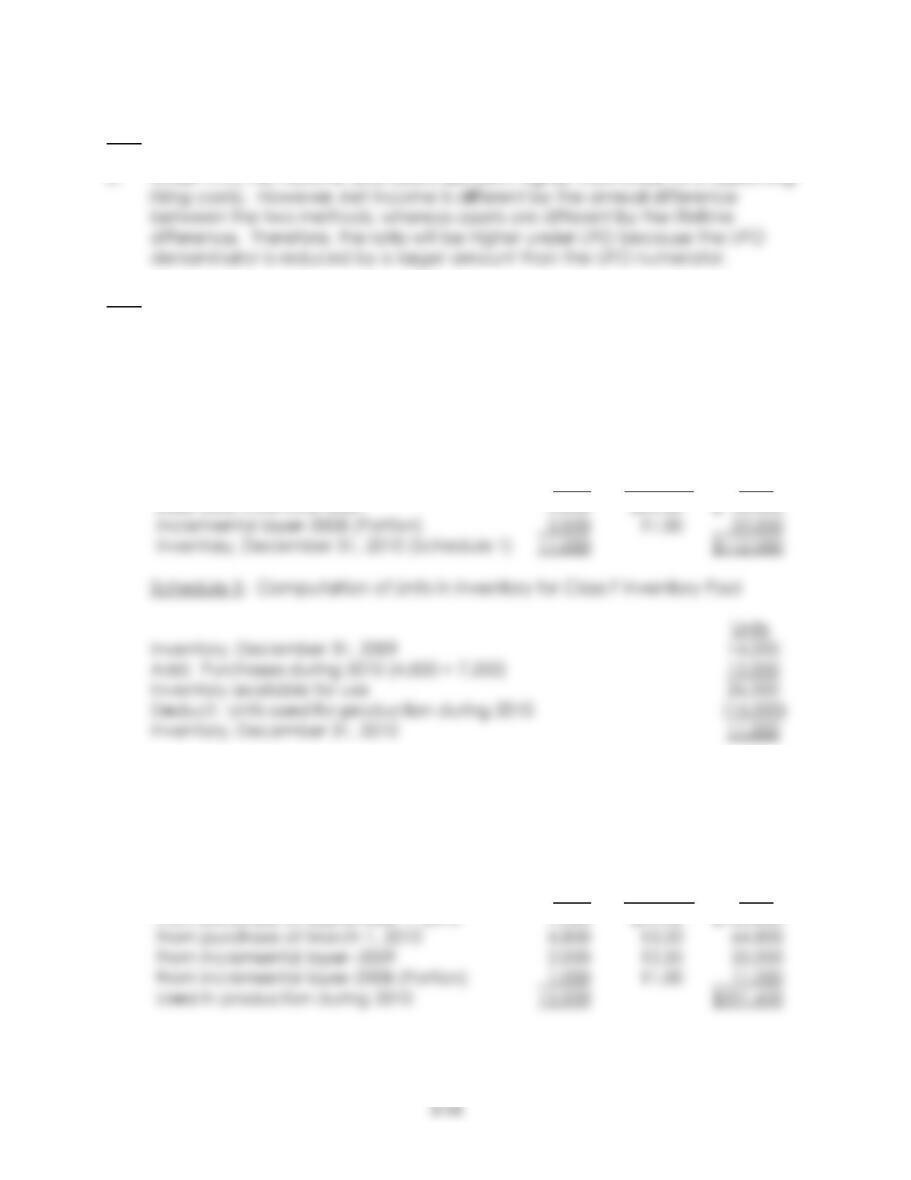
Computation of Inventory for Class F
Inventory Pool Under LIFO Method
December 31, 2010
Units
Weighted
average
unit cost
Total
cost
2. GROVER COMPANY
Computation of Cost of Class F Raw Materials
Used in Production Under LIFO Method
For Year Ended December 31, 2010
Units
Unit cost
Total
cost
From purchase of September 1, 2010
7,200
$14.00
$100,800
P8-8 (continued)
3. GROVER COMPANY
Computation of Inventory for Class F
Inventory Pool Under LIFO Method
December 31, 2011
Units
Weighted
average
unit cost
Total
cost
Schedule 2: Average Unit Cost for Incremental Layer–2008
Total
Units cost
Purchase of January 11, 2011 7,500 $108,750
Schedule 3: Computation of Units in Inventory for Class F Inventory Pool
Units
8-
46
P7-7 (continued)
1.c. (continued)
Date
Ending
Inventory
at
Current
Costs
x
Base Year
Cost Index
Current
Cost Index
=
Inventory
at
Base-Year
Cost
Increase
(Decrease)
at
Base-Year
Cost
x
Relevant
Cost Index
Base-Year
Cost Index
=
Increase
(Decrease)
at
Relevant
Current
Costs
Ending
Inventory
at
LIFO
Layers in LIFO
Ending Inventory
01/01/09 $50,000 — x
— =
— $50,000 $50,000
50,000 ($50,000@100)
12/31/09 $60,000 x 108
100 = 55,556* $5,556 x
100
108 =
$ 6,000 56,000 6,000 ($ 5,556@108)
*Rounded down or up
P8-9
1.
8-46
7-47
P8-9 (continued)
2. Note to Instructor: Other disclosure formats are acceptable:
The company would use current cost internally because it uses dollar-value
LIFO and an internally generated cost index.
88-8-48
Date
Ending
Inventory
at
Current
Costs
x
Base Year
Cost Index
Current
Cost Index
=
Inventory
at
Base-Year
Cost
Increase
(Decrease)
at
Base-Year
Cost
x
Relevant
Cost Index
Base-Year
Cost Index
=
Increase
(Decrease)
at
Relevant
Current
Costs
Ending
Inventory
at
LIFO
Layers in LIFO
Ending Inventory
01/01/09 $ 8,000 — x
— =
— $ 8,000 $8,000
8,000 ($8,000@100)
12/31/09 $10,800 x 120
100 = 9,000 $1,000 x
100
120 =
$ 1,200 9,200 1,200 ($1,000@120)
*Rounded down
P8-10
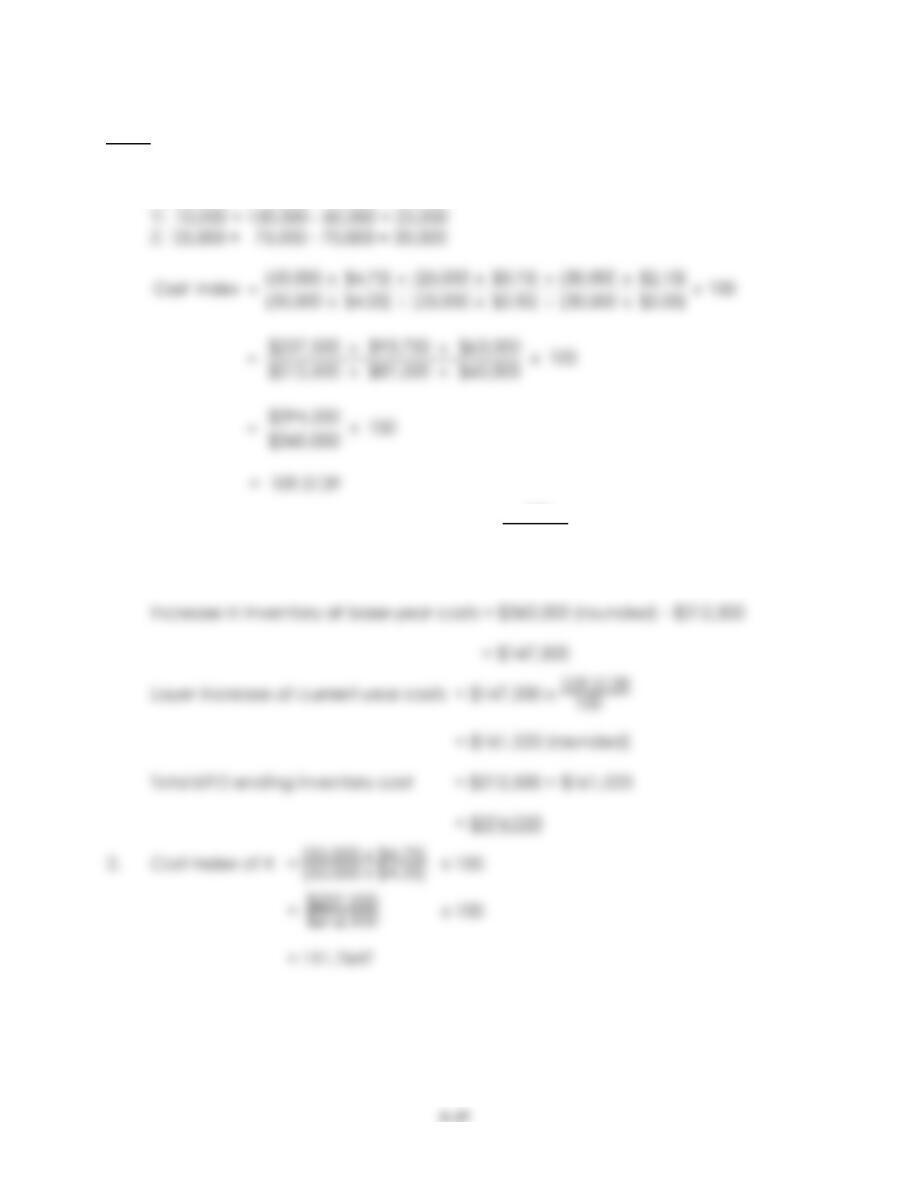
P8-11
1. Ending inventory (in units):
X: 30,000 + 110,000 – 90,000 = 50,000
100
Ending inventory at base-year costs = x $394,250
109.5139
= $360,000 (rounded)
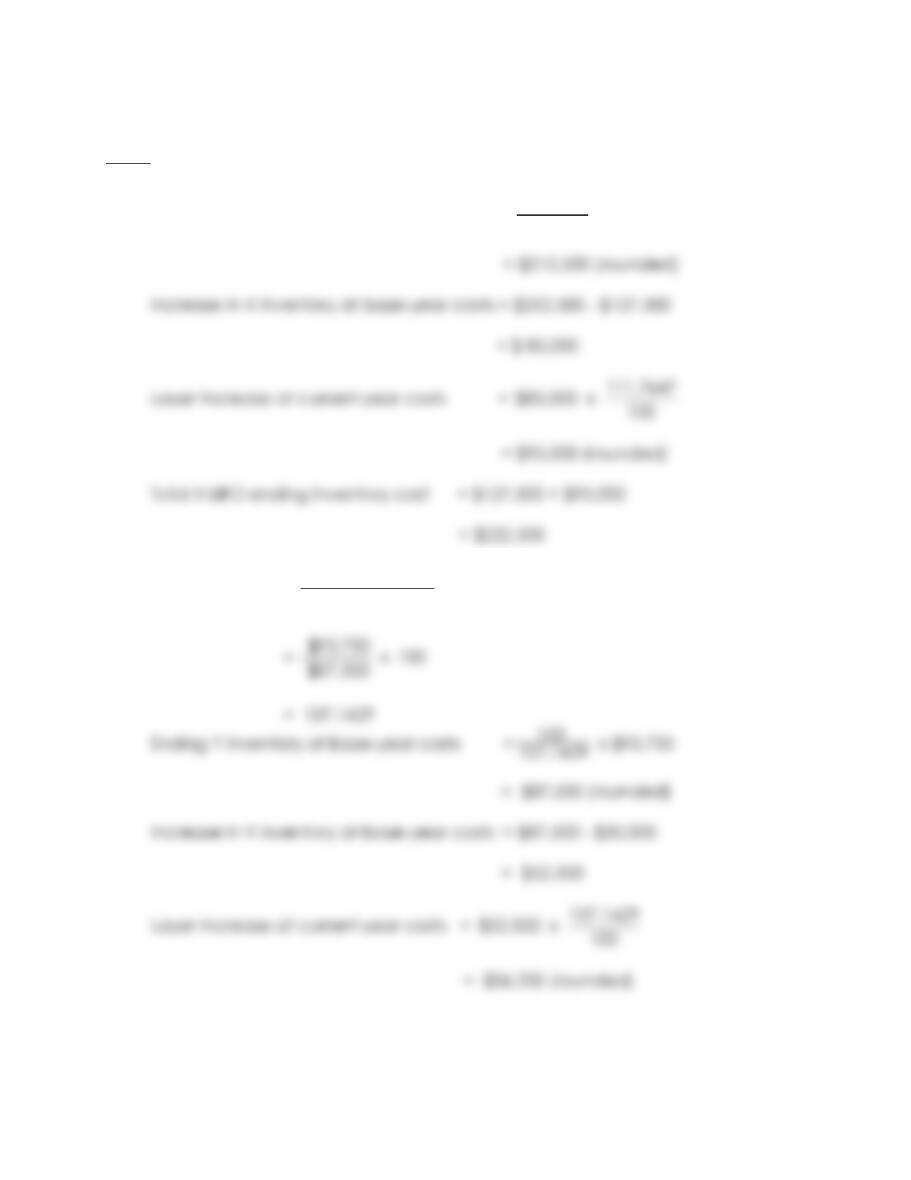
8-50
P8-11 (continued)
2. (continued)
100
Ending X inventory at base-year costs = x $237,500
111.7647
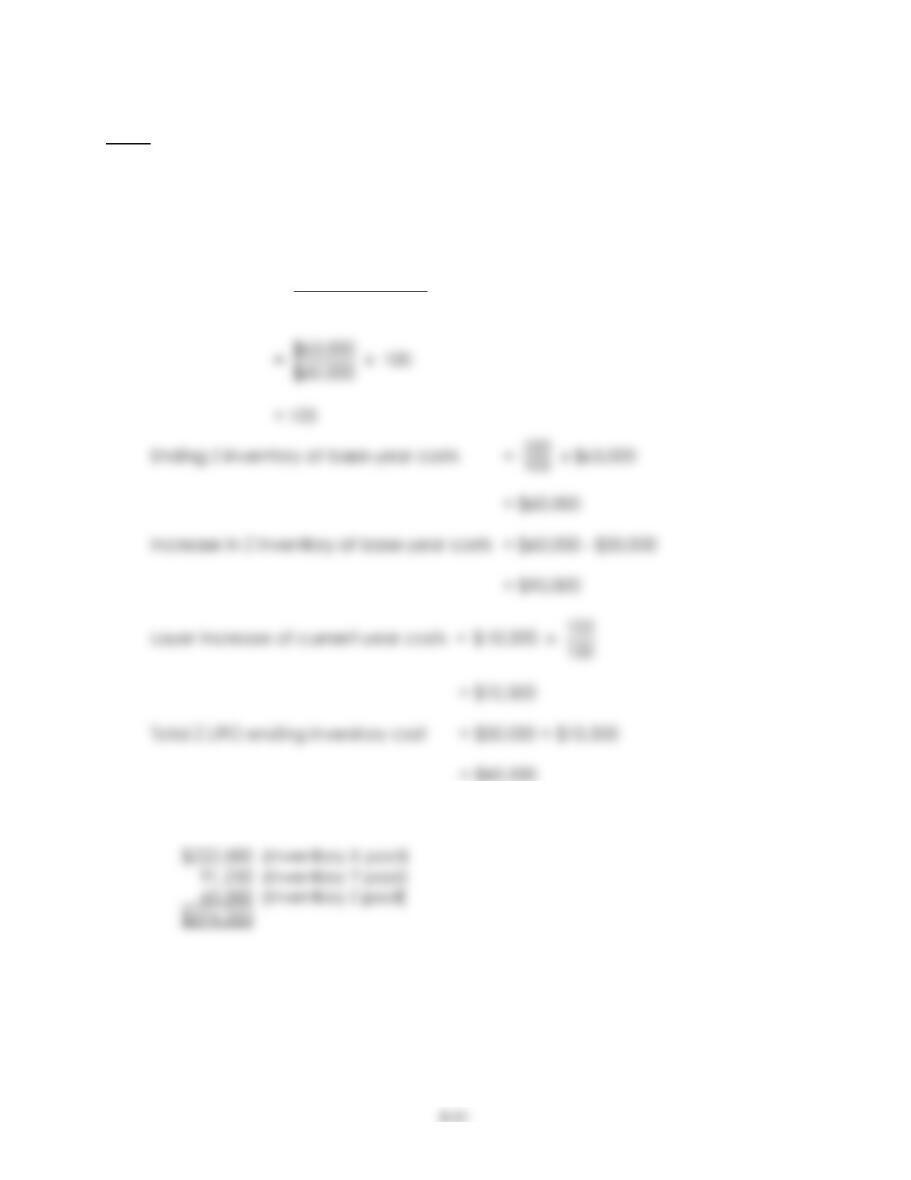
Cost index of Y = 100x
$3.50)x(25,000
$3.75)x(25,000
P8-11 (continued)
2. (continued)
Total Y LIFO ending inventory cost = $35,000 + $56,250
= $91,250
Cost index of Z = 100x
$2.00)x(30,000
$2.10)x(30,000
Total LIFO ending inventory cost:
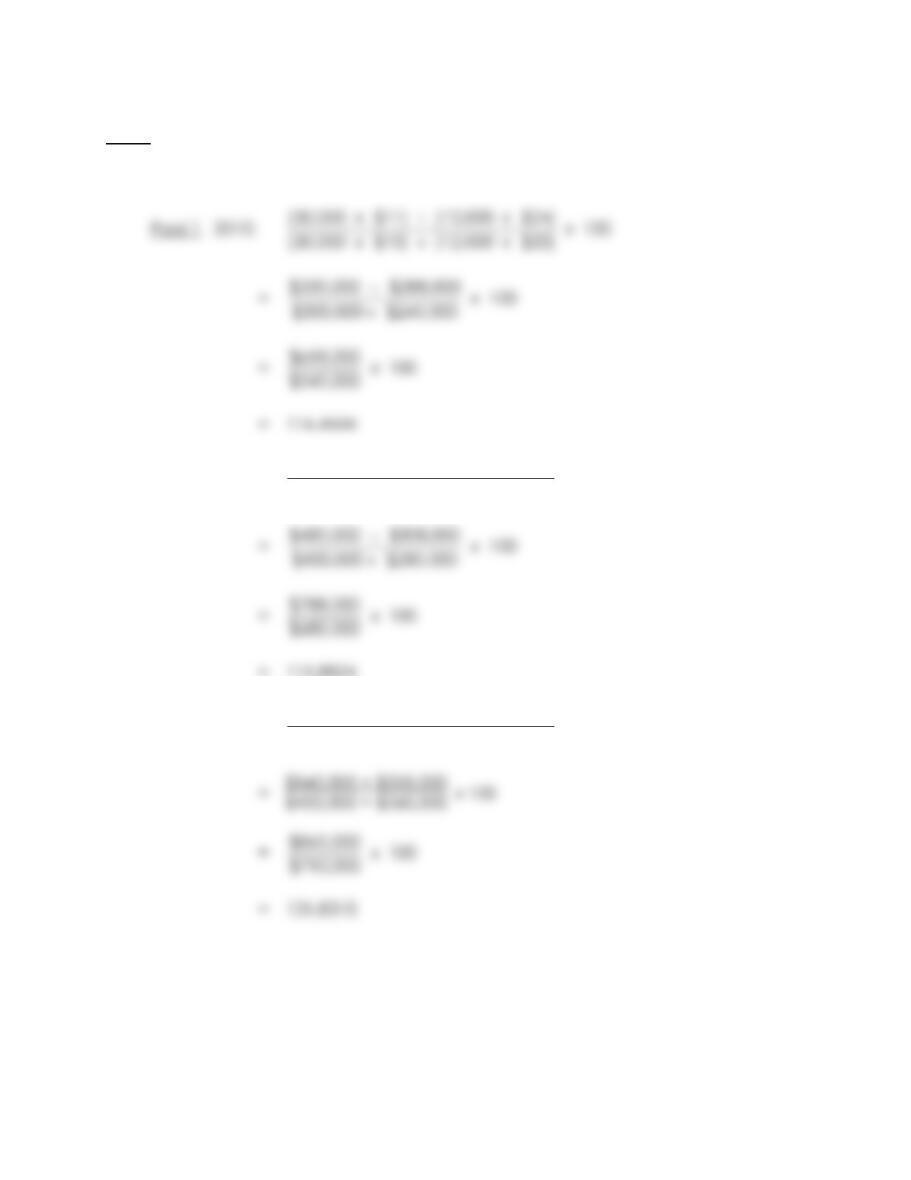
8-52
P8-12
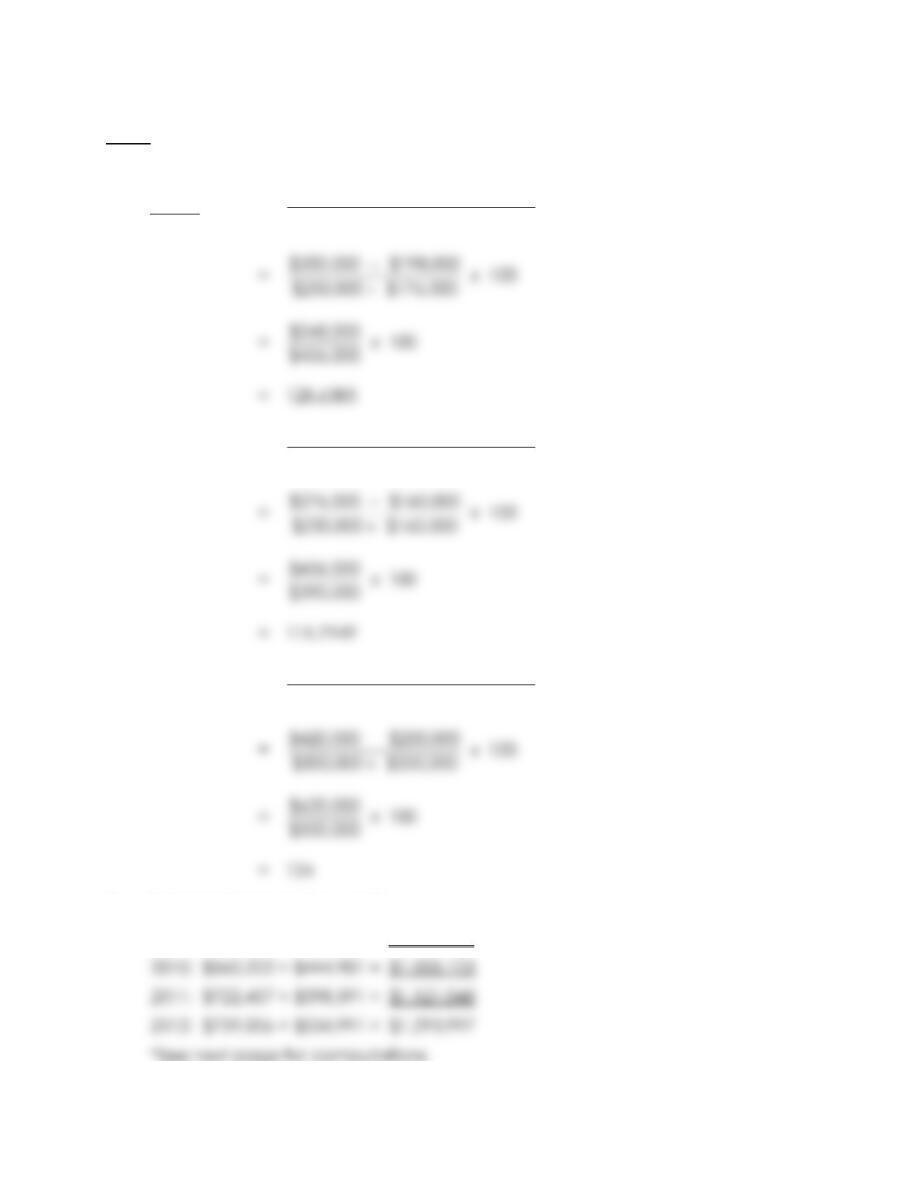
1. Cost Indexes (2009 = 100)
2011: 100x
$20)x(14,000$10)x(40,000
$22)x(14,000$12)x(40,000
+
+
= 115.8824
2012: 100x
$20)x(13,000$10)x(45,000
$25)x(13,000$12)x(45,000
+
+
8-53
P8-12 (continued)
1. (continued)
Pool 2 2010: 100x
$8)x(22,000$5)x(50,000
$9)x(22,000$7)x(50,000
+
+
2011: 100x
$8)x(20,000$5)x(46,000
$8)x(20,000$6)x(46,000
+
+
2012: 100x
$8)x(25,000$5)x(60,000
$8)x(25,000$7)x(60,000
+
+
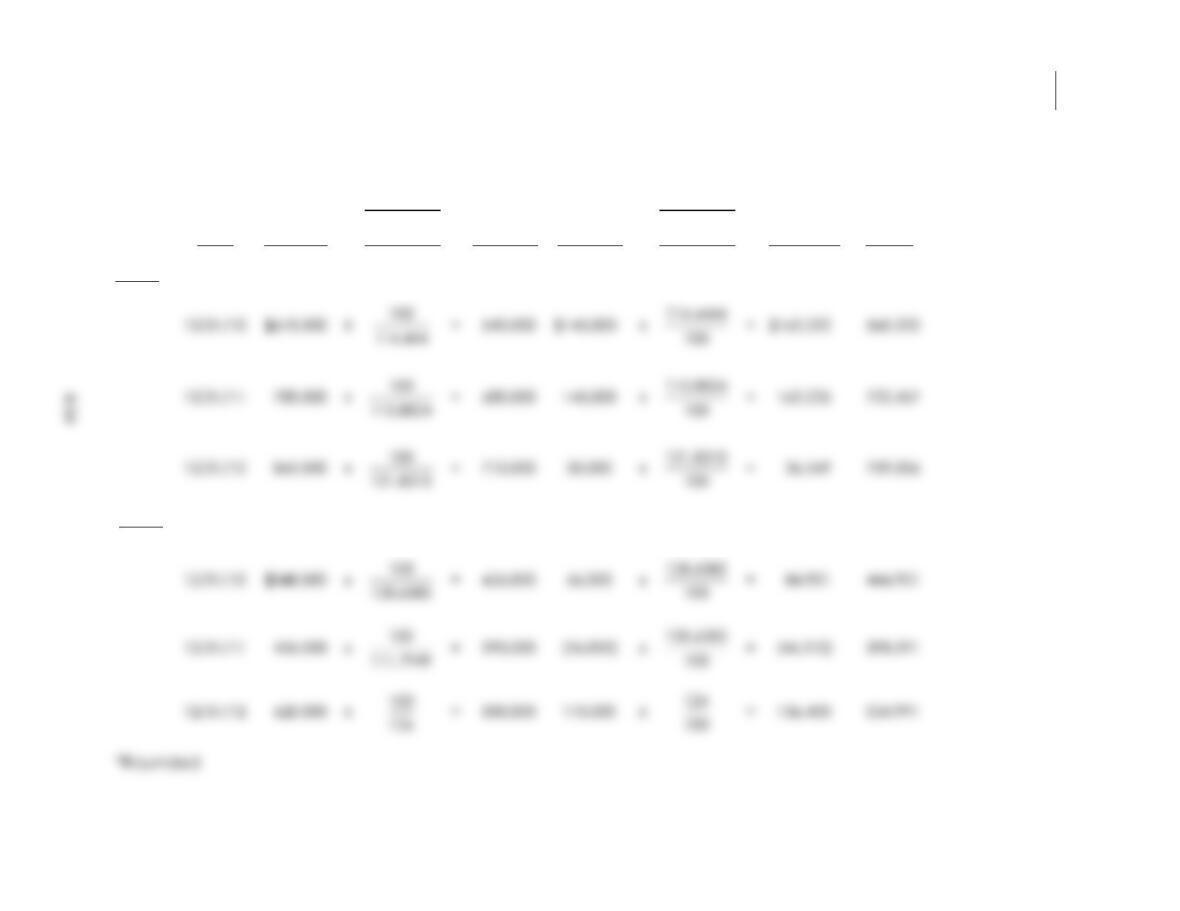
2. Total ending inventory cost*:
2009: $400,000 + $360,000 = $ 760,000
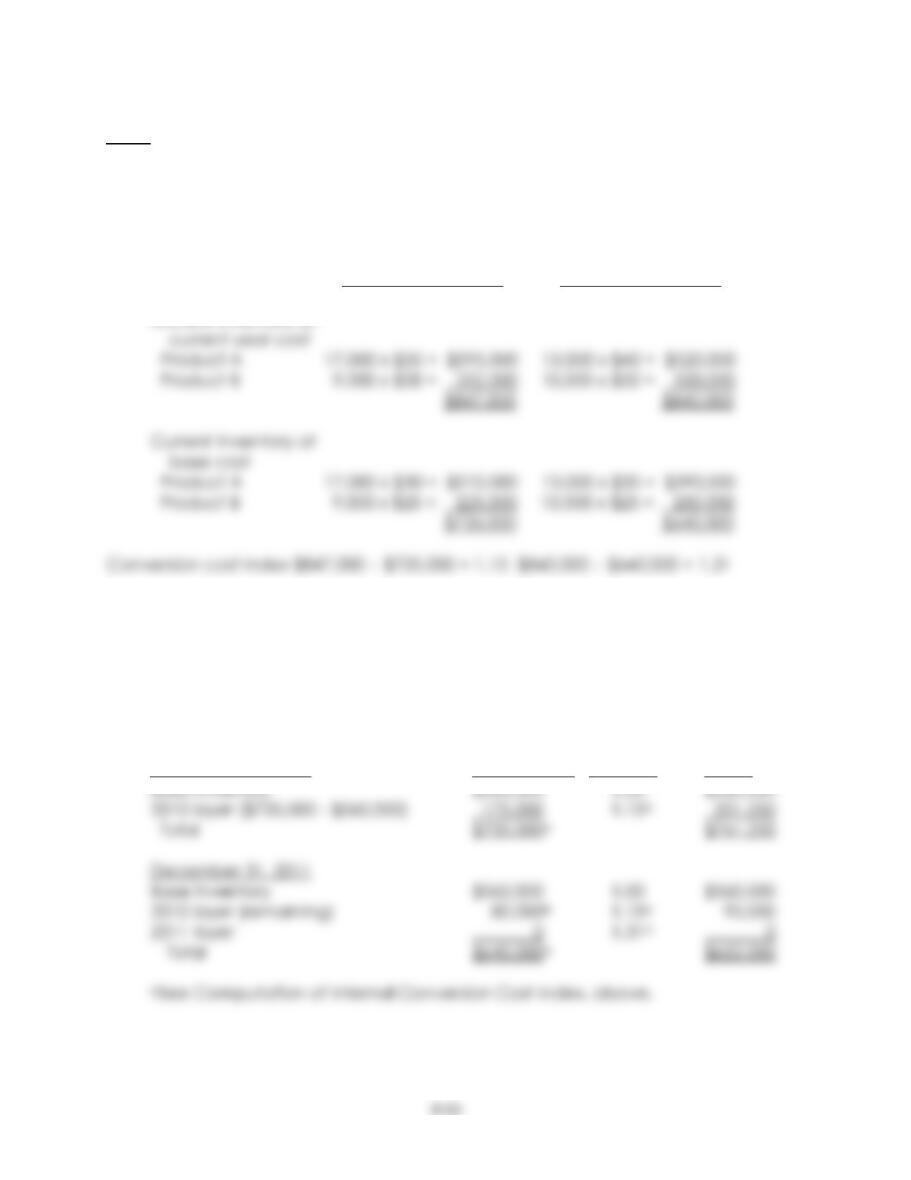
Date
Ending
Inventory
at
Current
Costs
x
Base Year
Cost Index
Current
Cost Index
=
Inventory
at
Base-Year
Cost
Increase
(Decrease)
at
Base-Year
Cost
x
Relevant
Cost Index
Base-Year
Cost Index
=
Increase
(Decrease)
at
Relevant
Current
Costs
Ending
Inventory
at
LIFO
Pool 1: 01/01/10 $400,000 $400,000
Pool 2: 01/01/10 $360,000 $360,000
P8-12 (continued)
2. (continued)
7-55
P8-13 (AICPA adapted solution)
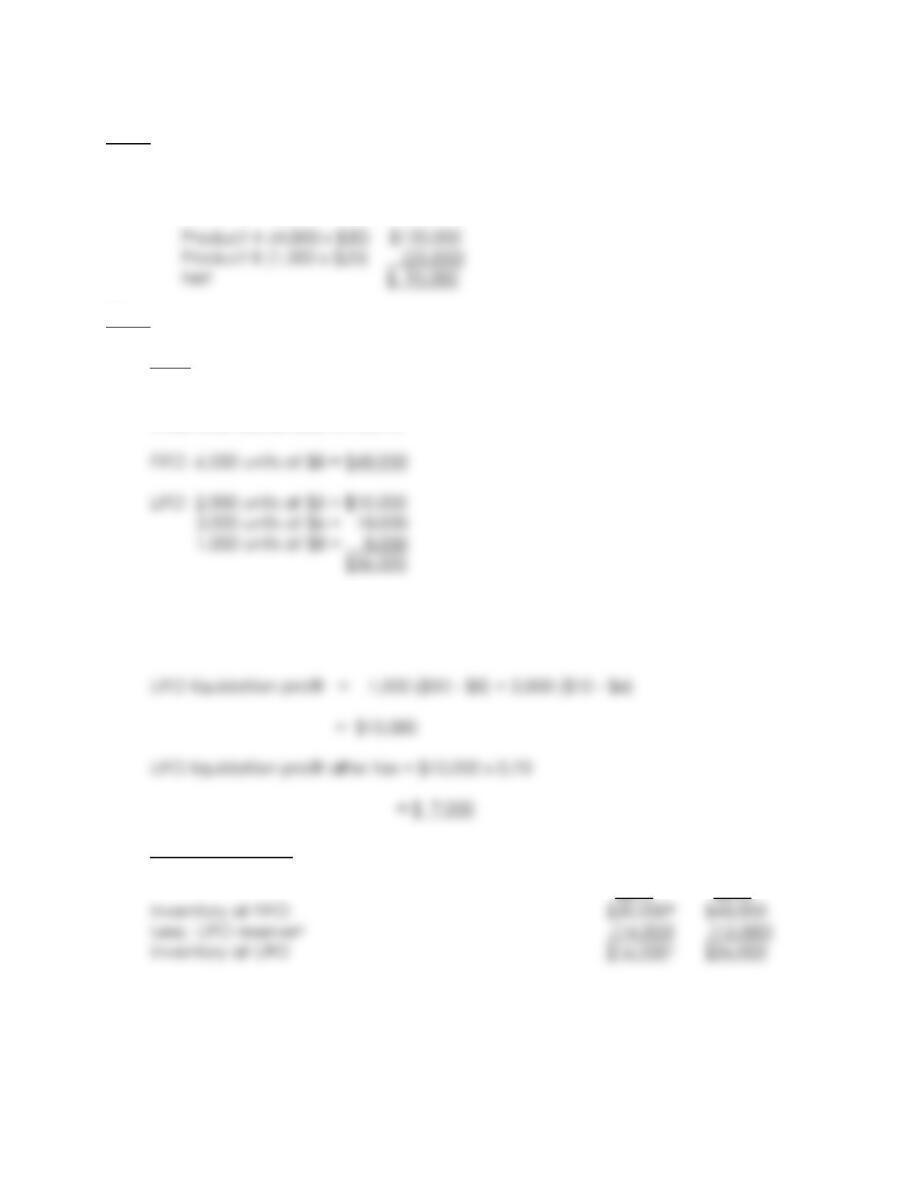
1. LUCAS DISTRIBUTORS, INC.
Computation of Internal Conversion Cost Index
For Inventory Pool No. 1
Double Extension Method
December 31, 2010 December 31, 2011
Current inventory at
2. LUCAS DISTRIBUTORS, INC.
Computation of Inventory Amounts
Under Dollar Value LIFO Method
For Inventory Pool No. 1
At December 31, 2010 and 2011
Current Conversion Inventory
inventory cost at LIFO
December 31, 2010 at base cost index cost
8-56
P8-13 (continued)
2. (continued)
bAfter liquidation of $95,000 at base cost:
P8-14
Note. Although it is not required, it is helpful to compare the inventory
amounts under FIFO and LIFO.
Inventory, December 31, 2010:
1. LIFO liquidation in units = 22,000 – 19,000
= 3,000
2. Note to Instructor: Other disclosure formats are acceptable:
2011 2010