CHAPTER 8
Accounting for Receivables
ASSIGNMENT CLASSIFICATION TABLE
Learning Objectives
Questions
Brief
Exercises
Do It!
Exercises
A
Problems
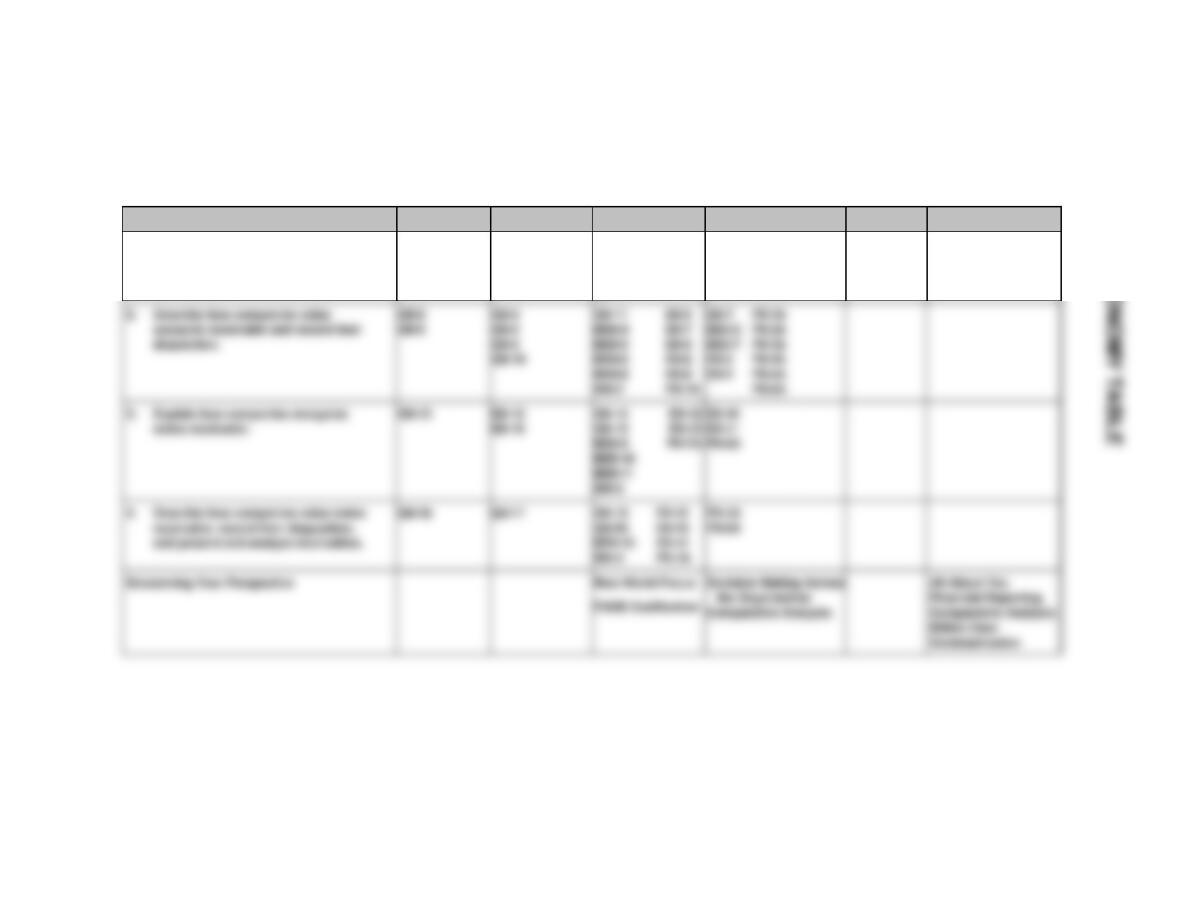
1. Explain how companies
recognize accounts
receivable.
1, 2, 3
1, 2
1
1, 2
1A, 6A, 7A
disposition.
9, 10, 11
8
9
4A, 5A, 6A,
3. Explain how companies
recognize notes
receivable.
12, 13, 14,
9, 10, 11
3
10, 11, 12, 13
6A, 7A
and present and analyze
receivables.
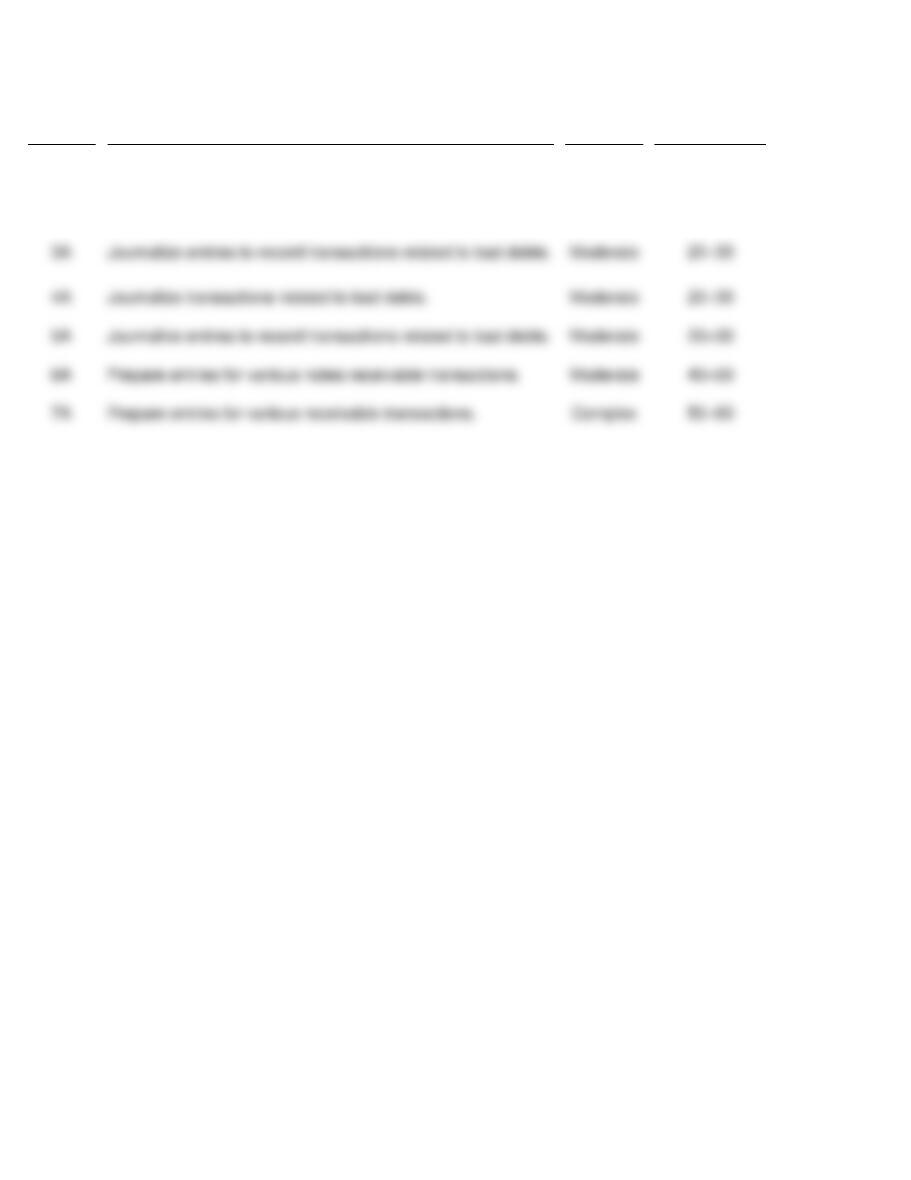
ASSIGNMENT CHARACTERISTICS TABLE
Problem
Number
Description
Difficulty
Level
Time
Allotted (min.)
1A
Prepare journal entries related to bad debt expense.
Simple
15–20
2A
Compute bad debt amounts.
Moderate
20–25
Journalize transactions related to bad debts.
5A
Journalize entries to record transactions related to bad debts.
Moderate
20–30
6A
Moderate
40–50
Prepare entries for various receivable transactions.
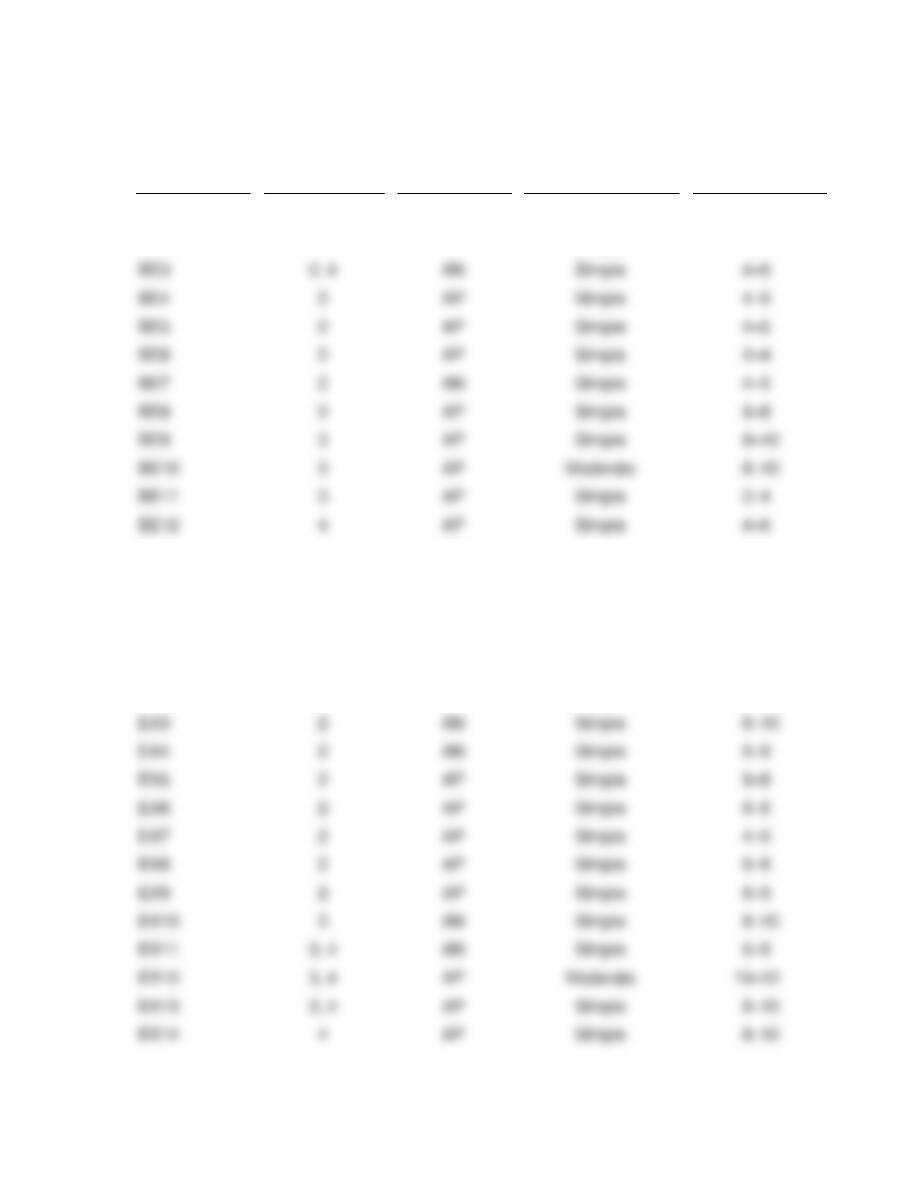
WEYGANDT FINANCIAL AND MANAGERIAL ACCOUNTING 2E
CHAPTER 8
ACCOUNTING FOR RECEIVABLES
Number
LO
BT
Difficulty
Time (min.)
BE1
1
C
Simple
1–2
BE2
1
AP
Simple
5–7
BE3
AN
Simple
4–6
BE4
2
AP
Simple
4–6
BE5
2
AP
Simple
4–6
BE6
2
AP
Simple
2–4
BE7
2
AN
Simple
4–6
BE8
2
AP
Simple
6–8
BE9
3
AP
Simple
8–10
BE10
3
AP
8–10
BE11
3
AP
Simple
2–4
BE12
4
AP
Simple
4–6
DI1
1
AP
Simple
2–4
DI2
2
AP
Simple
4–6
DI3
3
AP
Simple
6–8
DI4
4
AN
Simple
4–6
EX1
1
AP
Simple
8–10
EX2
1
AP
Simple
8–10
EX3
2
AN
Simple
8–10
EX4
2
AN
Simple
6–8
EX5
2
AP
Simple
6–8
EX6
2
AP
Simple
6–8
EX7
2
AP
Simple
4–6
EX8
2
AP
Simple
6–8
EX9
2
AP
Simple
6–8
EX10
3
AN
Simple
8–10
EX11
AN
Simple
6–8
EX12
AP
EX13
AP
Simple
8–10
EX14
4
AP
Simple
8–10
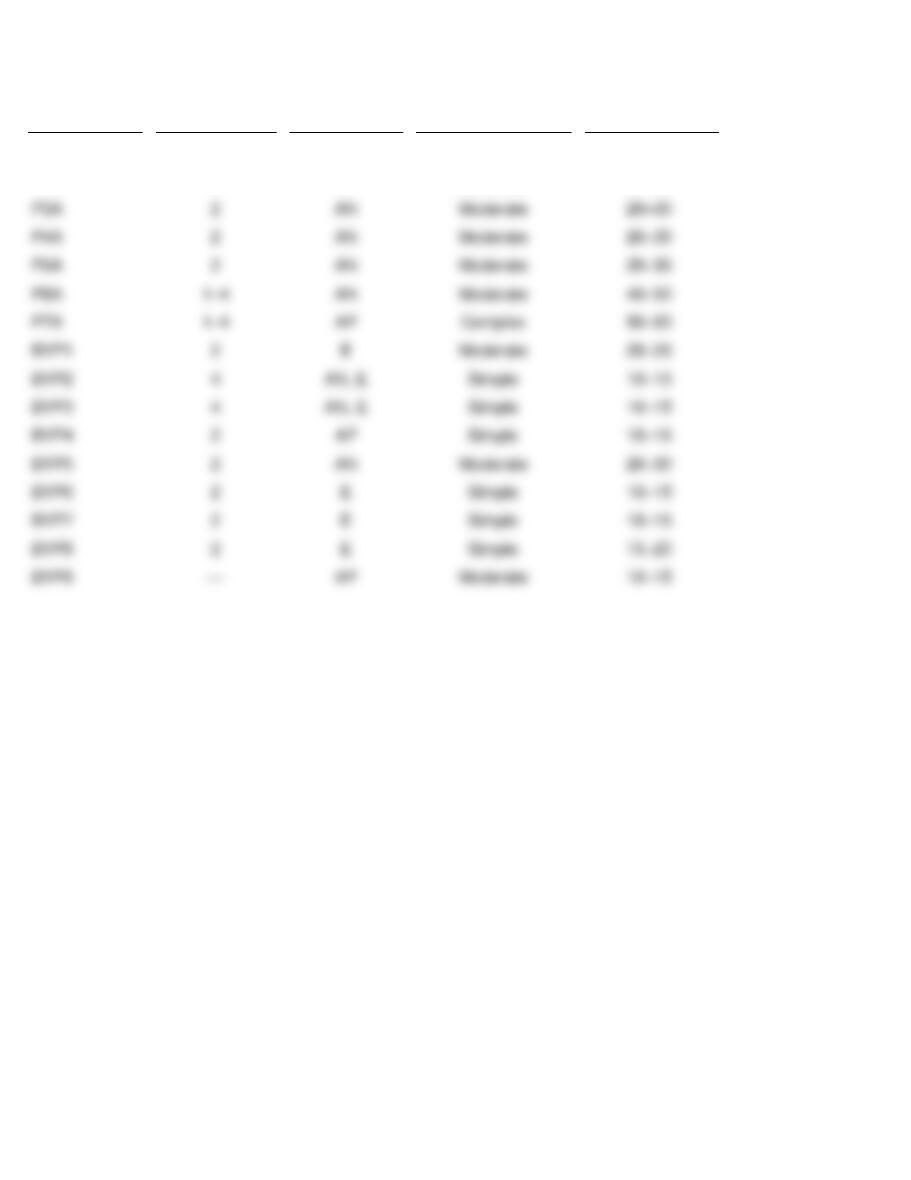
ACCOUNTING FOR RECEIVABLES (Continued)
Number
LO
BT
Difficulty
Time (min.)
P1A
1, 2, 4
AN
Simple
15–20
P2A
2
AN
Moderate
20–25
2
AP
10–15
P3A
2
AN
Moderate
20–30
P4A
AN
20–30
P5A
2
AN
Moderate
20–30
P6A
AN
Moderate
40–50
P7A
AP
50–60
2
Moderate
20–25
4
10–15
Simple
10–15
2
AN
Moderate
20–30
2
10–15
Simple
10–15
2
15–20
AP
Moderate
10–15
BLOOM’ S TAXONOMY TABLE
Correlation Chart between Bloom’s Taxonomy, Learning Objectives and End–of-Chapter Exercises and Problems
Learning Objective
Knowledge
Comprehension
Application
Analysis
Synthesis
Evaluation
1. Explain how companies recognize
accounts receivable.
Q9-2
Q9-1 BE9-1
Q9-3
BE9-2
DI9-1
E9-1
E9-2
P9–7A
P9–7B
P9–1A
P9–3A
P9–4A
P9–6A
ANSWERS TO QUESTIONS
1. Accounts receivable are amounts owed by customers on account. They result from the sale of goods
and services. Notes receivable represent claims that are evidenced by formal instruments of credit.
4. The essential features of the allowance method of accounting for bad debts are:
(1) Uncollectible accounts receivable are estimated and matched against revenue in the same
accounting period in which the revenue occurred.
(2) Estimated uncollectibles are debited to Bad Debts Expense and credited to Allowance for Doubtful
Accounts through an adjusting entry at the end of each period.
(3) Actual uncollectibles are debited to Allowance for Doubtful Accounts and credited to Accounts
Receivable at the time the specific account is written off.
7. The adjusting entry under the percentage-of-sales basis is:
Bad Debt Expense ……………………………………………………………………. 4,100
Allowance for Doubtful Accounts ………………………………………….. 4,100
The adjusting entry under the percentage-of-receivables basis is:
Bad Debt Expense ……………………………………………………………………. 2,800
Allowance for Doubtful Accounts ($5,800 – $3,000) ………………… 2,800
Questions Chapter 8 (Continued)
(3) The issuer undertakes the collection process and absorbs any losses from uncollectible accounts.
(4) The retailer receives cash more quickly from the credit card issuer than it would from individual
12. A promissory note gives the holder a stronger legal claim than one on an accounts receivable. As a
result, it is easier to sell to another party. Promissory notes are negotiable instruments, which
means they can be transferred to another party by endorsement. The holder of a promissory note also
can earn interest.
13. The maturity date of a promissory note may be stated in one of three ways: (1) on demand, (2) on
a stated date, and (3) at the end of a stated period of time.
17. When Jana Company has dishonored a note, the ledger can set up a receivable equal to the
face amount of the note plus the interest due. It will then try to collect the balance due, or as
much as possible. If there is no hope of collection it will write-off the receivable.
SOLUTIONS TO BRIEF EXERCISES
BRIEF EXERCISE 8-1
BRIEF EXERCISE 8-2
BRIEF EXERCISE 8-3
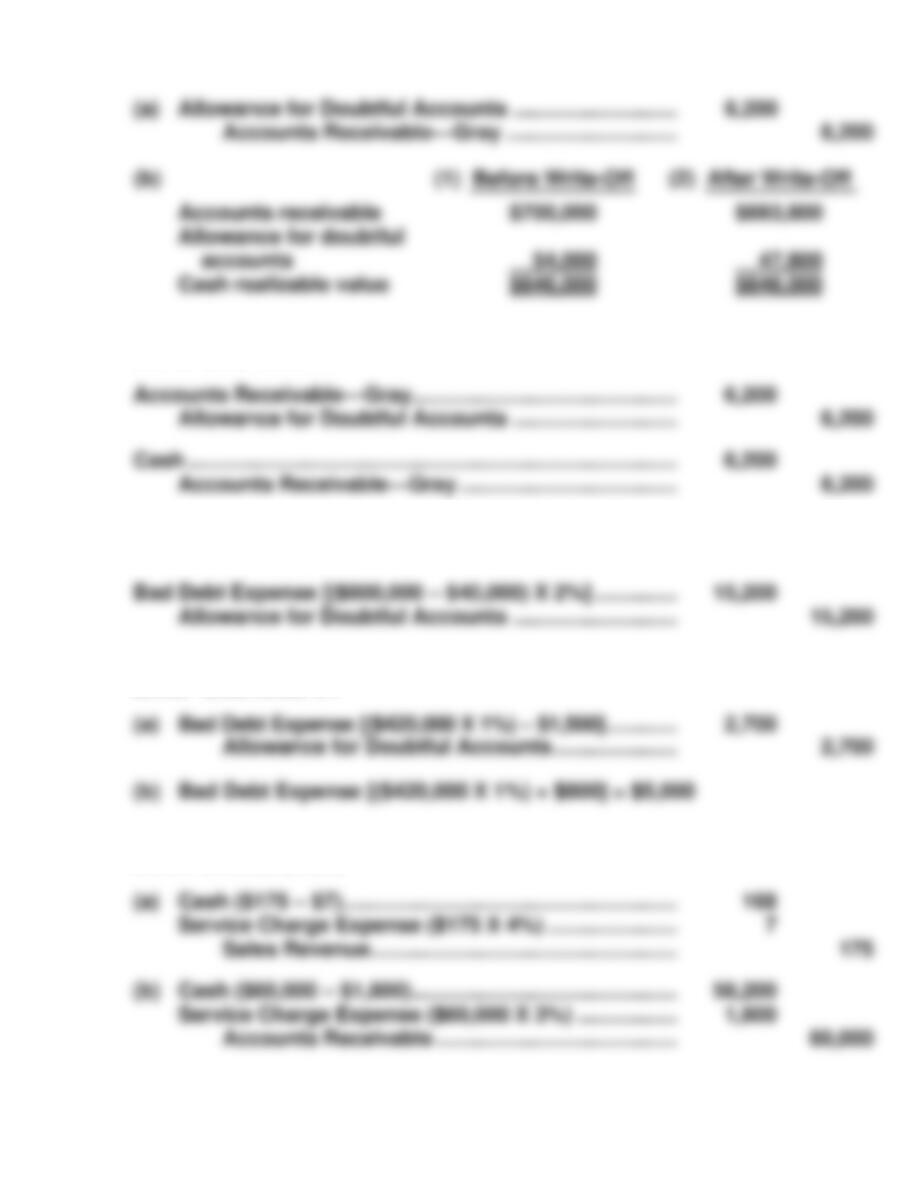
(a) Bad Debt Expense ……………………………………….. 31,000
BRIEF EXERCISE 8-4
BRIEF EXERCISE 8-5
BRIEF EXERCISE 8-6
BRIEF EXERCISE 8-7
BRIEF EXERCISE 8-8
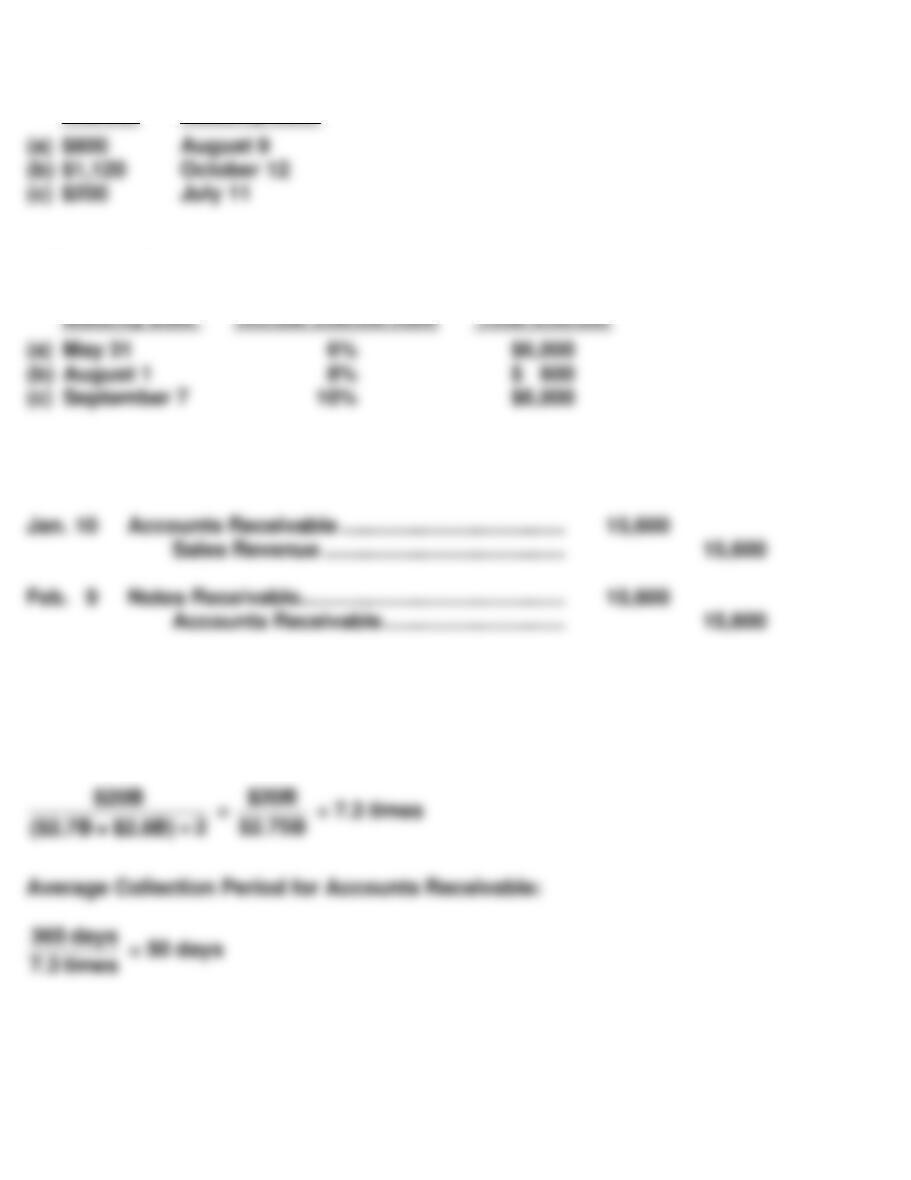
BRIEF EXERCISE 8-9
Interest
Maturity Date
BRIEF EXERCISE 8-10
Maturity Date
Annual Interest Rate
Total Interest
(c)
September 7
BRIEF EXERCISE 8-11
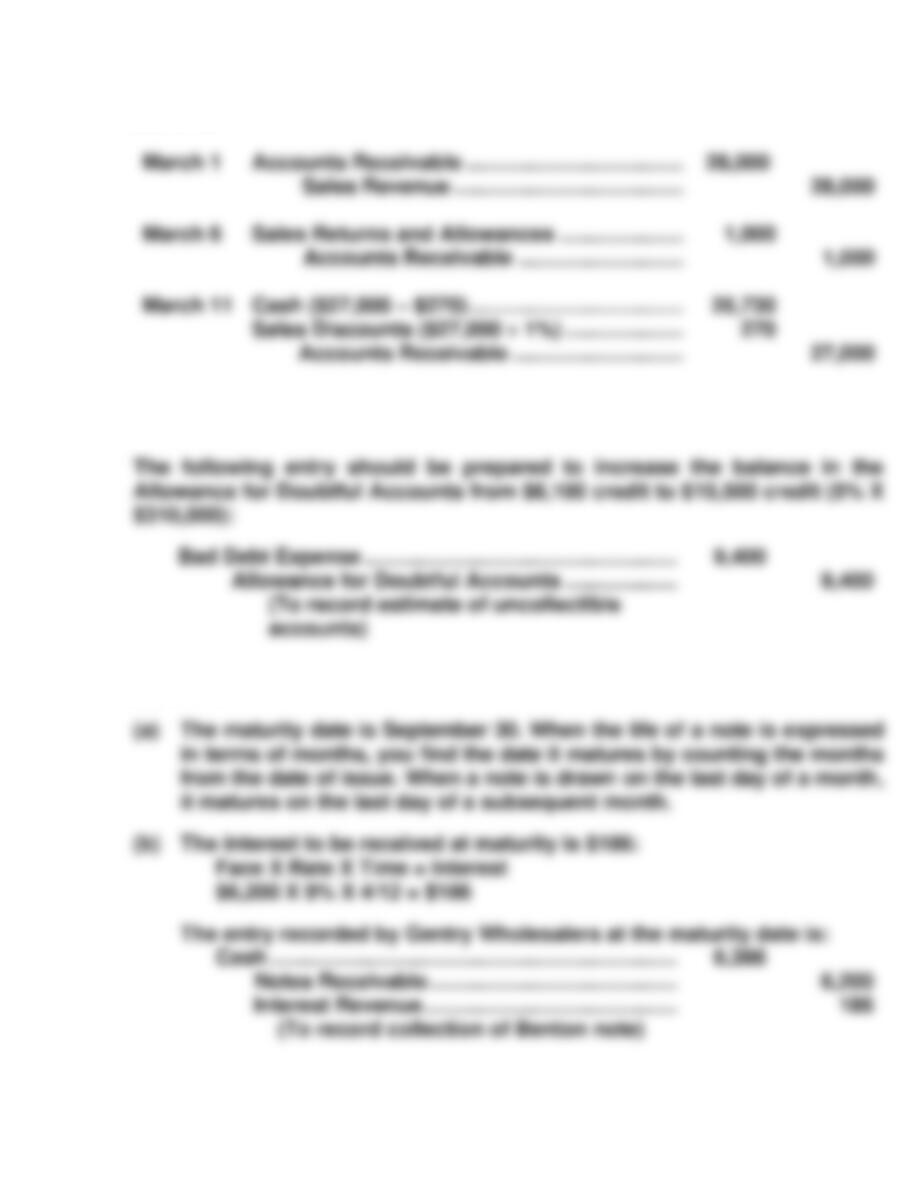
BRIEF EXERCISE 8-12
Accounts Receivable Turnover:
SOLUTIONS FOR DO IT! REVIEW EXERCISES
DO IT! 8-1
DO IT! 8-2
DO IT! 8-3
DO IT! 8-4
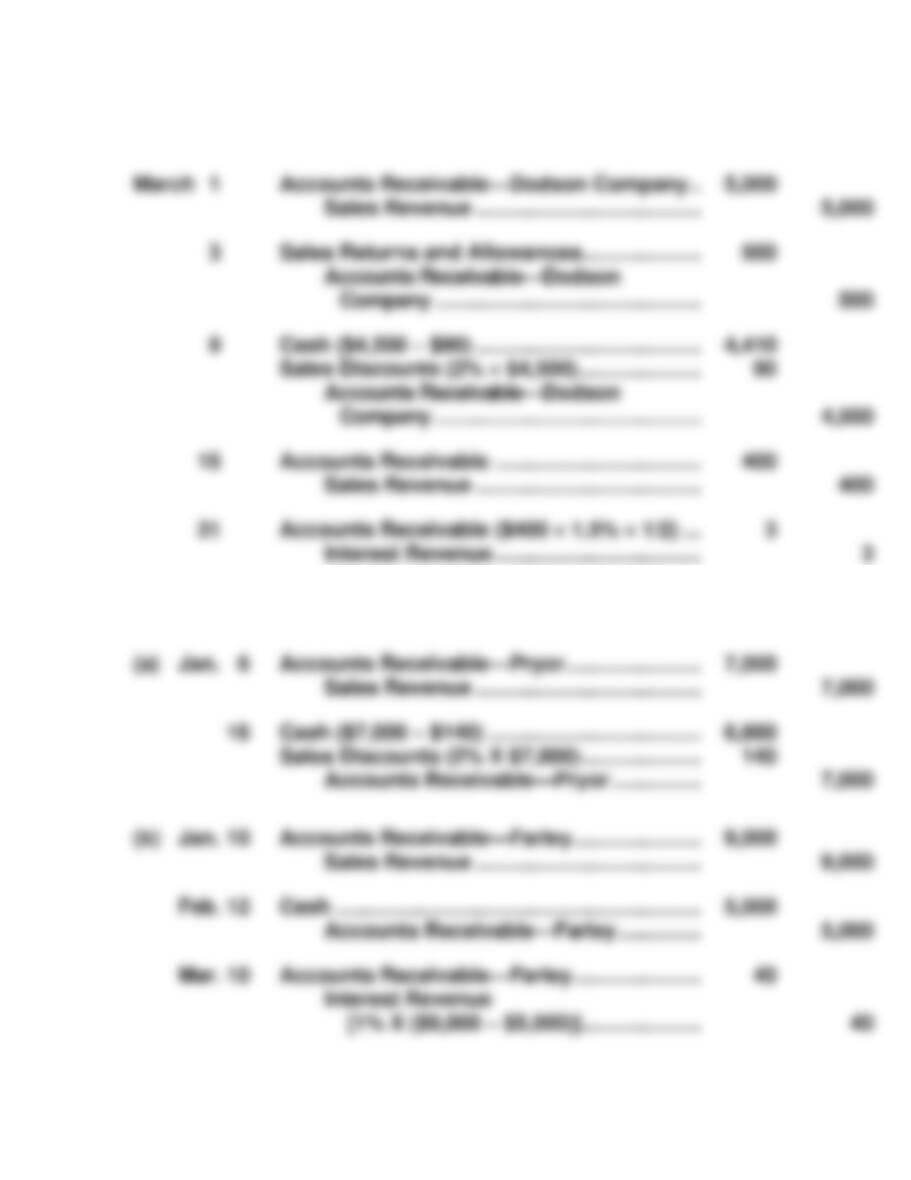
SOLUTIONS TO EXERCISES
EXERCISE 8-1
EXERCISE 8-2
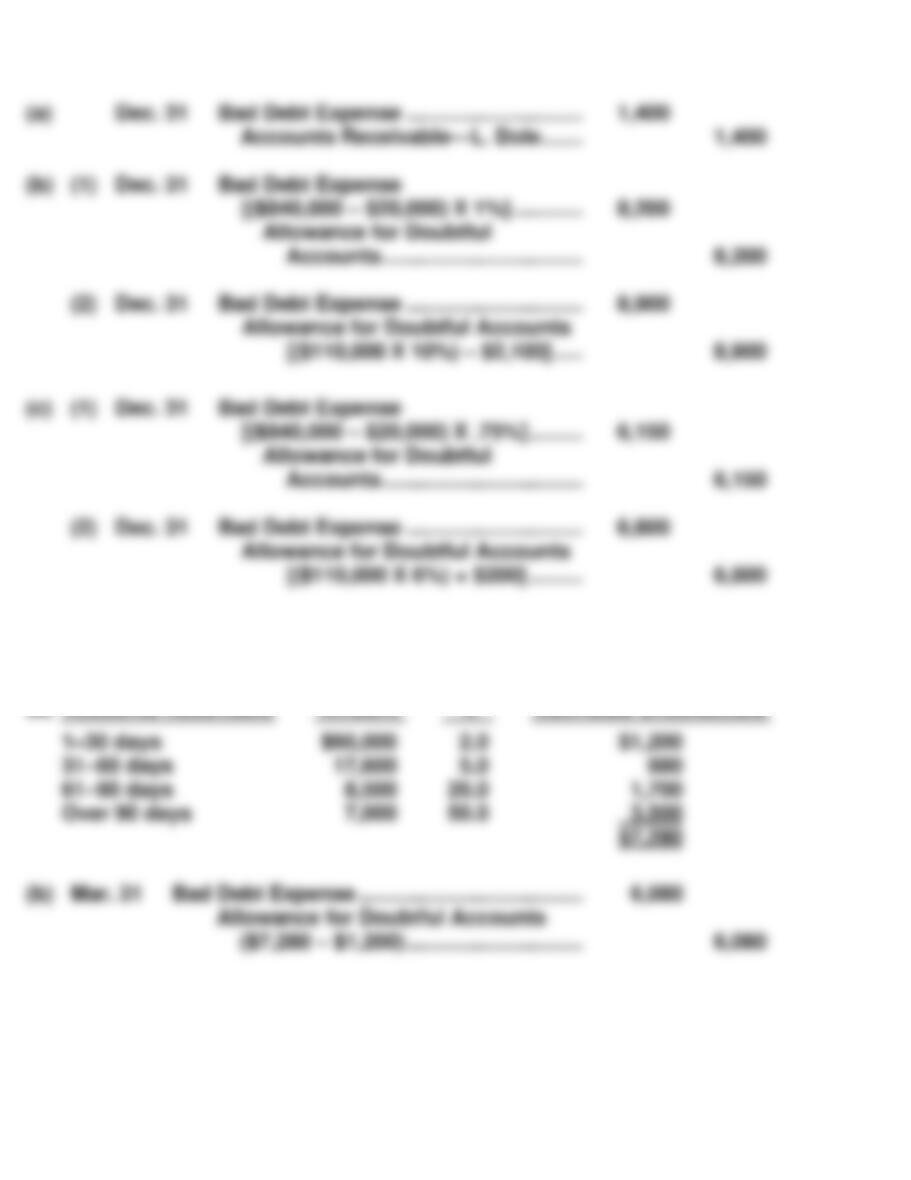
EXERCISE 8-3
EXERCISE 8-4
(a)
Accounts Receivable
Amount
%
Estimated Uncollectible
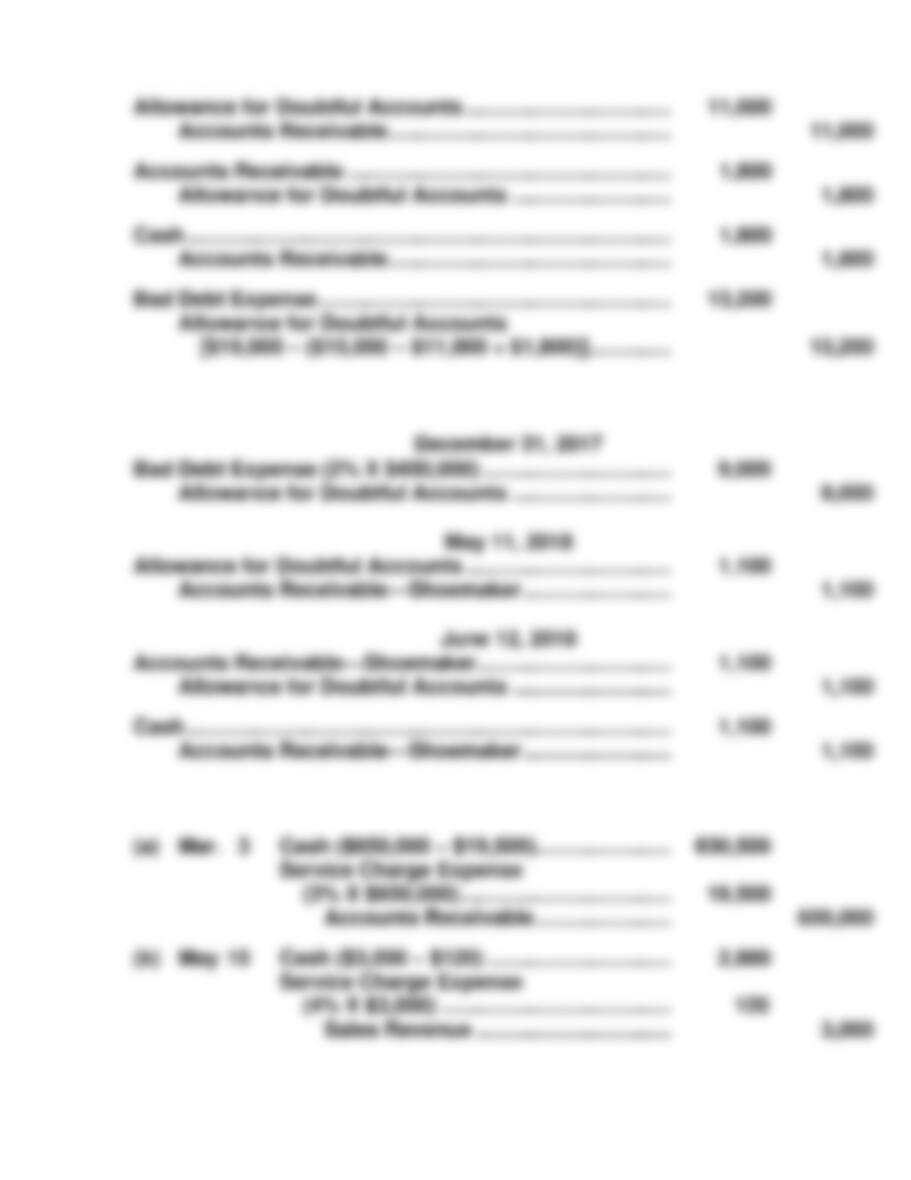
EXERCISE 8-5
EXERCISE 8-6
EXERCISE 8-7
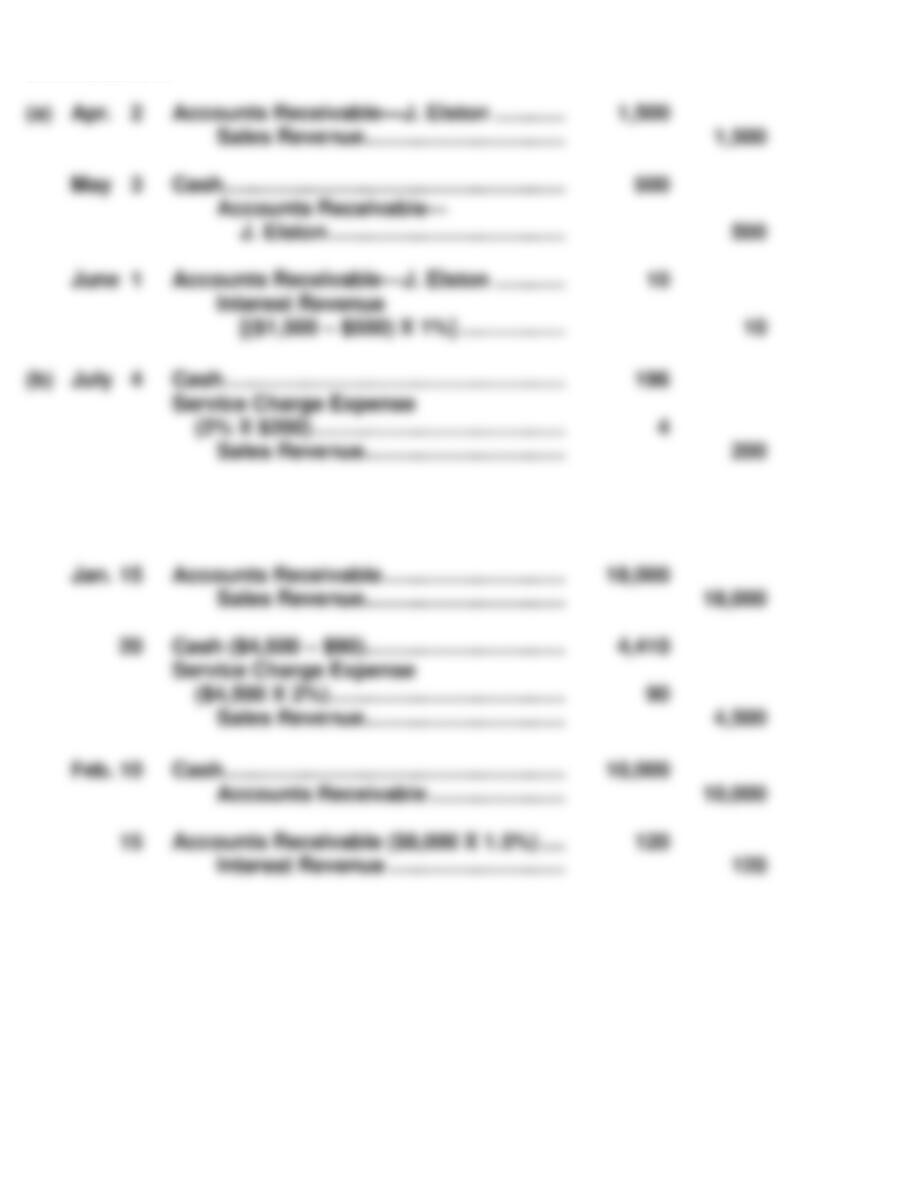
EXERCISE 8-8
EXERCISE 8-9
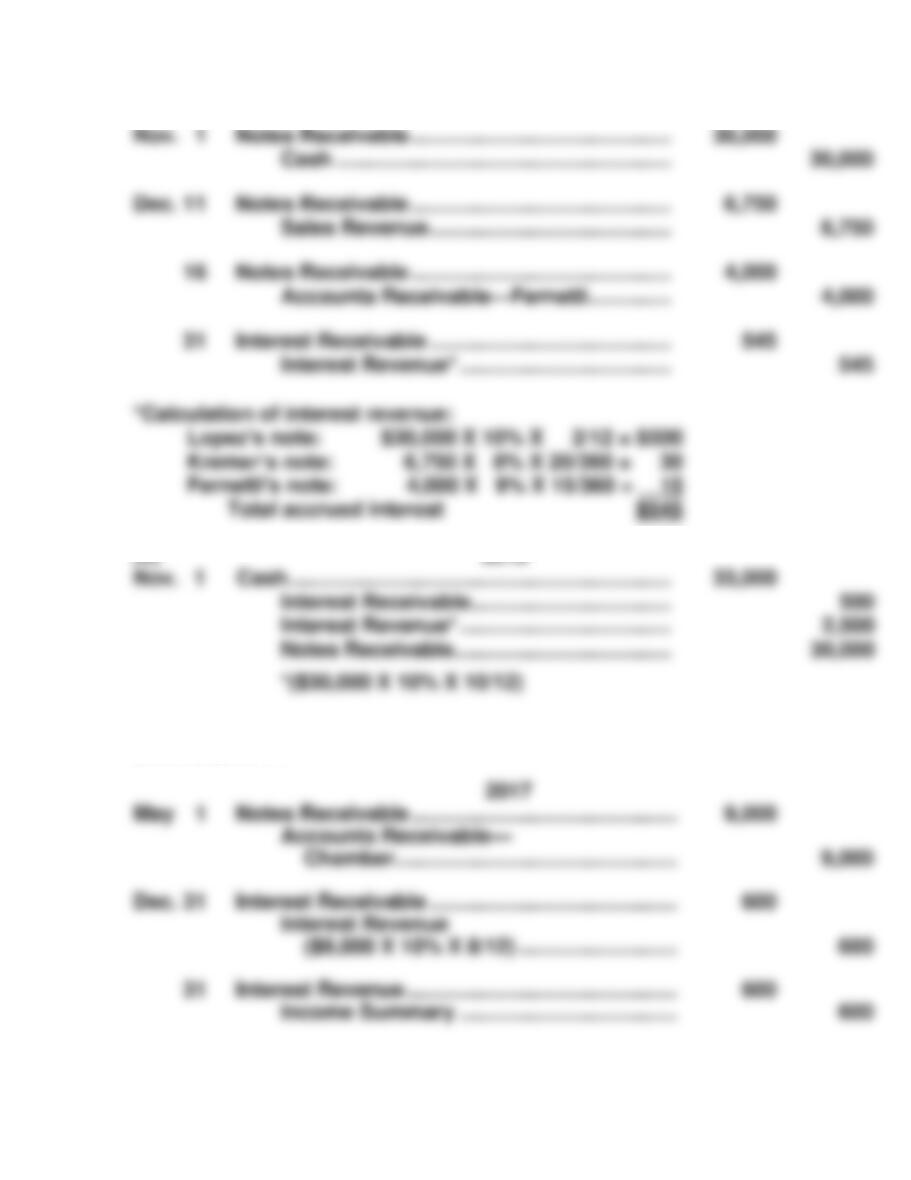
EXERCISE 8-10
(a) 2017
EXERCISE 8-11
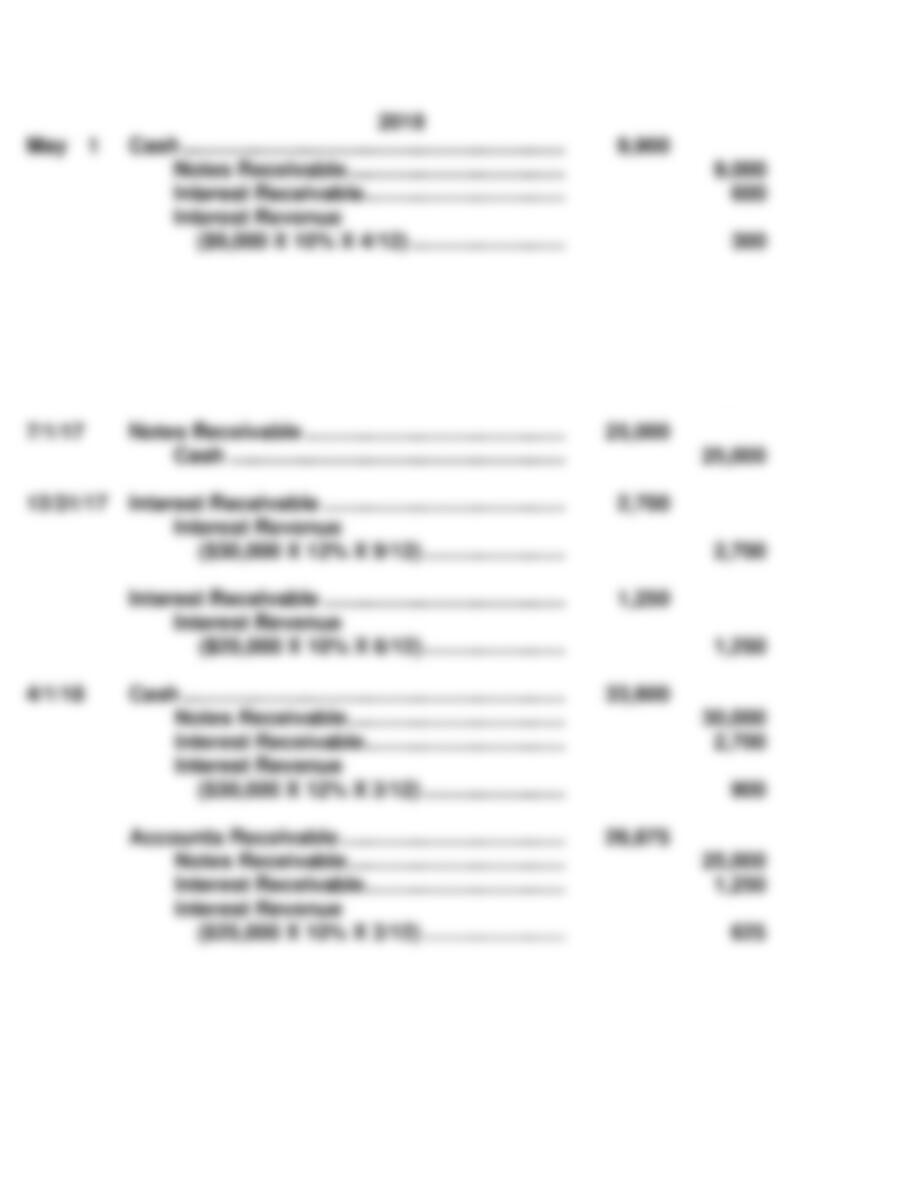
EXERCISE 8-11 (Continued)
EXERCISE 8-12
4/1/17 Notes Receivable …………………………………….. 30,000
Accounts Receivable—Goodwin ………… 30,000
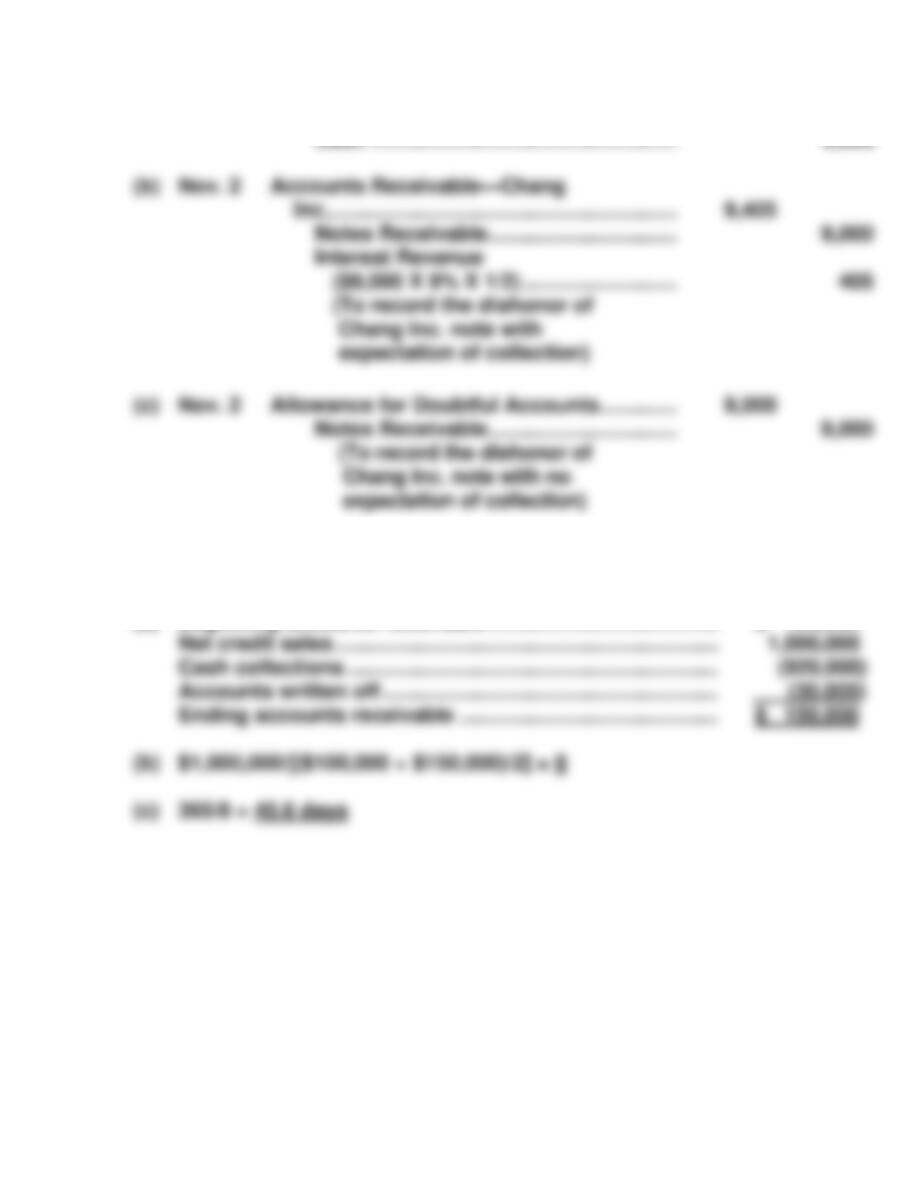
EXERCISE 8-13
(a) May 2 Notes Receivable ………………………………… 9,000
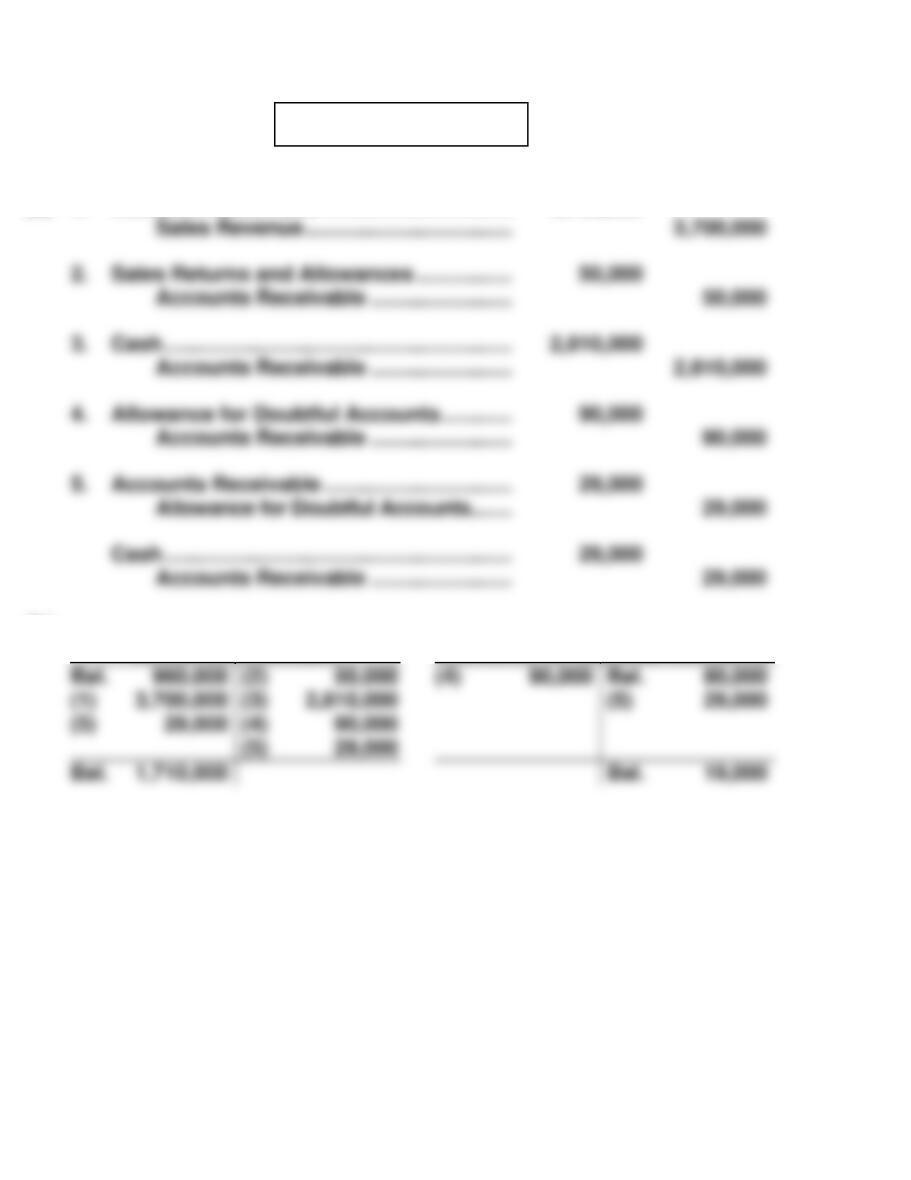
EXERCISE 8-14
(a) Beginning accounts receivable …………………………..……. $ 100,000
SOLUTIONS TO PROBLEMS
PROBLEM 8-1A
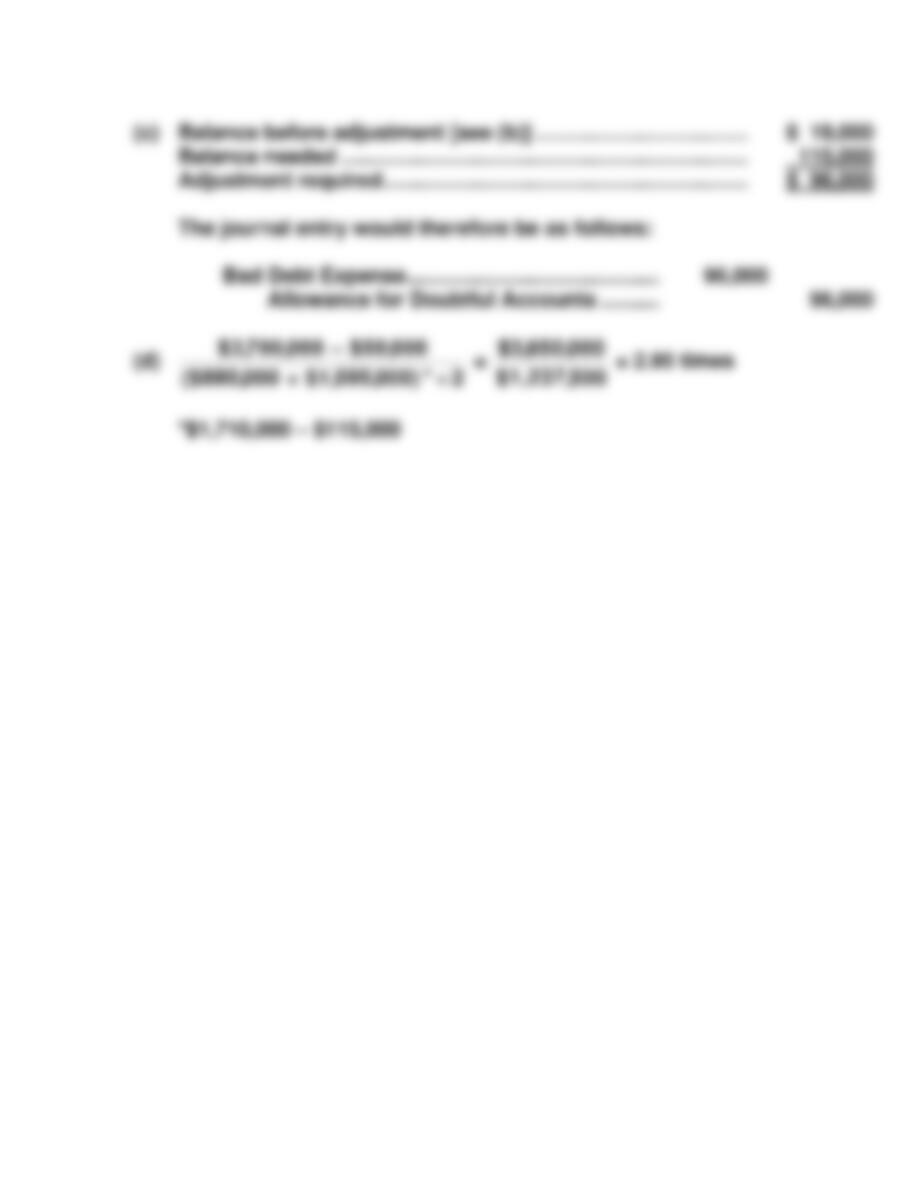
(a) 1. Accounts Receivable ………………………….. 3,700,000
(b)
Accounts Receivable
Allowance for Doubtful Accounts
(5) 29,000
PROBLEM 8-1A (Continued)
PROBLEM 8-2A
PROBLEM 8-3A
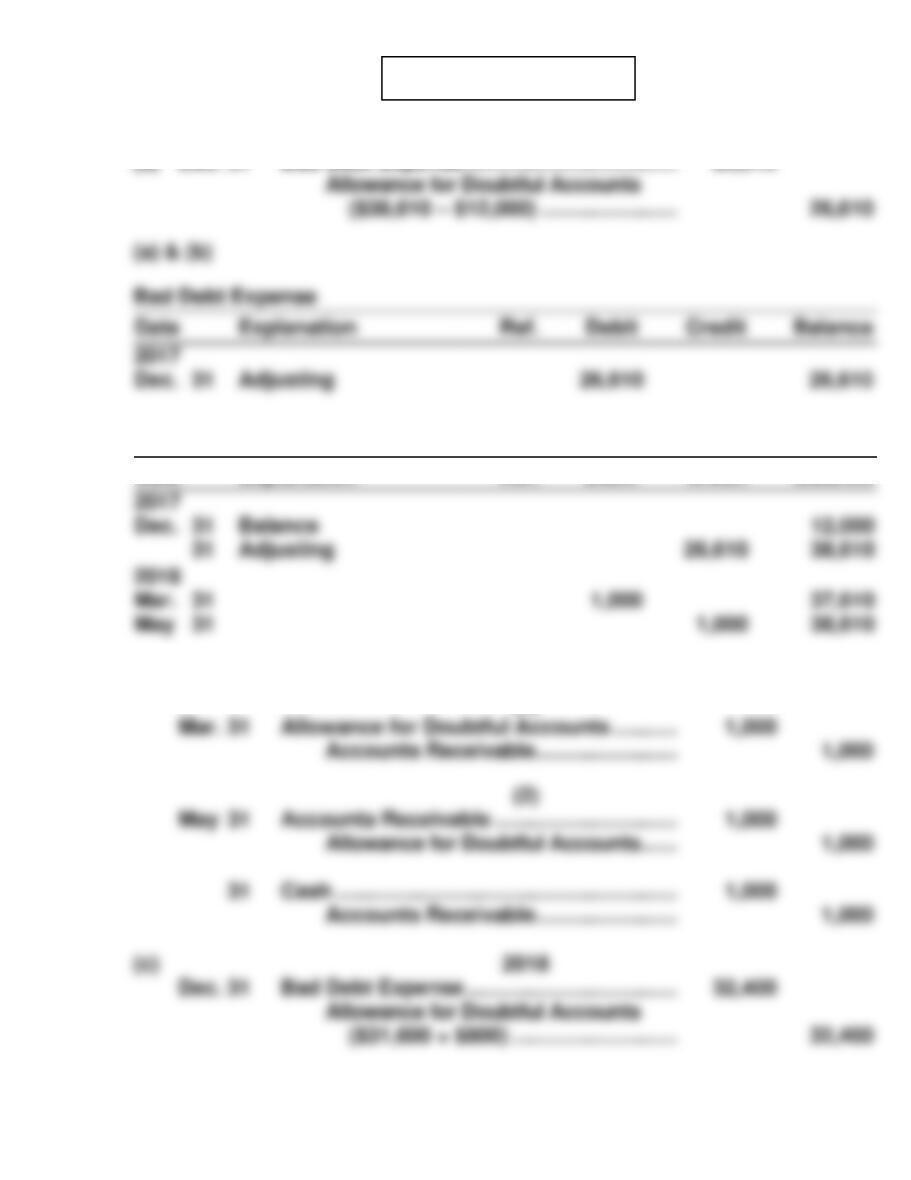
(a) Dec. 31 Bad Debt Expense ……………………………… 26,610
Allowance for Doubtful Accounts
Date
Explanation
Ref.
Debit
Credit
Balance
(b) 2018
(1)
PROBLEM 8-4A
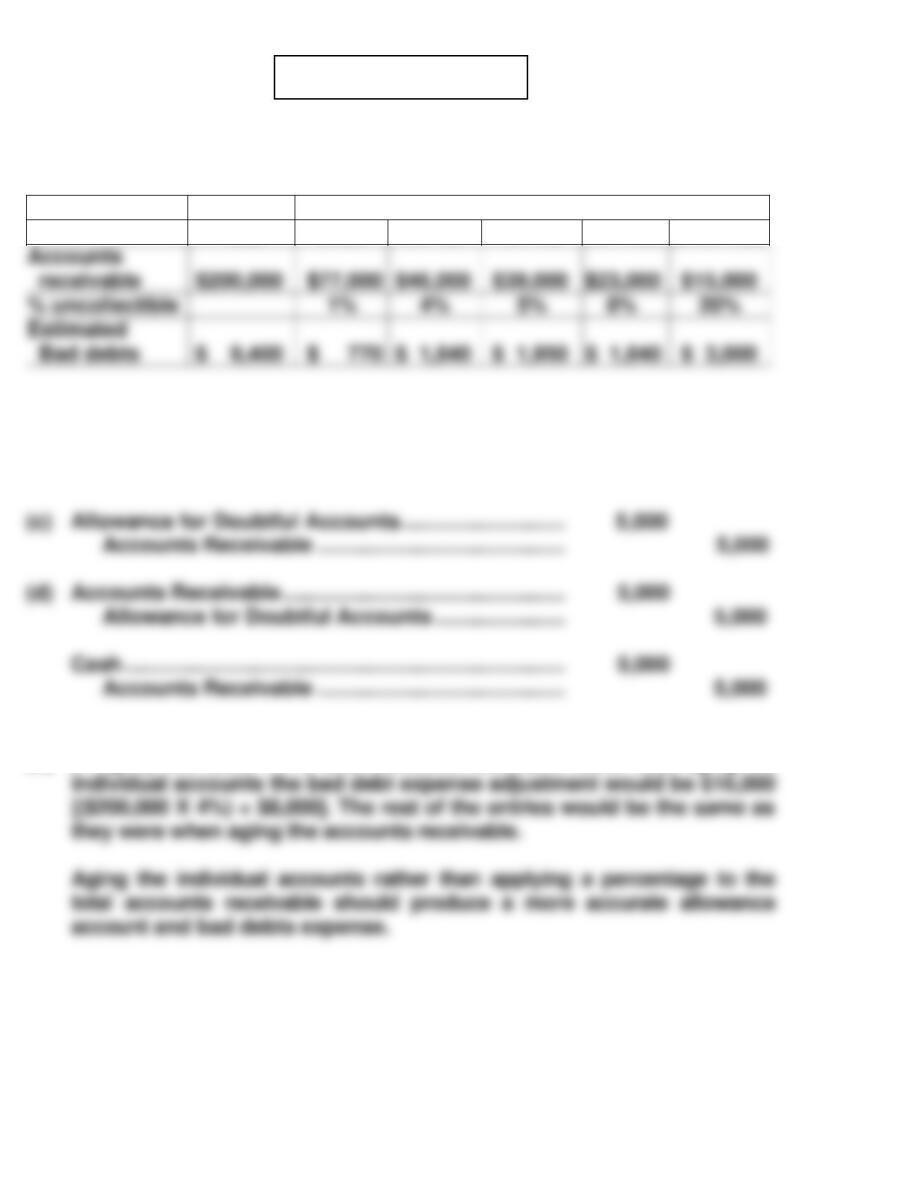
(a) Total estimated bad debts
Number of Days Outstanding
Total
0–30
31–60
61–90
91–120
Over 120
(b) Bad Debt Expense …………………………..……………….. 17,400
Allowance for Doubtful Accounts
[$9,400 + $8,000] ……………………………………….. 17,400
(e) If Rigney Inc. used 4% of total accounts receivable rather than aging the
% uncollectible
PROBLEM 8-5A
(d) Allowance for Doubtful Accounts ………………………. 3,000
Accounts Receivable ………………………………….. 3,000
PROBLEM 8-6A
(a) Oct. 7 Accounts Receivable …………………………….. 6,900
Sales Revenue ……………………………….. 6,900
15 Cash …………………………………………………….. 12,160
Notes Receivable …………………………... 12,000
(b)
Notes Receivable
Date
Explanation
Ref.
Debit
Credit
Balance
PROBLEM 8-6A (Continued)
Accounts Receivable
Date
Explanation
Ref.
Debit
Credit
Balance
(c) Current assets
Date
Explanation
Ref.
Debit
Credit
Balance
PROBLEM 8-7A
Jan. 5 Accounts Receivable—Sheldon Company ……… 20,000
Sales Revenue …………………………………….. 20,000
May 25 Notes Receivable ……………………………………….. 6,000
Accounts Receivable—Potter Inc. ………… 6,000
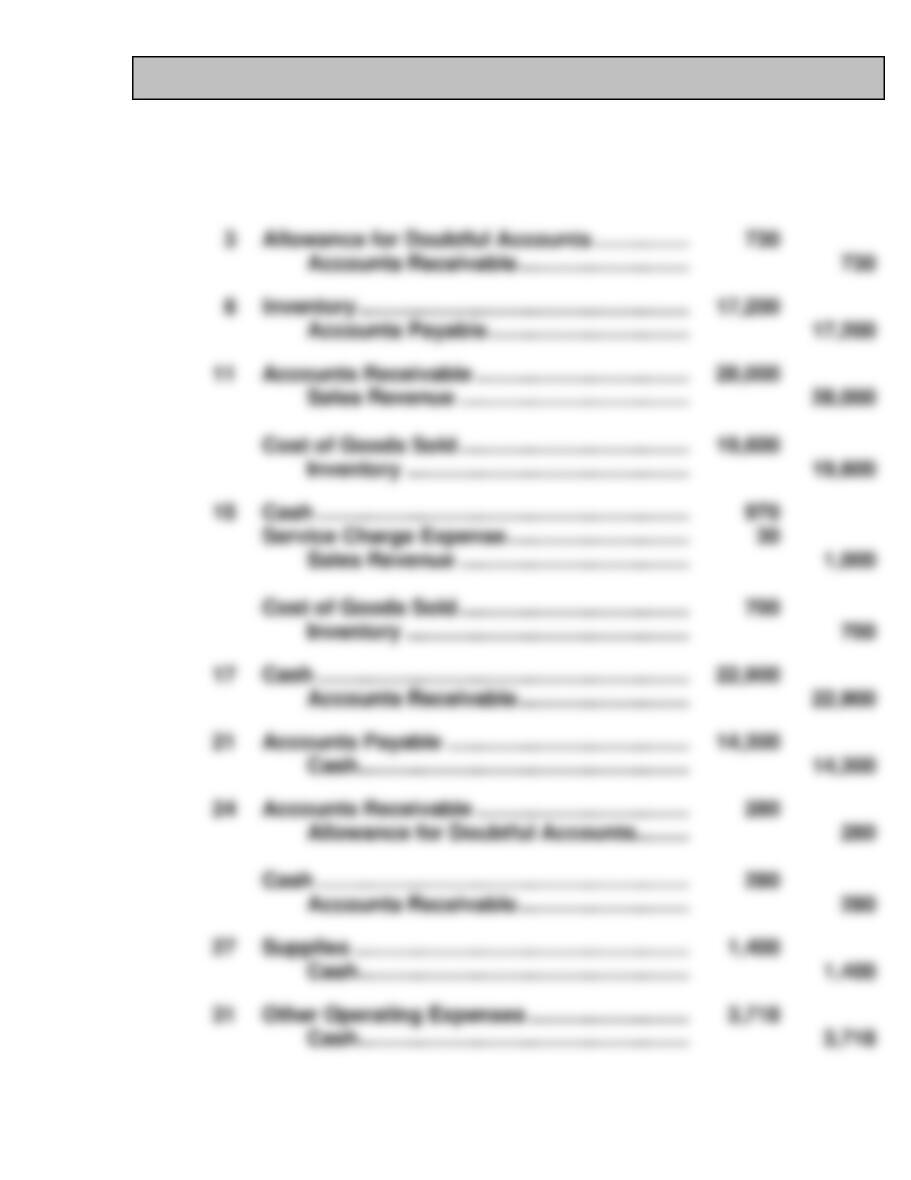
COMPREHENSIVE PROBLEM SOLUTION
(a)
Jan. 1
Notes Receivable …………………………………….
Accounts Receivable—
Merando Company …………………………
1,200
1,200
Allowance for Doubtful Accounts …………….
Accounts Receivable ………………………..
Inventory ………………………………………………..
Accounts Payable …………………………….
Cost of Goods Sold …………………………..…….
Inventory …………………………………………
Cash ………………………………………………………
Accounts Payable …………………………………..
Cash ………………………………………………………
Supplies …………………………………………………
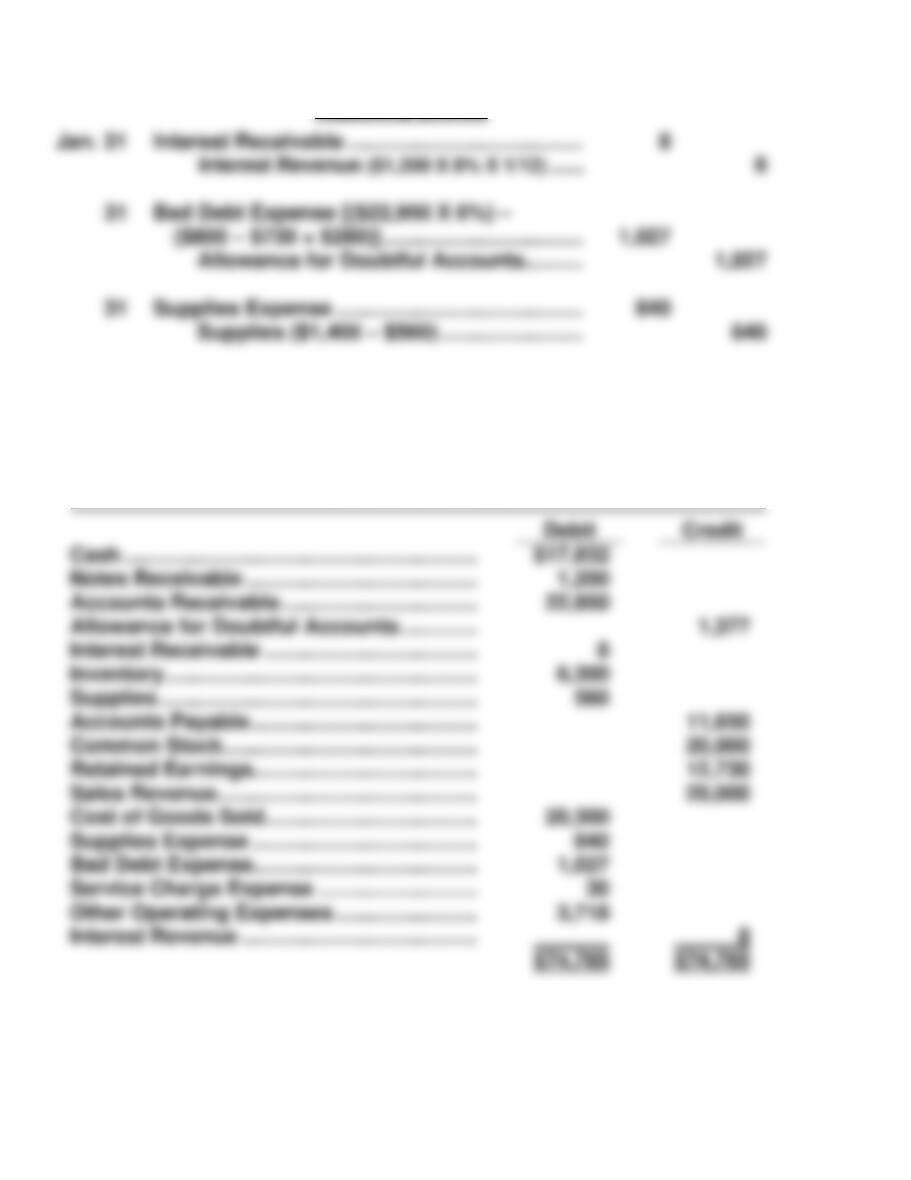
COMPREHENSIVE PROBLEM SOLUTION (Continued)
Adjusting Entries
Cash ……………………………………………………
Notes Receivable …………………………………
Accounts Receivable …………………………...
Allowance for Doubtful Accounts ………….
Interest Receivable ………………………………
Inventory ……………………………………………..
Supplies ………………………………………………
Accounts Payable ………………………………..
Common Stock …………………………………….
20,000
Retained Earnings …………………………..……
Sales Revenue ……………………………………..
Cost of Goods Sold ………………………………
Supplies Expense ………………………………..
Service Charge Expense ………………………
Other Operating Expenses ……………………
Interest Revenue ………………………………….
(b) WINTER COMPANY
Adjusted Trial Balance
January 31, 2017
Interest Revenue ($1,200 X 8% X 1/12) …….
Allowance for Doubtful Accounts……….
Supplies ($1,400 – $560) ……………………
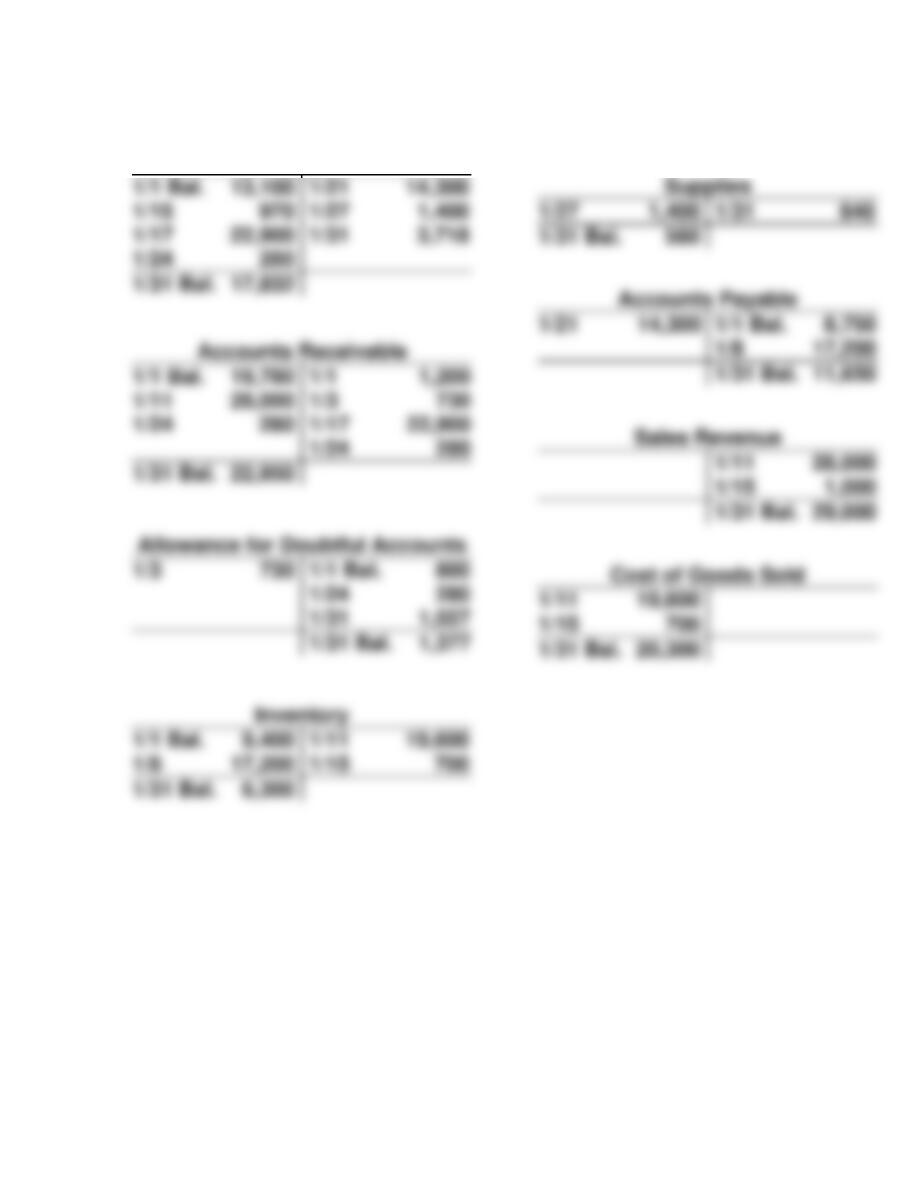
COMPREHENSIVE PROBLEM SOLUTION (Continued)
(b) Optional T accounts for accounts with multiple transactions
Cash
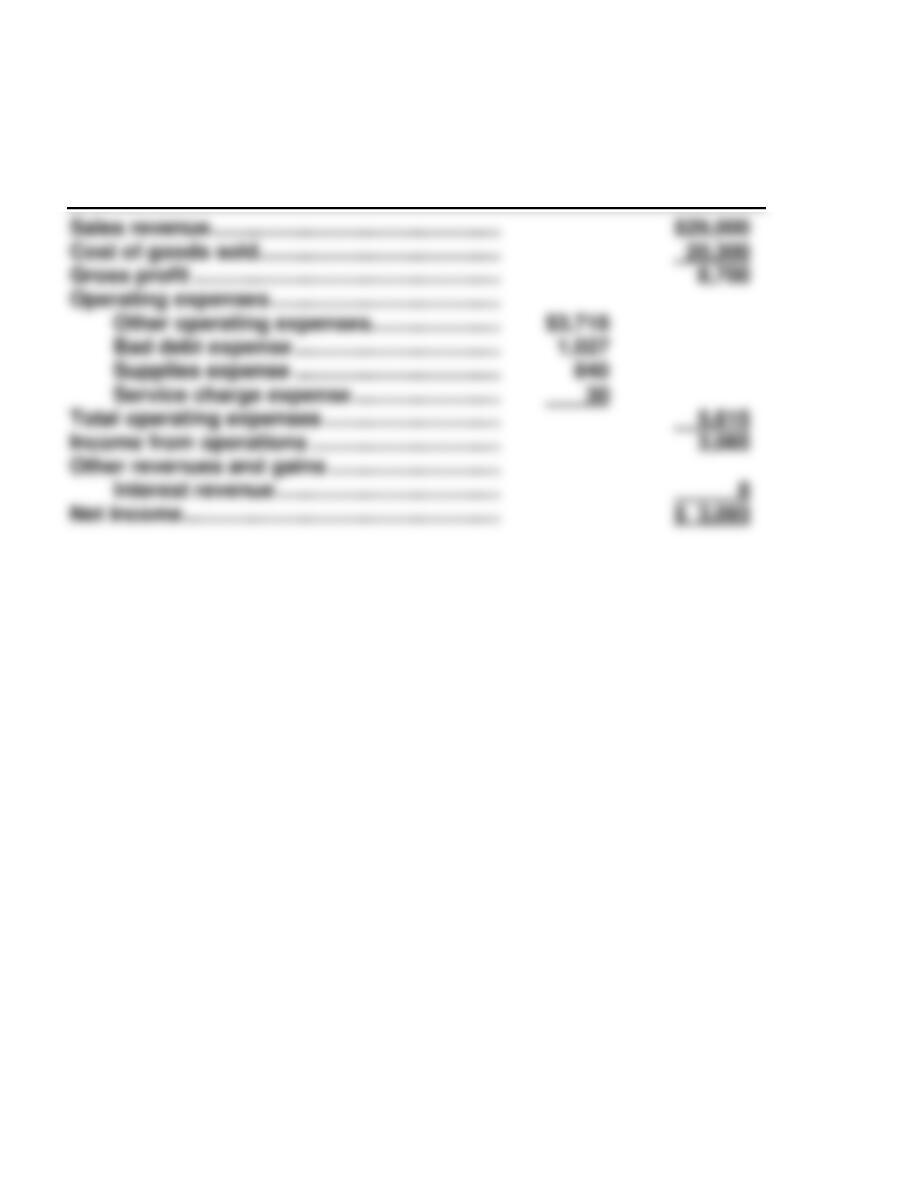
COMPREHENSIVE PROBLEM SOLUTION (Continued)
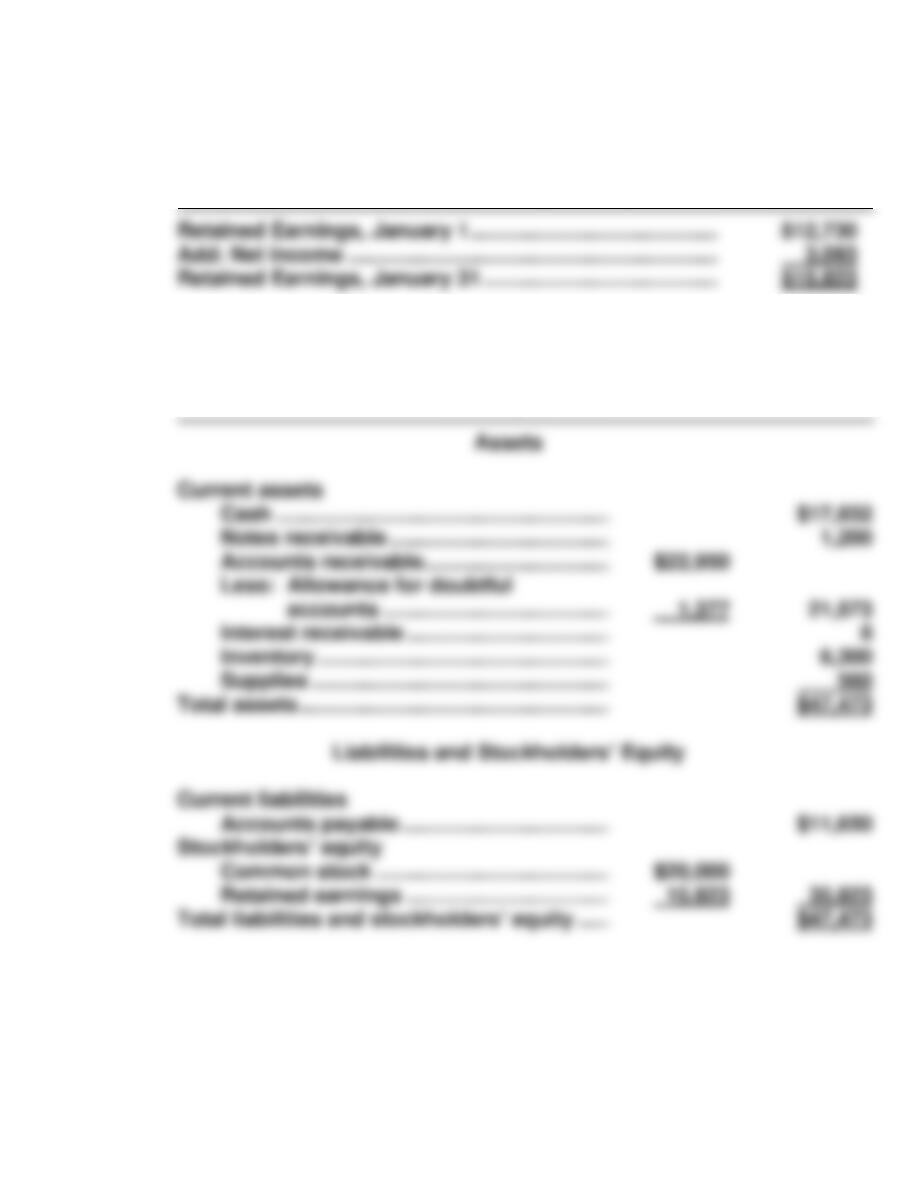
(c) WINTER COMPANY
Income Statement
For the Month Ending January 31, 2017
COMPREHENSIVE PROBLEM SOLUTION (Continued)
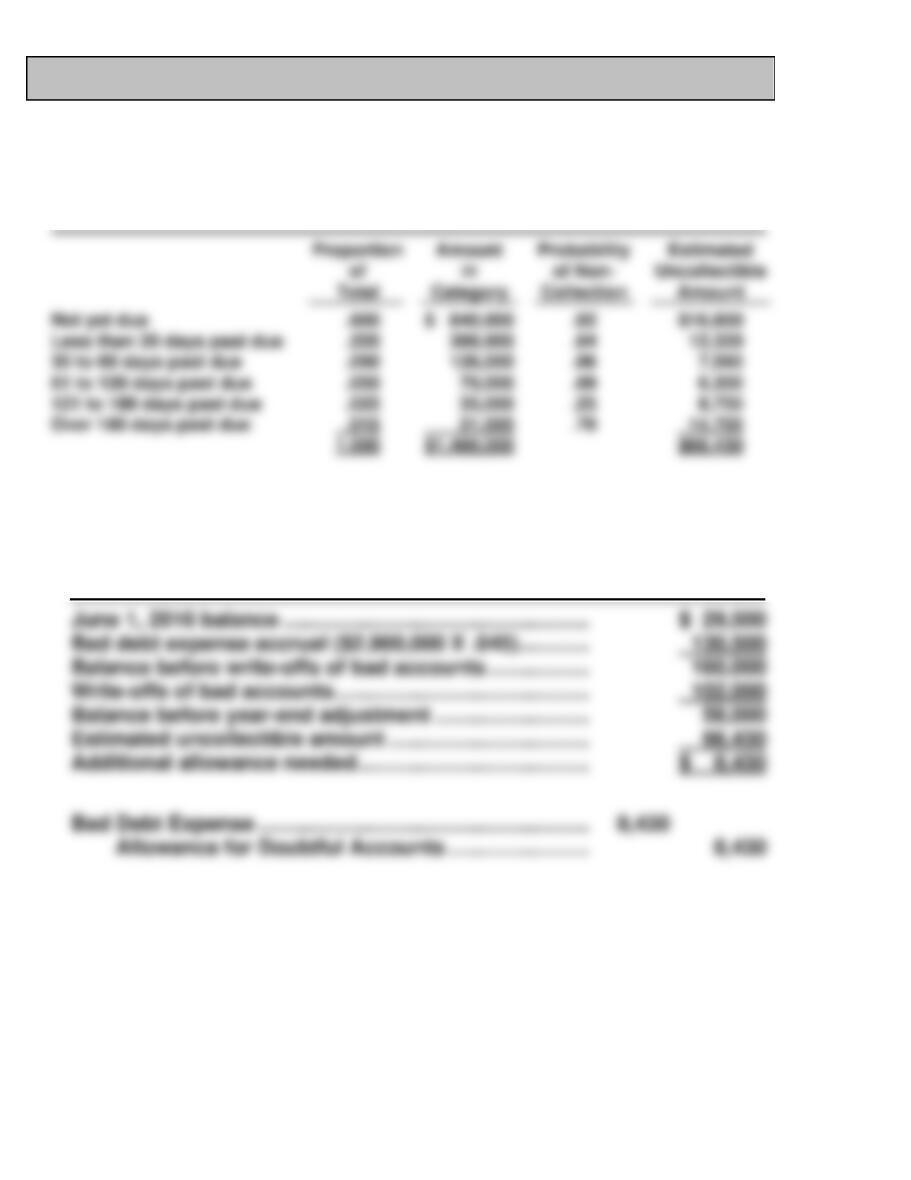
WINTER COMPANY
Retained Earnings Statement
For the Month Ending January 31, 2017
WINTER COMPANY
Balance Sheet
January 31, 2017
BYP 8-1 FINANCIAL REPORTING PROBLEM
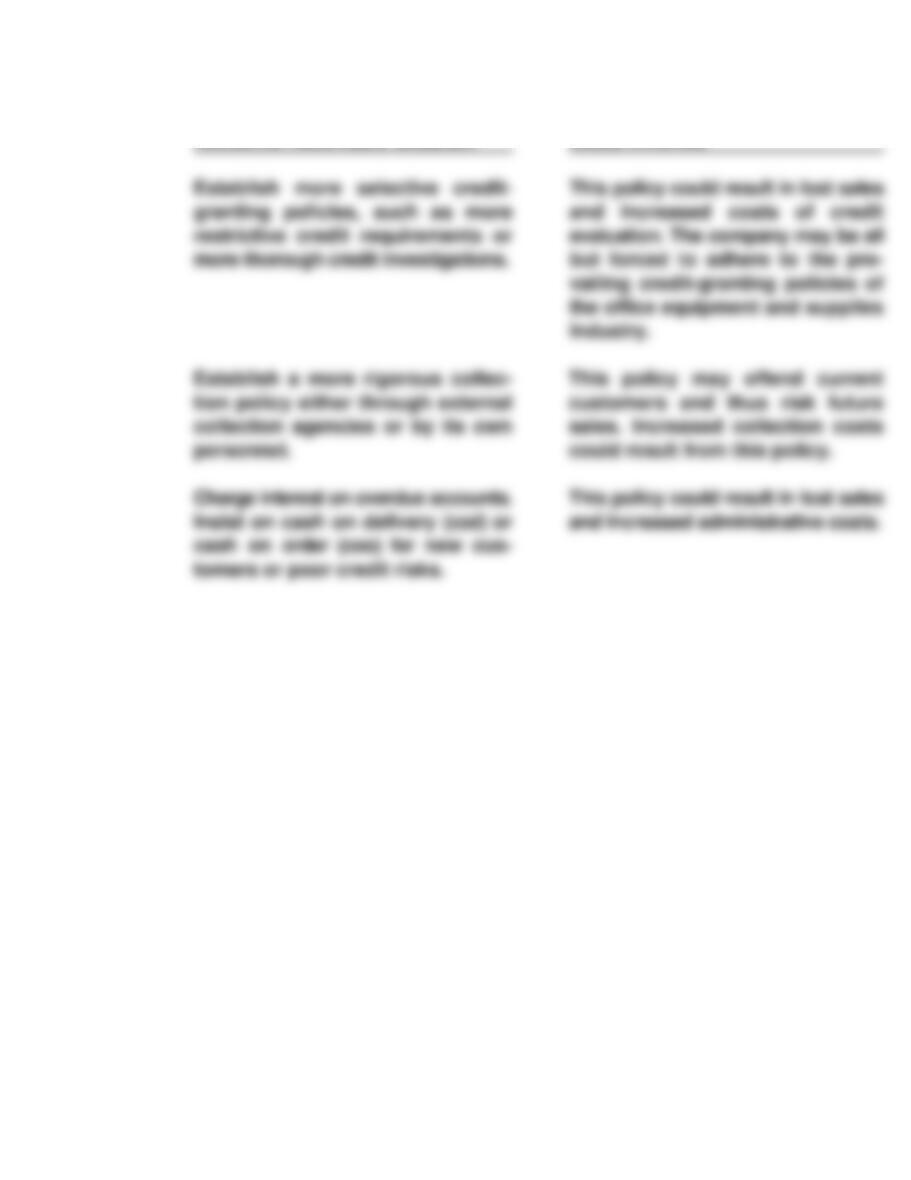
(a) RLF COMPANY
Accounts Receivable Aging Schedule
May 31, 2017
(b) RLF COMPANY
Analysis of Allowance for Doubtful Accounts
May 31, 2017
BYP 8-1 (Continued)
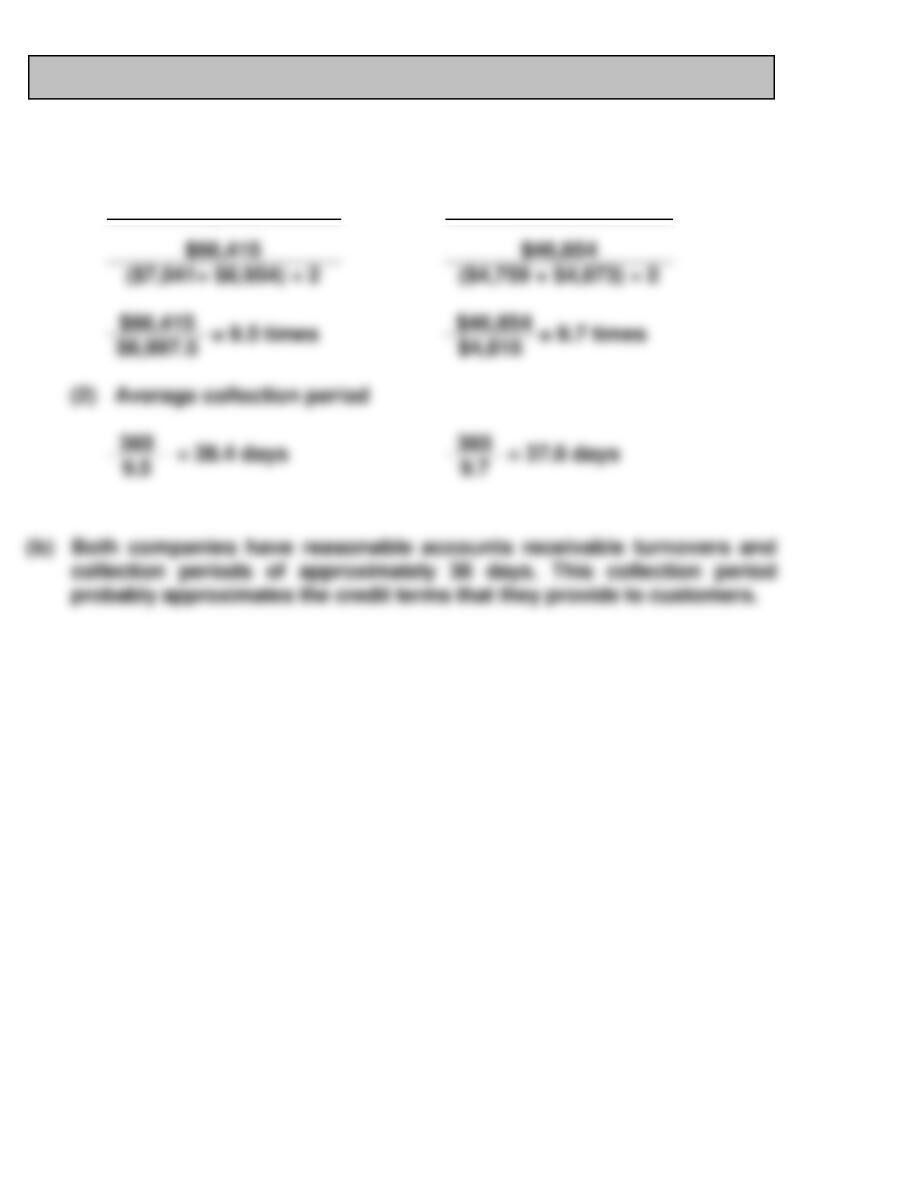
(c)
1.
Steps to Improve the
Accounts Receivable Situation
2.
Risks and
Costs Involved
BYP 8-2 COMPARATIVE ANALYSIS PROBLEM
(a)
(1)
Accounts receivable turnover
PepsiCo
Coca-Cola
(2)
Average collection period
BYP 8-3 COMPARATIVE ANALYSIS PROBLEM
(a)
(1)
Accounts receivable turnover ratio
Amazon
Wal-Mart
$473,076
(2)
Average collection period
BYP 8-4 REAL-WORLD FOCUS
(a) Factoring invoices enhances cash flow and allows a company to meet
business expenses and take on new opportunities. The benefits of
factoring include:
BYP 8-5 DECISION MAKING ACROSS THE ORGANIZATION
(a)
2018
2017
2016
Net credit sales ……………………………….
$500,000
$550,000
$400,000
(c) The analysis shows that the credit card fee of 4% of net credit sales will

BYP 8-5 (Continued)
Finally, the decision hinges on: (1) the accuracy of the estimate of
BYP 8-6 COMMUNICATION ACTIVITY
Of course, this solution will differ from student to student. Important factors
to look for would be definitions of the methods, how they are similar and how
they differ. Also, look for use of good sentence structure, correct spelling, etc.
Example:
Dear Jill,
The three methods you asked about are methods of dealing with uncollectible
accounts receivable. Two of them, percentage-of-sales and percentage-of–
BYP 8-7 ETHICS CASE
(a) The stakeholders in this situation are:
BYP 8-8 ALL ABOUT YOU
BYP 8-9 FASB CODIFICATION ACTIVITY
(a) Receivables represent contractual rights to receive money on fixed or
IFRS8-1 INTERNATIONAL FINANCIAL REPORTING PROBLEM
(a) Note 1.16 states: Trade accounts receivable are recorded at their face