Problem 8-16 (30 minutes)
1.
September cash sales ……………………………………….
$ 7,400
September collections on account:
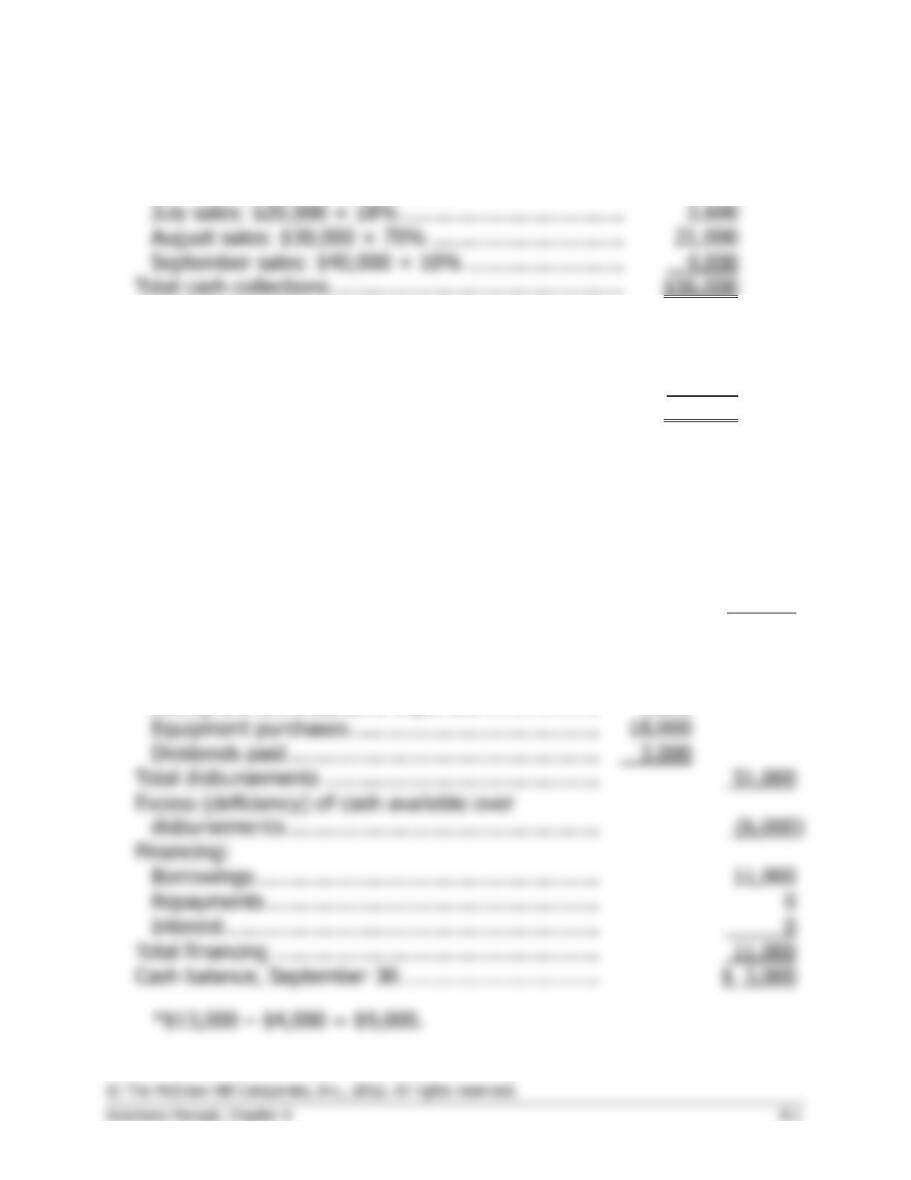
July sales: $20,000 × 18% ………………………………
August sales: $30,000 × 70% ………………………….
September sales: $40,000 × 10% …………………….
4,000
Total cash collections ………………………………………..
$36,000
2.
Payments to suppliers:
August purchases (accounts payable) ………………..
$16,000
September purchases: $25,000 × 20% ………………
5,000
Total cash payments …………………………………………
$21,000
3.
Calgon Products
Cash Budget
For the Month of September
Cash balance, September 1 …………………………….
$ 9,000
Add cash receipts:
Collections from customers …………………………..
36,000
Total cash available before current financing ………
45,000
Less disbursements:
Payments to suppliers for inventory ……………….
$21,000
Selling and administrative expenses ……………….
9,000
*
Equipment purchases ………………………………….
Dividends paid …………………………………………..
Total disbursements ……………………………………..
Financing:
Borrowings ……………………………………………….
11,000
Repayments ……………………………………………..
Interest ……………………………………………………
0
Total financing …………………………………………….
11,000
Cash balance, September 30 …………………………..
$ 5,000
1.
Collections on sales:
July
August
Sept.
Quarter
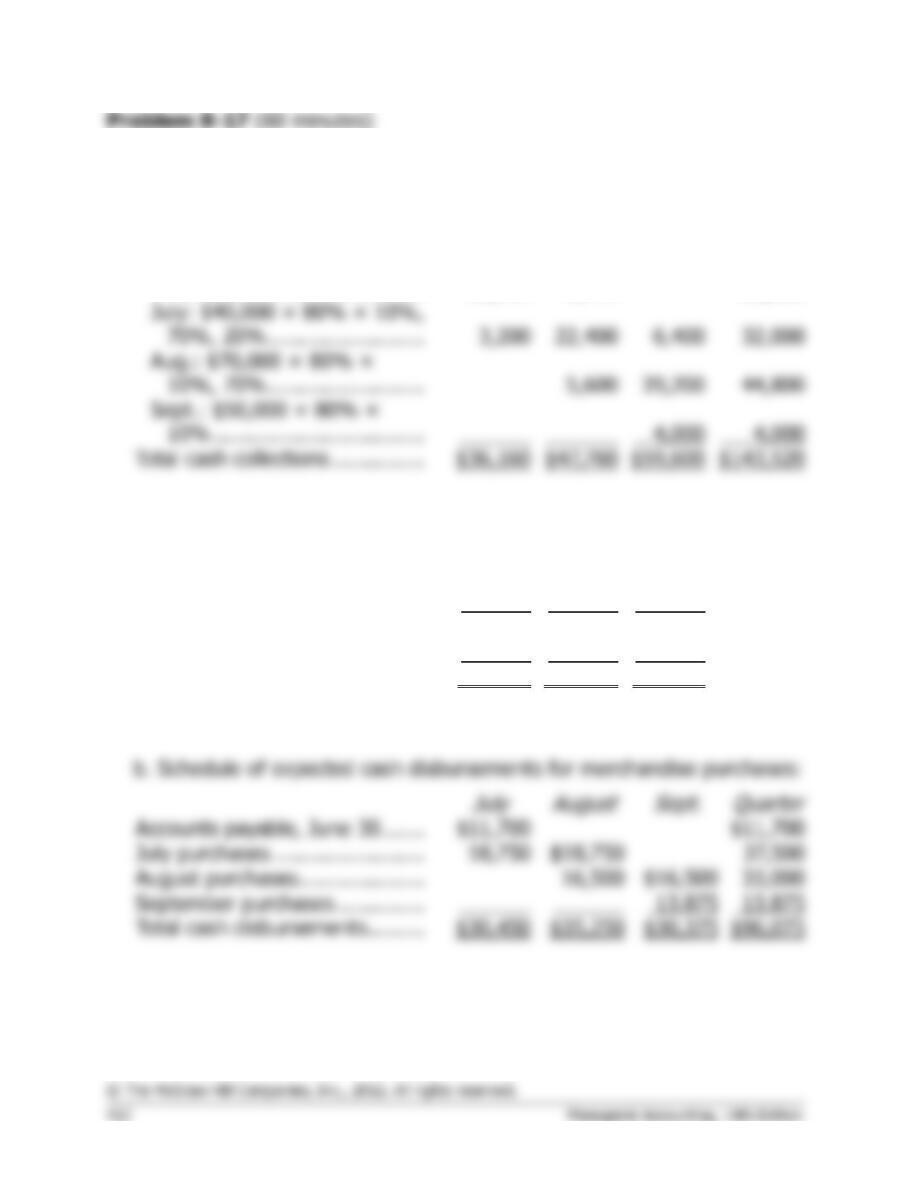
Cash sales …………………………
$ 8,000
$14,000
$10,000
$ 32,000
Credit sales:
May: $30,000 × 80% × 20%
4,800
4,800
June: $36,000 × 80% ×
70%, 20% …………………….
20,160
5,760
25,920
3,200
22,400
6,400
32,000
10%, 70% …………………….
5,600
39,200
44,800
Total cash collections ……………
$36,160
$47,760
$59,600
$143,520
2. a. Merchandise purchases budget:
July
August
Sept.
Oct.
Budgeted cost of goods sold ….
$24,000
$42,000
$30,000
$27,000
Add desired ending inventory* .
31,500
22,500
20,250
Total needs ………………………..
55,500
64,500
50,250
Less beginning inventory ………
18,000
31,500
22,500
Required inventory purchases ..
$37,500
$33,000
$27,750
*75% of the next month’s budgeted cost of goods sold.
July
August
Accounts payable, June 30 …….
$11,700
$11,700
July purchases ……………………
18,750
$18,750
August purchases ………………..
16,500
$16,500
September purchases …………..
13,875
13,875
Total cash disbursements ………
$30,450
$35,250
$30,375
$96,075
Problem 8-17 (continued)
3.
Janus Products, Inc.
Cash Budget
For the Quarter Ended September 30
July
August
Sept.
Quarter
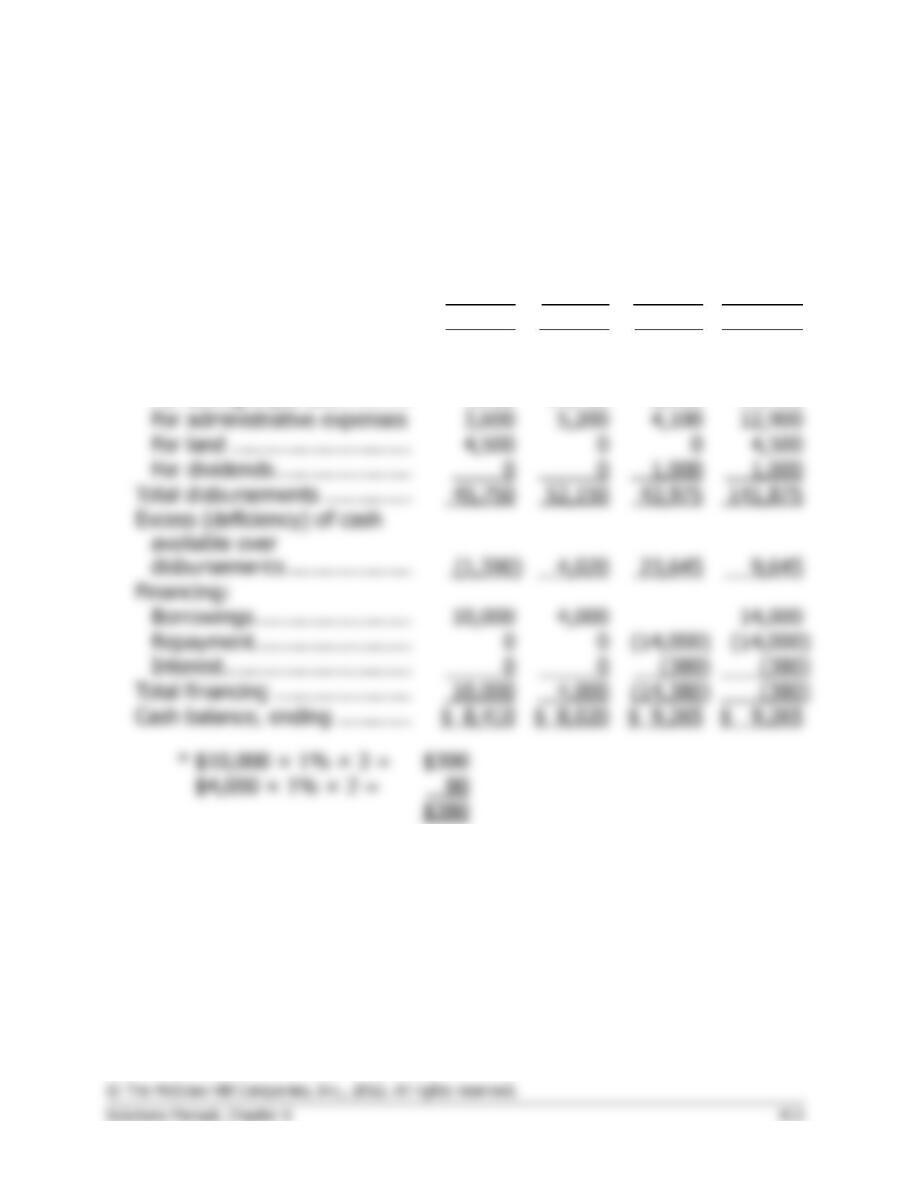
Cash balance, beginning ……..
$ 8,000
$ 8,410
$ 8,020
$ 8,000
Add collections from sales
36,160
47,760
59,600
143,520
Total cash available ………….
44,160
56,170
67,620
151,520
Less disbursements:
For inventory purchases ……
30,450
35,250
30,375
96,075
For selling expenses …………
7,200
11,700
8,500
27,400
For administrative expenses
3,600
5,200
4,100
12,900
For land ………………………..
For dividends ………………….
0
Total disbursements …………..
45,750
disbursements ………………..
(1,590)
23,645
Financing:
Borrowings …………………….
10,000
4,000
14,000
Repayment …………………….
Interest …………………………
(380)
Total financing ………………….
10,000
(380)
Cash balance, ending …………
$ 8,410
$ 8,020
$ 9,265
$ 9,265
*
$10,000 × 1% × 3 =
$4,000 × 1% × 2 =
80
Problem 8-18 (60 minutes)
1.
Collections on sales:
July
August
Sept.
Quarter
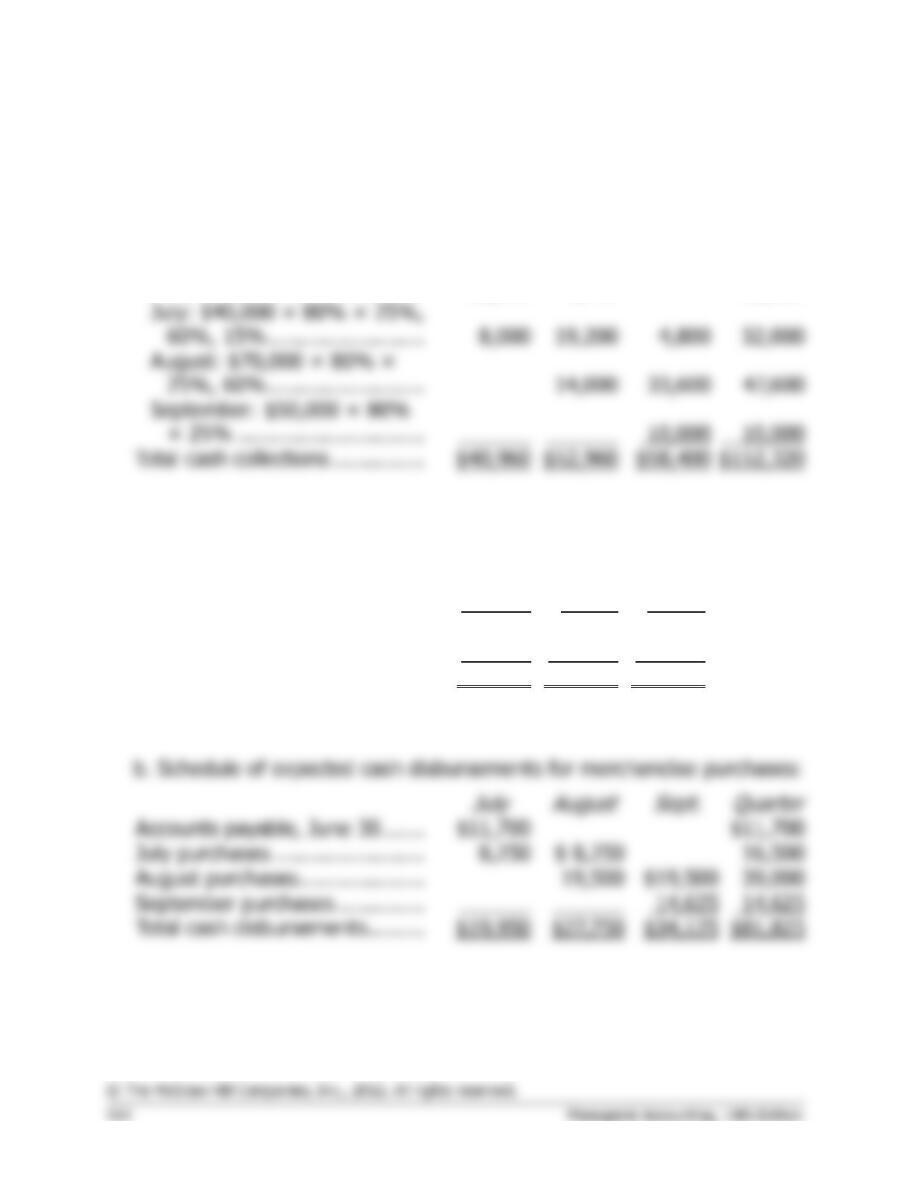
Cash sales …………………………
$ 8,000
$14,000
$10,000
$ 32,000
Credit sales:
May: $30,000 × 80% × 20%
4,800
4,800
June: $36,000 × 80% ×
70%, 20% …………………….
20,160
5,760
25,920
32,000
14,000
Total cash collections ……………
$40,960
2. a. Merchandise purchases budget:
July
August
Sept.
Oct.
Budgeted cost of goods sold ….
$24,000
$42,000
$30,000
$27,000
Add desired ending inventory* .
10,500
7,500
6,750
Total needs ………………………..
34,500
49,500
36,750
Less beginning inventory ………
18,000
10,500
7,500
Required inventory purchases ..
$16,500
$39,000
$29,250
*25% of the next month’s budgeted cost of goods sold.
July
August
Accounts payable, June 30 …….
$11,700
July purchases ……………………
$ 8,250
August purchases ………………..
September purchases …………..
14,625
Total cash disbursements ………
$19,950
Problem 8-18 (continued)
3.
Janus Products, Inc.
Cash Budget
For the Quarter Ended September 30
July
August
Sept.
Quarter
Cash balance, beginning ……..
$ 8,000
$13,710
$22,020
$ 8,000
Add collections from sales
40,960
52,960
58,400
152,320
Total cash available ………….
48,960
66,670
80,420
160,320
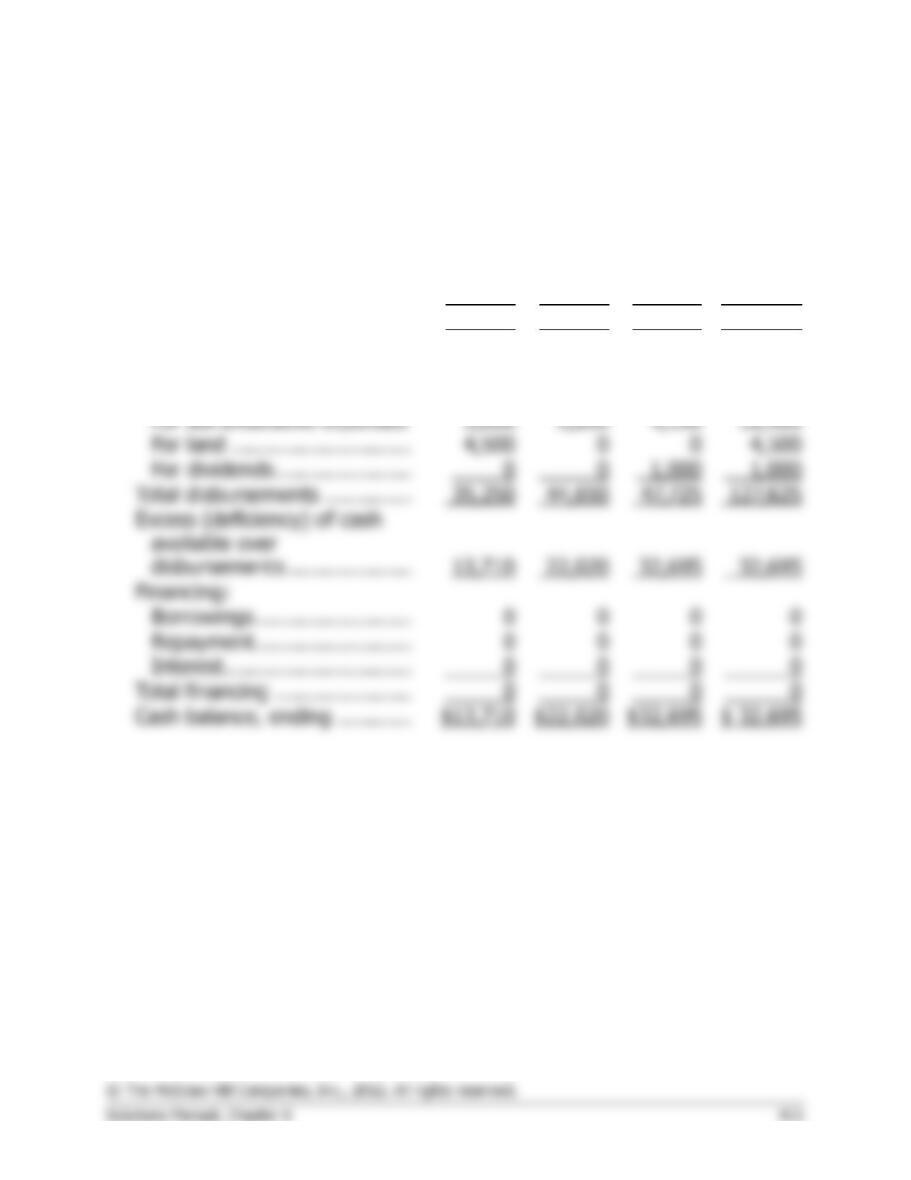
Less disbursements:
For inventory purchases ……
19,950
27,750
34,125
81,825
For selling expenses …………
7,200
11,700
8,500
27,400
For administrative expenses
3,600
4,100
12,900
For land ………………………..
For dividends ………………….
0
1,000
Total disbursements …………..
35,250
47,725
disbursements ………………..
22,020
32,695
32,695
Financing:
Borrowings …………………….
Repayment …………………….
Interest …………………………
0
Total financing ………………….
0
0
0
0
Cash balance, ending …………
$22,020
$32,695
4. Collecting accounts receivable sooner and reducing inventory levels
eliminated the company’s need to borrow money and pay interest
during the third quarter.
Problem 8-19 (60 minutes)
1. The sales budget for the third quarter:
July
Aug.
Sept.
Quarter
Budgeted sales (pairs) …..
6,000
7,000
5,000
18,000
Selling price per pair ……..
× $50
× $50
× $50
× $50
Total budgeted sales ……..
$300,000
$350,000
$250,000
$900,000
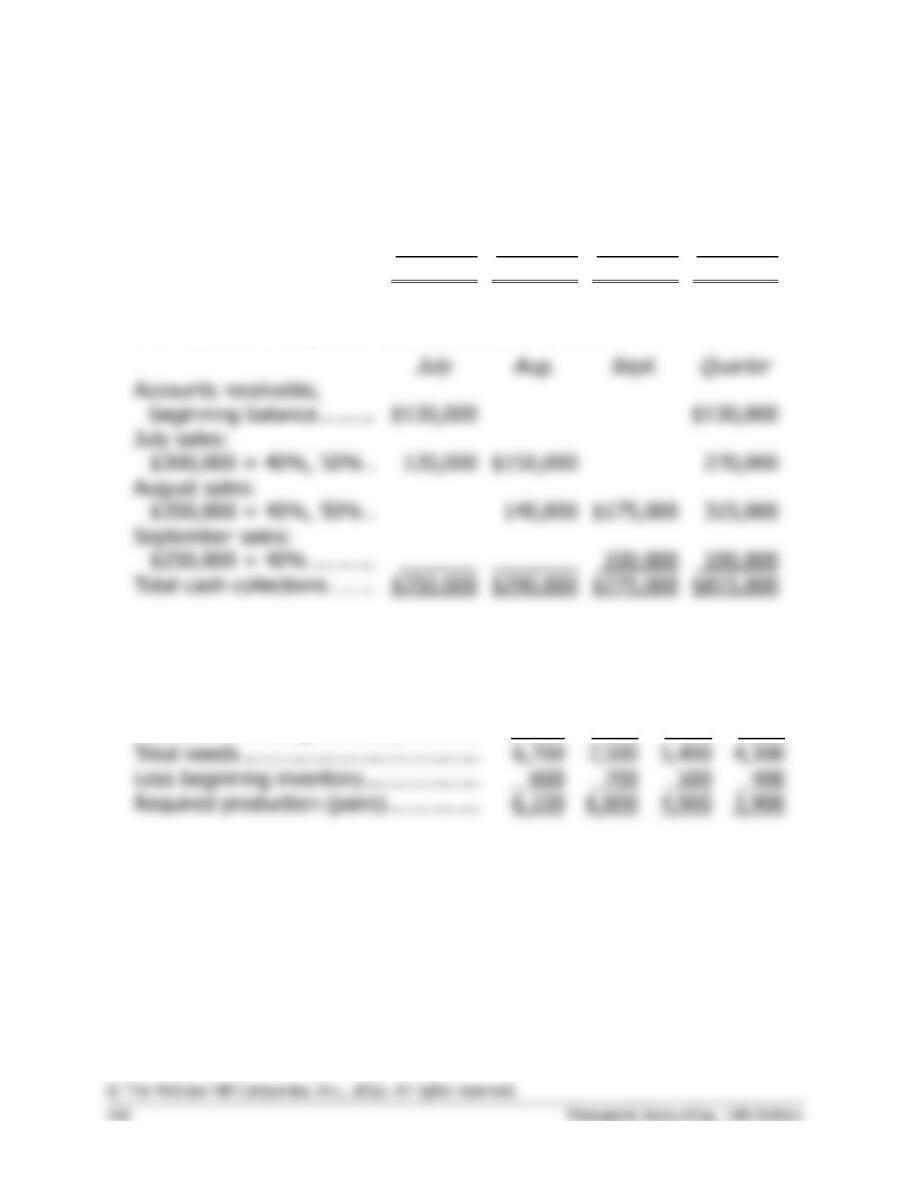
The schedule of expected cash collections from sales:
$150,000
Total cash collections …….
$250,000
$290,000
$275,000
$815,000
2. The production budget for July through October:
July
Aug.
Sept.
Oct.
Budgeted sales (pairs) ………………….
6,000
7,000
5,000
4,000
Add desired ending inventory …………
700
500
400
300
Total needs ………………………………..
Less beginning inventory……………….
Required production (pairs) ……………
Problem 8-19 (continued)
3. The direct materials budget for the third quarter:
July
Aug.
Sept.
Quarter
Required production—pairs
(above) ……………………….
6,100
6,800
4,900
17,800
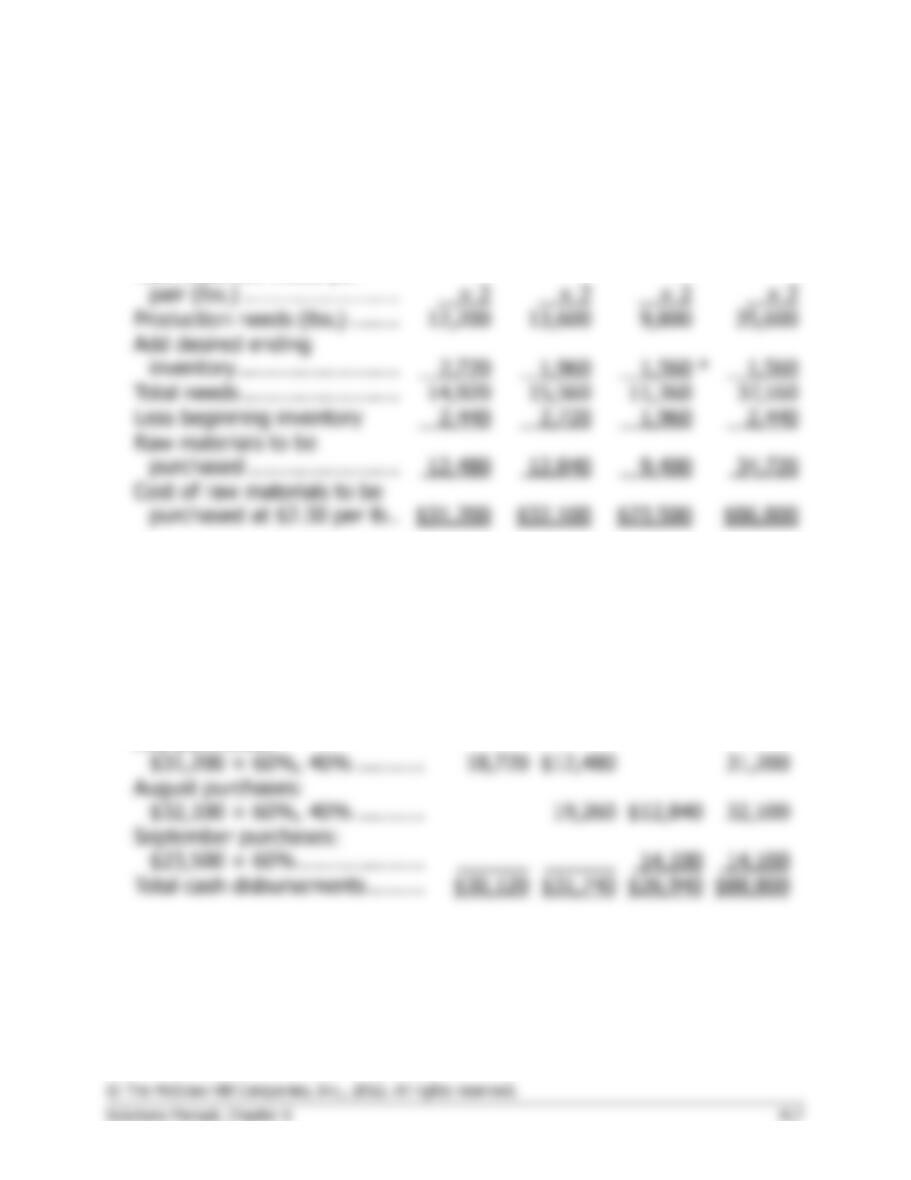
Production needs (lbs.) ……..
12,200
9,800
2,720
*
Total needs …………………….
Less beginning inventory
Raw materials to be
12,840
34,720
Cost of raw materials to be
Raw materials needs per
*3,900 pairs (October) × 2 lbs. per pair= 7,800 lbs.;
7,800 lbs. × 20% = 1,560 lbs.
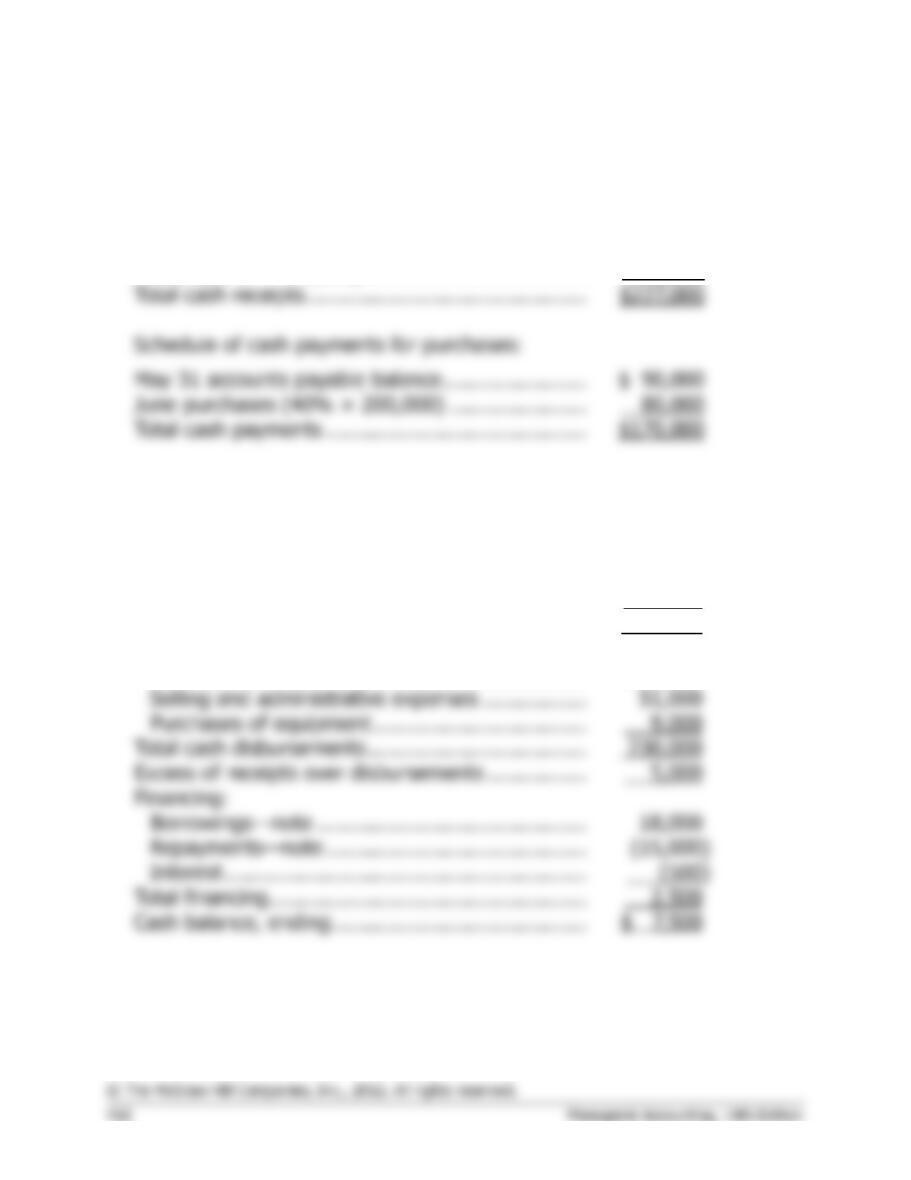
The schedule of expected cash disbursements:
July
Aug.
Sept.
Quarter
Accounts payable, beginning
balance …………………………..
$11,400
$11,400
$12,480
August purchases:
$32,100 × 60%, 40% ………..
$12,840
September purchases:
14,100
14,100
Total cash disbursements ………
July purchases:
Problem 8-20 (60 minutes)
1. Schedule of cash receipts:
Cash sales—June ………………………………………..
$ 60,000
Collections on accounts receivable:
May 31 balance ……………………………………….
72,000
June (50% × 190,000) ………………………………
95,000
Total cash receipts ………………………………………
$227,000
Schedule of cash payments for purchases:
May 31 accounts payable balance …………………..
$ 90,000
June purchases (40% × 200,000) ………………….
80,000
Total cash payments ……………………………………
Phototec, Inc.
Cash Budget
For the Month of June
Cash balance, beginning ………………………………
$ 8,000
Add receipts from customers (above) ……………..
227,000
Total cash available ……………………………………..
235,000
Less disbursements:
Purchase of inventory (above) …………………….
170,000
Selling and administrative expenses ……………..
Purchases of equipment …………………………….
Total cash disbursements ……………………………..
Excess of receipts over disbursements …………….
Financing:
Interest ………………………………………………….
Total financing …………………………..……………….
Cash balance, ending …………………………………..
Problem 8-20 (continued)
2.
Phototec, Inc.
Budgeted Income Statement
For the Month of June
Sales ……………………………………………..
$250,000
Cost of goods sold:
Beginning inventory ………………………..
$ 30,000
Purchases …………………………………….
200,000
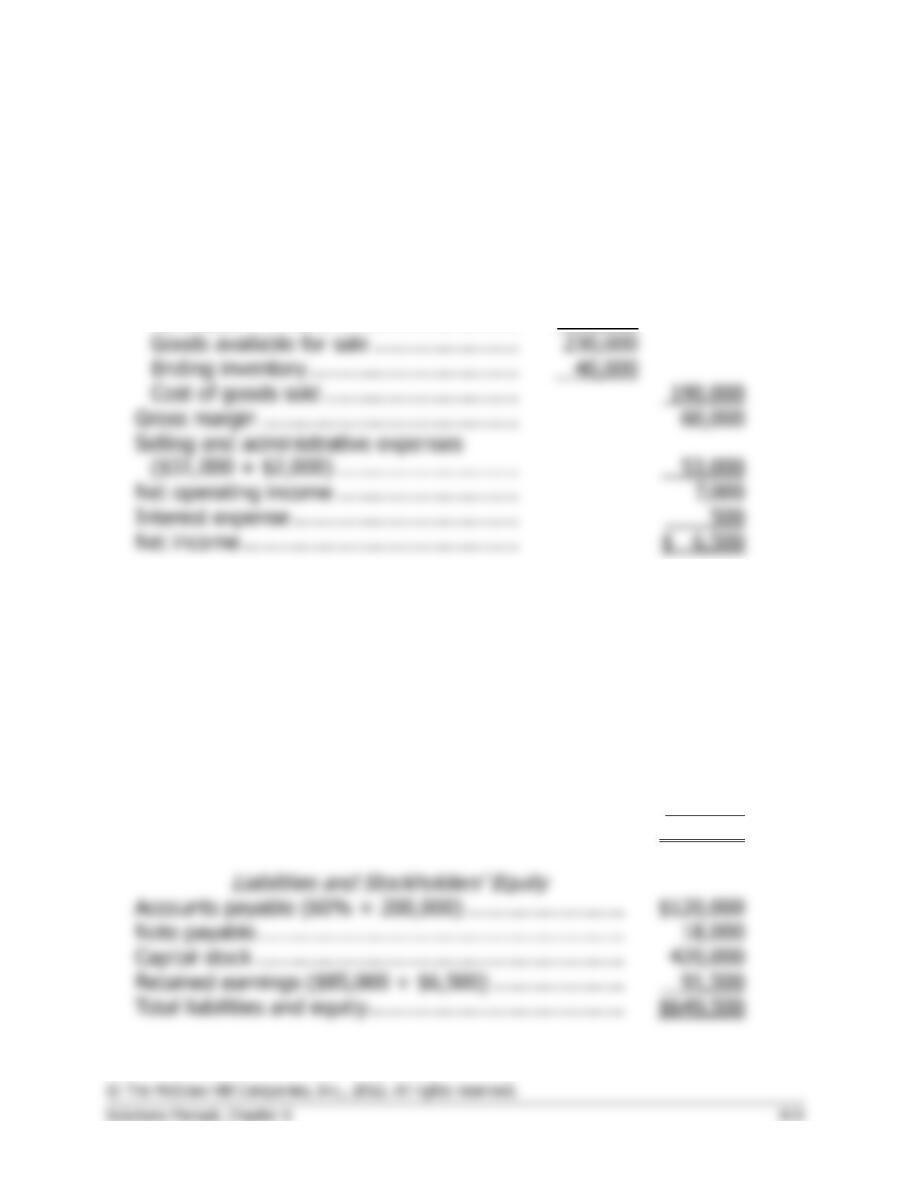
Goods available for sale …………………..
Gross margin …………………………………..
60,000
Selling and administrative expenses
Net operating income ………………………..
Interest expense …………………………..….
500
Net income ……………………………………..
3.
Phototec, Inc.
Budgeted Balance Sheet
June 30
Assets
Cash ……………………………………………………………..
$ 7,500
Accounts receivable (50% × 190,000) ………………….
95,000
Inventory ……………………………………………………….
40,000
Buildings and equipment, net of depreciation
($500,000 + $9,000 – $2,000) …………………………
507,000
Total assets …………………………..………………………..
$649,500
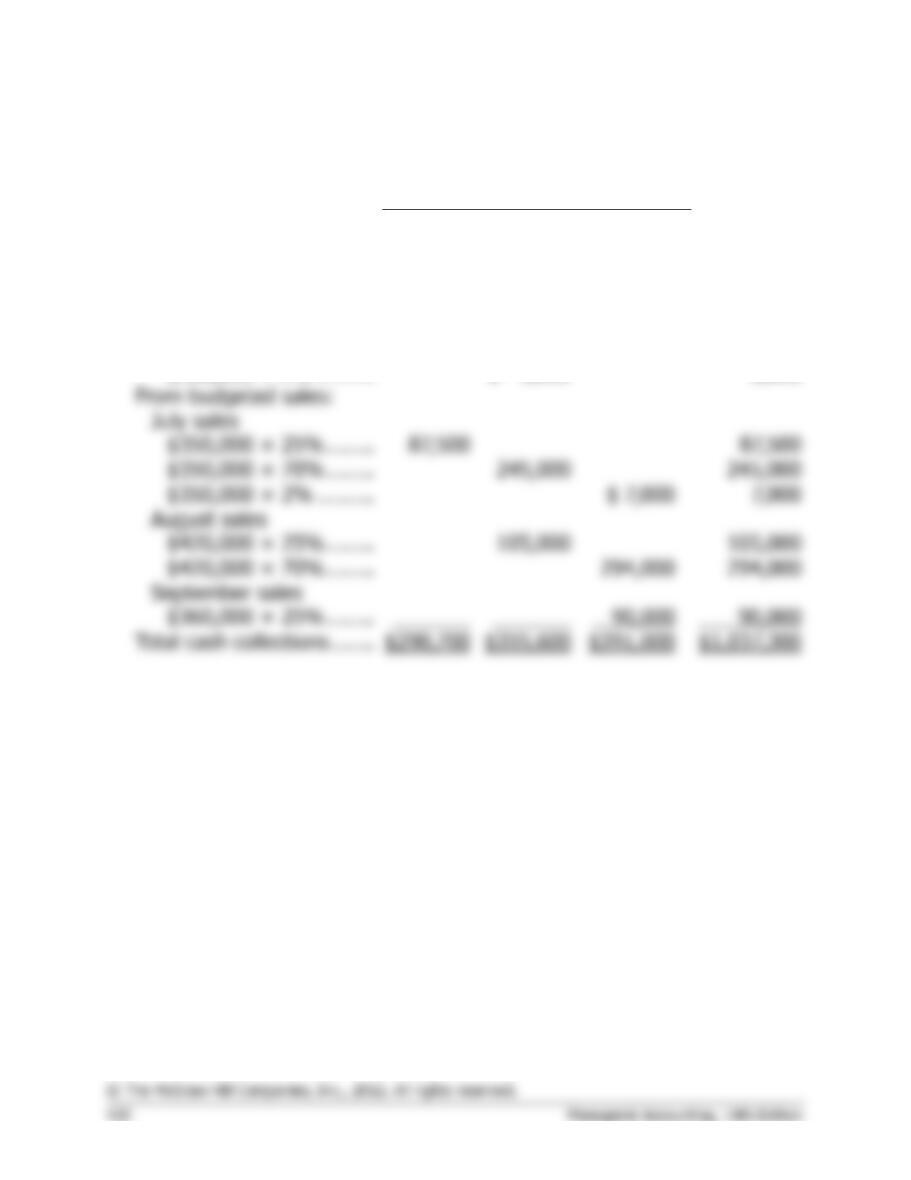
Accounts payable (60% × 200,000) …………………….
$120,000
Note payable …………………………..………………………
18,000
Capital stock …………………………………………………..
Retained earnings ($85,000 + $6,500) …………………
Total liabilities and equity …………………………………..
$649,500
Problem 8-21 (45 minutes)
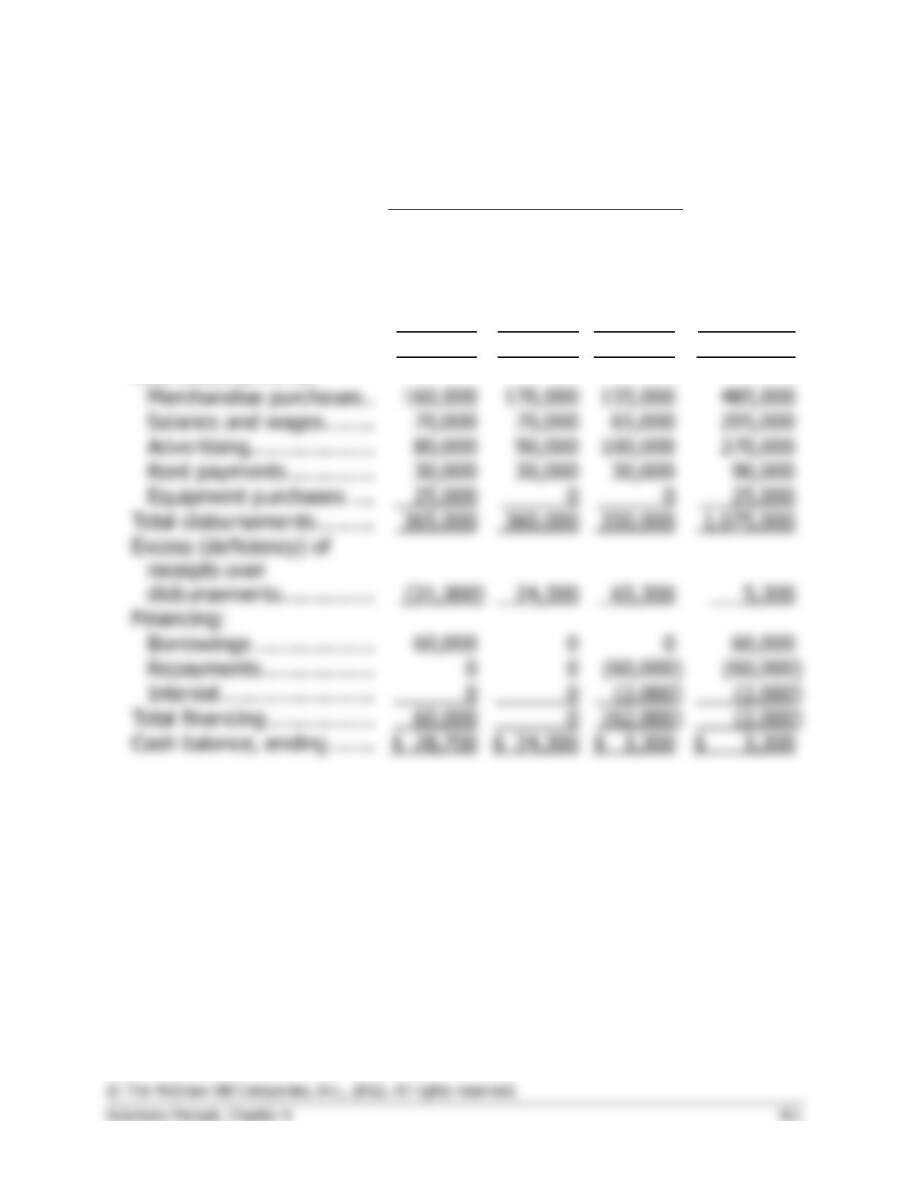
1. Schedule of expected cash collections:
Month
July
August
September
Quarter
From accounts receivable:
May sales
$360,000 × 2% ………
$ 7,200
$ 7,200
June sales
$280,000 × 70% ……..
196,000
196,000
$280,000 × 2% ………
$ 5,600
5,600
July sales
$350,000 × 25% ……..
$350,000 × 2% ………
August sales
294,000
$391,000
Problem 8-21 (continued)
2. Cash budget:
Month
July
August
Sept.
Quarter
Cash balance, beginning …
$ 43,000
$ 28,700
$ 24,300
$ 43,000
Add receipts:
Collections from
customers ………………
290,700
355,600
391,000
1,037,300
Total cash available ……….
333,700
384,300
415,300
1,080,300
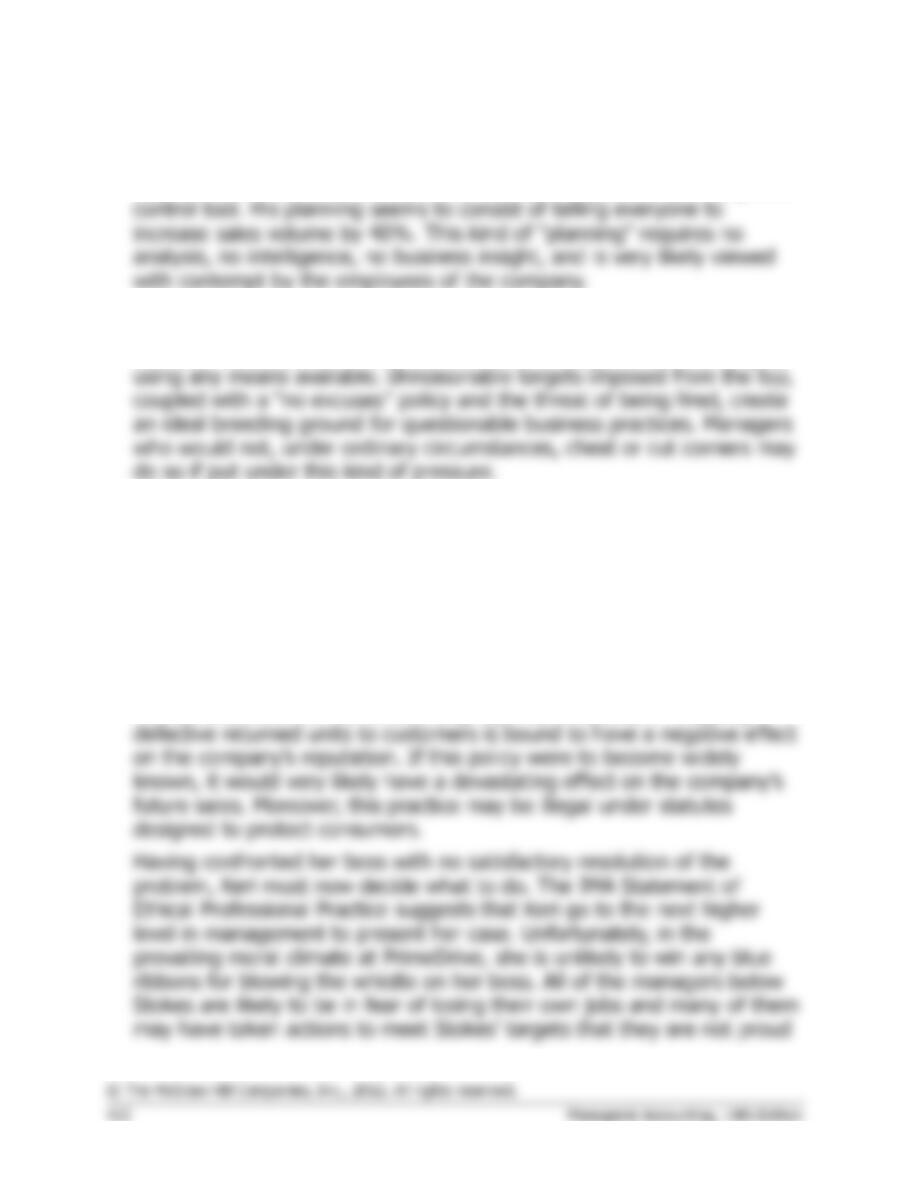
Less disbursements:
0
Total disbursements ………
350,000
1,075,000
24,300
Financing:
(2,000)
(2,000)
Total financing ……………..
(2,000)
Cash balance, ending …….
$ 28,700
3. If the company needs a $20,000 minimum cash balance to start each
month, then the loan cannot be repaid in full by September 30. If the
loan is repaid in full, the cash balance will drop to only $3,300 on
September 30, as shown above.
Problem 8-22 (45 minutes)
1. Stokes is using the budget as a club to pressure employees and as a
way to find someone to blame rather than as a legitimate planning and
2. The way in which the budget is being used is likely to breed hostility,
tension, mistrust, lack of respect, and actions designed to meet targets
3. As the old saying goes, Keri Kalani is “between a rock and a hard place.”
The IMA Statement of Ethical Professional Practice states that
management accountants have a responsibility to “disclose all relevant
information that could reasonably be expected to influence an intended
user’s understanding of the reports, analyses, or recommendations.”
Assuming that Keri helps prepare the Production Department’s reports to
top management, collaborating with her boss in hiding losses due to
defective disk drives would clearly violate this standard. Apart from the
misrepresentation on the accounting reports, the policy of shipping
Problem 8-22 (continued)
of either. It would take tremendous courage for Keri to take the problem
all the way up to Stokes himself—particularly in view of his less-than-
humane treatment of subordinates. And going to the Board of Directors
is unlikely to work either since Stokes and his venture capital firm
apparently control the Board. Resigning by writing a letter to the
individual who is most likely to be concerned and capable of taking
action may be Keri’s only remaining ethical course of action. Of course,
she must pay her rent, so hopefully she has good alternative
employment opportunities.
Problem 8-23 (45 minutes)
1. Schedule of expected cash collections:
Month
April
May
June
Quarter
From accounts receivable .
$141,000
$ 7,200
$148,200
From April sales:
20% × 200,000 …………
40,000
40,000
75% × 200,000 …………
150,000
150,000
4% × 200,000 …………..
75% × 300,000 …………
225,000
225,000
From June sales:
20% × 250,000 …………
Total cash collections …….
Problem 8-23 (continued)
2. Cash budget:
Month
April
May
June
Quarter
Cash balance,
beginning ………………
$ 26,000
$ 27,000
$ 20,200
$ 26,000
Add receipts:
681,200
Less disbursements:
Merchandise
Payroll …………………..
26,000
Lease payments ………
Advertising …………….
210,000
Equipment purchases .
8,000
—
8,000
Collections from
Total disbursements …..
210,000
224,000
263,000
697,000
Excess (deficiency) of
receipts over
disbursements ………..
(3,000)
20,200
40,200
10,200
Financing:
Borrowings …………….
30,000
—
—
30,000
Repayments …………..
—
—
(30,000)
(30,000)
Interest …………………
—
—
(1,200)
(1,200)
Total financing ………….
30,000
—
(31,200)
(1,200)
Cash balance, ending …
$ 27,000
$ 20,200
$ 9,000
$ 9,000
Problem 8-24 (60 minutes)
1. a. Schedule of expected cash collections:
Year 2 Quarter
First
Second
Third
Fourth
Total
Year 1—Fourth quarter sales:
$300,000 × 65% …………………..
$195,000
$ 195,000
Year 2—First quarter sales:
$400,000 × 33% …………………..
132,000
132,000
$400,000 × 65% …………………..
$260,000
260,000
Year 2—Second quarter sales:
$500,000 × 65% …………………..
$325,000
325,000
Year 2—Third quarter sales:
$600,000 × 65% …………………..
$390,000
390,000
Year 2—Fourth quarter sales:
Total cash collections ………………..
$425,000
$523,000
$548,400
Problem 8-24 (continued)
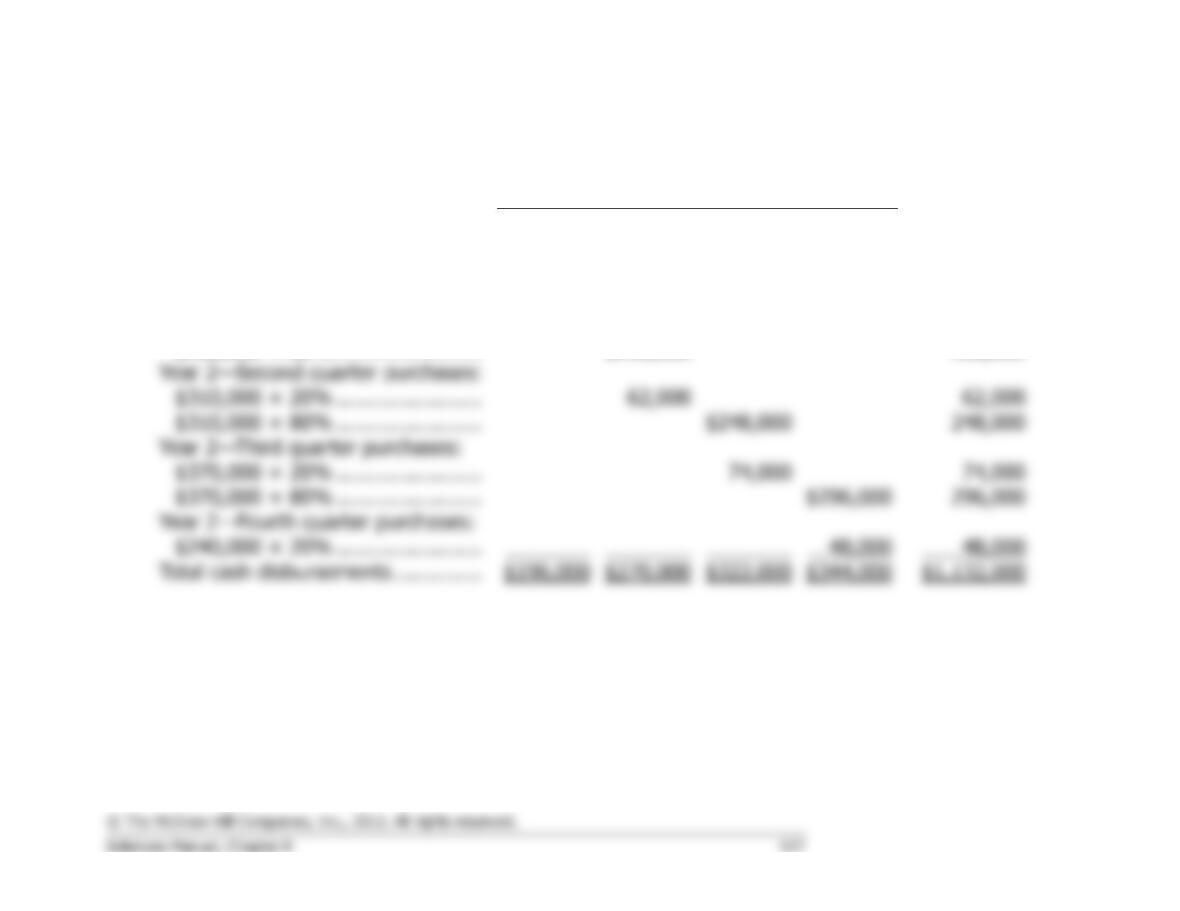
b. Schedule of budgeted cash disbursements for merchandise purchases:
Year 2 Quarter
First
Second
Third
Fourth
Total
Year 1—Fourth quarter purchases:
$180,000 × 80% …………………..
$144,000
$ 144,000
Year 2—First quarter purchases:
$260,000 × 20% …………………..
52,000
52,000
$260,000 × 80% …………………..
$208,000
208,000
Year 2—Second quarter purchases:
$310,000 × 80% …………………..
$248,000
248,000
Year 2—Third quarter purchases:
$370,000 × 80% …………………..
$296,000
296,000
Year 2—Fourth quarter purchases:
Total cash disbursements …………..
$196,000
$270,000
$322,000
$344,000