Continuing Case Solution
Chapter 7
Part I
Memorandum
To: Eric Conner and Phil Martin, CM2
From: L. Harbach
Re: Bad Debt Expense
Date: January 9, 2013
The accrual-based accounting system under GAAP requires that revenues and
expenses be matched in the period in which they are earned or incurred,
respectively. The direct write-off approach does not match the cost of bad debts
Continuing Case Solution
Part II
Memorandum
To: Eric Conner and Phil Martin, CM2
From: L. Harbach
Re: Sales and Trade Discounts
Date: January 9, 2013
The terms 2/10, n/30 and 4/15, n/45 are descriptions of payment terms offered
to customers, with the first term
offered and the normal (no
discount) payment terms. The terms 2/10, n/30 give the customer a 2% sales
Offering sales discounts to clients encourages prompt payment and can even
boost sales because of the incentive given to customers to save money by
utilizing the sales discount offered. The down side is that sales discounts taken
reduce the amount of cash the company receives for a particular sale.
A trade discount differs from a sales discount in that it is a quoted percentage off
of a list price for merchandise. Trade discounts are generally offered to large–
Continuing Case Solution
Additional Activity: Extend your accounting knowledge
Memorandum
To: Eric Conner and Phil Martin, CM2
From: L. Harbach
Re: Accounts Receivable Management
Date: January 9, 2013
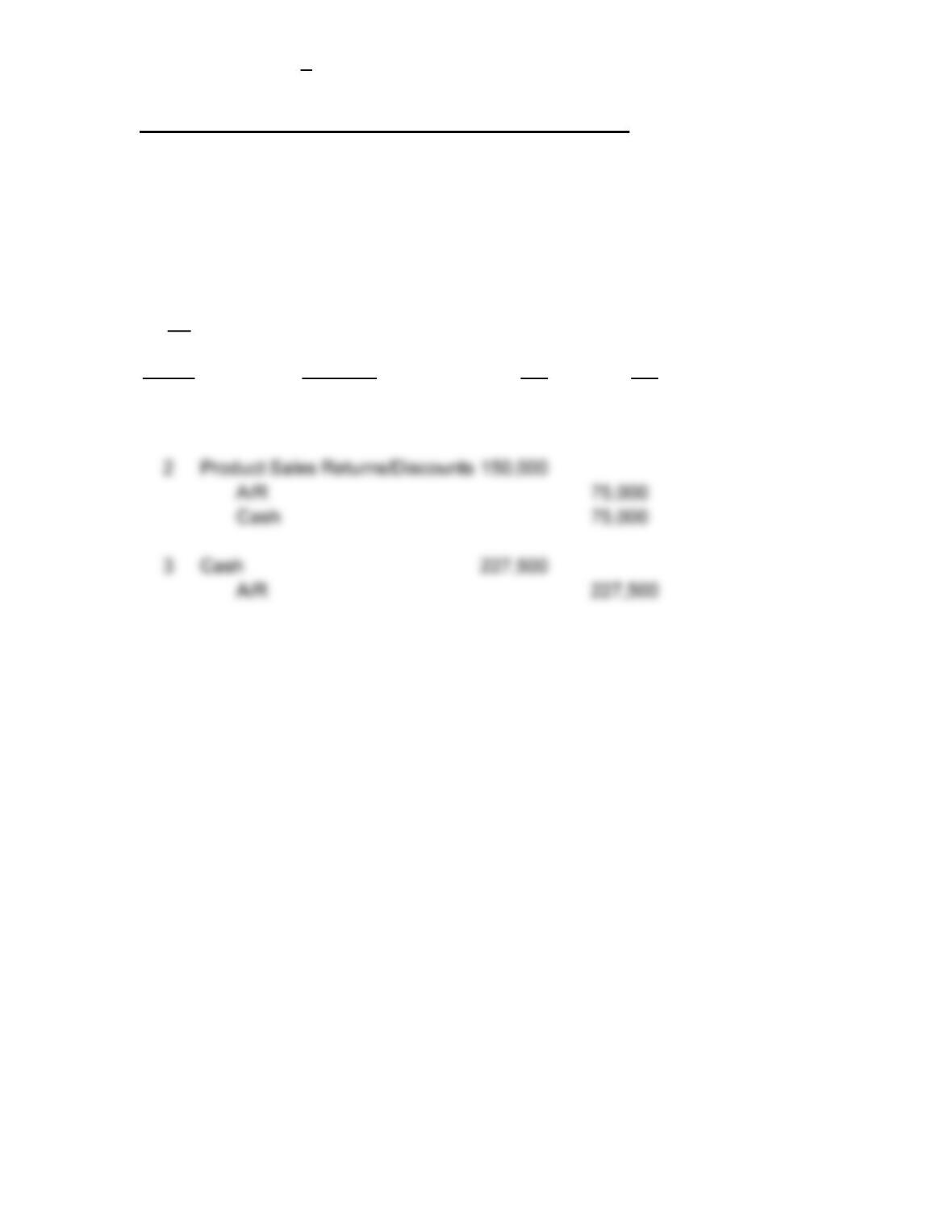
(a)
AJE #
Account DR CR
1 A/R
455,000
Product Revenue 455,000
Continuing Case Solution
(b) An analysis of accounts receivable shows that the current management of
receivables can be improved. The rationale for this conclusion is as follows:
1. The ratio of Allowance for Doubtful Accounts to Accounts Receivable is
projected to be 0.1114 in 2013, compared to 0.1310 in 2012. Considering that
the balance of accounts receivable is projected to increase from $782,080 in
2. After adjustments for the anticipated increases in bad debt expense the
following results occur: The projected accounts receivable turnover, which
measures how quickly the accounts receivable are collected, drops from 17 times
per year (2013) to 12 times a year (2012); thus the collection of accounts is much
slower. The collection period increases from 21 days to 30 days, implying the
cash will come in much more slowly. Neither of these numbers bodes well for a
In conclusion, after analyzing the above ratios and those of a competitor, I see
room for improvement in the management of our Accounts Receivable. Offering
more liberal credit terms may indeed increase sales but will also be likely to
Continuing Case Solution
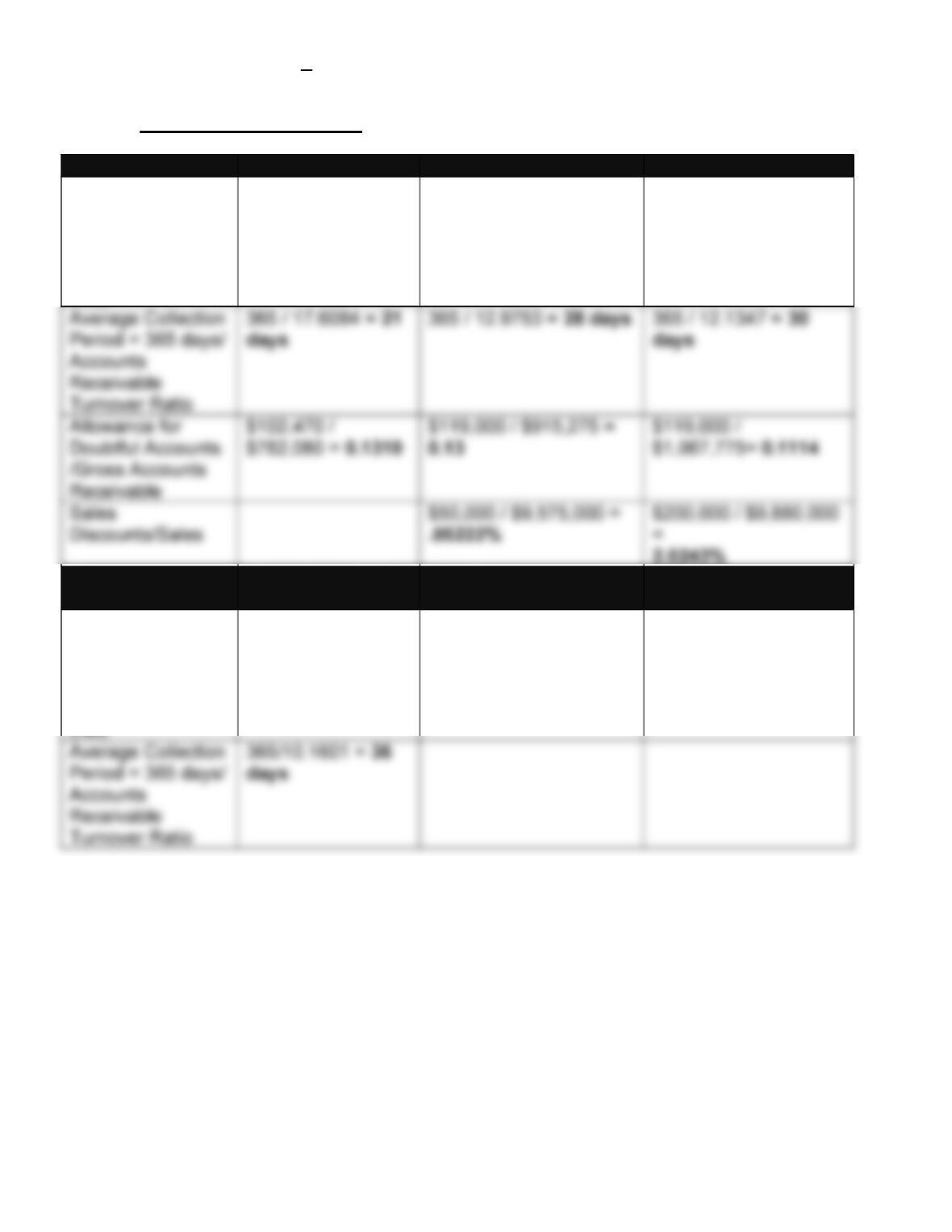
Supporting Calculations:
2012 2013 Original 2013Adjusted
Accounts
Receivable
Turnover = Net
Sales/ Average
Trade Receivables
(net)
$9,994,329 /
($679,610 +
$491,479/2)=
17.0684
$9,575,000 / ($796,275
+ $679,610/2) = 12.9753
$9,880,000 / ($948,775
+ $679,610/2) =
12.1347
Cisco
Calculations
*Based on 2012
Financials
In millions
Accounts
Receivable
Turnover = Net
Sales/ Average
Trade Receivables
$36,117 / ($4,369 +
$4,698/2) =
10.1601