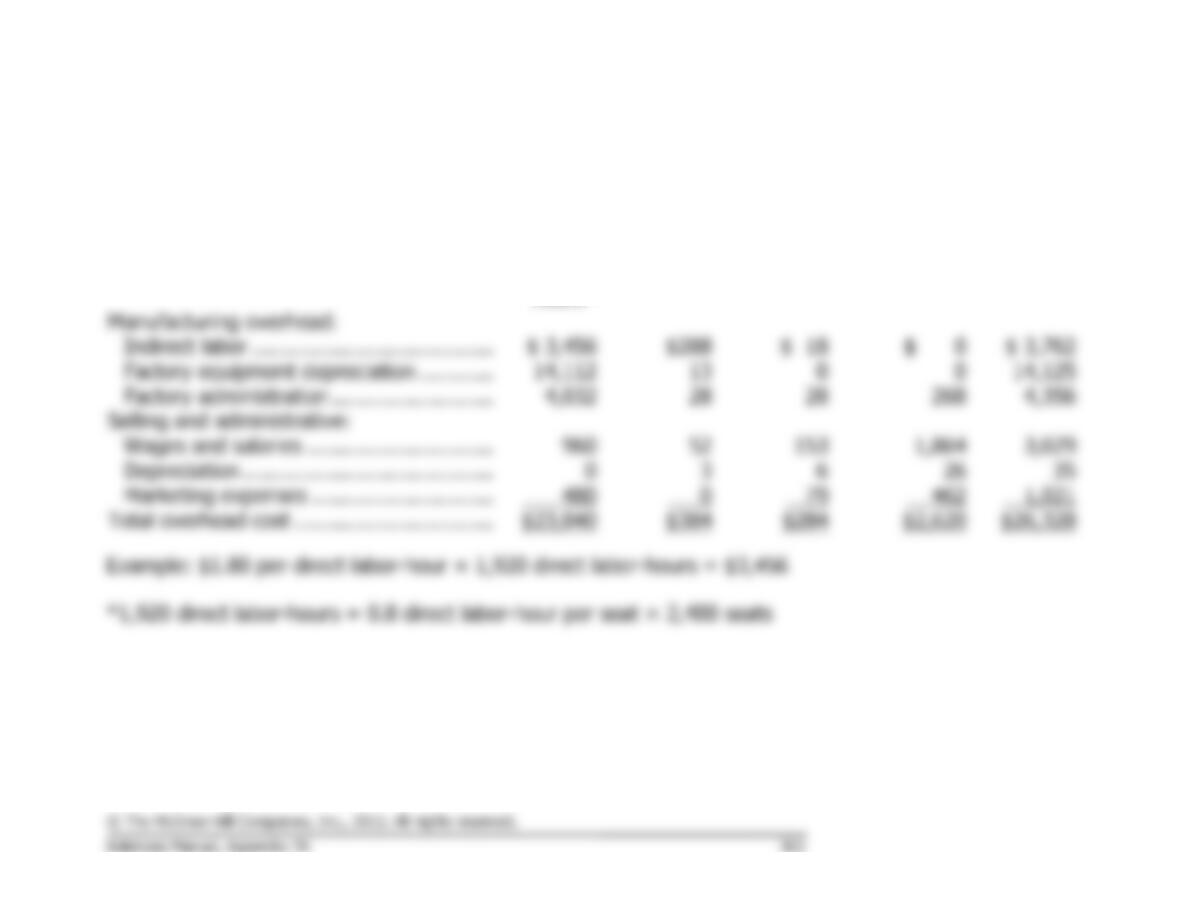
Exercise 7A-3 (30 minutes)
Supporting
Direct
Labor
Batch
Processing
Order
Processing
Customer
Service
Total
Total activity for the order …………………..
1,920
4
1
1
direct labor-
hours*
batches
order
customer
Manufacturing overhead:
4,356
Selling and administrative:
0
Total overhead cost …………………………..
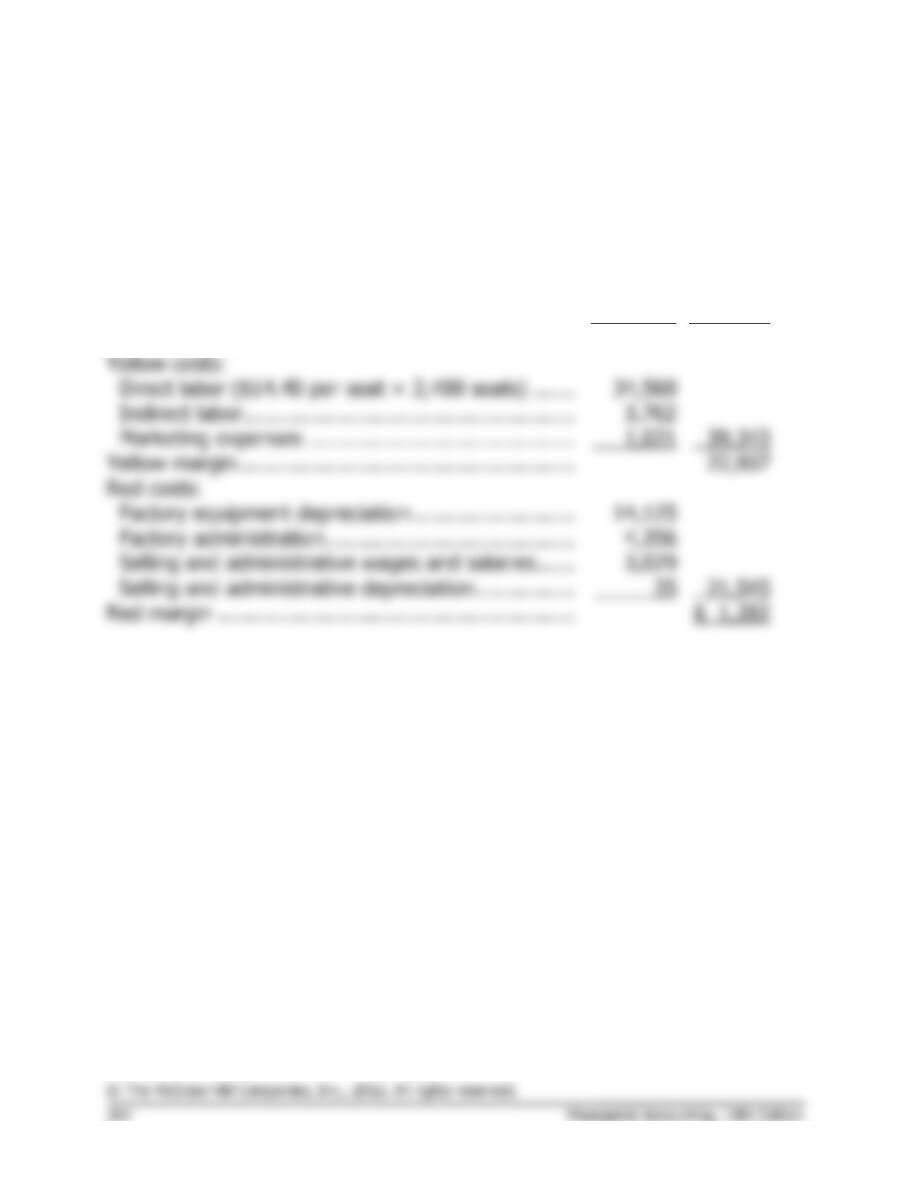
Exercise 7A-3 (continued)
The action analysis report for the customer can be constructed using the
row totals from the activity rate table, organized according to the ease of
adjustment codes.
Sales ($137.95 per seat × 2,400 seats) ……………..
$331,080
Green costs:
Direct materials ($112 per seat × 2,400 seats) ….
$268,800
268,800
Green margin ………………………………………………
62,280
Indirect labor ……………………………………………..
Yellow margin ………………………………………………
22,937
Red costs:
Factory administration ………………………………….
Selling and administrative depreciation …………….
35
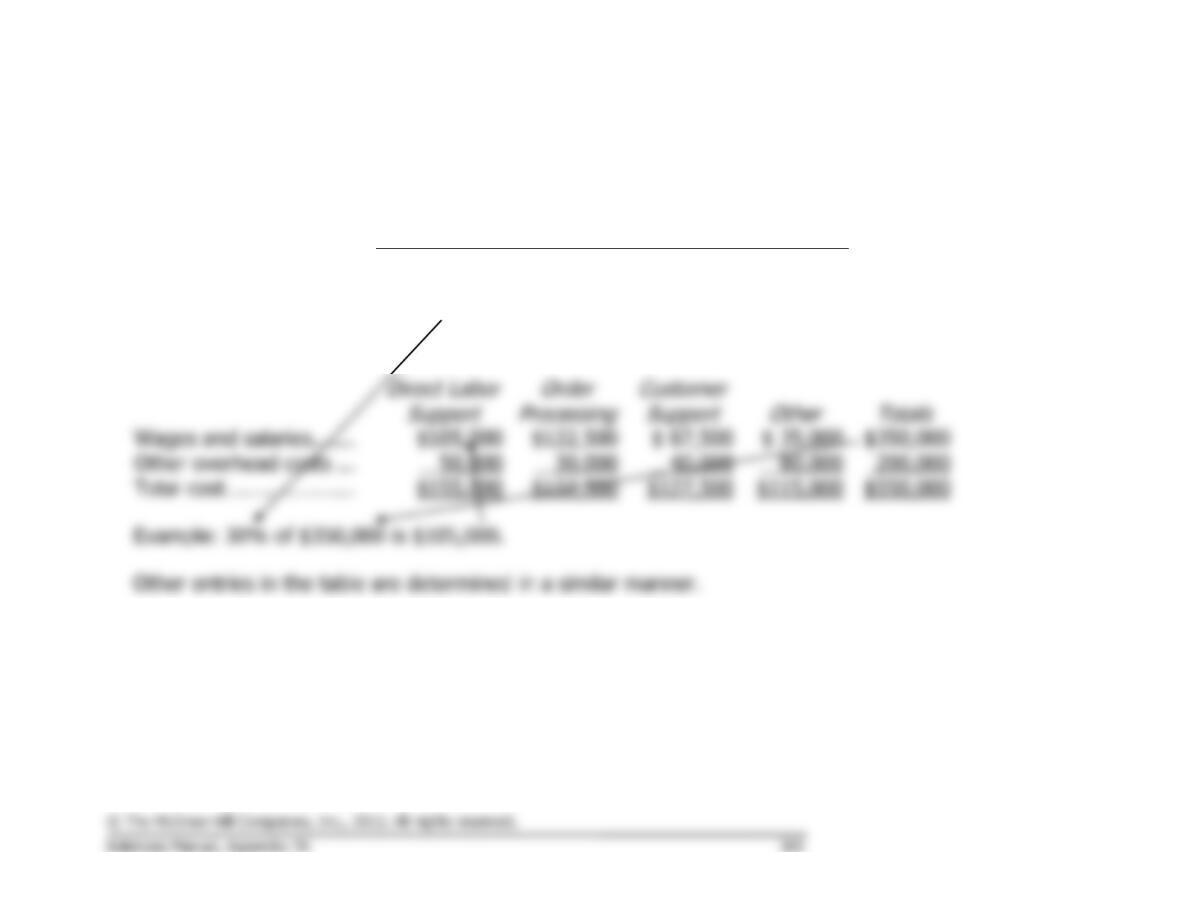
Exercise 7A-4 (60 minutes)
1. First-stage allocations of overhead costs to the activity cost pools:
Distribution of Resource Consumption
Across Activity Cost Pools
Direct Labor
Support
Order
Processing
Customer
Support
Other
Totals
Wages and salaries …….
30%
35%
25%
10%
100%
Other overhead costs …
25%
15%
20%
40%
100%
Other
Totals
Wages and salaries …….
Total cost …………………
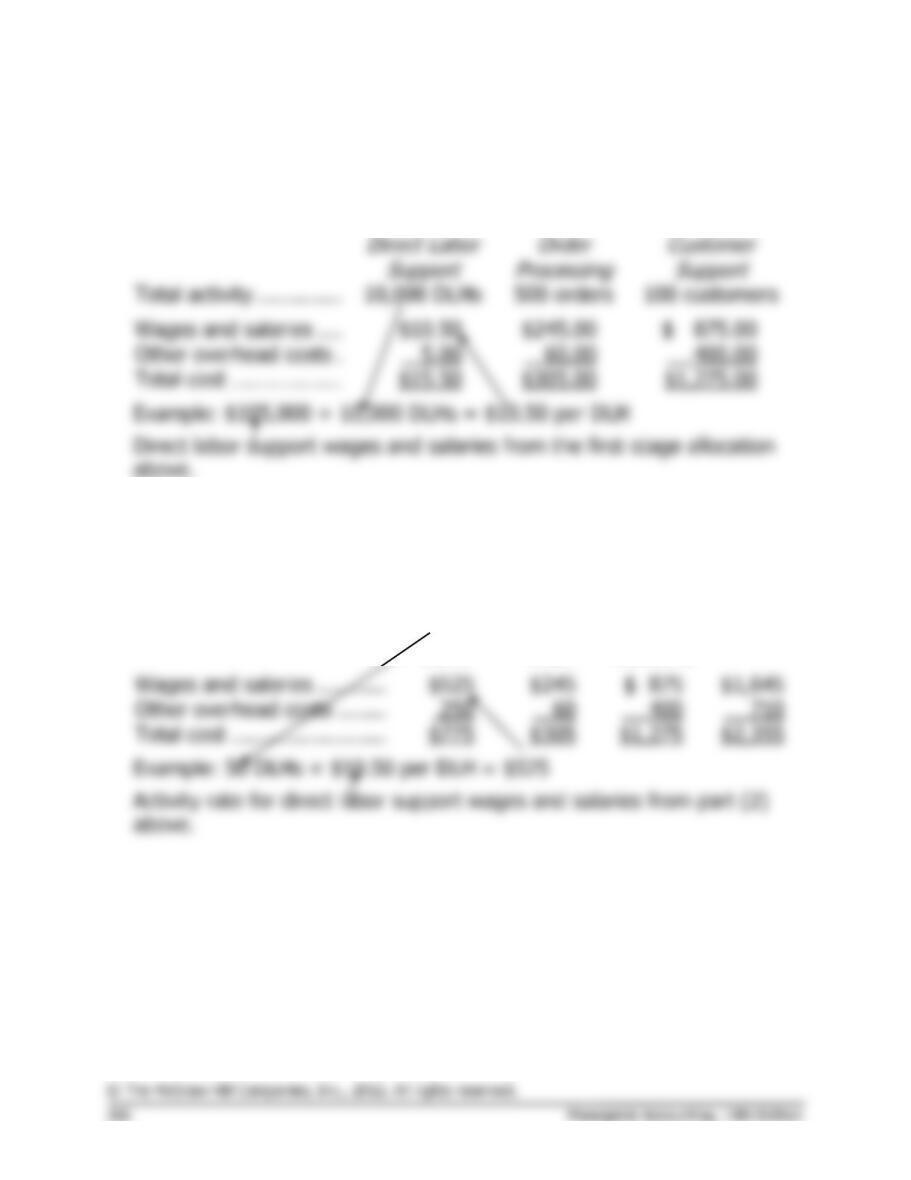
Exercise 7A-4 (continued)
2. The activity rates are computed by dividing the costs in the cells of the
first-stage allocation above by the total activity from the top of the
column.
Other overhead costs .
Total cost ………………
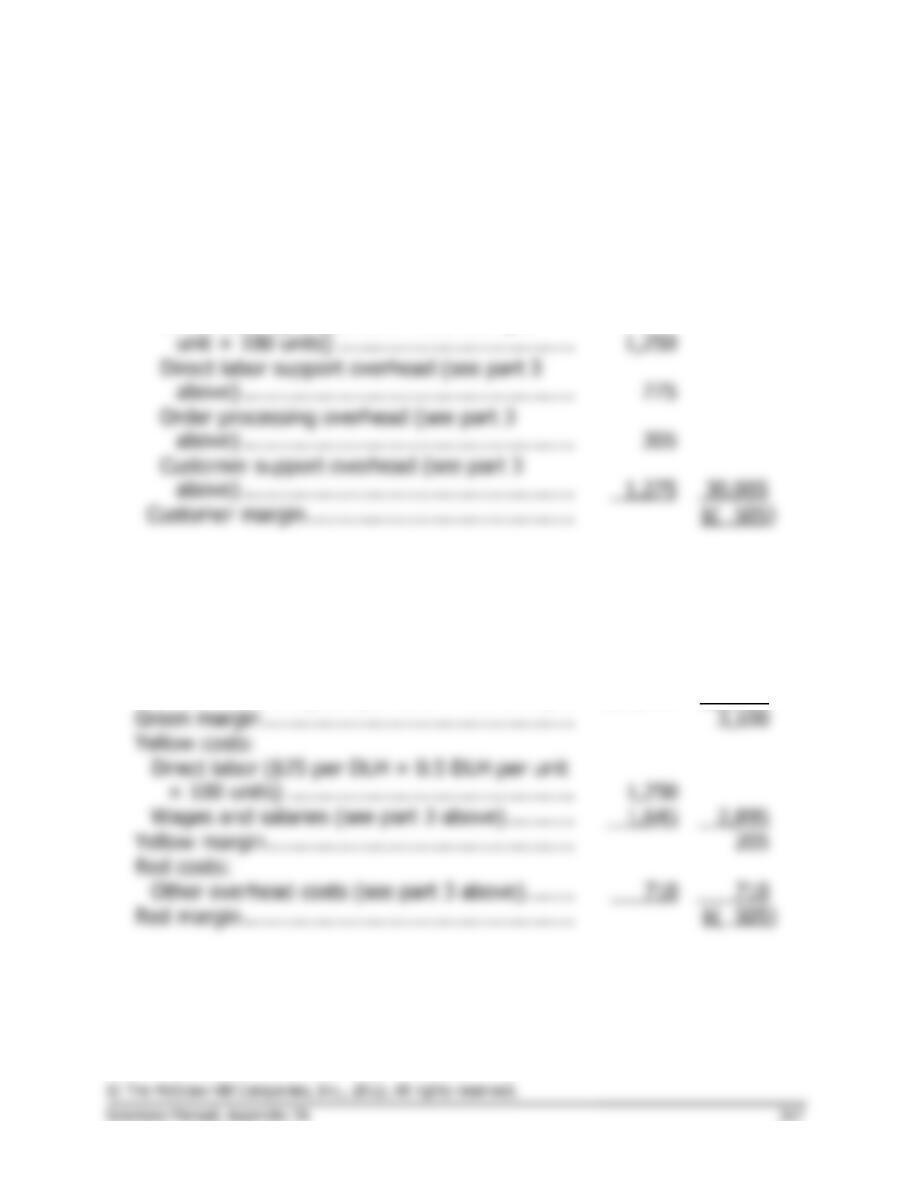
3. The overhead cost for the order is computed as follows:
Direct
Labor
Support
Order
Processing
Customer
Support
Total
Activity ………………………..
50
DLHs
1
order
1
customer
Exercise 7A-4 (continued)
4. The report can be constructed using the column totals at the bottom of
the overhead cost analysis in part (3) above.
Customer Margin—ABC Analysis
Sales (100 units × $295 per unit) ……………….
$29,500
Costs:
Direct materials ($264 per unit × 100 units) .
$26,400
Direct labor support overhead (see part 3
Order processing overhead (see part 3
30,005
Direct labor ($25 per DLH × 0.5 DLH per
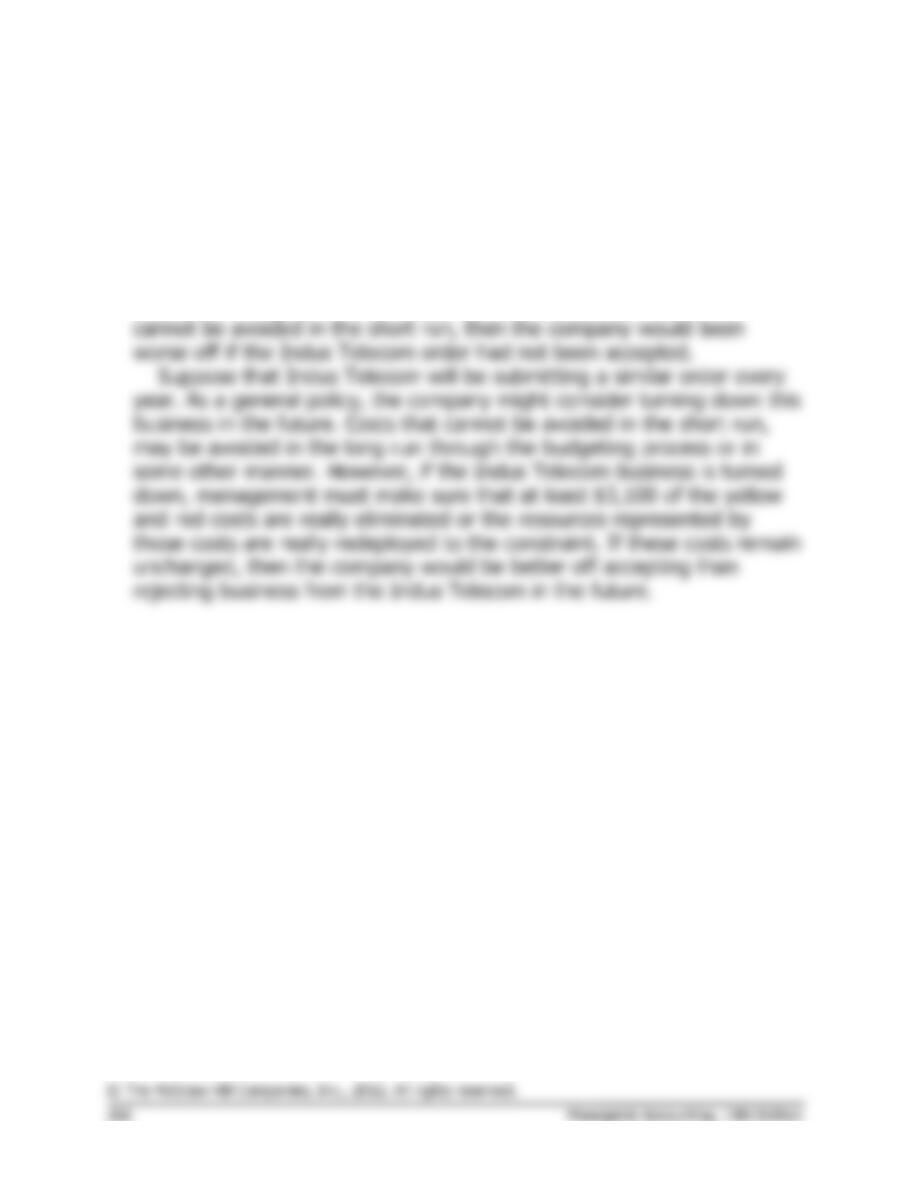
5. The action analysis report can be constructed using the row totals from
the activity rate table, organized according to the ease of adjustment
codes:
Sales ($295 per unit × 100 units) …………………
$29,500
Green costs:
Direct materials ($264 per unit × 100 units) …
$26,400
26,400
Wages and salaries (see part 3 above) ………..
1,645
Other overhead costs (see part 3 above) ……..
Red margin ……………………………………………..
Exercise 7A-4 (continued)
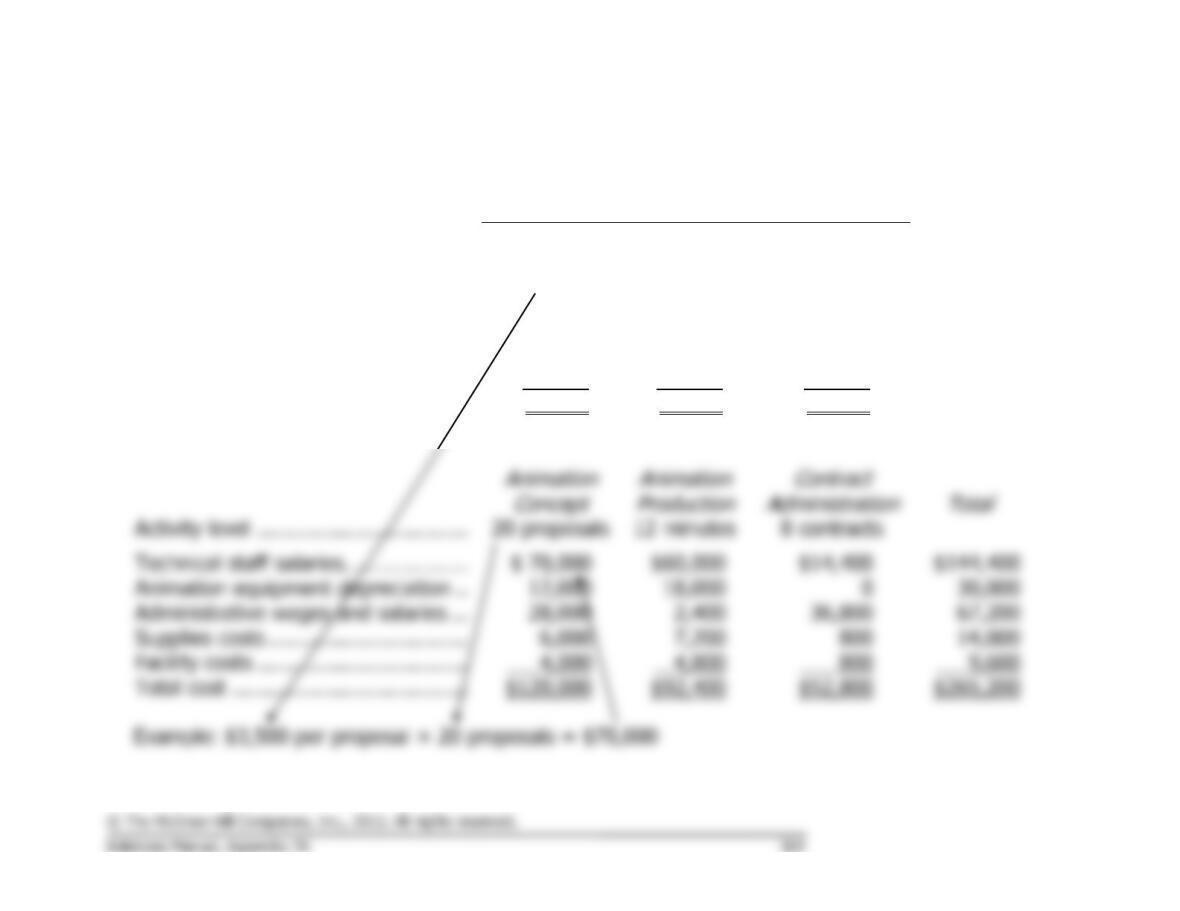
6. While the company appears to have incurred a loss on its business with
Indus Telecom, caution must be exercised. The green margin on the
business was $3,100. Silicon Optics really incurred a loss on this
business only if at least $3,100 of the yellow and red costs would have
been avoided if the Indus Telecom order had been rejected. For
example, we don’t know what specific costs are included in the “Other
overhead” category. If these costs are committed fixed costs that
Problem 7A–5 (30 minutes)
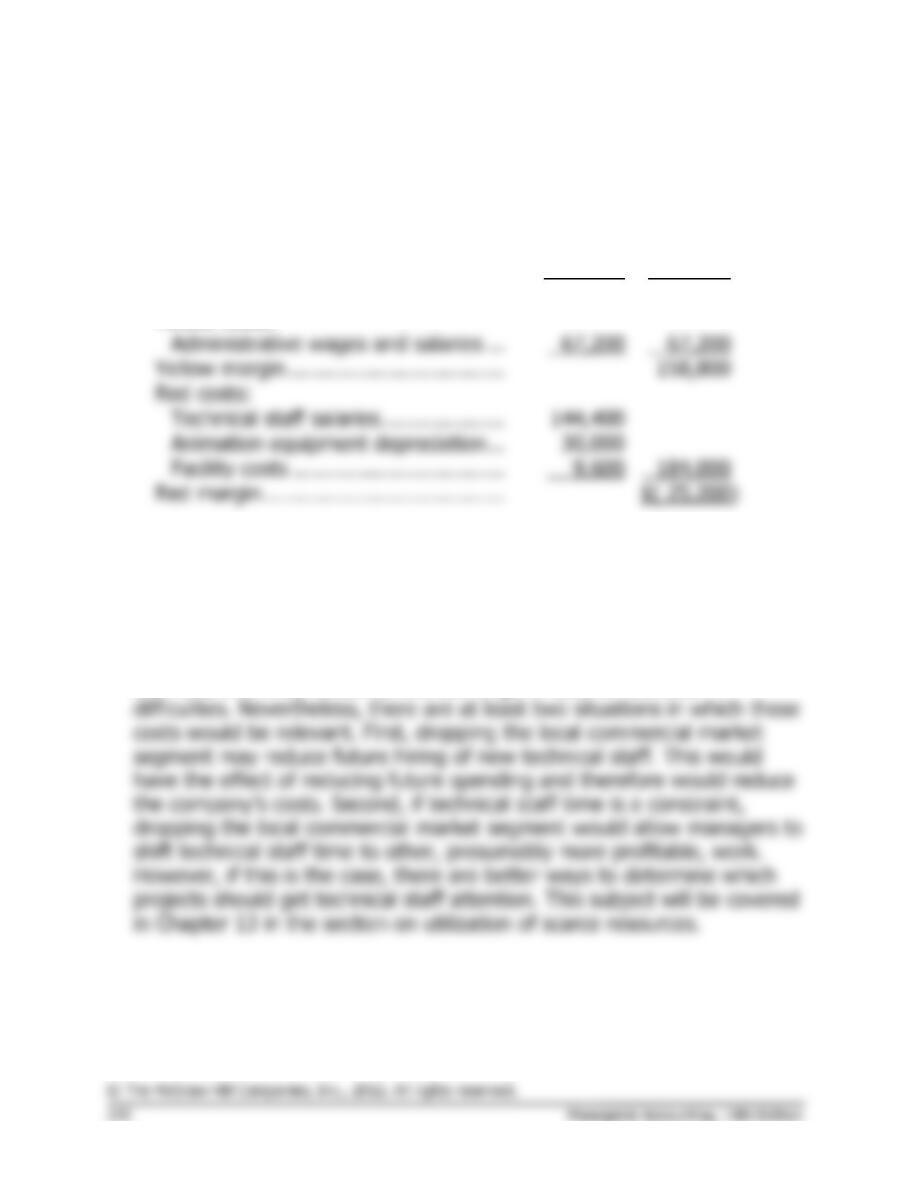
1. The detailed cost analysis of local commercials appears below:
Activity Rates
Animation
Concept
Animation
Production
Contract
Administration
Technical staff salaries……………….
$3,500
$5,000
$1,800
Animation equipment depreciation .
600
1,500
0
Administrative wages and salaries ..
1,400
200
4,600
Supplies costs ………………………….
300
600
100
Facility costs …………………………...
200
400
100
Total ……………………………………..
$6,000
$7,700
$6,600
Animation
Concept
Animation
Administration
20 proposals
2,400
6,000
7,200
800
14,000
Problem 7A-5 (continued)
2. The action analysis report is constructed by using the row totals from
the cost report in part (1) above:
Sales …………………………………………
$240,000
Green costs:
Supplies costs …………………………..
$ 14,000
14,000
Green margin ………………………………
226,000
Yellow costs:
Administrative wages and salaries …
67,200
Yellow margin ……………………………..
Red costs:
Technical staff salaries ………………..
Animation equipment depreciation …
Facility costs …………………………….
Red margin …………………………………
3. At first glance, it appears that the company is losing money on local
commercials. However, the action analysis report indicates that if this
market segment were dropped, most of the costs would probably
continue to be incurred. The nature of the technical staff salaries is
clearly critical because it makes up the bulk of the costs. Management
has suggested that the company’s most valuable asset is the technical
staff and that they would be the last to go in case of financial
Problem 7A-5 (continued)
Finally, the cost of the animation concept at the proposal stage is a
major drag on the profitability of the local commercial market. The
activity-based costing system, as currently designed, assumes that all
project proposals require the same effort. This may not be the case.
Appendix 7B
Using a Modified Form of Activity-Based
Costing to Determine Product Costs for
External Reports
Exercise 7B-1 (45 minutes)
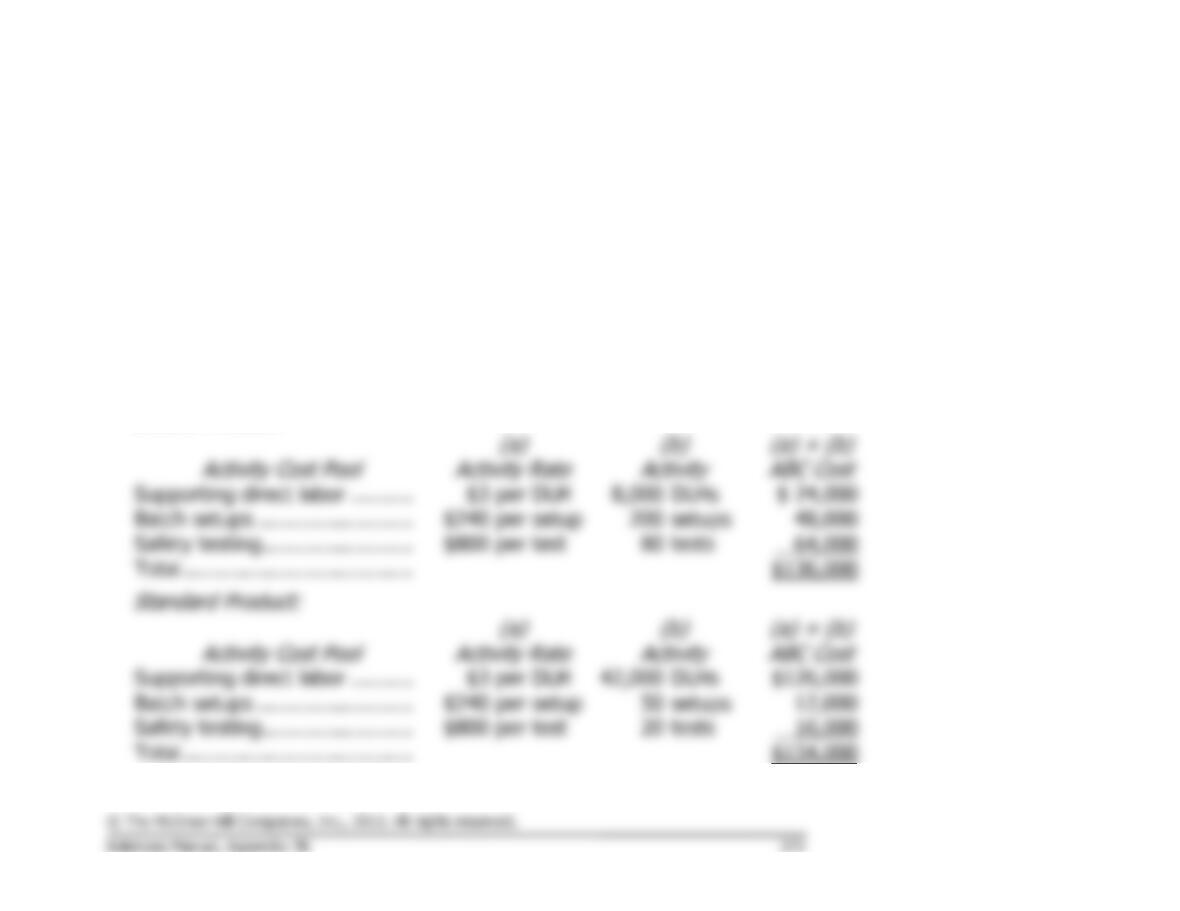
1. The predetermined overhead rate is computed as follows:
$290,000
Predetermined
= = $5.80 per DLH
overhead rate 50,000 DLHs
The unit product costs under the company’s traditional costing system
are computed as follows:
Exercise 7B-1 (continued)
2. The activity rates are computed as follows:
(a)
Estimated
(b)
Overhead
Total
(a) ÷ (b)
Activities
Cost
Expected Activity
Activity Rate
Supporting direct labor …
$150,000
50,000
DLHs
$3
per DLH
Batch setups ………………
$60,000
250
setups
$240
per setup
Safety testing …………….
$80,000
100
tests
$800
per test
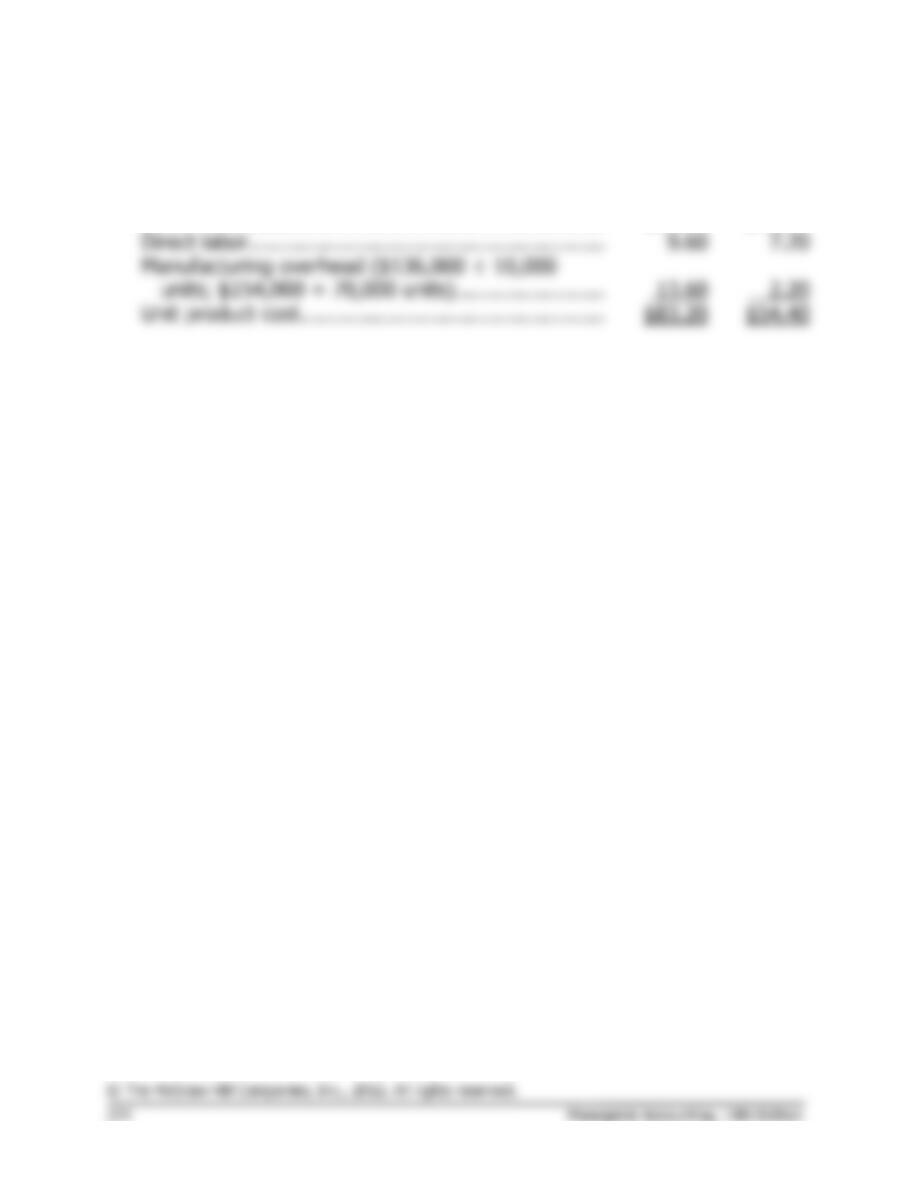
Manufacturing overhead is assigned to the two products as follows:
Deluxe Product:
64,000
Exercise 7B–1 (continued)
Activity-based costing unit product costs are computed as follows:
Deluxe
Standard
Direct materials ……………………………………………
$60.00
$45.00
Exercise 7-B2 (45 minutes)
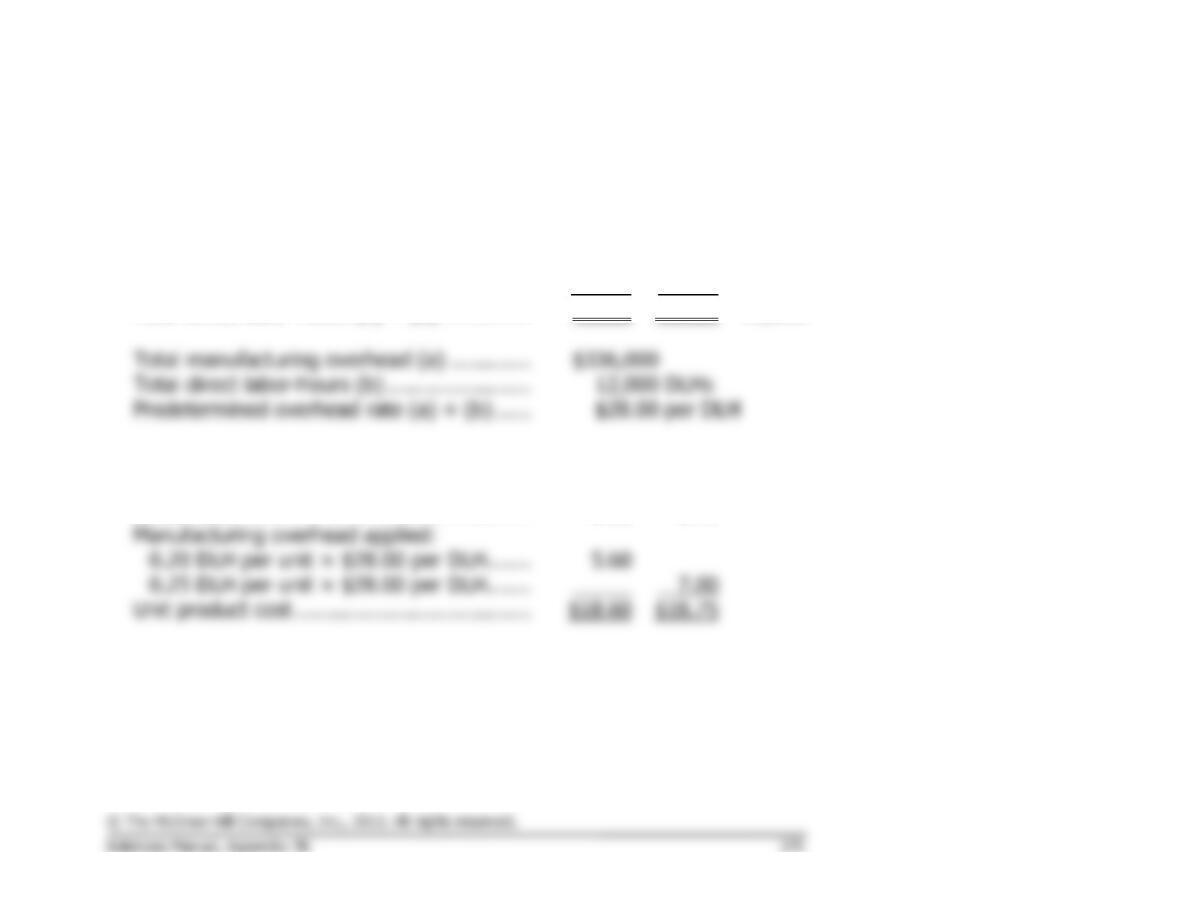
1. The unit product costs under the company’s conventional costing system would be computed as
follows:
Mercon
Wurcon
Total
Number of units produced (a) ……………….
10,000
40,000
Direct labor-hours per unit (b) ……………….
0.20
0.25
Total direct labor-hours (a) × (b) …………..
2,000
10,000
12,000
Total manufacturing overhead (a) ………….
Total direct labor-hours (b) …………………..
DLHs
Predetermined overhead rate (a) ÷ (b) ……
per DLH
Mercon
Wurcon
Direct materials ………………………………….
$10.00
$ 8.00
Direct labor ……………………………………….
3.00
3.75
Manufacturing overhead applied:
Unit product cost ………………………………..
$18.60
$18.75
Exercise 7B-2 (continued)
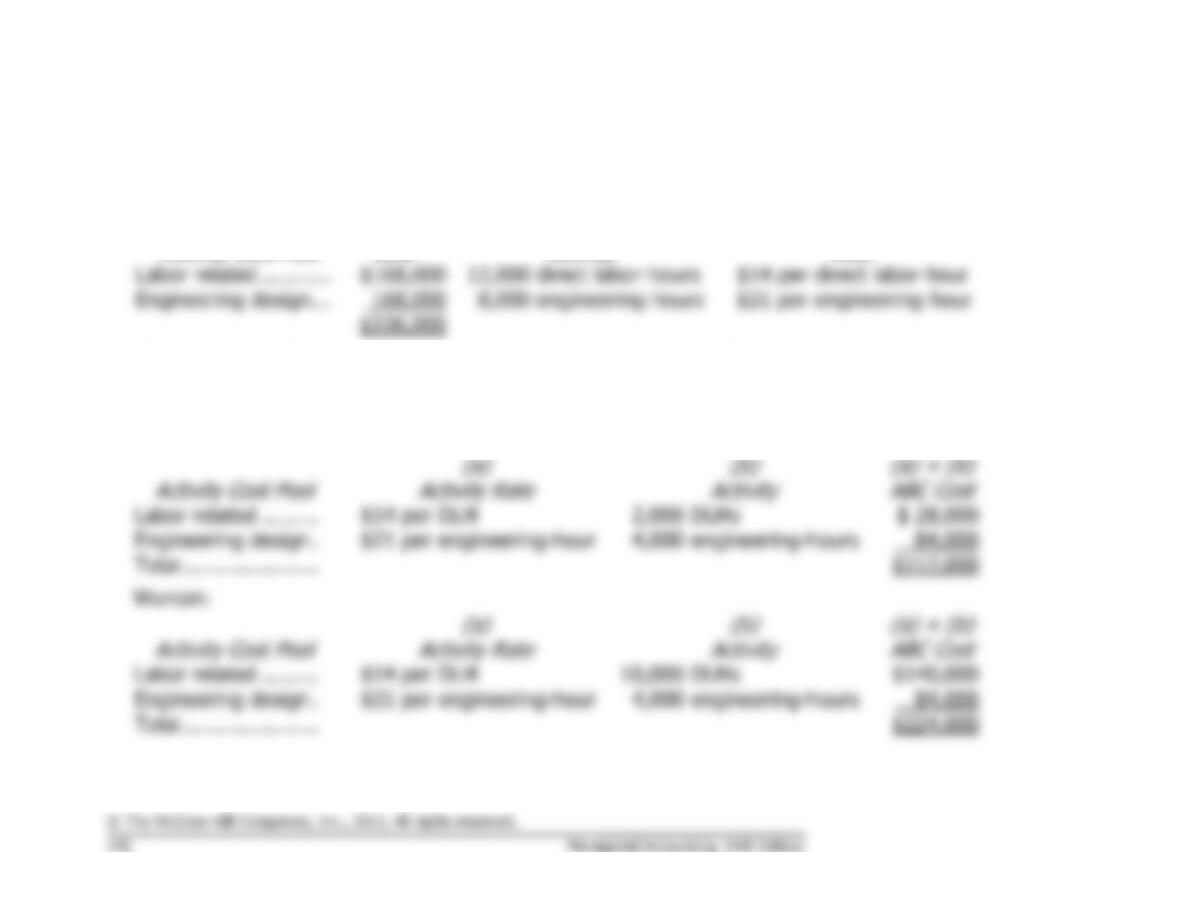
2. The unit product costs with the proposed ABC system can be computed as follows:
Activity Cost Pool
Estimated
Overhead
Cost*
(b)
Expected
Activity
(a) ÷ (b)
Activity
Rate
*The total manufacturing overhead cost is split evenly between the two activity cost pools.
Manufacturing overhead is assigned to the two products as follows:
Mercon: