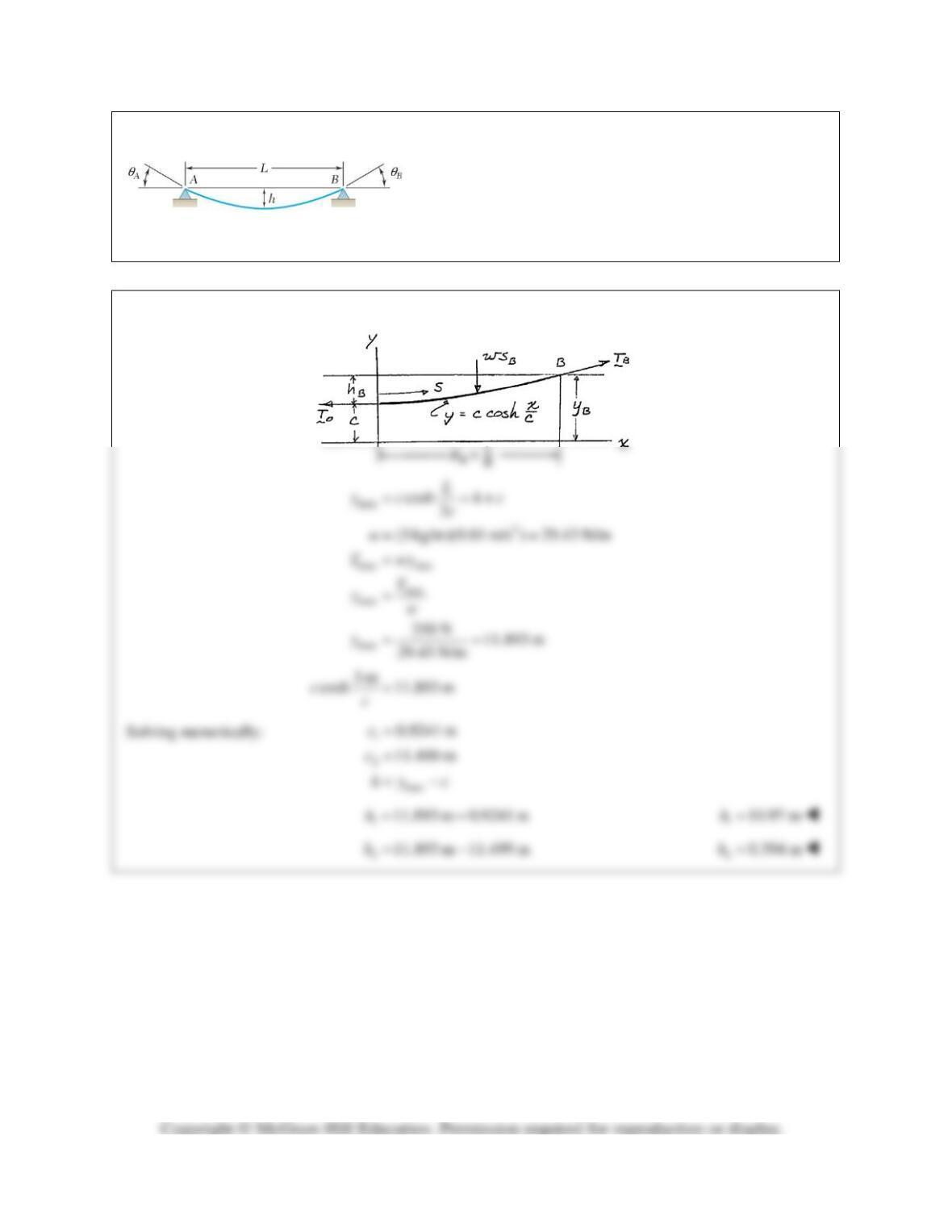
PROBLEM 7.151*
A cable has a mass per unit length of 3 kg/m and is
supported as shown. Knowing that the span L is 6 m,
determine the two values of the sag h for which the
maximum tension is 350 N.
SOLUTION
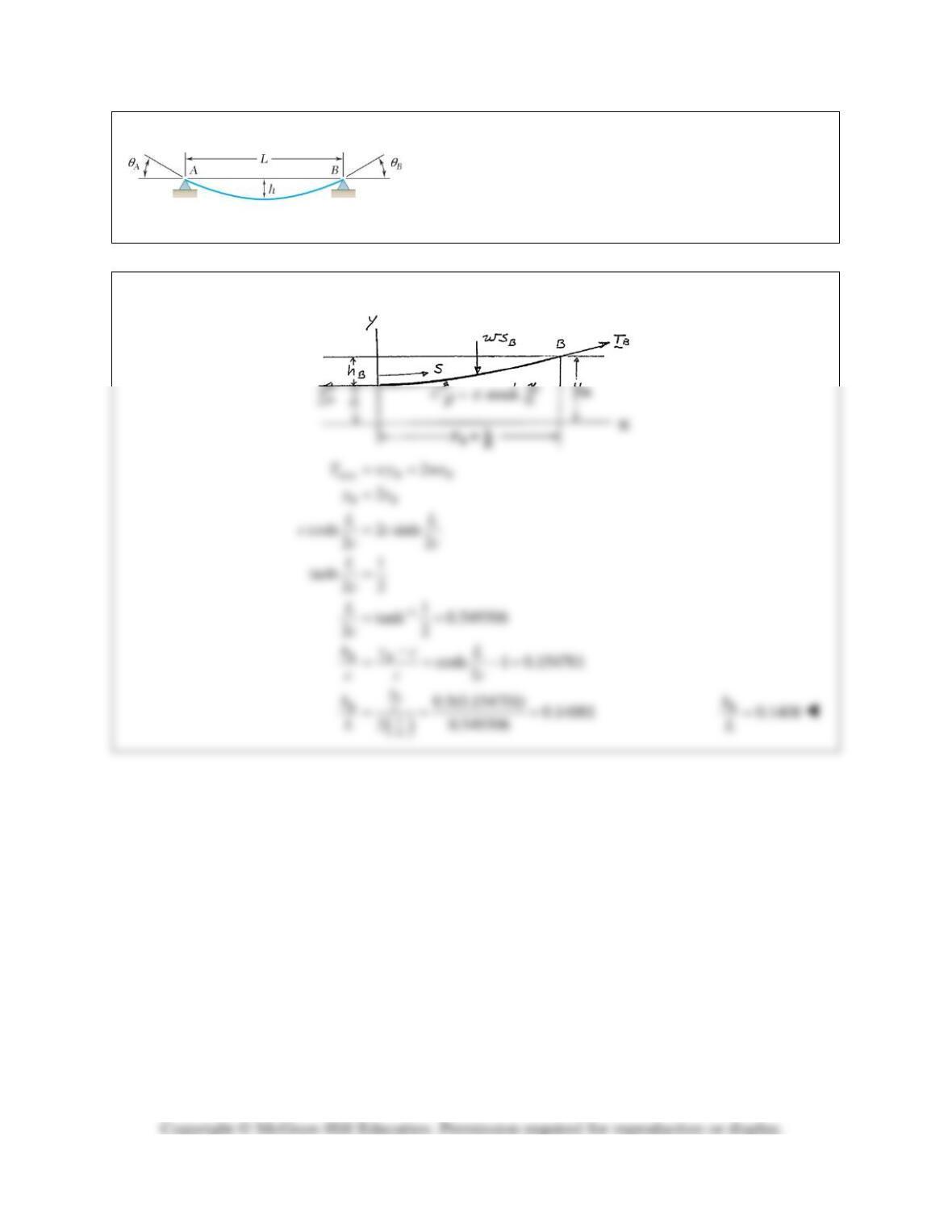
PROBLEM 7.152*
Determine the sag–to–span ratio for which the maximum
tension in the cable is equal to the total weight of the entire
cable AB.
SOLUTION
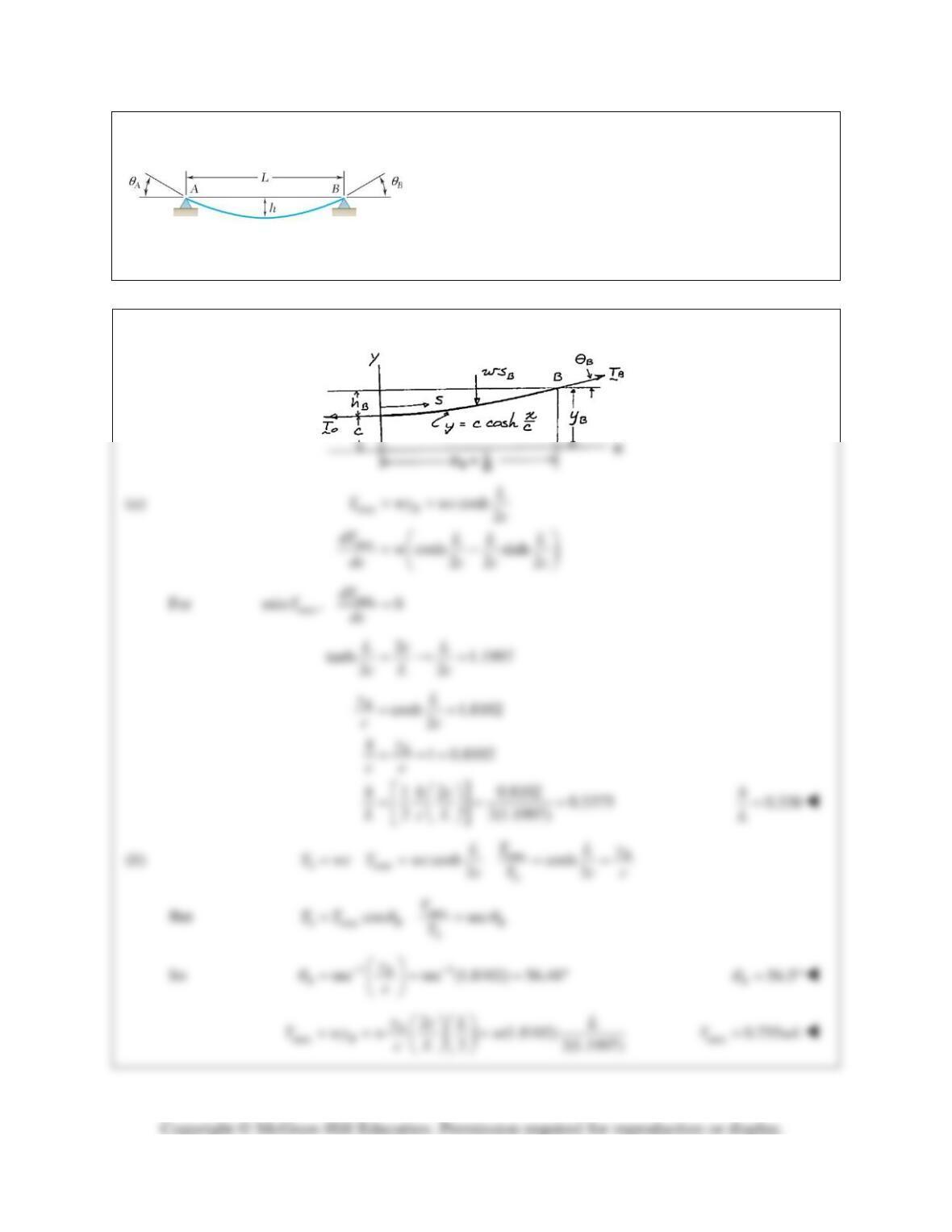
PROBLEM 7.153*
A cable of weight per unit length w is suspended between
two points at the same elevation that are a distance L apart.
Determine (a) the sag–to–span ratio for which the maximum
tension is as small as possible, (b) the corresponding values
of
θ
Band Tm.
SOLUTION
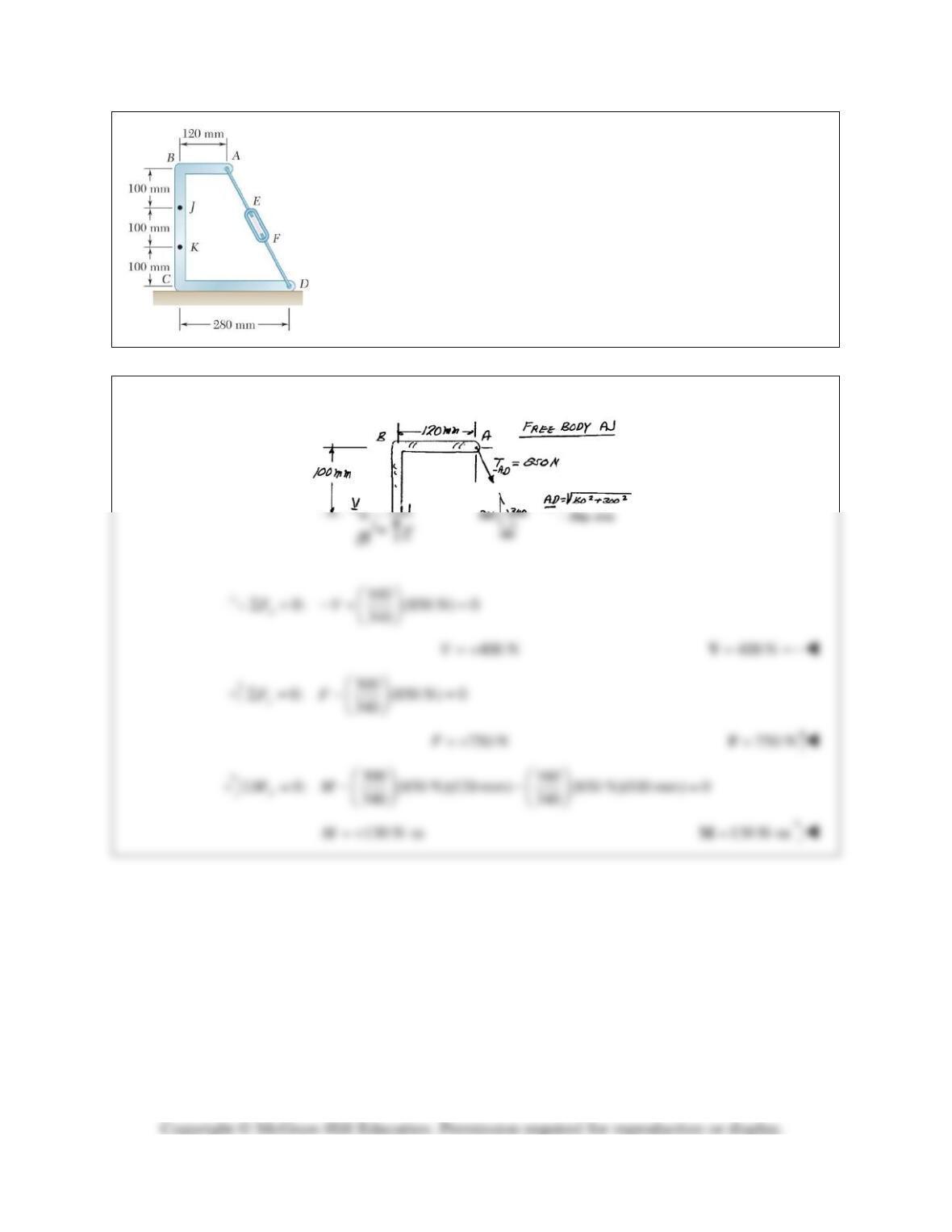
PROBLEM 7.154
Knowing that the turnbuckle has been tightened until the tension in wire
AD is 850 N, determine the internal forces at point indicated:
Point J.
SOLUTION
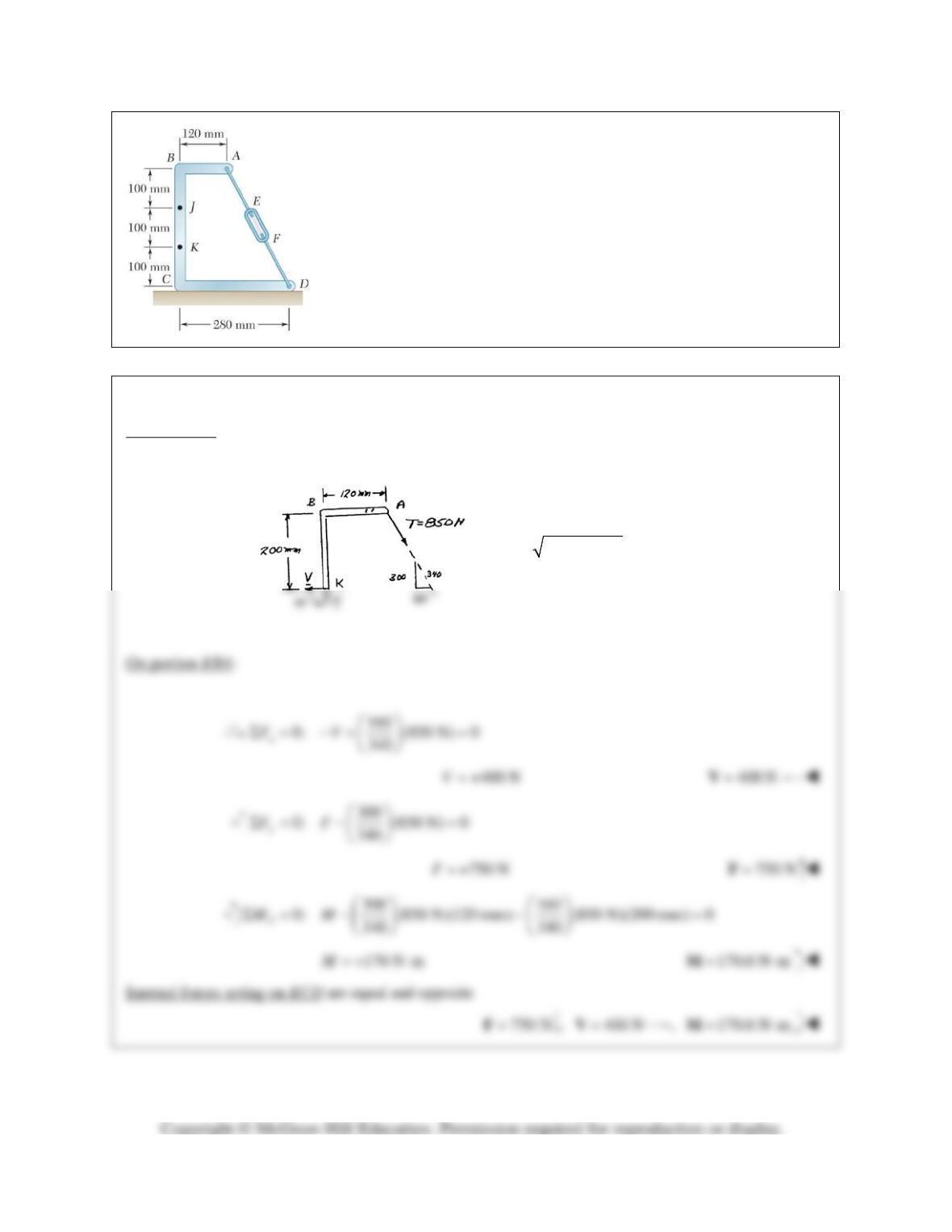
PROBLEM 7.155
Knowing that the turnbuckle has been tightened until the tension in wire
AD is 850 N, determine the internal forces at point indicated:
Point K.
SOLUTION
Free body AK:
22
160 300
340 mm
AD = +
=
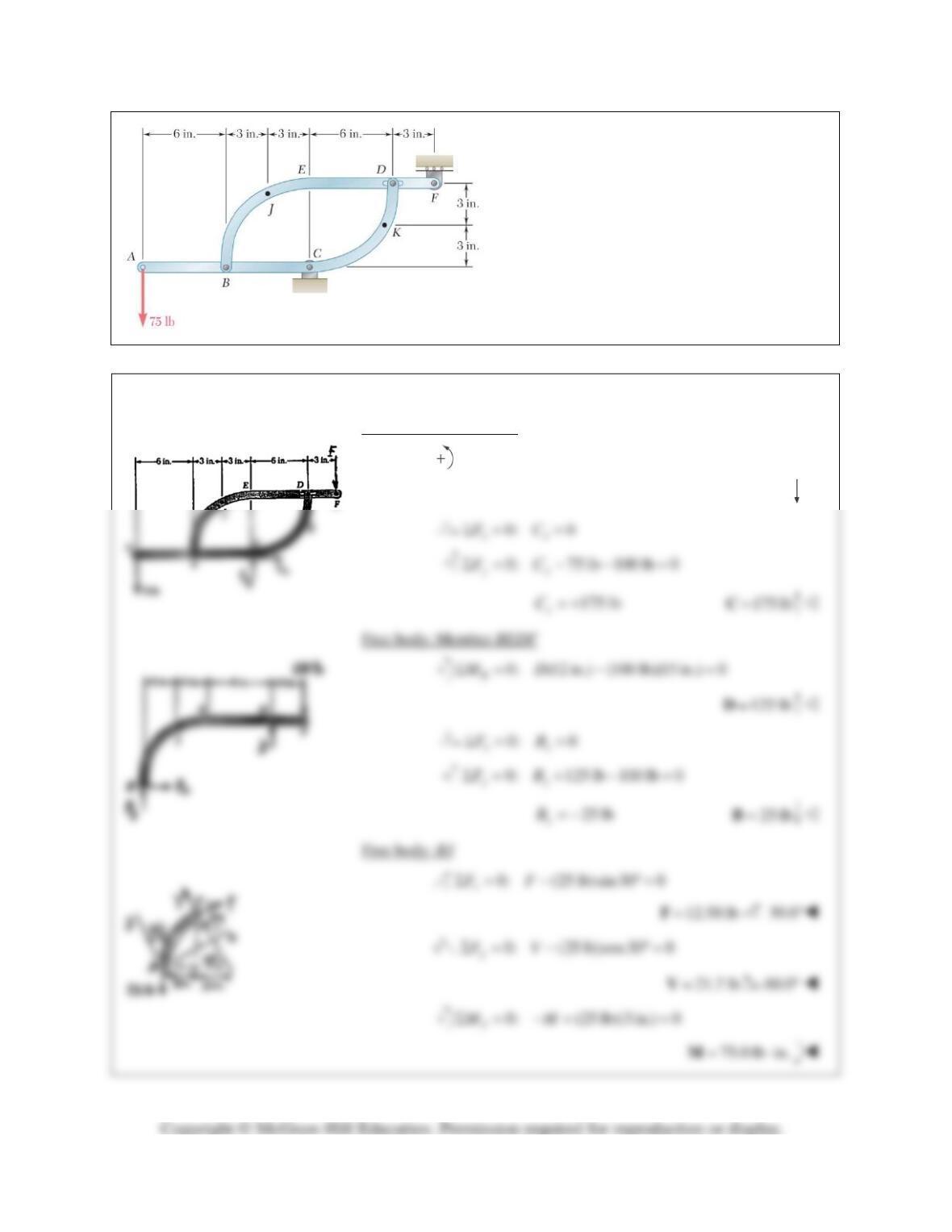
PROBLEM 7.156
Two members, each consisting of a straight and a
quarter– circular portion of rod, are connected as
shown and support a 75-lb load at A. Determine
the internal forces at Point J.
SOLUTION
Free body: Entire frame
0: (75 lb)(12 in.) (9 in.) 0
C
MFΣ= − =
100 lb=F
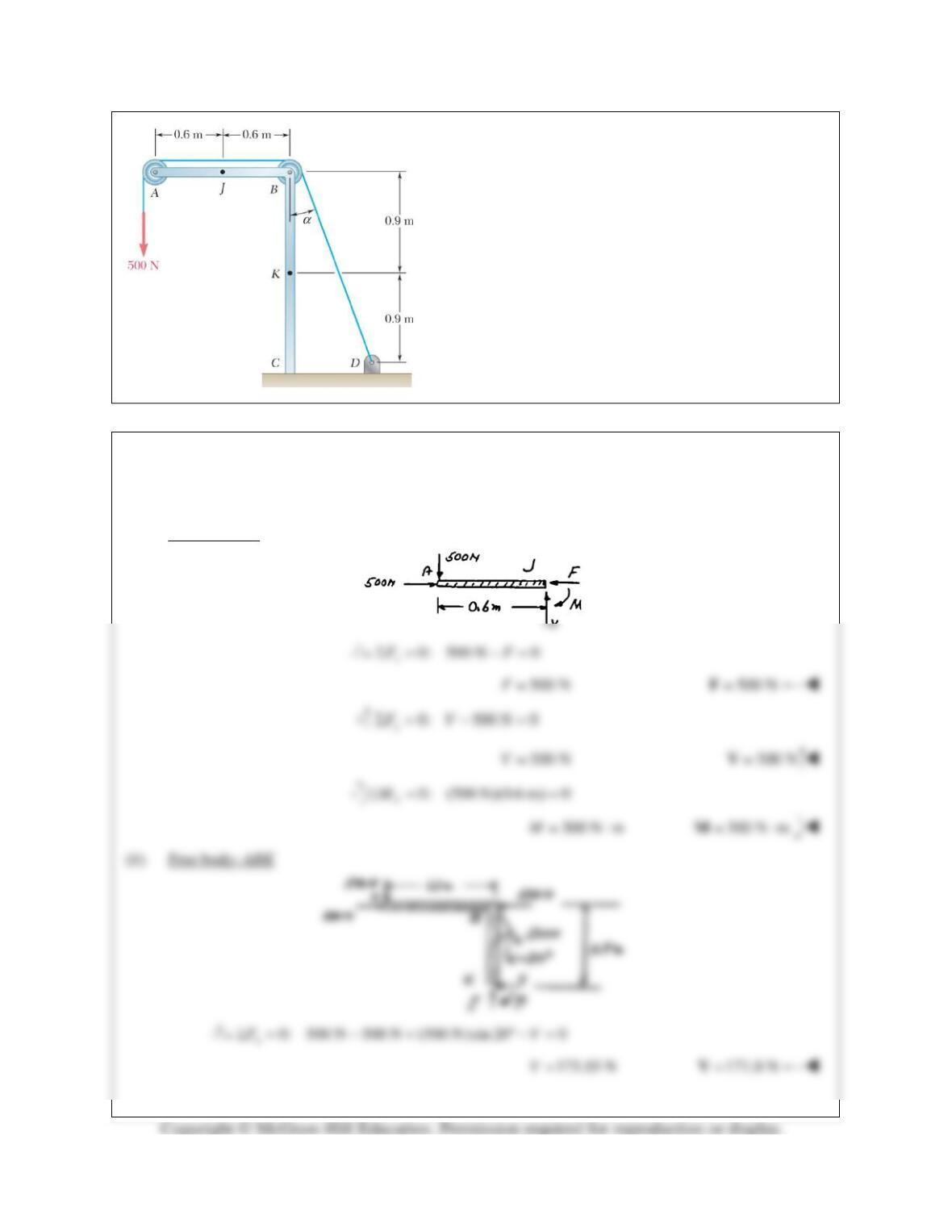
PROBLEM 7.157
Knowing that the radius of each pulley is 150 mm, that
α
= 20°, and neglecting friction, determine the internal
forces at (a) Point J, (b) Point K.
SOLUTION
Tension in cable = 500 N. Replace cable tension by forces at pins A and B. Radius does not enter
computations: (cf. Problem 6.90)
(a) Free body: AJ
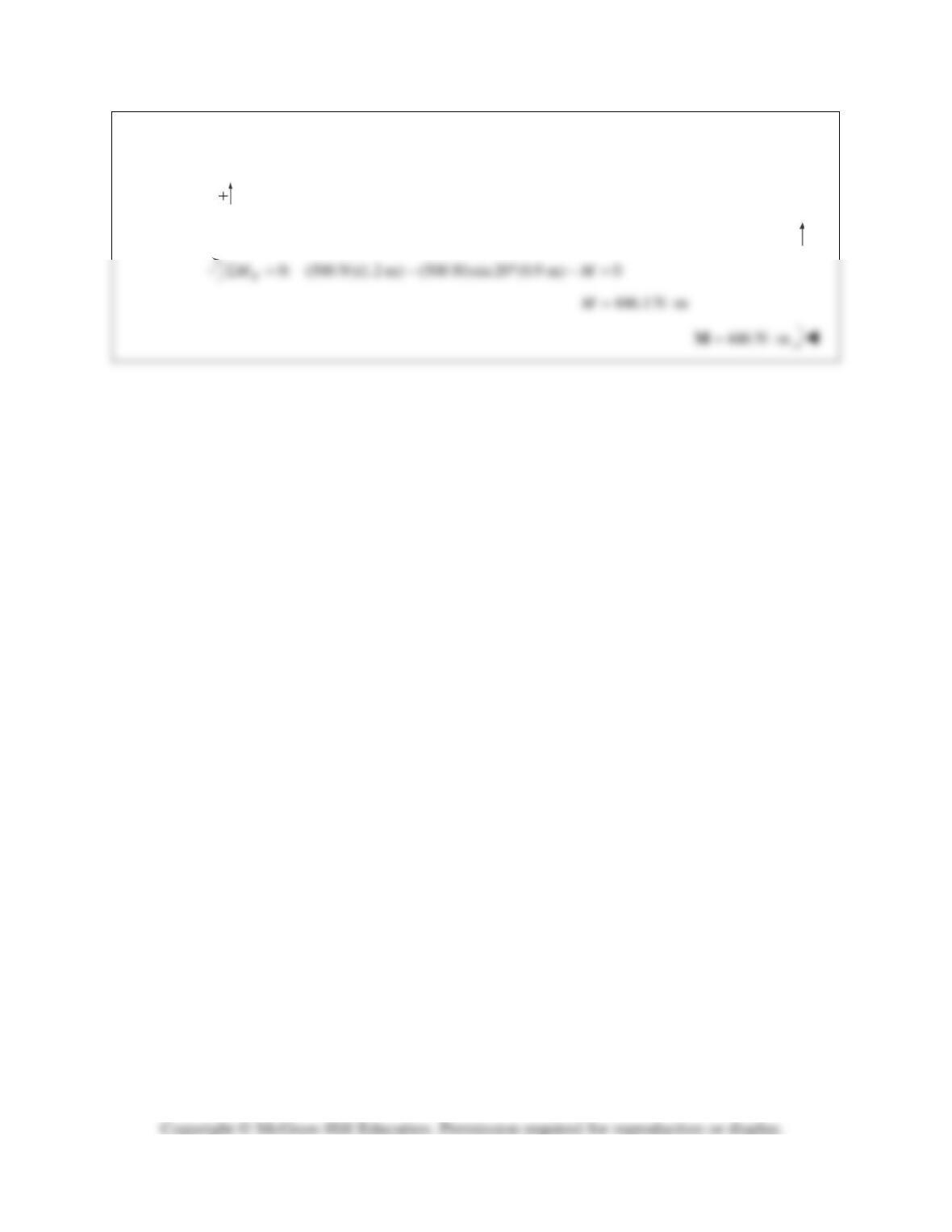
PROBLEM 7.157 (Continued)
0: 500 N (500 N)cos 20 0
y
FFΣ = − − °+ =
969.8 NF=
970 N=F
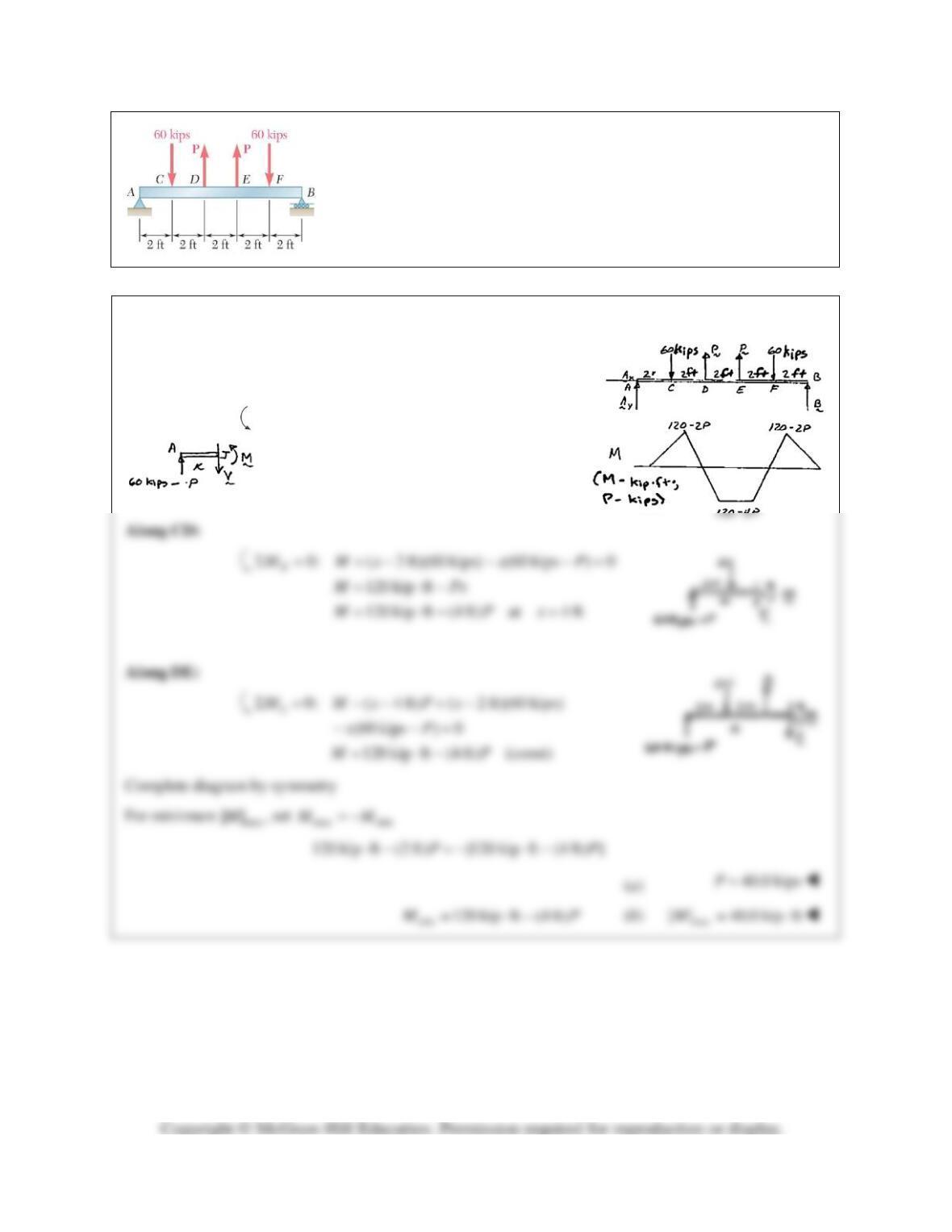
PROBLEM 7.158
For the beam shown, determine (a) the magnitude P of the two upward
forces for which the maximum absolute value of the bending moment in
the beam is as small as possible, (b) the corresponding value of
max
|| .M
SOLUTION
By symmetry:
60 kips
y
AB P= = −
Along AC:
0: (60 kips ) 0
(60 kips )
120 kips ft (2 ft) at 2 ft
J
M Mx P
M Px
M Px
Σ = − −=
= −
= ⋅− =
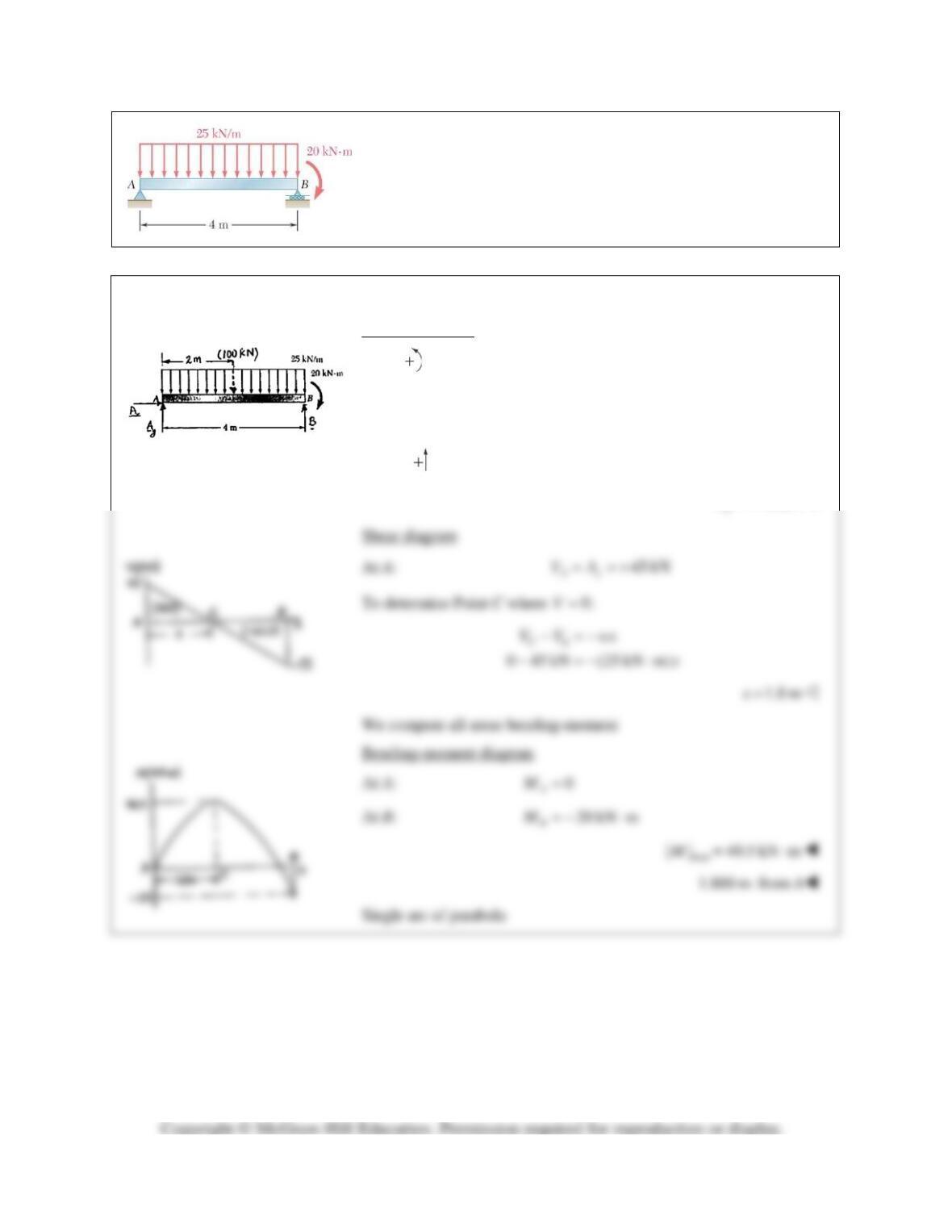
PROBLEM 7.159
For the beam and loading shown, (a) draw the shear and bending-
moment diagrams, (b) determine the magnitude and location of the
maximum absolute value of the bending moment.
SOLUTION
Free body: Beam
0: (4 m) (100 kN)(2 m) 20 kN m 0
A
MBΣ = − − ⋅=
55 kNB= +
0: 0
xx
FAΣ= =
0: 55 100 0
yy
FAΣ= +− =
45 kN
y
A= +
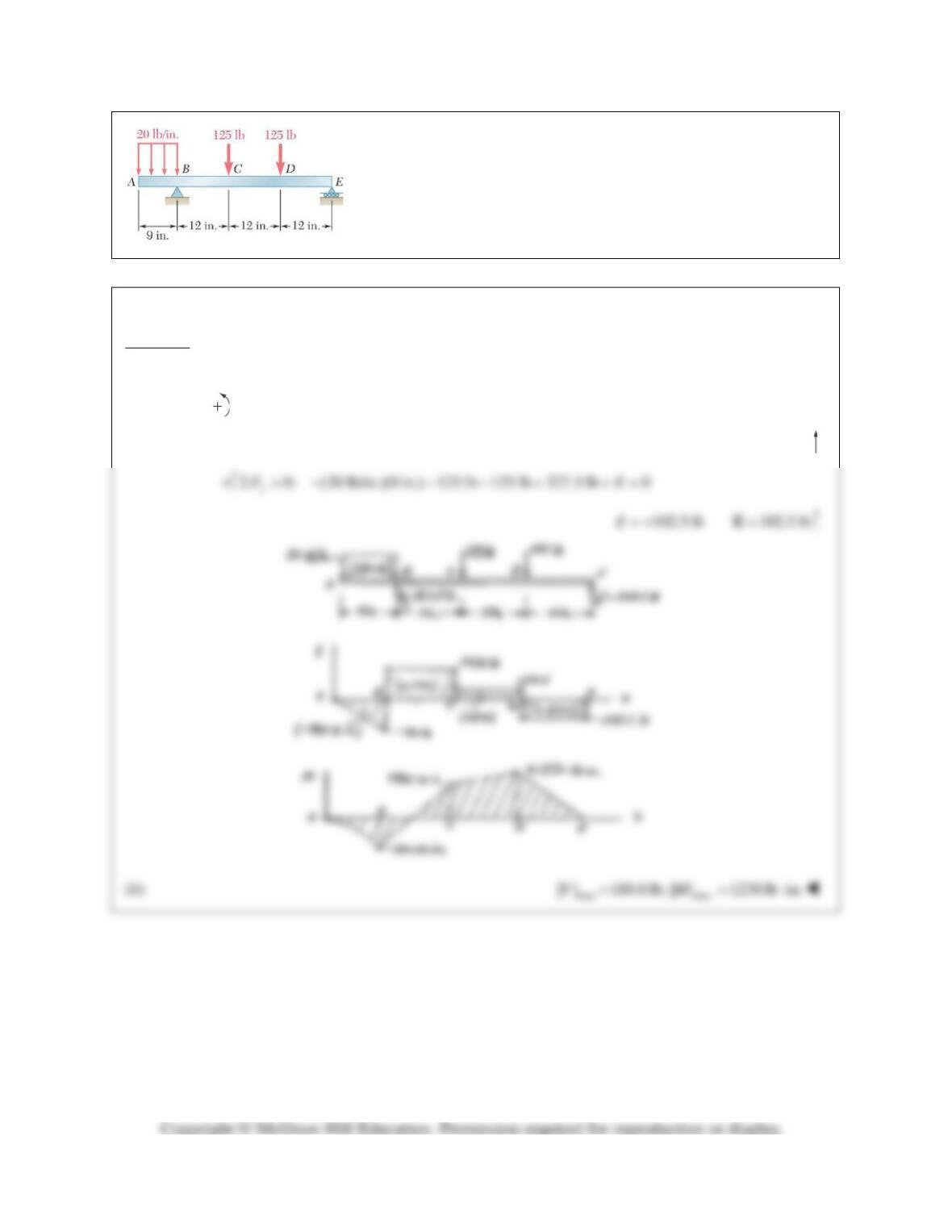
PROBLEM 7.160
For the beam and loading shown, (a) draw the shear and bending-
moment diagrams, (b) determine the maximum absolute values of the
shear and bending moment.
SOLUTION
Reactions
0: 0
xx
FBΣ= =
0: (20 lb/in.)(9 in.)(40.5 in.) (125 in.)(24 in.) (125 in.)(12 in.) (36 in.) 0
E
MBΣ= + + − =
327.5 lb
y
B= +
327.5 lb
y
=B
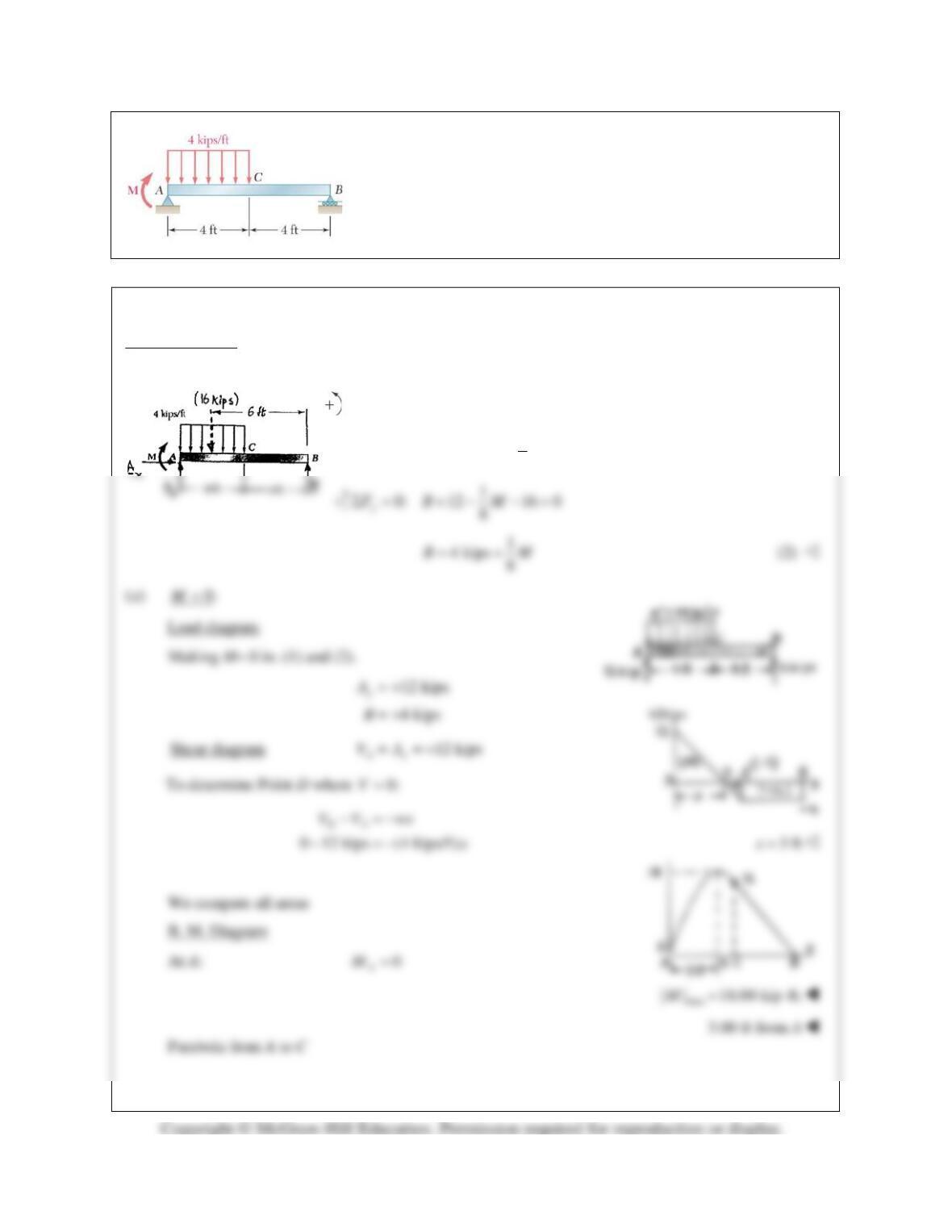
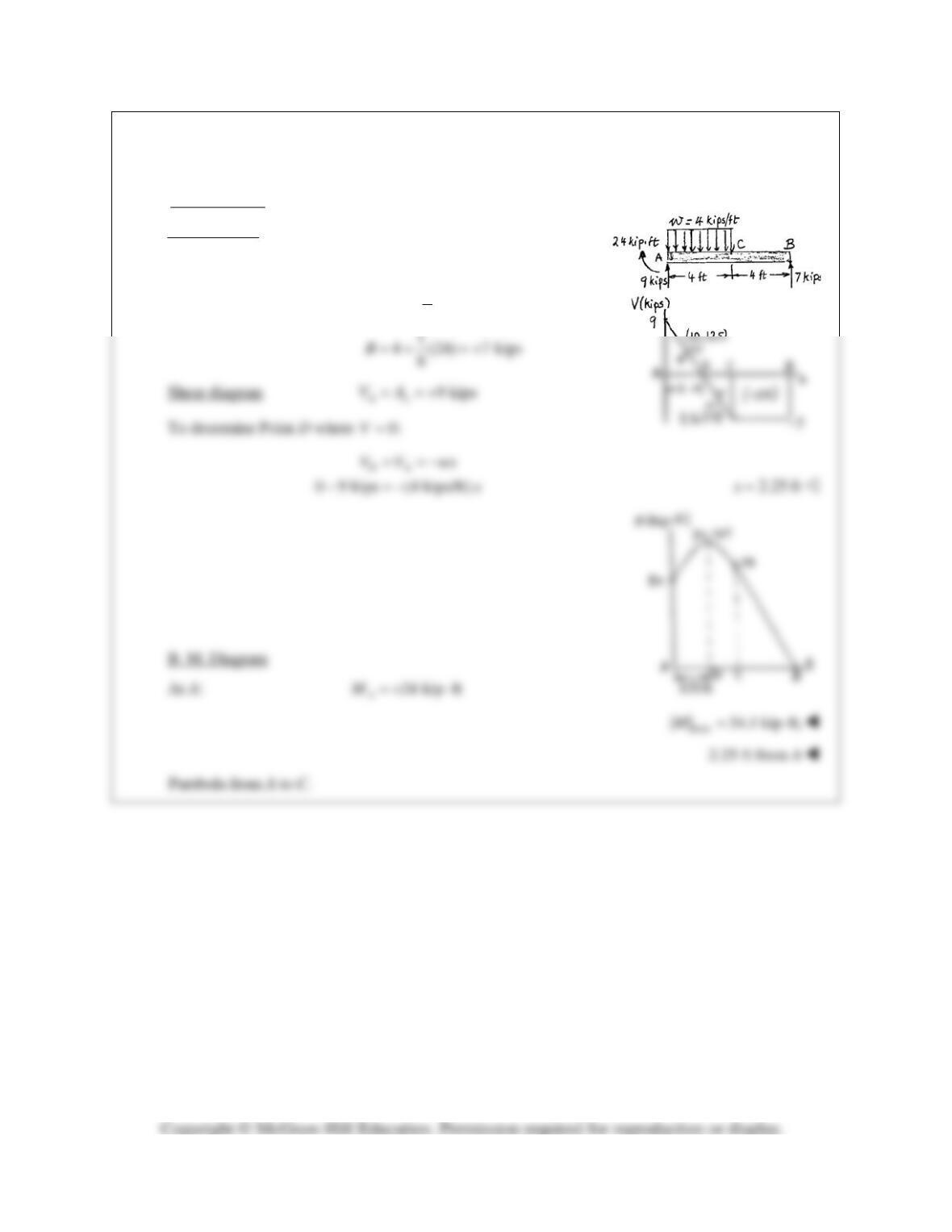
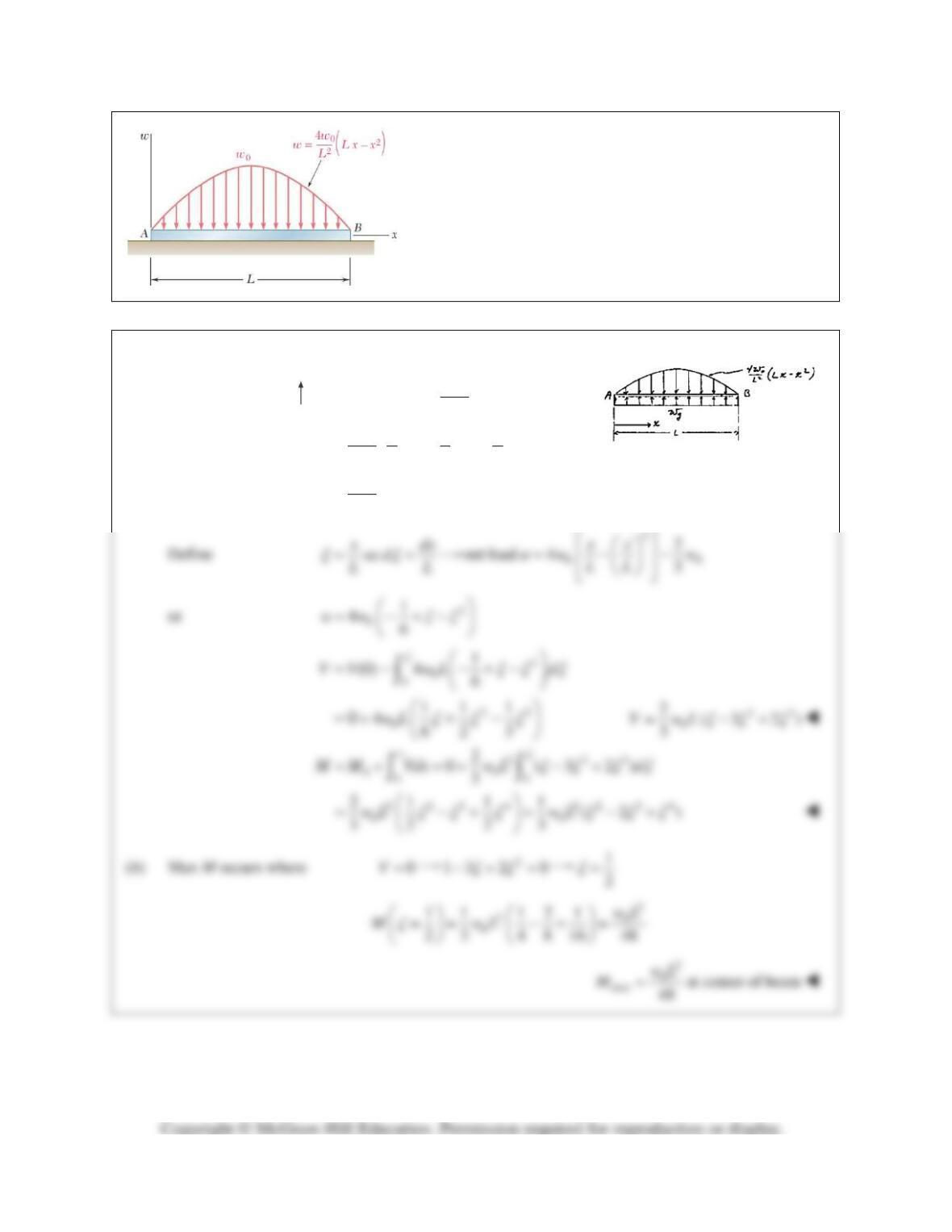
PROBLEM 7.161
For the beam shown, draw the shear and bending-moment diagrams,
and determine the magnitude and location of the maximum absolute
value of the bending moment, knowing that (a) M = 0, (b) M = 24
kip ∙ ft.
SOLUTION
Free body: Beam
0: 0
xx
FAΣ= =
0: (16 kips)(6 ft) (8 ft) 0
By
M AMΣ = − −=
1
12 kips 8
y
AM= −
(1)
PROBLEM 7.161 (Continued)
(b)
24 kip ftM= ⋅
Load diagram
Making
24 kip ftM= ⋅
in (1) and (2)
PROBLEM 7.162
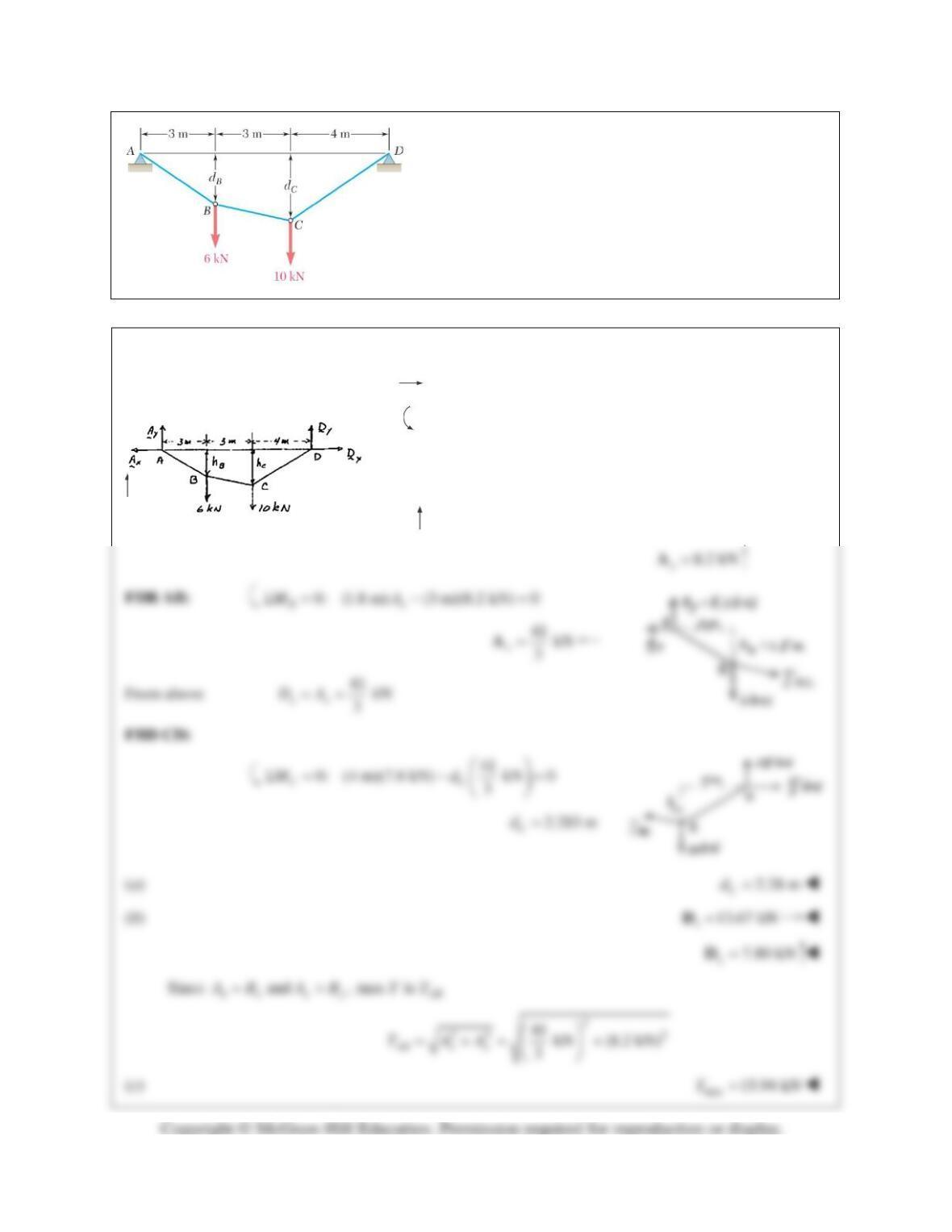
The beam AB, which lies on the ground, supports the
parabolic load shown. Assuming the upward reaction of the
ground to be uniformly distributed, (a) write the equations of
the shear and bending-moment curves, (b) determine the
maximum bending moment.
SOLUTION
(a)
2
0
2
0
4
0: ( ) 0
L
yg
w
F w L Lx x dx
L
Σ= − − =
∫
23
00
2
0
4112
233
2
3
g
g
w
w L LL L w L
L
w
w
= −=
=
PROBLEM 7.163
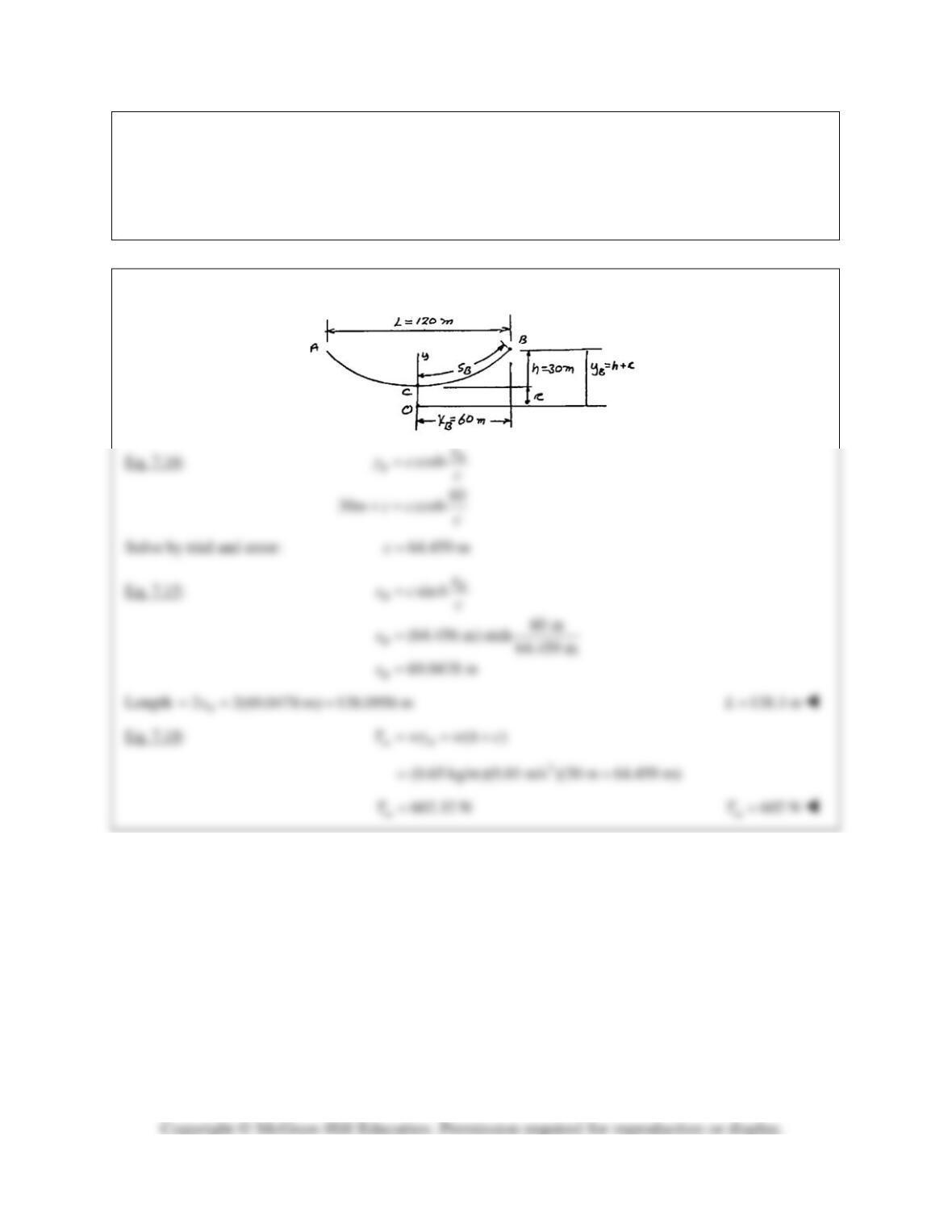
Two loads are suspended as shown from the cable ABCD.
Knowing that
1.8 m,
B
d=
determine (a) the distance
,
C
d
(b) the components of the reaction at D, (c) the maximum
tension in the cable.
SOLUTION
FBD Cable:
0: 0
x xx xx
F AD ADΣ= −+ = =
0: (10 m) (6 m)(10 kN) (3 m)(6 kN) 0
Ay
MDΣ= − − =
7.8 kN
y
=D
0: 6 kN 10 kN 7.8 kN 0
yy
FAΣ= − − + =
PROBLEM 7.164
A wire having a mass per unit length of 0.65 kg/m is suspended from two supports at the same elevation
that are 120 m apart. If the sag is 30 m, determine (a) the total length of the wire, (b) the maximum
tension in the wire.
SOLUTION
PROBLEM 7.165
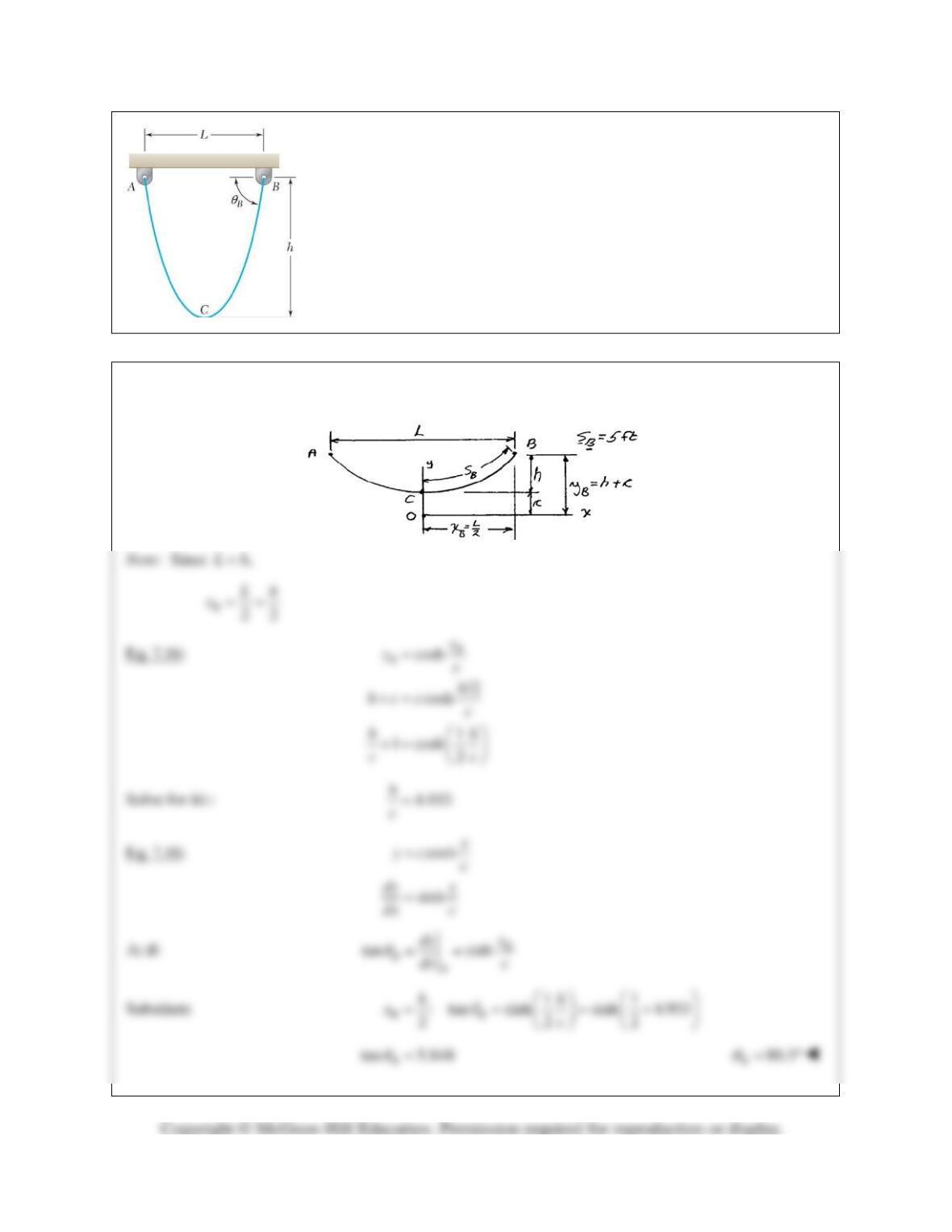
A 10-ft rope is attached to two supports A and B as shown. Determine (a) the
span of the rope for which the span is equal to the sag, (b) the corresponding
angle θB.
SOLUTION
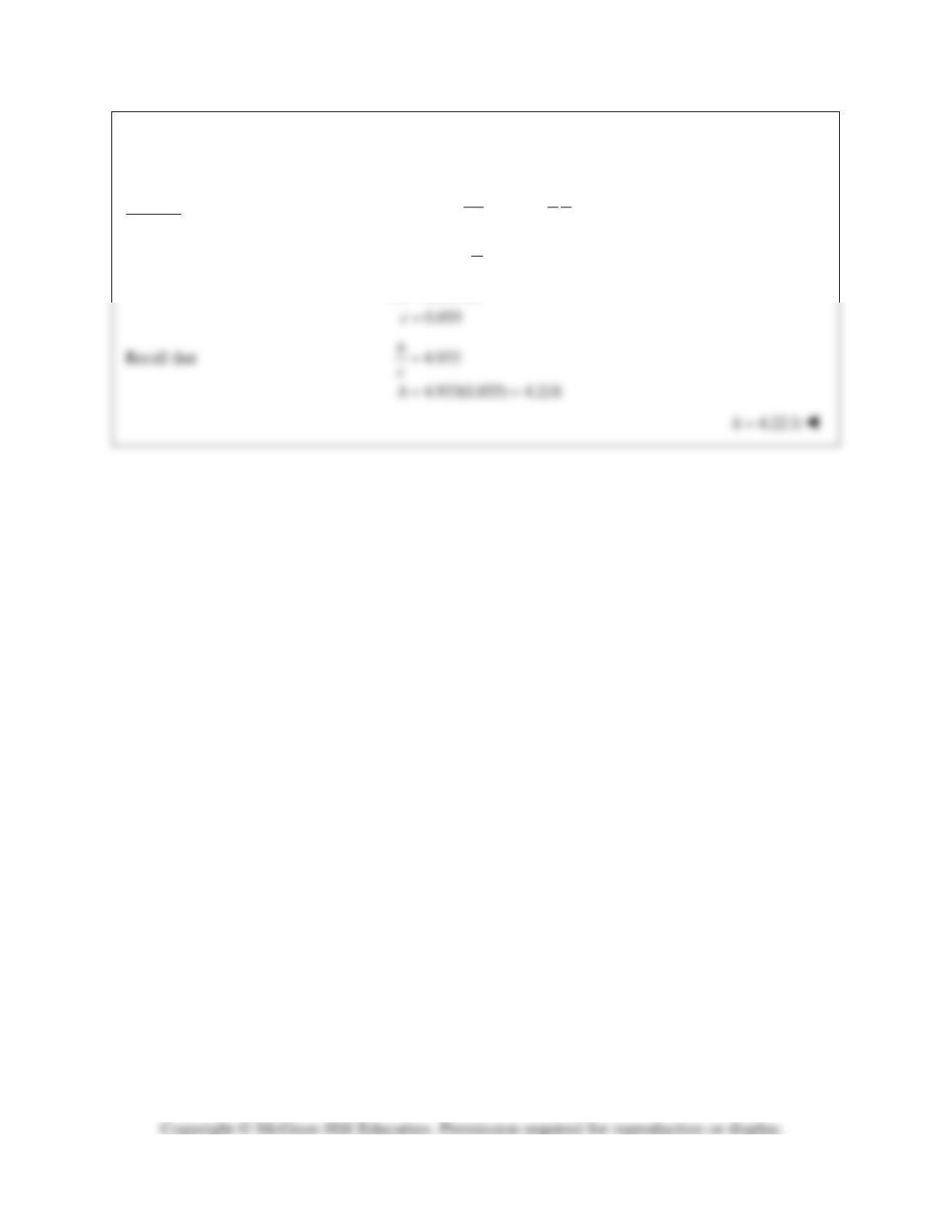
PROBLEM 7.165 (Continued)
Eq. 7.17: