7-41
PROBLEM 7-3
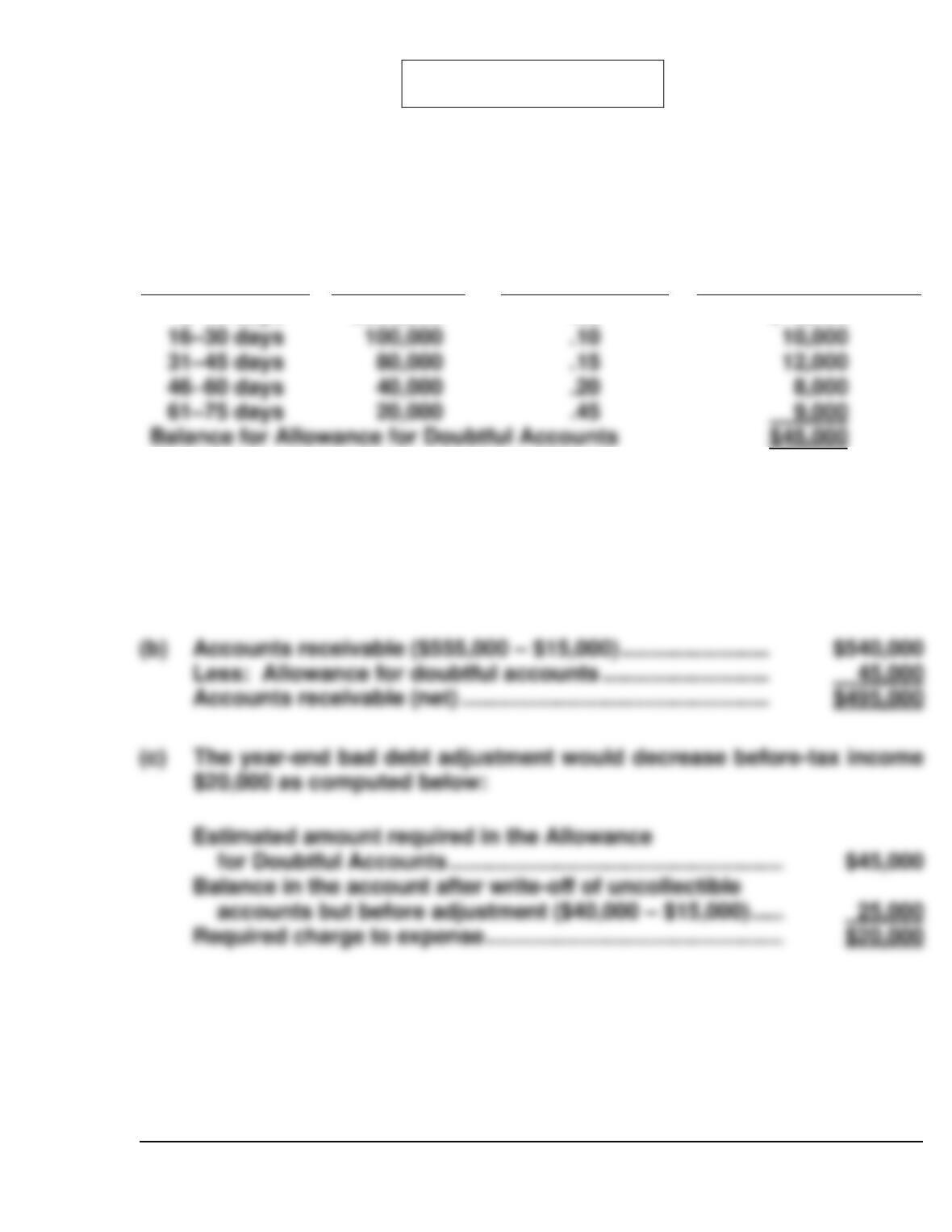
(a) The Allowance for Doubtful Accounts should have a balance of $45,000
at year-end. The supporting calculations are shown below:
Days Account
Outstanding
Amount
Expected
Percentage
Uncollectible
Estimated
Uncollectible
0–15 days
$300,000
.02
$ 6,000
The accounts which have been outstanding over 75 days ($15,000)
and have zero probability of collection would be written off immediately
by a debit to Allowance for Doubtful Accounts for $15,000 and a credit
to Accounts Receivable for $15,000. It is not considered when deter–
mining the proper amount for the Allowance for Doubtful Accounts.
80,000
.15
PROBLEM 7-4
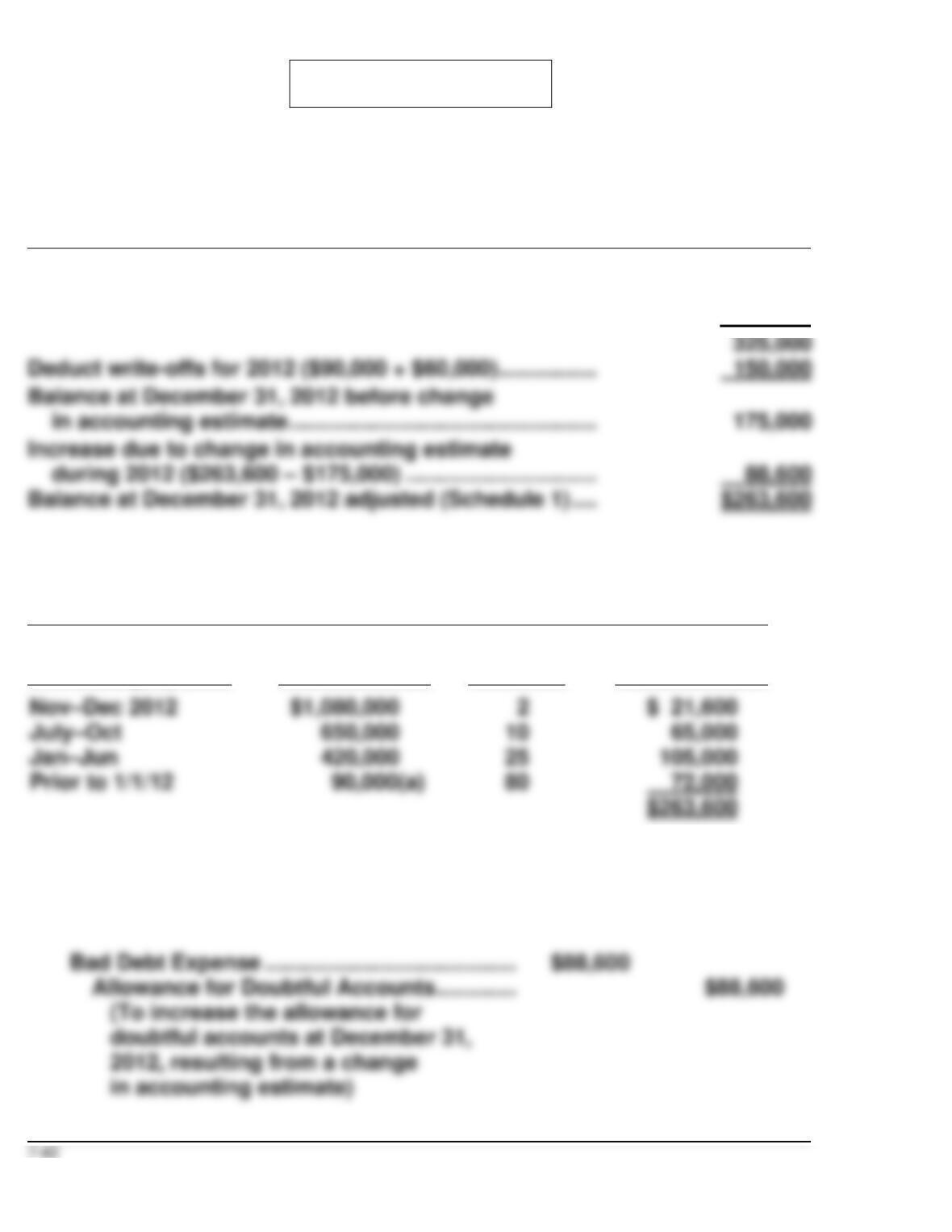
(a) FORTNER CORPORATION
Analysis of Changes in the
Allowance for Doubtful Accounts
For the Year Ended December 31, 2012
Balance at January 1, 2012 ………………………………………..
$130,000
Provision for doubtful accounts ($9,000,000 X 2%) ……..
180,000
Recovery in 2012 of bad debts written off previously ….
15,000
Deduct write-offs for 2012 ($90,000 + $60,000) …………….
Schedule 1
Computation of Allowance for Doubtful Accounts
at December 31, 2012
Aging
Category
Balance
%
Doubtful
Accounts
65,000
(a) $150,000 – $60,000
(b) The journal entry to record this transaction is as follows:
7-43
PROBLEM 7-5
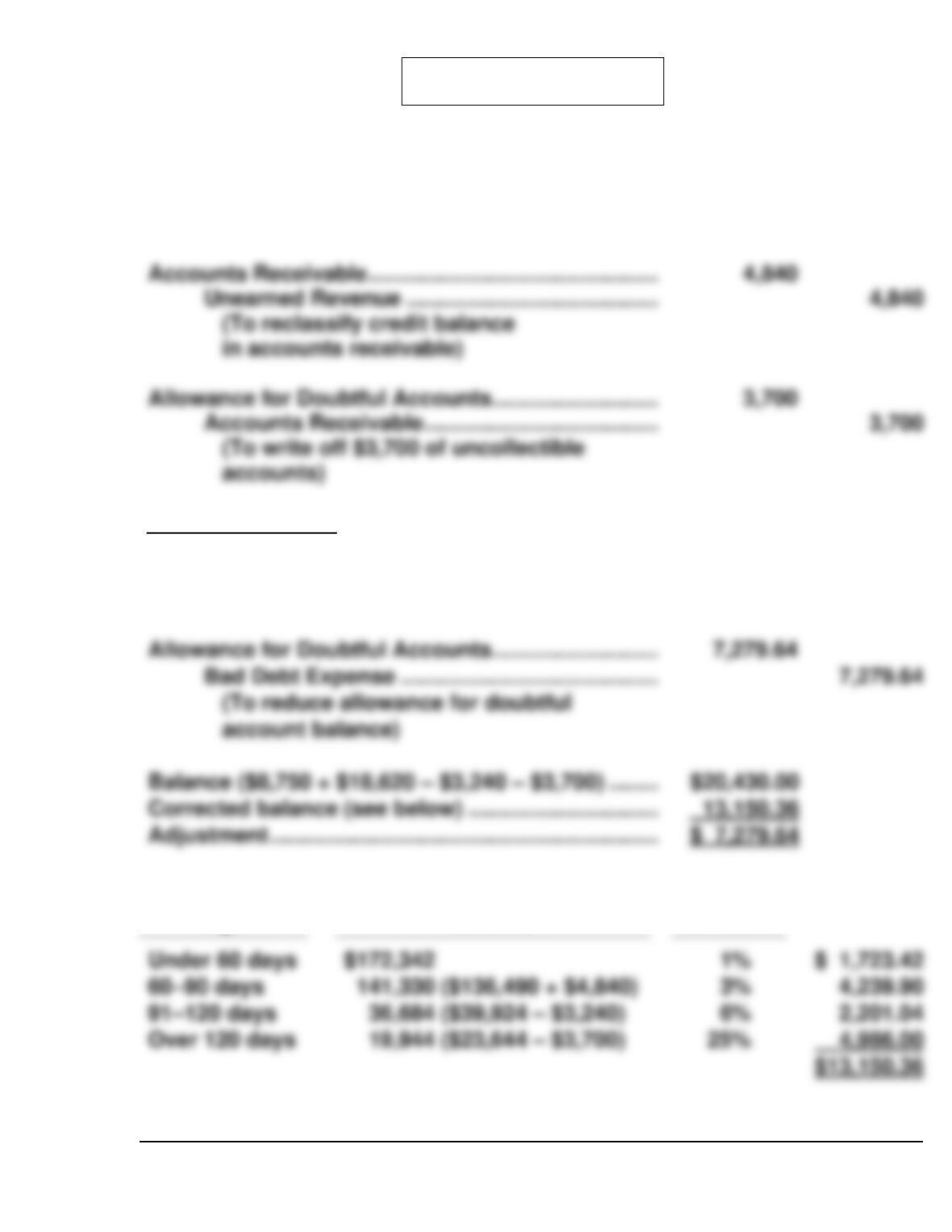
Bad Debt Expense ……………………………………………
3,240
Accounts Receivable ………………………………..
3,240
(To correct bad debt expense and
write off accounts receivable)
(Note to instructor: Many students will not make this entry at this point.
Because $3,700 is totally uncollectible, a write-off immediately seems most
appropriate. The remainder of the solution therefore assumes that the student
made this entry.)
Age
Balance
Aging
Schedule
Accounts Receivable ………………………………………..
Unearned Revenue …………………………………..
Allowance for Doubtful Accounts ………………………
Accounts Receivable ………………………………..
3,700
(To write off $3,700 of uncollectible
7-44
PROBLEM 7-5 (Continued)
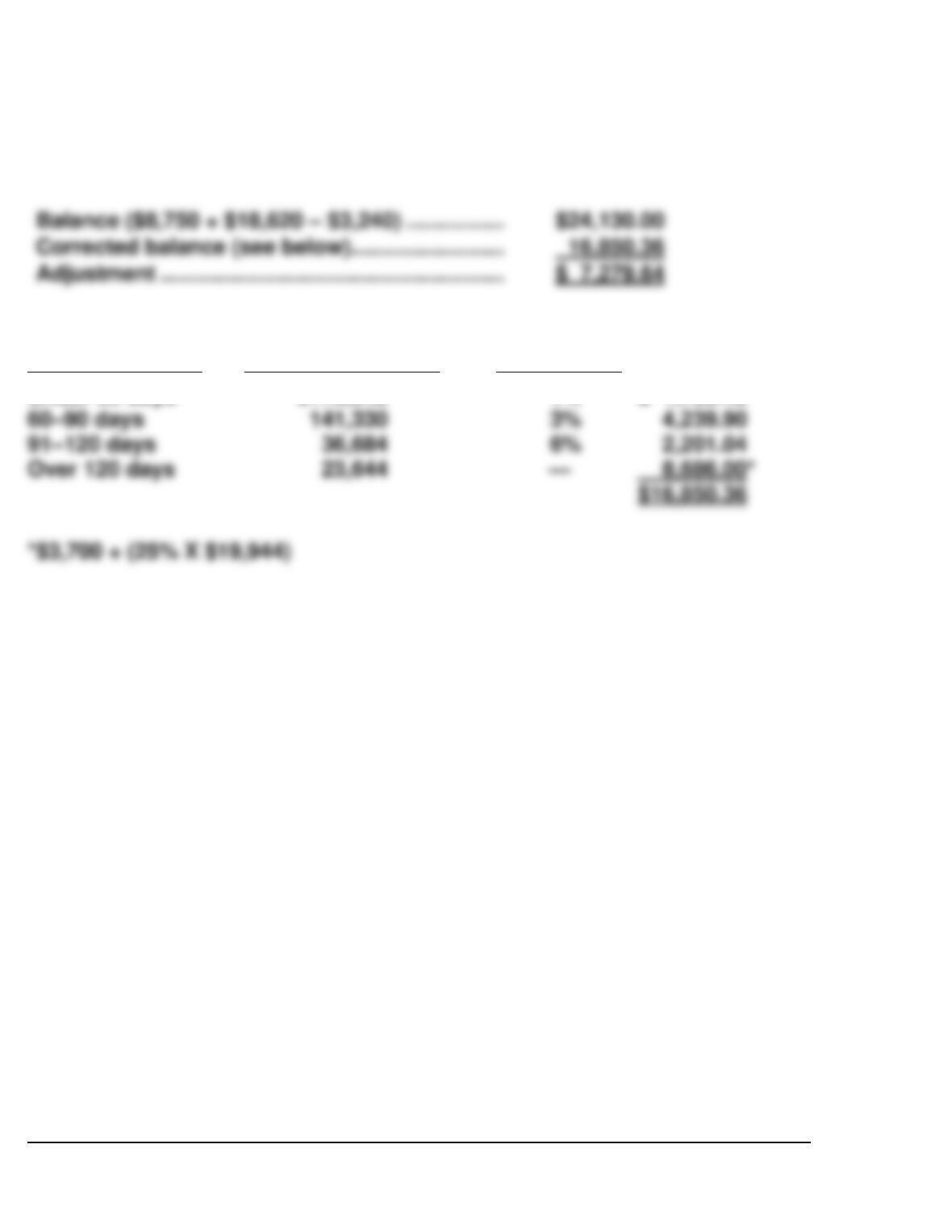
If the student did not make the entry to record the $3,700 write-off earlier, the
following would change in the problem. After the adjusting entry for $7,279.64,
an entry would have to be made to write off the $3,700.
Age
Balance
Aging
Schedule
Under 60 days
$172,342
1%
$ 1,723.42
36,684
6%
7-45
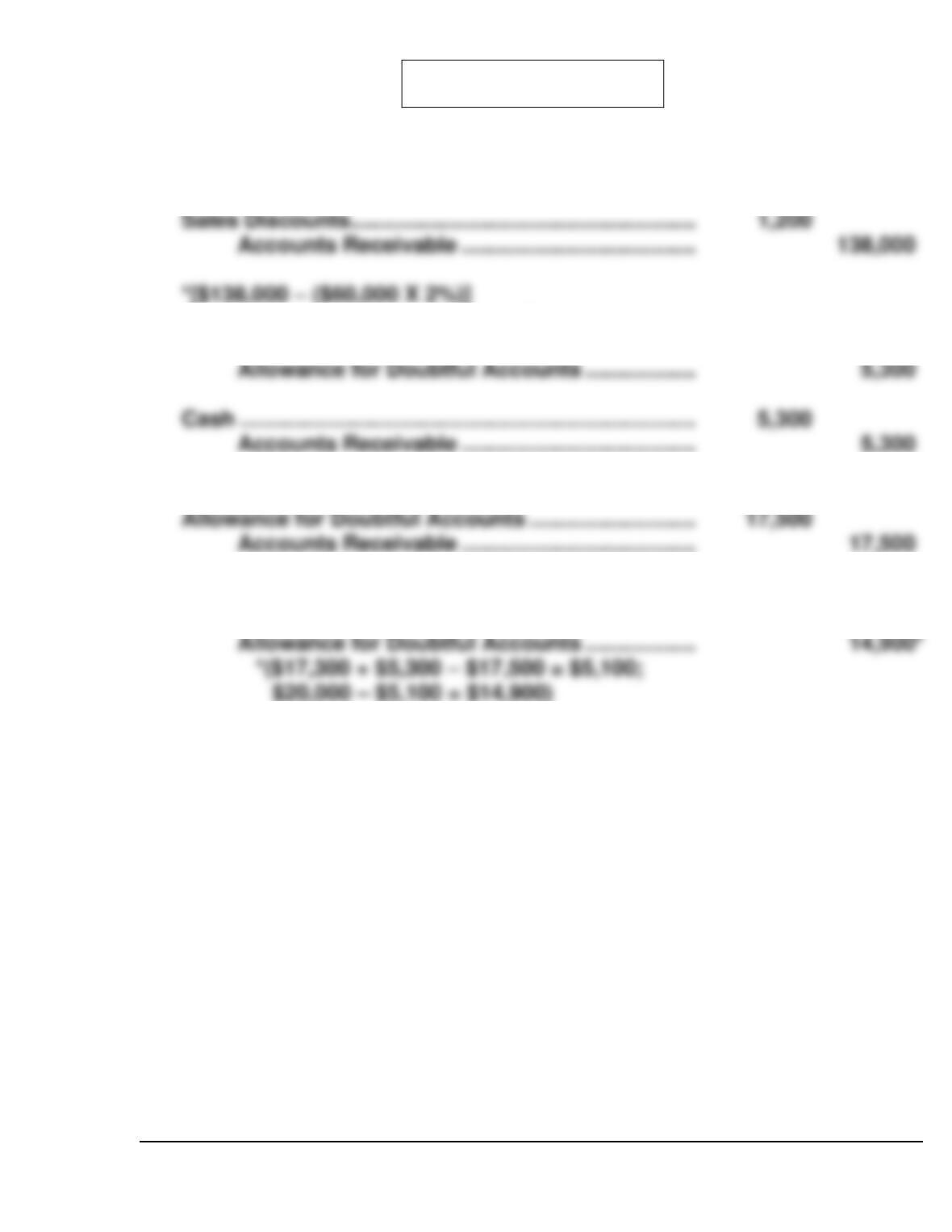
PROBLEM 7-6
–1–
Cash ………………………………………………………………..
136,800*
–2–
Accounts Receivable ………………………………………..
5,300
Cash ………………………………………………………………..
5,300
–3–
Accounts Receivable ………………………………..
–4–
Bad Debt Expense …………………………………………….
14,900
Accounts Receivable ………………………………..
PROBLEM 7-7
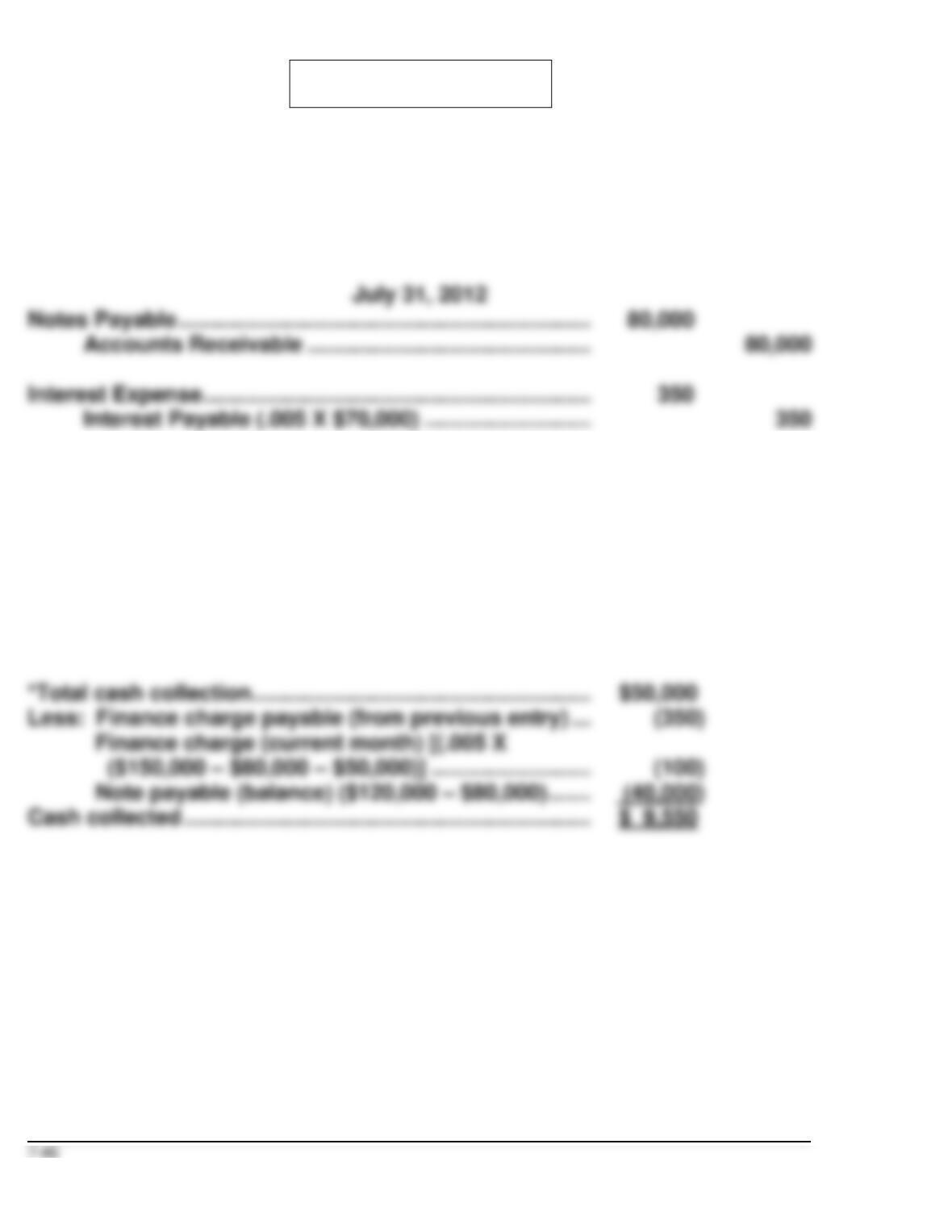
July 1, 2012
Cash ……………………………………………………………………….
119,250
Interest Expense (.005 X $150,000) …………………………...
750
Notes Payable (80% X $150,000) ……………………….
120,000
Notes Payable ………………………………………………………….
Accounts Receivable ……………………………………….
80,000
Interest Expense ………………………………………………………
Interest Payable (.005 X $70,000) ………………………
August 31, 2012
Notes Payable ………………………………………………………….
40,000
Cash* ………………………………………………………………………
9,550
Interest Expense (.005 X [$150,000 –
$80,000 – $50,000]) ………………………………………………..
100
Interest Payable ……………………………………………………….
350
Accounts Receivable ……………………………………….
50,000
*Total cash collection ……………………………………………….
Less: Finance charge payable (from previous entry) …
Finance charge (current month) [(.005 X
($150,000 – $80,000 – $50,000)] ……………………..
Note payable (balance) ($120,000 – $80,000) …….
7-47
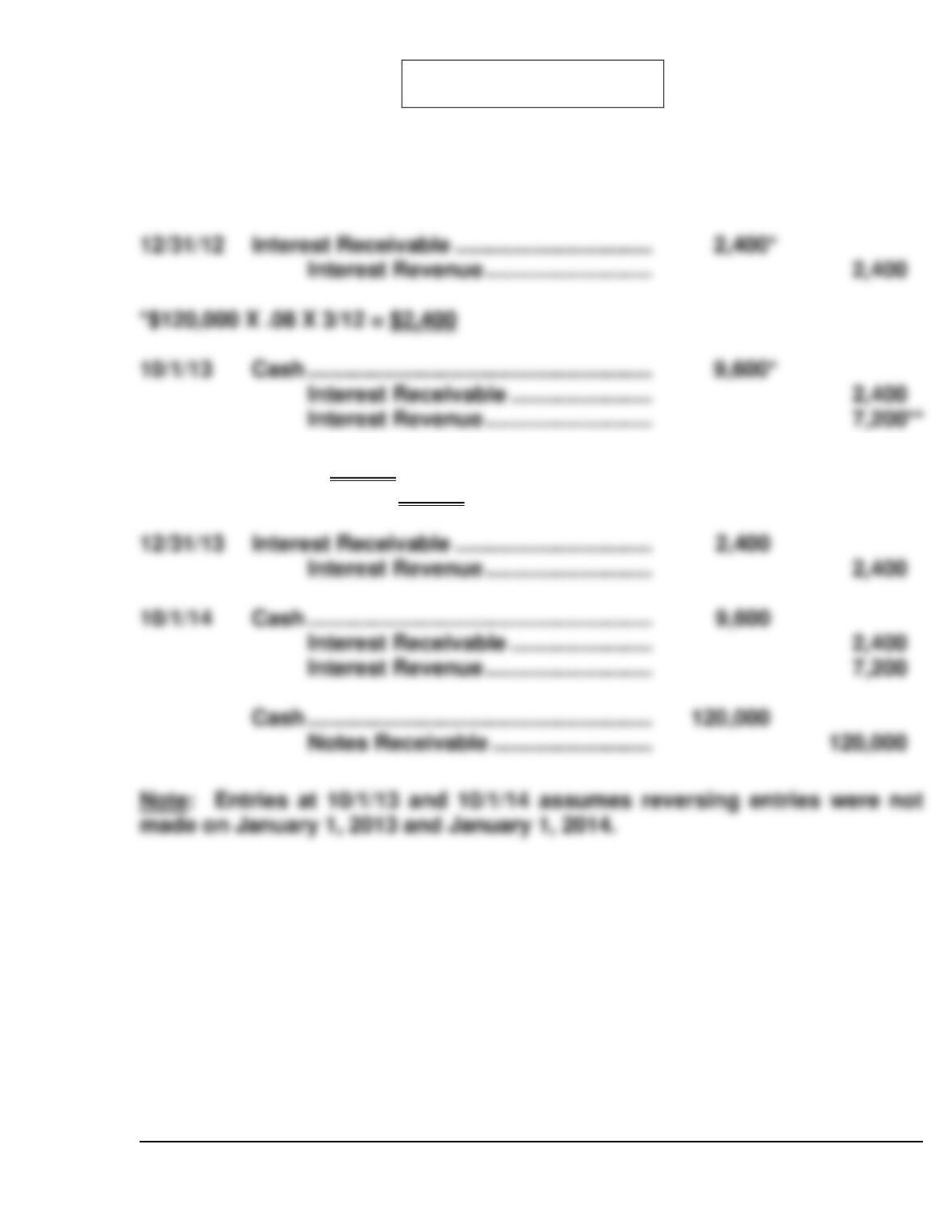
PROBLEM 7-8
10/1/12
Notes Receivable ……………………………………………………
120,000
Sales ……………………………………………………….
120,000
*$120,000 X .08 = $9,600
**$120,000 X .08 X 9/12 = $7,200
12/31/13
Interest Receivable …………………………..
Interest Revenue ………………………….
10/1/14
Cash ……………………………………………………….
Interest Revenue …………………………
Cash ……………………………………………………….
120,000
Notes Receivable …………………………..
12/31/12
Interest Receivable …………………………..
Interest Revenue …………………………..
*$120,000 X .08 X 3/12 = $2,400
Cash ……………………………………………………….
Interest Receivable …………………………..
Interest Revenue …………………………..
PROBLEM 7-9
(a)
December 31, 2012
Cash……………………………………………………………….
40,000
Notes Receivable …………………………………………….
80,000
Discount on Notes Receivable …………………
17,951
Service Revenue ……………………………………..
102,049
Down payment ……………………………..
(b)
December 31, 2013
Cash………………………………………………………………….
20,000
Notes Receivable ……………………………………….
20,000
Discount on Notes Receivable …………………………...
6,825
Interest Revenue ………………………………………..
6,825
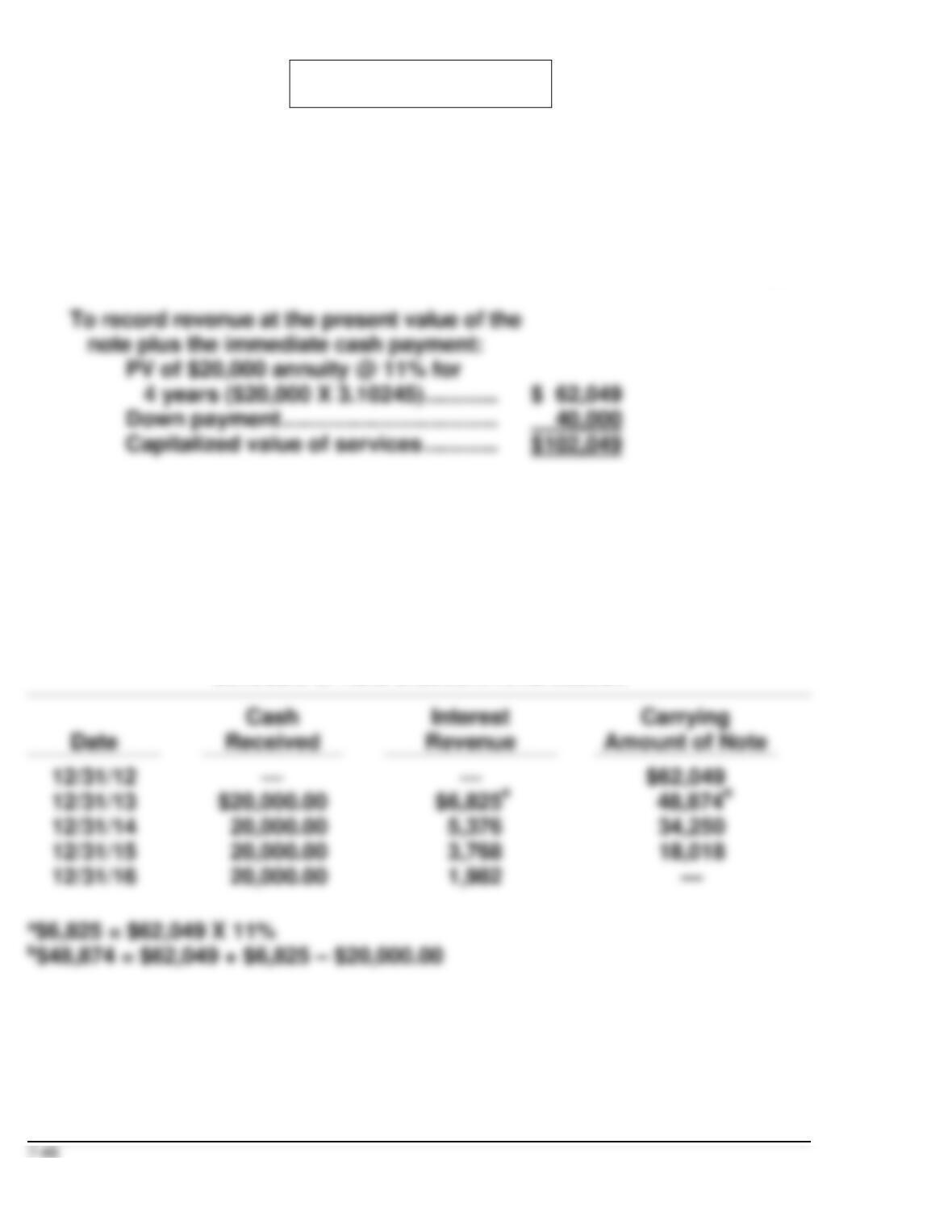
Schedule of Note Discount Amortization
$62,049
7-49
PROBLEM 7-9 (Continued)
(d)
December 31, 2015
Cash …………………………………………………………………
20,000
Notes Receivable ……………………………………….
20,000
Discount on Notes Receivable …………………………...
Interest Revenue ……………………………………….
(e)
Cash …………………………………………………………………
Notes Receivable ……………………………………….
20,000
Discount on Notes Receivable …………………………...
Interest Revenue ……………………………………….
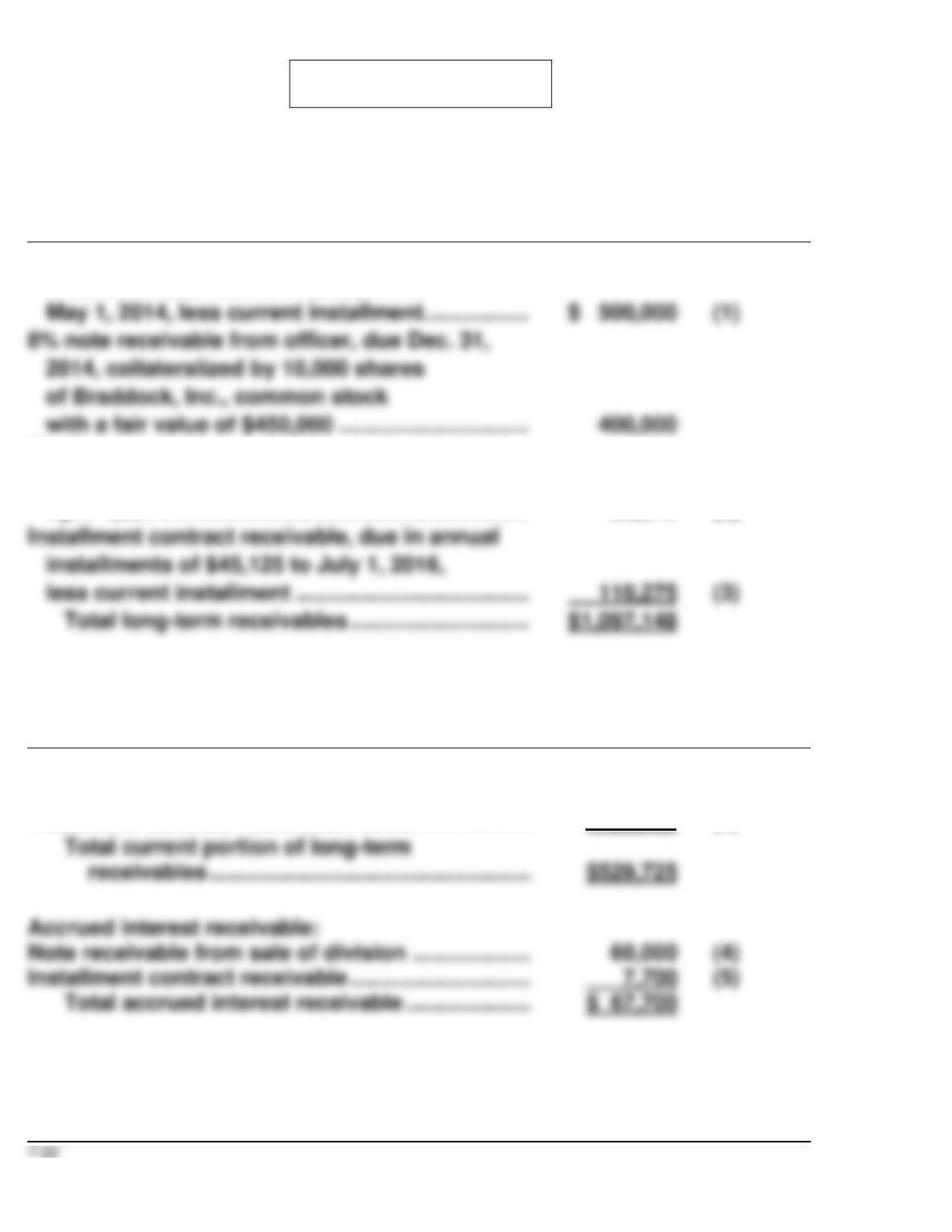
(c)
December 31, 2014
Cash …………………………………………………………………
Notes Receivable ……………………………………….
Discount on Notes Receivable …………………………...
Interest Revenue ……………………………………….
PROBLEM 7-10
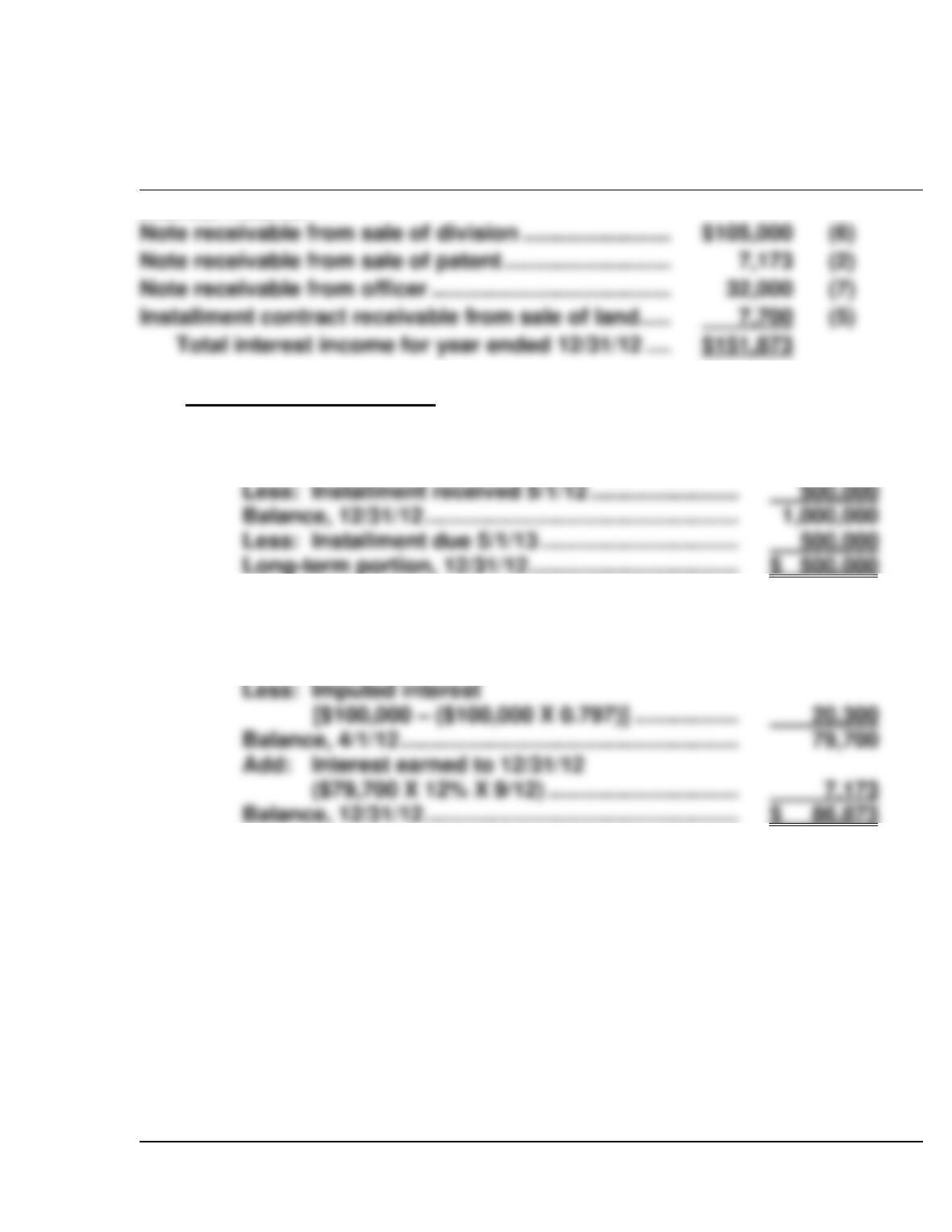
(a) BRADDOCK INC.
Long-Term Receivables Section of Balance Sheet
December 31, 2012
9% note receivable from sale of division, due
in annual installments of $500,000 to
May 1, 2014, less current installment ……………..
(1)
8% note receivable from officer, due Dec. 31,
2014, collateralized by 10,000 shares
of Braddock, Inc., common stock
with a fair value of $450,000 ………………………….
Zero-interest-bearing note from sale of patent,
net of 12% imputed interest, due
April 1,2014 ………………………………………………….
86,873
(2)
Installment contract receivable, due in annual
installments of $45,125 to July 1, 2016,
less current installment ………………………………..
(3)
Total long-term receivables ………………………..
(b) BRADDOCK INC.
Selected Balance Sheet Balances
December 31, 2012
Current portion of long-term receivables:
Note receivable from sale of division ………………………..
$500,000
(1)
Installment contract receivable …………………………..
29,725
(3)
Accrued interest receivable:
Note receivable from sale of division ………………………..
(4)
Installment contract receivable …………………………..
Total accrued interest receivable …………………………
$ 67,700
7-51
PROBLEM 7-10 (Continued)
(c) BRADDOCK INC.
Interest Revenue from Long-Term Receivables
For the Year Ended December 31, 2012
Interest income:
Explanation of Amounts
(1)
Long-term Portion of 9% Note Receivable at 12/31/12
Face amount, 5/1/11 ………………………………………..
$1,500,000
Less: Installment received 5/1/12 …………………….
500,000
Balance, 12/31/12 …………………………………………….
Less: Installment due 5/1/13 …………………………..
500,000
Long-term portion, 12/31/12 ……………………………..
$ 500,000
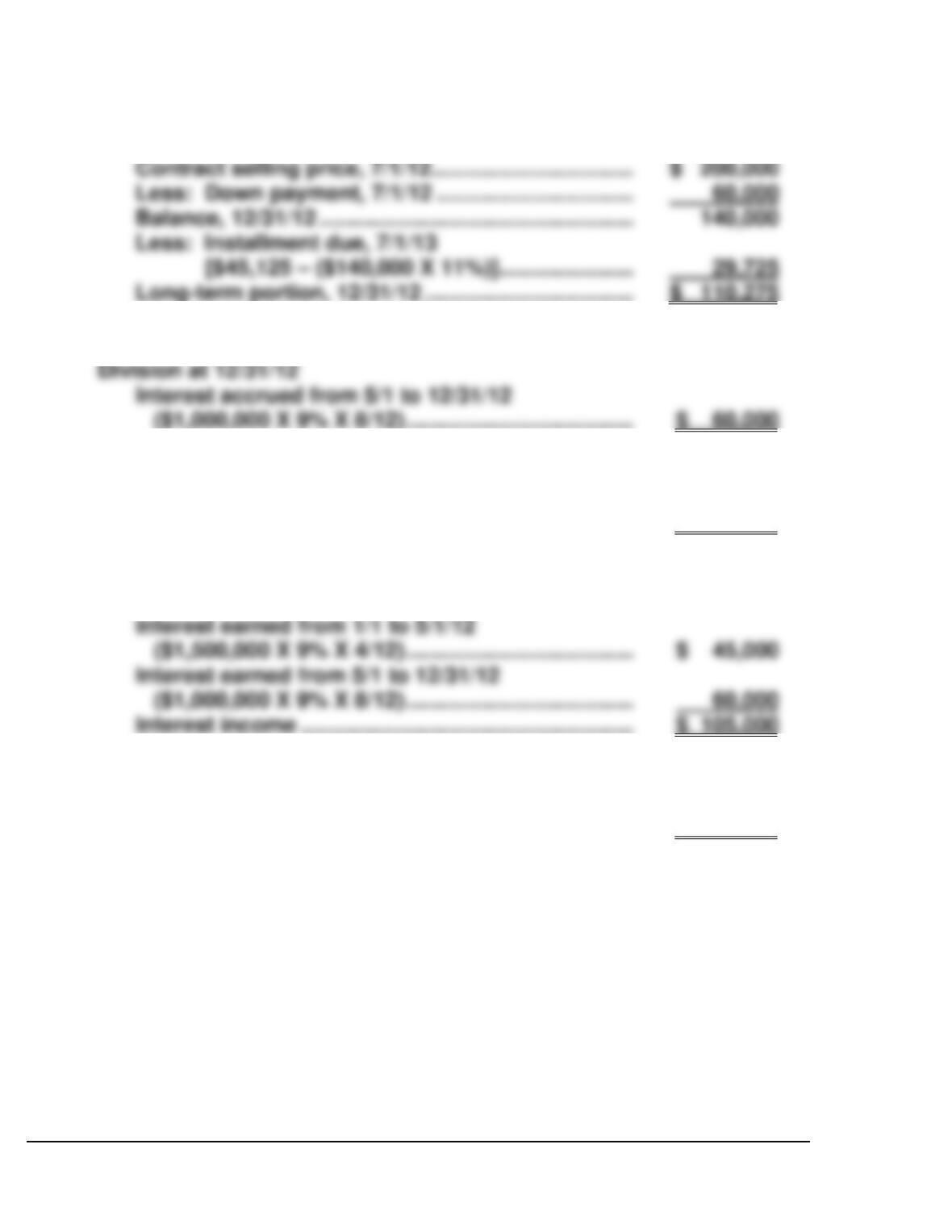
(2)
Zero-interest-bearing Note, Net of Imputed Interest
at 12/31/12
Face amount 4/1/12 …………………………………………
$ 100,000
Less: Imputed interest
[$100,000 – ($100,000 X 0.797)] ………………
20,300
Balance, 4/1/12 ………………………………………………..
Add: Interest earned to 12/31/12
($79,700 X 12% X 9/12) …………………………..
7,173
7-52
PROBLEM 7-10 (Continued)
(3)
Long-term Portion of Installment Contract
Receivable at 12/31/12
(4)
Accrued Interest—Note Receivable, Sale of
Division at 12/31/12
Interest accrued from 5/1 to 12/31/12
($1,000,000 X 9% X 8/12) ……………………………….
$ 60,000
(5)
Accrued Interest—Installment Contract at 12/31/12
Interest accrued from 7/1 to 12/31/12
($140,000 X 11% X 1/2) ………………………………….
$ 7,700
(6)
Interest Revenue—Note Receivable, Sale of
Division, for 2012
Interest earned from 1/1 to 5/1/12
($1,500,000 X 9% X 4/12) ……………………………….
Interest earned from 5/1 to 12/31/12
Interest income ………………………………………………
$ 105,000
(7)
Interest Revenue—Note Receivable, Officer, for 2012
Interest earned 1/1 to 12/31/12
($400,000 X 8%) ……………………………………………
$ 32,000
Contract selling price, 7/1/12…………………………...
Less: Down payment, 7/1/12 …………………………..
Balance, 12/31/12 ……………………………………………
Less: Installment due, 7/1/13
[$45,125 – ($140,000 X 11%)]………………….
Long-term portion, 12/31/12 …………………………….
PROBLEM 7-11
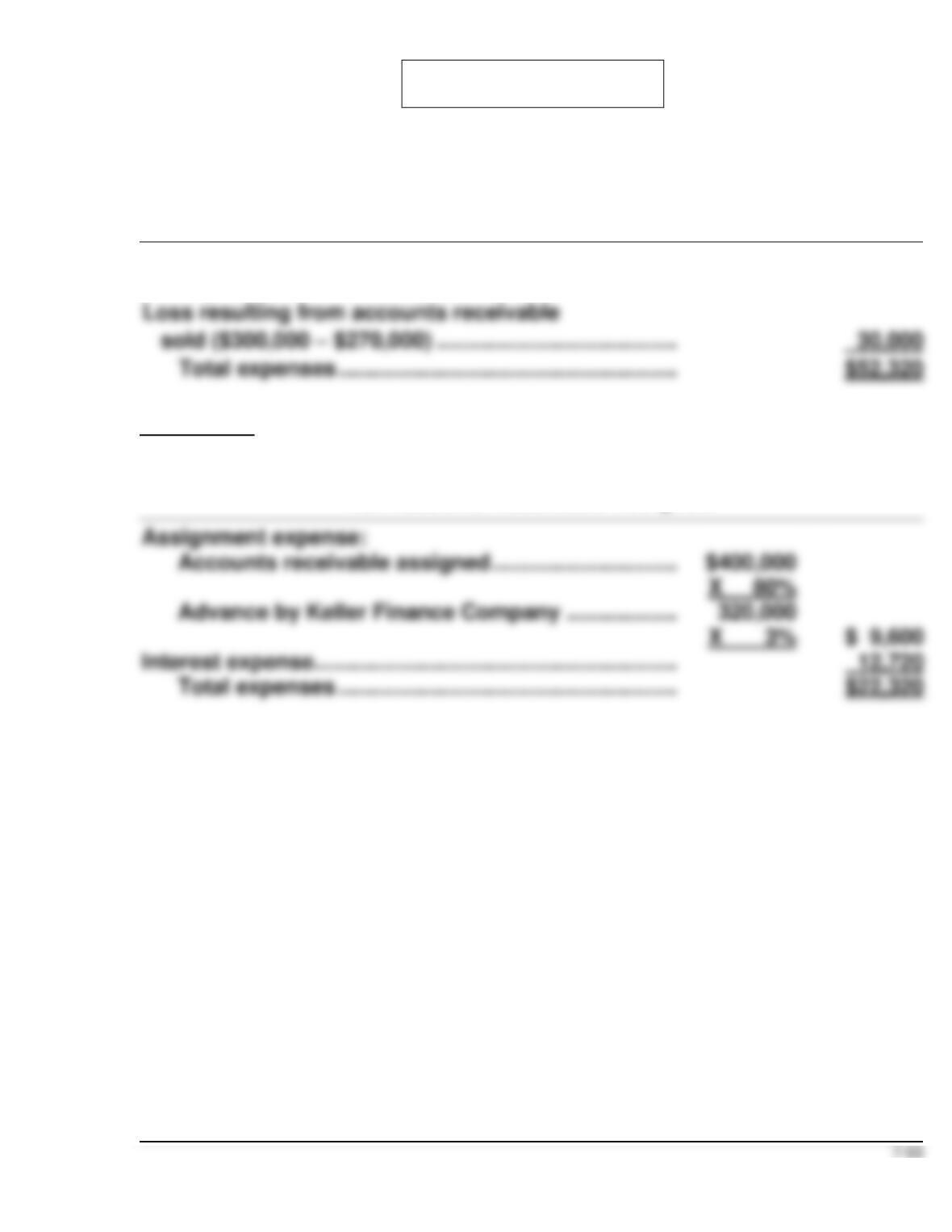
SANDBURG COMPANY
Income Statement Effects
For the Year Ended December 31, 2012
Expenses resulting from accounts receivable
assigned (Schedule 1) ……………………………………………
$22,320
Loss resulting from accounts receivable
sold ($300,000 – $270,000) ……………………………………..
Total expenses …………………………..……………………….
$52,320
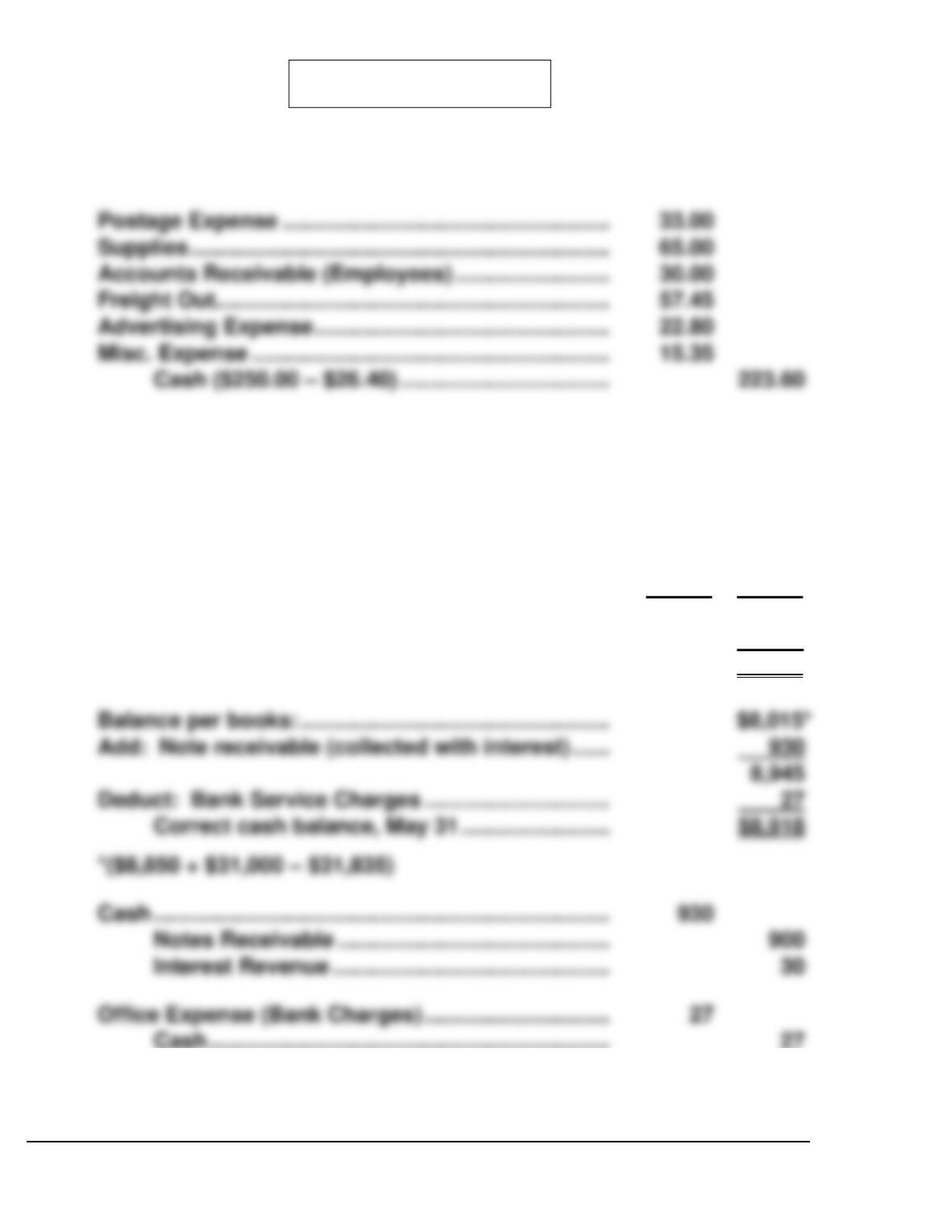
Schedule 1
Computation of Expense
for Accounts Receivable Assigned
Advance by Keller Finance Company …………………..
Total expenses ……………………………………………………
7-54
*PROBLEM 7-12
(a)
Petty Cash ……………………………………………………….
250.00
Cash ………………………………………………………….
250.00
Petty Cash ……………………………………………………….
50.00
Cash ………………………………………………………….
50.00
(b)
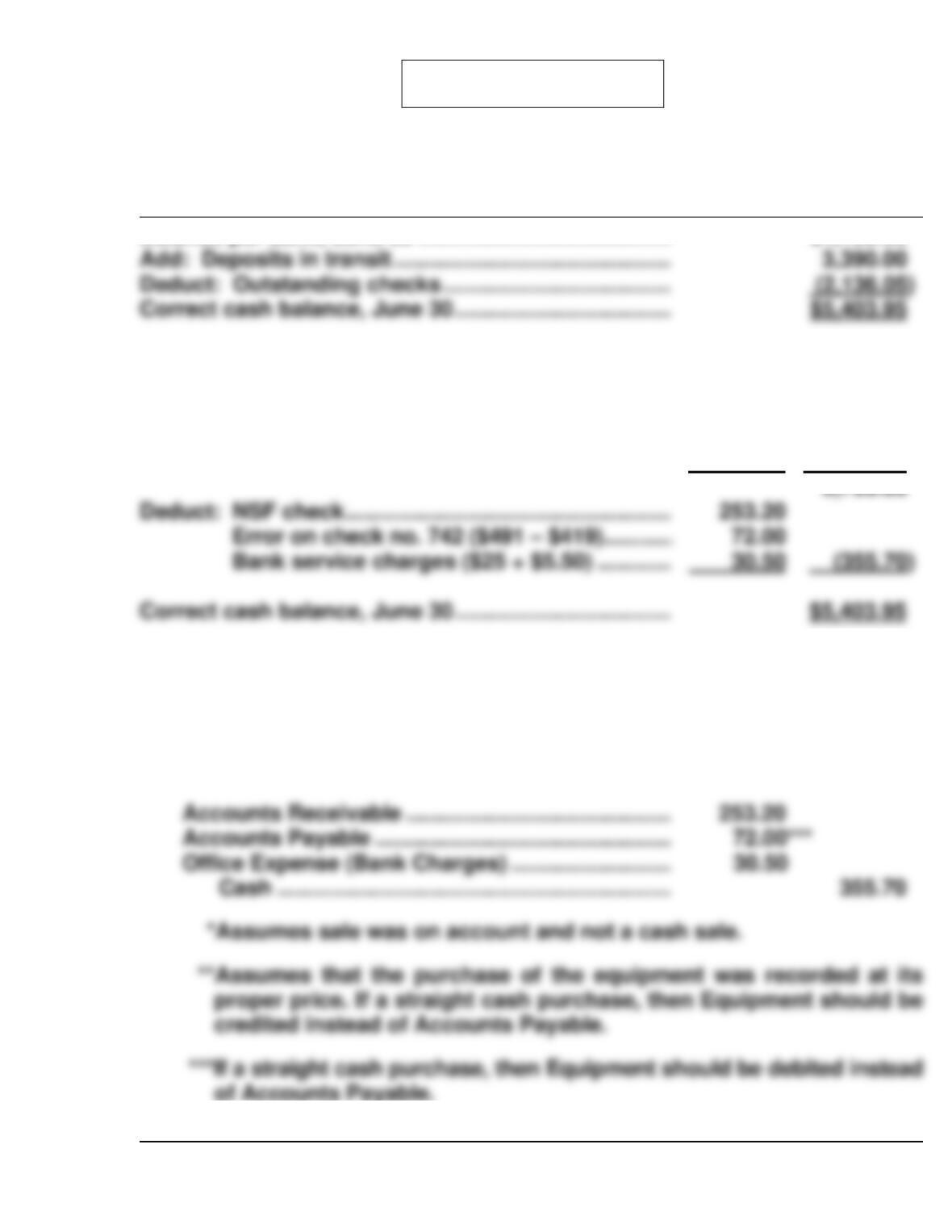
Balances per bank: …………………………………………….
$6,522
Add:
Cash on hand …………………………………………….
$ 246
Deposit in transit ………………………………………..
3,000
3,246
9,768
Deduct: Checks outstanding ……………………………….
850
Correct cash balance, May 31 ……………………..
$8,918
Balance per books: …………………………………………….
Add: Note receivable (collected with interest) ……..
930
8,945
Deduct: Bank Service Charges …………………………..
27
*($8,850 + $31,000 – $31,835)
Cash ………………………………………………………………….
Notes Receivable ……………………………………….
Interest Revenue ………………………………………..
30
Office Expense (Bank Charges) …………………………..
Cash ………………………………………………………….
27
(c) $8,918 + $300 = $9,218.
Postage Expense ……………………………………………….
33.00
Supplies …………………………………………………………….
65.00
Accounts Receivable (Employees) ………………………
30.00
Freight Out ……………………………………………………….
57.45
Advertising Expense …………………………..………………
22.80
Misc. Expense ……………………………………………………
15.35
7-55
*PROBLEM 7-13
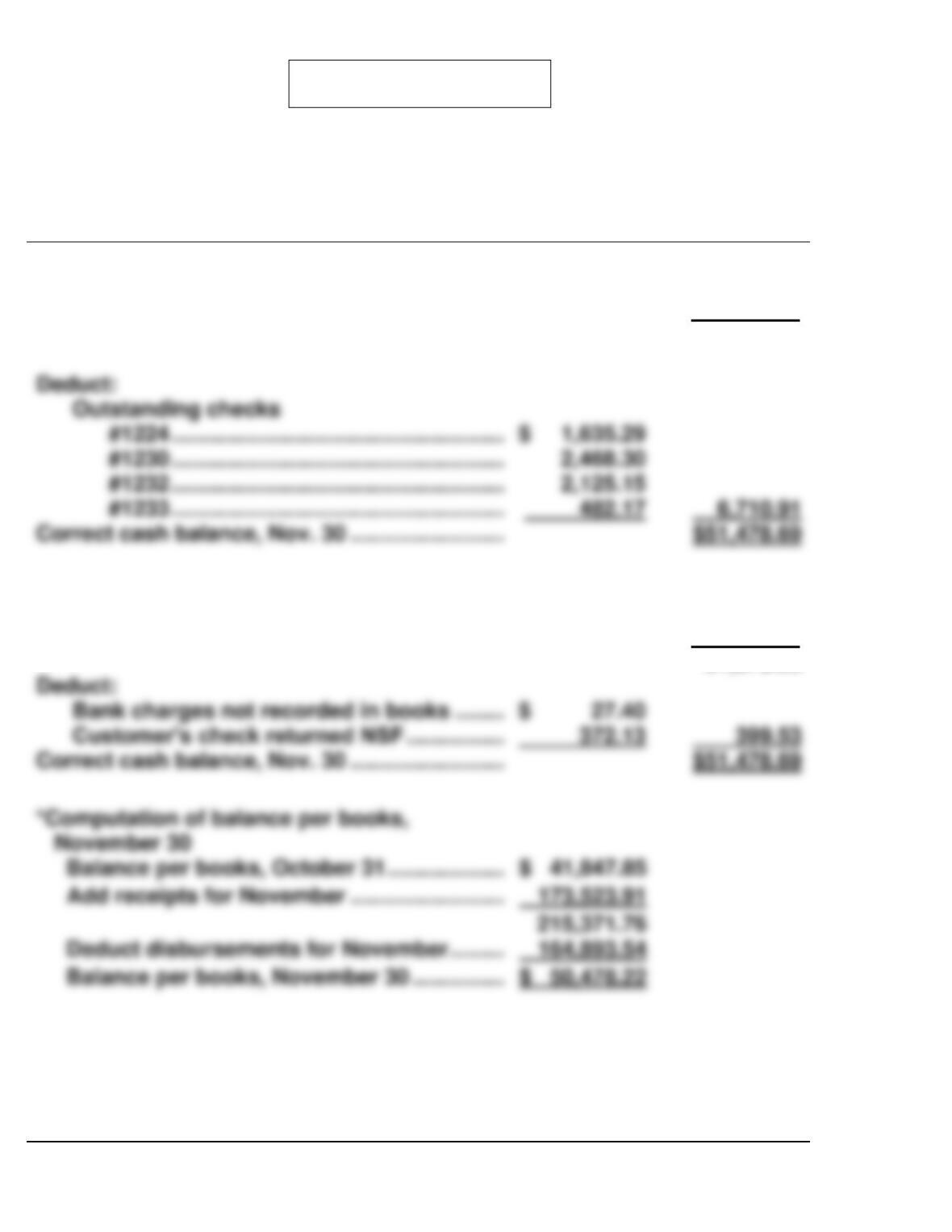
(a) AGUILAR CO.
Bank Reconciliation
June 30, 2012
Balance per bank, June 30 ………………………………………..
$4,150.00
Balance per books, June 30 …………………………..………….
$3,969.85
Add: Error in recording deposit ($90 – $60) ……………….
$ 30.00
Error on check no. 747
($582.00 – $58.20) …………………………..…………….
523.80
Note collection ($1,200 + $36) …………………………..
1,236.00
1,789.80
Deduct: NSF check …………………………………………………..
253.20
Error on check no. 742 ($491 – $419)…………
Bank service charges ($25 + $5.50) ………………
30.50
(b) Cash ………………………………………………………………
1,789.80
Accounts Receivable …………………………………
30.00*
Accounts Payable………………………………………
523.80**
Notes Receivable ……………………………………….
1,200.00
Interest Revenue ……………………………………….
36.00
Accounts Receivable ………………………………………
Accounts Payable …………………………..………………
Office Expense (Bank Charges) ……………………….
Cash ……………………………………………………….
of Accounts Payable.
Add: Deposits in transit ……………………………………………
Deduct: Outstanding checks …………………………………….
7-56
*PROBLEM 7-14
(a) HASELHOF INC.
Bank Reconciliation
November 30
Balance per bank statement, November 30 ………………
$56,274.20
Add:
Cash on hand, not deposited …………………………..
1,915.40
58,189.60
Balance per books, November 30 …………………………..
$50,478.22*
Add:
Bond interest collected by bank …………………………
1,400.00
51,878.22
Deduct:
Bank charges not recorded in books ………………….
Customer’s check returned NSF …………………………
399.53
*Computation of balance per books,
November 30
Deduct:
Outstanding checks
#1224 ……………………………………………………….
#1230 ……………………………………………………….
#1232 ……………………………………………………….
#1233 ……………………………………………………….
6,710.91
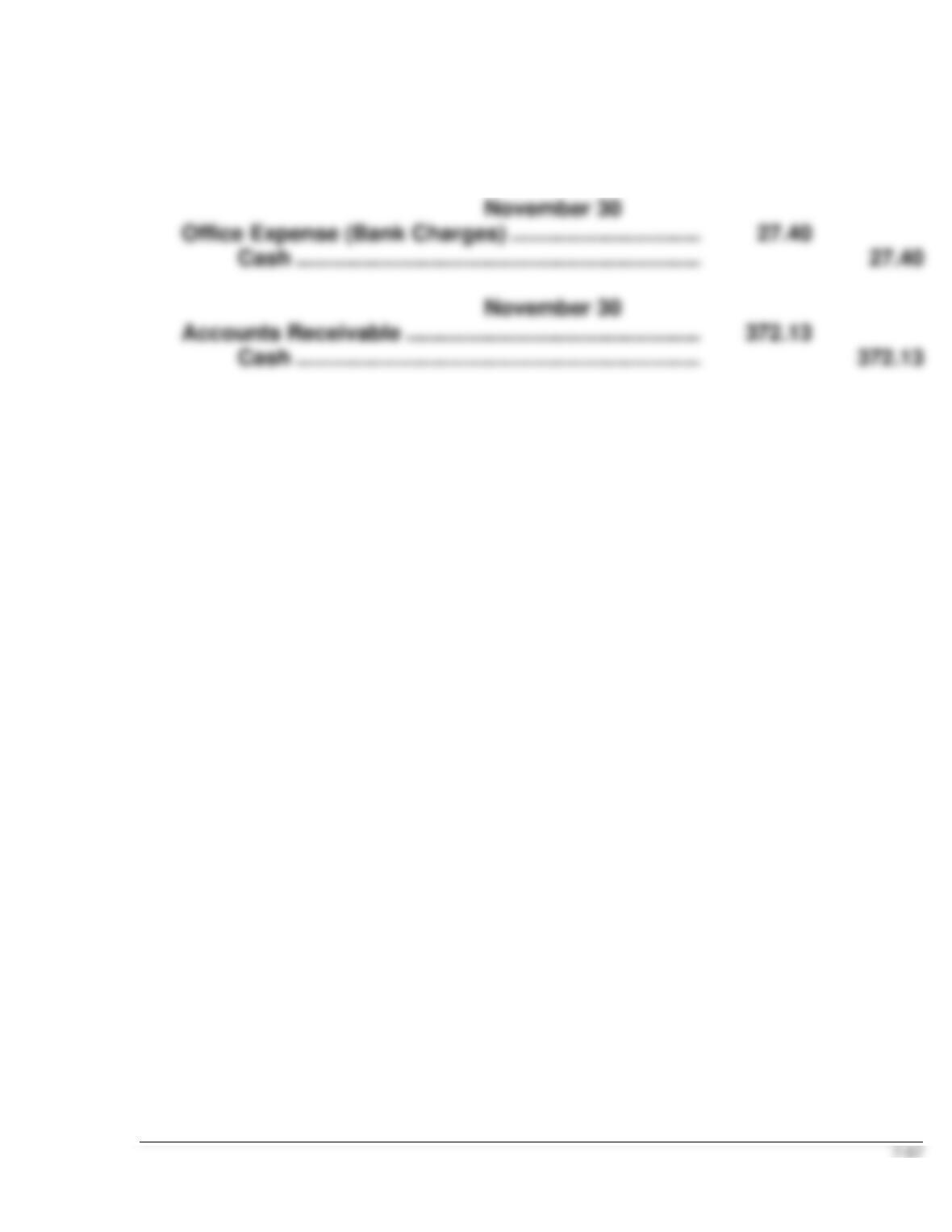
*PROBLEM 7-14 (Continued)
(b)
November 30
Cash …………………………………………………………………
1,400.00
Interest Revenue ……………………………………….
1,400.00
Office Expense (Bank Charges) ………………………….
Cash …………………………………………………………
Accounts Receivable …………………………………………
Cash …………………………………………………………
7-58
*PROBLEM 7-15
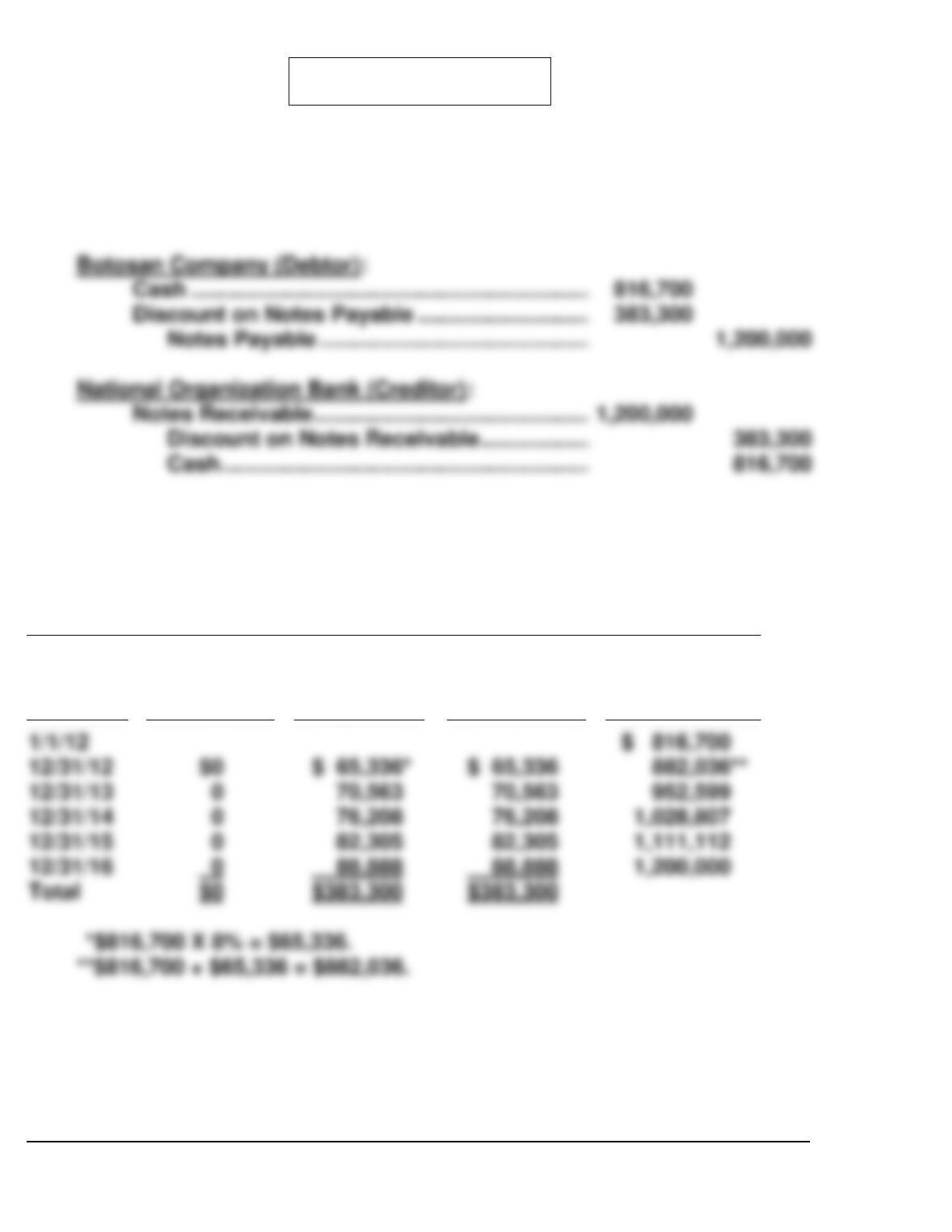
(a) The entries for the issuance of the note on January 1, 2012:
The present value of the note is: $1,200,000 X .68058 = $816,700
(Rounded by $4).
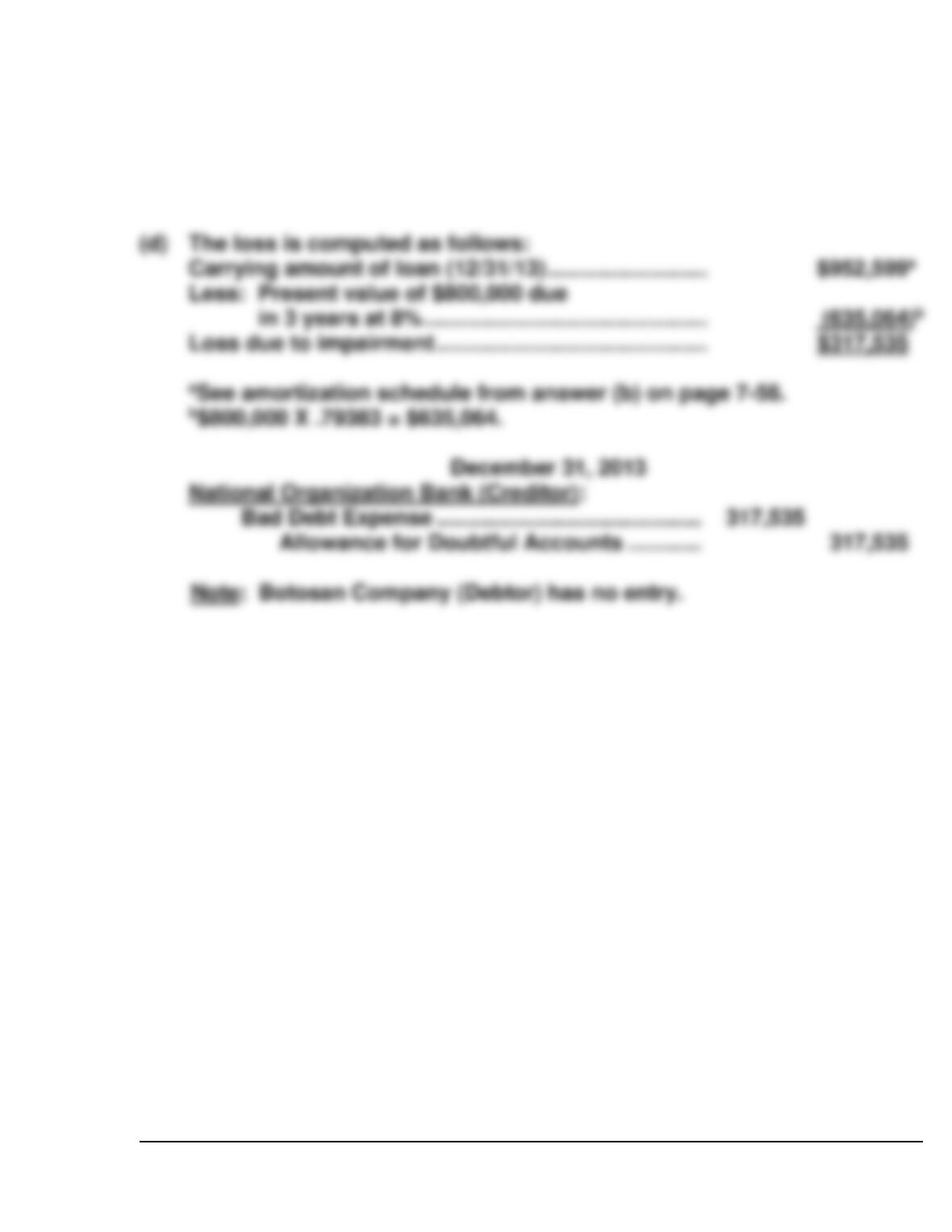
(b) The amortization schedule for this note is:
SCHEDULE FOR INTEREST AND DISCOUNT AMORTIZATION—
EFFECTIVE-INTEREST METHOD
$1,200,000 Note Issued to Yield 8%
Date
Cash
Paid
Interest
Expense
Discount
Amortized
Carrying
Amount of
Note
7-59
*PROBLEM 7-15 (Continued)
(c) The note can be considered to be impaired only when it is probable
that, based on current information and events, National Organization
Bank will be unable to collect all amounts due (both principal and
interest) according to the contractual terms of the loan.
7-60
TIME AND PURPOSE OF CONCEPTS FOR ANALYSIS
CA 7-1 (Time 10–15 minutes)
Purpose—to provide the student with the opportunity to discuss the deficiencies of the direct write-off
method, the justification for two allowance methods for estimating bad debts, and to explain the
accounting for the recoveries of accounts written off previously.
CA 7-2 (Time 15–20 minutes)
Purpose—to provide the student with the opportunity to discuss the accounting for cash discounts,
trade discounts, and the factoring of accounts receivable.
CA 7-3 (Time 25–30 minutes)
Purpose—to provide the student with the opportunity to discuss the advantages and disadvantages of
handling reporting problems related to the Allowance for Doubtful Accounts balance. Recommendations
must be made concerning whether some type of allowance approach should be employed, how collection
expenses should be handled, and finally, the appropriate accounting treatment for recoveries. A very
complete case which should elicit a good discussion of this issue.
CA 7-4 (Time 25–30 minutes)
Purpose—to provide the student the opportunity to discuss when interest revenue from a note receivable
is reported. In Part 2, the student is asked to contrast the estimation of bad debts based on credit sales
with that based on the balance in receivables, and to describe the reporting of the allowance account and
the bad debts expense.
CA 7-5 (Time 25–30 minutes)
Purpose—to provide the student the opportunity to prepare an accounts receivable aging schedule, compute
the amount of the adjustment, and prepare the journal entry to adjust the allowance. Then the student
is asked to identify steps to improve collection and evaluate each step in terms of risks and costs involved.
CA 7-6 (Time 20–25 minutes)
Purpose—to provide the student with a discussion problem related to notes receivable sold without and
with recourse.
CA 7-7 (Time 20–30 minutes)
Purpose—to provide the student the opportunity to account for a zero-interest-bearing note is ex-
changed for a unique machine. The student must consider valuation, financial statement disclosure,
and factoring the note.
CA 7-8 (Time 25–30 minutes)
Purpose—to provide the student the opportunity to calculate interest revenue on an interest-bearing
note and a zero-interest-bearing note, and indicate how the notes should be reported on the balance
sheet. The student discusses how to account for collections on assigned accounts receivable and how
to account for factored accounts receivable.
CA 7-9 (Time 25–30 minutes)
Purpose—to provide the student with a case related to the imputation of interest. One company has
overstated its income by not imputing an interest element on the zero-interest-bearing note receivable
that it received in the transaction. We have presented a short analysis to indicate what the proper
solution should be. It is unlikely that the students will develop a journal entry with dollar amounts, but
they should be encouraged to do so.
CA 7-10 (Time 25–30 minutes)
Purpose—to provide the student with a case to analyze receivables irregularities, including a shortage.
This is a good writing assignment.
CA 7-11 (Time 25–30 minutes)
Purpose—to provide the student with a case to analyze ethical issues inherent in bad debt judgments.