EXERCISE 7-3 (Continued)
Investments
EXERCISE 7-4 (10–15 minutes)
Computation of cost of goods sold:
= 1.4 ($250,000)
= $350,000
Uncollected balance …………….
EXERCISE 7-5 (15–20 minutes)
(a)
1.
June 3
Accounts Receivable (Arquette) …………………………..
2,000
Sales ……………………………………………………….
2,000
Sales Discounts ($2,000 X 2%) …………………………..
Accounts Receivable (Arquette) ………………………
2,000
Sales ($2,000 X 98%) …………………………..
1,960
June 12
Cash ……………………………………………………….
1,960
7-22
EXERCISE 7-5 (Continued)
(b)
July 29
Cash ……………………………………………………….
2,000
Accounts Receivable (Arquette) …………………………
1,960
Sales Discounts Forfeited …………………………..
40
EXERCISE 7-6 (5–10 minutes)
July 1
Accounts Receivable …………………………..
30,000
Sales ……………………………………………………….
30,000
July 10
Cash ……………………………………………………….
Sales Discounts ………………………………………………………
Accounts Receivable …………………………..
Accounts Receivable …………………………..
Sales ……………………………………………………….
Cash ……………………………………………………….
Accounts Receivable …………………………..
EXERCISE 7-7 (10–15 minutes)
(a)
Bad Debt Expense …………………………………………………..
7,500
Allowance for Doubtful Accounts ……………………..
7,500*
*.01 X ($800,000 – $50,000) = $7,500
(b)
Bad Debt Expense …………………………………………………..
Allowance for Doubtful Accounts ……………………..
6,000*
EXERCISE 7-8 (5–10 minutes)
(a)
Allowance for Doubtful Accounts …………………………..
8,000
Accounts Receivable ……………………………………….
8,000
(b)
Accounts Receivable ……………………………………………….
Less: Allowance for Doubtful Accounts …………………..
Net realizable value …………………………………………
Accounts Receivable ……………………………………………….
Less: Allowance for Doubtful Accounts …………………..
Net realizable value …………………………………………
EXERCISE 7-9 (8–10 minutes)
(a)
Bad Debt Expense …………………………………………………..
4,950
Allowance for Doubtful Accounts
($80,000 X 4%) + $1,750 = $4,950 …………………..
(b)
Bad Debt Expense …………………………………………………..
5,800
Allowance for Doubtful Accounts
$580,000 X 1% = $5,800 …………………………..
EXERCISE 7-10 (10–12 minutes)
(a) The direct write-off approach is not theoretically justifiable even though
required for income tax purposes. The direct write-off method does
7-24
EXERCISE 7-11 (8–10 minutes)
Balance 1/1 ($700 – $255)
$ 445
Over one year
4/12 (#2412) ($1,710 – $1,000 – $400*)
310
Eight months and 19 days
EXERCISE 7-12 (15–20 minutes)
7/1
Accounts Receivable (Legler Co.) …………………………..
9,800
Sales ($10,000 X 98%) …………………………..
9,800
7/5
Cash [$12,000 X (1 – .09)] …………………………………………
Loss on Sale of Receivables …………………………..
Accounts Receivable ($12,000 X 98%) ………………
Sales Discounts Forfeited …………………………..
7/9
Accounts Receivable ………………………………………………
180
Sales Discounts Forfeited
($9,000 X 2%) ………………………………………………
180
Cash ………………………………………………………………………
5,640
Interest Expense ($6,000 X 6%) …………………………..
360
Notes Payable …………………………………………………
6,000
7/11
Accounts Receivable (Legler Co.) …………………………..
200
Sales Discounts Forfeited
($10,000 X 2%) …………………………..…………………
11/18 (#5681) ($2,000 – $1,250)
750
One month and 13 days
7-25
EXERCISE 7-12 (Continued)
This entry may be made at the next time financial statements are
EXERCISE 7-13 (10–15 minutes)
(a)
Cash ……………………………………………………………………….
290,000
Interest Expense ……………………………………………………..
10,000*
Notes Payable …………………………………………………
300,000
*2% X $500,000 = $10,000
(b)
Cash ……………………………………………………………………….
350,000
Accounts Receivable ……………………………………….
(c)
Notes Payable ……………………………………………………….
Interest Expense ……………………………………………………..
Cash……………………………………………………….
*10% X $300,000 X 3/12 = $7,500
EXERCISE 7-14 (15–18 minutes)
1.
Cash ……………………………………………………………………….
18,000
Loss on Sale of Receivables
($20,000 X 10%) …………………………………………………….
Accounts Receivable …………………………..…………..
Cash ………………………………………………………………………
Interest Expense ($55,000 X 8%) …………………………..
Notes Payable …………………………………………………
12/29
Allowance for Doubtful Accounts …………………………..
Accounts Receivable (Legler Co.)
7-26
EXERCISE 7-14 (Continued)
3.
Bad Debt Expense…………………………………………………..
5,850
EXERCISE 7-15 (10–15 minutes)
Computation of net proceeds:
Cash received ……………………………………………………….
$190,000
Less: Recourse liability ………………………………………….
2,000
Net proceeds ……………………………………………………….
$188,000
Computation of gain or loss:
Carrying value …………………………..………………
$200,000
Net proceeds …………………………..………………..
Loss on sale of receivables ………………………..
The following journal entry would be made:
Cash …………………………..………………………………….
Loss on Sale of Receivables …………………………..
Recourse Liability …………………………………….
Accounts Receivable …………………………..
EXERCISE 7-16 (15–20 minutes)
(a)
To be recorded as a sale, all of the following conditions would be met:
2.
The transferees have obtained the right to pledge or to exchange
Allowance for Doubtful Accounts
[($82,000 X 5%) + $1,750] …………………………..
Bad Debt Expense…………………………………………………..
Allowance for Doubtful Accounts
($430,000 X 1.5%) …………………………………………
7-27
EXERCISE 7-16 (Continued)
3.
The transferor does not maintain effective control over the trans-
ferred assets through an agreement to repurchase or redeem them
before their maturity.
(b)
Computation of net proceeds:
Cash received ($250,000 X 94%) ……………..
$235,000
Due from factor ($250,000 X 4%) …………….
10,000
$245,000
Less: Recourse obligation …………………….
3,000
Net proceeds …………………………………………
$242,000
EXERCISE 7-17 (10–15 minutes)
(a)
July 1
Cash ……………………………………………………….
378,000
Due from Factor ………………………………………………………
16,000*
Loss on Sale of Receivables …………………………..
Accounts Receivable …………………………..
**(1 1/2% X $400,000) = $6,000
(b)
July 1
Accounts Receivable …………………………..
400,000
Due to Customer (SEK Corp.) …………………………..
Interest Revenue …………………………..
Cash ……………………………………………………….
Computation of gain or loss:
Carrying value …………………………………….
$250,000
Net proceeds ………………………………………
Loss on sale of receivables ………………….
The following journal entry would be made:
Cash ……………………………………………………….
$235,000
Due from Factor ………………………………………………
Loss on Sale of Receivables …………………………..
Recourse Liability …………………………..
Accounts Receivable …………………………..
7-28
EXERCISE 7-18 (10–15 minutes)
1.
7/1/12
Notes Receivable …………………………………………………….
1,416,163
Discount on Notes Receivable …………………………..
516,163
Land ……………………………………………………….
590,000
2.
7/1/12
Notes Receivable …………………………………………………….
400,000.00
Discount on Notes Receivable …………………………..
178,836.32
Service Revenue …………………………..
221,163.68
Computation of the present value of the note:
Maturity value ……………………………………………………
Present value of $400,000 due in
8 years at 12%—$400,000 X .40388 ………………….
Present value of $12,000
payable annually for 8 years at
12% annually—$12,000 X 4.96764 …………………….
Present value of the note …………………………..
Gain on Disposal of Land
($900,000 – $590,000) ……………..
310,000
Computation of the discount
Face value of note
Present value of 1 for 4 periods at 12%
Present value of note
Face value of note
Discount on notes receivable
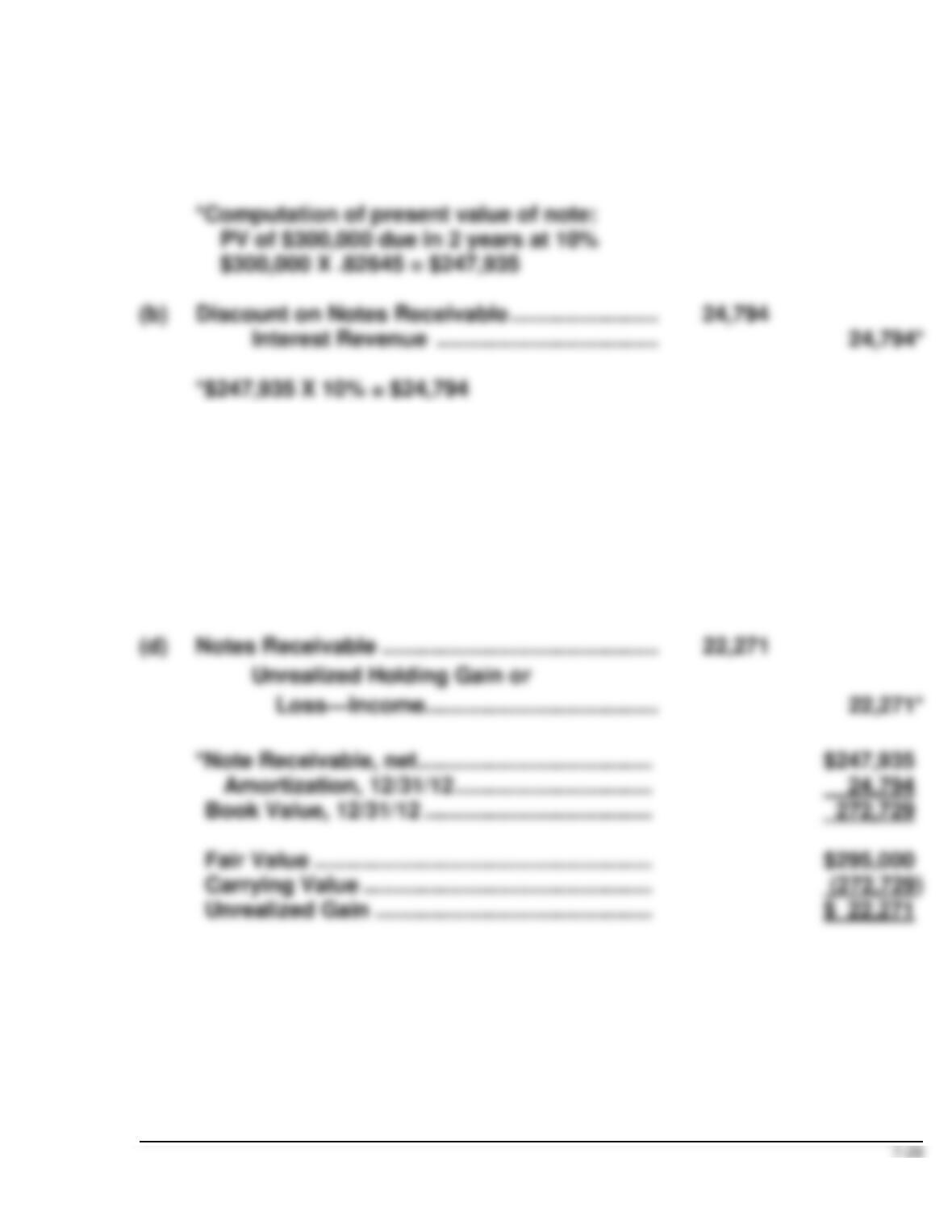
EXERCISE 7-19 (20–25 minutes)
(a)
Notes Receivable …………………………………………………..
300,000
Discount on Notes Receivable …………………………
52,065
Service Revenue ……………………………………………
247,935*
(b)
Discount on Notes Receivable …………………………..
Interest Revenue ……………………………………………
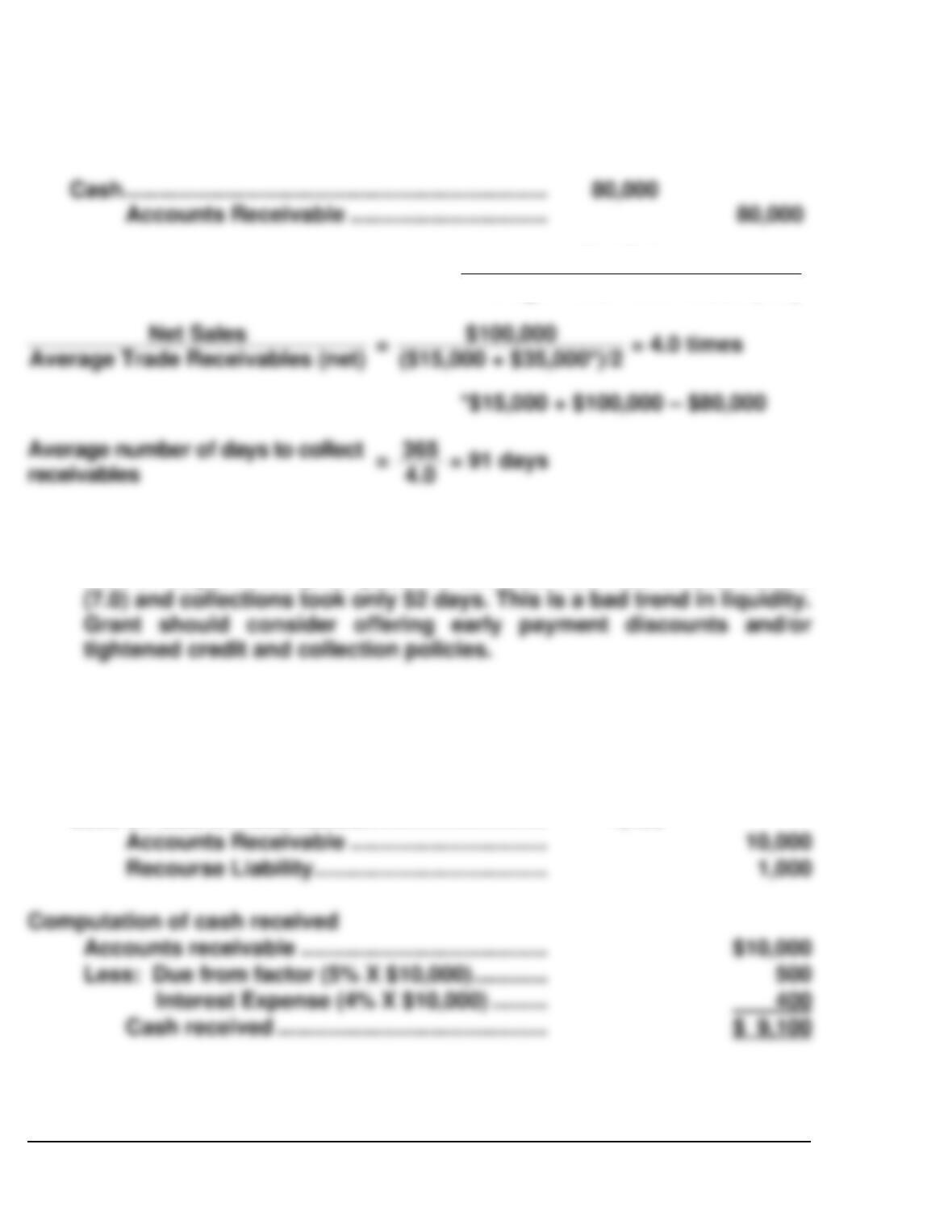
*$247,935 X 10% = $24,794
(c)
Discount on Notes Receivable …………………………..
27,271*
Interest Revenue …………………………………………….
27,271
*$52,065 – $24,794
Cash ………………………………………………………………………
300,000
Notes Receivable …………………………………………..
300,000
7-30
EXERCISE 7-20 (10–15 minutes)
(a)
Accounts Receivable ……………………………………………….
100,000
Sales ……………………………………………………….
100,000
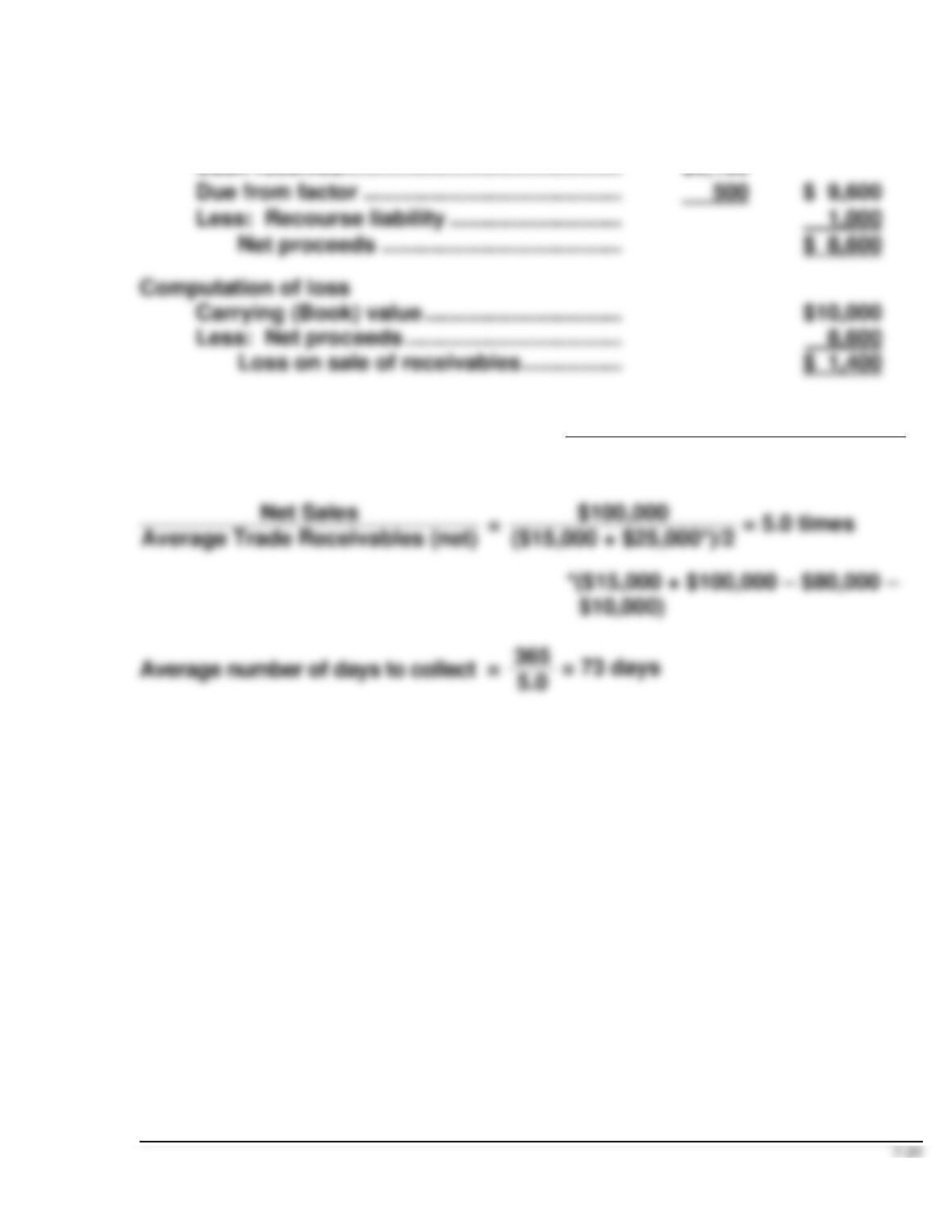
(b) Accounts Receivable Turnover =
Net Sales
Average Trade Receivables (net)
= 4.0 times
= 91 days
(c) Grant Company’s turnover ratio has declined significantly. That is, it
is turning receivables 4.0 times a year and collections on receivables
took 91 days. In the prior year, the turnover ratio was almost double
EXERCISE 7-21 (10–15 minutes)
(a)
Cash [$10,000 X (1 – .09)] …………………………………………
9,100
Due from Factor ………………………………………………………
500
Loss on Sale of Receivables …………………………..
1,400
Accounts Receivable …………………………..
Recourse Liability ……………………………………………
Computation of cash received
Accounts receivable ……………………………………….
Less: Due from factor (5% X $10,000) ………………
Interest Expense (4% X $10,000) ……………
Cash received …………………………………………..
Accounts Receivable …………………………..
EXERCISE 7-21 (Continued)
Computation of net proceeds (cash and other
assets received, less any liabilities incurred)
Cash received …………………………………………………
$9,100
Due from factor ………………………………………………
500
Less: Recourse liability …………………………..
Net proceeds ……………………………………………
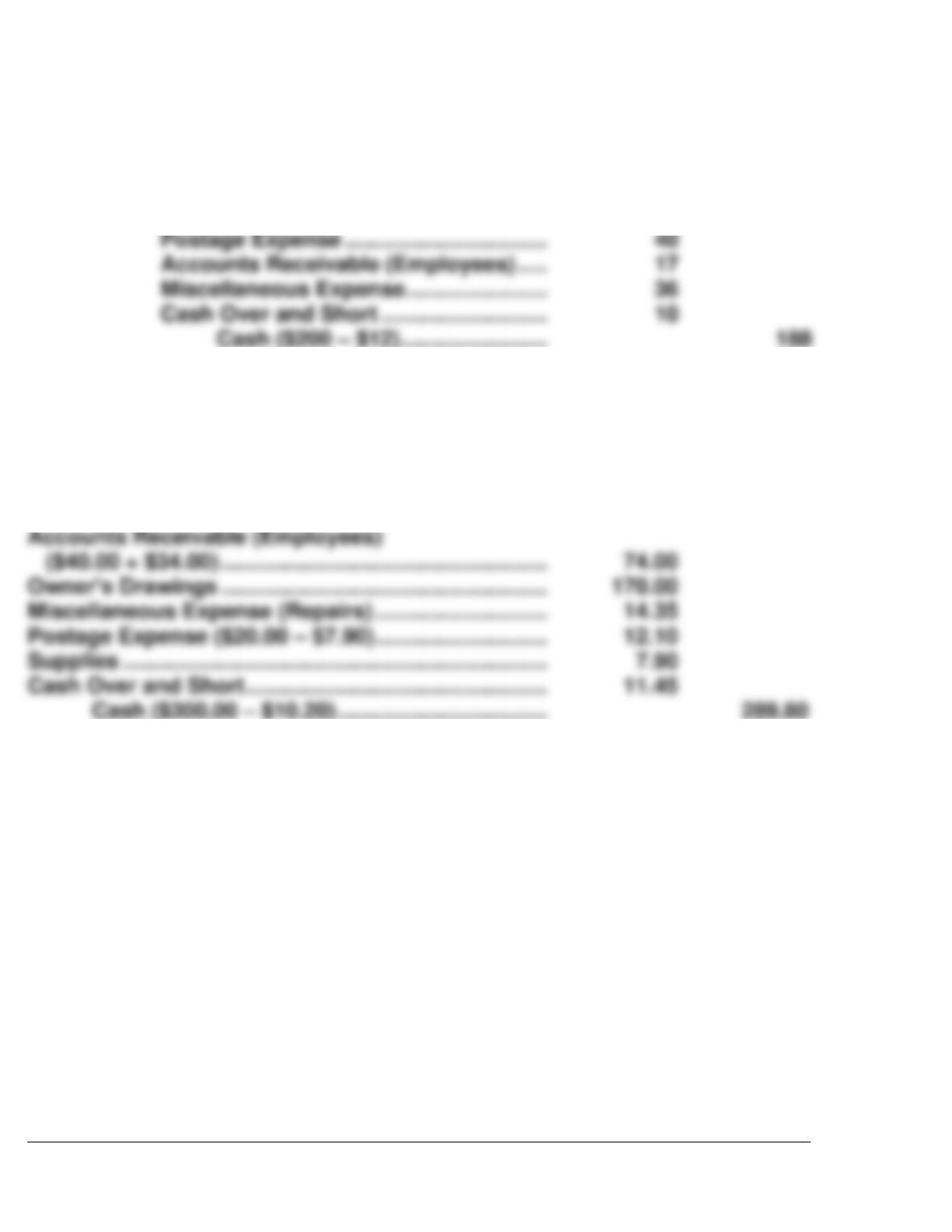
(b) Accounts Receivable Turnover =
Net Sales
Average Trade Receivables (net)
Net Sales
=
With the factoring transaction, Grant Company’s turnover ratio still declines
but by less than in the earlier exercise. While Grant’s collections have
slowed, by factoring the receivables, Grant is able to convert them to cash.
The cost of this approach to converting receivables to cash is captured in
the Loss on Sale of Receivables account.
7-32
*EXERCISE 7-22 (5–10 minutes)
1.
April 1
Petty Cash ……………………………………………………….
200
Cash ……………………………………………………….
200
2.
April 10
Inventory (Transportation in) …………………………..
60
Supplies Expense …………………………..
25
3.
April 20
Petty Cash ……………………………………………………….
100
Cash ……………………………………………………….
100
*EXERCISE 7-23 (10–15 minutes)
Accounts Receivable (Employees)
($40.00 + $34.00) ……………………………………………………
Miscellaneous Expense (Repairs) …………………………..
Postage Expense ($20.00 – $7.90) …………………………..
Supplies ………………………………………………………………….
Cash Over and Short …………………………..……………………
Cash ($300.00 – $10.20) …………………………………..
Postage Expense …………………………………………………….
40
Accounts Receivable (Employees) …………………………..
17
Miscellaneous Expense …………………………..
36
Cash Over and Short …………………………..
10
Cash ($200 – $12) …………………………..
188
7-33
*EXERCISE 7-24 (15–20 minutes)
(a) KIPLING COMPANY
Bank Reconciliation
July 31
Balance per bank statement, July 31 ………………………..
$ 8,650
Add: Deposits in transit …………………………………………..
2,850a
a Computation of deposits in transit
Deposits per books
$5,810
Deposits per bank in July
$ 4,500
Less deposits in transit (June)
(1,540)
Deposits mailed and received
in July
(2,960)
Deposits in transit, July 31
$2,850
Checks written per books
$3,100
Checks cleared by bank in July
$ 4,000
Less outstanding checks
Outstanding checks, July 31
$1,100
(b)
Cash ………………………………………………………………………
1,150
Office Expense (Bank Charges) …………………………..
15
Accounts Receivable ………………………………………………
335
Notes Receivable …………………………………………….
1,500
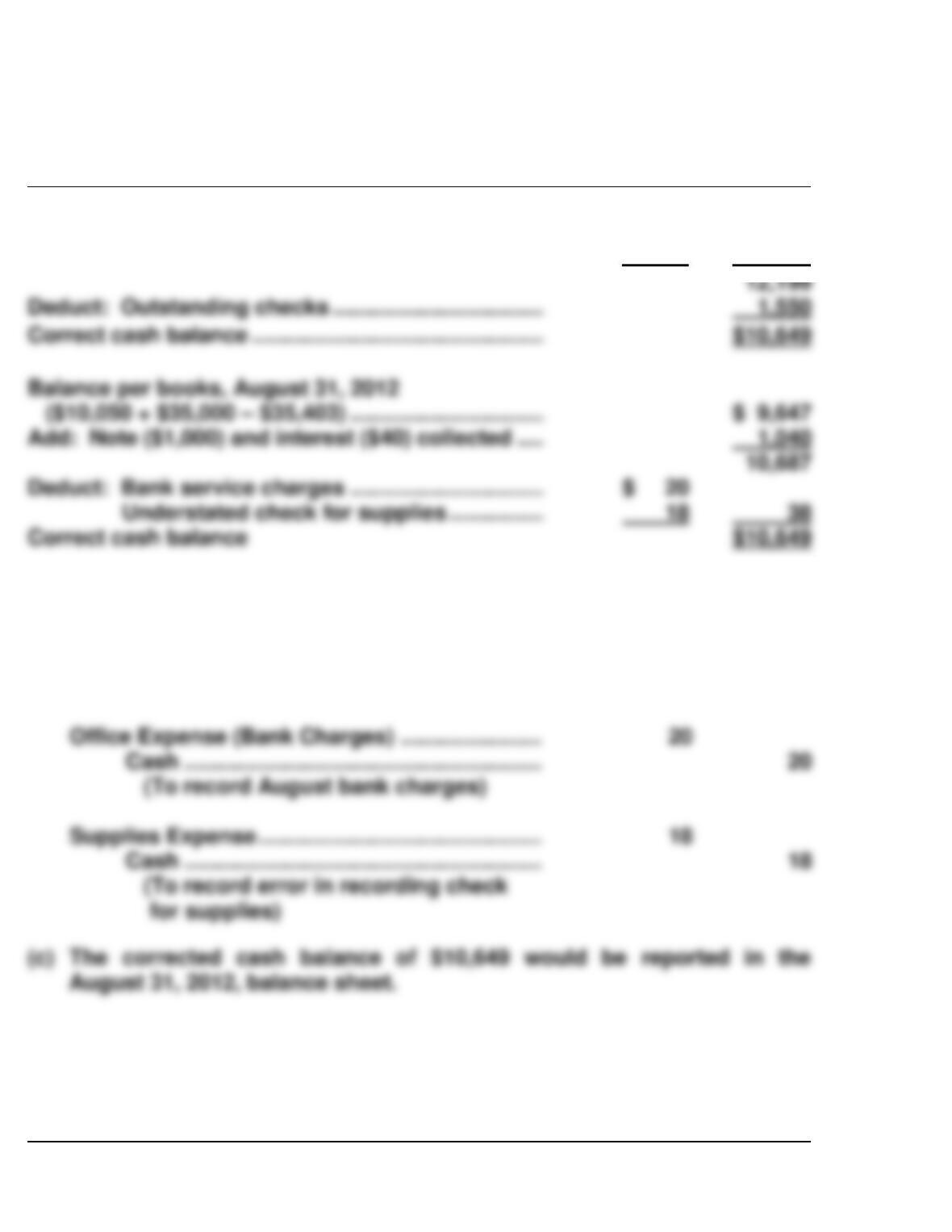
Deduct: Outstanding checks…………………………..
Correct cash balance, July 31 …………………………..
Balance per books, July 31 …………………………..
Add: Collection of note …………………………………………..
Less: Bank service charge …………………………..
NSF check …………………………………………………….
Corrected cash balance, July 31 …………………………..
7-34
*EXERCISE 7-25 (15–20 minutes)
(a) ARAGON COMPANY
Bank Reconciliation, August 31, 2012
County National Bank
Balance per bank statement, August 31, 2012 ……………
$ 8,089
Add: Cash on hand ………………………………………………….
$ 310
Deposits in transit …………………………………………..
3,800
4,110
(b)
Cash……………………………………………………………………….
1,040
Notes Receivable …………………………………………….
1,000
Interest Revenue ……………………………………………..
40
(To record collection of note and
interest)
Office Expense (Bank Charges) …………………………..
Cash ……………………………………………………….
20
(To record August bank charges)
Supplies Expense …………………………..……………………….
Cash ……………………………………………………….
18
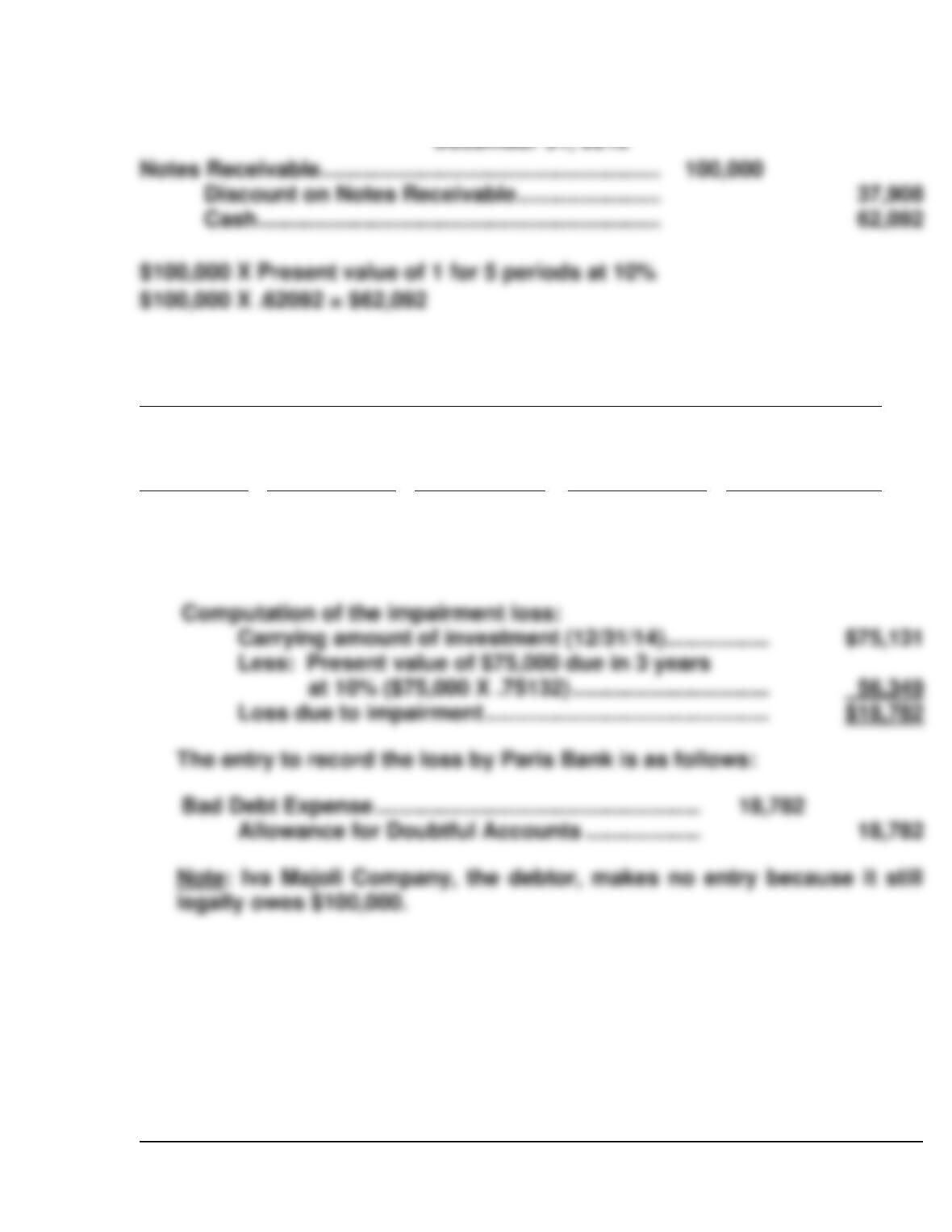
Deduct: Outstanding checks ……………………………………
1,550
Correct cash balance ……………………………………………….
$10,649
Balance per books, August 31, 2012
($10,050 + $35,000 – $35,403) …………………………..
Add: Note ($1,000) and interest ($40) collected …………
Deduct: Bank service charges …………………………..
$ 20
Understated check for supplies …………………..
Correct cash balance
$10,649
7-35
*EXERCISE 7-26 (15-25 minutes)
(a) Journal entry to record issuance of loan by Paris Bank:
(b) Note Amortization Schedule
(Before Impairment)
Date
Cash
Received
(0%)
Interest
Revenue
(10%)
Increase in
Carrying
Amount
Carrying
Amount of
Note
12/31/12
$62,092
12/31/13
$0
$6,209
$6,209
68,301
12/31/14
0
6,830
6,830
75,131
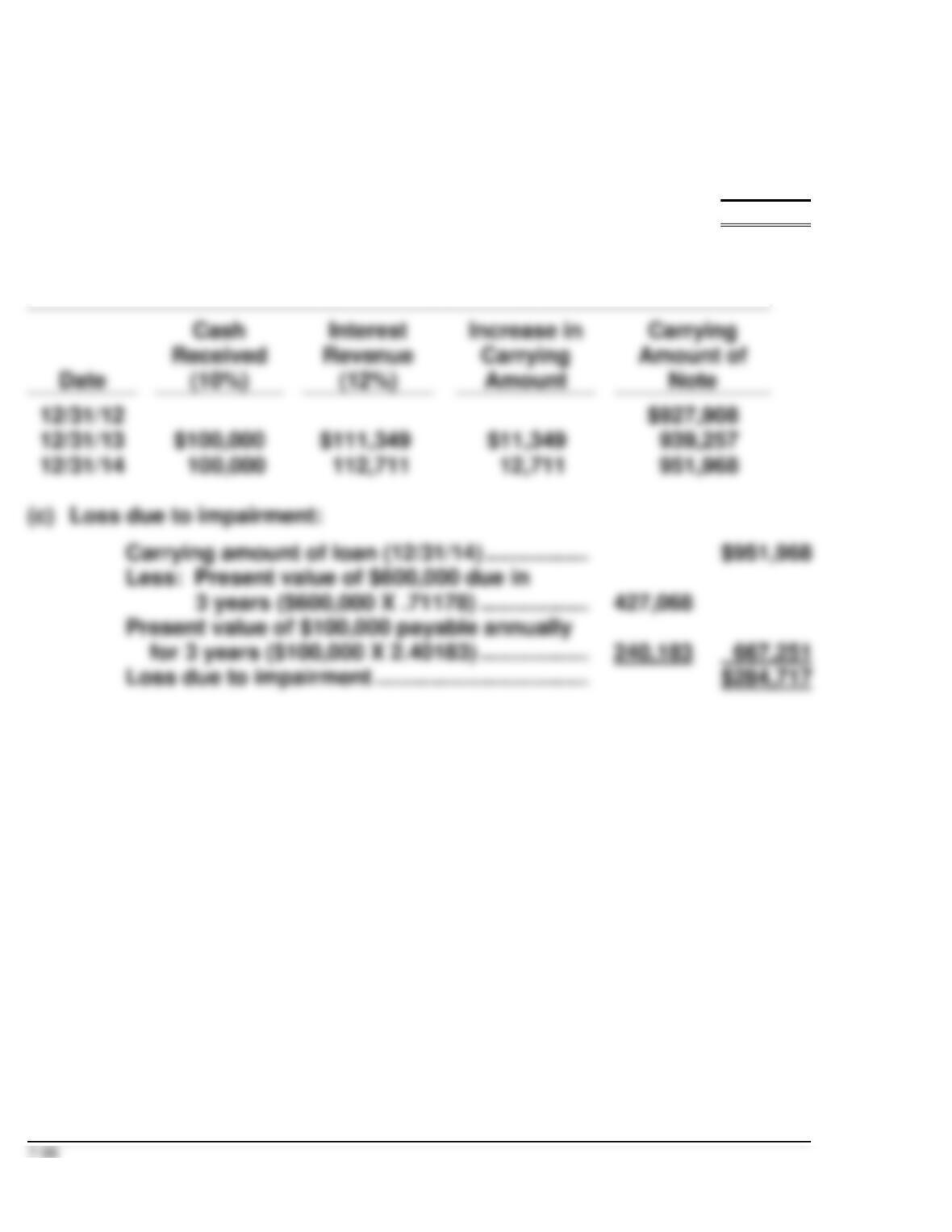
Carrying amount of investment (12/31/14)……………..
Loss due to impairment ……………………………………….
Bad Debt Expense …………………………………………………..
Allowance for Doubtful Accounts …………………….
Discount on Notes Receivable ………………………….
*EXERCISE 7-27 (15-25 minutes)
(a) Cash received by Conchita Martinez Company on December 31, 2012:
Present value of principal ($1,000,000 X .56743) …….
$567,430
Present value of interest ($100,000 X 3.60478) ……….
360,478
Cash received ……………………………………………………..
$927,908
(b) Note Amortization Schedule
(Before Impairment)
$927,908
Carrying amount of loan (12/31/14) …………………..
$951,968
Loss due to impairment …………………………………..

7-37
TIME AND PURPOSE OF PROBLEMS
Problem 7-1 (Time 20–25 minutes)
Purpose—to provide the student with an understanding of the balance sheet effect that occurs when
the cash book is left open. In addition, the student is asked to adjust the present balance sheet to an
adjusted balance sheet, reflecting the proper cash presentation.
Problem 7-2 (Time 20–25 minutes)
Purpose—to provide the student with the opportunity to determine various items related to accounts
receivable and the allowance for doubtful accounts. Five independent situations are provided.
Problem 7-3 (Time 20–30 minutes)
Purpose—to provide a short problem related to the aging of accounts receivable. The appropriate balance
for doubtful accounts must be determined. In addition, the manner of reporting accounts receivable on
the balance sheet must be shown.
Problem 7-4 (Time 25–35 minutes)
Purpose—the student prepares an analysis of the changes in the allowance for doubtful accounts and
supports it with an aging schedule. The adjusting entry is prepared.
Problem 7-5 (Time 20–30 minutes)
Purpose—a short problem that must be analyzed to make the necessary correcting entries. It is not a
pencil-pushing problem but requires a great deal of conceptualization. A good problem for indicating the
types of adjustments that might occur in the receivables area.
Problem 7-6 (Time 25–35 minutes)
Purpose—to provide the student with a number of business transactions related to notes and accounts
receivable that must be journalized. Recoveries of receivables, and write-offs are the types of trans-
actions presented. The problem provides a good cross section of a number of accounting issues related
to receivables.
Problem 7-7 (Time 25–30 minutes)
Purpose—a short problem involving the reporting problems associated with the assignment of accounts
receivable. The student is required to make the journal entries necessary to record an assignment.
A straightforward problem.
Problem 7-8 (Time 30–35 minutes)
Purpose—to provide the student with a simple note receivable problem with no imputation of interest.
Problem 7-9 (Time 30–35 minutes)
Purpose—to provide the student with a problem requiring the imputation of interest. The student is
required to make journal entries on a series of dates when note installments are collected. A relatively
straightforward problem.
Problem 7-10 (Time 40–50 minutes)
Purpose—the student calculates the current portion of long-term receivables and interest receivable,
and prepares the long-term receivables section of the balance sheet. Then the student prepares a
schedule showing interest income. The problem includes interest-bearing and zero-interest-bearing
notes and an installment receivable.
Problem 7-11 (Time 20–25 minutes)
Purpose—to provide the student the opportunity to record the sales of receivables with and without
recourse and determine the income effects.

Time and Purpose of Problems (Continued)
*Problem 7-12 (Time 20–25 minutes)
Purpose—to provide the student the opportunity to do the accounting for petty cash and a bank
reconciliation.
*Problem 7-13 (Time 20–30 minutes)
Purpose—to provide the student with the opportunity to prepare a bank reconciliation which is reconciled
to a corrected balance. Traditional types of adjustments are presented. Journal entries are also required.
*Problem 7-14 (Time 20–30 minutes)
Purpose—to provide the student with the opportunity to prepare a bank reconciliation which goes from
balance per bank to corrected balance. Traditional types of adjustments are presented such as deposits
in transit, bank service charges, NSF checks, and so on. Journal entries are also required.
*Problem 7-15 (Time 30–40 minutes)
Purpose—to provide the student with a loan impairment situation that requires entries by both the
debtor and the creditor and an analysis of the loss on impairment.
7-39
SOLUTIONS TO PROBLEMS
PROBLEM 7-1
(a)
December 31
Accounts Receivable ($17,640 + $360) ……………….
18,000
Sales ……………………………………………………….
28,000
(b)
Per Balance
Sheet
After
Adjustment
Current assets
Cash ($39,000 – $45,640 + $22,200) ……………………..
$ 39,000
$ 15,560
Receivables ($42,000 + $18,000) ………………………….
42,000
60,000
Inventory ……………………………………………………….
67,000
67,000
Total ………………………………………… (1)
148,000
142,560
Current liabilities
Accounts payable
Other current liabilities …………………..
14,200
Total ………………………………………… (2)
81,650
Cash ……………………………………………………….
Sales Discounts ………………………………………..
December 31
Cash ……………………………………………………….
22,200
Purchase Discounts ………………………………………….
Accounts Payable …………………………..
7-40
PROBLEM 7-2
1.
Net sales ……………………………………………………………………..
$1,200,000
2.
Accounts receivable …………………………………………………….
$1,750,000
Amounts estimated to be uncollectible ………………………….
Net realizable value ………………………………………………………
$1,570,000
3.
Allowance for doubtful accounts 1/1/12 …………………………
$ 17,000
Establishment of accounts written off in prior years ………
8,000
Customer accounts written off in 2012 …………………………..
Bad debt expense for 2012 ($2,400,000 X 3%) ………………..
72,000
Allowance for doubtful accounts 12/31/12 ……………………..
$ 67,000
4.
Bad debt expense for 2012 ……………………………………………
$ 84,000
Customer accounts written off as uncollectible
during 2012 ………………………………………………………………
(24,000)
Allowance for doubtful accounts balance 12/31/12 …………
$ 60,000
Accounts receivable, net of allowance
for doubtful Accounts ……………………………………………….
Allowance for doubtful accounts balance 12/31/12 …………
60,000
5.
Accounts receivable …………………………………………………….
$ 310,000
Percentage …………………………………………………………………..
3%
Bad debt expense, before adjustment …………………………...
Allowance for doubtful accounts (debit balance) ……………
Bad debt expense, as adjusted ……………………………………..
Percentage …………………………………………………………………..
Bad debt expense ………………………………………………………..
$ 18,000