CHAPTER 6
Inventories
ASSIGNMENT CLASSIFICATION TABLE
Learning Objectives
Questions
Brief
Exercises
Do It!
Exercises
A
Problems
1. Discuss how to classify
and determine inventory.
1, 2, 3, 4, 5,
6
1
1
1, 2
1A
2. Apply inventory cost flow
methods and discuss their
financial effects.
7, 8, 9, 10,
11, 12, 19
2, 3, 4, 5
2
3, 4, 5, 6, 7,
8
2A, 3A, 4A,
5A, 6A, 7A
financial statements.
of inventory.
17, 18
inventory records.
*6. Describe the two methods
of estimating inventories.
22, 23, 24,
ASSIGNMENT CHARACTERISTICS TABLE
Problem
Number
Description
Difficulty
Level
Time Allotted
(min.)
1A
Determine items and amounts to be recorded in inventory.
Moderate
15–20
2A
Determine cost of goods sold and ending inventory using
FIFO, LIFO, and average-cost with analysis.
Simple
30–40
3A
Determine cost of goods sold and ending inventory using
FIFO, LIFO, and average-cost with analysis.
Simple
30–40
4A
Compute ending inventory, prepare income statements, and
answer questions using FIFO and LIFO.
30–40
results.
periodic method; use cost flow assumption to justify price
increase.
7A
Compute ending inventory, prepare income statements, and
answer questions using FIFO and LIFO.
30–40
LIFO, FIFO, and moving-average cost under the perpetual
system; compare gross profit under each assumption.
system.
Compute gross profit rate and inventory loss using gross
profit method.
30–40
Compute ending inventory using retail method.
Moderate
20–30
WEYGANDT FINANCIAL AND MANAGERIAL ACCOUNTING 2E
CHAPTER 6
INVENTORIES
Number
LO
BT
Difficulty
Time (min.)
BE1
1
C
Simple
4–6
BE2
2
K
Simple
2–4
BE3
2
AP
Simple
4–6
BE4
2
AP
Simple
2–4
EX1
1
AN
Simple
4–6
EX2
1
AN
Simple
6–8
EX3
2
AN, E
Moderate
6–8
EX4
2
AN, E
Simple
8–10
EX5
2
AP
Simple
6–8
EX6
2
AP
Simple
8–10
EX7
2
AP
Simple
8–10
EX8
2
AP
Simple
EX9
3
AP
Simple
EX10
3
AP
Simple
EX11
4
AN
Simple
EX12
4
AN
Simple
EX13
4
AP
Simple
EX14
4
AP
Simple
8–10
EX15
5
AP
Simple
8–10
BE5
2
AP
Simple
2–4
BE6
3
AP
Moderate
6–8
BE7
4
AP
Simple
4–6
BE8
4
AN
Simple
4–6
BE9
5
AP
Simple
4–6
BE10
6
AP
Simple
BE11
6
AP
Simple
4–6
DI1
1
AN
Simple
4–6
DI2
2
AP
Simple
6–8
DI3
3
AP
Simple
6–8
DI4
4
AP
Simple
4–6
INVENTORIES (Continued)
Number
LO
BT
Difficulty
Time (min.)
EX17
5
AP, E
Moderate
12–15
EX18
6
AP
Simple
8–10
EX19
6
AP
Simple
10–12
EX20
6
AP
Moderate
10–12
P1A
1
AN
Moderate
15–20
P2A
2
AP
Simple
30–40
P3A
2
AP
Simple
30–40
P4A
2
AN
Moderate
30–40
P5A
2
AP, E
Moderate
30–40
P6A
2
AP, E
Moderate
20–30
P7A
2
AN
Moderate
30–40
P8A
5
AP, E
Moderate
30–40
P9A
5
AP
Moderate
40–50
P10A
6
AP
Moderate
30–40
P11A
6
AP
Moderate
20–30
AP
Simple
10–15
4
10–15
4
Simple
10–15
AN
Simple
10–15
6
AP
Moderate
20–25
3
AN
Simple
10–15
2
Simple
10–15
3
Simple
10–15
AP
Simple
10–15
BLOOM’ S TAXONOMY TABLE
Correlation Chart between Bloom’s Taxonomy, Learning Objectives and End–of-Chapter Exercises and Problems
Learning Objective
Knowledge
Comprehension
Application
Analysis
Synthesis
Evaluation
1. Discuss how to classify and determine
inventory.
Q6-2
Q6-6
Q6-1
Q6-3
Q6-4
BE6-1
Q6-5
E6-1
DI6-1
E6-1
E6-2
P6–1A
2. Apply inventory cost flow methods
and discuss their financial effects.
Q6-8
Q6–10
Q6–19
BE6-2
BE6-5
Q6-7
Q6-9
Q6–11
Q6–12
BE6-3
BE6-4
BE6-5
BE6-6
DI6-2
E6–5
E6-6
E6-7
E6-8
P6–2A
P6–3A
P6–5A
P6–6A
E6-3
E6-4
P6–4A
P6–7A
E6-3
E6-4
P6–5A
E6-9
E6–10
Q6–16
BE6-8
4. Explain the statement presentation
and analysis of inventory.
Q6–13
Q6–17
Q6–14 BE6-9
BE6-7 E6–13
Q6–18 E6–11
BE6-9 E6–12
Q6–25
E6–19
E6–20
P6-10A
ANSWERS TO QUESTIONS
1. Agree. Effective inventory management is frequently the key to successful business operations.
5. Inventoriable costs are $3,020 (invoice cost $3,000 + freight charges $50 – purchase discounts $30).
Questions Chapter 6 (Continued)
13. Josh should know the following:
*21. In a periodic system, the average is a weighted average based on total goods available for sale for the
Questions Chapter 6 (Continued)
*24. The estimated cost of the ending inventory is $40,000:
SOLUTIONS TO BRIEF EXERCISES
BRIEF EXERCISE 6-1
BRIEF EXERCISE 6-2
BRIEF EXERCISE 6-3
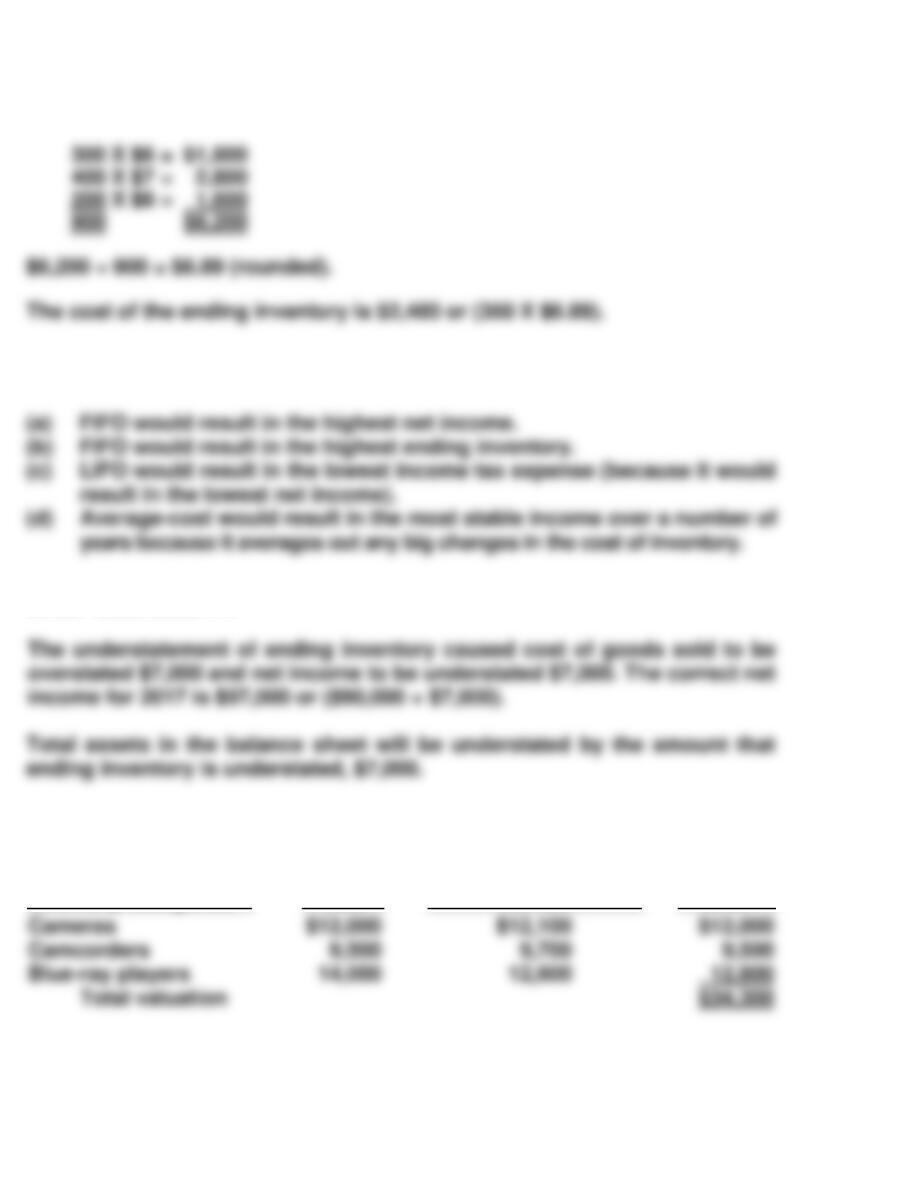
BRIEF EXERCISE 6-4
Average unit cost is $6.89 computed as follows:
BRIEF EXERCISE 6-5
BRIEF EXERCISE 6-6
BRIEF EXERCISE 6-7
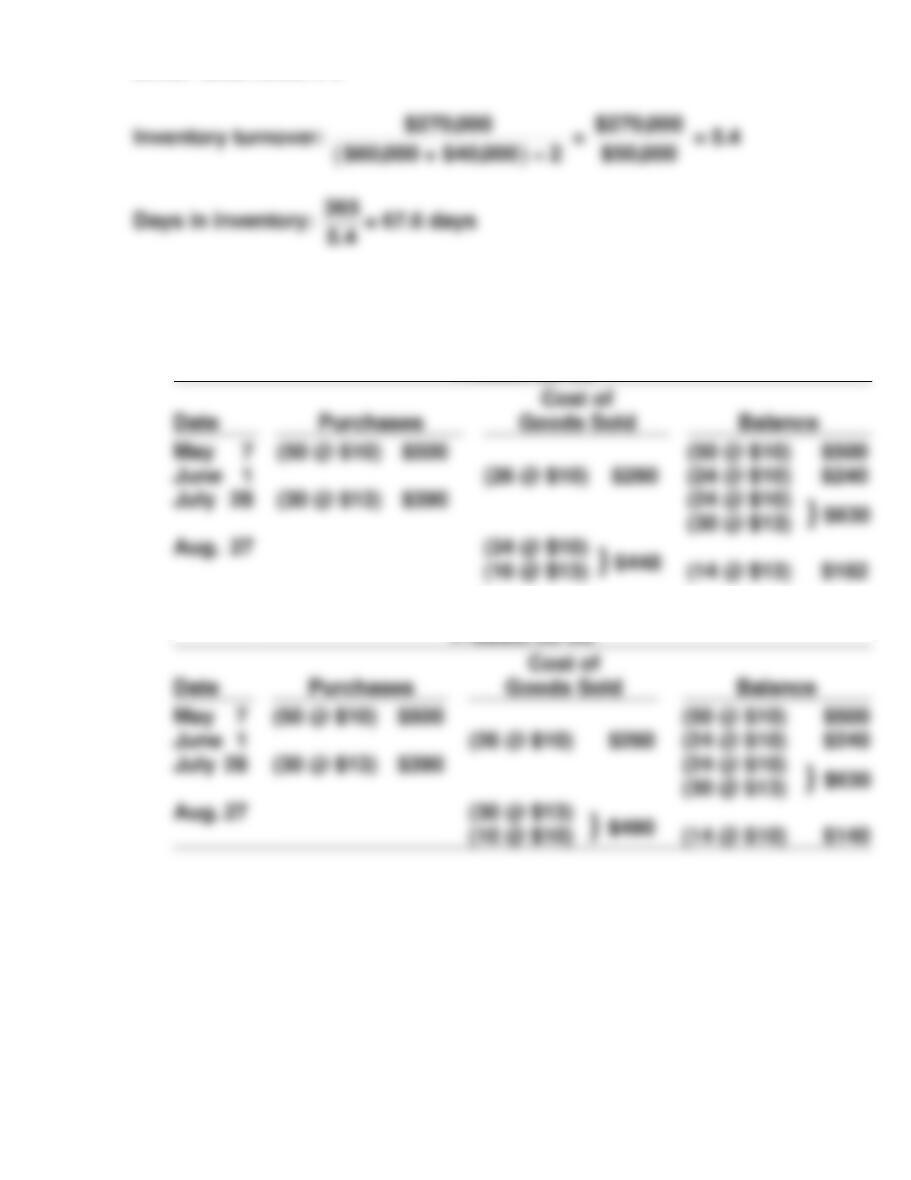
Inventory Categories
Cost
Market
LCM
Camcorders
Total valuation
BRIEF EXERCISE 6-8
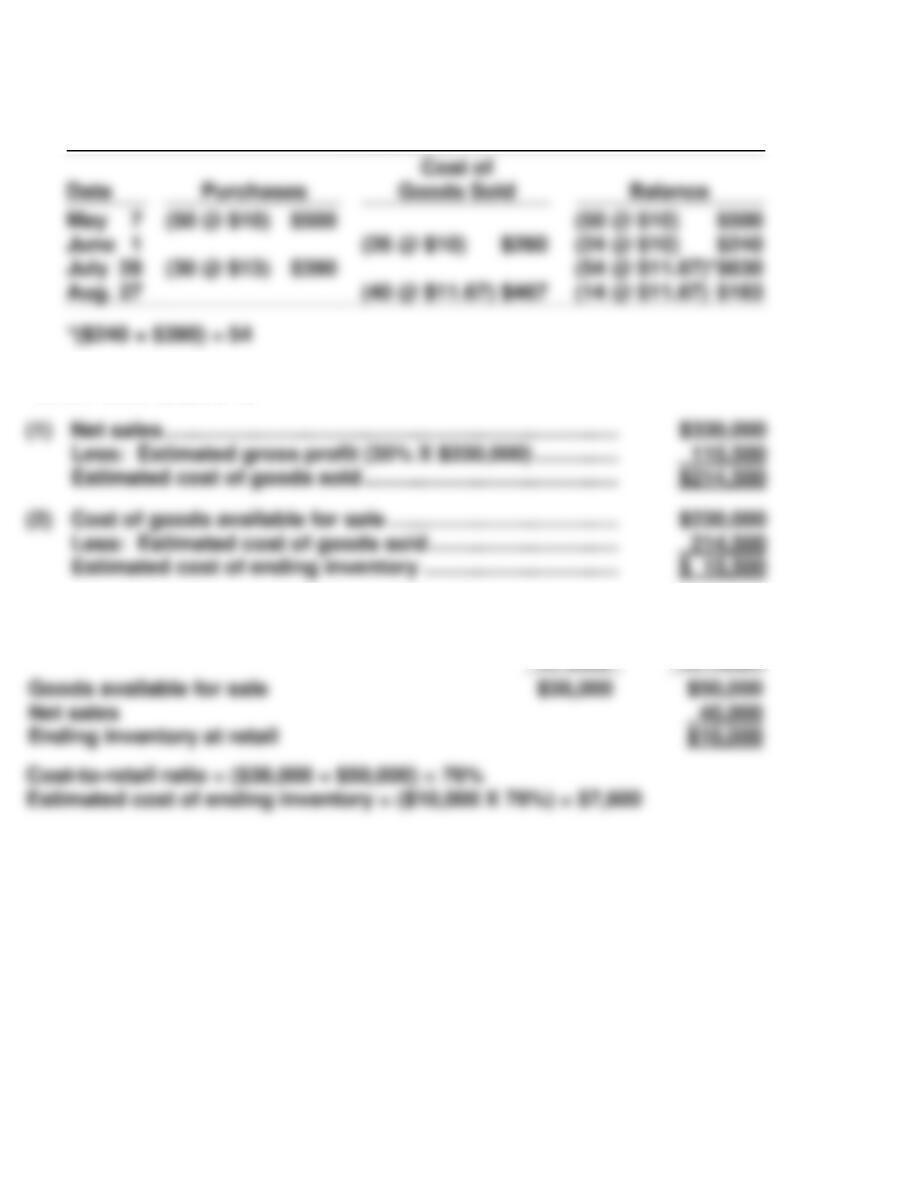
*BRIEF EXERCISE 6-9
(a) FIFO Method
Product E2-D2
(b) LIFO Method
Product E2-D2
*BRIEF EXERCISE 6-9 (Continued)
(c) Average-Cost
Product E2-D2
*BRIEF EXERCISE 6-10
*BRIEF EXERCISE 6-11
At Cost
At Retail
SOLUTIONS FOR DO IT! REVIEW EXERCISES
DO IT! 6-1
DO IT! 6-2
DO IT! 6-3
DO IT! 6-4
DO IT! 6-4 (Continued)
(b)
SOLUTIONS TO EXERCISES
EXERCISE 6-1
EXERCISE 6-2
EXERCISE 6-2 (Continued)
EXERCISE 6-3
EXERCISE 6-4
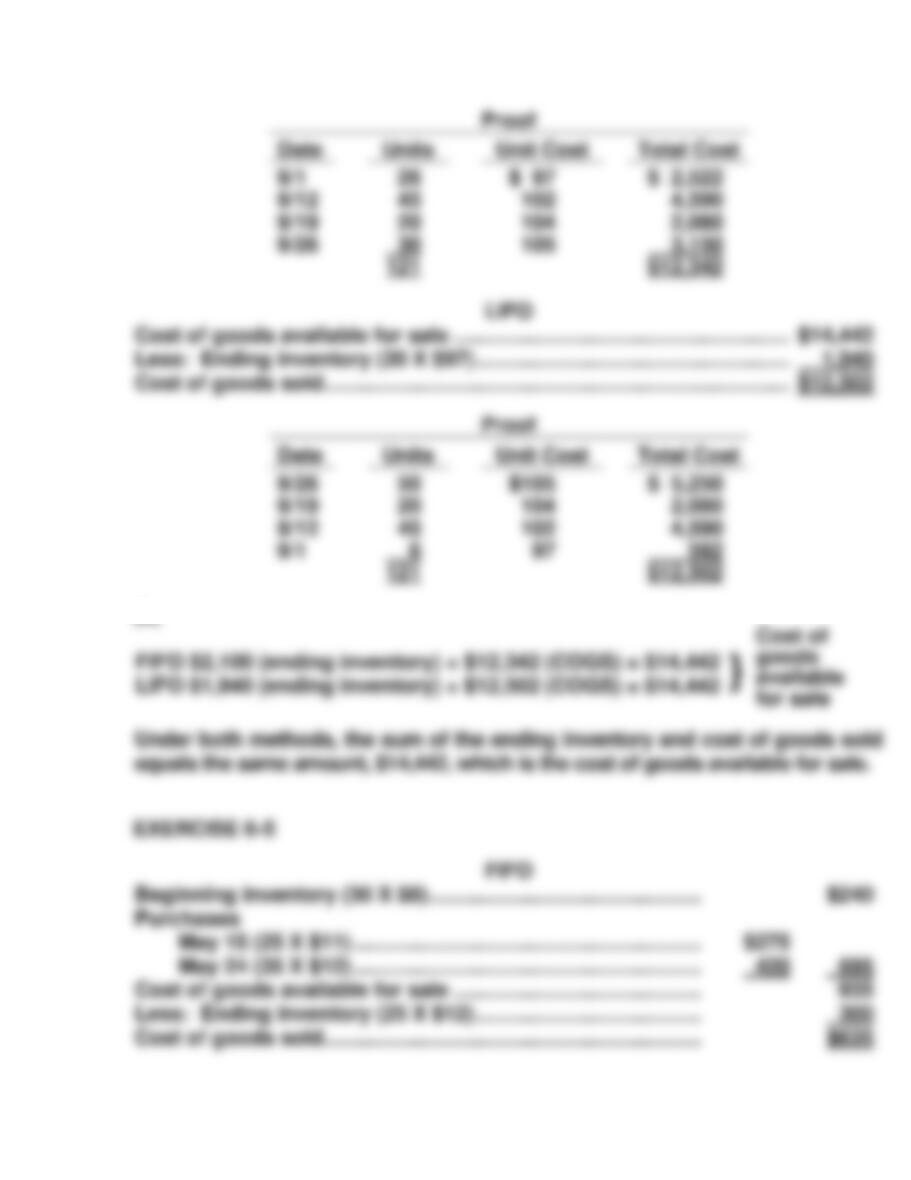
EXERCISE 6-4 (Continued)
(b)
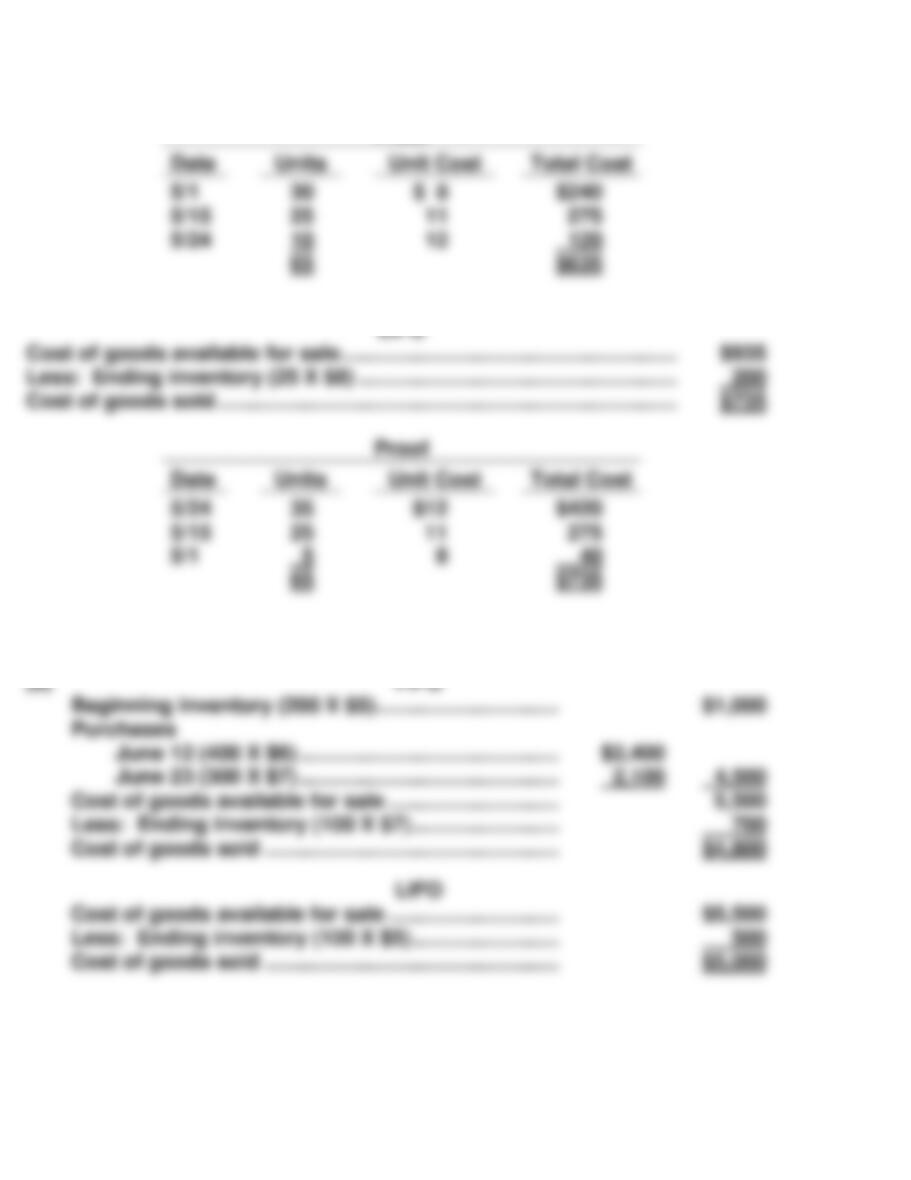
EXERCISE 6-5 (Continued)
Proof
Proof
EXERCISE 6-6
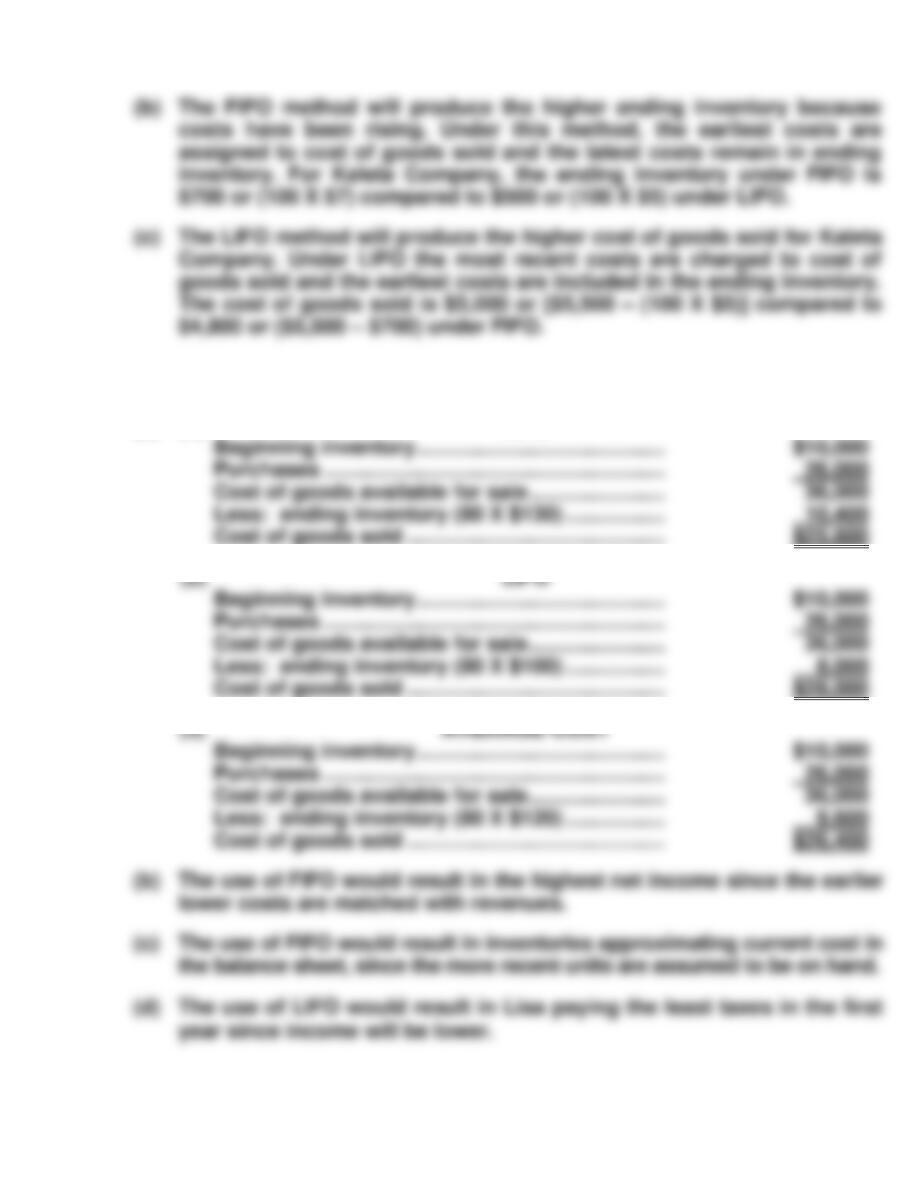
EXERCISE 6-6 (Continued)
EXERCISE 6-7
(a) (1) FIFO
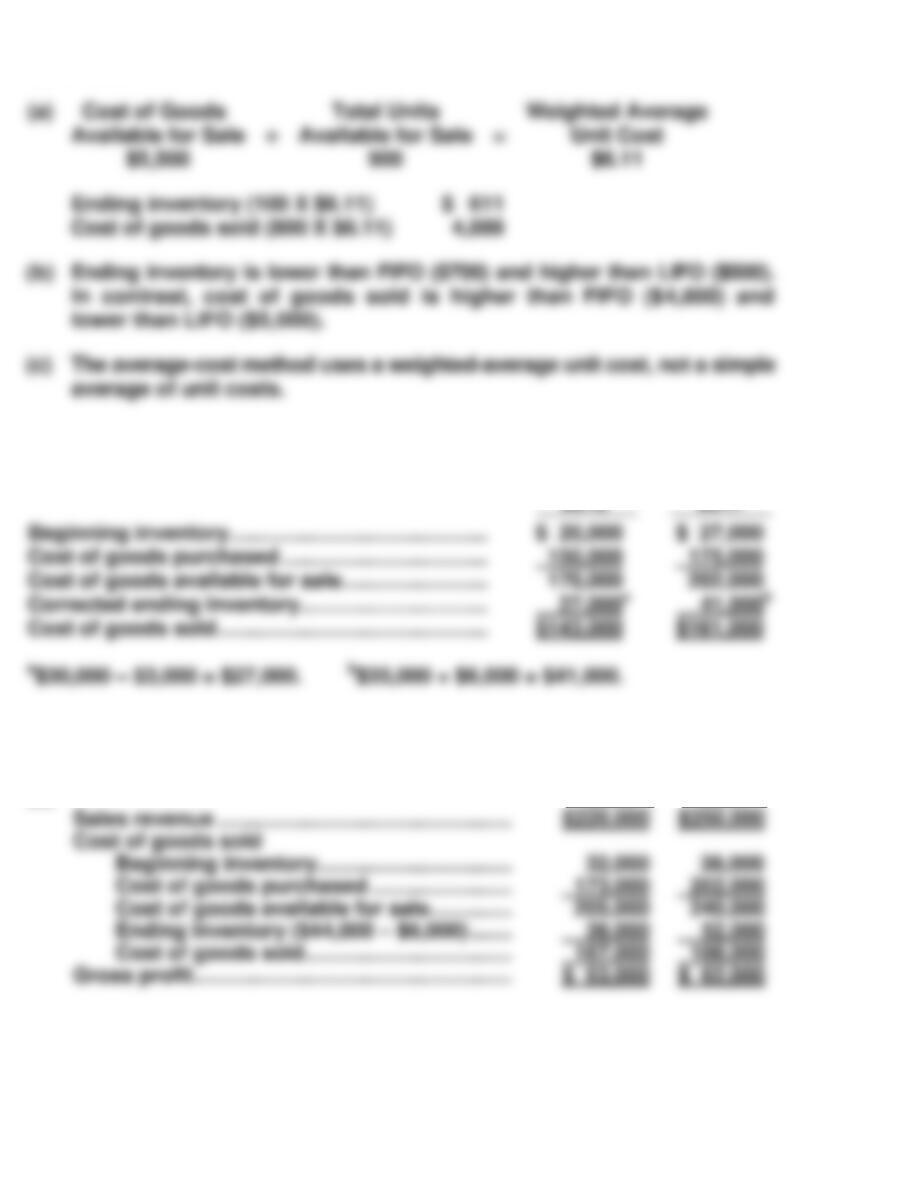
EXERCISE 6-8
EXERCISE 6-9
EXERCISE 6-10
(a)
2016
2017
EXERCISE 6-10 (Continued)
(b) The cumulative effect on total gross profit for the two years is zero as
shown below:
(c) Dear Mr./Ms. President:
EXERCISE 6-11
Cost
Market
Value
Lower-of-Cost
–or-Market:
EXERCISE 6-12
Cost
Market
Value
Lower-of-Cost
–or-Market:
EXERCISE 6-13
2015
2016
2017
EXERCISE 6-13 (Continued)
EXERCISE 6-14
*EXERCISE 6-15
(1)
FIFO
Date
Purchases
Cost of Goods Sold
Balance
Jan. 1
(3 @ $600)
(6 @ $660) $3,960
(1 @ $600)
(3 @ $660) $2,580
(3 @ $660)
*EXERCISE 6-15 (Continued)
(2)
LIFO
Date
Purchases
Cost of Goods Sold
Balance
Jan. 1
(3 @ $600)
$1,800
8
(2 @ $600) $1,200
(1 @ $600)
(6 @ $660) $3,960
(1 @ $600)
(6 @ $660)
(4 @ $660) $2,640
(1 @ $600)
(2 @ $660)
(3)
MOVING-AVERAGE COST
Date
Purchases
Cost of Goods Sold
Balance
Jan. 1
(3 @ $600) $1,800
8
(2 @ $600) $1,200
(1 @ $600) 600
(6 @ $660) $3,960
(7 @ $651.43)* 4,560
(4 @ $651.43) $2,606
(3 @ $651.43) 1,954
*EXERCISE 6-16
(a) The cost of goods available for sale is:
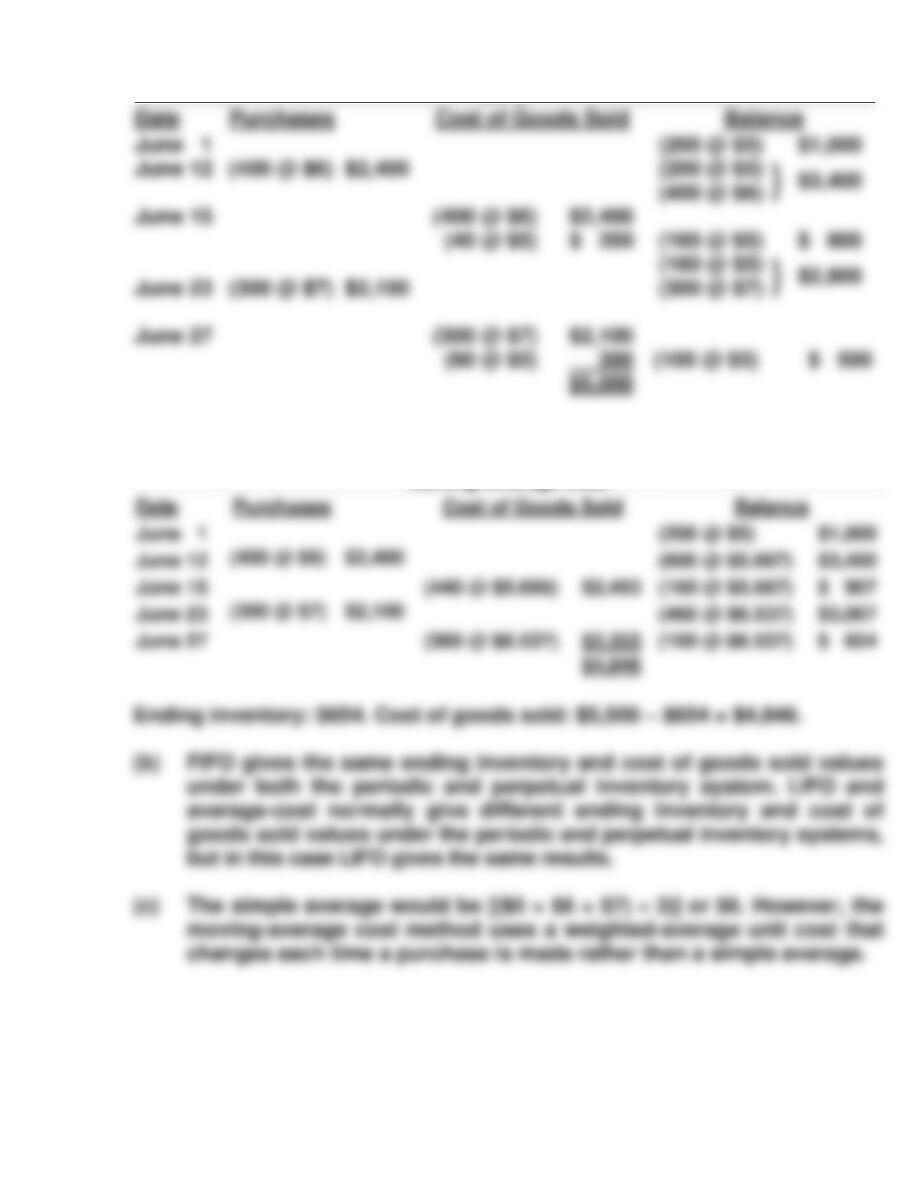
LIFO
Ending inventory: $500. Cost of goods sold: $5,500 – $500 = $5,000.
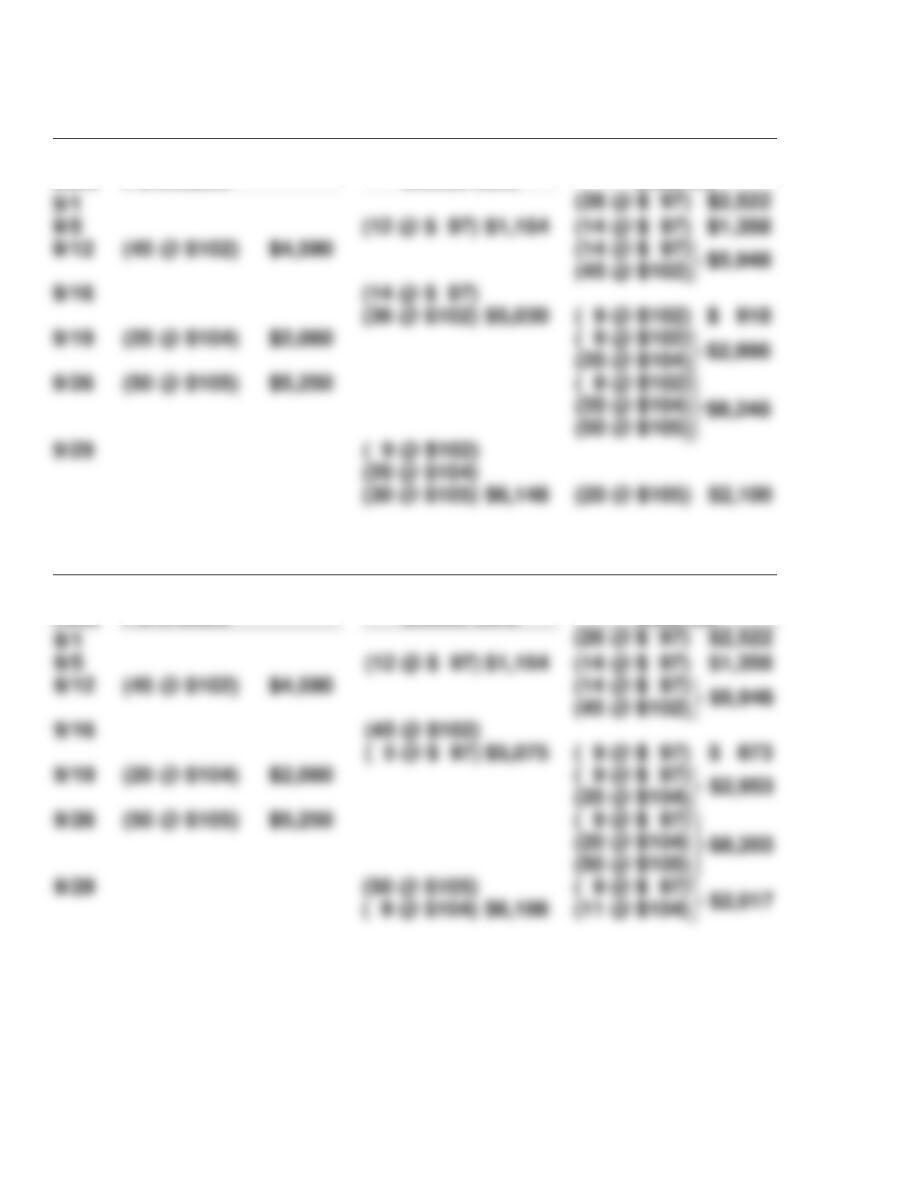
Moving-Average Cost
*EXERCISE 6-17
(a)
FIFO
Date
Purchases
Cost of
Goods Sold
Balance
LIFO
Date
Purchases
Cost of
Goods Sold
Balance
*EXERCISE 6-17 (Continued)
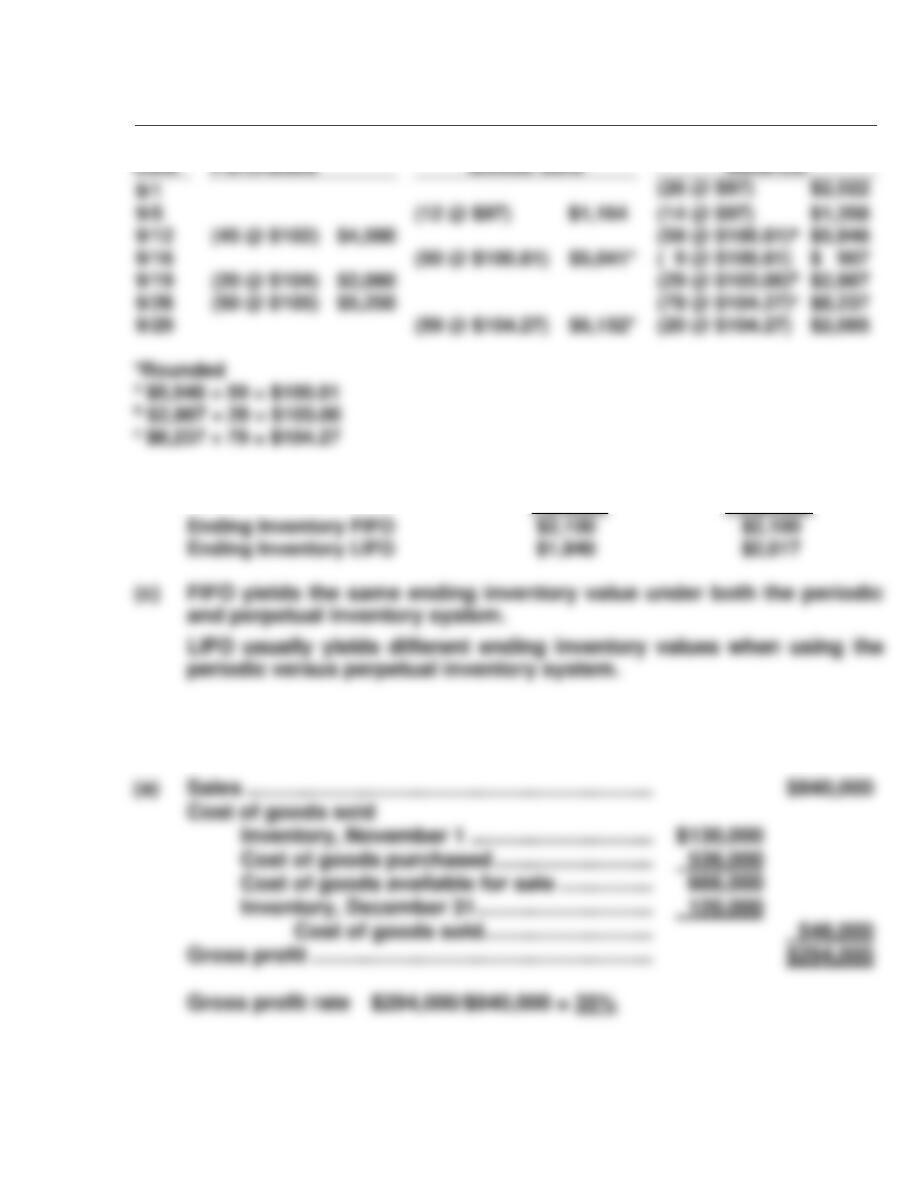
Moving-Average Cost
Cost of
(b)
Periodic
Perpetual
*EXERCISE 6-18
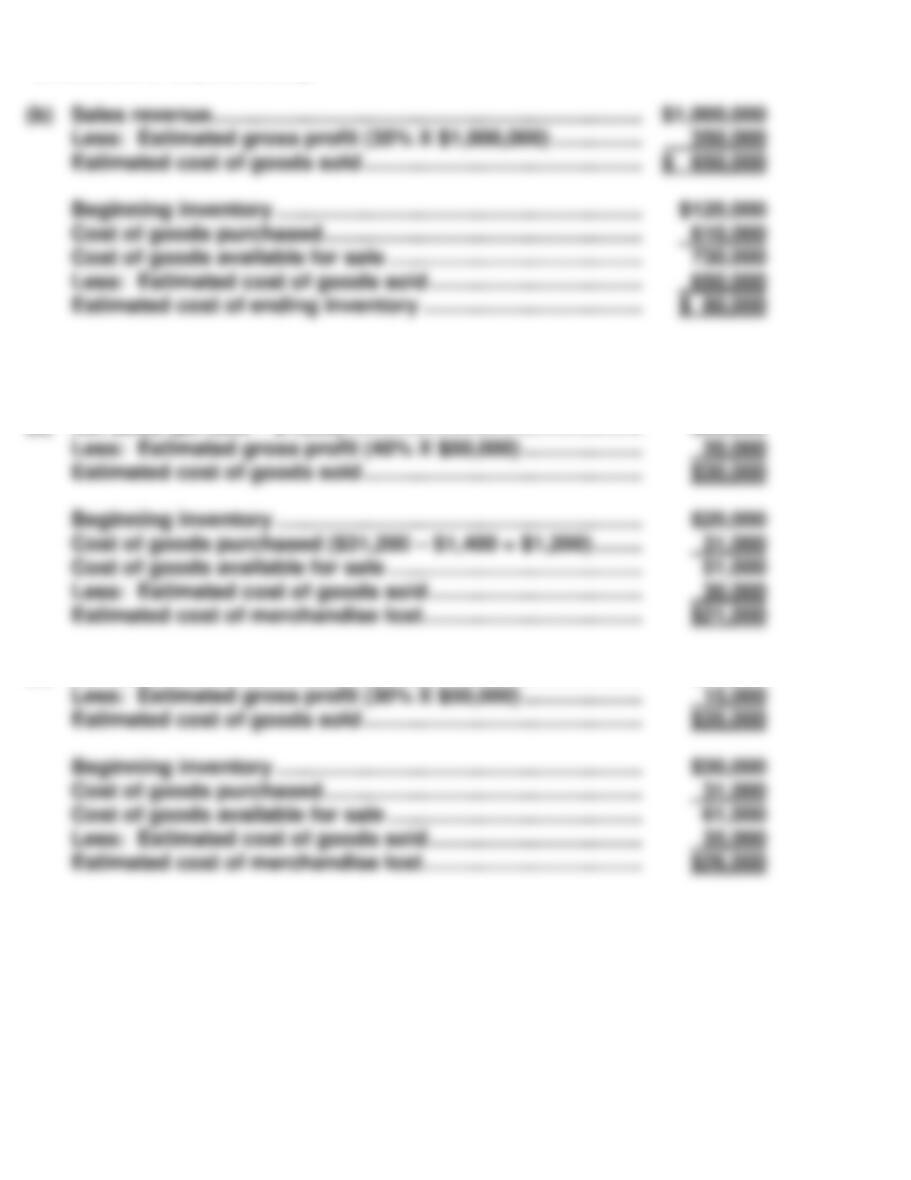
(12 @ $97) $1,164
(50 @ $100.81) $5,041*
(59 @ $104.27) $6,152*
*EXERCISE 6-18 (Continued)
*EXERCISE 6-19
(a) Net sales ($51,000 – $1,000) ………………………………………….. $50,000
(b) Net sales ……………………………………………………………………… $50,000
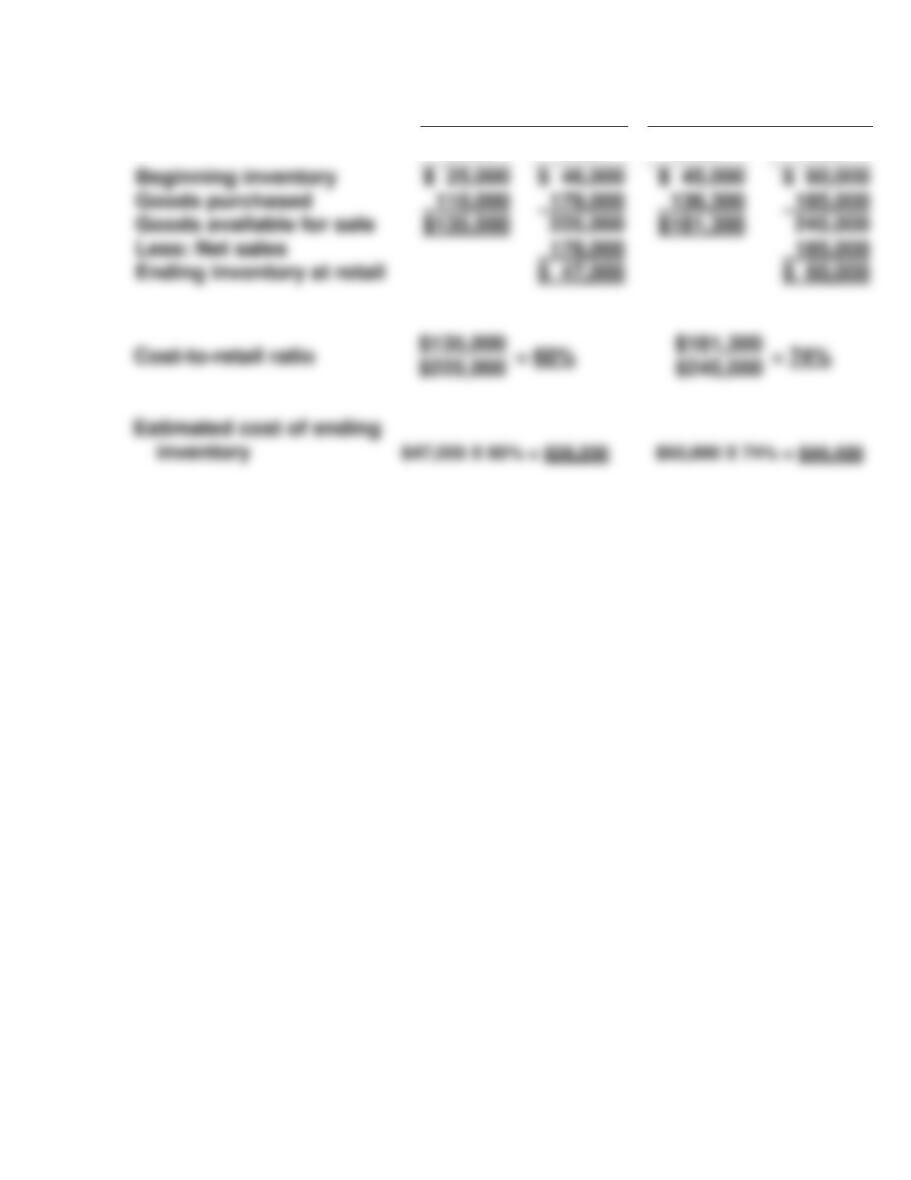
*EXERCISE 6-20
Women’s Shoes
Men’s Shoes
Cost
Retail
Cost
Retail
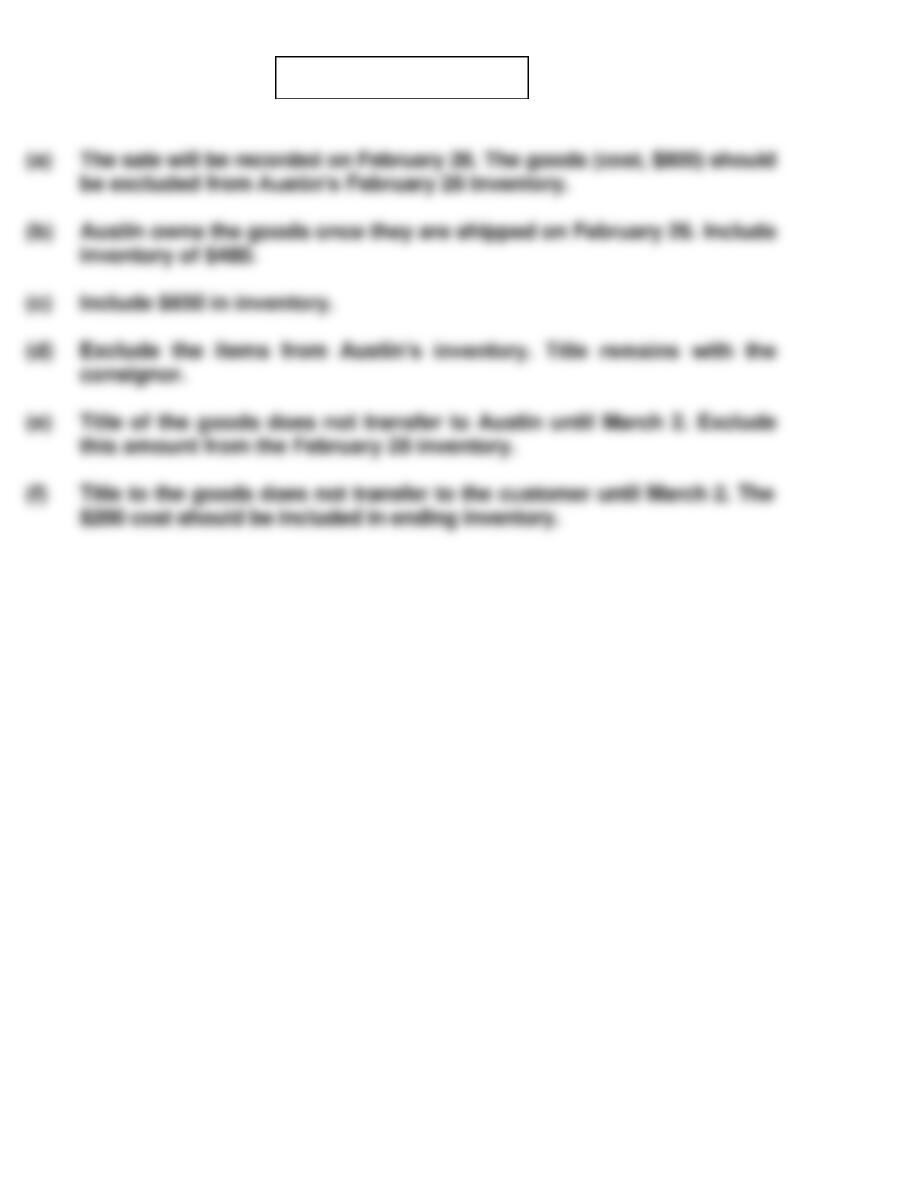
PROBLEM 6-1A
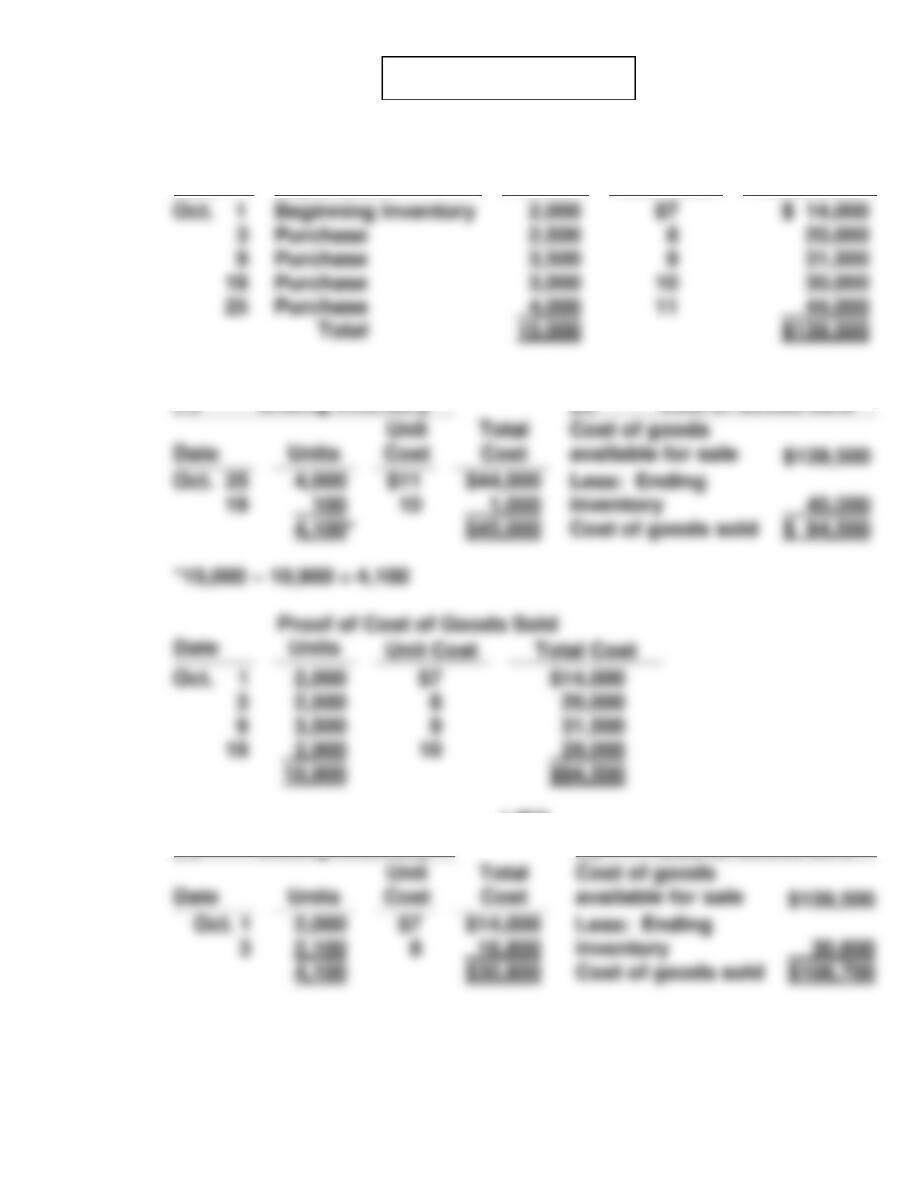
PROBLEM 6-2A
(a)
COST OF GOODS AVAILABLE FOR SALE
Date
Explanation
Units
Unit Cost
Total Cost
(b)
FIFO
(1)
Ending Inventory
(2)
Cost of Goods Sold
$11
inventory
1,000
Cost of goods sold
Unit Cost
8
9
LIFO
(1)
Ending Inventory
(2)
Cost of Goods Sold
$14,000
inventory
3
8
Cost of goods sold
Beginning Inventory
Purchase
Purchase
Purchase
Purchase
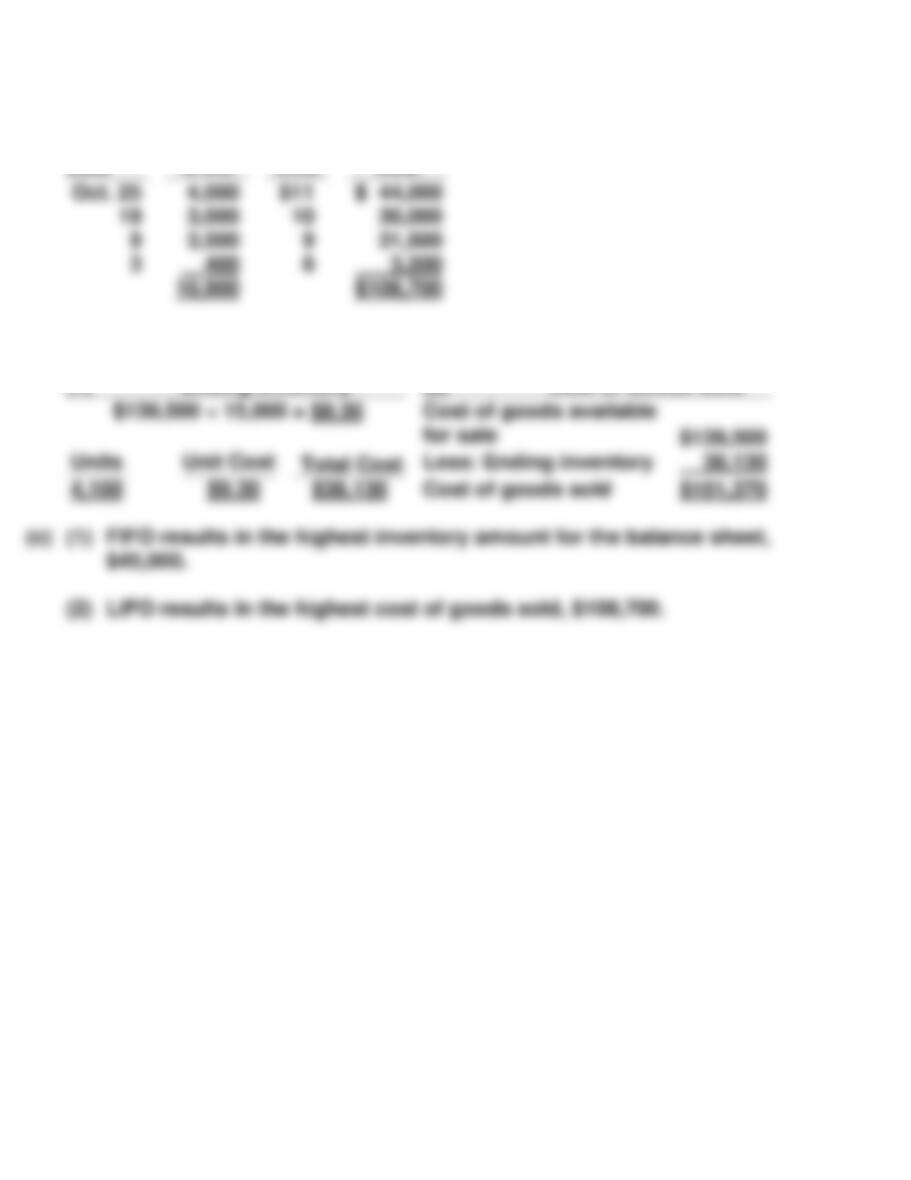
PROBLEM 6-2A (Continued)
Proof of Cost of Goods Sold
Date
Units
Unit
Cost
Total
Cost
AVERAGE COST
(1)
Ending Inventory
(2)
Cost of Goods Sold
Total Cost
Oct. 25
$11
$ 44,000
9
9
PROBLEM 6-3A
(a)
COST OF GOODS AVAILABLE FOR SALE
Date
Explanation
Units
Unit Cost
Total Cost
(b)
FIFO
(1)
Ending Inventory
(2)
Cost of Goods Sold
12/2
$29
inventory
9/4
Cost of goods sold
Cost
1/1
3/15
7/20
9/4
LIFO
(1)
Ending Inventory
(2)
Cost of Goods Sold
1/1
inventory
3/15
Cost of goods sold
1/1
Beginning Inventory
3/15
Purchase
7/20
Purchase
9/4
Purchase
12/2
Purchase
PROBLEM 6-3A (Continued)
AVERAGE COST
(1)
Ending Inventory
(2)
Cost of Goods Sold
Cost of goods sold
(c) (1) FIFO results in the highest inventory amount, $6,800, as shown in
9/4
3/15
6,900
$24,900
PROBLEM 6-4A
(a) Felipe INC.
Condensed Income Statements
For the Year Ended December 31, 2017
(b) (1) The FIFO method produces the most meaningful inventory amount
PROBLEM 6-5A
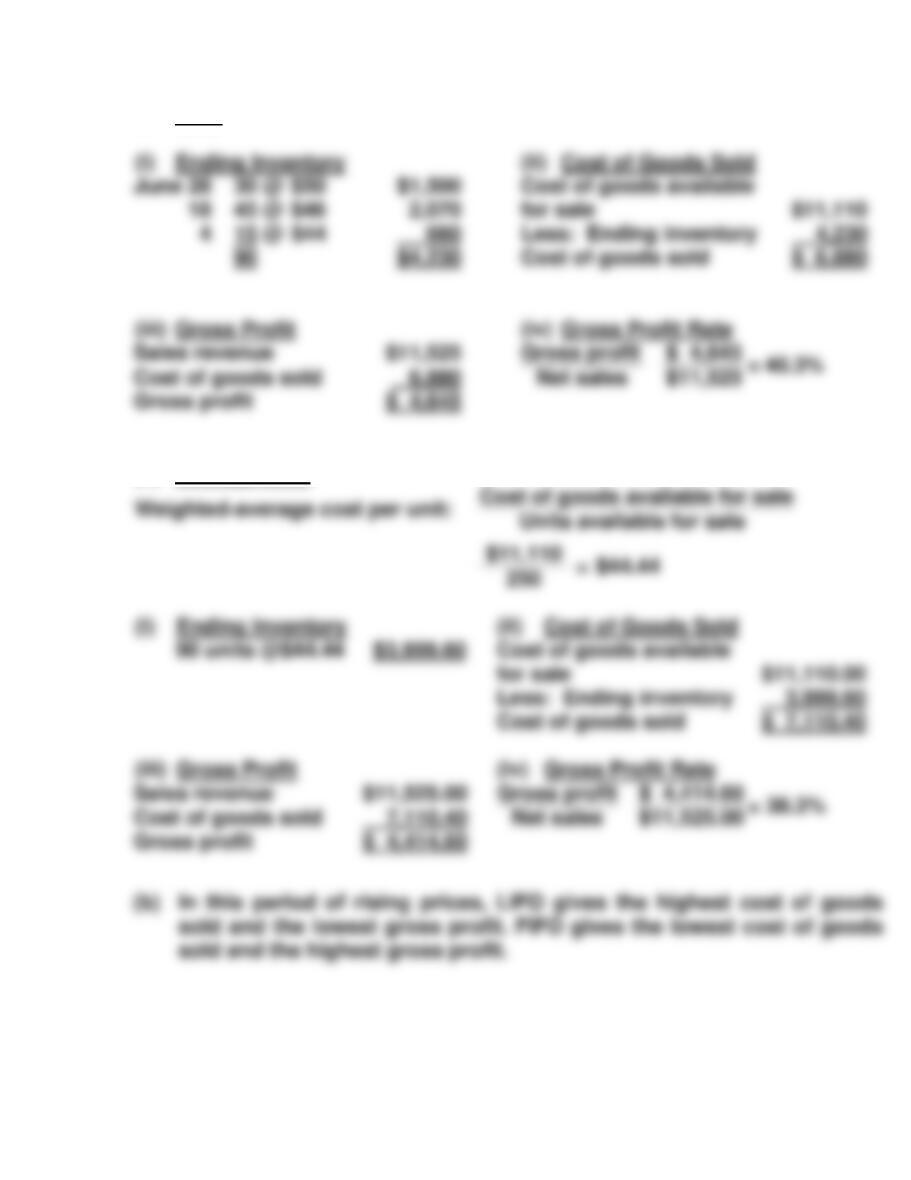
(a)
Cost of Goods Available for Sale
Date
Explanation
Units
Unit Cost
Total Cost
(1)
LIFO
(i)
Ending Inventory
(ii)
Cost of Goods Sold
for sale
$3,800
Less: Ending inventory
Cost of goods sold
(iii)
Gross Profit
(iv)
Gross Profit Rate
Sales revenue
Gross profit
Cost of goods sold
Gross profit
June 1
Beginning Inventory
$ 1,600
June 4
Purchase
5,940
June 18
Purchase
2,530
June 18
Purchase return
(460)
June 28
Purchase
1,500
PROBLEM 6-5A (Continued)
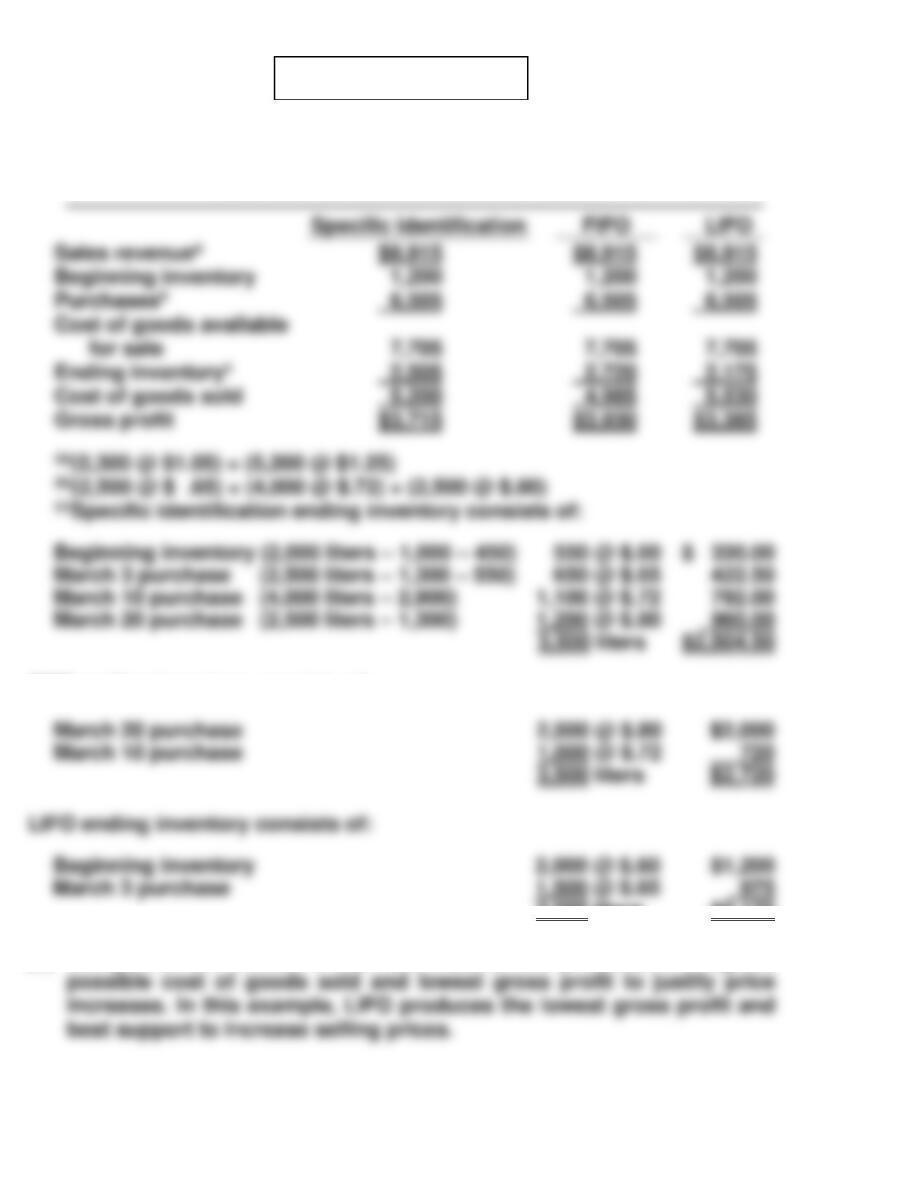
(2)
FIFO
(3)
Average-Cost
for sale
Cost of goods sold
45 @ $46
for sale
Sales revenue
Gross profit
Gross profit
PROBLEM 6-6A
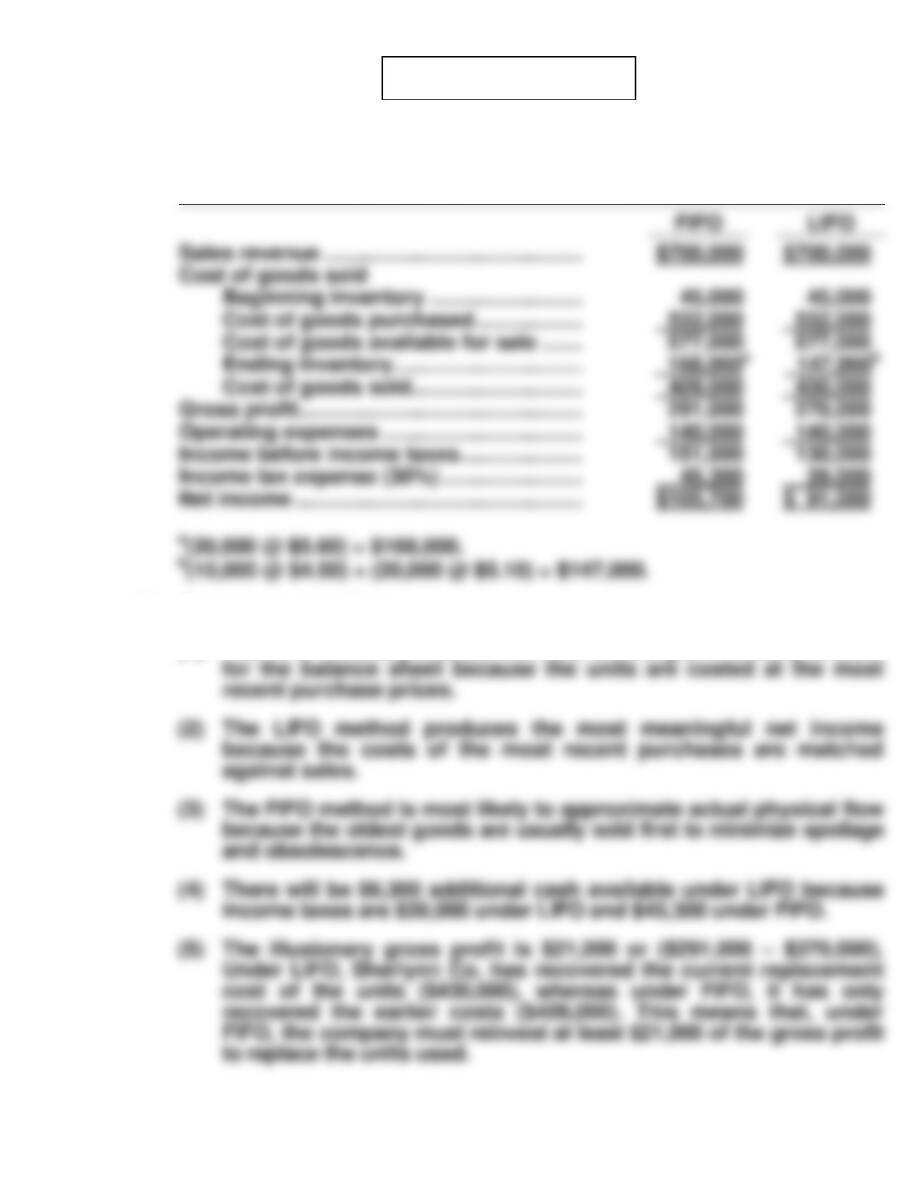
(a) Barton INC.
Income Statement (partial)
For the Year Ended December 31, 2017
FIFO ending inventory consists of:
3,500 liters
$2,175
(b) Companies can choose a cost flow method that produces the highest
PROBLEM 6-7A
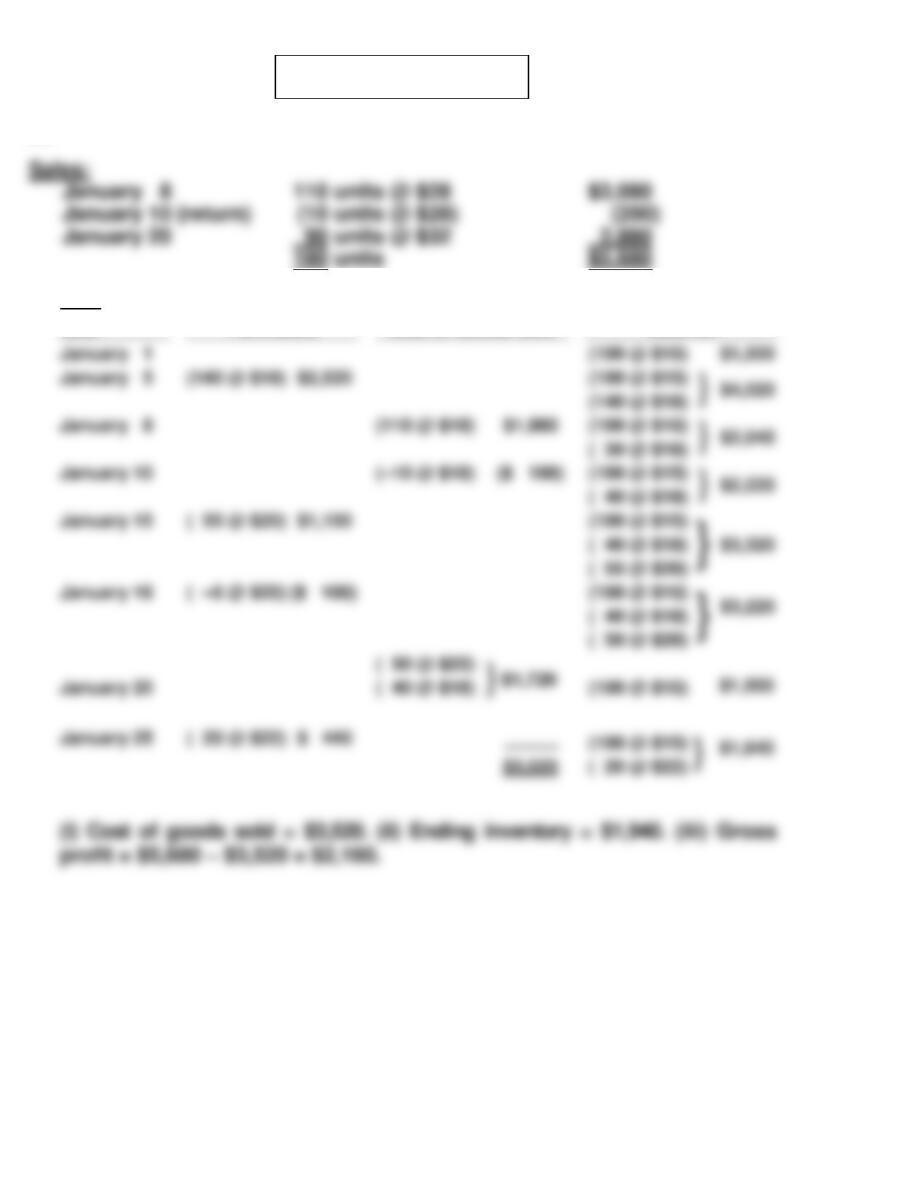
(a) Sherlynn CO.
Condensed Income Statement
For the Year Ended December 31, 2017
(b) Answers to questions:
(1) The FIFO method produces the most meaningful inventory amount
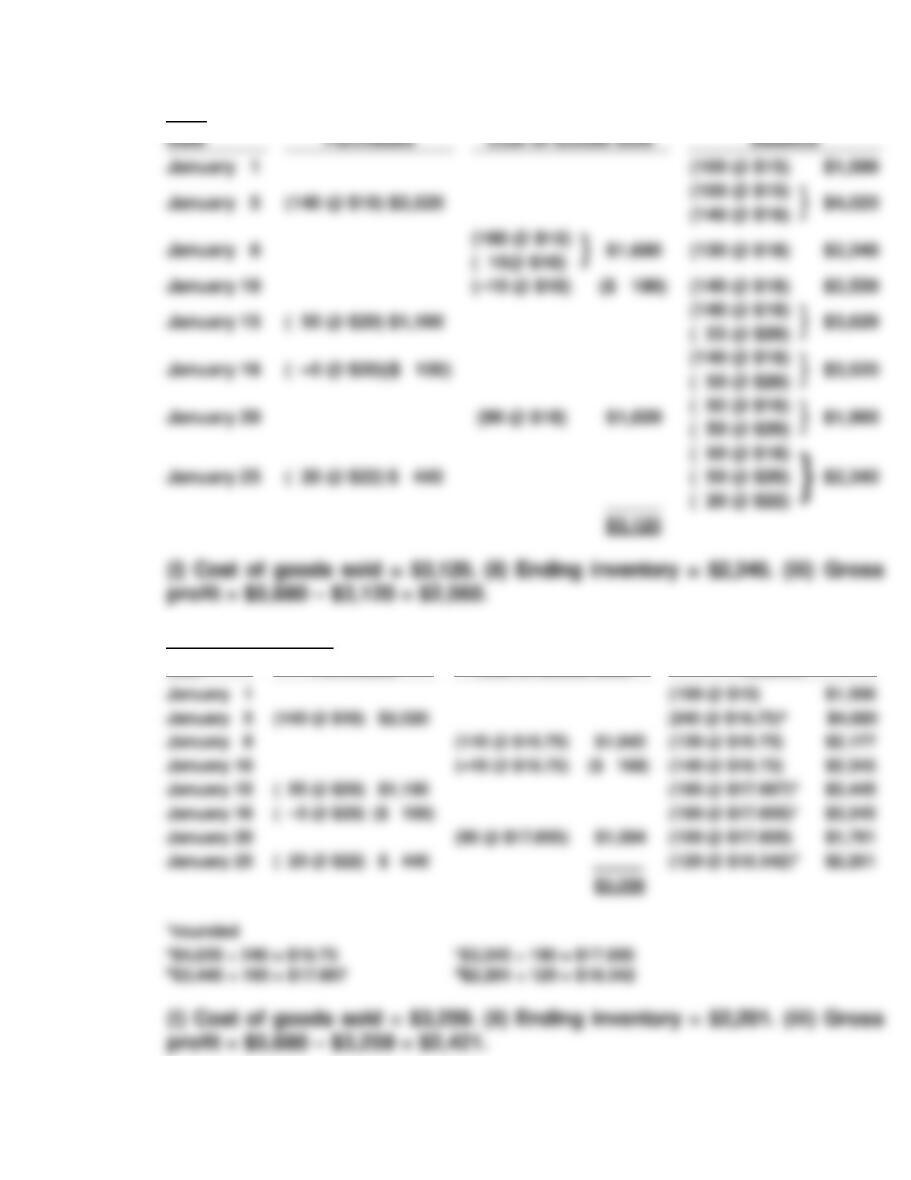
*PROBLEM 6-8A
(a)
(1)
LIFO
Date
Purchases
Cost of Goods Sold
Balance
January 1
January 8
(110 @ $18) $1,980
*PROBLEM 6-8A (Continued)
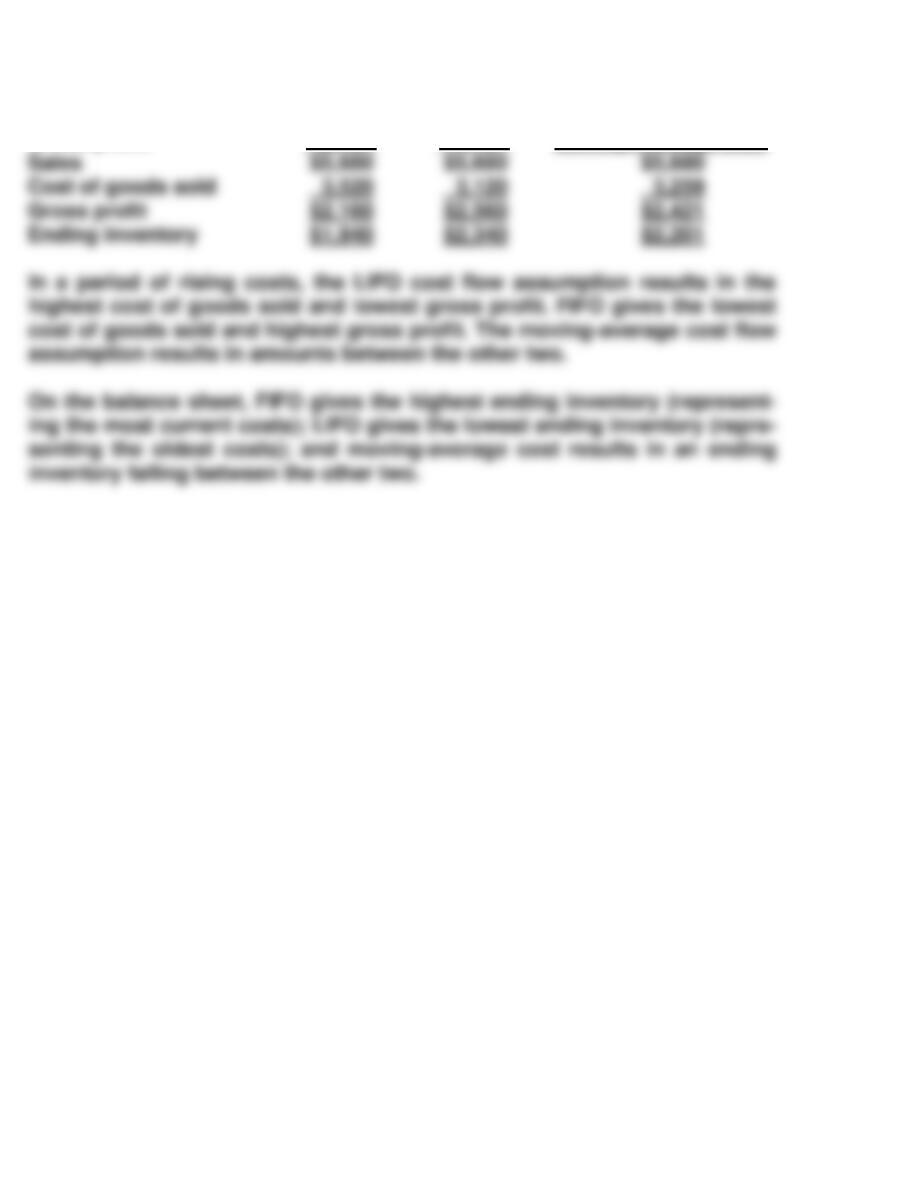
(2)
FIFO
(3)
Moving-Average Cost
Date
Purchases
Cost of Goods Sold
Balance
January 1
(100 @ $15)
January 10
($ 168)
(140 @ $16.75)
January 20
(90 @ $17.605)
*PROBLEM 6-8A (Continued)
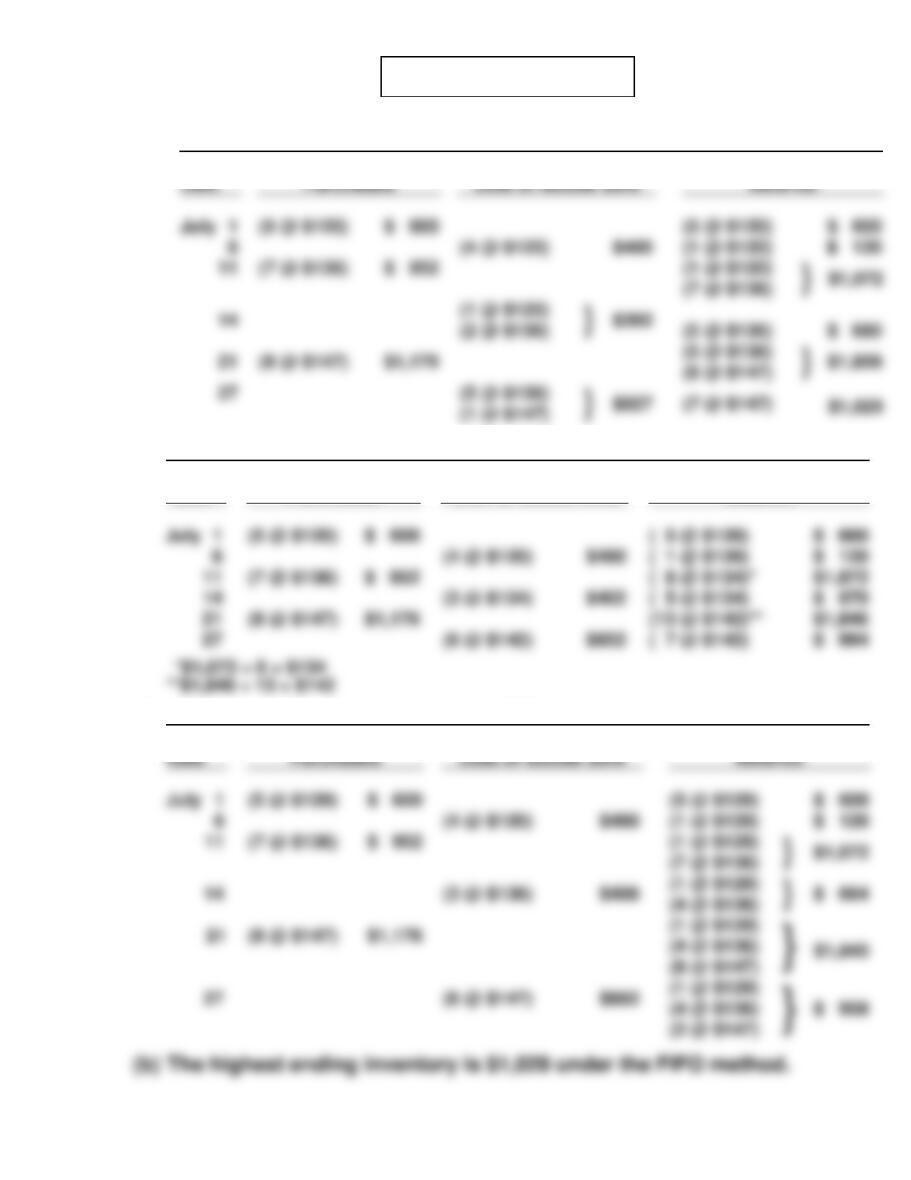
(b)
Gross profit:
LIFO
FIFO
Moving-Average Cost
Sales
$5,680
Gross profit
Ending inventory
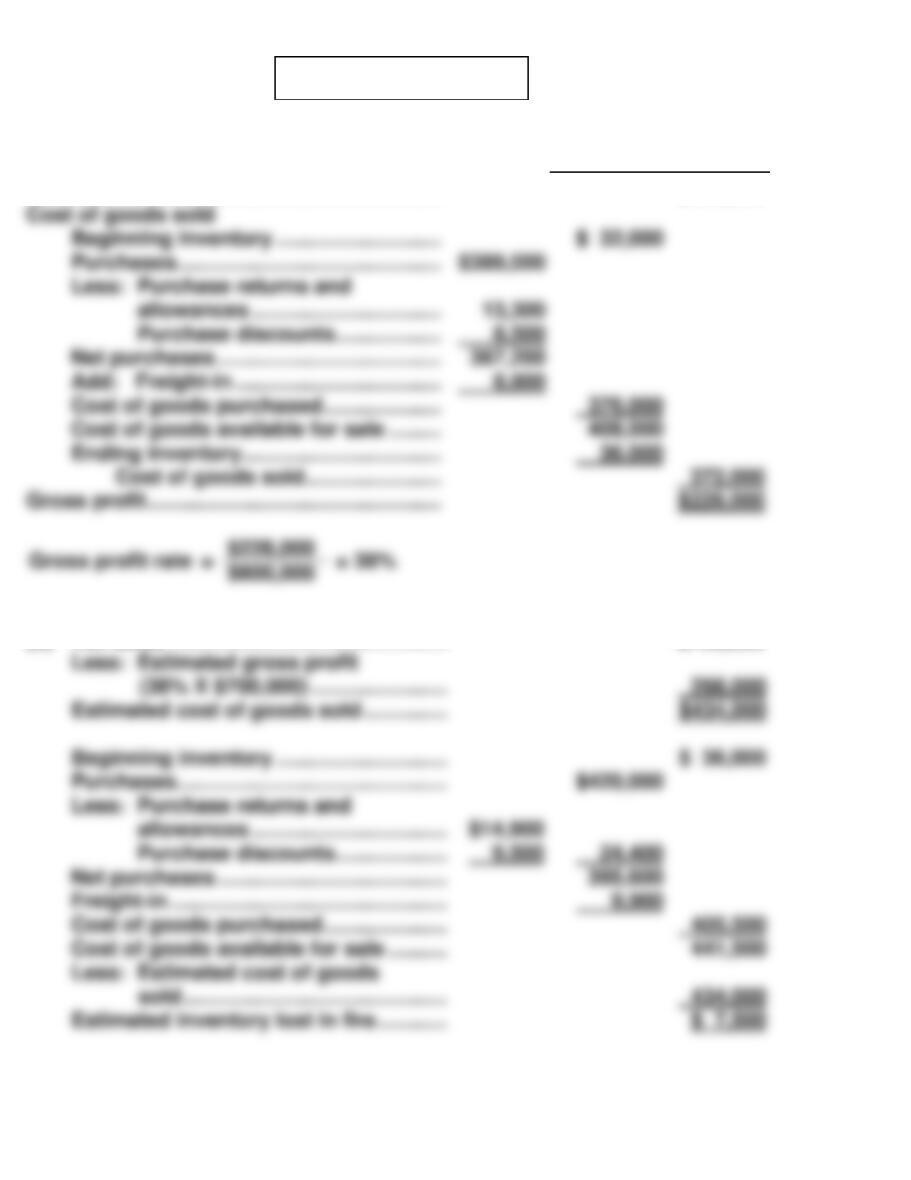
*PROBLEM 6-9A
(a)
(1)
FIFO
(2)
MOVING-AVERAGE COST
Date
Purchases
Cost of Goods Sold
Balance
$ 600
(4 @ $120)
$ 952
(3 @ $134)
(6 @ $142)
(3)
LIFO
Purchases
$ 600
(4 @ $120)
$ 120
(5 @ $120)
(4 @ $120)
(7 @ $136)
(1 @ $120)
(2 @ $136)
(5 @ $136)
(1 @ $147)
*PROBLEM 6-10A
(a)
November
Net sales ……………………………………………… $600,000
(b) Net sales ……………………………………….. $700,000
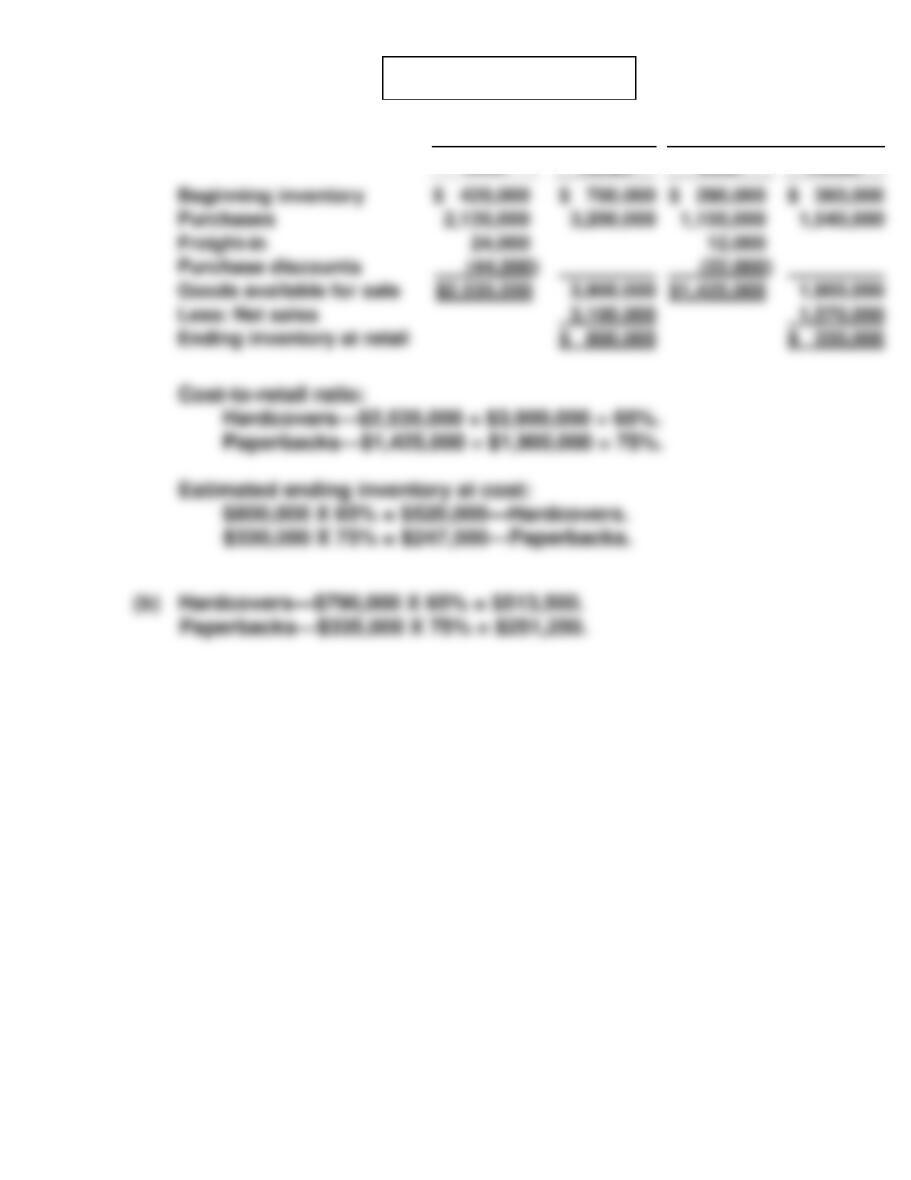
*PROBLEM 6-11A
(a)
Hardcovers
Paperbacks
Cost
Retail
Cost
Retail
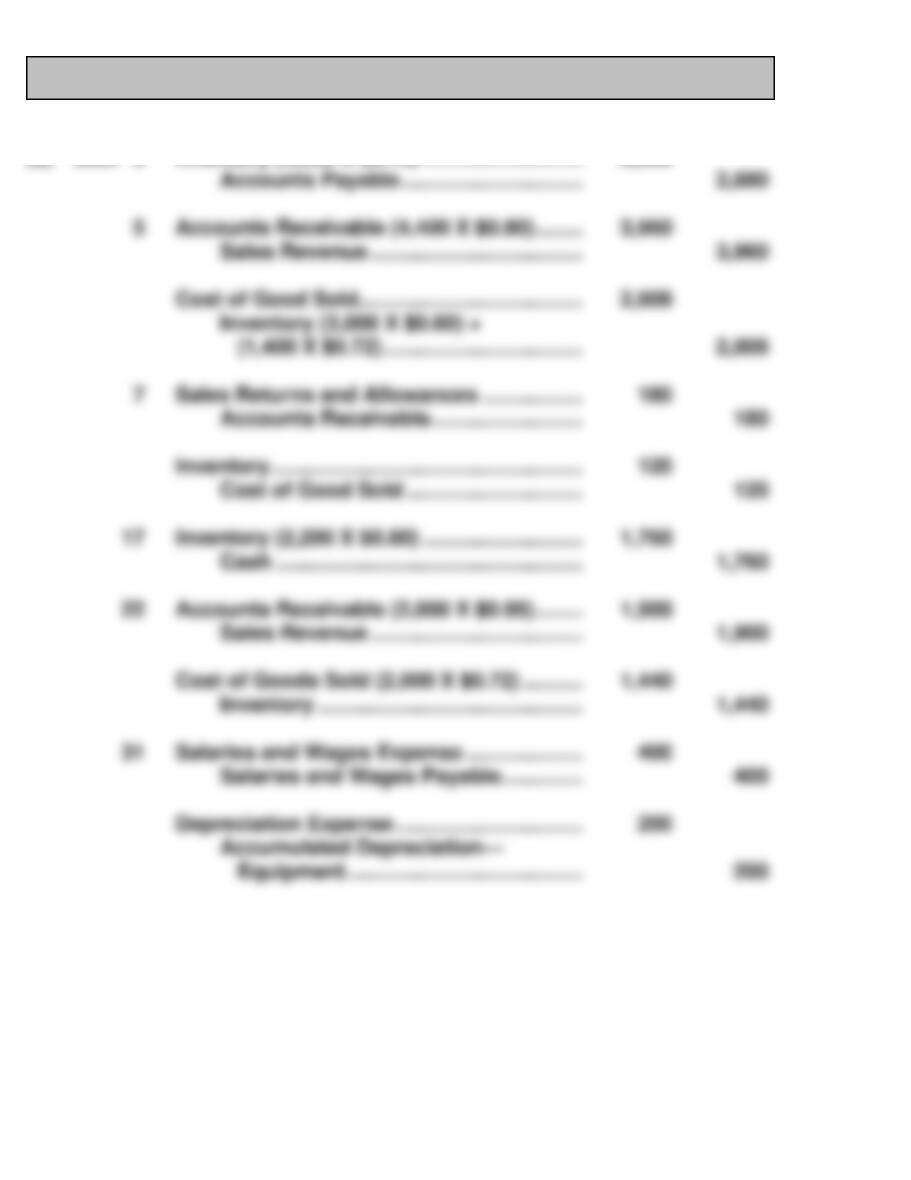
COMPREHENSIVE PROBLEM SOLUTION
(a)
Dec. 3
Inventory (4,000 X $0.72) ………………………
2,880
Accounts Payable ………………………….
(1,400 X $0.72) …………………………….
Cost of Good Sold …………………………
Cash …………………………………………….
Inventory ………………………………………
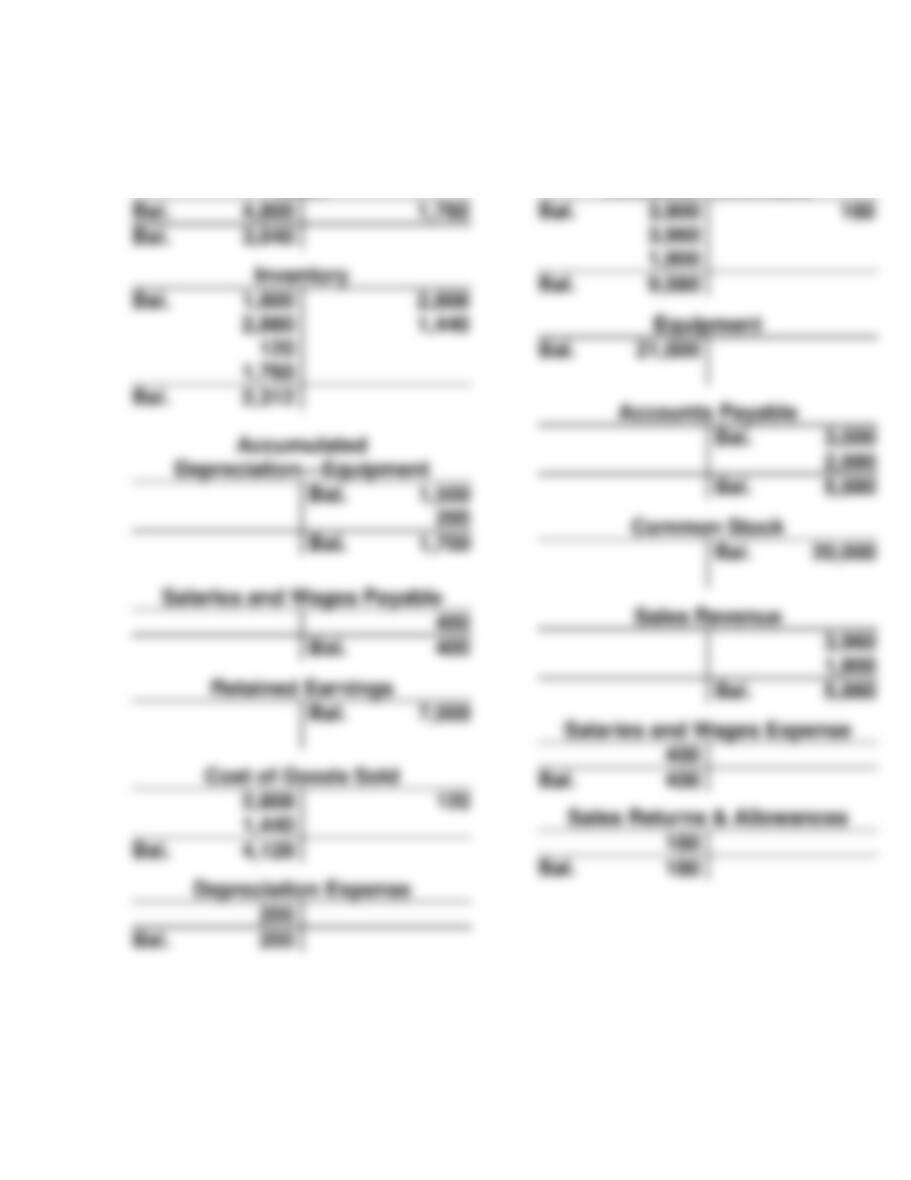
COMPREHENSIVE PROBLEM SOLUTION (Continued)
(b) General Ledger
Cash
Accounts Receivable
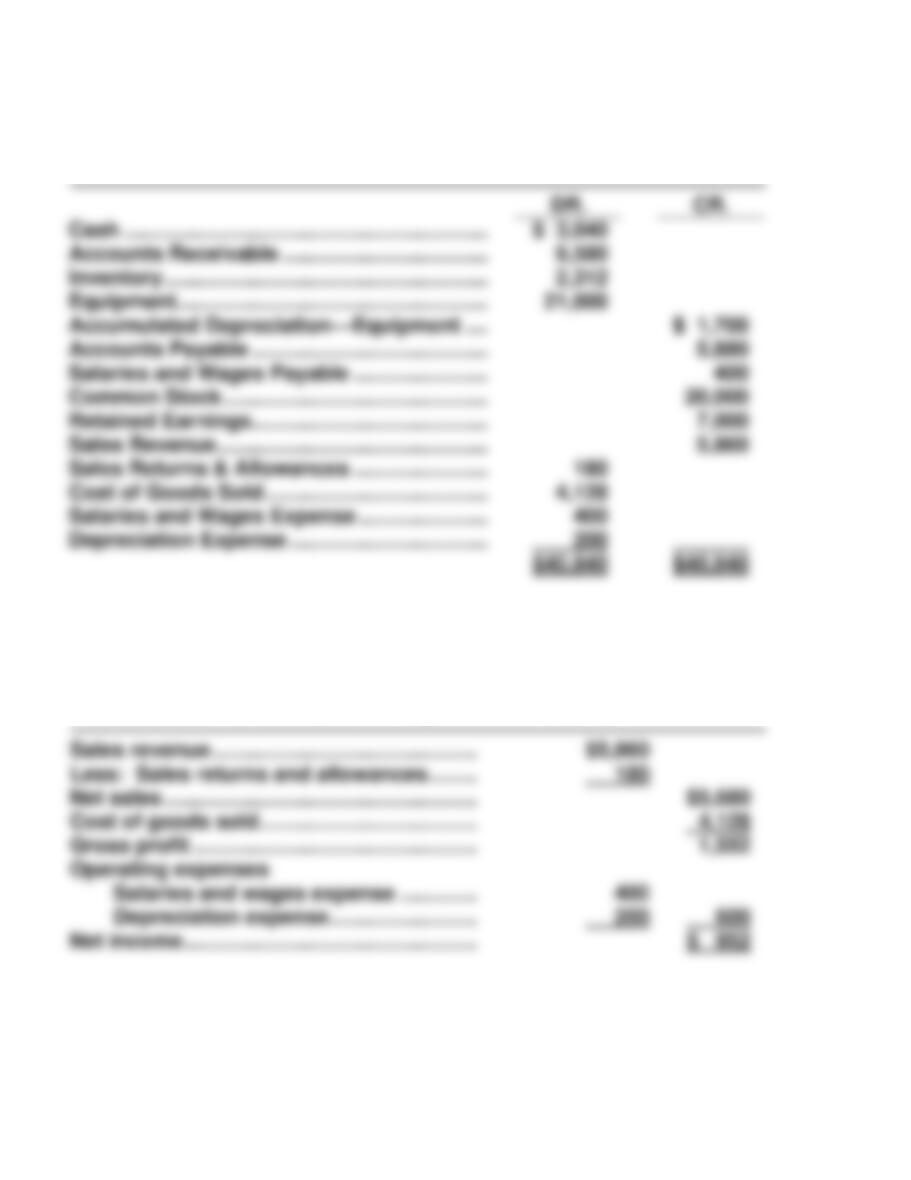
COMPREHENSIVE PROBLEM SOLUTION (Continued)
(c) Matthias COMPANY
Adjusted Trial Balance
December 31, 2017
Less: Sales returns and allowances ……..
Net sales ……………………………………………..
Gross profit …………………………………………
Operating expenses
Depreciation expense …………………….
Net income…………………………………………..
(d) Matthias COMPANY
Income Statement
For the Month Ending December 31, 2017
Cash ……………………………………………………..
Inventory ……………………………………………….
Accounts Payable …………………………..……..
Salaries and Wages Payable …………………..
Retained Earnings ………………………………….
Sales Revenue ……………………………………….
Cost of Goods Sold ………………………………..
Salaries and Wages Expense ………………….
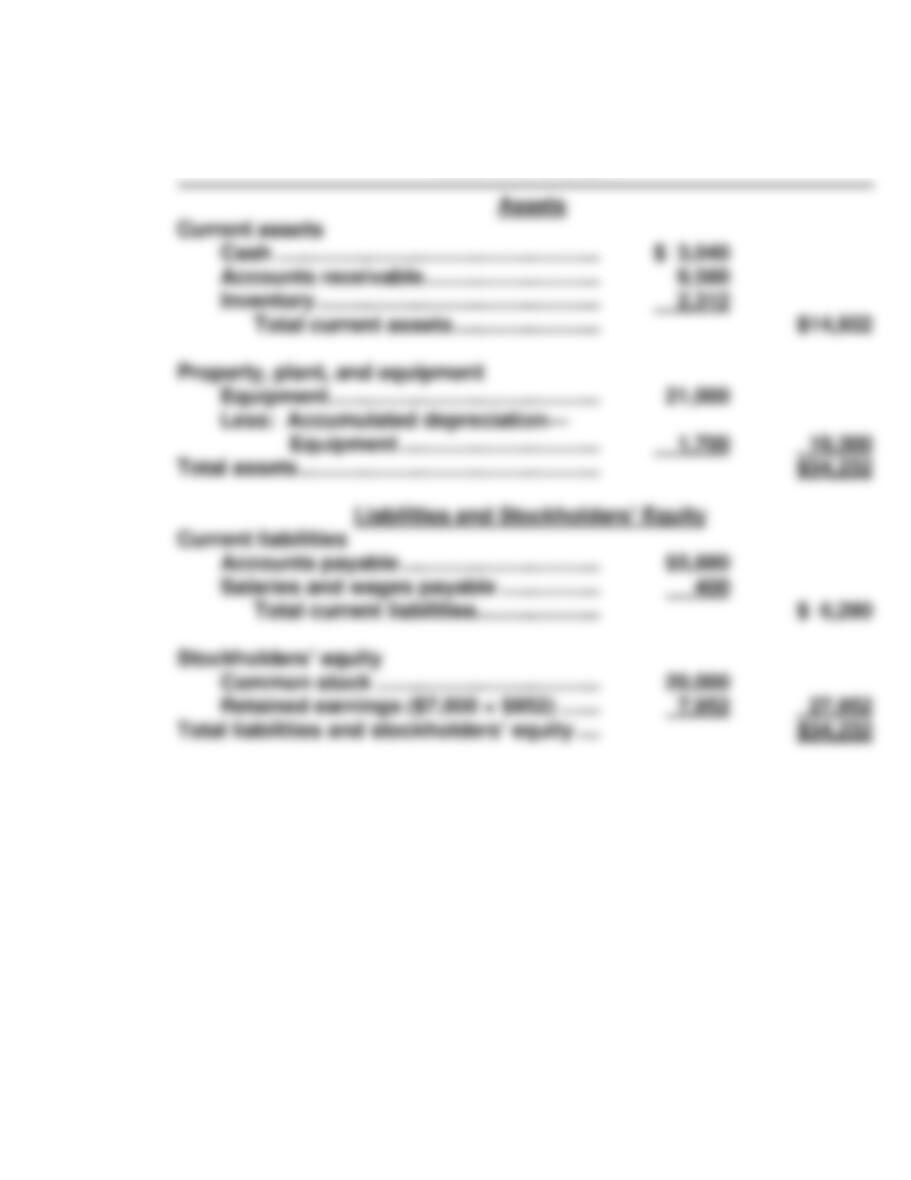
COMPREHENSIVE PROBLEM SOLUTION (Continued)
Matthias COMPANY
Balance Sheet
December 31, 2017
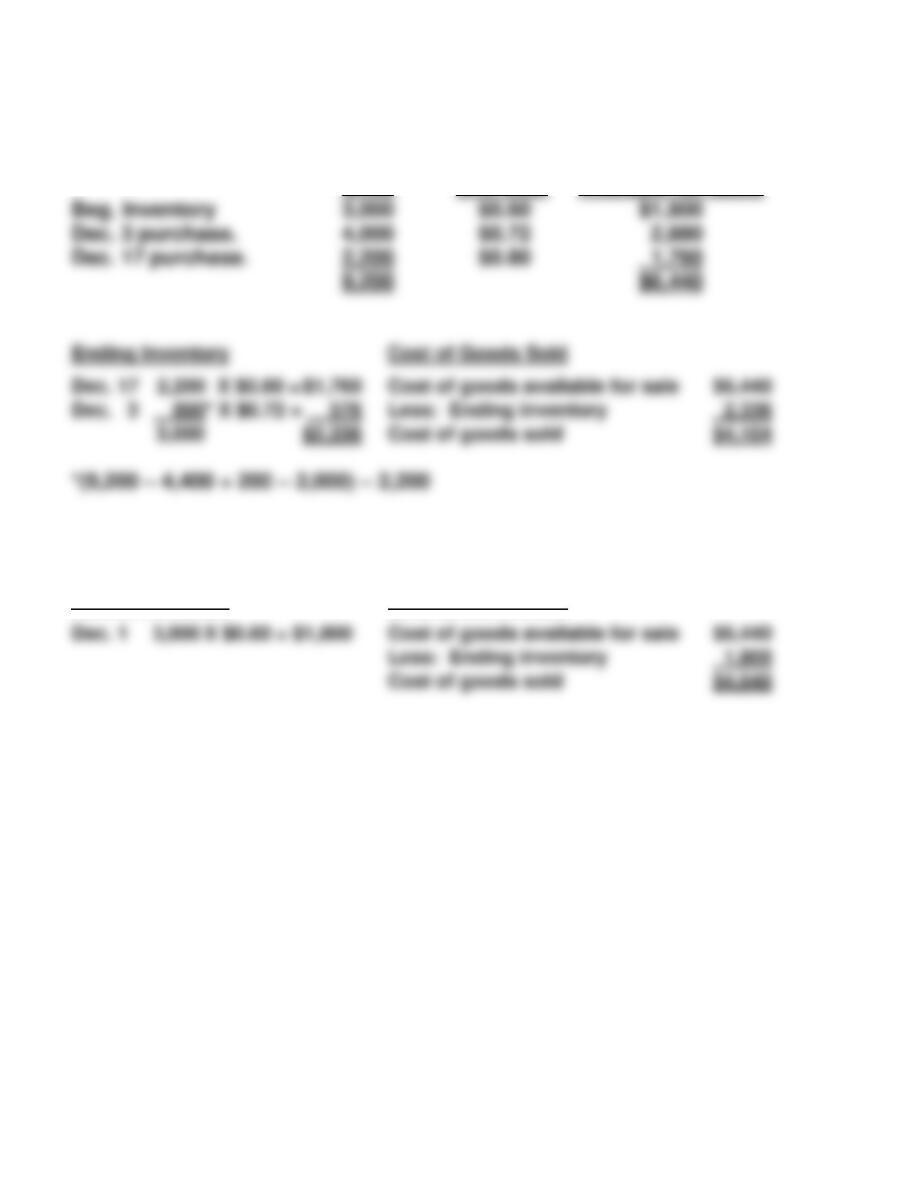
COMPREHENSIVE PROBLEM SOLUTION (Continued)
(e) FIFO Method
Units
Unit Cost
Cost of Goods
Available for Sales
(f) LIFO Method
Ending Inventory
Cost of Goods Sold
4,000
2,200
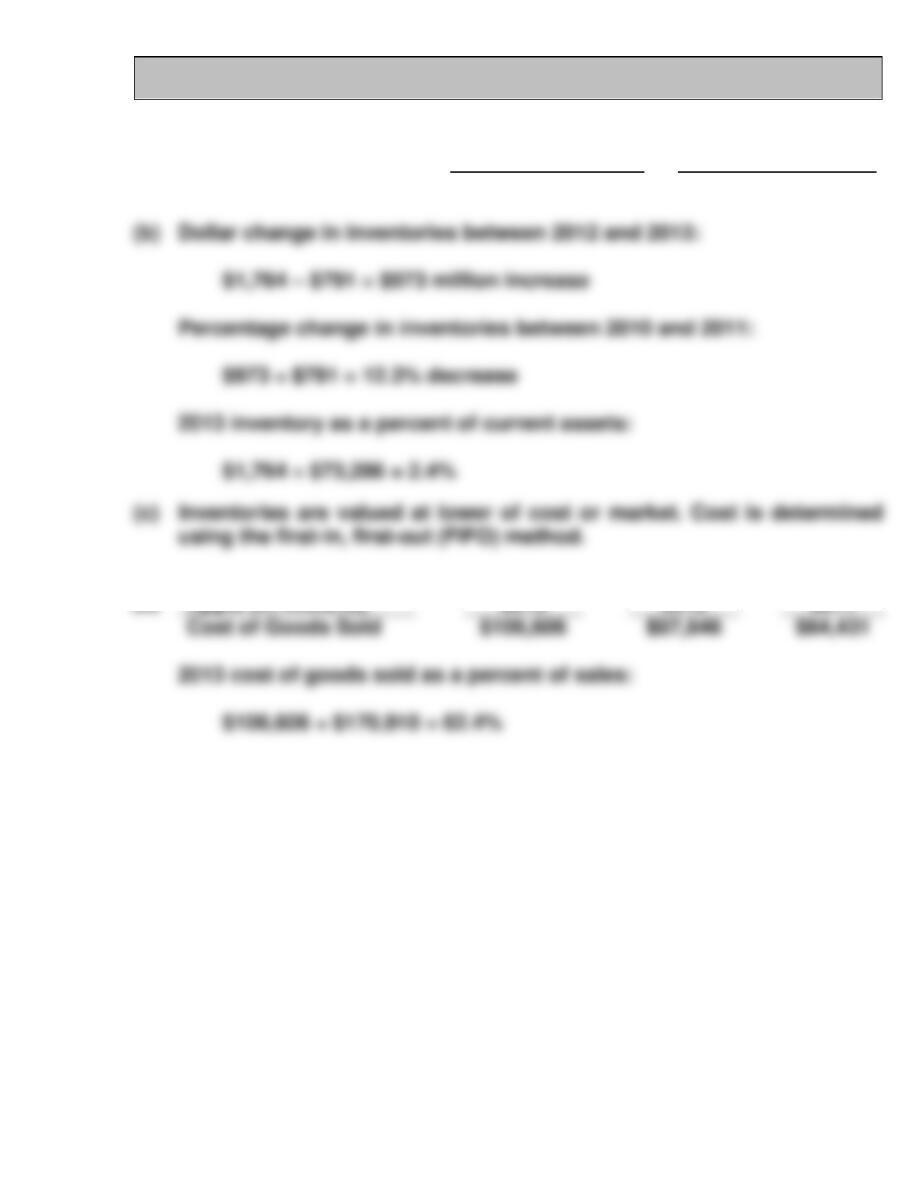
BYP 6-1 FINANCIAL REPORTING PROBLEM
(a)
September 28, 2013
September 29, 2012
Inventories
$1,764 million
$1,791 million
(d)
Apple (in millions)
2013
2012
2011
Cost of Goods Sold
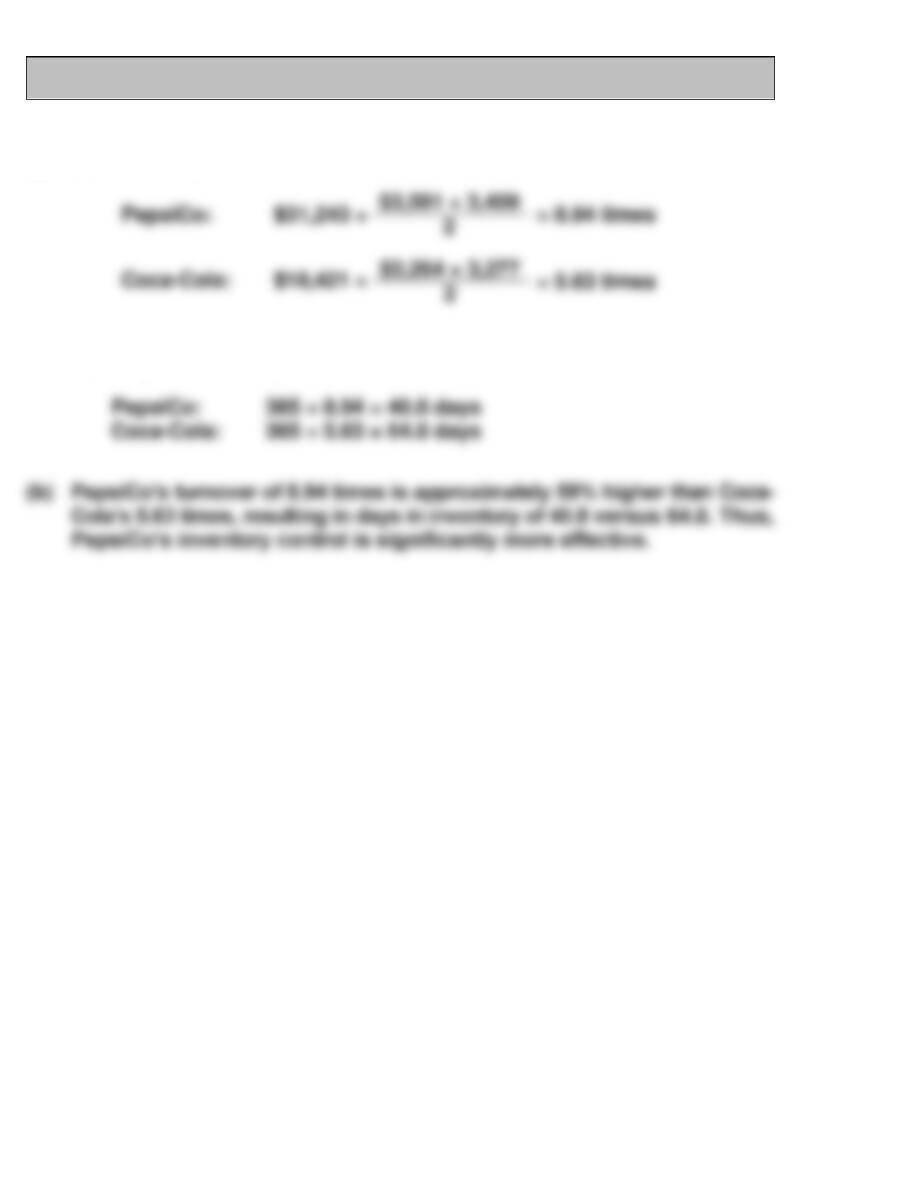
BYP 6-2 COMPARATIVE ANALYSIS PROBLEM
(a) (1) Inventory turnover:
(2) Days in inventory:
BYP 6-3 COMPARATIVE ANALYSIS PROBLEM
(a) (1) Inventory turnover:
(2) Days in inventory:
BYP 6-4 REAL-WORLD FOCUS
The following responses are based on the 2013 annual report:
BYP 6-5 DECISION MAKING ACROSS THE ORGANIZATION
*(b)
2016
2015
*(c) Sales …………………………………………………….. $230,000
BYP 6-6 COMMUNICATION ACTIVITY
MEMO
To: Marta Johns, President
From: Student
Re: 2016 ending inventory error
BYP 6-7 ETHICS CASE
(a) The higher cost of the items ordered, received, and on hand at year–
BYP 6-8 ALL ABOUT YOU
Students responses to this question will vary depending on the inventory
BYP 6-9 FASB CODIFICATION ACTIVITY
(a) The primary basis of accounting for inventories is cost, which has
IFRS EXERCISES
IFRS6-1
Key Similarities are (1) the definitions for inventory are essentially the same,
IFRS6-2
Under IFRS, LaTour’s inventory turnover is computed as follows:
IFRS6-3 INTERNATIONAL FINANCIAL REPORTING PROBLEM
(a) Inventories are stated at the lower-of-cost-or-net realizable value, using
first-in-first out cost flow assumption.