E6-20, cont.
Requirement 2
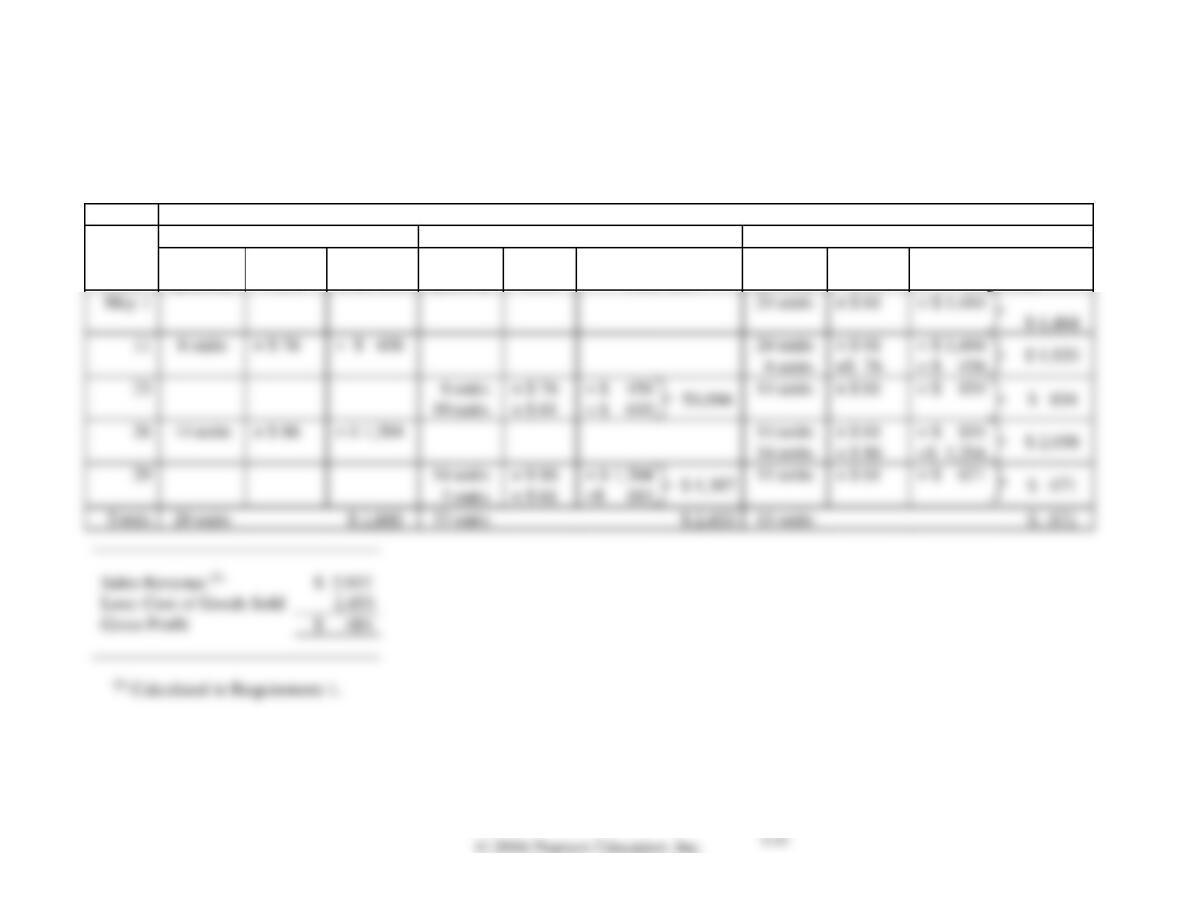
Using LIFO, cost of goods sold is $2,453 and gross profit is $484.
Calculations:
Purchases
Cost of Goods Sold
Inventory on Hand
Date
Quantity
Unit
Cost
Total Cost
Quantity
Unit
Cost
Total Cost
Quantity
Unit
Cost
Total Cost
× $ 76
= $ 456
× $ 61
= $ 1,464
×$ 76
= $ 456
× $ 76
= $ 456
× $ 61
= $ 854
× $ 61
× $ 86
= $ 1,204
× $ 61
= $ 854
=$ 1,204
=$ 183
$ 2,453
Less: Cost of Goods Sold
2,453
Gross Profit
E6-20, cont.
Requirement 3
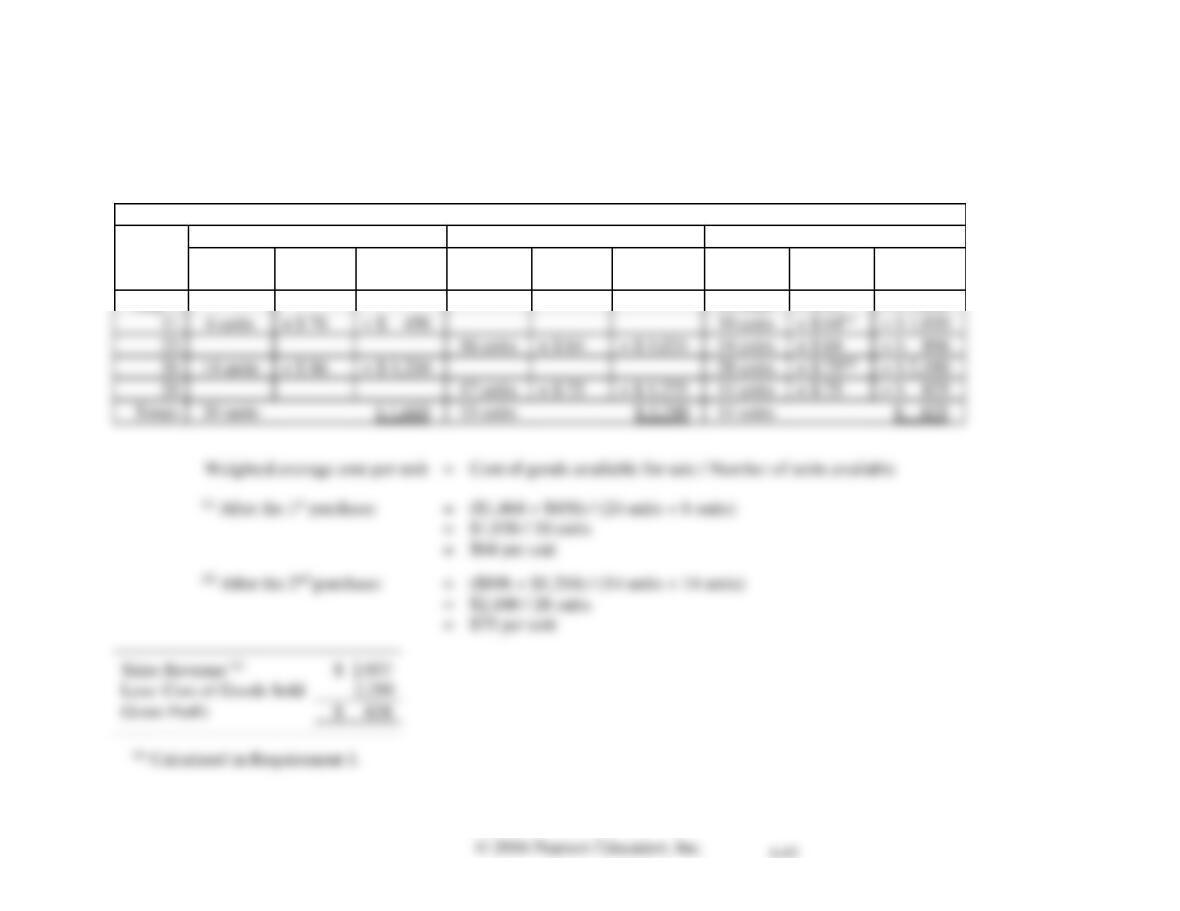
Using weighted-average, cost of goods sold is $2,299 and gross profit is $638.
Calculations:
Purchases
Cost of Goods Sold
Inventory on Hand
Date
Quantity
Unit
Cost
Total
Cost
Quantity
Unit
Cost
Total Cost
Quantity
Unit
Cost
Total Cost
May 1
24 units
× $ 61
= $ 1,464
6 units
× $ 76
= $ 456
30 units
= $ 1,920
16 units
× $ 64
= $ 1,024
14 units
× $ 64
= $ 896
× $ 86
= $ 1,204
28 units
= $ 2,100
17 units
× $ 75
= $ 1,275
11 units
× $ 75
= $ 825
Totals
33 units
11 units
$ 825
=
Cost of goods available for sale / Number of units available
=
($1,464 + $456) / (24 units + 6 units)
$1,920 / 30 units
$64 per unit
=
$2,100 / 28 units
$75 per unit
$ 2,937
Less: Cost of Goods Sold
2,299
Gross Profit
$ 638
E6-20, cont.
Requirement 4
FIFO results in the largest gross profit. Under FIFO, the first costs into inventory are the first costs out
E6-21 Applying the lower-of-cost-or-market rule to merchandise inventories
Learning Objective 4
1. CR Merch. Inv. $1,000
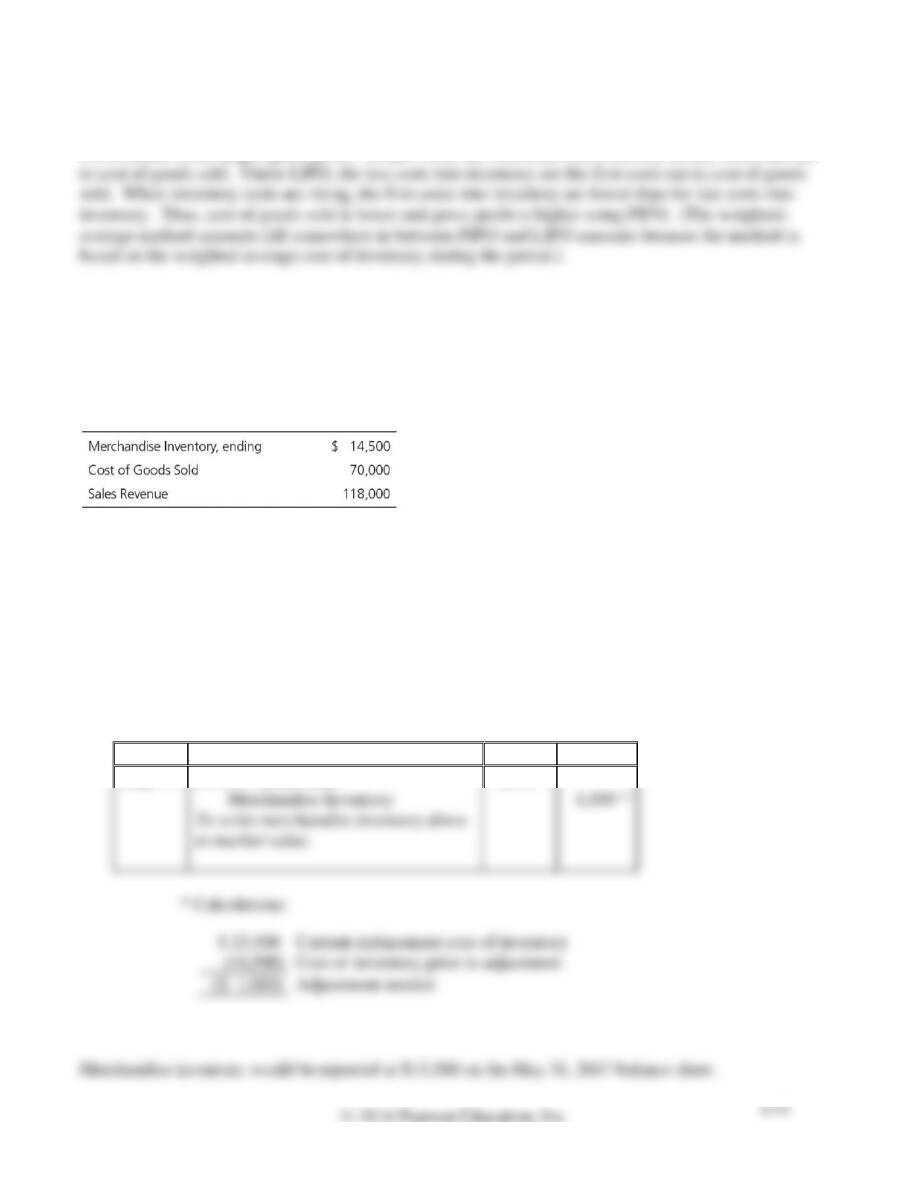
Rapid Resources, which uses the FIFO inventory costing method, has the following account balances at
May 31, 2017, prior to releasing the financial statements for the year:
Rapid has determined that the current replacement cost (current market value) of the
May 31, 2017, ending merchandise inventory is $13,500.
Requirements
1. Prepare any adjusting journal entry required from the information given.
2. What value would Rapid report on the balance sheet at May 31, 2017, for merchandise inventory?
SOLUTION
Requirement 1
Date
Accounts and Explanation
Debit
Credit
May 31
Cost of Goods Sold
1,000 *
Requirement 2
E6-22 Applying the lower-of-cost-or-market rule to inventories
Learning Objective 4
2. GP $69,000
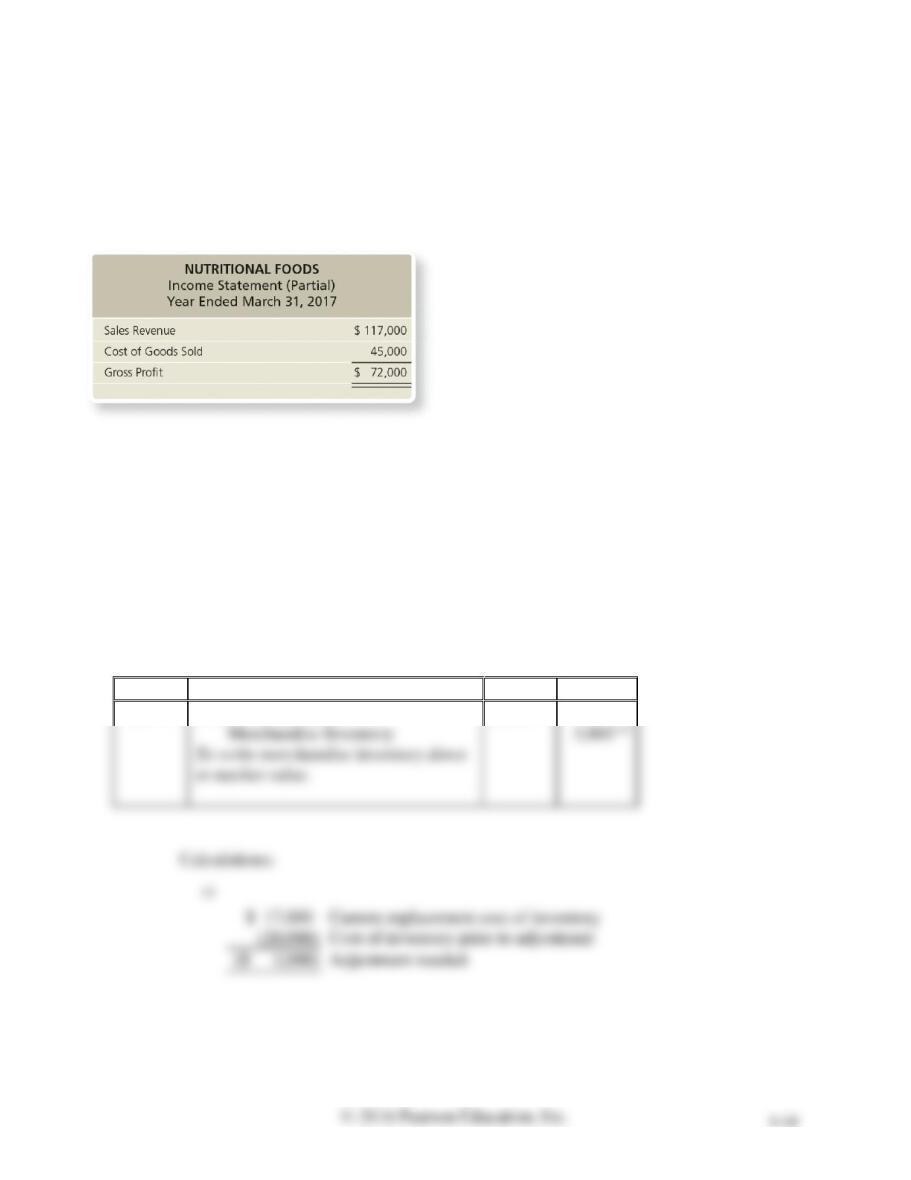
Nutritional Foods reports merchandise inventory at the lower-of-cost-or-market. Prior to releasing its
financial statements for the year ended March 31, 2017, Nutritional’s preliminary income statement,
before the year-end adjustments, appears as follows:
Nutritional has determined that the current replacement cost of ending merchandise inventory is
$17,000. Cost is $20,000.
Requirements
1. Journalize the adjusting entry for merchandise inventory, if any is required.
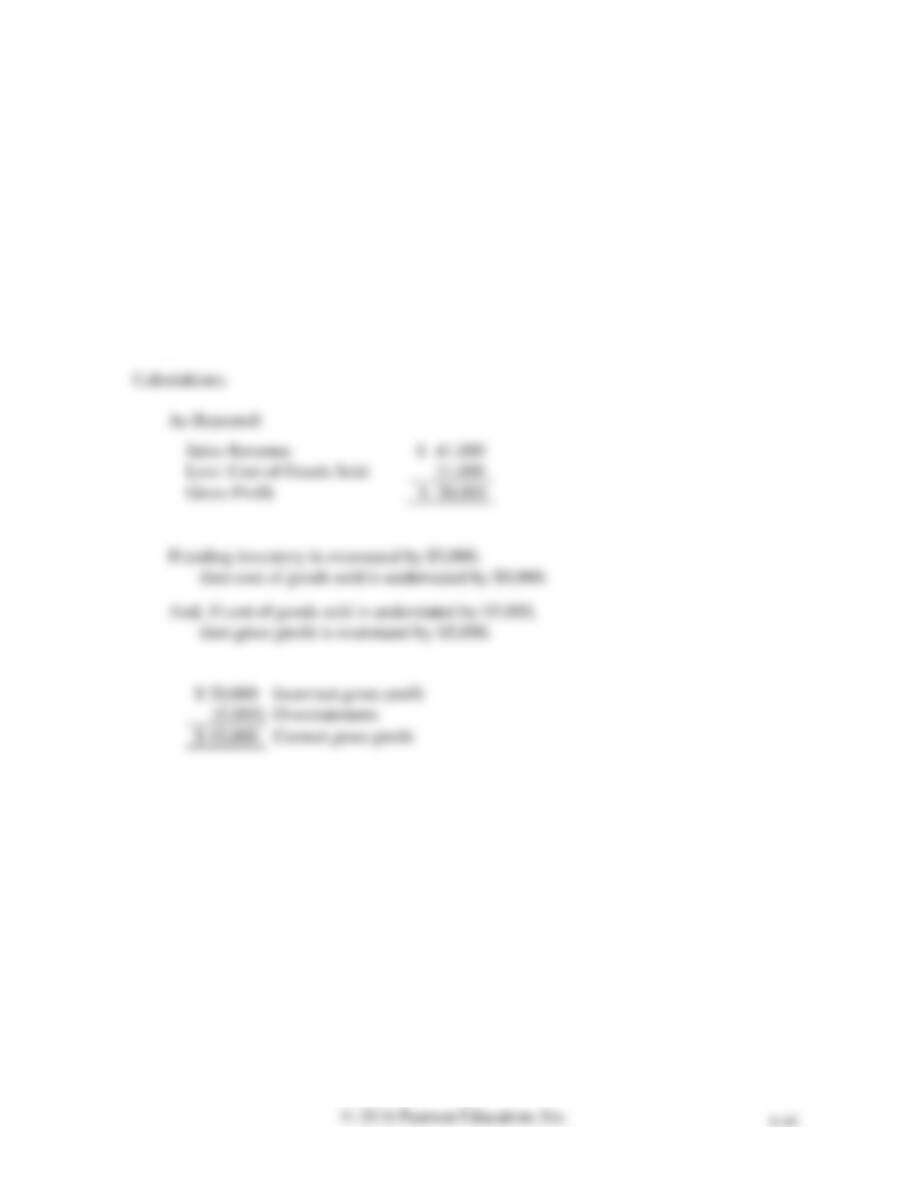
2. Prepare a revised partial income statement to show how Nutritional Foods should report sales, cost
of goods sold, and gross profit.
SOLUTION
Requirement 1
Date
Accounts and Explanation
Debit
Credit
Mar. 31
Cost of Goods Sold
3,000 (a)
E6-22, cont.
Requirement 2
NUTRITIONAL FOODS
Income Statement (Partial)
Year Ended March 31, 2017
E6-23 Measuring the effect of an inventory error
Learning Objective 5
b. Correct GP $25,000
La Castle Bakery reported sales revenue of $41,000 and cost of goods sold of $21,000. Compute La
Castle’s correct gross profit if the company made either of the following independent accounting errors.
Show your work.
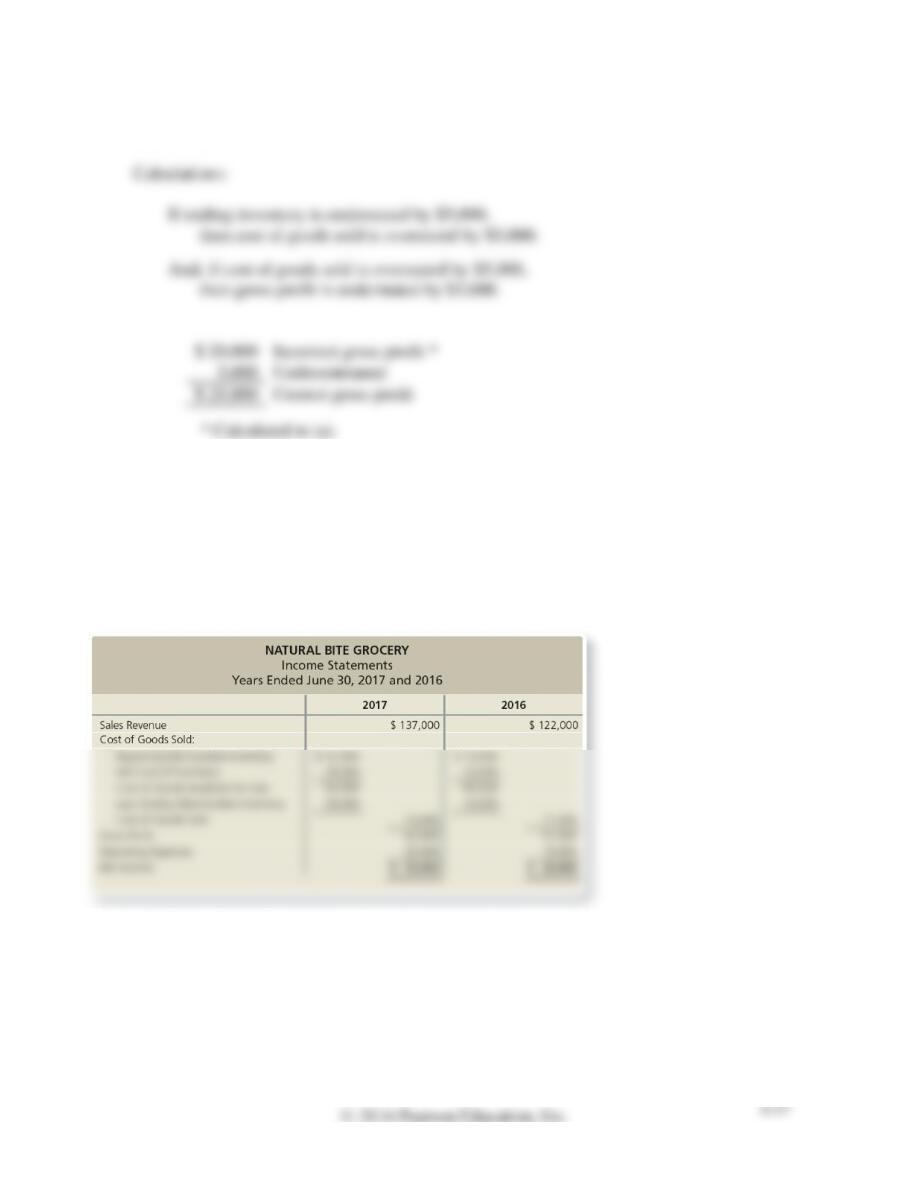
a. Ending merchandise inventory is overstated by $5,000.
b. Ending merchandise inventory is understated by $5,000.
SOLUTION
(a) Correct gross profit is $15,000.
E6-23, cont.
(b) Correct gross profit is $25,000.
E6-24 Correcting an inventory error—two years
Learning Objective 5
2. 2017, understated $5,000
(Requirement 1 only)
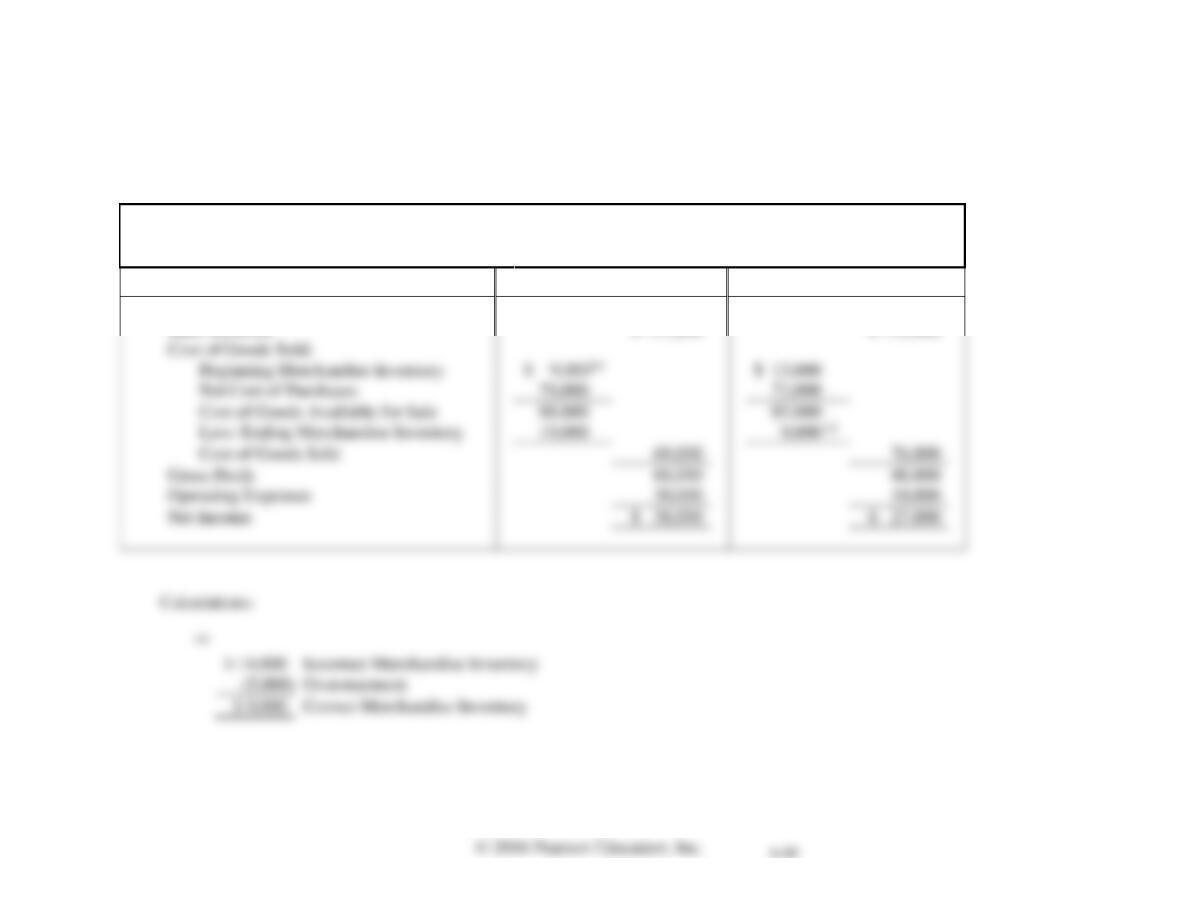
Natural Bite Grocery reported the following comparative income statements for the years ended June 30,
2017 and 2016:
During 2017, Natural Bite discovered that ending 2016 merchandise inventory was overstated by
$5,000.
Requirements
1. Prepare corrected income statements for the two years.
2. State whether each year’s net income—before your corrections—is understated or overstated, and
indicate the amount of the understatement or overstatement.
SOLUTION
Requirement 1
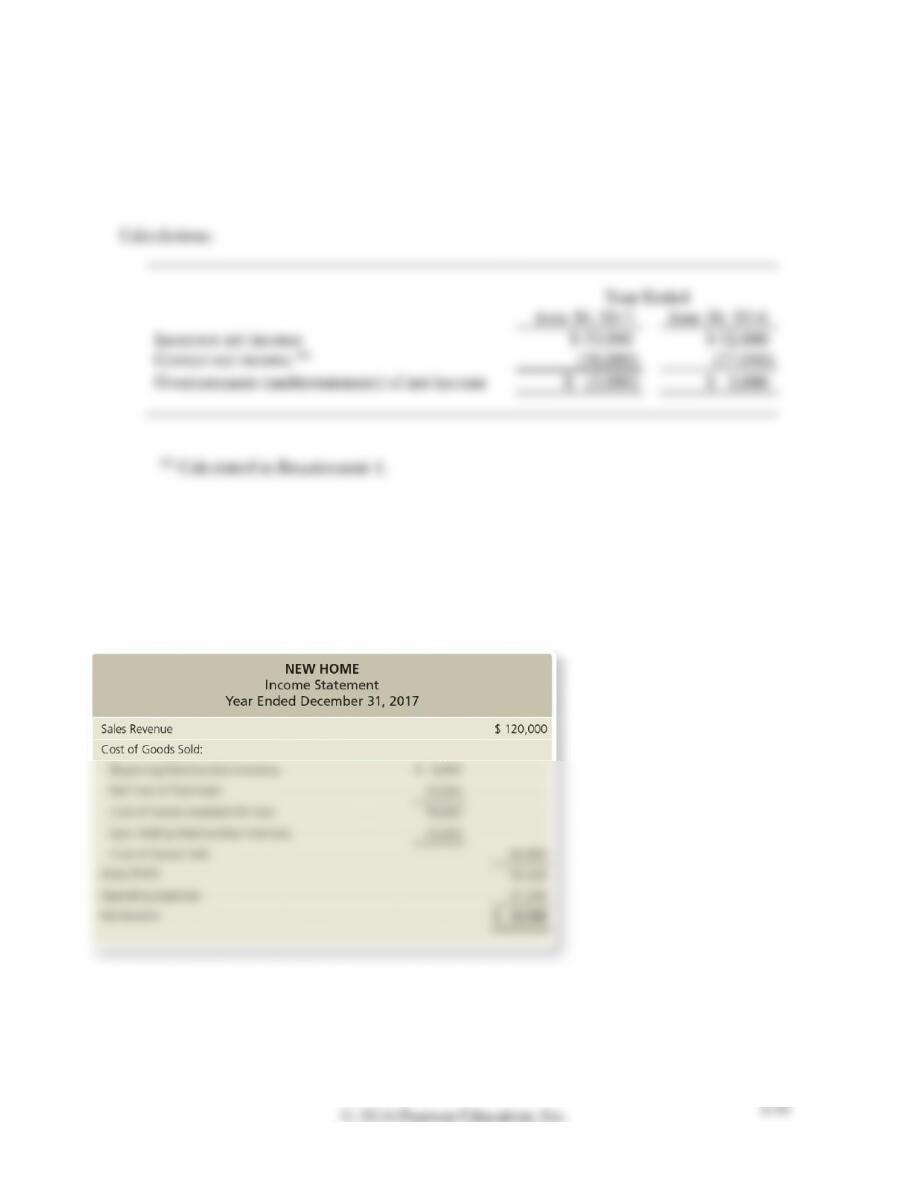
Corrected income statements:
NATURAL BITE GROCERY
Income Statements
Years Ended June 30, 2017 and 2016
2017
2016
Sales Revenue
$ 137,000
$ 122,000
Cost of Goods Sold:
$ 13,000
79,000
72,000
88,000
85,000
19,000
Operating Expenses
Net Income
$ 38,000
$ 27,000
$ 14,000
Incorrect Merchandise Inventory
(5,000)
Overstatement
Correct Merchandise Inventory
E6-24, cont.
Requirement 2
Before correction, net income for the year ended June 30, 2017 is understated by $5,000 and net income
for the year ended June 30, 2016 is overstated by $5,000.
E6–25 Computing inventory turnover and days’ sales in inventory
Learning Objective 6
2. 60.43 days
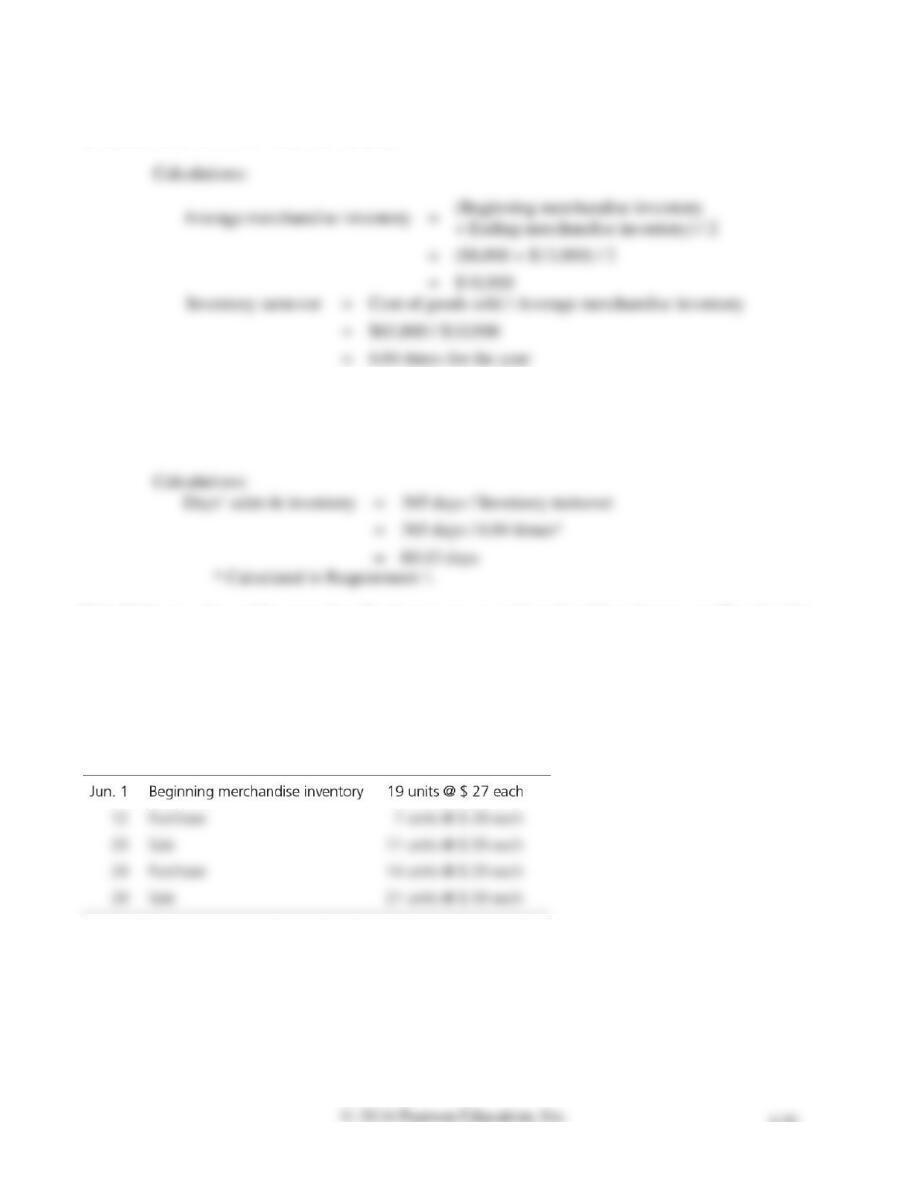
New Home reported the following income statement for the year ended December 31, 2017:
Requirements
1. Compute New Home’s inventory turnover rate for the year. (Round to two decimal places.)
2. Compute New Home’s days’ sales in inventory for the year. (Round to two decimal places.)
6-50
SOLUTION
Requirement 1
Inventory turnover is 6.04 times for the year.
Requirement 2
Days’ sales in inventory is 60.43 days for the year.
E6A-26 Comparing ending merchandise inventory, cost of goods sold, and gross profit using the
periodic inventory system—FIFO, LIFO, and weighted- average methods
Learning Objective 7
Appendix 6A
2. CoGS $899
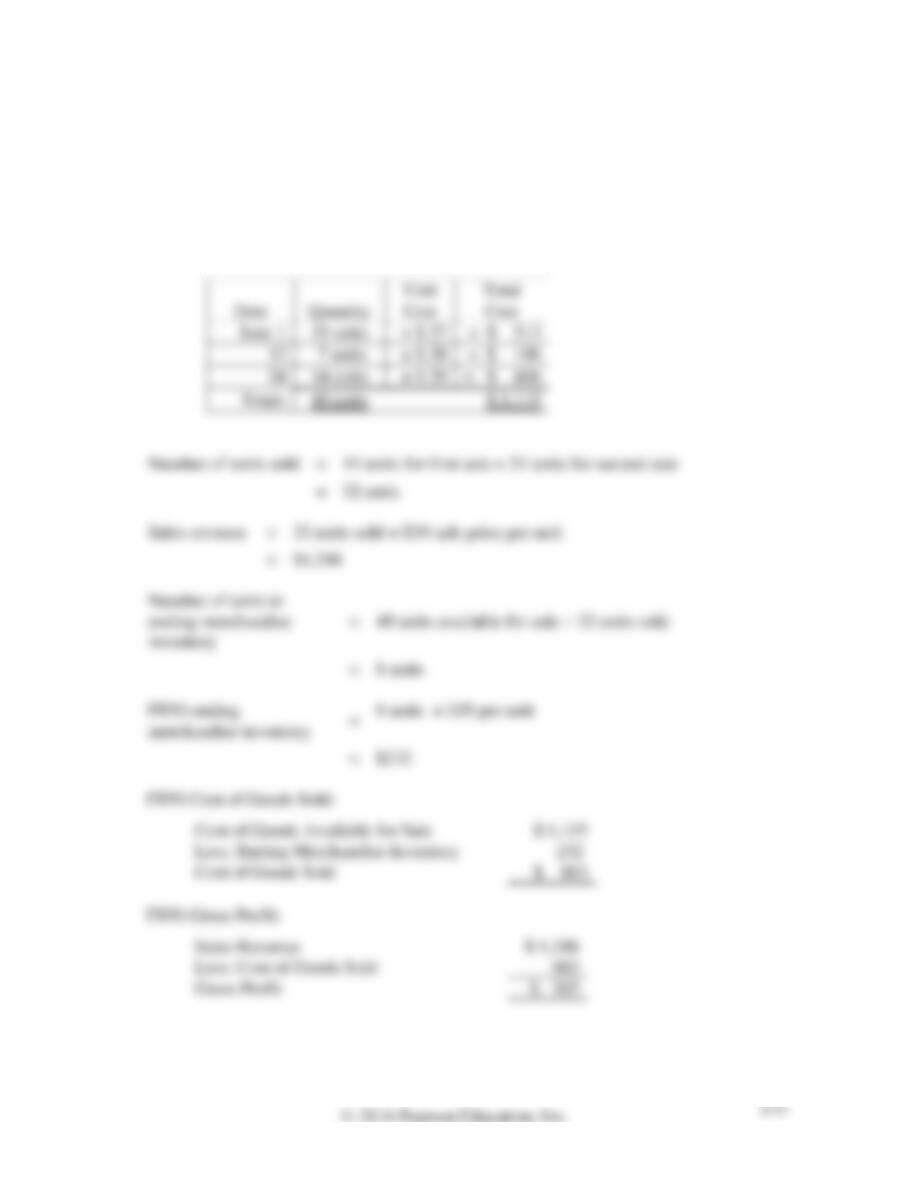
Assume that Heavenly Coffee Shop completed the following periodic inventory transactions for a line of
merchandise inventory:
Requirements
1. Compute ending merchandise inventory, cost of goods sold, and gross profit using the FIFO
inventory costing method.
2. Compute ending merchandise inventory, cost of goods sold, and gross profit using the LIFO
inventory costing method.
3. Compute ending merchandise inventory, cost of goods sold, and gross profit using the weighted-
average inventory costing method. (Round weighted-average cost per unit to the nearest cent and all
other amounts to the nearest dollar.)
SOLUTION
Requirement 1
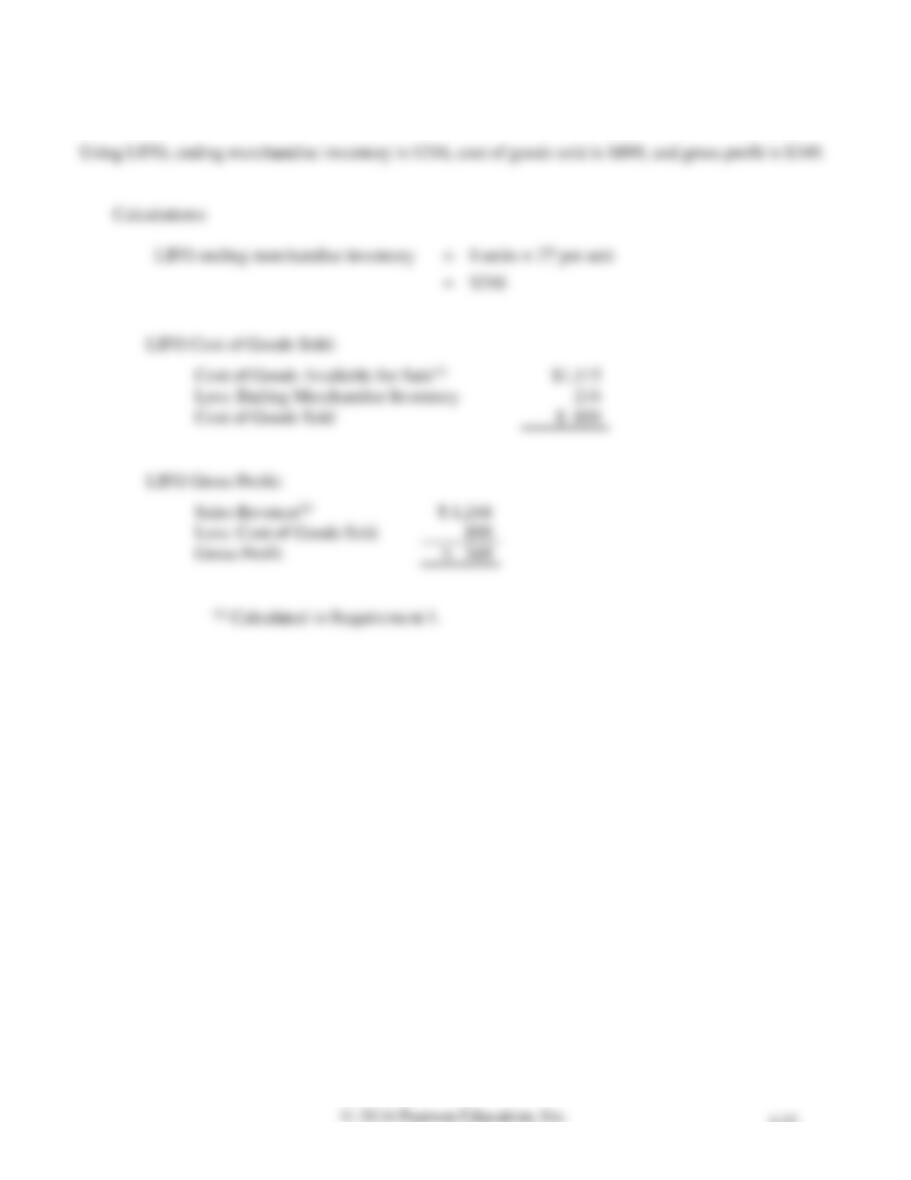
Using FIFO, ending merchandise inventory is $232, cost of goods sold is $883, and gross profit is $365.
Calculations:
Goods Available for Sale:
6-52
E6A-26, cont.
Requirement 2
E6A-26, cont.
Requirement 3
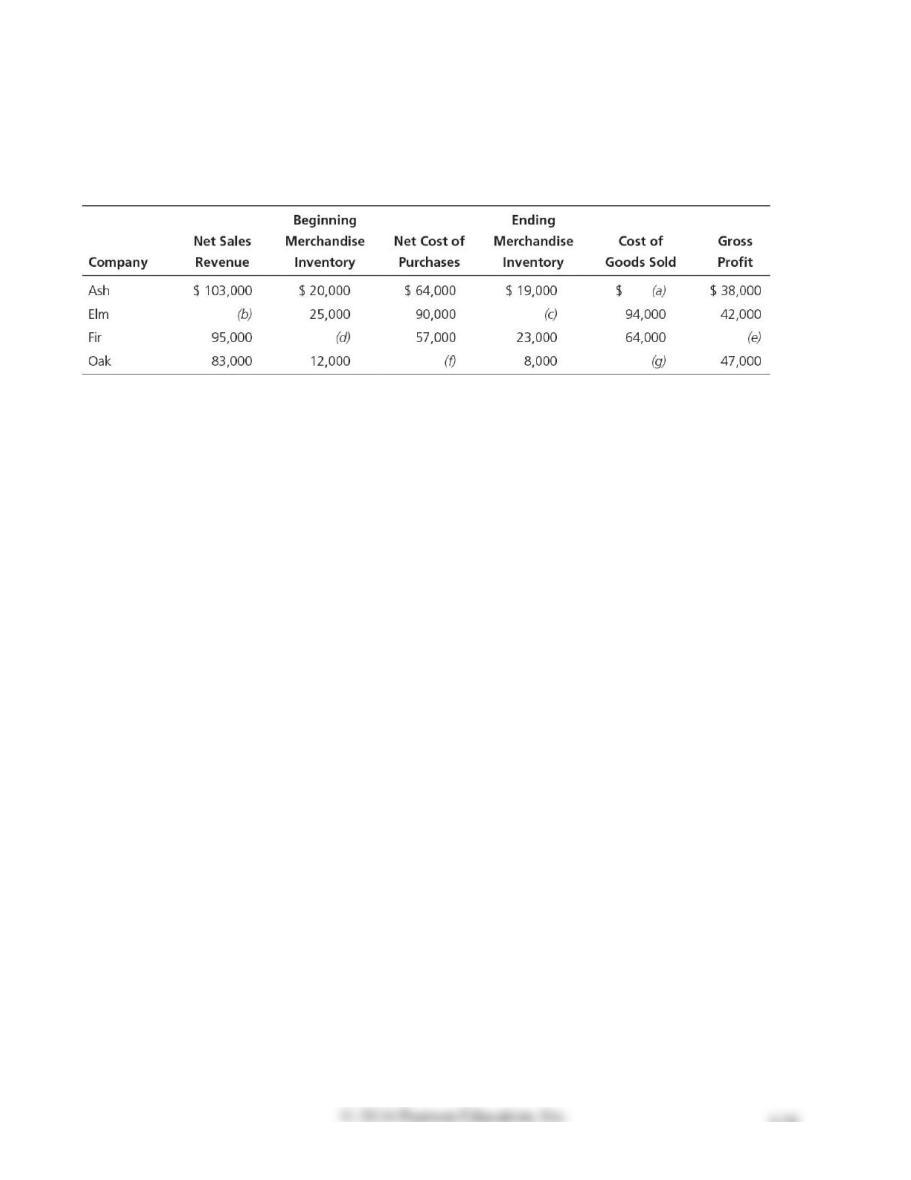
Using weighted-average, ending merchandise inventory is $223, cost of goods sold is $892, and gross
profit is $356.
Calculations:
Weighted-average
cost per unit
=
$1,115 cost of goods available for sale
/ 40 units available for sale
=
$27.88 per unit
Weighted-average ending merchandise inventory
=
8 units × $27.88 per unit
=
$223
Ending Merchandise Inventory
(223)
Cost of Goods Sold
Less: Cost of Goods Sold
892
Gross Profit
6-54
E6A-27 Computing periodic inventory amounts
Learning Objective 7
Appendix 6A
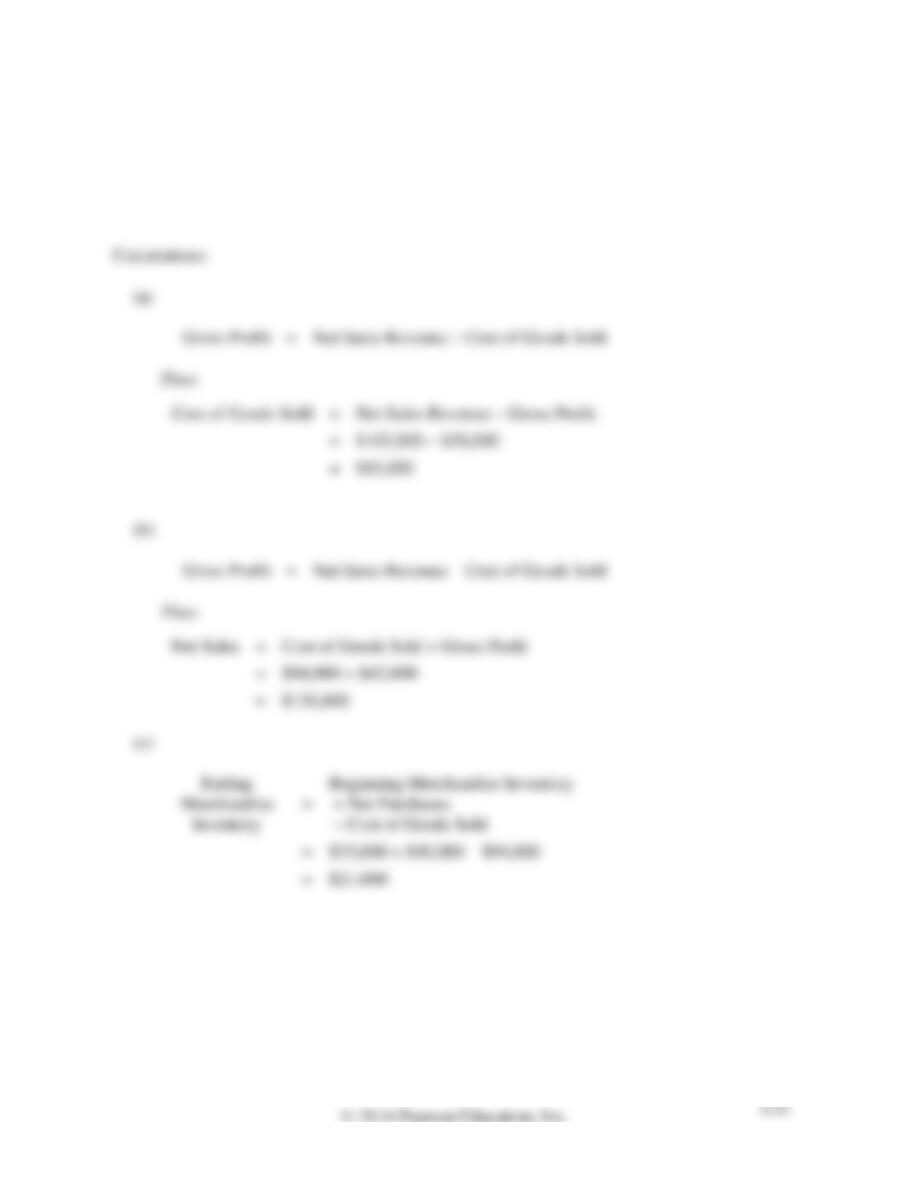
Consider the data of the following companies:
Requirements
1. Supply the missing amounts in the preceding table.
2. Prepare the income statement for the year ended December 31, 2017, for Ash Company, which uses
the periodic inventory system. Include a complete heading, and show the full computation of cost of
goods sold. Ash’s operating expenses for the year were $11,000.
SOLUTION
Requirement 1
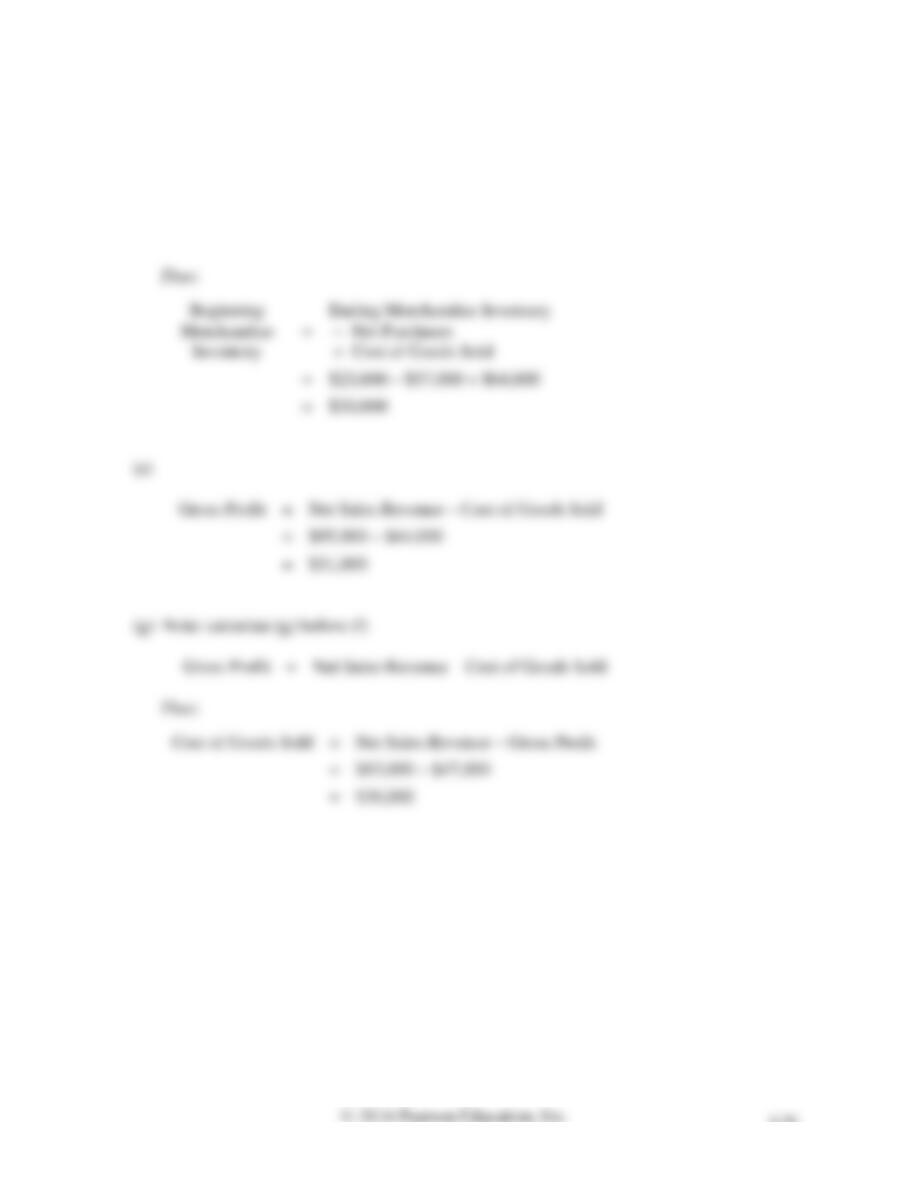
(a) is $65,000; (b) is $136,000; (c) is $21,000; (d) is $30,000; (e) is $31,000; (f) is $32,000; (g) is
$36,000.
6-56
E6A-27, cont.
Requirement 1, cont.
(d)
Ending
Merchandise
Inventory
=
Beginning Merchandise Inventory
+ Net Purchases
– Cost of Goods Sold
Merchandise
Inventory
=
Ending Merchandise Inventory
+ Cost of Goods Sold
=
$23,000 – $57,000 + $64,000
=
$30,000
=
Net Sales Revenue – Cost of Goods Sold
=
$95,000 – $64,000
=
$31,000
=
Net Sales Revenue – Cost of Goods Sold
=
Net Sales Revenue – Gross Profit
=
$83,000 – $47,000
=
$36,000
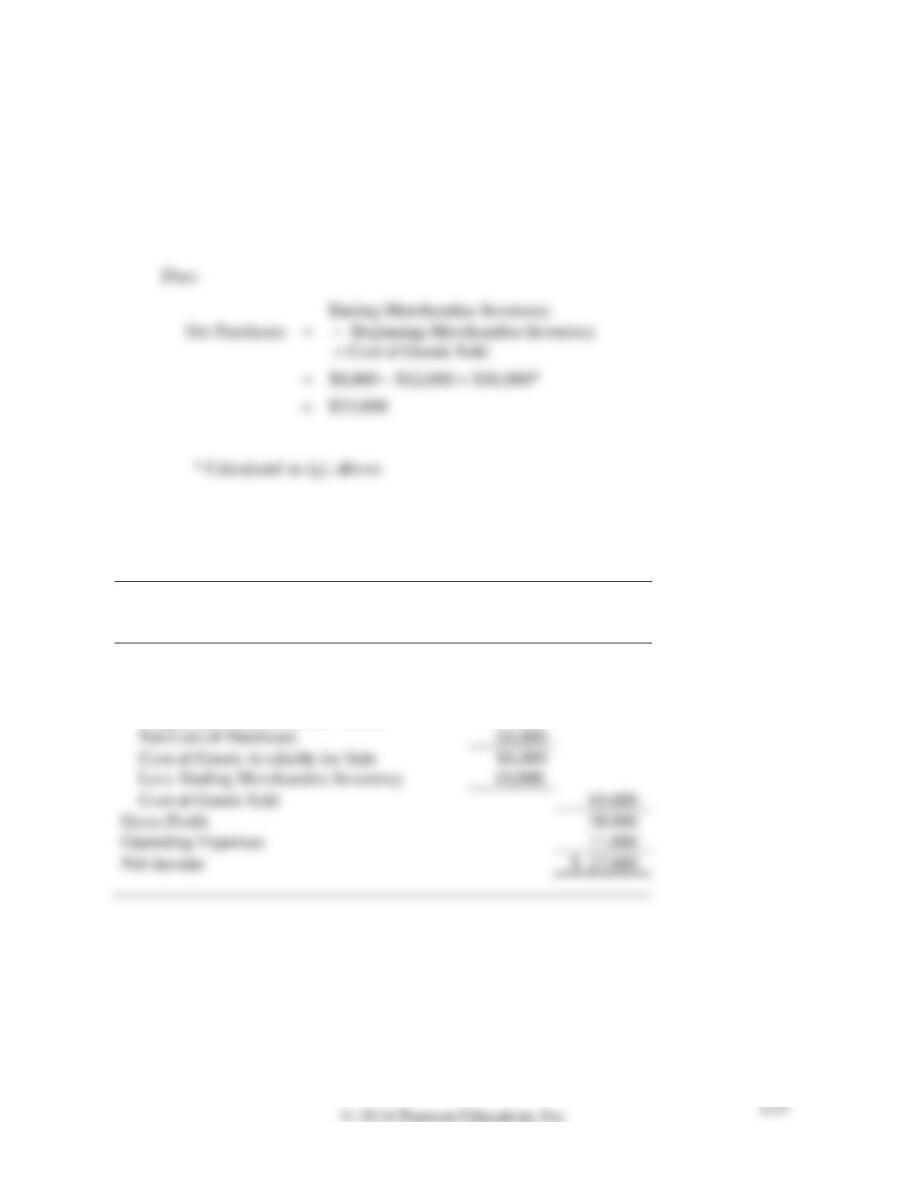
E6A-27, cont.
Requirement 1, cont.
(f)
Ending
Merchandise
Inventory
=
Beginning Merchandise Inventory
+ Net Purchases
– Cost of Goods Sold
=
Ending Merchandise Inventory
+ Cost of Goods Sold
=
$8,000 – $12,000 + $36,000*
=
$32,000
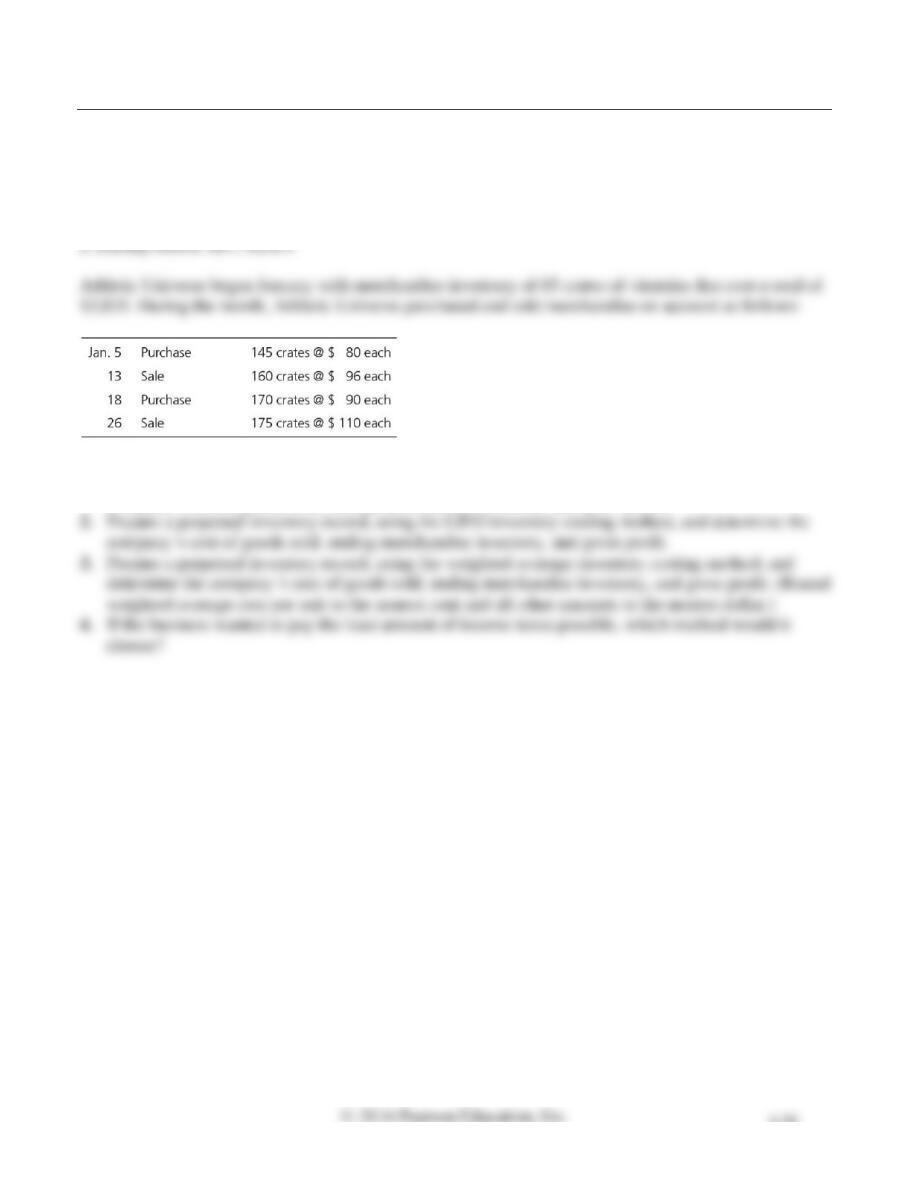
Requirement 2
ASH COMPANY
Income Statement
Year Ended December 31, 2017
Net Sales
$ 103,000
Cost of Goods Sold:
Beginning Merchandise Inventory
$ 20,000
Net Cost of Purchases
Cost of Goods Available for Sale
Less: Ending Merchandise Inventory
19,000
Cost of Goods Sold
65,000
Gross Profit
Operating Expenses
11,000
6-58
Problems (Group A)
For all problems, assume the perpetual inventory system is used unless stated otherwise.
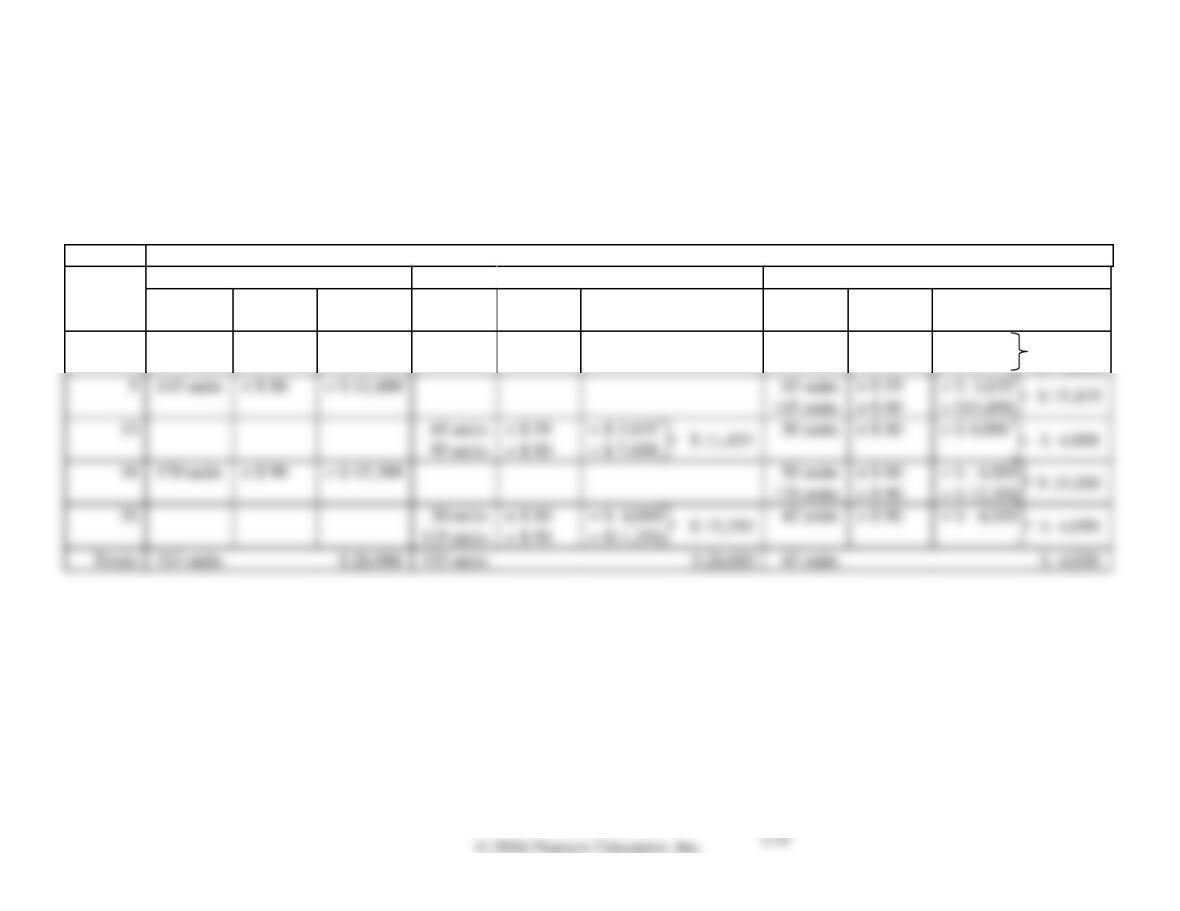
P6-28A Accounting for inventory using the perpetual inventory system—FIFO, LIFO, and
weighted-average
Learning Objectives 2, 3
Requirements
1. Prepare a perpetual inventory record, using the FIFO inventory costing method, and determine the
company’s cost of goods sold, ending merchandise inventory, and gross profit.
SOLUTION
Requirement 1
Using FIFO, cost of goods sold is $26,685, ending merchandise inventory is $4,050, and gross profit is $7,925.
Perpetual Inventory Record: FIFO
Purchases
Cost of Goods Sold
Inventory on Hand
Date
Quantity
Unit
Cost
Total Cost
Quantity
Unit
Cost
Total Cost
Quantity
Unit
Cost
Total Cost
Jan. 1
65 units
× $ 59 (a)
= $ 3,835
$ 3,835
145 units
65 units
145 units
65 units
50 units
95 units
170 units
50 units
45 units
125 units
315 units
$ 26,900
335 units
$ 26,685
45 units
P6-28A, cont.
Requirement 1, cont.
Calculations:
(a) Jan. 1 inventory unit cost
=
Total cost / Total number of units
=
$3,835 / 65 units
=
$59 per unit
=
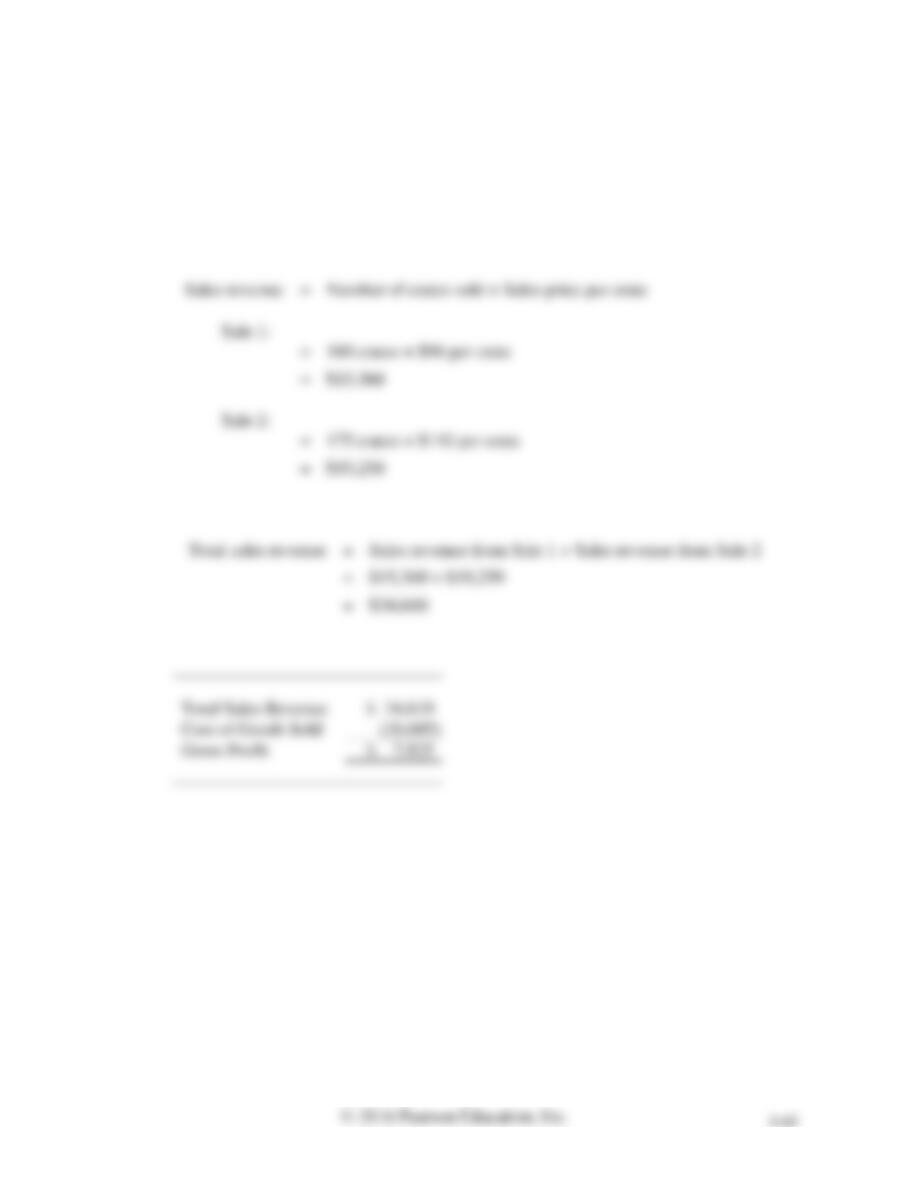
Number of crates sold × Sales price per crate
Sale 1:
=
160 crates × $96 per crate
=
$15,360
Sale 2:
=
175 crates × $110 per crate
=
$19,250
=
Sales revenue from Sale 1 + Sales revenue from Sale 2
=
$15,360 + $19,250
=
$34,610
Total Sales Revenue
Cost of Goods Sold
(26,685)
Gross Profit