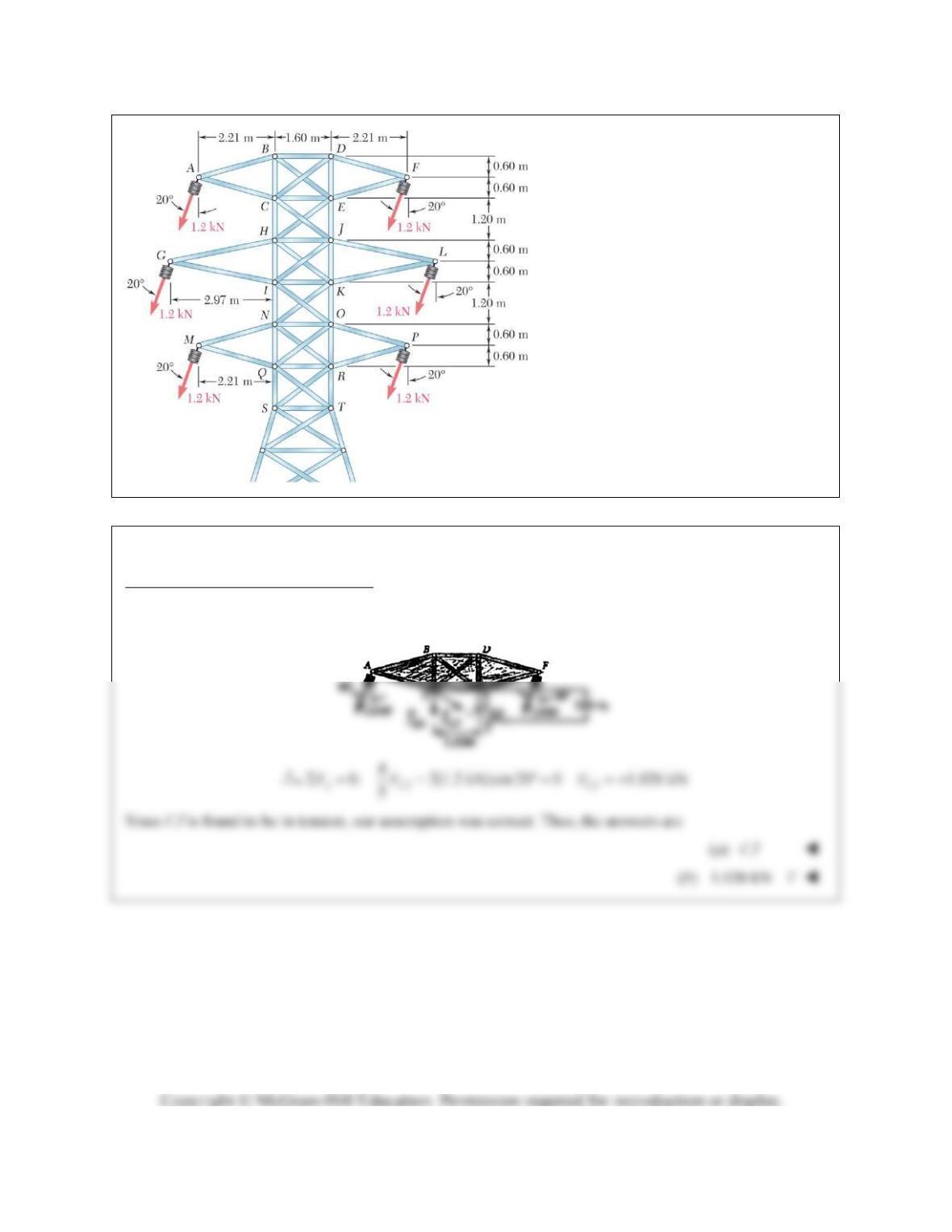
PROBLEM 6.65
The diagonal members in the center
panels of the power transmission line
tower shown are very slender and can act
only in tension; such members are known
as counters. For the given loading,
determine (a) which of the two counters
listed below is acting, (b) the force in
that counter.
Counters CJ and HE
SOLUTION
Free body: Portion ABDFEC of tower.
We assume that counter CJ is acting and show the forces exerted by that counter and by members CH and
EJ.
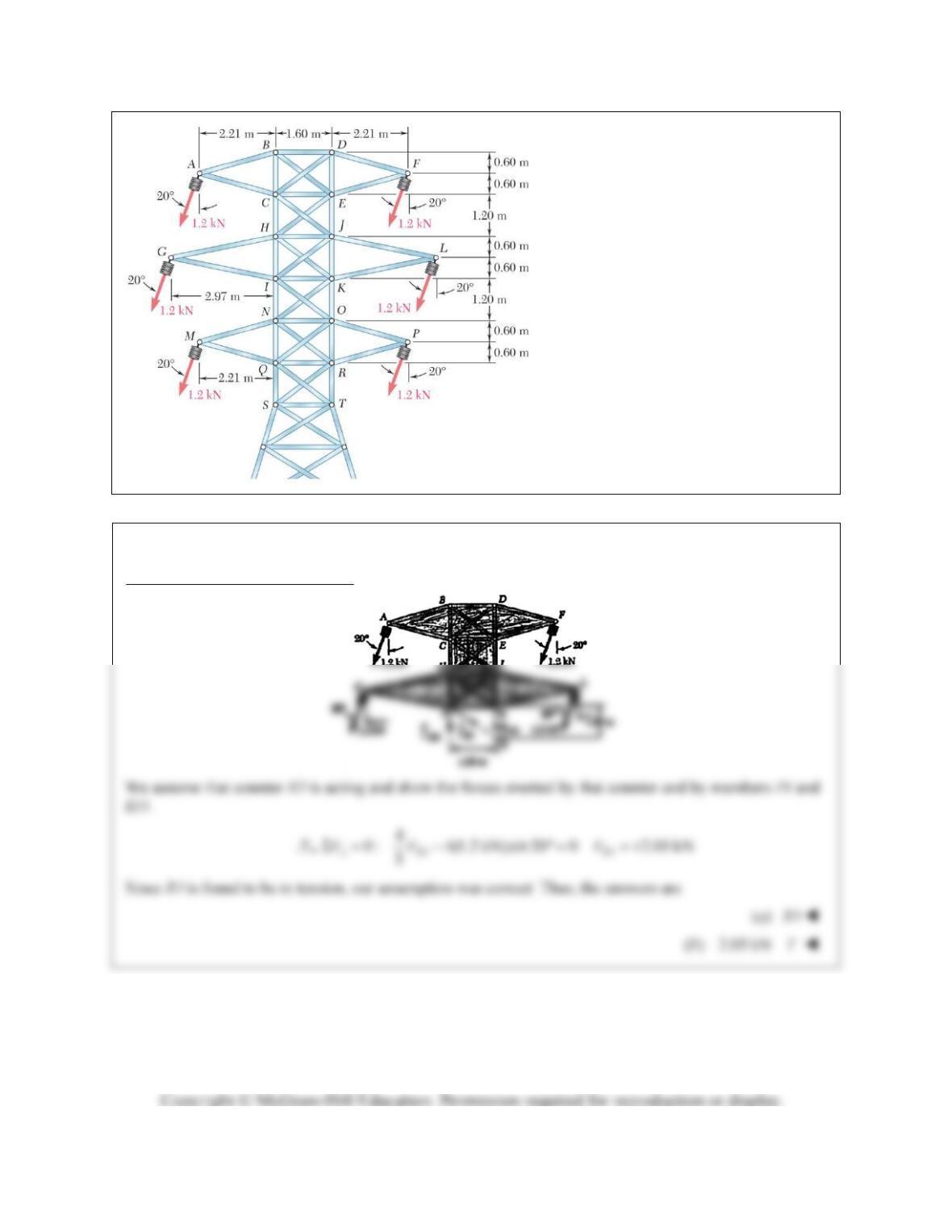
PROBLEM 6.66
The diagonal members in the center
panels of the power transmission line
tower shown are very slender and can act
only in tension; such members are known
as counters. For the given loading,
determine (a) which of the two counters
listed below is acting, (b) the force in that
counter.
Counters IO and KN
SOLUTION
Free body: Portion of tower shown.
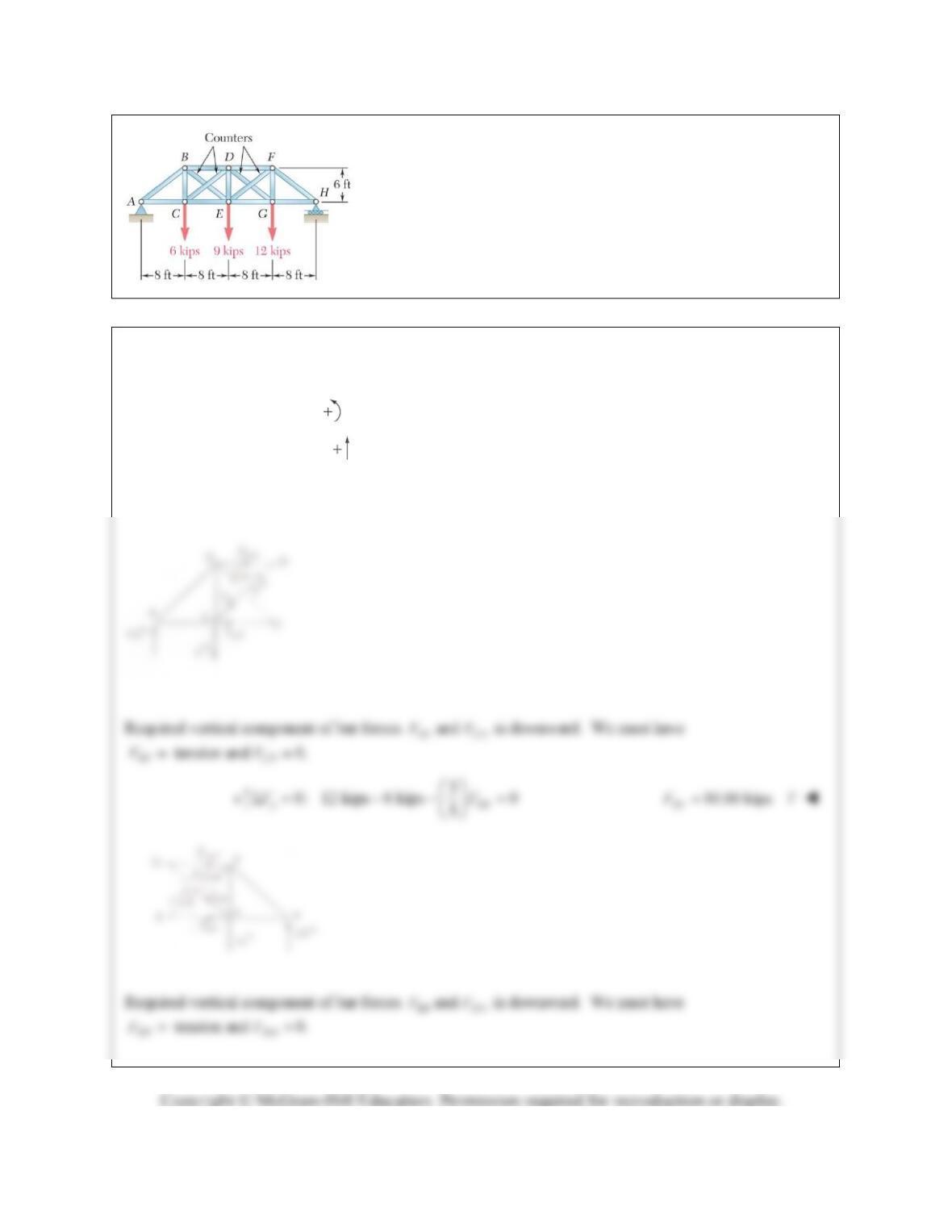
PROBLEM 6.67
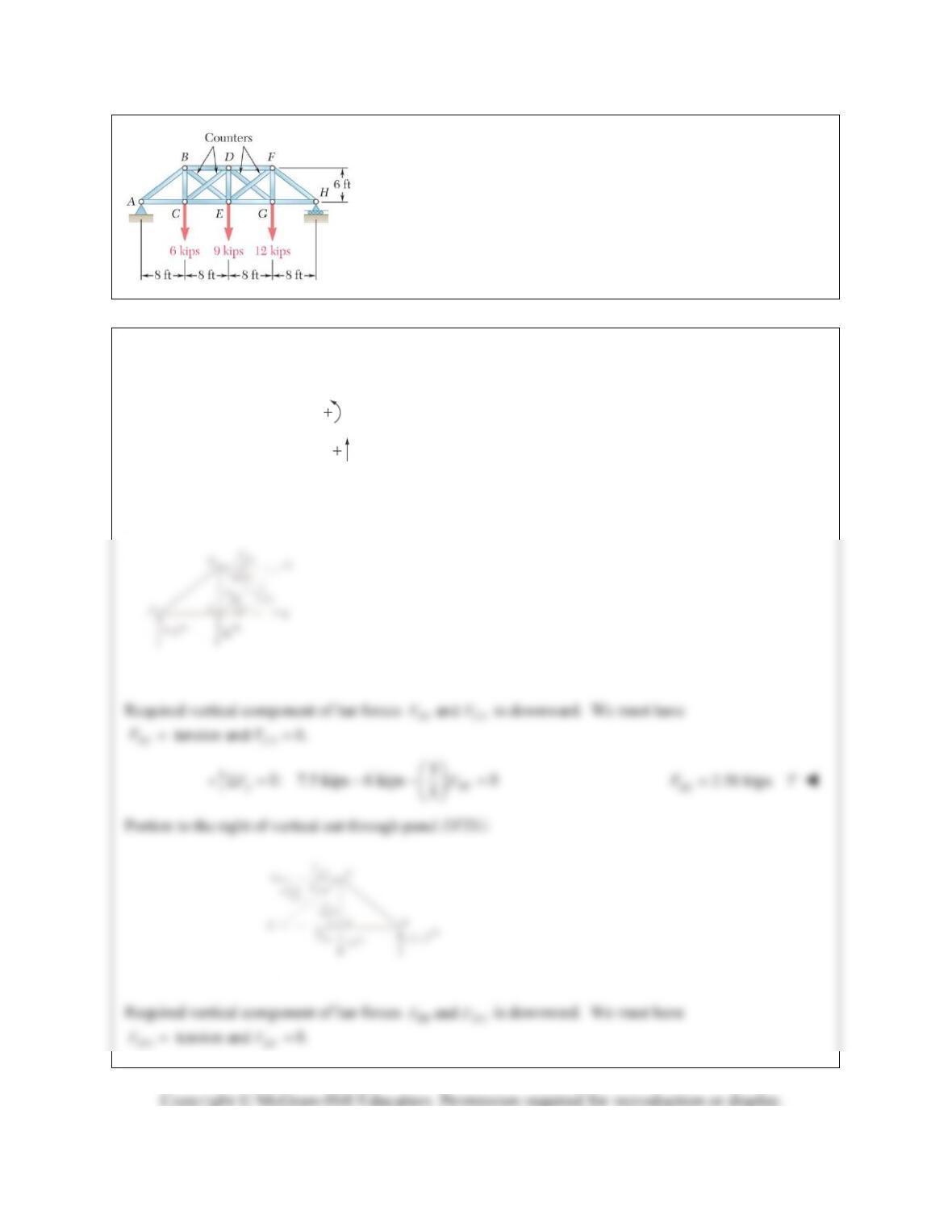
The diagonal members in the center panels of the truss shown are
very slender and can act only in tension; such members are known
as counters. Determine the force in member DE and in the counters
that are acting under the given loading.
SOLUTION
Reactions from free body of entire truss:
0: 12 kips
H
M A
0 : 15 kips
y
F H
Portion to the left of vertical cut through panel BCDE:
PROBLEM 6.67 (Continued)
3
0: 12 kips+15 kips 0
5
yEF
FF
5.00 kips
EF
F
5.00 kips
EF
FT
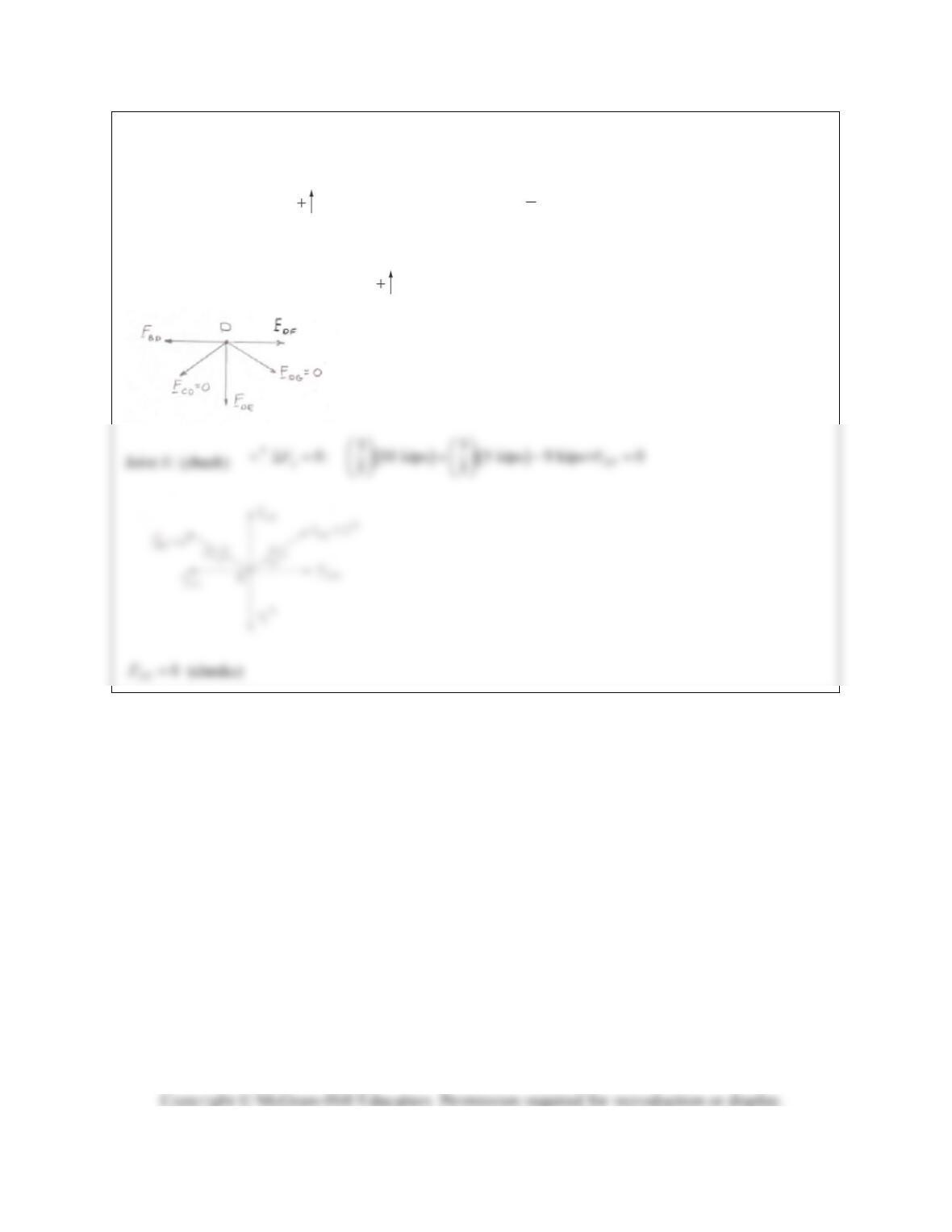
Member DE: Free body of joint D
0: 0
yDE
FF
PROBLEM 6.68
Solve Prob. 6.67 assuming that the 9-kip load has been removed.
Problem 6.67
The diagonal members in the center panels of the
truss shown are very slender and can act only in tension; such
members are known as counters. Determine the force in member
DE and in the counters that are acting under the given loading.
SOLUTION
Reactions from free body of entire truss:
0: 7.5 kips
H
M A
0 : 10.5 kips
y
F H
Portion to the left of vertical cut through panel BCDE:
PROBLEM 6.68 (Continued)
3
0: 12 kips+10.5 kips+ 0
5
yDG
FF
2.5 kips
DG
F
2.50 kips
DG
FT
PROBLEM 6.69
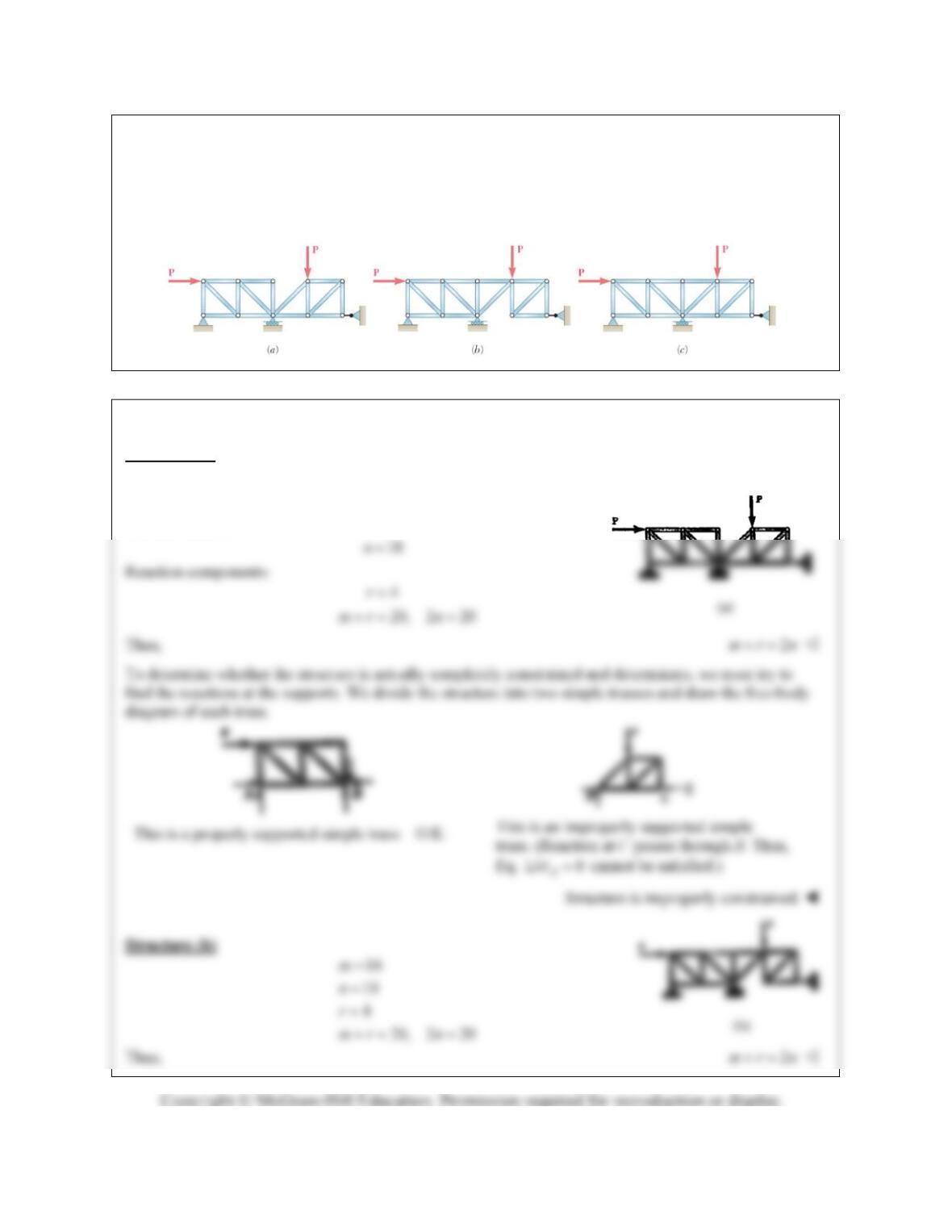
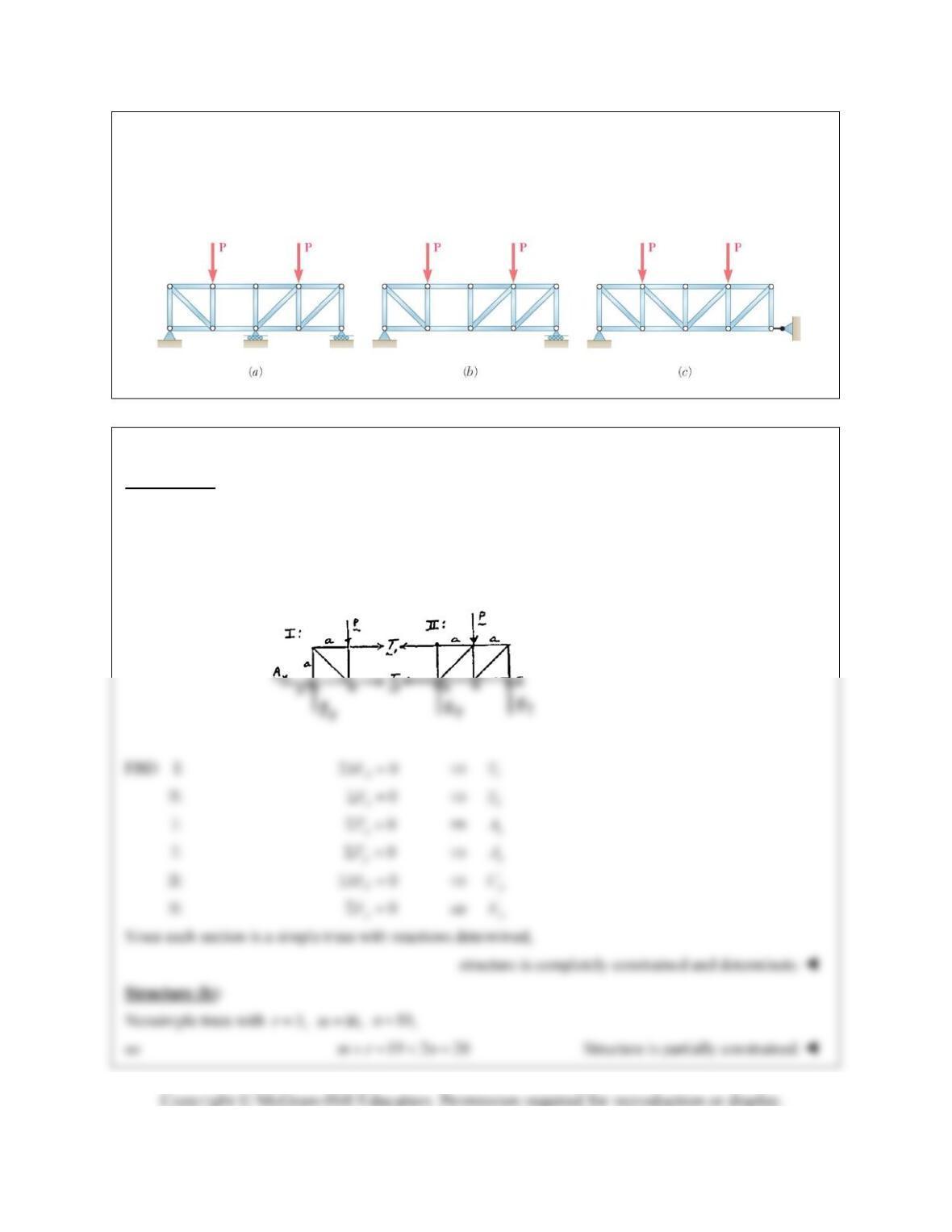
Classify each of the structures shown as completely, partially, or improperly constrained; if completely
constrained, further classify as determinate or indeterminate. (All members can act both in tension and in
compression.)
SOLUTION
Structure (a)
Number of members:
16m
Number of joints:
PROBLEM 6.69 (Continued)
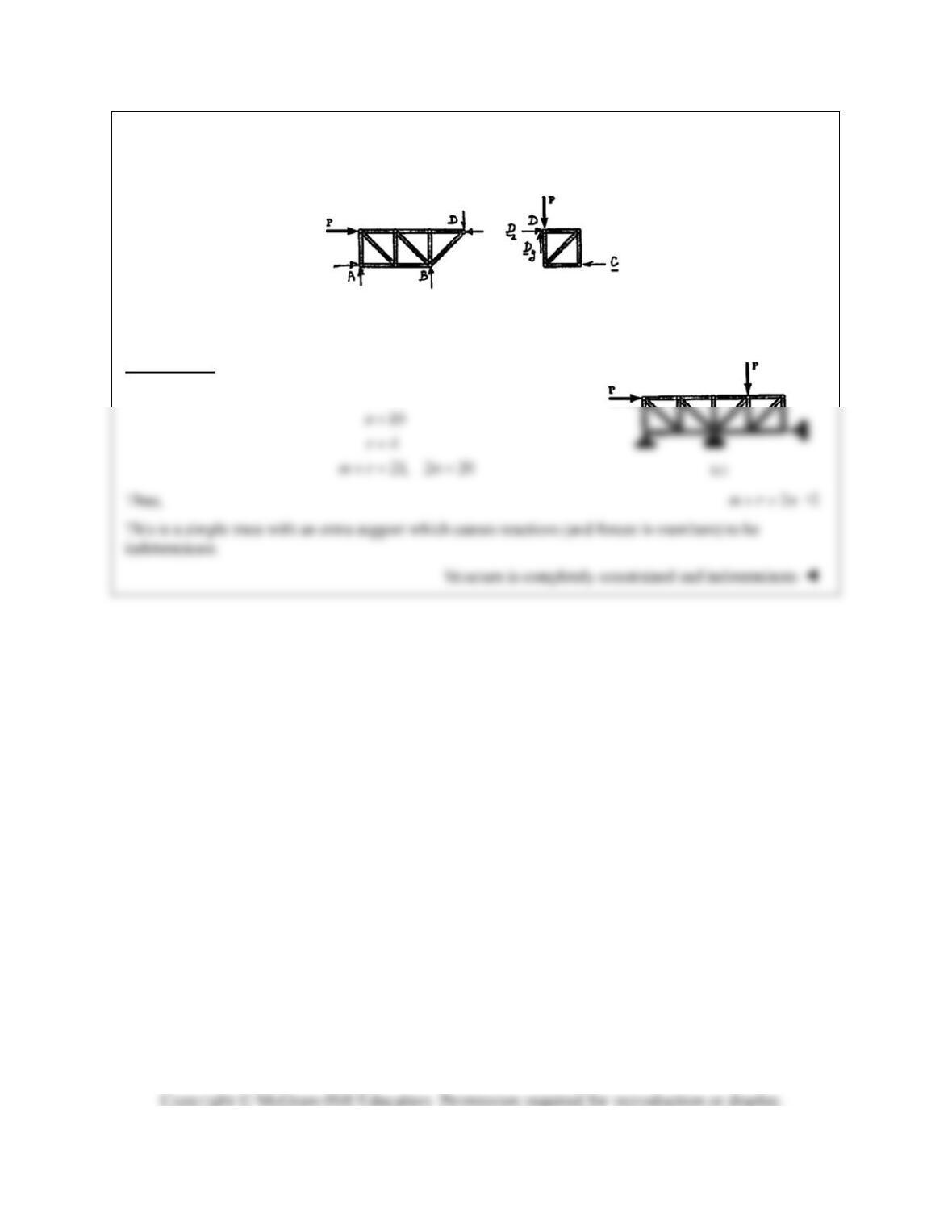
We must again try to find the reactions at the supports dividing the structure as shown.
Both portions are simply supported simple trusses.
Structure is completely constrained and determinate.
Structure (c)
17
m
PROBLEM 6.70
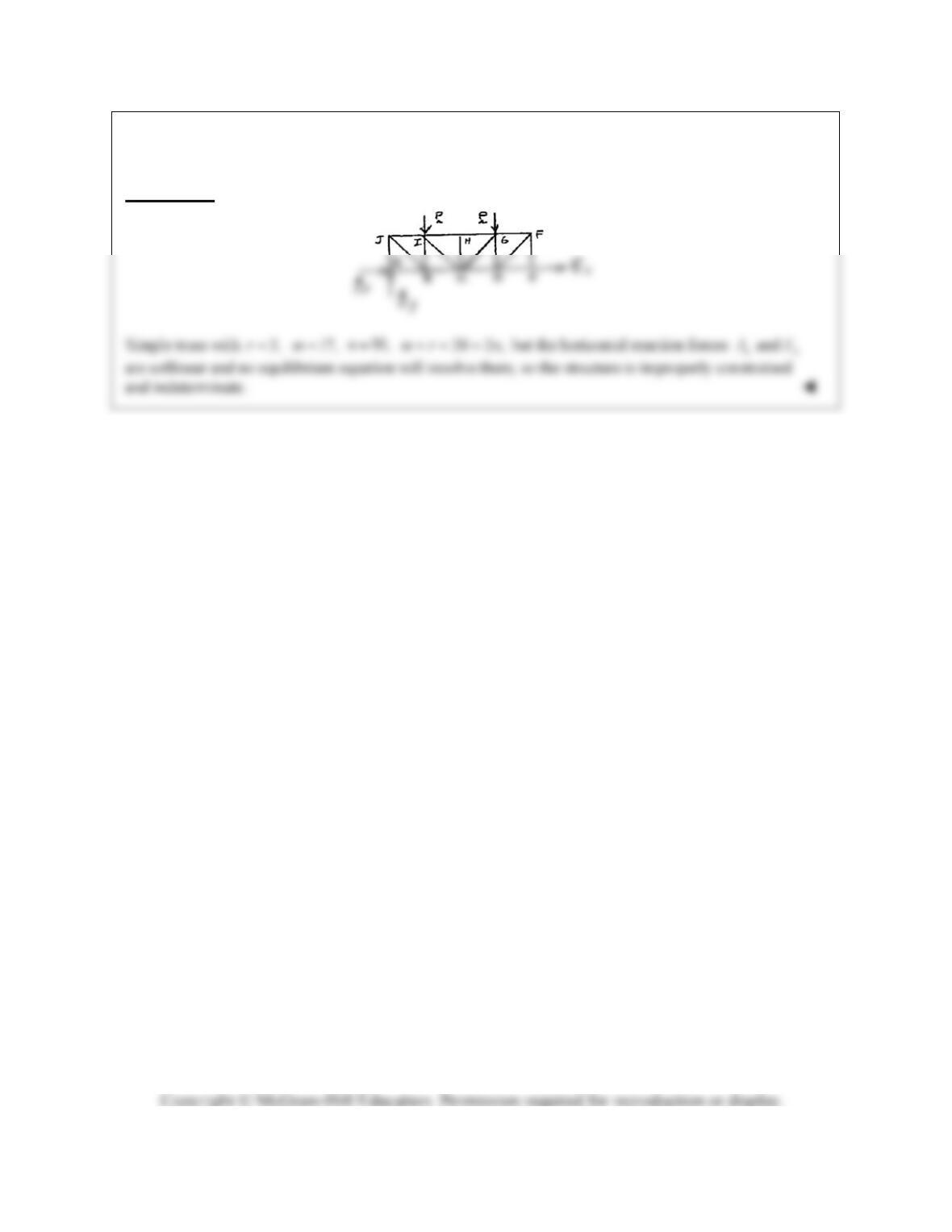
Classify each of the structures shown as completely, partially, or improperly constrained; if completely
constrained, further classify as determinate or indeterminate. (All members can act both in tension and in
compression.)
SOLUTION
Structure (a):
Nonsimple truss with
4,r
16,m
10,n
so
20 2 ,mr n
but we must examine further.
FBD Sections:
PROBLEM 6.70 (Continued)
Structure (c):
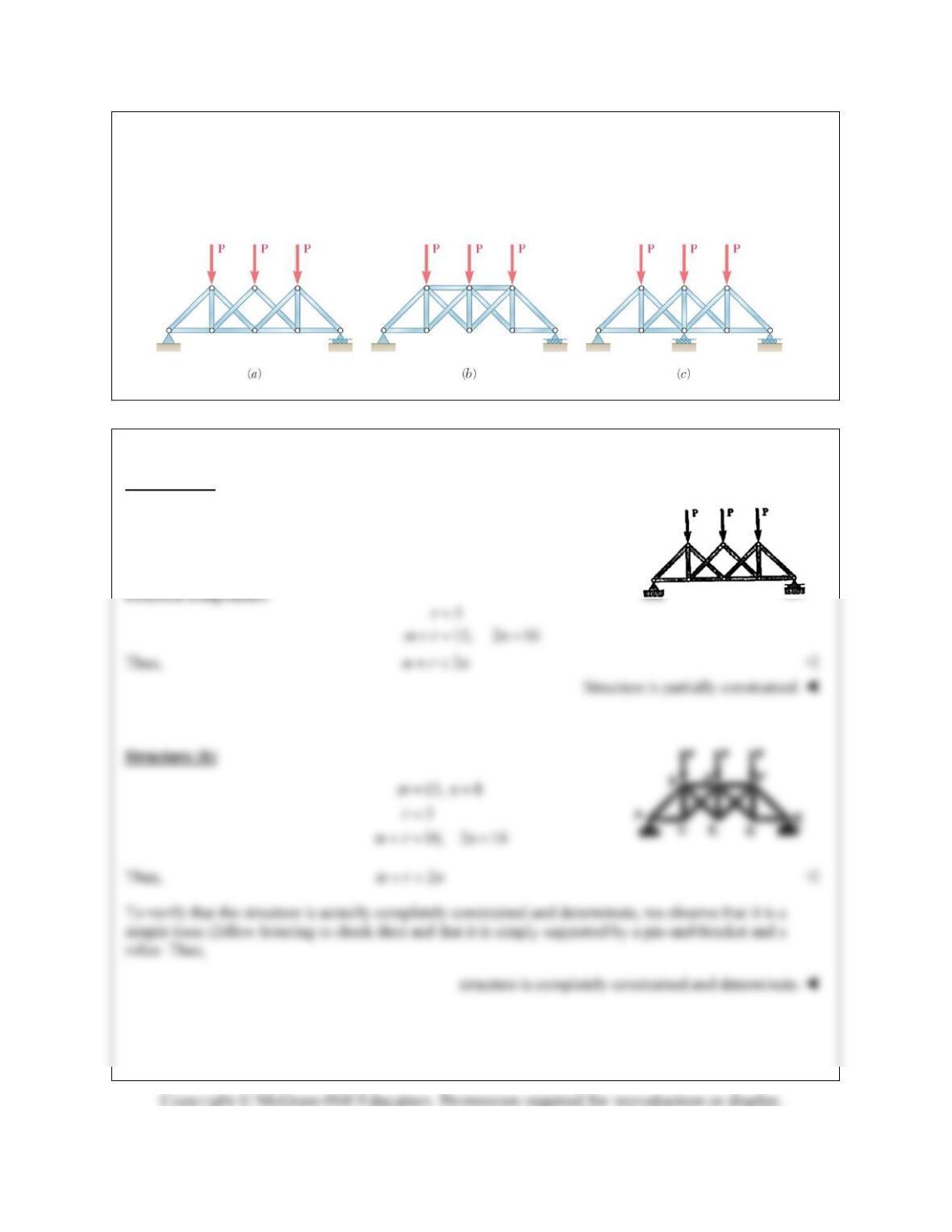
PROBLEM 6.71
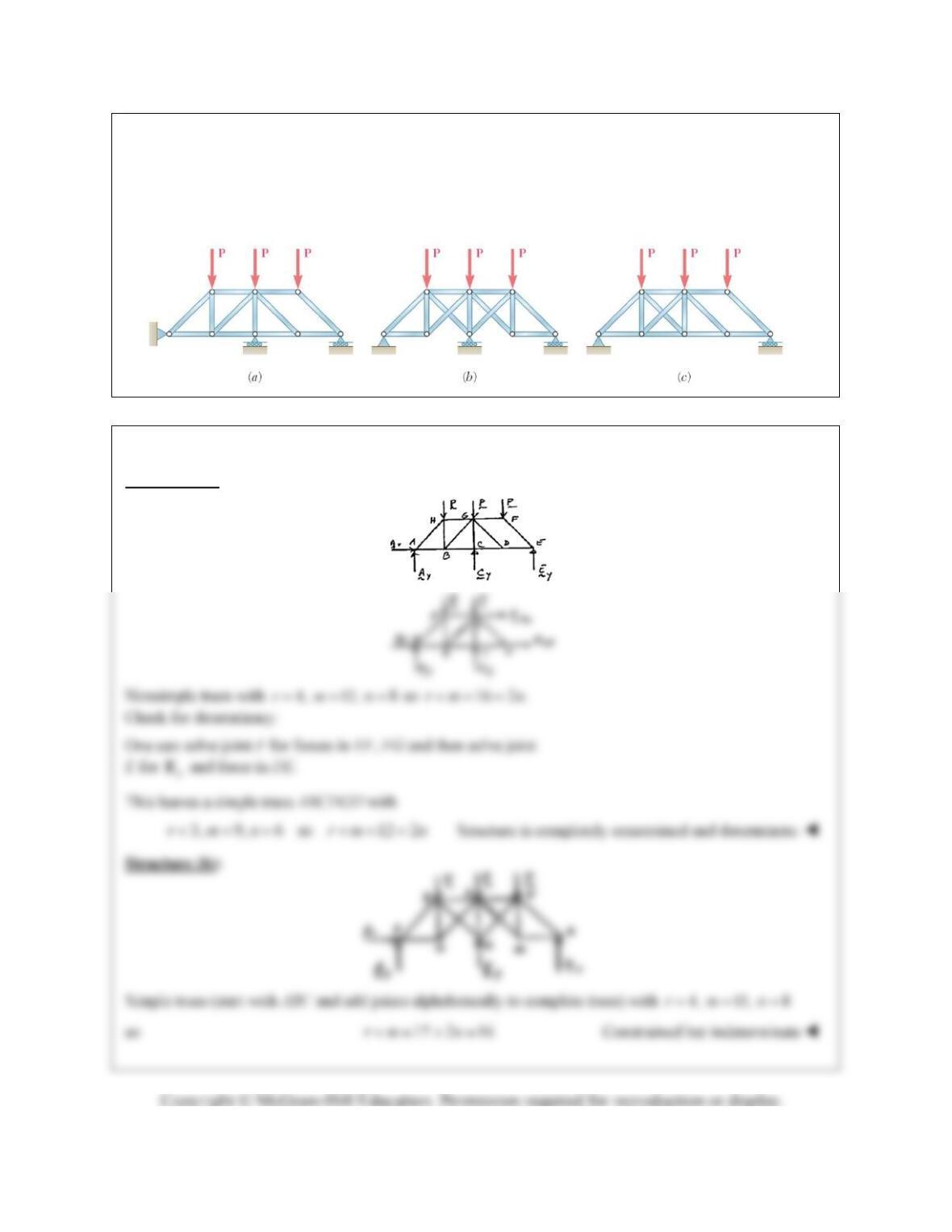
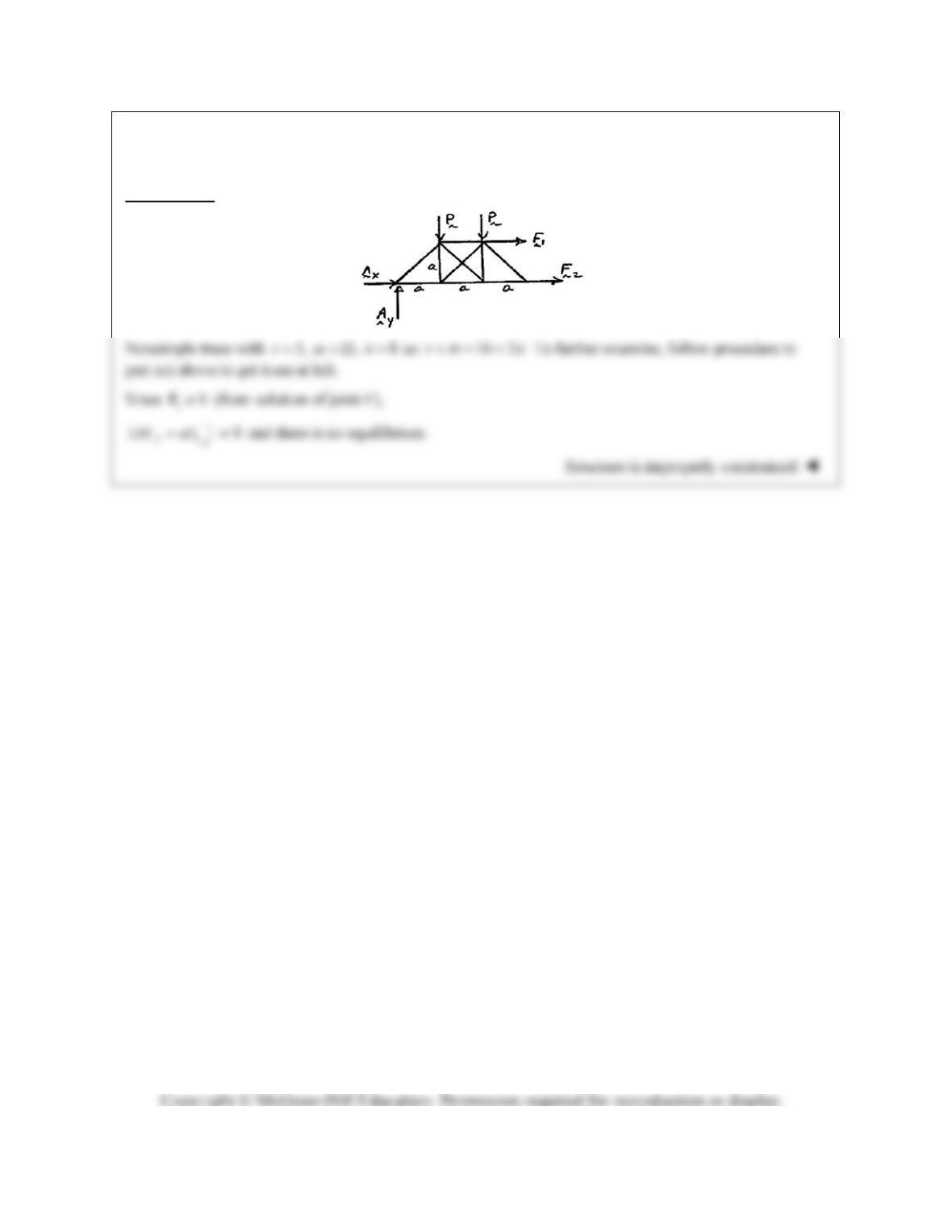
Classify each of the structures shown as completely, partially, or improperly constrained; if completely
constrained, further classify as determinate or indeterminate. (All members can act both in tension and in
compression.)
SOLUTION
Structure (a):
PROBLEM 6.71 (Continued)
Structure (c):
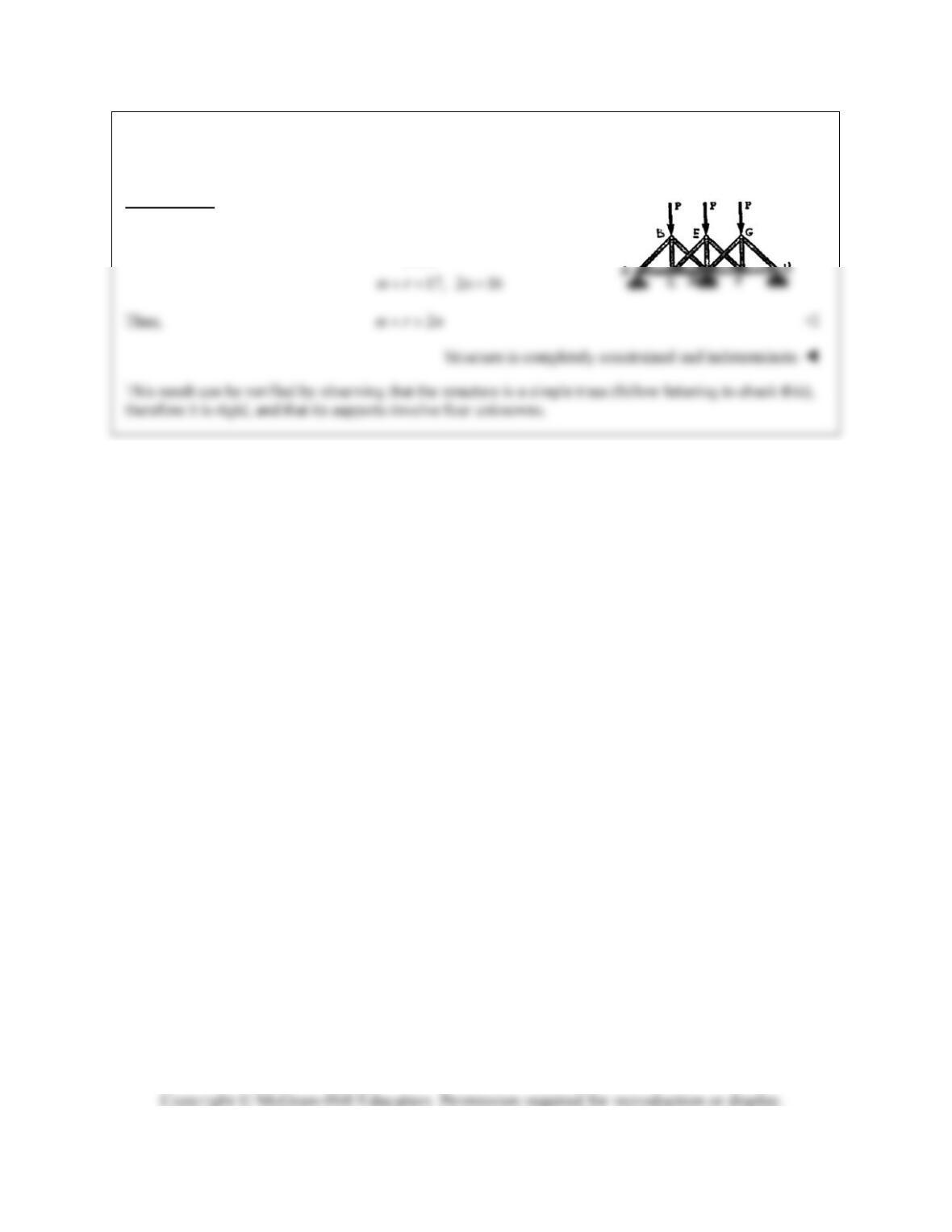
PROBLEM 6.72
Classify each of the structures shown as completely, partially, or improperly constrained; if completely
constrained, further classify as determinate or indeterminate. (All members can act both in tension and in
compression.)
SOLUTION
Structure (a)
Number of members:
12m
Number of joints:
8n
PROBLEM 6.72 (Continued)
Structure (c)
13, 8
4
mn
r
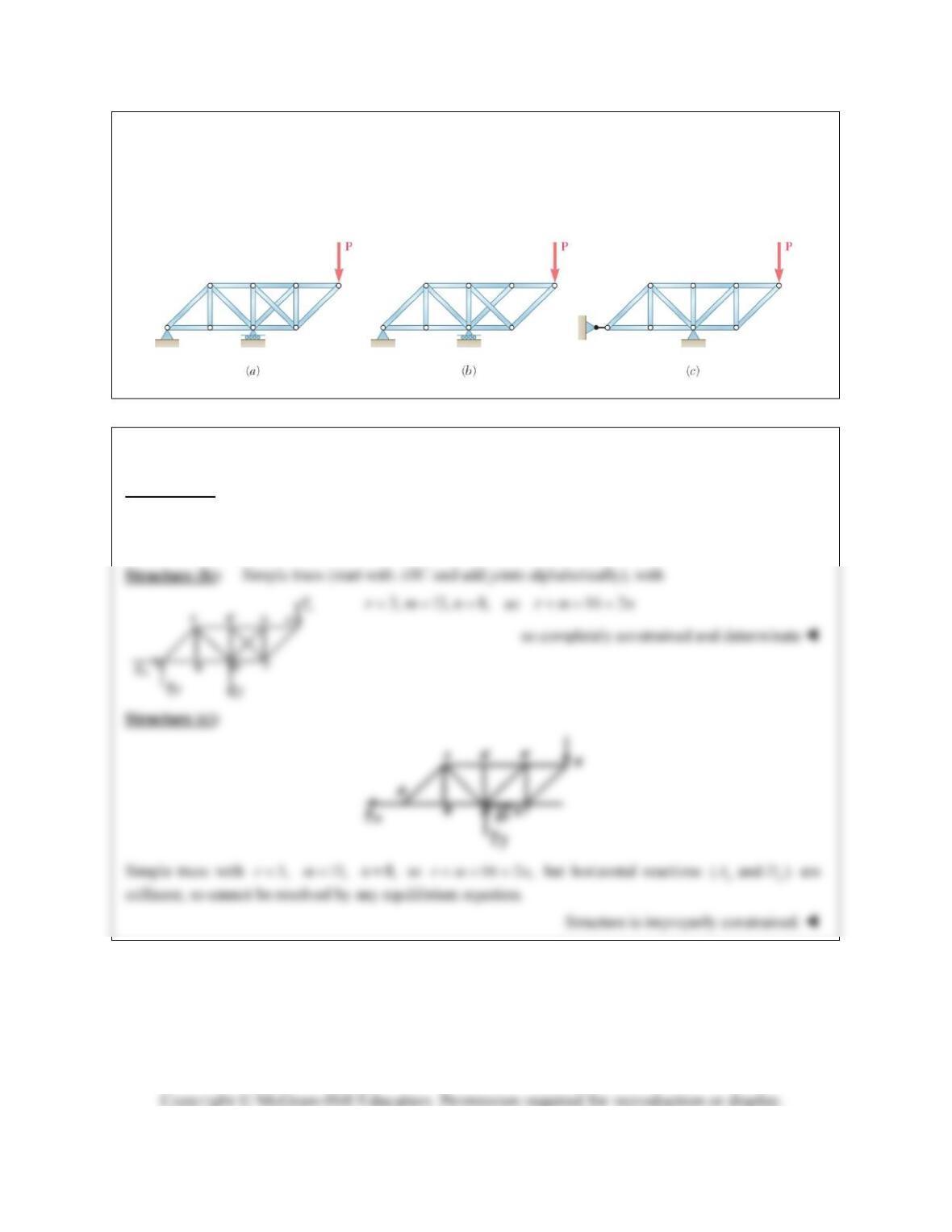
PROBLEM 6.73
Classify each of the structures shown as completely, partially, or improperly constrained; if completely
constrained, further classify as determinate or indeterminate. (All members can act both in tension and in
compression.)
SOLUTION
Structure (a):
Rigid truss with
3,r
14,m
8,n
so
17 2 16rm n
so completely constrained but indeterminate
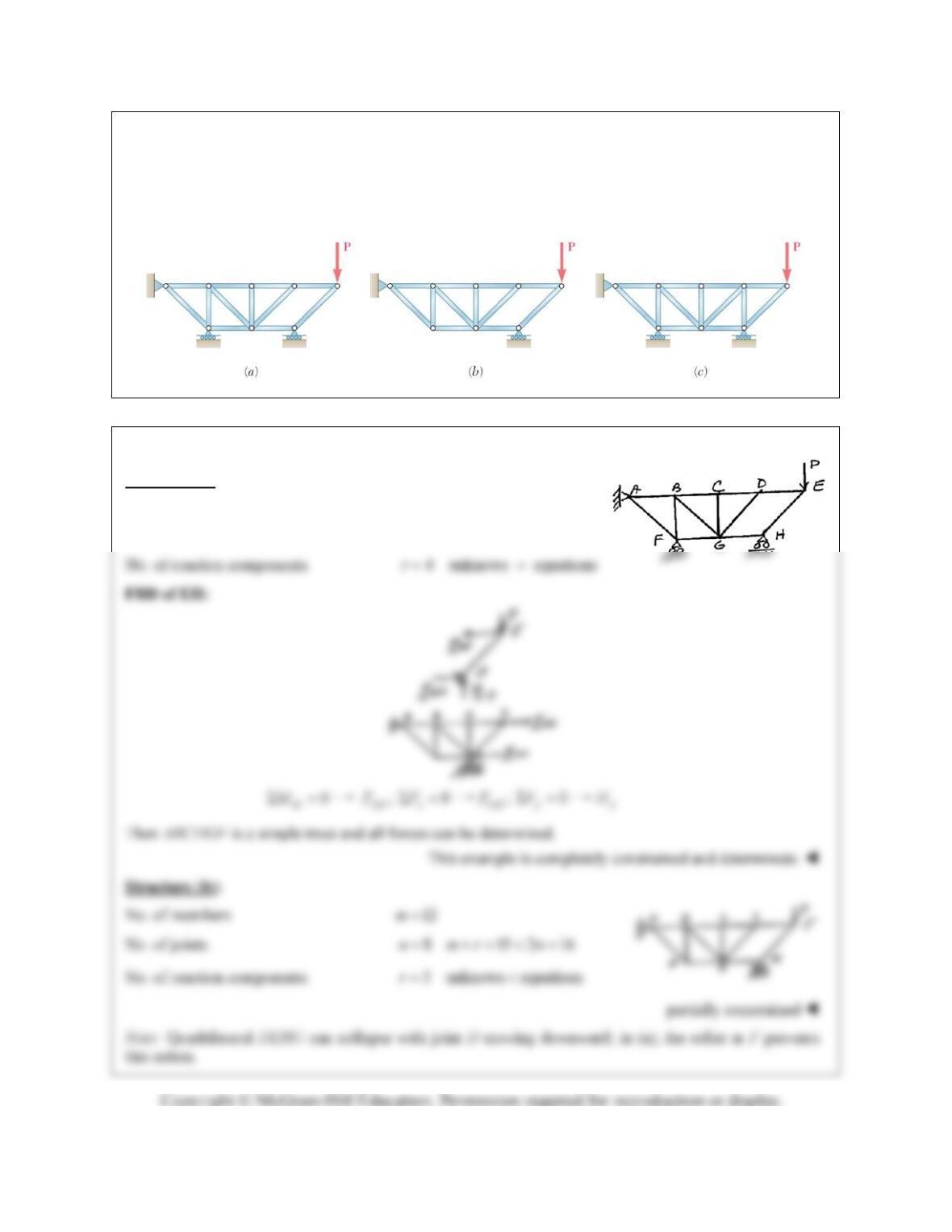
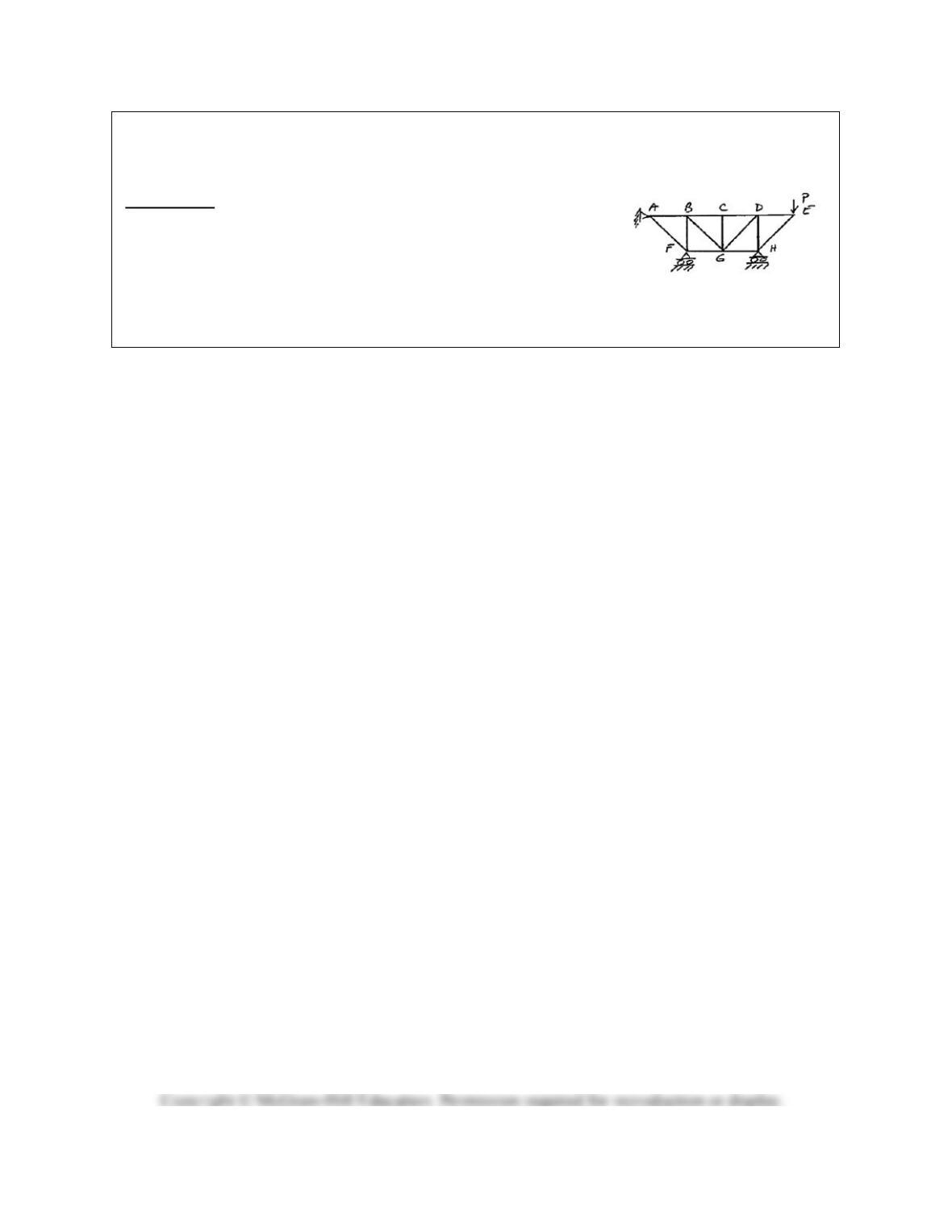
PROBLEM 6.74
Classify each of the structures shown as completely, partially, or improperly constrained; if completely
constrained, further classify as determinate or indeterminate. (All members can act both in tension and in
compression.)
SOLUTION
Structure (a):
No. of members
12m
No. of joints
8162nmr n
PROBLEM 6.74 (Continued)
Structure (c):
No. of members
13m
No. of joints
817216nmr n
No. of reaction components
4 unknows equationsr
completely constrained but indeterminate
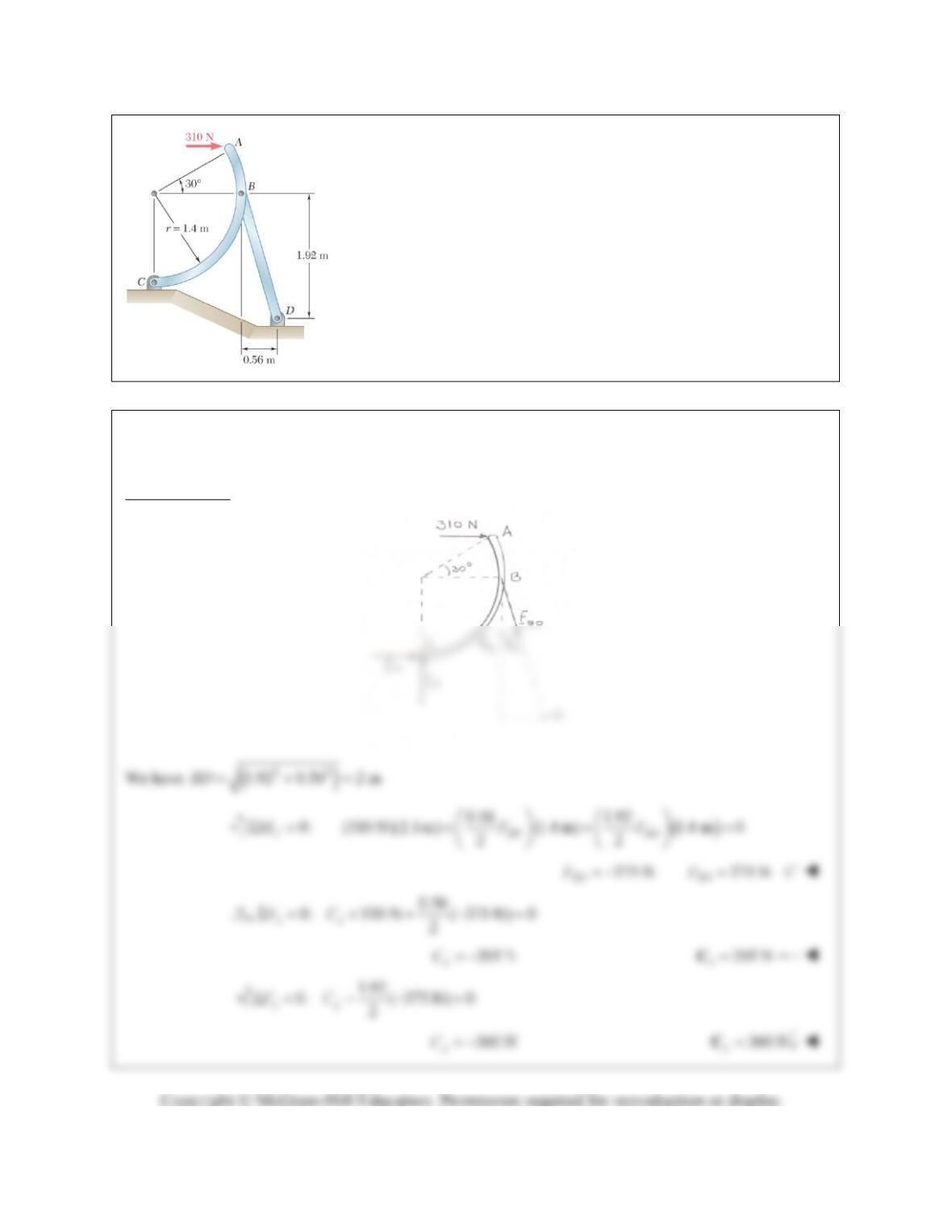
PROBLEM 6.75
Determine the force in member BD and the components of the reaction
at C.
SOLUTION
We note that BD is a two-force member. The force it exerts on ABC, therefore, is directed along line BD.
Free body: ABC:
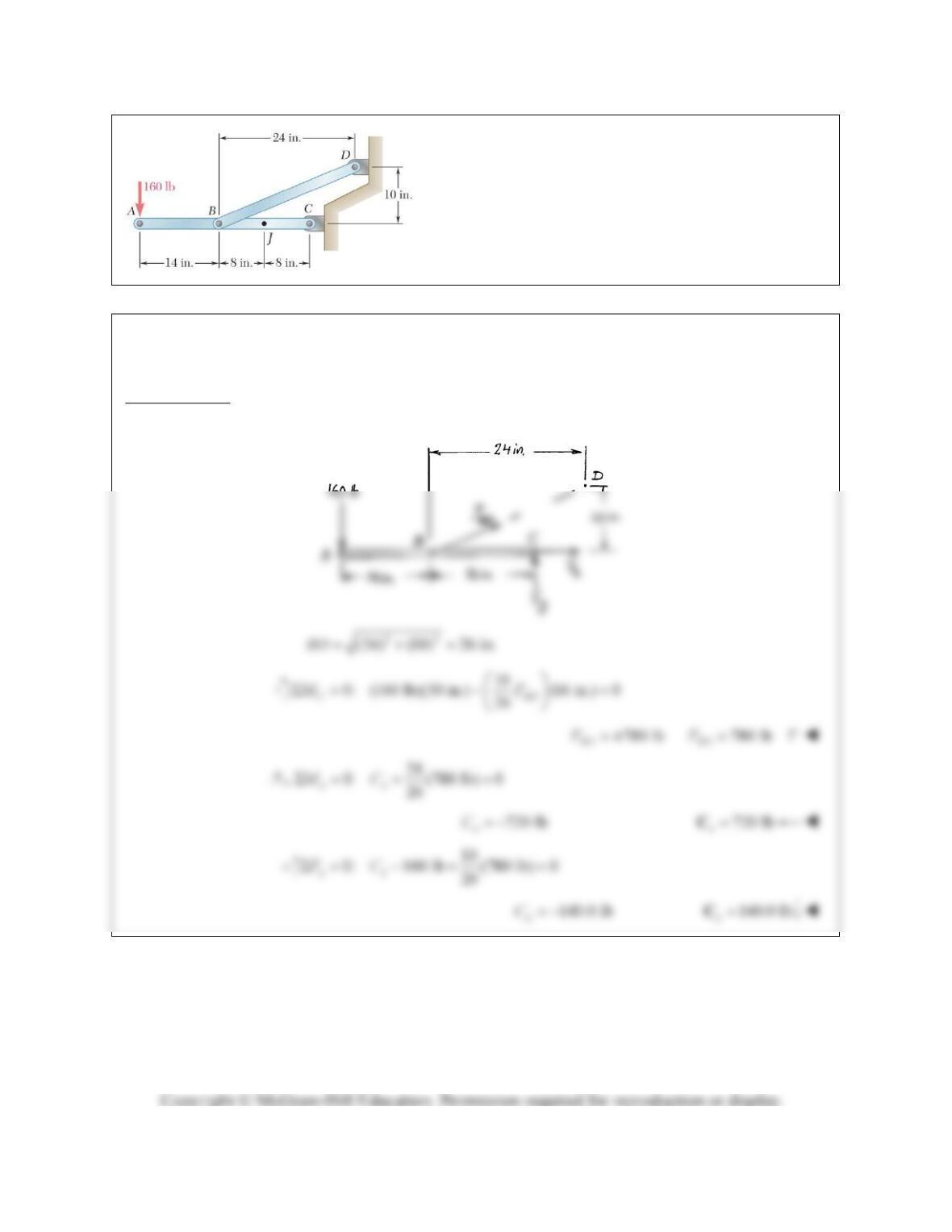
PROBLEM 6.76
Determine the force in member BD and the components
of the reaction at C.
SOLUTION
We note that BD is a two-force member. The force it exerts on ABC, therefore, is directed along line BD.
Free body: ABC:
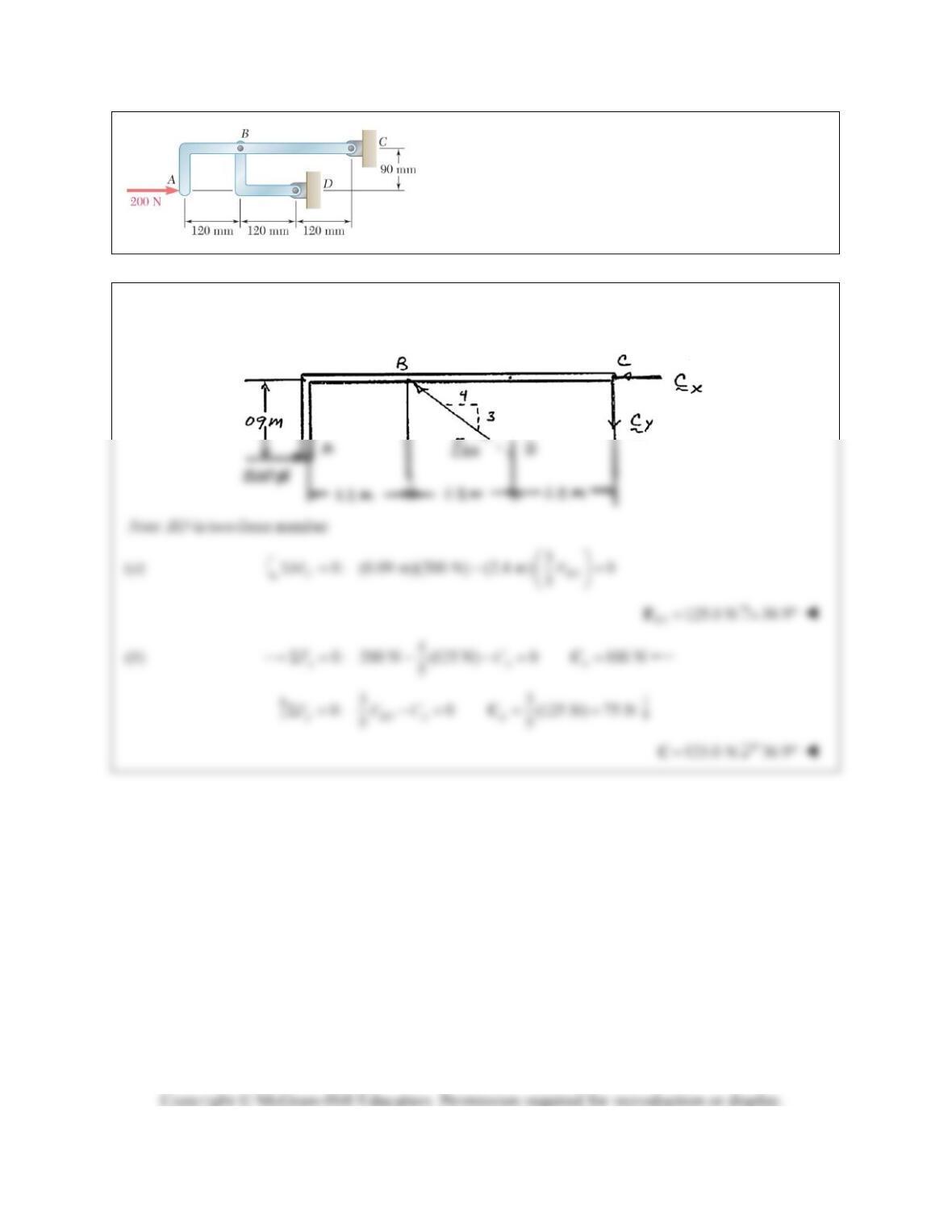
PROBLEM 6.77
For the frame and loading shown, determine the force
acting on member ABC (a) at B, (b) at C.
SOLUTION
FBD ABC: