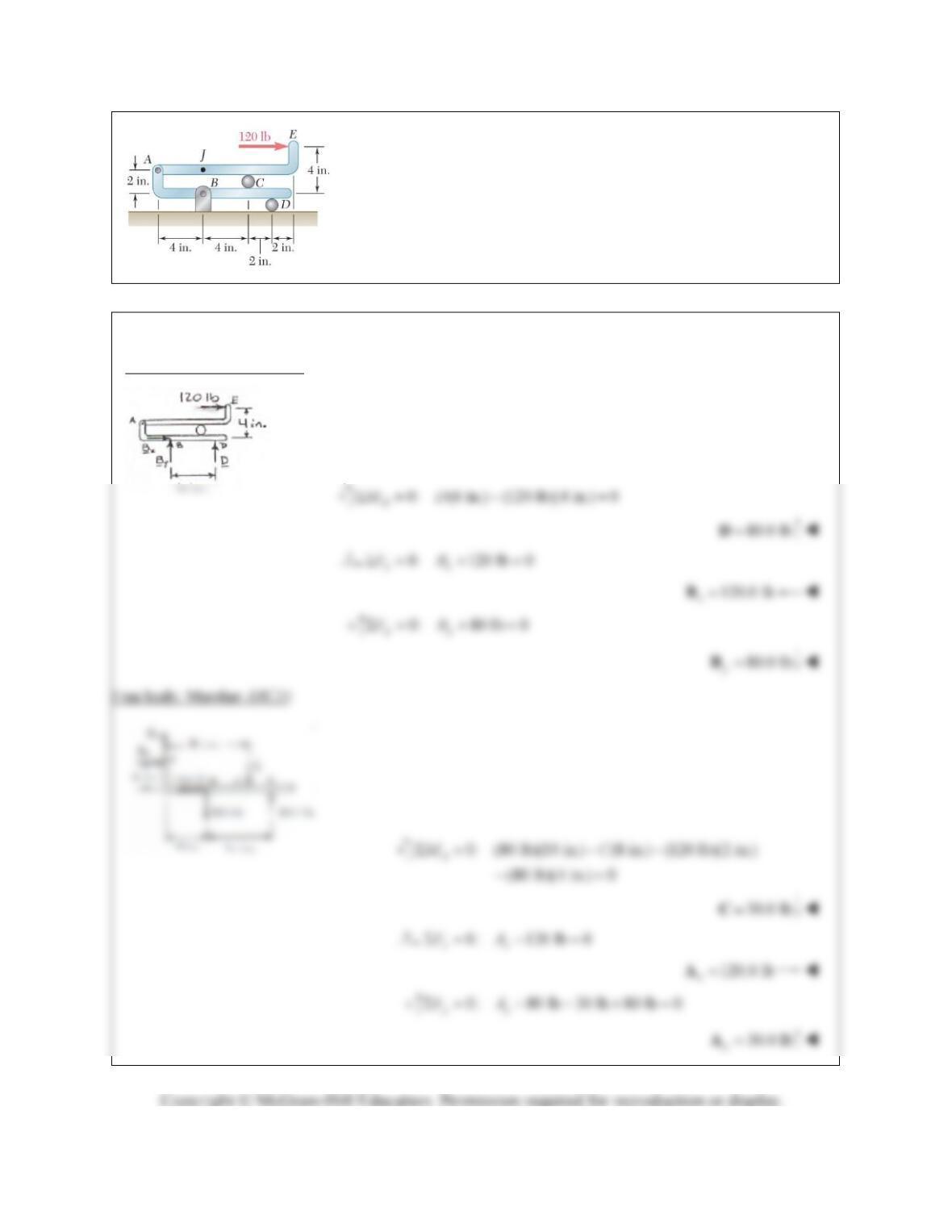
PROBLEM 6.78
Determine the components of all forces acting on member ABCD of
the assembly shown.
SOLUTION
Free body: Entire assembly:
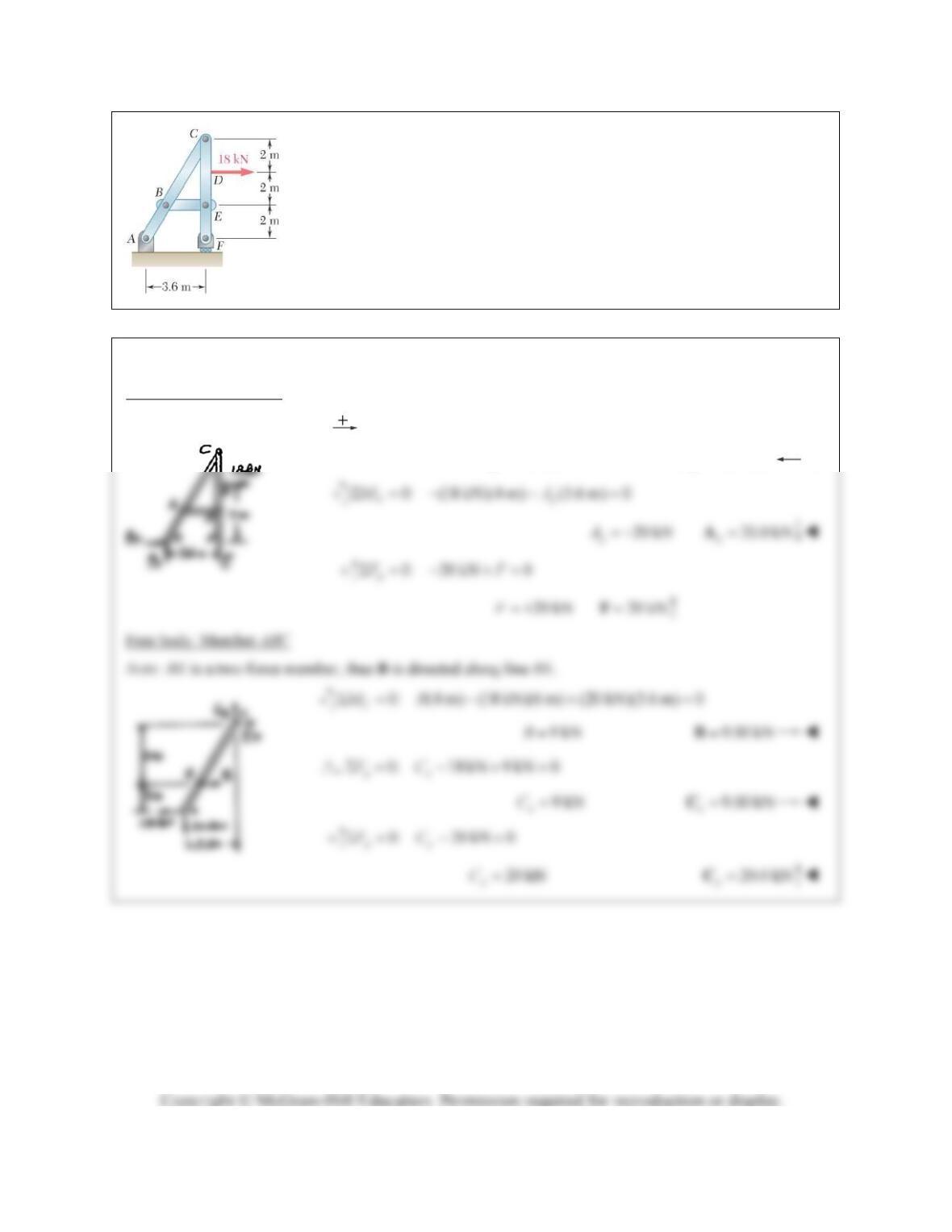
PROBLEM 6.79
For the frame and loading shown, determine the components of all forces
acting on member ABC.
SOLUTION
Free body: Entire frame:
0: 18 kN 0
xx
FA
18 kN
x
A 18.00 kN
x
A
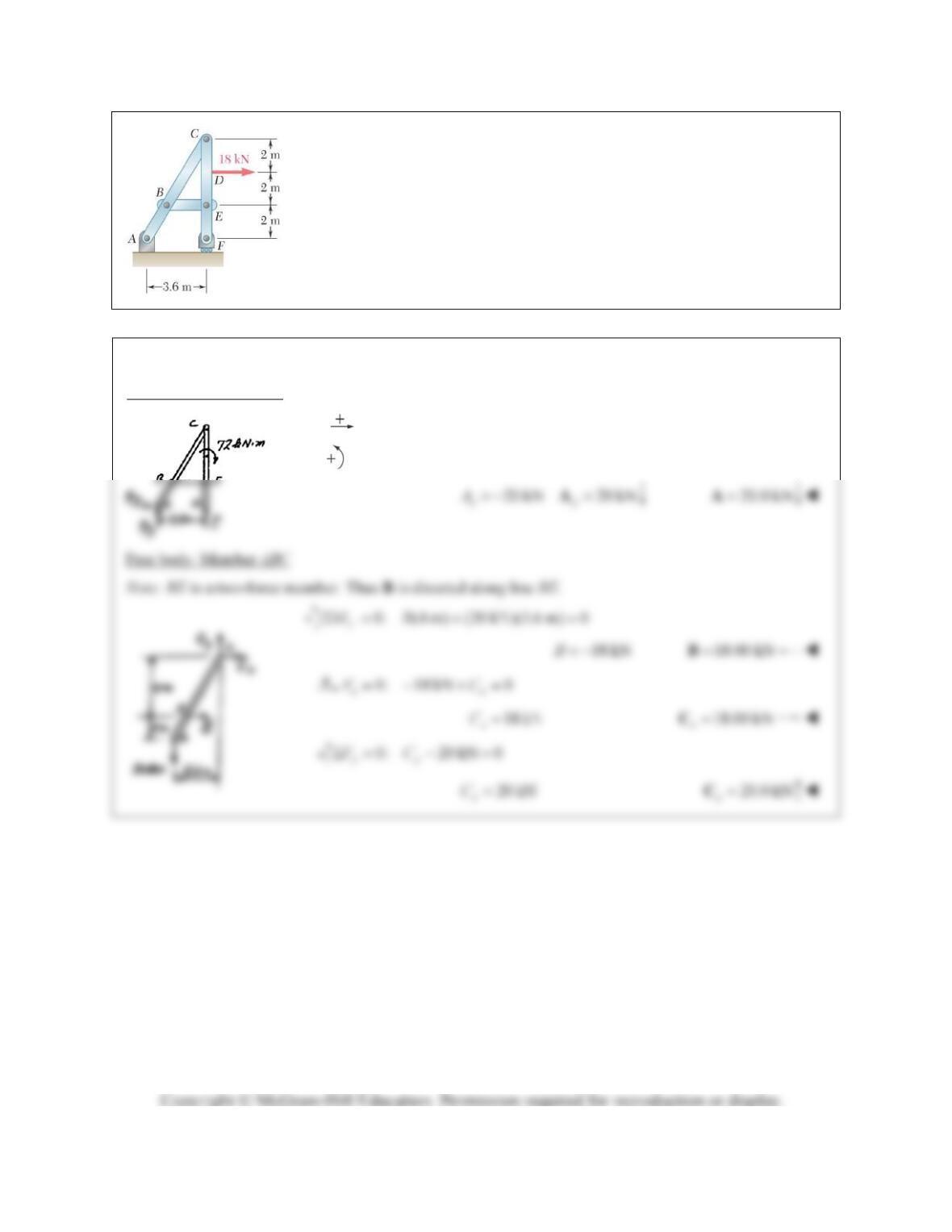
PROBLEM 6.80
Solve Problem 6.79 assuming that the 18-kN load is replaced by a clockwise
couple of magnitude 72 kN · m applied to member CDEF at Point D.
PROBLEM 6.79
For the frame and loading shown, determine the
components of all forces acting on member ABC.
SOLUTION
Free body: Entire frame
0: 0
xx
FA
0: 72 kN m (3.6 m) 0
Fy
MA
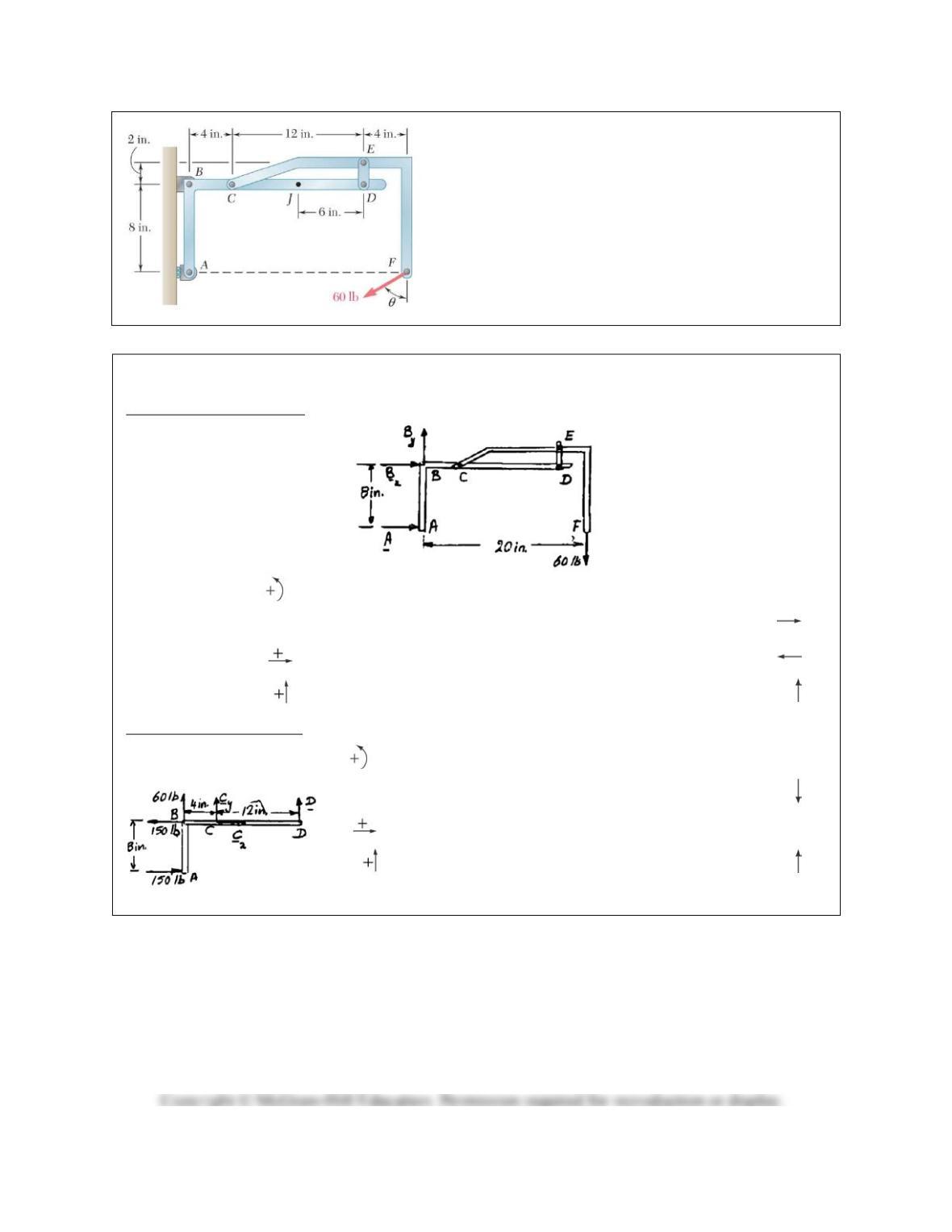
PROBLEM 6.81
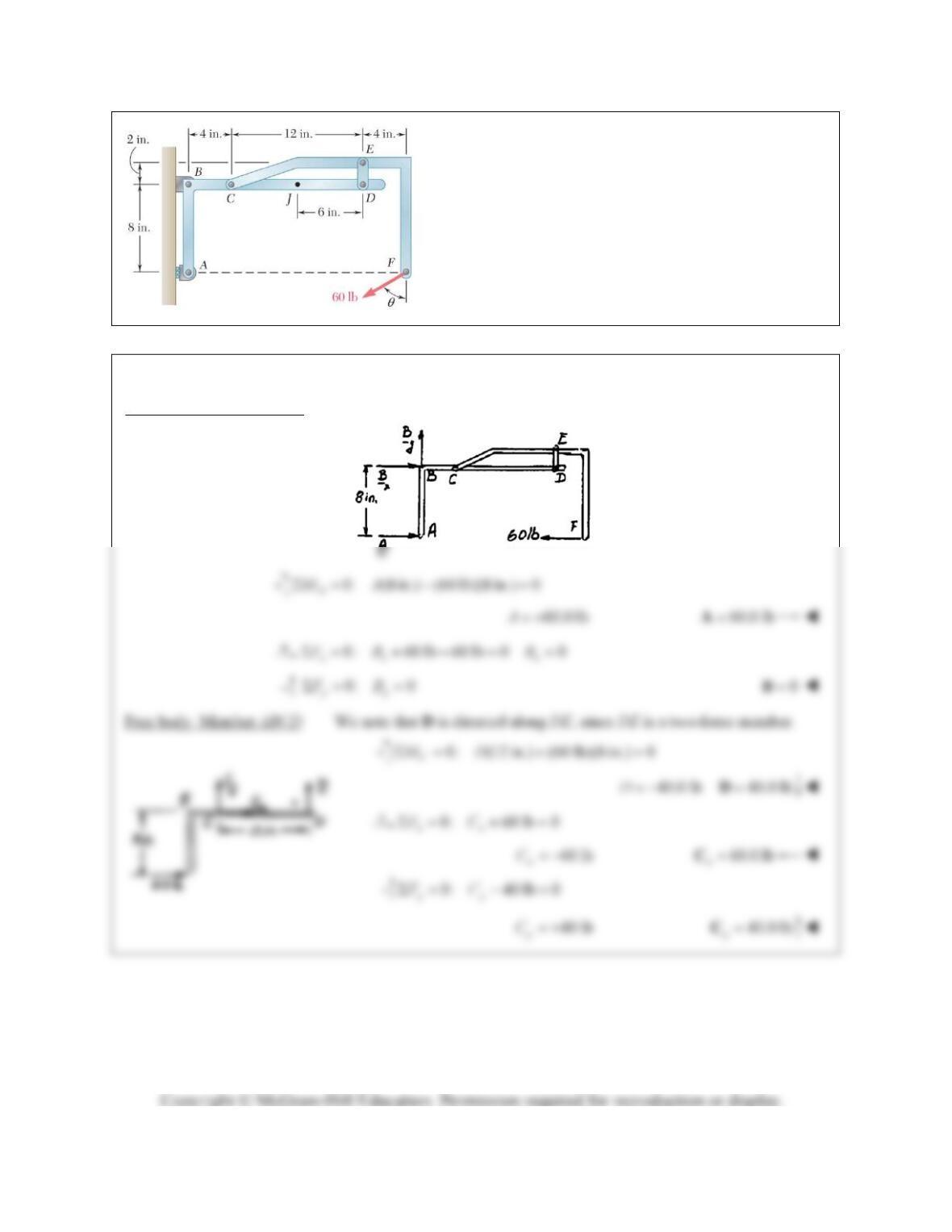
Determine the components of all forces acting on member
ABCD when
0.
SOLUTION
Free body: Entire assembly
0: (8 in.) (60 lb)(20 in.) 0
B
MA
150 lbA
150.0 lbA
0: 150.0 lb 0 150 lb
xx x
FB B
150.0 lb
x
B
0: 60.0 lb 0 60.0 lb
yy y
FB B
60.0 lb
y
B
Free body: Member ABCD We note that
D
is directed along DE, since DE is a two-force member.
0: (12) (60 lb)(4) (150 lb)(8) 0
C
MD
80 lbD
80.0 lbD
0: 150.0 150.0 0 0
xx x
FC C
0: 60.0 80.0 0 20.0 lb
yy y
FC C
20.0 lbC
PROBLEM 6.82
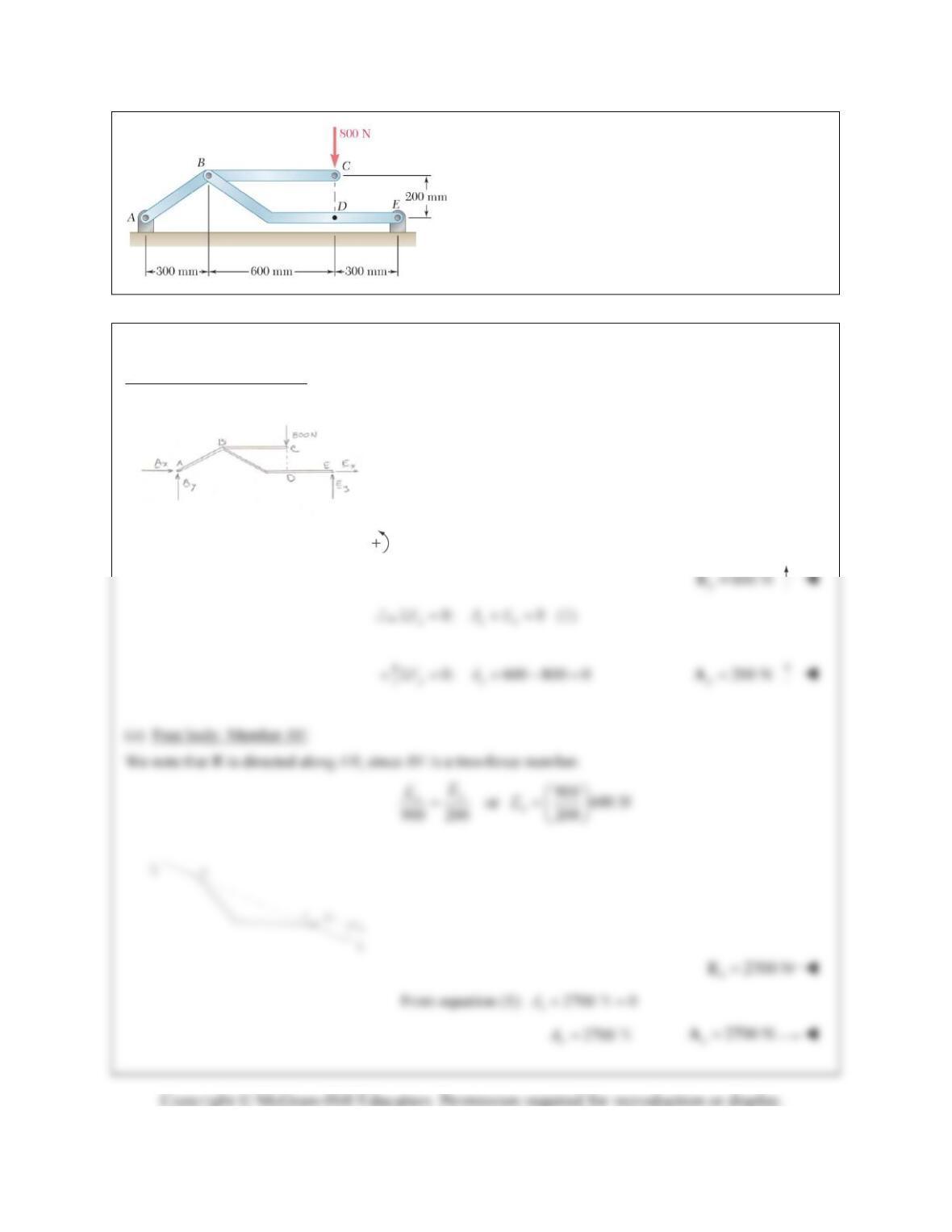
Determine the components of all forces acting on member
ABCD when
90 .
SOLUTION
Free body: Entire assembly
PROBLEM 6.83
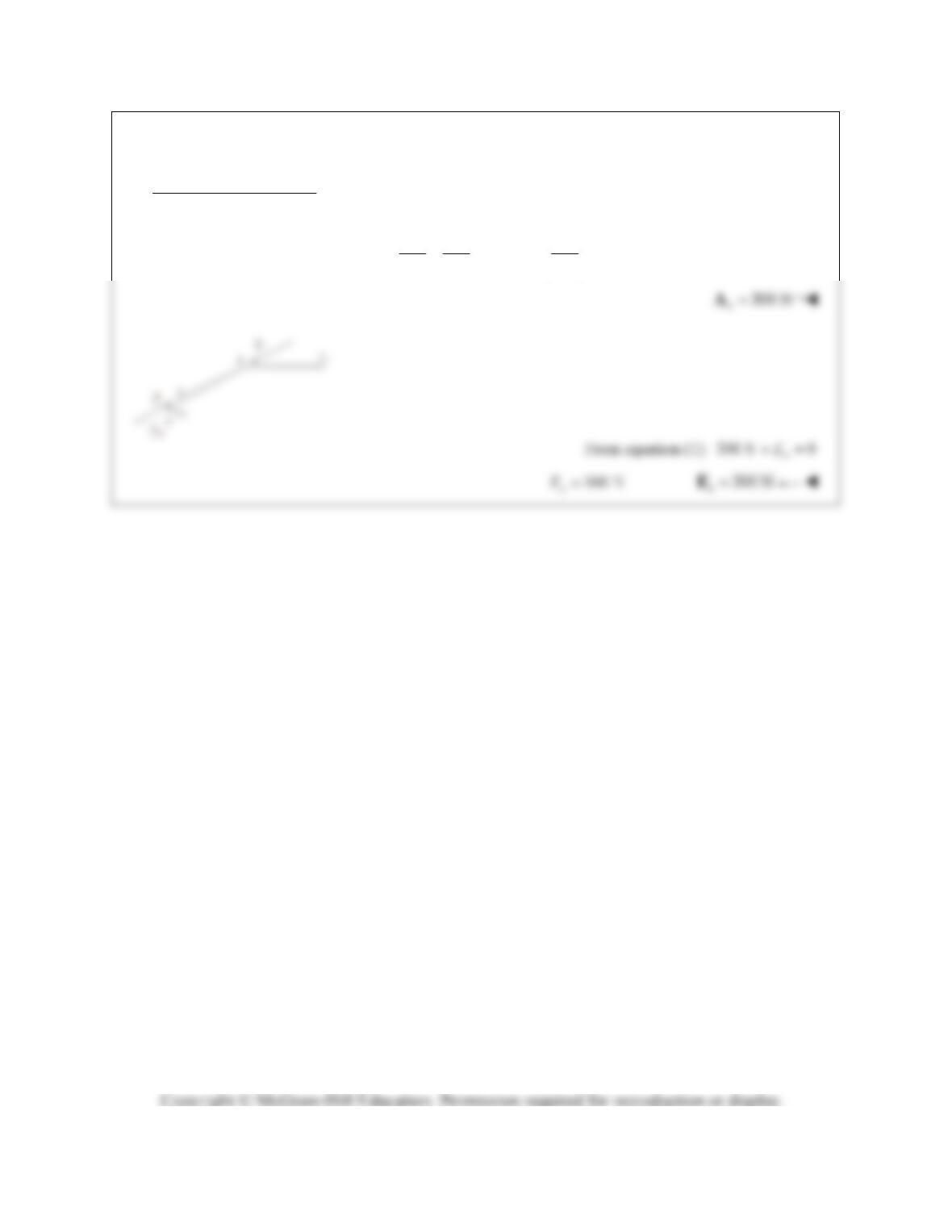
Determine the components of the reactions at A and
E, (a) if the 800-N load is applied as shown, (b) if
the 800-N load is moved along its line of action and
is applied at point D.
SOLUTION
Free body: Entire assembly. The analysis is valid for either (a) or (b), since position of the 800-N force
on its line of action is immaterial.
0: (1200) (800 N)(900) 0
Ay
ME
PROBLEM 6.83 (Continued)
(b) Free body: Member ABC:
We note that
A
is directed along AB, since ABC is a two-force member.
300
or 200 N
300 200 200
y
x
x
A
AA
PROBLEM 6.84
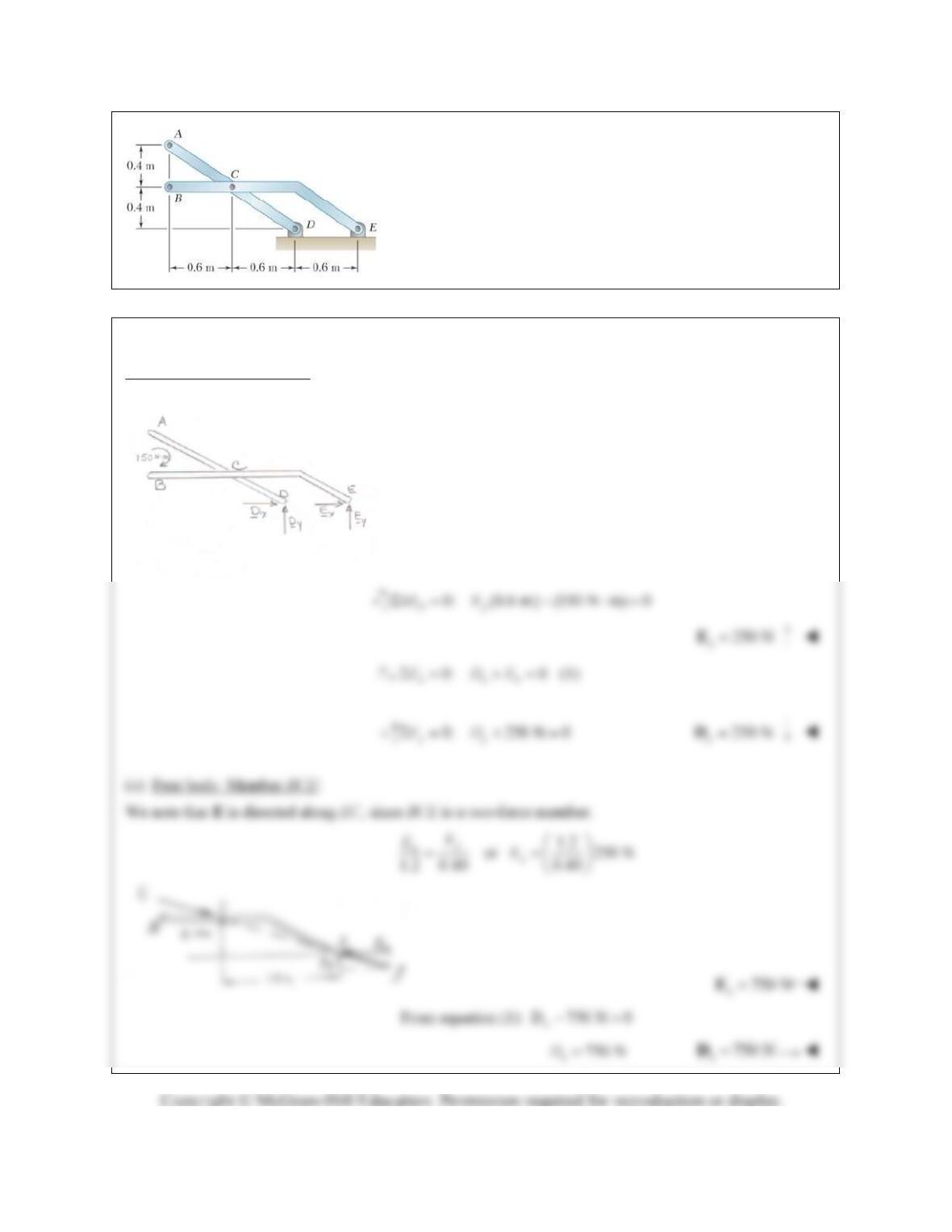
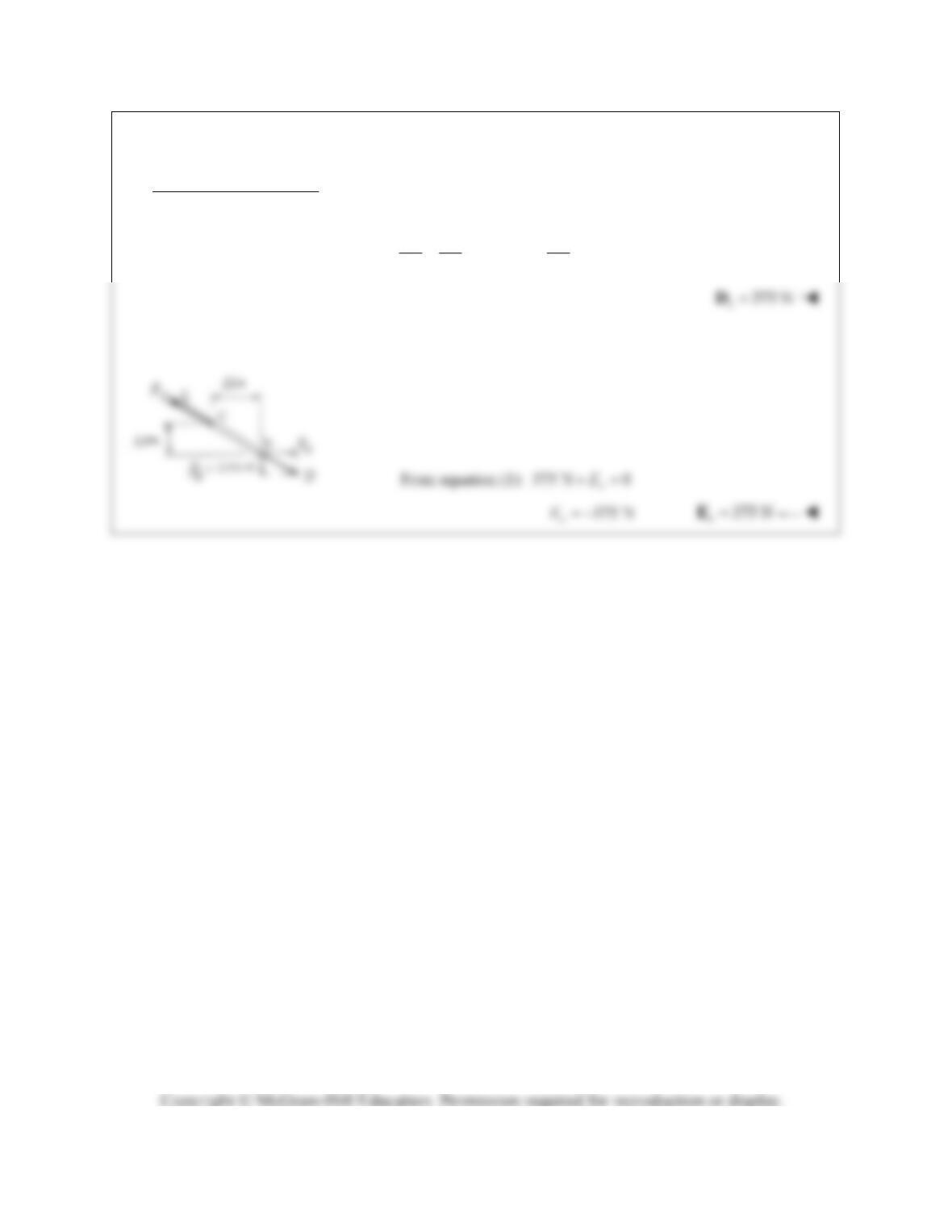
Determine the components of the reactions at D and E if the
frame is loaded by a clockwise couple of magnitude 150 N·m
applied (a) at A, (b) at B.
SOLUTION
Free body: Entire assembly. The analysis is valid for either (a) or (b), since position of the couple is
immaterial.
PROBLEM 6.84 (Continued)
(b) Free body: Member ACD:
We note that
D
is directed along DC, since ACD is a two-force member.
0.6
or D 250 N
0.6 0.4 0.4
y
x
x
D
D
PROBLEM 6.85
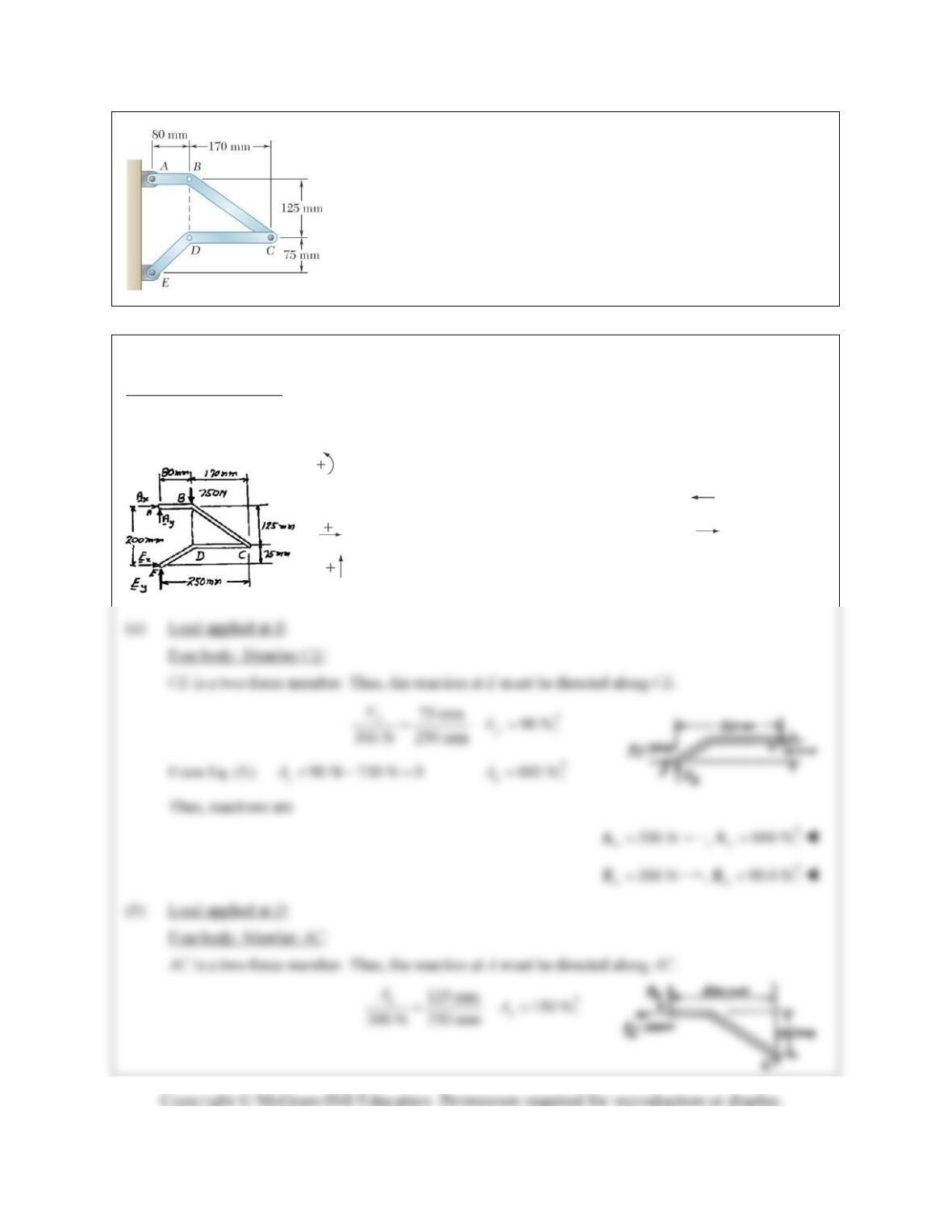
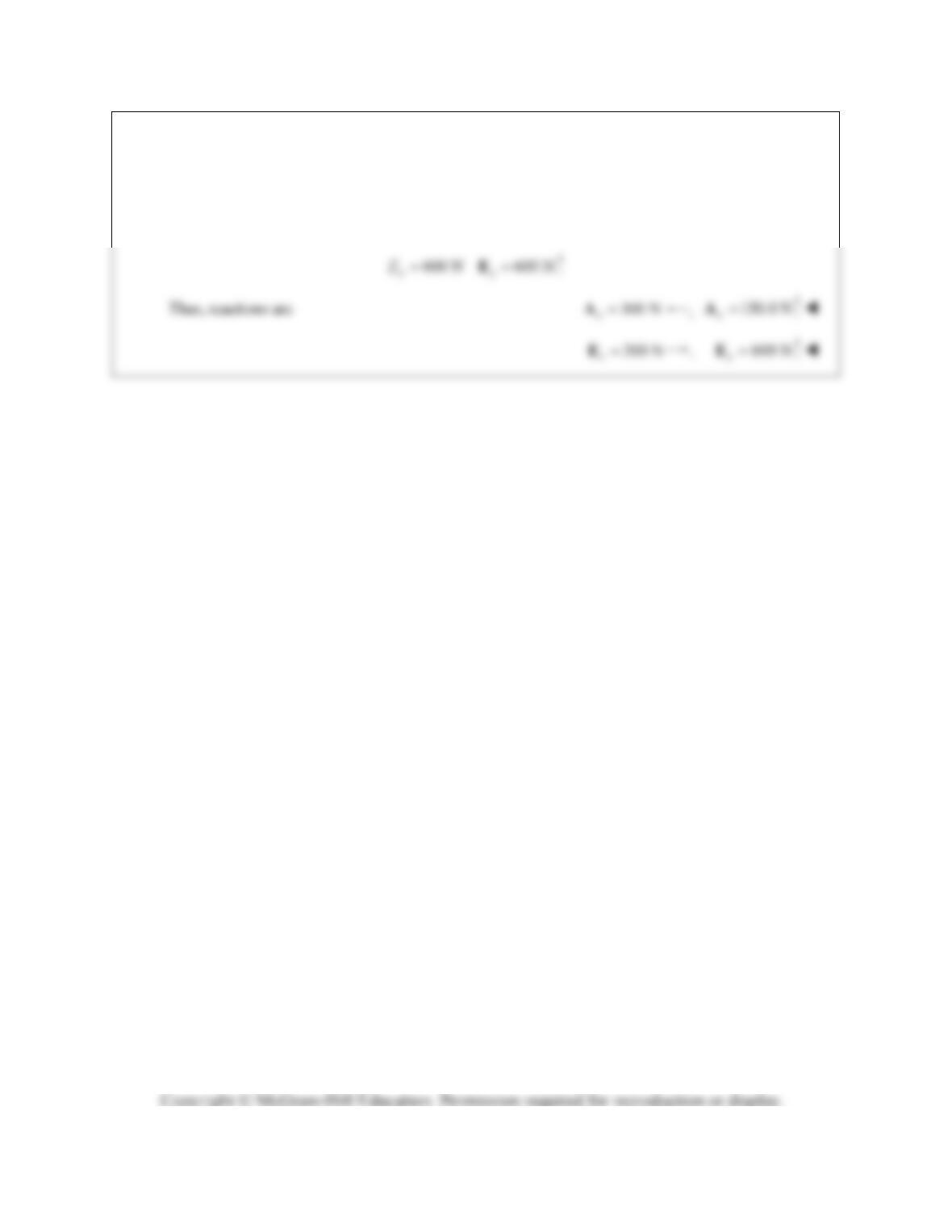
Determine the components of the reactions at A and E if a 750-N force
directed vertically downward is applied (a) at B, (b) at D.
SOLUTION
Free body: Entire frame:
The following analysis is valid for both parts (a) and (b) since position of load on its line of action is
immaterial.
0: (750 N)(80 mm) (200 mm) 0
Ex
MA
300 N 300 N
xx
A
A
0: 300 N 0 300 N 300 N
xx x x
FE E
E
0: 750 N 0
yyy
FAE
(1)
PROBLEM 6.85 (Continued)
From Eq. (1):
750 N 0
150 N 750 N 0
yy
y
AE
E
PROBLEM 6.86
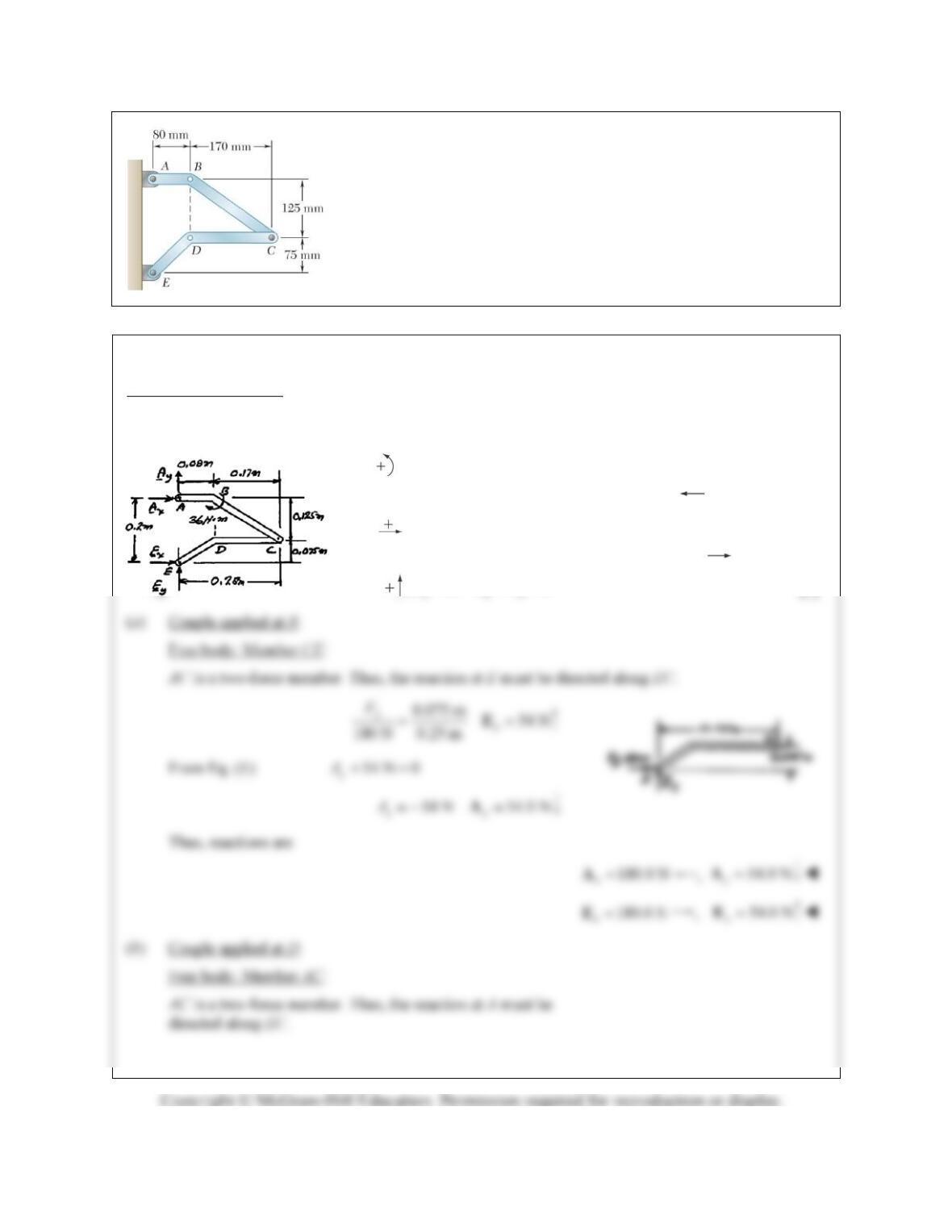
Determine the components of the reactions at A and E if the frame is
loaded by a clockwise couple of magnitude 36 N · m applied (a) at B,
(b) at D.
SOLUTION
Free body: Entire frame:
The following analysis is valid for both parts (a) and (b) since the point of application of the couple is
immaterial.
0: 36 N m (0.2 m) 0
Ex
MA
180 N 180 N
xx
A
A
0: 180 N + 0
xx
FE
180 N 180 N
E
xx
E
0: 0
FAE
PROBLEM 6.86 (Continued)
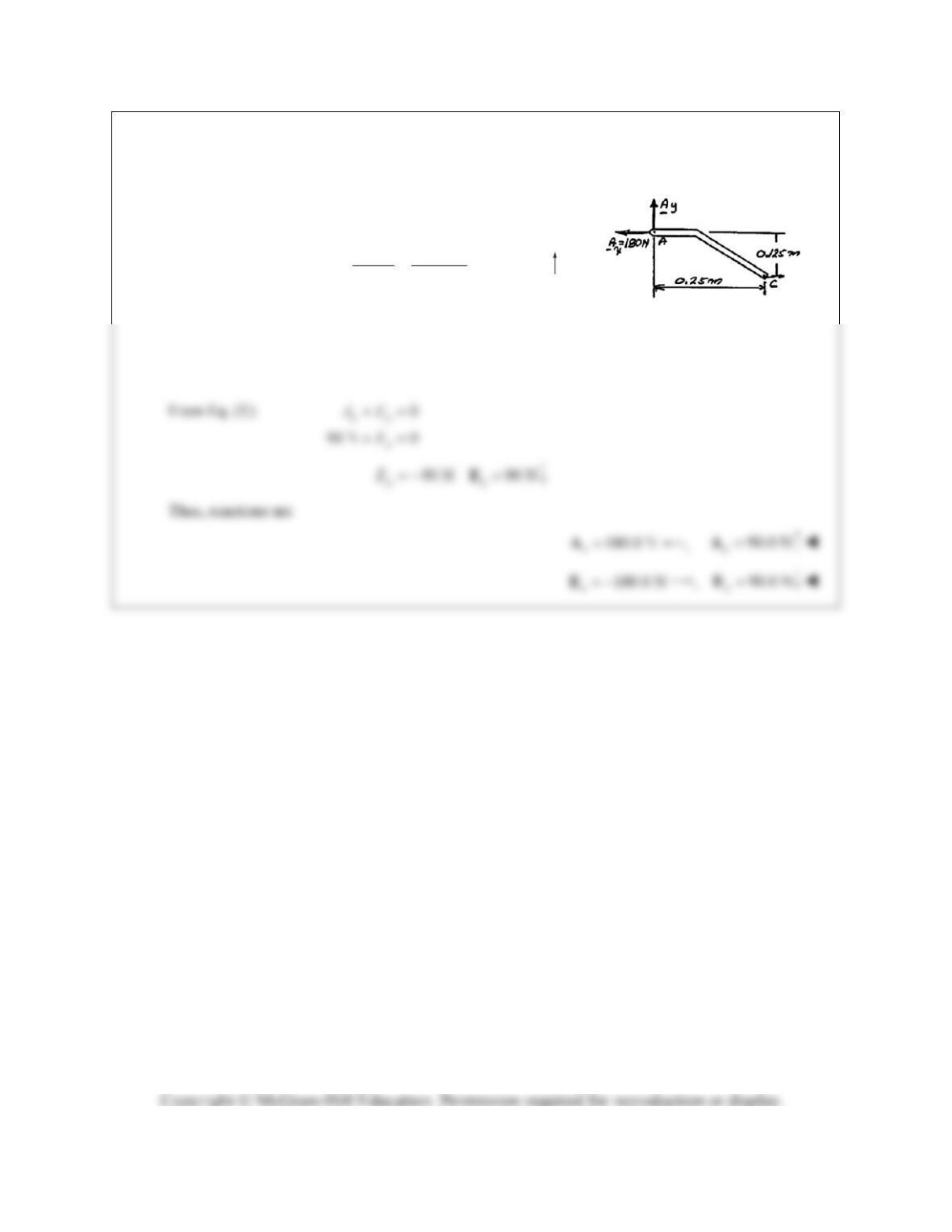
0.125 m 90 N
180 N 0.25 m
y
y
AA
PROBLEM 6.87
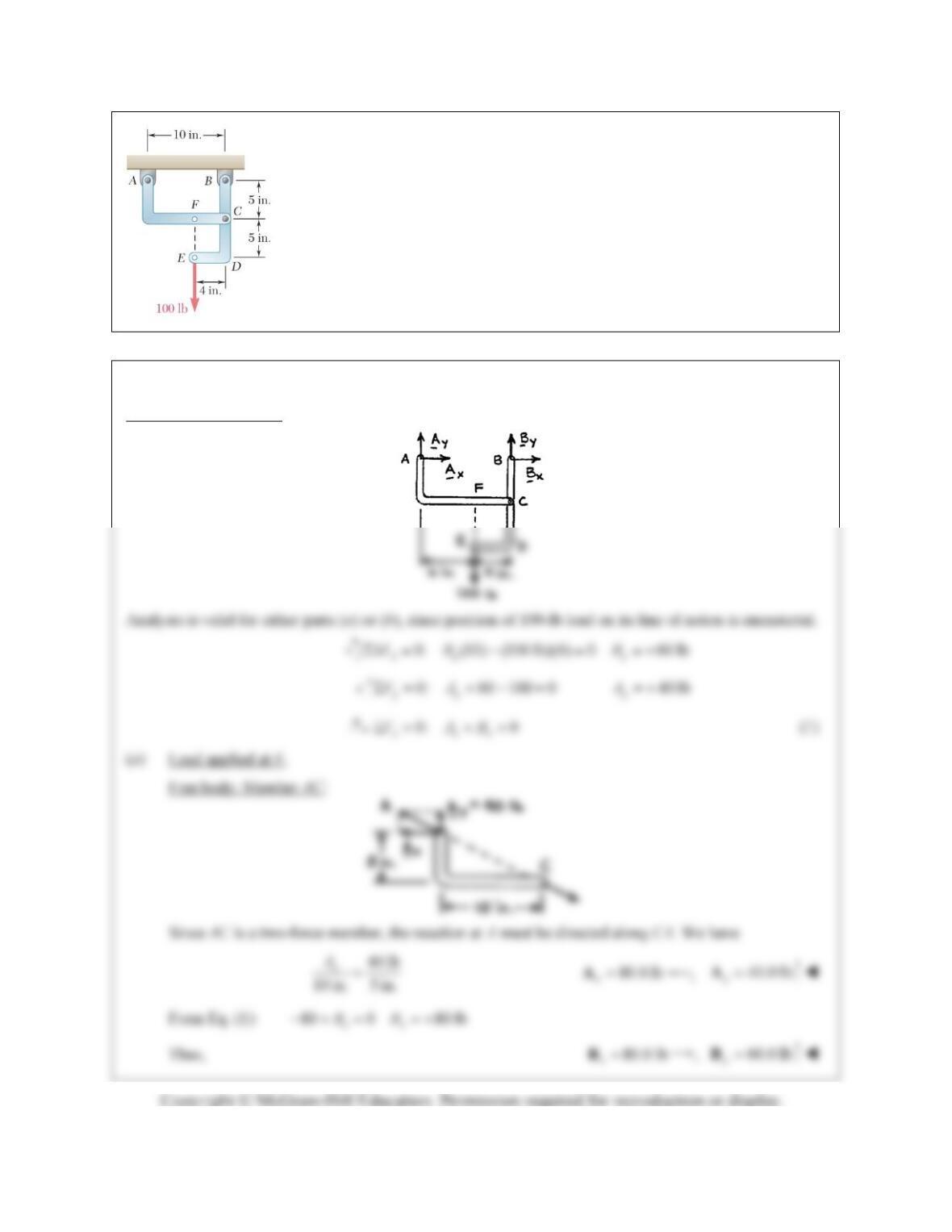
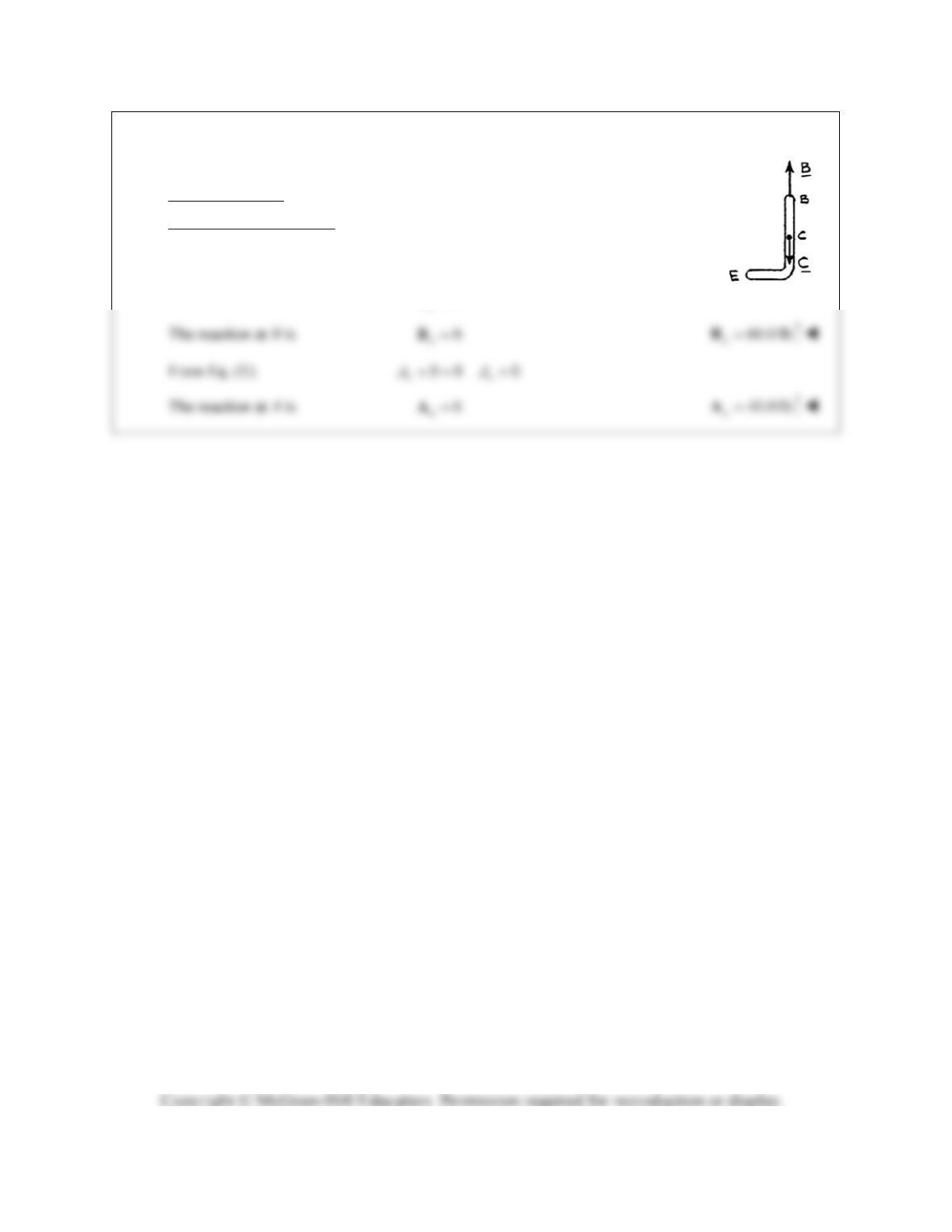
Determine the components of the reactions at A and B, (a) if the 500-N load is
applied as shown, (b) if the 500-N load is moved along its line of action and is
applied at Point F.
SOLUTION
Free body: Entire frame:
PROBLEM 6.87 (Continued)
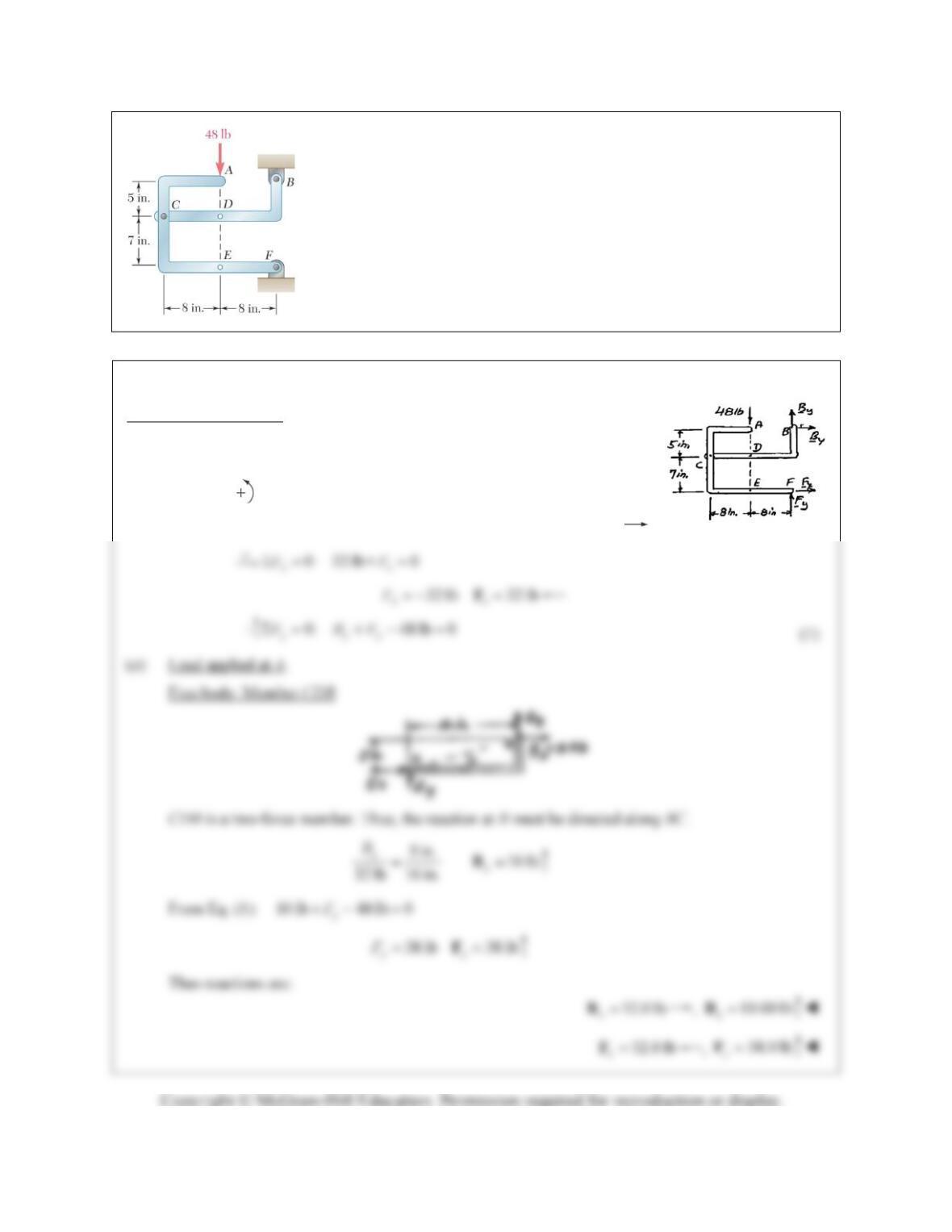
(b) Load applied at F.
Free body: Member BCD:
Since BCD is a two-force member (with forces applied at B and C only),
the reaction at B must be directed along CB. We have, therefore,
0
x
B
PROBLEM 6.88
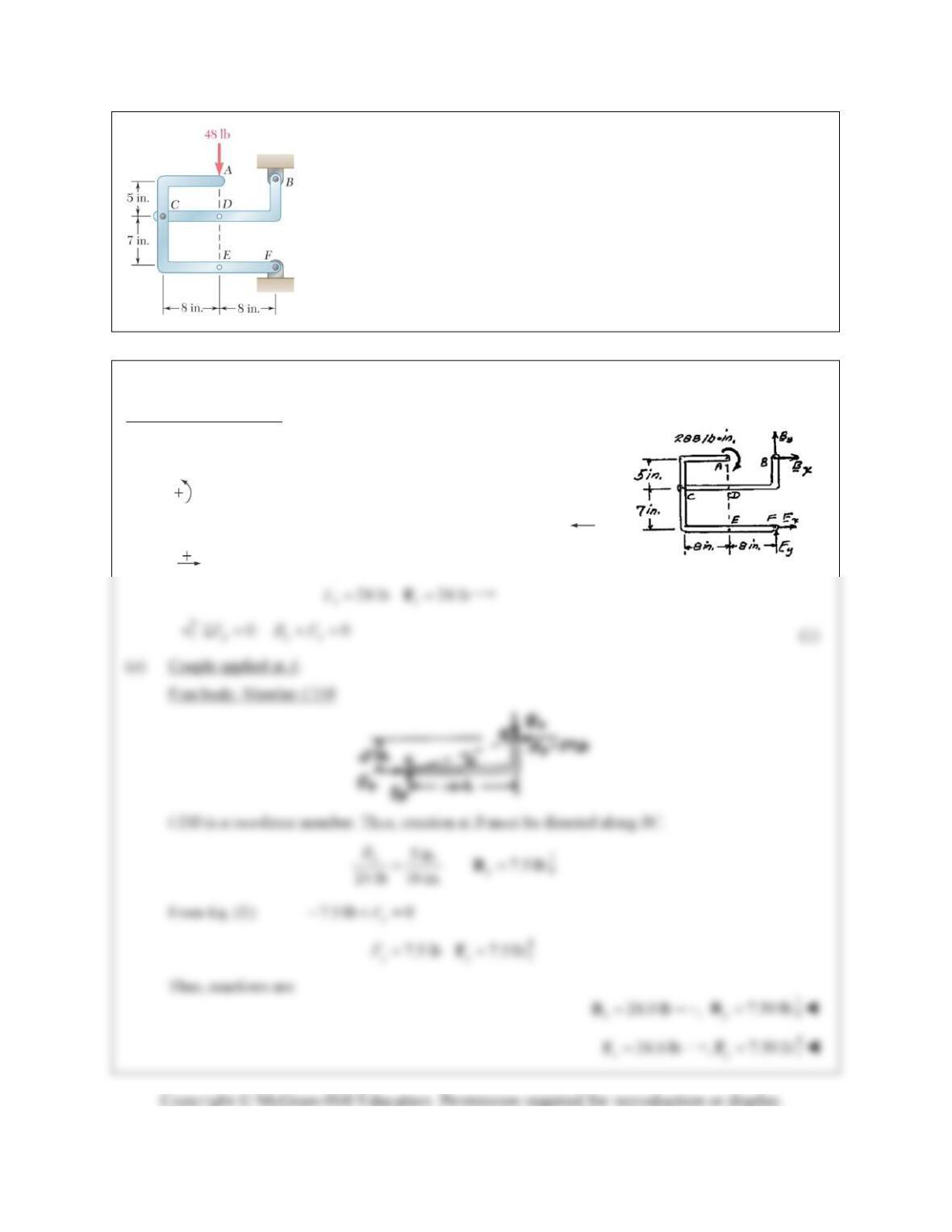
The 48-lb load can be moved along the line of action shown and applied at
A, D, or E. Determine the components of the reactions at B and F if the
48-lb load is applied (a) at A, (b) at D, (c) at E.
SOLUTION
Free body: Entire frame
The following analysis is valid for (a), (b) and (c) since the position of the load
along its line of action is immaterial.
0: (48lb)(8 in.) (12 in.) 0
Fx
MB
32 lb 32 lb
xx
B
B
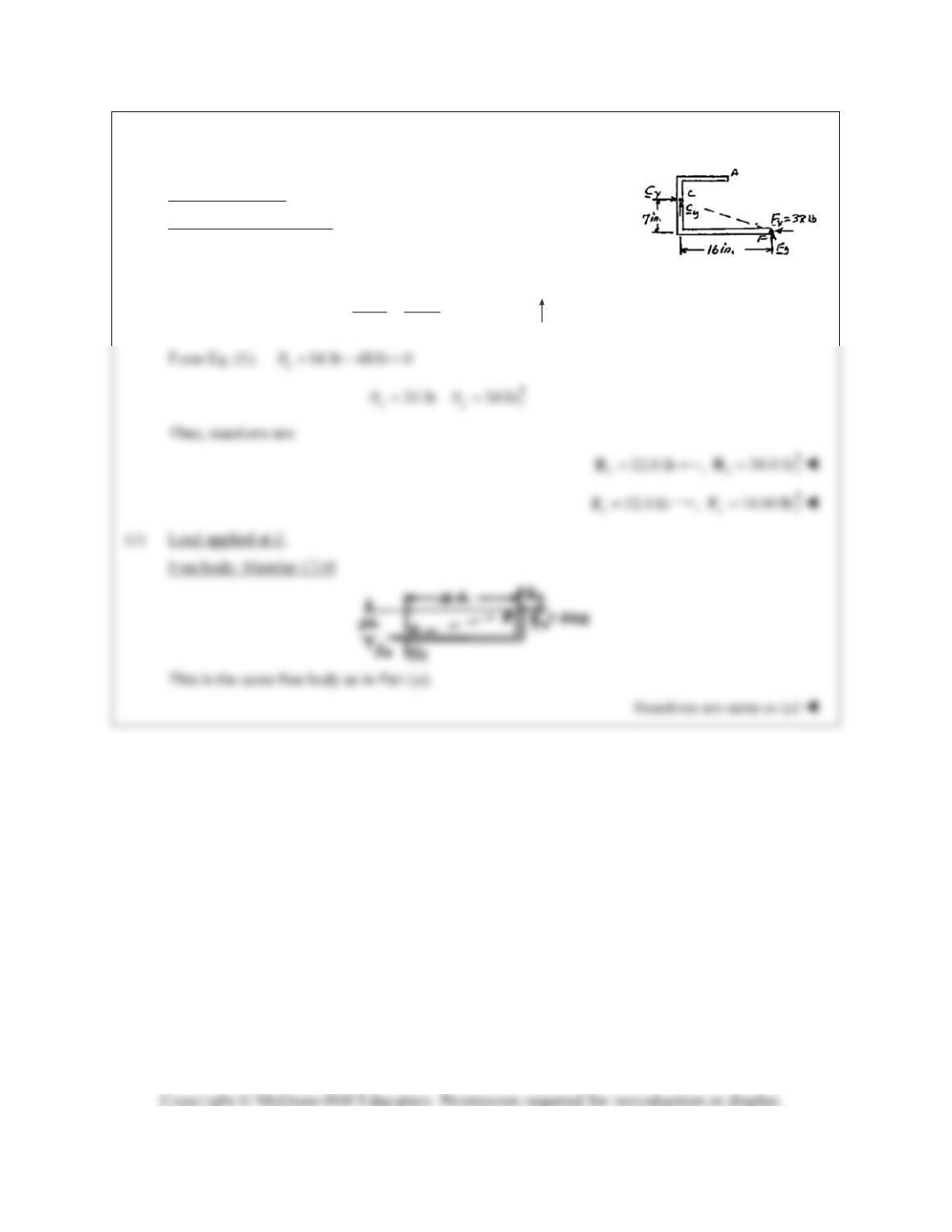
PROBLEM 6.88 (Continued)
(b) Load applied at D.
Free body: Member ACF.
ACF is a two-force member. Thus, the reaction at F must be
directed along CF.
7in. 14 lb
32 lb 16 in.
y
y
F
F
PROBLEM 6.89
The 48-lb load is removed and a 288-lb · in. clockwise couple is applied
successively at A, D, and E. Determine the components of the reactions at B
and F if the couple is applied (a) at A, (b) at D, (c) at E.
SOLUTION
Free body: Entire frame
The following analysis is valid for (a), (b), and (c), since the point of
application of the couple is immaterial.
0: 288 lb in. (12 in.) 0
Fx
MB
24 lb 24 lb
xx
B
B
0: 24 lb+ 0
xx
FF
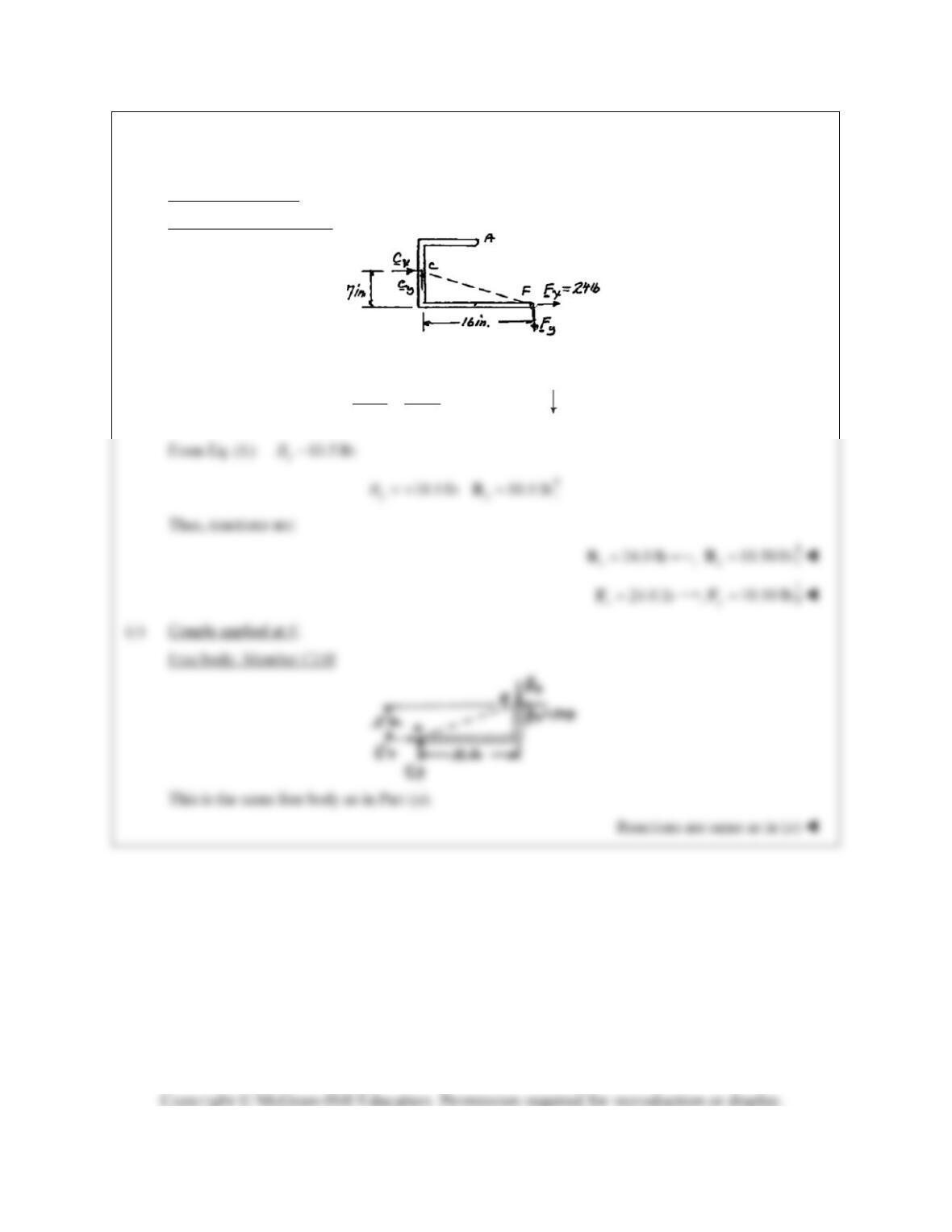
PROBLEM 6.89 (Continued)
(b) Couple applied at D.
Free body: Member ACF.
ACF is a two-force member. Thus, the reaction at F must be directed along CF.
7in. 10.5 lb
24 lb 16 in.
y
y
F
F
PROBLEM 6.90
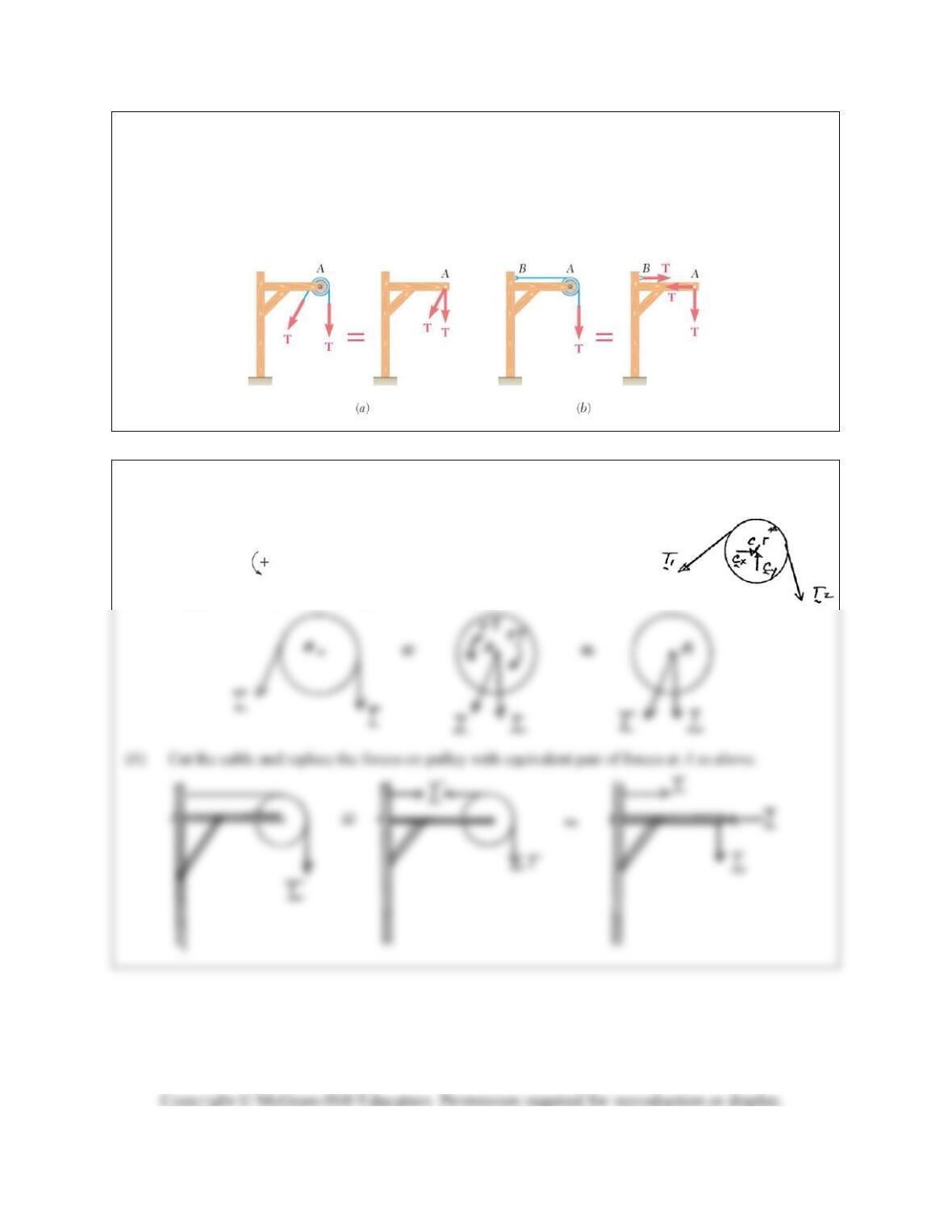
(a) Show that when a frame supports a pulley at A, an equivalent loading of the frame and of each of its
component parts can be obtained by removing the pulley and applying at A two forces equal and parallel
to the forces that the cable exerted on the pulley. (b) Show that if one end of the cable is attached to the
frame at a Point B, a force of magnitude equal to the tension in the cable should also be applied at B.
SOLUTION
First note that, when a cable or cord passes over a frictionless, motionless pulley,
the tension is unchanged.
12 12
0: 0
C
MrTrTTT
(a) Replace each force with an equivalent force-couple.