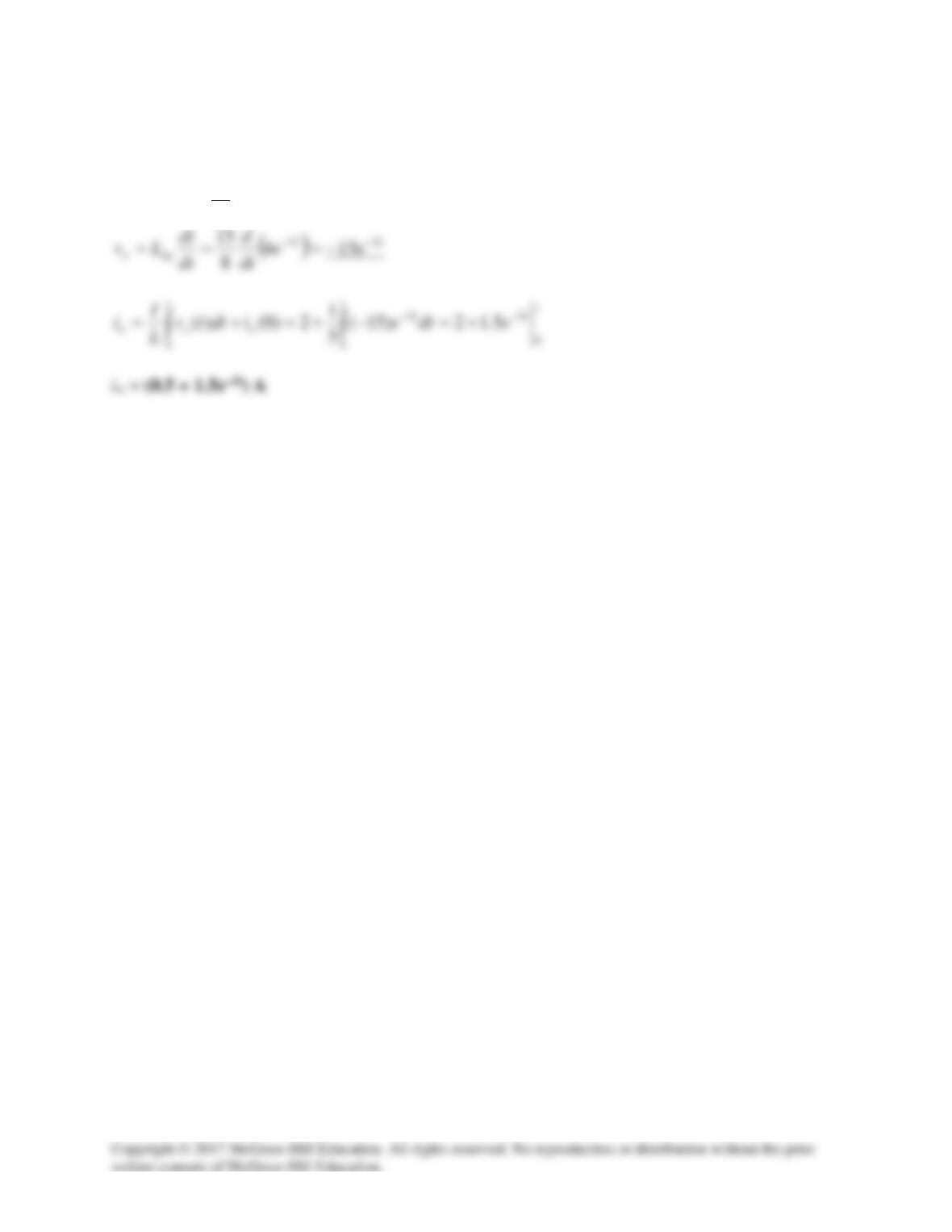
Solution 6.60
8
15
5//3==
eq
L
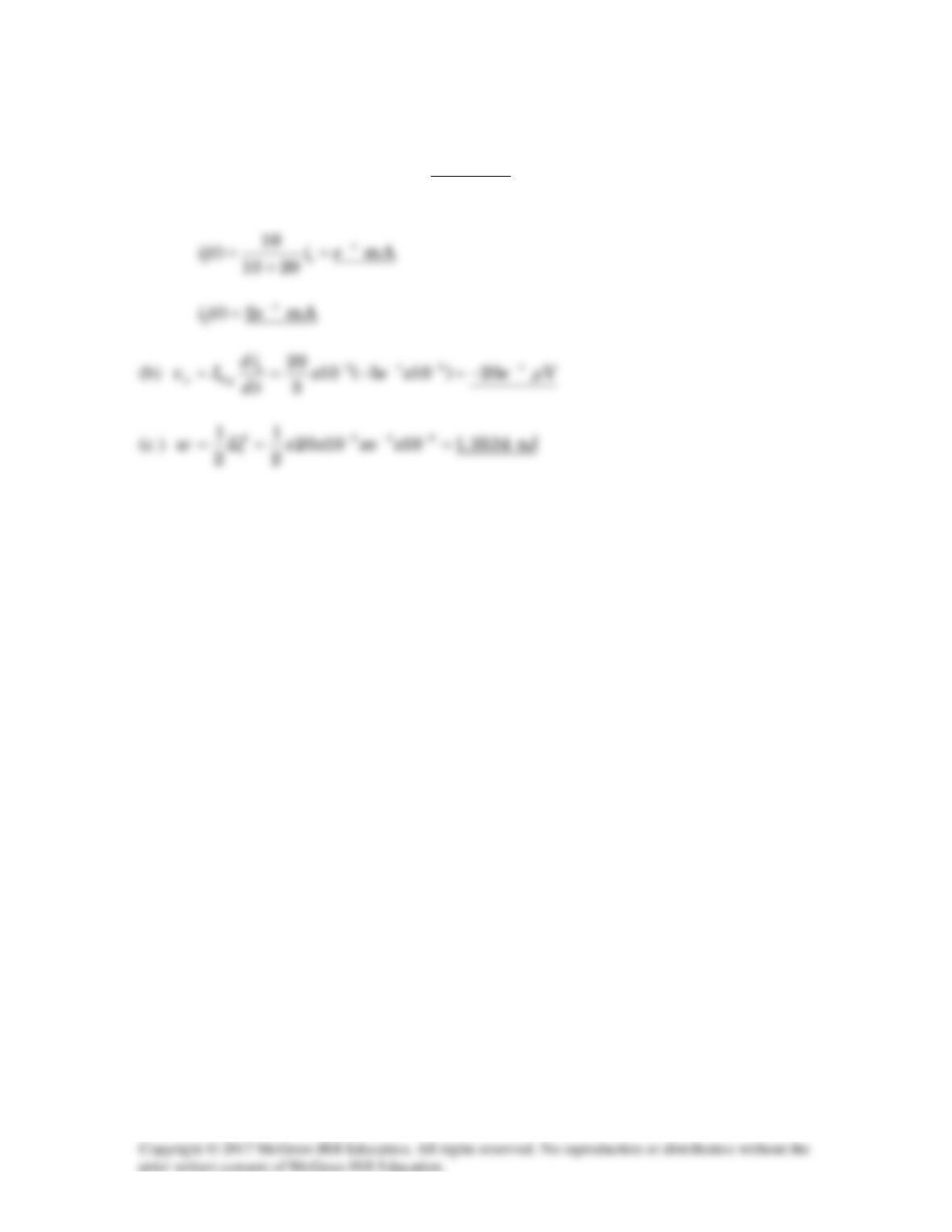
Solution 6.61
(a)
20 / / (4 6) 20 10 / 30 6.667 m H
e q
Lx= += =
Using current division,
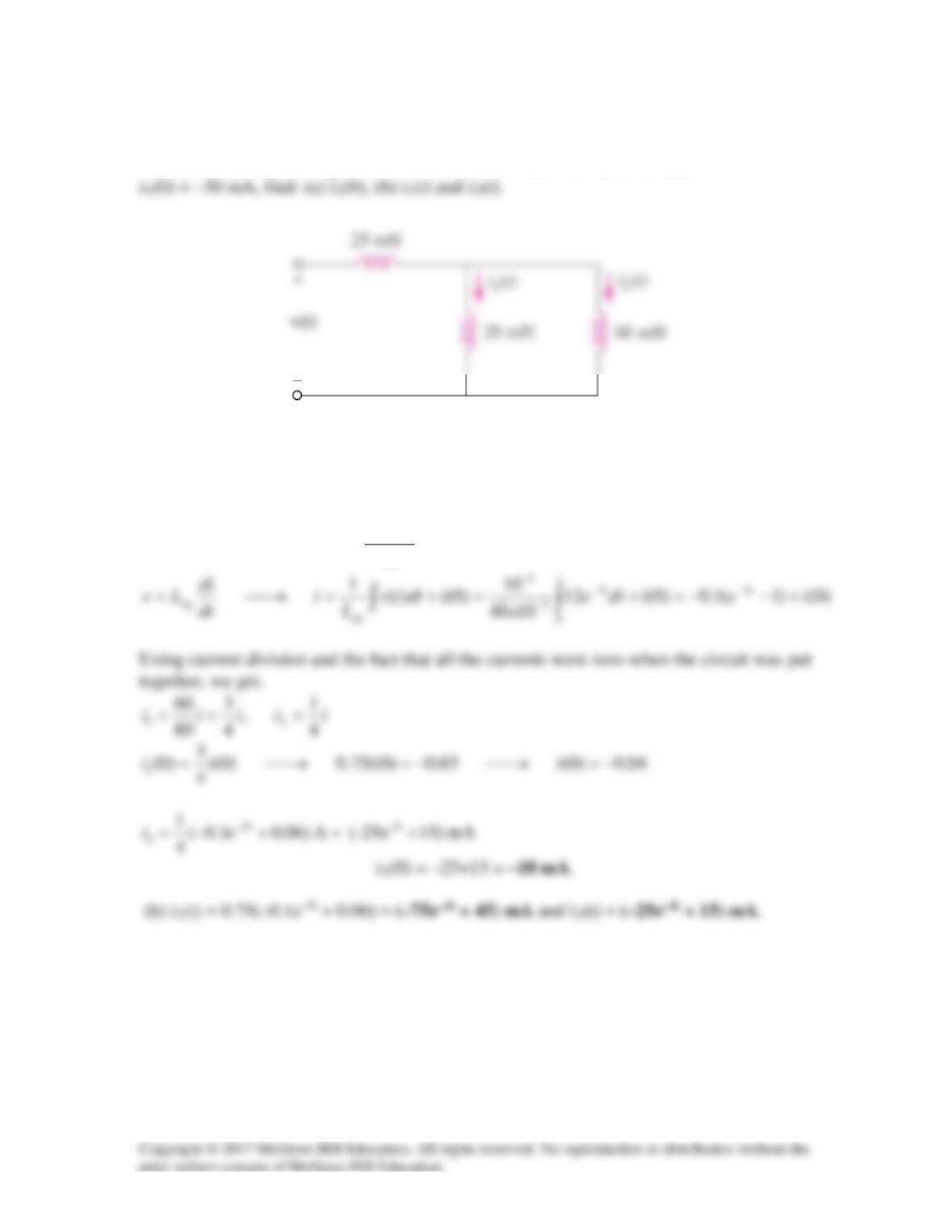
Solution 6.62
Consider the circuit in Fig. 6.84. Given that v(t) = 12e-3t mV for t > 0 and
Figure 6.84
For Prob. 6.62.
Solution
(a)
mH 40
80
6020
2560||2025 =+=+= x
Leq
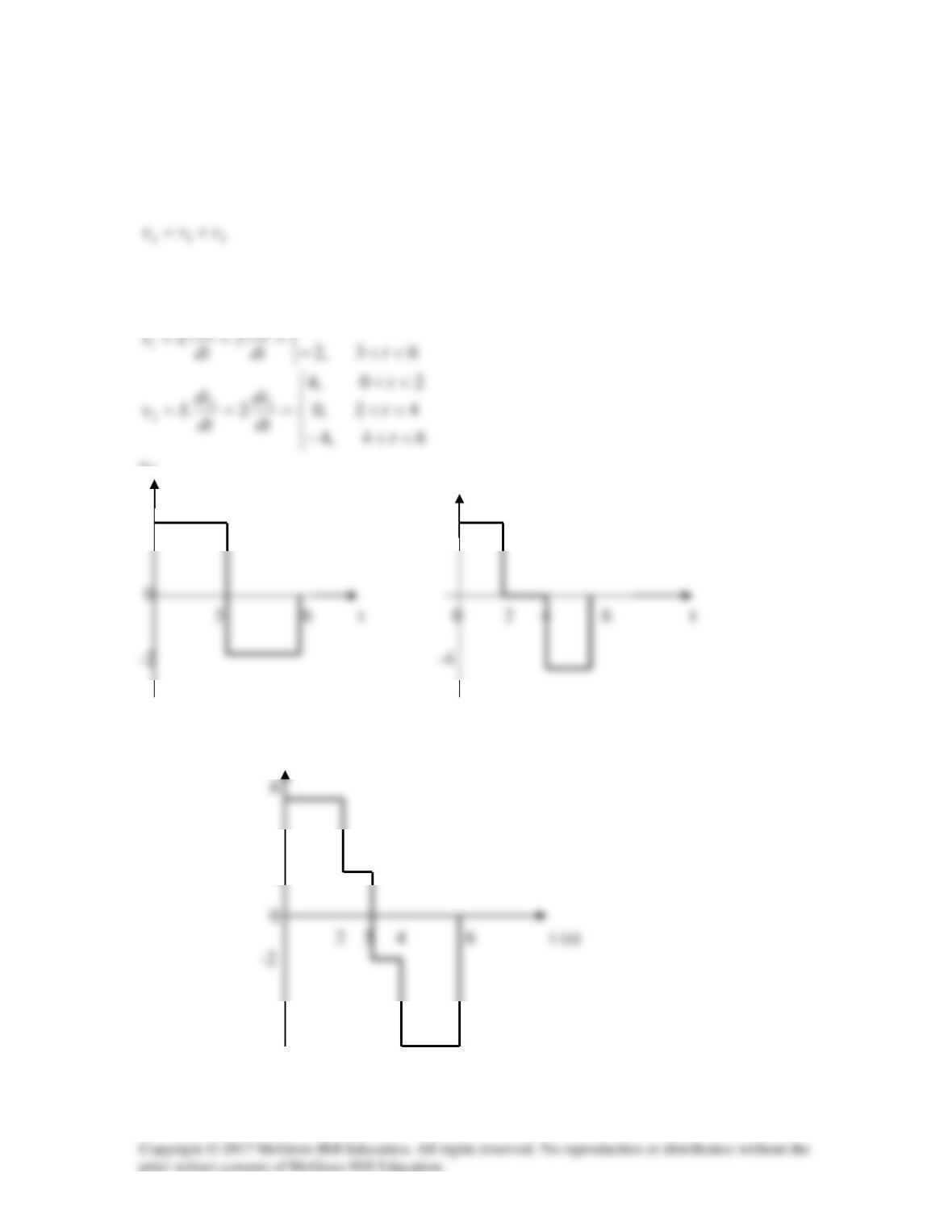
Solution 6.63
We apply superposition principle and let
where v1 and v2 are due to i1 and i2 respectively.
<<
30,2
11
t
di
di
v1
v2
2 4
Adding v1 and v2 gives vo, which is shown below.
vo(t) V
2
-6
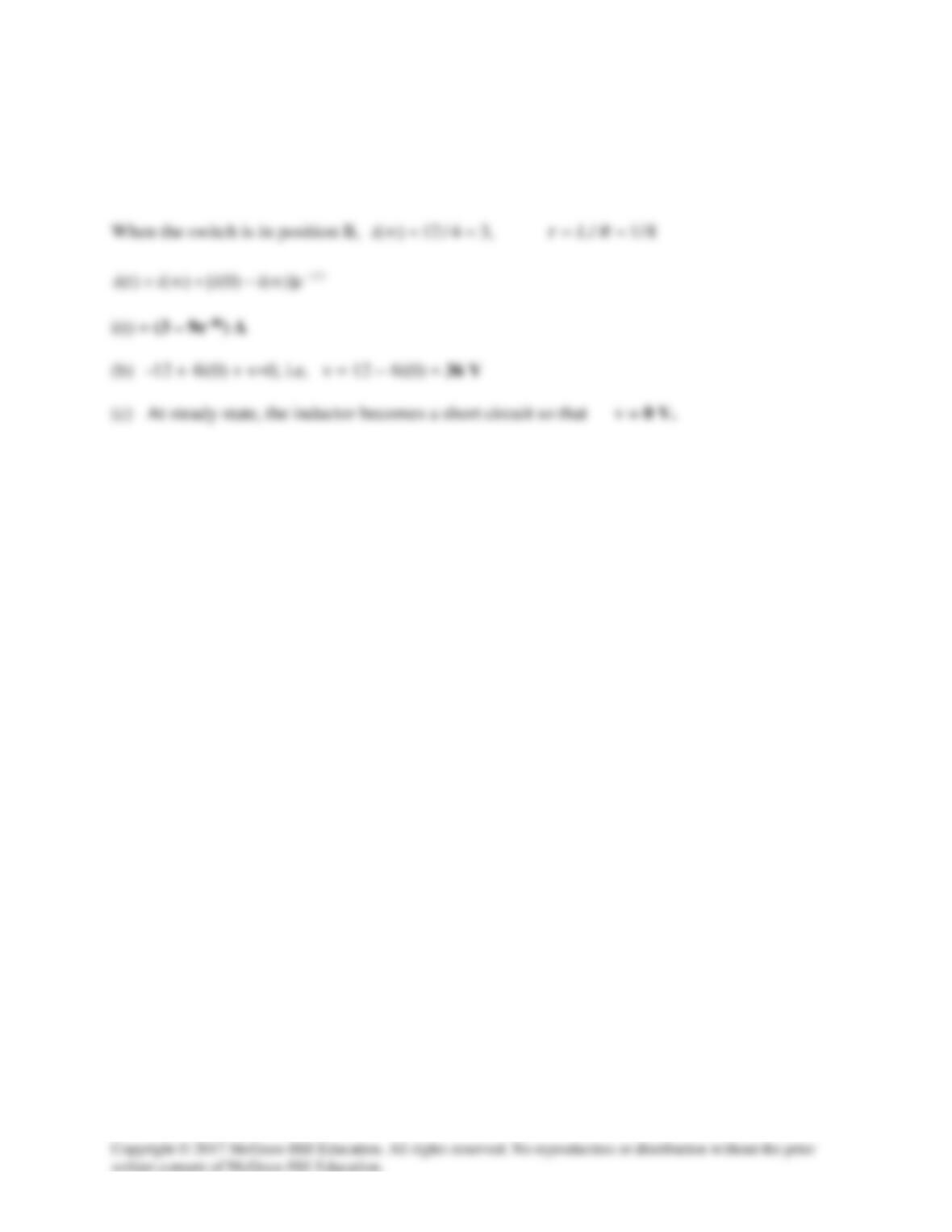
Solution 6.64
(a) When the switch is in position A, i= –6 = i(0)
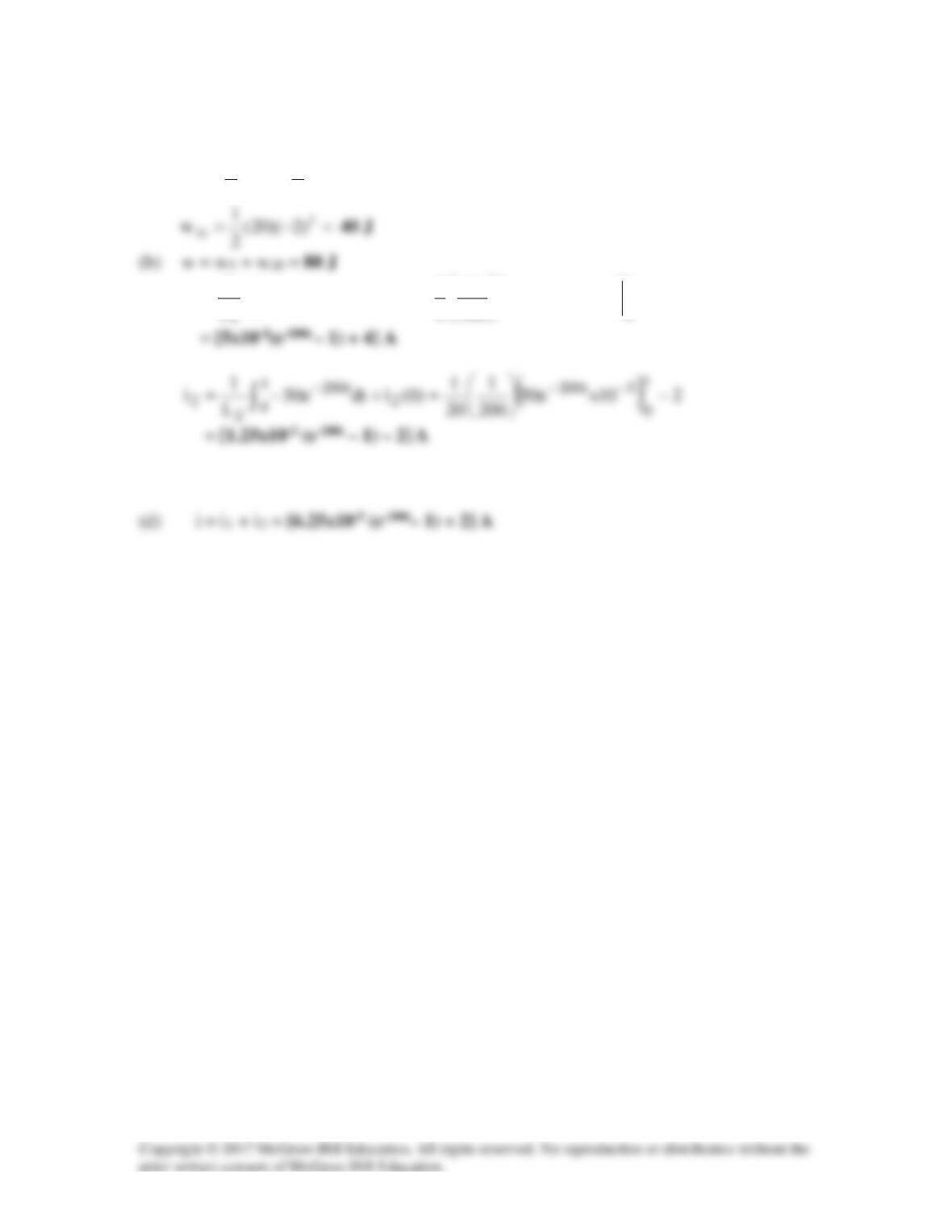
Solution 6.65
(a)
=== 22
115 )4(x5x
2
1
iL
2
1
w
40 J
(c)
( )
410xe50
200
1
5
1
)0(idte50
L
1
i
t
0
3t200
1
t
0
t200
1
+
=+−=
−−−
∫
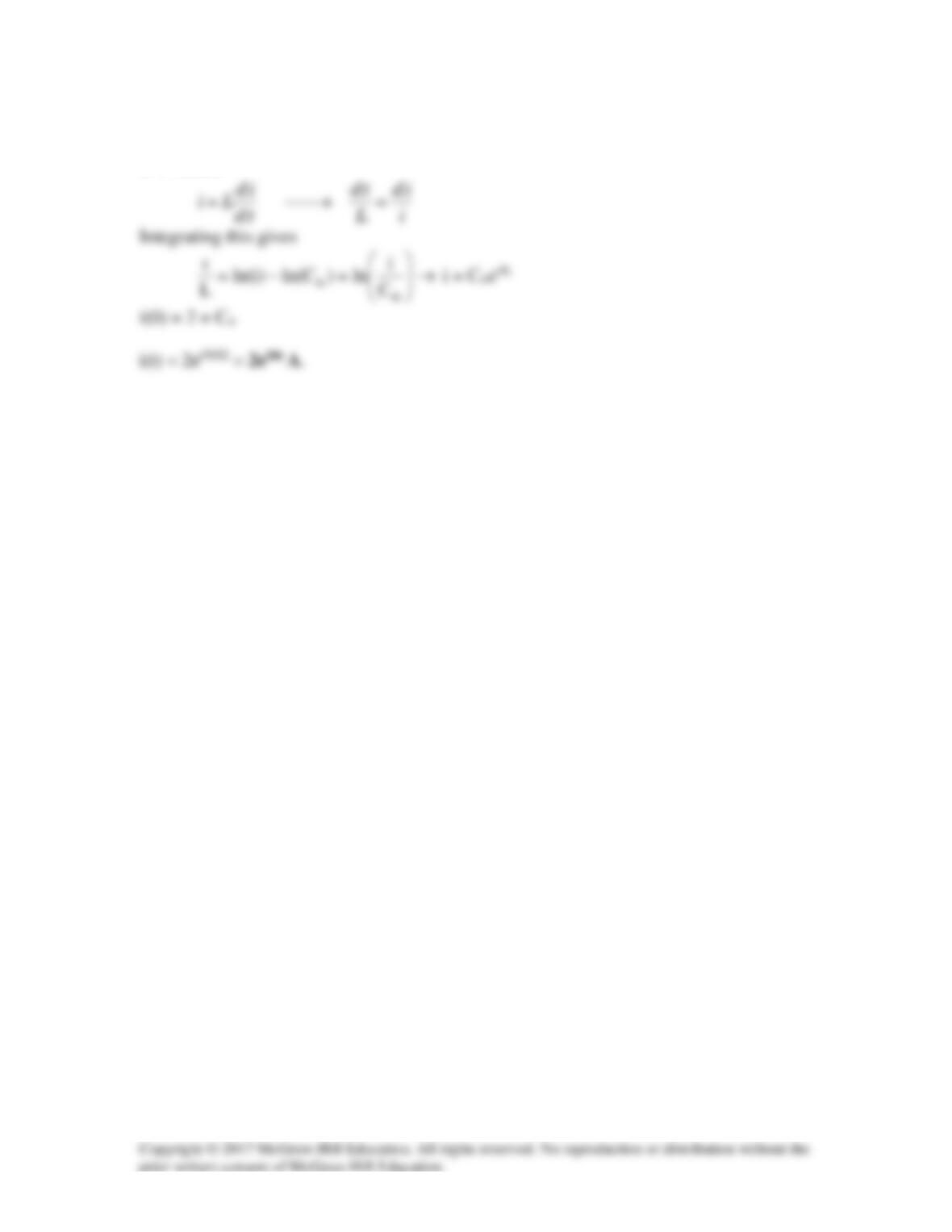
Solution 6.66
If v=i, then
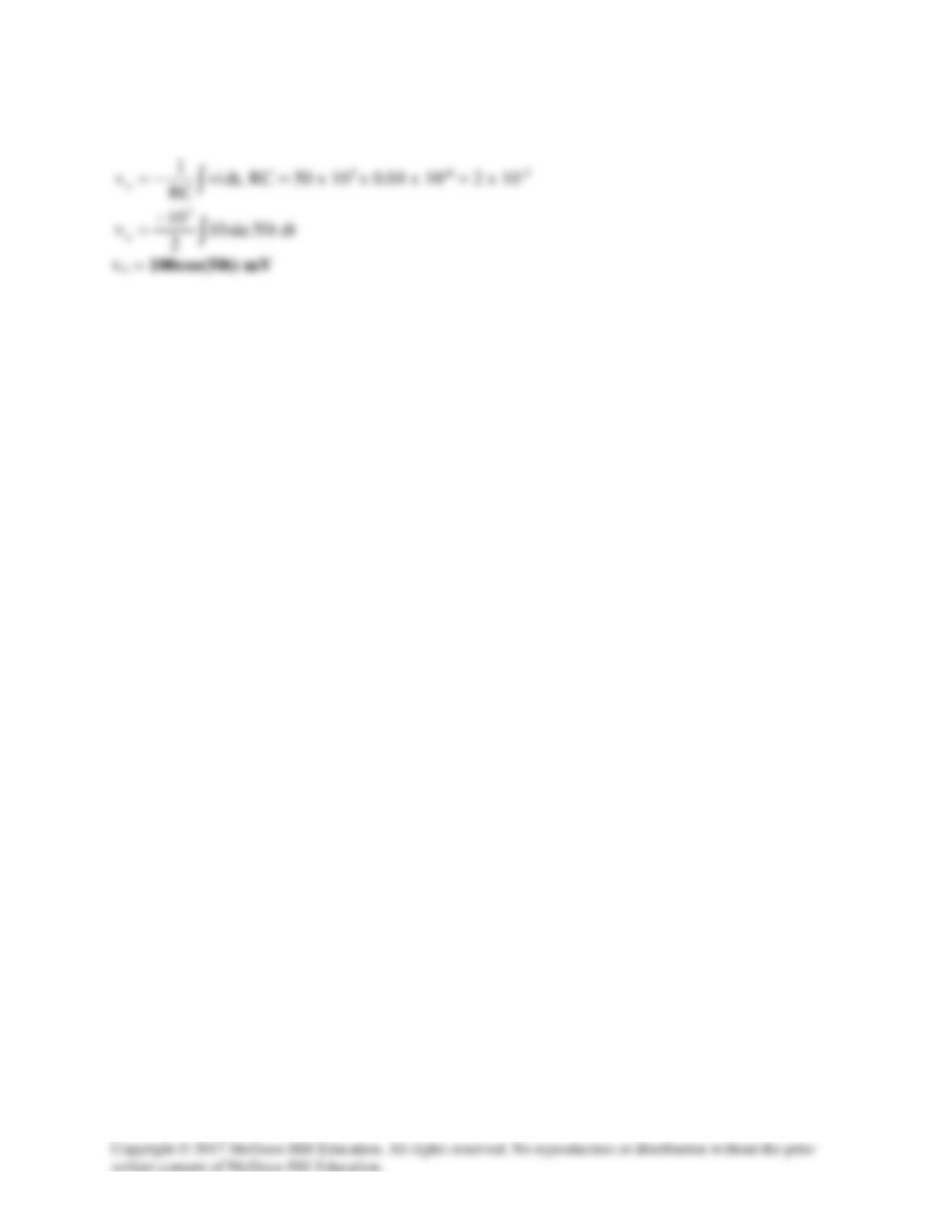
Solution 6.67
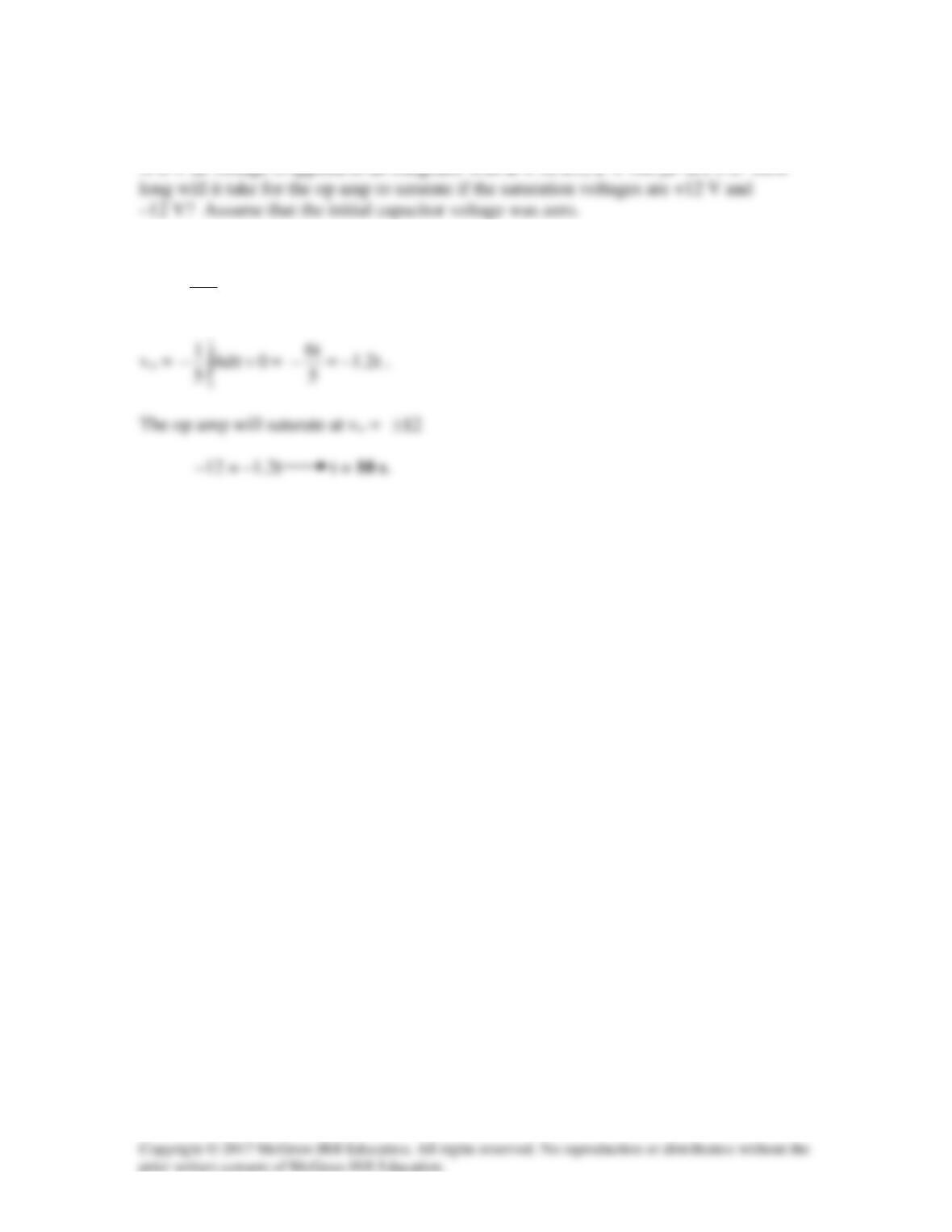
Solution 6.68
Solution
1
o
v vi
RC
= − ∫
dt + vo(0), RC = 50 x 103 x 100 x 10-6 = 5
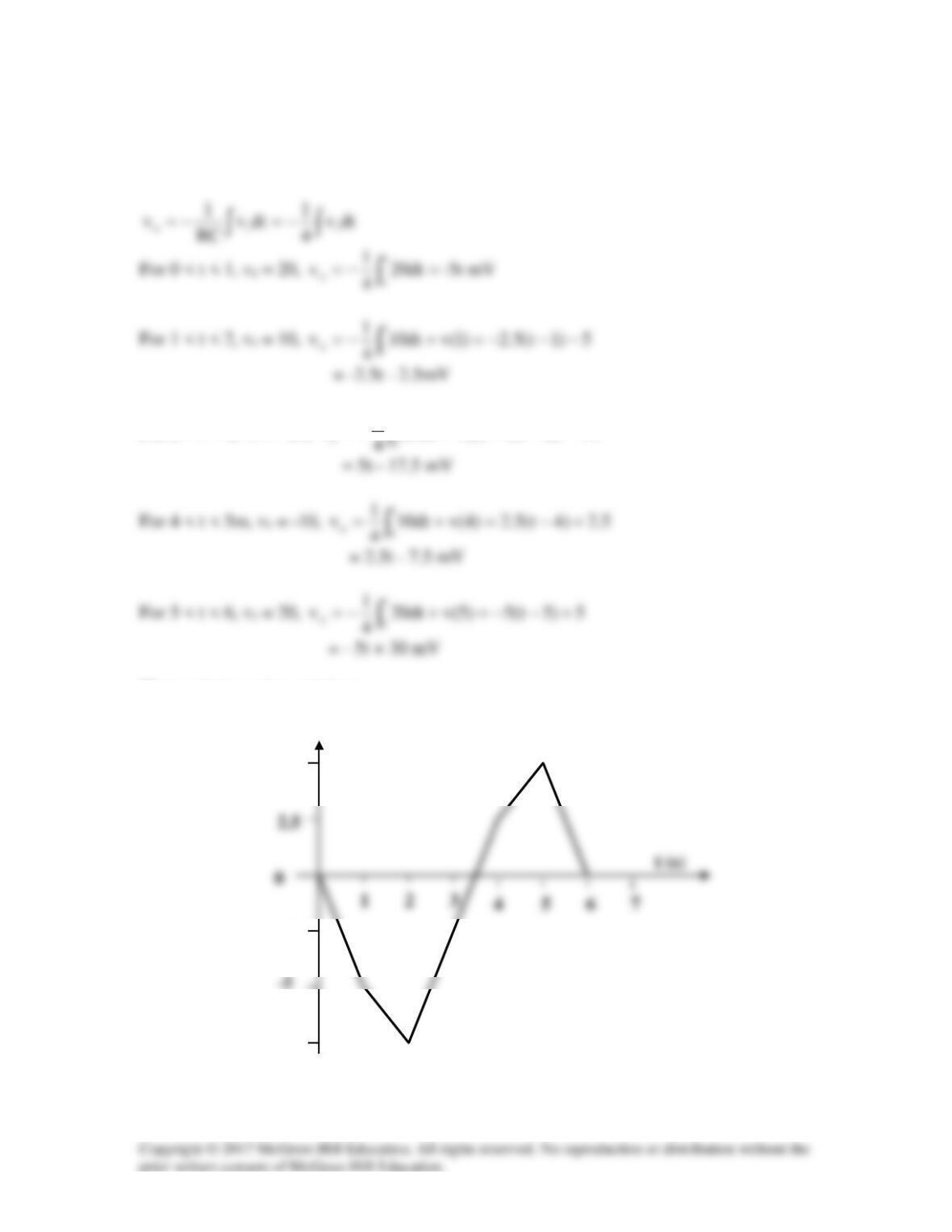
Solution 6.69
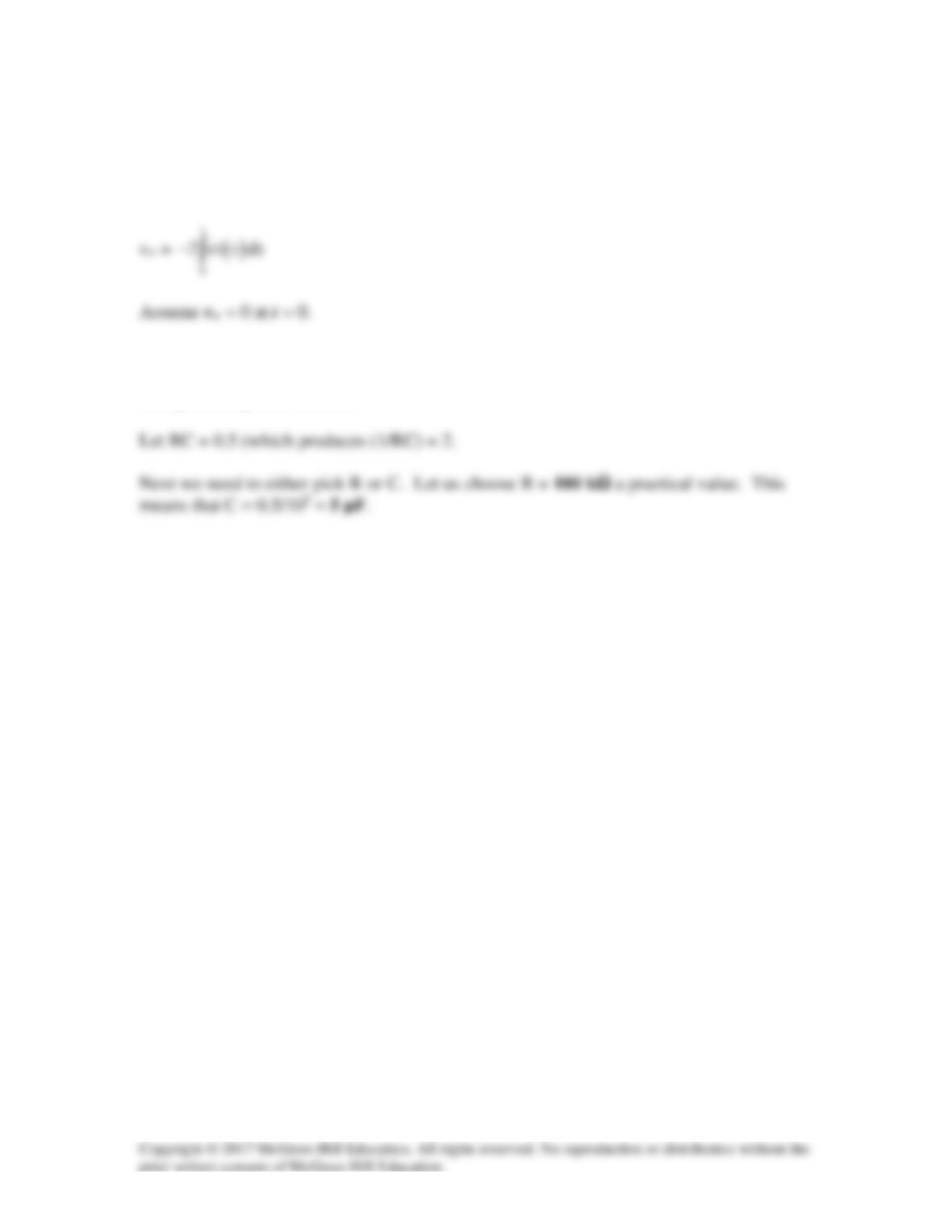
RC = 4 x 106 x 1 x 10-6 = 4
For 2 < t < 4, vi = – 20,
1
v
Thus vo(t) is as shown below:
2.5
v(t) (V)
5
-7.5
-2.5
Solution 6.70
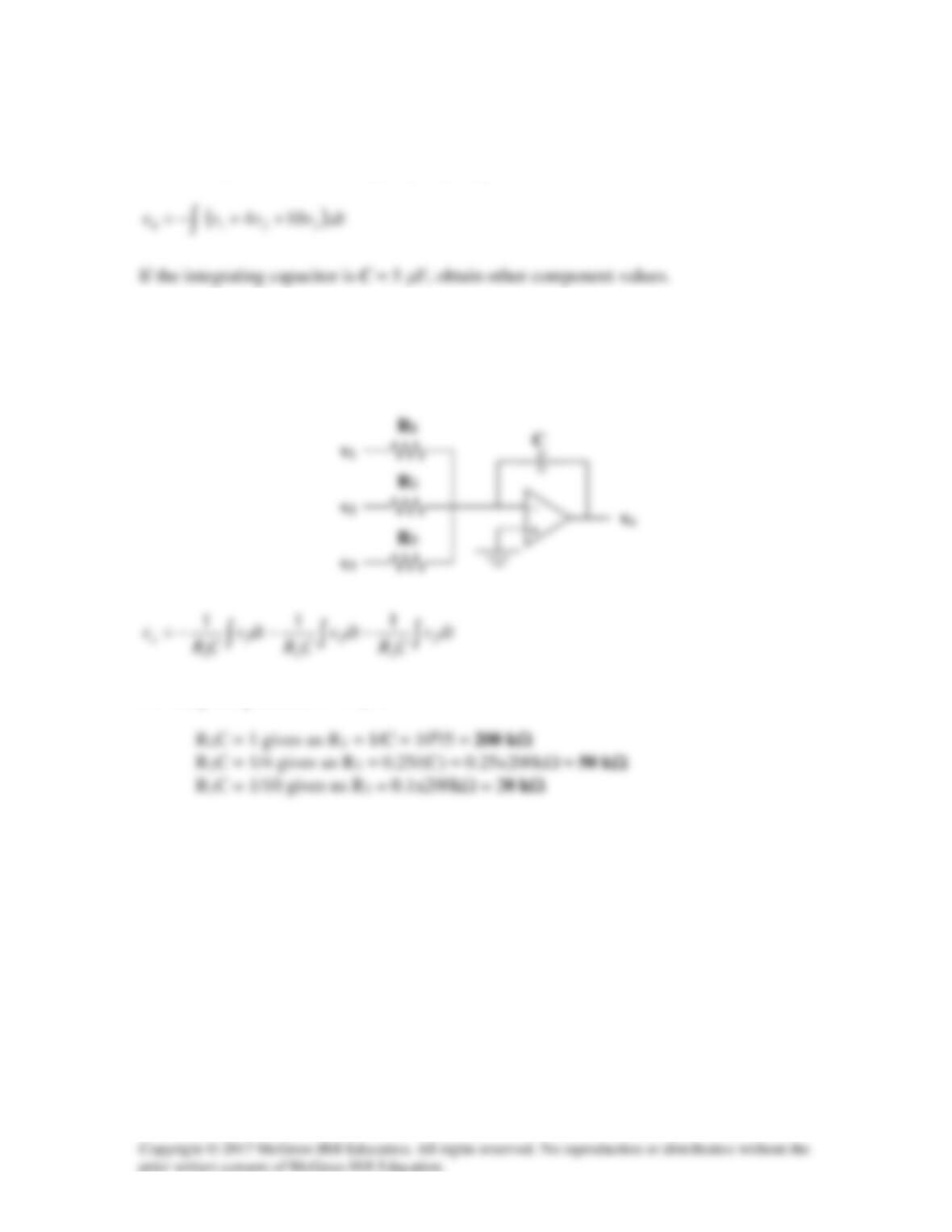
Using a single op amp, a capacitor, and resistors of 100 kΩ or less, design a circuit to
implement
Solution
One possibility is as follows:
Solution 6.71
Show how you would use a single op amp to generate
Solution
By combining a summer with an integrator, we have the circuit below:
For the given problem, C = 5 µF,
Solution 6.72
The output of the first op amp is
Solution 6.73
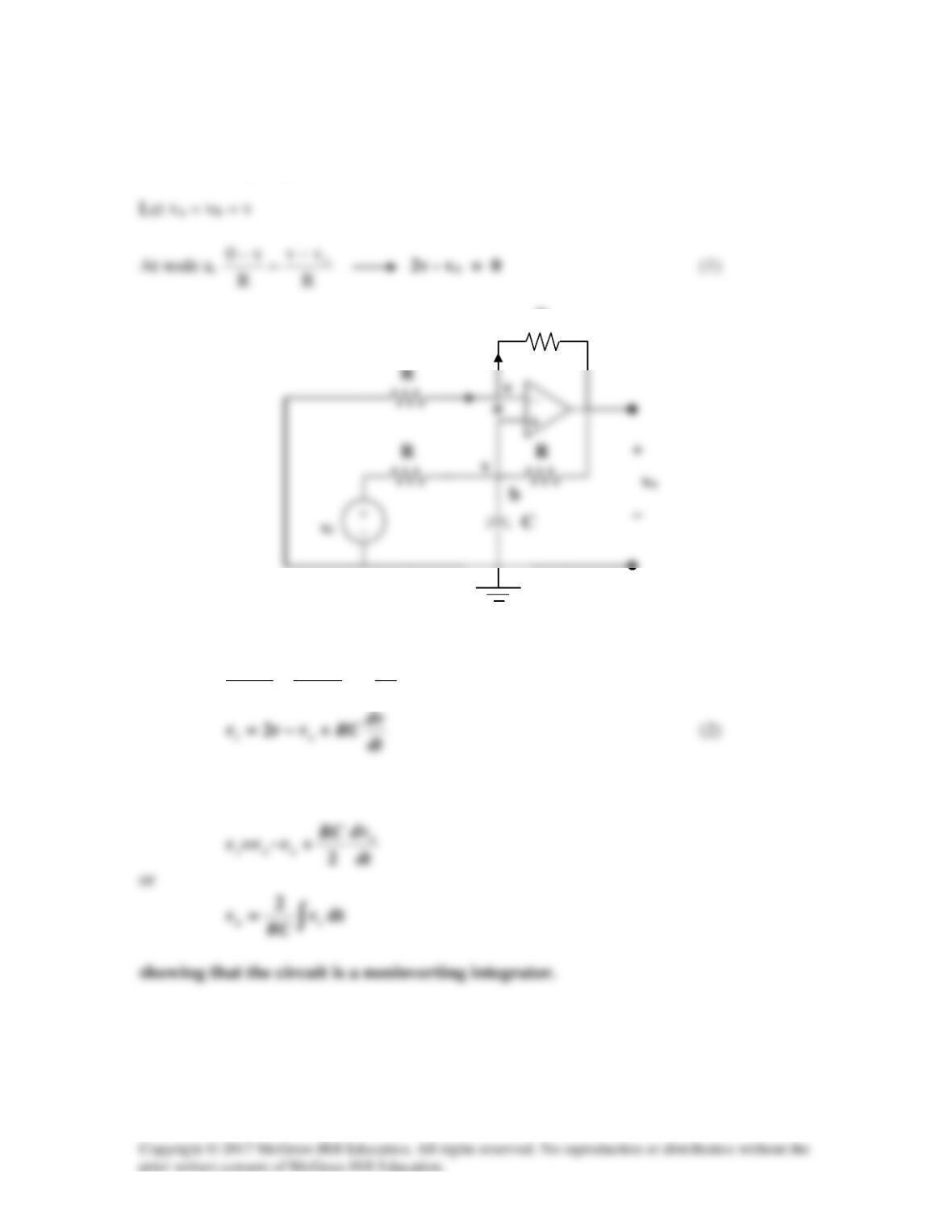
Consider the op amp as shown below:
R
At node b,
dt
dv
C
R
vv
R
vv
o
i
+
−
=
−
Combining (1) and (2),
R